
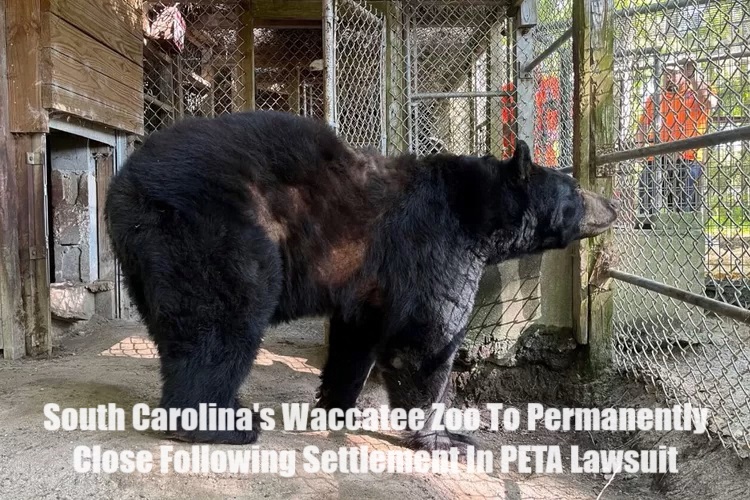
In its complaint, the animal rights organization described Waccatee Zoo as “one of the worst roadside zoos in America”
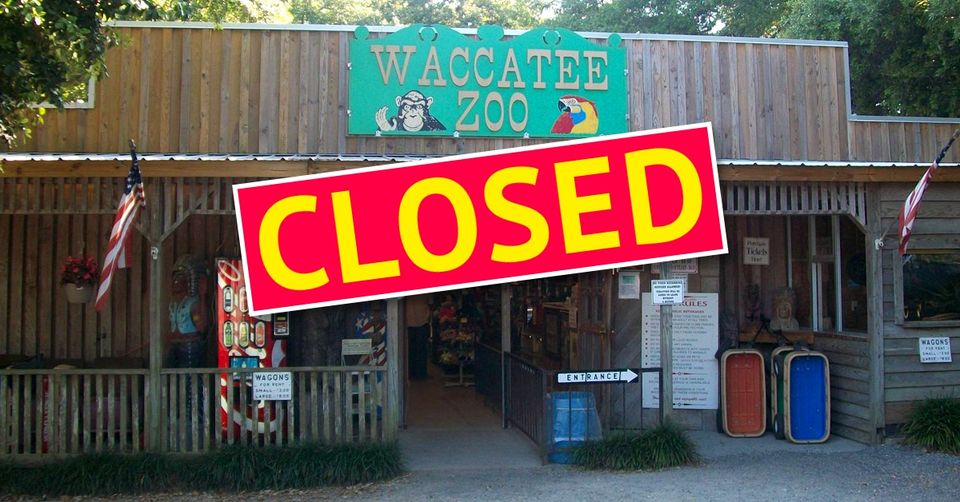
A South Carolina roadside zoo will permanently close following the settlement of a federal lawsuit brought on by People for the Ethical Treatment of Animals (PETA).
In a press statement Thursday, the animal rights organization said the Waccatee Zoo in Horry County will be permanently closed. Additionally, as part of the settlement, per PETA, the operators of the South Carolina facility are banned from owning or exhibiting wild or exotic animals, breeding domestic animals, exploiting domestic animals for profit, and working or volunteering at other roadside zoos.
In its lawsuit filed under the federal Endangered Species Act and South Carolina’s public nuisance law in April 2022, PETA described Waccatee Zoo as “one of the worst roadside zoos in America.” The complaint alleged the zoo’s operators confined and exhibited more than 460 animals and that the facility’s conditions deprived them of “adequate veterinary care, shelter, food, and water.”
An attorney for the Waccatee Zoo and the defendants, Reese Boyd III, told the Myrtle Beach Sun News that the lawsuit has been settled and the facility will be shut down. He said that his client’s agreement to the settlement terms was not an admission “to the exploitation of animals in their care” – adding that a number of PETA’s accusations were “factually untrue,” per the newspaper.
PETA also said in the lawsuit that it regularly received complaints about Waccatee from zoo visitors.
“Day after day, animals at Waccatee sway and pace back and forth—unnatural behaviors that signify the animals’ needs are not being met,” read PETA’s lawsuit. “Many animals experience negative stress due to small, insufficiently enriched spaces that provide little to do, offer inadequate opportunities to socialize, and are affirmatively dangerous.”
The lawsuit cited the case of Lila, a tiger who either died in late 2020 or 2021, saying that she “became so emaciated that much of her skeleton—including her vertebrae, scapula, shoulder, hip, and other joints—was visible through her skin.” The complaint also alleged that other animals at the zoo experienced hair loss and emaciation—adding that “isolated, frustrated, and bored animals exhibit alarming and repetitive behavior, indicating that they are experiencing psychological distress.”
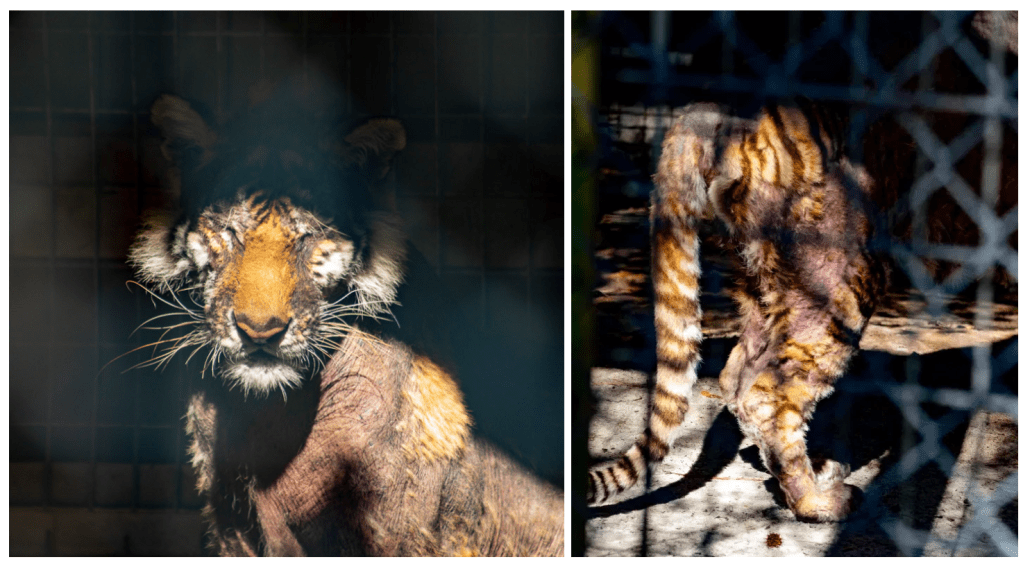
Lila passed away after a fall from old age, zoo owner Jeff Futrell said.
According to a letter PETA sent to Waccatee Zoo on Feb. 25, the organization wanted answers to the whereabouts of Lila after she was the subject of a PETA campaign because of her ill health.
“After months of wasting away, losing fur, and turning in endless circles in her dismal cage, Lila has disappeared—and PETA is asking whether she died, in pain and in the cold, and if her death is being covered up,” says PETA Foundation Associate Director of Captive Animal Law Enforcement Michelle Sinnott. “Nothing can undo Lila’s suffering, and PETA is calling on Waccatee Zoo to release the other big cats before they suffer as she did.”
And now, PETA is asking the owners of the zoo to release the necropsy report.
In a press statement, Brittany Peet, PETA’s general counsel for captive animal law enforcement, responded to the settlement: “This victory blocks Waccatee’s operators from ever again mistreating wild animals as they did for decades. PETA is delighted to see the survivors thriving in their new sanctuary home and will continue to ask everyone to help us advocate for all animals still trapped in roadside zoos by never patronizing such operations.
In May, PETA and The Wild Animal Sanctuary (TWAS) rescued nine remaining animals left at the Waccatee Zoo. Among the animals retrieved were a llama, two North American black bears, and six emus. PETA said the rescued animals would head to a TWAS sanctuary in Colorado.

WHAT YOU CAN DO TO HELP WILDLIFE
You can support ‘Protect All Wildlife’ by donating as little as £1 – It only takes a minute but it can last a lifetime for an animal in need. Please donate below.

Everyone who donates will receive a Certificate of Appreciation as a thank you for helping animals in need.

The Mission of Protect All Wildlife is to prevent cruelty and promote the welfare of ALL animals.
We believe EVERY animal should be treated with respect, empathy, and understanding. We raise awareness to protect and conserve wild, captive, companion and farm animals.
It is vital that we protect animals against acts of cruelty, abuse, and neglect by enforcing established animal welfare laws and, when necessary, take action to ensure that those who abuse animals are brought to justice.
Protect All Wildlife are involved in many projects to protect animals’ rights, welfare, and habitats. Money contributed to Protect All Wildlife supports ALL of our worthy programmes and gives us the flexibility to respond to emerging needs. Your donations make our work possible.
 PROTECT ALL WILDLIFE