A Poacher’s Attack: Through The Eyes Of A Rhino Calf

As the number of Rhinos killed by poachers keep rising and more traumatized orphaned calves are in need of care, Kirsten Everett, a volunteer at Nikela, takes us on a touching journey as she looks at the horrors of a poacher attack though the eyes of a young Rhino calf.
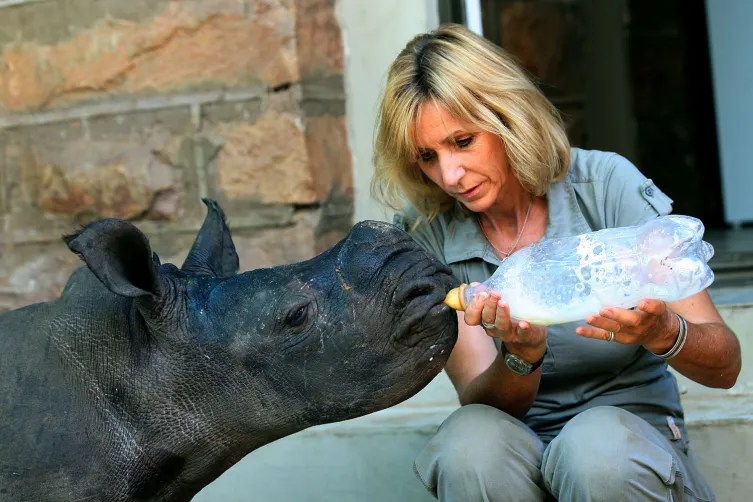
LIMPOPO, SOUTH AFRICA: Karen Trendler cares for Ntombi, a two-month old White Rhino. Ntombi survived a brutal attack, when poachers killed her mother earlier in the week. She sustained severe head injuries and was cared for in a rhino orphanage. Credit: Kevin Sutherland.

“My mother and I were contently filling our hungry stomachs when we heard a strange noise. I carried on eating but she smelt the air for unknown scents. I saw the terrified look in her eye before she managed to control it; the unnatural smell meant something. A few minutes later we heard the ‘whop, whop’ of a metal monster flying closer towards us. Just when my mother focussed on it the men crept out of the bushes with a crunch of sticks. Something seemed to hit her and she grunted in surprise. The birds abandoned their posts heading away from the danger. I stood helplessly as she tried to run but ended up falling to the ground. The men surrounded her and tried to chase me away. I ran forward scared enough to not care about the men as they had done something to my mother, I needed her and they must go away.

Out of nowhere one of the big men spun on me and hit me hard with something sharp. Blood oozed from my wound as my mother answered my cry for help with a weak beg, ‘Away, away’. I backed away nursing my wound, how could I get to her?? She grunted again so I didn’t give up. I ran forward again but this time the angry man was merciless, determined to get his message across. As quietly as possible I took the cuts to my poor head trying not to worry my mother even more.

Confused I backed away into the bushes calling to her to get up, but the eerie silence dragged on and she didn’t move a muscle. Fear glued me to the floor as I felt my young heart pulsing with anger and fear. A breeze blew, as I waited for the monsters to go so I could go to my poor mommy and find out what was wrong. My heart skipped a beat when I realised this was what my cousin had gone through only a full moon ago. It was terrible, my body couldn’t stop shaking and I couldn’t think clearly, I felt lightheaded from all my blood loss.

Finally when the monsters left I ran to her side, ‘Mom wake up.’ My voice cracked with emotion but still she didn’t respond. I took a step back and saw the pool of blood. Her horn had been brutally cut off and she lay lifeless. Above me a crow flew over.

I turned to run then I asked myself some important questions… where would I go? I wasn’t old enough to know the way to the dam yet. Who would protect me from predators? The truth was that I wasn’t strong enough to survive by myself yet. Would I be with my mother in the sky sooner than I thought? The last question scared me the most; out in the wild without my mother I might just be able to survive a week.

I heard the snap of a twig, I wasn’t alone. This time I didn’t have the strength to care what these humans wanted with me. I collapsed and slept for a few hours. I was almost completely unconscious though I sensed kindness near me. Too traumatised to do anything I lay as they treated my wounds. The people who tried to comfort me planted a seed of hope. Hope that I could survive and hope that the rest of the human race would come to its senses and help my species and all the others out there”.

Let’s stop the babies’ cries! Let’s Save The Last Rhin0!

Written by Kirsten Everett. Based loosely on the story of “Ntombi” who was rescued by Karen Trendler and her team.
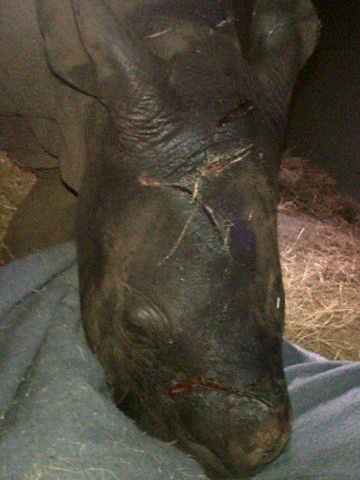
Ntombi bears the poacher’s scars

WHAT YOU CAN DO TO HELP ANIMALS IN NEED

You can support our work by donating as little as £5 – It only takes a minute but it can last a lifetime for an animal in need.

PLEASE DONATE HERE

PLEASE HELP ANIMALS IN NEED

Everyone who donates will receive a Certificate of Appreciation as a thank you for helping animals in need.

The Mission of Protect All Wildlife is to prevent cruelty and promote the welfare of ALL animals. We believe EVERY animal should be treated with respect, empathy, and understanding. We raise awareness to protect and conserve wild, captive, companion and farm animals.

It is vital that we protect animals against acts of cruelty, abuse, and neglect by enforcing established animal welfare laws and, when necessary, take action to ensure that those who abuse animals are brought to justice.

Protect All Wildlife are involved in many projects to protect animals’ rights, welfare, and habitats. Money contributed to Protect All Wildlife supports ALL of our worthy programmes and gives us the flexibility to respond to emerging needs. Your donations make our work possible.
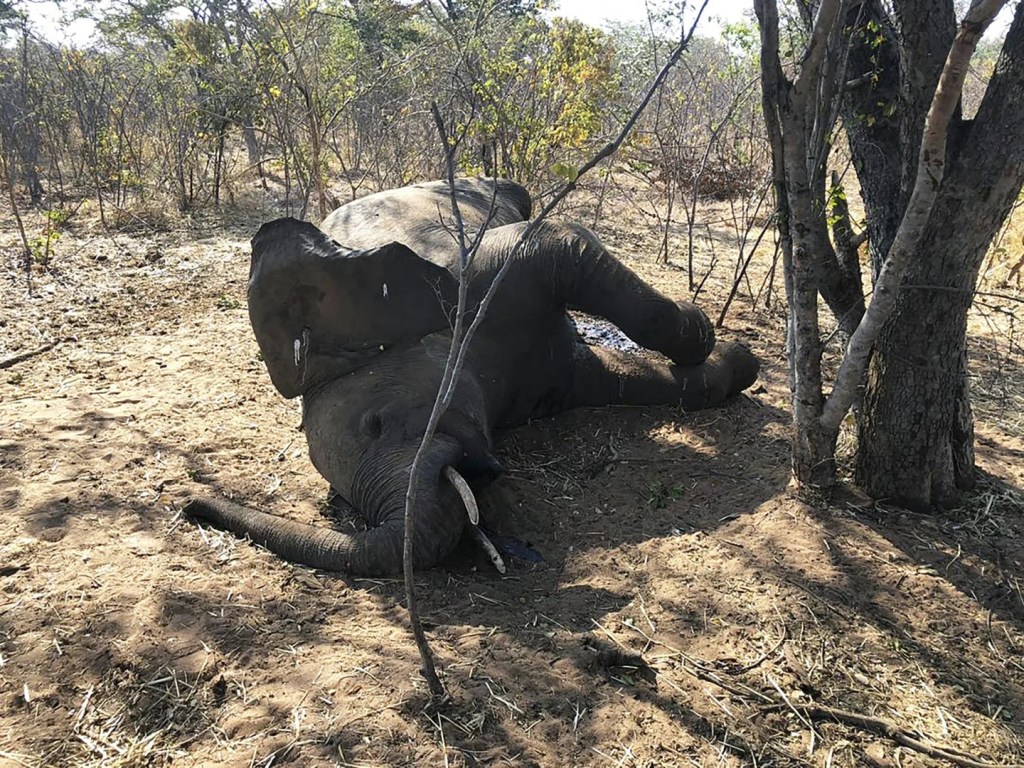
Scientists Have Uncovered The Cause Of The Mysterious Deaths Of 35 Elephants In Zimbabwe.

A dead Elephant found in Hwange National Park, Zimbabwe, Aug. 29, 2020. Credit: AP Photo

Elephants that dropped dead in Zimbabwe were victims of an obscure bacteria combined with extreme heat. Scientists fear more Elephants – and other species – could suffer the same fate

No one knew precisely what caused the unexplained tragedy in which 35 African Elephants in Zimbabwe mysteriously dropped dead in August/September 2020.

This incident followed the death of approximately 350 Elephants in neighbouring northern Botswana from May to June 2020, which triggered much international concern. 

Aerial views of of some of the Elephants that were been found dead in Botswana  Credit: National Park Rescue

At first, anthrax was a possible contender, along with poaching or intentional poisoning, but they were all ruled out early on.

Three years later, a new study by a group of scientists has found that a rare bacterium that causes organ inflammation is responsible for the Elephants’ untimely deaths.

A variant of the Pasteurella bacteria, named Bisgaard taxon 45, was identified by the scientists in their study of samples from six of 15 dead Elephants that they analysed.

This variant of this bacteria showed up in their sample, making the scientists conclude that the Elephants died from the lethal infection.

At first, scientists reviewed the possibility of Pasteurella multocida, which is known to cause hemorrhagic septicemia, a common disease amongst cattle and buffaloes that is highly fatal.

However, after further testing, they found that the findings were more complicated than thought.

“It became clear from the culture samples that we did not have P. multocida but something else similar,” Laura Rosen, an epistemologist who worked on the study, said, according to Science News.

While samples from the other elephants were not obtained due to rotting or not being able to get permits quick enough, six of the samples they did get showed this rare bacteria.

Little is known about this bacteria, as a few rare cases have only been documented so far.

The study cites that Bisgaard taxon 45 has in the past been linked to bite wounds on humans from tigers and lions.

It was also previously found in a chipmunk and a captive health parrot.

However, the researchers suspect this is not the first time that an outbreak of the disease has caused mass fatalities within Elephants.

In 2019, 14 Elephants were found dead in Zimbabwe within the same time period as this group was a year later.

While no bacterial samples were taken at the time, the noted conditions of the deceased animals were similar to those of the 2020 group.

It is unclear what caused this bacteria to enter the Elephants’ body, whether it is part of its “normal flora,” but the researchers believe that stress and heat would have contributed to the outbreak.

“It’s premature to say that climate change has influenced [this], but it may do so in future if we get more and prolonged droughts, or the rainfall patterns [change] and we have a much harsher dry season,” Dr Chris Foggin, a researcher on the study said.

“I do think that if that is the case, then we are more likely to see this sort of mortality event occurring again.”

This study is essential for organisations that seek to conserve these Elephants, who are already an endangered species.

Earlier that same year, around 350 Elephants dropped dead within the space of three months in neighbouring Botswana.

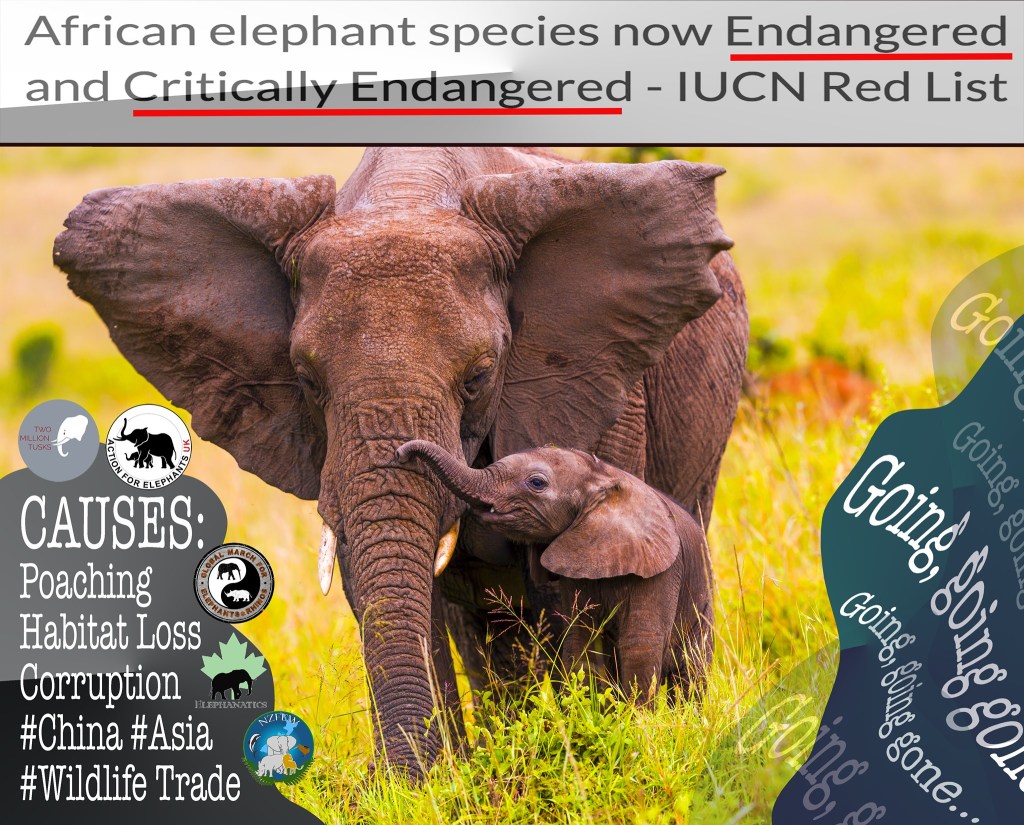
African Elephants are listed as endangered on the IUCN Red List. Credit: GMFER

African Elephants are listed as endangered on the International Union for Conservation of Nature Red List, with only approximately 415,000 left in the wild as of 2023.

According to the World Elephant Day organization, Elephant numbers have dropped by 62% over the last decade. They estimate that 100 African Elephants are killed each day by poachers.

WHAT YOU CAN DO TO HELP ANIMALS IN NEED

You can support our work by donating as little as £5 – It only takes a minute but it can last a lifetime for an animal in need.

PLEASE CLICK BELOW TO DONATE PLEASE HELP ANIMALS IN NEED

Everyone who donates will receive a Certificate of Appreciation as a thank you for helping animals in need.

The Mission of Protect All Wildlife is to prevent cruelty and promote the welfare of ALL animals.

We believe EVERY animal should be treated with respect, empathy, and understanding. We raise awareness to protect and conserve wild, captive, companion and farm animals.

It is vital that we protect animals against acts of cruelty, abuse, and neglect by enforcing established animal welfare laws and, when necessary, take action to ensure that those who abuse animals are brought to justice.

Protect All Wildlife are involved in many projects to protect animals’ rights, welfare, and habitats. Money contributed to Protect All Wildlife supports ALL of our worthy programmes and gives us the flexibility to respond to emerging needs. Your donations make our work possible.

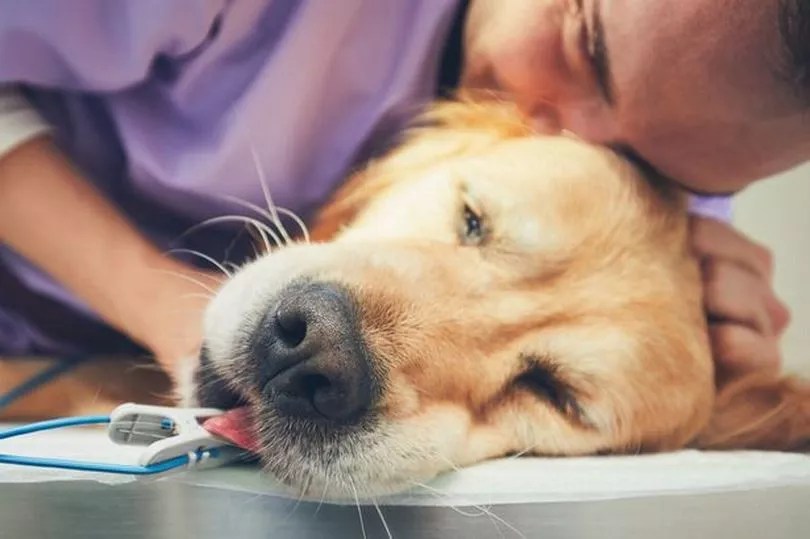
Vet’s Heartbreaking Plea After Dog Cries For Owner While Being Put To Sleep

Many choose to stay at their dog’s side in their final moments, however some fear ‘tarnishing’ the last memory of their four-legged friend by remaining in the room.

A vet has urged owners to stay in the room while their pet in their final moments.

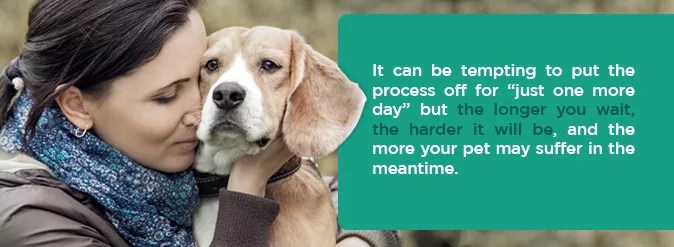
Nothing can prepare you for the last goodbye to a family pet. Many choose to stay at their dog’s side in their final moments, however for some the situation is too painful, and they fear ‘tarnishing’ the last memory of their four-legged friend by remaining in the room as they are put to sleep.

But a vet has issued a heartbreaking plea to owners after a truly devastating experience with one dog. Taking to Reddit, the woman urged owners not to leave their pets as they are put to sleep after the harrowing situation left her ‘in tears for weeks’.

She said: “I will always try to give grace and save my judgements on how people are able to deal with grief because everyone is different, but it is depressing to have a dog spending it’s final moments looking for where their owner went. I feel like it’s the very last comfort you can give your friend, just being there by their side to comfort them.

“We had one recently that hit me hard, I just wish it could have ended differently.”

xplaining how the owner stepped out into the hallway while their dog took their final breath, she said the poor pooch tried to follow his master before his medication hit him. She added: “I am not judging the owner’s emotional capacity for grief and I am not saying the dog died thinking ‘omg I’m dying alone’. I’m not even talking about the actual euthanasia, but the moments leading to it.

The vet said staying with your pet as they are put to sleep is the “very last comfort you can give your friend”.

“For those of you saying dogs ‘just think their owners stepped out for a moment’ are missing it. Even if that was the case, they still stress out.

“This dog we euthanised literally tried so hard to walk himself out the front door with his leash after his owners left and continued to cry and stress out until the Propofol got him. We did our jobs and gave all the treats and love, but the focus was always ‘where did they go?’

“Say what you want, I just think it’s a bummer that those were his final moments. He was a really good boy and I wish he could have been more relaxed because I think he deserved it.”

While most users agreed owners should stay in the room no matter how painful it is for them, other vets tried to explain how it is simply just too much for some people to handle. One vet explained: “I used to work at a clinic that did boarding, and we had one where an elderly boarder wasn’t doing well and the owner couldn’t get back in time to be there.

“The poor lady was literally on a plane that had just taken off on her way to her grandson’s graduation when we called. We all felt so bad so we made sure to all love on this elderly golden retriever extra because it was so sad.

“I still remember this cute little old dog to this day. That was one I definitely understood why the owner couldn’t be there.

Nothing can prepare you for the last goodbye.

“But on the same coin, not everyone can handle seeing death the way we do, especially when it’s a loved one. So I can certainly understand why someone can’t be there when their pet is euthanised.

“But it does suck for the animal, but we just make sure to give them the extra love they need before they pass on. The main thing is that you’re helping them be free from pain, and that’s the most important part.”

Another vet said: “I used to be very judgemental of this but now I’m a few more years into the field, I’m much more understanding.

“Not everyone can handle seeing the moment of death happen. I mean there’s a reason relatives and visitors are kicked out when a human is coding or critical.

“You’re not meant to watch loved ones die. Its easy to forget how well we cope with things as professionals.

“Although I do hate when people essentially hand the animal over and leave without a care, as if the animal was just a nuisance.

I have included this video of the tender moment when Derek (played wonderfully by Ricky Gervais) says his final goodbyes when Ivor the dog has to be put to sleep.

Derek Says His Final Goodbyes To Ivor. Credit: RickyGervais/Derek.

WHAT YOU CAN DO TO HELP RESCUE ANIMALS

You can support our work by donating as little as £5 – It only takes a minute but it can last a lifetime for an animal in need.

CLICK HERE TO DONATE https://donorbox.org/miracles-mission

Everyone who donates will receive a Certificate of Appreciation as a thank you for helping rescue animals in need.

OUR MISSION STATEMENT

‘Animals that use wheels and prosthetics can live as good a  quality of life as fully able-bodied animals and this is what we want to show people’ ~ Victoria Bryceson, founder of Miracle’s Mission.

We do not receive financial support from the government or other institutions. We rely solely on donations from generous animal lovers. 

Animal rescues cost a lot of money to run. While we get donations and funding through events like charity runs etc, the costs are EXTREMELY high. We need to pay for food, heating and other bills, as well as any staff costs and expenses like petrol for home visits. 

The average cost to feed a dog for one month typically costs somewhere from £16 to £50, depending on the breed. Microchipping costs about £10 to £15. The average cost of essential vaccinations is £64. A routine vet appointment costs between £40-£60, surgery can cost anywhere over £1000. Physiotherapy, Hydrotherapy – the average cost is £50 for a 30-minute session. Prosthetics and dog wheels etc can cost up to £500.

Please help Miracle’s Mission continue to rescue, rehabilitate and rehome MANY MORE sick, injured and disabled animals by kindly donating ANY amount, large or small, today. Thank you.

Donate at: https://donorbox.org/miracles-mission

Save The Elephants’ Tribute To Bull Elephant Edison.

An Abrupt End To The Jumbo Life Of Iconic Bull Elephant Edison.

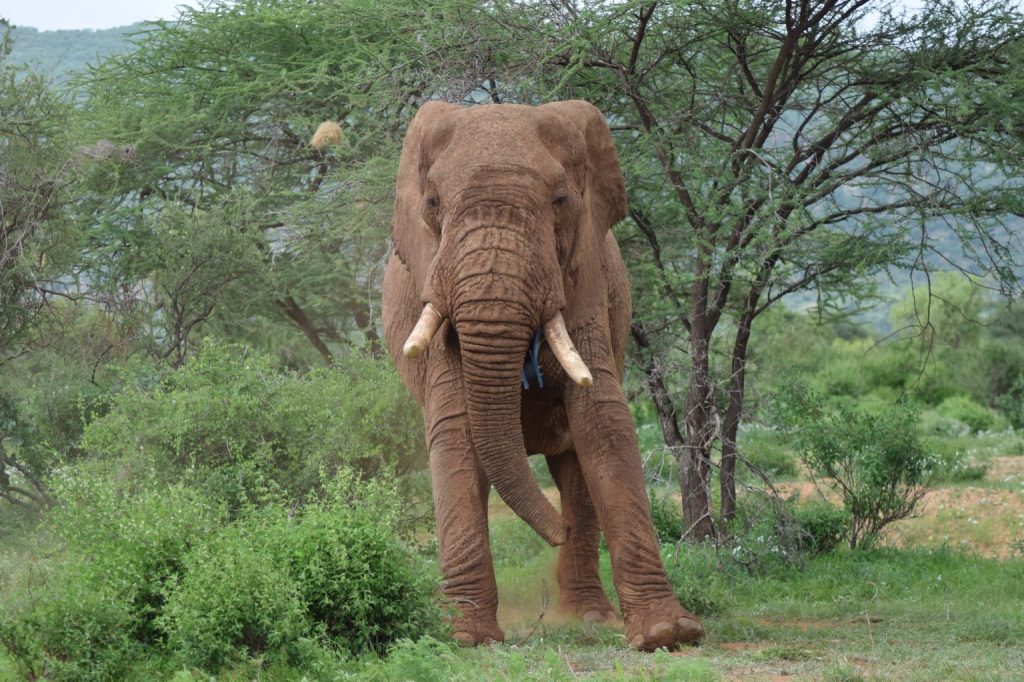
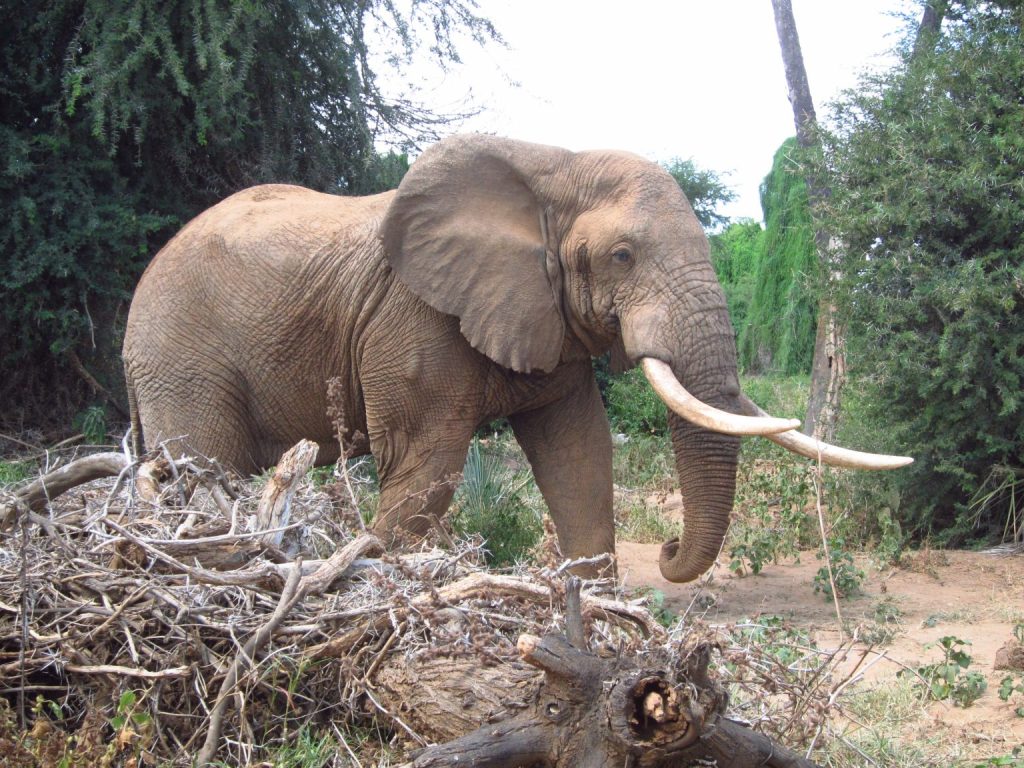
Edison in Samburu National Reserve Credit: Alice Clark/Save the Elephants

We are deeply saddened to report that one of our best-known and most beloved bull Elephants, Edison, has died. Edison’s carcass was found in Westgate Conservancy in Samburu, northern Kenya. We suspect his untimely death could be yet another tragic outcome of the rising cases of Human-Elephant Conflict (HEC) across Africa. Investigations into the cause of death are still continuing. Edison’s death marks the third loss of one of our Samburu study bull Elephants within the span of just under a year. In December, bull Elephants Sarara and Yeagar were both killed in conflict with herders.

Matt, Samburu’s biggest tusker, who faced off with Edison in Samburu National Reserve, Credit: Sarah Jacobson/Save the Elephants

Edison was estimated to be approximately 37 years old and in the prime of his life at the time of his death. Born into the Royals family and known to our researchers since he was a teenager, Edison was a feisty wild bull and quite the mama’s boy too. Most bulls venture out for a life of their own when they are around 10-12 years old but when Edison dispersed, he kept coming back to visit his family on and off for the next couple of years.

Edison’s fearless, spirited nature was well-known to many. He was never one to shy away from confrontation, even challenging older and much larger bull Elephants like the late Matt – then Samburu’s biggest tusker who died in 2019. During one dramatic stand-off between the two-testosterone-fueled bulls in 2016, Save the Elephants’ founder, Iain Douglas-Hamilton, got caught in the middle and found himself face to face with Edison who charged his vehicle.

Save the Elephants has been observing and studying the lives of Elephants for more than three decades, gaining fundamental insights into how they behave and make decisions. By analysing the data from Edison’s GPS tracking collar, STE researchers were surprised to discover that while this adventurous bull spent much of his time travelling north to far flung places such as Kipsing, Westgate, Kalama and Ol Donyiro, he would  always return home to Samburu National Reserve at full speed when in musth to find mates.

Edison was collared by our team multiple times after his collar either dropped off or the batteries ran out – GPS collars only have a lifespan of around three years. While most  collaring operations proceed without a hitch, there’s one incident which is forever etched in our minds.

Our Director of Field Operations, David Daballen, remembers running for the hills during one particular collaring mission when  Edison, an enormous bull by then, suddenly awoke just as he was about to be fitted with the tracking device. The whole team, including the vet, had to abandon what they were doing and run for safety. It turned out that the anaesthesia hadn’t fully kicked in and Edison had momentarily woken up. Fortunately , Edison dropped back to sleep and the team were able to complete the mission successfully. 

Edison’s last collaring in April 2023 was just as nail biting. Edison went down on his chest, the worst position for an Elephant to be in as they risk suffocating. This time, the STE collaring team were able to push him onto his side and he was again successfully fitted with his new collar.

STE researchers, including David Daballen (below in this picture ) recollaring Edison in Samburu National Reserve in April 2023. Credit: Gilbert Sabinga/Save the Elephants

Says David Daballen, “Losing Elephants like Edison, whom we’ve observed throughout their entire lives, is always a profound loss. Their actions and interactions offer valuable insights into Elephant society. By closely tracking and monitoring these intelligent beings, we also gain a deeper understanding of their distinct personalities and characteristics. Edison, in particular, was a bold, maybe even an audacious Elephant, unafraid to assert himself, as demonstrated when he once challenged the venerable Elephant elder, Matt. We will sorely miss his presence in the reserve and following his remarkable adventures.”

Watch the epic confrontation between Edison and Matt below.

Author: Tanya Onserio, Save the Elephants

WHAT YOU CAN DO TO HELP Save The ELEPHANTS

PLEASE PRESS HERE TO DONATE

Bhagavan ‘Doc’ Antle Of Netflix’s ‘Tiger King’ Pleads Guilty To Wildlife Trafficking And Money Laundering.

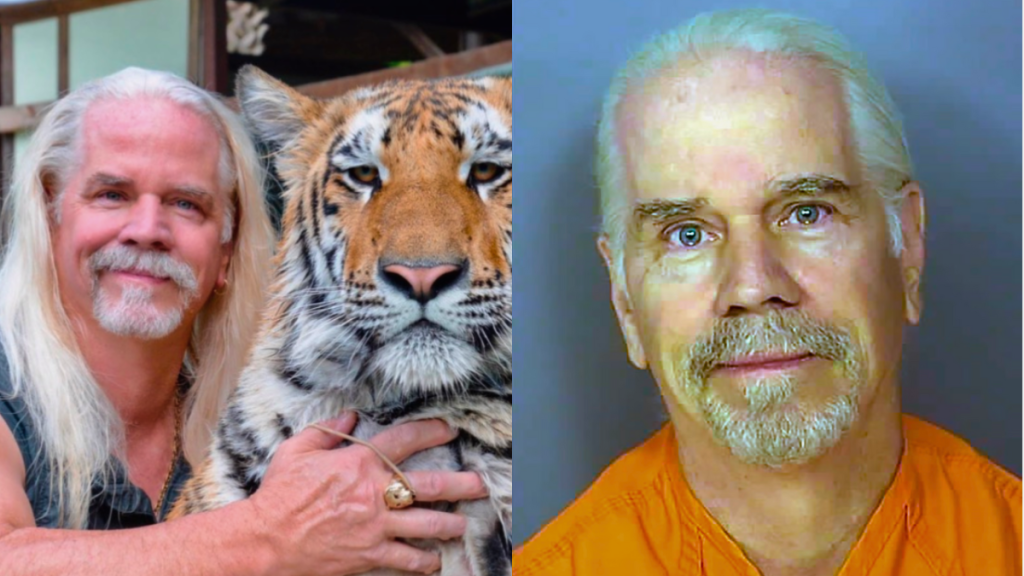
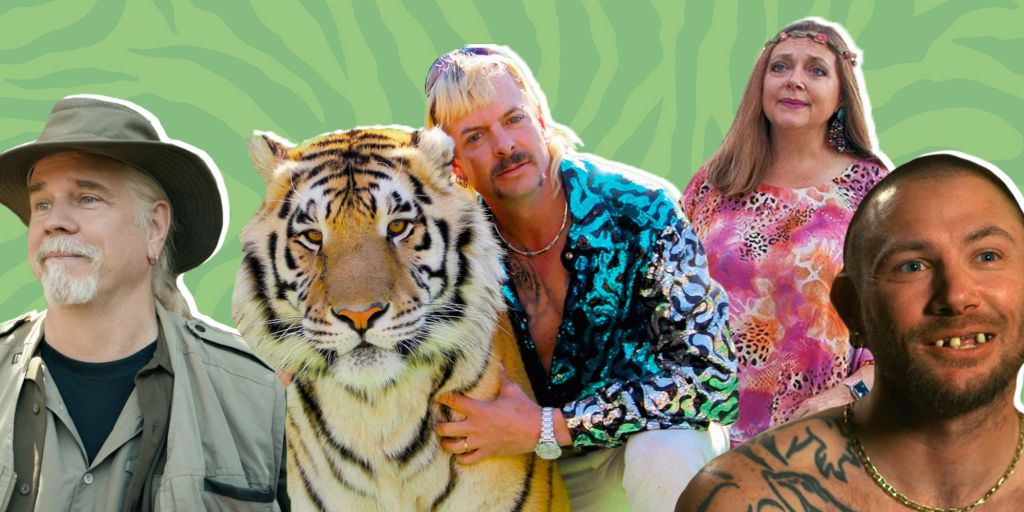
Bhagavan ‘Doc’ Antle Of Netflix’s ‘Tiger King’

An exotic wildlife preserve owner who gained notoriety on the popular Netflix series “Tiger King” pled guilty on Monday to animal trafficking and money laundering, the U.S. Justice Department announced.

Bhagavan “Doc” Antle oversaw the sale or purchase of Cheetah cubs, Lion cubs, Tigers and a juvenile Chimpanzee that were all protected as endangered species, according to a Justice Department release. Officials said the 63-year-old man featured in a documentary mini-series about the Tiger trade tried to hide animal payments as “donations” to his nonprofit organization.

“The defendant held himself out as a conservationist, yet repeatedly violated laws protecting endangered animals and then tried to cover up those violations,” Assistant Attorney General Todd Kim of the Justice Department’s Environment and Natural Resources Division said in a statement.

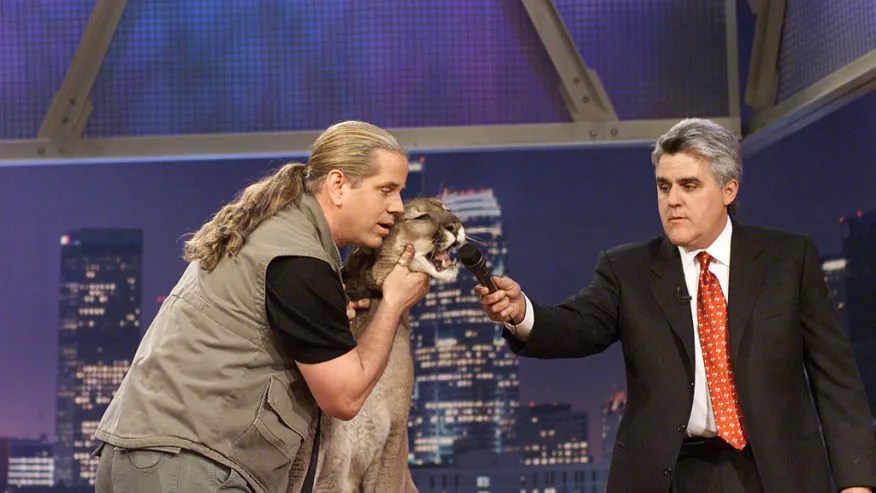
Antle On The Tonight Show Credit: Paul Drinkwater

Antle faces a maximum of five years’ imprisonment, fines up to $250,000 and three years of supervised release for each count. He is also the owner and operator of the Myrtle Beach Safari, which is also known as The Institute for Greatly Endangered and Rare Species, or T.I.G.E.R.S., prosecutors said. The safari is a 50-acre nature preserve that offers tours and the chance for private encounters with wildlife, prosecutors said.

Antle faces a maximum of five years’ imprisonment, fines up to $250,000 and three years of supervised release for each count. 

Investigators found evidence that Antle and a coconspirator had also used cash acquired through the transportation and harboring of immigrants who illegally entered the country.

It’s the latest fallout for the subjects of “Tiger King: Murder, Mayhem and Madness.” Joe Exotic, the show’s star, is serving a 21-year prison sentence for trying to hire two different men to kill animal welfare activist Carol Baskin. The ongoing feud between Joe Exotic — whose real name is Joseph Maldonado-Passage — and Baskin featured prominently in the show. Maldonado-Passage had one year shaved off his penalty last year as he began treatment for early-stage cancer.

“Tiger King: Murder, Mayhem and Madness.” 

WHAT YOU CAN DO TO HELP ANIMALS IN NEED

You can support our work by donating as little as £5 – It only takes a minute but it can last a lifetime for an animal in need.

PLEASE DONATE HERE

PLEASE HELP ANIMALS IN NEED

Everyone who donates will receive a Certificate of Appreciation as a thank you for helping animals in need.

The Mission of Protect All Wildlife is to prevent cruelty and promote the welfare of ALL animals.

We believe EVERY animal should be treated with respect, empathy, and understanding. We raise awareness to protect and conserve wild, captive, companion and farm animals.

It is vital that we protect animals against acts of cruelty, abuse, and neglect by enforcing established animal welfare laws and, when necessary, take action to ensure that those who abuse animals are brought to justice.

Protect All Wildlife are involved in many projects to protect animals’ rights, welfare, and habitats. Money contributed to Protect All Wildlife supports ALL of our worthy programmes and gives us the flexibility to respond to emerging needs. Your donations make our work possible.
As The Internet Went Into Meltdown Over The Killing Of Cecil The Lion By Minnesota Trophy Hunter Walter Palmer, Another Man Was Causing A Stir After A Photo Published In National Geographic Went Viral At The Same Time.

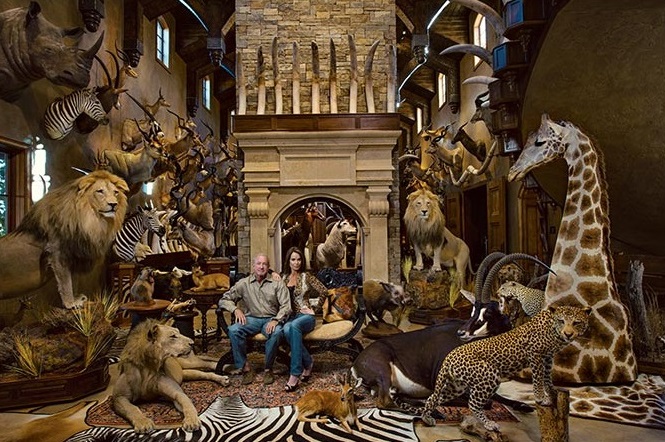
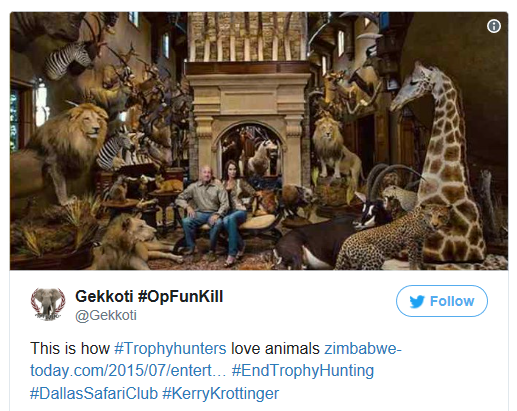
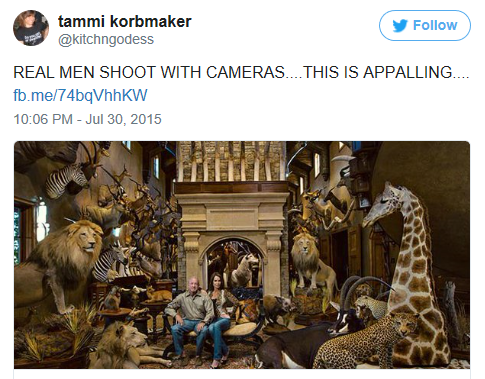
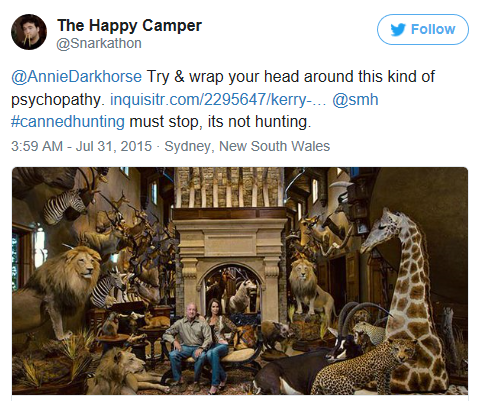
Kerry and Libby Krottinger in their ‘Wall Of Death’ room

Kerry Krottinger, a wealthy Texas hunter and businessman, has slaughtered so much African wildlife over the years that he amassed a veritable “wall of death” in his Dallas home. The National Geographic portrait depicts him sitting with his wife among the taxidermied bodies of Lions, Rhinos, Cheetah, Giraffes and enough Elephant tusks to open a traditional Chinese hospital.

The British-based charity LionAID, which uploaded the photo to their Facebook page, took a markedly dim view. “This is just one Texas trophy hunter with a ‘love’ of Africa,” they write. “Is it any wonder that Africa’s wildlife is disappearing? Just have a count of the various species displayed. Three Lions? So many Elephant tusks? A Giraffe? A Rhino? Kerry must be one of the leading CONservation hunters on the planet!”

Little is known about Krottinger’s personal life. Aside from being an energy millionaire with multiple companies to his name, he and his wife Libby operate a Gypsy horse farm called Ndugu Ranch. A website about the property had been taken offline, but a cache copy can be viewed here. A Facebook page also associated with the ranch was also taken down. Next to a smiling photo of the pair, Krottinger wrote he named the ranch after the Swahili word for “brother” or “family member,” and that the couple has “a great love for Africa.”

Krottinger’s kingly haul of animal carcasses was acquired through what’s known as “conservation hunting,” a practice that is supposedly designed to protect species by allowing people to hunt animals for a high fee that’s then to be used for other conservation efforts.

Far from poachers, conservations hunters — and the websites that promote them — see themselves as environmentalists. LionAID’s director Pieter Kat said the whole premise was nonsense.

“Conservation hunting is a complete myth,” he told Mic. “If conservation hunting had been effective, Cecil the Lion would not have to have been poached out of a national park, because conservation hunting would have maintained a viable and sustainable Lion population within their own trophy hunting concession.” According to Kat, steep fees like the more than $50,000 Palmer paid to kill Cecil typically end up in the pockets of tour operators. “Sustainable hunting does not sustain anything,” he said.

PETA president Ingrid Newkirk was blunter still. “The idea of killing animals to ‘protect’ their species is like having 5-year-olds build a child-labor museum,” she said in a statement to Mic. “True conservationists are the people who pay to keep animals alive through highly lucrative eco-tourism, not the power-hungry people who pay for the cheap thrill of taking magnificent animals’ lives and putting their heads on a wall.”

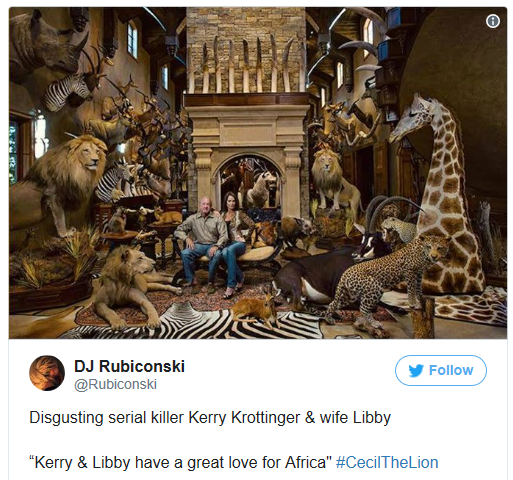
On Twitter, the response was one of almost universal disgust, with the photo generating near Cecil-levels of rage.

Screenshot (5)
Screenshot (6)
Screenshot (4)
Screenshot (7)

Kat was unapologetic about the Krottinger-shaming on LionAID’s Facebook page. “What we were trying to do there is to alert people to the fact that trophy hunters have this sort of enjoyment of their activity, and what we would like to expose to people is these sorts of people belong in the 19th century,” he said.

WHAT YOU CAN DO TO HELP ANIMALS IN NEED

You can support our work by donating as little as £5 – It only takes a minute but it can last a lifetime for an animal in need.

PLEASE DONATE HERE

PLEASE HELP ANIMALS IN NEED

Everyone who donates will receive a Certificate of Appreciation as a thank you for helping animals in need.

The Mission of Protect All Wildlife is to prevent cruelty and promote the welfare of ALL animals.

We believe EVERY animal should be treated with respect, empathy, and understanding. We raise awareness to protect and conserve wild, captive, companion and farm animals.

It is vital that we protect animals against acts of cruelty, abuse, and neglect by enforcing established animal welfare laws and, when necessary, take action to ensure that those who abuse animals are brought to justice.

Protect All Wildlife are involved in many projects to protect animals’ rights, welfare, and habitats. Money contributed to Protect All Wildlife supports ALL of our worthy programmes and gives us the flexibility to respond to emerging needs. Your donations make our work possible.
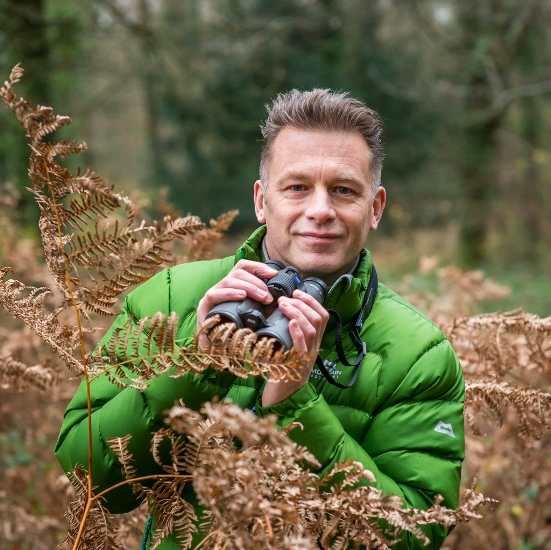
Chris Packham Wins Libel Action Against Fieldsports Channel Ltd & Andrew (Ben) O’Rourke

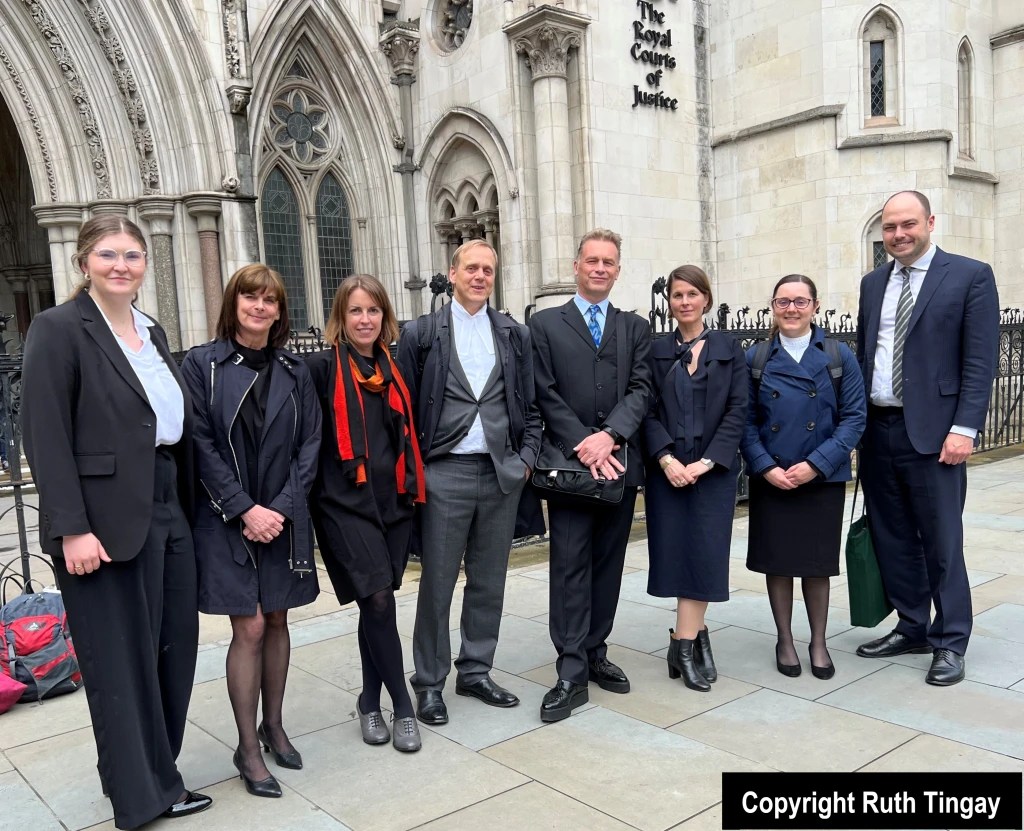
Chris Packham outside the Royal Courts of Justice complex in London

Press release from Leigh Day (6 November 2023)

Chris Packham settles defamation claim with Fieldsports Channel after it admits death threat claims were untrue.

Environmental campaigner and naturalist Chris Packham CBE has settled a defamation claim against the website Fieldsports Channel after it falsely accused him of writing a fake death threat letter to himself.

The online shooting and hunting channel has agreed to pay Mr Packham substantial damages and contribute to his legal costs as well as provide an undertaking never to repeat the allegation.

In June 2022, Fieldsports Channel and one of its journalists, Ben O’Rourke, published an online video and article alleging the TV presenter had written a fake death threat letter to himself and lied about it being sent by an anonymous third party. The serious allegation was not put to Mr Packham directly to offer him right of reply.

Chris Packham with his legal team. Credit: Ruth Tingay.

In bringing the claim against Fieldsports Channel Ltd and Mr O’Rourke, Mr Packham’s lawyers argued the allegations were plainly baseless and had caused him enormous reputational damage and distress. They pointed out that the only possible basis for the allegation was handwriting analysis of the letter which has since been comprehensively discredited.

Of particular concern to Mr Packham was the implication he had lied to his family about the death threat, knowing it would cause them considerable anxiety. Also, that he had lied to, and knowingly wasted the time of, Hampshire Police, who investigated the letter and on whom he relies for his and his family’s safety.

Mr Packham’s distress was later compounded by Fieldsports Channel’s derisive response to his claim, in particular mounting caricatures of his head on a “trophy wall” at the British Shooting Show in February 2023. Mr Packham has been the victim of arson attacks and has received numerous death threats, and he considers its actions to have been utterly reckless and irresponsible in that context.

As well as paying Mr Packham substantial damages and contributing to his legal costs, Fieldsports Channel and Mr O’Rourke have agreed never to repeat the allegation and will publish a legal statement, which is also to be read in the High Court on 6 November 2023, explaining the matter on its platforms.

Mr Packham was represented by Mr Jonathan Price and Ms Claire Overman of Doughty Street Chambers, who are instructed by partner Tessa Gregory and solicitor Carol Day of law firm Leigh Day.

Chris Packham, naturalist, television presenter, writer, photographer, conservationist, campaigner and filmmaker.

Chris Packham said:

Fieldsports TV displayed a complete contempt of even the basic codes of real journalism. They allowed a vicious vendetta to drive a targeted catalogue of lies in an attempt to destroy my credibility, integrity and reputation. Further, even when involved in this litigation they recklessly posted images of myself contrived to fuel hatred amongst fire-arms owners when they knew I was already the victim of targeted attacks from members of this community. They also failed to show any respect for the legal process. As a consequence, Fieldsports TV have now issued a full apology and agreed to pay substantial costs and damages. My message is clear – if anyone publishes or perpetuates lies about me or my conduct I will challenge them and I will win.”

Carol Day, solicitor at law firm Leigh Day said:

Our client Mr Packham was the subject of an egregious slur against his reputation based on the flimsiest of evidence that failed to stand up to even the most basic form of scrutiny. To be accused of writing a fake death threat to himself, with all the consequences that brings for his family and the authorities, was a highly damaging attack on Mr Packham’s integrity. The fact he was then mocked publicly for objecting to these defamatory remarks shows how little regard the defendants had for the reputation of others. Our client can only hope that lessons have been learned from this sorry episode and it brings an end to these gratuitous attacks on Mr Packham’s character by people who simply disagree with his views.

WHAT YOU CAN DO TO HELP ANIMALS IN NEED

You can support our work by donating as little as £5 – It only takes a minute but it can last a lifetime for an animal in need.

PLEASE DONATE HERE

PLEASE HELP ANIMALS IN NEED

Everyone who donates will receive a Certificate of Appreciation as a thank you for helping animals in need.

The Mission of Protect All Wildlife is to prevent cruelty and promote the welfare of ALL animals.

We believe EVERY animal should be treated with respect, empathy, and understanding. We raise awareness to protect and conserve wild, captive, companion and farm animals.

It is vital that we protect animals against acts of cruelty, abuse, and neglect by enforcing established animal welfare laws and, when necessary, take action to ensure that those who abuse animals are brought to justice.

Protect All Wildlife are involved in many projects to protect animals’ rights, welfare, and habitats. Money contributed to Protect All Wildlife supports ALL of our worthy programmes and gives us the flexibility to respond to emerging needs. Your donations make our work possible.

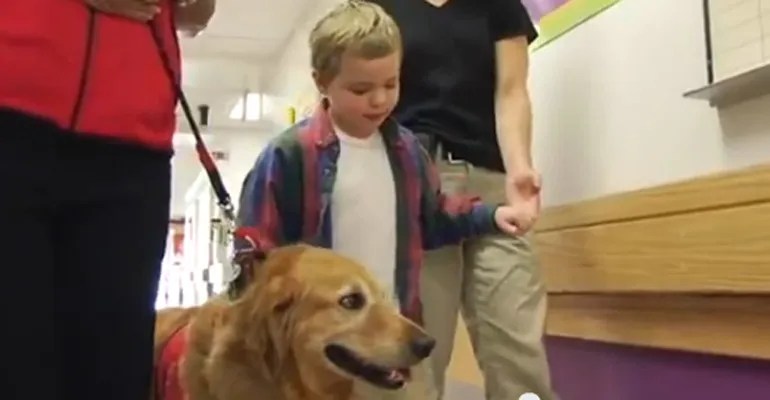
A Sick, Lifeless Boy Says ‘Goodbye’ To Dog, But A Miracle Happens When The Therapy Dog Lays Next To Him…

CALEB AND COLONEL CREDIT: BEN HOWARD

A young, six-year-old boy named Caleb was traveling with his parents and siblings when a negligent driver swerved into their lane, colliding with their car. The young driver, who was just a kid himself, unintentionally took the lives of Caleb’s mother and both of her children, but six-year-old Caleb miraculously survived. His injuries were nevertheless severe enough to be life threatening.

Although he was the only surviving member, Caleb had sustained serious injuries. While his fractured bones would mend, his traumatic brain injury might result in death, paralysis, and brain damage, which went on for a long time. To assist him, Caleb’s father and grandmother did whatever it took; however, each day was a struggle.

Nobody knew what the result of these two approaches would be. The doctors suggested a non-traditional therapy by using a canine. To see if having a dog by Caleb’s side might stimulate activity and, in turn, healing, the medical team wanted to try basic interaction. While he was hesitant, Caleb’s father agreed.

They decided to give it a try and crossed their fingers that this miracle would save their child.

CALEB’S STORY CREDIT: INTERNATIONAL THERAPY ANIMALS

The therapy session began and a dog Colonel walked in. How could an animal sort the whole situation out?! The dog was brought in and the doctors made him lie and sit down next to the injured boy.

Colonel, a golden retriever, served as an inventive and non-invasive way for Caleb to obtain “medicine.” The dog sat beside him quietly with his trainer Susan. They waited for Caleb to react in some manner, but it did not take long at all.

CALEB RELAXING WITH COLONEL CREDIT: BEN HOWARD

Even when Colonel lay on Caleb’s hospital bed, wiggling his way almost onto Caleb’s tiny body to keep him company, and even attempting to mount him while asleep, Caleb reacted. His heart rate increased, and his respiratory function improved. Something wonderful was happening, and it was all thanks to the only modification in Caleb’s routine: Colonel.

The boy glowed whenever Colonel came to see him. The medical team was shocked. Caleb quickly became more awake, wanting to sit up and interact with the adorable dog. Colonel influenced Caleb in an inexplicable manner both physically and emotionally.

BEST FRIENDS CREDIT: BEN HOWARD

Caleb was playing catch with Colonel. And giggling! Sure, it took time and patience– as well as a team of doctors to family– but it was Caleb who truly connected to him on another level that itself encouraged healing.

FOLLOW UP TO CALEB’S STORY CREDIT: INTERNATIONAL THERAPY ANIMALS

WHAT YOU CAN DO TO HELP ANIMALS IN NEED

You can support our work by donating as little as £5 – It only takes a minute but it can last a lifetime for an animal in need.

CLICK HERE TO DONATE PLEASE HELP ANIMALS IN NEED

Everyone who donates will receive a Certificate of Appreciation as a thank you for helping animals in need.

The Mission of Protect All Wildlife is to prevent cruelty and promote the welfare of ALL animals.

We believe EVERY animal should be treated with respect, empathy, and understanding. We raise awareness to protect and conserve wild, captive, companion and farm animals.

It is vital that we protect animals against acts of cruelty, abuse, and neglect by enforcing established animal welfare laws and, when necessary, take action to ensure that those who abuse animals are brought to justice.

Protect All Wildlife are involved in many projects to protect animals’ rights, welfare, and habitats. Money contributed to Protect All Wildlife supports ALL of our worthy programmes and gives us the flexibility to respond to emerging needs. Your donations make our work possible.
A Dog Of War Finds A Loving Furever Home After Cheating Death Twice In Ukraine

Henry, a dog that twice cheated death in Ukraine after being rescued from floods and surviving a Russian bombing has found a new furever home.

Henry The Dog Of War Credit: Save The Dogs

Heartbreaking footage captured the crossbreed, named Henry, clinging for life in the rubble of a building after the Kakhovka dam in Kherson was destroyed.

The sound of missiles dropping can be heard in the background as rescuers made their way through flood water to rescue the stricken pooch in June.

To avoid drowning, brave Henry managed to doggy-paddle to the remains of a bombed-out building poking out of the flood waters.

To avoid drowning, brave Henry managed to doggy-paddle to the remains of a bombed-out building poking out of the flood waters. Credit: Save The Dogs

He was taken to a clinic in Odesa for round the clock treatment after being found alone, scared and covered in toxic sludge which burned his skin.

But his ordeal didn’t end as shortly after his rescue, the animal clinic caring for him was bombed by the Russians.

Despite the bombardment, Henry and the other animals escaped unharmed and he was moved to another clinic where he continued to receive treatment.

Just four months on and he is in a loving new home thanks to Save the Dogs (STD).

Gregg Tully, Country Director for Save The Dogs, revealed how Henry was originally found “collapsed, exhausted and barely conscious”.

He said: “After the dam in Kherson exploded, [Henry] was one of the dogs that was pulled out of the flood waters.

“He was covered in oil and sludge. There was a lot of toxic material at the bottom of the reservoir that washed out with the flood.”

Henry was covered in oil and sludge Credit: Save The Dogs

The thick coat of toxic oil coating his fur also caused painful chemical burns to his skin.

Gregg added: “We thought he was a black dog – we thought this dog was all black.

“And then he was cleaned up and taken to a vet clinic, and actually, he’s more white than black.

“He’s still very underweight and he still has some skin problems, but he obviously loves people and is a really happy dog.

“It’s been really inspiring after seeing the videos of him getting pulled out of the flood waters, and now he’s a happy, loving dog in a loving new home.

Henry looking VERY happy in his furever home.

WHAT YOU CAN DO TO HELP RESCUE ANIMALS

You can support our work by donating as little as £5 – It only takes a minute but it can last a lifetime for an animal in need.

CLICK HERE TO DONATE https://donorbox.org/miracles-mission

Everyone who donates will receive a Certificate of Appreciation as a thank you for helping rescue animals in need.

OUR MISSION STATEMENT

‘Animals that use wheels and prosthetics can live as good a  quality of life as fully able-bodied animals and this is what we want to show people’ ~ Victoria Bryceson, founder of Miracle’s Mission.

We do not receive financial support from the government or other institutions. We rely solely on donations from generous animal lovers. 

Animal rescues cost a lot of money to run. While we get donations and funding through events like charity runs etc, the costs are EXTREMELY high. We need to pay for food, heating and other bills, as well as any staff costs and expenses like petrol for home visits. 

The average cost to feed a dog for one month typically costs somewhere from £16 to £50, depending on the breed. Microchipping costs about £10 to £15. The average cost of essential vaccinations is £64. A routine vet appointment costs between £40-£60, surgery can cost anywhere over £1000. Physiotherapy, Hydrotherapy – the average cost is £50 for a 30-minute session. Prosthetics and dog wheels etc can cost up to £500.

Please help Miracle’s Mission continue to rescue, rehabilitate and rehome

MANY MORE sick, injured and disabled animals by kindly donating ANY amount, large or small, today. Thank you.

Donate at: https://donorbox.org/miracles-mission

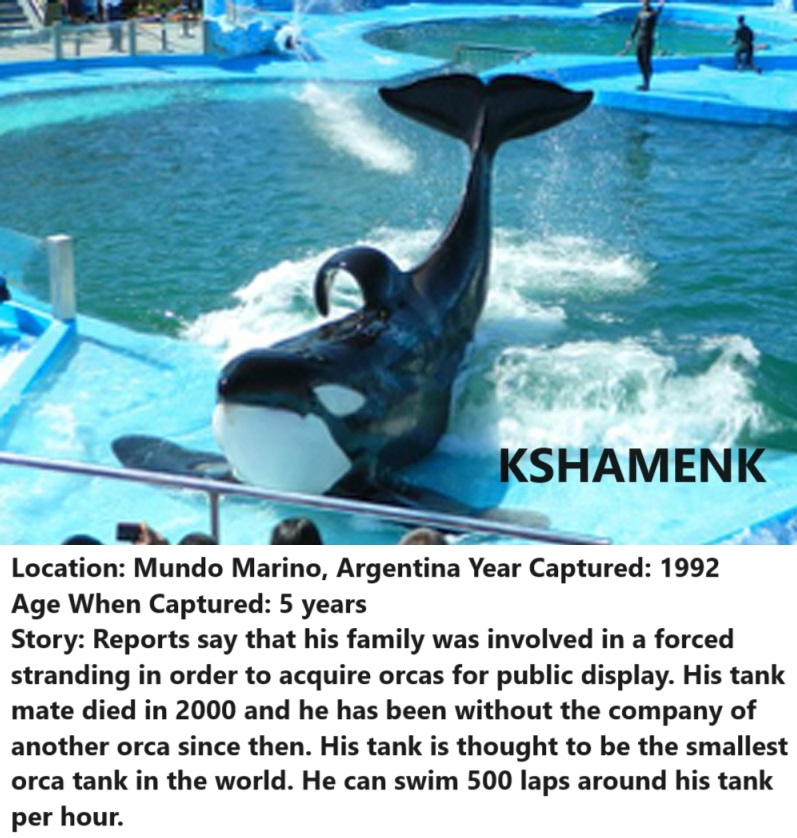
‘World’s Loneliest Orca’ Kshamenk Seen Swimming Alone And Barely Moving In Tiny Pool TWENTY Years After Partner’s Death

A LONELY orca has been filmed swimming by itself in captivity – barely able to move in a tiny pool.

Kshamenk has lived in captivity at Mundo Marino since 1992 Credit: UrgentSeas, Phil Demers

The 35-year-old whale, known as Kshamenk, has lived in captivity at Mundo Marino since 1992 when he was caught in the wild. He had a mate, known as Belen, but she died in 2000, leaving the lonely orca alone. Now a new video shared online shows the orca in a tiny pool at the marine site.

The devastating video shared to social media has gone viral 20 years after the heartbroken orca’s partner died.

Kshamenk has lived in captivity at Mundo Marino since 1992 Credit: UrgentSeas, Phil Demers

He appears very still, floating in the middle of the pool, as a Dolphin swims around him. In the wild, Kshamenk would swim anywhere up to 140 miles in a single day as they swim huge distances over the course of a year.

Animal activist and co-founder of UrgentSeas, Phil Demers, visited the park where he filmed the footage to share knowledge of the lonely Orca’s troubling existence. Phil from Canada, said: “Kshamenk was captured from the wild and brought to the park to accompany another Orca, Belen Sadly, Belen died in 2000 after pregnancy complications, leaving Kshamenk to live with only two Dolphins.

“His sperm has been sold several times to SeaWorld to impregnate orcas. The Argentina government refuses to release Kshamenk or export him out of the country. He appears to be losing weight and is more lethargic in recent videos causing growing concerns for his well-being. Unless Kshamenk is rescued soon, he too will die tragically and senselessly. We must fight for Kshamenk!”

Phil put the video up on his Instagram page. The post has had more than 13,135 likes, as well as 1,290 comments from shocked users.

One said: “This is horrifying. No animal should live like this.”

As another commented: “Imagine being locked in a white padded room for 50 years since you were a baby.

“No education. This is a jail. Solitary confinement.”

Other posts called the treatment “so awful”,  as he can’t even move around while some called it “so sad and heartbreaking”.

A final man went on a passionate cry for help on behalf of nit only Kshamenk but all orcas trapped in captivity.

The man known as Mickey said: “Immoral to the highest degree. #FreeKshamenk and GLOBAL BAN these damn parks, already.

“There are literally thousands on thousands of other things to do than spend ticket money on these hell holes.”

Many agreed with Mickey and labelled it as “complete torture”.

A woman said: “These animals are meant to live in the ocean, not in that damn tank.”

Phil added: “A campaign to outlaw his current captivity is gaining momentum in Argentina by local activists, so bringing awareness and sharing his story surely supports their efforts. It breaks my heart to see Kshamenk’s conditions. He needs to be rescued.”

WHAT YOU CAN DO TO HELP ANIMALS IN NEED

You can support our work by donating as little as £5 – It only takes a minute but it can last a lifetime for an animal in need.

CLICK HERE TO DONATE PLEASE HELP ANIMALS IN NEED

Everyone who donates will receive a Certificate of Appreciation as a thank you for helping animals in need.

The Mission of Protect All Wildlife is to prevent cruelty and promote the welfare of ALL animals.

We believe EVERY animal should be treated with respect, empathy, and understanding. We raise awareness to protect and conserve wild, captive, companion and farm animals.

It is vital that we protect animals against acts of cruelty, abuse, and neglect by enforcing established animal welfare laws and, when necessary, take action to ensure that those who abuse animals are brought to justice.

Protect All Wildlife are involved in many projects to protect animals’ rights, welfare, and habitats. Money contributed to Protect All Wildlife supports ALL of our worthy programmes and gives us the flexibility to respond to emerging needs. Your donations make our work possible.