A Testimony To Why Trophy Hunting Is A Vacuous Void, Devoid Of Any Moral Or Ethical Compass That Undermines Africa’s Indigenous Culture.

Below, is the full testimony of an anonymous source, a former member of the Oxford University Wildlife Conservation Research Unit (WildCRU) team that radio-collared and studied Cecil prior to him being killed.

CECIL LIVED IN HWANGE NATIONAL PARK, IN ZIMBABWE. HE WAS LURED OUT OF THE PARK WITH AN ELEPHANT CARCASS BY AMERICAN TROPHY HUNTER WALTER PALMER

This anonymous source’s first-hand account of the killing of Cecil 7 years on is an appropriate testimony, not only to the callous way in which American trophy hunter Walter Palmer et al took this pride male Lion’s life for their own self-gratification and/or financial enrichment (the ethos of trophy hunters and the industry that panders to them in general), but also a testimony to why trophy hunting is a vacuous void, devoid of any moral or ethical compass that undermines Africa’s indigenous culture. That is why the long outdated, notion of a bygone era of colonial entitlement and the predominantly white foreigner’s self-proclaimed ‘right’ to kill African wildlife for sadistic entertainment as espoused by trophy hunting must end:

“The physical act of a white hunter coming in and going out on their exploratory adventure, to conquer and kill an animal – that act rehearses the history of colonialism. That point is not lost on people who live in local communities, and it should not be lost on those of us from the country sending trophy hunters” (page 146) – Dr Chelsea Batavia

Senior environmental scientist

“When I started reading the narratives of trophy hunters, I was struck more than anything by the similarity with the narratives of terrorists when they talk about what they do” (page 151) – Professor Geoff Beattie, Professor of Psychology, Edge Hill University. Author, ‘Trophy Hunting: A Psychological Perspective’

The economic forces that drive the trophy hunting industry can be replaced with a balanced approach that enriches Africa’s own cultural identity and interaction with its native wildlife, free from the imposition of the destructive, greed-based desire of the trophy hunting colonial mindset and its bloated lobby heavily financed by vested interests.

ANON – a former member of the Oxford University Wildlife Conservation Research Unit (WildCRU)

“I worked for close to a decade as a field researcher on the Hwange Lion research project in Hwange National Park, Zimbabwe. The initial focus of the work was the impact of trophy hunting outside the park on the Lions inside the park. There was a lot of darting, collaring and observational data to collect. I spent 7 days a week tracking Lions, catching and collaring them and getting to know them. Soon that developed into a study of the conflict between people and Lions, a subject I eventually specialised in.

Cecil was a very large mature Lion in Hwange. He was special because very few male Lions ever survive as long as he did, and thus a lot was made of his huge mane and the fact that it was black. The black mane is a genetic trait that is quite strong in Hwange Lions, but very few Lions survive long enough for it to present. Cecil was dominant over some of the best Lion real-estate in Hwange and this too was the area best for tourists. That is why he was so well-known. He had large prides and he was seen daily by tourists. Cecil was very much in his prime when he was shot, despite him being 12 years old or so. The hunters made a case that Cecil was old and therefore past his prime, but that was not true. He was still breeding and in perfect condition. He was considered old because most Lions are shot long before getting to that age. He was one of two males in a coalition. They were unrelated but had forged an alliance because together they were stronger.

On the night of the 1st of July 2015, a couple of professional hunters (PHs) and their client were sitting about 40 or 50 metres from a blind overlooking a dead elephant. Between 9 and 10pm Jericho, Cecil’s coalition partner, ran past the blind and started feeding on the elephant. Jericho was a very large Lion in his own right and was about a year younger than Cecil. His saving grace was that he was blonde. Walter Palmer – the trophy hunter who shot Cecil – has subsequently said that he didn’t know about Cecil and hadn’t come to hunt Cecil specifically. However, the fact that they didn’t shoot Jericho while watching him feed for over an hour meant that they knew that a larger and darker Lion – the traits a trophy hunter prefers – was still to come.

BROTHERS IN ARMS: THE LAST KNOWN PHOTOGRAPH OF CECIL (WITH BROTHER JERICHO STANDING BEHIND HIM)

Cecil arrived about an hour later. Walter Palmer let loose his arrow. Cecil ran off wounded. The hunters left to go back to camp for the night. Normally when a client is about to shoot a Lion from a blind, his professional hunter (PH) is ready too with his rifle. If the client’s shot doesn’t kill the Lion instantly, then the PH shoots the animal to “secure it”. This is common practice because a wounded Lion is dangerous to follow up and nobody wants to do it. The PH is professionally obliged to “back up” the client’s shot to avoid a wounded animal. In this case, however, Walter Palmer had told his PH not to back him up. The reason for this was that Walter Palmer was after Safari Club International’s bow-hunting record for a Lion. If a rifle was subsequently used, then the bow-hunting record would have been disallowed. So Cecil ran off wounded, and the hunters simply went back to camp.

In the morning, at around 9am, the hunters returned and tracked Cecil down. He was badly wounded and hadn’t gone far. Walter Palmer then finished him off with a second arrow. From statements made to police, we understand that when Palmer and the PH approached the Lion they saw the collar and panicked. The PH said that he took the collar off and placed it in a tree before following his client. When he returned he said the collar was gone. We know from the GPS data that the collar was collecting, however, that they then gave that collar to someone who carried it around for a couple of days to mimic a Lion’s movements in order to confuse us and presumably buy time to get the client out of the country. On the morning of July 4, the collar sent its last GPS point and was presumably destroyed. We never found it.

There was no permit for hunting a Lion in that area. The PH had purchased a Lion quota from another area. He was hoping to hunt Cecil and export it as one of the others shot elsewhere. Illegal practices such as those are relatively commonplace.

During my time as part of the Lion project, it happened maybe a dozen times that we know of. Usually the collar is destroyed and we only find it months later. In Cecil’s case he had a new satellite technology collar which meant all its data is sent to a server and even when the collar is destroyed the data is safe and accessible.

CECIL ENJOYS A MOMENT WITH A LIONESS. THE FAMOUS LION WAS KNOWN FOR BEING UNAFRAID OF HUMANS.

I became something of a pariah in Zimbabwe after the story died down. At first, when the story broke, I was the only person on the ground speaking to the press, and I was complimented by the authorities and WildCRU alike. However, when the hunting industry approached the government and told them that if they pressed for Walter Palmer’s extradition they would lose their industry, there was an about-turn.

Suddenly it was said everything was legal and no charges were pressed. I was left alone on the end of the plank, surrounded by sharks. I still had to go to meetings with the very landowners in the Gwaai Valley where Cecil had been shot where I was screamed at and accused of destroying the industry. I slept with a loaded rifle by my bed for many months, always waiting to hear a vehicle approaching our home at night. I have since been subjected to all sorts of abuse and character assassinations, including now having a file of everything I had ever posted on social media printed and given to Zimbabwe’s secret police, the CIO (Central Intelligence Organisation), the Parks authorities, local chiefs and so on. I was banned from entering the park for over a year and forced to delete my Facebook page. I have had to keep a very low profile since.

The situation of Lions today is difficult. There were 1.2 million wild Lions in the 1800s. Now there are around 20,000. They are doing well in protected areas. They are under threat from habitat loss, though, as well conflict with livestock owners which includes retaliatory killing and – worryingly – preventative killings before they kill any livestock. Lion conservation is all about boundaries. On park boundaries, where mortalities are man-related, that is where we lose Lions.

Much value is placed on the value of Lions in terms of economies, both for hunting and photographic safaris, and that is very important. However, to me these are the least important of their three values. The other two are cultural value and ecological value. The cultural value of Lions is all around for us to see. There was a premiership match a while ago between Manchester United and Chelsea. Three of the largest sports brands on earth and all three – the premier league being the third – have a Lion in their logo. That doesn’t even describe the value that the Lion represents to Africans which can hardly be quantified.

The most important aspect or value of Lions, though, is their ecological value. It is very much like the value of wolves which people are now understanding when they were lost and then reintroduced to Yellowstone National Park in the US. Lions keep landscapes healthy, rivers flowing and arid areas regenerating whilst avoiding desertification. Simply put, Lions keep browsing animals bunched in dense herds moving which avoids overgrazing. Savannahs are healthier with Lions. The loss of Lions would be a catastrophe for the people of Africa and for the globe to have lost the most iconic species on earth. Economies would suffer and ecosystems would have lost a key component that keeps millions of hectares of Africa from becoming desertified.

PALMER SHOT CECIL WITH A BOW AND ARROW ONCE THE LION LEFT THE SAFETY OF THE PARK, ONLY WOUNDING HIM. HOURS PASSED BEFORE THEY FINISHED HIM OFF

The 2015 IUCN Red Data analysis on Lions reported that trophy hunting was one of the main contributors “to an astonishing decline of 42% of the continent’s total Lion population.” Trophy hunting is detrimental because it targets the largest animals. With Lions, trophy hunters target the males with the darkest manes too. In nature, if a male has those two traits – in other words, he is the largest and darkest male in the area – then he is the pride male. Period. So hunters are targeting the very animal that is maintaining pride stability and holds all the best genes. The loss of that individual is felt for months after his death and over a large area for many species including ours. When a pride is stable and the male is in tenure undisturbed, his male offspring usually leave the pride at about 3.5 – 4.5 years old. They often leave in coalitions and have had plenty of hunting experience to allow them to fight for a territory and take one over for themselves. They are considered adults and will avoid humans and their livestock as a rule. The daughters will tend to stay with their mothers and that continuity is the maintenance of a pride and their territory.

CECIL’S PRIDE: CECIL’S CUBS IN 2015

If a pride male dies naturally, in a fight for instance, the new male is probably stronger with some genetic advantage. He will kill all the cubs from his predecessor and very quickly mate with all receptive females and get his genes into the system as soon as he can. And rightly so, as he is the strongest male around now. If the pride male is hunted, though – and we know that trophy hunters target the pride males by virtue of the fact they are after the largest, darkest males – then the weaker males that couldn’t beat the pride male move in after the hunter has left with his trophy, and the stronger male’s cubs are killed and replaced with weaker genes. We have seen a situation where a coalition of four males in a pride were trophy hunted and up to 16 cubs and sub-adults were killed by new males after the fact. So we don’t just lose 4 males – we lose 20 Lions altogether from that hunt.

Infanticide as I have described sounds all very clinical, but Lionesses if nothing else are the best mothers alive and they hardly just sit and allow their cubs to be killed.

They either fight, in which case they too can be killed, or they flee. Africa’s parks are large, but the Lionesses will flee to the only place that an adult male won’t follow her to kill the cubs, and that is often amongst people. When they leave the parks to avoid infanticide and find themselves amongst people, they rarely find wild prey to live off.

So they may start killing livestock. I noticed this pattern many years ago and I know that WildCRU has the data but they won’t publish it for fear of upsetting the people that give them their permits to study Lions – for example, the Parks department managers who receive money from Lion hunting.

As a result, we are told that trophy hunting is not the largest source of Lion mortality but that conflict with livestock is. This story shows that trophy hunting is in fact a major, if not the major, driver of that conflict. Ironically, the hunters that are responsible for the conflict spikes are often called in to deal with the “problem Lions” with no mention of the fact that they caused it. We have had prides of Lionesses birth 4 or 5 cohorts of cubs and not see a single one reach adulthood because they are caught in this cycle. No sooner have they moved out of the park and started killing livestock than they lose their cubs to snares and “problem animal” control. If the Lionesses survive they now move back to the park without cubs to protect and mate with the new males. Their own cubs are born when hunting season comes around and those males are killed too.

The Truth About Cecil’s Death and The Future of Africa’s Lions

And so the process repeats itself. All the time, Lions are getting the blame and hunters are seen as saving the day. Conflict work is the hardest work of all, especially if you are trying to be sensitive to people and protecting Lions. I have attended meetings where every man attending had an axe on his shoulder for me if the meeting went badly! Yet in Hwange, we know without a shadow of doubt that trophy hunting had the single most significant effect on Lion mortality. As Dr Andrew Loveridge of Oxford University WildCRU has written, levels of hunting mortality exceeded deaths of Lions in conflict with people or killed in wire snares set by poachers and also far outstripped natural levels of mortality. Other sources of mortality such as retaliatory and pre-emptive killing of conflict Lions are often driven by trophy hunting too. So the total impact of trophy hunting is enormous.

Lions breed quickly and their numbers can recover very swiftly once hunting is stopped. We saw Hwange’s Lion population nearly double in the 4 years that Lion hunting was stopped. By allowing the pride males to mature, their protection means that Lionesses lose fewer cubs to Hyaenas. The sub-adults leave later when they are more experienced and can get a territory, rather than get chased around by adult Lions until they too escape the park and predate on livestock – and end up being killed as a ‘problem’ animal.

What perhaps churns my stomach most are the prizes offered by groups such as Safari Club International. To win the highest Safari Club International award, it is estimated that a trophy hunter must kill more than 300 animals. This is one of the strongest arguments against trophy hunting. The hunting and killing of animals purely for ego is a colonial relic that has no place in modern humanity. Pro-hunters argue that if we stop hunting, then the lands that are set aside for it quickly turn to alternative, less Lion-friendly land uses. Slave owners and traders used a similar argument to counter the proposed abolition of slavery. If you ban slavery without finding an alternative source of labour then you won’t have sugar in your coffee, they might say. But that was not an excuse to keep an inhumane system going. It was banned, and people were forced to find an alternative, and so will conservationists when trophy hunting is banned.

MAJESTIC

If you wait, though, then there is no incentive to change. I actually advocate for traditional hunting in protected areas believing that people too are key components of healthy ecosystems, and traditional hunting is a disturbance activity that keeps animals moving and avoids overgrazing. Trophy hunting, though, has no place in African culture. If we are to strengthen Africa’s appreciation and protection of their natural heritage, we must look for links to their cultures. Currently, trophy hunting makes traditional African hunting illegal, and we call them poachers – while rich foreigners come and kill the wildlife with a red carpet rolled out for their arrival. It is vile and has to be consigned to history. These animals should not be sold and hunted as a commodity, but rather they should be part of a strong cultural and ecologically healthy system.

To ensure the survival of Lions, we need to get Africans to feel that the Lions are theirs and not only there for the privileged foreigners to shoot. Often I hear that there are people who have signed a letter saying that the world should leave Africa to manage its wildlife the way it sees fit. I agree with that in principle. However, when I read the list of names, especially from Zimbabwe, I see nobody who represents ordinary people. I see politicians with interests in the trophy hunting industry promoting hunting as “Africans managing their wildlife”. Trophy hunting has no place in African tradition. It is very easy to assemble corrupt people to sing the new song that the powerful trophy hunting lobby want to push, namely that trophy hunting is about promoting African self-determination.

I do believe Africans should decide how to manage their natural resources, but it is almost that they need to be allowed to re-learn what this means. All our park managers are trained by the colonial system under the “if it pays it stays” mantra. Let us instead promote a system change where self-confident Africans, who know what Lions and other wildlife mean to them culturally, and without outside influences, decide what to do with their rich resources. That is paramount. The rest will come easily after that.

I have advocated for the Lion to be declared the first World Heritage Species. This means not seeing it as a tax to ensure the survival of Lions, but rather as a celebration of an animal that means so much to all of humanity. Brands that use Lions for their marketing should come under pressure to pay into a fund that supports the types of work I describe above. Lions are important, but they are also the most efficient means of protecting large areas and a plethora of other species. If you give Lions what they need, their prey will be looked after and their landscapes as well as the people that have to live with them.

It is time to ban trophy hunting, set up Lion as the first World Heritage Species, and raise funds from businesses that use Lions in their marketing. That money should be used to protect Lion landscapes with less stick and more carrot, build up Africans in a way that they can explore what Lions and their wildlife resources mean to them both culturally and ecologically, and empower them to make those decisions.

BELOW ARE PHOTOS OF WALTER PALMER WHO KILLED CECIL IN THE PRIME OF HIS LIFE

US TROPHY HUNTER WALTER PALMER (LEFT) WITH ANOTHER LION HE KILLED
PALMER IS SNAPPED HERE WITH A RHINO THAT HE APPARENTLY PAID £13,000 TO KILL
PALMER WITH A LEOPARD FROM HIS NOW CLOSED FACEBOOK PAGE

© BRENT STAPELKAMP

PROTECT ALL WILDLIFE

We believe EVERY animal should be treated with respect, empathy, and understanding. We raise awareness to protect and conserve wild, captive, companion and farm animals.It is vital that we protect animals against acts of cruelty, abuse, and neglect by enforcing established animal welfare laws and, when necessary, take action to ensure that those who abuse animals are brought to justice.

Protect All Wildlife are involved in many projects to protect animals’ rights, welfare, and habitats. Money contributed to Protect All Wildlife supports ALL of our worthy programmes and gives us the flexibility to respond to emerging needs. Your donations make our work possible.

Go back

Your message has been sent

Warning
Warning
Warning
Warning
Warning
Warning.

Elephant Hit By Train In West Bengal’s Dooars Passes Away After Struggling For Hours.

The incident happened in the Jalpaiguri district of the state.

THE AFTERMATH OF THE COLLISION

The Banarhat-Nagrakata train route passes through a major Elephant corridor often leading to such tragic accidents involving Elephants.

The heart-wrenching video that surfaced on various social media platforms showed the critically injured Elephant trying hard to drag itself out of the railway track, as people watched in helplessness, after being hit by the engine of the intercity express.

The video shows the impact of the injury on the poor animal while people watch helplessly. In 2004, the Dooars line was converted from metre gauge to broad gauge; a move that saw a sharp increase in Elephant deaths.

END THIS HEARTACHE

But despite all the precautionary measures and efforts, such as speed limits and buzzers, trains on the Dooars route have continued to kill Elephants.

In the period between 2013 to June 2019, a total of 67 Elephants were killed in train-related accidents.

Actor Randeep Hooda said in a twitter post “The agony of the Elephant is quite evident in the video, the impact can be gauged by the damage to the engine.

I humbly urge the ministry to drastically reduce speed of trains through this area, humans can easily manage slight delay to keep wildlife safe”

For the sake of the Elephants, let’s hope they listen and reduce the speed of trains through the corridor.

ELEPHANTS CROSSING THE TRACKS IN WEST BENGAL

WHAT CAN WE DO TO HELP

Protect All Wildlife are supporting Voice for Asian Elephants Society with their campaign to help stop Elephants from being crushed by speeding trains. They are piloting an early warning system to alert train drivers of Elephants presence, with enough time for the speeding train to stop and the sirens will also warn Elephants.

For the month of July Protect All Wildlife are donating ALL proceeds from sales of items raising awareness to animal welfare. Visit the on-line shop at https://protect-all-wildlife.ecwid.com/

SOME OF THE FUND-RAISING ITEMS AVAILABLE AT THE PAW STORE

Go back

Your message has been sent
Warning
Warning
Warning
Warning
Warning
Warning.

Baby Elephant Max Squeezes Into The Back Of A Four-Seater Plane To Escape Poachers Who Slaughtered His Family

This is the incredible moment a baby elephant was flown in the back of a four-seater plane to escape from poachers who slaughtered its entire family.

The young orphan, named Max, was rescued after 100 other elephants, including its relatives, were killed by poachers between Chad and Cameroon in Central Africa.

It was squeezed into the back of the small aircraft alongside Gary Roberts, an American nurse and missionary, before being flown to Mr Roberts’s house for medical treatment.

Footage shows the 353lb elephant waving its trunk around as it sits in the plane, before gripping a bottle of water in its jaws.

‘With an animal that size, you can feel its weight shifting in the aircraft,’ Mr Roberts later told BBC News.

Unfortunately, Max died just a few days after his ordeal in March 2013 as a result of his traumatic experience and the cow’s milk he was fed in a village before being rescued.

Social media users have deemed the video ‘heartbreaking’ with many condemning the poachers for their ‘massacre’ of the baby elephants’ family.

One wrote: ‘A sad story of genuine humans giving it all to try and save the only survivor of poachers’ massacre.’ Another added: ‘How sad that the elephant died after all that effort.’

 Original article by Sophie Jane Evans for Mail Online September 2014.

African elephant species now Endangered and Critically Endangered – IUCN Red List

52 Sad Poaching Statistics You Must Know (2022 UPDATE)

What you can do

Support ‘Protect All Wildlife’ by donating as little as £1 – It only takes a minute but it can last a lifetime for an animal in need. Thank you.

Protect All Wildlife are involved in many projects to protect animals’ rights, welfare, and habitats. Money contributed to Protect All Wildlife supports ALL of our worthy programmes and gives us the flexibility to respond to emerging needs. Your donations make our work possible. Thank you your support.

We believe EVERY animal should be treated with respect, empathy, and understanding. We raise awareness to protect and conserve wild, captive, companion and farm animals.It is vital that we protect animals against acts of cruelty, abuse, and neglect by enforcing established animal welfare laws and, when necessary, take action to ensure that those who abuse animals are brought to justice.

Go back

Your message has been sent
Warning
Warning
Warning
Warning

Go back

Your message has been sent

Warning
Warning
Warning
Warning
Warning
Warning.

Why Ricky Gervais Is An Animal Rights Legend

Ricky Gervais has carved an incredibly successful career from making people laugh but it’s no joking matter when it comes to standing up for the rights of animals!

In 2014, Ricky famously declared; “Animals don’t have a voice. But I do. A loud one. I’m a fucking big mouth. My voice is for them. And I’ll never shut up while they suffer”. And true to his word, Ricky is constantly shouting from the rooftops about bringing an end to animal cruelty. Whether it’s fighting against Fox hunting or battling a historic Bull fight when it comes to all creatures great and small, Ricky has their back.

Thanks to his celebrity status from films and TV, Ricky has a staggering following on Twitter and Facebook and he regularly uses social media to make people sit up and listen. One carefully worded tweet to his millions of followers can bring global attention to animals in fear or danger within seconds. He can encourage charity donations to come flooding in and get everyone talking about shocking examples of cruelty around the world.

In the past, Ricky has used social media to highlight the atrocity of 10,000 dogs slaughtered every year at the annual Chinese Yulin Dog Meat Festival and campaigned to bring it to an end.

He has individually named and shamed ‘big game hunters’ as they’ve posed by their bleeding ‘trophies’. Ricky also posted this message on his Facebook page – “I’m sick of Trophy Hunters trying to excuse their grim sport by saying they provide a service. They exploit the needs of the poor. They pay lots of money to go and shoot a magnificent animal because the authorities need the cash, and then claim they are doing a good deed. It’s not a good deed. Those authorities would rather have the money AND the animal still alive but they can’t afford to. So they’re forced to take money from rich psychopaths who get their cheap fucking thrills from shooting a giraffe or elephant in the head. If they were providing a service THEY would be the ones being paid. Imagine a vet paying you to put down your dog and then taking a selfie next to the corpse. And as for “the money goes to saving there remaining animals”. Oh dear. Where will it end? Can you pay more to kill the Leopard with a hammer if that’s your perversion? They’re already killing with bows and arrows for fucks sake. And would we allow some billionaire sicko to shoot one cancer patient if he gave a million dollars to cancer research? No. Of course we fucking wouldn’t. If they really wanted to do a good deed they would donate the money, and NOT shoot the animal. They would be heroes then. As opposed to murdering scum”.

Why Ricky Gervais Is Every Cowardly Trophy Hunter’s Worst Nightmare!

B_ksRtFWIAAC-eN

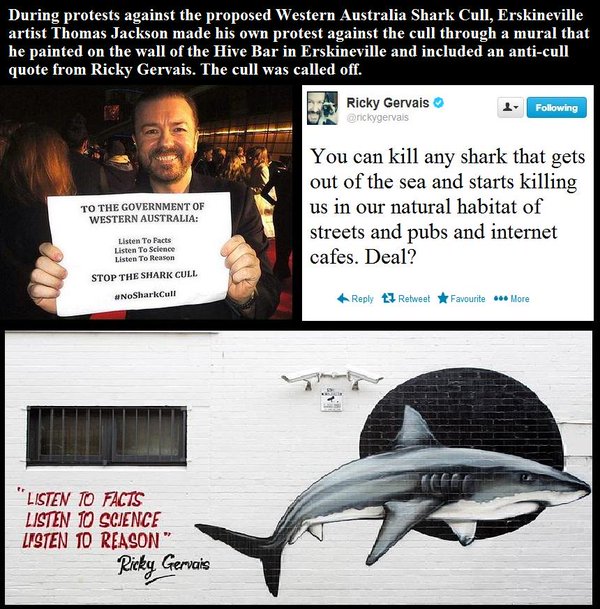
In 2014, Ricky lent his considerable Twitter celebrity to the campaign against Western Australia’s controversial Shark kill policy. He appeared on social media holding up a sign decrying the WA government plans to catch and kill any shark 3m or over that comes within 1km of a Perth beach. It read: “To the government of Western Australia – Listen to Facts, Listen to Science, Listen to Reason – Stop the Shark Cull.” He also used his appearance at the British National Television Awards.

A local street artist made his own protest by painting a mural on a building which included the anti-cull quote by from Ricky. The cull was later called off!

Also in 2014, Ricky symbolically adopted one of the 130 moon Bears on a Bear bile farm in Nanning, China, a farm that’s set to transition into Animals Asia’s third moon Bear sanctuary. Ricky named the young male Bear, Derek, after his comedy-drama.

L to R – Peter Egan, Ricky’s partner Jane Fallon, Ricky and Jill Robinson (founder of Animals Asia)

Derek was a ten-year-old Bear with a host of problems, as a result of a life trapped in a cage where workers would extract his bile. His head is raw from years of rubbing his head against the bars of his small cage, and most of his teeth have fallen out, with the exception of a few rotten teeth which badly needed to be extracted. His lolloping tongue is a result of a nerve damage, while his right eye suffers from a cataract.

14968357424_8e94abfb9d

“Derek is a beautiful but very damaged Bear,” said Ricky. “After such a sad and traumatic existence on a Bear farm I am thrilled to have adopted him as one of 130 Bears currently being rescued by Animals Asia in China and long to see him enjoying his new life in the sun! I so admire this historic initiative to turn a Bear farm into a sanctuary and applaud the efforts of everyone involved.”

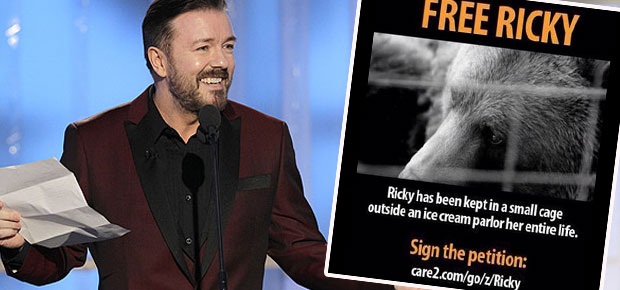
In the USA in 2015, a female black bear called Ricky who spent 18 years in a cage was freed after a settlement in a lawsuit brought by the Animal Legal Defense Fund

a8d5734f69674490892076fa81db2633

The lawsuit was filed by in December 2014 on behalf of concerned Pennsylvania residents against Jim Mack’s Ice Cream, where Ricky had lived in a small, concrete cage, eating a mix of corn and dog food funnelled onto the floor of her enclosure.

Ricky’s plight drew national attention, and tens of thousands of people (including Ricky) signed petitions requesting her release..

Again in 2015, Ricky helped hundreds of shelter dogs desperately lacking food and medical care. When an influx of 680 dogs arrived at a public shelter in Odai, Romania, the workers knew these dogs didn’t have anywhere else to turn. Despite not having enough food, bedding or even bowls for water, the shelter took them in. They needed help and fast, so London-based partner rescue, K-9 Angels created a fundraising page with an urgent plea for donations “to ease the emergency situation at the shelter.” Over the course of several days, the group had raised only about £4,000 for the Romanian shelter. The money was enough to make sure the dogs had enough food for about two months, but it didn’t come anywhere near what the shelter needed to pay for basic supplies, vaccinations and labour costs. In fact, it was about £26,000 short. That’s when Ricky stepped in and posted the following tweet.

“Within days we had raised £20,000. Before Ricky retweeted we had only raised £4,000 so it just goes to show the power that animal loving celebs have. We are very grateful,” K-9 Angels founder Victoria Eisermann. The group showed their gratitude with a post in which they called the comedian “an angel” for sharing their fundraiser page. Eisermann added that the group even honoured Ricky by naming one of the young puppies “Ricky.”

Lately,  Ricky has been very vocal about Lucy’s Law, the campaign to end the heart-breaking puppy farming trade. Lucy’s Law is named after a remarkable Cavalier Spaniel called Lucy who was rescued from a Welsh puppy farm and became a celebrity in her own right on social media before her death more than a year ago. Ricky regularly posted details on Twitter and Facebook leading to it being a short distance from becoming law.

rickylucy

Ricky’s passion and ability to be vocal has made millions of people painfully aware of such issues as the slaughter of whales in the Faroe Islands and the stolen pet dogs of Thailand that are destined for the illegal meat trade.

Ricky also reminds us all of the huge number of animals in rescue shelters and the importance of the hashtag #AdoptDontShop with his numerous posts.

ADOPT DONT SHOP 1

Ricky is driven to raise awareness and get signatures on petitions that pile pressure on governments. He has put his name to campaigns with charities such as PETA and the Humane Society International. Ricky won’t stop until animals are protected from blood sports, their fur is no longer used as a fashion statement, the Yulin ‘festival’ ends and the last SeaWorld ‘fish tank’ is empty (etc etc!)

This year Ricky donated £427,243 to animal charities from the sale of premium seats for his stand-up tour Supernature.

It was split three ways between International Animal Rescue, Animals Asia and Nowzad which each received just over £142,400. 

Ricky said: ‘It is such a privilege to be able to help animals in need, simply by doing a job that I already love.’

Ricky is undoubtedly a voice for all animals and it’s fair to say the world is listens to him.

And a final quote from Ricky……

BE KIND TO ANIMALS

This is only a small part of what Ricky has done for animals over the years.

…….and THAT is why Ricky Gervais is a animal rights legend!!

Protect All Wildlife

The Mission of Protect All Wildlife is to prevent cruelty and promote the welfare of ALL animals.

We believe EVERY animal should be treated with respect, empathy, and understanding. We raise awareness to protect and conserve wild, captive, companion and farm animals.

It is vital that we protect animals against acts of cruelty, abuse, and neglect by enforcing established animal welfare laws and, when necessary, take action to ensure that those who abuse animals are brought to justice.

Protect All Wildlife are involved in many projects to protect animals’ rights, welfare, and habitats. Money contributed to Protect All Wildlife supports ALL of our worthy programmes and gives us the flexibility to respond to emerging needs. Your donations make our work possible.

Thank you for your support and consideration.

Go back

Your message has been sent

Warning
Warning
Warning
Warning
Warning
Warning.

Bhogeshwara, Asia’s ‘Longest-Tusked’ Elephant Dies Of Natural Causes.

RIP BHOGESHWARA

The Elephant was a major attraction for tourists at the Kabini backwaters. The 60-year-old Elephant was found dead in the Gundre range of Karnataka’s Bandipur Tiger Reserve.

The Elephant was named Bhogeshwar by the forest department officers and tribals after he was often sighted near Bhogeshwar camp, where a temple and an anti-poaching camp are located. “Many tourists would be delighted and pleased on catching a glimpse of him, even if they were not able to sight a Tiger in Kabini. The tusker has also featured in several wildlife documentaries and films made by the department and some private organizations,” said a forest department official.

Bhogeshwara, reportedly the Elephant with the longest tusks in Asia, died of natural causes at the age of 60, according to officials. The wild Elephant, also known as Mr Kabini, was found dead in the Gundre range of Karnataka’s Bandipur Tiger Reserve on Saturday. The officials believe that he died three or four days ago.

According to forest department officials, Bhogeshwar’s tusks were 2.54 meters and 2.34 meters long.

Known for his gentle temperament, the Elephant frequented the Kabini backwaters for the last three decades. Wildlife enthusiasts who observed Bhogeshwara say that his calmness and long tusks used to attract the tourists at Kabini.

The director of the Bandipur Tiger Reserve, Ramesh Kumar, said: “The field staff found the carcass. We did not find any injury marks and the tusks were intact. Usually as they age, Elephants cannot eat properly due to the wearing of their teeth. The tusks were removed and carcass was left for the natural decomposition and scavengers to feed on,” he said.

FIELD STAFF WITH THE BODY OF BHOGESHWARA

The forest department in April came out with a notification that the carcass of the wild animals will not be incinerated or buried since they are an important source of energy and nutrients for predators and scavengers. The new rule, however, does not apply to tigers.

Meanwhile, tributes poured on social media for Bhogeshwara .

Protect All Wildlife

The Mission of Protect All Wildlife is to prevent cruelty and promote the welfare of ALL animals.

We believe EVERY animal should be treated with respect, empathy, and understanding. We raise awareness to protect and conserve wild, captive, companion and farm animals.

It is vital that we protect animals against acts of cruelty, abuse, and neglect by enforcing established animal welfare laws and, when necessary, take action to ensure that those who abuse animals are brought to justice.

Protect All Wildlife are involved in many projects to protect animals’ rights, welfare, and habitats. Money contributed to Protect All Wildlife supports ALL of our worthy programmes and gives us the flexibility to respond to emerging needs. Your donations make our work possible.

Thank you for your support and consideration.

Please support our work by donating ANY amount, large or small. It only takes a minute and your donations make it all possible. Thank you for your support.

Go back

Your message has been sent

Warning
Warning
Warning
Warning
Warning
Warning.

RARE BIRTH OF SUMATRAN RHINO BRINGS HOPE FOR ENDANGERED SPECIES

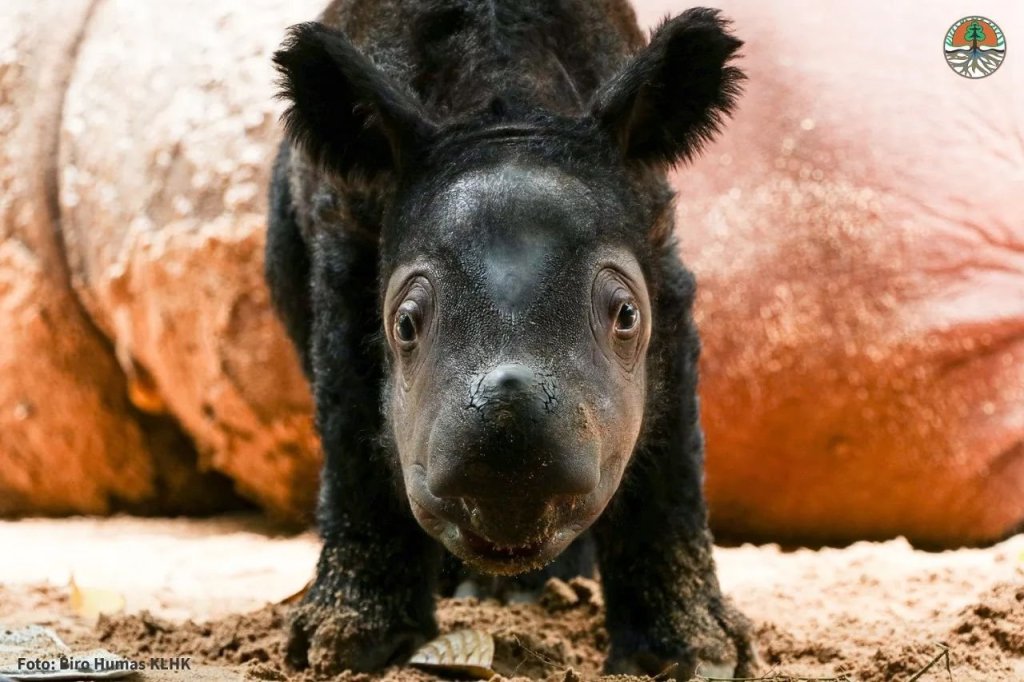
A Sumatran Rhino has successfully given birth in a Lampung sanctuary, environment officials said, in a boost for conservation efforts targeting the critically endangered animal.

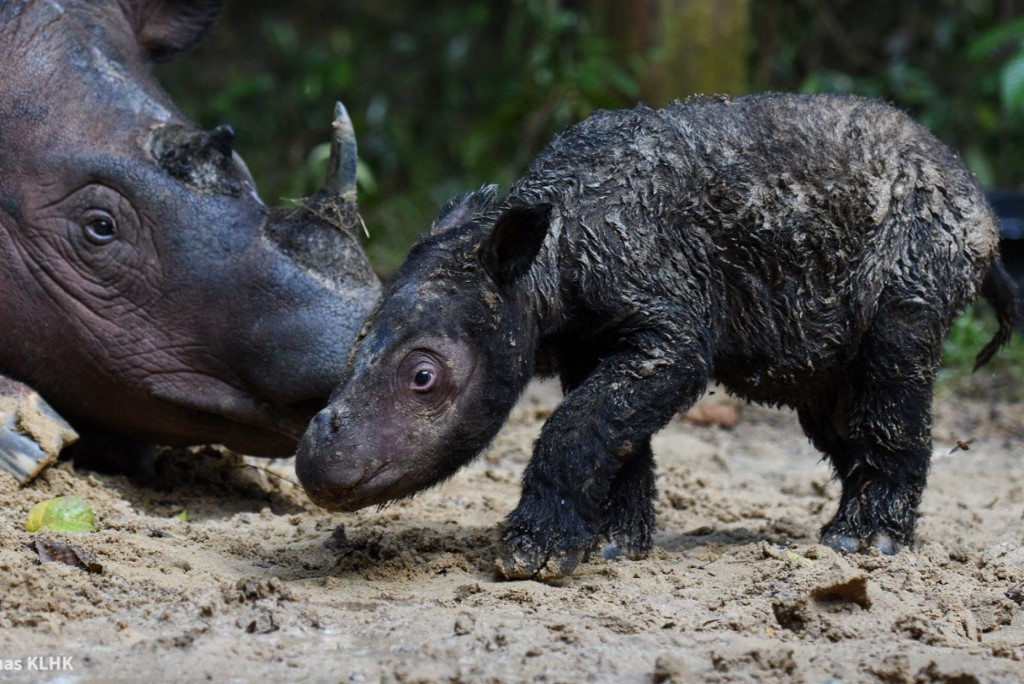
THE CLAF BORN IN WAY KAMBAS NATIONAL PARK

The World Wide Fund for Nature estimates fewer than 80 Sumatran Rhinos remain in the world, mainly in Sumatra and Kalimantan.

A Rhino named Rosa gave birth to a female calf on Thursday in Way Kambas National Park in Lampung, after suffering eight miscarriages since 2005, when she was brought in from the wild for a breeding program.

“The birth of this Sumatran Rhino is such happy news amid the government’s and partners’ efforts to increase the population,” Wiratno, a senior official at Indonesia’s environment ministry, said in a statement Monday. 

The calf, who has yet to be named, brings the number of Sumatran Rhinos in the Way Kambas sanctuary to eight.

Successful births are rare. The calf’s father, named Andatu, was the first Sumatran Rhino born in a sanctuary in more than 120 years.

Standing between 3.3 – 5 feet, Sumatran Rhinos are the smallest of all Rhinoceroses and they have a lifespan of around 35 – 40 years. They were once found across South and Southeast east, from the foothills of the Eastern Himalayas in Bhutan to eastern India, through Myanmar, Thailand, and  possibly to Vietnam and China. Now, the species is critically endangered, with less than 80 individuals remaining in the wild in small fragmented habitats on the island of Sumatra and nearby Borneo.

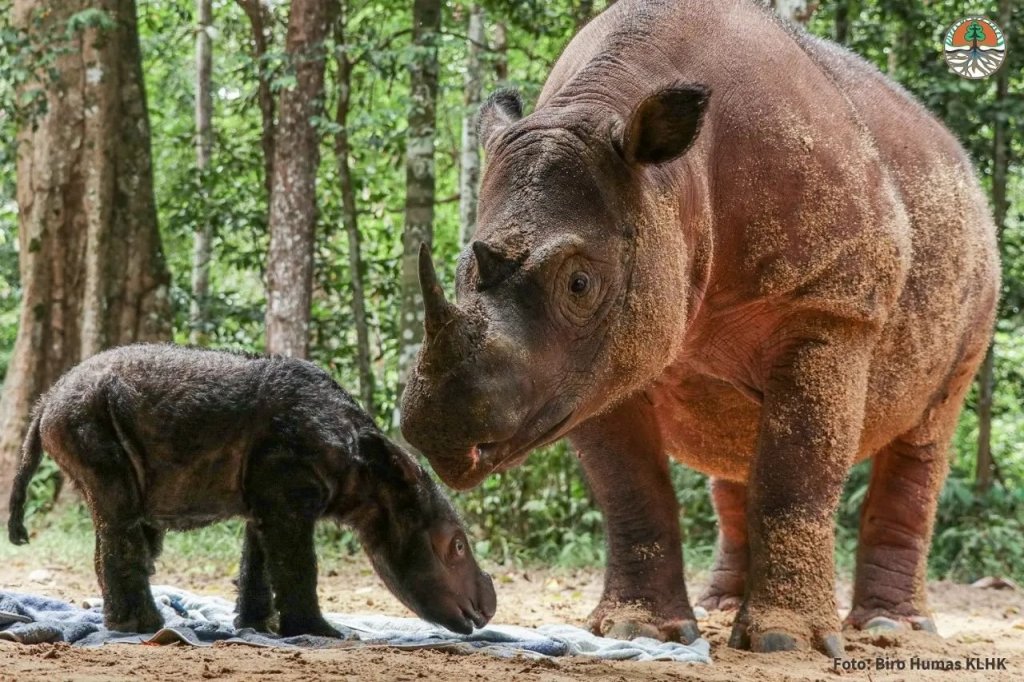
MOTHER ROSA WITH HER CALF

In 2017, Rhino conservation experts and the Indonesian government concluded that the only way to save the species was through a captive breeding program. The move was similar to an initiative launched in the 1980s that saw 40 Sumatran rhinos captured for breeding. But in this case, nearly half of the captive animals had died by 1995 and not a single calf had been born.

The International Union for Conservation of Nature classifies the Sumatran rhino, the smallest of all Rhino species, as critically endangered.

Multiple threats have brought them to the brink of extinction, including poaching and climate change.

This handout photo released on March 28 and made available on March 29, 2022 shows female rhino named Rosa (l) with her new baby born at the Way Kambas National Park, in Way Kambas, in Lampung province. Rosa delivered a baby rhino on March 24, for the first time after translocating from roaming in villages. A critically endangered Sumatran rhino was born in an Indonesian sanctuary bringing hope to the conservation of the rapidly declining species, an official said. (AFP/Handout)

Rhino horn is often illegally traded for traditional Chinese medicine. 

Indonesia is also racing to save another critically endangered species – the Javan Rhino.

Once numbering in the thousands across Southeast Asia, fewer than 80 are alive today, mainly in a national park on Indonesia’s main island of Java.

Efforts to conserve the species have shown promising results with the birth of five calves in Ujung Kulon National Park last year.

The Mission of Protect All Wildlife is to prevent cruelty, promote the welfare of ALL animals EVERYWHERE, and help END animal abuse.

Please support our work by donating ANY amount, large or small. It only takes a minute and your donations make it all possible. Thank you for your support.

Please SHARE for others to enjoy. You can also REGISTER for NEWS & UPDATES straight to your inbox by signing up in the top right of this page. Thank you.

Go back

Your message has been sent

Warning
Warning
Warning
Warning
Warning
Warning.

Royal Bengal Tiger Caught On Trap Camera In Neora Valley National Park

Royal Bengal Tiger In The Neora Valley National Park

The Royal Bengal Tiger Seen in Neora Valley National Park was caught on camera. The picture of the Royal Bengal Tiger was captured in Neora valley national park. For the past few years, the Royal Bengal Tiger has been found in the Neora Valley National Park in the Gorumara wildlife division. Once again, the Royal Bengal Tiger can be seen roaming in the forest. Some of these images were captured on The Trap Camera on Sunday. Once again the wildlife department is excited that the picture of the Royal Bengal Tiger has been captured on the trap camera.

The state’s principal chief conservator of forests, Deval Roy, said, “We have received pictures of the Royal Bengal Tiger in the forests of Neora before. But this time the picture was caught on the trap camera several times. Earlier in the winter, pictures of the Royal Bengal Tiger were captured on camera. This time the picture has been taken from December to March. It is being investigated whether the pictures taken are of the same Tiger. “

Earlier there was a lot of evidence that there were Tigers in the jungles of Neora Valley. Once upon a time, there was a Tiger in the Neora Valley, but it was not seen for several years. The foresters thought that some of the places in the forest, which are still unfit for human transport, are suitable for Tigers to live in. At times, the Tiger seems to be scratched at the base of the tree, but no forester has seen the Tiger. On January 18, a Tiger was first spotted on the side of the road from Pedong to Lava. On January 18, a driver in the hills, Anmol Chhetri, caught him on camera.

On December 19, 2017, an automobile driver named Anmol Chhetri captured the first picture of the Tiger on his way from Lava to Rishop on his mobile camera. After that, the trap camera was created by the forest department. The camera captured pictures of the Royal Bengal Tiger several times. And that’s why they guessed that there were more than one number of Tigers in the forests of The Neora Valley. Since then, more or less pictures of Tigers have been captured every year. Even last year, the Tiger was captured on camera. And once again the picture of the Tiger was caught on the trap camera kept in the forest. Ensuring the safety of the Tigers is now the only aim of the forest department. For this, the security of the forests of Nawara is being strengthened, said an official of the concerned department.

The Buxa forest has the recognition of the Tiger Project in the North East. However, there has been a debate over whether there are Tigers or not for the past few years. Meanwhile, there is a rush to bring Tigers from Vin state to Buxa. And in the meantime, the Tiger was seen in the Neora Valley. Not once, but several times.

A Tiger was first spotted in the region in January 2017 by a car driver who took photos of the big cat. Later, the same Tiger was caught on a trail camera installed by the forest department across the 88-sq km the national park in January 2018.

The Tiger Was Earlier Caught On A Trail Camera In The 88-Sq Km Neora Valley National Park

“On December 18, 2019, a trail camera captured a tiger. We are yet to analyse the image. We cannot say right now if it is a male or a female,” said Ravi Kant Sinha, principal chief conservator of forests and chief wildlife warden of West Bengal.

“A thorough analysis of all images captured in the past three years is yet to be done. So, it is not possible for us to say if there are multiple tigers or the same one is being spotted,” Sinha added.

The Mission of Protect All Wildlife is to prevent cruelty, promote the welfare of ALL animals EVERYWHERE, and help END animal abuse.

Please support our work by donating ANY amount, large or small. It only takes a minute and your donations make it all possible. Thank you for your support.

Go back

Your message has been sent

Warning
Warning
Warning
Warning
Warning
Warning.

James Cromwell Is Helping Animals Asia Group Build A Sanctuary To End Bear Bile Farming In Vietnam

Animals Asia, with help from celebrity supporters like James Cromwell, is working to build a second sanctuary in Vietnam for Asiatic Black Bears and Sun Bears rescued from bile farms.

A Bile Bear Sanctuary – Credit: Animals Asia

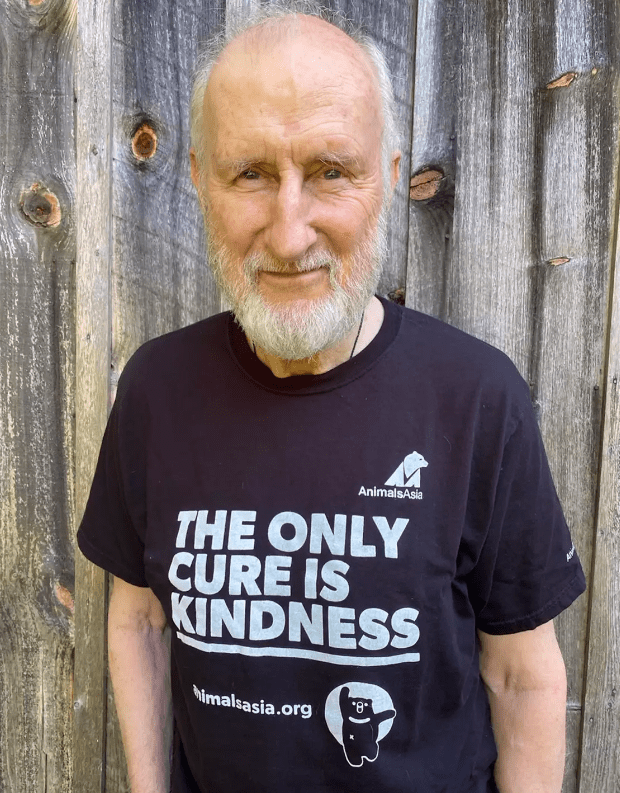
Actor and activist James Cromwell continues to give animals a voice, this time by helping Asiatic Black Bears and Sun Bears leave bile farms for a life of freedom.

Cromwell is working with Animals Asia to raise awareness about the sanctuary the charity is building in Vietnam, which is designed to comfortably hold and care for the last Asiatic Black Bears and Sun Bears currently residing at Bear bile farms across the country. Animals Asia, in collaboration with the Vietnamese government, already has a sanctuary in Vietnam, which houses nearly 200 rescue Bears.

According to Animals Asia’s founder, Jill Robinson, in 2017, Vietnam called a press conference with Animals Asia to announce their commitment to ending Bear bile farming, a practice where Bears — usually Asiatic Black Bears or Sun Bears — “are contained in tiny wire cages to immobilize them so that they can have their bile extracted from their gallbladder” for use in traditional medicine.
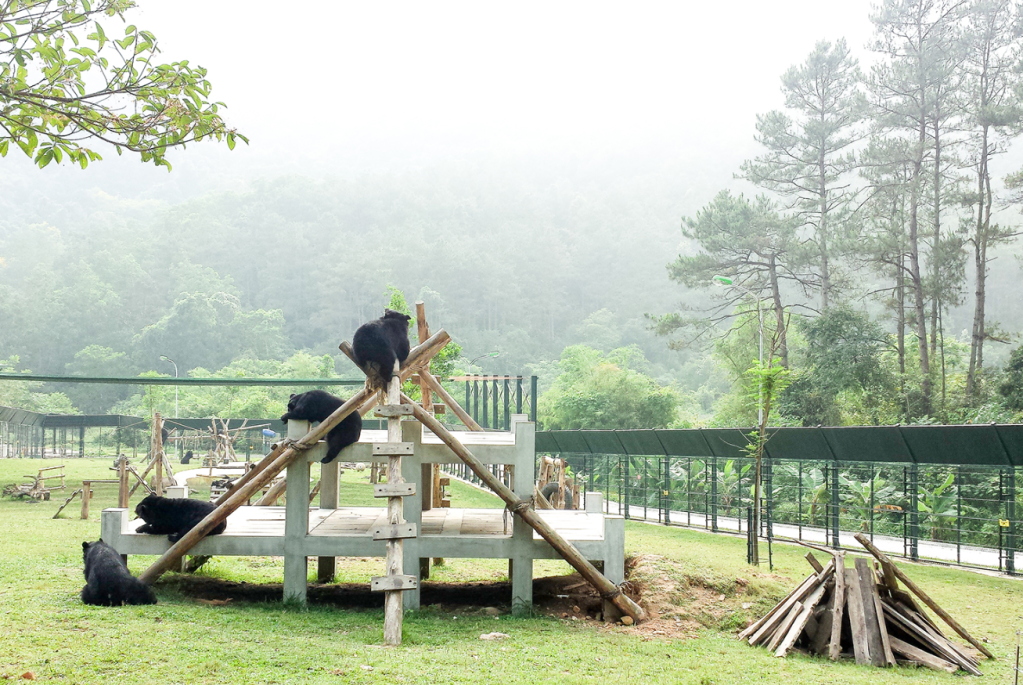
With the help of the Vietnamese government, Animal Asia has spent years moving Bears from bile farms to the non-profit’s existing sanctuary in Vietnam.
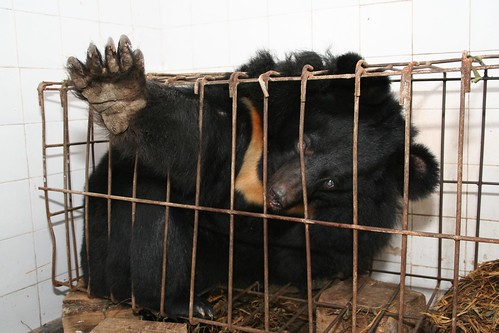
Bears Are Kept In Tiny Cages On Bile Farms For Years, Often Decades. Credit: Animals Asia
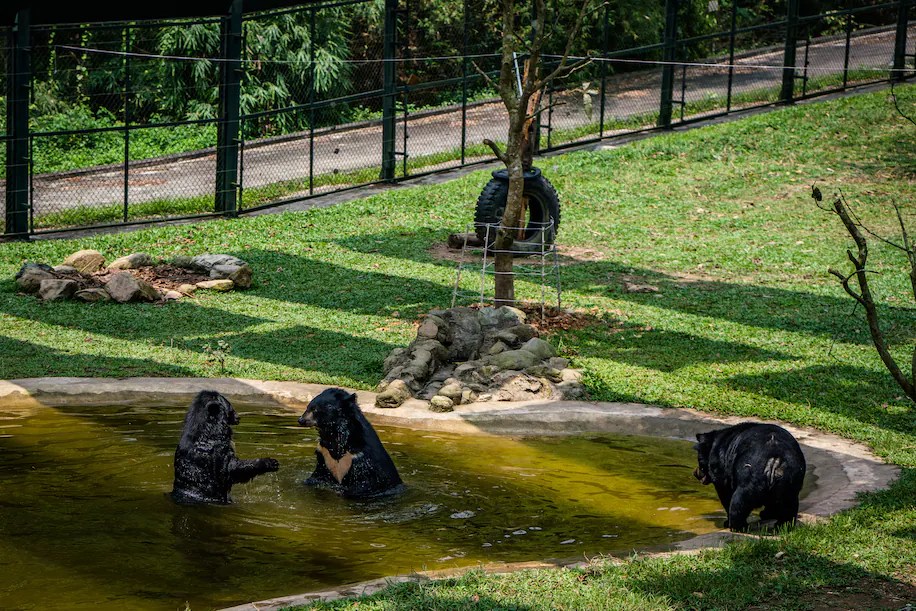
“Because the Bears are kept in tiny wire cages for their entire life, they have multiple physical and psychological problems. Very often, when we rescue them, the first thing that we’re looking at is what we call ‘Broken Bears,'” Robinson says .

“Many of them have had abdominal mutilations from where they’ve had a crude, surgical intervention to extract their bile. Many of them are blind. Many of them are missing limbs from having been caught in the wild in leg hold traps. Many of them have horrible mobility problems. Many of them have heart problems,” she adds of the cruelty Bears endure at bile farms.

Even when faced with this despair, Animals Asia knows that each Bear deserves a second chance, no matter how long recovery takes.

“They are relentless. They are courageous. They’re superhuman,” Cromwell says of the charity, which he has partnered with several times to save animals.

Actor And Animal Activist James Cromwell. Credit: Animals Asia

Founded in 1998, Animals Asia’s decades of hard work have brought the organization “to the cusp of ending Bear farming once and for all in Vietnam, which is the most thrilling thing ever because of the collaboration of the Vietnam government there,” says Robinson.

This new sanctuary will be the final step, as the existing Animals Asia sanctuary in Vietnam is almost full. There are still an estimated 310 Bears left at bile farms in the country that need a safe, permanent home.

“Hence our commitment and sense of urgency to start building this second sanctuary in Vietnam so that we can rescue the remaining number of Bears there and commit to our promise,” Robinson says.

A Bile Bear Sanctuary. Credit: Animals Asia

Plans for the new sanctuary will be publically revealed on May 27, with an event in Vietnam that Cromwell will virtually attend. While plans are in motion for Animals Asia’s second Vietnamese sanctuary, the charity is still raising the $5.8 million needed for its construction.

Cromwell hopes that animal lovers will help Animals Asia reach its goal “because we have to learn the lesson from these creatures.”

Robinson says that the rescue Bears she meets in Vietnam continue to amaze her with their strength and forgiveness.

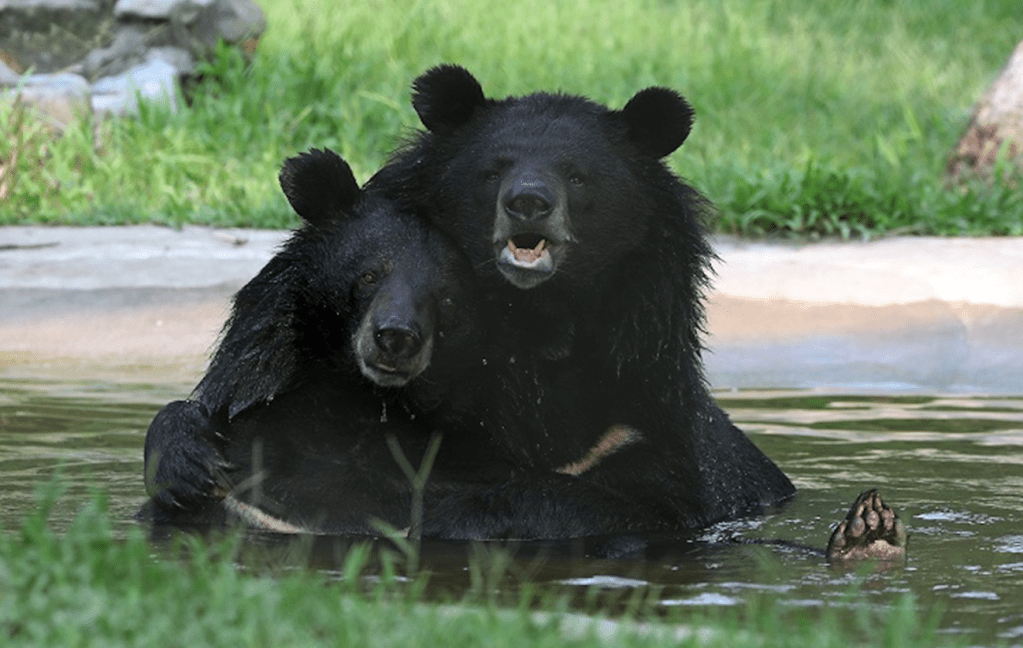
Bears Play In Their Enclosure At Animals Asia’s Sanctuary In Vietnam Credit: Animals Asia

“Once we bring them into our sanctuary, it may take days, it may take weeks, it may take months for that trust to — and you suddenly see a spark, a light that comes into their eyes. Anyone that’s rescued a dog will know exactly what I’m talking about. You suddenly see that mind-set switch,” she says.

“Their personalities start to emerge. That is the most beautiful thing to see. Bears that were horribly traumatized are now turning somersaults on their own in the grass just because they can. They’re in playful Bear bundles with their friends just because they can. They’re foraging in huge expanses of forest in the sanctuary just because they can. They have choices of whatever they want to do, of whatever they want to eat throughout the day as well. It’s a privilege to be working with these species to really begin to understand the animal they are,” she adds.

To learn more about Animals Asia and how to help with their new sanctuary in Vietnam, visit the charity’s website.

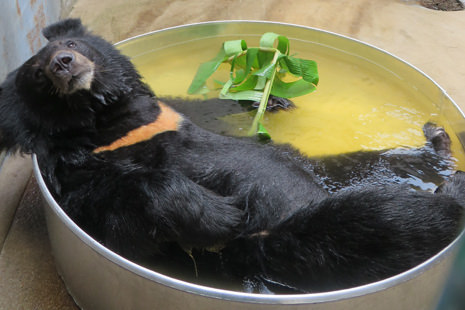
Freed From A Bear Bile Farm – Tuffy Jumps For Joy. Credit: Animals Asia

What can you do to help END animal abuse!

The Mission of Protect All Wildlife is to prevent cruelty, promote the welfare of ALL animals EVERYWHERE, and help END animal abuse.

Please support our work by donating ANY amount, large or small. It only takes a minute and your donations help make our work possible. Thank you for your support.