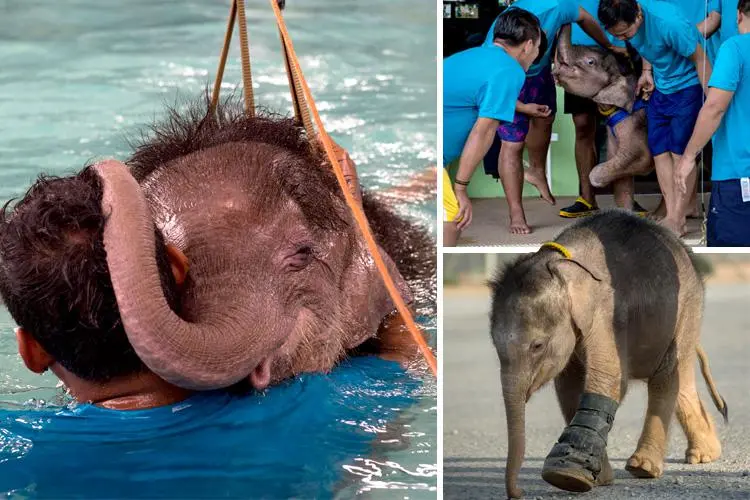
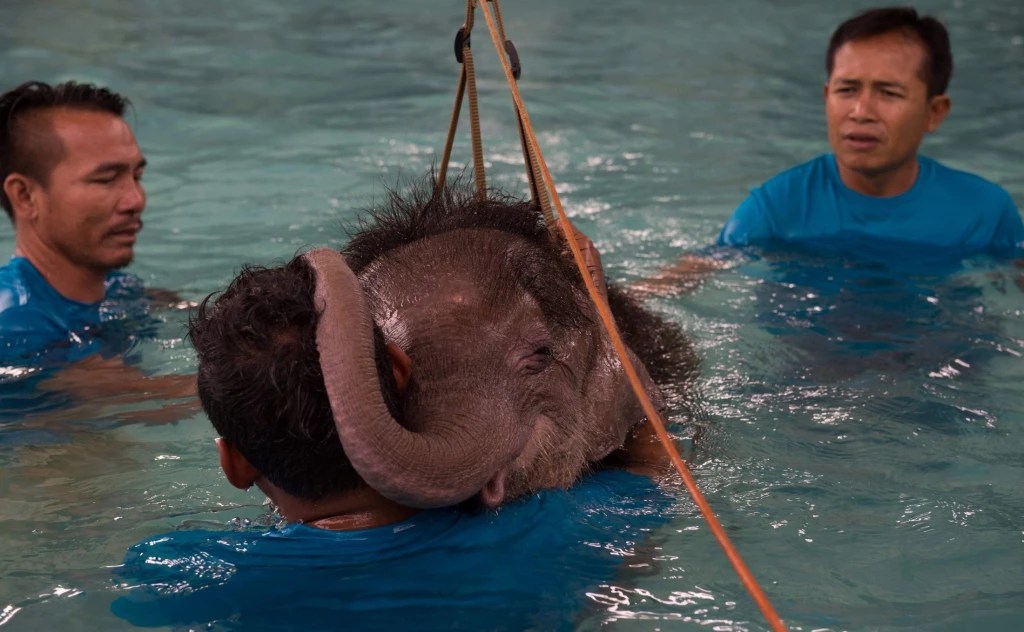
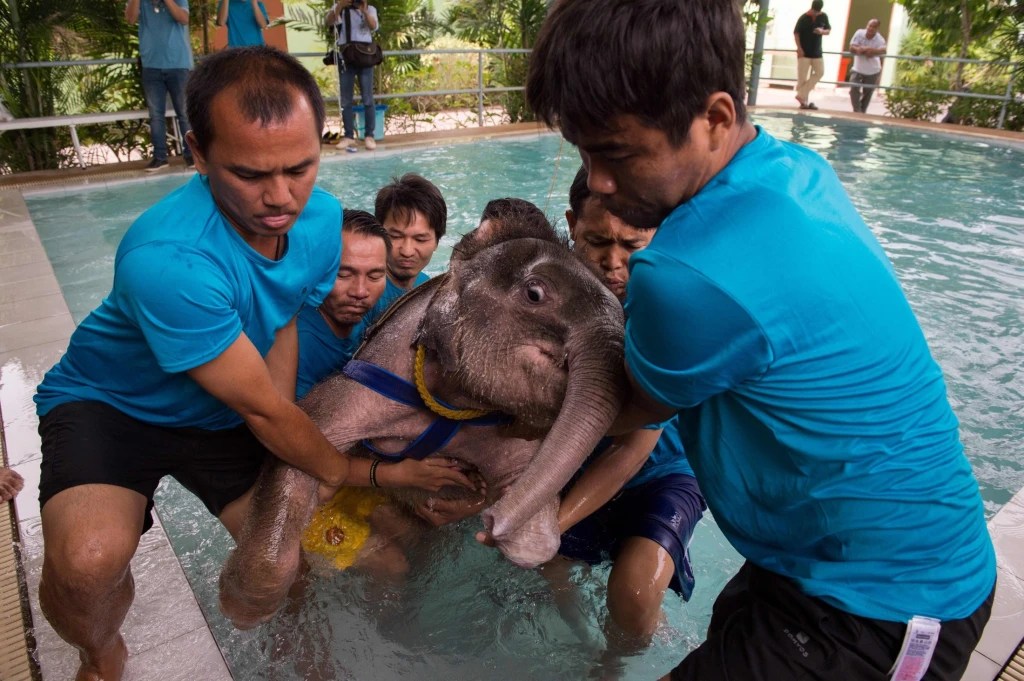
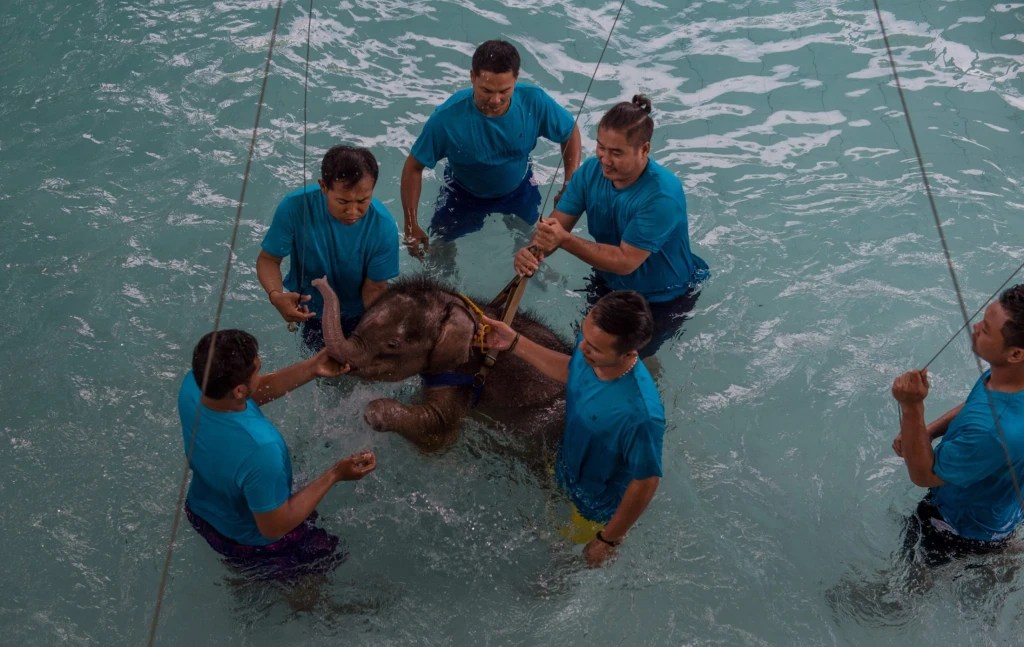
Staff at a Thai animal hospital take six-month-old orphan Clear Sky swimming to strengthen her leg muscles.
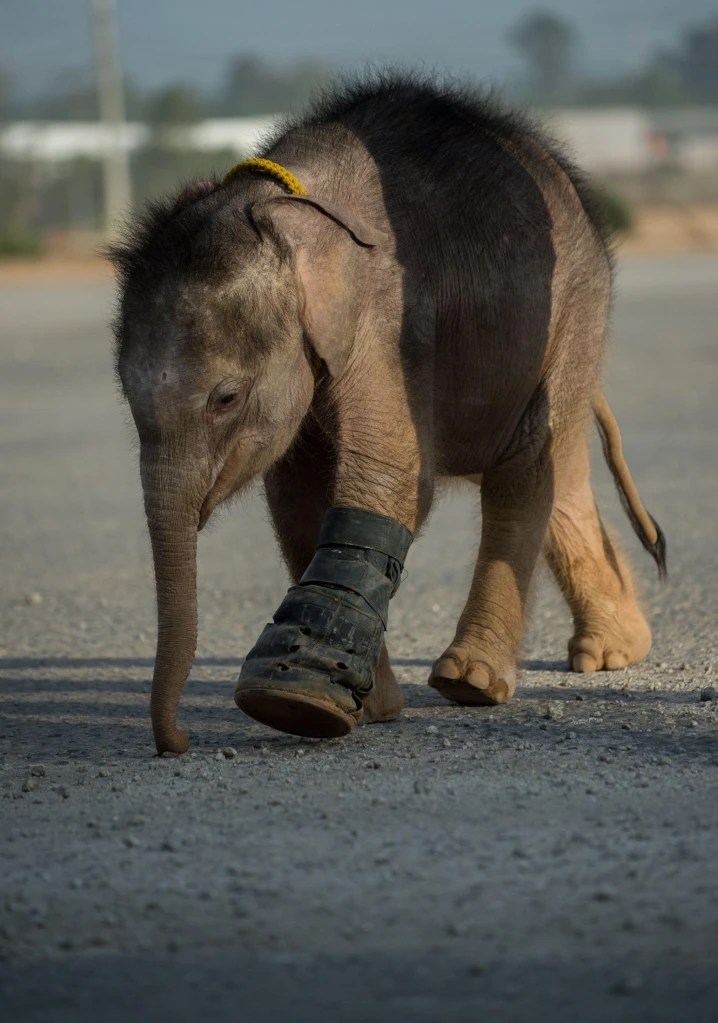
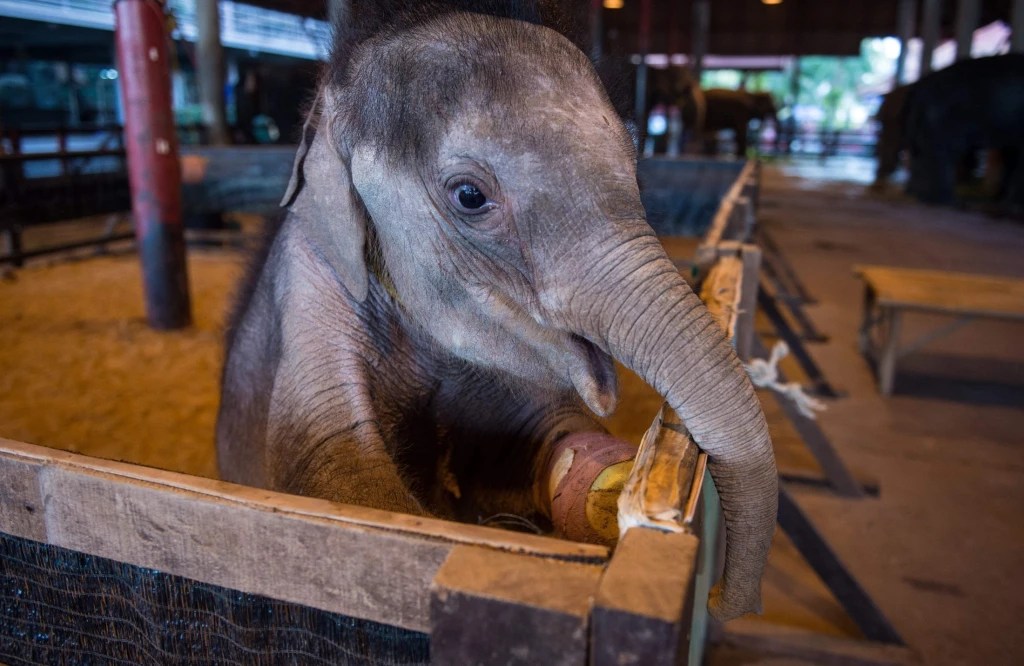
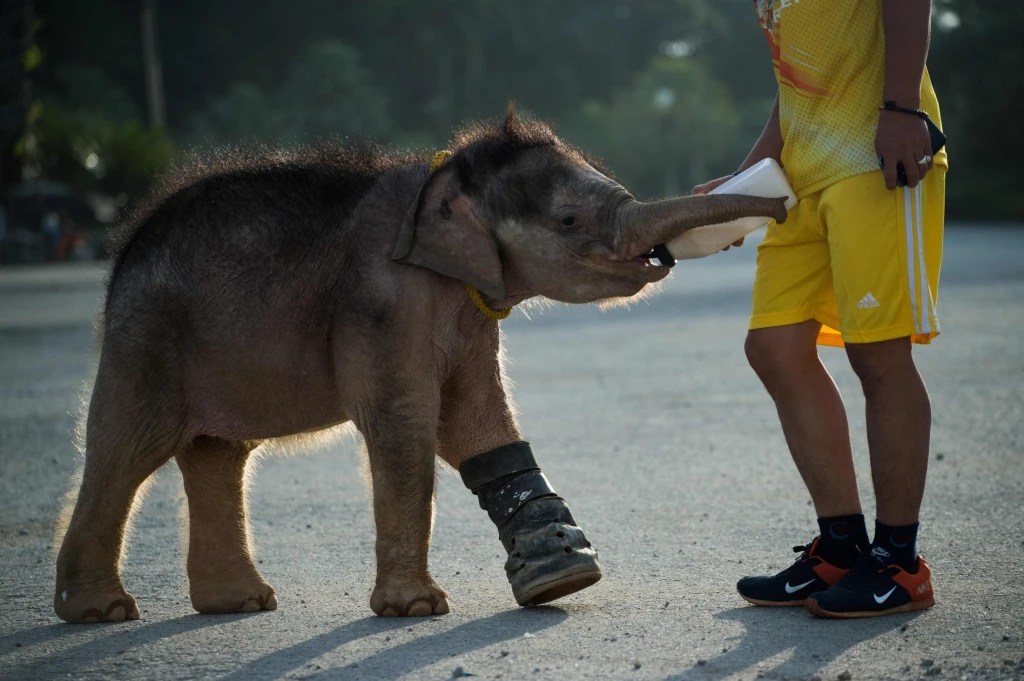
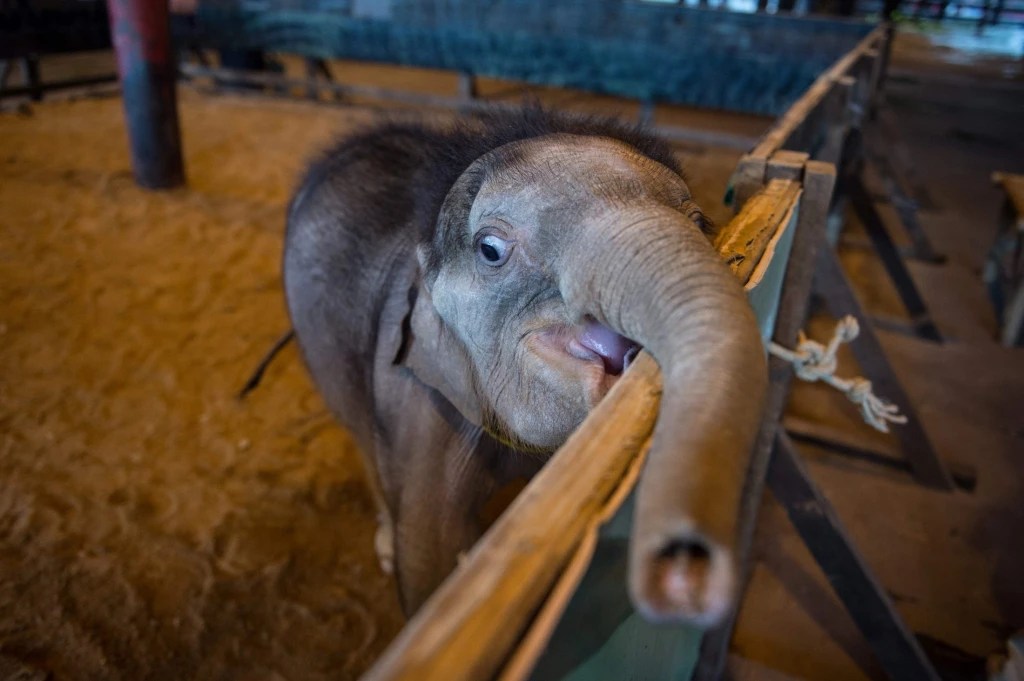
This baby Elephant is trying to forget her fear of water as she learns to walk again after losing part of her foot.
The nervous six-month-old grabbed a keeper for support as she was lowered into the pool at an animal hospital in Chonburi, Thailand.
CLEAR SKY IS LEARNING TO WALK AGAIN IN A SWIMMING POOL AFTER SHE INJURED HER FOOT.
The six-month-old is the first elephant to receive hydrotherapy at the Nong Nooch Tropical Garden animal hospital in Thailand
Clear Sky caught her leg in an animal trap laid by villagers to protect their crops.
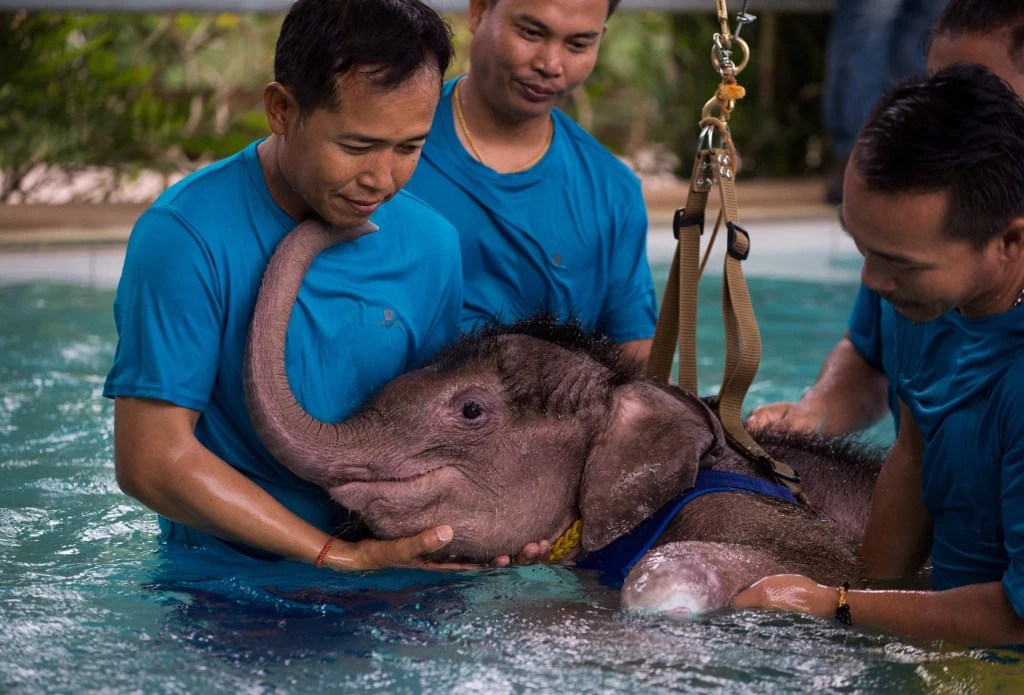
Staff at the animal hospital are trying to help her strengthen her withered leg muscles.
After surgery she is now having treatment to strengthen her leg muscles.
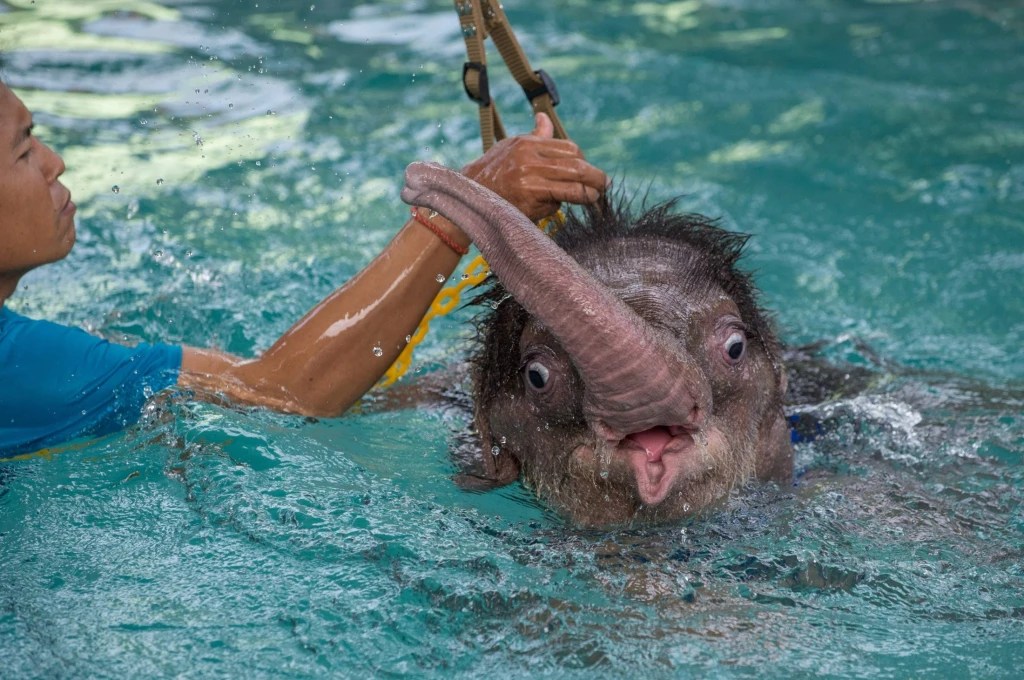
STAFFERS USE A HARNESS TO HELP CLEAR SKY INTO THE WATER AND KEEP HER AFLOAT
THIS WAS HER SECOND TIME GETTING WATER THERAPY
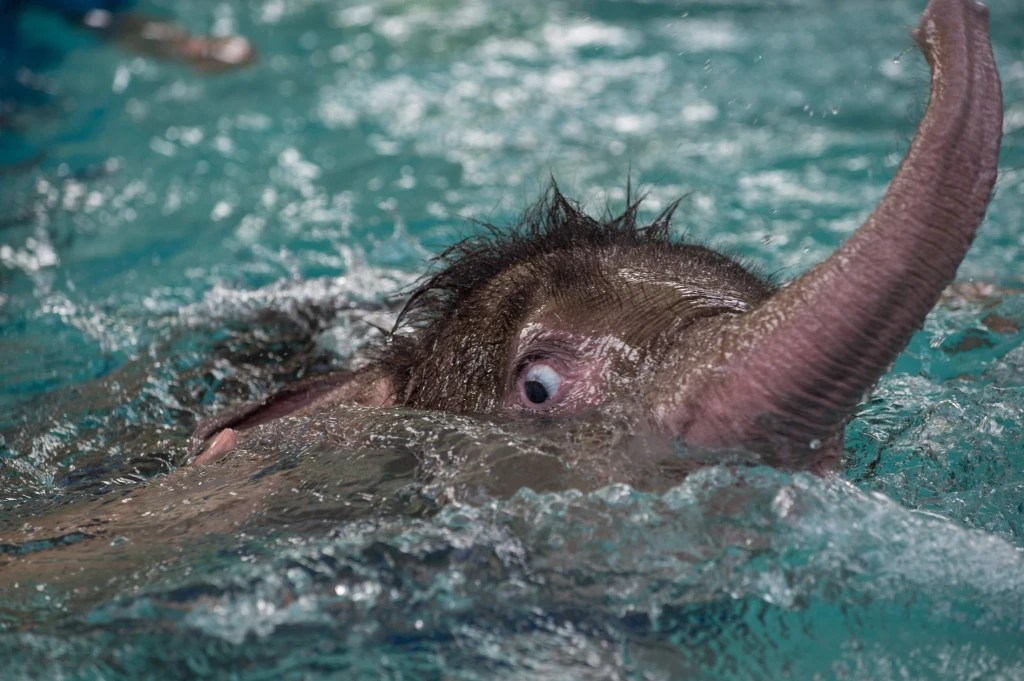
Baby Elephants usually love water, but Clear Sky was ‘a bit nervous and scared’, said a vet.
However she appeared to relax by the end of the hour-long session.
Vet Padet Siridumrong said: “She is still a bit nervous and scared of the water.
“Usually baby Elephants love the water.
“If she can do this regularly she will have fun.”
Villagers had found Clear Sky hungry and hobbling, after being separated from her mother in the wild.
Vets hope with more swimming, she won’t need an artificial leg.
The orphaned Elephant was in bad shape when she arrived at the hospital.
She was hobbling, in pain and in dire need of milk.
‘Kampon Tansacha, the director of the zoo that’s now her home, said: “We named her Clear Sky Up Ahead, because that is what she will need while she is with us.”
Elephants are a revered national symbol in Thailand, but their population in the wild has plummeted to an estimated 2,500 in the last century, a result of rabid development, habitat destruction and the ivory trade.
What you can do to help animals in need:
Support ‘Protect All Wildlife’ by donating as little as £1 – It only takes a minute but it can last a lifetime for an animal in need.
We believe EVERY animal should be treated with respect, empathy, and understanding. We raise awareness to protect and conserve wild, captive, companion and farm animals. It is vital that we protect animals against acts of cruelty, abuse, and neglect by enforcing established animal welfare laws and, when necessary, take action to ensure that those who abuse animals are brought to justice.
Protect All Wildlife are involved in many projects to protect animals’ rights, welfare, and habitats. Money contributed to Protect All Wildlife supports ALL of our worthy programmes and gives us the flexibility to respond to emerging needs. Your donations make our work possible. Thank you for your support.
Everyone who donates will receive a Certificate of Appreciation as a thank you for supporting wildlife.
I want my money back I came to see an Elephant I paid to see a conservation ambassador Inspire me to help conserve the species Especially her kind
I saw an empty shell
She looks like an Elephant But what is there to see, not Happy She is a poor teacher of Elephant lessons She is no solitary animal, but kept confined Like all captives, neurones scrambled, brain denied Stereotypy is not a dance – no, a pathetic trance A sign she can’t be happy in mind She’s not right in the head.
She is an empty shell
They have broken personalities All the Elephants with names, captive They are poor Elephant facsimiles They have the stature, the thick skin and bones They are devoid of Elephant spirit, truncated They are subjected to Floydian ‘Brain Damage’ They are all caught on the dark side (“‘As a matter of fact, it’s all dark’*) Cut off from the herd
They are empty shells
We pay the price to see: see the price they pay We fall for the old ‘conservation /education’ story We fail to see the oppression and the damage done We should be able to see for ourselves We could accept they are Sentients like us We could see them better in a sanctuary We could do the right thing Will we?
Collect all the empty shells
Put them back where they can refill Regain their freedom and society Be Elephants again, herd mentality That would be something to see Is it just a Zoological fantasy?
I find myself unhappy for Happy, again
If I find myself outside her enclosure (But I wouldn’t pay to go in anyway) Watching her sway song, groundhog days One day closer to her end of days Inspired to write yet another Happy poem Adding to ‘Not Happy’ ‘Personable’ ‘Elephant Stomp’ After the first setback of her legal person court case What would I do if I were you?
Might just as well go to a museum Pay to see a stuffed Elephant This one already is
I want my money back I came to see an Elephant Largest land animal, majestic Social fellow-sentient being Exemplary, salutary
I got an empty shell
*From ‘Brain Damage’ on the Pink Floyd album ‘Dark Side of the Moon’
**From ‘The Needle and the Damage Done’ by Neil Young
For all captive Elephants – Happy, Lucy, Shankar, The Fresno Elephants and so many more.
Written By Anthony Lovell.
What you can do to help wildlife:
Please Sign The Petition To Free Happy From Her Imprisonment At The Bronx Zoo HERE!
Support ‘Protect All Wildlife’ by donating as little as £1 – It only takes a minute but it can last a lifetime for an animal in need. Thank you.
We believe EVERY animal should be treated with respect, empathy, and understanding. We raise awareness to protect and conserve wild, captive, companion and farm animals. It is vital that we protect animals against acts of cruelty, abuse, and neglect by enforcing established animal welfare laws and, when necessary, take action to ensure that those who abuse animals are brought to justice.
Protect All Wildlife are involved in many projects to protect animals’ rights, welfare, and habitats. Money contributed to Protect All Wildlife supports ALL of our worthy programmes and gives us the flexibility to respond to emerging needs. Your donations make our work possible. Thank you for your support.
Everyone who donates will receive a Certificate of Appreciation as a thank you for supporting wildlife.
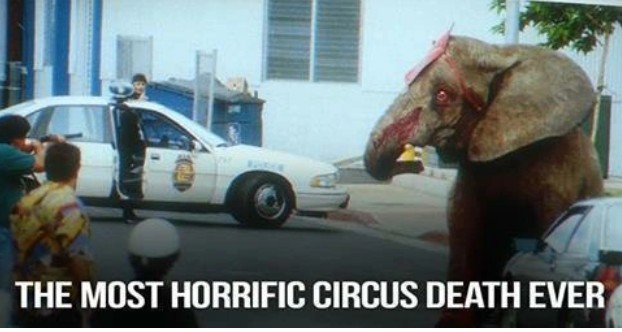
20TH AUGUST 1994: THE DAY THAT TYKE THE ELEPHANT WAS SHOT 86 TIMES!
Mention “Tyke the Elephant” to anyone who lived in Honolulu 27 years ago and chances are they’ll shake their head and talk about what a dark moment it was in their city’s history.
Tyke was a wild-born African Elephant captured from the wild in Mozambique when just a baby. She was sold into the circus industry in the U.S. and for twenty years abused and exploited. Tyke was tortured during this time, forced to wear a degrading clown costume and dance for the audience, and even forced to ride a giant tricycle.
In August 1994, Tyke spent several days locked in the hull of a tanker ship on a long ocean journey from California to Hawaii. When they finally let her out she was immediately forced into performing in from of an audience. Unable to take the abuse any longer, she finally snapped. Tyke entered the ring at the Blaisdell Arena, kicking around what looked to audience members like a dummy. “We thought it was part of the show,” one witness told the Honolulu Star-Advertiser. They soon realized the supposed dummy was a severely injured groomer. Panicked, audience members fled for the exits. Tyke went on to fatally crush her trainer, who was trying to intervene, before fleeing the arena herself.
For nearly 30 minutes, Tyke ran through the streets of the Kakaako neighborhood’s business district at rush hour, nearly trampling circus promoter Steve Hirano when he tried to fence her in. It was a foot chase between her and the Honolulu police, who eventually shot her 86 times before she succumbed to nerve damage and brain haemorrhages. People watched aghast from their cars, apartments and the sidewalk.
Twenty seven years later, witnesses still remember it vividly, and the attitude in Honolulu toward animal-driven circuses is distrusting. No circus elephants have performed since Tyke, even though there is no prohibition against it.
In 2014, when the Moscow International Circus announced that it would perform in Honolulu with “wild animals”, activist group People for the Ethical Treatment of Animals circulated a petition against it. A circus spokesman recently told the Honolulu Star-Advertiser that animals would be excluded from the shows, and PETA applauded the decision in a press release:
What can you do? PETA encourages you to avoid supporting any circus that includes animals and provides a list of animal-free circuses, as well as a list of things you can do if the circus comes to your town.
THE PETRIFIED LOOK OF FEAR
IF THIS VIDEO DOESN’T CONVINCE YOU THAT ANIMAL CIRCUSES ARE HELL!
It was the moment Raju the Elephant had waited a lifetime for – a family of his own.
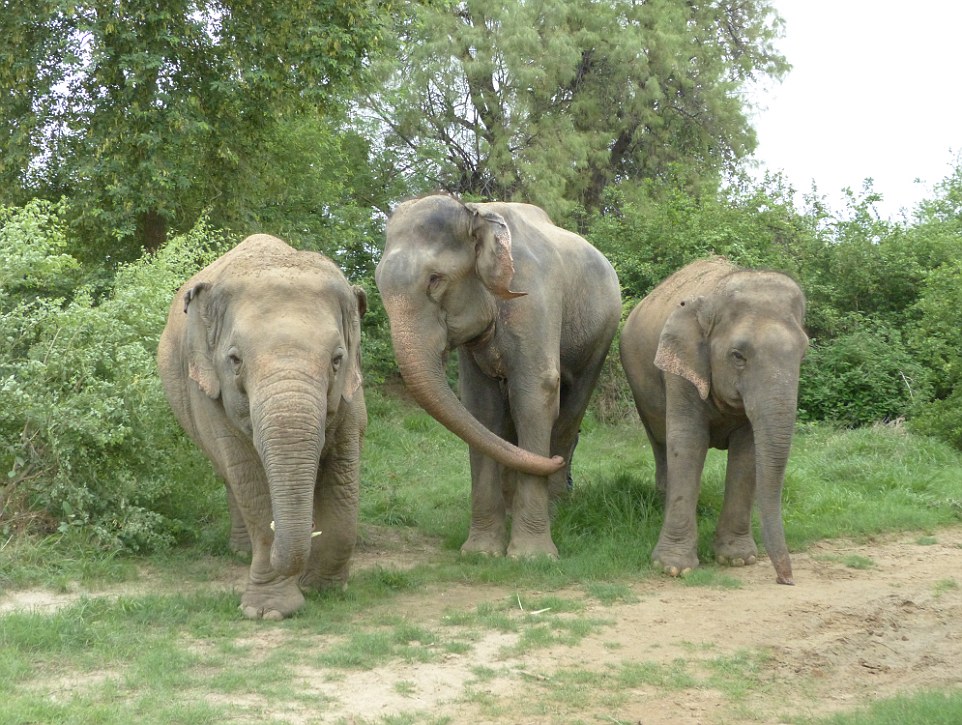
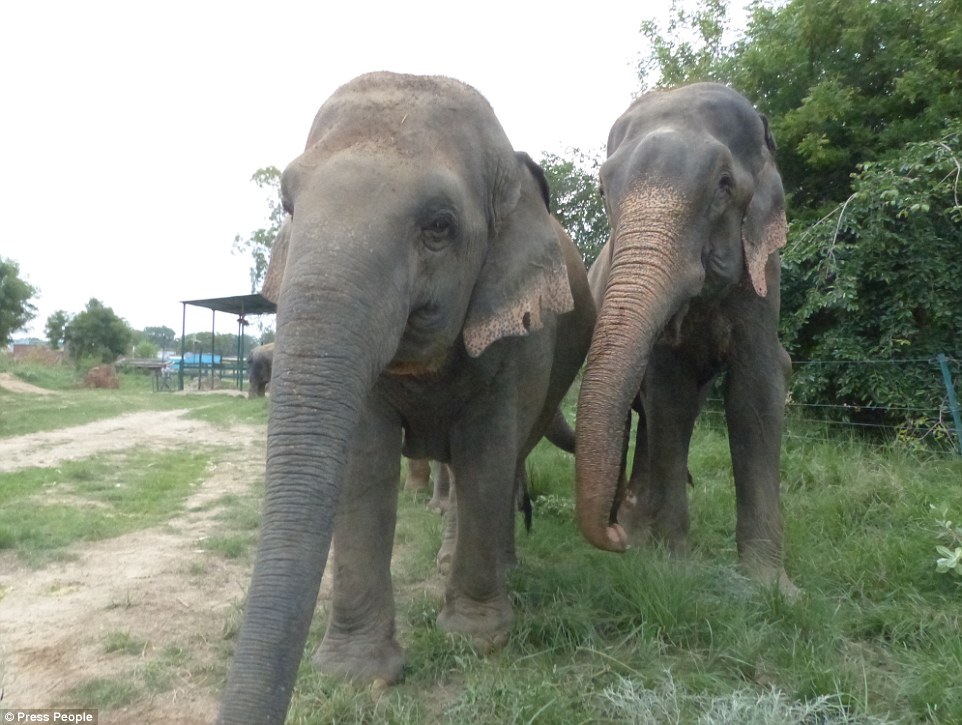
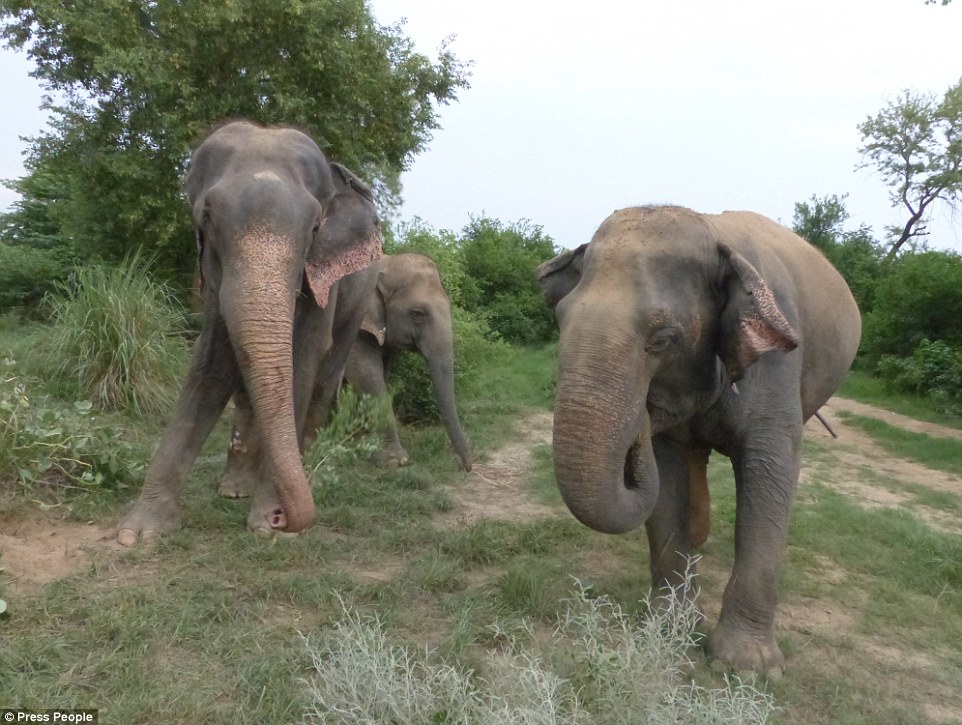
In July 2014 the gentle giant, who captured the hearts of people from around the world when he cried as he was freed from chains after 50 years – joined five female Elephants at Wildlife SOS’s Elephant Conservation and Care Centre in India.
His new family, named the Herd of Hope, have all been rescued from barbaric treatment.
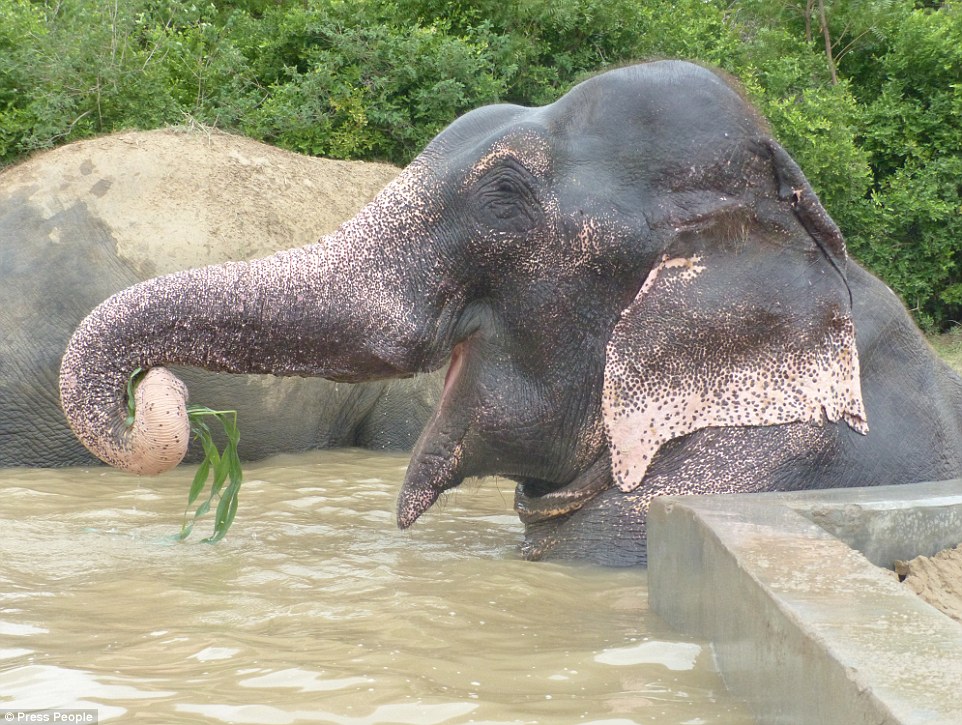
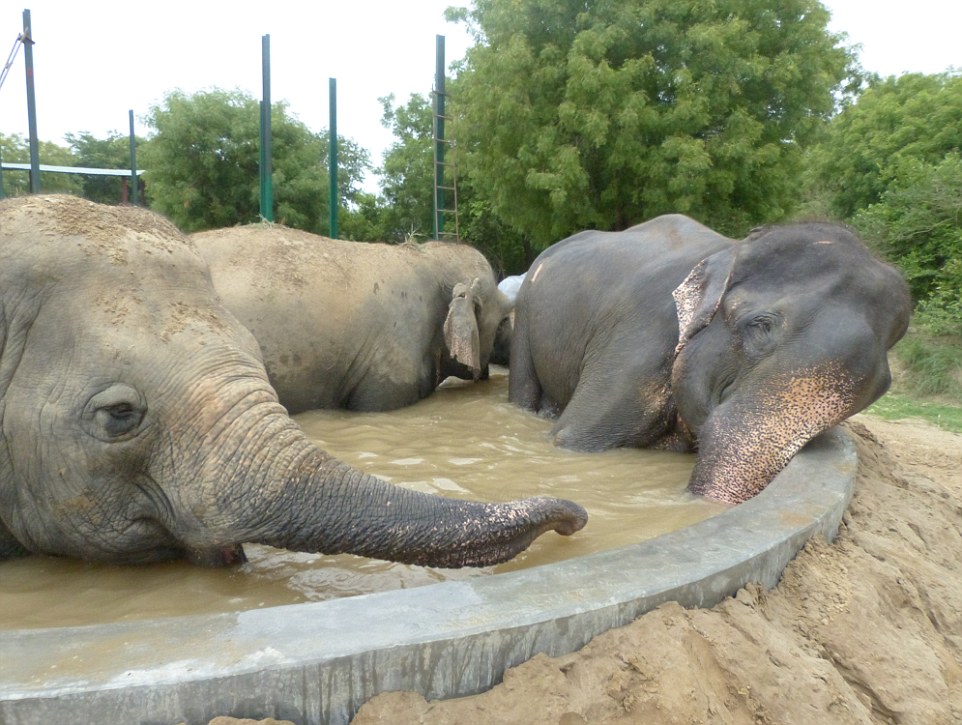
HAPPY CHAPPY: RAJU, CENTRE, WAS INTRODUCED TO HIS NEW FRIENDS AT A CONSERVATION CENTRE IN INDIAENJOYING HIMSELF: RAJU SMILES WIDELY AS HE RELAXES IN THE POOL NEXT TO HIS NEW FAMILY – CALLED THE HERD OF HOPE.GANG’S ALL HERE: RAJU’S FRIENDS HAVE ALSO ESCAPED FROM GREAT CRUELTY AND NOW LIVE IN MATHURA, NORTHERN INDIA.
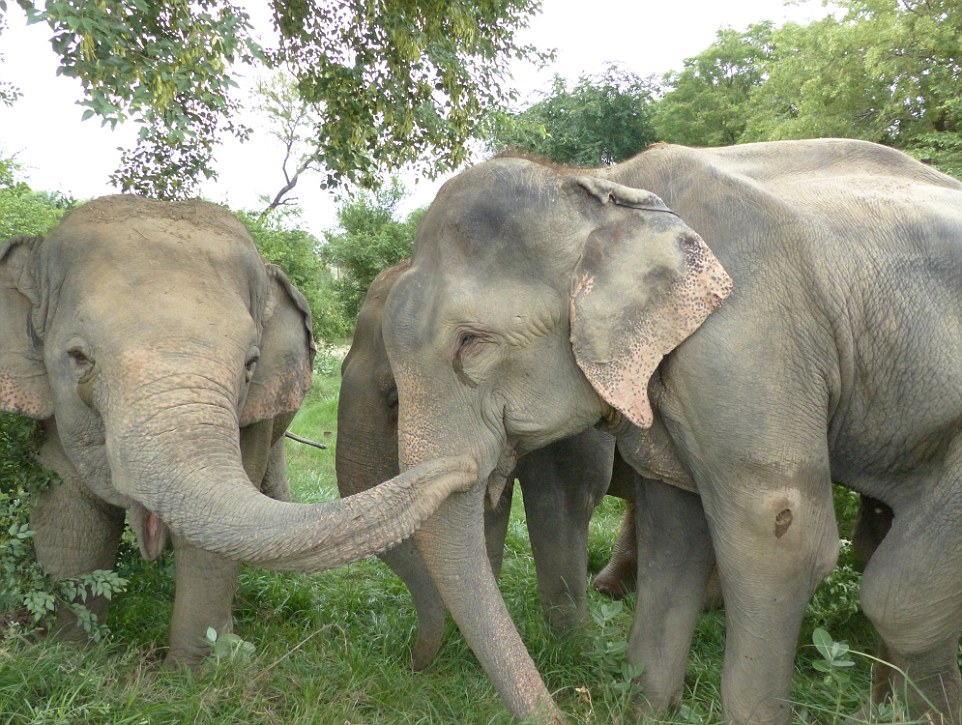
And poignantly, they flapped their ears – an expression of joy – before touching him with their trunks as they welcomed him.
Charity Wildlife SOS founder Kartick Satyanarayan, who led the rescue operation to save Raju, said: ‘We are delighted Raju has fitted in so well with the first family he’s ever had since he was orphaned by poachers as a calf.
‘He had been so terribly brutalized for 50 years that we feared he’d be unable to live with his own kind. He didn’t even know how to be an Elephant. But now it’s like he’s always been with them.
‘When we first released him, he held back, and he was clearly wary. Three of our female Elephants Laxmi, Chanchal and Sai Geeta ran up to him – their ears flapping wildly –a sign they were excited and delighted to meet him. They also made high-pitched trumpeting sounds – a greeting.
AFFECTIONATE: ONE OF RAJU’S FEMALE FRIENDS, LEFT, STROKES HIS TRUNK WITH HERS. HE WAS INITIALLY WARY OF CONTACT BECAUSE OF HIS APPALLING TREATMENT AT THE HANDS OF HIS CAPTORS.REHABILITATION: THE POOL’S WATER LETS RAJU TAKE WEIGHT OFF OF HIS LEGS – WHICH ARE PAINFUL FROM YEARS OF ABUSE.TAKING IT EASY: RAJU WAS POACHED AS A CALF – AND ENDURED AN AWFUL LIFE AS A TOURIST ATTRACTION – BUT CAN NOW RELAX.
‘Then each of them touched him with their trunks, clearly reassuring him before they wandered off into the grazing land at our Elephant Conservation and Care Centre at Mathura. It was incredibly touching after all he’d been through.’
On July 4 this year the charity along with their counterparts in India saved Raju from dying in his bonds in a daring midnight rescue operation.
A team of ten vets and wildlife experts from the charity were joined by twenty Forestry Department officers and six policemen to seize Raju in the Uttar Pradesh region.
Mr Satyanarayan said: ‘He’d been poached as a calf from the wild. Poachers either slaughter the mother, or they drive the herd into traps that are small enough only for the babies to fall into.
‘The mother cries for her baby for days after he’s been stolen – the illegal Elephant trade is sickening. The calves are then tied and beaten until they submit to their owners – their spirits are effectively broken.
’27 OWNERS’: RAJU, RIGHT, WAS PASSED FROM OWNER TO OWNER IN CAPTIVITY, AND EVENTUALLY WAS FOUND IN SPIKED CHAINS.PLAYTIME: RAJU, LEFT, HAS BEEN ABLE TO START HIS RECOVERY IN THE SANCTUARY, AFTER BEING BLIGHTED BY WOUNDS ALL OVER HIS LEGS AND BODY WHILE IN CAPTIVITY.
‘Raju’s case was particularly tragic as we believe he has been sold again and again and might have had 27 owners – he’s been treated as a commodity and beaten into accepting his new handler every two years of his life.
‘By the time we found him he was in a pathetic condition. He hadn’t been fed properly and tourists started giving him sweet food items and because he was in a state of hunger and exhaustion, he began eating plastic and paper.
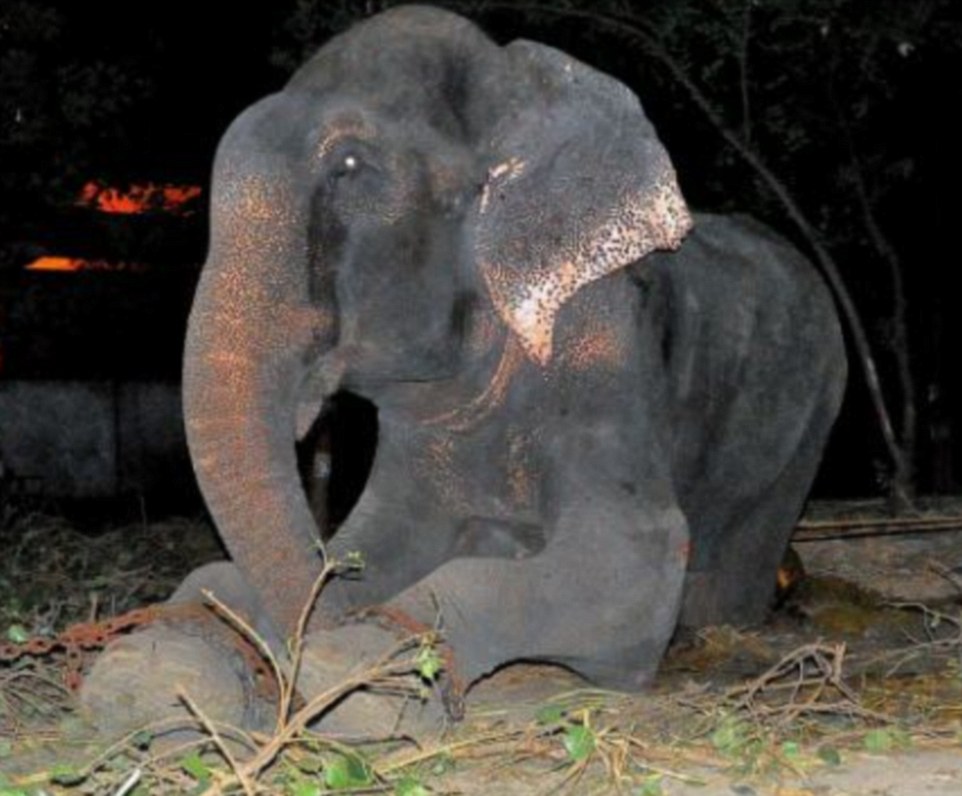
‘He had no shelter at night and was being used as a prop to beg with from dawn until dusk or being used for giving tourists joy rides. And most heartrendingly of all – the chains that cut into his legs had been there for 50 years. It was horrific.
‘It took us 45 minutes to remove the shackles that had torn into the flesh on his legs for the past 50 years – an act of unthinkable cruelty.
‘His legs were so covered in abscesses and his feet so damaged by walking on hard tarmac roads, that we have spent much more than expected on his medical treatment, and we still have a long way to go as he has a serious limp and open wounds.’
TEARFUL: RAJU, PICTURED ABOVE MOMENTS BEFORE HE WAS FREED FROM CAPTIVITY, CAN BE SEEN WITH ‘TEARS’ STREAMING DOWN HIS FACE.CRUEL: ACCORDING TO HIS RESCUERS, RAJU HAD BEEN IN CHAINS FOR AS LONG AS 50 YEARS.BOUND: RAJU’S CHAINS, SEEN UP CLOSE ABOVE, TOOK 45 MINUTES FOR RESCUERS TO DISENTANGLE.
The Elephants Raju has joined have also suffered horrendously before they were rescued by the charity.
The second most recent member of the herd is eighteen-year-old female Laxmi, saved from the streets of Mumbai ten months ago. Although she was young, she suffered from severe arthritis, obesity and a heart condition.
Mr Satyanarayan said: ‘She’d been exploited and used as a begging prop, she was neglected and her owners had got her addicted to fried junk food.
‘When we saved her she was 1,200 kilos overweight and so fat we had to use a crane to get her onto a specially-strengthened truck to drive her to our centre. She was so huge her knees were giving way and she had early arthritis.
‘Our vets were concerned that she would not live much longer if she was not rescued immediately. But she has a great, if mischievous, character – even on the drive home her trunk kept sneaking through the window and she was searching in the driver’s pockets for a treat.
‘We have spent the last 10 months rehabilitating her – and at first it was a battle to get her to eat the food she should be eating. Now she’s finally getting healthier, leaner and enjoying being a free Elephant.
‘But although Wildlife SOS was given legal custody of her by the Forest Department, her previous cruel owners are petitioning the courts to get her back and so now we are in a court battle to stop her being returned to the abusive situation we rescued her from.’
MIDNIGHT RAID: WILDLIFE SOS FOUNDER KARTICK SATYANARAYAN BREAKING RAJU FREE FROM CAPTIVITY.
Chanchal, 16, was rescued on June 29, 2012, on the outskirts of Delhi after she and a second Elephant were hit by a speeding truck.
The second Elephant was killed instantly and Chanchal was left with cuts, shards of glass and wounds all over her body as well as a severely injured leg. She was undernourished and her owners were arrested for negligence.
Mr Satyanarayan said: ‘Her leg was fractured and it’s taken us 18 months to nurse her back to health. She’s slowly rebuilding her life.’
Sai Geeta was a circus Elephant who was rescued after she was made to perform for years with a broken right rear leg.
Mr Satyanarayan said: ‘She still has a terrible limp where the break was never treated – the fracture was severe and when we rescued her she’d suffered for years in pain as it was never allowed to heal as they never allowed her to rest.’
ROAD TO FREEDOM: RAJU WAS TAKEN TO THE SANCTUARY IN MATHURA, NORTHERN INDIA, IN THIS TRUCK.
Finally Phoolkali, who is blind in one eye was smuggled illegally for years before the charity was alerted to her plight and immediately stepped in to rescue her.
Mr Satyanarayan said: ‘Phoolkali had spent more than 40 years of her life doing hard labour, being abused and being underfed. And her maltreatment and severe abuse by her previous owners caused her to be blinded in one eye.
‘Her owner would hide her in a windowless, deserted warehouse. Her owner would smuggle her across state borders in the dead of night to avoid detection by the authorities as he has no valid documentation for her legal possession.
‘She was frail and scrawny and almost skeletal in appearance and covered in sores and wounds.
‘Now she loves throwing mud on herself immediately after a long bath – much to the annoyance of her keeper – and also throws mud on him when he isn’t paying attention.’
YEARS TO RECOVER: THE HEAD OF WILDLIFE SOS SAID THAT IT TAKES YEARS TO RECOVER FROM RAJU’S DECADES-LONG ORDEAL.
Today the nightmare for Raju and his herd is a distant memory. And they are also enjoying a rehabilitation pool thanks to the generosity of donors to the centre.
Mr Satyanarayan said: :We are overwhelmed by the generosity of people from so many countries around the globe. We hope that if the donations continue, better facilities can be established for Raju and the other Elephants at the Centre who all deserve a better life to make up for the abuse they suffered all these years.
‘When we rescued him, Raju had never been in a pool before – and now he spends hours relaxing inside it. We’d like to thank everyone who donated – every penny has made such a difference to the quality of his life.
‘And while the pool is immensely pleasurable for him, it also is helping his rehabilitation as the water’s buoyancy enables him to take the weight off his legs which are incredibly painful from years of being shackled.
‘He still faces years of treatment to heal both the physical and psychological wounds. And sadly he’s not alone. We have a dossier of 80 Elephants whose life is in imminent peril and they also need to be rescued before they die of cruelty, exhaustion and abuse.’
Mr Satyanarayan said: ‘Our hope is that along with Raju, we can rescue many more of these tragic cases before it’s too late for them. It will enable them to taste freedom for the first time in their lives and live out their days in dignity, free from suffering and pain.’
Support ‘Protect All Wildlife’ by donating as little as £1 – It only takes a minute but it can last a lifetime for an animal in need. Thank you.
We believe EVERY animal should be treated with respect, empathy, and understanding. We raise awareness to protect and conserve wild, captive, companion and farm animals. It is vital that we protect animals against acts of cruelty, abuse, and neglect by enforcing established animal welfare laws and, when necessary, take action to ensure that those who abuse animals are brought to justice.
Protect All Wildlife are involved in many projects to protect animals’ rights, welfare, and habitats. Money contributed to Protect All Wildlife supports ALL of our worthy programmes and gives us the flexibility to respond to emerging needs. Your donations make our work possible. Thank you for your support.
Everyone who donates will receive a beautiful Certificate Of Appreciation as a thank you for donating to help animals in need.
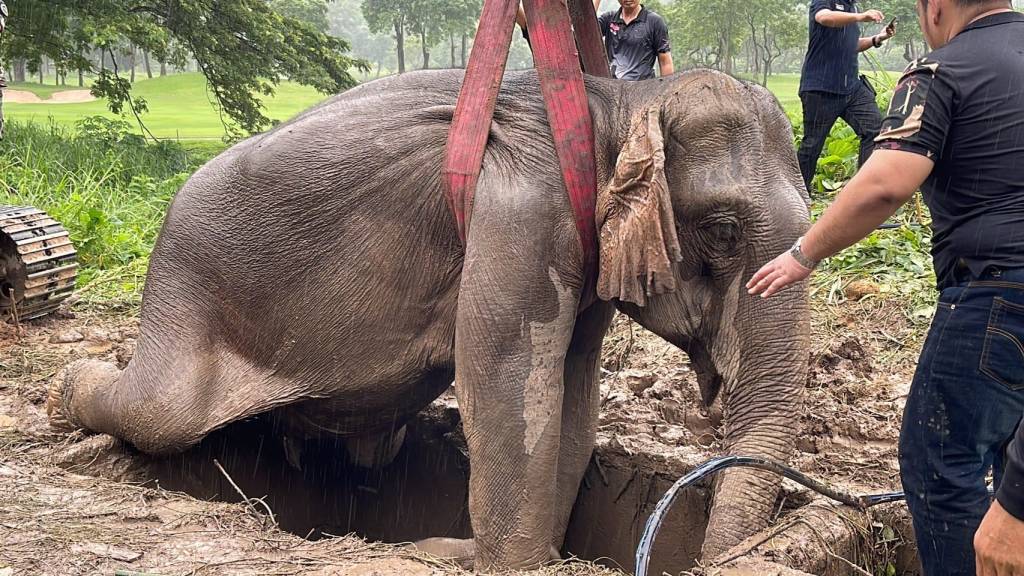
When the rescue team arrived in Thailand’s Nakhon Nayok province, they used anaesthetic shots to subdue the mother elephant, it resulted in her halfway falling into the hole.
The Mother Elephant Being Lifted By A Crane (Source: Thailand Wildlife Conservation Division/ Facebook)
Heavy rains and muddy roads are not just dangerous for humans but also for wild animals travelling in the wild during the monsoon. A case in point is a baby elephant that slipped and fell into a high drain in Thailand. Things took a dramatic turn when rescuers attempted to save the baby with its mother fainting in stress.
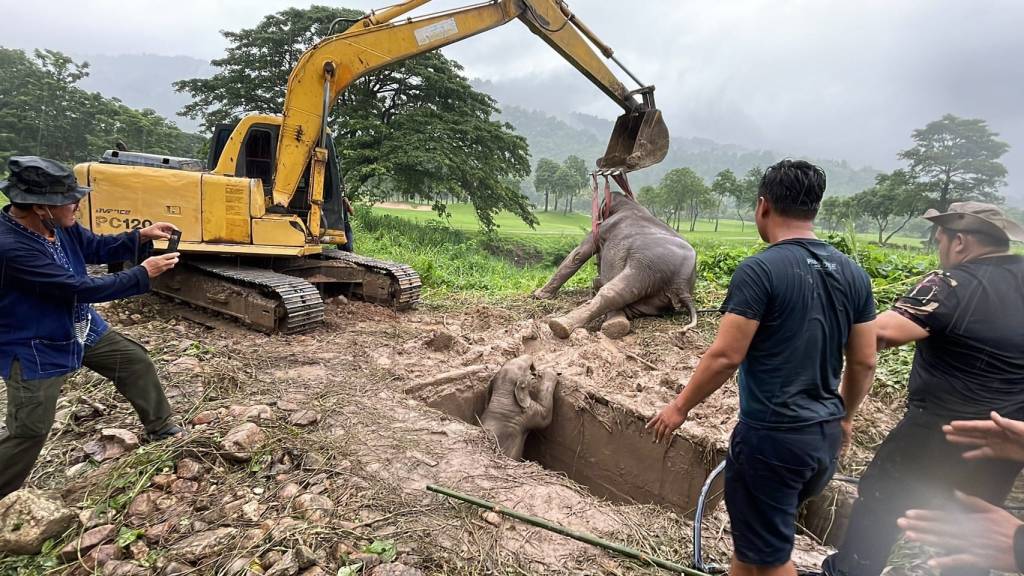
The Rescue Tean Find Mother Elephant Stuck Whilst Trying To Rescue Her Baby. (Source: Thailand Wildlife Conservation Division/ Facebook)
After the one-year-old calf fell into the manhole in the area of Royal Hill Golf Course, Khao Yai National Park in Nakhon Nayok province, its mother tried her best to help the baby walk out. However, continuous showers and slippery muddy terrain made all attempts go in vain. When wildlife rescuers arrived at the scene to help the infant, the anxious mother proved to be a hindrance in the operation. Things went awry when the rescue team used a shot to subdue the frantic elephant and she partly fell in as well.
The Trapped Baby Watches On Frantically. (Source: Thailand Wildlife Conservation Division/ Facebook)
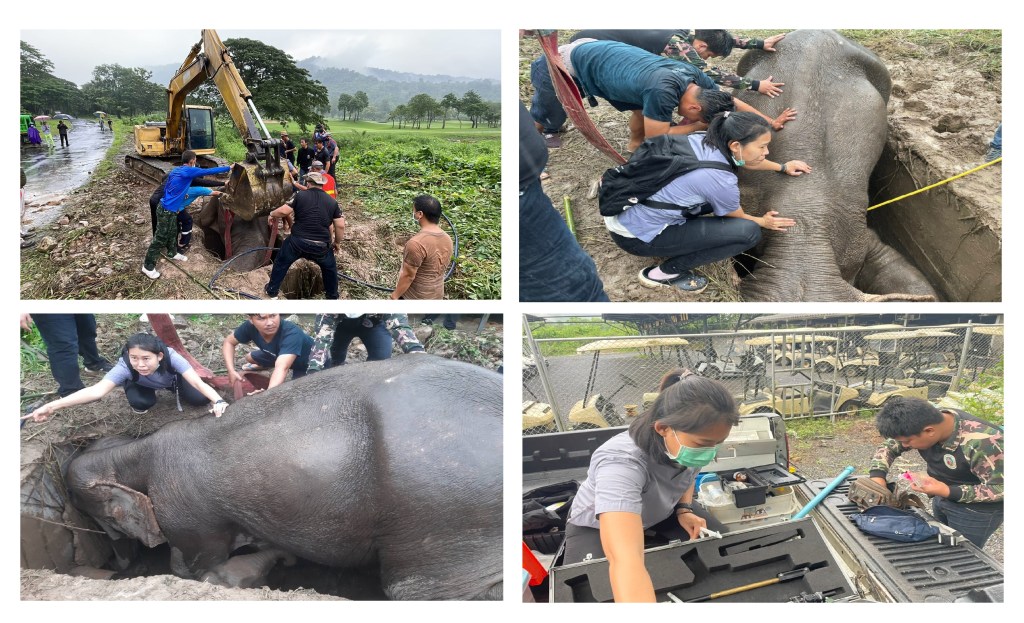
Videos showed the rescuers racing against time to not just help the baby but the mother as well. Rescuers used a truck-mounted crane to pull the mother out before climbing on top of her to perform cardiopulmonary resuscitation (CPR), while an excavator was seen in action clearing the way to help the calf climb out of the drain.
“It was impossible to get near the baby while the mother was nearby so we gave her three doses of tranquillisers but she moved towards her baby before passing out and hit her head,” Dr Chananya Kanchanasarak, a vet involved in the operation explained to Sky News.
The Baby Snuggles Up To Mum Whilst A Rescuer Performs CPR (Source: Thailand Wildlife Conservation Division/ Facebook)
Dr Chananya said, “Despite the obstacles, the mother did not leave her baby’s side”. He added that the experience will be “one of the most memorable rescues” they have done.
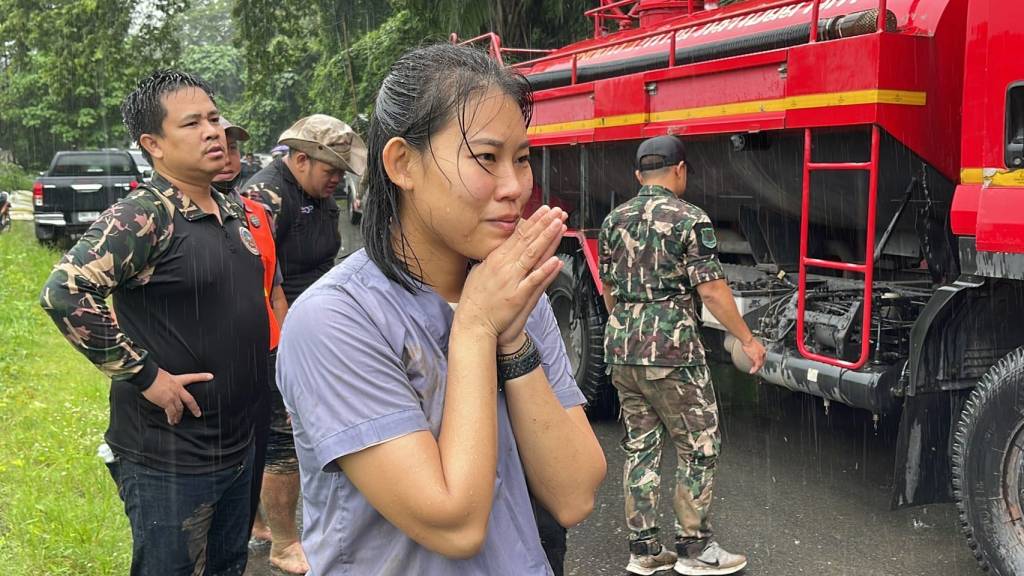
Eventually, the calf was able to climb out of the hole and the mother elephant too regained consciousness. Video showed the calf suckling its mother as soon as it got out and helped the mother too sooth her nerves. After an exhaustive and tense operation that lasted over three hours, both returned to the wild.
After Three Hours The Mother And Calf Were Rescued And They Returned To The Wild. (Source: Thailand Wildlife Conservation Division/ Facebook)The Rescuers Watch On As The Elephant Return To The Wild (Source: Thailand Wildlife Conservation Division/ Facebook)
Support ‘Protect All Wildlife’ by donating as little as £1 – It only takes a minute but it can last a lifetime for an animal in need. Thank you.
We believe EVERY animal should be treated with respect, empathy, and understanding. We raise awareness to protect and conserve wild, captive, companion and farm animals. It is vital that we protect animals against acts of cruelty, abuse, and neglect by enforcing established animal welfare laws and, when necessary, take action to ensure that those who abuse animals are brought to justice.
Protect All Wildlife are involved in many projects to protect animals’ rights, welfare, and habitats. Money contributed to Protect All Wildlife supports ALL of our worthy programmes and gives us the flexibility to respond to emerging needs. Your donations make our work possible. Thank you for your support.
ACTOR, COMEDIAN AND ANIMAL RIGHTS ACTIVIST RICKY GERVAIS
Cruelty to animals, also called animal abuse, animal neglect or animal cruelty, is the infliction by omission (neglect) or by commission by humans of suffering or harm upon any animal. More narrowly, it can be the causing of harm or suffering for specific achievement, such as killing animals for entertainment; cruelty to animals sometimes encompasses inflicting harm or suffering as an end in itself, defined as zoosadism.
Animal cruelty can be broken down into two main categories: active and passive. Passive cruelty is typified by cases of neglect, in which the cruelty is a lack of action rather than the action itself. Oftentimes passive animal cruelty is accidental, born of ignorance. In many cases of neglect in which an investigator believes that the cruelty occurred out of ignorance, the investigator may attempt to educate the pet owner, then revisit the situation. In more severe cases, exigent circumstances may require that the animal be removed for veterinary care.
Whether it is Elephants killed for their tusks or beaten so they comply in the Asian tourism ‘industry’, Rhino slaughtered for their horns for ‘traditional Chinese medicine (TCM), animals skinned alive for the fur trade etc, animal activists need to stand together to fight for their rights.
At many elephant ‘sanctuaries’ across Thailand and in other countries, the elephants are taught to fear humans. This is so that they will act with compliancy. From babies they are tied up, starved and beaten in what is known as a ‘crush’. This is the act of breaking a young elephant’s spirit. And it’s mostly true what they say: an elephant never forgets. This means that, with their long memories, elephants remember this period of abuse for the rest of their lives. It ensures that the elephants will do what the trainers (also known as mahouts) say, and are more easily trained.
They are also commonly beaten with hooks and sticks that have nails poking out of them – this is when they are seen to be misbehaving or not following orders, or being too slow to respond. The mahouts want the animals to be constantly putting on a performance for those tourists who are there for elephant riding in Thailand.
UNDERCOVER FOOTAGE SHOWS CRUEL TRAINING USED ON BABY ELEPHANTS TO BOOST THAILAND TOURISM
As poaching and habitat loss ravage rhinoceros and elephant populations, protections for these species are vitally important. Today, all five rhino species and both elephant species are threatened with extinction. Efforts are underway across the globe to save these iconic animals.
Elephants and rhinos often experience painful deaths when poached. Rhinos may have their horns cut off while they are still alive and contrary to belief, elephants do not lose their tusks; they are hacked out by poachers.
More than a thousand rhinos and tens of thousands of elephants are killed each year to feed demand for ivory and rhino horn. The international trade in elephants, rhinos, and other species is the second-largest threat to wildlife after habitat loss. If the market continues to drive poaching, both rhinos and elephants could vanish from the wild as early as 2034.
HORRIFIC IMAGES OF ELEPHANTS POACHED FOR THEIR TUSKS AND A RHINO FOR ITS HORN
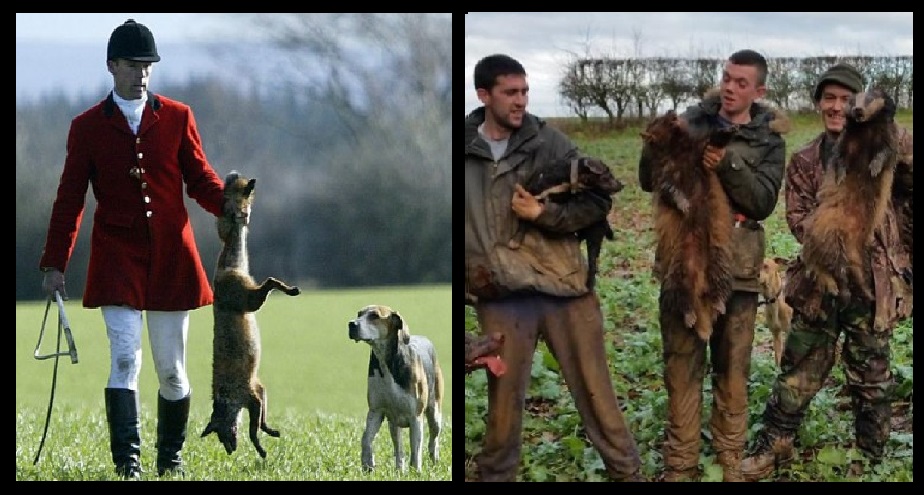
Every year, hundreds of badgers meet a horrific death in the name of ‘sport’ in the UK at the hands of terriermen. Many of those who have been caught digging into badger setts have used the excuse that they were after foxes – and many have escaped prosecution by so doing.
More than 10,000 are caught, tortured and killed in the UK each year by huntsmen with terriers – with almost a third of these illegal acts being carried out in Wales. Alarmingly, this figure is rising constantly. Terry Spamer, a former RSPCA inspector, believes that there are around 2,000 people involved in badger baiting currently. However, only around three people are caught and convicted of badger baiting each year, while the majority carry on breaking the law.
Traditional fox hunting was banned in England and Wales under the Hunting Act 2004. In spite of existing legislation, there has been 500 successful prosecutions under the Act. However, many incidents of illegal hunting have gone unpunished.
FOX HUNTING AND BADGER BAITING IS ILLEGAL IN THE UK BUT CARRIES ON WITH WITH APPARENT IMPUNITY
Dogfighting is an inhumane ‘bloodsport’ where dogs who have been bred, conditioned and trained to fight are placed in a pit to fight each other for spectator ‘entertainment’ and profit. Fights average one to two hours, ending when one of the dogs cannot continue.
Dog fights usually take part in quiet, private locations, such as in an industrial unit or farm building. Participants will spend months training their dogs in preparation, much like boxing, the fighters will have to hit a target weight to take part. Organisers will create a fighting ‘pit’ for the dogs to fight within.
Dogs who have been used in fighting often have serious injuries to their head, ears, front legs and chest that are caused as they go head-to-head in a pit. They will also have injuries of different ages, some old scars and some fresh wounds.
IT IS BELIEVED OVER 16000 DOGS DIE EACH YEAR IN ORGANIZED DOG FIGHTS
Each year, thousands of bulls are barbarically slaughtered in bullrings around the world. Over the centuries, bullfighters have found countless ways to rig the “fight” in their favor. Bulls are often weakened with drugs or by having sandbags dropped on their backs. Their horns have been shaved to keep them off balance, or petroleum jelly has been rubbed into their eyes to impair their vision.
Every year, approximately 250,000 bulls are killed in bullfights. Bullfighting is already banned by law in many countries including Argentina, Canada, Cuba, Denmark, Italy and the United Kingdom. Although legal in Spain, some Spanish cities, such as Calonge, Tossa de Mar, Vilamacolum and La Vajol, have outlawed the practice of bullfighting. There are only a few countries throughout the world where this practice still takes place (Spain, France, Portugal, Mexico, Colombia, Venezuela, Peru, and Ecuador). ~ HSI.
BULLS ARE TORTURED IN THE NAME OF CULTURE AND TRADITION
Each year from approximately September 1 to March 1, a large-scale hunt of dolphins takes place in the small village of Taiji, Japan, as featured in the 2010 Academy Award-winning documentary The Cove. During this six month season, dolphin hunters utilize drive hunt techniques to herd large numbers of dolphins to shore, resulting in their capture or death.
The captured dolphins may be selected for live trade to aquariums and marine parks for display, while others are slaughtered for their meat. The price for live captures is many times higher than those killed.
THE ANNUAL TAIJI DOLPHIN SLAUGHTER
What you can do to help animals in need:
Support ‘Protect All Wildlife’ by donating as little as £1 – It only takes a minute but it can last a lifetime for an animal in need. Thank you.
We believe EVERY animal should be treated with respect, empathy, and understanding. We raise awareness to protect and conserve wild, captive, companion and farm animals. It is vital that we protect animals against acts of cruelty, abuse, and neglect by enforcing established animal welfare laws and, when necessary, take action to ensure that those who abuse animals are brought to justice.
Protect All Wildlife are involved in many projects to protect animals’ rights, welfare, and habitats. Money contributed to Protect All Wildlife supports ALL of our worthy programmes and gives us the flexibility to respond to emerging needs. Your donations make our work possible. Thank you for your support.
The incident happened in the Jalpaiguri district of the state.
THE AFTERMATH OF THE COLLISION
The Banarhat-Nagrakata train route passes through a major Elephant corridor often leading to such tragic accidents involving Elephants.
The heart-wrenching video that surfaced on various social media platforms showed the critically injured Elephant trying hard to drag itself out of the railway track, as people watched in helplessness, after being hit by the engine of the intercity express.
The video shows the impact of the injury on the poor animal while people watch helplessly. In 2004, the Dooars line was converted from metre gauge to broad gauge; a move that saw a sharp increase in Elephant deaths.
END THIS HEARTACHE
But despite all the precautionary measures and efforts, such as speed limits and buzzers, trains on the Dooars route have continued to kill Elephants.
In the period between 2013 to June 2019, a total of 67 Elephants were killed in train-related accidents.
Actor Randeep Hooda said in a twitter post “The agony of the Elephant is quite evident in the video, the impact can be gauged by the damage to the engine.
I humbly urge the ministry to drastically reduce speed of trains through this area, humans can easily manage slight delay to keep wildlife safe”
For the sake of the Elephants, let’s hope they listen and reduce the speed of trains through the corridor.
ELEPHANTS CROSSING THE TRACKS IN WEST BENGAL
WHAT CAN WE DO TO HELP
Protect All Wildlife are supporting Voice for Asian Elephants Society with their campaign to help stop Elephants from being crushed by speeding trains. They are piloting an early warning system to alert train drivers of Elephants presence, with enough time for the speeding train to stop and the sirens will also warn Elephants.
For the month of July Protect All Wildlife are donating ALL proceeds from sales of items raising awareness to animal welfare. Visit the on-line shop at https://protect-all-wildlife.ecwid.com/
SOME OF THE FUND-RAISING ITEMS AVAILABLE AT THE PAW STORE
This is the incredible moment a baby elephant was flown in the back of a four-seater plane to escape from poachers who slaughtered its entire family.
The young orphan, named Max, was rescued after 100 other elephants, including its relatives, were killed by poachers between Chad and Cameroon in Central Africa.
It was squeezed into the back of the small aircraft alongside Gary Roberts, an American nurse and missionary, before being flown to Mr Roberts’s house for medical treatment.
Footage shows the 353lb elephant waving its trunk around as it sits in the plane, before gripping a bottle of water in its jaws.
‘With an animal that size, you can feel its weight shifting in the aircraft,’ Mr Roberts later told BBC News.
Unfortunately, Max died just a few days after his ordeal in March 2013 as a result of his traumatic experience and the cow’s milk he was fed in a village before being rescued.
Social media users have deemed the video ‘heartbreaking’ with many condemning the poachers for their ‘massacre’ of the baby elephants’ family.
One wrote: ‘A sad story of genuine humans giving it all to try and save the only survivor of poachers’ massacre.’ Another added: ‘How sad that the elephant died after all that effort.’
Original article by Sophie Jane Evans for Mail Online September 2014.
Protect All Wildlife are involved in many projects to protect animals’ rights, welfare, and habitats. Money contributed to Protect All Wildlife supports ALL of our worthy programmes and gives us the flexibility to respond to emerging needs. Your donations make our work possible. Thank you your support.
We believe EVERY animal should be treated with respect, empathy, and understanding. We raise awareness to protect and conserve wild, captive, companion and farm animals.It is vital that we protect animals against acts of cruelty, abuse, and neglect by enforcing established animal welfare laws and, when necessary, take action to ensure that those who abuse animals are brought to justice.
JOHANNESBURG ZOO ‘INMATES’ LAMMIE, MOPANE AND RAMADIBA
A ground-breaking application for the release of three Elephants, held captive for public display purposes at the Johannesburg Zoo, was filed on the 20th of June 2022.
As sentient beings, Lammie, Mopane and Ramadiba are housed in an enclosure in the Johannesburg Zoo, under conditions that fail to meet even their most basic needs. Experts have confirmed that the Elephants are exhibiting psychological distress symptoms as a result of inadequate living conditions.
There is no precedent for a case like this in South Africa, calling for the release of the Elephants to a sanctuary where they could roam freely.
Lammie has been living at the Jhb Zoo for 42 years – her entire life. In 2018, her companion of 17 years, Kinkel, passed away. At the time, the NSPCA and Humane Society International called for Lammie’s release, but the Zoo Management decided to source new companions (read ‘fellow inmates’) for her, completely ignoring the public outcry.
In 2019 the zoo ignored please to #FreeLammie and introduceds two new Elephants to her captivity instead ~ Mopane and Ramadiba.
HSI/Africa’s Wildlife Director Audrey Delsink, said: “We are furious that instead of doing the right and honourable thing for Lammie by giving her freedom in a vast sanctuary with a new elephant herd, Johannesburg Zoo has forged ahead and brought two new elephants for Lammie to share what remains of her life in captivity. Such was their haste to acquire these elephants, they have done so without completing any of the expansion or renovation work they promised and ignored both public opinion and the pleas of some of the world’s most eminent elephant experts and conservationists. The Gauteng Legislature has also utterly failed to respect the wishes of the 301,652 petitioners who called for Lammie to be released. Johannesburg zoo claims it acted legally but the question is has it acted morally, and from Lammie’s point of view the answer is no. This decision denies Lammie, and the two new elephants, the chance of a decent, fulfilling life. This sorry episode has exposed the zoo authorities as lagging far behind global trends to close elephant zoo exhibits, something that 150 progressive, modern zoos have already done in recognition of the inescapable fact that such captivity cannot meet elephants’ complex physiological, psychological and social requirements. Johannesburg Zoo may well have acted on the right side of the law, but they have found themselves on the wrong side of history.”
Despite the fact that 52 zoos across Europe and North America have closed their Elephant exhibits, there are still more than 1000 Elephants held captive in zoos around the world, for human entertainment. This figure includes 22 Namibian wild-caught desert-adapted Elephants, recently sold and transported to Dubai.
Elephants are highly social, complex animals, living in structured hierarchy in the wild, normally in herds numbering around 75 individuals. They form close ties with family members, and are not able to adapt to a life that is worlds apart from how they were meant to live.
There are many cases that illustrate the results of trauma bestowed upon Elephants during capturing and culling, such as the Pilanesberg Orphans. Rescued from an indiscriminate Kruger National Park culling, the young males in this instance ended up killing Rhinos and attacking tourists, because they had no role models (no adult, experienced males) as patriarchs.
Torn from their families to be inserted into a life of forced captivity, the three Johannesburg Zoo Elephants have no access to any normal surroundings mimicking Nature; they live isolated, unnatural lives, without any enrichment and without the support and love from a normal Elephant family.
The South African Constitution makes provision for the Ethical Treatment of Animals. This court application highlights the chasm between the interpretation of the law, and the physical situation that the Elephants are enduring.
Stephen Fritz, Senior Chief of the South Peninsula Customary Khoisan Council, said the legal remedy is being sought to have the elephants released to live out the remainder of their lives in a natural environment.
“Leading global Elephant experts have attested to the fact that Lammie, Mopane and Ramadiba are highly intelligent, socially complex and sentient beings who are living in conditions that are averse to their well-being, and are as a result in a state of distress.
“The conditions offered by the Johannesburg Zoo do not meet their fundamental physical, mental and emotional needs.”
Fritz said imprisoning the elephants showcases the past and the present will humiliate and disrespect South Africa’s culture and heritage.
“For many years I have felt ashamed and powerless: I am, therefore, relieved that a large number of experts and scientists have united, bringing together a wealth of knowledge to offer these Elephants a powerful defence. “
In his affidavit, Fritz argues that the manner in which the City of Johannesburg and the Johannesburg City Parks and Zoo confine and exhibit the elephants is offensive to the culture and living heritage of the Khoi peoples, and undermines the recovery and perpetuation of their living heritage.
“Despite repeated representations and requests to release the elephants from captivity at the Johannesburg Zoo, the officials have failed or refused to do so.”
Fritz said the applicants are requesting that the court release the elephants into the care of the EMS Foundation, which will appoint relevant and qualified experts to assess the elephants and manage their relocation, rehabilitation and reintegration into a wild environment.
Both Lammie and her previous partner, Kinkel, who died at the zoo, have been injured after falling into the moat. In 2001, Lammie fell in and was reported to have “both right legs stiff” and broke her tusk, but survived. Kinkel fell into the moat in 2007 but was apparently uninjured. He died at the zoo in September last year after a long-term history of chronic colic and eating sand. He was 35 years old.
LAMMIE ON THE EDGE OF THE MOAT THAT HE FELL INTO AND INJURED HERSELF
Following Kinkel’s death, Joburg Zoo stated that the elephant enclosure would be enlarged. However, no such improvements have been made.
To this day, no renovations have been implemented and Ramadiba and Mopane were added to the same small and inadequate enclosure that Lammie has endured for 39 years. Furthermore, the new elephants, though of captive origin, were in a free contact system and were able to roam the confines of their previous home. Now, they will be imprisoned in a half hectare enclosure and have to face new challenges such as the moat.
“This is a sad day for elephants, yet another two elephants are unnecessarily been subjected to a life of imprisonment due to the lack of ethical management choices made by Joburg Zoo.” said Brett Mitchell, Director of Elephant Reintegration Trust.
Humane Society International/Africa is urging South Africans to show their disapproval by refusing to visit Johannesburg Zoo and to support elephant conservation projects that only portray elephants in the wild by protecting their habitats and protecting them from the threats of poaching and exploitation.
PLEASE HELP ME
Protect All Wildlife
The Mission of Protect All Wildlife is to prevent cruelty and promote the welfare of ALL animals.
We believe EVERY animal should be treated with respect, empathy, and understanding. We raise awareness to protect and conserve wild, captive, companion and farm animals.
It is vital that we protect animals against acts of cruelty, abuse, and neglect by enforcing established animal welfare laws and, when necessary, take action to ensure that those who abuse animals are brought to justice.
Protect All Wildlife are involved in many projects to protect animals’ rights, welfare, and habitats. Money contributed to Protect All Wildlife supports ALL of our worthy programmes and gives us the flexibility to respond to emerging needs. Your donations make our work possible.
Ricky Gervais has carved an incredibly successful career from making people laugh but it’s no joking matter when it comes to standing up for the rights of animals!
In 2014, Ricky famously declared; “Animals don’t have a voice. But I do. A loud one. I’m a fucking big mouth. My voice is for them. And I’ll never shut up while they suffer”. And true to his word, Ricky is constantly shouting from the rooftops about bringing an end to animal cruelty. Whether it’s fighting against Fox hunting or battling a historic Bull fight when it comes to all creatures great and small, Ricky has their back.
Thanks to his celebrity status from films and TV, Ricky has a staggering following on Twitter and Facebook and he regularly uses social media to make people sit up and listen. One carefully worded tweet to his millions of followers can bring global attention to animals in fear or danger within seconds. He can encourage charity donations to come flooding in and get everyone talking about shocking examples of cruelty around the world.
In the past, Ricky has used social media to highlight the atrocity of 10,000 dogs slaughtered every year at the annual Chinese Yulin Dog Meat Festival and campaigned to bring it to an end.
He has individually named and shamed ‘big game hunters’ as they’ve posed by their bleeding ‘trophies’. Ricky also posted this message on his Facebook page – “I’m sick of Trophy Hunters trying to excuse their grim sport by saying they provide a service. They exploit the needs of the poor. They pay lots of money to go and shoot a magnificent animal because the authorities need the cash, and then claim they are doing a good deed. It’s not a good deed. Those authorities would rather have the money AND the animal still alive but they can’t afford to. So they’re forced to take money from rich psychopaths who get their cheap fucking thrills from shooting a giraffe or elephant in the head. If they were providing a service THEY would be the ones being paid. Imagine a vet paying you to put down your dog and then taking a selfie next to the corpse. And as for “the money goes to saving there remaining animals”. Oh dear. Where will it end? Can you pay more to kill the Leopard with a hammer if that’s your perversion? They’re already killing with bows and arrows for fucks sake. And would we allow some billionaire sicko to shoot one cancer patient if he gave a million dollars to cancer research? No. Of course we fucking wouldn’t. If they really wanted to do a good deed they would donate the money, and NOT shoot the animal. They would be heroes then. As opposed to murdering scum”.
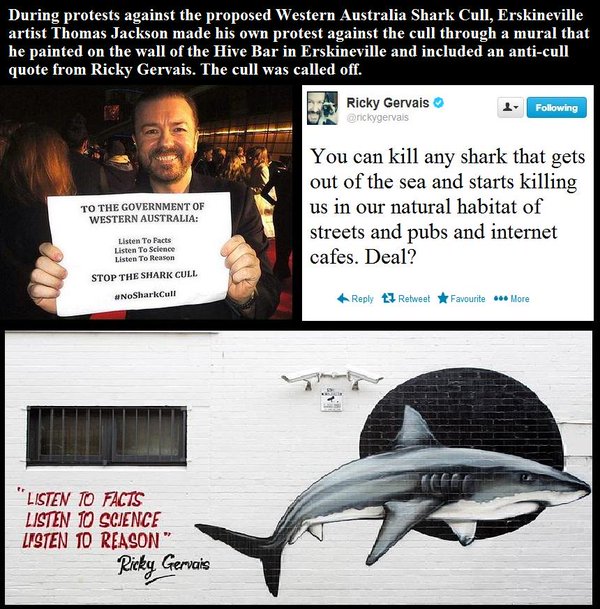
In 2014, Ricky lent his considerable Twitter celebrity to the campaign against Western Australia’s controversial Shark kill policy. He appeared on social media holding up a sign decrying the WA government plans to catch and kill any shark 3m or over that comes within 1km of a Perth beach. It read: “To the government of Western Australia – Listen to Facts, Listen to Science, Listen to Reason – Stop the Shark Cull.” He also used his appearance at the British National Television Awards.
A local street artist made his own protest by painting a mural on a building which included the anti-cull quote by from Ricky. The cull was later called off!
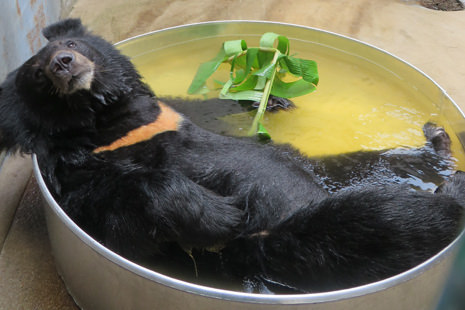
Also in 2014, Ricky symbolically adopted one of the 130 moon Bears on a Bear bile farm in Nanning, China, a farm that’s set to transition into Animals Asia’s third moon Bear sanctuary. Ricky named the young male Bear, Derek, after his comedy-drama.
L to R – Peter Egan, Ricky’s partner Jane Fallon, Ricky and Jill Robinson (founder of Animals Asia)
Derek was a ten-year-old Bear with a host of problems, as a result of a life trapped in a cage where workers would extract his bile. His head is raw from years of rubbing his head against the bars of his small cage, and most of his teeth have fallen out, with the exception of a few rotten teeth which badly needed to be extracted. His lolloping tongue is a result of a nerve damage, while his right eye suffers from a cataract.
“Derek is a beautiful but very damaged Bear,” said Ricky. “After such a sad and traumatic existence on a Bear farm I am thrilled to have adopted him as one of 130 Bears currently being rescued by Animals Asia in China and long to see him enjoying his new life in the sun! I so admire this historic initiative to turn a Bear farm into a sanctuary and applaud the efforts of everyone involved.”
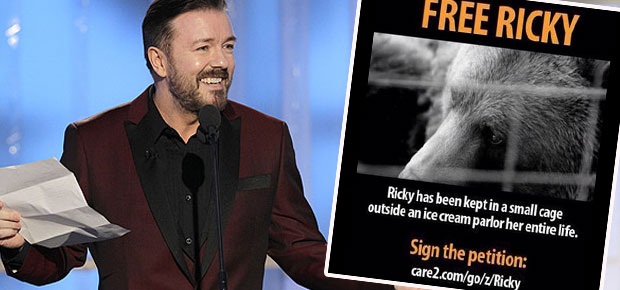
In the USA in 2015, a female black bear called Ricky who spent 18 years in a cage was freed after a settlement in a lawsuit brought by the Animal Legal Defense Fund
The lawsuit was filed by in December 2014 on behalf of concerned Pennsylvania residents against Jim Mack’s Ice Cream, where Ricky had lived in a small, concrete cage, eating a mix of corn and dog food funnelled onto the floor of her enclosure.
Ricky’s plight drew national attention, and tens of thousands of people (including Ricky) signed petitions requesting her release..
Again in 2015, Ricky helped hundreds of shelter dogs desperately lacking food and medical care. When an influx of 680 dogs arrived at a public shelter in Odai, Romania, the workers knew these dogs didn’t have anywhere else to turn. Despite not having enough food, bedding or even bowls for water, the shelter took them in. They needed help and fast, so London-based partner rescue, K-9 Angels created a fundraising page with an urgent plea for donations “to ease the emergency situation at the shelter.” Over the course of several days, the group had raised only about £4,000 for the Romanian shelter. The money was enough to make sure the dogs had enough food for about two months, but it didn’t come anywhere near what the shelter needed to pay for basic supplies, vaccinations and labour costs. In fact, it was about £26,000 short. That’s when Ricky stepped in and posted the following tweet.
OK. That's The Emmys done. Now back to important stuff. Emergency food & aid for dogs at Odai public shelter, https://t.co/6PS5kSW8Mn pls RT
“Within days we had raised £20,000. Before Ricky retweeted we had only raised £4,000 so it just goes to show the power that animal loving celebs have. We are very grateful,” K-9 Angels founder Victoria Eisermann. The group showed their gratitude with a post in which they called the comedian “an angel” for sharing their fundraiser page. Eisermann added that the group even honoured Ricky by naming one of the young puppies “Ricky.”
Lately, Ricky has been very vocal about Lucy’s Law, the campaign to end the heart-breaking puppy farming trade. Lucy’s Law is named after a remarkable Cavalier Spaniel called Lucy who was rescued from a Welsh puppy farm and became a celebrity in her own right on social media before her death more than a year ago. Ricky regularly posted details on Twitter and Facebook leading to it being a short distance from becoming law.
Ricky’s passion and ability to be vocal has made millions of people painfully aware of such issues as the slaughter of whales in the Faroe Islands and the stolen pet dogs of Thailand that are destined for the illegal meat trade.
Ricky also reminds us all of the huge number of animals in rescue shelters and the importance of the hashtag #AdoptDontShop with his numerous posts.
Ricky is driven to raise awareness and get signatures on petitions that pile pressure on governments. He has put his name to campaigns with charities such as PETA and the Humane Society International. Ricky won’t stop until animals are protected from blood sports, their fur is no longer used as a fashion statement, the Yulin ‘festival’ ends and the last SeaWorld ‘fish tank’ is empty (etc etc!)
This year Ricky donated £427,243 to animal charities from the sale of premium seats for his stand-up tour Supernature.
Ricky said: ‘It is such a privilege to be able to help animals in need, simply by doing a job that I already love.’
Ricky is undoubtedly a voice for all animals and it’s fair to say the world is listens to him.
And a final quote from Ricky……
This is only a small part of what Ricky has done for animals over the years.
…….and THAT is why Ricky Gervais is a animal rights legend!!
Protect All Wildlife
The Mission of Protect All Wildlife is to prevent cruelty and promote the welfare of ALL animals.
We believe EVERY animal should be treated with respect, empathy, and understanding. We raise awareness to protect and conserve wild, captive, companion and farm animals.
It is vital that we protect animals against acts of cruelty, abuse, and neglect by enforcing established animal welfare laws and, when necessary, take action to ensure that those who abuse animals are brought to justice.
Protect All Wildlife are involved in many projects to protect animals’ rights, welfare, and habitats. Money contributed to Protect All Wildlife supports ALL of our worthy programmes and gives us the flexibility to respond to emerging needs. Your donations make our work possible.























 PROTECT ALL WILDLIFE