Istanbul Police Bust Wildlife Trafficking Ring As Raid On Illicit Wildlife Museum Reveals Stuffed Endangered Animals Worth $2.3m

Some of the animals illegally killed by Ali Haydar Ustay. Credit: Istanbul Police Department’s Anti-Smuggling and Organized Crime Branch

In an operation conducted in the districts of Sarıyer and Arnavutköy in Istanbul, over 400 taxidermied specimens of protected wild animals were confiscated. The suspect, 85-year-old Ali Haydar Ustay, who established a private museum by hunting animals domestically and internationally, has been apprehended.

During the raid conducted on Wednesday at the identified addresses, over 400 pieces of processed ornamental items and taxidermied animals were seized. New details emerged during the operation, revealing that taxidermied specimens and trophies of wildlife were present. Consequently, Ali Haydar Ustay was apprehended as a “suspect.” During the searches conducted at the addresses, various types of stuffed animals were seized, including Deer, American Antelope, Bison, Jaguar, Crocodile, Bear and Mountain Goat, with an approximate market value of TL 75 million ($2.3).

More of the animals seized by the Istanbul Police Department’s Anti-Smuggling and Organized Crime Branch.

The raid was the final step in detailed physical and technical tracking and resulted in the seizure of over 400 specimens, including species protected under the Convention on International Trade in Endangered Species of Wild Fauna and Flora (CITES).

The haul features taxidermied Polar Bears, Crocodiles, Lions, Jaguars, Cheetahs, Bison, and a notable Mammoth tusk. Authorities have valued the collection at a staggering $2.3 million.

Ustay, known for his extensive hunting expeditions, travelled to 30 countries on six continents to amass his collection. He illegally transported the animals into Turkey via his private aircraft.

The Polar Bear killed by Ali Haydar Ustay. Credit: Istanbul Police Department’s Anti-Smuggling and Organized Crime Branch.

He went to extraordinary lengths to pursue his prey, including a two-week stint in a tree for a Striped Deer and a two-month stay in Canada for a Polar Bear.

The most egregious of his acts include the hunting and killing of the last known Anadolu Tiger in Turkey. “This is not just a crime against nature but a direct assault on our national heritage and biodiversity,” said a General Directorate of Nature Conservation and National Parks spokesperson.

The skin of the last known Anadolu Tiger in Turkey. Credit: Istanbul Police Department’s Anti-Smuggling and Organized Crime Branch.

The discovery of the Tiger’s skin in Ustay’s collection has stirred a wave of outrage among wildlife activists and conservationists.

Authorities have commenced the process of handing over the seized items, including trophies, skins, and other artifacts, to the Directorate of Nature Conservation and National Parks. Ustay is currently undergoing interrogation for his alleged crimes.

WHAT YOU CAN DO TO HELP WILDLIFE

You can support ‘Protect All Wildlife’ many projects by donating as little as £5 – It only takes a minute but it can last a lifetime for an animal in need. Please donate below.

Donate Here: Please Help Animals In Need

Everyone who donates will receive a Certificate of Appreciation as a thank you for helping animals in need.

The Mission of Protect All Wildlife is to prevent cruelty and promote the welfare of ALL animals.

We believe EVERY animal should be treated with respect, empathy, and understanding. We raise awareness to protect and conserve wild, captive, companion and farm animals.

It is vital that we protect animals against acts of cruelty, abuse, and neglect by enforcing established animal welfare laws and, when necessary, take action to ensure that those who abuse animals are brought to justice.

Protect All Wildlife are involved in many projects to protect animals’ rights, welfare, and habitats. Money contributed to Protect All Wildlife supports ALL of our worthy programmes and gives us the flexibility to respond to emerging needs. Your donations make our work possible.

Donate Here: Please Help Animals In Need

After Whales And Dolphins, Ottawa Intends To Ban Captive Monkeys And Elephants.

After Whales and Dolphins, Ottawa intends to ban keeping Elephants and great Apes in captivity in the country “because of the cruelty they represent”.

A new bill, called The Jane Goodall Act, was introduced in the Senate on Tuesday to ban anyone from taking an Elephant or a great Ape, a term that includes Chimpanzees, Gorillas and Orangutans.

Canadian zoos won’t be able to bring in new elephants or apes under new federal legislation introduced this week, except under specific circumstances. Bill S-15 looks to ban all new captivity of the species except where a licence is granted for conservation, research or an animal’s best interest.

“The recapture of any Elephant or great Ape in Canada must meet very strict criteria demonstrating that the activity is for animal welfare, conservation or science,” commented the Minister of Environment and Climate Change, Steven Guilbeault.

Senator Marky Klyne of Saskatchewan sponsored the bill that was introduced on Tuesday. “It is upsetting to know that according to current standards, a person does not need to hold a permit to own a chimpanzee in some regions of Canada,” he lamented to explain the interest of his fee.

Elephants, for their part, are very intelligent animals that suffer when kept in captivity or presented to the public in an unnatural environment, added the senator in the second reading of the law on Thursday.

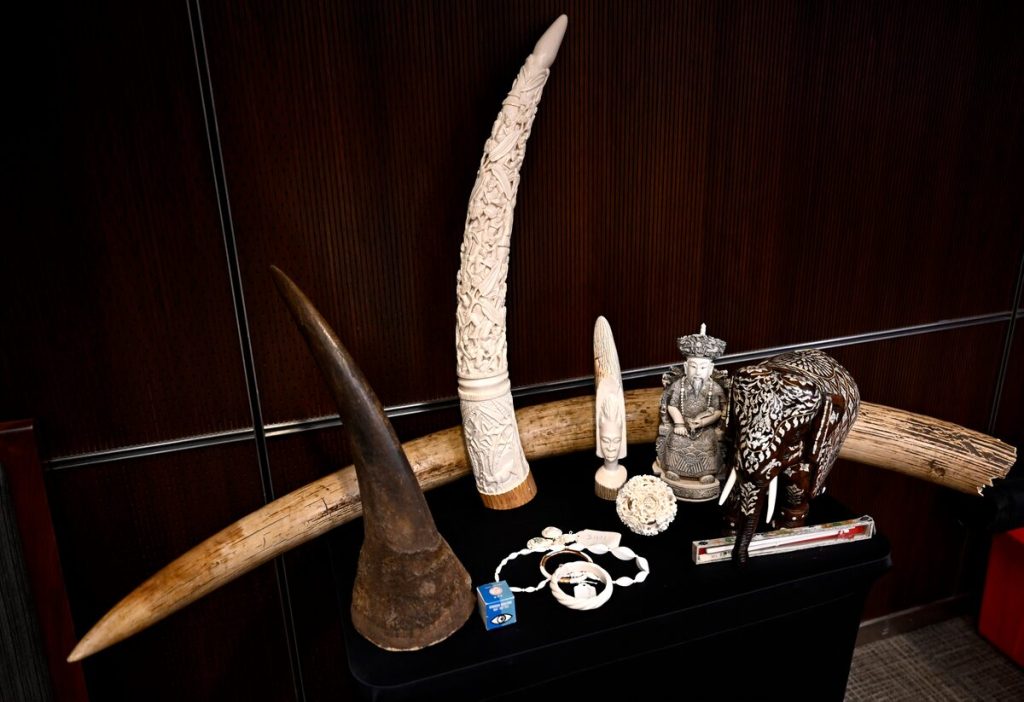
Minister Guilbeault announced the ban on the import of ivory from Elephant tusks and Rhino horns, including hunting trophies and articles carved from ivory, for which it is necessary to obtain a permit. Few exceptions are planned for museums and scientific research.

Elephant ivory and rhino horn imports have been banned by Ottawa
Tightening the laws

The law banning the captivity of great Apes and Elephants is part of a series of laws adopted to better protect animals in Canada and elsewhere in the world.

In 2019, Canada also banned the keeping of Whales and Dolphins in captivity.

WHAT YOU CAN DO TO HELP ANIMALS IN NEED

You can support our work by donating as little as £5 – It only takes a minute but it can last a lifetime for an animal in need.

PLEASE CLICK HERE TO HELP ANIMALS IN NEED

Everyone who donates will receive a Certificate of Appreciation as a thank you for helping animals in need.

The Mission of Protect All Wildlife is to prevent cruelty and promote the welfare of ALL animals. We believe EVERY animal should be treated with respect, empathy, and understanding. We raise awareness to protect and conserve wild, captive, companion and farm animals.

It is vital that we protect animals against acts of cruelty, abuse, and neglect by enforcing established animal welfare laws and, when necessary, take action to ensure that those who abuse animals are brought to justice.

Protect All Wildlife are involved in many projects to protect animals’ rights, welfare, and habitats. Money contributed to Protect All Wildlife supports ALL of our worthy programmes and gives us the flexibility to respond to emerging needs. Your donations make our work possible.
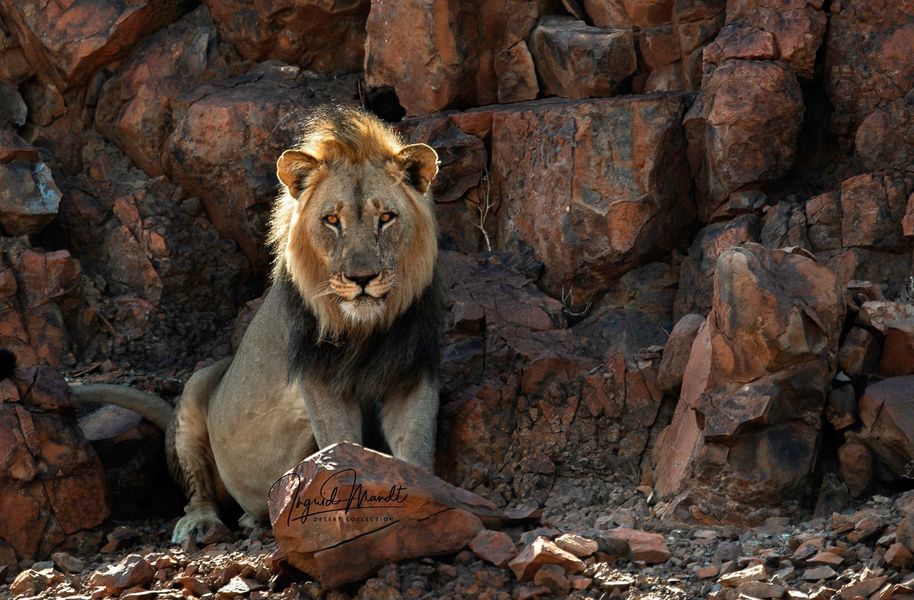
Was Namibia’s Collared Black Maned Desert Lion Mwezi Illegally Killed By Trophy Hunters Aided By The Ministry of Environment, Forestry and Tourism?

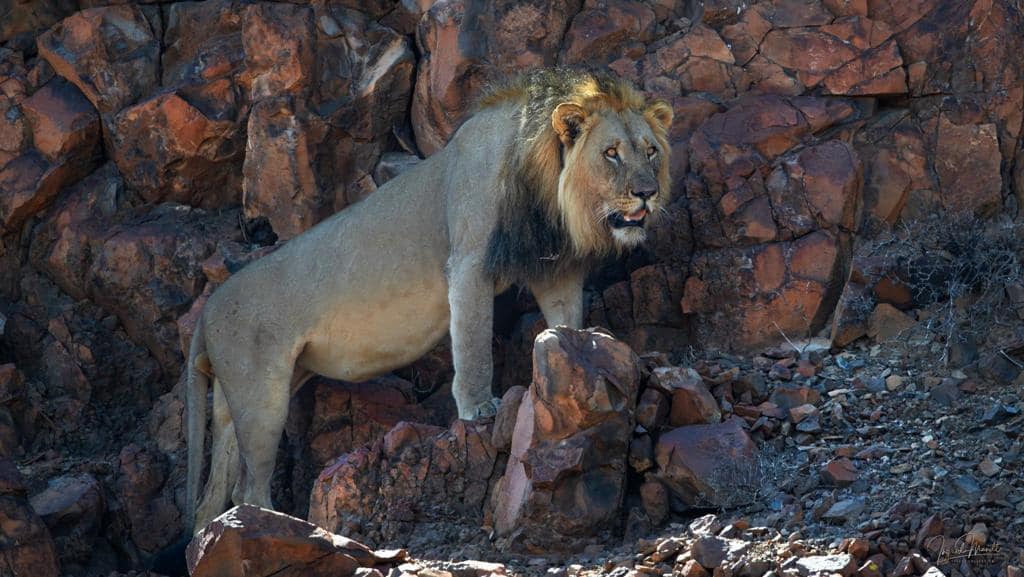
Black Maned Desert Lion Mwezi (XPL 107) Image Credit: Ingrid Mandt

According to the Desert Lion conservation organization DELHRA (Desert Lions Human Relations Aid), it can be assumed that one of the last black-maned male desert lions, “Mwezi” or “XPL 107”, was ‘harvested’ as a trophy on Wednesday, October 11.

In a letter to the Ministry of Environment, Forestry and Tourism (MEFT), DELHRA writes: “Having learned from reliable sources and informants that the male Lion, known as ‘Mwezi’, was allegedly shot, we would like to contact the ministry to know the circumstances and justification for such an alleged killing.”

According to the report, the tracking system of the satellite collar (which is supposed to protect her) was abused to locate the Lion in a protected area. “That is, in the Palmwag concession or, more likely, in the adjacent Skeleton Coast Park, by trophy hunters who were allegedly accompanied by MEFT officials.”

The Desert Lion Conservation Organization further states: “On October 12, we received a report from our informant in Khowarib that the Lion Rangers had received a warning SMS (this happens when a collared lion breaks through a geo-fence) indicating a Lion near the Wild Veld Safaris hunting camp in Khowarib village.” The investigation revealed that it was a dead Lion that had allegedly been kept in the hunting camp since the early evening of October 11.

Black Maned Desert Lion Mwezi (XPL 107) Image Credit: Desert Lion Conservation

According to Desert Lion Conservation, “Mwezi” was still observed and photographed on Sept. 27 when he mated with a lone Lioness, XPL 108, the last survivor of the Obab pride, and followed her into the Skeleton Coast Park, the tracks suggested.

According to DELAHRA, the investigation revealed that two vehicles – one from the MEFT and the other allegedly a hunting vehicle – had entered the Palmwag concession area, with the crew citing “police action” as the reason for the entry. “This coincided with the report coming out of Khowarib later that day, and we learned from a source that the dead lion in the Khowarib hunting camp was the beautiful black-maned desert Lion Mwezi, which had been sought as a trophy for some time.”

DELHRA is of the opinion that a criminal investigation that compels the release of the information will clear up this case and that the parties involved, if warranted, should be prosecuted, as a permit to hunt in the Palmwag concession or in the Skeleton Coast Park cannot have been lawfully granted, and that if it is granted for a hunt in a concession area, but is hunted in the Palmwag or Skeleton Coast Protected Areas, such a permit would be considered null and void.

Black Maned Desert Lion Mwezi (XPL 107) Image Credit: Ingrid Mandt

The letter to MEFT further states: “Based on our information, we would welcome answers to our questions or even a joint and transparent investigation. We ask you to inform us of the following: Has the MEFT issued a trophy permit for hunting XPL 107? If so, could the MEFT please justify this? We ask for a copy of the hunting permit and a copy of the report of the MEFT officer who accompanied the hunting party. We also ask for a copy of the protocol of the website concerning the downloads of the positions of this Lion between September 1 and now by all users. Finally, we are asking for copies of reports of incidents in which XPL 107 may have been involved.”

It goes on to say: “We intend to file a complaint and contact the Information Access Officer and the Ombudsman, as the destruction of natural resources falls within the remit of these bodies in the event that the MEFT does not respond. In such a case, those who have access to the relevant information may be summoned as witnesses.”

The Ministry of the Environment had not responded to questions at the time of going to press.

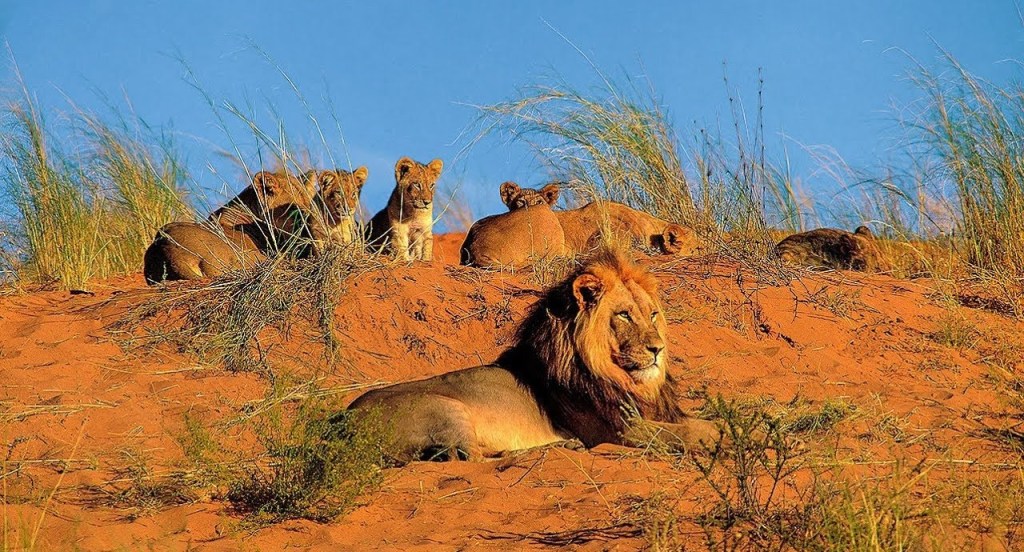
The Desert Lions Of Namibia Image Credit: Wilderness Travel

WHAT YOU CAN DO TO HELP ANIMALS IN NEED

You can support our work by donating as little as £5 – It only takes a minute but it can last a lifetime for an animal in need.

PLEASE DONATE HERE

Everyone who donates will receive a Certificate of Appreciation as a thank you for helping animals in need.

The Mission of Protect All Wildlife is to prevent cruelty and promote the welfare of ALL animals.

We believe EVERY animal should be treated with respect, empathy, and understanding. We raise awareness to protect and conserve wild, captive, companion and farm animals.

It is vital that we protect animals against acts of cruelty, abuse, and neglect by enforcing established animal welfare laws and, when necessary, take action to ensure that those who abuse animals are brought to justice.

Protect All Wildlife are involved in many projects to protect animals’ rights, welfare, and habitats. Money contributed to Protect All Wildlife supports ALL of our worthy programmes and gives us the flexibility to respond to emerging needs. Your donations make our work possible.