Some of the animals illegally killed by Ali Haydar Ustay. Credit: Istanbul Police Department’s Anti-Smuggling and Organized Crime Branch
In an operation conducted in the districts of Sarıyer and Arnavutköy in Istanbul, over 400 taxidermied specimens of protected wild animals were confiscated. The suspect, 85-year-old Ali Haydar Ustay, who established a private museum by hunting animals domestically and internationally, has been apprehended.
During the raid conducted on Wednesday at the identified addresses, over 400 pieces of processed ornamental items and taxidermied animals were seized. New details emerged during the operation, revealing that taxidermied specimens and trophies of wildlife were present. Consequently, Ali Haydar Ustay was apprehended as a “suspect.” During the searches conducted at the addresses, various types of stuffed animals were seized, including Deer, American Antelope, Bison, Jaguar, Crocodile, Bear and Mountain Goat, with an approximate market value of TL 75 million ($2.3).
More of the animals seized by the Istanbul Police Department’s Anti-Smuggling and Organized Crime Branch.
The raid was the final step in detailed physical and technical tracking and resulted in the seizure of over 400 specimens, including species protected under the Convention on International Trade in Endangered Species of Wild Fauna and Flora (CITES).
The haul features taxidermied Polar Bears, Crocodiles, Lions, Jaguars, Cheetahs, Bison, and a notable Mammoth tusk. Authorities have valued the collection at a staggering $2.3 million.
Ustay, known for his extensive hunting expeditions, travelled to 30 countries on six continents to amass his collection. He illegally transported the animals into Turkey via his private aircraft.
The Polar Bear killed by Ali Haydar Ustay. Credit: Istanbul Police Department’s Anti-Smuggling and Organized Crime Branch.
He went to extraordinary lengths to pursue his prey, including a two-week stint in a tree for a Striped Deer and a two-month stay in Canada for a Polar Bear.
The most egregious of his acts include the hunting and killing of the last known Anadolu Tiger in Turkey. “This is not just a crime against nature but a direct assault on our national heritage and biodiversity,” said a General Directorate of Nature Conservation and National Parks spokesperson.
The skin of the last known Anadolu Tiger in Turkey. Credit: Istanbul Police Department’s Anti-Smuggling and Organized Crime Branch.
The discovery of the Tiger’s skin in Ustay’s collection has stirred a wave of outrage among wildlife activists and conservationists.
Authorities have commenced the process of handing over the seized items, including trophies, skins, and other artifacts, to the Directorate of Nature Conservation and National Parks. Ustay is currently undergoing interrogation for his alleged crimes.
WHAT YOU CAN DO TO HELP WILDLIFE
You can support ‘Protect All Wildlife’ many projects by donating as little as £5 – It only takes a minute but it can last a lifetime for an animal in need. Please donate below.
Everyone who donates will receive a Certificate of Appreciation as a thank you for helping animals in need.
The Mission of Protect All Wildlife is to prevent cruelty and promote the welfare of ALL animals.
We believe EVERY animal should be treated with respect, empathy, and understanding. We raise awareness to protect and conserve wild, captive, companion and farm animals.
It is vital that we protect animals against acts of cruelty, abuse, and neglect by enforcing established animal welfare laws and, when necessary, take action to ensure that those who abuse animals are brought to justice.
Protect All Wildlife are involved in many projects to protect animals’ rights, welfare, and habitats. Money contributed to Protect All Wildlife supports ALL of our worthy programmes and gives us the flexibility to respond to emerging needs. Your donations make our work possible.
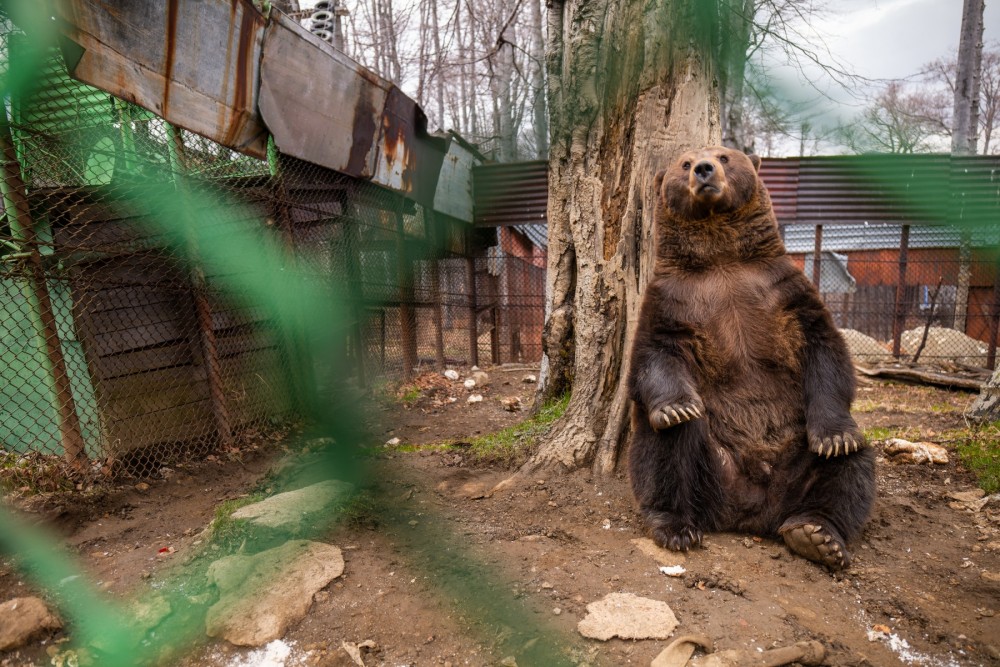
BALOO THE BEAR HAS BEEN LOCKED UP IN A CAGE FOR 23 YEARS CREDIT: JASPER DOEST
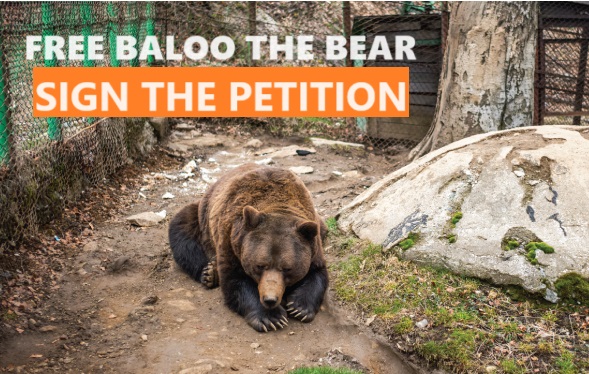
Baloo the Bear has been locked up in a cage at a ski resort in Romania under horrific conditions for 23 years. But together with our supporters around the world, we are working to rescue Baloo from this nightmare.
Baloo was found injured as a cub in the Romanian wilderness and was taken in by park rangers for medical care. However, instead of being released back into the wild, Baloo ended up as private property of a ski resort. Despite a 2005 ban by the Romanian government on private individuals keeping Bears, enforcement of the law has been lax, resulting in the bear’s ongoing confinement.
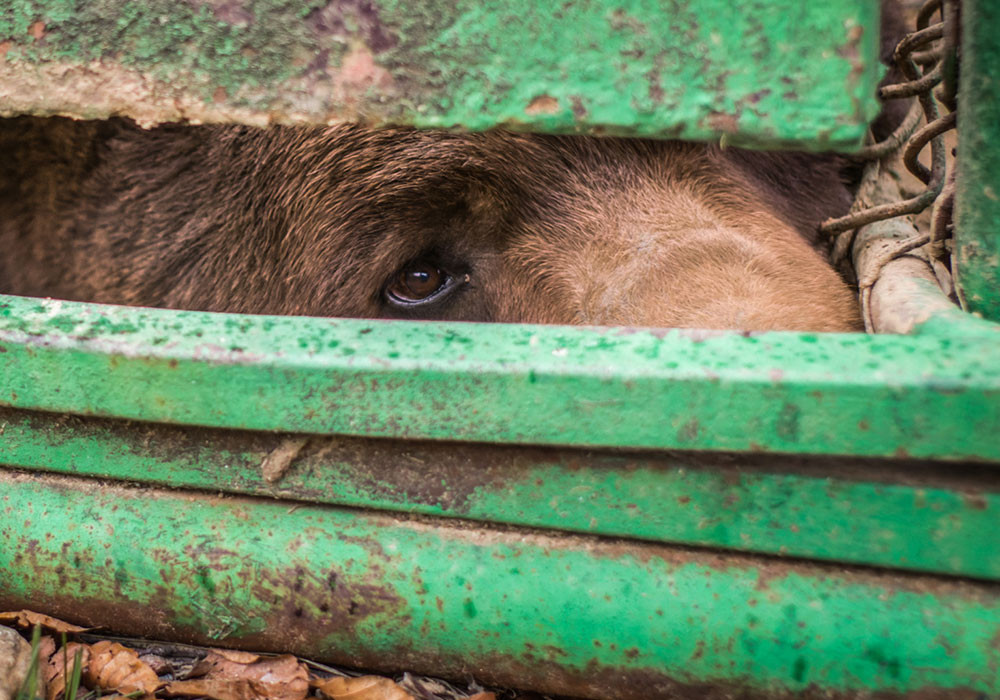
Baloo has been living on display in a tiny cage next to a ski lift and is poorly cared for. He is fed cornflakes and lemonade, sometimes even alcohol to drink, and children frequently poke him through the bars of the cage with sticks. This is no life for a bear.
HELL ON EARTH! CREDIT: JASPER DOEST
23 years ago, Baloo was found wounded in the mountains and he was taken to a hospital by the mountain rescuers from Straja. When he recovered, he came into the care of the businessman Emil Părău, who turned him into the resort’s mascot and has refused to give him up under any circumstances. Although it is obvious that it would be better for him to live among the old oaks of the Bear Sanctuary in Zărnești.
Two other Bears, Puppy and Pamy, would have tasted the same cake of frustration if they hadn’t been confiscated and released in the sanctuary at Zarnesti. They grew big and handsome, while poor Baloo remains to serve his punishment.
Animal protection organisations have been trying for years to free Baloo with no success. But fortunately, a petition started by Dutch television host, Floortje Dessing, is drawing much needed global attention to his cause. Floortje’s show “Floortje gaat mee” (“Floortje Goes Along” in English), explores the complex relationships between humans and animals. In the episode, she shows first-hand the distressing conditions Baloo faces.
BALOO THE BEAR: AN UNWILLING MASCOT!
Join us in our efforts to liberate Baloo from a lifetime of misery by signing the petition now!
23 years in an undeserved prison!
23 years of stress, inappropriate food, even alcohol given to him through steel bars!
23 years of objects thrown at him, noise, and lack of hibernation!
A mascot in a European resort, for selfish “love”… This is how Baloo lives his life in Straja, Hunedoara county.
HELP FREE BALOO FROM HIS LIVING HELL! CREDIT: JASPER DOEST
Everyone who donates will receive a Certificate of Appreciation as a thank you for helping animals in need.
The Mission of Protect All Wildlife is to prevent cruelty and promote the welfare of ALL animals.
We believe EVERY animal should be treated with respect, empathy, and understanding. We raise awareness to protect and conserve wild, captive, companion and farm animals.
It is vital that we protect animals against acts of cruelty, abuse, and neglect by enforcing established animal welfare laws and, when necessary, take action to ensure that those who abuse animals are brought to justice.
Protect All Wildlife are involved in many projects to protect animals’ rights, welfare, and habitats. Money contributed to Protect All Wildlife supports ALL of our worthy programmes and gives us the flexibility to respond to emerging needs. Your donations make our work possible.
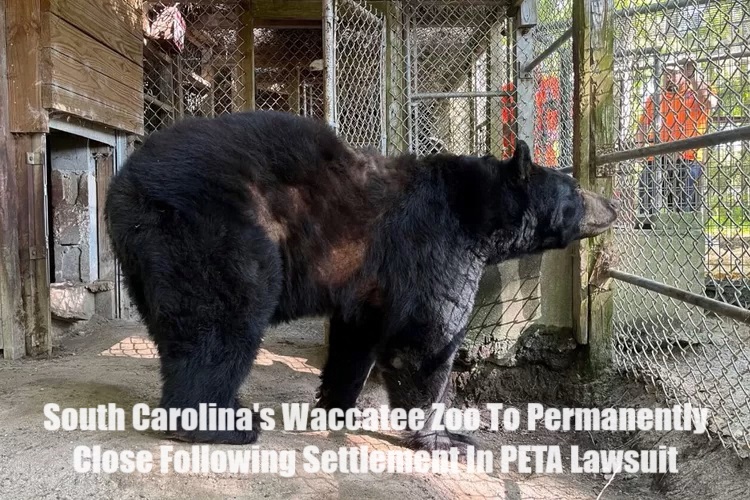
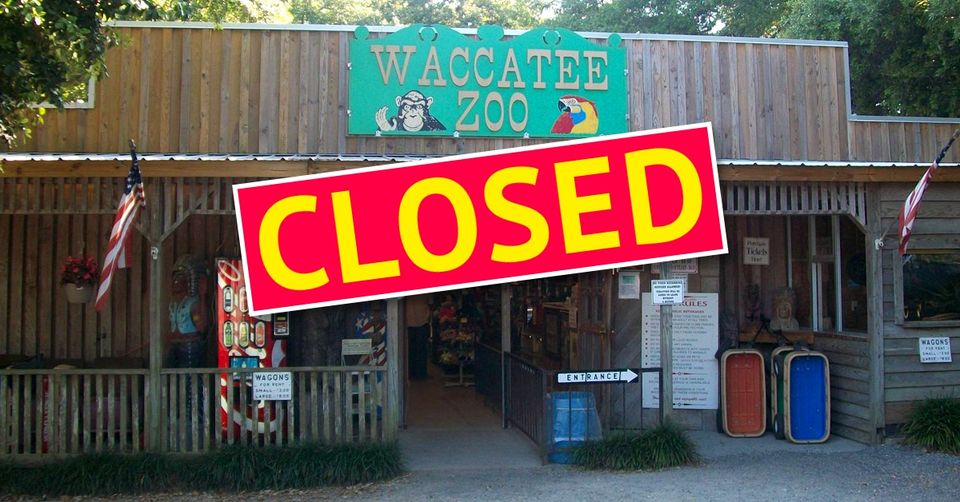
In a press statement Thursday, the animal rights organization said the Waccatee Zoo in Horry County will be permanently closed. Additionally, as part of the settlement, per PETA, the operators of the South Carolina facility are banned from owning or exhibiting wild or exotic animals, breeding domestic animals, exploiting domestic animals for profit, and working or volunteering at other roadside zoos.
In its lawsuit filed under the federal Endangered Species Act and South Carolina’s public nuisance law in April 2022, PETA described Waccatee Zoo as “one of the worst roadside zoos in America.” The complaint alleged the zoo’s operators confined and exhibited more than 460 animals and that the facility’s conditions deprived them of “adequate veterinary care, shelter, food, and water.”
An attorney for the Waccatee Zoo and the defendants, Reese Boyd III, told theMyrtle Beach Sun News that the lawsuit has been settled and the facility will be shut down. He said that his client’s agreement to the settlement terms was not an admission “to the exploitation of animals in their care” – adding that a number of PETA’s accusations were “factually untrue,” per the newspaper.
PETA also said in the lawsuit that it regularly received complaints about Waccatee from zoo visitors.
“Day after day, animals at Waccatee sway and pace back and forth—unnatural behaviors that signify the animals’ needs are not being met,” read PETA’s lawsuit. “Many animals experience negative stress due to small, insufficiently enriched spaces that provide little to do, offer inadequate opportunities to socialize, and are affirmatively dangerous.”
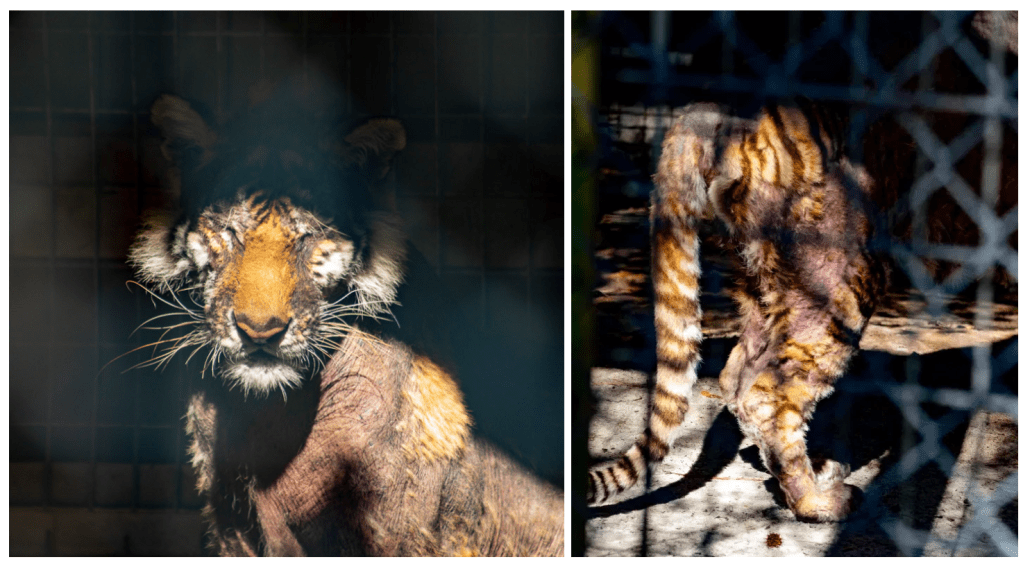
The lawsuit cited the case of Lila, a tiger who either died in late 2020 or 2021, saying that she “became so emaciated that much of her skeleton—including her vertebrae, scapula, shoulder, hip, and other joints—was visible through her skin.” The complaint also alleged that other animals at the zoo experienced hair loss and emaciation—adding that “isolated, frustrated, and bored animals exhibit alarming and repetitive behavior, indicating that they are experiencing psychological distress.”
Emaciated Lila suddenly disappeared resulting in PETA asking for a necropsy report.
Lila passed away after a fall from old age, zoo owner Jeff Futrell said.
According to a letter PETA sent to Waccatee Zoo on Feb. 25, the organization wanted answers to the whereabouts of Lila after she was the subject of a PETA campaign because of her ill health.
“After months of wasting away, losing fur, and turning in endless circles in her dismal cage, Lila has disappeared—and PETA is asking whether she died, in pain and in the cold, and if her death is being covered up,” says PETA Foundation Associate Director of Captive Animal Law Enforcement Michelle Sinnott. “Nothing can undo Lila’s suffering, and PETA is calling on Waccatee Zoo to release the other big cats before they suffer as she did.”
And now, PETA is asking the owners of the zoo to release the necropsy report.
In a press statement, Brittany Peet, PETA’s general counsel for captive animal law enforcement, responded to the settlement: “This victory blocks Waccatee’s operators from ever again mistreating wild animals as they did for decades. PETA is delighted to see the survivors thriving in their new sanctuary home and will continue to ask everyone to help us advocate for all animals still trapped in roadside zoos by never patronizing such operations.
In May, PETA and The Wild Animal Sanctuary (TWAS) rescued nine remaining animals left at the Waccatee Zoo. Among the animals retrieved were a llama, two North American black bears, and six emus. PETA said the rescued animals would head to a TWAS sanctuary in Colorado.
WHAT YOU CAN DO TO HELP WILDLIFE
You can support ‘Protect All Wildlife’ by donating as little as £1 – It only takes a minute but it can last a lifetime for an animal in need. Please donate below.
Everyone who donates will receive a Certificate of Appreciation as a thank you for helping animals in need.
The Mission of Protect All Wildlife is to prevent cruelty and promote the welfare of ALL animals.
We believe EVERY animal should be treated with respect, empathy, and understanding. We raise awareness to protect and conserve wild, captive, companion and farm animals.
It is vital that we protect animals against acts of cruelty, abuse, and neglect by enforcing established animal welfare laws and, when necessary, take action to ensure that those who abuse animals are brought to justice.
Protect All Wildlife are involved in many projects to protect animals’ rights, welfare, and habitats. Money contributed to Protect All Wildlife supports ALL of our worthy programmes and gives us the flexibility to respond to emerging needs. Your donations make our work possible.
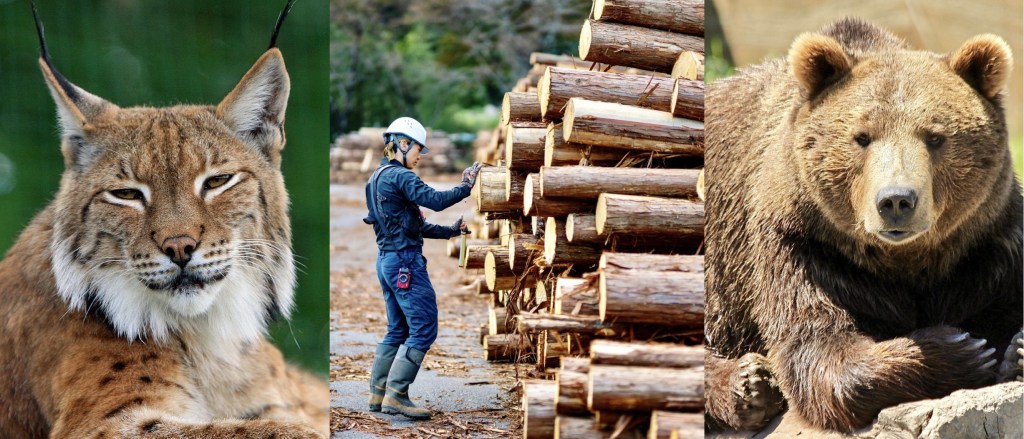
The South Plateau project proposes to clearcut more than 5,500 acres of pine forest in the Custer-Gallatin National Forest. The project also calls for logging on an additional 9,000 acres and bulldozing up to 56 miles of roads, many through mature, old-growth forests.
“This reckless project was approved without considering its threats to Grizzly Bears, Lynx, and other wildlife,” said Kristine Akland, Northern Rockies director and senior attorney at the Center for Biological Diversity. “The fragile Yellowstone ecosystem surrounding this iconic national park is vital for Montana’s rich biodiversity and climate. This project must be stopped before our beautiful backcountry forests are bulldozed.”
The Forest Service approved the logging project without identifying the locations, timing or scope of the logging units or roads. Instead, the agency said it will make those decisions when crews are on the ground, which inhibits analysis of potential harm to protected species and prevents public involvement.
“The Forest Service needs to drop the South Plateau project and quit clearcutting old-growth forests,” said Mike Garrity, executive director of the Alliance for the Wild Rockies. “Especially clearcutting and bulldozing new logging roads in grizzly habitat on the border of Yellowstone National Park.”
“Clearcutting high-elevation lodgepole forests across thousands of acres is not going to improve ecological conditions and will not help protect communities from wildfire as the Forest Service claims,” said Adam Rissien, a rewilding advocate at WildEarth Guardians. “Rather, this is another misguided, old-style timber sale that will undermine the forest’s ability to store carbon.”
The project allows for significantly more logging and road building than is authorized by the Custer-Gallatin Forest plan. The notice also says that the South Plateau project will destroy and remove thousands of acres of habitat for Grizzly Bears and Lynx, which are both listed as threatened under the Endangered Species Act.
You can support ‘Protect All Wildlife’ by donating as little as £1 – It only takes a minute but it can last a lifetime for an animal in need. Please donate below.
Everyone who donates will receive a Certificate of Appreciation as a thank you for helping animals in need.
The Mission of Protect All Wildlife is to prevent cruelty and promote the welfare of ALL animals.
We believe EVERY animal should be treated with respect, empathy, and understanding. We raise awareness to protect and conserve wild, captive, companion and farm animals.
It is vital that we protect animals against acts of cruelty, abuse, and neglect by enforcing established animal welfare laws and, when necessary, take action to ensure that those who abuse animals are brought to justice.
Protect All Wildlife are involved in many projects to protect animals’ rights, welfare, and habitats. Money contributed to Protect All Wildlife supports ALL of our worthy programmes and gives us the flexibility to respond to emerging needs. Your donations make our work possible.
A large group of tourists have been caught on camera at Yellowstone National Park refusing to move away from a Bear, despite intervention from two Park Rangers.
In the video, which you can watch below, at least eight people with cameras and phones are gathered near a Black Bear while Rangers attempt to move them along, explaining that it’s for their own safety and that of the animals, and that the rules apply to everyone. Despite these warnings, a few people refuse to budge until they’re satisfied with their pictures, despite the Rangers standing right in front of them.
“Yellowstone National Park isn’t Disney Land. Everything here is beautiful but has the potential of serious harm or death. This bear was 35 yards off the Road don’t get out of your car. It’s a wild animal and can go from grazing to attack in a moment. A man had his kids out of the car 35 yards from a big Black Bear and accused the Rangers of taking the fun out of it. Yellowstone is not a zoo animals can be unpredictable. Be smart be safe and give the animals their space. Stay in your car when they are close to the road.”
“The lack of respect for the rangers and wildlife is beyond infuriating. These people need to understand Yellowstone is not a petting zoo” said one onlooker.
“The greatness of a nation and its moral progress can be judged by the way its animals are treated” ~ Mathatma Gandhi.
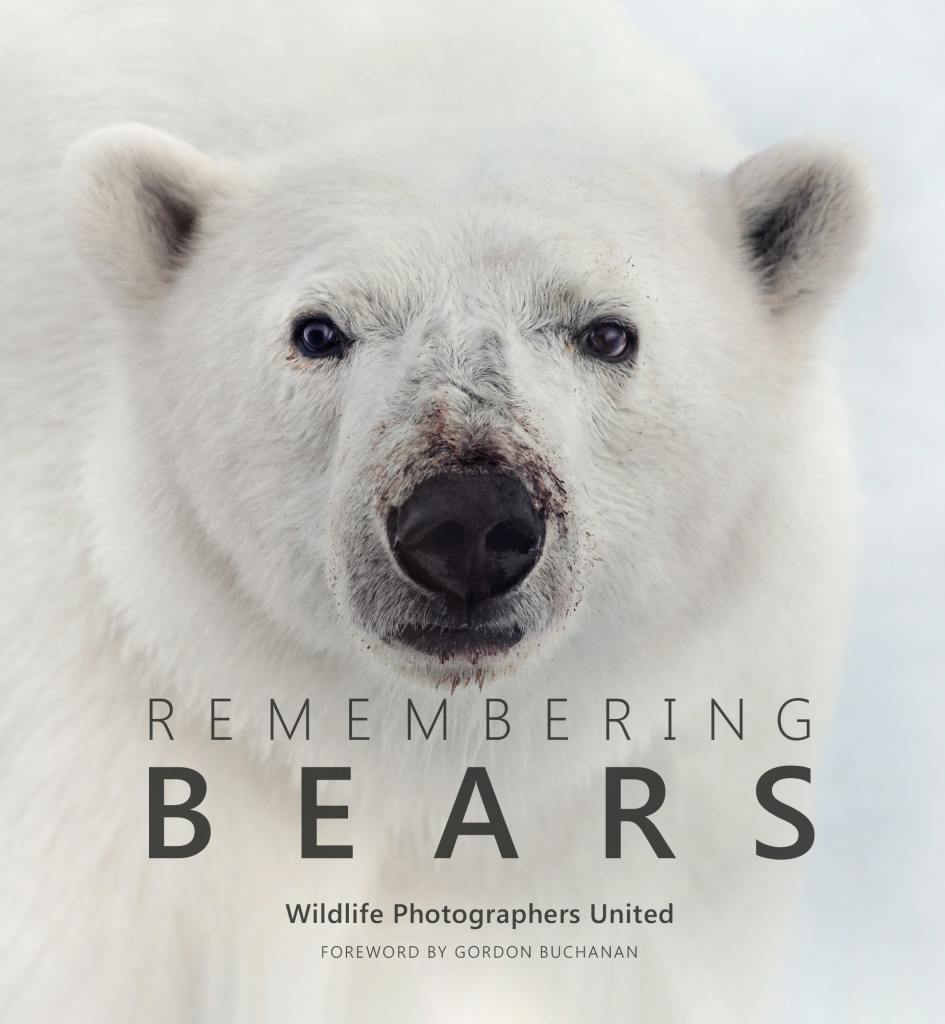
A new book aims to raise awareness of the plight facing Bears and to raise money to protect them. This is the latest book in the Remembering Wildlife series which has so far raised more than £952,000 for conservation through book sales around the world.
“There can be few species that we humans have such a contradictory relationship with, than Bears. From hugging toys of them at night as children, to labelling them as anything from a nuisance to a threat, entertainment to medicine, we are nothing but hypocritical in how we relate to this most awe inspiring creature. At Remembering Wildlife, we believe it is time to stop and think about this contradiction.
As you’ll see in this stunning collection of images, the eight Bear species roam from ice sheets to forests, meadows to mountains. From tender moments with their young, to fierce territorial battles between males, we tell their story in a way that commands respect, awe and reappraisal.
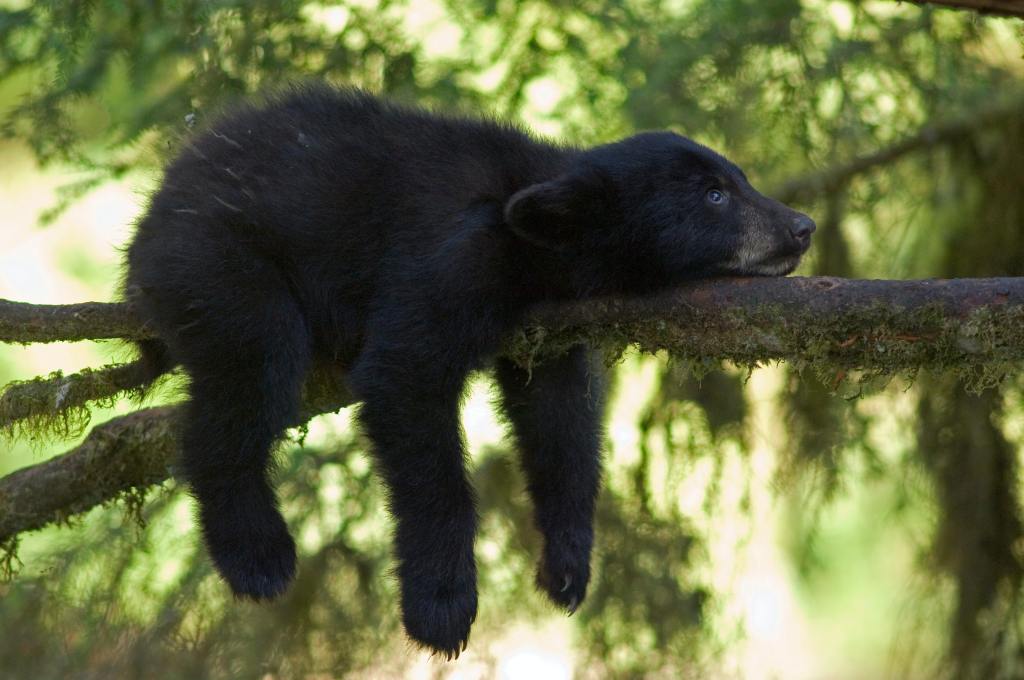
American Black Bear (Ursus Americans) by Amy Gulick Tongass. National Forest, Alaska This Black Bear cub was sent up a tree by its mother for safekeeping while she fished in the stream below. It was an unusually hot day and the cub flopped out on the branch until mom gave the signal to come down for a meal.
With this book, we aim to shine a spotlight on their diversity and beauty, their resilience and fortitude and most importantly, to raise funds for those working to protect them. We are supported in this mission once again by many of the world’s top wildlife photographers, who have all generously donated their work. Together, we are determined to stand up for Bears and penetrate the moral consciousness of all those who would exploit or see them destroyed. Because the planet would be poorer without them” – Margot Raggett, Remembering Wildlife Founder.
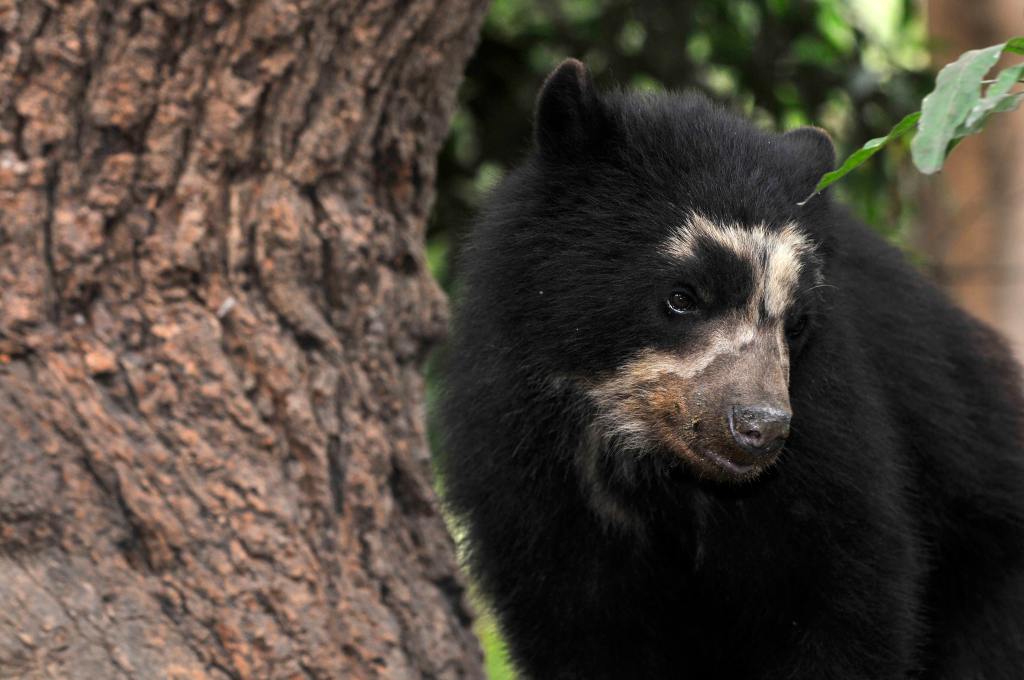
Chaparri Ecological Reserve, Peru Andean Bear. Photographer Daniel Rosengren was visiting a bear sanctuary in Chaparri when suddenly this wild bear appeared and climbed a tree. Staff explained it visited sometimes and was not shy.
All profits from the sale of the book will be used to support projects working to protect Bears.
Each turn of the page reveals another striking image of one of the eight Bear species –American Black Bear, Andean Bear, Asiatic Black Bear, Brown Bear, Giant Panda, Polar Bear, Sloth Bear and Sun Bear – revealing tender moments with family members, fierce territorial battles and the harsh reality of life as a bear, for example, when searching for food.
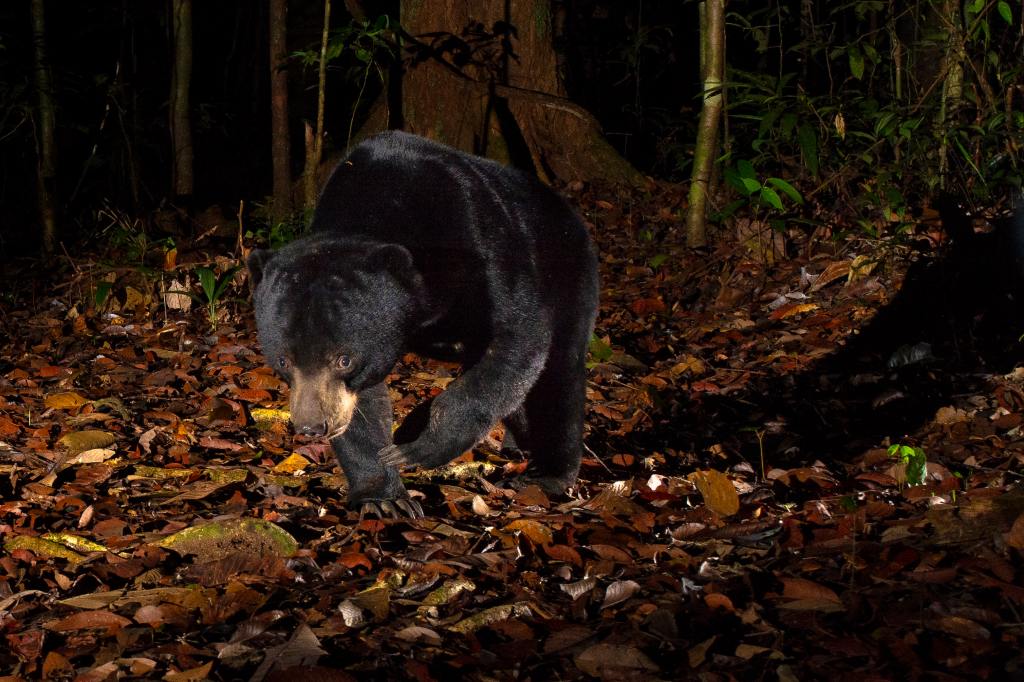
Sun Bear (Helarctos malayanus) by Tim Laman Gunung Palung National Park, West Kalimantan, Indonesia Sun Bears are rare, and this image was one of a handful of obtained during two years of intensive camera trapping, deep in the remote rainforest of Gunung Palung National Park in Indonesian Borneo.
Actor and comedian Ricky Gervais has endorsed the book, saying it is: “A wonderful book that shows how beautiful Bears are and just what we have to lose if we don’t stand up for them now. They deserve better.”
The hardback coffee table book is a collection of 88 stunning images taken by the world’s top wildlife photographers – including Marsel van Oosten, Art Wolfe, Frans Lanting, Greg du Toit and Daisy Gilardini – who have generously donated images to help protect Bears in the wild.
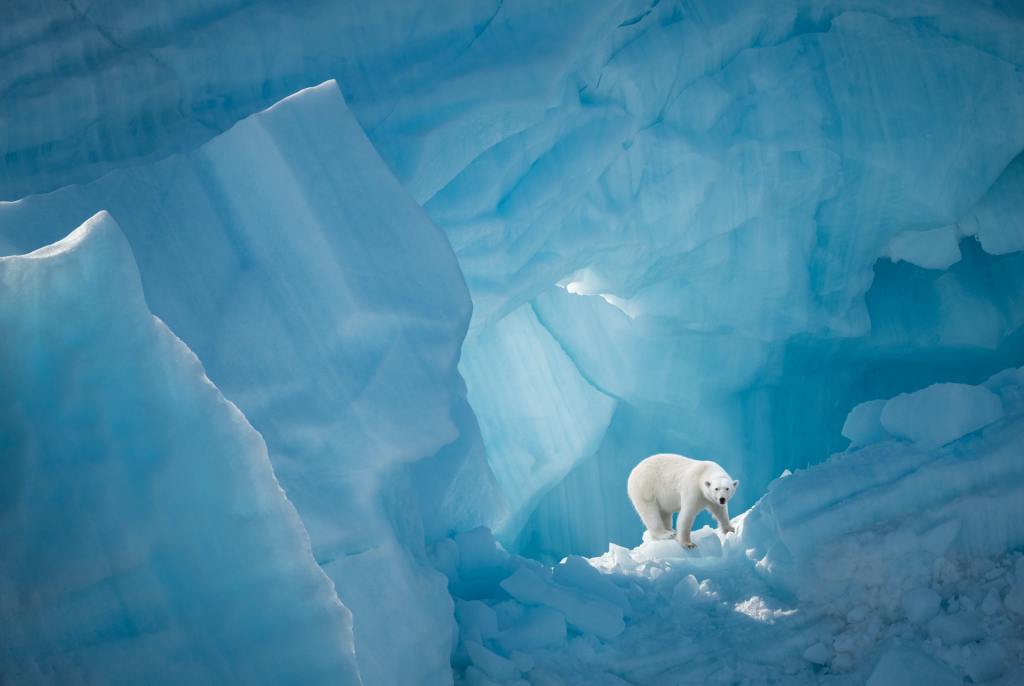
Polar Bear (Ursus maritimus) by Marsel van Oosten Svalbard. Climate change is not the only threat to Polar Bears. In Canada, the world’s largest exporter of Polar Bear skins, more than 600 Bears are legally killed every year. Hunters worldwide kill more Polar Bears than African Rhinos, which are protected by guards against poaching.
Six out of the eight Bear species are listed by the International Union for Conservation of Nature (IUCN) as Vulnerable or Endangered due to pressures ranging from climate change to human-wildlife conflict. Even those Bears of least concern, such as Brown Bears, are at risk of being lost for good in certain countries.
Founder of Remembering Wildlife Margot Raggett said: “Humans have long had a special relationship with Bears – we hug them at night as children and love seeing them in story books and on screen. Yet, in the real world, they’re not always viewed with the same affection and can been seen as a nuisance or a threat.
“Some face lives of misery – as dancing Bears, illegally trafficked as pets or used for medicine – or face serious threats and extinction through climate change, hunting or human-wildlife conflict.
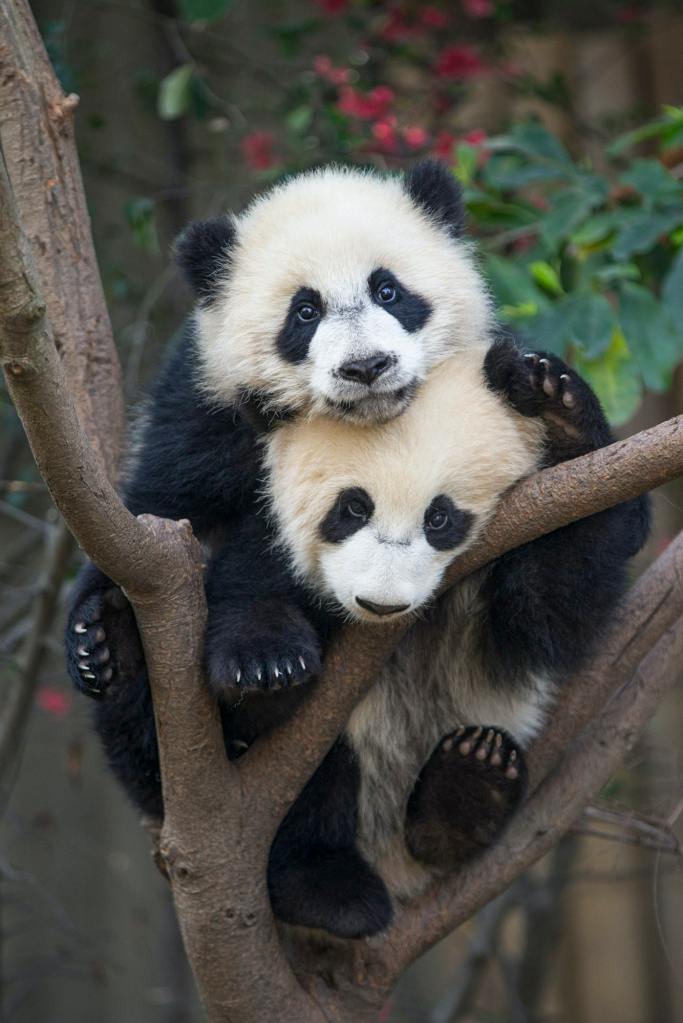
Giant Panda (Ailuropoda melanoleuca) by Suzi Estzerhas. Two playful seven-month-old Giant Panda cubs in a tree Chengdu, China
“Through images and words, this book shines a spotlight on their diversity, beauty and resilience as well as raising awareness of their plight and raising funds for organisations passionately fighting for the future of Bears.”
The foreword for the book is by award-winning wildlife filmmaker, presenter and public speaker Gordon Buchanan MBE.
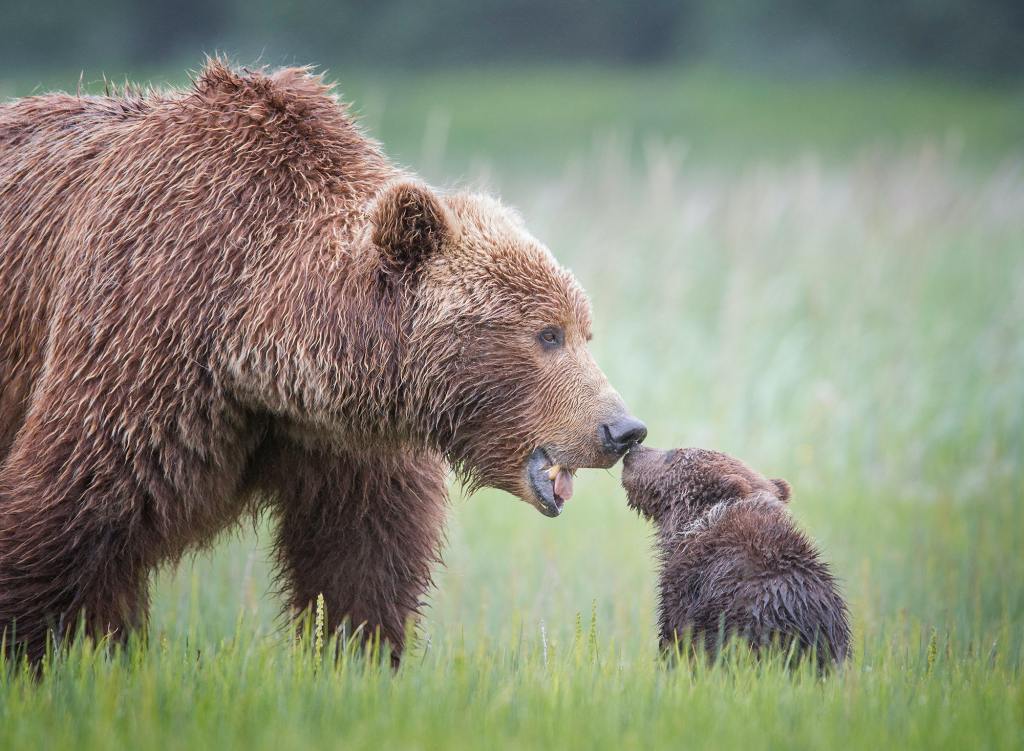
Brown Bear (Ursus arctos) by Tin Man Lee Lake Clark National Park, Alaska. After three hours lying motionless in remote Alaska, the photographer caught this picture of a spring cub waking up from a deep sleep and sitting up, with mother Bear, who was 20 feet away, dashing back to give a cub a nose touch.
Further information about Remembering Wildlife can be found here .
To find out more about the projects that Remembering Wildlife has already funded, click here
Each book costs £45 GBP (approximately $50 USD) and copies can be ordered at Remembering Wildlife
Tiger T42 – Fateh. A dominant tiger of Ranthambhore Tiger Reserve, he rules over Qualiji area. He is named after the legendary conservationist, synonymous with Ranthambhore, Fateh Singh Rathore-A tribute to a great man.
Wildlife Tourism in India has always been a controversial matter. In 2010, a Public Interest Litigation was filed by tiger activist Ajay Dubey, claiming that the industry was becoming unsustainable and exploitative. As per the 2006 Amendment of the Wildlife (Protection) Act of 1972, “critical Tiger and wildlife habitats” must be inviolate for the vital growth of tiger populations. Any form of human activity was deemed a threat to Tiger conservation. It was on this basis that, on the 24th of July 2012, the Supreme Court ordered a temporary ban on tourism in the core zone of Tiger reserves. The ban stirred significant debate amongst conservationists.
More about the wildlife tourism ban
The underlying principle of the order was questionable. Tiger populations grew remarkably in reserves such as Kahna, Bandhavgarh and Ranthambore, despite substantial amounts of wildlife tourism. Contrastingly, Tiger populations in less popular Protected Areas, such as Buxa and Palamu Tiger Reserve, have depleted immensely despite a lack of tourism. Associating wildlife tourism to the depletion of Tiger populations remains a baseless claim.
The Supreme Court hoped that the ban would instigate the establishment of buffer zones in Protect Areas for wildlife tourism, in accordance with the November 2011 NTCA guidelines. However, despite the Supreme Court mandate, numerous states were reluctant to comply with the guidelines. Tourism in buffer zones was not the most practical alternative. These regions are used extensively by bordering villages for cattle grazing and the collection of forest produce. Habitat degradation would lead to inferior wildlife sightings, hence attenuating the attractiveness of wildlife safaris.
Wildlife Tourism In India
Fortunately the MoEFCC and NTCA redrafted guidelines, allowing for wildlife tourism in up to 20% of the critical Tiger habitat of a reserve. The revised guidelines encouraged states to form their own ecotourism policies. Following this, on the 16th of October 2012, the Supreme Court allowed for the recommencement of tourism in core areas
Are there any benefits of wildlife tourism?
There are numerous benefits to wildlife tourism, particularly for the local communities. Following proper practices, ecotourism brings substantial economic benefits. With over 1 million people visiting tiger reserves annually, a lot of revenue is generated in the form of entry fees, guide salary, lodge bookings amongst others. This provides significant employment opportunities for the local communities and has ripple effects as locals will associate a monetary value with wildlife. This would increase the general acceptance of wildlife, hence reducing human-wildlife conflict. Furthermore, this would prevent locals from turning to game hunting for sustenance. Entry fees would also provide the Forest Department with much required funding for conservation works! It is estimated that in the Fiscal Year of 2019, wildlife tourism in Madhya Pradesh attracted nearly 2 million visitors, generating 27 crore rupees. An organization, TOFTigers, estimated that nearly a quarter of the state’s Forest Department Budget consists of park entry fees in 2017. Moreover, the industry generated an additional 2,500 full time jobs out of which 82% were given to locals. With the industry growing at a healthy 15% annually, local economies stand to benefit immensely, particularly in the North East where the wild wonders are relatively unexplored.
Tourism also has a plethora of benefits in the management of the reserve. With the Forest Departments heavily under resources and understaffed, patrolling Protected Areas is a daunting task. Parks certainly benefit from watchful tourists. Detection of forest fires, illegal activities and injured animals improves with the participation of tourists. In fact, with the development of citizen science software, tourists can contribute even further towards wildlife research. It is no surprise therefore, that within 6 weeks of wildlife tourism shutting down due to the pandemic in 2020, the cases of poaching increased by 151% across India.
Unethical Practices Cloud wildlife tourism
However, in the past, there have been concerns regarding whether the economic benefits of wildlife tourism actually reach local communities. Wildlife tourism may also lead to some atrocious practices. For example, both captive elephants, and dancing bears, undergo immense torture while being trained for tourist purposes. Similarly, Kopi Luwark, the world’s most expensive coffee, is a major attraction in Indonesia. However, most people are oblivious to the fact that it sponsors the illegal wildlife trade. Snake charming also is equally diastorous.
Unruly visitors are not avoidable
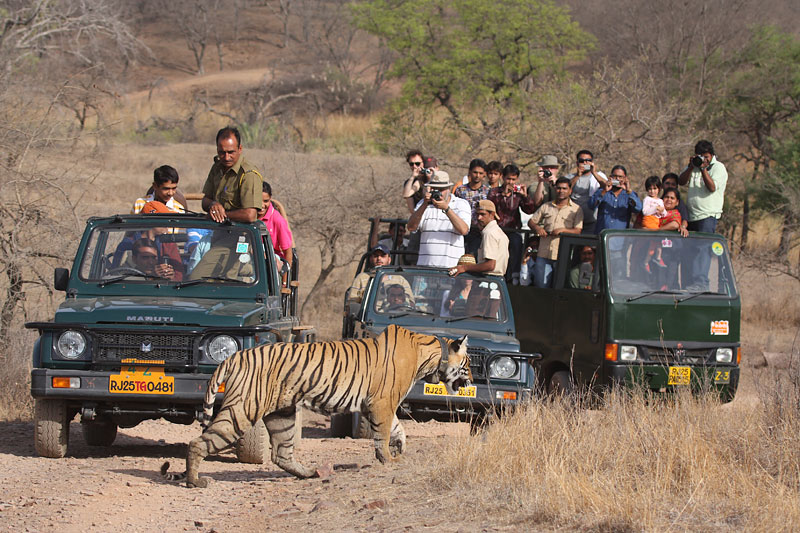
Enforcement of rules and regulation also remains a dark spot in the wildlife industry. I personally have witnessed numerous accounts of wildlife harassment. Unruly tourists littering, wearing excessively bright colours and making excessive noise has made a few safaris unpleasant. Furthermore, in the lure of tips, guides are often overly enthusiastic during a safari. A critical protocol which is frequently ignored during a direct sighting is the minimum distance requirement between two jeeps. Though legally, animals have the right of way in forest roads, this behaviour by jeeps often obstructs their paths and causes distress to the animals. I witnessed this with the dominant male Rudra in Tadoba Tiger Reserve in October 2020 and in my first visit to the park in 2017, where a jeep did some off-roading to show the guests tiger cubs feeding on a kill. Not only did the family flee, the jeeps shamelessly continued chasing them off-roading. Littering is also a prominent issue. On the same trip, I visited the Tipeshwar Tiger Reserve where visitors, despite being confronted by both forest staff and guests, continued to litter in the park. I can name plenty of such personal anecdotes from forests all over India! Seeing the popular tiger of the park overwhelms tourist and guide alike!
The impact of such behaviour has had an observed impact on wildlife. Tigers and other wildlife of popular parks are far more accustomed to jeeps than in the smaller reserves. Despite this, tigers do witness increased stress levels. This is proved by a study of 341 samples of tiger scats by the Centre for Cellular and Molecular Biology (CCMB) in Bandhavgarh and Kanha National Park. The study found that tigers had higher concentrations of the stress hormone, faecal glucocorticoid metabolite (fGCM), during the tourism season than prior.
This behaviour could be rectified by improved education. While an underlying purpose of ecotourism is education, only 30% of India’s Protected Areas have visitor orientation centres. Private lodges also are not very proactive in the field.
Wildlife tourism has to become more sustainable
Another issue with wildlife tourism is that lodges are not truly eco-friendly. A nationwide study of 10 of India’s major wildlife tourist destinations was alarming. 85% of tourist facilities were within 5km of the park. 93% of the lodges used local wood while the dependency on local borewells varied from 40% to 100%. Swimming pools in the lodges of Central India prove costly for local communities in the dry summer months. The fragile ecosystem of Ladakh is witnessing widespread decimation in recent years due to scores of tourists flocking to the state following the release of the movie “3 Idiots”.
The same study found that in the 10 parks, 95% of the revenue went to private operators. Only 4.5% and 0.5% went to the park and locals respectively. In fact, only 0.001% of the locals within a 10km buffer of PA were employed. This accentuates the fallacies of India’s wildlife industries!
Larger mammals steal the limelight
Although only 10% of India’s 500 Protected Areas are Tiger Reserves, they account for 32% of wildlife tourism. Spotting charismatic species such as Tigers, Elephants, Rhinos and Lions still remains the sole interest for most visitors. Much of India’s natural beauties are unheard of by the general public. This is in sharp contrast with countries such as Australia, US, South Africa and Europe. Unlike India, ecotourism is not limited to safaris solely. These countries offer a wide array of sustainable activities across their natural landscapes including bird watching, camping, adventure sports, and natural history museums. Although it is essential to not damage the natural ecosystem, the ecotourism industry in India could be further developed. In fact, developing more activities in the lesser known parks could help distribute tourism more evenly across the country. There is much scope to expand. India could also adopt a private-public partnership in a few regions, much like the Private Game Reserves of South Africa!
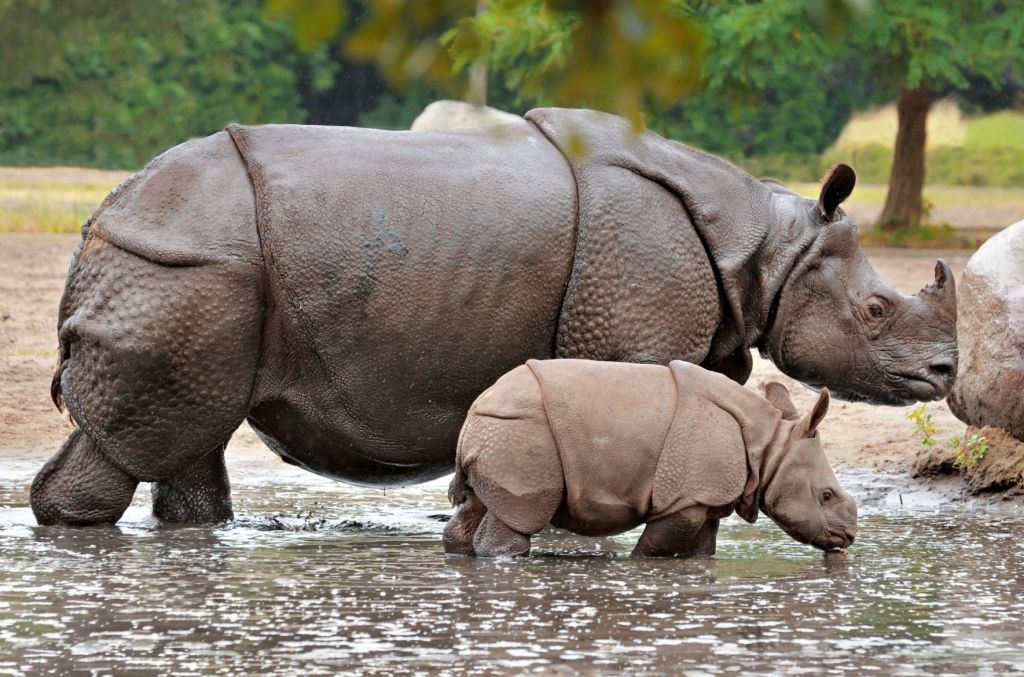
The Greater One-Horned Rhino
All in all, the wildlife tourism industry is still fairly young and has much growth left. It has various benefits to wildlife but there are many issues for India to iron out such that the industry can bolster conservation efforts.
This article was first published on Think Wildlife Foundation.
How you can help animals in need:
You can support animals in need by donating as little as £1 – It only takes a minute but it can last a lifetime for an animal in need.
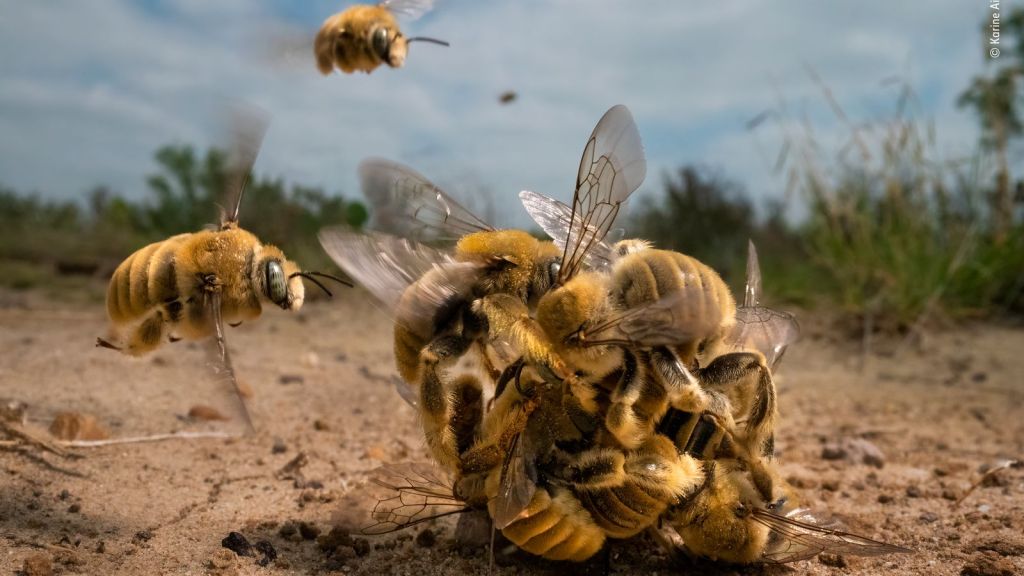
A buzzing ball of cactus bees was awarded the top prize at the prestigious Wildlife Photographer of the Year competition.
The winners of the Natural History Museum’s prestigious Wildlife Photographer of the Year competition were announced at an awards ceremony in London today.
American photographer Karine Aigner was announced as this year’s Wildlife Photographer of the Year for her remarkable image of a buzzing ball of cactus bees spinning over the hot sand on a Texas ranch (top image).
Entitled “The Big Buzz”, her winning shot was taken close up at bee-level and shows all except one of the male insects intent on mating with the single female at the centre.
Organisers of the contest pointed out that, like most bees, the insects pictured are threatened by habitat loss, pesticides and climate change, along with farming practices that disrupt their nesting grounds.
All The Winners Of Wildlife Photographer Of The Year 2022
10 Years and under winner
Battle stations by Ekaterina Bee, Italy
Ekaterina Bee watches as two Alpine ibex spar for supremacy. It was near the end of a spring day trip with her family that Ekaterina spotted the fight. The two ibex clashed horns and continued to trade blows while standing on their hind legs like boxers in a ring. In the early 1800s, following centuries of hunting, fewer than 100 Alpine ibex survived in the mountains on the Italy–France border. Successful conservation measures mean that, today, there are more than 50,000.
Location: Pian della Mussa, Piedmont, Italy
11-14 Years Winner
Out of the fog by Ismael Domínguez Gutiérrez, Spain
Ismael Domínguez Gutiérrez reveals a monochromatic scene as an osprey sits on a dead tree, waiting for the fog to lift. When Ismael arrived at the wetland, he was disappointed not to be able to see beyond a few metres – and certainly he had no hope of glimpsing the grebes he wanted to photograph.
But as the fog began to lift, it revealed the opportunity for this striking composition. Ospreys are winter visitors to the province of Andalucía. Here the many reservoirs offer these widespread fish-eating raptors shallow, open water that is clearer than many rivers and lakes.
Location: Embalse de Los Hurones, Cádiz, Spain
15-17 Years Winner
The beauty of baleen by Katanyou Wuttichaitanakorn, Thailand
Katanyou Wuttichaitanakorn is intrigued by the contrasting colours and textures of a Bryde’s whale, which surfaces close by. Following government tourism guidelines, the tour boat Katanyou was travelling on turned off its engine as the whale appeared close by.
This meant that Katanyou had to steady his hands to capture this close-up composition as the boat rocked in the swell. Bryde’s whales have up to 370 pairs of grey-coloured plates of baleen growing inside their upper jaws. The plates are made of keratin, a protein that also forms human hair and nails, and are used to filter small prey from the ocean.
Location: Upper Gulf of Thailand, Phetchaburi, Thailand
Animals in their Environment winner
Spectacled bear’s slim outlook by Daniel Mideros
Daniel Mideros takes a poignant portrait of a disappearing habitat and its inhabitant. Daniel set up camera traps along a wildlife corridor used to reach high-altitude plateaus. He positioned the cameras to show the disappearing natural landscape with the bear framed at the heart of the image.
These bears, found from western Venezuela to Bolivia, have suffered massive declines as the result of habitat fragmentation and loss. Around the world, as humans continue to build and farm, space for wildlife is increasingly squeezed out.
Location: Peñas Blancas, Quito, Ecuador
Animal Portraits winner
Puff perfect by José Juan Hernández Martinez, Spain
José Juan Hernández Martinez witnesses the dizzying courtship display of a Canary Islands houbara.
José arrived at the houbara’s courtship site at night. By the light of the moon, he dug himself a low hide. From this vantage point he caught the bird’s full puffed-out profile as it took a brief rest from its frenzied performance. A Canary Islands houbara male returns annually to its courtship site to perform impressive displays.
Raising the plumes from the front of its neck and throwing its head back, it will race forward before circling back, resting just seconds before starting again.
Location: La Oliva, Fuerteventura, Spain
Behaviour: Invertebrates Winner
The big buzz by Karine Aigner
Karine Aigner gets close to the action as a group of bees compete to mate. Using a macro lens, Karine captured the flurry of activity as a buzzing ball of cactus bees spun over the hot sand. After a few minutes, the pair at its centre – a male clinging to the only female in the scrum – flew away to mate. The world’s bees are under threat from habitat loss, pesticides and climate change. With 70% of bee species nesting underground, it is increasingly important that areas of natural soil are left undisturbed.
Location: South Texas, USA
Behaviour: Birds Winner
The listening bird by Nick Kanakis, USA
Nick Kanakis gains a glimpse into the secret life of wrens. Nick spotted the young grey-breasted wood wren foraging. Knowing it would disappear into the forest if approached, he found a clear patch of leaf litter and waited. Sure enough, the little bird hopped into the frame, pressing its ear to the ground to listen for small insects. This prey-detecting technique is used by other birds, including the Eurasian blackbird. Grey-breasted wood wrens are ground-dwelling birds, often heard but not seen. They broadcast loud, melodious songs and rasping calls while hidden in the undergrowth.
Location: Tatamá National Park, Risaralda, Colombia
Behaviour: Mammals winner
The great cliff chase by Anand Nambiar, India
Anand Nambiar captures an unusual perspective of a snow leopard charging a herd of Himalayan ibex towards a steep edge. From a vantage point across the ravine, Anand watched the snow leopard manoeuvre uphill from the herd. It was perfectly suited for the environment – unlike Anand, who followed a fitness regime in preparation for the high altitude and cold temperatures. Snow leopards live in some of the most extreme habitats in the world. They are now classed as vulnerable. Threats include climate change, mining, and hunting of both the snow leopards and their prey.
Location: Kibber Wildlife Sanctuary, Himachal Pradesh, India
Oceans: The Bigger Picture Winner
New life for the tohorā by Richard Robinson, New Zealand
Richard Robinson captures a hopeful moment for a population of whales that has survived against all odds. Hindered by poor visibility, Richard used a polecam to photograph the whales gradually moving towards his boat. Pushing his camera to its limits in the dark water, he was relieved to find the image pin-sharp and the moment of copulation crystallised in time.
When ready to mate, the female southern right whale rolls onto its back, requiring the male to reach its penis across the female’s body. Known by the Māori as tohorā, the New Zealand population was hunted to near extinction in the 1800s, so every new calf offers new hope. Shot under New Zealand Department of Conservation permit #84845-MAR
Location: Deas Head, Auckland Islands, New Zealand
Plants and Fungi Winner
The magical morels by Agorastos Papatsanis, Greece
Agorastos Papatsanis composes a fairy tale scene in the forests of Mount Olympus. Enjoying the interplay between fungi and fairy tales, Agorastos wanted to create a magical scene. He waited for the sun to filter through the trees and light the water in the background, then used a wide-angle lens and flashes to highlight the morels’ labyrinthine forms. Morels are regarded as gastronomic treasures in many parts of the world because they are difficult to cultivate, yet in some forests they flourish naturally.
Location: Mount Olympus, Pieria, Greece
Natural Artistry winner
Heavenly flamingos by Junji Takasago, Japan
Junji Takasago powers through altitude sickness to produce a dream-like scene. Junji crept towards the preening group of Chilean flamingos. Framing their choreography within the reflected clouds, he fought back his altitude sickness to capture this dream-like scene. High in the Andes, Salar de Uyuni is the world’s largest salt pan. It is also one of Bolivia’s largest lithium mines, which threatens the future of these flamingos.
Lithium is used in batteries for phones and laptops. Together we can help decrease demand by recycling old electronics.
Location: Salar de Uyuni, Daniel Campos Province, Bolivia
Behaviour: Amphibians and Reptiles Winner
The bat-snatcher by Fernando Constantino Martínez Belmar, Mexico
Fernando Constantino Martínez Belmar waits in darkness as a Yucatan rat snake snaps up a bat. Using a red light to which both bats and snakes are less sensitive, Fernando kept an eye on this Yucatan rat snake poking out of a crack. He had just seconds to get the shot as the rat snake retreated into its crevice with its bat prey. Every evening at sundown in the Cave of the Hanging Snakes, thousands of bats leave for the night’s feeding. It is also when hungry rat snakes emerge, dangling from the roof to snatch their prey in mid-air.
Location: Kantemo, Quintana Roo, Mexico winner
Underwater Winner
Shooting star by Tony Wu, USA/Japan
Tony Wu watches the electrifying reproductive dance of a giant sea star. As the surrounding water filled with sperm and eggs from spawning sea stars, Tony faced several challenges. Stuck in a small, enclosed bay with only a macro lens for photographing small subjects, he backed up to squeeze the undulating sea star into his field of view, in this galaxy-like scene. The ‘dancing’ posture of spawning sea stars rising and swaying may help release eggs and sperm, or may help sweep the eggs and sperm into the currents where they fertilise together in the water.
Location: Kinko Bay, Kagoshima Prefecture, Japan
Urban Wildlife Winner
House of bears by Dmitry Kokh, Russia
Dmitry Kokh presents this haunting scene of polar bears shrouded in fog at the long-deserted settlement on Kolyuchin. On a yacht, seeking shelter from a storm, Dmitry spotted the polar bears roaming among the buildings of the long-deserted settlement.
As they explored every window and door, Dmitry used a low-noise drone to take a picture that conjures up a post-apocalyptic future. In the Chukchi Sea region, the normally solitary bears usually migrate further north in the summer, following the retreating sea ice they depend on for hunting seals, their main food. If loose pack ice stays near the coast of this rocky island, bears sometimes investigate.
Location: Kolyuchin Island, Chukotka, Russia
Wetlands – The Bigger Picture Winner
The dying lake by Daniel Núñez, Guetamala
Daniel Núñez uses a drone to capture the contrast between the forest and the algal growth on Lake Amatitlán. Daniel took this photograph to raise awareness of the impact of contamination on Lake Amatitlán, which takes in around 75,000 tonnes of waste from
Guatemala City every year. “It was a sunny day with perfect conditions,” he says, “but it is a sad and shocking moment.” Cyanobacteria flourishes in the presence of pollutants such as sewage and agricultural fertilisers forming algal blooms. Efforts to restore the Amatitlán wetland are underway but have been hampered by a lack of funding and allegations of political corruption.
Location: Lake Amatitlán, Villa Canales, Guatemala
Photojournalism Winner
Ndakasi’s passing by Brent Stirton, South Africa
Brent Stirton shares the closing chapter of the story of a much-loved mountain gorilla. Brent photographed Ndakasi’s rescue as a two-month-old after her troop was brutally killed by a powerful charcoal mafia as a threat to park rangers. Here he memorialised her passing as she lay in the arms of her rescuer and caregiver of 13 years, ranger Andre Bauma. As a result of unrelenting conservation efforts focusing on the daily protection of individual gorillas, mountain gorilla numbers have quadrupled to over 1,000 in the last 40 years.
Location: Senkwekwe Center, Virunga National Park, Democratic Republic of the Congo
Photojournalist Story Award Winner
The Cuban connection by Karine Aigner
A Cuban bullfinch is positioned alongside a road so that it becomes accustomed to the hubbub of street life and therefore less likely to be distracted during a competition. These birds are highly prized for their sweet voice and feisty spirit. Karine Aigner explores the relationship between Cuban culture and songbirds, and the future of a deep-rooted tradition. For hundreds of years, some Cubans have caught and kept songbirds and held bird-singing contests.
Throughout a turbulent period of economic sanctions and political unrest, these small, beautiful birds have provided companionship, entertainment and friendly competition within the community. Now with regular travel and emigration between Cuba and North America, the tradition of songbird contests has crossed an ocean. As songbird populations plummet, US law enforcement is cracking down on the trapping, trading and competing of these birds.
Location: USA and Cuba
Rising Star Portfolio Award Winner
A theatre of birds by Mateusz Piesiak, Poland
Placing his remote camera on the mud of the reed bed, Mateusz seized the opportunity to capture the moment when a passing peregrine falcon caused some of the dunlins to fly up. Mateusz carefully considered camera angles to produce a series of intimate photographs exploring the behaviour of birds.
Winner of the Young Wildlife Photographer of the Year award when he was 14, Mateusz explored his locality during the Covid-19 lockdown. “Even a small pond or park in the city centre turned out to be a very good place for photographing wildlife.” Throughout this portfolio Mateusz focuses on local birds, researching and preparing for images that were in his mind “for days, months or even years” before he finally managed to realise them.
Location: Poland
Portfolio Award Winner
Under Antarctic ice by Laurent Ballesta, France
Laurent Ballesta endures below-freezing dives to reveal the diversity of life beneath Antarctica’s ice. An underwater photographer and biologist, Laurent has led a series of major expeditions, all involving scientific mysteries and diving challenges, and all resulting in unprecedented images. He has won multiple prizes in Wildlife Photographer of the Year, including the grand title award in 2021. His expedition to Antarctica, exploring its vast underwater biodiversity, took two years to plan, a team of expert divers, and specially developed kit. His 32 dives in water temperature down to -1.7˚C (29°F) included the deepest, longest dive ever made in Antarctica.
Living towers of marine invertebrates punctuate the seabed off Adelie Land, 32 metres (105 feet) under East Antarctic ice.
Here, at the centre, a tree-shaped sponge is draped with life, from giant ribbon worms to sea stars.
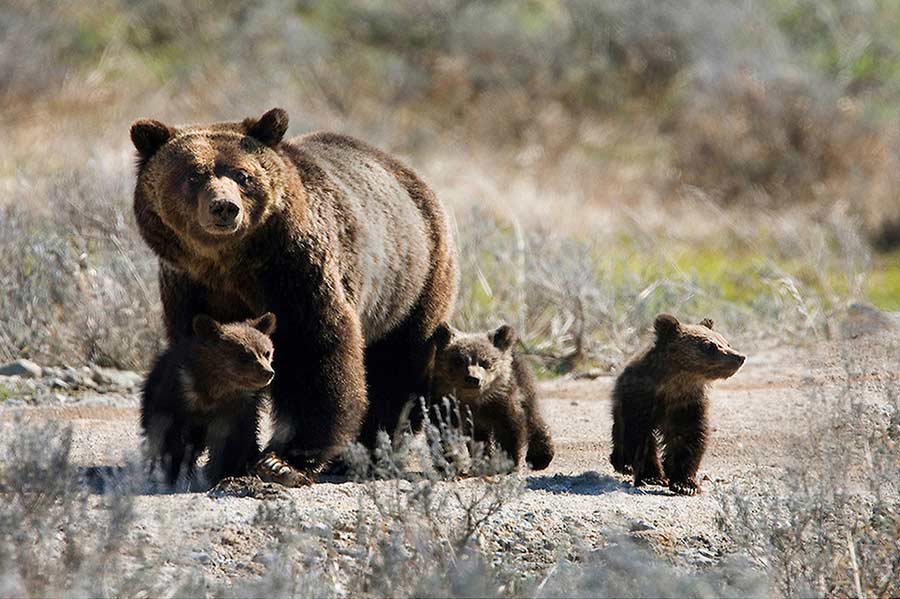
A hunter was mauled by a grizzly Bear in Alaska this week after approaching her and her three cubs — leaving him with serious puncture wounds on his arms, wildlife officials said.
Nicholas Kuperus, of Michigan, was able to escape what could have been a lethal attack Tuesday after using Bear spray, Alaska Wildlife Troopers said in a statement.
Kuperus, 33, had stumbled on the mother Bear and her cubs while hunting with other people about 60 miles north of Glennallen in the upper East Fork Indian River, the statement said.
The hunters called the troopers for help via a satellite communication device.
Officials flew to a nearby ridgetop in a small state aircraft to rescue Kuperus and transported him to an ambulance in Glennallen.
Just a few days earlier, a hunter was attacked by an adult Brown Bear he mistakenly believed he had shot and killed, the Anchorage Daily News reported.
The man approached what he thought was his kill near Anchorage when the Bear charged. His hunting party shot at the animal until it stopped its attack.
The man was taken to a hospital. It is unclear if the bear survived.
Earlier this year, a US Army member died after he was mauled by a Bear while training near the Anchorage Regional Landfill, some 200 miles from where Kuperus was attacked.
We believe EVERY animal should be treated with respect, empathy, and understanding. We raise awareness to protect and conserve wild, captive, companion and farm animals. It is vital that we protect animals against acts of cruelty, abuse, and neglect by enforcing established animal welfare laws and, when necessary, take action to ensure that those who abuse animals are brought to justice.
Protect All Wildlife are involved in many projects to protect animals’ rights, welfare, and habitats. Money contributed to Protect All Wildlife supports ALL of our worthy programmes and gives us the flexibility to respond to emerging needs. Your donations make our work possible. Thank you for your support.
Everyone who donates will receive a Certificate Of Appreciation as a thank you for supporting wildlife.
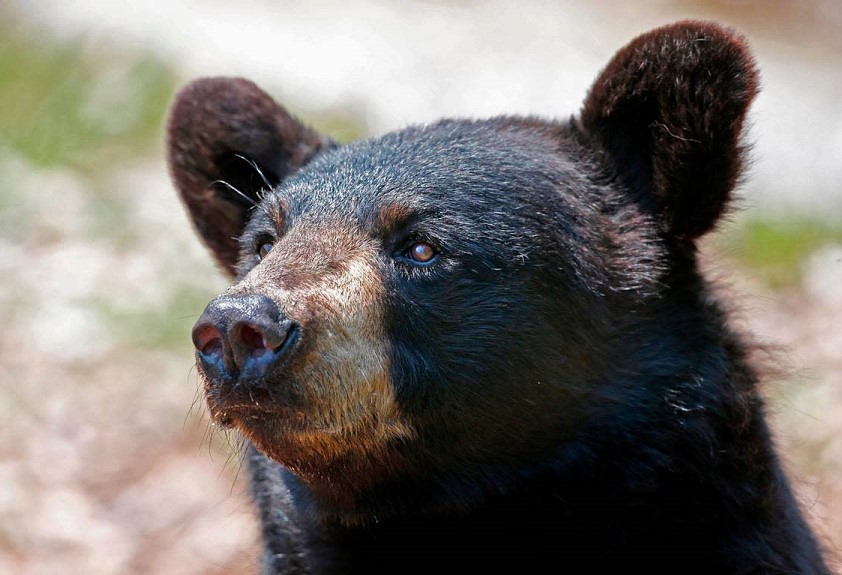
It is illegal for hunters to use bait to lure black bears in Georgia. A hunter in White County is accused of violating the law, officials say.
A hunter is facing charges after investigators discovered a Bear had been lured to its death with bait, according to the Georgia Department of Natural Resources Law Enforcement Division.
Game wardens learned of the illegal kill through a tip Sunday, Sept 11, according to a news release.
It happened in White County, about 90 miles northeast of Atlanta.
“After a brief investigation which included an inspection of the kill site, it was determined that the Bear was in fact illegally killed over bait,” the division reported.
“The Bear was seized, and the subject was charged with killing the bear over bait. The meat is being processed and will be donated to a family in need.”
State laws forbid the use of bait to lure Bears to a specific location “which gives or might give a hunter an unnatural advantage when hunting Bear,” according to Georgia State Code.
“Any person violating the provisions of this Code section is guilty of a misdemeanor of a high and aggravated nature and, upon conviction, may be punished by a fine of not less than $500.00 and not to exceed $5,000.00 or by confinement for a term not to exceed 12 months, or both,” the state says.
Bear baiting is considered unethical and is widely condemned as a practice that can increase conflicts with humans.
In late summer and fall, Bears go into a frenzied eating behavior, called hyperphagia, as they attempt to gain 20 to 40 pounds per week to survive hibernation,” according to the Humane Society of the United States.
“Bears subjected to baiting come to associate food with the smells of humans and even livestock. Those who then become habituated to human foods become less shy and more unpredictable, changing their eating habits, home ranges and movement patterns in ways that are sometimes irreversible.”
We believe EVERY animal should be treated with respect, empathy, and understanding. We raise awareness to protect and conserve wild, captive, companion and farm animals. It is vital that we protect animals against acts of cruelty, abuse, and neglect by enforcing established animal welfare laws and, when necessary, take action to ensure that those who abuse animals are brought to justice.
Protect All Wildlife are involved in many projects to protect animals’ rights, welfare, and habitats. Money contributed to Protect All Wildlife supports ALL of our worthy programmes and gives us the flexibility to respond to emerging needs. Your donations make our work possible. Thank you for your support.
Everyone who donates will receive a Certificate Of Appreciation as a thank you for supporting wildlife.








 PROTECT ALL WILDLIFE