
Through Philanthropy and Activism, Bob Barker Fought Animal Cruelty.
All about Bob Barker’s animal activism — from refusing fur prizes to launching a non-profit charity that funds Spay & Neuter clinics.
Bob Barker, an affable fixture on US television for half a century who hosted the popular game show The Price Is Right for 35 years and was a committed animal rights activist, has died at age 99, NBC News and Fox reported on Saturday.
Barker died on Saturday morning of natural causes at his Hollywood Hills, California, home, his publicist Roger Neal said.
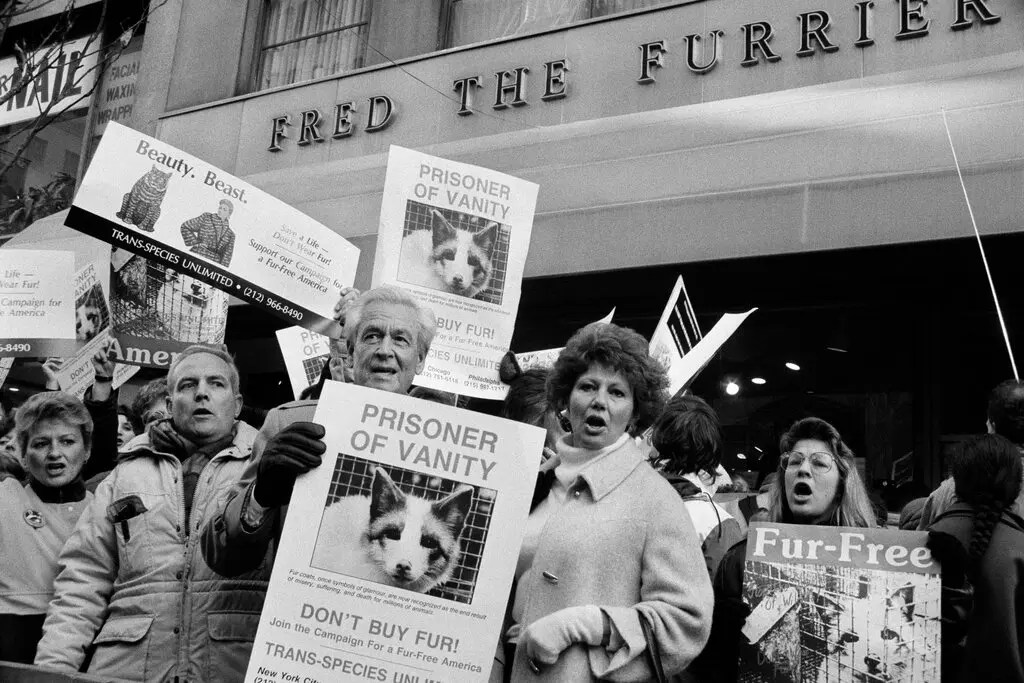
Barker was known for pro-animal causes and campaigned for them into his 90s. He would end episodes of The Price Is Right by urging viewers to get their pets spayed and neutered to control the animal population and began a foundation to subsidise the practices. He also spoke out against the treatment of animals in zoos, rodeos and circuses.
Over decades as the host of The Price Is Right, the longest-running game show in American television history, Mr. Barker, beginning in the 1980, used his pulpit to remind millions of viewers to “help control the pet population; have your pet spayed or neutered.”
“There are just too many cats and dogs being born,” he explained in an interview with The New York Times in 2004. “Animals are being euthanized by the millions simply because there are not enough homes for them.
He put $25 million into founding the DJ & T Foundation which finances clinics that specialize in spaying and neutering. The foundation was named after Mr. Barker’s wife, Dorothy Jo, and his mother, Matilda Valandra, who was known as Tilly.
In 2004, he donated $1 million to Columbia University School of Law to further the study of animal rights law.
“The Law School is extremely grateful for this generous gift,” said Dean David M. Schizer. “And we look forward to giving our students exposure to this growing area of legal scholarship.”
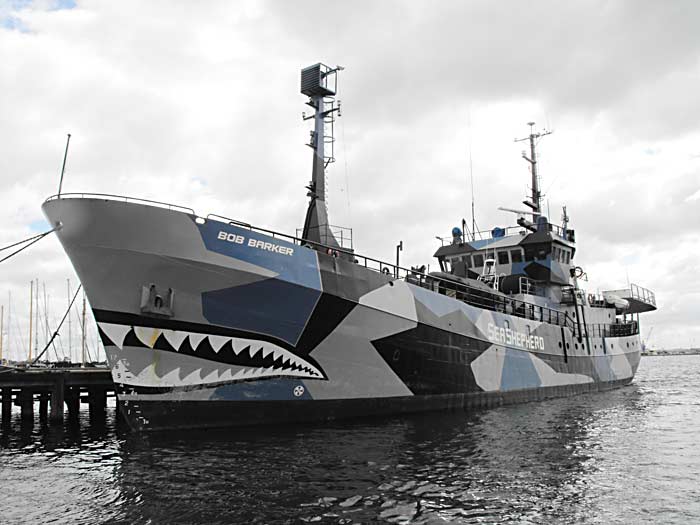
In 2010 he donated US$5 million for a 1,200-ton ship named the Bob Barker that was operated by the Sea Shepherd Conservation Society to stop Japanese whaling ships from killing whales off Antarctica.
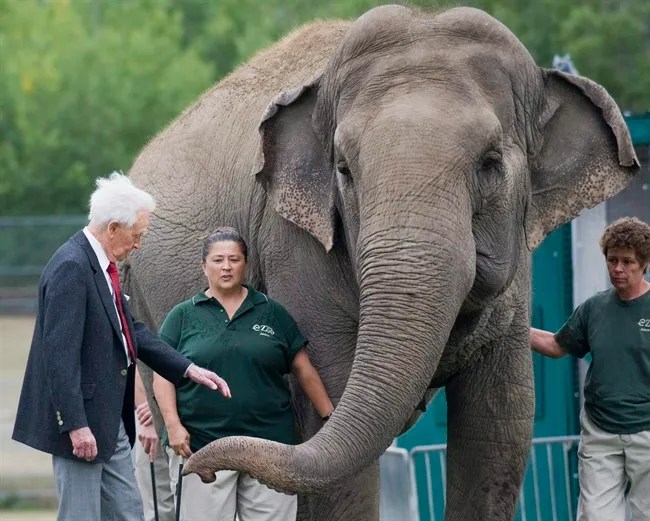
In 2012 Bob funded the travel costs for three Elephants to travel from the Toronto Zoo to a sanctuary in California aboard a private plane.
A spokesman for the TV icon says Barker offered to fund the $880,000 flight after learning that one of the Elephants wasn’t well enough to withstand the long trip by truck.
Henri Bollinger said that the Toronto Zoo agreed to move Thika, Iringa and Toka to the Performing Animals Welfare Society Elephant sanctuary in San Andreas, Calif., but that one of the animals suffers from “a serious foot problem.”
Barker described the Elephants’ new home as a “paradise” and said “to think that one of them might not survive the trip in a truck touched my heart and purse strings.”
In 2012 he donated $2.5 million to renovate a Los Angeles building that become the West Coast headquarters of People for the Ethical Treatment of Animals (PETA).
“It is money well-spent. I don’t know where you get more for your dollar, so far as protecting animals is concerned, than you get from PETA,” Barker said.

In 2015, he stood behind a podium in an eleventh-floor conference room at the Millennium Biltmore Hotel in downtown Los Angeles. His mission: to publicly shame Foster Farms — among the biggest poultry producers on the West Coast — for cruelty toward animals.
Reporters at the event were shown a secretly taped video, narrated by Barker and shot in May and June at two Foster Farms slaughtering plants in Fresno, Calif. The video showed scenes of thousands of chickens being carelessly hung by their legs on conveyor belts. Factory workers execute the process with brutal efficiency, occasionally punching live birds and plucking out their feathers.

shackled, punched and having their feathers pulled out while still alive. Photo: AP
Julie Woodyer, campaigns director at Zoocheck, knew Barker for years as they collaborated on both successful and failed efforts to free animals from captivity at Canada’s zoos.
She says Barker brought a determination and generosity that was unmatched by other celebrities, often opening his chequebook to support the cause and willingly making public appearances to raise awareness.
“I just can’t imagine there will be somebody to replace that ever,” Woodyer said in a phone interview.
Woodyer first connected with the TV host and his partner Nancy Burnet over email in 2010 as Zoocheck — in co-operation with other animal rights organizations –attempted to free Lucy the elephant from the Edmonton Valley Zoo.
In 2011, Barker appeared on CTV’s “Canada AM” morning show where he explained that elephants were not adapted to brave Canada’s harsh winter climate and Lucy’s health was deteriorating.
While the campaign to relocate Lucy was unsuccessful, Woodyer said a bond was formed with Barker over their shared interest in animal rights.
Together, they were involved in a controversial and years-long effort to move three elephants — Toka, Thika and Iringa — from the Toronto Zoo to a sanctuary in California. The campaign included Barker making public appearances and mingling with local city councillors to explain his view in hopes they would lend their support.
Ultimately, Barker donated $800,000 to the Peoples Animal Welfare Society for the successful transport and care of the animals.
“It would have been years and years for us to try to fundraise that,” Woodyer said, “And it would’ve been too late for some of those elephants.”
Barker later donated $50,000 to help build Manitoba’s first black bear cub rehabilitation centre.
“Lending his celebrity voice … really boosted those campaigns significantly and allowed us to have a broader audience,” Woodyer said.
“He was the funniest man I’ve ever met, extremely sharp, even in his very late years, and he could always come up with something funny, and make us all laugh even in the midst of difficult times in our campaigns.”
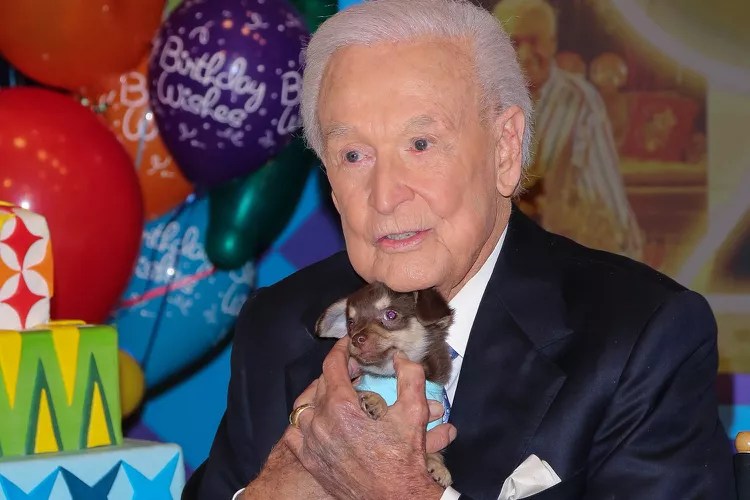
I’d like to see animals removed from the entertainment business. Chimpanzees and apes won’t perform unless you beat them. Circuses keep elephants in chains 90 percent of the time. Elephants need freedom of movement. In circuses, they live in cramped quarters, which is not the life intended for them by nature. Some are beaten daily, forced to do ridiculous tricks and robbed of every shred of dignity. ~ Bob Barker.
 PROTECT ALL WILDLIFE