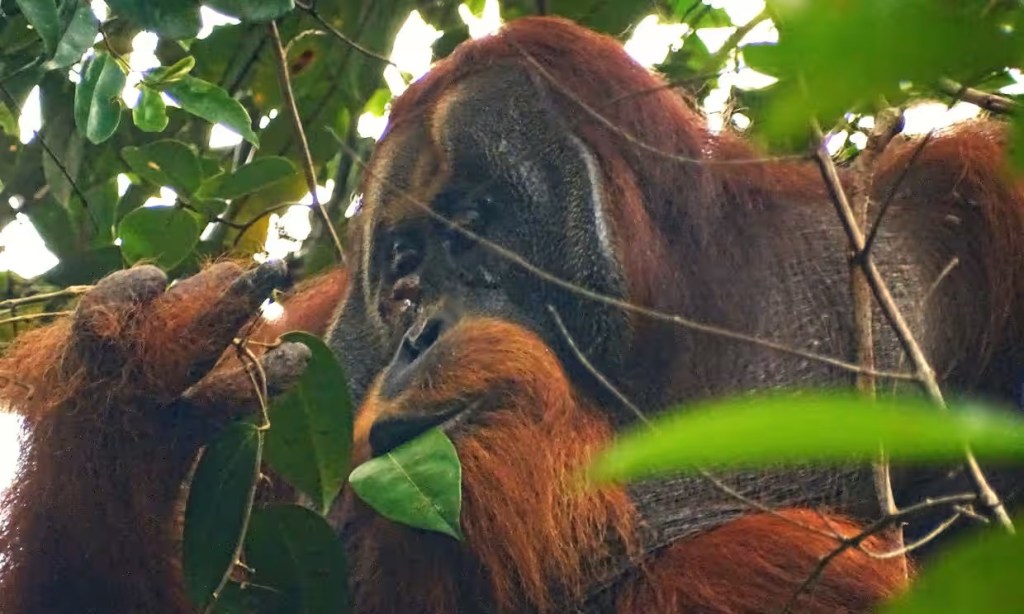
An Orangutan in Sumatra surprised scientists when he was seen treating an open wound on his cheek with a poultice made from a medicinal plant. It’s the first scientific record of a wild animal healing a wound using a plant with known medicinal properties. The findings were published this week in Scientific Reports1.
Rakus used leaves from a liana climbing vine known to have anti-inflammatory and pain-relieving properties. Photograph: Saidi Agam/Suaq Project
“It shows that Orangutans and humans share knowledge. Since they live in the same habitat, I would say that’s quite obvious, but still intriguing to realize,” says Caroline Schuppli, a primatologist at the Max Planck Institute of Animal Behavior in Konstanz, Germany, and a co-author of the study.
In 2009, Schuppli’s team was observing Sumatran Orangutans (Pongo abelii) in the Gunung Leuser National Park in South Aceh, Indonesia, when a young male moved into the forest. He did not have a mature male’s big cheek pads, called flanges, and was probably around 20 years old, Schuppli says. He was named Rakus, or ‘greedy’ in Indonesian, after he ate all the flowers off a gardenia bush in one sitting.
In 2021, Rakus underwent a growth spurt and became a mature flanged male. The researchers observed Rakus fighting with other flanged males to establish dominance and, in June 2022, a field assistant noted an open wound on his face, possibly made by the canines of another male, Schuppli says.
Days later, Rakus was observed eating the stems and leaves of the creeper akar kuning, which local people use to treat diabetes, dysentery and malaria, among other conditions. Orangutans in the area rarely eat this plant.
Leaves from the akar kuning variety of liana climbing vines. Photograph: Saidi Agam/Suaq Project
In addition to eating the leaves, Rakus chewed them without swallowing and used his fingers to smear the juice on his facial wound over seven minutes. Some flies settled on the wound, whereupon Rakus spread a poultice of leaf-mash on the wound. He ate the plant again the next day. Eight days after his injury, his wound was fully closed.
The research group has seen no other orangutans in the national park self-medicate using akar kuning in 21 years of observation. This could be because wild Orangutans in the region are rarely injured. Or perhaps Rakus is the only one who knows of this treatment, which could be a behaviour he picked up before he moved into the area.
Rakus with his open wound, two days before he was observed applying a poultice of medicinal leaves. Credit: Armas
“It is the first study to scientifically demonstrate that an animal is using a plant with medicinal properties applicable to wounds, and putting those on the wounds and consistently treating over a period of time,” says Michael Huffman, who studies animal self-medication at the Institute for Tropical Medicine at Nagasaki University in Japan.
Huffman says self-medication is seen in many species. Canadian Snow Geese swallow leaves whole to expel tape worms. Dusky-footed Wood Rats line their nests with aromatic plants to fumigate parasites. And Chimpanzees in Gabon have been observed rubbing insects near their wounds, potentially as treatment.
Humans might even have discovered some remedies by watching animals, he says. “Probably our ancestors were looking at other animals and learning about medicines.” When social animals communicate, “that information sticks and can last over generations”.
You can support ‘Protect All Wildlife’ by donating as little as £1 – It only takes a minute but it can last a lifetime for an animal in need. Please donate below.
Everyone who donates will receive a Certificate of Appreciation as a thank you for helping animals in need.
The Mission of Protect All Wildlife is to prevent cruelty and promote the welfare of ALL animals.
We believe EVERY animal should be treated with respect, empathy, and understanding. We raise awareness to protect and conserve wild, captive, companion and farm animals.
It is vital that we protect animals against acts of cruelty, abuse, and neglect by enforcing established animal welfare laws and, when necessary, take action to ensure that those who abuse animals are brought to justice.
Protect All Wildlife are involved in many projects to protect animals’ rights, welfare, and habitats. Money contributed to Protect All Wildlife supports ALL of our worthy programmes and gives us the flexibility to respond to emerging needs. Your donations make our work possible.
Here, Andy Davidson lists the hard-hitting facts, revealing what zoos really spend their money on, and how you’re better off spending yours elsewhere if you care about conservation.
If you’re planning to a visit a zoo this weekend, ask yourself this question. How much of your ticket fee is being used for conservation? Let’s say you pay £15 for your ticket. You may be surprised to hear that the answer is as little as 45p to £1.
Zoo expenditure is vastly different to the expenditure of conservation organisations based in the wild. For example, Chester Zoo spent £40 million on the construction of ‘the islands’, an expansion of more enclosures to the zoo site. Other Western zoos over a ten-year period have spent £400 million on updating enclosures for a mere 200 elephants.
The Kenya Wildlife Service (KWS) and South African National Parks are conservation organisations that protect animals in their natural habitats. KWS has an annual budget of £13-14 million with which they protect 2.6 million hectares of that country’s National Parks. On that land are 33,000 Elephants, 2200 Lions and many vitally important habitats that are home to thousands of species of both plant and animal. The annual budget for the South African National Parks is £58 million and this consists of 19 national parks which make up 6% of the total land of South Africa. Just one of these parks houses 600 elephants.
The money used by Western zoos to update elephant enclosures for 200 Elephants could have kept Kenya Wildlife Service going for 14 to 15 years.
Sound shocking? It is. That’s why the chief consultant to the UN Great Ape Survival Project said he was uneasy at the mismatch between lavish spending at zoos and the scarcity of resources available for conserving threatened species in the wild.
Where Is Your Money Going?
Since the 1800s, the zoo has not fundamentally changed. Well known and entertaining animals such as Elephants, Chimps and Giraffes are front and centre and baby animals give zoos a boost in visitors.
The main driver for zoos is boosting public visitation, a goal that has far reaching implications into all zoo management decisions. Conservation, research and education are not their primary goals, making it impossible to term zoos as research or education organisations. In fact, zoos are places of entertainment, where animal welfare is governed by financial feasibility and entertainment value.
90% of species encaged by European zoos are not threatened from extinction. Over 90% of zoo animals are born in captivity. These animals are then paired across zoos to ensure genetic diversity. Gender cannot be predicted and genes are sometimes over represented leading to what the zoos call a ‘surplus of animals’. 3000-5000 of these animals in European zoos are killed each year. On the 8th of February 2014, Copenhagen Zoo (in)famously killed Marius, a healthy 18-month-old male Giraffe.
Afterward, zoo officials performed a three-hour-long demonstration of how to butcher a giraffe before a large crowd of visitors, including many children. The meat was then fed to the zoo’s four Lions. The four Lions, including two young Lions, were killed to make way for a new male. The Giraffe was killed because she could not produce anymore young.
Marius, a healthy male Giraffe, lies dead after he was euthanized at Copenhagen Zoo. Visitors, including children, were invited to watch while the he was dissected. Photo: Peter Hove Olesen.
Even for threatened species such as Pandas, breeding campaigns rarely work. 400 Pandas have been bred by zoos, yet only five have been released into the wild: three survived. It’s not hard to see that captive breeding is not feasible. Animals not brought up in the wild are less likely to survive there if reintroduced. For example, captive populations of Red Junglefowl (wild ancestors of chickens) differ significantly in response to predators after just a handful of generations in captivity. And, a 2008 study by the University of Exeter found that the odds of animals such as Tigers and Wolves surviving freedom is only 33 percent. Animals in captivity do not usually have the natural behaviours needed for success in the wild.
But it’s not just endangered species that are being bred. A 2014 analysis of the European Endangered Species Breeding Programmes, conducted by the European Association of Zoos and Aquaria, showed that half of the animals being bred were not classed as endangered in the wild, while 25% were not threatened at all. In fact, all zoos only accommodate a tiny fraction of the 22,000 + species threatened with extinction.
With only 3% of budgets being spent on conversation projects, we can see why wildlife continues to disappear. Zoos show little interest in tackling the root causes of wildlife destruction. Species-rich habitats are being converted to pasture and feed crops as the human appetite for meat swells. Many of the places expected to see the greatest shift in land use from forest to livestock are in 15 ‘megadiverse’ countries, which harbour the largest number of species. As wildlife disappears, zoos ignore the problem. Instead, they contribute to it by feeding millions of customers meat.
The Education Myth
Zoos rebranded in the 1970s as the public became informed to the suffering of zoo animals. UK legislation in the form of 1981 Zoo Licensing Act forced zoos to promote ‘public education and awareness in relation to conservation’. Advocates will say zoos inspire the next generation of conservationists.
This has been categorically debunked by a number of studies, while little information is required to meet the standards of legislation. A 2014 academic study in the Conservation Biology Journal surveyed 2800 children following visits to London Zoo. 62% of the 2800 children were deemed to show no change in learning or, worse, experienced negative learning during their trip to the zoo. It was concluded that the zoo’s impact on children’s belief in their ability to actively do something about conservation was ‘weak’.
In what way could this sad image of a Bear be considered educational?
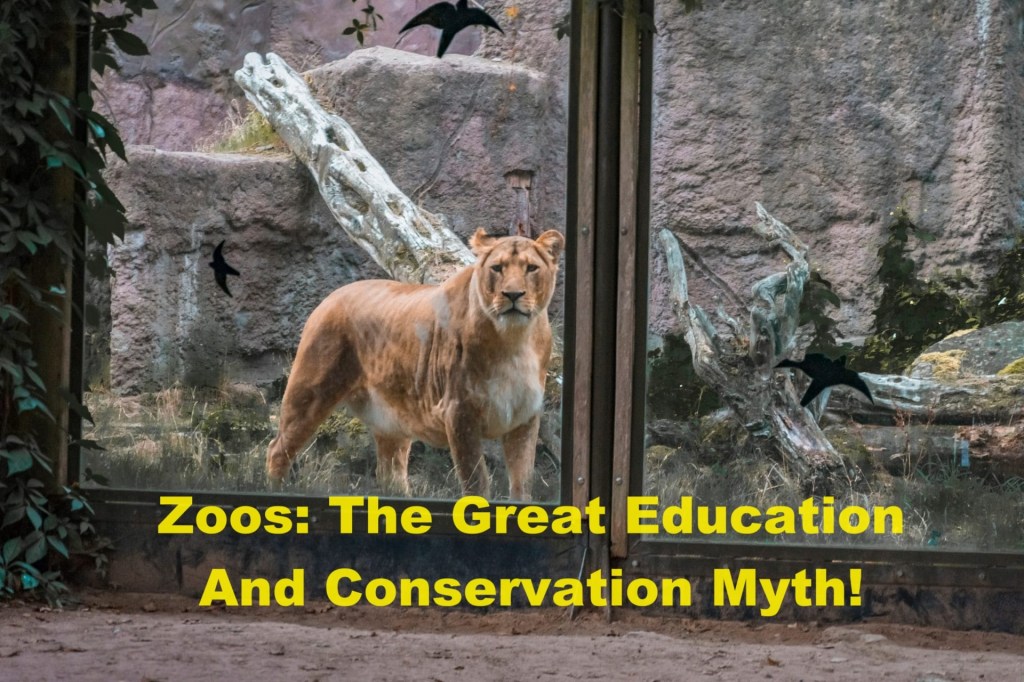
Do children need to see the animals up close to learn about them? Many children seem to have an encyclopedic knowledge about dinosaurs, far more so than Lions and Tigers. Perhaps the general public wish to see exotic animals up close as we attach closeness to care. But why, then, do they tap on the windows and show disappointment when the Lions are asleep? This is a misplaced, harmful interest, surely.
A Lion Is Taunted By Zoo Visitors At Animal City In Lebanon
In reality there is nothing sufficient in the mainstream that educates the public about animals and their conservation. Zoos, school, television – they all fail in this respect. The evidence is very clear: the World Wildlife Fund report that the planet’s fish, bird, mammal and reptile populations plunged 52 per cent from 1970 to 2010. That’s a stunning 52% of all fish, bird, mammal and reptile life lost in 40 years.
Human encroachment is destroying wildlife, but zoos do not consider that information entertaining and, as mentioned, entertainment is the only real driver of ticket sales. Paul Boyle, senior vice president for conservation and education at the Association of Zoos and Aquariums, says “People leave their homes, and the intent is not to save animals in Africa—it’s to have a family outing.”
The Imprisonment Of Animals
An Oxford University study based over four decades of observing animals in captivity and in the wild found that animals such as Polar Bears, Lions, Tigers, Cheetahs show the most evidence of stress and/or psychological dysfunction in captivity. In the same study, 80% of carnivores show abnormal repetitive behaviour. This is a major problem for zoos as these animals are the most popular with visitors.
There are approximately 3200 Tigers left in the wild. In the United States alone, there are over 5000 Tigers in captivity. This is not the result of successful breeding programmes. These Tigers are being born in captivity and they die in captivity. They are the star attraction. It’s hard to imagine a zoo without a Tiger. One particular zoo in the US houses dozens of Tigers. They let visitors handle cubs and have their picture taken while talking up their conservation programmes, despite the fact that their average Tiger enclosure is about 18,000 times smaller than the animals’ natural roaming range. It is simply impossible for these poor Tigers to express instinctive behaviour.
Tourists watch a Tiger cub play with a stuffed toy during a petting and photo opportunity at Myrtle Beach Safari. Photo Credit: Steve Winter, Nat Geo Image Collection.
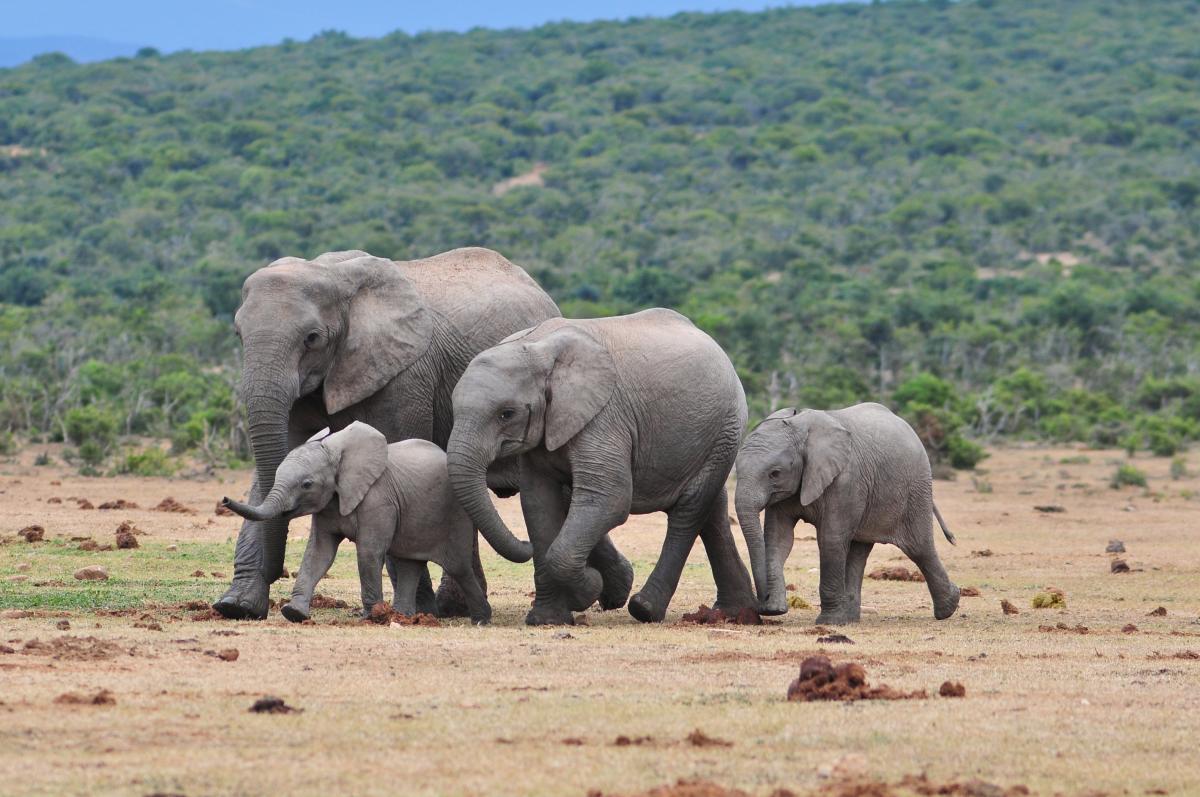
In two extensive studies, it was found that the lifespan of Elephants is more than halved by living in zoos. A government-funded study of Elephants in UK zoos found that 54% of the Elephants showed behavioural problems during the daytime. In 2016 18 African Elephants, a species designated as threatened within their natural habitats in Swaziland, were captured and transported to three zoos in the US to entertain the public there.
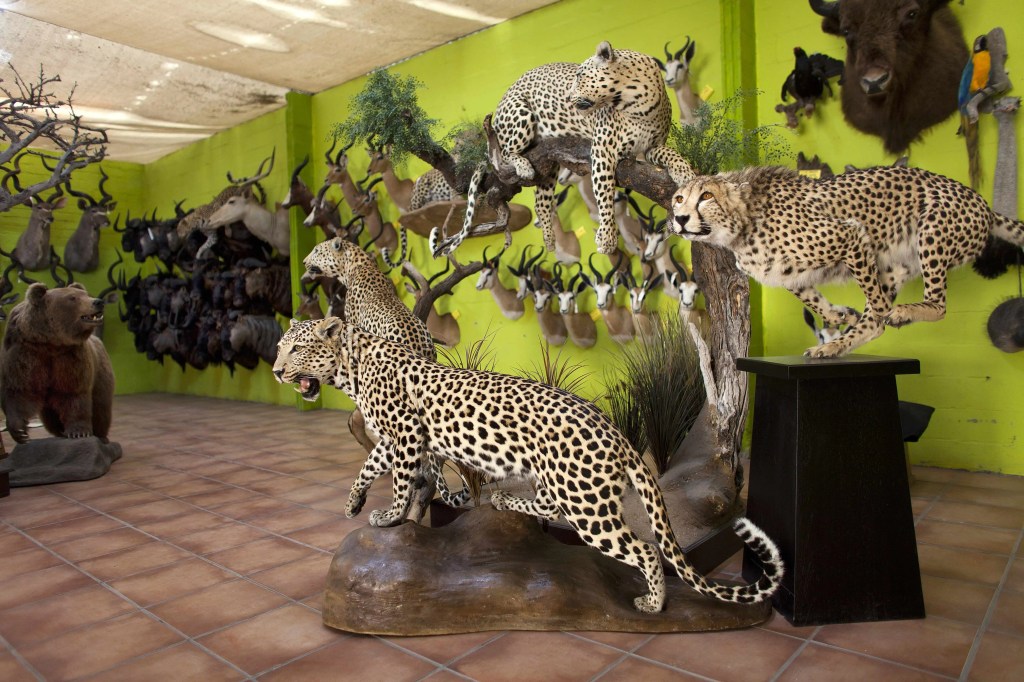
Despite the best intentions of zoo employees to create a happy environment for an animal, zoos are fundamentally unable to recreate the wild setting. Cheetahs cannot run at maximum speed, Elephants cannot walk hundreds of miles (except in circles), birds cannot migrate and fly long distances. Animals are unable to hunt, choose who to spend time with and find their suitable home. Another problem is privacy and noise levels. Human interaction is not normal and constant noise can cause problems. Animals often become depressed and obsessive.
Sometimes zoos are nothing but cages on concrete. Here in the UK, zoos have higher welfare standards, yet its employees and its visitors are still blissfully ignorant to the damage we cause to them. Zoos are well-versed in spreading misinformation and exaggerating the small areas of conservation they achieve to placate the public, ensuring visitor numbers stay high.
Today, the decisions relating to the conservation of animals fall under the power of Western organisations and trusts, not with local communities in Africa or the Amazon. So not only does the money firmly stay within the West, but so does the decision making process. Wildlife can only be saved by empowering their protection in their natural habitats.
If you really care about putting an end to poaching, saving wildlife and keeping wild animals where they belong then pound for pound, your donation should be going to conservation organisations that protect animals in their natural habitats. You won’t receive anything in return and you will have to find somewhere else to visit on your Saturdays, BUT you will be directly saving wild animals. They are the FUTURE: zoos are the PAST.
An Original Article By Andy Davidson, Vegan Society.
Stereotypic behaviors, also known as “zoochosis” are performed sometimes for hours each day, sometimes endlessly. It is unnatural & indicates underlying stress. Credit: In Defence Of Animals
WHAT YOU CAN DO TO HELP WILDLIFE
You can support ‘Protect All Wildlife’ many projects by donating as little as £5 – It only takes a minute but it can last a lifetime for an animal in need. Please donate below.
Everyone who donates will receive a Certificate of Appreciation as a thank you for helping animals in need.
The Mission of Protect All Wildlife is to prevent cruelty and promote the welfare of ALL animals.
We believe EVERY animal should be treated with respect, empathy, and understanding. We raise awareness to protect and conserve wild, captive, companion and farm animals.
It is vital that we protect animals against acts of cruelty, abuse, and neglect by enforcing established animal welfare laws and, when necessary, take action to ensure that those who abuse animals are brought to justice.
Protect All Wildlife are involved in many projects to protect animals’ rights, welfare, and habitats. Money contributed to Protect All Wildlife supports ALL of our worthy programmes and gives us the flexibility to respond to emerging needs. Your donations make our work possible.
After Whales and Dolphins, Ottawa intends to ban keeping Elephants and great Apes in captivity in the country “because of the cruelty they represent”.
A new bill, calledThe Jane Goodall Act, was introduced in the Senate on Tuesday to ban anyone from taking an Elephant or a great Ape, a term that includes Chimpanzees, Gorillas and Orangutans.
Canadian zoos won’t be able to bring in new elephants or apes under new federal legislation introduced this week, except under specific circumstances. Bill S-15 looks to ban all new captivity of the species except where a licence is granted for conservation, research or an animal’s best interest.
“The recapture of any Elephant or great Ape in Canada must meet very strict criteria demonstrating that the activity is for animal welfare, conservation or science,” commented the Minister of Environment and Climate Change, Steven Guilbeault.
Senator Marky Klyne of Saskatchewan sponsored the bill that was introduced on Tuesday. “It is upsetting to know that according to current standards, a person does not need to hold a permit to own a chimpanzee in some regions of Canada,” he lamented to explain the interest of his fee.
Elephants, for their part, are very intelligent animals that suffer when kept in captivity or presented to the public in an unnatural environment, added the senator in the second reading of the law on Thursday.
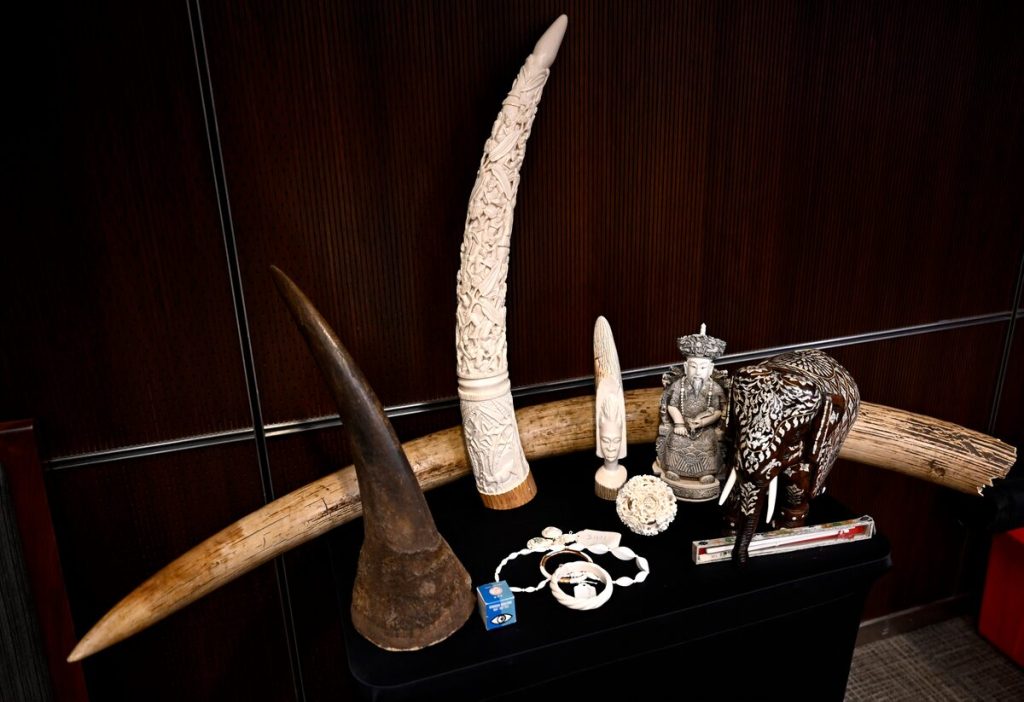
Minister Guilbeault announced the ban on the import of ivory from Elephant tusks and Rhino horns, including hunting trophies and articles carved from ivory, for which it is necessary to obtain a permit. Few exceptions are planned for museums and scientific research.
Elephant ivory and rhino horn imports have been banned by Ottawa
Tightening the laws
The law banning the captivity of great Apes and Elephants is part of a series of laws adopted to better protect animals in Canada and elsewhere in the world.
In 2019, Canada also banned the keeping of Whales and Dolphins in captivity.
WHAT YOU CAN DO TO HELP ANIMALS IN NEED
You can support our work by donating as little as £5 – It only takes a minute but it can last a lifetime for an animal in need.
Everyone who donates will receive a Certificate of Appreciation as a thank you for helping animals in need.
The Mission of Protect All Wildlife is to prevent cruelty and promote the welfare of ALL animals. We believe EVERY animal should be treated with respect, empathy, and understanding. We raise awareness to protect and conserve wild, captive, companion and farm animals.
It is vital that we protect animals against acts of cruelty, abuse, and neglect by enforcing established animal welfare laws and, when necessary, take action to ensure that those who abuse animals are brought to justice.
Protect All Wildlife are involved in many projects to protect animals’ rights, welfare, and habitats. Money contributed to Protect All Wildlife supports ALL of our worthy programmes and gives us the flexibility to respond to emerging needs. Your donations make our work possible.
The Environment Secretary offered assurances about the Hunting Trophies (Import Prohibition) Bill in a letter to campaigners.
The Government has pledged to do “all we can” to ensure a ban on trophy hunting imports becomes law amid fears pro-hunting peers could “wreck” the reforms.
Environment Secretary Therese Coffey said the Government will not support any further amendments to the Hunting Trophies (Import Prohibition) Bill.
The proposed legislation would prohibit bringing into the country body parts from species deemed of conservation concern.
The Bill, introduced by Conservative MP Henry Smith, has already cleared the House of Commons.
But a group of peers have raised concerns and tabled amendments that threaten to derail the proposals.
Time is running out to consider the Bill and it will fall if it does not receive royal assent before the current parliamentary session stops ahead of the King’s Speech on November 7.
Ms Coffey, in a letter to the Humane Society International/UK dated August 17, wrote: “It is a manifesto commitment to ban the import of hunting trophies from endangered animals and we are working hard to deliver.
“The Bill passed the Commons in March, with the Government’s support, and we will do all we can to support its progress through the House of Lords working with Baroness Fookes.
“I can confirm that we will not be supporting any further amendments to the Bill. I expect committee stage to progress next month.”
Conservative peer Lady Fookes is the Bill’s sponsor in the House of Lords.
Claire Bass, senior director of campaigns and public affairs at Humane Society International/UK, said: “There is a small and vocal group of pro-hunting peers doing their best to wreck this Bill, but we need the Government to remain focused on the almost 90% of the public who want this ban on the import of hunting trophies.
“The timing for this Bill is indeed extremely tight but we were encouraged to receive a letter from Environment Secretary Therese Coffey yesterday.”
No Friday sittings to consider private members’ bills are expected in the House of Lords in September, according to the Government whips’ office in the Lords.
With the party conference recess running until October 16, there are expected to be just two possible Friday sittings before the parliamentary session ends.
Mr Smith, MP for Crawley, said he is speaking with the Government in a bid to secure more parliamentary time for his Bill.
Conservative peer Lord Mancroft, who opposes the proposals, said amendments have been tabled in a bid to “clean up” or clarify parts of the “badly drafted” Bill.
He acknowledged it is “very possible” the amendments could halt the Bill’s progress and rated its chances as “less than 10%”.
Mr Smith said the planned legislation is about UK import policy, adding opponents have pressed “spurious arguments” about how trophy hunting helps conservation.
A House of Lords briefing paper on the Bill stated: “According to figures from the Cites (Convention on International Trade in Endangered Species of Wild Flora and Fauna) trade database, 190 hunting trophies from Cites-listed species were imported into the UK in 2020 (the most recent complete year for which figures are available).”
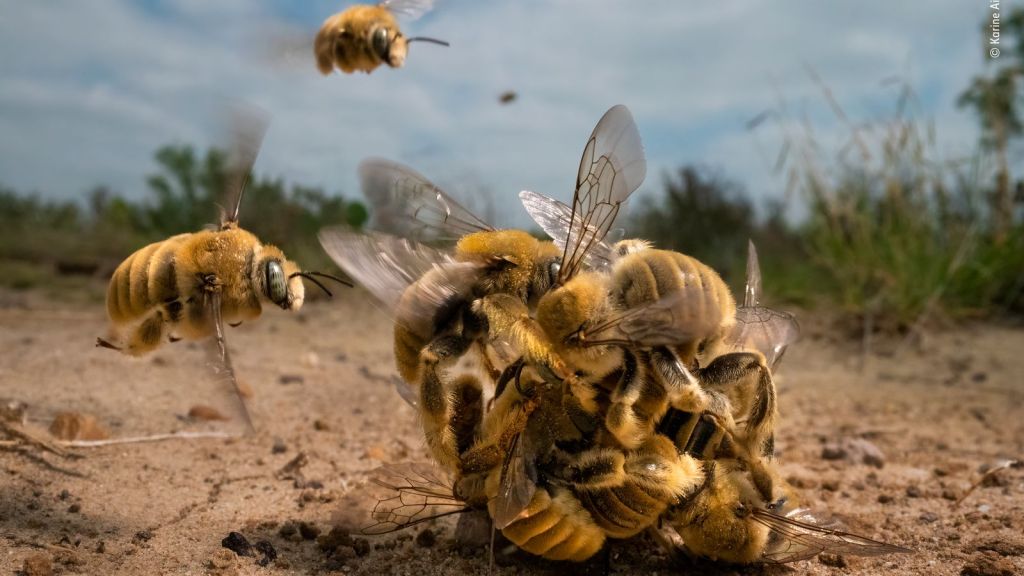
A buzzing ball of cactus bees was awarded the top prize at the prestigious Wildlife Photographer of the Year competition.
The winners of the Natural History Museum’s prestigious Wildlife Photographer of the Year competition were announced at an awards ceremony in London today.
American photographer Karine Aigner was announced as this year’s Wildlife Photographer of the Year for her remarkable image of a buzzing ball of cactus bees spinning over the hot sand on a Texas ranch (top image).
Entitled “The Big Buzz”, her winning shot was taken close up at bee-level and shows all except one of the male insects intent on mating with the single female at the centre.
Organisers of the contest pointed out that, like most bees, the insects pictured are threatened by habitat loss, pesticides and climate change, along with farming practices that disrupt their nesting grounds.
All The Winners Of Wildlife Photographer Of The Year 2022
10 Years and under winner
Battle stations by Ekaterina Bee, Italy
Ekaterina Bee watches as two Alpine ibex spar for supremacy. It was near the end of a spring day trip with her family that Ekaterina spotted the fight. The two ibex clashed horns and continued to trade blows while standing on their hind legs like boxers in a ring. In the early 1800s, following centuries of hunting, fewer than 100 Alpine ibex survived in the mountains on the Italy–France border. Successful conservation measures mean that, today, there are more than 50,000.
Location: Pian della Mussa, Piedmont, Italy
11-14 Years Winner
Out of the fog by Ismael Domínguez Gutiérrez, Spain
Ismael Domínguez Gutiérrez reveals a monochromatic scene as an osprey sits on a dead tree, waiting for the fog to lift. When Ismael arrived at the wetland, he was disappointed not to be able to see beyond a few metres – and certainly he had no hope of glimpsing the grebes he wanted to photograph.
But as the fog began to lift, it revealed the opportunity for this striking composition. Ospreys are winter visitors to the province of Andalucía. Here the many reservoirs offer these widespread fish-eating raptors shallow, open water that is clearer than many rivers and lakes.
Location: Embalse de Los Hurones, Cádiz, Spain
15-17 Years Winner
The beauty of baleen by Katanyou Wuttichaitanakorn, Thailand
Katanyou Wuttichaitanakorn is intrigued by the contrasting colours and textures of a Bryde’s whale, which surfaces close by. Following government tourism guidelines, the tour boat Katanyou was travelling on turned off its engine as the whale appeared close by.
This meant that Katanyou had to steady his hands to capture this close-up composition as the boat rocked in the swell. Bryde’s whales have up to 370 pairs of grey-coloured plates of baleen growing inside their upper jaws. The plates are made of keratin, a protein that also forms human hair and nails, and are used to filter small prey from the ocean.
Location: Upper Gulf of Thailand, Phetchaburi, Thailand
Animals in their Environment winner
Spectacled bear’s slim outlook by Daniel Mideros
Daniel Mideros takes a poignant portrait of a disappearing habitat and its inhabitant. Daniel set up camera traps along a wildlife corridor used to reach high-altitude plateaus. He positioned the cameras to show the disappearing natural landscape with the bear framed at the heart of the image.
These bears, found from western Venezuela to Bolivia, have suffered massive declines as the result of habitat fragmentation and loss. Around the world, as humans continue to build and farm, space for wildlife is increasingly squeezed out.
Location: Peñas Blancas, Quito, Ecuador
Animal Portraits winner
Puff perfect by José Juan Hernández Martinez, Spain
José Juan Hernández Martinez witnesses the dizzying courtship display of a Canary Islands houbara.
José arrived at the houbara’s courtship site at night. By the light of the moon, he dug himself a low hide. From this vantage point he caught the bird’s full puffed-out profile as it took a brief rest from its frenzied performance. A Canary Islands houbara male returns annually to its courtship site to perform impressive displays.
Raising the plumes from the front of its neck and throwing its head back, it will race forward before circling back, resting just seconds before starting again.
Location: La Oliva, Fuerteventura, Spain
Behaviour: Invertebrates Winner
The big buzz by Karine Aigner
Karine Aigner gets close to the action as a group of bees compete to mate. Using a macro lens, Karine captured the flurry of activity as a buzzing ball of cactus bees spun over the hot sand. After a few minutes, the pair at its centre – a male clinging to the only female in the scrum – flew away to mate. The world’s bees are under threat from habitat loss, pesticides and climate change. With 70% of bee species nesting underground, it is increasingly important that areas of natural soil are left undisturbed.
Location: South Texas, USA
Behaviour: Birds Winner
The listening bird by Nick Kanakis, USA
Nick Kanakis gains a glimpse into the secret life of wrens. Nick spotted the young grey-breasted wood wren foraging. Knowing it would disappear into the forest if approached, he found a clear patch of leaf litter and waited. Sure enough, the little bird hopped into the frame, pressing its ear to the ground to listen for small insects. This prey-detecting technique is used by other birds, including the Eurasian blackbird. Grey-breasted wood wrens are ground-dwelling birds, often heard but not seen. They broadcast loud, melodious songs and rasping calls while hidden in the undergrowth.
Location: Tatamá National Park, Risaralda, Colombia
Behaviour: Mammals winner
The great cliff chase by Anand Nambiar, India
Anand Nambiar captures an unusual perspective of a snow leopard charging a herd of Himalayan ibex towards a steep edge. From a vantage point across the ravine, Anand watched the snow leopard manoeuvre uphill from the herd. It was perfectly suited for the environment – unlike Anand, who followed a fitness regime in preparation for the high altitude and cold temperatures. Snow leopards live in some of the most extreme habitats in the world. They are now classed as vulnerable. Threats include climate change, mining, and hunting of both the snow leopards and their prey.
Location: Kibber Wildlife Sanctuary, Himachal Pradesh, India
Oceans: The Bigger Picture Winner
New life for the tohorā by Richard Robinson, New Zealand
Richard Robinson captures a hopeful moment for a population of whales that has survived against all odds. Hindered by poor visibility, Richard used a polecam to photograph the whales gradually moving towards his boat. Pushing his camera to its limits in the dark water, he was relieved to find the image pin-sharp and the moment of copulation crystallised in time.
When ready to mate, the female southern right whale rolls onto its back, requiring the male to reach its penis across the female’s body. Known by the Māori as tohorā, the New Zealand population was hunted to near extinction in the 1800s, so every new calf offers new hope. Shot under New Zealand Department of Conservation permit #84845-MAR
Location: Deas Head, Auckland Islands, New Zealand
Plants and Fungi Winner
The magical morels by Agorastos Papatsanis, Greece
Agorastos Papatsanis composes a fairy tale scene in the forests of Mount Olympus. Enjoying the interplay between fungi and fairy tales, Agorastos wanted to create a magical scene. He waited for the sun to filter through the trees and light the water in the background, then used a wide-angle lens and flashes to highlight the morels’ labyrinthine forms. Morels are regarded as gastronomic treasures in many parts of the world because they are difficult to cultivate, yet in some forests they flourish naturally.
Location: Mount Olympus, Pieria, Greece
Natural Artistry winner
Heavenly flamingos by Junji Takasago, Japan
Junji Takasago powers through altitude sickness to produce a dream-like scene. Junji crept towards the preening group of Chilean flamingos. Framing their choreography within the reflected clouds, he fought back his altitude sickness to capture this dream-like scene. High in the Andes, Salar de Uyuni is the world’s largest salt pan. It is also one of Bolivia’s largest lithium mines, which threatens the future of these flamingos.
Lithium is used in batteries for phones and laptops. Together we can help decrease demand by recycling old electronics.
Location: Salar de Uyuni, Daniel Campos Province, Bolivia
Behaviour: Amphibians and Reptiles Winner
The bat-snatcher by Fernando Constantino Martínez Belmar, Mexico
Fernando Constantino Martínez Belmar waits in darkness as a Yucatan rat snake snaps up a bat. Using a red light to which both bats and snakes are less sensitive, Fernando kept an eye on this Yucatan rat snake poking out of a crack. He had just seconds to get the shot as the rat snake retreated into its crevice with its bat prey. Every evening at sundown in the Cave of the Hanging Snakes, thousands of bats leave for the night’s feeding. It is also when hungry rat snakes emerge, dangling from the roof to snatch their prey in mid-air.
Location: Kantemo, Quintana Roo, Mexico winner
Underwater Winner
Shooting star by Tony Wu, USA/Japan
Tony Wu watches the electrifying reproductive dance of a giant sea star. As the surrounding water filled with sperm and eggs from spawning sea stars, Tony faced several challenges. Stuck in a small, enclosed bay with only a macro lens for photographing small subjects, he backed up to squeeze the undulating sea star into his field of view, in this galaxy-like scene. The ‘dancing’ posture of spawning sea stars rising and swaying may help release eggs and sperm, or may help sweep the eggs and sperm into the currents where they fertilise together in the water.
Location: Kinko Bay, Kagoshima Prefecture, Japan
Urban Wildlife Winner
House of bears by Dmitry Kokh, Russia
Dmitry Kokh presents this haunting scene of polar bears shrouded in fog at the long-deserted settlement on Kolyuchin. On a yacht, seeking shelter from a storm, Dmitry spotted the polar bears roaming among the buildings of the long-deserted settlement.
As they explored every window and door, Dmitry used a low-noise drone to take a picture that conjures up a post-apocalyptic future. In the Chukchi Sea region, the normally solitary bears usually migrate further north in the summer, following the retreating sea ice they depend on for hunting seals, their main food. If loose pack ice stays near the coast of this rocky island, bears sometimes investigate.
Location: Kolyuchin Island, Chukotka, Russia
Wetlands – The Bigger Picture Winner
The dying lake by Daniel Núñez, Guetamala
Daniel Núñez uses a drone to capture the contrast between the forest and the algal growth on Lake Amatitlán. Daniel took this photograph to raise awareness of the impact of contamination on Lake Amatitlán, which takes in around 75,000 tonnes of waste from
Guatemala City every year. “It was a sunny day with perfect conditions,” he says, “but it is a sad and shocking moment.” Cyanobacteria flourishes in the presence of pollutants such as sewage and agricultural fertilisers forming algal blooms. Efforts to restore the Amatitlán wetland are underway but have been hampered by a lack of funding and allegations of political corruption.
Location: Lake Amatitlán, Villa Canales, Guatemala
Photojournalism Winner
Ndakasi’s passing by Brent Stirton, South Africa
Brent Stirton shares the closing chapter of the story of a much-loved mountain gorilla. Brent photographed Ndakasi’s rescue as a two-month-old after her troop was brutally killed by a powerful charcoal mafia as a threat to park rangers. Here he memorialised her passing as she lay in the arms of her rescuer and caregiver of 13 years, ranger Andre Bauma. As a result of unrelenting conservation efforts focusing on the daily protection of individual gorillas, mountain gorilla numbers have quadrupled to over 1,000 in the last 40 years.
Location: Senkwekwe Center, Virunga National Park, Democratic Republic of the Congo
Photojournalist Story Award Winner
The Cuban connection by Karine Aigner
A Cuban bullfinch is positioned alongside a road so that it becomes accustomed to the hubbub of street life and therefore less likely to be distracted during a competition. These birds are highly prized for their sweet voice and feisty spirit. Karine Aigner explores the relationship between Cuban culture and songbirds, and the future of a deep-rooted tradition. For hundreds of years, some Cubans have caught and kept songbirds and held bird-singing contests.
Throughout a turbulent period of economic sanctions and political unrest, these small, beautiful birds have provided companionship, entertainment and friendly competition within the community. Now with regular travel and emigration between Cuba and North America, the tradition of songbird contests has crossed an ocean. As songbird populations plummet, US law enforcement is cracking down on the trapping, trading and competing of these birds.
Location: USA and Cuba
Rising Star Portfolio Award Winner
A theatre of birds by Mateusz Piesiak, Poland
Placing his remote camera on the mud of the reed bed, Mateusz seized the opportunity to capture the moment when a passing peregrine falcon caused some of the dunlins to fly up. Mateusz carefully considered camera angles to produce a series of intimate photographs exploring the behaviour of birds.
Winner of the Young Wildlife Photographer of the Year award when he was 14, Mateusz explored his locality during the Covid-19 lockdown. “Even a small pond or park in the city centre turned out to be a very good place for photographing wildlife.” Throughout this portfolio Mateusz focuses on local birds, researching and preparing for images that were in his mind “for days, months or even years” before he finally managed to realise them.
Location: Poland
Portfolio Award Winner
Under Antarctic ice by Laurent Ballesta, France
Laurent Ballesta endures below-freezing dives to reveal the diversity of life beneath Antarctica’s ice. An underwater photographer and biologist, Laurent has led a series of major expeditions, all involving scientific mysteries and diving challenges, and all resulting in unprecedented images. He has won multiple prizes in Wildlife Photographer of the Year, including the grand title award in 2021. His expedition to Antarctica, exploring its vast underwater biodiversity, took two years to plan, a team of expert divers, and specially developed kit. His 32 dives in water temperature down to -1.7˚C (29°F) included the deepest, longest dive ever made in Antarctica.
Living towers of marine invertebrates punctuate the seabed off Adelie Land, 32 metres (105 feet) under East Antarctic ice.
Here, at the centre, a tree-shaped sponge is draped with life, from giant ribbon worms to sea stars.










 PROTECT ALL WILDLIFE