What is the link between trophy hunting, deadly infectious diseases and traditional Chinese medicine? The not so obvious answer is Lions. Paradoxically, these apex predators are now farmed on an increasingly industrial scale in South Africa by the SA government may change this). The estimated number of farmed Lions in the country is already four to five times larger than that of wild Lions. And there is another paradox – in 2019, the South African government amended legislation to reclassify Lions and 32 other wild species as farm animals. Lions, Bones & Bullets (see video link below) tells the astonishing story of how the Lion farming industry adapted to survive losing two-thirds of their trophy hunting clients following Cecil the Lion’s shooting and the US boycott that followed.
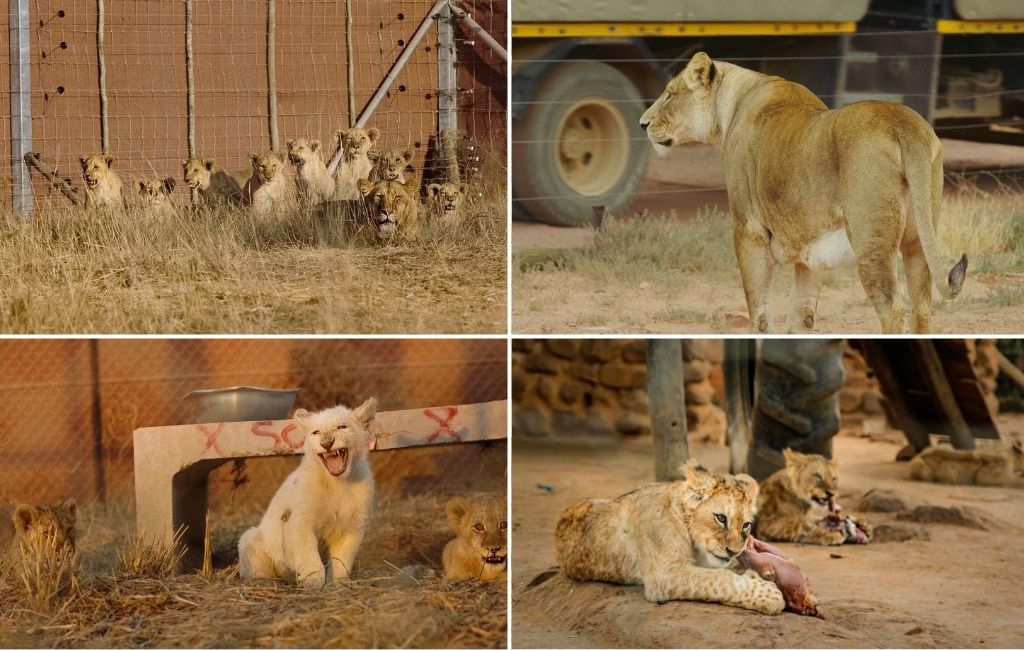
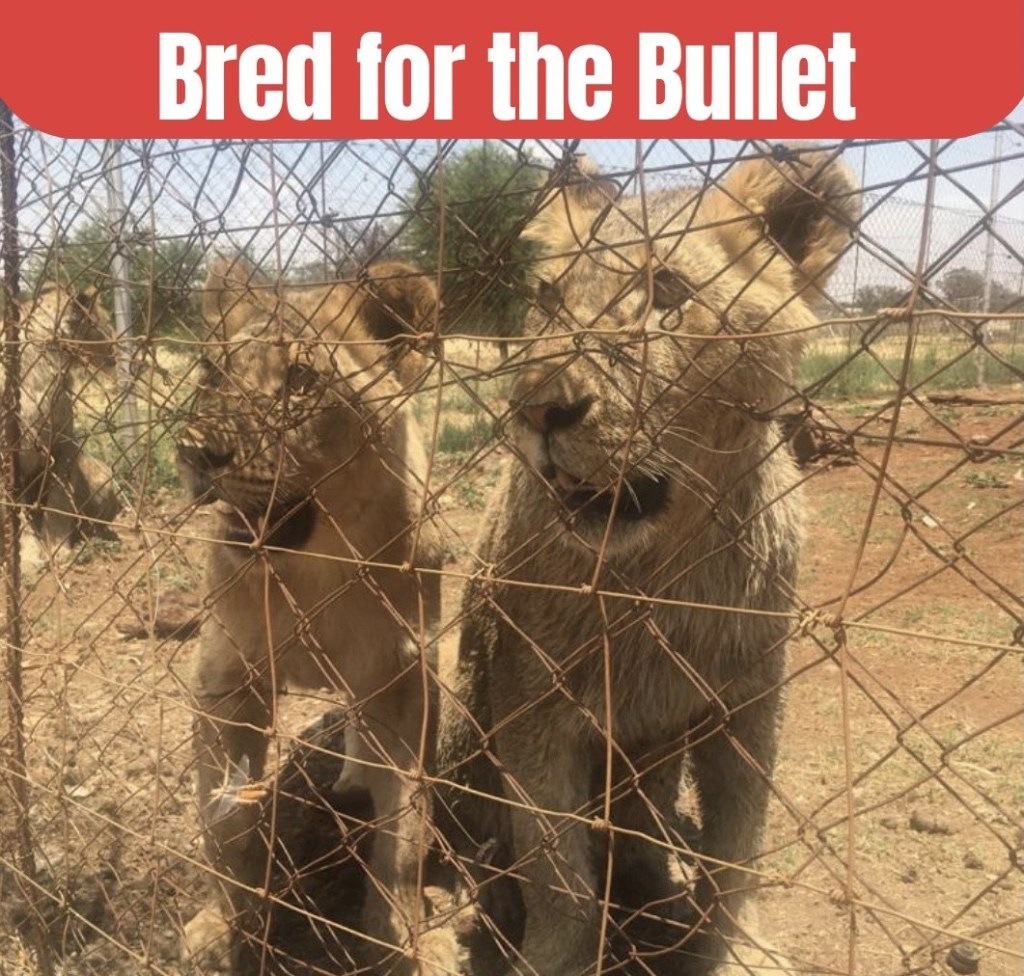
Lions bred in captivity on an industrial scale in South Africa
If trophy hunting was dying out, then what was stimulating the boom in Lion farming? Penguin Random House author Richard Peirce and the Jagged Peak Films team went in search of the answer. They discovered that while canned hunting had decreased, a parallel increase in demand for Lion bones from Southeast Asia was fuelling demand, leading the South African government to establish an annual quota for Lion skeleton exports. Richard followed the Lion bone trail from farms in South Africa to street dealers in Vietnam and Laos.
Inside a South African lion farm
Following the wildlife trafficking trail led to dangerous situations, but the team persisted in their quest for the truth. An undercover informant in Southeast Asia confirmed that Lion bones were being imported and passed off as Tiger to be used in Tiger cake, Tiger wine, and various other ‘Tiger’ products consumed in traditional Chinese medicine. The filmmakers exposed how easy it is to buy ‘Tiger’ or ‘Lion’ products, which are supposed to be illegal by international trade laws. Between the South African skeleton sale value and the end consumer price, they discovered a 60-fold increase. These huge profit margins and the fact that it’s cheaper to import a farmed Lion skeleton and pretend it’s a Tiger than to rear an actual Tiger, drive the South African Lion bone trade.
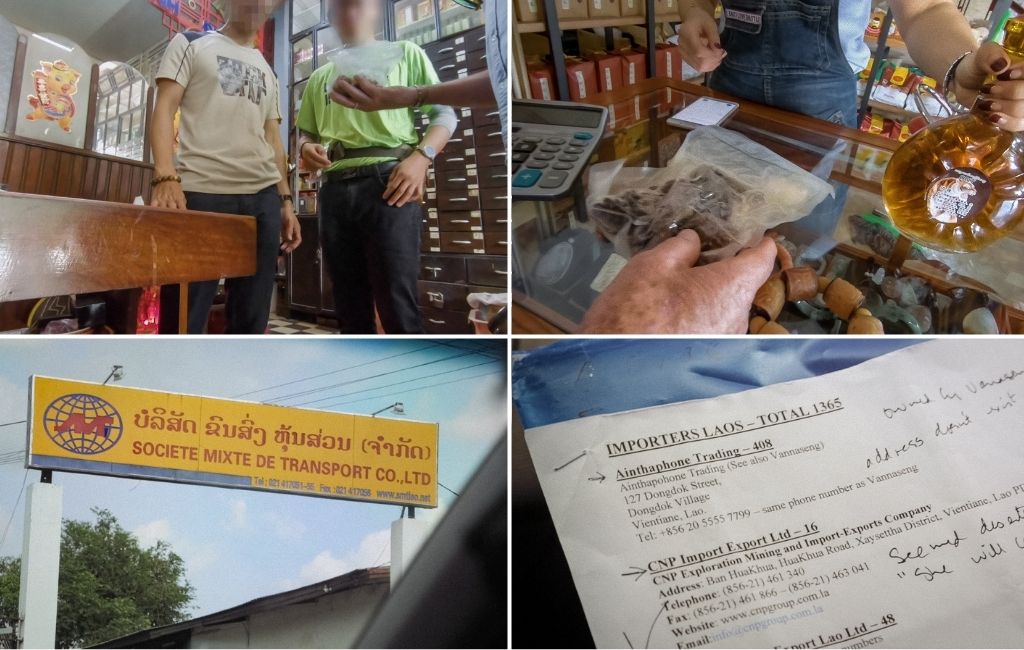
Richard goes undercover to investigate the trail of lion parts in Southeast Asia. Clockwise from top left: Richard is offered illegal pangolin scales in Vietnam; Richard is offered illegal ‘tiger wine,’ ‘tiger bracelets’ and a mysterious ‘tiger whip’ in a marketplace in Laos; List of companies that have imported lion skeletons from South Africa to Laos. While tracking down each address, Lions, Bones and Bullets proved that most are front companies for the true importer; Entrance to the office of ‘Societe Mixte de Transport’ in Laos, an import-export company which has imported lion skeletons from South Africa to Laos on behalf of a client.
This timely and groundbreaking film is much more than a straightforward exposé. The threats Lion farming and the Lion bone trade pose to conservation are tremendous. Richard, the author of several books on wildlife, explains: ‘Lion farming and the increasing sale of Lion bones to Asia involve exploitation, cruelty, injustice, misconception, fraud and corruption. They are a threat to wild Lion populations. It is mind-blowing in terms of the huge negativity involved and has no redeeming aspects. Lions are a flagship species; what happens to Lion populations will be a major factor in determining the future of wild animals in Africa.’
The threats to global public health are even more significant. The world is paralysed by a pandemic that came to humans via wild animals. Lions, Bones & Bullets reveals how shockingly easy it is to legally develop an expanding wildlife farming industry and then transport products that could be infected with tuberculosis, the ‘world’s deadliest infectious disease’. The disease is still South Africa’s leading cause of death.
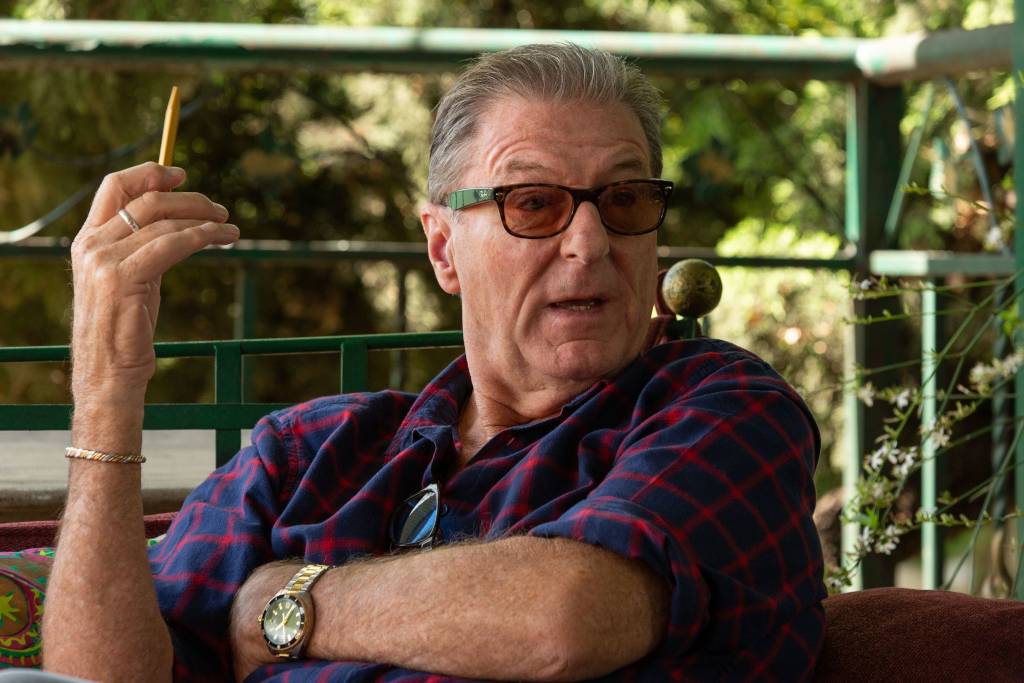
Richard Peirce
The world festival premiere of Lions, Bones & Bullets washosted by the 60th Monte-Carlo Television Festival in June. The Prince Albert II of Monaco Foundation, competition partners to the festival, is dedicated to environmental protection and sustainable development globally. Olivier Wenden, Vice-President and CEO, notes: ‘Lions, Bones & Bullets sends a clear and vital wake-up call to the world, inviting us to open our eyes and rethink our relationship with nature and wildlife.’
The team behind Lions, Bones & Bullets includes Kiwi director and executive producer Anton Leach, who has filmed in more than 20 countries, including war zones in Iraq, Syria and Gaza. Also from New Zealand is the film’s producer, writer and editor, Jasmine Duthie. Her work focuses on character-driven wildlife stories. Lions, Bones & Bullets is narrated by leading British actor and campaigner Peter Egan (Harry Potter, Downtown Abbey, Chariots of Fire).
LICHTENBURG, SOUTH AFRICA: Thirty-four Lions were crammed into a muddy enclosure meant for three. Rotting chicken carcasses and cattle body parts littered the ground. Feces piled up in corners. Algae grew in water bowls. Twenty-seven of the Lions were so afflicted with mange, a painful skin disease caused by parasitic mites, that they’d lost nearly all their fur. Three cubs lay twitching in the dirt, one draped over the blackened leg of a cow, its hoof visible. Mewling, they struggled—but failed—to drag themselves forward. A fourth cub looked on, motionless.
Although the number of captive Lions in South Africa has been estimated at between 6,000 and 8,000, there may now be as many as 10,000, according to conservationist Ian Michler, the protagonist of the 2015 documentary Blood Lions, which goes behind the scenes to examine the country’s Lion-farming industry. At facilities geared to tourists, visitors pay to pet, bottle-feed, and take selfies with cubs and even walk alongside mature Lions. Critics say the cub-petting industry leads to abuse, commercial breeding, and discarding of exotic animals. As the Lions age, they become too dangerous to pet, and they’re often sold to breeding and hunting ranches, which are not open to the public. “It’s this whole macabre, grisly industry with all these little revenue streams, and it’s very, very lucrative,” Michler says.
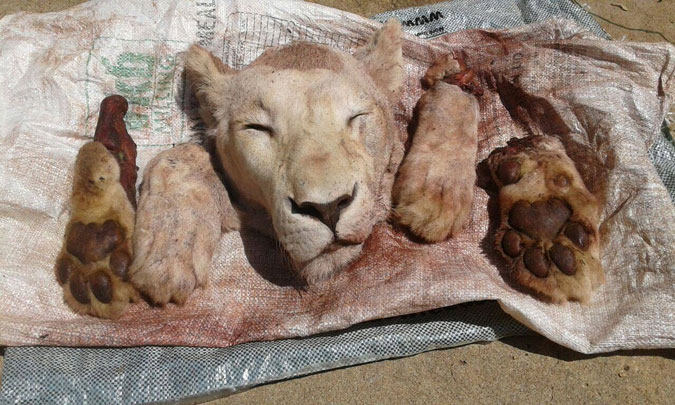
Some ranches may offer “canned” hunts, in which Lions are confined to fenced areas. Sport ‘hunters’ may pay as much as $50,000 to kill Lions so they can keep the skins and heads as trophies. The bones and other unwanted parts may be exported to Asia, where they’re used in traditional medicine. South Africa sets a quota for the number of Lion skeletons that can be exported legally every year.
In Memory of Impi and Gugu who were killed in the raid.
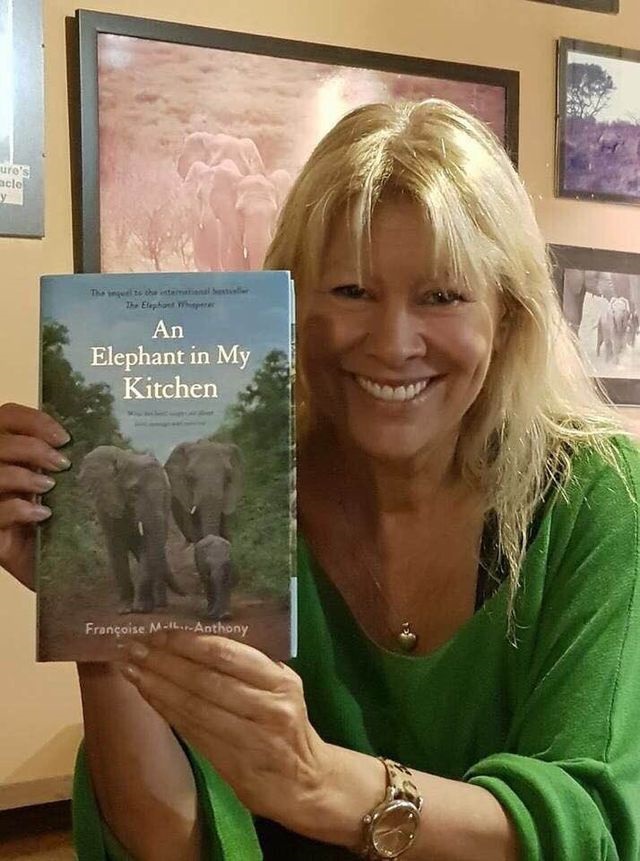
Françoise Malby-Anthony, who founded the Thula Thula game reserve in 1998 with her late husband, the renowned conservationist and internationally bestselling author Lawrence Anthony recalls the awful night that poachers attacked her Rhino orphanage on the 27th of February 2017
THE NIGHT POACHERS ATTACKED A RHINO ORPHANAGE
“Living alone on a vast African game reserve is not for the faint-hearted. And that night, even after 17 years in the wilderness, I felt a strange sense of unease.
It was 2am . White flashes of lightning were lighting up my bedroom. Thunder cracked like gunshots. As I stroked my dog, Gypsy, trying to reassure her, I suddenly realised that the phone was ringing.
‘Hello?’ I mumbled.
‘The orphanage has been hit. They shot two rhinos and attacked the volunteers.’
I sat bolt upright. Hit? Shot? Attacked? I couldn’t process the words.
I’d created the animal orphanage just a year before in order to fill a desperate need. Increasingly, poachers had been targeting adult rhinos for their horns — to sell to the Far East for useless traditional potions.
Any defenceless babies, whose horns had yet to grow, were left to die in the bush. Or if they were found in time, they were brought to my orphanage.
On that very night, I knew that four animal-mad girl volunteers and a permanent carer were providing intensive nursing for six vulnerable baby rhinos and a young hippo.
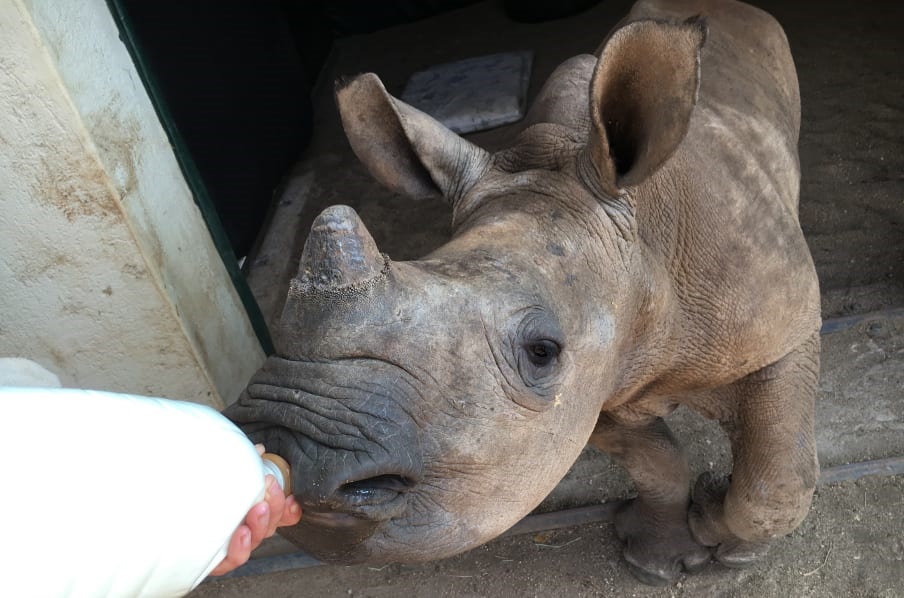
IMPI WITH ONE OF HIS CARERS
Panic-stricken, I ran to my general manager’s cottage and banged on the door.
‘Lynda! It’s me! Open up!’ I yelled, shivering in the rain. ‘Poachers at the orphanage. I’ll never manage the roads in this weather. We need your 4×4.’
She saw the horror on my face and asked no questions. ‘Give me five minutes.’ The rain smacked our faces as we sprinted to her car.
We crept along the dirt track leading to the orphanage, struggling to see, not speaking, hearts hammering. What would we find?
The men who slash rhinos’ faces for their horns are utterly barbaric — far beyond the conception of my trusting young volunteers. One wrong move or word, and an agitated lunatic could well have killed the girls.
Slowly, painfully slowly, we struggled through the downpour. As we arrived at the orphanage, one of my anti-poaching guards ran out.
‘What were you thinking, driving here on your own?’ he burst out. ‘The attackers could still be in the reserve! Quick. Get under cover.’
I stared at him. ‘Is anyone hurt?’ I asked. He nodded, grim-faced, and took us inside . . .
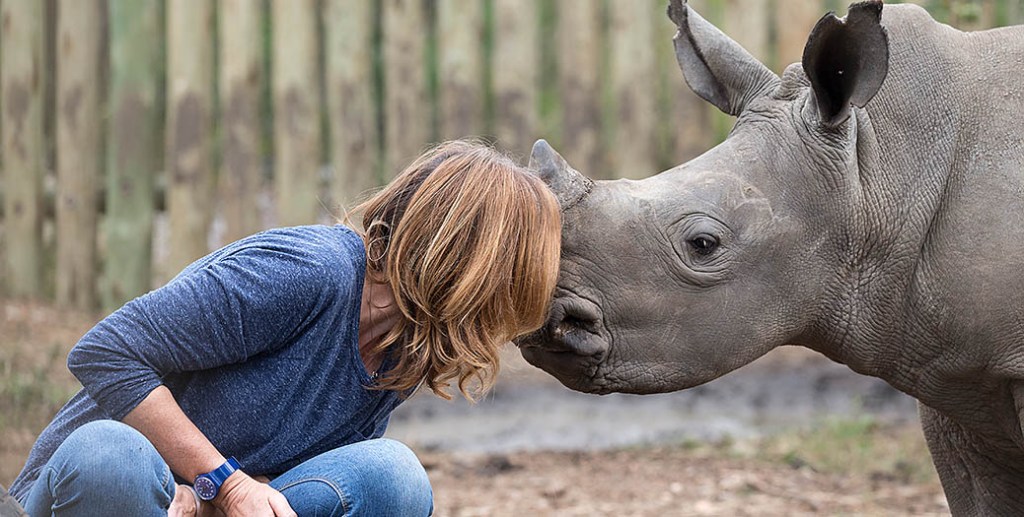
Baby rhinos don’t run. They half-bounce, half-fly as they hurtle towards you with an inquisitive look on their soft faces.
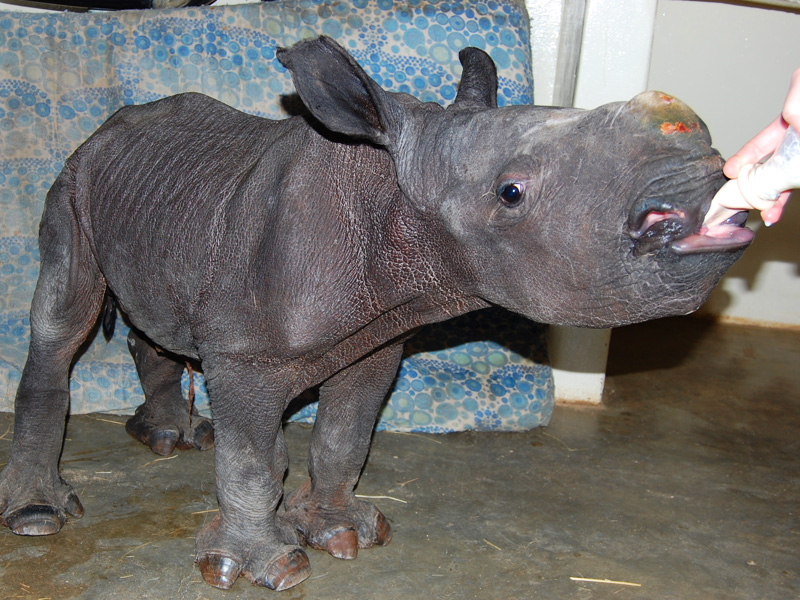
Or so I discovered when I first met Thabo, who’d been a terrified newborn when he was found, his umbilical cord still dragging below him in the dust. His mother had almost certainly been killed by poachers, and it was a miracle he’d survived even a day on his own.
Now Thabo was two months old, and had just arrived from a reserve that could no longer keep him. He nestled his snout gently against my leg — and I melted.
THABO
I’d just agreed to give him a permanent home on the land that my husband and I had bought in South Africa, intending to turn it into a game reserve that would keep animals safe from poachers.
We called it Thula Thula — Zulu for ‘quiet’. Within a few years, we’d built a game lodge, started taking in paying guests and had adopted an entire herd of wild elephants — though no rhinos.
But that was about to change: as I stroked Thabo, I knew with absolute certainty what needed to happen next. I was going to create a haven where orphaned rhinos could heal after their trauma.
That was back in 2011. By the time I’d raised enough funds and rhino-proofed an existing building, my husband Lawrence had died tragically young of a heart attack.
For a long time after I lost him, I lurched from one crisis to the next, never feeling anything was under control. Even small decisions felt overwhelming at first, but creating the orphanage gave me a focus, a reason to get up every day.
LAWRENCE ANTHONY
There was so much at stake. If the heating fails in our game lodge, we might get a bad rating on TripAdvisor, but the guests won’t die. A heating failure in the orphanage’s high-care ward, on the other hand, will soon kill a baby rhino.
Our first call came in April 2015. An anti-poaching unit had just found the carcass of an adult female rhino, with her horn hacked off, but no sign of her calf. Would we take it in if they could track it down? By running away, the six-month old calf had at least avoided being butchered for the tiny horn beginning to grow on his head. With rhino horn fetching £68,000 per kilo on the Far Eastern market, the poachers would have killed him for every gram they could get.
By the time Ithuba was traced, it was a week since his mother had died. Heavily sedated when he arrived, he was covered in infected tick bites and close to death. That first night, he was put on a drip and slept peacefully — but the second night was hell.
It was as if he was going through all the trauma of the past week — his mother’s murder, being transported in a clanging trailer and then finding himself in a strange room with two-legged animals who looked just like the ones who’d killed his mother.
The mere sight of his carers sent him careering around his room in panic — and 200 kilos of agitated rhino can do a lot of damage to a pair of human legs. His high-pitched squeals of terror pierced every corner of the orphanage.
Eventually, we persuaded him to drink milk from a bottle. Then colic struck and nightmares. He’d shiver and jerk about in his sleep; on waking, he’d spin around his room in panic, flinging himself against the walls.
‘What Ithuba’s going through isn’t unusual,’ the vet assured us. ‘People think post-traumatic stress is only experienced by humans, but his emotional recovery is going to be far more complicated than his physical recovery.’
It’s heartbreakingly hard to comfort traumatised animals, but our carers did it with infinite patience and affection. Slowly, Ithuba began to understand they weren’t like the people who’d hurt his mother.
I’ll never forget the day when I saw him trotting happily next to Axel, an easygoing young French carer. Ithuba kept bumping into his leg, as if to reassure himself that he wasn’t alone any more.
Another huge step was the revival of his curiosity. Rejecting other toys, Ithuba homed in on anything made out of tyre, including his food bowl which was a home-made tyre contraption. He’d tip it over, throw out the food, fling the bowl about until it started rolling, then run after it. Finally, he’d balance it on his head, preening and strutting like a dressage horse.
BFFs: The two baby rhinos, Thabo and Ntombi, were soon inseparable
Yet for a long time, he also continued to have panic attacks. He’d be playing happily, then he’d suddenly squeal in fright, latch onto a corner of his carer’s sleeve and suckle it — rather like a baby sucks its thumb.
Slowly, however, his insecurity faded — and his appetite exploded. By the time he was nine months old, he’d doubled his weight and turned into a happy little rhino tank who’d soon be starting a new life in the wild.
The next rhino calf delivered to the orphanage had also lost his mother to poachers. He’d stood by his mother’s body for six days, desperately tugging at her decaying teats while vultures tore her flesh. How do you even start to console a little creature who’s been through that?
Megan, a fresh-faced young British girl, remained with Impi for his entire first night as he ran round and round in circles, crying non-stop, too terrified to sleep, desperate to find his mother.
‘I kept talking to him,’ she said. ‘I told him what had happened to him, that he was safe with us, that there was another baby rhino just like him called Ithuba, and that I was sure they would be friends.
‘He eventually came up to stand silently at my knees. He looked so lost. I longed to take him in my arms to comfort him but I didn’t dare move in case I frightened him. Then he collapsed at my feet and fell asleep.’
Within three days, however, little Impi was on the mend. Ravenously hungry, he’d indignantly head-butt his carers if his bottle wasn’t ready when he wanted it.
One morning, Megan was on her hands and knees giving the floor a good scrub when she felt two little eyes boring into her. Impi edged closer and nestled his chin on her shoulder. And there it stayed, as he shuffled along to keep pace with Megan’s movements.
Some calves are boisterous and belligerent, but not Impi. He was a tender little creature who was afraid of everything and hated being left alone.
Like Ithuba, he suffered from post-traumatic stress disorder, and unfamiliar sounds — even a bird’s squawk — would send him fleeing, squealing in panic.
Nights were a terrible struggle. No matter how exhausted he was, he didn’t feel safe enough to lie down until a volunteer had started reading him a book. Then he’d quietly nestle on the hay next to her, burrow his head into her legs and fall into the deepest sleep.
Ithuba, meanwhile, wasn’t happy about losing his pampered role as the only rhino at the orphanage — and particularly jealous when he realised that Impi was in his old room. Again and again, he charged the barrier to get in; only the sound of Axel rolling a tyre behind him managed to distract the cross little rhino.
The next orphan to arrive was Thando, who’d been discovered neck-deep in mud and unable to move. There was no sign of his mother.
It took five men to pull Thando out of the mud, and there were whoops of delight when they saw he was strong enough to stand.
The DIFFERENCE in Thando’s behaviour from that of the other two rhinos was startling. Rather than being petrified when he woke up in a strange room surrounded by humans, he was merely stroppy.
Happily, he hadn’t had to witness his mother being hacked to death, nor had he been on his own in the wilderness for nights on end. As a result, he very quickly became one of the orphanage’s most laid-back little rhinos.
Eventually we decided that Impi and Thando should meet, as they were similar ages. So, one overcast summer’s afternoon, we left the doors and barriers to their rooms open at feeding time. The carers hovered out of sight nearby.
Impi, usually such a timid little rhino, immediately charged at Thando, who didn’t so much as blink. Baffled by this non-reaction, Impi skidded to a halt and stared at him.
After a lot of posturing and strutting on both sides, they headed inside and flopped down on a mattress, their stumpy little legs entwined. From then on, they were best friends, constantly cuddling up or practising charging techniques on each other.
Another successful pairing was between Charlie, a baby hippo found alone in a river, terrified of water, and a newborn rhino called Makhosi, abandoned because he was too tiny to reach his mother’s teats. As both were under a week old, we put them in the same room.
Amazingly, Makhosi scampered straight up to the hippo. For his part, Charlie swayed his big head from side to side in greeting and reached his snout towards her.
First, they exchanged interested noisy snuffles. Then Makhosi lowered her head and Charlie gently chomped her ears. Finally, the tiny rhino clambered onto the hippo’s mattress, nuzzled up against him and fell fast asleep.
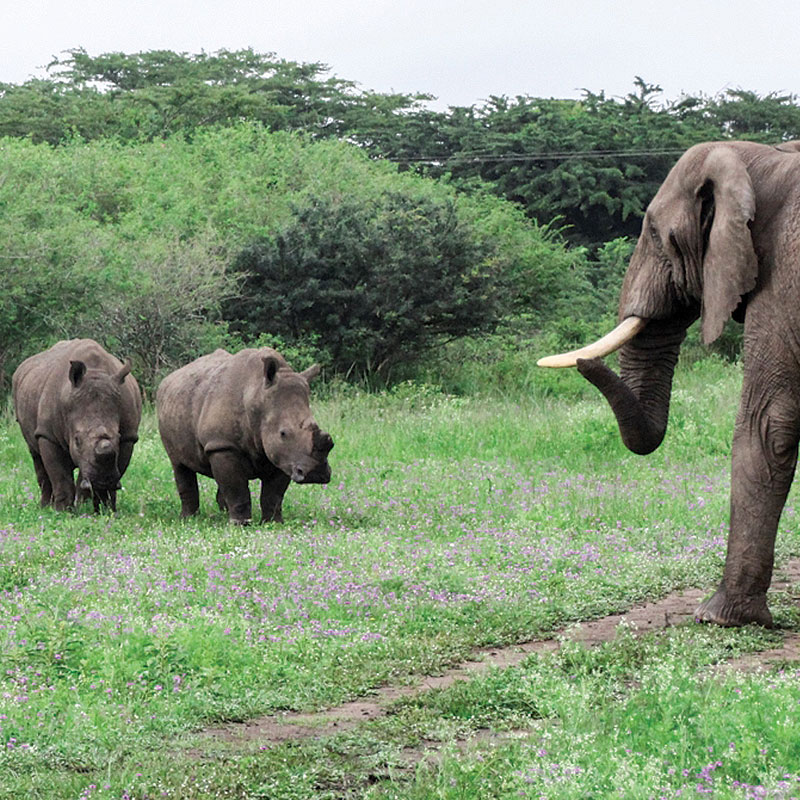
WILD ENCOUNTERS
After that, they trotted everywhere together, demanded to be fed at the same time, and cuddled up whenever they needed warmth or reassurance.
When Charlie’s teeth started to cut through, his gums became sore and inflamed, and he lost his appetite. His rhino friend knew just what to do: she comforted him with gentle nudges, then fell asleep each night with her snout touching his.
Charlie, the baby hippo who was scared of water standing bravely in his paddling pool with pal Makhosi close by
More orphans were now flooding in. Nandi, our first black rhino, was another newborn whose mother had been killed. She was afraid of the dark and wouldn’t go to sleep without a blanket tucked tightly around her.
If it slid off, she squealed until her carer woke up and tucked her back in again. What a little princess!
Then there was Storm, who’d probably been rejected by his mother. He had so many parasites that we almost lost him.
And finally there was Gugu, a healthy rhino calf who wanted nothing to do with her carers. It was her choice to drink from a bucket rather than a bottle — anything to keep humans at bay.
When she first saw Impi and Thando, however, she broke out into high-pitched calls of delight. And as for Ithuba, our original rhino calf, he became the love of her life.
Poor Ithuba was so much older than the others that we had to keep him in a separate enclosure. Undeterred, Gugu would spend hours walking out with her strapping neighbour, each keeping pace with the other on either side of the fence.
ITHUBA WITH KAREN TRENDLER
By the start of 2016, our baby rhinos were all thriving and protected by round-the-clock security guards. It made no difference.
On the terrible rain-lashed night that poachers attacked the animal orphanage, I arrived to find our terrified girl volunteers huddled together in an office. One of them had only been with us for a few hours, her dream of working with orphaned animals now a savage nightmare.
Slowly, as they sobbed and cried, I started piecing together what had happened.
Just as the team had finished the first evening feed, five heavily armed men had breached the fence, disabling cameras and cutting cables as they crept towards our security guard. Two of them had attacked him from behind and tied him up.
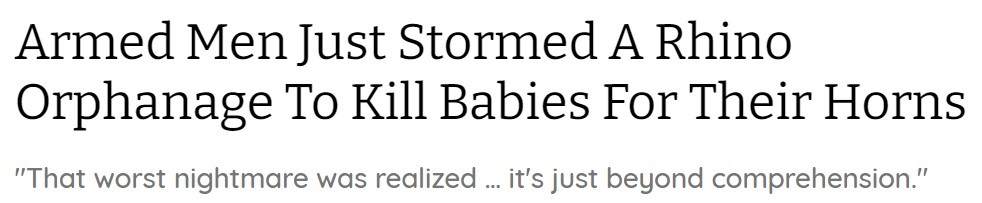
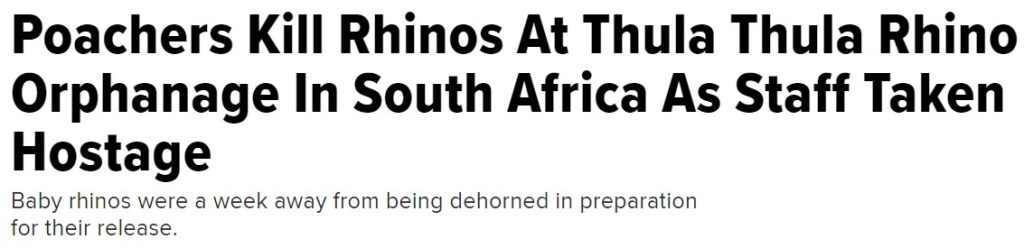
THE DODO’S HEADLINE OF THE ATTACK
Then they waited, patient predators, biding their time until the next feed. Axel, the only staff member there that night, had gone to bed while the two girls on feeding duty chatted and laughed as they prepared bottles for the hippo and the rhino calves.
Suddenly, they were ambushed by the poachers, and shoved into a locked office. At gunpoint, Axel was roused and forced to round up the rest of the volunteers.
‘Where are the rhino horns?’ the attackers kept asking. Needless to say, we didn’t have any, but Axel was beaten and one of the girls was severely assaulted.
THE HUFFPOST’S HEADLINE OF THE ATTACK
The poachers must have known that Gugu and Impi — now our oldest rhinos at the orphanage — were due to leave soon. And that meant they’d already have stubby little horns.
While three men guarded the youngsters, two others, armed with guns and an axe, headed for the calves. They pumped bullets into Gugu and Impi for horns no bigger than a child’s fist.
RIP GUGU
Gugu died instantly, sweet Impi didn’t. The poachers didn’t give a damn. They held him down and hacked his face with the axe.
Were they disconcerted by his terrified expression? Superstitions run deep in rural Zululand, where it’s thought that eyes have memories. So the poachers did the unthinkable — they poked out Impi’s eyes.
Half an hour later, the men and their bounty were gone.
Meanwhile, the guard in the storeroom had escaped and was running barefoot through the reserve to raise the alarm. Petrified of being caught, he avoided roads and tore through the bush in the pitch dark, shredding his feet in the process.
To this day, I can’t bear to think about Impi and the anguish of his carers. They’d hand-raised him, and there was nothing they could do to ease his terror and pain.
Impi was euthanised as soon as our vet arrived. The tragedy was that both calves had been days away from becoming wild rhinos again.
The next 24 hours are a blur. I have flashes of memory: the ashen faces of the girls, the explosive racket of the storm, the atrocity of Impi’s injuries, the chaos in my heart.
For a while, I lost faith in mankind. I lost hope in saving rhinos.
Demand for their horns will never stop; they’ll always be in danger, as will the men and women who risk their lives guarding them.
What I do remember with profound gratitude is the phone call from Megan, the British girl who’d helped look after Impi and Gugu. Now back home, she offered to start a campaign to pay for improving the orphanage’s security.
Donations flooded in from all over the world. The outpouring of love and concern was incredible: more than £45,000 was raised.
The cash has paid for more round-the-clock armed guards and extra protection for staff during night feeds. We’ve also upgraded our entire security system.
Additional anti poaching team and extra armed security
Update 2/23: Two male suspects have now been arrested for the killing of two baby rhinos and the assault of the staff at Thula Thula Rhino Orphanage, according to SA people. The men are apparently part of a “notorious gang,” and they were heavily armed when police found them.
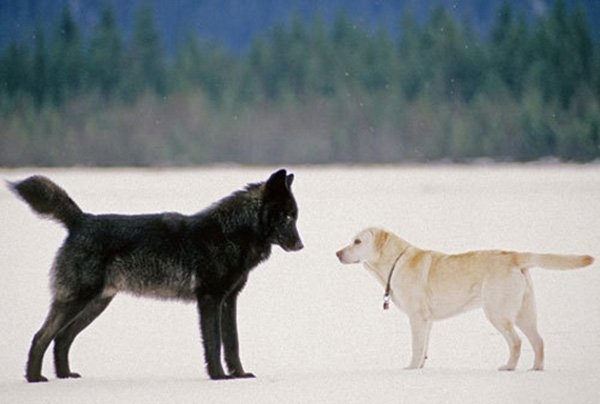
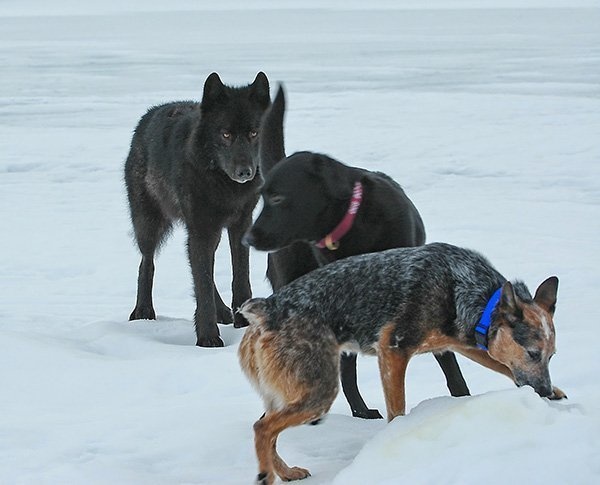
On a twilit night in Juneau, Alaska, in December 2003, and Nick and Sherrie Jans were walking with Dakotah, their yellow Lab, in the Mendenhall Glacier Recreation Area not far from their house. Suddenly, a young black wolf appeared on the ice—and began running in their direction. Awestruck but scared, the couple watched as Dakotah broke loose and charged the predator, which was twice the size of the dog. The animals stopped yards apart and gazed at each other “as if each were glimpsing an almost-forgotten face and trying to remember,” recalled Jans. After a few moments, Dakotah ran back to her owners, and the three hurried home, listening to the wolf howl
The locals named him Romeo, and soon his presence was noted by the entire town. Most found it fascinating that Romeo was so friendly, while others assumed that this naturally predatory animal would give into his natural instincts at any moment, potentially attacking their pets and children.
During this time Nick Jans started documenting Romeo. When he did, he uncovered an emotional story, the heart of which describes the tenuous relationships between wild animals and the humans around them.
“The first thing I saw was tracks out on the lake in front of our house on the outskirts of Juneau,” Jans said in an interview with National Geographic. “A few days later, I looked out from my house and there was this wolf out on the ice. I’d had 20 years of experience around wolves up in the Arctic and immediately knew it was a wolf, not a dog. I threw on my skis and found him.”
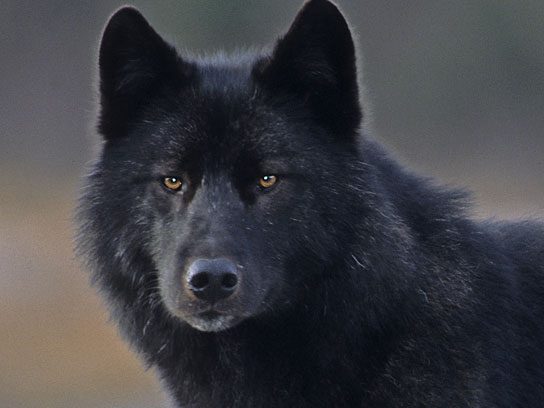
ROMEO
According to Jans, Romeo seemed totally relaxed and friendly.
And it wasn’t just one interaction, either: Romeo remained his curious, friendly self for the better part of six years.
“For want of a better word,” Jans said, “The only thing I can say from a human perspective is that it amounted to friendship. If you wanted to be scientifically correct, it would be “social mutual tolerance.” But it was more than that. The wolf would come trotting over to say hi, and give a little bow and a relaxed yawn, and go trotting after us when we went skiing. There was no survival benefit. He obviously just enjoyed our company.”
Romeo’s behavior was definitely unusual, as many wolves tend to assert dominance by attacking dogs and other animals.
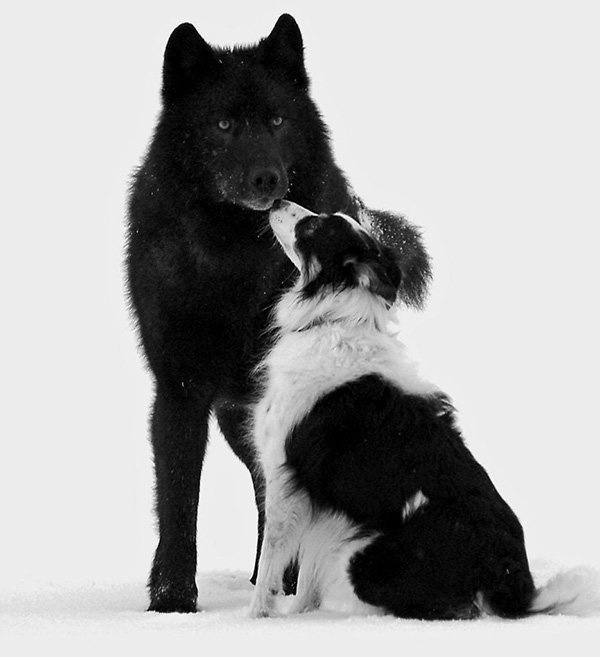
he wolf got his name because Jans and his family noticed how Romeo was kind of a flirt — particularly with their “Juliet,” a dog named Dakotah. Here, they’re standing nose-to-nose in what seems to be an all-too-perfect photo moment.
Romeo survived for years despite many mortal threats: scented traps, busy roads, illegal hunting, and even a poisoning attempt. He also had to contend with the natural dangers of starvation, injury, and attack by another pack of wolves. By almost any standard, his prolonged proximity to humans and dogs constituted incredibly rare behaviour. There was no obvious survival benefit to his socializing, yet the wolf lingered persistently, a late echo of the original process that must have initiated the domestication of dogs.
Romeo stayed in the area for as long as he lived — and he lived three times longer than most wild wolves do.
“Romeo was the single most transformative event of my life,” Jans said. “The amazing thing was Romeo’s understanding. It wasn’t just our understanding and tolerance. It was the combination of his and ours and the dogs’. We were these three species working out how to get along harmoniously. And we did.”
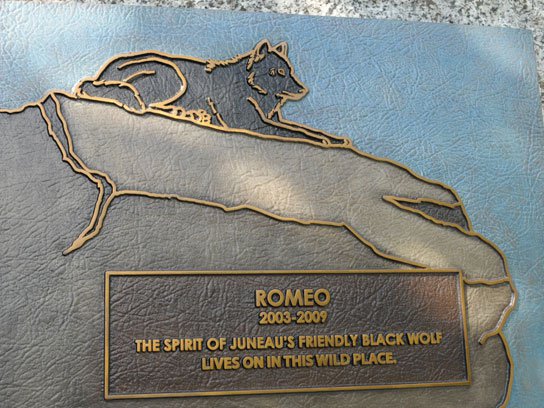
What happened to Romeo? Romeo disappeared in late September 2009. After some sleuthing, a supporter found he had been shot and killed by Juneau resident Park Myers III and his Pennsylvanian friend Jeff Peacock. Both men were arrested and ended up paying fines, serving a few years on probation, and losing hunting and fishing privileges for a limited time. In late November 2010, a memorial service was held for Romeo and this plaque was laid along a path where he once roamed.
“Nothing can take away the miracle that was Romeo and the years we spent in his company,” writes Jans. “Love, not hate, is the burden we carry.”
Nick Jans’ beautiful account of his unusual relationship is now in a book called A Wolf Called Romeo.
PleaseSHAREto let others read this beautiful but tragic story. You can also SUBSCRIBE to receive news and updates straight to your inbox.
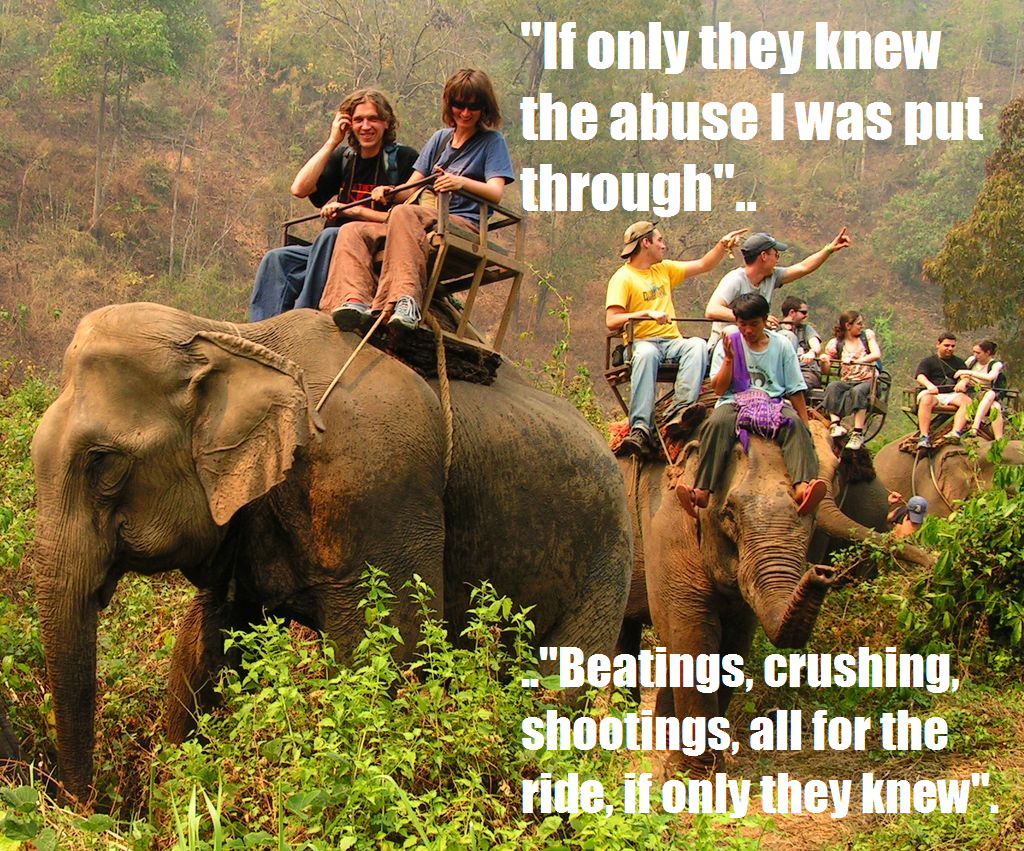
Elephant rides are an attraction regularly offered to tourists in several Asian countries including Thailand. But to get there, the animals undergo a very particular training that is actually akin to real torture.
Between 35 and 40,000, is the number of wild Elephants that remain in Asia, according to estimates. A figure to which should be added the more than 15,000 domesticated Elephants. If you go to Asia one day, you will certainly meet these majestic pachyderms with big ears. You may even be asked to ride on their backs for a ride.
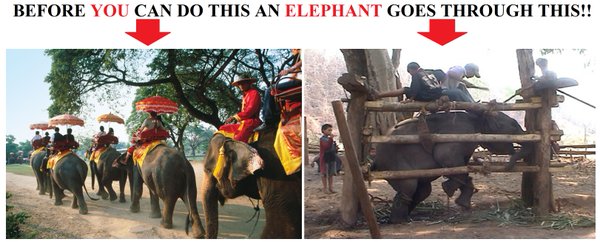
This attraction attracts millions of tourists every year in Asia, especially in Thailand. Nevertheless, it hides a reality that few tourists are aware of: to get there, the animals suffer a real torture. If the words can seem strong, they are not, as all those who have seen with their eyes what is really happening. Indeed, to be trained, Elephants undergo a ritual called “phajaan”.
The principle is simple: “break the spirit” of the Elephant. As two globetrotters, Seth and Lise, explain, “the origin of phajaan comes from the ancestral belief that one can separate the mind of an Elephant from its body so that it loses its reflexes and instinct natural wilderness and be completely under the control of man “. Concretely, it is to submit the Elephant until he agrees to do everything asked of him.
Beaten, hungry and sleep-deprived
From a practical point of view, it is only by using violence that the trainers achieve it. Phajaan lasts between 4 and 6 days and is carried out on young Elephants. The animals are separated from their mothers and locked in narrow cages where they are chained. Without being able to struggle or even move a limb, they are then repeatedly hit in strategic places, the most sensitive.
In addition to being beaten, Elephants are kept awake, deprived of food and water under the eyes of trainers (“mahout”) who recite prayers that can be translated as “Elephant, if you stop fighting, we do not you’ll hurt more, “says a documentary. The torture does not stop until after several days, when the trainers believe that the spirit of the Elephant is broken, that his behaviour has changed.
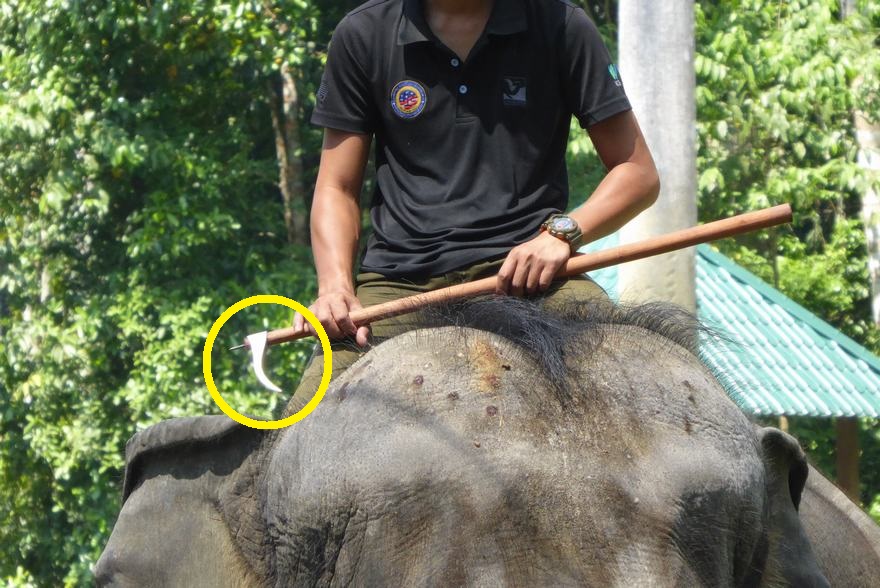
The Bullhook
Out of his cage, the animal appears submissive, impressed by the fear of the man who subjected him to this torture. Then begins a real training that will consist in teaching the Elephant all the necessary commands or gestures intended to amuse the tourists. Once the specimen is formed, it can be used as an attraction for most of its life.
50% of Elephants die during the ritual
It is estimated that half of the Elephants would not survive phajaan. Others would become aggressive: about 100 mahouts are killed each year by their animals. Still others would go insane or have trouble with their experience, rendering them unusable for attractions. Most would then be killed.
The surviving Elephants are used to wander among the tourists, to beg or for work. In order for them to remain submissive, they are given a few booster shots by hitting them or pressing the sensitive spots again. In tourism, an Elephant can spend the day carrying people without a minute to rest, eat or drink. The rest of the time, most animals are tied up so that they are not dangerous.
WHEN NOT BEING EXPLOITED BY TOURISTS THE ELEPHANTS ARE CHAINED
A life that would often lead to the appearance of disorders including neurological. “If you ever have a chance to spot domestic Elephants, watch them,” Seth and Lise explain. “Chance or not, all the Elephants we’ve seen had signs of recent abuse, scars, obvious signs of poor health, some are more damaged than others, and it’s extremely rare to see one of these well-treated animals. “.
“It is largely because of tourists that this business works, so it is up to tourists to make the right decisions. The future and especially the well-being of thousands of Elephants is at stake,” they conclude in their blog.
#BeKindToElephants ~ Please SHARE this page to raise awareness to the so-called Elephant tourist ‘industry’ in Asia. You can also SUBSCRIBE to Protect All Wildlife to receive news and updates direct to your inbox.
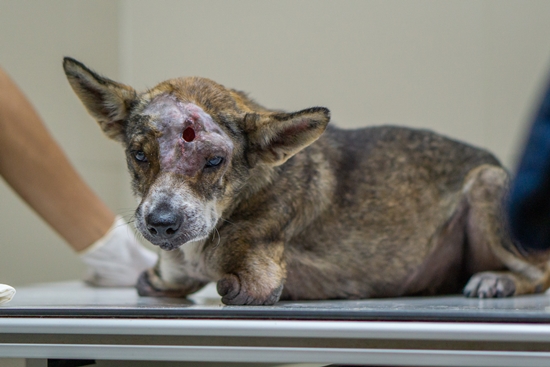
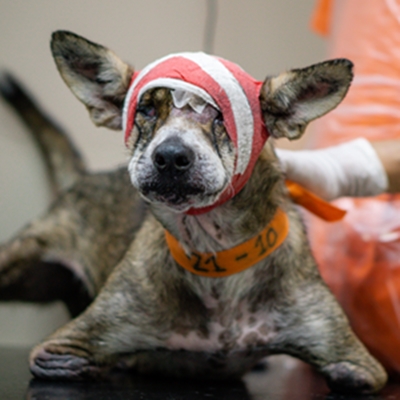
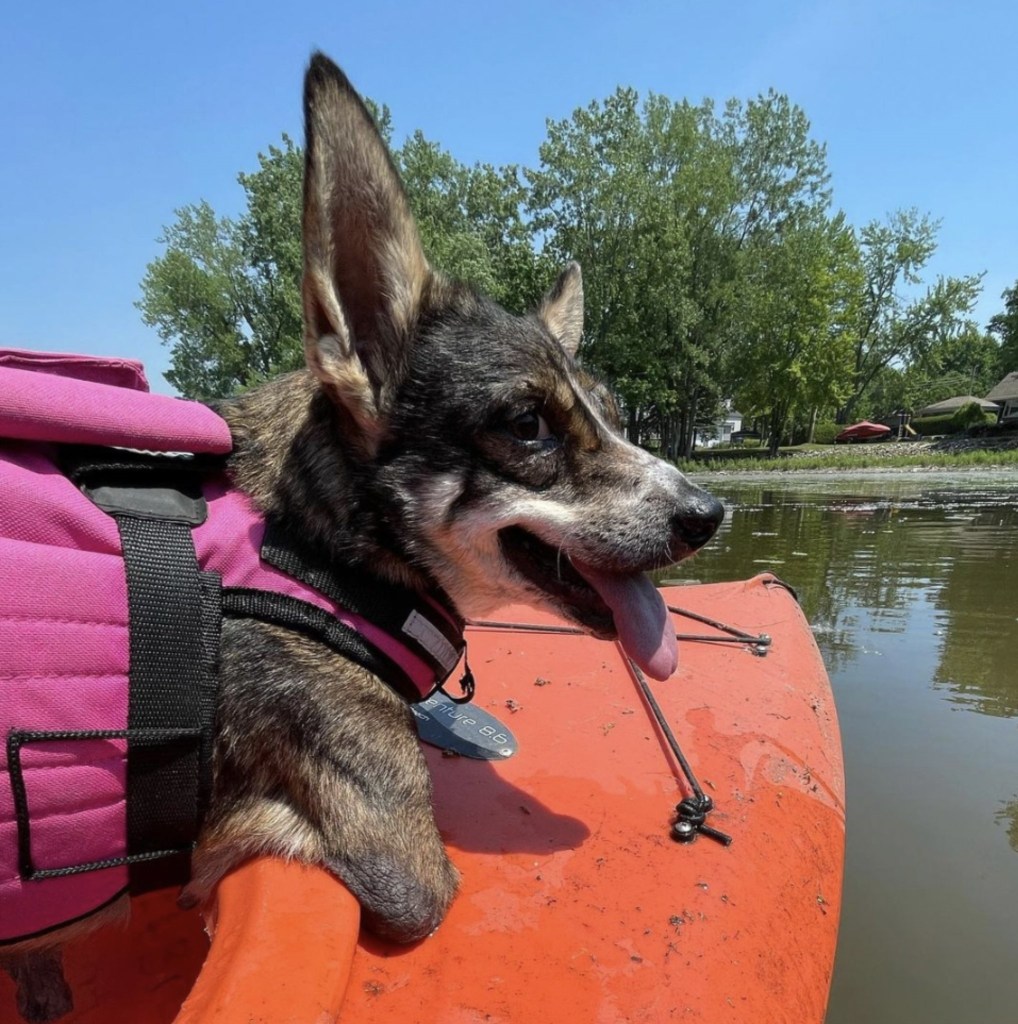
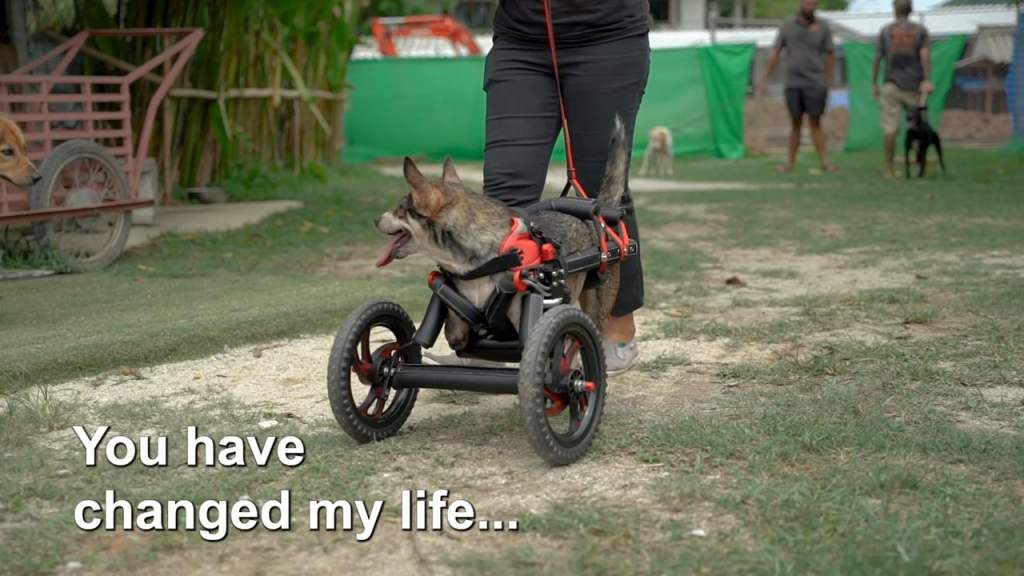
A two-legged street dog from Thailand that was shot in the head and left to die has been rescued by a Canadian family – and now even has her own wheelchair. Lara Pleasence, 51, from Montreal, Canada, first heard about Amira’s tragic story through the Soi Dog Foundation, based in Asia. Administrator and personal trainer Lara first saw Amira in a video posted by the rescue centre in Thailand in October 2020. “This poor dog who was born without legs, lived on the streets having litter after litter, then after nine years of struggling to survive, someone shoots her in the head,” Lara told Jam Press. “I just broke down and cried.”
Amira was treated for her head wound by the Soi Dog rescue centre who shared regular updates of her progress on social media. “Sweet Amira was always wagging her tail; it just broke my heart that she still trusted humans even after everything she’d been through. “I knew I had to contact the rescue to see if I could help in any way, maybe even offer to be her forever family, although they doubted that she would ever be well enough to travel.” After a tense wait, the Soi Dog Foundation contacted Lara to tell her that Amira had recovered enough to be put up for adoption. “I was so stoked and so worried about what my husband was going to say, since we already had three dogs,” Lara admitted. “There was something about Amira, this incredible connection I felt for her from the very first time I saw her. “I wanted to right all the wrongs that were done to her, I just felt compelled to try. “I wanted desperately to show her all the love, security, happiness that she deserved, that every dog deserves, and that this poor sweetie had been denied for so many years.”
AMIRA’S LOVING AND LIVING LIFE TO THE FULL
To qualify to adopt Amira, Lara and her family had to go through a strict application procedure – including a virtual home visit, interview process and form-filling. “I was made aware that we would have to pay for her to be flown to Canada since, because of Covid, they didn’t have travellers who could take her on the plane for free.” “I think I would have mortgaged the house to get this sweet girl here.” When Amira touched down in Montreal in April 2021 after a 22-hour journey – which cost $2,000 – it was love at first sight. Lara said: “My husband was none too happy about even the idea of another dog since we already had three, but I told him that I had never felt this way about any rescues that I had seen. “I was so excited that we were getting her, I was practically bursting, and he knew that fighting it was a lost cause – happy wife, happy life.” Amira came with her wheelchair, after a man in Vietnam made a custom one for her and it was gifted to the pup by Soi Dog. “She literally came bouncing out of her crate and jumped all over us like the happiest kangaroo you’ve ever seen.” “She’d been in it for over 22 hours and didn’t even have an accident!” “We couldn’t believe the joy she exudes.
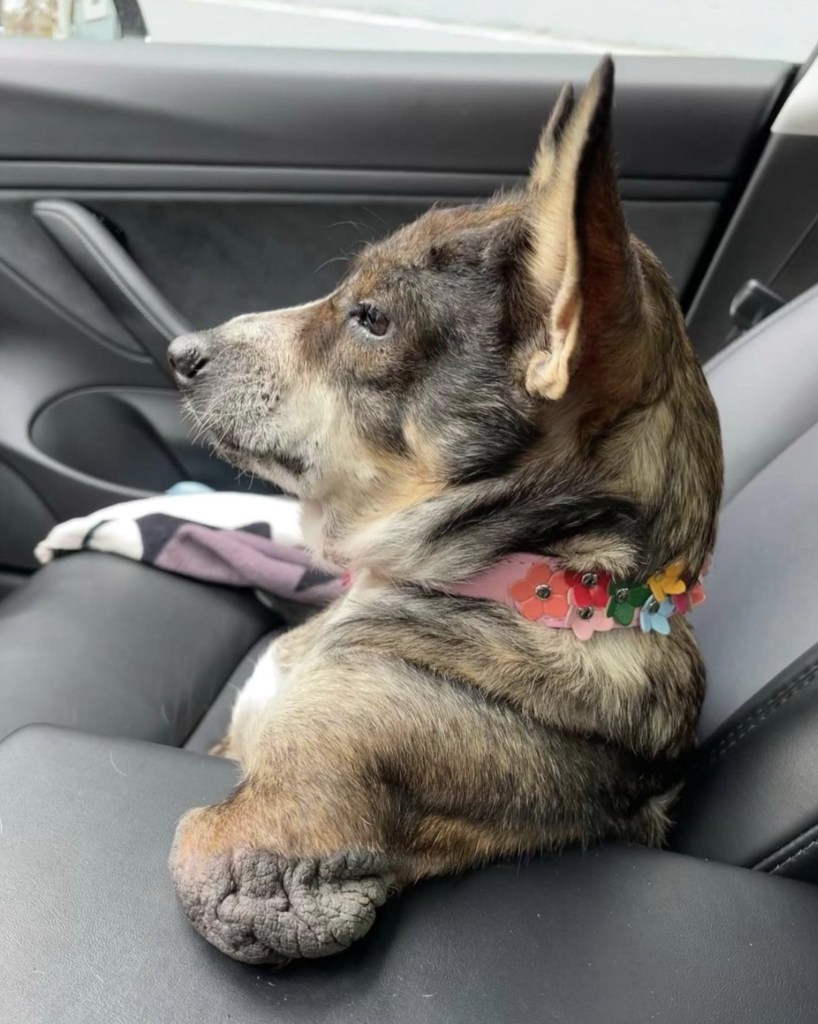
She is a true miracle. After everything she’s been through, Amira is fun-loving and outgoing. “She’s so trusting, she loves everyone she meets. “She absolutely loves to be held in your lap and will sleep there for as long as you will let her. “She is resilient and doesn’t let her past hold her back from trying new things or doing something a bit scary like canoeing or going on our paddleboard. “She is obsessed with our bed… If we’re not home, we have to block the stairs because we can’t risk her falling. “How a street dog, with no front legs, knows how to climb stairs is just one of Amira’s many mysteries. “She’ll let me kiss her nose 50 times in a row, my other three dogs will eventually pull their head away, but not Miss Amira, she loves it. “She gets these crazy puppy moments where she runs around on her nubs and jumps up on the furniture then flies right back off it. “These moments make my heart smile because it’s like she finally doesn’t have a care in the world and can just be a dog. “No more struggling for food or to keep her puppies safe and fed or hiding from bad people.”
AMIRA IN HER WHEELS
Now, Amira enjoys a happy life spending her days with her family and playing at her favourite spot. Lara added: “She loves going to the dog park, even though many of the dogs get freaked out by the “transformer dog” with wheels and just bark at her.”
FROM STREET DOG TO CRUISING THE STREETS
In videos posted to Instagram (@amira.amiracle), Lara shares Amira’s adventures with her new set of wheels. In one comical clip, which has been viewed over 725,000 times, Amira runs after a cat and ends up doing a headstand when she hits a curb. “She just waits for me to pick her back up and she keeps on going like it’s no big deal,” said Lara. Another video shows her gradually getting better at walking in a straight line with her wheels. Followers of Amira’s page are in love with the pup, and she regularly receives gushing comments. One person commented: “So beautiful to see this! You’re amazing, sweet and strong Amira.” “Love u Amira very much,” said another viewer. “She’s amazing and you’re amazing with her,” added another person. Lara is grateful for all the support and says she is touched by the comments she receives. “The people who follow Amira on Instagram are the sweetest,” she said. “They are so happy that she has a family that loves her now. “Some say Amira’s posts are their daily dose of ‘good feels’ or that her videos are ‘good for the soul’. “People feel they need to thank me for taking her, which is so kind, but I always tell them that it is my privilege to give her the best life that I possibly can,” “It’s the least I can do for such an angel. “I can only hope that her page may inspire someone else to help a special needs dog or donate to an organisation like Soi Dog Foundation so they can continue their amazing work.”
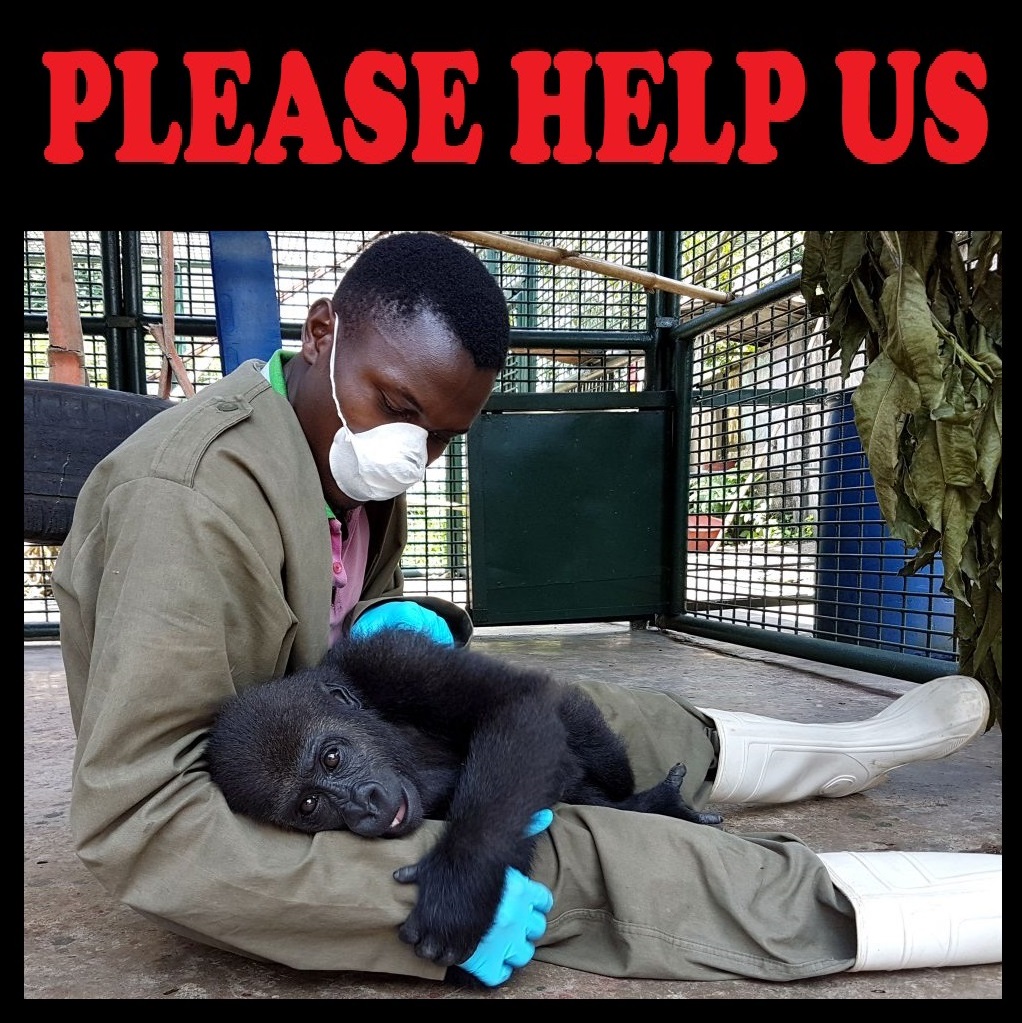
The Limbe Wildlife Centre (LWC) is a conservation education centre in Limbe, Cameroon. Above all, they provide a solution to law enforcement agencies for where to place wildlife seized from the illegal wildlife trade. For all elements of their work, they collaborate with state and national government, communities, and other international and local NGOs to protect habitats and endangered species. In brief, they in-situ and ex-situ activities that include rescue, rehabilitation and reintroduction, conservation education and advocacy, law reinforcement, creating alternative livelihoods to hunting, and research. Through a holistic approach, the LWC aims to ensure the survival of Cameroon’s unique flora and fauna.
Ultimately, there are three main pillars to our work: rescue and rehabilitation, education and community.
The Limbe Wildlife Centre (LWC) is being hit hard by the current Covid-19 pandemic. With no volunteers or visitors coming to the centre, they have lost an important source of income, and much of their grant funding has been cut due to the global economic downturn. With travel and business restrictions happening across Cameroon, like in many other countries, they are struggling to obtain the food and medication needed every day for their rescued wildlife.
At this difficult time, they urgently need your help. They are dependent on your kindness to continue providing daily essential care to the more than 450 animals currently in their care.
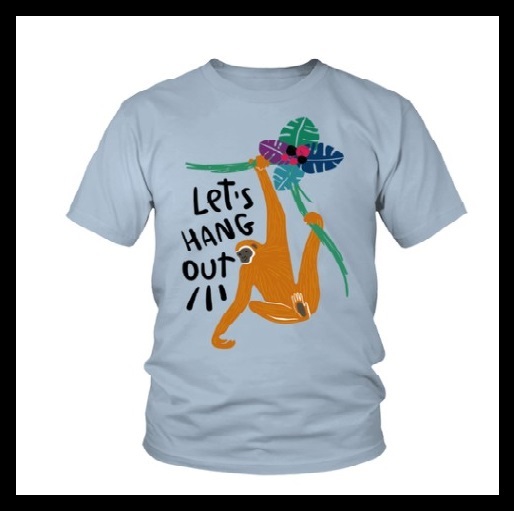
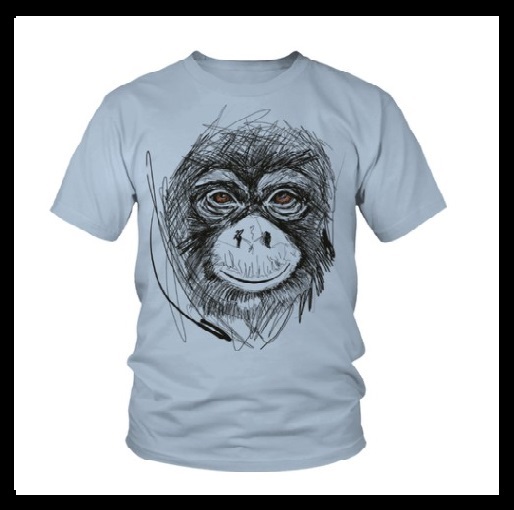
Protect All Wildlife are supporting LWC continue their amazing work by selling these unique Ltd Edition tops to raise funds.
Please help @LimbeWildlife rescue, rehabilitate & release primates & other animals orphaned by the illegal bush meat and pet trades. These beautiful Ltd Edition tops are available in a variety styles & colours at https://teezily.com/stores/limbe-wildlife-centre…. All profits help this wonderful charity.
The Kangaroo Island Wildlife Park has been overwhelmed by the kindness, good wishes and support from the Australian and international community for the wildlife icon, the Koala.
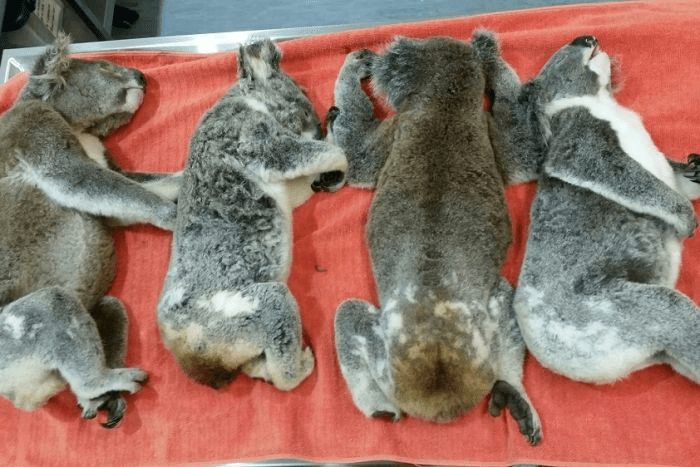
At least 25,000 Koalas are believed to have died in a horrific wildfire in South Australia that may have devastating consequences for the survival of the species.
Four dead Koalas lie on a vet’s table in Lismore
The fire on Kangaroo Island, which was considered a Koala safe-haven because its population had escaped a devastating chlamydia epidemic, was described as “virtually unstoppable” on Saturday by firefighters.
Koala rescuer Margaret Hearle stated that another important Koala population, nicknamed “the gene pool” because of its good health, had been “wiped out” in Crestwood, New South Wales.
Due to the recent tragic bushfires, the Kangaroo Island Wildlife Park has received a lot of concerned phone calls and messages regarding the impacted wildlife from these fires.
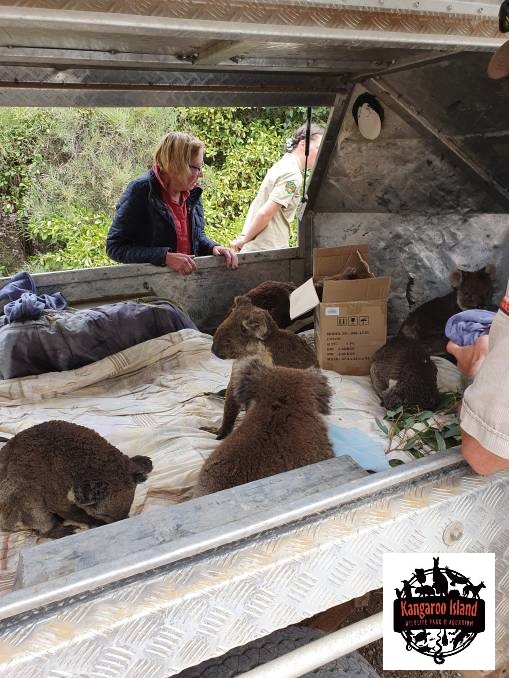
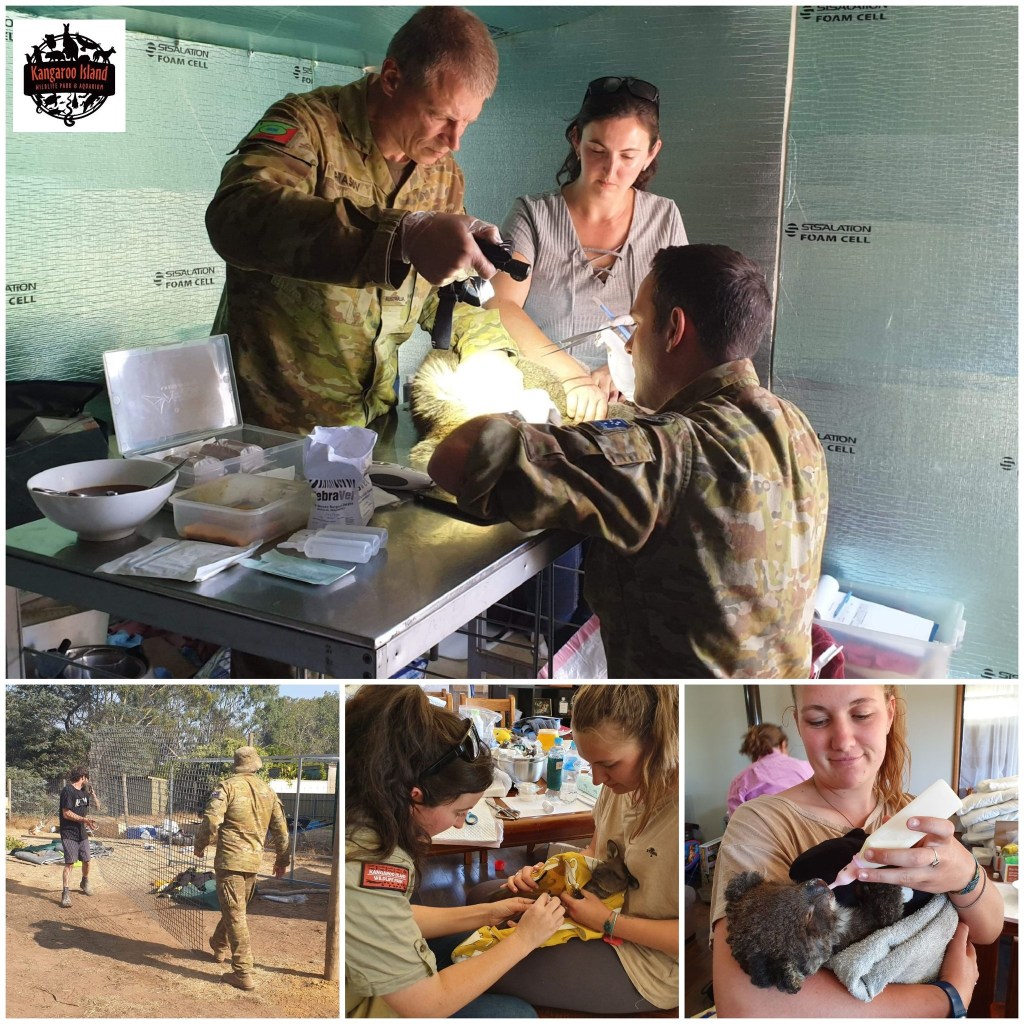
Over the past few days they have started to see a large number of injured Koalas, along with other native species heavily impacted by this event. They have been treating these victims as best they can to supply pain relief, antibiotics, treatment to wounds and basic husbandry requirements. They spent most of January 3rd building extra holding enclosures as well as defending the park from the immediate threat of the fire and will continue to prepare more infrastructure to house the extra wildlife they expect to see over the coming weeks.
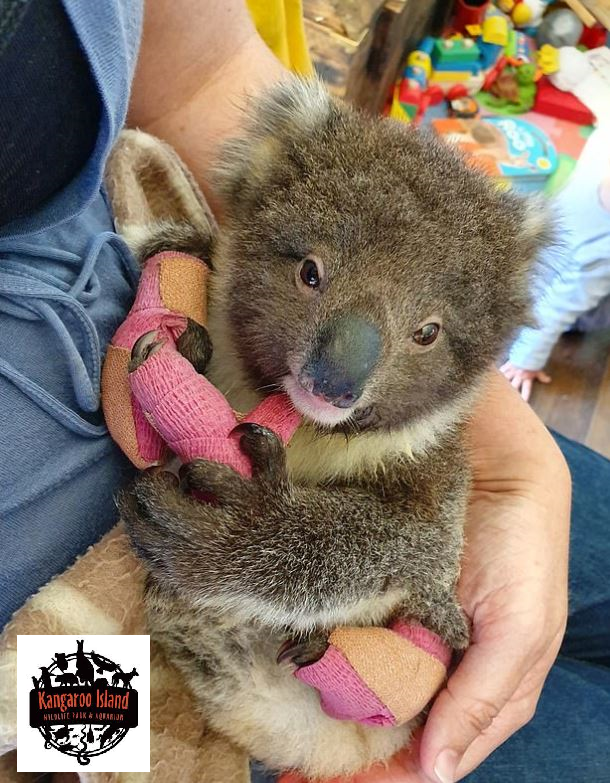
A KOALA RECOVERS AT THE KANGAROO ISLAND WILDLIFE PARK
They need much-needed funds to help with veterinary costs, Koala milk and supplements, extra holding/rehabilitation enclosures, as well as setting up a building to hold supplies to treat these animals.
Donations go directly towards the Koalas and other wildlife that they have coming in from the fires for their care, triage and ongoing treatments, housing, essential equipment, feed and more.
They are working around the clock with a highly experienced, qualified and dedicated team of volunteers including qualified vets, vet nurses and wildlife carers to rescue, rehabilitate and care for all of the animals coming in from the bushfires.
Sam Mitchell, owner of Kangaroo Island Wildlife Park
On admittance to the unit, all efforts are made to rehydrate, treat and assess the wildlife by their vet care team. Many are being treated for severe burns with most burns being to their hands, feet and rumps.
They are providing the best care possible for our injured wildlife and due to the significant habitat loss they will be building exhibits to hold the treated Koalas until arrangements can be made to release them back into the wild where possible.
SOME OF THE KOALAS WHO SURVIVED THE FIRES IN THE RECOVERY UNIT
Kangaroo Island is well known for its thriving Koala population however over 150,000 hectares has been lost due to recent events, this will effect our Koala population dramatically. We ALL need to pull together to save this Australian icon. Once conditions improve and they are granted access to fire ground, a qualified team will be going out to rescue wildlife caught in the fires and relocate those left without a food source or home.
PLEASE HELP RAISE MUCH-NEEDED FUNDS FOR THE KANGAROO ISLAND WILDLIFE PARK
To help raise funds for this vital project we are donating ALL proceeds from the sale of Badges, Brooches, Car Stickers, Tote Bags, Jewellery and Conservation Packs to help the Kangaroo Island Wildlife Park treat animals affected by the #AustralianFires.
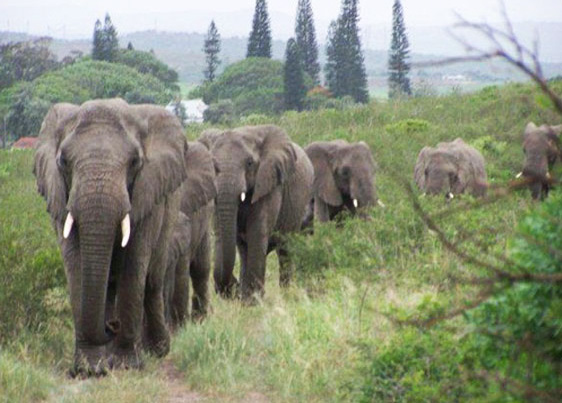
When South African conservationist Lawrence Anthony was asked to accept a herd of 7 ‘rogue’ and ‘trouble-making’ Elephants on his reserve at Thula Thula in 1999, his common sense told him to refuse. But he was the herd’s last chance of survival – notorious escape artists, they would all be killed if Lawrence wouldn’t take them. He agreed, but before arrangements for the move could be completed the animals broke out again and the matriarchand her baby were shot. The remaining Elephants were traumatised and very angry. As soon as they arrived at Thula Thula they started planning their escape.
As Lawrence battled to create a bond with the Elephants and save them from execution, he came to realise that they had a lot to teach him about love, loyalty and freedom. Set against the background of life on the reserve, with unforgettable characters and exotic wildlife, he wrote The Elephant Whisperer, a book that appealed to animal lovers worldwide.The original herd of 7 Elephants has now increased to 29 Elephants, the maximum sustainable capacity of Thula Thula.
In March 2012, Lawrence Anthony passed away. His family spoke of a solemn procession of elephants that defies human explanation.
For 12 hours, two herds of wild South African elephants slowly made their way through the Zululand bush until they reached the house of Lawrence Anthony. The formerly violent, rogue elephants, destined to be shot a few years ago as pests, were rescued and rehabilitated by Lawrence.
They stood around the house in an apparent vigil for two days, and then dispersed.
“They had not visited the house for a year and a half and it must have taken them about 12 hours to make the journey,” Lawrence’s son Dylan said. “The first herd arrived on Sunday and the second herd, a day later. They all hung around for about two days before making their way back into the bush.”
But how did the elephants know Lawrence had died?
“A good man died suddenly,” says Rabbi Leila Gal Berner, Ph.D., “and from miles and miles away, two herds of elephants, sensing that they had lost a beloved human friend, moved in a solemn, almost ‘funereal’ procession to make a call on the bereaved family at the deceased man’s home.”
“If there ever were a time, when we can truly sense the wondrous interconnectedness of all beings, it is when we reflect on the elephants of Thula Thula. A man’s heart’s stops, and hundreds of elephants’ hearts are grieving. This man’s oh-so-abundantly loving heart offered healing to these elephants, and now, they came to pay loving homage to their friend.”
Elephants Travel 12 Hours To Attend A Vigil For The Man Who Rescued Them
Thanks to the local community, Thula Thula has the opportunity to add a further 3500 hectares of land to increase their habitat. This solution requires 35 km of electric fencing as well as roads, increased security, guard training, security equipment and vehicles, conservation, land management and the list just go on, to keep the wildlife safe. Community projects such as this, not only support the wildlife but also improve local employment and education.
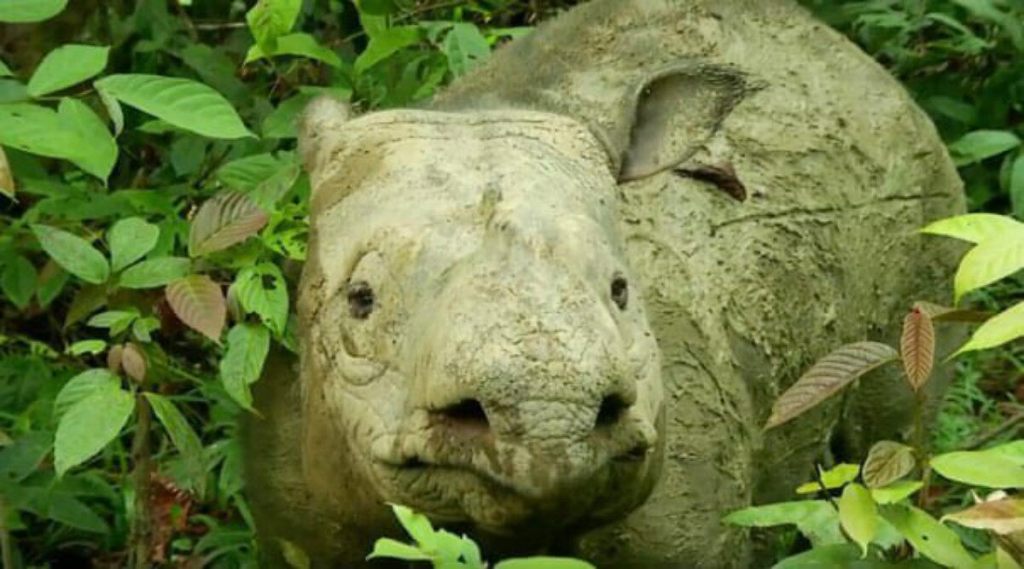
With the death of Iman, Malaysia has lost its last Sumatran Rhinoceros today.
She had
been battling an illness prior to her death.
According to the Sabah Wildlife Department, Iman died at 5.35pm of natural causes, categorised as shock.
Iman, Malaysia’s Last Sumatran Rhino Has died.
“Iman’s
death came sooner than we had expected. “But we knew that she was starting to
suffer significant pain from the growing pressure of the tumours into the
bladder,” said Augustine Tuuga, director of Sabah Wildlife Department in a
statement.
The statement added that veterinarian at Borneo Rhino Sanctuary Dr Zainal Zahari Zainuddin, had earlier today suggested to start using morphine tomorrow, as other painkillers were becoming insufficient.
The Sabah
Wildlife Department had hoped that it would still be possible to obtain some
egg cells from Iman for the proposed Malaysia-Indonesia collaboration on this
species.
But the
signing of a Memorandum of Understanding is still pending.
It was
reported that State Tourism, Culture and Environment Minister Datuk Christina
Liew had said the state government is hoping to expedite the legality process
with Indonesia to fertilise Iman’s egg with the republic’s male Rhino and
surrogate female Rhino.
“I would
like to inform our counterparts in Indonesia that I am keen to pursue the MoU.
Iman’s death is a tragedy, but this is one event in a bigger picture.
“There are
still ways in which our twin countries can usefully collaborate based on our
different experience over the past decade.
“For Sabah
that includes management of female Sumatran Rhinos with reproductive pathology,
safe harvesting of gametes from living Rhinos, and cell culture. Iman and Tam
both live on as cell cultures in Malaysia,” said Liew.
Despite
knowing that Iman’s death was imminent, Liew said she was still very saddened
by this news.
“Iman was
given the very best care and attention ever since her capture in March 2014
right up to the moment she passed.
“No one
could have done more. She was actually quite close to death when sudden massive
blood loss from the uterine tumours occurred on several occasions over the past
few years,” she added.
In addition, Liew said the team at Tabin Wildlife Reserve provided round-the-clock intensive support and successfully brought her back to good health and egg cell production on several occasions.
On
Wednesday, the 25-year-old Iman was reported as deteriorating from
non-malignant tumours.
The tumour has been with her since her capture and had spread to her urinary bladder.
They are the country’s icon – but behind the dazzle of religious festivals, these giants of the wild are painfully abused in Kerala.
When Audrey Gaffney first read about Raju, an Elephant kept in chains with spikes embedded in his ankles, she couldn’t stop the tears pouring down her face. “In fact, I cried again and again: I found over the next few days I just couldn’t get this story out of my head, I couldn’t stop thinking about Raju,” she recalls.
“I couldn’t believe the cruelty of my race.”
The young Elephant had been snatched from his family, she
explains – his mother either would have been killed or spent weeks searching
and crying for him – and he was beaten into submission. Raju then spent the
next 50 years forced by his handler to beg in the street, starved, frightened
and suffering infected wounds to his flesh. By the time of his rescue, he had
resorted to eating plastic and paper.
Going on to discover that Raju was just one of thousands of
Elephants treated this way in India, Ms Gaffney, a single mother from
Liverpool, was spurred into becoming an activist for the first time. In the
four years since, she says, her life has changed beyond recognition as she
dropped her wariness of social media and teamed up with other volunteers
working to raise awareness of the horrors to which the temple Elephants of
India are subjected.
Taken from their families in the wild, shackled, beaten,
whipped and exploited like slaves, these Elephants – ironically India’s icons –
are painted and dressed in colourful decorations, to be paraded in regular
festivals and processions organised by religious temples.
They are the world’s forgotten Elephant victims of mankind. While the world has focused on the threat of extinction to Africa’s Elephants caused by the ivory poaching crisis and the cruelty of tourist Elephant rides in Thailand and Cambodia, the plight of their captive counterparts in India has remained largely hidden from public gaze.
Fed the wrong diets, Kerala’s Elephants suffer malnourishment (Action for Elephants UK)
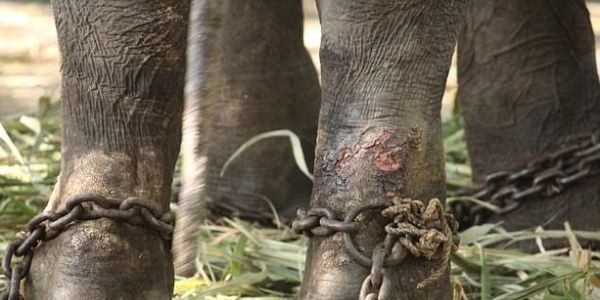
Photographs and videos posted online have shown how, away from the glitz of the festivals, these sensitive, intelligent and naturally sociable creatures are tied to the spot by ropes or chains that eat into their skin and inflict agonising injuries to their legs; they are hit with metal rods or bull-hooks – sharp tools – and “trained” with punishments to hold their heads high.
When the six-month festival season begins in December, they are forced to walk for miles in searing heat on hot, stinging tar roads and ridden into processions noisy with crowds and fireworks – terrifying for a creature whose home is the forest. While still shackled in chains they are made to run races or carry people and are subjected to “painful and unnatural” “head-lifting” competitions.
Some Elephants are carted from one festival to another – in
some cases hundreds of miles – and despite suffering sometimes infected wounds
from the chains, are ridden in searing temperatures by people who apparently
see no harm in what they do.
The southern coastal state of Kerala has the highest number of festival Elephants, about 500 out of 3,500-4,000 across the country. Action for Elephants UK (AfE) brands Kerala “ground zero for elephant torture” and has called their illegal treatment “the worst case of animal cruelty in the world”. The plight of the 150 captive elephants in neighbouring Tamil Nadu is feared to be just as BAD.
Footage posted by local group Kerala Suffering Elephants (KSE) reveals how an Elephant named Gurvayur Nandan was paraded at a festival until dawn, before being transported for eight hours standing on the back of a truck in the scorching sun for eight hours without rest to a separate event that ran until midnight.
Malnourished and deprived of medical care, captive individuals of the endangered species rarely survive this “unrelenting neglect and torture” for a natural lifespan. The mortality rate in Kerala is shocking: 58 have died in 27 months, and already in 2018, 12 have succumbed, according to KSE. In seven years, the death toll is 350. “There could be no more damning proof of the hellish conditions and treatment meted out to these Elephants,” says Maria Mossman, founder of AfE.
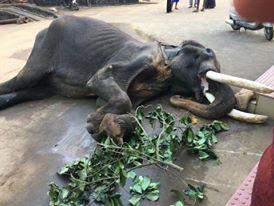
Elephants are shackled in heavy chains that wound the flesh (Action for Elephants UK
For all the abuse, injuries and mental torment, it’s not the pain or infections that usually kills them early, it’s “intestinal impactions”: a blocked colon caused by being fed the wrong diet and insufficient quantities of water. The condition means they die “a miserable and painful” early death.
Campaigners have had enough. Gathering outside the Indian
High Commission in London, they staged a protest to draw the attention of the
New Delhi government and the world at large to the animals’ plight. Wearing
large Elephant masks and waving placards, they came from a variety of
backgrounds; some had travelled hundreds of miles to be there.
What unites these women – and yes, the campaigners are
nearly all women – is a shared abhorrence of the “abuse and torture”. They
adamantly deny attempting to interfere with religious culture.
“Temple Elephants are not part of any tradition,” explains
Ms Mossman.
Their use in temples and festivals is not part of Indian
culture, nor do Hindu scriptures anywhere say that Elephants should be used in
temple rituals. On the contrary, the barbaric treatment of these elephants goes
completely against the core beliefs of Hinduism”
In fact, the cruelty behind Kerala’s rituals is thought to
have begun about a century ago as India’s nouveaux riches started to buy
Elephants to flaunt their wealth. Denise Dresner, a co-organiser of AfE,
recalls the heart-wrenching moment that opened her eyes to the scale of the
problem: “In 2013 I saw a video by Peta of Sunder the temple Elephant being
beaten. This was something I’d never witnessed before.
“An Elephant was on its side on the ground, struggling to
get up. His feet were shackled and he was being beaten violently by several
men, over and over again. He kept struggling, unable to get away from the blows
raining down on him. I learned later he had been kept in a dark shed and beaten
incessantly for seven years.
“That moment of seeing him being beaten and tortured was
seared into my brain and heart. It’s an image that will never leave me, one
that shows the extremes of human violence and brutality towards other living
beings. The unspeakable cruelty perpetrated on these majestic, sentient and
highly intelligent creatures must end.”
For Maria Harper, another protester, it’s the duration of
the suffering that is worst. “What upset me most was when I realised the length
of time the temple and festival Elephants suffer,” she says.
“They can endure cruelty and abuse for more than 50 years –
if they are unfortunate enough to survive that long. It’s a life sentence”
Seeing the photos and hearing the accounts is harrowing. But
Ms Mossman says it’s vital if their welfare is to improve. “The world needs to
know how handlers use banned weapons and restrain them with heavy shackles,
often tightened so severely that they cut through the flesh, causing raw
bleeding wounds that are seldom treated. “They are often forced to stand in the
same position 24/7, in their own urine and excrement, suffering from foot rot.
They are beaten and tortured time and again.”
Some mahouts think nothing of whipping an Elephant to make
it bend to his will, such as climbing into a truck. But the abuse doesn’t end
there.
Most of Kerala’s captive Elephants are bulls. When they
enter their annual musth – mating season – their testosterone levels and energy
surge, so the mahouts tighten their shackles further until the creatures are
unable to move. In addition, food and water are restricted to weaken them.
But then comes the cruellest torture yet. Several men, often
drunken, beat the chained Elephant for up to 72 hours relentlessly. The
practice is based on a superstitious belief that the Elephants may have
forgotten their commands during their musth, and is designed to break the
Elephant’s spirit, “reminding him that his masters are in control”.
All bull Elephants in Kerala undergo this horror every year.
These practices are banned by the Prevention of Cruelty to
Animals Act 1960 and the Wildlife Protection Act 1972, but campaigners point
out that the laws are routinely ignored.
Elephants are paraded with no ownership papers or parade certificates, or with fake fitness certificates, breaking the Wildlife Protection Act 1972, which says they cannot be exploited for profit, AfE says. Recent laws banning the use of disabled, sick or pregnant elephants in festivals are also ignored.
“The plight of these Elephants is arguably the worst case of
animal abuse in the world. The suffering that temple Elephants endure is
unimaginable”
“India has very good laws, but they are ignored daily and
the abusers go unpunished,” says Ms Mossman. “Not only are Elephants
intelligent and sentient beings, they are an endangered species. It is the duty
not only of India to enforce the laws to protect them, but of the world to hear
their cries of suffering and respond to end the brutality against them.”
She and KSE agree that making profits and keeping the status
quo are at the root of the problem. “These sentient animals are seen only as
commodities, earning huge sums of money for their owners and the temples,” says
Ms Mossman. “Exploited under the veneer of culture and religion, they are big
business. Everyone, from the chief minister downwards, has a stake.”
The 3,000 temples that rent out Elephants to festival
organisers are run by four devaswom (socio-religious trusts), appointed by the
state government, and each temple earns many millions of rupees from festivals.
Any Elephant that makes it beyond 60 is purposely neglected
and abused – treated as a disposable item – so the owners can make hefty
insurance claims, according to AfE.
Sangita Iyer, who was born and raised in Kerala and made an
award-winning 2016 film, Gods in Shackles, revealing what goes on behind the
scenes at the festivals, is convinced greed is to blame.
“Elephants are allowed to die so the owners can receive the pay-outs.
There’s a whole insurance industry surrounding this, in which the owners and
brokers make the most profit.”
A dead tusker that suffered intestinal blockages is covered
with a cloth. Most captive elephants die young after years of pain (Action for
Elephants UK)
According to India’s Wildlife Rescue and Rehabilitation Centre, which in 2014 petitioned the Supreme Court of India to order better conditions for the animals, another factor is young men showing off. “Today’s mahouts are in it for the glamour and the thrill. Unlike the mahouts of the old, who learnt the ways of handling the Elephants over time, these guys know only oppression and violence,” one rescuer says.
Nor does Ms Iyer particularly blame festival-goers. “Most
people are unaware of the crushing burden these Elephants carry, in the literal
sense, on their backs, and in their hearts and souls. Most people don’t realise
the brutality that these sentient beings undergo to entertain them. They are so
hypnotised by the majestic, ornate Elephants and lost in their own selfish
world that they don’t even look at the raw bleeding ankles.”
However bad the suffering of the individuals, the abuse has
wider repercussions. KSE warns it could even lead to the extinction of Indian
Elephants.
“As each of these Elephants die from overwork, intestinal
impactions etc, the surviving ones are going to be overworked even more. It’s a
vicious cycle and will probably end only when there are no Elephants left”
Taking young Elephants from the wild has a serious impact on
wild Elephant populations in India and elsewhere, activists fear. People’s
lives, too, are being put at risk. Some elephants, driven frantic by their
suffering, break free and run amok. Behind media reports of people being killed
by a rampaging Elephant there almost always lies a story of a brutalised
animal.
There have also been 300 incidents of Elephants running amok
in the first three months of this year. Earlier this month there were
unconfirmed reports of Elephants running amok at festivals in Ernakulam and
Kollam districts. Unofficial counts put it at 20 incidents in one week.
Action for Elephants is warning prime minister Narendra Modi
these rituals are not just harming the country’s most iconic wildlife, but also
India’s multi-million-pound tourism industry and reputation. “We hope tourists
and visitors to India will make ethical choices and will shun all forms of
Elephant tourism that use elephants in any unnatural way, whether in festivals
or for trekking or rides or any other purpose,” a statement by the group says.
“In this day and age, when we have gained so much knowledge about the intelligence, emotional capacity, and social bonds of these majestic creatures, and when we know how endangered they are, we believe that all countries have a duty to protect them, treat them humanely, and give them sanctuary.”
India is positioned to take a global lead in ethical
wildlife tourism, the letter says.
As long as the current system of cruelty is allowed to
continue, the more it will negatively impact India’s tourism and tarnish
India’s reputation and image in the world
Signatories include primatologist Jane Goodall, TV star
Michael Palin, author Jilly Cooper, TV presenter Anneka Svenska and radio
presenter Nicky Campbell, as well as MP Zac Goldsmith.
Filmmaker Ms Iyer believes educating the public is the only
way to achieve change. “Ignorance and arrogance make for a bad potion, and
unless and until we are able to create attitude shifts in the public eye,
there’s little hope for these sentient beings.
“There is no point in fighting the owners or brokers.
Enlightening the people is the only way to stop the audience from participating
in festivals that use live Elephants and reduce demand for such cultural
festivals. When the demand dies down, the Elephants will be ultimately phased
out.”
The Indian High Commission in London did not respond to a
request by The Independent to comment and refused to send anybody to open the
door when visited in person.
There are some glimmers of hope, however. Occasionally, news
of progress made by welfare workers on the ground emerges, and an elephant
rescue can become a stand-out memory for followers. The film that startled Ms
Gaffney was called Raju the Elephant Cried on the Day he was Released from
Chains. His rescue made headlines.
Ms Dresner says she followed each step in a protracted legal case to free Sunder with her heart in her throat. “Finally, when he was freed, the joy was overwhelming. Like so many others, I then followed his progress in his new home at Bannerghatta Biological Park, crying (happily) with every bit of good news: his healing leg, his first swim in the pond, his making new friends, his putting weight on his skeletal frame.”
Fellow demonstrator Joanne Smith agrees. “The terrible
delays with the court case were so hard to take but the day Sunder was given
his freedom was thrilling,” she recalls. “It proved to me that we can make a
difference with hard work and determination.”
In the past two years, three temples have done away with
renting Elephants for festivals. One used mechanical stand-in; another used an
8ft dummy made of plaster of Paris and bamboo. Organisers say they may even
offer the model to neighbouring temples for their own festivals, allowing the
idea to catch on.
The London protest and letter also have the support of
Absolutely Fabulous star Joanna Lumley, whose message was: “One of the most
influential Indians of all time, Mahatma Gandhi, said: ‘The greatness of a
nation and its moral progress can be judged by the way its animals are treated.’
“India! Listen to his words and implement them. The world
supports your laws against cruelties to temple Elephants, but only you can
ensure that they are enforced.”
And that, say campaigners, really would be worth a
celebration.















 PROTECT ALL WILDLIFE