Another
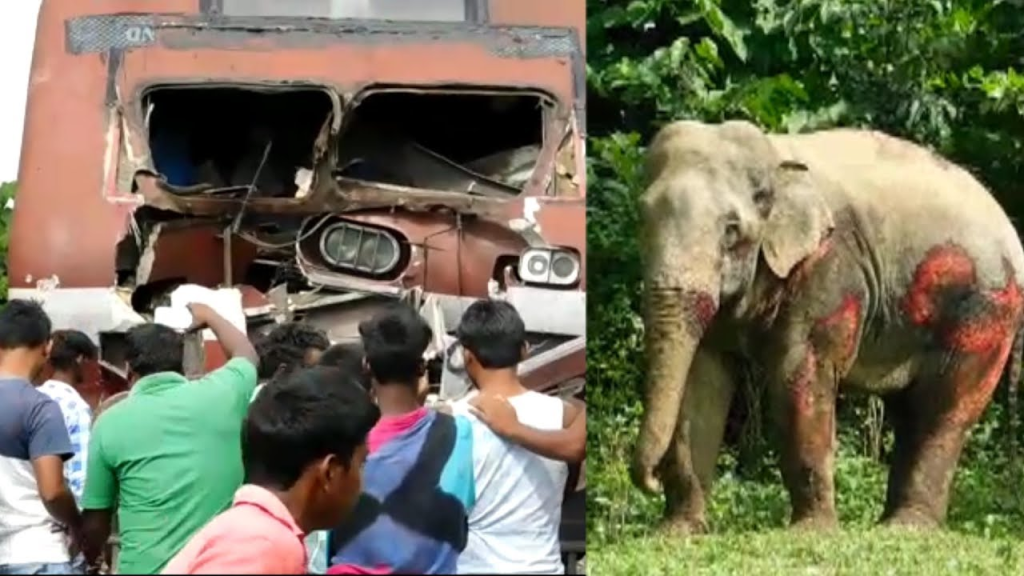
man-animal conflict story was reported in West Bengal when a train engine hit
an Elephant trying to cross the tracks, critically injuring the animal.
The
incident happened in the Jalpaiguri district of the state.
The
Banarhat-Nagrakata train route passes through a major Elephant corridor often
leading to such tragic accidents involving Elephants.
The heart-wrenching video that surfaced on various social media platforms showed the critically injured Elephant trying hard to drag itself out of the railway track, as people watched in helplessness, after being hit by the engine of the intercity express.
The video
shows the impact of the injury on the poor animal while people watch
helplessly. In 2004, the Dooars line was converted from metre gauge to broad
gauge; a move that saw a sharp increase in Elephant deaths.
But despite
all the precautionary measures and efforts, such as speed limits and buzzers,
trains on the Dooars route have continued to kill Elephants.
In the
period between 2013 to June 2019, a total of 67 Elephants were killed in
train-related accidents.
Actor Randeep
Hooda said in a twitter post “The agony of the Elephant is quite evident in the
video, the impact can be gauged by the damage to the engine.
I humbly
urge the ministry to drastically reduce speed of trains through this area,
humans can easily manage slight delay to keep wildlife safe”
For the
sake of the Elephants, let’s hope they listen and reduce the speed of trains
through the corridor.
A petition
is being filed asking Indian Railway to review the permitted speed of 50kmph in
the day time in dense forest areas. The maximum speed before the increase was 25kmpg
and had shown a sharp decrease in the accidents and death of Elephants.
This stag had to be put down after being entangled inplastic waste for over a week
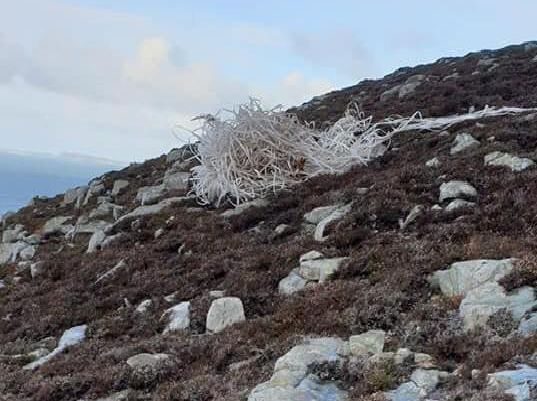
This shocking picture shows a beautiful stag which died after it was found with its antlers wrapped – in a mass of discarded plastic strapping.
The graphic content shows the distressed animal was discovered tangled in the plastic waste on a hillside on the west coast of Jura, Inner Hebrides, on Wednesday.
It is thought the stag had been grazing on seaweed on the idyllic island’s shoreline when the plastic banding caught on his antlers.
He then walked around a mile onto the hillside, where he has been starving for the last week as the plastic was wrapped around his mouth.
The beautiful animal was discovered by shocked gamekeeper, Scott Muir, 32, who said the stag sadly had to be put to sleep.
Scott, who has lived on the island – with a population of just 230 – all his life, said plastic pollution on the coast has increasingly worsened in the last five years.
He said: “I was walking over the estate when I saw the plastic waste and realised there was a stag caught.
“I thought it was dead at first but as I approached it I could see his head start to move.
“These can be 18st animals and I know how powerful they can be, but he looked tired and stressed and he couldn’t see because the plastic was right around his antlers.
“He wouldn’t have been able to graze either as it was right over his mouth, so he was effectively starving.
“He would have been down at the shore grazing on seaweed, like a lot of the stags do, and as he has had his antlers down they have caught in the plastic banding.
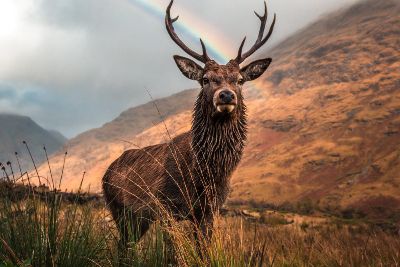
one of jura’s magnificent stags
“It looks like he has then walked about a mile up onto the hillside, no mean feat considering it was tangled around his back leg as well as round his antlers.
“I think he has been there for about a week. In the end the animal had to sadly be put down.”
Scott is also a volunteer with Wild Side of Jura, a group aiming to protect the west coast and raise awareness to stop plans for a potential fish farm being built.
Scott said: “We are a group of five or six volunteers who came together to protect the west coast of Jura and raise awareness of a fish farm which is trying to be built here.
“The plastic pollution is getting worse. We have seen an increase in plastic waste on the west coast in the last five, six years.
discarded plastic waste on jura
“The plastic on the stag is not fishing net but plastic banding which is used in conjunction with fishing.
“We can’t categorically say where it came from but I’d be willing to bet some sort of commercial fishing, fish farm, which is what we are trying to stop on the west coast of Jura.”
Angry locals took to social media to voice their outrage. One said: “That’s shocking, poor animal, the thought of him struggling with that for hours makes me so angry.
“So much plastic out there, it makes it much more of a reality when you see the damage it does so close to home.”
Another said: “Poor thing, what an awful sight. I can’t believe how loosely regulated boats are it’s dreadful.”
Someone else added: “Whoever threw that, and more, overboard obviously do not care about the consequences of their actions
“Out of sight, out of mind. What a terrible plight for an innocent creature.”
Please SHARE to raise awareness to this issue. You can also SUBSCRIBE to receive news and updates straight to your inbox.
Climate change could be to blame for spikes in a deadly virus among otters, seals and sea lions around the Arctic, a new study has suggested.
Phocine distemper virus (PDV) has been common in the northern Atlantic ocean for decades but as a result of melting Arctic sea ice it has now appeared among marine mammals in the northern Pacific ocean too.
When the virus started to spread across species of Otters, Seals and Sea Lions in the northern Pacific Oceans, scientists thought melting ice could be the culprit.
The 15-year study which tracked the animals via satellite found PDV, which can kill some species, was most common in years when so much Arctic ice melted it became possible for mammals to move freely from the Atlantic to Pacific regions.
Sea Otters
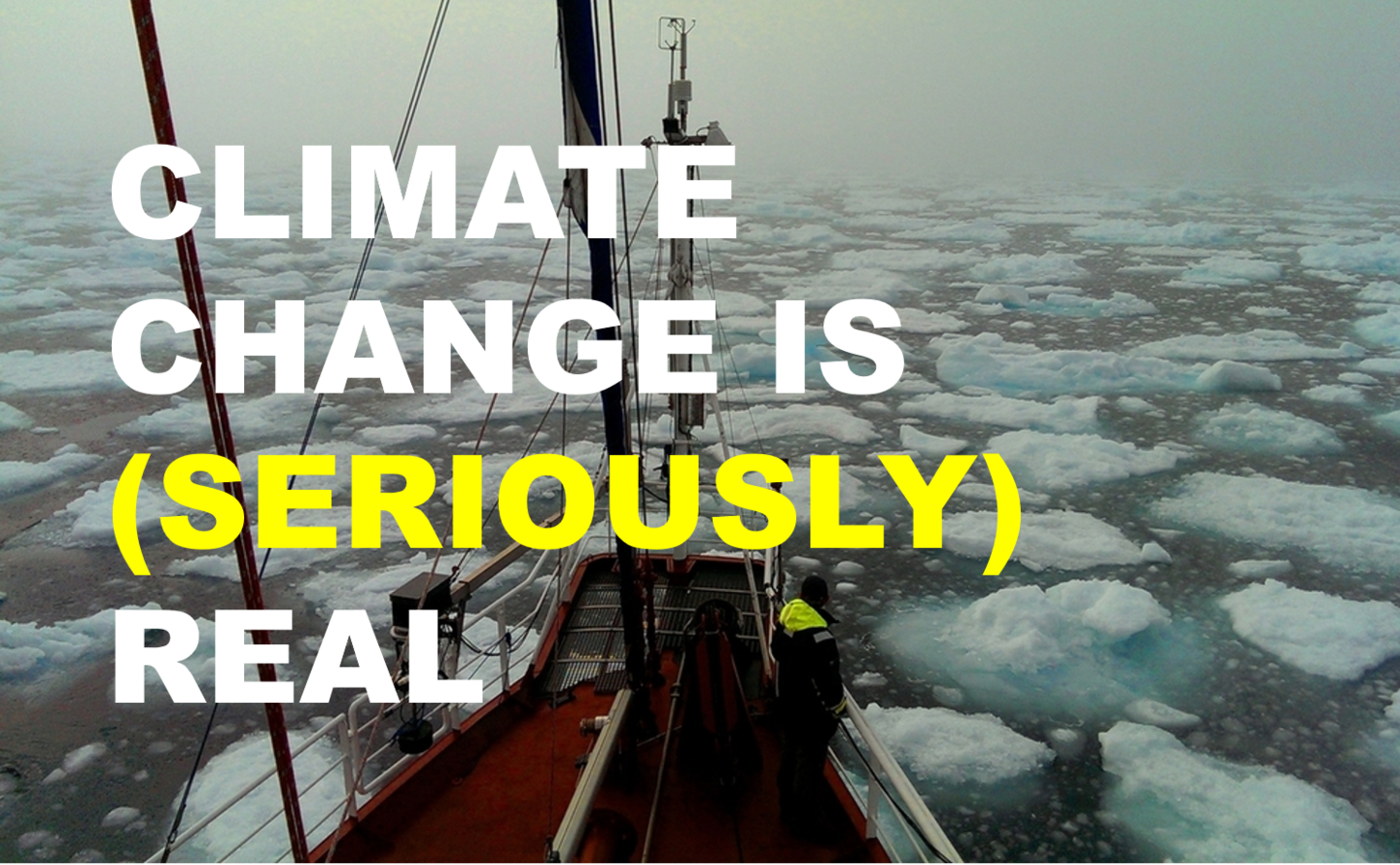
Steadily rising global temperatures due to climate change have meant more and more sea ice is melting around the Arctic, opening up sea lanes which for thousands of years have been impassable.
Between 1979 and 2018, Arctic sea ice declined on average 12.8 per cent each decade, according to the Intergovernmental Panel on Climate Change (IPCC).
“These sea ice changes in September are likely unprecedented for at least 1,000 years,” the IPCC said in a report published in September.
Researchers studied 15 years of data that tracked 2,500 marine mammals in a variety of locations via satellite to find if upticks in PDV matched with declines in sea ice. They also studied measurements of Arctic sea ice over the same time period and examined blood and nasal swab samples from 165 dead ice-associated animals.
Testing showed about 30 per cent of Stellar Sea Lions in the northern Pacific Ocean were infected with the disease, which had previously been mostly confined to Atlantic populations.
Steller Sea Lions swim through waters off the coast of British Columbia. Scientists are concerned that a deadly virus killing Northern Sea Lions could spread farther south as the ice melts, infecting marine mammals off the coast of California.
Researchers concluded that melting Arctic sea ice caused by human-driven climate change paved the way for PDV to spread to new regions and infect new populations of marine mammals, especially along the northern Russian coast and along the coast of northern Canada.
Please SHARE to raise awareness to this issue. You can also SUBSCRIBE to receive news and updates straight to your inbox.
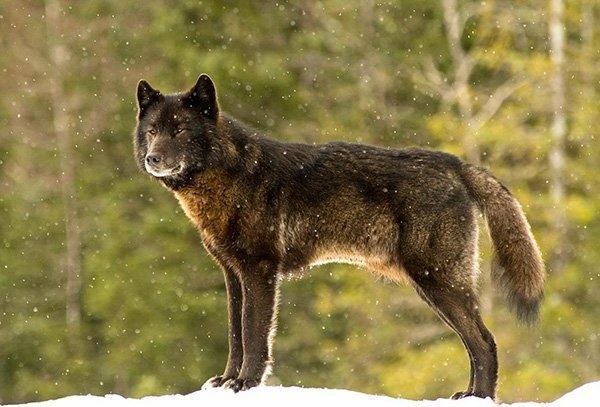
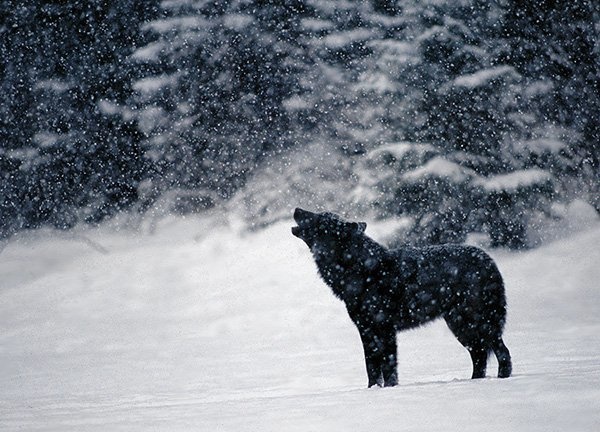
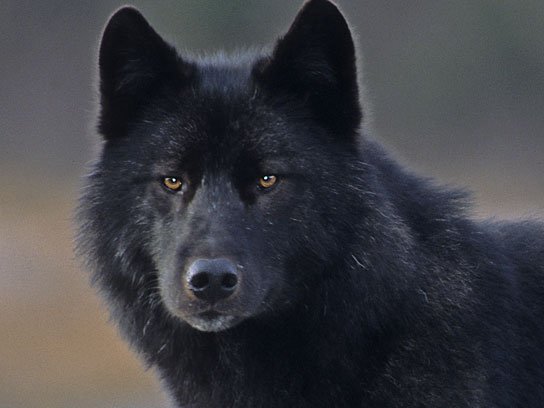
On a twilit night in Juneau, Alaska, in December 2003, and Nick and Sherrie Jans were walking with Dakotah, their yellow Lab, in the Mendenhall Glacier Recreation Area not far from their house. Suddenly, a young black wolf appeared on the ice—and began running in their direction. Awestruck but scared, the couple watched as Dakotah broke loose and charged the predator, which was twice the size of the dog. The animals stopped yards apart and gazed at each other “as if each were glimpsing an almost-forgotten face and trying to remember,” recalled Jans. After a few moments, Dakotah ran back to her owners, and the three hurried home, listening to the wolf howl
The locals named him Romeo, and soon his presence was noted by the entire town. Most found it fascinating that Romeo was so friendly, while others assumed that this naturally predatory animal would give into his natural instincts at any moment, potentially attacking their pets and children.
During this time Nick Jans started documenting Romeo. When he did, he uncovered an emotional story, the heart of which describes the tenuous relationships between wild animals and the humans around them.
“The first thing I saw was tracks out on the lake in front of our house on the outskirts of Juneau,” Jans said in an interview with National Geographic. “A few days later, I looked out from my house and there was this wolf out on the ice. I’d had 20 years of experience around wolves up in the Arctic and immediately knew it was a wolf, not a dog. I threw on my skis and found him.”
ROMEO
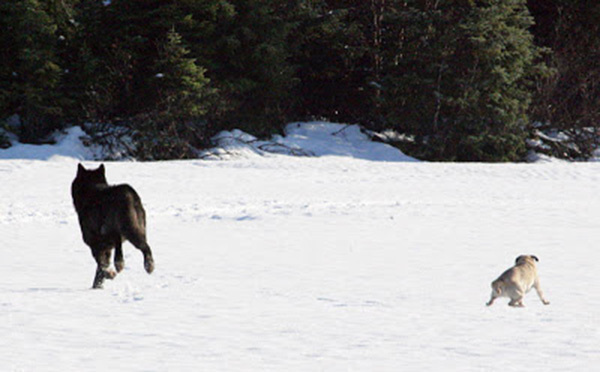
According to Jans, Romeo seemed totally relaxed and friendly.
And it wasn’t just one interaction, either: Romeo remained his curious, friendly self for the better part of six years.
“For want of a better word,” Jans said, “The only thing I can say from a human perspective is that it amounted to friendship. If you wanted to be scientifically correct, it would be “social mutual tolerance.” But it was more than that. The wolf would come trotting over to say hi, and give a little bow and a relaxed yawn, and go trotting after us when we went skiing. There was no survival benefit. He obviously just enjoyed our company.”
Romeo’s behavior was definitely unusual, as many wolves tend to assert dominance by attacking dogs and other animals.
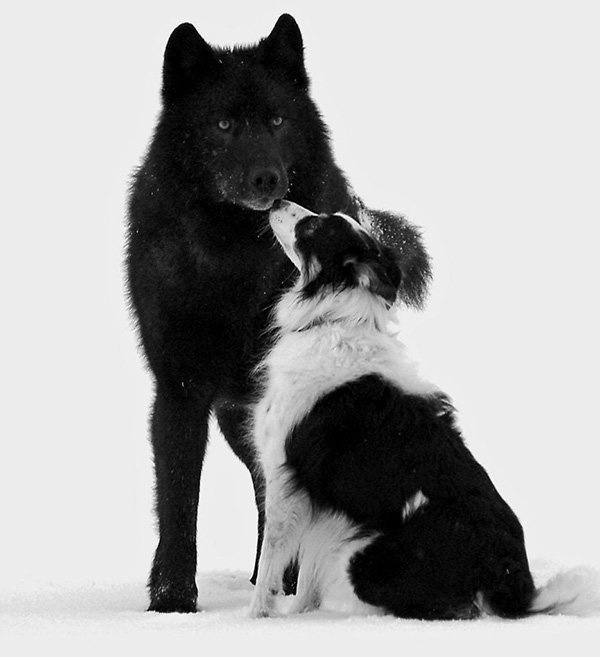
The wolf got his name because Jans and his family noticed how Romeo was kind of a flirt — particularly with their “Juliet,” a dog named Dakotah. Here, they’re standing nose-to-nose in what seems to be an all-too-perfect photo moment.
Romeo survived for years despite many mortal threats: scented traps, busy roads, illegal hunting, and even a poisoning attempt. He also had to contend with the natural dangers of starvation, injury, and attack by another pack of wolves. By almost any standard, his prolonged proximity to humans and dogs constituted incredibly rare behaviour. There was no obvious survival benefit to his socializing, yet the wolf lingered persistently, a late echo of the original process that must have initiated the domestication of dogs.
“When you get down to the genetic difference between a wolf and a domestic dog, whether it is a Chihuahua or a Great Dane, all dogs are 99.98 percent genetically a wolf. That 0.02 percent obviously looms huge, because if you raise a wolf cub from the time it opens its eyes, it may make a wonderfully bonded animal, but it will not be a dog, no matter what you do. It will act like a wolf and be a wolf. It takes generations to shape the soul of a wolf and its physical shape into man’s best friend.”
Romeo stayed in the area for as long as he lived — and he lived three times longer than most wild wolves do.
“Romeo was the single most transformative event of my life,” Jans said. “The amazing thing was Romeo’s understanding. It wasn’t just our understanding and tolerance. It was the combination of his and ours and the dogs’. We were these three species working out how to get along harmoniously. And we did.”
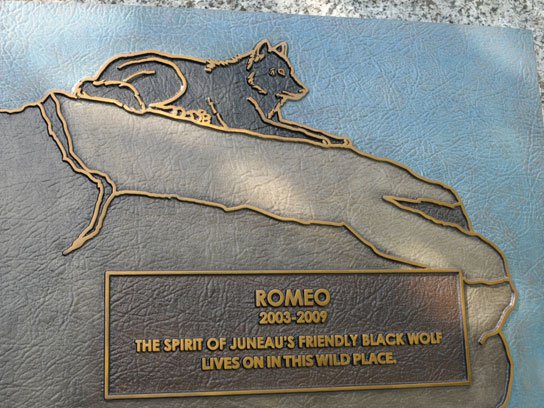
What happened to Romeo? Romeo disappeared in late September 2009. After some sleuthing, a supporter found he had been shot and killed by Juneau resident Park Myers III and his Pennsylvanian friend Jeff Peacock. Both men were arrested and ended up paying fines, serving a few years on probation, and losing hunting and fishing privileges for a limited time. In late November 2010, a memorial service was held for Romeo and this plaque was laid along a path where he once roamed.
“Nothing can take away the miracle that was Romeo and the years we spent in his company,” writes Jans. “Love, not hate, is the burden we carry.”
Nick Jans’ beautiful account of his unusual relationship is now in a book called A Wolf Called Romeo.
Please SHARE to let others read this beautiful but tragic story. You can also SUBSCRIBE to receive news and updates straight to your inbox.
Protect All Wildlife are advocates for wildlife and expose animal abuse and abusers wherever in the world they are. We will NEVER stop fighting for better animal rights and welfare.
We are proud to have financially supported charities like DSWT, Thula Thula Wildlife Rehabilitation Centre, Lion Aid, The Orangutan Foundation, Elephantopia and PupAid through taking part in sponsored runs, skydiving and abseiling events.
Proceeds from sales go towards my various fundraising activities for animal charities. To date Protect All Wildlife have raised over £25,000 for animals.
The Late Lawrence Anthony With Two Of The Original ‘Rogue’ Elephants
Elephants had never been part of Lawrence Anthony’s plan for Thula Thula, but in 1999 he was telephoned by a conservation organisation which asked whether he would be willing to take on a herd of nine animals which had escaped from every enclosure they had ever been in, wreaking havoc across KwaZulu-Natal, and were considered highly dangerous. Realising that the Elephants would be shot if he declined, Anthony agreed to give them a home.
But he was the herd’s last chance of survival – notorious escape artists, they would all be killed if Lawrence wouldn’t take them. He agreed, but before arrangements for the move could be completed the animals broke out again and the matriarch and her baby were shot. The remaining Elephants were traumatised and very angry. As soon as they arrived at Thula Thula they started planning their escape.
“They were a difficult bunch, no question about it,” he recalled. “Delinquents every one. But I could see a lot of good in them too. They’d had a tough time and were all scared, and yet they were looking after one another, trying to protect one another.”
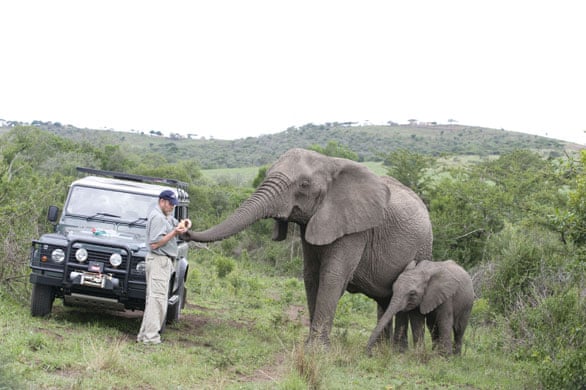
Lawrence decided to treat the Elephants as errant children, working to persuade them, through words and gestures, that they should not behave badly and that they could trust him. He concentrated his attention on Nana, the matriarch of the herd: “I’d go down to the fence and I’d plead with Nana not to break it down,” he said. “I knew she didn’t understand English, but I hoped she’d understand by the tone of my voice and my body language what I was saying. And one morning, instead of trying to break the fence down, she just stood there. Then she put her trunk through the fence towards me. I knew she wanted to touch me. That was a turning point.” Soon they were allowed out into the reserve.
As Lawrence battled to create a bond with the Elephants and save them from execution, he came to realise that they had a lot to teach him about love, loyalty and freedom. Set against the background of life on the reserve, with unforgettable characters and exotic wildlife, he wrote The Elephant Whisperer, a book that appealed to animal lovers worldwide.
The Elephant Whisper
After his death, Lawrence’s beloved Elephants came to his house to say goodbye.
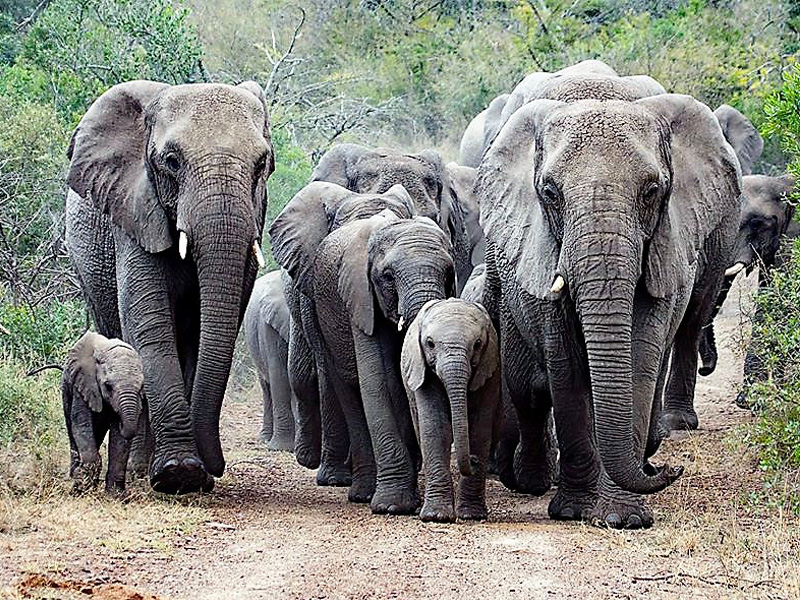
When Lawrence died at the age of 61 in 2012, two herds of wild South African Elephants slowly made their way through the Zululand bush until they reached the house of late author, the conservationist who saved their lives. The formerly violent, rogue Elephants, destined to be shot a few years ago as pests, were rescued and rehabilitated by Anthony, who had grown up in the bush and was known as the “Elephant Whisperer.” For two days the herds loitered at Lawrence’s rural compound on the vast Thula Thula game reserve in the South African KwaZulu — to say good-bye to the man they loved. But how did they know he had died? Known for his unique ability to calm traumatized Elephants Lawrence had become a legend. He is the author of three books, Babylon Ark, detailing his efforts to rescue the animals at Baghdad Zoo during the Iraqi war, the forthcoming The Last Rhinos, and his bestselling The Elephant Whisperer. There are two Elephant herds at Thula Thula. According to his son Dylan, both arrived at the Anthony family compound shortly after Anthony’s death. “They had not visited the house for a year and a half and it must have taken them about 12 hours to make the journey,” Dylan is quoted in various local news accounts. “The first herd arrived on Sunday and the second herd, a day later. They all hung around for about two days before making their way back into the bush. “Elephants have long been known to mourn their dead. In India, baby Elephants often are raised with a boy who will be their lifelong “mahout.” The pair develop legendary bonds and it is not uncommon for one to waste away without a will to live after the death of the other.
Elephant’s March To Pay Their Respects To The Man Who Saved Them
What Is The Thula Thula Land Expansion Project For Elephant Habitat?
The original herd of 7 Elephants that Lawrence Anthony rescued in 1999 has now increased to 30 Elephants meaning the maximum sustainable capacity of Thula Thula has been reached!
The Elephants Of Thula Thula
How Can The Long-Term Future Of The Elephant Whispered Herd Be Secured?
Thanks to the local community, Thula Thula has the opportunity to add a further 3500 hectares of land to increase their habitat. This solution requires 35 km of electric fencing as well as roads, increased security, guard training, security equipment and vehicles, conservation, land management and the list just go on, to keep the wildlife safe. Community projects such as this, not only support the wildlife but also improve local employment and education.
For my part, I am doing a 10,000 feet skydive to help raise funds for this project.
By donating to this cause you are helping to secure the future for the Thula Thula Elephants and local communities.
To help secure the long-term future of the Thula Thula Elephants please DONATE at https://t.co/bdiEDD7ljr


















 PROTECT ALL WILDLIFE