A Tragic Wolf Called ‘Romeo’ Was Loved Too Much And Deserved Better.

On a twilit night in Juneau, Alaska, in December 2003, Nick and Sherrie Jans were walking with Dakotah, their yellow Lab, in the Mendenhall Glacier Recreation Area not far from their house. Suddenly, a young black wolf appeared on the ice—and began running in their direction. Awestruck but scared, the couple watched as Dakotah broke loose and charged the predator, which was twice the size of the dog. The animals stopped yards apart and gazed at each other “as if each were glimpsing an almost-forgotten face and trying to remember,” recalled Jans. After a few moments, Dakotah ran back to her owners, and the three hurried home, listening to the wolf howl

The locals named him Romeo, and soon his presence was noted by the entire town. Most found it fascinating that Romeo was so friendly, while others assumed that this naturally predatory animal would give into his natural instincts at any moment, potentially attacking their pets and children.

During this time Nick Jans started documenting Romeo. When he did, he uncovered an emotional story, the heart of which describes the tenuous relationships between wild animals and the humans around them.

“The first thing I saw was tracks out on the lake in front of our house on the outskirts of Juneau,” Jans said in an interview with National Geographic. “A few days later, I looked out from my house and there was this wolf out on the ice. I’d had 20 years of experience around wolves up in the Arctic and immediately knew it was a wolf, not a dog. I threw on my skis and found him.”

ROMEO

According to Jans, Romeo seemed totally relaxed and friendly.

And it wasn’t just one interaction, either: Romeo remained his curious, friendly self for the better part of six years.

“For want of a better word,” Jans said, “The only thing I can say from a human perspective is that it amounted to friendship. If you wanted to be scientifically correct, it would be “social mutual tolerance.” But it was more than that. The wolf would come trotting over to say hi, and give a little bow and a relaxed yawn, and go trotting after us when we went skiing. There was no survival benefit. He obviously just enjoyed our company.”

Romeo’s behavior was definitely unusual, as many wolves tend to assert dominance by attacking dogs and other animals.

The wolf got his name because Jans and his family noticed how Romeo was kind of a flirt — particularly with their “Juliet,” a dog named Dakotah. Here, they’re standing nose-to-nose in what seems to be an all-too-perfect photo moment.

Romeo survived for years despite many mortal threats: scented traps, busy roads, illegal hunting, and even a poisoning attempt. He also had to contend with the natural dangers of starvation, injury, and attack by another pack of wolves. By almost any standard, his prolonged proximity to humans and dogs constituted incredibly rare behaviour. There was no obvious survival benefit to his socializing, yet the wolf lingered persistently, a late echo of the original process that must have initiated the domestication of dogs.

“When you get down to the genetic difference between a wolf and a domestic dog, whether it is a Chihuahua or a Great Dane, all dogs are 99.98 percent genetically a wolf. That 0.02 percent obviously looms huge, because if you raise a wolf cub from the time it opens its eyes, it may make a wonderfully bonded animal, but it will not be a dog, no matter what you do. It will act like a wolf and be a wolf. It takes generations to shape the soul of a wolf and its physical shape into man’s best friend.”

Romeo stayed in the area for as long as he lived — and he lived three times longer than most wild wolves do.

“Romeo was the single most transformative event of my life,” Jans said. “The amazing thing was Romeo’s understanding. It wasn’t just our understanding and tolerance. It was the combination of his and ours and the dogs’. We were these three species working out how to get along harmoniously. And we did.”

What happened to Romeo?                                                                                                   Romeo disappeared in late September 2009. After some sleuthing, a supporter found he had been shot and killed by Juneau resident Park Myers III and his Pennsylvanian friend Jeff Peacock. Both men were arrested and ended up paying fines, serving a few years on probation, and losing hunting and fishing privileges for a limited time. In late November 2010, a memorial service was held for Romeo and this plaque was laid along a path where he once roamed.

“Nothing can take away the miracle that was Romeo and the years we spent in his company,” writes Jans. “Love, not hate, is the burden we carry.”

Nick Jans’ beautiful account of his unusual relationship is now in a book called A Wolf Called Romeo.

WHAT YOU CAN DO TO HELP WILDLIFE

You can support ‘Protect All Wildlife’ by donating as little as £1 – It only takes a minute but it can last a lifetime for an animal in need. Please donate below.

PLEASE CLICK HERE TO HELP ANIMALS IN NEED

Everyone who donates will receive a Certificate of Appreciation as a thank you for helping animals in need.

The Mission of Protect All Wildlife is to prevent cruelty and promote the welfare of ALL animals.

We believe EVERY animal should be treated with respect, empathy, and understanding. We raise awareness to protect and conserve wild, captive, companion and farm animals.

It is vital that we protect animals against acts of cruelty, abuse, and neglect by enforcing established animal welfare laws and, when necessary, take action to ensure that those who abuse animals are brought to justice.

Protect All Wildlife are involved in many projects to protect animals’ rights, welfare, and habitats. Money contributed to Protect All Wildlife supports ALL of our worthy programmes and gives us the flexibility to respond to emerging needs. Your donations
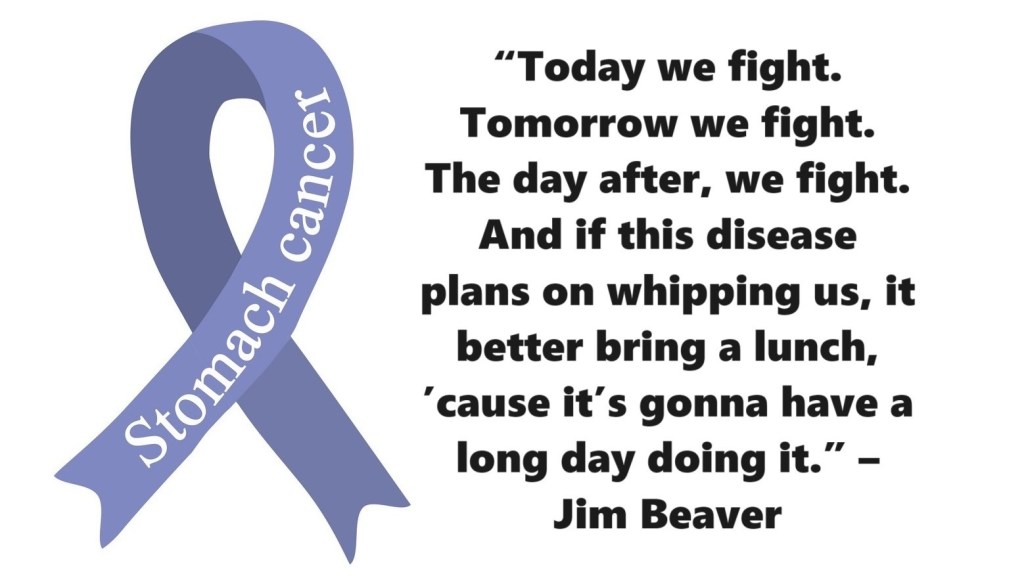
From Long-Covid To Stage 4 Stomach Cancer: An Appointment That Turned My Life Upside Down.

The False Beginning

It all started in October 2022 (although it almost certainly started long before then) when I caught Covid. I woke up one morning to feel my face all swollen up and feeling terrible. As a nurse, I took the obligatory LFT test which immediately went positive ~ I had Covid! Because I worked with vulnerable patients I had to have at least 10 days off and only return to work after having negative LFTs on two consecutive days. I felt okay after two days but returned later as per instructed.

However, in late January 2023 I started to feel really lethargic all the time. I put it down to long covid but it was getting worse and I started to lose weight. I had various blood test which all came back within normal ranges. I was put on the waiting list for the Long Covid clinic. I was working as a Charge Nurse in a psychiatric hospital, a ‘job’ that I really enjoyed. However, I found that I was struggling to keep up with my workload and couldn’t concentrate at meetings etc. My standards were dropping dramatically so I made the hard decision to revert back to a nursing role. I felt less stress immediately but my symptoms got worse.

Eventually, in late May 2023 I spoke with my GP who referred me on a Vague Symptom Pathway which led to me getting an emergency CT scan. Everyone tells you not to do it but you always do – I Googled Vague Symptom Pathway, It gave me a choice of two conditions to pick from…’patients who present with vague (non-specific) symptoms could have a serious disease or a cancer.’

I went for an an emergency CT scan and by the time my wife and I got home we received a call from York Hospital with an appointment with a consultant the following day. It turned out the consultant was the top man in oncology. As we waited to see him I said to my wife “what if they don’t know what it is, what happens now?” She replied “they wouldn’t get the head of oncology to break news to you that a GP could do instead.” That’s when it started to sink in and the alarm bells started ringing loudly!

The Appointment That Changed My Life.

The consultant started asking various questions including are you off work at the moment which when I said I was still working full time he sounded shocked. He went on through various symptoms such as difficulty swallowing? (NO), stomach pain? (NO), indigestion that doesn’t go away? (NO), feeling full after eating small amounts? (NO), a loss of appetite? (NO), feeling or being sick? (NO), dark poo? (NO), weight loss? (YES), tiredness? (YES).

He then turned to face me closer and lowered his voice. I am sorry but I have to tell you that you have advanced Stage 4 stomach cancer and that it is inoperable and incurable!! They would do everything they could to slow it down and keep it at bay. We didn’t ask for any indication of life expectancy but on checking later it would be about 18 months, hopefully longer because I am still relatively fit.

Let Treatment Commence

I commenced an intensive course 8-week course of chemotherapy at York Hospital with the view that if the tumour had successfully reduced in size I would then have surgery to have my full stomach removed. My oesophagus would then be attached to my small intestine. At the end of this treatment I had further CT scans and endoscopies which showed that the tumour had unfortunately NOT shrunk enough to operate. I was back at square one.

On November 28th I met with a specialist at St. James Hospital in Leeds. They say they couldn’t operate because the tumour is also in some important vessels (to the spleen, liver and stomach) and if they operated there would be still be cancer cells left. Radiotherapy MIGHT be an option and they will discuss that but again it would only be to keep the tumour at bay. They might consider more chemo but not as intensive as I’ve been having and again it would just be to keep it at bay. Whatever was decided, it would be palliative care.

On December 14th I had another appointment at St James where I was told I would be starting chemoradiotherapy, a mixture of radiotherapy and chemo. This would consist of 5 consecutive weeks of daily treatment. Each week would consist 5 radiotherapy and 1 chemotherapy session.

I started this treatment on January 9th this year. Three months after it finishes I’ll have more scans to see how it has gone. It won’t cure it but will hopefully keep the tumour at bay or slow it down. The risks are far higher because of where the tumour is but nowhere near as high if I didn’t have the treatment!

The Side-Effects Are Horrible

At the end of week 3 of my chemoradiotherapy the promised side-effects finally started hitting home. Severe stomach cramps and feeling nauseous all the time so struggling to eat. I am losing wait so might have to have a nasal feeding tube fitted.

At the end of week 4 I had my consultant review where I was told my bone marrow levels are low so might not be able to have my next chemo session. I am continuing to lose weight so been prescribed stronger pain relief and anti-sickness medication and build up drinks.

At the end of week 5  the side effects were awful – feeling sick all the time and unable to eat (have lost half a stone this week). Had Stomach pain most of the time. The Sunday was the worst day so far. Collapsed 4 or 5 times in the morning so rushed through to St. James. Vital signs were sky high. Had a chest X-ray and was put on an IV drip. It appears to have been a mixture of not eating enough etc and taking High Blood Pressure medication prescribed when I was 2 stones heavier leading to my blood pressure going disastrously low.

The chemoradiotherapy has just ended but will keep working in my body for several months. I will then have further CT scans and endoscopies etc to see if there is any change in the tumour. It is now a question of wait and see.

Work And Finances

At the time diagnosis I worked full-time as mental health nurse. Unfortunately, due to my diagnosis, treatment and severe side-effects etc I was unable to work and have been off sick since September 2023. I was initially paid fully but will go to half pay on December 1st. I now only receive state benefits and PIP which is a drop of 75% of my wages. It doesn’t amount to enough to pay my bills and general living costs. In addition to this, I have had to travel daily from York to Leeds (a 60-mile round trip) which ahs cost a fortune

As a result, I am humbly turning to the Internet and hoping I can raise enough funds so money troubles aren’t another issue to deal with whilst dealing with my cancer.

I started a fundraiser in the hope that I could keep my finances in check in order that I can concentrate on my treatment etc. If you would like to help in any way you can donate ANY amount at Paul’s Stage 4 Stomach Cancer Fundraiser

Cancer Information

  1. What is Stomach Cancer
  2. Treatment for stomach cancer
  3. Survival for stomach cancer