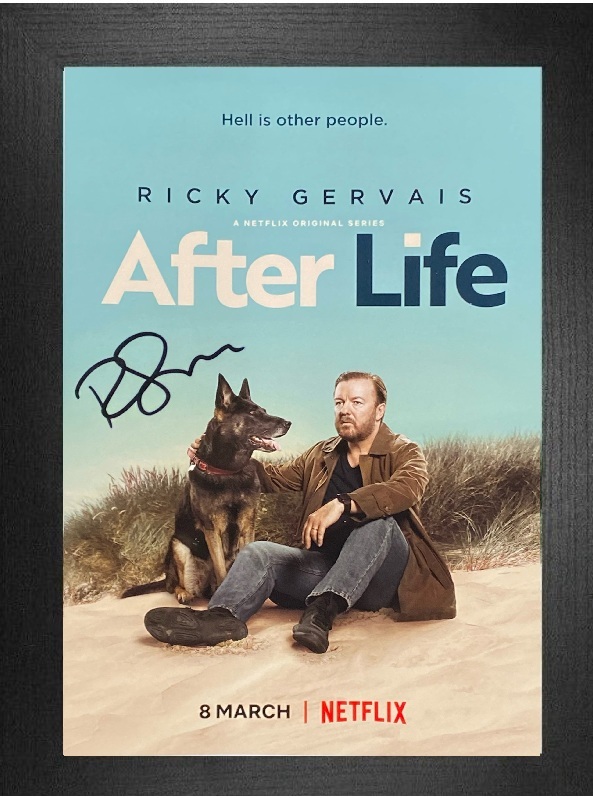
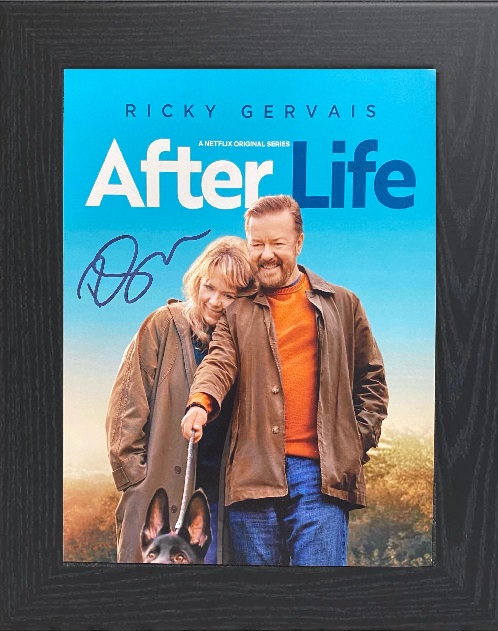
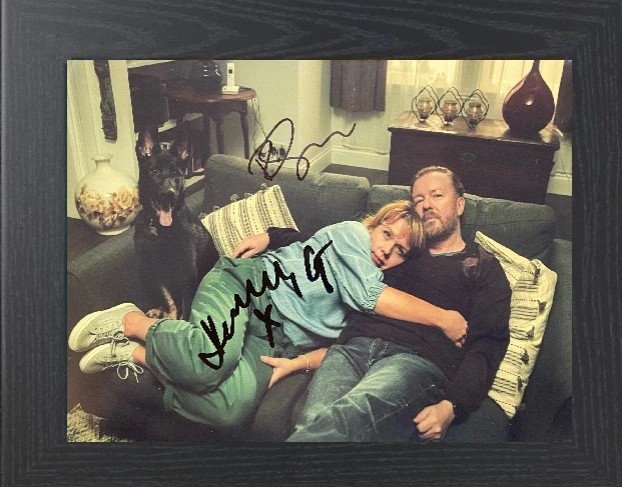
This is your chance to bid on signed pictures very kindly donated by Ricky Gervais in our ‘Charity Auction To Help Disabled Animals’.
This is a sealed bid auction, so all you need to do is decide which item you would like to bid for and send us your bid with the LOT NUMBER and name by email to protectallwildlife@btinternet.com by 21:00 on the 24th of August 2025. We will email you to let you know if your bid is the highest. Postage costs will be calculated when the auction ends. If you need any more information etc please email Paul at protectallwildlife@btinternet.com.
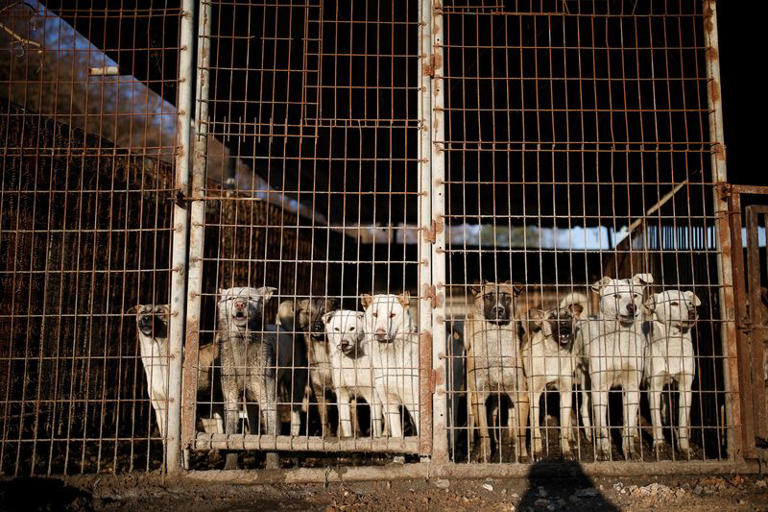
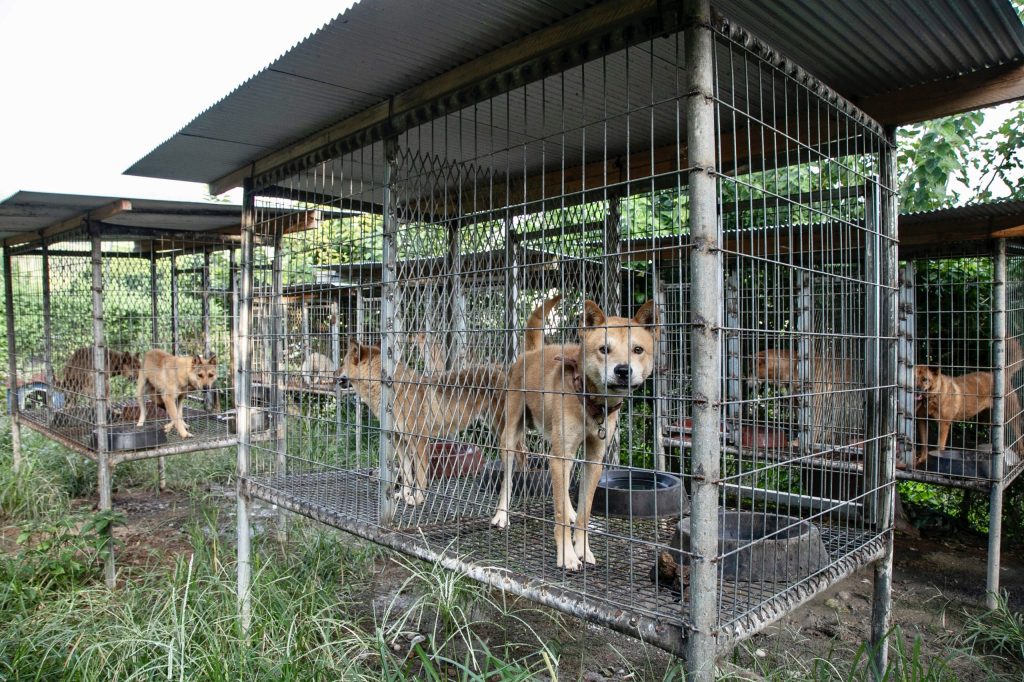
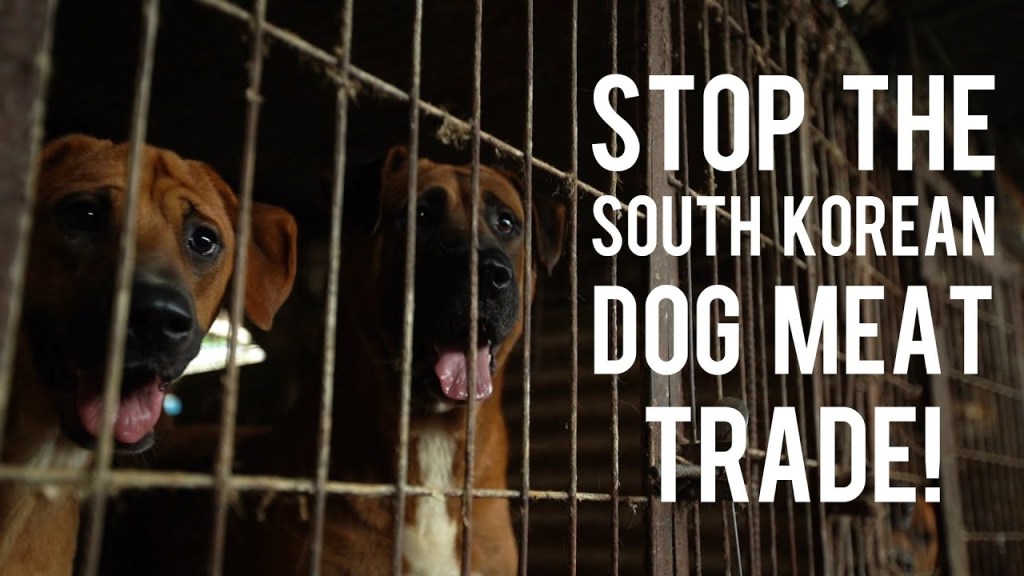
Dogs pictured in cages at a dog meat farm in Wonju, South Korea. Credit: REUTERS/Kim Hong-Ji
HWASEONG, South Korea (Reuters) – As South Korea moves to ban eating dog meat, many of those involved in the centuries-old controversial practice are fighting to keep it legal.
The farmers who breed the dogs, and the owners of eateries that serve the meat, have held protests in front of parliament to demand the government and ruling People Power Party scrap plans to pass a bill this year to enforce a ban.
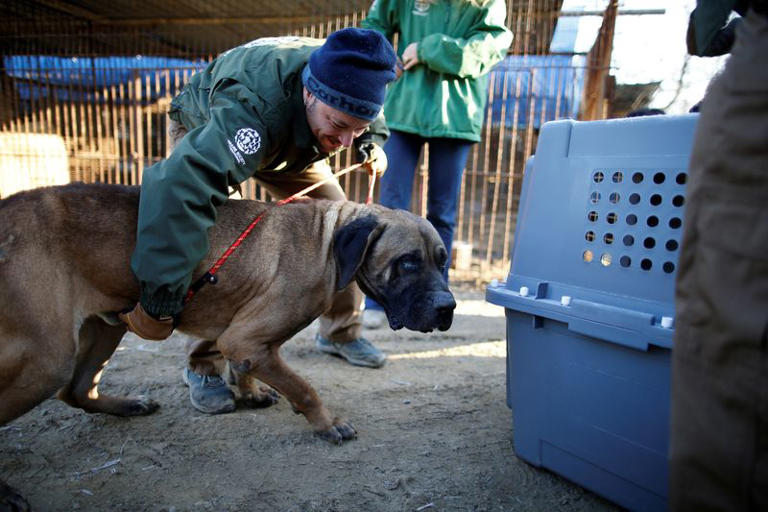
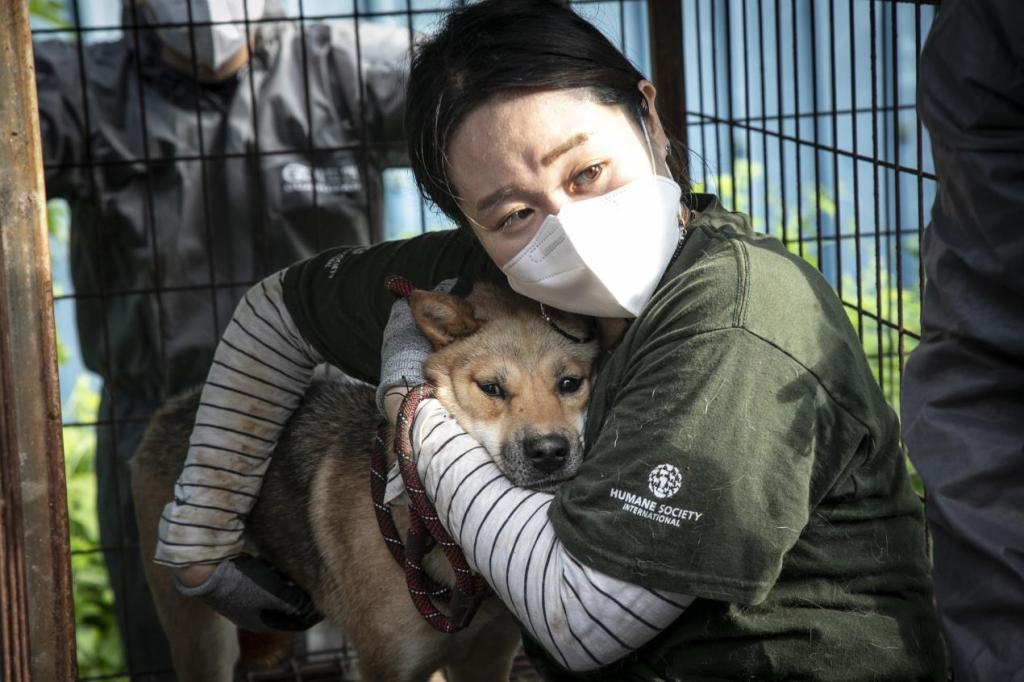
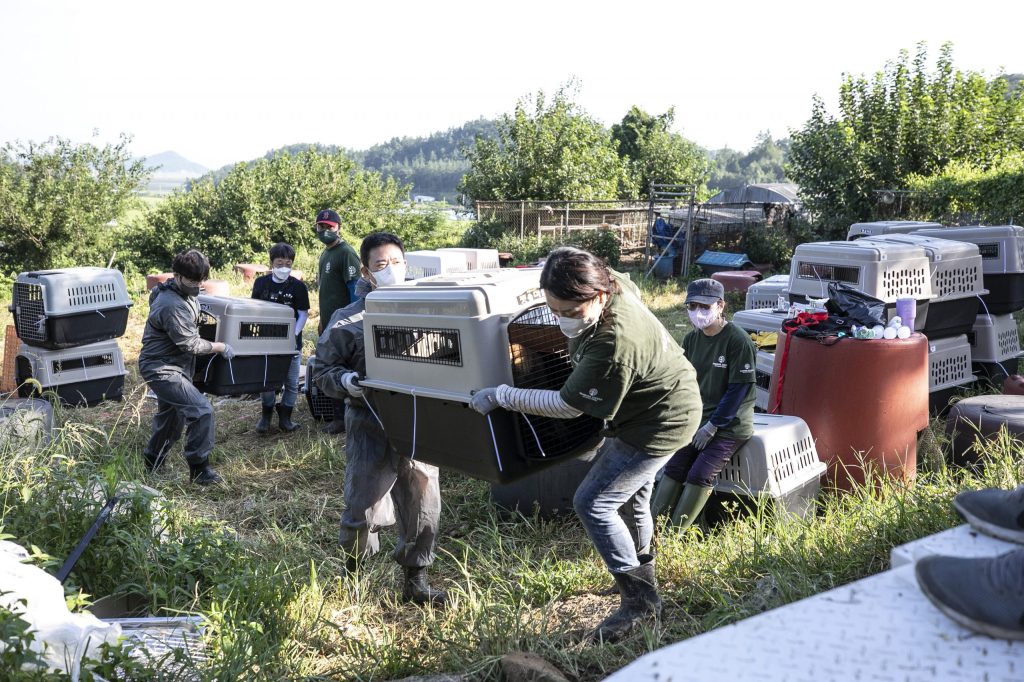
Rescue workers from Humane Society International rescue a dog at a dog meat farm in Wonju, South Korea. Credit: REUTERS/Kim Hong-Ji
They say banning dog meat would decimate their livelihoods, and also limit the options available to diners by taking off the menu a dish that in the Korean peninsula has traditionally been consumed to beat the summer heat, but which today is only eaten by some older people.
“If I have to close down, with the financial condition I’m in, there really is no answer to what I can do,” said Lee Kyeong-sig, who runs a farm outside Seoul raising up to 1,100 dogs. “I’ve been in this for 12 years and it is so sudden.”
A Gallup Korea poll last year showed almost two-thirds of respondents opposed eating dog meat, with only 8% saying they had eaten dog within the past year, down from 27% in 2015.
Rescue workers from Humane Society International rescue a dog at a dog meat farm in Wonju, South Korea. Credit: REUTERS/Kim Hong-Ji
Despite its declining popularity and opposition from animal rights activists, previous attempts to ban dog meat have failed because of industry protests.
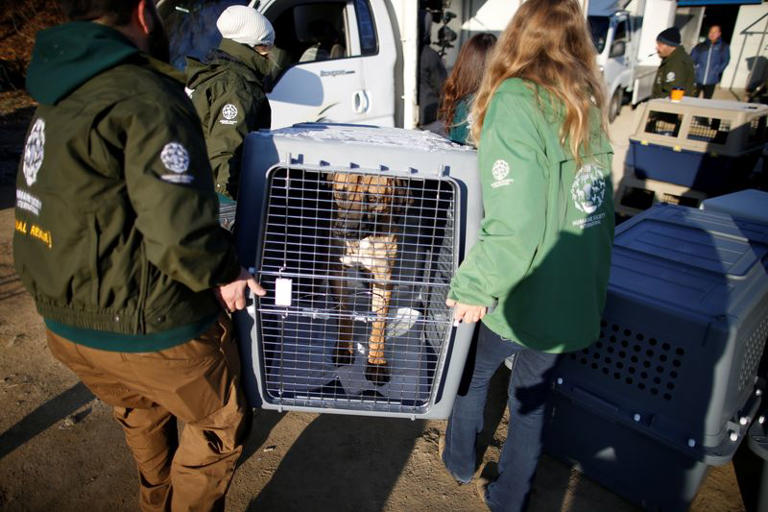
Rescued dogs are seen as they wait for transport, at a dog meat farm in Wonju, South Korea. credit: REUTERS/Kim Hong-Ji
This time, the government has said the proposed ban would give the industry a three-year grace period to transition out of the trade, as well as provide the maximum possible financial support for those affected.
With the backing of the public, and bipartisan support in parliament, there are signs that the ban could soon become law.
TIME FOR CHANGE
The agriculture ministry declined to give details about the size of the industry, but the Korean Association of Edible Dogs, says far more farms and restaurants than those cited by the government will be affected.
The association said 3,500 farms raising 1.5 million dogs and 3,000 restaurants will have to shut down, almost twice the numbers stated by officials.
Nam Sung-gue who has run a restaurant selling dog meat boshintang, or “restoring” soup, for the past 30 years, said the ban was unfair, even though his business is fast declining.
“If they try to ban the food that people have eaten for a long time, that is a wrong kind of law, a law that takes away the freedom to choose what we eat,” he said.
Many opponents of the ban blame it on First Lady Kim Keon Hee, a vocal critic of dog meat consumption who along with her husband President Yoon Suk Yeol has six dogs.
South Korea President Yoon Suk-yeol and first lady Kim Keon-hee invite the newest member of the presidential family Saeromi, a retired guide dog, after adopting her from the Samsung Guide Dog School in Yongin, Gyeonggi. [PRESIDENTIAL OFFICE]
Asked about Kim’s influence, an official at the president’s office said: “Both in the country and abroad there is support and consensus, as well as from the opposition party.”
An Byung-gil, member of parliament for the ruling party who is the main sponsor of the bill, also said the time was ripe for change. “Even though something may be part of tradition, what needs to be changed has to be changed,” he said.
WHAT YOU CAN DO TO HELP ANIMALS IN NEED
You can support our work by donating as little as £5 – It only takes a minute but it can last a lifetime for an animal in need.
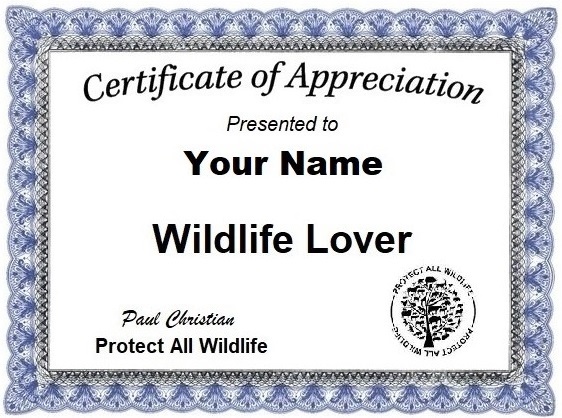
Everyone who donates will receive a Certificate of Appreciation as a thank you for helping animals in need.
The Mission of Protect All Wildlife is to prevent cruelty and promote the welfare of ALL animals. We believe EVERY animal should be treated with respect, empathy, and understanding. We raise awareness to protect and conserve wild, captive, companion and farm animals.
It is vital that we protect animals against acts of cruelty, abuse, and neglect by enforcing established animal welfare laws and, when necessary, take action to ensure that those who abuse animals are brought to justice.
Protect All Wildlife are involved in many projects to protect animals’ rights, welfare, and habitats. Money contributed to Protect All Wildlife supports ALL of our worthy programmes and gives us the flexibility to respond to emerging needs. Your donations make our work possible.
South Korea aims to ban eating dog meat and put an end to the controversy over the ancient custom amid growing awareness of animal rights, a ruling party policy chief said on Friday.
The Korean practice of eating dog meat has drawn criticism from overseas for its cruelty but there has also been increasing opposition at home, particularly from the younger generation.
“It is time to put an end to social conflicts and controversies around dog meat consumption through the enactment of a special act to end it,” Yu Eui-dong, policy chief of the ruling People Power Party, said at a meeting with government officials and animal rights activists.
The government and ruling party would introduce a bill this year to enforce a ban, Yu said, adding that with expected bipartisan support, the bill should sail through parliament.
Agriculture Minister Chung Hwang-keun told the meeting the government would implement a ban quickly and provide the maximum possible support for those in the dog meat industry to close their businesses.
Rescue workers from Humane Society International rescue a dog at a dog meat farm in Wonju, South Korea. Credit: REUTERS/Kim Hong-Ji
First lady Kim Keon Hee has been a vocal critic of dog meat consumption and, along with her husband, President Yoon Suk Yeol, has adopted stray dogs.
Anti-dog meat bills have failed in the past because of protests by those involved in the industry, and worry about the livelihoods of farmers and restaurant owners.
The proposed ban will include a three-year grace period and financial support for businesses to transition out of the trade.
Eating dog meat has been an age-old practice on the Korean peninsula and is seen as a way to beat the summer heat.
But it is much less common than it used to be in South Korea, though it is still eaten by some older people and served in certain restaurants.
Animal rights groups welcomed the prospect of a ban. “A dream come true for all of us who have campaigned so hard to end this cruelty,” Humane Society International said in a statement.
There are about dog 1,150 breeding farms, 34 slaughter houses, 219 distribution companies, and some 1,600 restaurants serving dog, according to government data.
A Gallup Korea poll last year showed 64% opposed dog meat consumption. The survey found only 8% of respondents had eaten dog within the past year, down from 27% in 2015.
Reporting by Ju-min Park (Reuters).
WHAT YOU CAN DO TO HELP ANIMALS IN NEED
You can support our work by donating as little as £5 – It only takes a minute but it can last a lifetime for an animal in need.
Everyone who donates will receive a Certificate of Appreciation as a thank you for helping animals in need.
The Mission of Protect All Wildlife is to prevent cruelty and promote the welfare of ALL animals. We believe EVERY animal should be treated with respect, empathy, and understanding. We raise awareness to protect and conserve wild, captive, companion and farm animals.
It is vital that we protect animals against acts of cruelty, abuse, and neglect by enforcing established animal welfare laws and, when necessary, take action to ensure that those who abuse animals are brought to justice.
Protect All Wildlife are involved in many projects to protect animals’ rights, welfare, and habitats. Money contributed to Protect All Wildlife supports ALL of our worthy programmes and gives us the flexibility to respond to emerging needs. Your donations make our work possible.
Earlier this month, authorities from the Special Area of the City of (DKI) Jakarta, the most populous metropolitan area in Indonesia, which includes the capital city, announced they have banned the dog and cat meat trades, which will save the lives of an estimated 340 dogs and countless cats per day.
Jakarta Bans The Dog & Cat Meat Trade Credit: Jean Chung / HSI
Hollywood actress Kim Basinger, comedian Ricky Gervais and British actor Peter Egan have joined campaigners from the Dog Meat Free Indonesia coalition in celebrating news that Indonesia’s capital city of Jakarta has banned the dog and cat meat trade. The stars sent a video message after the Food Security, Marine and Agriculture Department confirmed Jakarta now becomes the 21st jurisdiction in Indonesia to ban the trade. The move comes in response to an intensive campaign by DMFI, exposing the severe animal cruelty and risks to human health from zoonotic diseases such as rabies.
A Dog Awaits Its Fate – Credit: Dog Meat-Free Indonesia
Across Indonesia, more than one million dogs and countless cats are killed every year for meat, most of them stolen pets or strays, snatched from the streets and illegally trafficked on grueling journeys to supply demand hotspots. Many die during this ordeal from heatstroke, dehydration or injuries inflicted during capture and transport. Those who survive are taken to makeshift slaughterhouses where they are bludgeoned and killed in full view of other dogs. DMFI investigations suggest that in Jakarta, an estimated 9,520 dogs per month or around 340 dogs every day are killed for meat.
The Ban Is Too Late For These Dogs -Credit: Dog Meat-Free Indonesia
Lola Webber, director of campaigns to End Dog Meat at Humane Society International, a DMFI member group, commented:
“A dog and cat meat trade ban in Indonesia’s capital city Jakarta is hugely significant, not just because of the thousands of animals killed every year for the city’s trade, but also because it recognizes that this cruel trade risks spreading rabies. Jakarta’s rabies-free status is jeopardized every day that the dog meat trade continues to traffic dogs of unknown disease status into the city.”
The dog meat trade is now banned in 21 cities and regencies across Indonesia. The regencies are Karanganyar, Sukoharjo, Semarang, Blora, Brebes, Purbalingga, Mojokerto, Temanggung, Jepara and Magelang. The cities are Salatiga, Malang, Semarang, Magelang, Blitar, Mojokerto, Medan, Surabaya and now, Jakarta.
Globally, intolerance of animal cruelty and concern for human health is seeing an ever-growing number of countries, territories, provinces, regencies and cities passing explicit laws prohibiting the trade in and slaughtering and consumption of dogs and cats.
——–((((((()))))))——–
WHAT YOU CAN DO TO HELP WILDLIFE:
You can support ‘Protect All Wildlife’ by donating as little as £1 – It only takes a minute but it can last a lifetime for an animal in need. Please donate below.
Everyone who donates will receive a Certificate of Appreciation as a thank you for helping animals in need.
The Mission of Protect All Wildlife is to prevent cruelty and promote the welfare of ALL animals.
We believe EVERY animal should be treated with respect, empathy, and understanding. We raise awareness to protect and conserve wild, captive, companion and farm animals.
It is vital that we protect animals against acts of cruelty, abuse, and neglect by enforcing established animal welfare laws and, when necessary, take action to ensure that those who abuse animals are brought to justice.
Protect All Wildlife are involved in many projects to protect animals’ rights, welfare, and habitats. Money contributed to Protect All Wildlife supports ALL of our worthy programmes and gives us the flexibility to respond to emerging needs. Your donations make our work possible.
Animal welfare charities are facing “significant” financial problems in the Covid-19 crisis due to falling donations, the closure of charity shops to protect volunteers, and the cancellation of fund raising events.
There has already been a rise in cancellations of charity donations by direct debit across the UK. The current cost of living crisis has affected rescue charities twofold. Donations have dropped significantly However, the need to help animals in need has increased DRAMATICALLY.
Many people who bought pets during the covid lockdown have handed them into rescue centres because they can no longer (or don’t want to) look after. The cost of living crisis means many people cannot afford the cost of keeping their pets.
To make matters worse, the pandemic struck at a bad time. When Lucy’s Law came into effect in England, many puppy farmers abandoned the ‘trade’ – a victory for animal welfare. However, this led to an increase in breeding dogs dumped to fend for themselves with no regard for their welfare – just as the charities looking after them struggle to raise enough funds to function.
Like many animal welfare charities, we are struggling after lockdown. Covid restrictions and the cost of living crisis has resulted in very little funding coming in. This has dramatically affected our ability to help charities who are really struggling at the moment.
Please help us help other by donating ANY amount, large or small, at the link below. EVERY penny counts at these desperate times.
Everyone who donates will receive a Certificate of Appreciation as a thank you for helping animals in need.
ACTOR, COMEDIAN AND ANIMAL RIGHTS ACTIVIST RICKY GERVAIS
Cruelty to animals, also called animal abuse, animal neglect or animal cruelty, is the infliction by omission (neglect) or by commission by humans of suffering or harm upon any animal. More narrowly, it can be the causing of harm or suffering for specific achievement, such as killing animals for entertainment; cruelty to animals sometimes encompasses inflicting harm or suffering as an end in itself, defined as zoosadism.
Animal cruelty can be broken down into two main categories: active and passive. Passive cruelty is typified by cases of neglect, in which the cruelty is a lack of action rather than the action itself. Oftentimes passive animal cruelty is accidental, born of ignorance. In many cases of neglect in which an investigator believes that the cruelty occurred out of ignorance, the investigator may attempt to educate the pet owner, then revisit the situation. In more severe cases, exigent circumstances may require that the animal be removed for veterinary care.
Whether it is Elephants killed for their tusks or beaten so they comply in the Asian tourism ‘industry’, Rhino slaughtered for their horns for ‘traditional Chinese medicine (TCM), animals skinned alive for the fur trade etc, animal activists need to stand together to fight for their rights.
At many elephant ‘sanctuaries’ across Thailand and in other countries, the elephants are taught to fear humans. This is so that they will act with compliancy. From babies they are tied up, starved and beaten in what is known as a ‘crush’. This is the act of breaking a young elephant’s spirit. And it’s mostly true what they say: an elephant never forgets. This means that, with their long memories, elephants remember this period of abuse for the rest of their lives. It ensures that the elephants will do what the trainers (also known as mahouts) say, and are more easily trained.
They are also commonly beaten with hooks and sticks that have nails poking out of them – this is when they are seen to be misbehaving or not following orders, or being too slow to respond. The mahouts want the animals to be constantly putting on a performance for those tourists who are there for elephant riding in Thailand.
UNDERCOVER FOOTAGE SHOWS CRUEL TRAINING USED ON BABY ELEPHANTS TO BOOST THAILAND TOURISM
As poaching and habitat loss ravage rhinoceros and elephant populations, protections for these species are vitally important. Today, all five rhino species and both elephant species are threatened with extinction. Efforts are underway across the globe to save these iconic animals.
Elephants and rhinos often experience painful deaths when poached. Rhinos may have their horns cut off while they are still alive and contrary to belief, elephants do not lose their tusks; they are hacked out by poachers.
More than a thousand rhinos and tens of thousands of elephants are killed each year to feed demand for ivory and rhino horn. The international trade in elephants, rhinos, and other species is the second-largest threat to wildlife after habitat loss. If the market continues to drive poaching, both rhinos and elephants could vanish from the wild as early as 2034.
HORRIFIC IMAGES OF ELEPHANTS POACHED FOR THEIR TUSKS AND A RHINO FOR ITS HORN
Every year, hundreds of badgers meet a horrific death in the name of ‘sport’ in the UK at the hands of terriermen. Many of those who have been caught digging into badger setts have used the excuse that they were after foxes – and many have escaped prosecution by so doing.
More than 10,000 are caught, tortured and killed in the UK each year by huntsmen with terriers – with almost a third of these illegal acts being carried out in Wales. Alarmingly, this figure is rising constantly. Terry Spamer, a former RSPCA inspector, believes that there are around 2,000 people involved in badger baiting currently. However, only around three people are caught and convicted of badger baiting each year, while the majority carry on breaking the law.
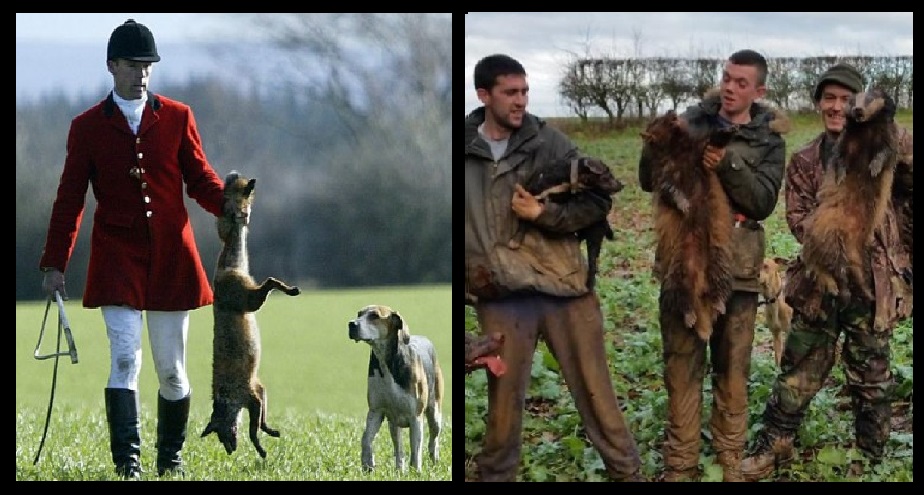
Traditional fox hunting was banned in England and Wales under the Hunting Act 2004. In spite of existing legislation, there has been 500 successful prosecutions under the Act. However, many incidents of illegal hunting have gone unpunished.
FOX HUNTING AND BADGER BAITING IS ILLEGAL IN THE UK BUT CARRIES ON WITH WITH APPARENT IMPUNITY
Dogfighting is an inhumane ‘bloodsport’ where dogs who have been bred, conditioned and trained to fight are placed in a pit to fight each other for spectator ‘entertainment’ and profit. Fights average one to two hours, ending when one of the dogs cannot continue.
Dog fights usually take part in quiet, private locations, such as in an industrial unit or farm building. Participants will spend months training their dogs in preparation, much like boxing, the fighters will have to hit a target weight to take part. Organisers will create a fighting ‘pit’ for the dogs to fight within.
Dogs who have been used in fighting often have serious injuries to their head, ears, front legs and chest that are caused as they go head-to-head in a pit. They will also have injuries of different ages, some old scars and some fresh wounds.
IT IS BELIEVED OVER 16000 DOGS DIE EACH YEAR IN ORGANIZED DOG FIGHTS
Each year, thousands of bulls are barbarically slaughtered in bullrings around the world. Over the centuries, bullfighters have found countless ways to rig the “fight” in their favor. Bulls are often weakened with drugs or by having sandbags dropped on their backs. Their horns have been shaved to keep them off balance, or petroleum jelly has been rubbed into their eyes to impair their vision.
Every year, approximately 250,000 bulls are killed in bullfights. Bullfighting is already banned by law in many countries including Argentina, Canada, Cuba, Denmark, Italy and the United Kingdom. Although legal in Spain, some Spanish cities, such as Calonge, Tossa de Mar, Vilamacolum and La Vajol, have outlawed the practice of bullfighting. There are only a few countries throughout the world where this practice still takes place (Spain, France, Portugal, Mexico, Colombia, Venezuela, Peru, and Ecuador). ~ HSI.
BULLS ARE TORTURED IN THE NAME OF CULTURE AND TRADITION
Each year from approximately September 1 to March 1, a large-scale hunt of dolphins takes place in the small village of Taiji, Japan, as featured in the 2010 Academy Award-winning documentary The Cove. During this six month season, dolphin hunters utilize drive hunt techniques to herd large numbers of dolphins to shore, resulting in their capture or death.
The captured dolphins may be selected for live trade to aquariums and marine parks for display, while others are slaughtered for their meat. The price for live captures is many times higher than those killed.
THE ANNUAL TAIJI DOLPHIN SLAUGHTER
What you can do to help animals in need:
Support ‘Protect All Wildlife’ by donating as little as £1 – It only takes a minute but it can last a lifetime for an animal in need. Thank you.
We believe EVERY animal should be treated with respect, empathy, and understanding. We raise awareness to protect and conserve wild, captive, companion and farm animals. It is vital that we protect animals against acts of cruelty, abuse, and neglect by enforcing established animal welfare laws and, when necessary, take action to ensure that those who abuse animals are brought to justice.
Protect All Wildlife are involved in many projects to protect animals’ rights, welfare, and habitats. Money contributed to Protect All Wildlife supports ALL of our worthy programmes and gives us the flexibility to respond to emerging needs. Your donations make our work possible. Thank you for your support.
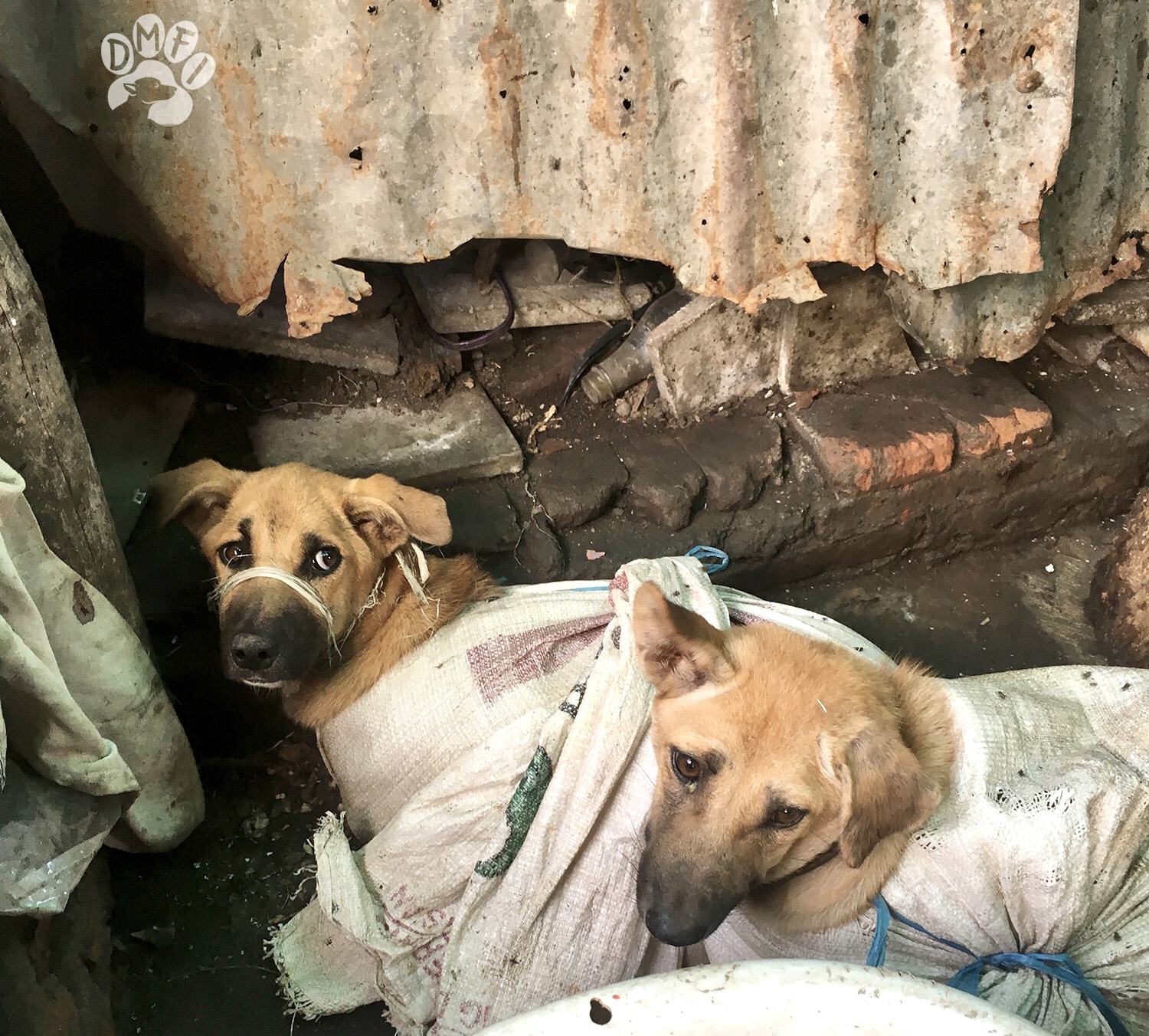
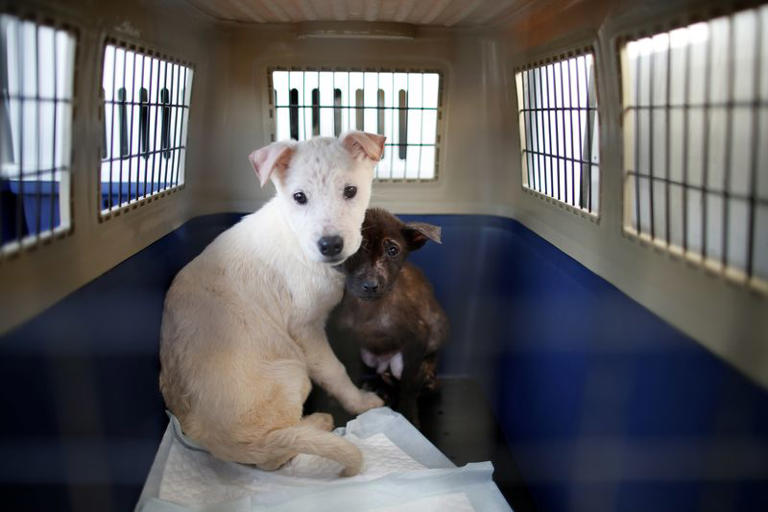
SOME OF THE DOGS RESCUED FROM THE DOG MEAT SLAUGHTERHOUSE
As the Chinese dog meat festival in Yulin came to an end last month, 126 dogs, believed to once be pets, were rescued from an illegal slaughterhouse 1,000 miles away.
Thanks to animal advocates from Vshine, local Xi’an activists, the Baoji Small Animal Protection Association, and a group of police, law enforcement officers, and the mayor from Fufeng County, the animals escaped the brutal death that was awaiting them. The team worked to close down an illegal dog slaughterhouse.
The Rescue Carried Out By Humane Society International
When they arrived, they found a gruesome scene with dead dogs on the floor, pools of blood, de-hairing machines, and knives. They also found processed dog meat and a pile of pet collars in the corner of the facility. This is just more proof that all too often pets are stolen from the streets, their homes, and farms and taken to be killed for meat.
Vshine, an organization that campaigns across Asia for the end of the dog meat trade, released a video and photos of the horrific scene. Many of the dogs found alive at the scene were German shepherds, Labradors, Huskies, Golden Retrievers, and other scared and emaciated pups. They huddled together in the filthy slaughterhouse but despite what they had been through, many were eager to receive comfort from the activists. They believe that most of the dogs were once pets.
MOST OF THE DOGS HAD COLLARS
Ziyang Huang from Vshine told the Humane Society International, “This was a horrendous slaughterhouse and we are so grateful to the tip-off by the Xi’an activists so that we could rally together and get this place shut down before any more dogs suffered and died there. The dogs we found alive were whimpering and distressed but very happy to see us. They were standing in their own filth with blood and dog fur all around, and slaughter equipment just nearby. They will likely have witnessed dogs killed and butchered right in front of them. The amount of pet collars we found was really shocking, and the gentle, friendly nature of these dogs tells us probably most of them were once part of a home and somehow ended up at that terrible place. That’s just one of the reasons why we campaign to end this cruel dog meat trade.”
Animal campaigners from Vshine recently teamed up with police from the city of Shaanxi to help rescue nearly 400 dogs from a truck that was headed to the Yulin festival.
Although dog meat is still a huge problem in China, most people there don’t eat dog meat and oppose the industry. It is not a part of China’s mainstream culinary culture and the country’s concern for animal welfare is growing. In 2020, China’s Ministry of Agriculture and Rural Affairs made a statement saying that dogs are companion animals, not “livestock” for eating. That same year, two cities in mainland China banned the consumption of dog and cat meat, a decision that was supported by nearly 75 percent of Chinese citizens. However, an estimated 30 million dogs are killed a year for meat in other parts of Asia.
Sign this petition to urge the government of South Korea to create programs to transition dog meat farmers into more ethical industries and protect all dogs!
What you can do
Support ‘Protect All Wildlife’ by donating as little as £1 – It only takes a minute but it can last a lifetime for an animal in need. Thank you.
We believe EVERY animal should be treated with respect, empathy, and understanding. We raise awareness to protect and conserve wild, captive, companion and farm animals. It is vital that we protect animals against acts of cruelty, abuse, and neglect by enforcing established animal welfare laws and, when necessary, take action to ensure that those who abuse animals are brought to justice.
Protect All Wildlife are involved in many projects to protect animals’ rights, welfare, and habitats. Money contributed to Protect All Wildlife supports ALL of our worthy programmes and gives us the flexibility to respond to emerging needs. Your donations make our work possible.
Ricky Gervais has carved an incredibly successful career from making people laugh but it’s no joking matter when it comes to standing up for the rights of animals!
In 2014, Ricky famously declared; “Animals don’t have a voice. But I do. A loud one. I’m a fucking big mouth. My voice is for them. And I’ll never shut up while they suffer”. And true to his word, Ricky is constantly shouting from the rooftops about bringing an end to animal cruelty. Whether it’s fighting against Fox hunting or battling a historic Bull fight when it comes to all creatures great and small, Ricky has their back.
Thanks to his celebrity status from films and TV, Ricky has a staggering following on Twitter and Facebook and he regularly uses social media to make people sit up and listen. One carefully worded tweet to his millions of followers can bring global attention to animals in fear or danger within seconds. He can encourage charity donations to come flooding in and get everyone talking about shocking examples of cruelty around the world.
In the past, Ricky has used social media to highlight the atrocity of 10,000 dogs slaughtered every year at the annual Chinese Yulin Dog Meat Festival and campaigned to bring it to an end.
He has individually named and shamed ‘big game hunters’ as they’ve posed by their bleeding ‘trophies’. Ricky also posted this message on his Facebook page – “I’m sick of Trophy Hunters trying to excuse their grim sport by saying they provide a service. They exploit the needs of the poor. They pay lots of money to go and shoot a magnificent animal because the authorities need the cash, and then claim they are doing a good deed. It’s not a good deed. Those authorities would rather have the money AND the animal still alive but they can’t afford to. So they’re forced to take money from rich psychopaths who get their cheap fucking thrills from shooting a giraffe or elephant in the head. If they were providing a service THEY would be the ones being paid. Imagine a vet paying you to put down your dog and then taking a selfie next to the corpse. And as for “the money goes to saving there remaining animals”. Oh dear. Where will it end? Can you pay more to kill the Leopard with a hammer if that’s your perversion? They’re already killing with bows and arrows for fucks sake. And would we allow some billionaire sicko to shoot one cancer patient if he gave a million dollars to cancer research? No. Of course we fucking wouldn’t. If they really wanted to do a good deed they would donate the money, and NOT shoot the animal. They would be heroes then. As opposed to murdering scum”.
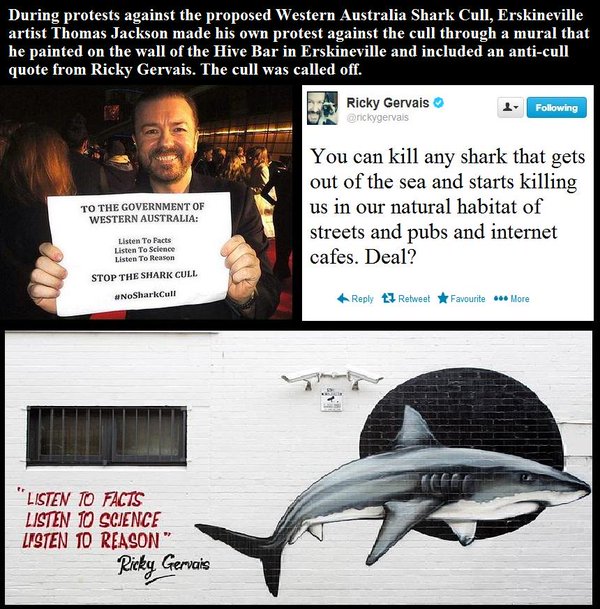
In 2014, Ricky lent his considerable Twitter celebrity to the campaign against Western Australia’s controversial Shark kill policy. He appeared on social media holding up a sign decrying the WA government plans to catch and kill any shark 3m or over that comes within 1km of a Perth beach. It read: “To the government of Western Australia – Listen to Facts, Listen to Science, Listen to Reason – Stop the Shark Cull.” He also used his appearance at the British National Television Awards.
A local street artist made his own protest by painting a mural on a building which included the anti-cull quote by from Ricky. The cull was later called off!
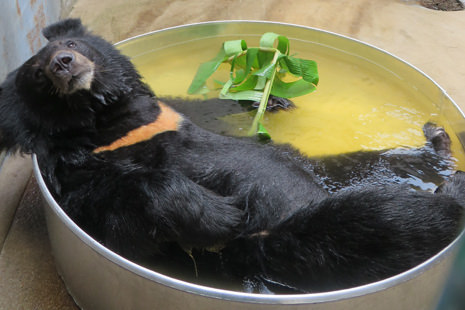
Also in 2014, Ricky symbolically adopted one of the 130 moon Bears on a Bear bile farm in Nanning, China, a farm that’s set to transition into Animals Asia’s third moon Bear sanctuary. Ricky named the young male Bear, Derek, after his comedy-drama.
L to R – Peter Egan, Ricky’s partner Jane Fallon, Ricky and Jill Robinson (founder of Animals Asia)
Derek was a ten-year-old Bear with a host of problems, as a result of a life trapped in a cage where workers would extract his bile. His head is raw from years of rubbing his head against the bars of his small cage, and most of his teeth have fallen out, with the exception of a few rotten teeth which badly needed to be extracted. His lolloping tongue is a result of a nerve damage, while his right eye suffers from a cataract.
“Derek is a beautiful but very damaged Bear,” said Ricky. “After such a sad and traumatic existence on a Bear farm I am thrilled to have adopted him as one of 130 Bears currently being rescued by Animals Asia in China and long to see him enjoying his new life in the sun! I so admire this historic initiative to turn a Bear farm into a sanctuary and applaud the efforts of everyone involved.”
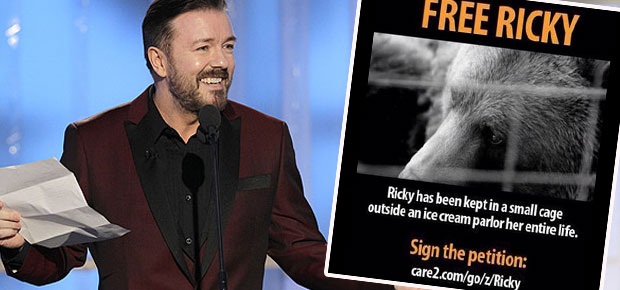
In the USA in 2015, a female black bear called Ricky who spent 18 years in a cage was freed after a settlement in a lawsuit brought by the Animal Legal Defense Fund
The lawsuit was filed by in December 2014 on behalf of concerned Pennsylvania residents against Jim Mack’s Ice Cream, where Ricky had lived in a small, concrete cage, eating a mix of corn and dog food funnelled onto the floor of her enclosure.
Ricky’s plight drew national attention, and tens of thousands of people (including Ricky) signed petitions requesting her release..
Again in 2015, Ricky helped hundreds of shelter dogs desperately lacking food and medical care. When an influx of 680 dogs arrived at a public shelter in Odai, Romania, the workers knew these dogs didn’t have anywhere else to turn. Despite not having enough food, bedding or even bowls for water, the shelter took them in. They needed help and fast, so London-based partner rescue, K-9 Angels created a fundraising page with an urgent plea for donations “to ease the emergency situation at the shelter.” Over the course of several days, the group had raised only about £4,000 for the Romanian shelter. The money was enough to make sure the dogs had enough food for about two months, but it didn’t come anywhere near what the shelter needed to pay for basic supplies, vaccinations and labour costs. In fact, it was about £26,000 short. That’s when Ricky stepped in and posted the following tweet.
OK. That's The Emmys done. Now back to important stuff. Emergency food & aid for dogs at Odai public shelter, https://t.co/6PS5kSW8Mn pls RT
“Within days we had raised £20,000. Before Ricky retweeted we had only raised £4,000 so it just goes to show the power that animal loving celebs have. We are very grateful,” K-9 Angels founder Victoria Eisermann. The group showed their gratitude with a post in which they called the comedian “an angel” for sharing their fundraiser page. Eisermann added that the group even honoured Ricky by naming one of the young puppies “Ricky.”
Lately, Ricky has been very vocal about Lucy’s Law, the campaign to end the heart-breaking puppy farming trade. Lucy’s Law is named after a remarkable Cavalier Spaniel called Lucy who was rescued from a Welsh puppy farm and became a celebrity in her own right on social media before her death more than a year ago. Ricky regularly posted details on Twitter and Facebook leading to it being a short distance from becoming law.
Ricky’s passion and ability to be vocal has made millions of people painfully aware of such issues as the slaughter of whales in the Faroe Islands and the stolen pet dogs of Thailand that are destined for the illegal meat trade.
Ricky also reminds us all of the huge number of animals in rescue shelters and the importance of the hashtag #AdoptDontShop with his numerous posts.
Ricky is driven to raise awareness and get signatures on petitions that pile pressure on governments. He has put his name to campaigns with charities such as PETA and the Humane Society International. Ricky won’t stop until animals are protected from blood sports, their fur is no longer used as a fashion statement, the Yulin ‘festival’ ends and the last SeaWorld ‘fish tank’ is empty (etc etc!)
This year Ricky donated £427,243 to animal charities from the sale of premium seats for his stand-up tour Supernature.
Ricky said: ‘It is such a privilege to be able to help animals in need, simply by doing a job that I already love.’
Ricky is undoubtedly a voice for all animals and it’s fair to say the world is listens to him.
And a final quote from Ricky……
This is only a small part of what Ricky has done for animals over the years.
…….and THAT is why Ricky Gervais is a animal rights legend!!
Protect All Wildlife
The Mission of Protect All Wildlife is to prevent cruelty and promote the welfare of ALL animals.
We believe EVERY animal should be treated with respect, empathy, and understanding. We raise awareness to protect and conserve wild, captive, companion and farm animals.
It is vital that we protect animals against acts of cruelty, abuse, and neglect by enforcing established animal welfare laws and, when necessary, take action to ensure that those who abuse animals are brought to justice.
Protect All Wildlife are involved in many projects to protect animals’ rights, welfare, and habitats. Money contributed to Protect All Wildlife supports ALL of our worthy programmes and gives us the flexibility to respond to emerging needs. Your donations make our work possible.
“Animals are not here for us to do as we please with. We are not their superiors. We are their equals. We are their family. Be kind to them.” ~ Ricky Gervais.
Cruelty to animals, also called animal abuse, animal neglect or animal cruelty, is the infliction by omission (neglect) or by commission by humans of suffering or harm upon any animal. More narrowly, it can be the causing of harm or suffering for specific achievement, such as killing animals for entertainment; cruelty to animals sometimes encompasses inflicting harm or suffering as an end in itself, defined as zoosadism.
Animal cruelty can be broken down into two main categories: active and passive. Passive cruelty is typified by cases of neglect, in which the cruelty is a lack of action rather than the action itself. Oftentimes passive animal cruelty is accidental, born of ignorance. In many cases of neglect in which an investigator believes that the cruelty occurred out of ignorance, the investigator may attempt to educate the pet owner, then revisit the situation. In more severe cases, exigent circumstances may require that the animal be removed for veterinary care.
Whether it is Elephants killed for their tusks or beaten so they comply in the Asian tourism ‘industry’, Rhino slaughtered for their horns for ‘traditional Chinese medicine (TCM), animals skinned alive for the fur trade etc, animal activists need to stand together to fight for their rights.
At many elephant ‘sanctuaries’ across Thailand and in other countries, the elephants are taught to fear humans. This is so that they will act with compliancy. From babies they are tied up, starved and beaten in what is known as a ‘crush’. This is the act of breaking a young elephant’s spirit. And it’s mostly true what they say: an elephant never forgets. This means that, with their long memories, elephants remember this period of abuse for the rest of their lives. It ensures that the elephants will do what the trainers (also known as mahouts) say, and are more easily trained.
They are also commonly beaten with hooks and sticks that have nails poking out of them – this is when they are seen to be misbehaving or not following orders, or being too slow to respond. The mahouts want the animals to be constantly putting on a performance for those tourists who are there for elephant riding in Thailand.
UNDERCOVER FOOTAGE SHOWS CRUEL TRAINING USED ON BABY ELEPHANTS TO BOOST THAILAND TOURISM
As poaching and habitat loss ravage rhinoceros and elephant populations, protections for these species are vitally important. Today, all five rhino species and both elephant species are threatened with extinction. Efforts are underway across the globe to save these iconic animals.
Elephants and rhinos often experience painful deaths when poached. Rhinos may have their horns cut off while they are still alive and contrary to belief, elephants do not lose their tusks; they are hacked out by poachers.
More than a thousand rhinos and tens of thousands of elephants are killed each year to feed demand for ivory and rhino horn. The international trade in elephants, rhinos, and other species is the second-largest threat to wildlife after habitat loss. If the market continues to drive poaching, both rhinos and elephants could vanish from the wild as early as 2034.
HORRIFIC IMAGES OF ELEPHANTS POACHED FOR THEIR TUSKS AND A RHINO FOR ITS HORN
Every year, hundreds of badgers meet a horrific death in the name of ‘sport’ in the UK at the hands of terriermen. Many of those who have been caught digging into badger setts have used the excuse that they were after foxes – and many have escaped prosecution by so doing.
The Lychee and Dog Meat Festival, commonly referred to as the Yulin Dog Meat Festival is an annual event starting on 20th of June where an estimated 10,000 – 15,000 dogs and cats are slaughtered for their meat.
The ‘festival’ began in 2010 to celebrate summer solstice. Advocates and restaurant owners say that eating dog is traditional in the summertime. Around 10-20 million dogs are killed for their meat each year in China. However, critics argue there is no cultural value in the festival and it was mainly devised as a way of making money.
While slaughtering dogs is common in China, the festival is seen as representative of the cruelty and lack of hygiene associated with the largely unregulated industry. In addition, many of the animals killed are stolen pets some of which have been seen still wearing their collars.
Some are sent to the festival in small cages without food or water on trucks that can travel hundreds of miles.
Slaughtering takes place in front of the live animals, usually with a club or with a blow-torch to induce the pain and fear that some restaurant owners claim makes their adrenaline-rich meat tastier.
“Psychologically and mentally, they have already died many times,” said Peter Li, a China policy specialist with the Humane Society International.
DOGS ARE TORTURED TO DEATH IN THE BELIEF THAT IT MAKES THE MEAT TASTIER
Trophy hunters pay large sums of money, often tens of thousands of dollars, to travel around the world to kill wild animals. Who can forget the killing of Cecil the Lion in 2015 in Zimbabwe? He was hunted over many hours with a bow and arrow, before being skinned and beheaded by Dentist Walter Palmer.
More often than not animals in their prime and in breeding age are targeted by trophy hunting because of their specific characteristics; their black mane, their long tusks, the size of their antlers, in fact Safari Club International offers prizes for the largest animals killed. Where older males are targeted this can have extreme negative consequences for the herd or pride; older males offer protection to groups and keep juvenile males in line, when they are killed less experienced animals move in, increasing the risk of human wildlife conflict and killing the cubs of the older male. When the elephants with the largest tusks are killed, we have seen the size of elephant tusks in the population decrease over time, making it harder to find food and defend themselves.
CECIL THE LION WAS SHOT BY DENTIST WALTER PALMER IN JULY 2015 AND CAUSED INTERNATIONAL OUTRAGE
More than 10,000 are caught, tortured and killed in the UK each year by huntsmen with terriers – with almost a third of these illegal acts being carried out in Wales. Alarmingly, this figure is rising constantly. Terry Spamer, a former RSPCA inspector, believes that there are around 2,000 people involved in badger baiting currently. However, only around three people are caught and convicted of badger baiting each year, while the majority carry on breaking the law.
Traditional fox hunting was banned in England and Wales under the Hunting Act 2004. In spite of existing legislation, there has been 500 successful prosecutions under the Act. However, many incidents of illegal hunting have gone unpunished.
FOX HUNTING AND BADGER BAITING IS ILLEGAL IN THE UK BUT CARRIES ON WITH WITH APPARENT IMPUNITY
Dogfighting is an inhumane ‘bloodsport’ where dogs who have been bred, conditioned and trained to fight are placed in a pit to fight each other for spectator ‘entertainment’ and profit. Fights average one to two hours, ending when one of the dogs cannot continue.
Dog fights usually take part in quiet, private locations, such as in an industrial unit or farm building. Participants will spend months training their dogs in preparation, much like boxing, the fighters will have to hit a target weight to take part. Organisers will create a fighting ‘pit’ for the dogs to fight within.
Dogs who have been used in fighting often have serious injuries to their head, ears, front legs and chest that are caused as they go head-to-head in a pit. They will also have injuries of different ages, some old scars and some fresh wounds.
IT IS BELIEVED OVER 16000 DOGS DIE EACH YEAR IN ORGANIZED DOG FIGHTS
Each year, thousands of bulls are barbarically slaughtered in bullrings around the world. Over the centuries, bullfighters have found countless ways to rig the “fight” in their favor. Bulls are often weakened with drugs or by having sandbags dropped on their backs. Their horns have been shaved to keep them off balance, or petroleum jelly has been rubbed into their eyes to impair their vision.
Every year, approximately 250,000 bulls are killed in bullfights. Bullfighting is already banned by law in many countries including Argentina, Canada, Cuba, Denmark, Italy and the United Kingdom. Although legal in Spain, some Spanish cities, such as Calonge, Tossa de Mar, Vilamacolum and La Vajol, have outlawed the practice of bullfighting. There are only a few countries throughout the world where this practice still takes place (Spain, France, Portugal, Mexico, Colombia, Venezuela, Peru, and Ecuador). ~ HSI.
BULLS ARE TORTURED IN THE NAME OF CULTURE AND TRADITION
Each year from approximately September 1 to March 1, a large-scale hunt of dolphins takes place in the small village of Taiji, Japan, as featured in the 2010 Academy Award-winning documentary The Cove. During this six month season, dolphin hunters utilize drive hunt techniques to herd large numbers of dolphins to shore, resulting in their capture or death.
The captured dolphins may be selected for live trade to aquariums and marine parks for display, while others are slaughtered for their meat. The price for live captures is many times higher than those killed.
THE ANNUAL TAIJI DOLPHIN SLAUGHTER
What you can do to help end animal abuse
We believe EVERY animal should be treated with respect, empathy, and understanding. We raise awareness to protect and conserve wild, captive, companion and farm animals.
It is vital that we protect animals against acts of cruelty, abuse, and neglect by enforcing established animal welfare laws and, when necessary, taking action to ensure that those who abuse animals are brought to justice.
The Mission of Protect All Wildlife is to prevent cruelty, promote the welfare of ALL animals EVERYWHERE, and help END animal abuse.
Please support our work by donating ANY amount, large or small. It only takes a minute and your donations make it all possible. Thank you for your support.
What else you can do to help
Please SHARE to raise awareness to wildlife and environmental issues from around the world.
A dog meat farm on South Korea’s famous Jindo Island, which for more than 20 years bred and slaughtered Jindo dogs for human consumption despite them being the country’s national dog breed, has closed its doors for good after coming to an agreement with Humane Society International/Korea and Korean animal protection group LIFE. The 66 year-old dog farmer Mr Kim, who also runs a local restaurant where his dogs were on the menu, was found by local authorities to have breached the Animal Protection Act by killing dogs in front of each other, after concerned residents reported hearing dogs vocalising in terror on the farm. Instead of setting up business elsewhere, the farmer signed a contract with LIFE to give up dog farming forever and agreed to remove dog meat from the menu at his restaurant.
Being Korea’s national dog breed didn’t save countless Jindo dogs from slaughter, but at least for some of them the nightmare is now over. A dog meat farm on South Korea’s Jindo Island has closed its doors after 20 years of breeding and slaughtering dogs for consumptions – including the iconic Jindo.
After coming to an agreement with Humane Society International/Korea (HSI/Korea) and Korean animal protection group LIFE, the farmer signed a contract to give up dog farming forever and agreed to remove dog meat from the menu at his restaurant.
LIFE and HSI/Korea saved all 65 Jindo dogs and puppies found languishing in small, wire battery cages on the farm. A statement reads, “The South Korean government designated the Jindo the country’s 53rd Natural Monument in 1962, nominally affording them protection under the Cultural Heritage Protection Act, meaning the farmer could face additional charges.”
Nara Kim, HSI/Korea’s campaign manager, said, “All the dogs on this meat farm are Jindos which is supposed to be Korea’s national dog breed. But instead, these poor dogs have been locked away in filthy wire cages, fed on restaurant waste, denied even the most basic care and any level of human kindness.
“As a proud Korean I always find it upsetting to see the cruelty of dog meat farms, but it felt especially shocking to see our country’s national dog breed being exploited like this on Jindo Island. I shed tears when I saw the killing area where I know dogs were killed in front of each other. There was a big pile of collars where they were electrocuted.”
She added, “Thankfully, together with our friends at LIFE, we have been able to get these dogs out of that horrible place and ensure that no animals will ever suffer again in those cages. The authorities will also pursue cruelty charges against the farmer.
“As the Animal Protection Act currently offers little protection for dogs on dog meat farms, it’s encouraging to see law enforcement officials making use of those few regulations at their disposal.
“But in order to fully crack down on this brutal industry, we will continue to campaign for a ban on the breeding, slaughter and sale of dogs for meat.”
While only a small minority of South Koreans consumes dog meat, with more and more dog meat farmers retiring from an industry “without a future”, dog meat farms and vendors are still active in the country.
In-Seob Sim, president of LIFE, said, “I feel anger beyond misery. We boast about Jindo dogs being our national dog, but at the same time they are on someone’s dinner table. This is a direct example of the duality of humans, but also of the contradiction in Korean society.
“Is there really a difference between a treasure Jindo dog and an edible Jindo dog as the dog meat traders encourage us to think? The answer is a definite NO! They are both just Jindo dogs, almost perfect pets for companionship with people.”
The Korean jindo
Please SHARE to raise awareness to the issues of the dog meat trade. You can also sign up to receive NEWS & UPDATES straight to your inbox.
























 PROTECT ALL WILDLIFE