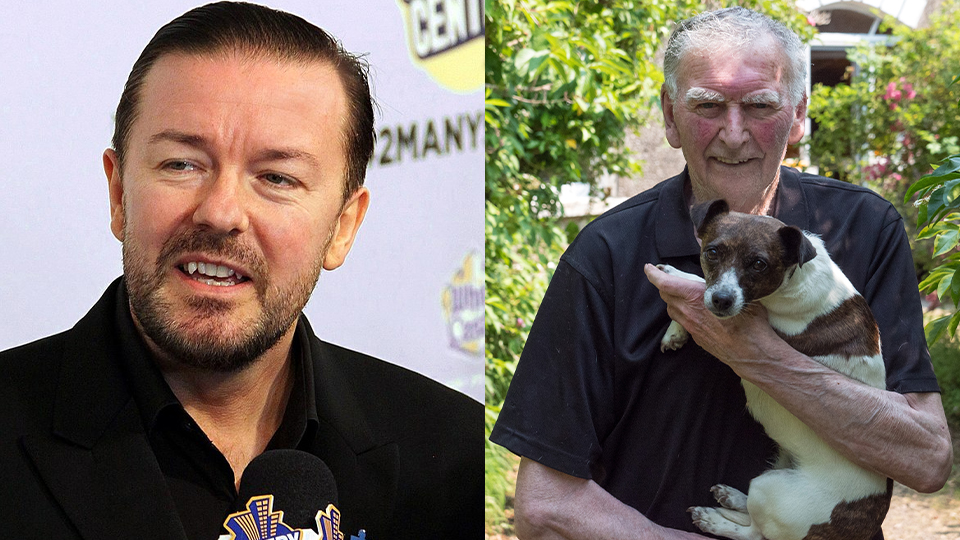
The After Life creator took to Twitter to show his support for Donal Rogers and his dog Kim, calling the situation ‘sad and frustrating’ – his tweet has received masses of support.
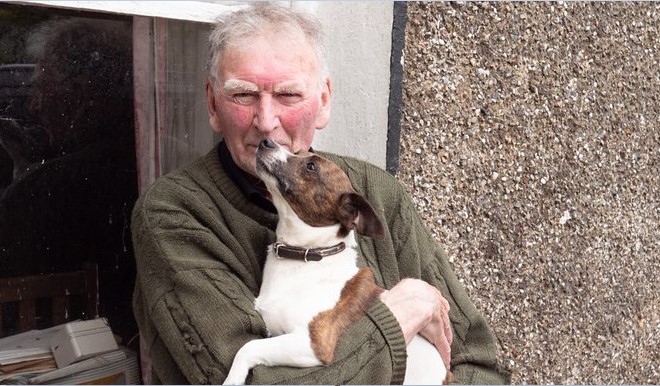
Ricky Gervais has become the latest person to join in the fight to save ex-Garda Donal Rodgers’ dog Kim.
The Jack Russell was ordered by a court to be put down after she reportedly bit a woman while walking on the Strokestown Famine Trail in Co Roscommon on March 6th.
However, the UK comedian has said that the order to put her down is “sad and frustrating”.
More than 600 people have donated €12,868 in a bid to help Roscommon’s Mr Rogers and his beloved pup – surpassing the fundraiser’s goal of €5,000.
Hundreds of thousands of people have also signed a Change.org petition to save the dog.
Retweeting a post about Donal and Kim that asked for “high public exposure”, Ricky Gervais wrote: “This is so sad and frustrating. Anyone out there know how this dog can be saved? #SaveKim”
Donal launched an appeal in the High Court to prevent Kim from being put down, but on July 28th, he withdrew the appeal after the court indicated to him “that there were other avenues to pursue.
“The battle is far from over, not even half over,” Donal told Gript.ie. “My supporters are fighting to keep Kim alive. I have wonderful support from all over the country.”
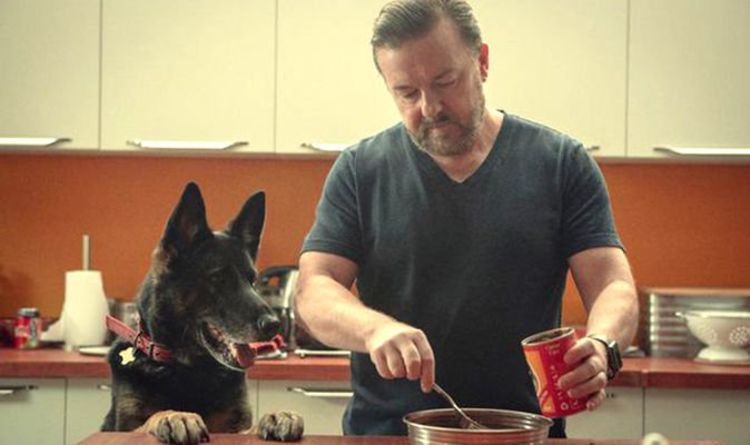
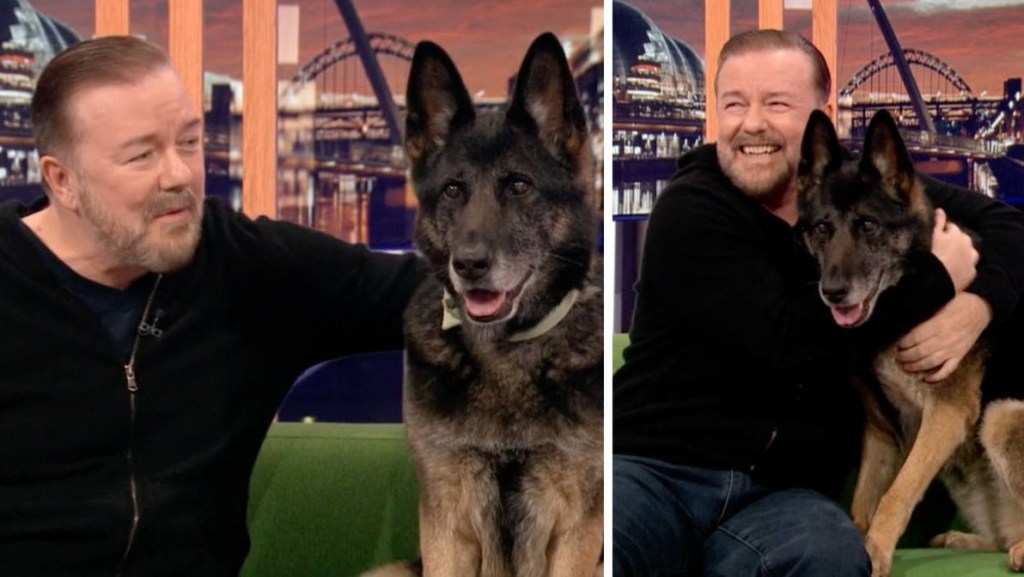
Antilly, the German Shepherd who shared the screen with comedian and actor Ricky Gervais in After Life, is adding plenty of screen credits to her CV since the show.
She won the hearts of TV viewers worldwide as Ricky Gervais’ loyal dog in Netflix smash After Life.
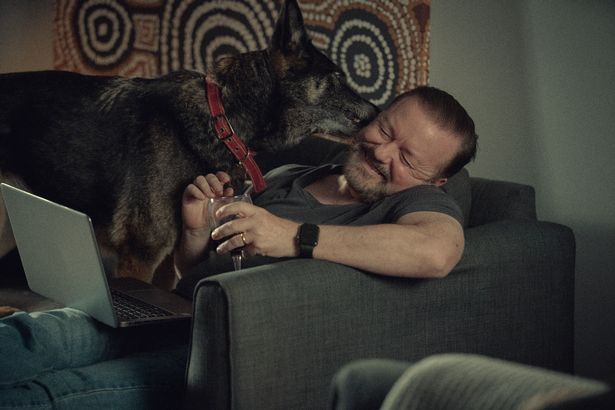
RICKY AND ANTILLY
And thanks to her role as Brandy, the pup who gives Ricky’s character Tony Johnson a reason to live after his wife’s death, Antilly’s career is booming.
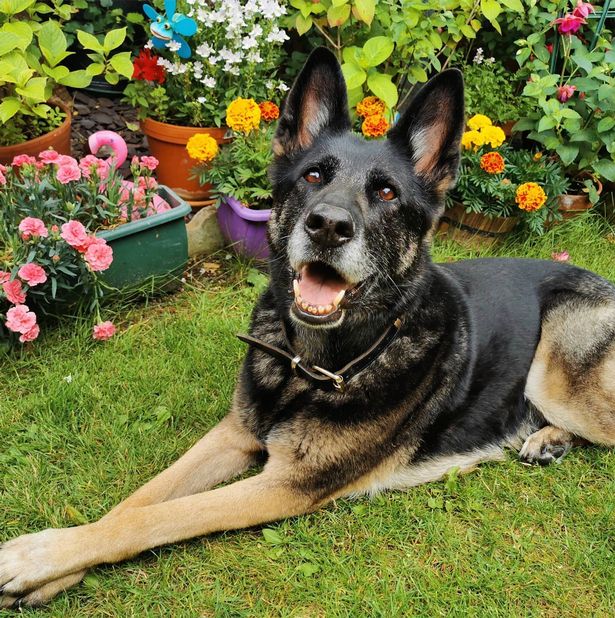
ANTILLY
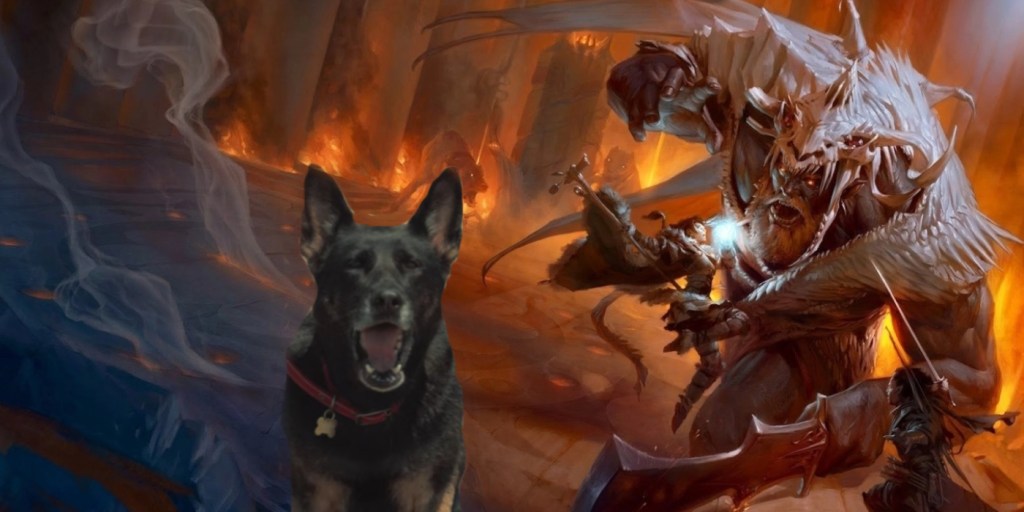
The German Shepherd has been to Belfast to shoot scenes with Hollywood stars Chris Pine and Michelle Rodriguez for a blockbuster Dungeons And Dragons film.
ANTILLY IN DUNGEONS AND DRAGONS
And she’s starring in upcoming BBC drama Sherwood with David Morrissey and Robert Glenister as well as Netflix spy series Treason with Charlie Cox and Olga Kurylenko.
Antilly has graced screens since she was a puppy, playing everything from Army hounds to police dogs.
She’s also worked with A-listers including Tom Cruise and George Clooney, who said she was the best-trained dog he’d seen.
Antilly’s owner Ashley Foster jokes: “They bring us over to do the serious acting.”
Ashley started as an animal trainer 10 years ago and worked on Batman flick The Dark Knight Rises with Antilly’s parents – he was one of villain Bane’s henchmen with the dogs playing attack hounds.
Antilly followed in her parents’ pawprints and signed with Stunt Dogs & Animals. The company was working on a film with Michael Fassbender and wanted a police dog to bite him – one of Antilly’s many skills.
ANTILLY’S DAD ASHLEY
Using protective sleeves, Ashley, 34, safely directs the clever canine where to bite. He says: “She’s very controlled. As soon as the director calls cut and I tell her to let go, she lets go straightaway.”
Antilly’s skills are so honed, she even managed to convince a scared stuntman on Martin Clunes’ series Doc Martin to do a dog bite scene.
ANTILLY CHASES DOC MARTIN (MARTIN CLUNES)
Ashley, from Bicester, Oxon, says: “He’d done one before, they’d used two ex-police dogs and they couldn’t get the dogs off him. I had to show how she works for him to agree to do it.”
The talented pooch, 10, has a wide range of tricks from shaking her head and limping on command to playing dead. All she needs is the reward of a sausage and Ashley stands off-camera, tempting her with his telescopic bait stick.
(OUTTAKE) ANTILLY AND RICKY ON THE SET OF AFTERLIFE
“She’ll lie there, completely still,” he says. “People could be crying and wailing over her and she won’t move. Every time she does something she will get paid with a sausage.”
Ashley often appears alongside Antilly and after receiving the script, they do lots of prep work to make sure she is happy.
PREPARED FOR AN AFTERLIFE SCENE
Ashley adds: “For After Life there wasn’t really much to prepare for. It was straightforward.”
When they’re not filming scenes, he uses the time to work on training.
He also brings other dogs with him to train, including German Shepherd pup Pen, who has already worked as a police dog in TV shows and will eventually take over from Antilly.
For now, though, she is continuing her film work. Ashley says: “She’s still super fit, healthy and happy and loves to work.”
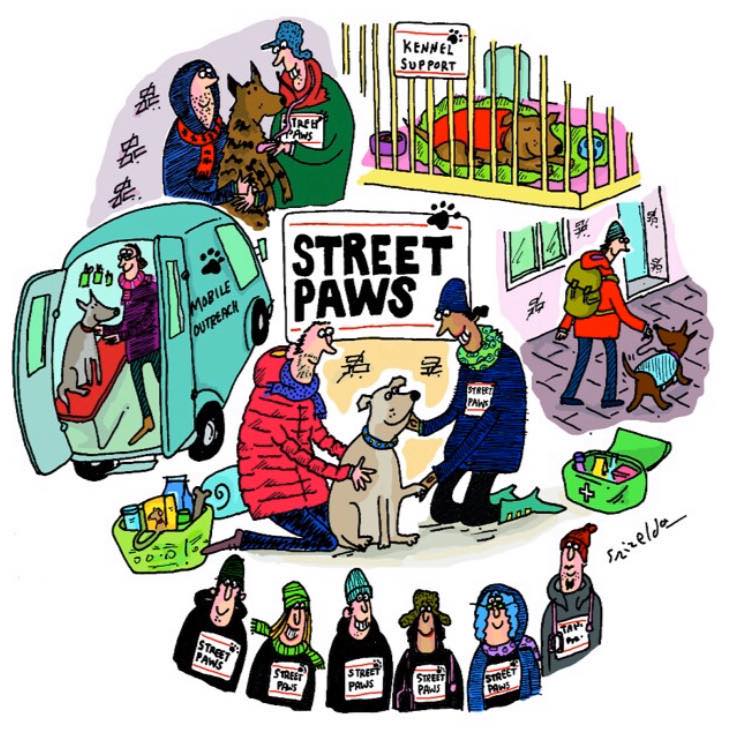
Ashley and Antilly are backing a new challenge from charity Street Paws, encouraging Brits to walk 274,000 steps in April for every homeless person in England.
Founded in Newcastle in 2016, Street Paws provides free accessible vet care and support services to homeless people and their pets.
STREET PAWS
Ashley says: “The work they do can save people. I’ve known people who are struggling to find housing and have got a dog and are really worried about not being able to find somewhere to live with them.”
What you can do to help rescue animals:
Support ‘Protect All Wildlife’ by donating as little as £1 – It only takes a minute but it can last a lifetime for an animal in need.
We believe EVERY animal should be treated with respect, empathy, and understanding. We raise awareness to protect and conserve wild, captive, companion and farm animals. It is vital that we protect animals against acts of cruelty, abuse, and neglect by enforcing established animal welfare laws and, when necessary, take action to ensure that those who abuse animals are brought to justice.
Protect All Wildlife are involved in many projects to protect animals’ rights, welfare, and habitats. Money contributed to Protect All Wildlife supports ALL of our worthy programmes and gives us the flexibility to respond to emerging needs. Your donations make our work possible. Thank you for your support.
Everyone who donates will receive a Certificate of Appreciation as a thank you for supporting wildlife.
When God had made the earth and sky, The flowers and the trees, He then made all the animals, The fish, the birds and bees.
And when at last He’d finished, Not one was quite the same, God said, “I’ll walk this earth of mine, And give each one a name.”
And so He travelled far and wide, And everywhere He went, A little creature followed Him, Until its strength was spent.
When all were named upon the earth, And in the sky and sea, The little creature said, “Dear Lord, There’s not one left for me.”
Kindly the Father said to him, “I’ve left you to the end, I’ve turned my own name back to front, And call you DOG, my friend.
What you can do to help animals in need:
Support ‘Protect All Wildlife’ by donating as little as £1 – It only takes a minute but it can last a lifetime for an animal in need. Thank you.
We believe EVERY animal should be treated with respect, empathy, and understanding. We raise awareness to protect and conserve wild, captive, companion and farm animals. It is vital that we protect animals against acts of cruelty, abuse, and neglect by enforcing established animal welfare laws and, when necessary, take action to ensure that those who abuse animals are brought to justice.
Protect All Wildlife are involved in many projects to protect animals’ rights, welfare, and habitats. Money contributed to Protect All Wildlife supports ALL of our worthy programmes and gives us the flexibility to respond to emerging needs. Your donations make our work possible. Thank you for your support.
Everyone who donates will receive a Certificate of Appreciation as a thank you for supporting wildlife.
A man and his dog were walking along a road. The man was enjoying the scenery, when it suddenly occurred to him that he was dead.
A Man And A Dog And Heaven
He remembered dying, and that the dog walking beside him had been dead for years. He wondered where the road was leading them.
After a while, they came to a high, white stone wall along one side of the road. It looked like fine marble. At the top of a long hill, it was broken by a tall arch that glowed in the sunlight.
When he was standing before it he saw a magnificent gate in the arch that looked like mother-of-pearl, and the street that led to the gate looked like pure gold. He and the dog walked toward the gate, and as he got closer, he saw a man at a desk to one side.
When he was close enough, he called out, ‘Excuse me, where are we?’
‘This is Heaven, sir,’ the man answered.
Would you happen to have some water?’ the man asked.
Of course, sir. Come right in, and I’ll have some ice water brought right up’.
The man gestured, and the gate began to open.
‘Can my friend,’ gesturing toward his dog, ‘come in, too?’ the traveler asked.
‘I’m sorry, sir, but we don’t accept pets.’
The man thought a moment and then turned back toward the road and continued the way he had been going with his dog.
After another long walk, and at the top of another long hill, he came to a dirt road leading through a farm gate that looked as if it had never been closed. There was no fence. As he approached the gate, he saw a man inside, leaning against a tree and reading a book.
‘Excuse me!’ he called to the man. ‘Do you have any water?’
‘Yeah, sure, there’s a pump over there, come on in..’
‘How about my friend here?’ the traveller gestured to the dog.
There should be a bowl by the pump.’
They went through the gate, and sure enough, there was an old-fashioned hand pump with a bowl beside it.
The traveller filled the water bowl and took a long drink himself, then he gave some to the dog.
When they were full, he and the dog walked back toward the man who was standing by the tree.
‘What do you call this place?’ the traveler asked.
This is Heaven,’ he answered.
‘Well, that’s confusing,’ the traveler said. ‘The man down the road said that was Heaven, too.’
‘Oh, you mean the place with the gold street and pearly gates? Nope. That’s hell.’
‘Doesn’t it make you mad for them to use your name like that?’
‘No, we’re just happy that they screen out the folks who would leave their best friends behind!!
Author Unknown
What you can do to help animals in need:
Support ‘Protect All Wildlife’ by donating as little as £1 – It only takes a minute but it can last a lifetime for an animal in need. Thank you.
We believe EVERY animal should be treated with respect, empathy, and understanding. We raise awareness to protect and conserve wild, captive, companion and farm animals. It is vital that we protect animals against acts of cruelty, abuse, and neglect by enforcing established animal welfare laws and, when necessary, take action to ensure that those who abuse animals are brought to justice.
Protect All Wildlife are involved in many projects to protect animals’ rights, welfare, and habitats. Money contributed to Protect All Wildlife supports ALL of our worthy programmes and gives us the flexibility to respond to emerging needs. Your donations make our work possible. Thank you for your support.
Everyone who donates will receive a Certificate of Appreciation as a thank you for supporting wildlife.
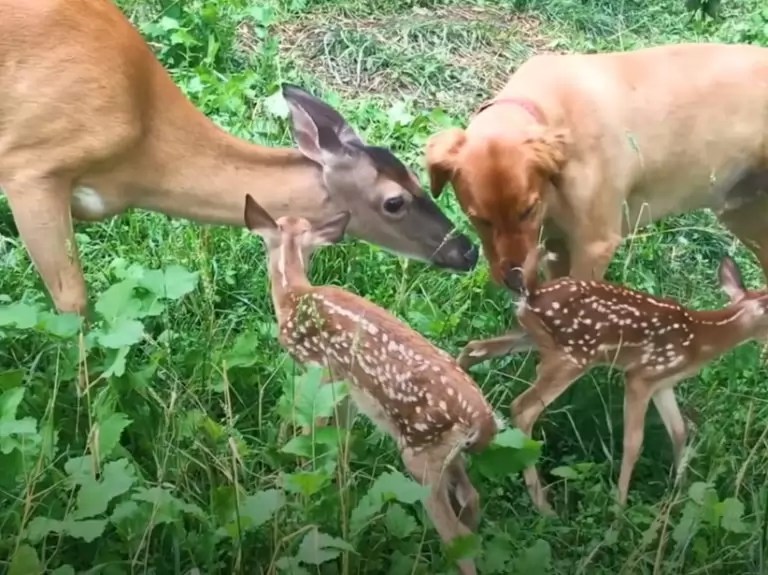
A deer and a golden retriever have struck up an 11-year friendship. They’re so close that the deer even brings her babies to meet the dog every spring!
It all started back when the deer, Buttons, was just a few days old. Unfortunately, her mother was hit by a car and killed. Without a mother to protect and care for her, Buttons wouldn’t have survived, so the Brown family stepped in to care for her.
The Brown family already had a few pets of their own, including a friendly golden retriever named G-Bro.
While Buttons is now free to wander off as she pleases, she prefers to stay close to the Brown family and her BFF G-Bro.
Occasionally, Buttons will wander into the woods and one time she came back with babies!
Buttons has babies nearly every spring, and sometimes she brings them to the house for everyone to meet. However, she’s most interested in G-Bro seeing them.
The gentle dog acts like a second mother to the fawns, and gently licks them clean and plays with them. It’s so sweet!
Buttons’ babies eventually grow up and leave, but she sticks around for G-Bro. One of their favorite activities to do together is explore the woods and go on hiking trails. G-Bro also loves to just sit and let Buttons clean him.
While it’s definitely an unusual situation they have, the Brown family is just enjoying and treasuring every moment.
Watch the video below to see Buttons bringing her babies to meet G-Bro:
BUTTONS AND G-PRO
You can follow the Brown family on Instagram to keep up with Buttons and G-Bro @brownhikingtrails.
What you can do to help animals in need:
Support ‘Protect All Wildlife’ by donating as little as £1 – It only takes a minute but it can last a lifetime for an animal in need. Thank you.
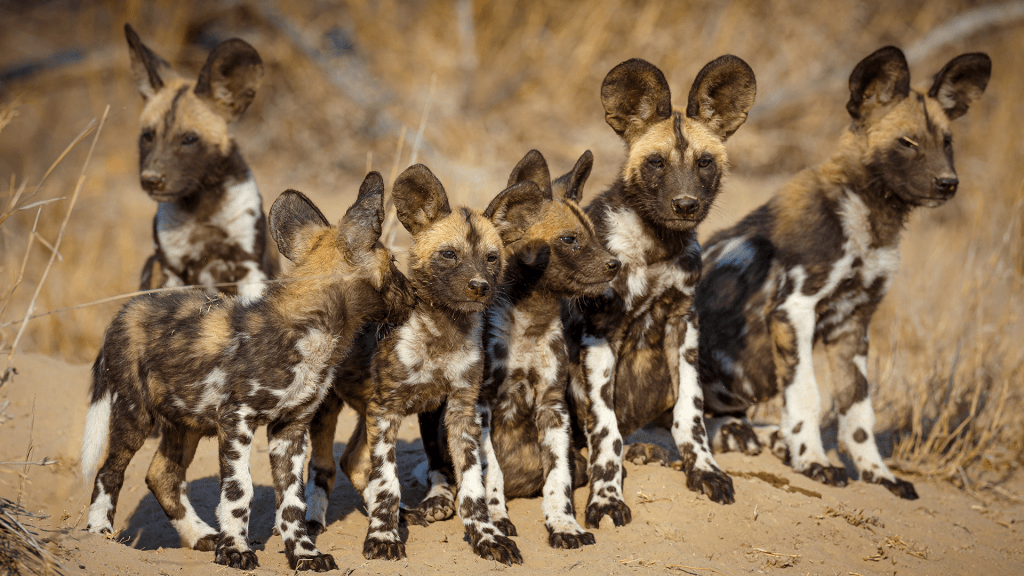
The African wild dog (also known as Painted Dogs) has become one of the most critically endangered species in Africa.
A PACK OF WILD DOGS CREDIT: PHOTO BY CHAD COCKING
At one time, nearly 500 000 wild dogs roamed the continent, but now only an estimated 7 000 of them remain.
With massively reduced numbers from the encroachment of farming activities, there is lack of genetic variation and a new strand of canine distemper threatens the species further.
The African Wildlife Foundation says habitat fragmentation and human-wildlife conflicts have nearly driven African wild dogs to extinction.
We need your pledge to raise awareness about the threats to these colourful carnivores now,” the foundation said in a statement.
“There are only about 6 600 remaining in the wild, but AWF is working to increase their numbers by expanding undisturbed wilderness areas where dogs can roam, collaborating with farmers to protect livestock, and more.
“African wild dogs are efficient hunters, with a hunt success rate of almost 80%. This makes them the third most productive hunter in the wild.”
The African wild dogs are said to be one of the top three most efficient hunting animals in Africa and are found in most parts of the continent aside from the drier deserts in the north, and the denser forests of the southern tip.
As some of the most social and vocal animals roaming the earth today, the African wild dog was an essential species to maintaining biodiversity in the African plains.
The African wild dog has been listed as an endangered species since 1990, and the species may soon be listed as critically endangered.
Their shrinking range is now located in the southern half of the continent.
In Zimbabwe, poachers are endangering the wild dogs in the Hwange National Park.
With limited employment opportunities and sporadic rainfall that negatively impacts farming yields, bush meat hunting has gained popularity over the past several years as a means to make a living.
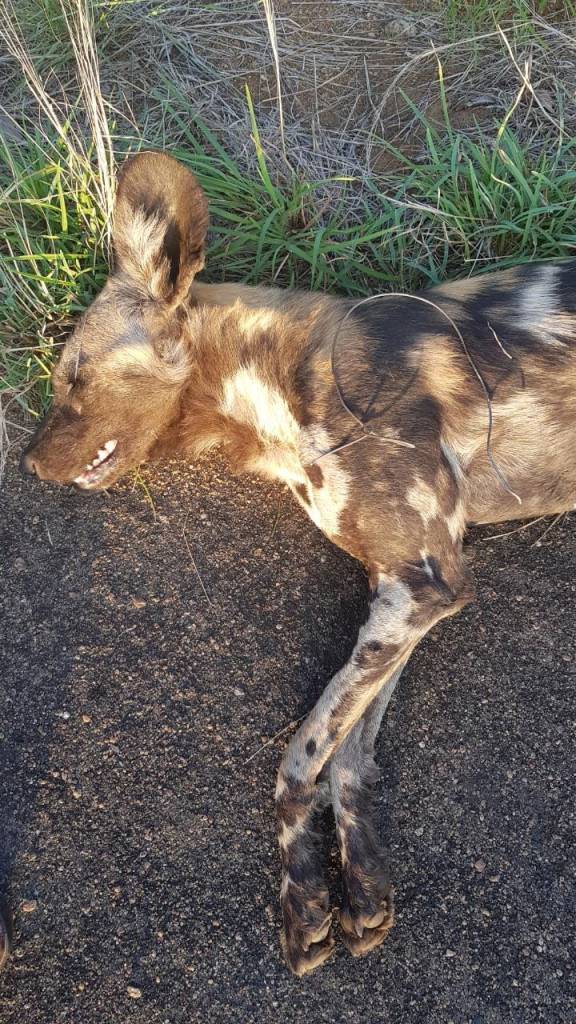
As a result, poachers use wire snares, which kill animals indiscriminately. Wild dogs are particularly vulnerable to injury or death by snares because they cover a lot of ground while hunting and travel more than 12 miles per day on average.
A WILD DOG CAUGHT IN A SNARE. PHOTO BY KRUGER NATIONAL PARK
In addition to snares, poachers sometimes poison water sources with cyanide.
They are normally targeting Elephants for their ivory but kill a variety of other species in the process, including the African wild dog.
The range of the African wild dog, as described by the International Union for Conservation of Nature, is shrinking daily as humans attain more land and are pushing the animals into smaller, less desirable territories.
What you can do
Support ‘Protect All Wildlife’ by donating as little as £1 – It only takes a minute but it can last a lifetime for an animal in need. Thank you.
We believe EVERY animal should be treated with respect, empathy, and understanding. We raise awareness to protect and conserve wild, captive, companion and farm animals. It is vital that we protect animals against acts of cruelty, abuse, and neglect by enforcing established animal welfare laws and, when necessary, take action to ensure that those who abuse animals are brought to justice.
Protect All Wildlife are involved in many projects to protect animals’ rights, welfare, and habitats. Money contributed to Protect All Wildlife supports ALL of our worthy programmes and gives us the flexibility to respond to emerging needs. Your donations make our work possible. Thank you for your support.
ACTOR, COMEDIAN AND ANIMAL RIGHTS ACTIVIST RICKY GERVAIS
Cruelty to animals, also called animal abuse, animal neglect or animal cruelty, is the infliction by omission (neglect) or by commission by humans of suffering or harm upon any animal. More narrowly, it can be the causing of harm or suffering for specific achievement, such as killing animals for entertainment; cruelty to animals sometimes encompasses inflicting harm or suffering as an end in itself, defined as zoosadism.
Animal cruelty can be broken down into two main categories: active and passive. Passive cruelty is typified by cases of neglect, in which the cruelty is a lack of action rather than the action itself. Oftentimes passive animal cruelty is accidental, born of ignorance. In many cases of neglect in which an investigator believes that the cruelty occurred out of ignorance, the investigator may attempt to educate the pet owner, then revisit the situation. In more severe cases, exigent circumstances may require that the animal be removed for veterinary care.
Whether it is Elephants killed for their tusks or beaten so they comply in the Asian tourism ‘industry’, Rhino slaughtered for their horns for ‘traditional Chinese medicine (TCM), animals skinned alive for the fur trade etc, animal activists need to stand together to fight for their rights.
At many elephant ‘sanctuaries’ across Thailand and in other countries, the elephants are taught to fear humans. This is so that they will act with compliancy. From babies they are tied up, starved and beaten in what is known as a ‘crush’. This is the act of breaking a young elephant’s spirit. And it’s mostly true what they say: an elephant never forgets. This means that, with their long memories, elephants remember this period of abuse for the rest of their lives. It ensures that the elephants will do what the trainers (also known as mahouts) say, and are more easily trained.
They are also commonly beaten with hooks and sticks that have nails poking out of them – this is when they are seen to be misbehaving or not following orders, or being too slow to respond. The mahouts want the animals to be constantly putting on a performance for those tourists who are there for elephant riding in Thailand.
UNDERCOVER FOOTAGE SHOWS CRUEL TRAINING USED ON BABY ELEPHANTS TO BOOST THAILAND TOURISM
As poaching and habitat loss ravage rhinoceros and elephant populations, protections for these species are vitally important. Today, all five rhino species and both elephant species are threatened with extinction. Efforts are underway across the globe to save these iconic animals.
Elephants and rhinos often experience painful deaths when poached. Rhinos may have their horns cut off while they are still alive and contrary to belief, elephants do not lose their tusks; they are hacked out by poachers.
More than a thousand rhinos and tens of thousands of elephants are killed each year to feed demand for ivory and rhino horn. The international trade in elephants, rhinos, and other species is the second-largest threat to wildlife after habitat loss. If the market continues to drive poaching, both rhinos and elephants could vanish from the wild as early as 2034.
HORRIFIC IMAGES OF ELEPHANTS POACHED FOR THEIR TUSKS AND A RHINO FOR ITS HORN
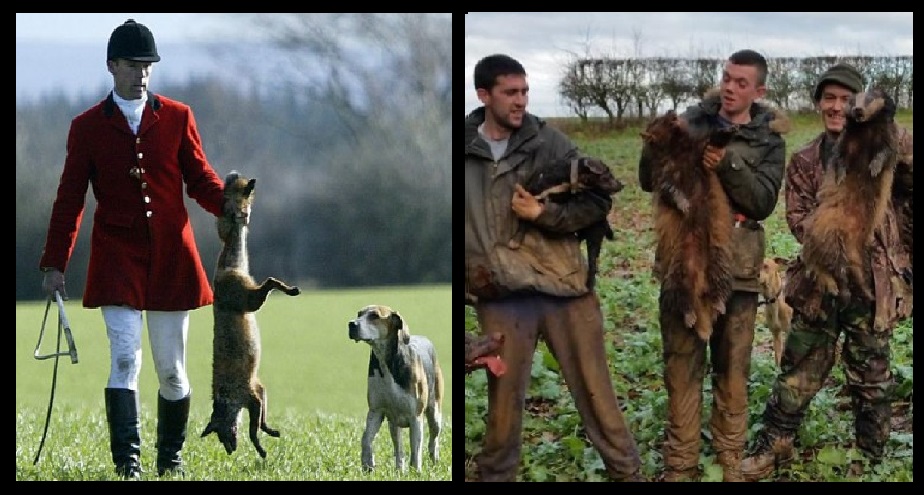
Every year, hundreds of badgers meet a horrific death in the name of ‘sport’ in the UK at the hands of terriermen. Many of those who have been caught digging into badger setts have used the excuse that they were after foxes – and many have escaped prosecution by so doing.
More than 10,000 are caught, tortured and killed in the UK each year by huntsmen with terriers – with almost a third of these illegal acts being carried out in Wales. Alarmingly, this figure is rising constantly. Terry Spamer, a former RSPCA inspector, believes that there are around 2,000 people involved in badger baiting currently. However, only around three people are caught and convicted of badger baiting each year, while the majority carry on breaking the law.
Traditional fox hunting was banned in England and Wales under the Hunting Act 2004. In spite of existing legislation, there has been 500 successful prosecutions under the Act. However, many incidents of illegal hunting have gone unpunished.
FOX HUNTING AND BADGER BAITING IS ILLEGAL IN THE UK BUT CARRIES ON WITH WITH APPARENT IMPUNITY
Dogfighting is an inhumane ‘bloodsport’ where dogs who have been bred, conditioned and trained to fight are placed in a pit to fight each other for spectator ‘entertainment’ and profit. Fights average one to two hours, ending when one of the dogs cannot continue.
Dog fights usually take part in quiet, private locations, such as in an industrial unit or farm building. Participants will spend months training their dogs in preparation, much like boxing, the fighters will have to hit a target weight to take part. Organisers will create a fighting ‘pit’ for the dogs to fight within.
Dogs who have been used in fighting often have serious injuries to their head, ears, front legs and chest that are caused as they go head-to-head in a pit. They will also have injuries of different ages, some old scars and some fresh wounds.
IT IS BELIEVED OVER 16000 DOGS DIE EACH YEAR IN ORGANIZED DOG FIGHTS
Each year, thousands of bulls are barbarically slaughtered in bullrings around the world. Over the centuries, bullfighters have found countless ways to rig the “fight” in their favor. Bulls are often weakened with drugs or by having sandbags dropped on their backs. Their horns have been shaved to keep them off balance, or petroleum jelly has been rubbed into their eyes to impair their vision.
Every year, approximately 250,000 bulls are killed in bullfights. Bullfighting is already banned by law in many countries including Argentina, Canada, Cuba, Denmark, Italy and the United Kingdom. Although legal in Spain, some Spanish cities, such as Calonge, Tossa de Mar, Vilamacolum and La Vajol, have outlawed the practice of bullfighting. There are only a few countries throughout the world where this practice still takes place (Spain, France, Portugal, Mexico, Colombia, Venezuela, Peru, and Ecuador). ~ HSI.
BULLS ARE TORTURED IN THE NAME OF CULTURE AND TRADITION
Each year from approximately September 1 to March 1, a large-scale hunt of dolphins takes place in the small village of Taiji, Japan, as featured in the 2010 Academy Award-winning documentary The Cove. During this six month season, dolphin hunters utilize drive hunt techniques to herd large numbers of dolphins to shore, resulting in their capture or death.
The captured dolphins may be selected for live trade to aquariums and marine parks for display, while others are slaughtered for their meat. The price for live captures is many times higher than those killed.
THE ANNUAL TAIJI DOLPHIN SLAUGHTER
What you can do to help animals in need:
Support ‘Protect All Wildlife’ by donating as little as £1 – It only takes a minute but it can last a lifetime for an animal in need. Thank you.
We believe EVERY animal should be treated with respect, empathy, and understanding. We raise awareness to protect and conserve wild, captive, companion and farm animals. It is vital that we protect animals against acts of cruelty, abuse, and neglect by enforcing established animal welfare laws and, when necessary, take action to ensure that those who abuse animals are brought to justice.
Protect All Wildlife are involved in many projects to protect animals’ rights, welfare, and habitats. Money contributed to Protect All Wildlife supports ALL of our worthy programmes and gives us the flexibility to respond to emerging needs. Your donations make our work possible. Thank you for your support.
SOME OF THE DOGS RESCUED FROM THE DOG MEAT SLAUGHTERHOUSE
As the Chinese dog meat festival in Yulin came to an end last month, 126 dogs, believed to once be pets, were rescued from an illegal slaughterhouse 1,000 miles away.
Thanks to animal advocates from Vshine, local Xi’an activists, the Baoji Small Animal Protection Association, and a group of police, law enforcement officers, and the mayor from Fufeng County, the animals escaped the brutal death that was awaiting them. The team worked to close down an illegal dog slaughterhouse.
The Rescue Carried Out By Humane Society International
When they arrived, they found a gruesome scene with dead dogs on the floor, pools of blood, de-hairing machines, and knives. They also found processed dog meat and a pile of pet collars in the corner of the facility. This is just more proof that all too often pets are stolen from the streets, their homes, and farms and taken to be killed for meat.
Vshine, an organization that campaigns across Asia for the end of the dog meat trade, released a video and photos of the horrific scene. Many of the dogs found alive at the scene were German shepherds, Labradors, Huskies, Golden Retrievers, and other scared and emaciated pups. They huddled together in the filthy slaughterhouse but despite what they had been through, many were eager to receive comfort from the activists. They believe that most of the dogs were once pets.
MOST OF THE DOGS HAD COLLARS
Ziyang Huang from Vshine told the Humane Society International, “This was a horrendous slaughterhouse and we are so grateful to the tip-off by the Xi’an activists so that we could rally together and get this place shut down before any more dogs suffered and died there. The dogs we found alive were whimpering and distressed but very happy to see us. They were standing in their own filth with blood and dog fur all around, and slaughter equipment just nearby. They will likely have witnessed dogs killed and butchered right in front of them. The amount of pet collars we found was really shocking, and the gentle, friendly nature of these dogs tells us probably most of them were once part of a home and somehow ended up at that terrible place. That’s just one of the reasons why we campaign to end this cruel dog meat trade.”
Animal campaigners from Vshine recently teamed up with police from the city of Shaanxi to help rescue nearly 400 dogs from a truck that was headed to the Yulin festival.
Although dog meat is still a huge problem in China, most people there don’t eat dog meat and oppose the industry. It is not a part of China’s mainstream culinary culture and the country’s concern for animal welfare is growing. In 2020, China’s Ministry of Agriculture and Rural Affairs made a statement saying that dogs are companion animals, not “livestock” for eating. That same year, two cities in mainland China banned the consumption of dog and cat meat, a decision that was supported by nearly 75 percent of Chinese citizens. However, an estimated 30 million dogs are killed a year for meat in other parts of Asia.
Sign this petition to urge the government of South Korea to create programs to transition dog meat farmers into more ethical industries and protect all dogs!
What you can do
Support ‘Protect All Wildlife’ by donating as little as £1 – It only takes a minute but it can last a lifetime for an animal in need. Thank you.
We believe EVERY animal should be treated with respect, empathy, and understanding. We raise awareness to protect and conserve wild, captive, companion and farm animals. It is vital that we protect animals against acts of cruelty, abuse, and neglect by enforcing established animal welfare laws and, when necessary, take action to ensure that those who abuse animals are brought to justice.
Protect All Wildlife are involved in many projects to protect animals’ rights, welfare, and habitats. Money contributed to Protect All Wildlife supports ALL of our worthy programmes and gives us the flexibility to respond to emerging needs. Your donations make our work possible.
Britain’s rescue centres are on the brink of an animal welfare crisis with many of its centres ‘full or close to capacity’
Overstretched rescue centres are having to turn dogs and cats away and put them on waiting lists, as the cost of living crisis forces growing numbers of households to give up their pets.
While inflation has soared to a 40-year high of 9.1 per cent, the cost of some animal essentials has climbed at an even steeper rate, notably dog food, which has risen in price by more than 16.75 per cent over a year.
Andrew Gillon, director of operations at the National Animal Welfare Trust (NAWT), which operates five rehoming centres in the south of England, said “For the first time, almost all of our centres actually have waiting lists for animals coming into us.
“Financial reasons are always central to why people have to relinquish their pets, so with the added pressures of the cost of living crisis we are seeing, and will continue to see, people unable to look after their animals.
“Most people are absolutely heartbroken when they have to give up their pet. We will never judge, and always support people who try to do the best for the animal. It’s a horrible situation.”
“We’re starting to see the knock-on effects of this as we, and other charities, predicted. Tragically we’re starting to see an increase in the abandonment of pets and growing numbers of cats and dogs being rescued and coming into our care.”
Miracle’s Mission, a charity that rescues and rehomes sick, injured and disabled animals have a lengthy waiting list due to fewer people adopting.
Paul Christian, Patron of the charity, says there the number of referrals are rising but due to fewer people willing to foster or adopt they cannot take any more.
We have a long waiting list of dogs and cats looking for foster homes. We are looking for foster carers to take care of dogs and cats until we can find them their forever homes.
“We’re rehoming and fostering dogs as quickly as we can – but as soon as we free up a kennel space, there’s a dog to fill it again,” he added.
While national organisations are able to make use of vacancies across their network, smaller charities like Miracle’s Mission have no choice but to add pets to a lengthy queue.
Families across Britain are grappling with high fuel bills, record petrol prices and rocketing food costs, as inflation hit a level last seen in 1982.
According to animal charities, it costs £50 to £70 a month to own a dog, while cats cost an average of £80 per month
Despite the costs, more Britons than ever are pet owners. March data from the Pet Food Manufacturers’ Association (PFMA) suggests that more than 3.2 million people in the UK had acquired an animal since the start of the Covid-19 pandemic in 2020, and 17 million UK households were responsible for a total of 34 million pets.
Ricky Gervais has carved an incredibly successful career from making people laugh but it’s no joking matter when it comes to standing up for the rights of animals!
In 2014, Ricky famously declared; “Animals don’t have a voice. But I do. A loud one. I’m a fucking big mouth. My voice is for them. And I’ll never shut up while they suffer”. And true to his word, Ricky is constantly shouting from the rooftops about bringing an end to animal cruelty. Whether it’s fighting against Fox hunting or battling a historic Bull fight when it comes to all creatures great and small, Ricky has their back.
Thanks to his celebrity status from films and TV, Ricky has a staggering following on Twitter and Facebook and he regularly uses social media to make people sit up and listen. One carefully worded tweet to his millions of followers can bring global attention to animals in fear or danger within seconds. He can encourage charity donations to come flooding in and get everyone talking about shocking examples of cruelty around the world.
In the past, Ricky has used social media to highlight the atrocity of 10,000 dogs slaughtered every year at the annual Chinese Yulin Dog Meat Festival and campaigned to bring it to an end.
He has individually named and shamed ‘big game hunters’ as they’ve posed by their bleeding ‘trophies’. Ricky also posted this message on his Facebook page – “I’m sick of Trophy Hunters trying to excuse their grim sport by saying they provide a service. They exploit the needs of the poor. They pay lots of money to go and shoot a magnificent animal because the authorities need the cash, and then claim they are doing a good deed. It’s not a good deed. Those authorities would rather have the money AND the animal still alive but they can’t afford to. So they’re forced to take money from rich psychopaths who get their cheap fucking thrills from shooting a giraffe or elephant in the head. If they were providing a service THEY would be the ones being paid. Imagine a vet paying you to put down your dog and then taking a selfie next to the corpse. And as for “the money goes to saving there remaining animals”. Oh dear. Where will it end? Can you pay more to kill the Leopard with a hammer if that’s your perversion? They’re already killing with bows and arrows for fucks sake. And would we allow some billionaire sicko to shoot one cancer patient if he gave a million dollars to cancer research? No. Of course we fucking wouldn’t. If they really wanted to do a good deed they would donate the money, and NOT shoot the animal. They would be heroes then. As opposed to murdering scum”.
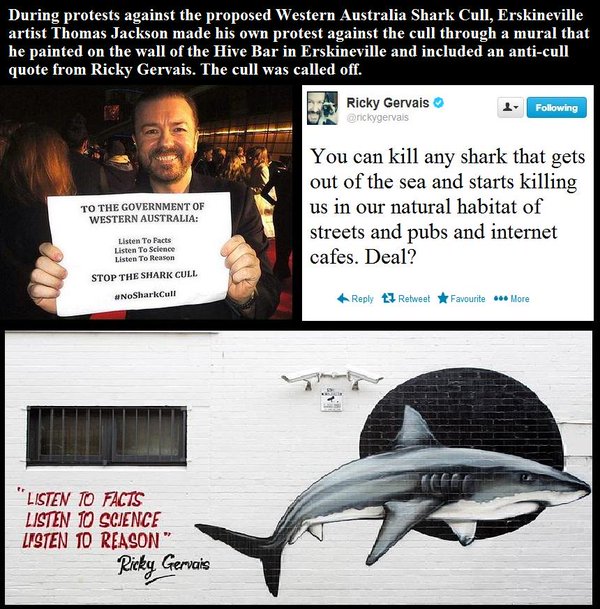
In 2014, Ricky lent his considerable Twitter celebrity to the campaign against Western Australia’s controversial Shark kill policy. He appeared on social media holding up a sign decrying the WA government plans to catch and kill any shark 3m or over that comes within 1km of a Perth beach. It read: “To the government of Western Australia – Listen to Facts, Listen to Science, Listen to Reason – Stop the Shark Cull.” He also used his appearance at the British National Television Awards.
A local street artist made his own protest by painting a mural on a building which included the anti-cull quote by from Ricky. The cull was later called off!
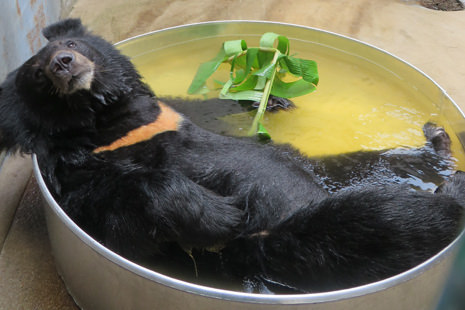
Also in 2014, Ricky symbolically adopted one of the 130 moon Bears on a Bear bile farm in Nanning, China, a farm that’s set to transition into Animals Asia’s third moon Bear sanctuary. Ricky named the young male Bear, Derek, after his comedy-drama.
L to R – Peter Egan, Ricky’s partner Jane Fallon, Ricky and Jill Robinson (founder of Animals Asia)
Derek was a ten-year-old Bear with a host of problems, as a result of a life trapped in a cage where workers would extract his bile. His head is raw from years of rubbing his head against the bars of his small cage, and most of his teeth have fallen out, with the exception of a few rotten teeth which badly needed to be extracted. His lolloping tongue is a result of a nerve damage, while his right eye suffers from a cataract.
“Derek is a beautiful but very damaged Bear,” said Ricky. “After such a sad and traumatic existence on a Bear farm I am thrilled to have adopted him as one of 130 Bears currently being rescued by Animals Asia in China and long to see him enjoying his new life in the sun! I so admire this historic initiative to turn a Bear farm into a sanctuary and applaud the efforts of everyone involved.”
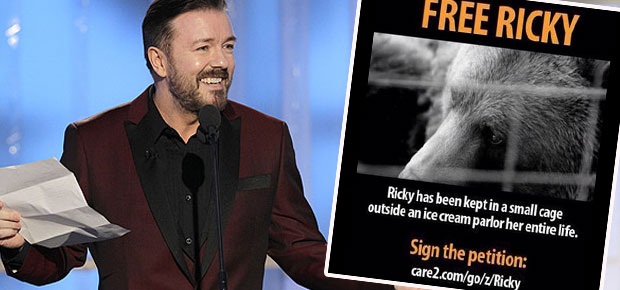
In the USA in 2015, a female black bear called Ricky who spent 18 years in a cage was freed after a settlement in a lawsuit brought by the Animal Legal Defense Fund
The lawsuit was filed by in December 2014 on behalf of concerned Pennsylvania residents against Jim Mack’s Ice Cream, where Ricky had lived in a small, concrete cage, eating a mix of corn and dog food funnelled onto the floor of her enclosure.
Ricky’s plight drew national attention, and tens of thousands of people (including Ricky) signed petitions requesting her release..
Again in 2015, Ricky helped hundreds of shelter dogs desperately lacking food and medical care. When an influx of 680 dogs arrived at a public shelter in Odai, Romania, the workers knew these dogs didn’t have anywhere else to turn. Despite not having enough food, bedding or even bowls for water, the shelter took them in. They needed help and fast, so London-based partner rescue, K-9 Angels created a fundraising page with an urgent plea for donations “to ease the emergency situation at the shelter.” Over the course of several days, the group had raised only about £4,000 for the Romanian shelter. The money was enough to make sure the dogs had enough food for about two months, but it didn’t come anywhere near what the shelter needed to pay for basic supplies, vaccinations and labour costs. In fact, it was about £26,000 short. That’s when Ricky stepped in and posted the following tweet.
OK. That's The Emmys done. Now back to important stuff. Emergency food & aid for dogs at Odai public shelter, https://t.co/6PS5kSW8Mn pls RT
“Within days we had raised £20,000. Before Ricky retweeted we had only raised £4,000 so it just goes to show the power that animal loving celebs have. We are very grateful,” K-9 Angels founder Victoria Eisermann. The group showed their gratitude with a post in which they called the comedian “an angel” for sharing their fundraiser page. Eisermann added that the group even honoured Ricky by naming one of the young puppies “Ricky.”
Lately, Ricky has been very vocal about Lucy’s Law, the campaign to end the heart-breaking puppy farming trade. Lucy’s Law is named after a remarkable Cavalier Spaniel called Lucy who was rescued from a Welsh puppy farm and became a celebrity in her own right on social media before her death more than a year ago. Ricky regularly posted details on Twitter and Facebook leading to it being a short distance from becoming law.
Ricky’s passion and ability to be vocal has made millions of people painfully aware of such issues as the slaughter of whales in the Faroe Islands and the stolen pet dogs of Thailand that are destined for the illegal meat trade.
Ricky also reminds us all of the huge number of animals in rescue shelters and the importance of the hashtag #AdoptDontShop with his numerous posts.
Ricky is driven to raise awareness and get signatures on petitions that pile pressure on governments. He has put his name to campaigns with charities such as PETA and the Humane Society International. Ricky won’t stop until animals are protected from blood sports, their fur is no longer used as a fashion statement, the Yulin ‘festival’ ends and the last SeaWorld ‘fish tank’ is empty (etc etc!)
This year Ricky donated £427,243 to animal charities from the sale of premium seats for his stand-up tour Supernature.
Ricky said: ‘It is such a privilege to be able to help animals in need, simply by doing a job that I already love.’
Ricky is undoubtedly a voice for all animals and it’s fair to say the world is listens to him.
And a final quote from Ricky……
This is only a small part of what Ricky has done for animals over the years.
…….and THAT is why Ricky Gervais is a animal rights legend!!
Protect All Wildlife
The Mission of Protect All Wildlife is to prevent cruelty and promote the welfare of ALL animals.
We believe EVERY animal should be treated with respect, empathy, and understanding. We raise awareness to protect and conserve wild, captive, companion and farm animals.
It is vital that we protect animals against acts of cruelty, abuse, and neglect by enforcing established animal welfare laws and, when necessary, take action to ensure that those who abuse animals are brought to justice.
Protect All Wildlife are involved in many projects to protect animals’ rights, welfare, and habitats. Money contributed to Protect All Wildlife supports ALL of our worthy programmes and gives us the flexibility to respond to emerging needs. Your donations make our work possible.
















 PROTECT ALL WILDLIFE