Asian Elephants Seen Mourning And Burying Their Dead For The First Time

Five Elephant calves have been found buried in drainage ditches on tea-growing estates in India in a rare example of burial behaviour in non-human animals.
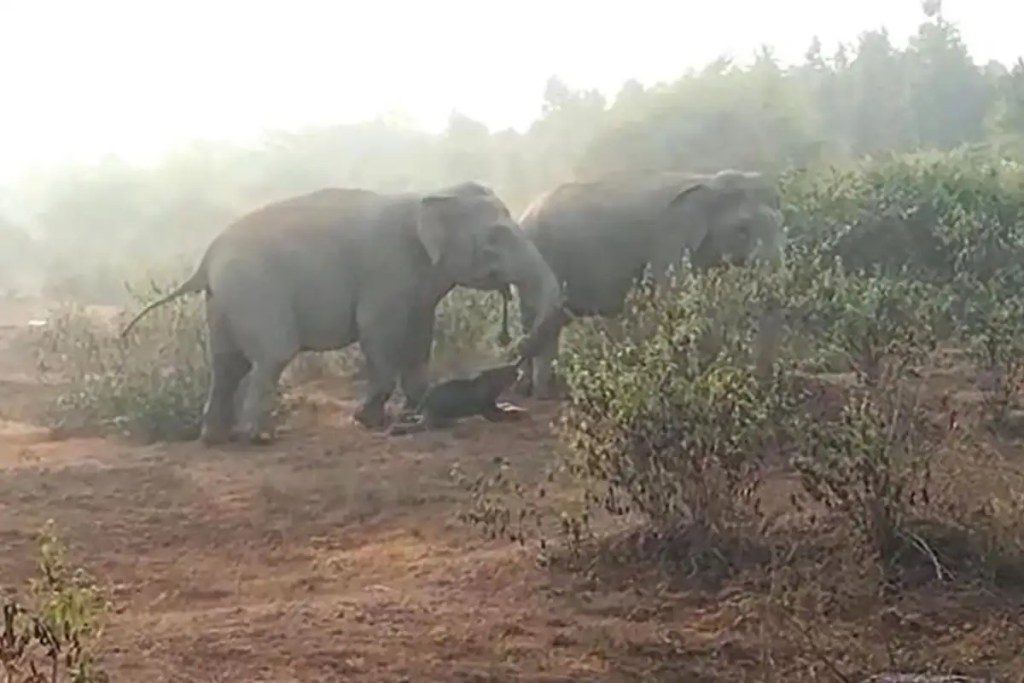
An Elephant pulling a dead calf on a tea estate in North Bengal, India
Credit: Parveen Kaswan and Akashdeep Roy.

Asian Elephant herd members in north Bengal have been documented burying premature calves in irrigation trenches inside tea gardens. The behavior is unique to this species and has been observed in cases in Debpara, Chunabhati, Bharnabari, Majherdabri, and the New Dooars tea gardens near Gorumara and Buxa. In five case studies in north Bengal, herd members dragged the calves away from human settlements before burying them in “leg-upright position” in irrigation trenches inside tea gardens.

Footprints and dung of various sizes indicate that herd members of all ages contributed to each burial. Night guards at the estates reported loud Elephant vocalisations, sometimes lasting as long as 30 to 40 minutes, before the herd left the area.

Akashdeep Roy at the Indian Institute of Science Education and Research in Pune and Parveen Kaswan at the Indian Forest Service suggest that these trumpeting sounds may signify mourning and that the herds showed “helping and compassionate behaviour” during the burials.

“Calf burials are extremely rare events in nature,” says Roy.

An Elephant calf buried on a tea estate, with its feet protruding from the ground. Credit: Parveen Kaswan and Akashdeep Roy

They were surprised that the calves were buried feet up, but if the herd collectively buried each calf, this is the most accessible position to place the carcass into the drainage ditch, says Roy. As social animals, it may be most important to the elephants to bury the calf’s head, he says.

The calves’ bodies were later exhumed and examined. They ranged in age from 3 months to a year old, and a number of them were malnourished and had infections. Bruising along each calf’s back suggests they were dragged or carried long distances to the burial sites.

African bush Elephants (Loxodonta africana) have been observed covering dead bodies with vegetation and returning to these locations later. However, the Asian Elephants (Elephas maximus) in this study generally avoided returning to the burial sites, instead using alternative pathways.

“These observations offer impressive evidence of the social complexities of Elephants,” says Chase LaDue at the Oklahoma City Zoo and Botanical Garden. “Others have noted that Elephants appear to behave in unique ways towards their deceased relatives, [but] this paper is the first to describe what appears to be methodical and deliberate burial of Elephant calves after they have been carried to the burial site.”

The land in which Elephants once roamed freely is shrinking as humans expand – especially in India, the world’s most populous country. Only about 22 per cent of the land that Elephants use is within protected areas.

“Understanding how Elephants behave and respond to rapid changes in human-dominated landscapes may help us develop conservation strategies that promote the coexistence of people and Elephants,” says LaDue.

Research Study: Unearthing Calf Burials Among Asian Elephants In Northern Bengal, India.

Asian Elephants are recognised as endangered by the International Union for Conservation of Nature.

An estimated 26,000 of them live in the wild, mostly in India with some in South-East Asia, surviving for an average of 60-70 years outside captivity.

WHAT YOU CAN DO TO HELP WILDLIFE

You can support ‘Protect All Wildlife’ many projects by donating as little as £5 – It only takes a minute but it can last a lifetime for an animal in need. Please donate below.

Donate Here: Please Help Animals In Need

Everyone who donates will receive a Certificate of Appreciation as a thank you for helping animals in need.

The Mission of Protect All Wildlife is to prevent cruelty and promote the welfare of ALL animals.

We believe EVERY animal should be treated with respect, empathy, and understanding. We raise awareness to protect and conserve wild, captive, companion and farm animals.

It is vital that we protect animals against acts of cruelty, abuse, and neglect by enforcing established animal welfare laws and, when necessary, take action to ensure that those who abuse animals are brought to justice.

Protect All Wildlife are involved in many projects to protect animals’ rights, welfare, and habitats. Money contributed to Protect All Wildlife supports ALL of our worthy programmes and gives us the flexibility to respond to emerging needs. Your donations make our work possible.
Donate Here: Please Help Animals In Need

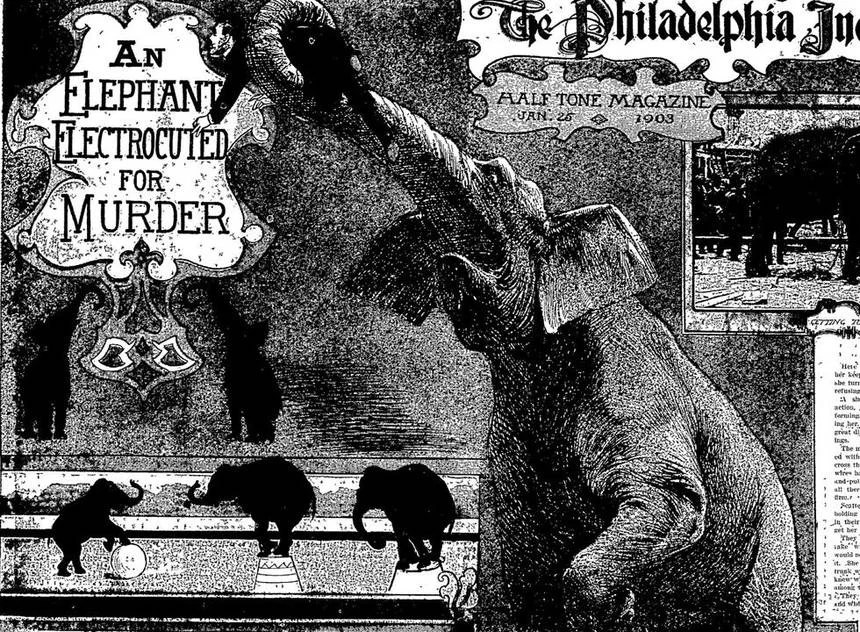
Theme Park History: The Dark Story Of Thomas Edison And The Electrocution Of Topsy The Elephant For Murder

Topsy The Elephant

Much has been written about the controversial movie Blackfish, the 2013 film that vilified SeaWorld for use of captive orcas. Many in the theme park community have attacked the movie as a hit piece, while others in the anti-animal captivity community used it as a call to arms. But for all the discussion and passion that the movie generated, history tells us that this issue is as old as the industry itself. If told completely, this story shines a different kind of light on the culture of the times, and also on an iconic figure in American history. Once upon a time, a 110 years before Blackfish and Tilikum there was another movie, and an Elephant named Topsy.

Sometime around 1875, Topsy was smuggled as a baby out of Asia and brought into America to perform in the Forepaugh circus. Billed as the first “American born elephant,” she became the star of the show. Like many circus performers at the time, she was subject to harsh treatment during training sessions. Trainers of the time were vicious towards the animals in their attempts to control them, prodding the elephants with sharp hooks between the eyes and in the head. Beatings, hot pokers, and even guns were also common methods of training. By most accounts, Topsy was one of the fan favorites. Behind the scenes though, she endured years of harsh treatment. Her crooked tail was a point of emphasis with promoters. In reality, it was the result of a particularly severe beating. Over the years, her temper became shorter and shorter, and she attacked several handlers and was reportedly responsible for the deaths of three of them. In 1902, one particular (alcoholic) trainer named James Fielding Blount foolishly met his end. After a night of heavy drinking, Blount went into the elephant tent and offered Topsy a drink of whiskey. Her refusal angered Blount, who reportedly then stuck a lit cigar on the tip of her trunk. He was then promptly thrown down and crushed.

After this highly-publicized incident, Topsy was then sold to Coney Island amusement operator Paul Boynton. When Boynton sold his operation to the founders of Luna Park, Topsy and her trainer were part of the sale. Luna Park was under construction at the time, so for a brief time she was put to work hauling loads of building material. After a new site for the “Trip to the Moon” attraction was cleared, the workers tried, but simply couldn’t move the massive structure to its new location. Topsy was called upon to do the job. With the help of a few horses, she pushed the building nearly a mile to its new location. Police arrested one of her handlers that day after observing “excessive” use of a sharp object to prod the elephant. Her trainers reportedly kept a pitchfork handy. He was tried for animal cruelty but later was acquitted because the amount of prodding was deemed acceptable. Subsequent incidents and moments of aggression occurred, all under the watchful eye of the press. The final straw came when trainer Whitey Ault got drunk and decided to ride Topsy down Surf Avenue. When Whitey was arrested and taken to the station, Topsy followed them down the street and then tried to go into the police station behind them. Whitey was fired for this incident, leaving nobody on the staff that could handle Topsy. With costs of her care high and no one to take care of the elephant, Luna Park owners Thompson and Dundy tried to get rid of her. However, all the bad press over the past year had tarnished the elephant’s reputation. No zoo would take her, no show would have her. They tried to raffle her off, then to give her away for free, but had no success. After exhausting many options, the decision was then made to euthanize Topsy.

Topsy

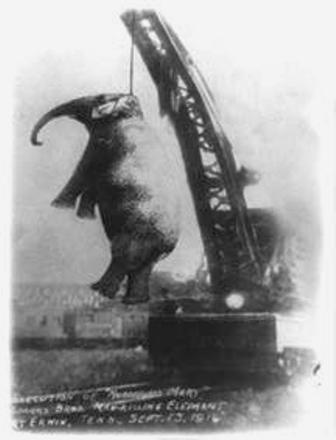
Killing a 10-foot tall, three-ton elephant in 1903 wasn’t a simple proposition, let alone doing so in a quick and humane way. They didn’t have a gun big enough to quickly do the job, and even though it had been done to other elephants before, the idea of hanging her was thrown out.

edison-elephant-hp-orig
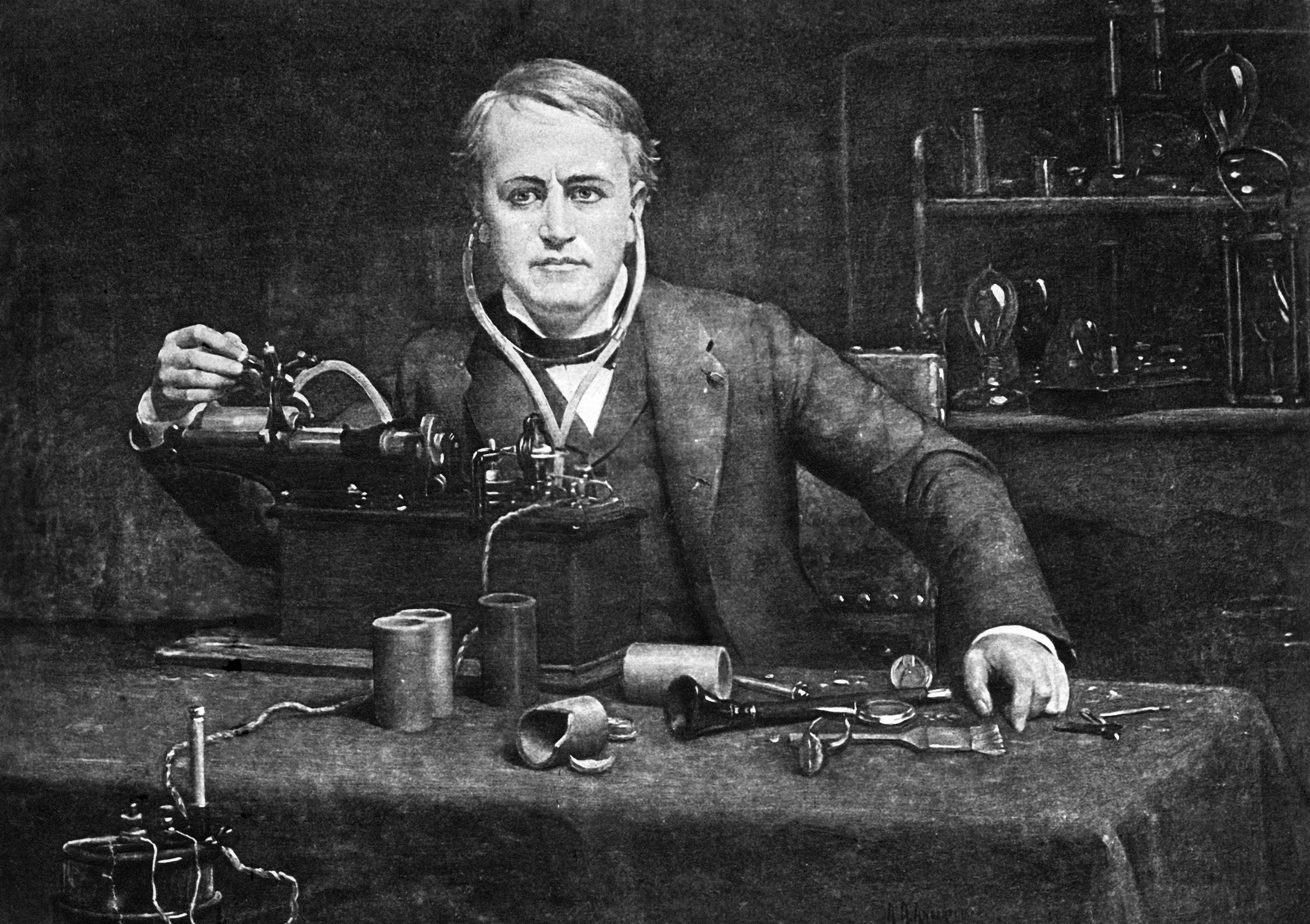
Thomas Edison

The owners of Luna Park turned to inventor Thomas Edison, who by 1903 had fought and lost the “battle of the currents” for the electricity standard to be used in the United States. Edison’s direct current (DC) methods had been used extensively at first, but the more efficient alternating current (AC) method, invented by Nikola Tesla and backed by industrial giant George Westinghouse, had gained traction and was becoming the standard for distribution. Trying to keep his standard intact (and preservation of the royalties), Edison had engaged in a propaganda war, discouraging the use of AC by lobbying Congress, spreading false rumors and misinformation, and staging public demonstrations of its danger by electrocuting stray and unwanted animals. For a time his technicians were regularly dispatched for this matter, killing dogs and cats, and in some cases horses and cows. He commissioned a partner to develop the electric chair for the state of New York with AC current, even though he himself was reportedly an opponent of capital punishment.

Edison’s “experience” with the matter and his standing as an authority on electricity prompted Thompson and Dundy to call. Even though the current war was over, he apparently for one reason or another couldn’t resist the opportunity to demonstrate the “dangers” of AC one more time…this time on the largest land animal in the world. Some say he was still fighting the war in his own mind, others say Edison still harbored a grudge from the loss and participated out of vindictiveness. Whichever the case, he signed on to do it, and he would document the whole thing with another one of his inventions, the movie camera.

In another sign of the times, the ever-enterprising owners of Luna Park knew the attention the story had gotten, and they initially intended to charge admission for the public execution. The press coverage though had also attracted the attention of the SPCA, who flatly refused to allow that to happen. In turn, the admission fee idea was thrown out, but the public would still be allowed to watch. By this time, Topsy had been characterized in the press like a convicted killer condemned to death, and so the people came to watch.

The 'execution' of Topsy

The ‘execution’ of Topsy the Elephant

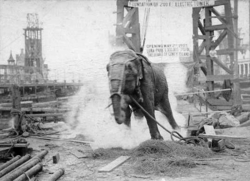
The execution date was set for January 4, 1903. A crowd of about thousand gathered in the courtyard of the half-finished Luna Park to witness the spectacle. Topsy’s old trainer Whitey Ault was offered a then handsome sum of $25 to help bring the Elephant to her demise, but the saddened trainer turned it down, saying he wouldn’t do it for a thousand. With no qualified people to handle her, leading a very docile Topsy to the platform proved difficult. She wouldn’t cross the bridge to the middle of the lagoon. After technicians moved the wood and metal platform to her, she wouldn’t stand in place, then she shook off the electrodes that were hooked to her, and then refused to eat the cyanide laced carrots that were offered to her…almost as if she knew what was going on. After some coaxing, Topsy finally ate the carrots and the switch was thrown.

She died almost instantly, and almost took one of the Edison technicians with her. He was also electrocuted when he threw the switch. Even though she had already been pronounced dead, workers tightened a noose around her neck for ten minutes to make sure. SPCA doctors on hand pronounced it as the most humane way to kill an animal they had ever seen, and Edison had his documentary. The film “Electrocuting An Elephant” depicted the first actual death on screen, and was seen by audiences across the country. A part of it remains intact online [warning: disturbing images] for the curious to view. Ultimately, the film did nothing to either advance his agenda or raise any kind of awareness for animal cruelty. Audiences of the time were simply more interested in the novelty of the motion picture, the spectacle, and being entertained. Perhaps some things haven’t really changed after all.

Ultimately, Topsy’s story provides a bit of perspective on today’s state of affairs. Her story of a systematic life of abuse in the circus and the spectacle surrounding her death is the true epitome of animal cruelty. Topsy was not the only circus animal of the time to endure this kind of treatment, to be killed, or to kill a human being, but she was the most well known and well documented. Her brief role in the early theme park industry as well as American history makes the story worth telling, however horrible it may be. As for today, the debate continues. People may or may not agree with the use of marine animals in a theme park, but SeaWorld’s animal treatment methods, and its practices of conservation, animal rescue and rehabilitation, research, and education stand in stark contrast to the brutality of the Forepaugh circus and its contemporaries.

For years there were reports of ghost sightings, but the story of Topsy largely disappeared for a long time. In recent years Topsy has reappeared in pop culture, namely the television show Bob’s Burgers and the 2009 video game Assassin’s Creed II. A book about Topsy and the early American circus written by Michael Daly was published in 2013. A memorial dedicated to her sits in the Coney Island museum.

WHAT YOU CAN DO TO HELP ANIMALS IN NEED

You can support our work by donating as little as £5 – It only takes a minute but it can last a lifetime for an animal in need.

PLEASE CLICK HERE TO DONATE TO HELP ANIMALS IN NEED

Everyone who donates will receive a Certificate of Appreciation as a thank you for helping animals in need.

The Mission of Protect All Wildlife is to prevent cruelty and promote the welfare of ALL animals.

We believe EVERY animal should be treated with respect, empathy, and understanding. We raise awareness to protect and conserve wild, captive, companion and farm animals.

It is vital that we protect animals against acts of cruelty, abuse, and neglect by enforcing established animal welfare laws and, when necessary, take action to ensure that those who abuse animals are brought to justice.

Protect All Wildlife are involved in many projects to protect animals’ rights, welfare, and habitats. Money contributed to Protect All Wildlife supports ALL of our worthy programmes and gives us the flexibility to respond to emerging needs. Your donations make our work possible.
Scientists Have Uncovered The Cause Of The Mysterious Deaths Of 35 Elephants In Zimbabwe.

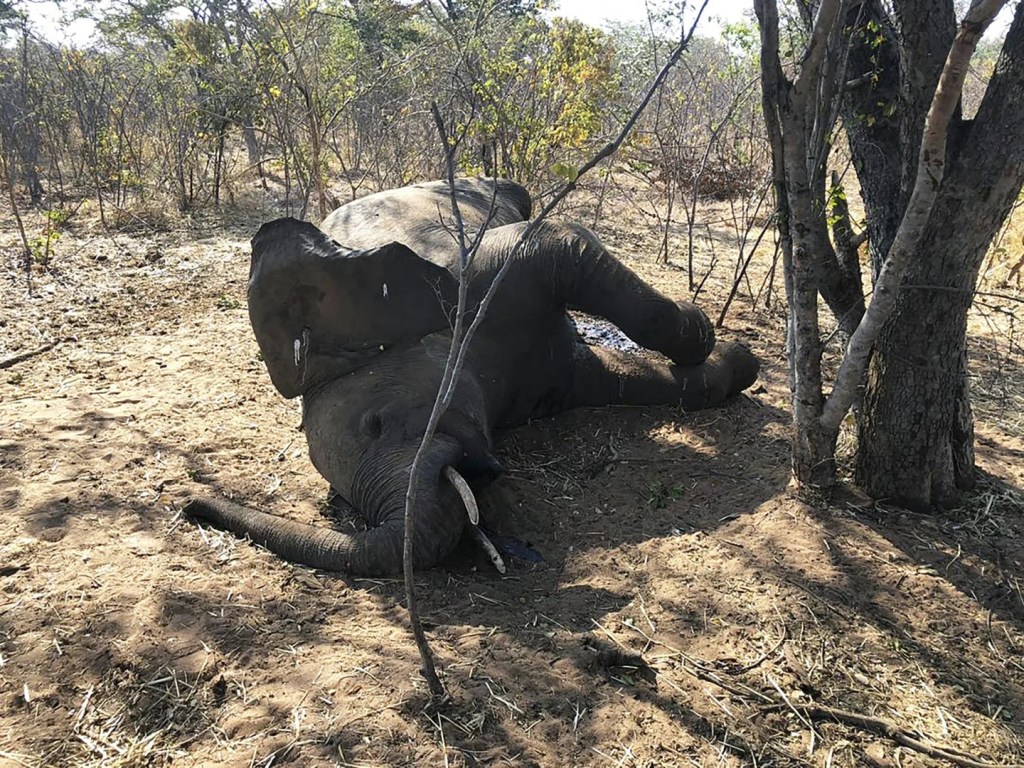
A dead Elephant found in Hwange National Park, Zimbabwe, Aug. 29, 2020. Credit: AP Photo

Elephants that dropped dead in Zimbabwe were victims of an obscure bacteria combined with extreme heat. Scientists fear more Elephants – and other species – could suffer the same fate

No one knew precisely what caused the unexplained tragedy in which 35 African Elephants in Zimbabwe mysteriously dropped dead in August/September 2020.

This incident followed the death of approximately 350 Elephants in neighbouring northern Botswana from May to June 2020, which triggered much international concern. 

Aerial views of of some of the Elephants that were been found dead in Botswana  Credit: National Park Rescue

At first, anthrax was a possible contender, along with poaching or intentional poisoning, but they were all ruled out early on.

Three years later, a new study by a group of scientists has found that a rare bacterium that causes organ inflammation is responsible for the Elephants’ untimely deaths.

A variant of the Pasteurella bacteria, named Bisgaard taxon 45, was identified by the scientists in their study of samples from six of 15 dead Elephants that they analysed.

This variant of this bacteria showed up in their sample, making the scientists conclude that the Elephants died from the lethal infection.

At first, scientists reviewed the possibility of Pasteurella multocida, which is known to cause hemorrhagic septicemia, a common disease amongst cattle and buffaloes that is highly fatal.

However, after further testing, they found that the findings were more complicated than thought.

“It became clear from the culture samples that we did not have P. multocida but something else similar,” Laura Rosen, an epistemologist who worked on the study, said, according to Science News.

While samples from the other elephants were not obtained due to rotting or not being able to get permits quick enough, six of the samples they did get showed this rare bacteria.

Little is known about this bacteria, as a few rare cases have only been documented so far.

The study cites that Bisgaard taxon 45 has in the past been linked to bite wounds on humans from tigers and lions.

It was also previously found in a chipmunk and a captive health parrot.

However, the researchers suspect this is not the first time that an outbreak of the disease has caused mass fatalities within Elephants.

In 2019, 14 Elephants were found dead in Zimbabwe within the same time period as this group was a year later.

While no bacterial samples were taken at the time, the noted conditions of the deceased animals were similar to those of the 2020 group.

It is unclear what caused this bacteria to enter the Elephants’ body, whether it is part of its “normal flora,” but the researchers believe that stress and heat would have contributed to the outbreak.

“It’s premature to say that climate change has influenced [this], but it may do so in future if we get more and prolonged droughts, or the rainfall patterns [change] and we have a much harsher dry season,” Dr Chris Foggin, a researcher on the study said.

“I do think that if that is the case, then we are more likely to see this sort of mortality event occurring again.”

This study is essential for organisations that seek to conserve these Elephants, who are already an endangered species.

Earlier that same year, around 350 Elephants dropped dead within the space of three months in neighbouring Botswana.

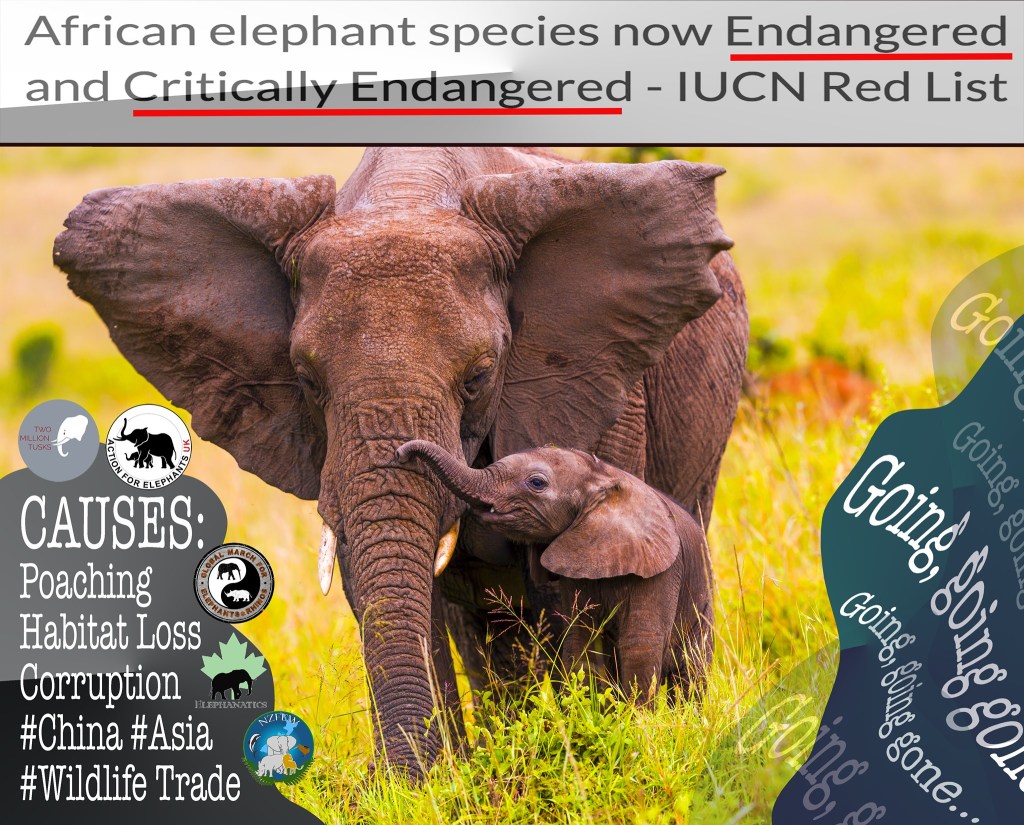
African Elephants are listed as endangered on the IUCN Red List. Credit: GMFER

African Elephants are listed as endangered on the International Union for Conservation of Nature Red List, with only approximately 415,000 left in the wild as of 2023.

According to the World Elephant Day organization, Elephant numbers have dropped by 62% over the last decade. They estimate that 100 African Elephants are killed each day by poachers.

WHAT YOU CAN DO TO HELP ANIMALS IN NEED

You can support our work by donating as little as £5 – It only takes a minute but it can last a lifetime for an animal in need.

PLEASE CLICK BELOW TO DONATE PLEASE HELP ANIMALS IN NEED

Everyone who donates will receive a Certificate of Appreciation as a thank you for helping animals in need.

The Mission of Protect All Wildlife is to prevent cruelty and promote the welfare of ALL animals.

We believe EVERY animal should be treated with respect, empathy, and understanding. We raise awareness to protect and conserve wild, captive, companion and farm animals.

It is vital that we protect animals against acts of cruelty, abuse, and neglect by enforcing established animal welfare laws and, when necessary, take action to ensure that those who abuse animals are brought to justice.

Protect All Wildlife are involved in many projects to protect animals’ rights, welfare, and habitats. Money contributed to Protect All Wildlife supports ALL of our worthy programmes and gives us the flexibility to respond to emerging needs. Your donations make our work possible.

Free The Karachi Zoo Elephants From Years Of Neglect And Suffering

Sonia & Malika

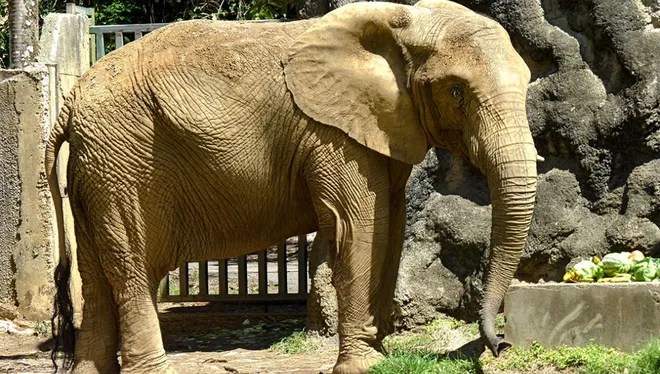
The three remaining African Elephants in Karachi, Pakistan continue to be subjected to poor care and living conditions despite these factors playing a significant role in the premature death of the fourth Karachi Elephant ‘Noor Jehan in April 2023.

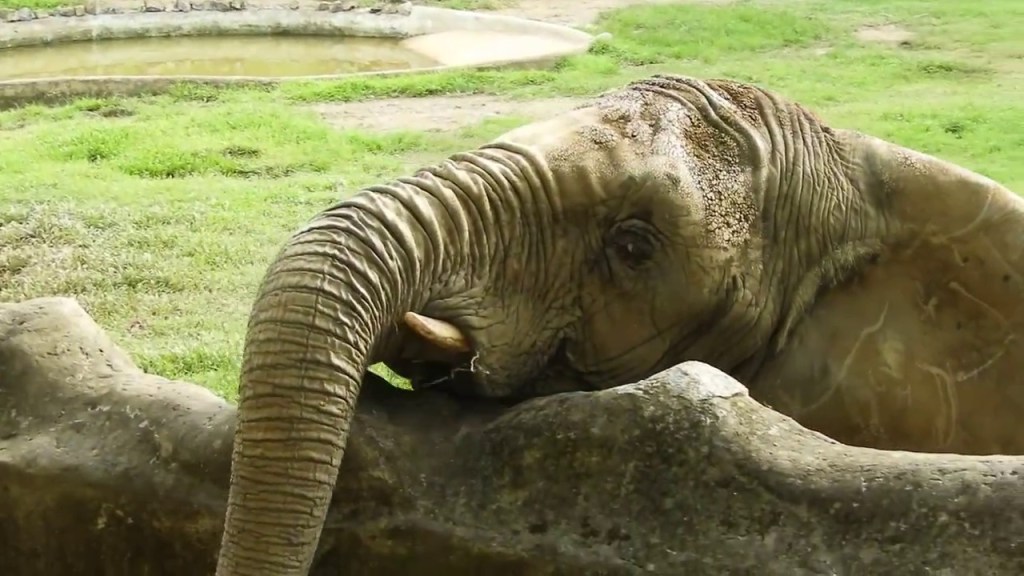
Madhubala at Karachi Zoo is now alone despite Elephants being herd animals, her solitary status has been documented to be causing her severe angst. In addition, she resides in a small barren environment that fails to meet her species-specific needs. Questions also remain around her diet & general care.

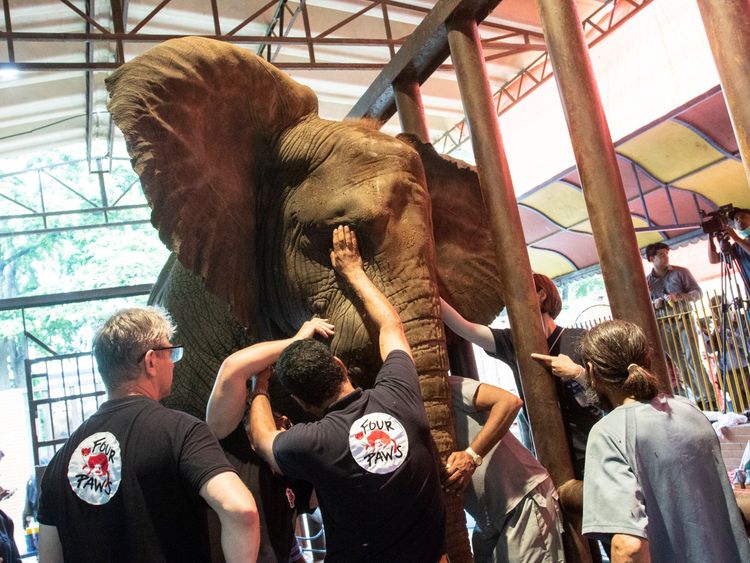
Four Paws Vets perform dental treatment on Madhubala at Karachi Zoo.

Sonia & Malika at Karachi Safari Park fare slightly better having a green pasture to reside in during the day (in recent months the Elephants have been afforded greater access to the pasture & this must continue) although the cages in which they are incarcerated at night remain abhorrent and entirely unsuitable for Elephants (a third cage of the same type has been constructed in anticipation of Madhubala’s arrival)

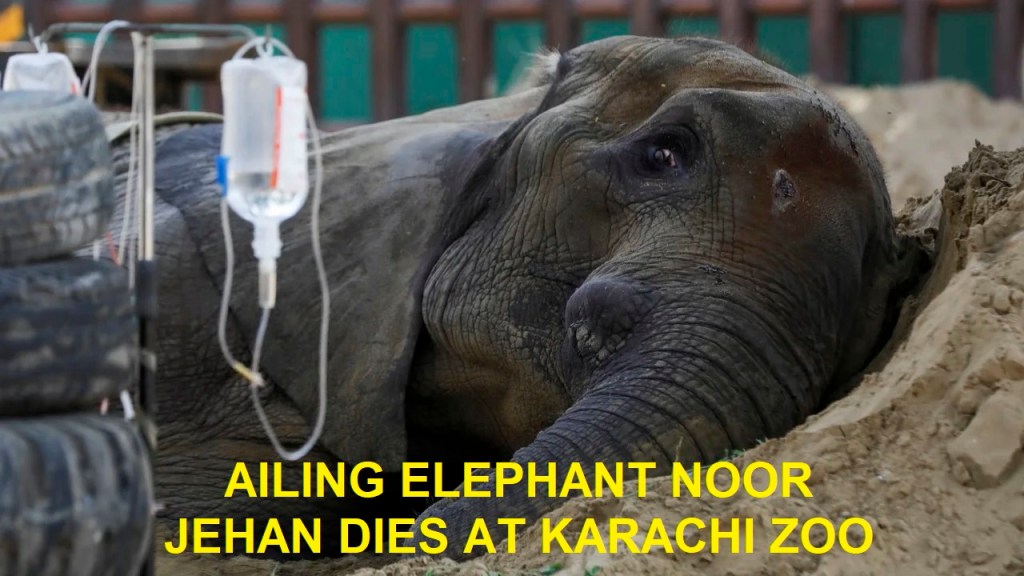
Noor Jehan Shortly Before Her Death In April2023

Following the death of Noor Jehan and recognising that the three remaining Karachi Elephants are suffering, Karachi Metropolitan Corporation struck a verbal agreement with animal welfare organisation Four Paws International to upgrade the Elephant enclosure at the Safari Park to create a more species-specific environment as well as training caretakers to afford the Elephants’ better ongoing care. In line with these improvements Four Paws also agreed to complete the move of Madhubala to the Safari Park to be with other Elephants in what would become a more appropriate setting.

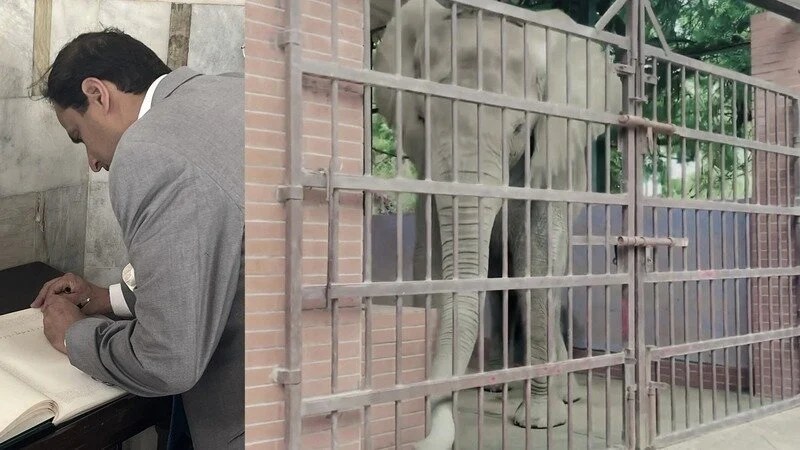
In June 2023 Barrister Murtaza Wahab Siddiqui was elected Mayor of Karachi and since then the agreement has stalled with no further progress and no signed MOU (Memorandum of Understanding)

Mayor Murtaza Wahab in dragging his feet to sign the MOU is prolonging the suffering of all three Elephants and particularly Madhubala.

 So as not to cause further suffering to the elephants Mayor Murtaza Wahab must sign the MOU without further delay or relinquish all three Elephants to a recognised Elephant sanctuary outside Pakistan

Please Sign The Petition: STOP THE SUFFERING OF THE KARACHI ELEPEHANTS

WHAT YOU CAN DO TO HELP ANIMALS IN NEED

You can support our work by donating as little as £5 – It only takes a minute but it can last a lifetime for an animal in need.

PLEASE DONATE HERE

Everyone who donates will receive a Certificate of Appreciation as a thank you for helping animals in need.

The Mission of Protect All Wildlife is to prevent cruelty and promote the welfare of ALL animals.

We believe EVERY animal should be treated with respect, empathy, and understanding. We raise awareness to protect and conserve wild, captive, companion and farm animals.

It is vital that we protect animals against acts of cruelty, abuse, and neglect by enforcing established animal welfare laws and, when necessary, take action to ensure that those who abuse animals are brought to justice.

Protect All Wildlife are involved in many projects to protect animals’ rights, welfare, and habitats. Money contributed to Protect All Wildlife supports ALL of our worthy programmes and gives us the flexibility to respond to emerging needs. Your donations make our work possible.
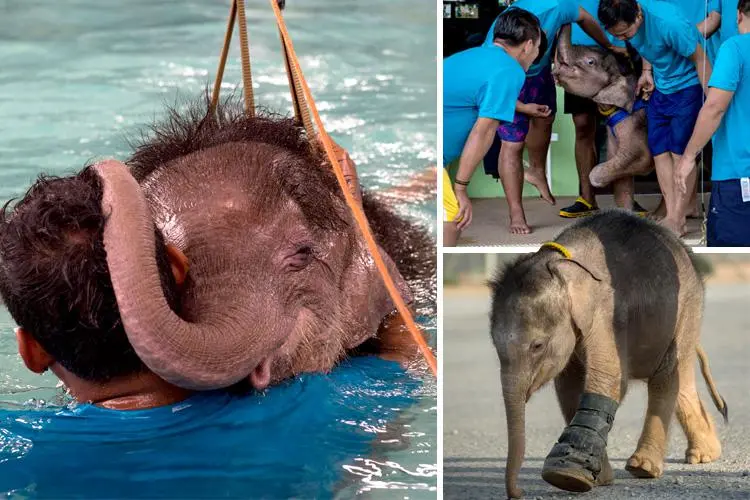
DON’T FORGET YOUR TRUNKS! Baby Elephant Tries To Forget Her Fear Of Water As She Receives Hydrotherapy In Bid To Learn To Walk Again After Injuring Her Foot In A Snare

BABY ELEPHANT CLEAR SKY

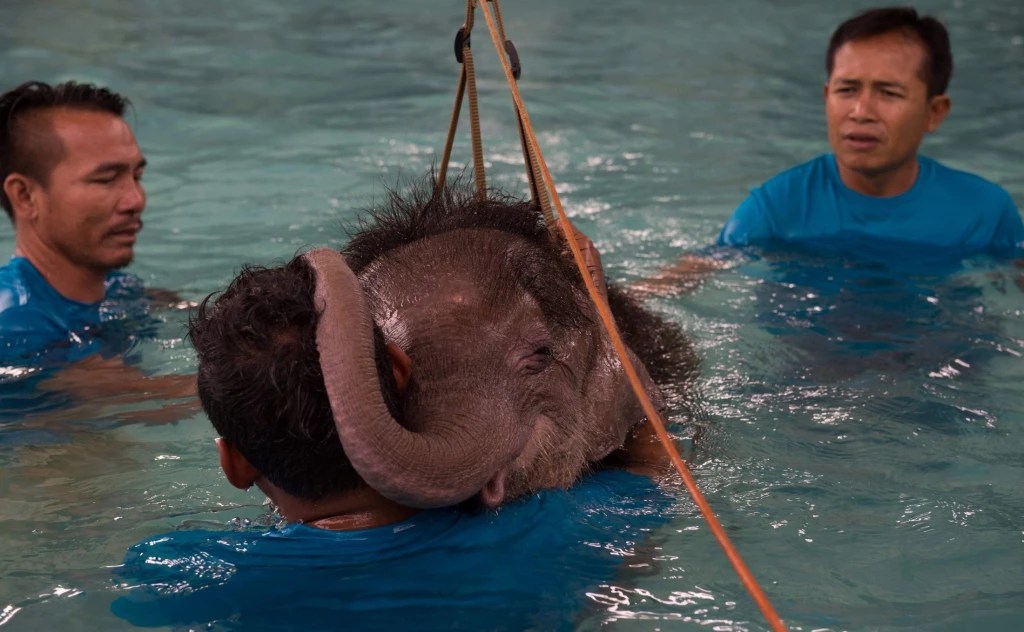
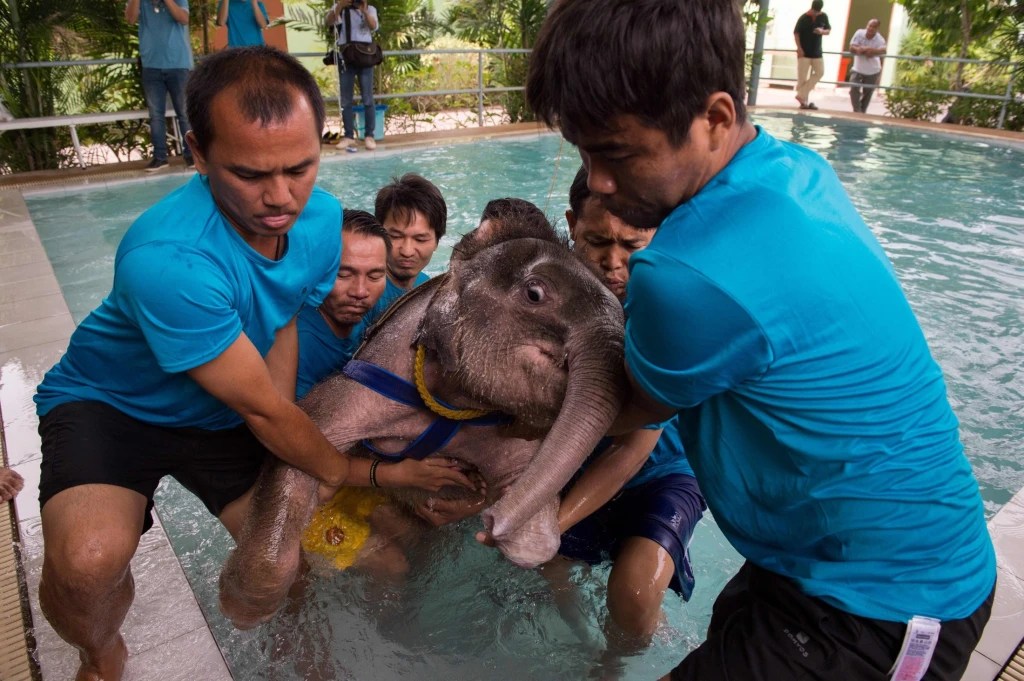
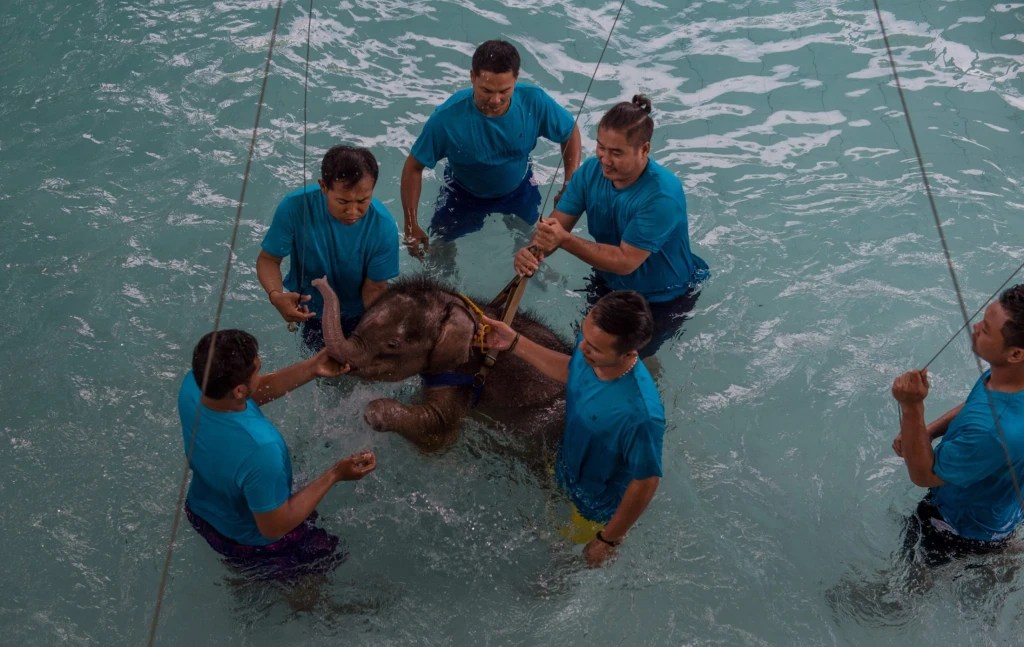
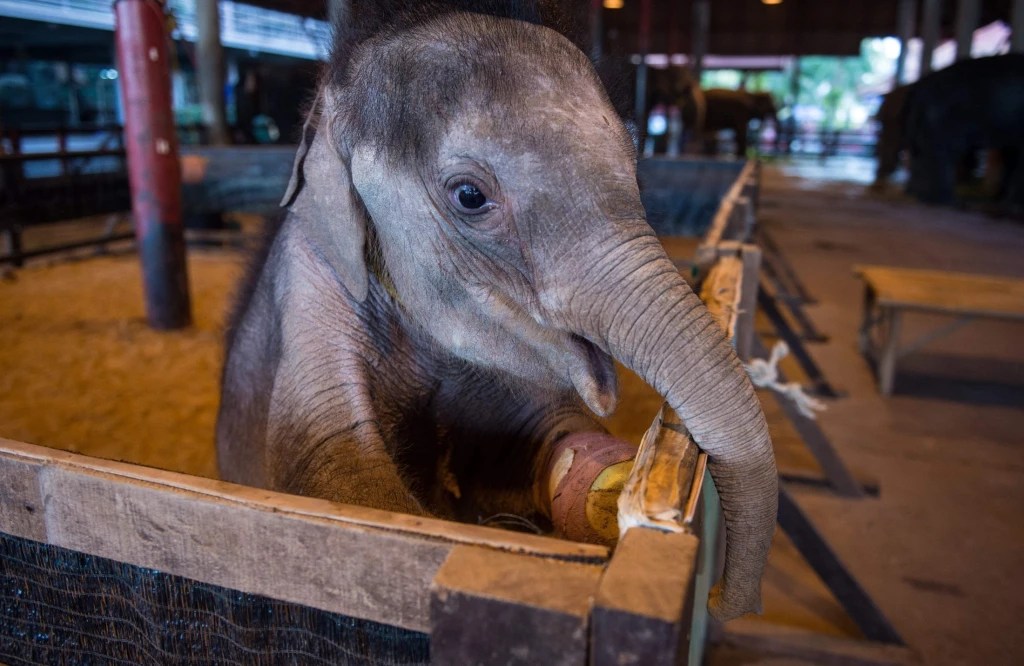
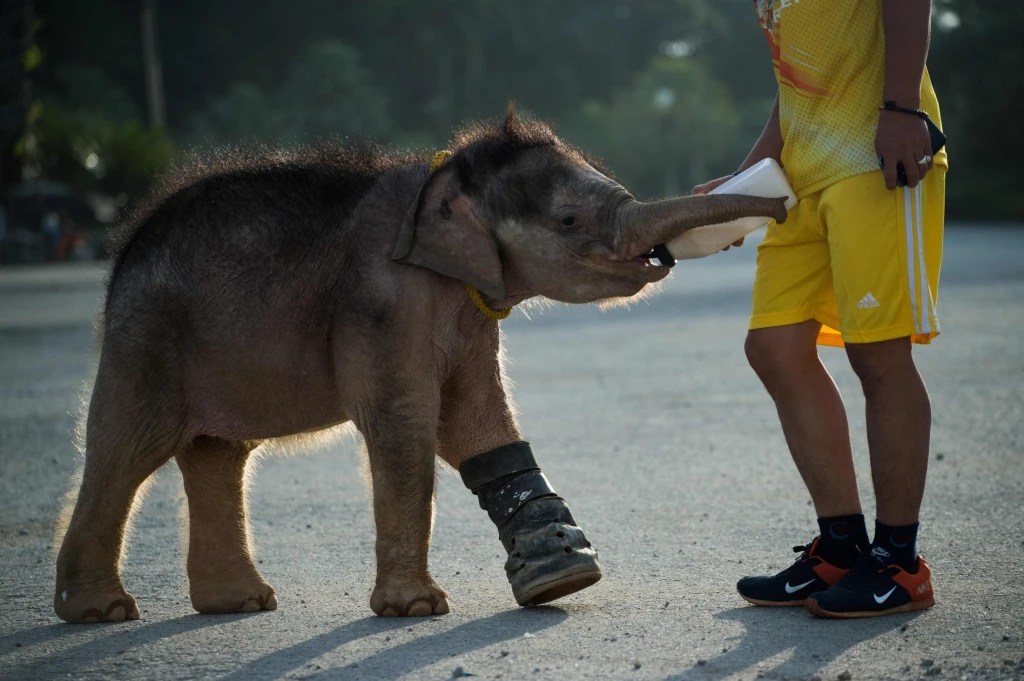
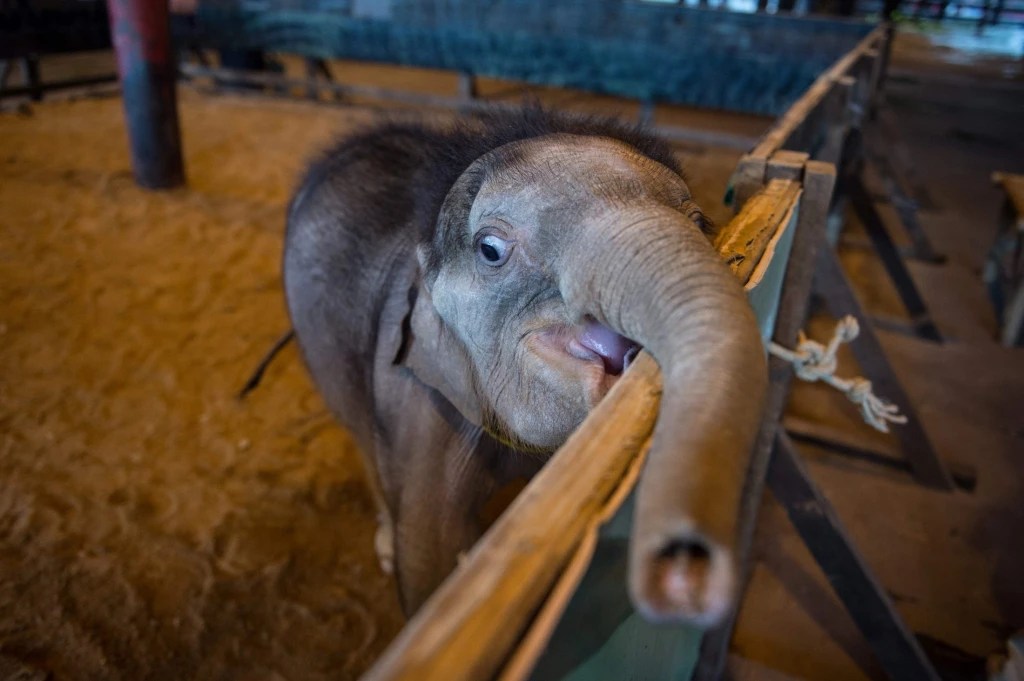
Staff at a Thai animal hospital take six-month-old orphan Clear Sky swimming to strengthen her leg muscles.

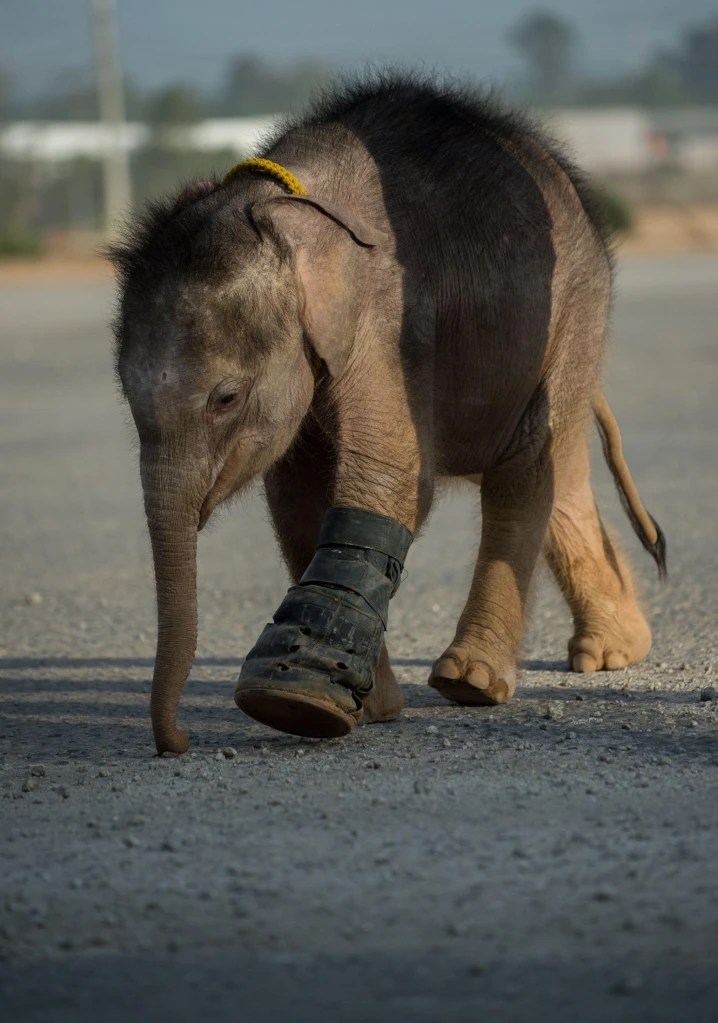
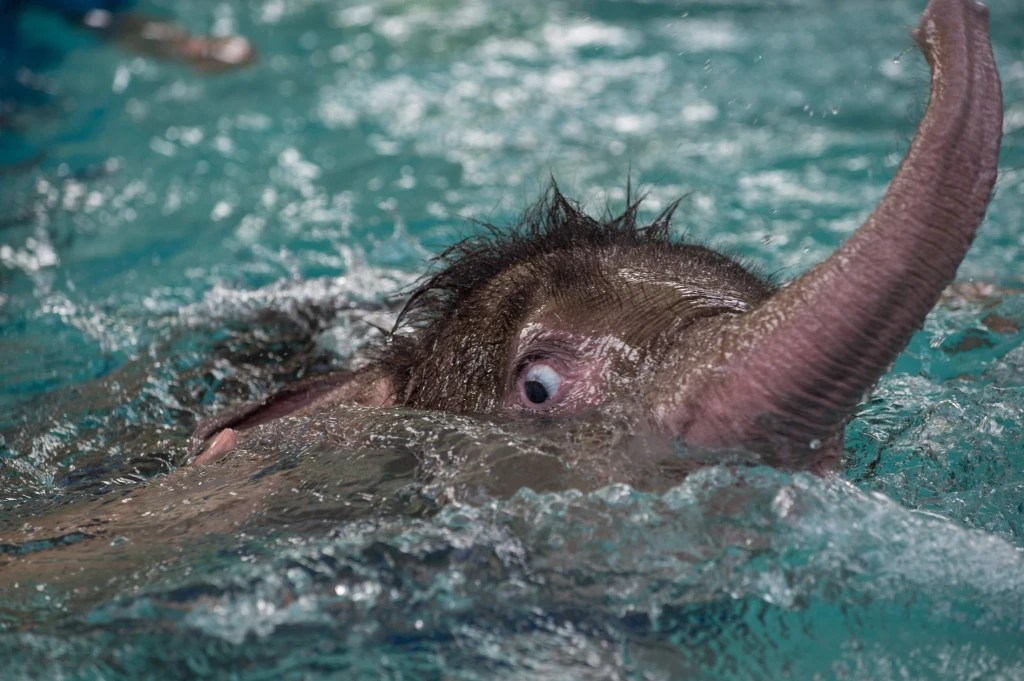
This baby Elephant is trying to forget her fear of water as she learns to walk again after losing part of her foot.

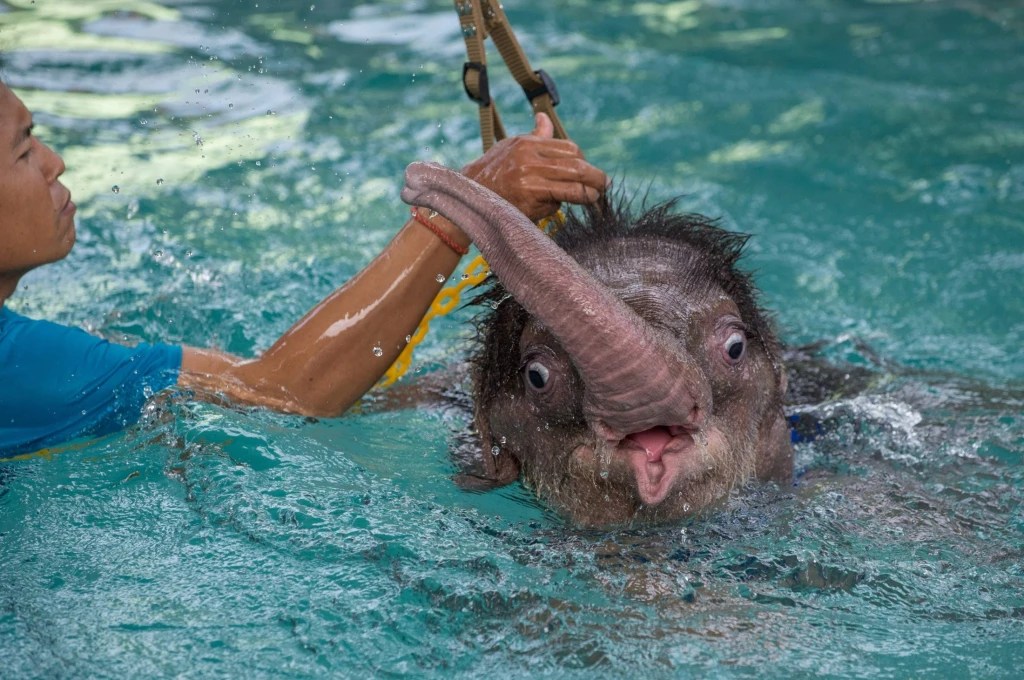
The nervous six-month-old grabbed a keeper for support as she was lowered into the pool at an animal hospital in Chonburi, Thailand.

CLEAR SKY IS LEARNING TO WALK AGAIN IN A SWIMMING POOL AFTER SHE INJURED HER FOOT.

The six-month-old is the first elephant to receive hydrotherapy at the Nong Nooch Tropical Garden animal hospital in Thailand

Clear Sky caught her leg in an animal trap laid by villagers to protect their crops.

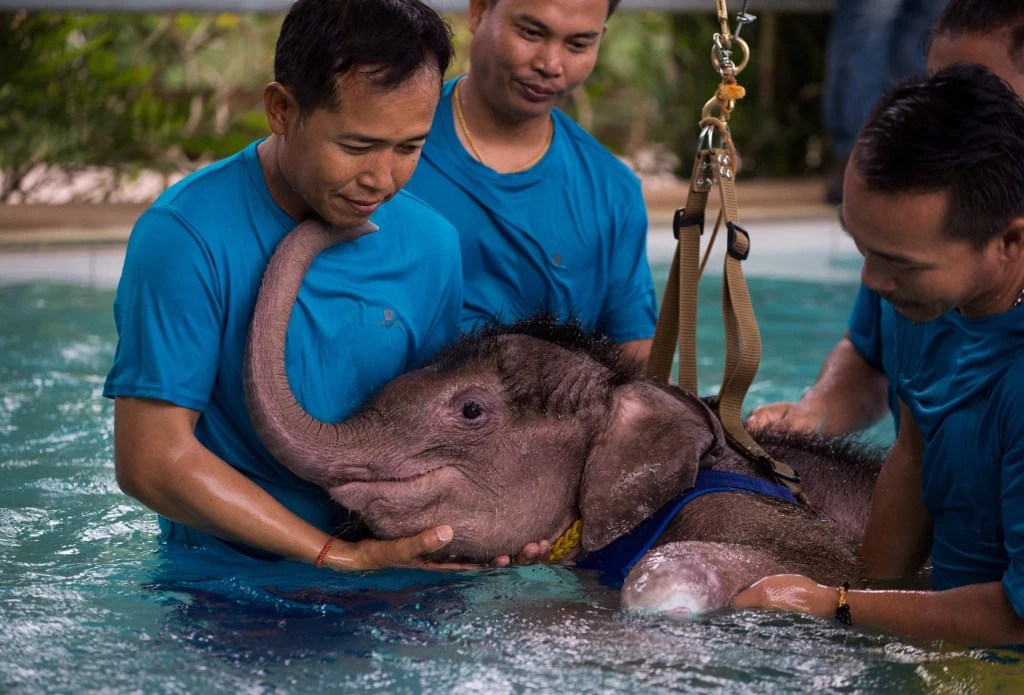
Staff at the animal hospital are trying to help her strengthen her withered leg muscles.

After surgery she is now having treatment to strengthen her leg muscles.

STAFFERS USE A HARNESS TO HELP CLEAR SKY INTO THE WATER AND KEEP HER AFLOAT 
THIS WAS HER SECOND TIME GETTING WATER THERAPY
 

Baby Elephants usually love water, but Clear Sky was ‘a bit nervous and scared’, said a vet.

However she appeared to relax by the end of the hour-long session.

Vet Padet Siridumrong said: “She is still a bit nervous and scared of the water.

“Usually baby Elephants love the water.

“If she can do this regularly she will have fun.”

Villagers had found Clear Sky hungry and hobbling, after being separated from her mother in the wild.

Vets hope with more swimming, she won’t need an artificial leg.

The orphaned Elephant was in bad shape when she arrived at the hospital.

She was hobbling, in pain and in dire need of milk.

‘Kampon Tansacha, the director of the zoo that’s now her home, said: “We named her Clear Sky Up Ahead, because that is what she will need while she is with us.”

Elephants are a revered national symbol in Thailand, but their population in the wild has plummeted to an estimated 2,500 in the last century, a result of rabid development, habitat destruction and the ivory trade.

WHAT YOU CAN DO TO HELP ANIMALS IN NEED

You can support our work by donating as little as £5 – It only takes a minute but it can last a lifetime for an animal in need.

PLEASE DONATE HERE

Everyone who donates will receive a Certificate of Appreciation as a thank you for helping animals in need.

The Mission of Protect All Wildlife is to prevent cruelty and promote the welfare of ALL animals.

We believe EVERY animal should be treated with respect, empathy, and understanding. We raise awareness to protect and conserve wild, captive, companion and farm animals.

It is vital that we protect animals against acts of cruelty, abuse, and neglect by enforcing established animal welfare laws and, when necessary, take action to ensure that those who abuse animals are brought to justice.

Protect All Wildlife are involved in many projects to protect animals’ rights, welfare, and habitats. Money contributed to Protect All Wildlife supports ALL of our worthy programmes and gives us the flexibility to respond to emerging needs. Your donations make our work possible.

Chained, Beaten, Whipped And Exploited Like Slaves: The Hidden Horrors Meted Out To Thailand’s Performing Elephants

When you pay they suffer!

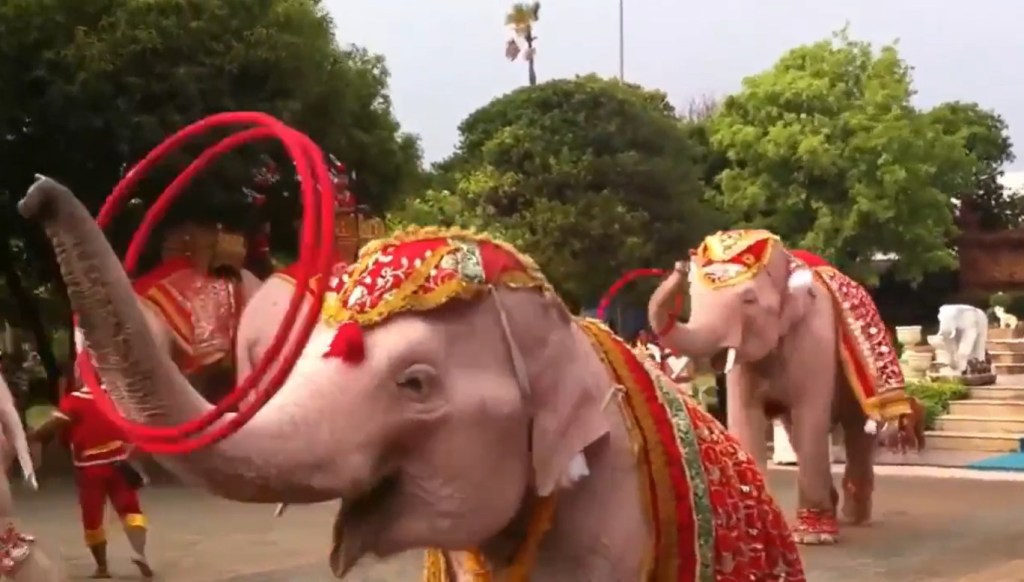
They are the country’s icon – but behind the dazzle of religious festivals and tourist ‘attractions’, these giants of the wild are painfully abused in Thailand.

Some Elephants in Thailand are captured from the wild or bred in captivity and then forced to perform like monkeys to humans for the rest of their lives. When small they are beaten with sticks until they are broken, like a horse, or else they would not do what the humans tell them.

When small they are beaten with sticks until they are broken.

When they are not performing they are shackled in chains and when they come into heat or ‘musk’ they are re-beaten again to make them tame – THIS IS THE REALITY of your trip to see the Elephants in Thailand! Please do not support captive Elephants and only visit the ones that are free and not shackled – humans paying these people only make this continue – if we cut our money off, they will not continue doing this.

ALL temple Elephants are shackled and beaten – do not be tricked into thinking they are not.

When You Buy A Ticket They Suffer

I WILL STAND UP AND NOT BE AFRAID

I will stand up and not be afraid Of those who ask why I share the Elephants suffering And show them on video coloured pink

I do it, Not because I support what I see I do it, Not to encourage you to go I do it, Not so you find the link To the website advertising such horror shows

I do it, To remind those that have a life That many who walk amongst us Are suffering at the hands of man Because humans say they can As there is no law to fight And animals have no rights

I do it, So the voiceless will be heard. I do it, To show you that it it is wrong of man To sink so low as to abuse these magnificent beasts So you may feast Upon the evil show Now you know.

Sadly, the person clapping knows The Elephants do not love these shows These Elephants are forced to perform for your enjoyment They have been abused since very young With bull hooks and chains To force them to obey A command by the human, Which destroys their natural ways And makes them servants of man

I call the Elephants slaves to its mahout Because they cannot call a halt to the video shoot Because they cannot escape the  strife That is their life.

Rachel Bose.

WHAT YOU CAN DO TO HELP ANIMALS IN NEED

You can support our work by donating as little as £5 – It only takes a minute but it can last a lifetime for an animal in need.

PLEASE DONATE HERE

Everyone who donates will receive a Certificate of Appreciation as a thank you for helping animals in need.

The Mission of Protect All Wildlife is to prevent cruelty and promote the welfare of ALL animals.

We believe EVERY animal should be treated with respect, empathy, and understanding. We raise awareness to protect and conserve wild, captive, companion and farm animals.

It is vital that we protect animals against acts of cruelty, abuse, and neglect by enforcing established animal welfare laws and, when necessary, take action to ensure that those who abuse animals are brought to justice.

Protect All Wildlife are involved in many projects to protect animals’ rights, welfare, and habitats. Money contributed to Protect All Wildlife supports ALL of our worthy programmes and gives us the flexibility to respond to emerging needs. Your donations make our work possible.

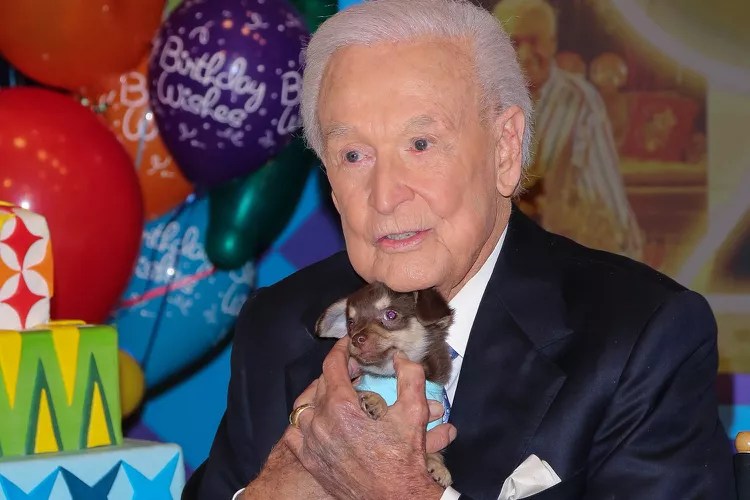
Bob Barker, Longtime ‘The Price Is Right’ Host And Legendary Animal Rights Activist, Has Died Aged 99.

Through Philanthropy and Activism, Bob Barker Fought Animal Cruelty.

All about Bob Barker’s animal activism — from refusing fur prizes to launching a non-profit charity that funds Spay & Neuter clinics.

Bob Barker, an affable fixture on US television for half a century who hosted the popular game show The Price Is Right for 35 years and was a committed animal rights activist, has died at age 99, NBC News and Fox reported on Saturday.

Barker died on Saturday morning of natural causes at his Hollywood Hills, California, home, his publicist Roger Neal said.

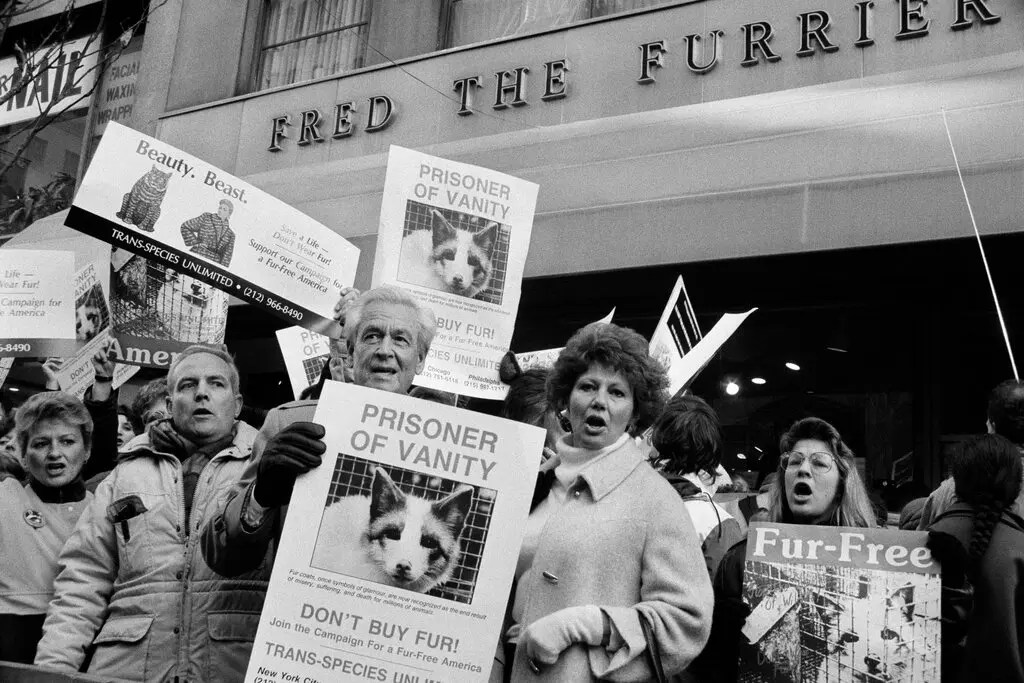
Bob Barker with Nancy Burnet, president of United Activist for Animal Rights, in front of a Fifth Avenue furrier in New York in 1988. Credit…Don Hogan Charles/The New York Times

Barker was known for pro-animal causes and campaigned for them into his 90s. He would end episodes of The Price Is Right by urging viewers to get their pets spayed and neutered to control the animal population and began a foundation to subsidise the practices. He also spoke out against the treatment of animals in zoos, rodeos and circuses.

Over decades as the host of The Price Is Right, the longest-running game show in American television history, Mr. Barker, beginning in the 1980, used his pulpit to remind millions of viewers to “help control the pet population; have your pet spayed or neutered.”

“There are just too many cats and dogs being born,” he explained in an interview with The New York Times in 2004. “Animals are being euthanized by the millions simply because there are not enough homes for them.

He put $25 million into founding the DJ & T Foundation which finances clinics that specialize in spaying and neutering. The foundation was named after Mr. Barker’s wife, Dorothy Jo, and his mother, Matilda Valandra, who was known as Tilly.

In 2004, he donated $1 million to Columbia University School of Law to further the study of animal rights law. 

“The Law School is extremely grateful for this generous gift,” said Dean David M. Schizer. “And we look forward to giving our students exposure to this growing area of legal scholarship.”

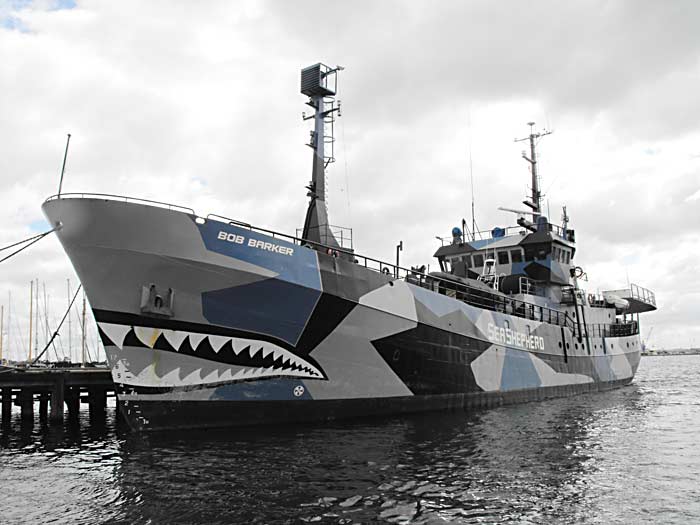
In 2010 he donated US$5 million for a 1,200-ton ship named the Bob Barker that was operated by the Sea Shepherd Conservation Society to stop Japanese whaling ships from killing whales off Antarctica.

The Sea Shepherd Conservation Society Anti-Whaling Ship ‘Bob Barker’

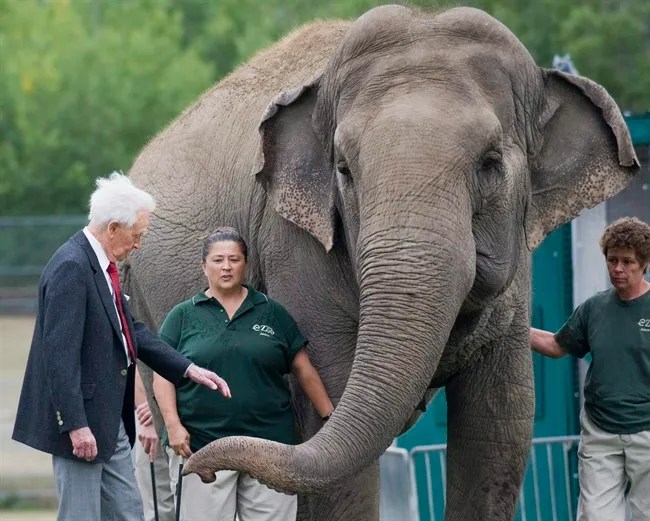
In 2012 Bob funded the travel costs for three Elephants to travel from the Toronto Zoo to a sanctuary in California aboard a private plane.

A spokesman for the TV icon says Barker offered to fund the $880,000 flight after learning that one of the Elephants wasn’t well enough to withstand the long trip by truck.

Henri Bollinger said that the Toronto Zoo agreed to move Thika, Iringa and Toka to the Performing Animals Welfare Society Elephant sanctuary in San Andreas, Calif., but that one of the animals suffers from “a serious foot problem.”

Barker described the Elephants’ new home as a “paradise” and said “to think that one of them might not survive the trip in a truck touched my heart and purse strings.”

Bob Barker with one of the Elephants that he helped travel to PAWS sanctuary

In 2012 he donated $2.5 million to renovate a Los Angeles building that become the West Coast headquarters of People for the Ethical Treatment of Animals (PETA).

“It is money well-spent. I don’t know where you get more for your dollar, so far as protecting animals is concerned, than you get from PETA,” Barker said.

Bob Barker and Ingrid Newkirk at the opening of the PETA Bob Barker building in Los Angeles

In 2015, he stood behind a podium in an eleventh-floor conference room at the Millennium Biltmore Hotel in downtown Los Angeles. His mission: to publicly shame Foster Farms — among the biggest poultry producers on the West Coast — for cruelty toward animals.

Reporters at the event were shown a secretly taped video, narrated by Barker and shot in May and June at two Foster Farms slaughtering plants in Fresno, Calif. The video showed scenes of thousands of chickens being carelessly hung by their legs on conveyor belts. Factory workers execute the process with brutal efficiency, occasionally punching live birds and plucking out their feathers.

Bob Barker speaking for Mercy For Animals in Los Angeles in 2015. Barker criticised poultry producer Foster Farms after an animal-rights group released video showing chickens being
shackled, punched and having their feathers pulled out while still alive. Photo: AP

Julie Woodyer, campaigns director at Zoocheck, knew Barker for years as they collaborated on both successful and failed efforts to free animals from captivity at Canada’s zoos.

She says Barker brought a determination and generosity that was unmatched by other celebrities, often opening his chequebook to support the cause and willingly making public appearances to raise awareness.

“I just can’t imagine there will be somebody to replace that ever,” Woodyer said in a phone interview.

Woodyer first connected with the TV host and his partner Nancy Burnet over email in 2010 as Zoocheck — in co-operation with other animal rights organizations –attempted to free Lucy the elephant from the Edmonton Valley Zoo.

In 2011, Barker appeared on CTV’s “Canada AM” morning show where he explained that elephants were not adapted to brave Canada’s harsh winter climate and Lucy’s health was deteriorating.

While the campaign to relocate Lucy was unsuccessful, Woodyer said a bond was formed with Barker over their shared interest in animal rights.

Together, they were involved in a controversial and years-long effort to move three elephants — Toka, Thika and Iringa — from the Toronto Zoo to a sanctuary in California. The campaign included Barker making public appearances and mingling with local city councillors to explain his view in hopes they would lend their support.

Ultimately, Barker donated $800,000 to the Peoples Animal Welfare Society for the successful transport and care of the animals.

“It would have been years and years for us to try to fundraise that,” Woodyer said, “And it would’ve been too late for some of those elephants.”

Barker later donated $50,000 to help build Manitoba’s first black bear cub rehabilitation centre.

“Lending his celebrity voice … really boosted those campaigns significantly and allowed us to have a broader audience,” Woodyer said.

“He was the funniest man I’ve ever met, extremely sharp, even in his very late years, and he could always come up with something funny, and make us all laugh even in the midst of difficult times in our campaigns.”

Bob Barker was a passionate animal rights advocate throughout his life. PHOTO: PAUL ARCHULETA/FILMMAGIC

I’d like to see animals removed from the entertainment business. Chimpanzees and apes won’t perform unless you beat them. Circuses keep elephants in chains 90 percent of the time. Elephants need freedom of movement. In circuses, they live in cramped quarters, which is not the life intended for them by nature. Some are beaten daily, forced to do ridiculous tricks and robbed of every shred of dignity. ~ Bob Barker.

RIP BOB BARKER

Next Time You Take A Joy Ride In Jaipur, Look Into The Eyes Of The Elephant, It Has An Untold Story Of Animal Cruelty!

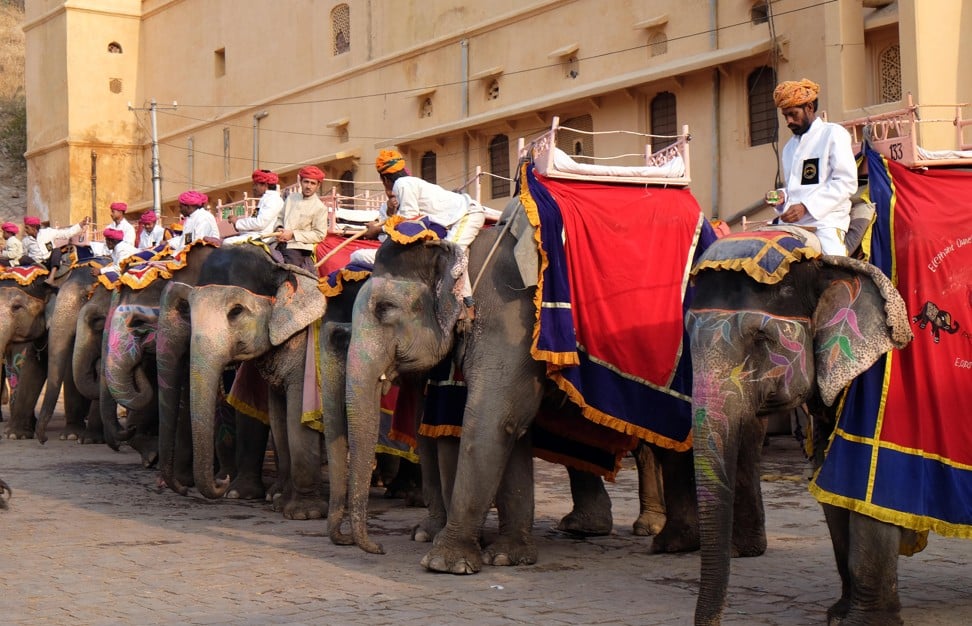
Taking an Elephant ride up the hill has become an indispensable part of a visit to the Amer Fort in Jaipur, Rajasthan.

It has become so popular that tourists are made to feel like they have missed out on something if they don’t take the ride.

While there is no doubt that the Elephant rides uphill through the majestic fort gives the tourists an experience of a lifetime, there is a dark side to it. 

The ‘Elephant In The Room’ here is the Elephants themselves, or the way they are treated, to be exact.

The nearly half-an-hour long joyride up and down the hill costs Rs 1,100 for two passengers however has a hidden cost – the health and wellbeing of the Elephants. 

Waiting for the tourists!

 Amer Fort is a tourist attraction in India where sick, blind, and suffering Elephants are forced to give tourists rides hour after hour. Day after day. For years and years.

The Elephants at the fort which are used to ferry the tourists have to make multiple trips up and down throughout the day, even in the scorching heat.

As the tourist numbers grow and the popularity of the joyrides increases the Elephants have to overwork, often without proper time for food and rest. There have been at least a couple of incidents in the past few years exhausted Elephants collapsed and died. 

Trainers beat Elephants with weapons and traumatise these gentle giants with a life of exhausting work, violence, neglected injuries, malnourishment, dehydration, and routine chaining. In fact, one foreign tourist recently filed an official cruelty complaint after witnessing trainers assault an Elephant for 10 minutes after the suffering animal tried to escape at the Amber Fort near Jaipur, Rajasthan. Even though the majority of Indians are Hindus – who deem Elephants sacred and worship the Elephant-headed god Ganesha – in the tourist industry, life for these animals consists of fear and agony. Those whose open wounds cause them pain or whose vision is impaired aren’t even allowed to rest. They’re forced to carry humans on their backs in the oppressive heat by men who threaten them with rods and bullhooks (sticks with a sharp metal hook at the end). 

World Animal Protection, an international NGO has been running a campaign for years to end the use of Elephants for rides in the Amer Fort, alleging that the animals have been subjected to cruelty and ill-treatment for the sake of the tourists.

World Animal Protection held a screening of a documentary that showed how the animals are treated.

“Elephants are wild animals and they deserve to be in the wild. Amer Fort in Jaipur city is not a place for an Elephant. This is not their natural habitat. We must put an end of Elephant rides at Amer Fort,” said Gajender K Sharma, Country Director, World Animal Protection India.

An Amber Fort Elephant, with damaged feet from carrying tourists, kneels on a concrete floor.

According to Shubhubroto Ghosh, Wildlife Research Manager, World Animal Protection India, the campaign is aimed at ending the practice of using wildlife as a source of entertainment and have them retired and give them a life of dignity. 

But where did the Elephants come from?

Given the fact that Rajasthan is a desert state, it is only natural to assume that Elephants are not native species, which is genetically adapted to live in the hot and dry conditions there.

According to wildlife campaigners, these Elephants were captured from the forests of Assam at a young age and sold at the traditional ‘Hathi bazar’ (elephant market) in Bihar’s Sonpur until 2004 when it was declared illegal. They also allege that despite the ban, elephants are still sold at the fair and are brought to states like Rajasthan.

Once the Elephants are brought to Jaipur, they are sheltered at the Hathi Gaon (Elephant village) where they are tamed and trained as ride animals.

“The village was meant to be a safe and comfortable place for the elephants to stay. But it is nothing than a car shed for Elephants. It is ill-equipped to house an animal like an Elephant. During the training, Elephants are starved, kept on chains. They go through a process called ‘the crush’, they are beaten badly to make them obedient,” Ghosh explained.

Another striking thing that one can notice at the Amer Fort is the sheer number of female Elephants. This, Ghosh said is no accident, but is a part of the design as it is easier to train and control female Elephants.

According to Ghosh, they are demanding a total ban on using the Elephants for rides as the authorities have failed to implement the existing rules.

Rangoli’s story 

Rangoli was born at UNESCO World Heritage Site, Amer Fort, into a life of pain, captivity, and cruelty. For her entire 51-year life, Rangoli has suffered for the entertainment of tourists.  

Currently, Rangoli is forced to carry tourists on her back, which is painful and creates sores. Rangoli endures this pain while walking over hot concrete and difficult cobblestones that damage their feet every day. Only to then spend her nights standing in her own feces, while chained when she ‘rests’.

With your support you can help end Elephant rides at Amer Fort and can begin the process of safely retiring Rangoli and all the other Elephants that are suffering. 

A “once-in-a-lifetime” experience for you is a lifetime of suffering for them. Now is our moment to end this cruelty.

Please sign the World Animal Petition at STOP THEIR SUFFERING.

——–((((((()))))))——–

WHAT YOU CAN DO TO HELP WILDLIFE:

You can support ‘Protect All Wildlife’ by donating as little as £1 – It only takes a minute but it can last a lifetime for an animal in need. Please donate below.

Everyone who donates will receive a Certificate of Appreciation as a thank you for helping animals in need.

The Mission of Protect All Wildlife is to prevent cruelty and promote the welfare of ALL animals.

We believe EVERY animal should be treated with respect, empathy, and understanding. We raise awareness to protect and conserve wild, captive, companion and farm animals.

It is vital that we protect animals against acts of cruelty, abuse, and neglect by enforcing established animal welfare laws and, when necessary, take action to ensure that those who abuse animals are brought to justice.

Protect All Wildlife are involved in many projects to protect animals’ rights, welfare, and habitats. Money contributed to Protect All Wildlife supports ALL of our worthy programmes and gives us the flexibility to respond to emerging needs. Your donations make our work possible.
Pakistan: 17-Year Old Ailing African Elephant Noor Jehan Dies After Lying On Ground For 9 Days In Karachi Zoo

The ailing Elephant died on Saturday, vets said, calling on the ill-equipped menagerie to evacuate her “mourning” partner to avert a second tragedy.

NoorJehan-dies
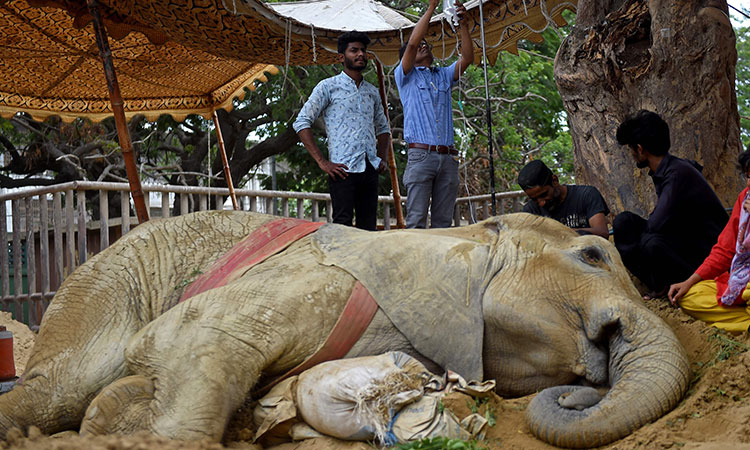
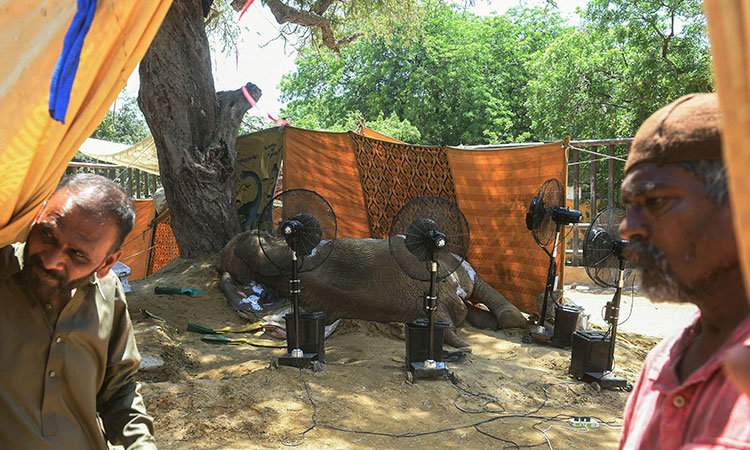
Zoo staff stand near the dead body of Noor Jehan at an enclosure in Karachi Zoological Gardens on Saturday. AFP

Pakistan’s zoos are frequently accused of being blasé about animal welfare, and the plight of Noor Jehan was cited by animal rights activists campaigning to shut the wildlife exhibition in southern Karachi city.

This month the 17-year-old African Elephant underwent emergency treatment for a tumour, which had crippled her back legs, but while in recovery she became trapped in her enclosure’s pool.

Zoo workers hauled out the 3.5-tonne pachyderm but she was unable to stand and lay stricken for nine days, “a life-threatening situation for Elephants”, said animal charity Four Paws International.

NoorJEhan-deadbody
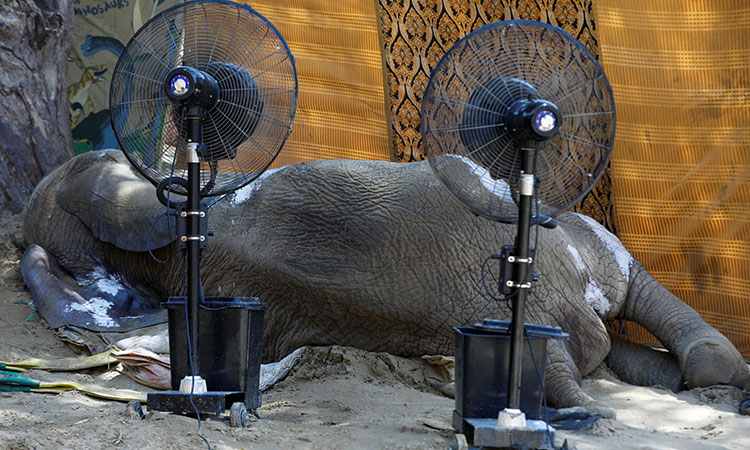
Misting fans are placed beside the body of Noor Jehan at Karachi Zoo. AP

Experts were considering euthanasia but before a decision was taken “she succumbed to her critical condition,” said a statement from the charity, which organised last-ditch medical efforts to save her.

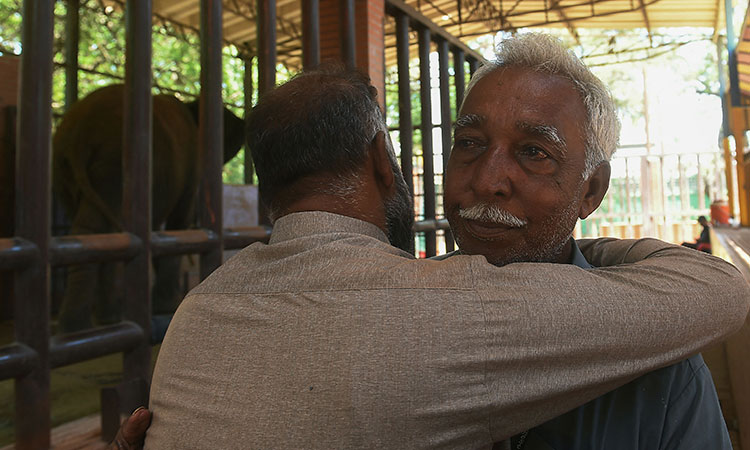
Karachi Zoo director Kanwar Ayub confirmed Noor Jehan’s death on Saturday and an AFP reporter saw her caretaker openly weeping outside her enclosure.
“It’s very sad,” said Four Paws International’s Austria-based chief vet Amir Khalil. “Noor Jehan deserved a chance.”

But the deceased Elephant’s pen pal Madhubala “should not have the same future”, he told AFP, saying he plans to arrive in Pakistan on Sunday to assess her health and organise her evacuation.

“Karachi Zoo does not fulfil international standards and is not equipped to take appropriate care of Elephants,” the Four Paws International statement said, expressing support for a forced closure.

NoorJehan-caretaker

Caretaker Yusuf Masseih (R) mourns following the death of Noor Jehan at Karachi Zoological Gardens. AFP

“It is now more urgent than ever that the remaining Elephant, who is mourning her long-time companion, is transferred to a more species-appropriate location as soon as possible, to prevent another potential tragedy.”

In April 2020, a court ordered the only zoo in Pakistan’s capital Islamabad to shut after poor facilities and mistreatment of the animals there were revealed.

The facility had drawn international condemnation for its treatment of an Asian Elephant named Kaavan, who was later airlifted to retirement in Cambodia in a project spearheaded by US popstar and actor Cher, and carried out by Four Paws.

Agence France-Presse

~~~~~(((())))~~~~~

WHAT YOU CAN DO TO HELP WILDLIFE

You can support Protect All Wildlife by donating as little as £1 – It only takes a minute but it can last a lifetime for an animal in need. Please donate below.

The Mission of Protect All Wildlife is to prevent cruelty and promote the welfare of ALL animals.

We believe EVERY animal should be treated with respect, empathy, and understanding. We raise awareness to protect and conserve wild, captive, companion and farm animals.

It is vital that we protect animals against acts of cruelty, abuse, and neglect by enforcing established animal welfare laws and, when necessary, take action to ensure that those who abuse animals are brought to justice.

Protect All Wildlife are involved in many projects to protect animals’ rights, welfare, and habitats. Money contributed to Protect All Wildlife supports ALL of our worthy programmes and gives us the flexibility to respond to emerging needs. Your donations make our work possible.

Mundi, An Elephant Living In A Closed Puerto Rico Zoo Is To Get A New Life At Georgia Sanctuary

A 41-year-old African Elephant who had lived alone at a Puerto Rican zoo could get a new lease on life in Georgia.

Mundi, the only Elephant at Puerto Rico Zoo

For years, Mundi and the other animals at the Puerto Rico Zoo have been suffering in silence. In 2018, the USDA cancelled the zoo’s exhibitor’s license after citing dozens of violations including lack of veterinary care, expired food and medications, and a failure to protect animals from extreme heat and physical hazards, among other issues. 

Nonprofit Elephant Aid International says they were recently asked to rescue Mundi the Elephant, who has been living in the defunct Dr. Juan A. Rivero Zoo in Mayaguez, Puerto Rico. According to NBC News, the zoo had been closed to the public since hurricanes Irma and Maria in 2017 and was forced to shut down in February after accusations of negligence and the death of animals.

MUNDI

“For nearly 35 years, she has lived alone in a small yard with access to an enclosed shelter where she is chained at night,” the nonprofit said in a statement.

Now the organization, which is located in Attapulgus, Georgia, wants to help Mundi live her best and most fulfilling life for the rest of her days.

Elephant Aid International is raising money to help transport Mundi to their sanctuary, where she can remain outdoors and live as naturally as possible.
“Mundi will fly on a dedicated 747 flight. If everything goes as planned, she will arrive at the Refuge the first week of May,” the organization said. “Mundi’s future will be spent living free at ERNA, experiencing independence for the first time ever. She will immerse herself in nature and develop deep friendships that will help her discover her authentic elephant self.”

The nonprofit’s Georgia refuge spans 850 acres of hills, forests, lakes, and creeks. It is not open to the public, though Elephant lovers can watch on the organization’s “EleCam” on Youtube

Currently, two Elephants live in the refuge. Bo and Tarra are both Asian Elephants who were rescued after years of performing in circuses.
——–((((((()))))))——–

WHAT YOU CAN DO TO HELP WILDLIFE:

You can support ‘Protect All Wildlife’ by donating as little as £1 – It only takes a minute but it can last a lifetime for an animal in need. Please donate below.

Everyone who donates will receive a Certificate of Appreciation as a thank you for helping animals in need.

The Mission of Protect All Wildlife is to prevent cruelty and promote the welfare of ALL animals.

We believe EVERY animal should be treated with respect, empathy, and understanding. We raise awareness to protect and conserve wild, captive, companion and farm animals.

It is vital that we protect animals against acts of cruelty, abuse, and neglect by enforcing established animal welfare laws and, when necessary, take action to ensure that those who abuse animals are brought to justice.

Protect All Wildlife are involved in many projects to protect animals’ rights, welfare, and habitats. Money contributed to Protect All Wildlife supports ALL of our worthy programmes and gives us the flexibility to respond to emerging needs. Your donations make our work possible.