A Dolphin Deemed ‘Too Fat’ To Perform Slammed His Head Against Tank Before Lonely Death

In 1996, Makaiko the Dolphin was driven from his pod in Japan and forced into a life of captivity – hauled from venue to venue in painful conditions and starved in a cruel bid to teach him tricks.
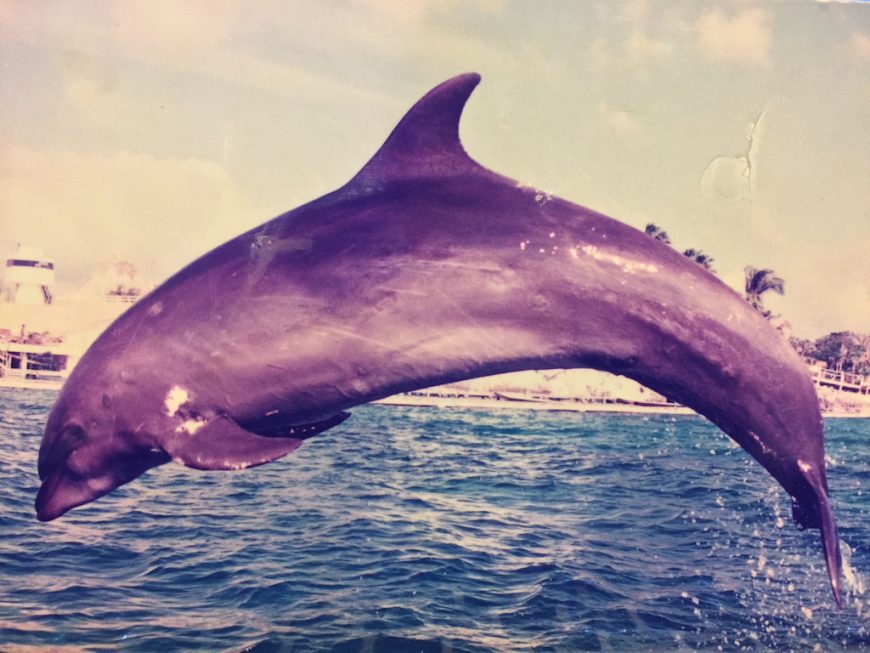
MAKAIKO

Driven mad by years of loneliness, Makaiko took to smacking against his tank in a heartbreaking act of self-harm.

Snatched from his family in 1996, the poor bottlenose was starved and forced to perform for human crowds – but ran out his final years alone after being deemed “too heavy” and “foolish”.

He died a lonely death some ten years ago after being snatched from a life in the sea with his 80-strong family pod – that were either murdered or taken too. No one noticed he had got tangled in a net at the dolphinarium and quietly drowned.

Makaiko  — meaning  “inner strength” — was born in 1996 in the waters of Taiji, Japan, where she socialised with other pods and spent carefree days playing and roaming the wide-open spaces of the Pacific Ocean.

His former trainer Lorena Kya Lopez recently opened up on his heartbreaking tale in a grim warning about the wildlife trade, which “subjects millions of wild animals to suffering every day”.

Born in 1996, Makaiko roamed free with other pods, playing in the Pacific Ocean off the coast of Taiji, Japan.

One day, however, the sound of motorboats approaching the group left mothers desperately scrambling to gather up their young.

Hunters threw down heavy nets, scooping up dolphins to harvest for their meat or to sell into the tourist entertainment industry.

“While the water turned red from the blood of the dolphins who tried to escape or were killed, Makaiko was lifted out of the water, unable to move in the net,” Lopez told World Animal Protection.
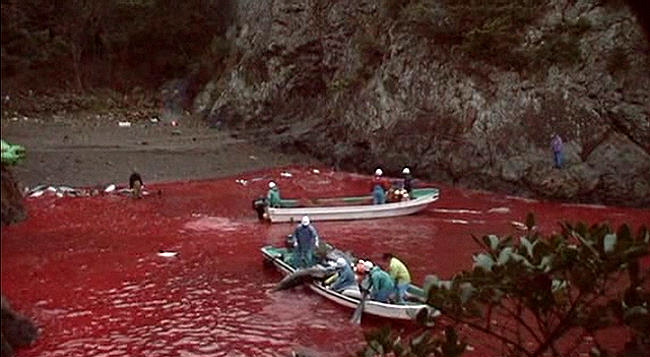
THE ANNUAL TAIJI DOLPHIN DRIVE HUNT

“Makaiko had been captured. And so began the rest of his life in captivity.”

Alongside his sister Kumiko, the young animal was sold to a dolphinarium in Japan.

During transportation, he was painfully laid out on a stretcher and sprayed with water to keep his skin from drying out.

It was days before the pair were given any food. When they finally arrived at their temporary home, Makaiko was put in a small tank treated with chemicals to keep it clean.

“It wasn’t until they went to the surface and people approached them and started throwing dead fish at them that they had a chance to eat,” explained Lopez.

“The dead fish were not as nutritious as the food they would normally get in the ocean, but at that point, it was better than nothing.”

The meals came with a catch – the trainers would only feed the dolphins if they obeyed orders to perform tricks.

Weak and disorientated, Makaiko learned to jump and pushed trainers around the tank for hours on end.

After 10 months, the siblings were suddenly moved into a pitch black transportation box. For over two days, they were unable to see anything.

Hauled out on to a stretcher, Makaiko was treated with a cream to stop his skin drying again, but he was left in agony – visibly bleeding.

Eventually, they landed at the Six Flags dolphin venue in Mexico, where Lopez first came across the distressed creatures.

Here, trainers continued to teach them the tricks they had struggled with in Japan, but Kumiko was depressed and sadly died soon after.

Makaiko was once again moved, this time to the island of Isla Mujeres.

While the tanks here were bigger, the dolphins were still given punishingly little food and Lopez took sympathy.

“I would always come back at night to give them some extra food so they wouldn’t be as hungry,” she said.

“The water was too warm, leading to skin irritations and fungus infections. The sun was too bright, causing skin burns.

“The dolphins were getting weaker each day.”

Concerned about the animals’ welfare, Lopez supported a rescue mission which failed.
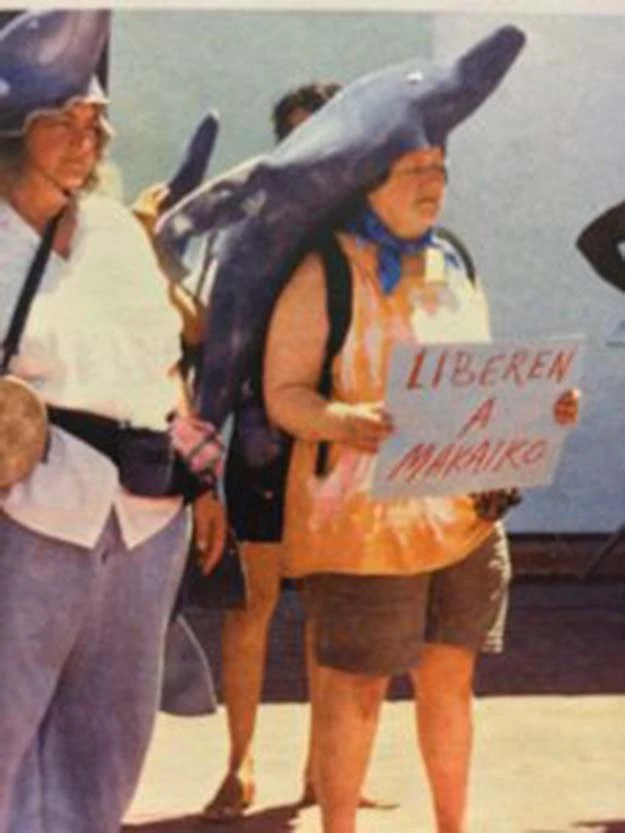
MAKAIKO TRAGICALLY DIED ALONE – DESPITE CAMPAIGNS TO FREE HIM

The trainer was fired over her involvement and was only allowed to come back one more time to say goodbye to the dolphins, which was “one of the hardest days” of her life.

Distressed dolphin dumped for being ‘too fat’

For Makaiko, however, the stakes were even higher.

When it came time for his pod to be moved again, he was said to be a “foolish” performer who refused to listen to orders and was deemed too big and too heavy.

While the rest of the animals were transported to another island, he was left behind – increasingly lonely and depressed.

“He stayed alone for some time, without food, and with a growing sense of anxiety he started banging his head against the walls,” said Lopez.

“At some point, people would come in with dead fish, and to clean the water. This was the only time Makaiko wasn’t alone.”

Makaiko’s fortunes changes after an intervention by the Mexican government.

He was rescued and placed with a company called Aqua World, where Lopez was able to lead a rehabilitation process.

Yet the years of mistreatment had left a deep impression on the distressed dolphin, who continued to self-harm.

He was finally transported to Dolphin Discovery at Isla Mujeres, where he would see out the last four years of his life.

While he was able able to swim in the ocean once more, it was only in a confined area and he was required to perform for crowds again.

One day, following Tropical Storm Emily, tragedy struck.

“Nets had been put down due to the destruction and Makaiko got tangled up in them,” said Lopez.

“The people looking after them didn’t see any of this, so Makaiko died. He lay tangled up in the nets in the dolphin venue where he was exploited to entertain thousands of people.”

Image Credits: Rocio Cue
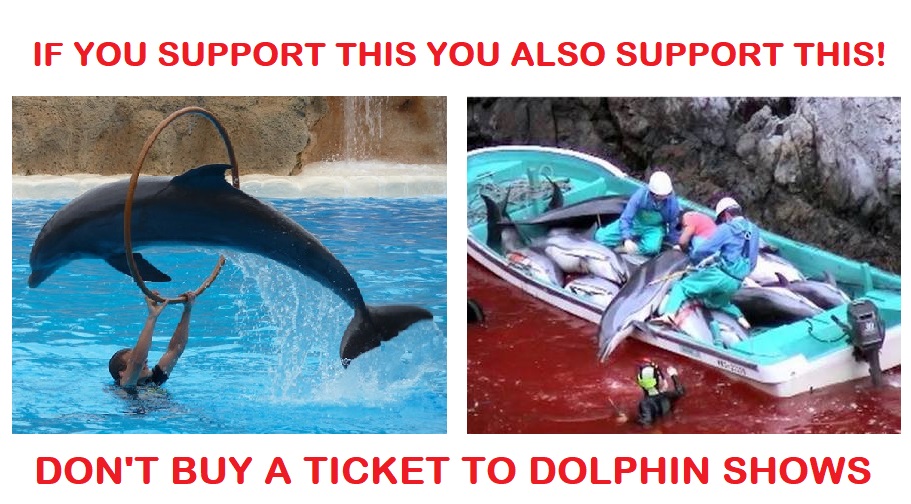
Please SHARE to raise awareness to this issue. You can also SIGN UP to receive news and updates direct to your inbox.
Daisy The Dog Was Saved From Euthanasia And Now She Happily Runs Around In A Wheelchair

DAISY NEVER LETS HER DISABILITY STOP HER LOVING LIFE

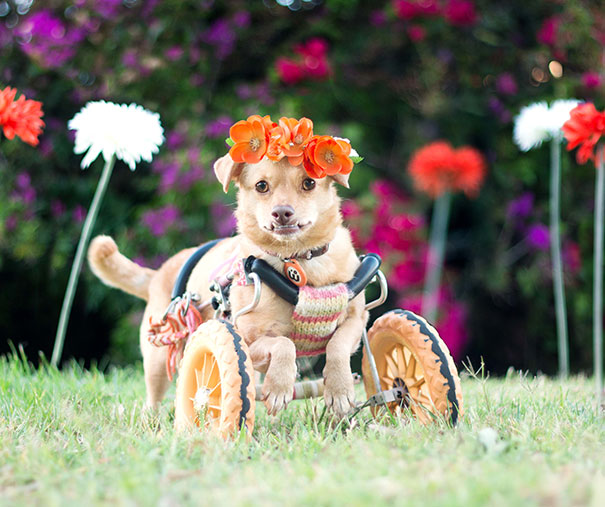
Daisy the adorable terrier didn’t have the best start in life. The pretty tan shorthair cross was born with an underbite, two wobbly front legs that never managed to work properly, and was abandoned when she was only two months old.

Daisy was abandoned on the streets of Bellflower at the age of 2 months, and was found by an animal control officer. 2 months passed and the shelter scheduled to euthanize her, but luckily, a volunteer from A Home 4Ever Rescue pulled her out just in time. Several months later, she found her forever home.

Sheena Main was looking for a special needs dog to adopt and found Daisy in the summer of 2011. Daisy was born with a congenital deformity in her front legs and uses a wheelchair to assist her walk. After learning that disabled dogs have a difficult time finding a forever home and are usually the first ones to be listed to euthanize at the shelter, Sheena was heartbroken.

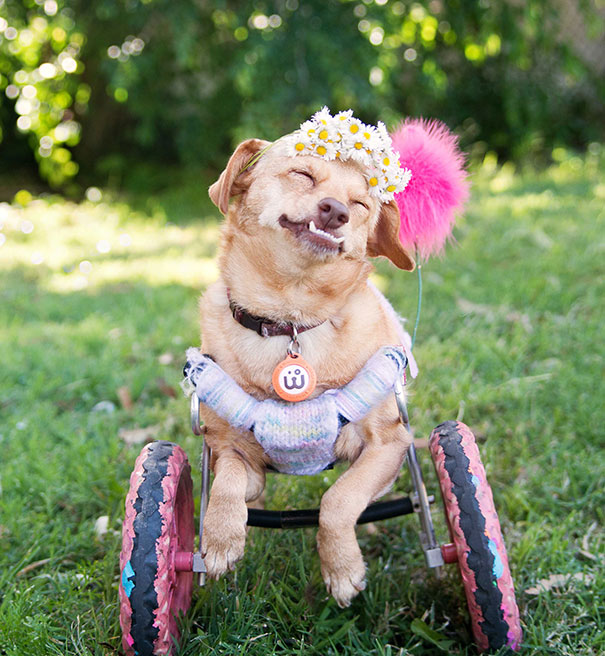
And although Daisy managed to get around just fine on her paralysed paws, Sheena was concerned about the strain it was putting on her spine, so had a pink glittery wheelchair made especially for her.

DAISY MUST BE ONE OF THE HAPPIETS DOGS YOU WILL EVER SEE

In Sheena’s eyes, Daisy is a strong girl and she doesn’t pity her disability and feel the same way about all disabled dogs. She decided to use social media platforms to share Daisy’s story and raise positive awareness for all disabled dogs.

HITCHING A RIDE

With Daisy’s sweet nature, spunky attitude, and underbite smile, she has gained many fans from all around the world and I am beyond grateful. I hope that Daisy’s story and photos will continue to spread, and more people will open their hearts to dogs with special needs.

You can help dogs just like Daisy and other disabled animals by supporting the Miracle’s Mission Centre For Disabled Animals rescue, rehabilitate and rehome sick, injured and disabled animals worldwide by donating ANY amount, large or small, at ALL Animals DESERVE a 2nd Chance In Life!

“Animals using wheelchairs and prosthetics can live as good a life as fully able-bodied animals and that is what we want to show people” ~ Victoria Bryson, Miracle’s Mission founder.

Please SHARE so that others can enjoy this happy-ending story and perhaps encourage others to adopt disabled animals. Please SUBSCRIBE to receive NEWS & UPDATES straight to your inbox. Thank you.
Killed By Poachers Before It Had A Chance To Live. Pregnant Rhino And Calf Shot Dead By Poachers In Pilanesberg National Park

45F1DA9C00000578-5043451-image-a-14_1509637277244
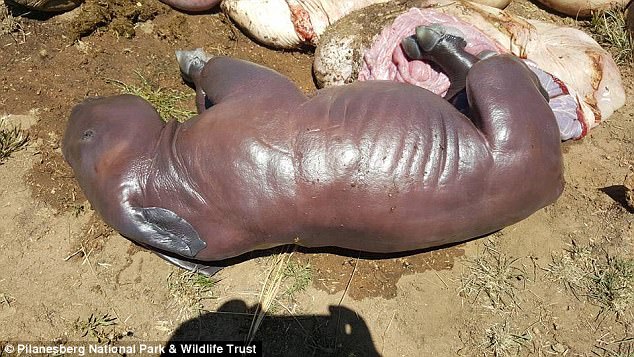
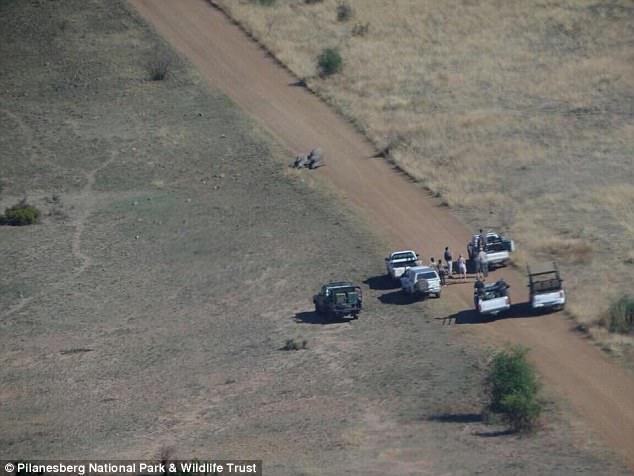
No chance: An unborn Rhino calf who died in its mother’s womb after she and its sibling were shot dead by poachers in South Africa
45F1DAA400000578-5043451-image-a-15_1509637288804
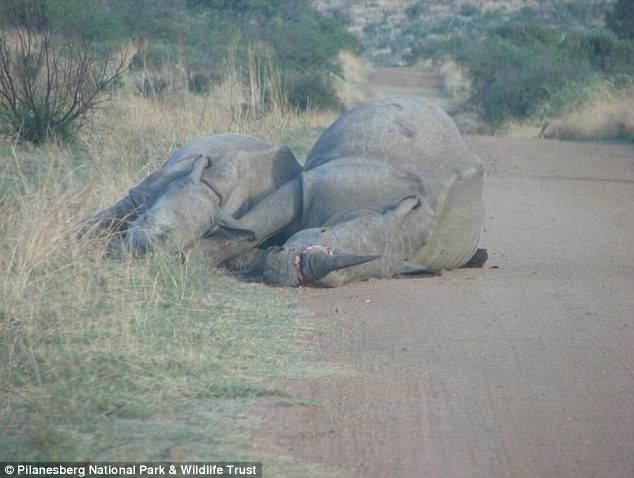
Heartbreaking: The markings around the mother’s horn show that the poachers had made an attempt to cut it off, but fled the scene when park staff arrived

The Rhino was heavily pregnant and roaming Pilanesberg National Park in Mogwase, north-west South Africa, with its calf when they were hunted down for their horns.

These heartbreaking images show an unborn Rhino calf who died after its mother and sibling were shot and killed by poachers.

Photos show the poachers began hacking off the mother’s prized horn, but they were interrupted by park rangers and fled before they had time to remove it.

When park staff tried to save the unborn calf, it was found to have died inside its mother’s womb.

Pilanesberg National Park wrote on its official Facebook page: ‘There are no words.

‘Mom and calf shot and killed by poachers. Horns are still on as the murderers fled the scene when they heard a game drive approach. Mom looks very pregnant as well. We are devastated.’

Pilanesberg National Park added in the post that a reward will be issued for any information leading to an arrest and prosecution of the poachers.

A spokesperson for the park told MailOnline that the mother Rhino was aged eight and the calf just two years old. The unborn foetus would have been due in February next year.

45F1DAA800000578-5043451-image-a-17_1509637322828
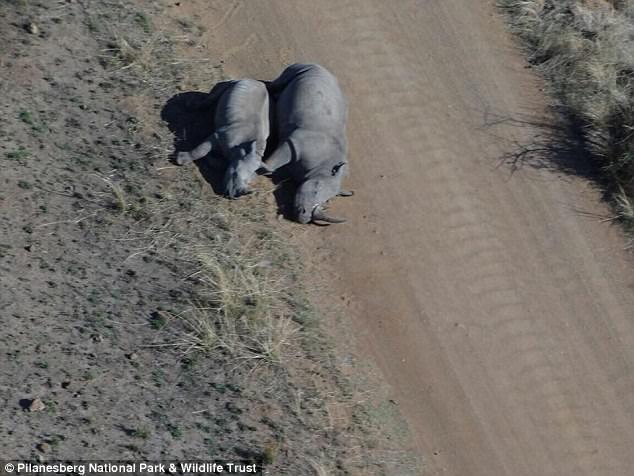
Killed: The heavily pregnant Rhino and its calf lie by the roadside where they were shot

‘We have lost 16 Rhino and 3 unborn calves so far 2017 – that we are aware of,’ the spokesperson said.

‘This loss is not due to lack of interest or effort from Park management, as this is a large park with many valleys and hills, which is a difficult territory to operate in.’

Since 2007, more than 6,000 Rhinos have been shot and butchered for their horns in South Africa alone.

The majority of those have come in the last four years with around a thousand being killed every year since 2013.

Sometimes the Rhinos are shot dead, in other cases they are brought down with a tranquiliser gun before having their horn hacked off – leaving the Rhino to wake up and bleed to death painfully and slowly.

The province of KwaZulu-Natal, which has the greatest density of Rhino in South Africa, has seen 139 slaughtered already this year.

Despite countries such as China, Vietnam, South Korea, Malaysia and even India believing Rhino has medicinal values, repeated studies have not found any evidence to support the claims.

45F1DAAC00000578-5043451-image-a-16_1509637320203
Sad: Park rangers and guests gather at the heartbreaking scene in Pilanesberg

Rhino horns are made from a protein called keratin, the same substance that human fingernails and hair are made of. The horn is essentially just a compacted mass of hairs that continues to grow throughout the animal’s lifetime, just like human hair and nails.

It is similar in structure to horses’ hooves, turtle beaks, and cockatoo bills – however these animals are not hunted and slaughtered in the same way.

Tragically tradition and cultural beliefs in some Asian countries mean the demand for Rhino horn has not waned despite just some 20,000 white Rhino being left in the wild.

Poachers are now being supplied by international criminal gangs with sophisticated equipment to track and kill Rhinos. Based on the value of the Asian black market, Rhino horn price is estimated at $ 65,000 USD per kg*. In the near past, the Rhino horn price soared up around $65,000 per kilogram. This price hike turned the Rhino horn more valuable than gold and many other precious metals, also many times more worthy than Elephant ivory. (*2020 figures)

Please SHARE to raise awareness of the horrific result of poaching. Please SUBSCRIBE for news and updates.

Powys Animal Rescue Founder Among Volunteers Who Helped Transport Nowzad’s Dogs

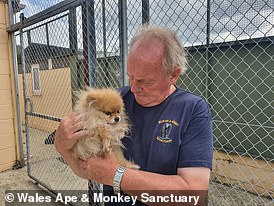
Graham Geran  of the Wales Ape & Monkey Sanctuary in Powys collected a number of dogs.

GRAHAM GERAN WITH SOME OF NOWZAD’S DOGS

The founder of an animal rescue centre in Wales was among the volunteers who helped transport Pen Farthing’s cats and dogs.

Farthing arrived at Heathrow Airport with 173 rescues from his Nowzad animal charity in Kabul, Afghanistan, on Sunday, August 29, and was met by a number of vehicles involved in transporting them to their quarantine centres.

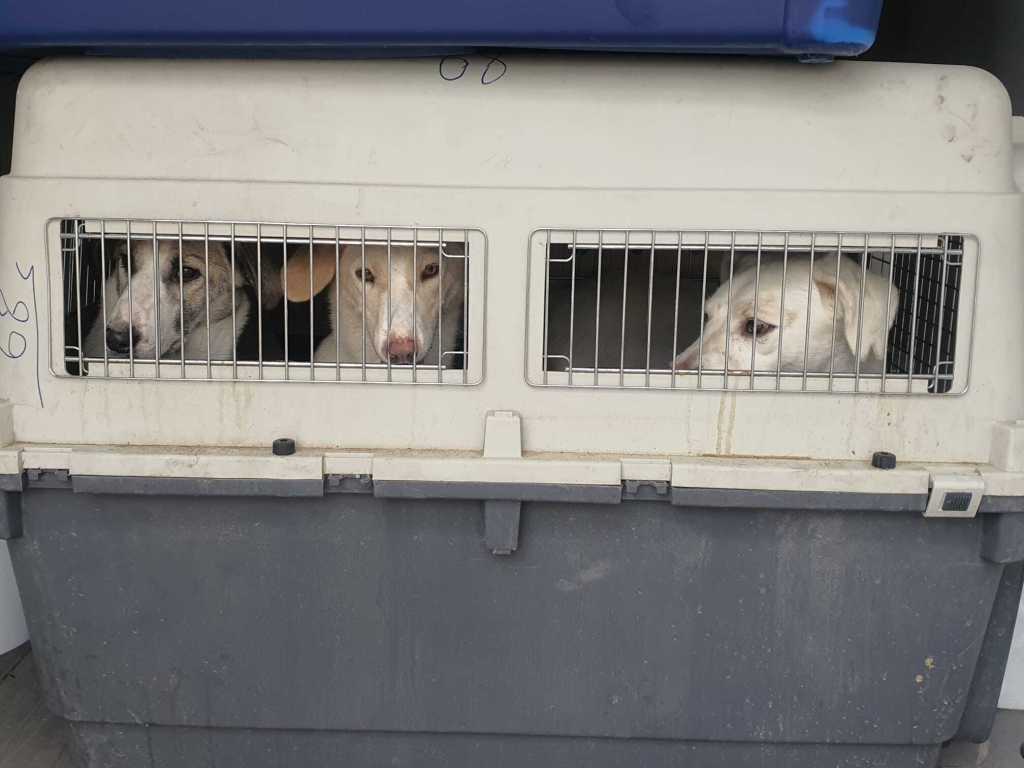
SOME OF THE DOGS WHO ARRIVED AT HEATHROW

Among them was Wales Ape & Monkey Sanctuary founder Graham Geran, who had volunteered to collect some of the dogs in a special transport vehicle free of charge.

The animal rescue, based in Powys, is on the list of premises and carriers authorised by the Government for rabies quarantine in England, Wales or Scotland.

Graham said “I was up at three o’clock in the morning as I had to be in Heathrow for 7:30… and then it was a case of waiting for the checks and then get them from the plane into the quarantine centre.”

There were said to around 18 other vehicles involved in transporting the animals.

Speaking about the dogs, Graham said: “They came out of the crate and they were straight up jumping on us.

GRAHAM WITH ONE OF THE RESCUED DOGS

Graham also revealed that he had received ‘numerous phones calls’ from people wishing to adopt the animals after it was discovered he was involved in transporting them.

He added: “People want to adopt the dogs, so they will go out to quarantine and to good homes.

The animals, with an estimated total of around 100 dogs and 70 cats, are in quarantine kennels across the UK, with hundreds of people looking to adopt them.

Please SHARE to raise awareness to Nowzad and Operation Ark. Sign up to receive NEWS & UDATES straight to your inbox. Thank you.
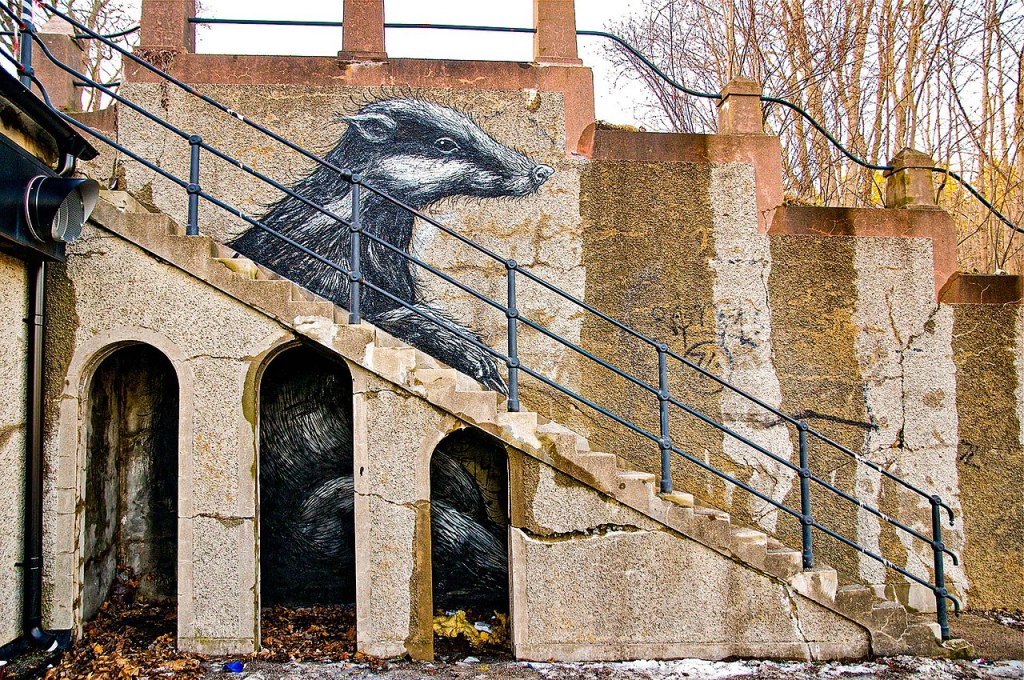
A Pictorial Tribute To Wildlife Street Artist Roa

THE LIFE AND TIMES OF STREET ARTIST ROA

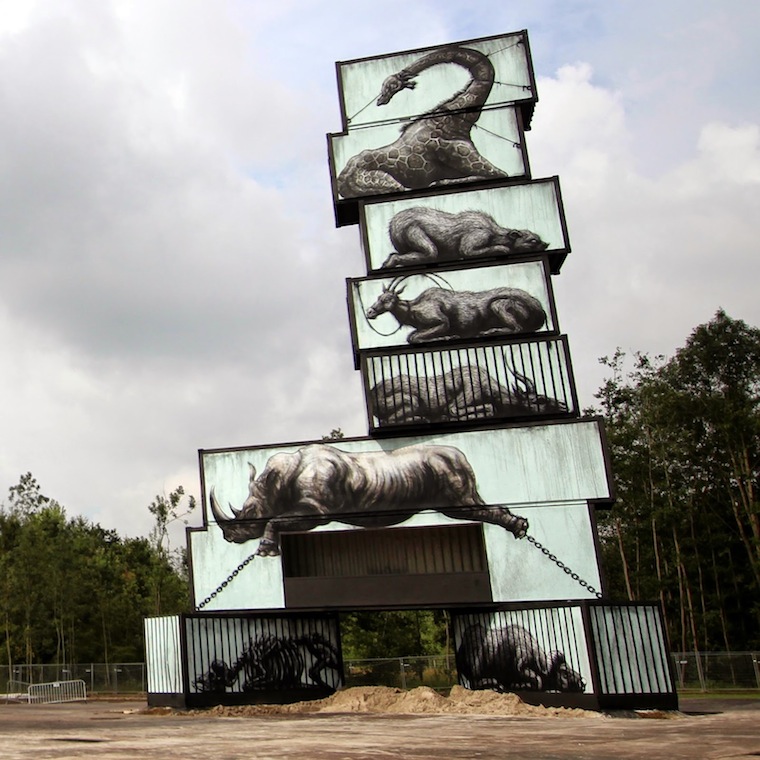
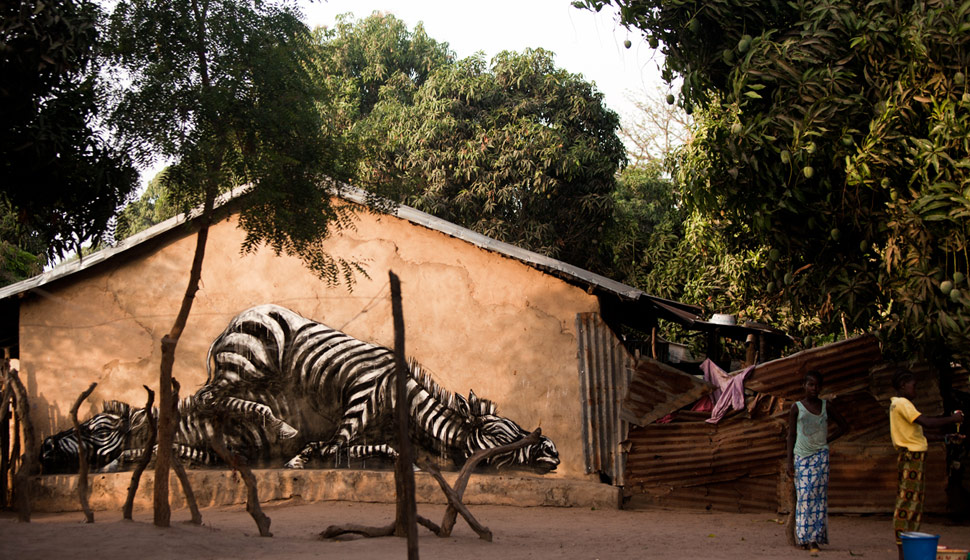
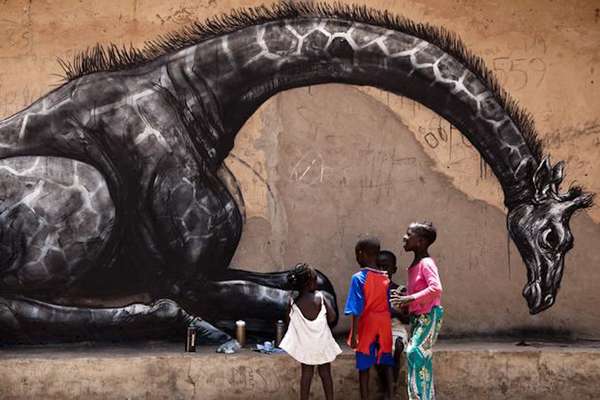
Roa, a hugely talented Belgian street artist from Ghent, is renowned for his giant black and white animal street art. Roa started off in the street art scene painting animals on abandoned buildings and warehouses in the isolated industrial areas of his hometown. Today, Roa’s animals may be found slumbering on the sides of semi derelict buildings and peering out from shop shutters in city streets all across the world from New York to Berlin and Warsaw to Paris.

Stockholm, Sweden.
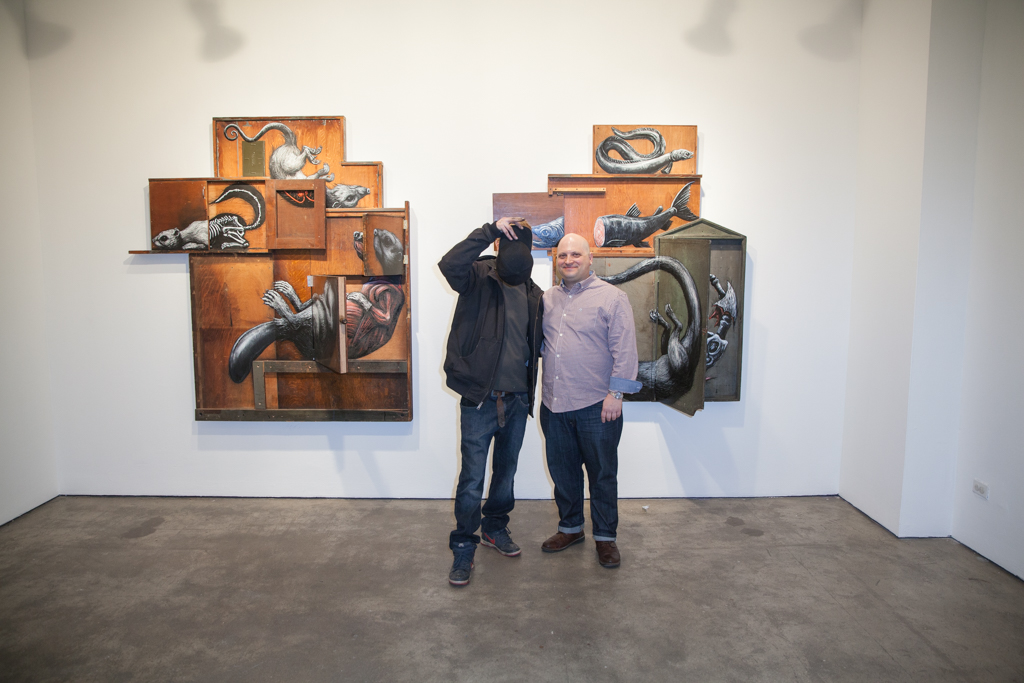
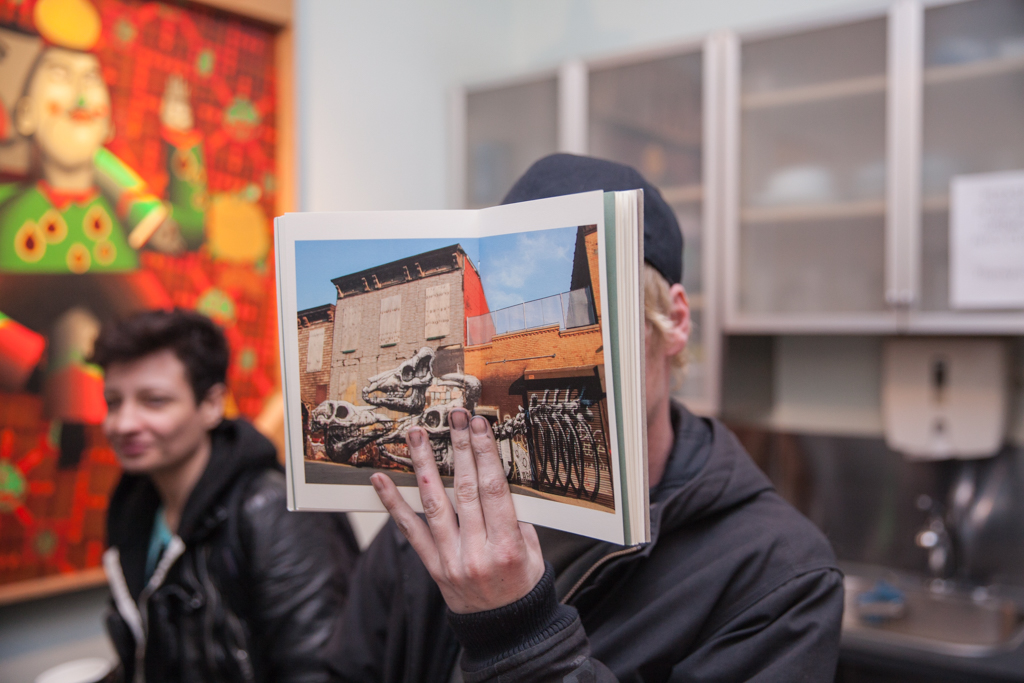
ANONYMITY
Roa Lets His Work Do The talking

Street artist Roa is a muralist from Ghent, Belgium sprays beautiful illustrations of animals on buildings, walls and anything he can find in cities around the World. His work has often been recorded and photographed, but very little is known about the artist and even less is documented.

Renowned for his monumental black and white paintings of wildlife, ROA is a pseudonym of a Belgian street artist that has been leaving both accidental and intentional viewers in awe for years now. His hand painted, large scale and unique portrayals of rabbits, birds, rats, fish and other animals disquietly cohabit city streets, whilst his more disturbing images of skeletal or dead creatures directly reflect ROA’s pessimistic opinions of society. Although this street artist’s work is definitely a contender when discussing the most famous and recorded urban pieces in recent history, not much is known about this mysterious painter from Ghent who uses this anonymity to make sure both his artwork and spirit remain uncompromised.

At a very young age Roa remembers wanting to be an archaeologist or something adventurous and collecting little skulls from birds and rodents to draw at home. He grew up in the eighties and naturally was inspired by the American life; music, skating and so forth. The love for music, more in particular hip-hop, quickly joined his curiosity in graffiti. Like most muralists, he began by spraying throw-ups under bridges and walls. During his early years, Roa expressed an active, eclectic mix of styles. At the time, there was not prevailing movement in Belgium. As time went on, the scene’s evolution further evolved as foreign visitors left behind an assorted collection of talents and skills. Slowly but sure Roa became addicted to the nature of urban art.

Roa is primarily known for his strong obsession for animals and rodents. He often combines life, death, and life after death in his murals, which quickly distinguishes him amongst traditional muralists. His animals are painted to include skeleton and internal organs, making the sight even more realistic. The artist states, “Organs are the vital substances of our body and they represent a lot of the symbolism which I like!” One’s love for animals could not be expressed nearly as much as our artist Roa. This mysterious Belgian muralist has created hundreds of murals through Europe. He has also travelled to other locations around the world.

His preferred forms of methods to paint are by using spray paint or acrylic paint. In fact, most of his work is created through a mixture of black, white, and grey scale colours. At times, the muralist prefers to sketch, especially those large murals. He first began his artistic career by paining buildings and warehouses in his hometown. Nowadays, his distinctive black and white style street artwork can be found worldwide.


Some major cities, where his work can be found include London, New York, Berlin, Warsaw, Madrid, Moscow, Los Angeles, Mexico City and Paris.

Muralist Roa’s true obsession for animals is unparalleled and he uses this obsession to paint for inspiration. Roa uses native animals based on the location he is painting in. For example, if he goes to a specific location filled with roosters, like Mexico, then he will paint a rooster. Not only does this make him a standout artist, but his attention to detail is phenomenal. He truly has a pure passion for painting. Roa simply paints to paint- no other reason.

Carefully using the placement and the enlarging of the graffiti subject, ROA implies the cruelty and absurd relationship of humans and animals, as well as displaying the roots and origins of the depicted beings – this is what’s his art all about.

Roa’s work has been turning heads across the street art community by bringing birds, rodents, and other animals back into the consciousness in the areas they once inhabited. Although the street art is generally conveyed in a very natural matter, even his dead animal paintings seem at peace. Not only that, but his extra-large scale black and while local rodents may be viewing the image at work from nearby.

Roa’s anonymity has kept his work and his spirit free.

Enjoy Some Of Roa’s Art From Around The World

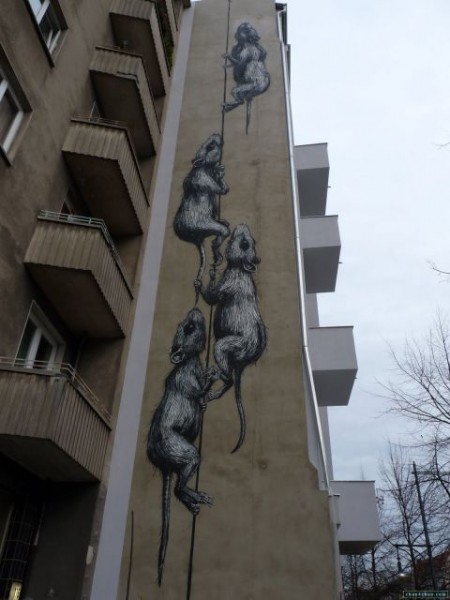
ROA BERLIN GERMANY
BERLIN, GERMANY
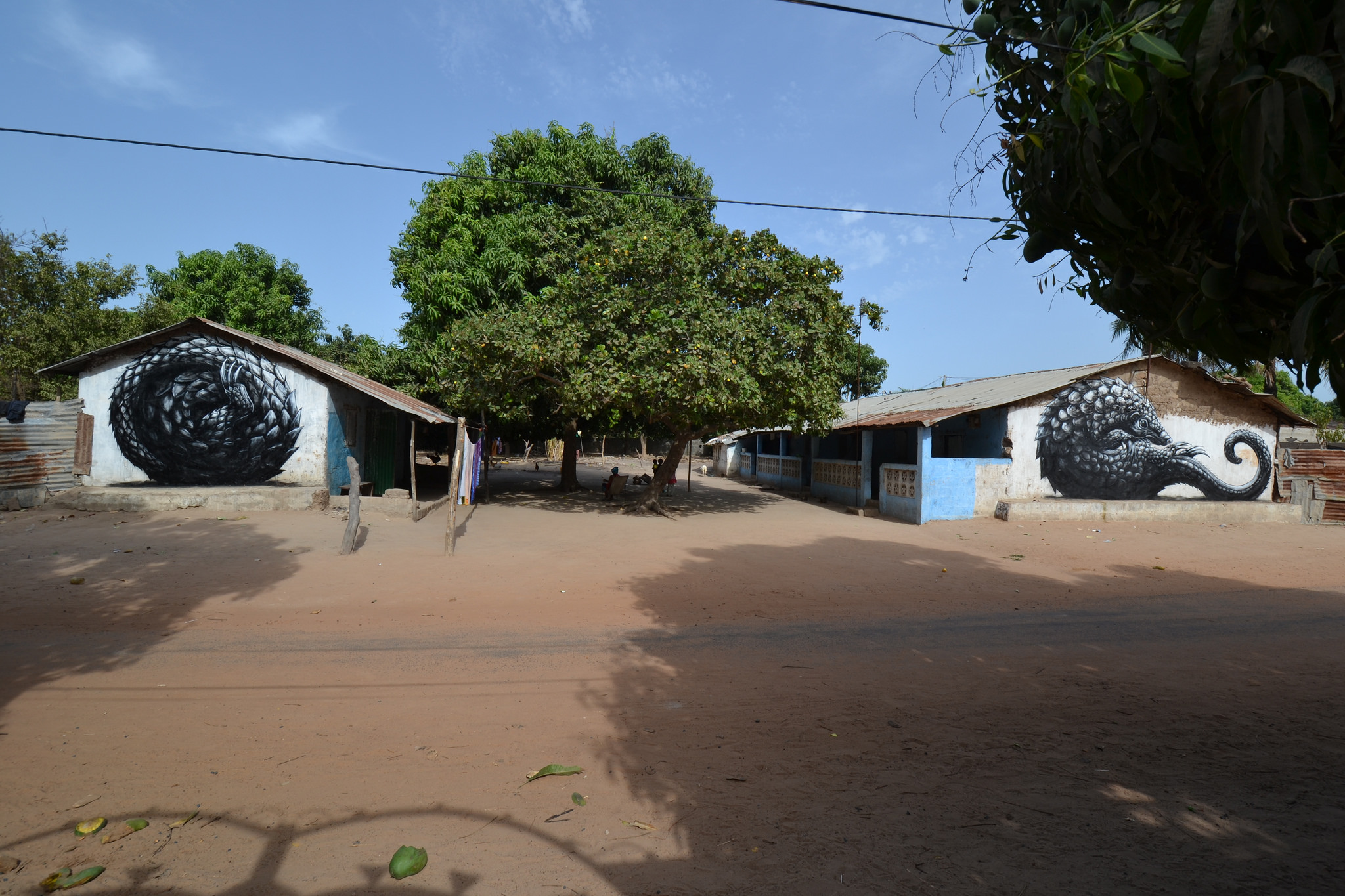
ROA MAKASUTA THE GAMBIA 1
MAKASUTA, THE GAMBIA
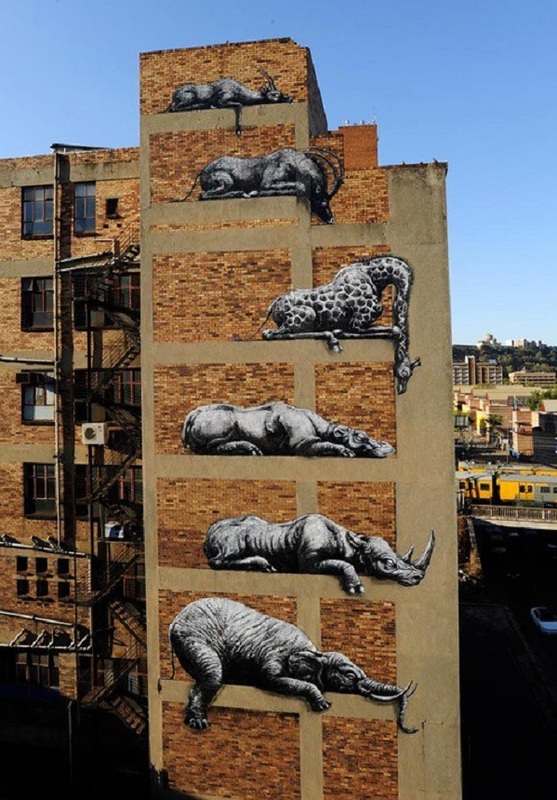
ROA JOHANNESBURG SA
JOHANNESBURG, SOUTH AFROCA
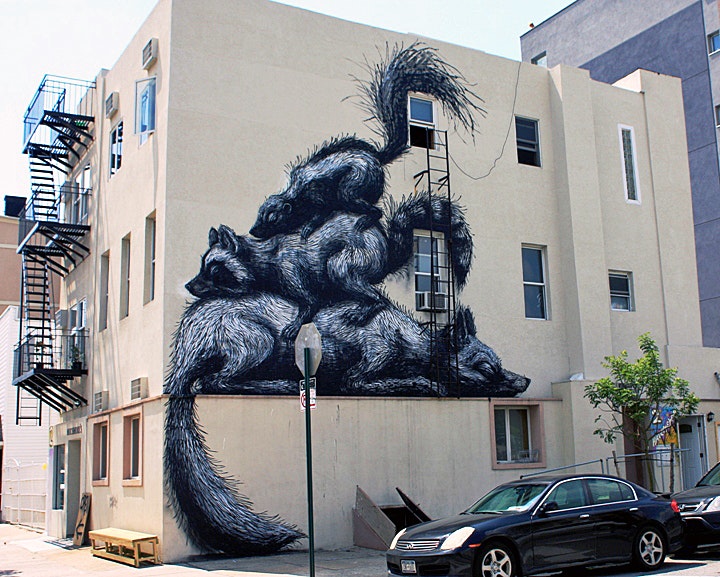
ROA BROOKLYN USA
BROOKLYN, USA
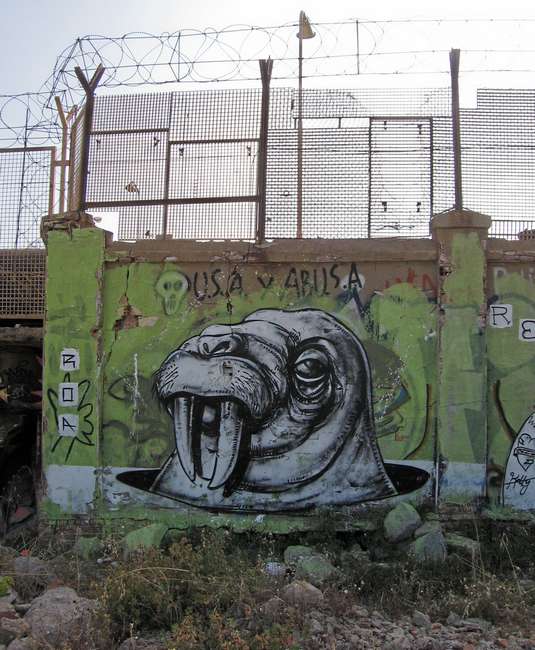
ROA BARCELONA SPIAN
BARCELONA, SPAIN
ROA WERCHTER BELGIUM
WERCHTER, BELGIUM
ROA GAMBIA
MAKASUTU, THE GAMBIA
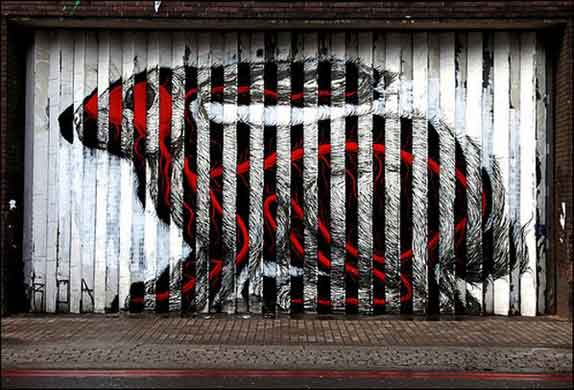
Lenticular Street Art
LONDON, UK
roa-in-gambia1
MAKASUTU, THE GAMBIA
roa_warsaw_7_u_1000
WARSAW, RUSSIA
ROA OREBRO SWEDEN
OREBRO, SWEDEN
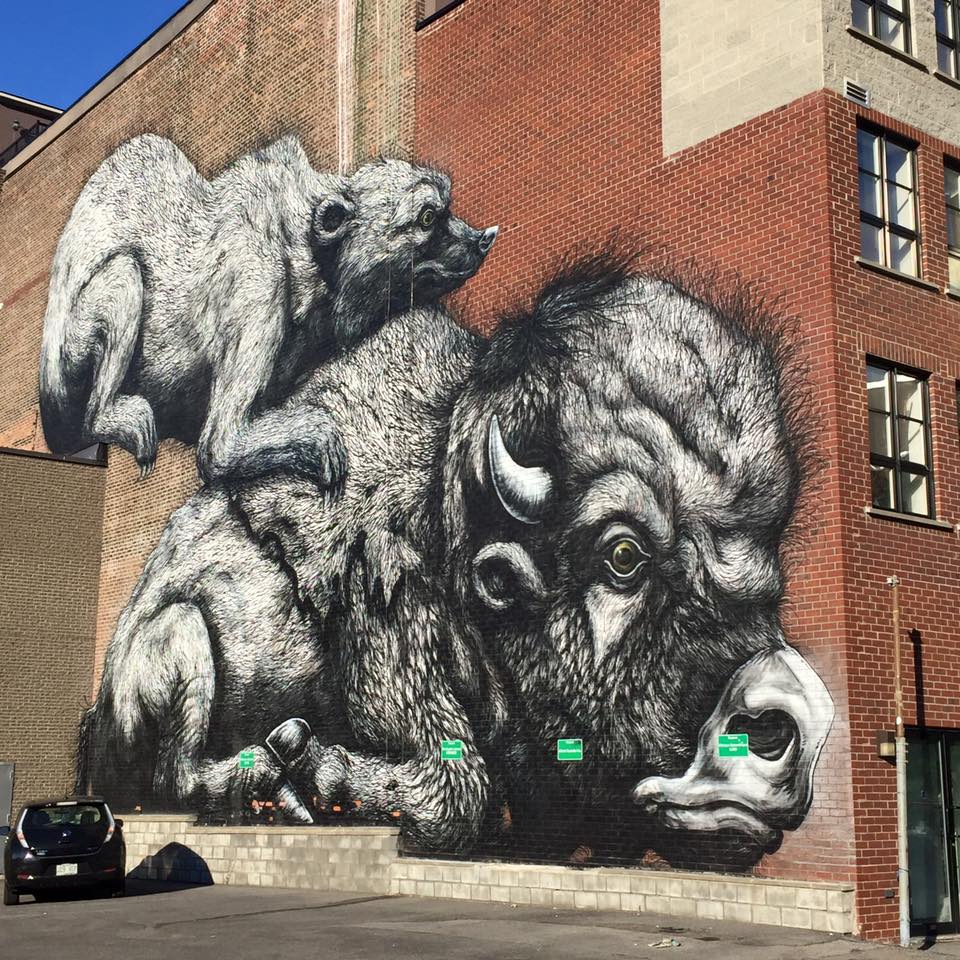
ROA MONTREAL
MONTREAL, CANADA

These are just SOME of the vast amount of murals that Roa has created. You can visit his Facebook page at Roa Street Artist.

Please let others see Roa’s amazing work by SHARING far and wide. Please SUBSCRIBE to receive regular new and updates straight to your inbox.
LIONS, BONES AND BULLETS: THE LION FARMING ‘INDUSTRY’

What is the link between trophy hunting, deadly infectious diseases and traditional Chinese medicine? The not so obvious answer is Lions. Paradoxically, these apex predators are now farmed on an increasingly industrial scale in South Africa by the SA government may change this). The estimated number of farmed Lions in the country is already four to five times larger than that of wild Lions. And there is another paradox – in 2019, the South African government amended legislation to reclassify Lions and 32 other wild species as farm animals. Lions, Bones & Bullets (see video link below) tells the astonishing story of how the Lion farming industry adapted to survive losing two-thirds of their trophy hunting clients following Cecil the Lion’s shooting and the US boycott that followed.

Lions bones and bullets
Lions bred in captivity on an industrial scale in South Africa

If trophy hunting was dying out, then what was stimulating the boom in Lion farming? Penguin Random House author Richard Peirce and the Jagged Peak Films team went in search of the answer. They discovered that while canned hunting had decreased, a parallel increase in demand for Lion bones from Southeast Asia was fuelling demand, leading the South African government to establish an annual quota for Lion skeleton exports. Richard followed the Lion bone trail from farms in South Africa to street dealers in Vietnam and Laos.

Inside a South African lion farm

Following the wildlife trafficking trail led to dangerous situations, but the team persisted in their quest for the truth. An undercover informant in Southeast Asia confirmed that Lion bones were being imported and passed off as Tiger to be used in Tiger cake, Tiger wine, and various other ‘Tiger’ products consumed in traditional Chinese medicine. The filmmakers exposed how easy it is to buy ‘Tiger’ or ‘Lion’ products, which are supposed to be illegal by international trade laws. Between the South African skeleton sale value and the end consumer price, they discovered a 60-fold increase. These huge profit margins and the fact that it’s cheaper to import a farmed Lion skeleton and pretend it’s a Tiger than to rear an actual Tiger, drive the South African Lion bone trade.

Lions bones and bullets
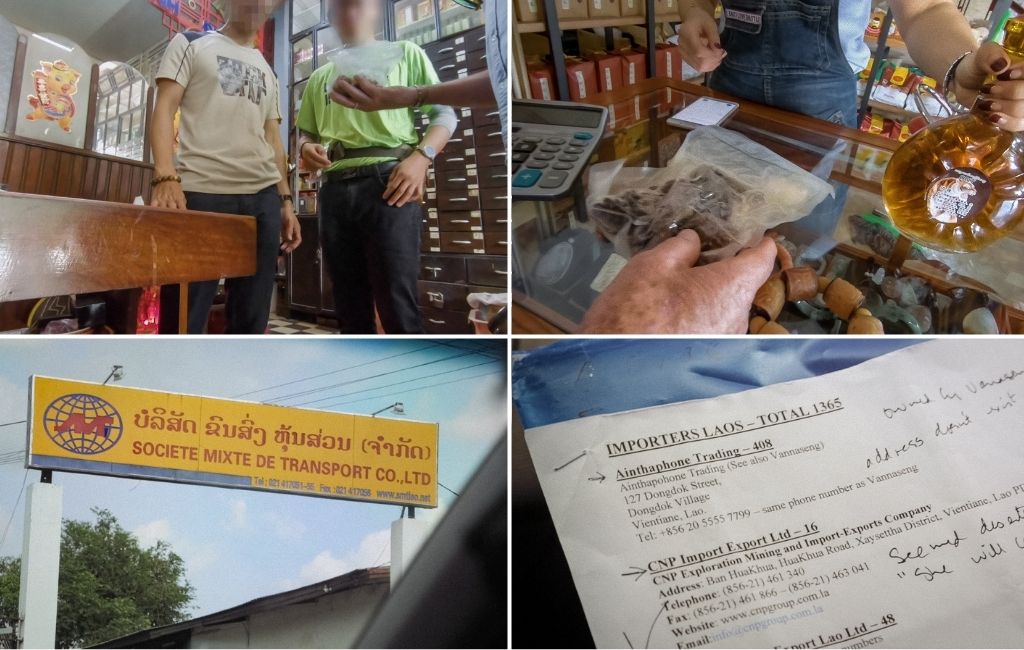
Richard goes undercover to investigate the trail of lion parts in Southeast Asia. Clockwise from top left: Richard is offered illegal pangolin scales in Vietnam; Richard is offered illegal ‘tiger wine,’ ‘tiger bracelets’ and a mysterious ‘tiger whip’ in a marketplace in Laos; List of companies that have imported lion skeletons from South Africa to Laos. While tracking down each address, Lions, Bones and Bullets proved that most are front companies for the true importer; Entrance to the office of ‘Societe Mixte de Transport’ in Laos, an import-export company which has imported lion skeletons from South Africa to Laos on behalf of a client.

This timely and groundbreaking film is much more than a straightforward exposé. The threats Lion farming and the Lion bone trade pose to conservation are tremendous. Richard, the author of several books on wildlife, explains: ‘Lion farming and the increasing sale of Lion bones to Asia involve exploitation, cruelty, injustice, misconception, fraud and corruption. They are a threat to wild Lion populations. It is mind-blowing in terms of the huge negativity involved and has no redeeming aspects. Lions are a flagship species; what happens to Lion populations will be a major factor in determining the future of wild animals in Africa.’

The threats to global public health are even more significant. The world is paralysed by a pandemic that came to humans via wild animals. Lions, Bones & Bullets reveals how shockingly easy it is to legally develop an expanding wildlife farming industry and then transport products that could be infected with tuberculosis, the ‘world’s deadliest infectious disease’. The disease is still South Africa’s leading cause of death.

Lions bones and bullets
Richard Peirce

The world festival premiere of Lions, Bones & Bullets washosted by the 60th Monte-Carlo Television Festival in June. The Prince Albert II of Monaco Foundation, competition partners to the festival, is dedicated to environmental protection and sustainable development globally. Olivier Wenden, Vice-President and CEO, notes:  ‘Lions, Bones & Bullets sends a clear and vital wake-up call to the world, inviting us to open our eyes and rethink our relationship with nature and wildlife.’

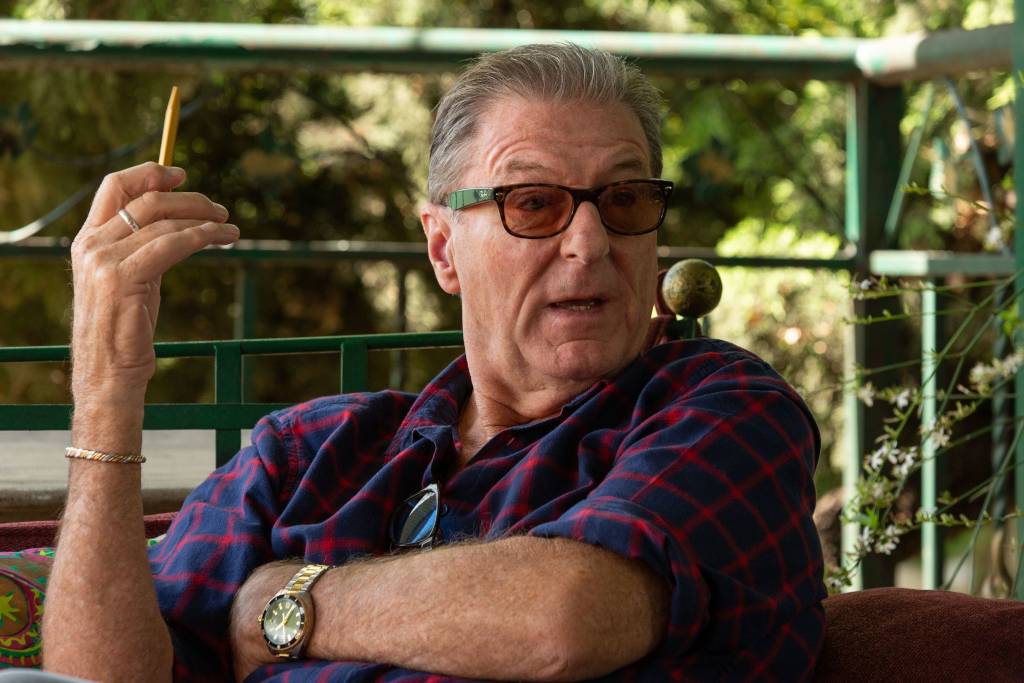
The team behind Lions, Bones & Bullets includes Kiwi director and executive producer Anton Leach, who has filmed in more than 20 countries, including war zones in Iraq, Syria and Gaza. Also from New Zealand is the film’s producer, writer and editor, Jasmine Duthie. Her work focuses on character-driven wildlife stories.  Lions, Bones & Bullets is narrated by leading British actor and campaigner Peter Egan (Harry Potter, Downtown Abbey, Chariots of Fire).

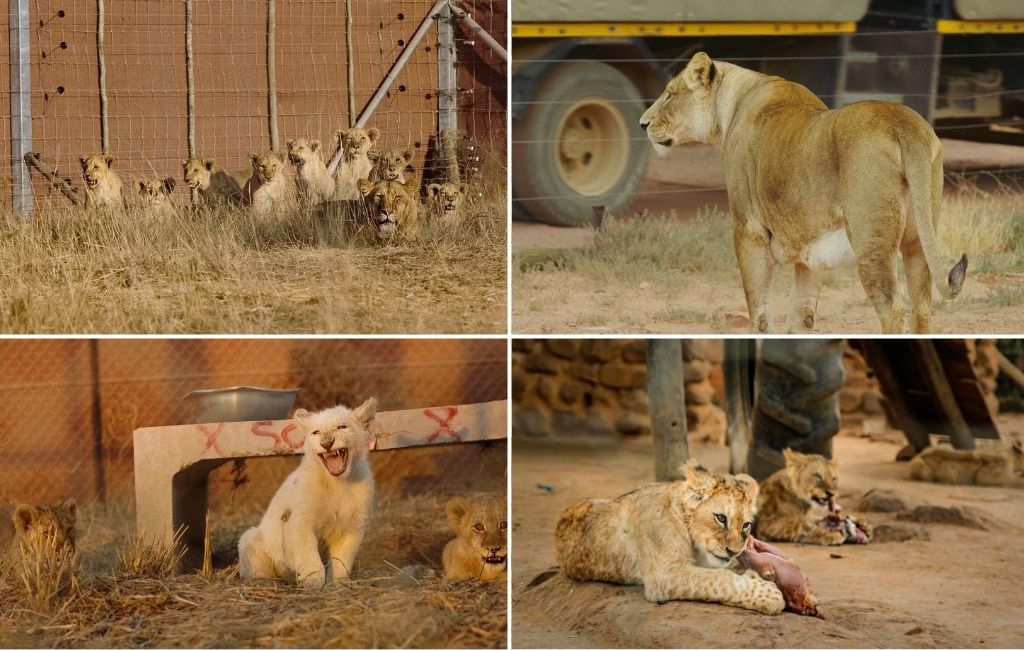
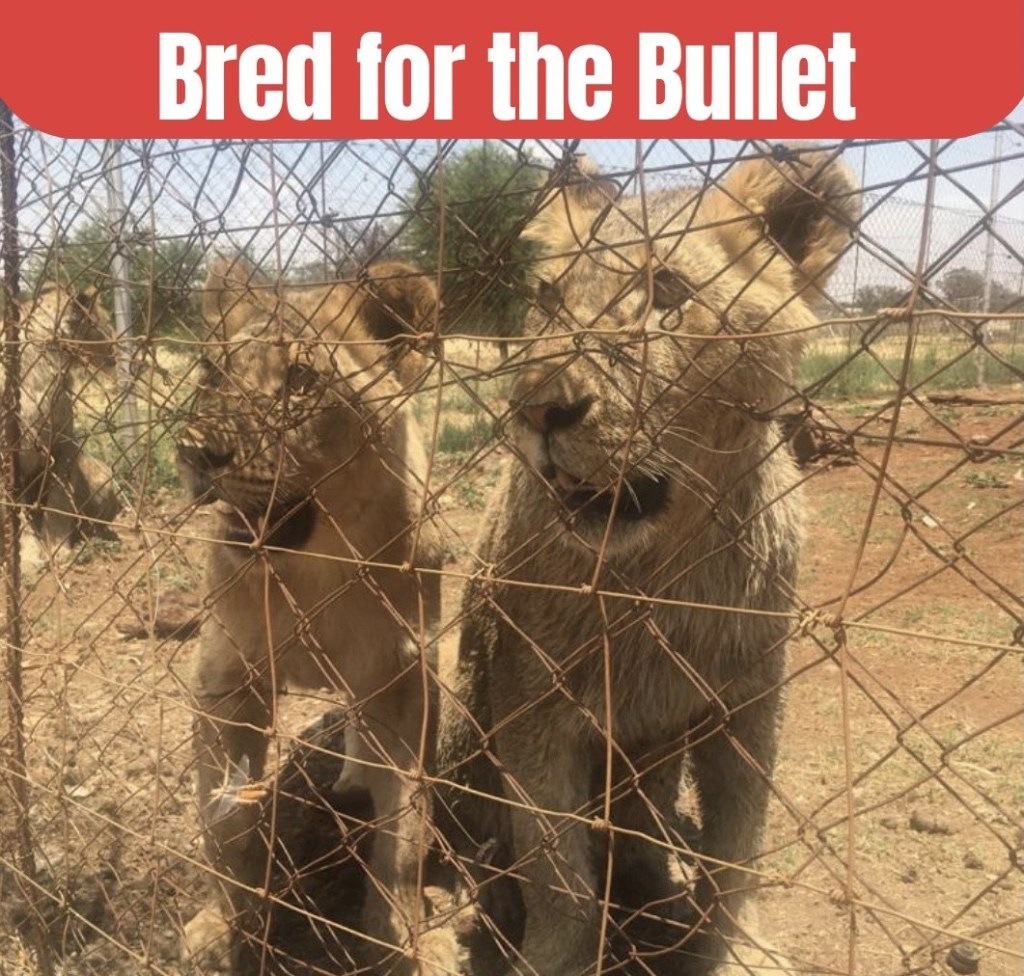
LICHTENBURG, SOUTH AFRICA: Thirty-four Lions were crammed into a muddy enclosure meant for three. Rotting chicken carcasses and cattle body parts littered the ground. Feces piled up in corners. Algae grew in water bowls. Twenty-seven of the Lions were so afflicted with mange, a painful skin disease caused by parasitic mites, that they’d lost nearly all their fur. Three cubs lay twitching in the dirt, one draped over the blackened leg of a cow, its hoof visible. Mewling, they struggled—but failed—to drag themselves forward. A fourth cub looked on, motionless.

Although the number of captive Lions in South Africa has been estimated at between 6,000 and 8,000, there may now be as many as 10,000, according to conservationist Ian Michler, the protagonist of the 2015 documentary Blood Lionswhich goes behind the scenes to examine the country’s Lion-farming industry. At facilities geared to tourists, visitors pay to pet, bottle-feed, and take selfies with cubs and even walk alongside mature Lions. Critics say the cub-petting industry leads to abuse, commercial breeding, and discarding of exotic animals. As the Lions age, they become too dangerous to pet, and they’re often sold to breeding and hunting ranches, which are not open to the public. “It’s this whole macabre, grisly industry with all these little revenue streams, and it’s very, very lucrative,” Michler says.

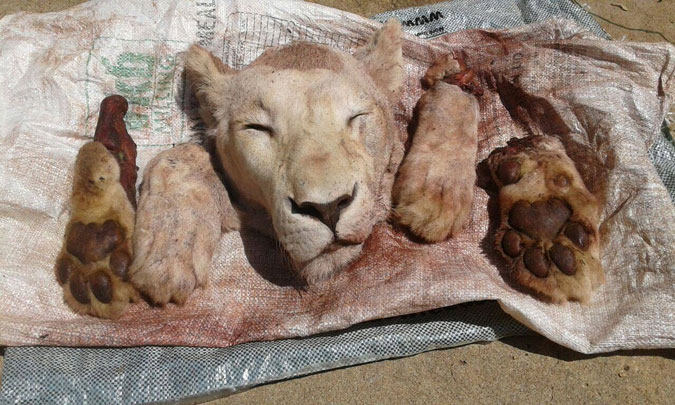
Some ranches may offer “canned” hunts, in which Lions are confined to fenced areas. Sport ‘hunters’ may pay as much as $50,000 to kill Lions so they can keep the skins and heads as trophies. The bones and other unwanted parts may be exported to Asia, where they’re used in traditional medicine. South Africa sets a quota for the number of Lion skeletons that can be exported legally every year.

LIONS: BRED FOR THE BULLET!

The Story Of A Tragic Wolf Called ‘Romeo’ Who Loved Too Much And Deserved Much Better

ROMEO

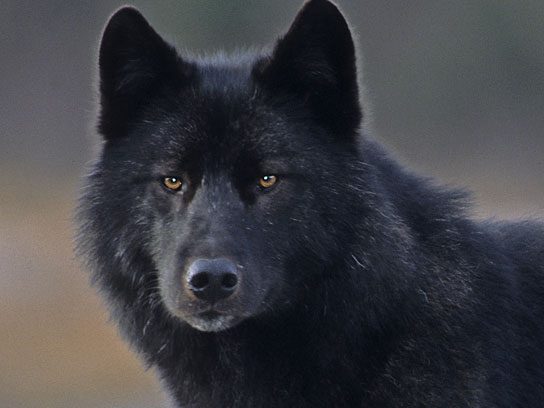
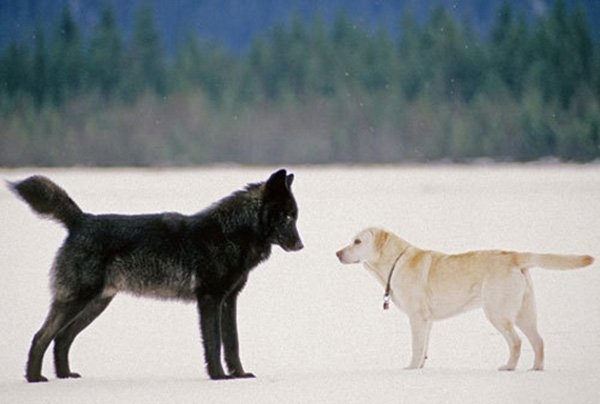
On a twilit night in Juneau, Alaska, in December 2003, and Nick and Sherrie Jans were walking with Dakotah, their yellow Lab, in the Mendenhall Glacier Recreation Area not far from their house. Suddenly, a young black wolf appeared on the ice—and began running in their direction. Awestruck but scared, the couple watched as Dakotah broke loose and charged the predator, which was twice the size of the dog. The animals stopped yards apart and gazed at each other “as if each were glimpsing an almost-forgotten face and trying to remember,” recalled Jans. After a few moments, Dakotah ran back to her owners, and the three hurried home, listening to the wolf howl

The locals named him Romeo, and soon his presence was noted by the entire town. Most found it fascinating that Romeo was so friendly, while others assumed that this naturally predatory animal would give into his natural instincts at any moment, potentially attacking their pets and children.

During this time Nick Jans started documenting Romeo. When he did, he uncovered an emotional story, the heart of which describes the tenuous relationships between wild animals and the humans around them.

“The first thing I saw was tracks out on the lake in front of our house on the outskirts of Juneau,” Jans said in an interview with National Geographic. “A few days later, I looked out from my house and there was this wolf out on the ice. I’d had 20 years of experience around wolves up in the Arctic and immediately knew it was a wolf, not a dog. I threw on my skis and found him.”

ROMEO

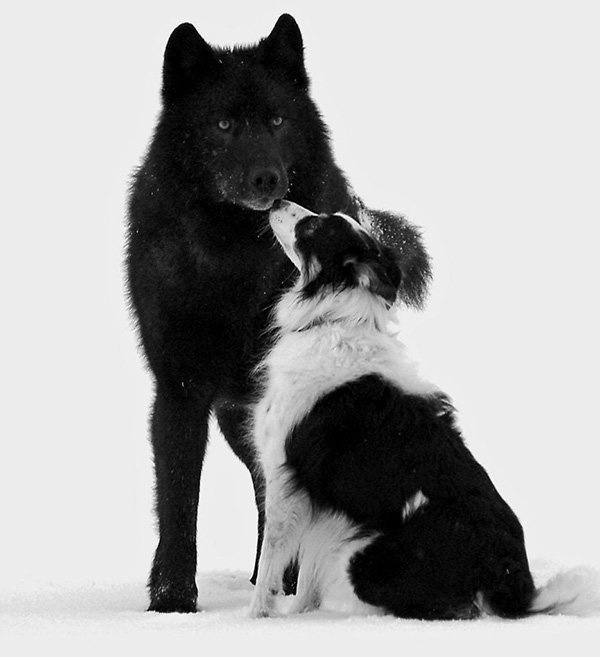
According to Jans, Romeo seemed totally relaxed and friendly.

And it wasn’t just one interaction, either: Romeo remained his curious, friendly self for the better part of six years.

“For want of a better word,” Jans said, “The only thing I can say from a human perspective is that it amounted to friendship. If you wanted to be scientifically correct, it would be “social mutual tolerance.” But it was more than that. The wolf would come trotting over to say hi, and give a little bow and a relaxed yawn, and go trotting after us when we went skiing. There was no survival benefit. He obviously just enjoyed our company.”

Romeo’s behavior was definitely unusual, as many wolves tend to assert dominance by attacking dogs and other animals.

he wolf got his name because Jans and his family noticed how Romeo was kind of a flirt — particularly with their “Juliet,” a dog named Dakotah. Here, they’re standing nose-to-nose in what seems to be an all-too-perfect photo moment.

lifebuzz-58ac1a0bf3848e6b7025ad6bdb8fb768-limit_2000

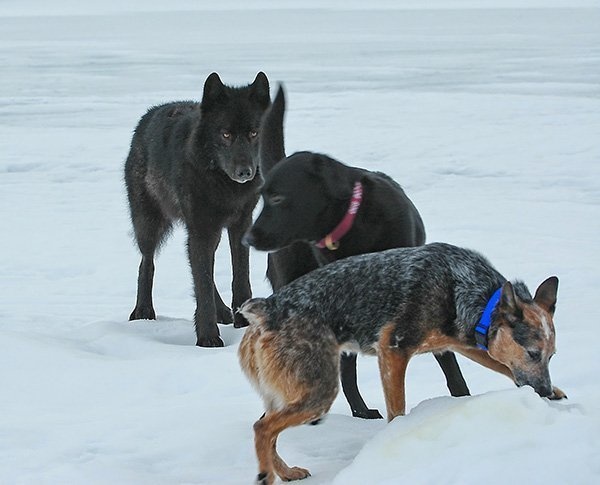
Romeo survived for years despite many mortal threats: scented traps, busy roads, illegal hunting, and even a poisoning attempt. He also had to contend with the natural dangers of starvation, injury, and attack by another pack of wolves. By almost any standard, his prolonged proximity to humans and dogs constituted incredibly rare behaviour. There was no obvious survival benefit to his socializing, yet the wolf lingered persistently, a late echo of the original process that must have initiated the domestication of dogs.

Romeo stayed in the area for as long as he lived — and he lived three times longer than most wild wolves do.

“Romeo was the single most transformative event of my life,” Jans said. “The amazing thing was Romeo’s understanding. It wasn’t just our understanding and tolerance. It was the combination of his and ours and the dogs’. We were these three species working out how to get along harmoniously. And we did.”

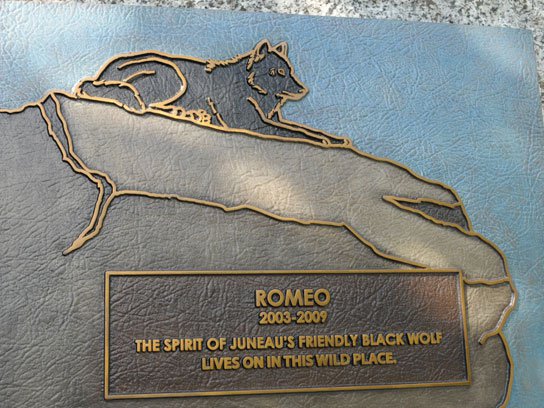
What happened to Romeo?                                                                                                   Romeo disappeared in late September 2009. After some sleuthing, a supporter found he had been shot and killed by Juneau resident Park Myers III and his Pennsylvanian friend Jeff Peacock. Both men were arrested and ended up paying fines, serving a few years on probation, and losing hunting and fishing privileges for a limited time. In late November 2010, a memorial service was held for Romeo and this plaque was laid along a path where he once roamed.

“Nothing can take away the miracle that was Romeo and the years we spent in his company,” writes Jans. “Love, not hate, is the burden we carry.”

Nick Jans’ beautiful account of his unusual relationship is now in a book called A Wolf Called Romeo.

Please SHARE to let others read this beautiful but tragic story. You can also SUBSCRIBE to receive news and updates straight to your inbox.
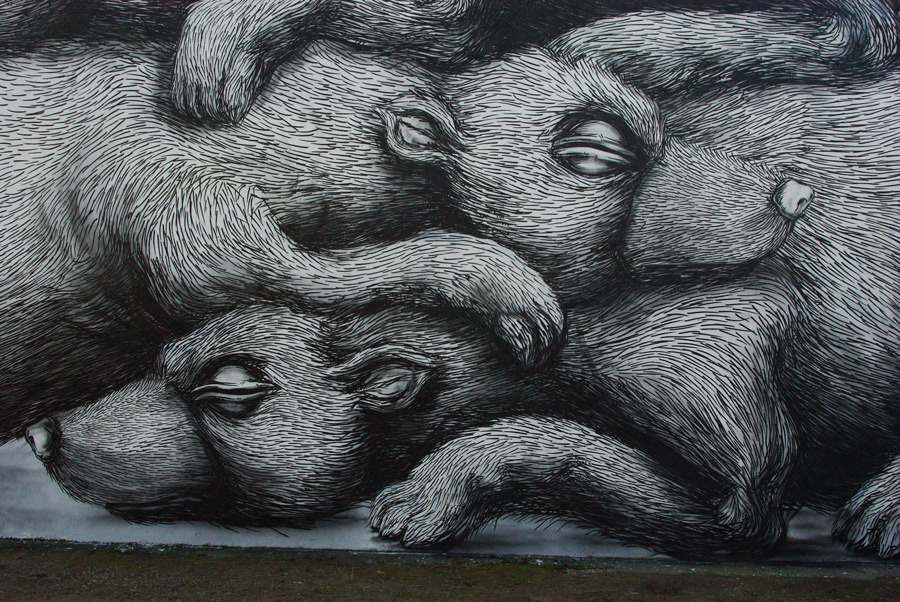
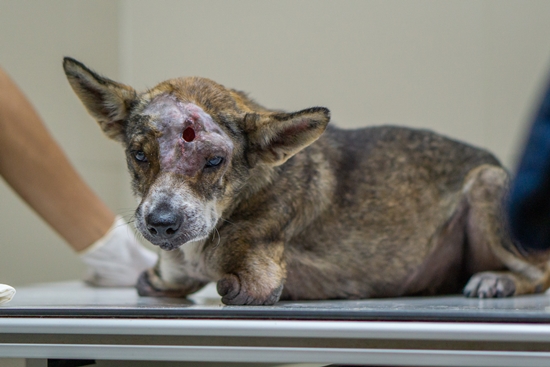
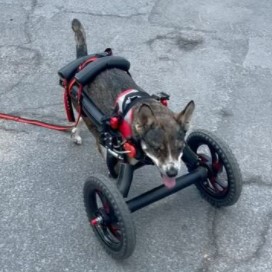
Two-Legged Street Dog That Was Shot In The Head Lives To Tell The Tale And Now LOVES Life.

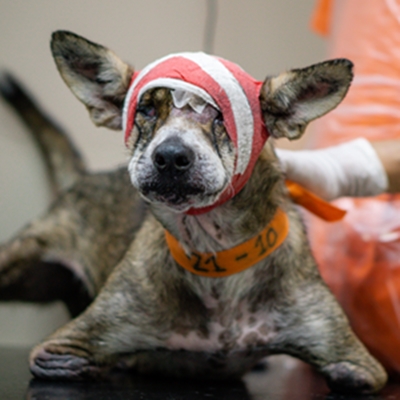
AMIRA WHEN SHE WAS RESCUED

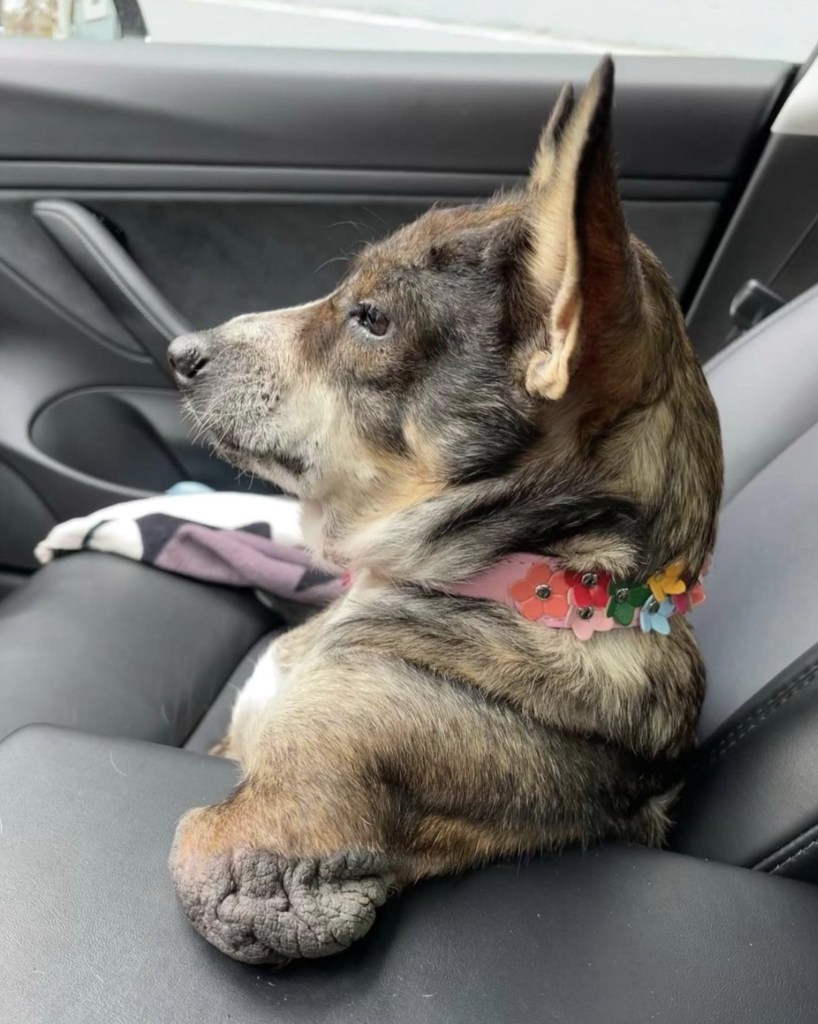
A two-legged street dog from Thailand that was shot in the head and left to die has been rescued by a Canadian family – and now even has her own wheelchair. Lara Pleasence, 51, from Montreal, Canada, first heard about Amira’s tragic story through the Soi Dog Foundation, based in Asia. Administrator and personal trainer Lara first saw Amira in a video posted by the rescue centre in Thailand in October 2020. “This poor dog who was born without legs, lived on the streets having litter after litter, then after nine years of struggling to survive, someone shoots her in the head,” Lara told Jam Press. “I just broke down and cried.”

Amira was treated for her head wound by the Soi Dog rescue centre who shared regular updates of her progress on social media. “Sweet Amira was always wagging her tail; it just broke my heart that she still trusted humans even after everything she’d been through. “I knew I had to contact the rescue to see if I could help in any way, maybe even offer to be her forever family, although they doubted that she would ever be well enough to travel.” After a tense wait, the Soi Dog Foundation contacted Lara to tell her that Amira had recovered enough to be put up for adoption. “I was so stoked and so worried about what my husband was going to say, since we already had three dogs,” Lara admitted. “There was something about Amira, this incredible connection I felt for her from the very first time I saw her. “I wanted to right all the wrongs that were done to her, I just felt compelled to try. “I wanted desperately to show her all the love, security, happiness that she deserved, that every dog deserves, and that this poor sweetie had been denied for so many years.”

AMIRA’S LOVING AND LIVING LIFE TO THE FULL

To qualify to adopt Amira, Lara and her family had to go through a strict application procedure – including a virtual home visit, interview process and form-filling. “I was made aware that we would have to pay for her to be flown to Canada since, because of Covid, they didn’t have travellers who could take her on the plane for free.” “I think I would have mortgaged the house to get this sweet girl here.” When Amira touched down in Montreal in April 2021 after a 22-hour journey – which cost $2,000 – it was love at first sight. Lara said: “My husband was none too happy about even the idea of another dog since we already had three, but I told him that I had never felt this way about any rescues that I had seen. “I was so excited that we were getting her, I was practically bursting, and he knew that fighting it was a lost cause – happy wife, happy life.” Amira came with her wheelchair, after a man in Vietnam made a custom one for her and it was gifted to the pup by Soi Dog. “She literally came bouncing out of her crate and jumped all over us like the happiest kangaroo you’ve ever seen.” “She’d been in it for over 22 hours and didn’t even have an accident!” “We couldn’t believe the joy she exudes.

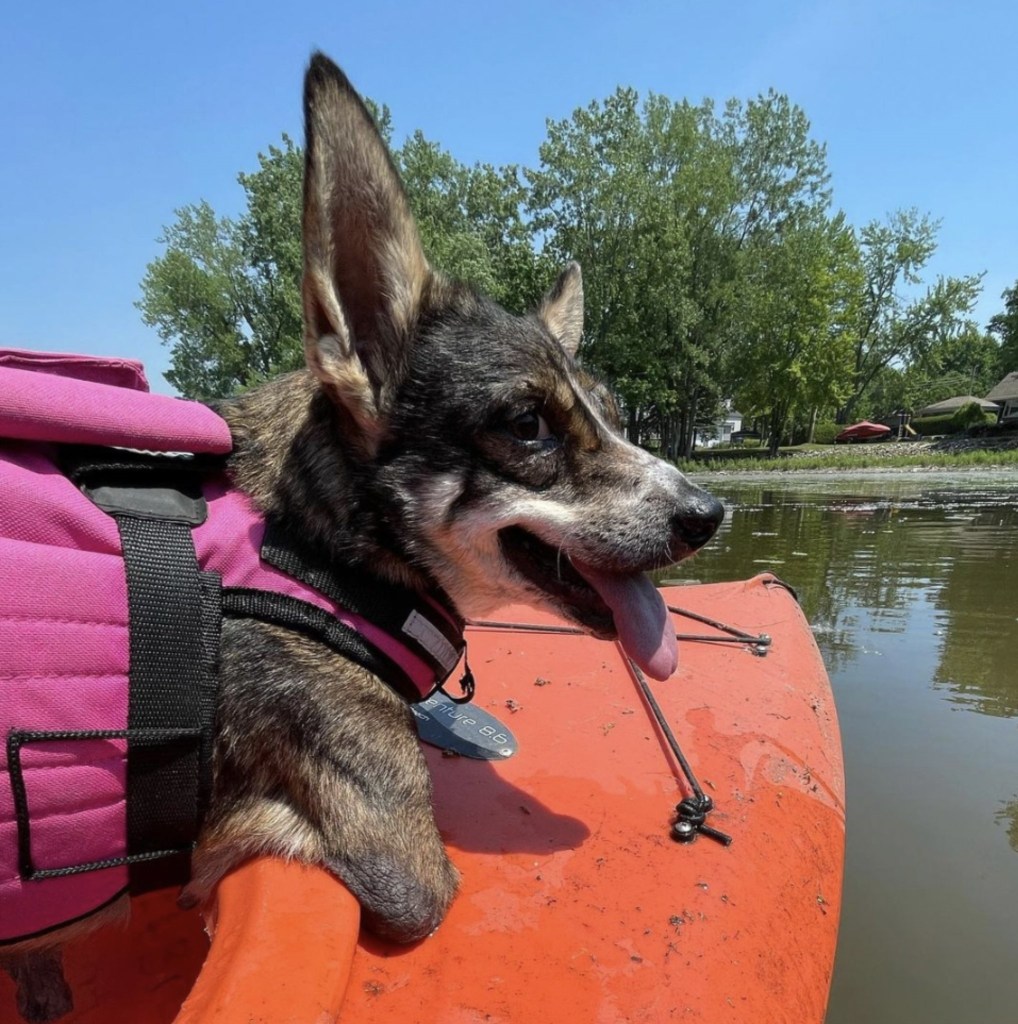
She is a true miracle. After everything she’s been through, Amira is fun-loving and outgoing. “She’s so trusting, she loves everyone she meets. “She absolutely loves to be held in your lap and will sleep there for as long as you will let her. “She is resilient and doesn’t let her past hold her back from trying new things or doing something a bit scary like canoeing or going on our paddleboard. “She is obsessed with our bed… If we’re not home, we have to block the stairs because we can’t risk her falling. “How a street dog, with no front legs, knows how to climb stairs is just one of Amira’s many mysteries. “She’ll let me kiss her nose 50 times in a row, my other three dogs will eventually pull their head away, but not Miss Amira, she loves it. “She gets these crazy puppy moments where she runs around on her nubs and jumps up on the furniture then flies right back off it. “These moments make my heart smile because it’s like she finally doesn’t have a care in the world and can just be a dog. “No more struggling for food or to keep her puppies safe and fed or hiding from bad people.”

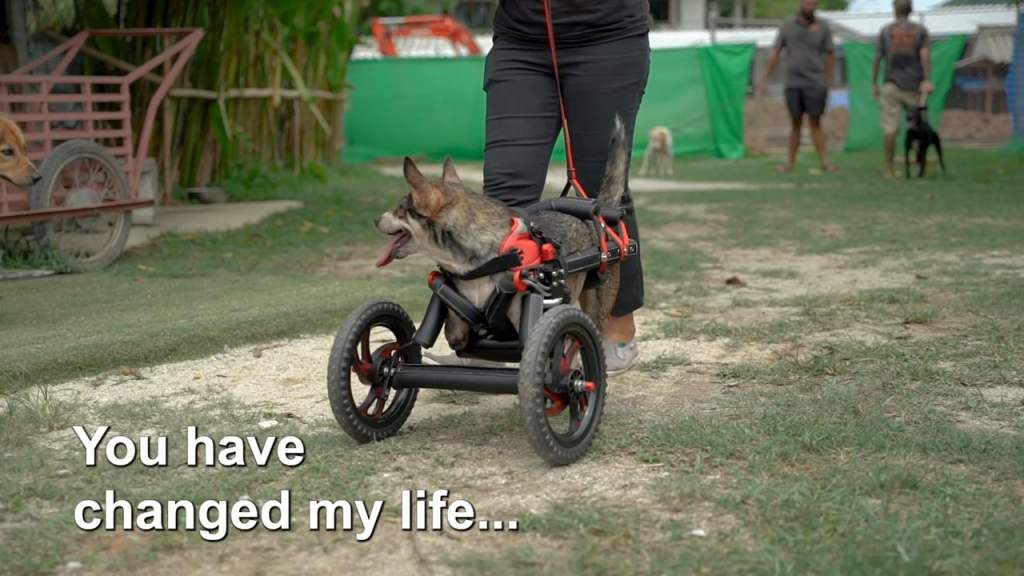
AMIRA IN HER WHEELS

Now, Amira enjoys a happy life spending her days with her family and playing at her favourite spot. Lara added: “She loves going to the dog park, even though many of the dogs get freaked out by the “transformer dog” with wheels and just bark at her.”

FROM STREET DOG TO CRUISING THE STREETS

In videos posted to Instagram (@amira.amiracle), Lara shares Amira’s adventures with her new set of wheels. In one comical clip, which has been viewed over 725,000 times, Amira runs after a cat and ends up doing a headstand when she hits a curb. “She just waits for me to pick her back up and she keeps on going like it’s no big deal,” said Lara. Another video shows her gradually getting better at walking in a straight line with her wheels. Followers of Amira’s page are in love with the pup, and she regularly receives gushing comments. One person commented: “So beautiful to see this! You’re amazing, sweet and strong Amira.” “Love u Amira very much,” said another viewer. “She’s amazing and you’re amazing with her,” added another person. Lara is grateful for all the support and says she is touched by the comments she receives. “The people who follow Amira on Instagram are the sweetest,” she said. “They are so happy that she has a family that loves her now. “Some say Amira’s posts are their daily dose of ‘good feels’ or that her videos are ‘good for the soul’. “People feel they need to thank me for taking her, which is so kind, but I always tell them that it is my privilege to give her the best life that I possibly can,” “It’s the least I can do for such an angel. “I can only hope that her page may inspire someone else to help a special needs dog or donate to an organisation like Soi Dog Foundation so they can continue their amazing work.”

The Story Of Camberley Kate: A Dog Rescuer Extraordinaire


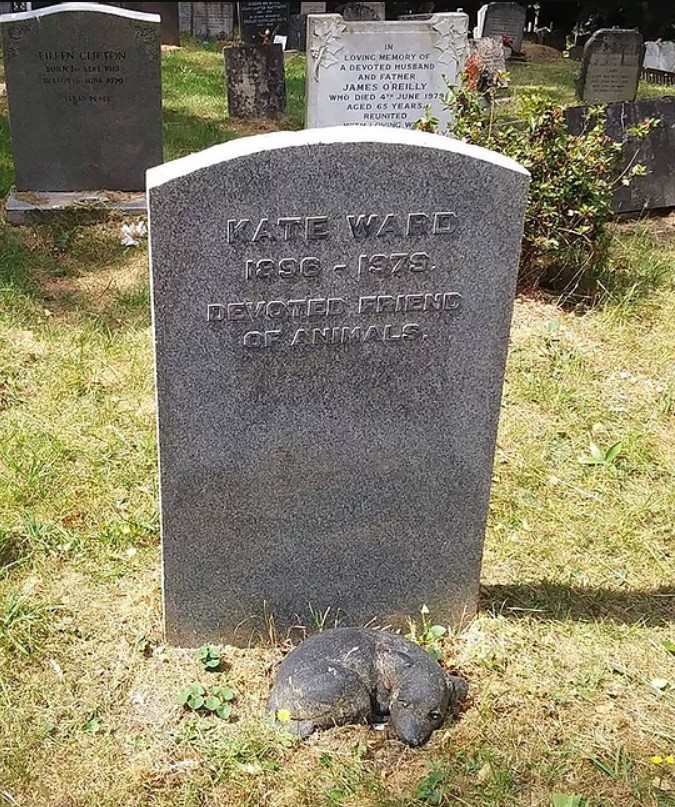
Kate Ward’s nickname “Camberley Kate” is said to have been given to her by historian Sir Arthur Bryant in his book “The Lion and the Unicorn”. It became the title by which she became known to everyone.

Kate’s early history is somewhat hazy – When interviewed she stated that she was born in Middlesbrough on June 13th 1895, and remained proud of her Yorkshire roots. Orphaned before she was ten, she was brought up by an aunt in a strict religious atmosphere. As a young girl she went into service, in Yorkshire and eventually found her way to Camberley. In 1943 Kate bought a cottage in Yorktown, and soon afterwards took in her first stray, a dog which had been about to be put down due to lameness.

As word grew, the number of dogs in her cottage increased – some being tied to her door, some left in carrier bags, others brought in by the police or other agencies. At the end of her life she estimated that she had looked after more than 600 dogs and local vet Geoffrey Craddock, a great admirer of Kate work testified that they were well looked after. An entry in the 1957 directory FOR Camberley reads “Ward K 218 London Road., Cam., Dogs Home”. In 1976 she stated that she had 34 dogs, although by 1977 she had cut this down to 19, as she had been told to go easier at the age of 82! The growth of other dog rescue centres helped in this regard. She also had at least one cat.


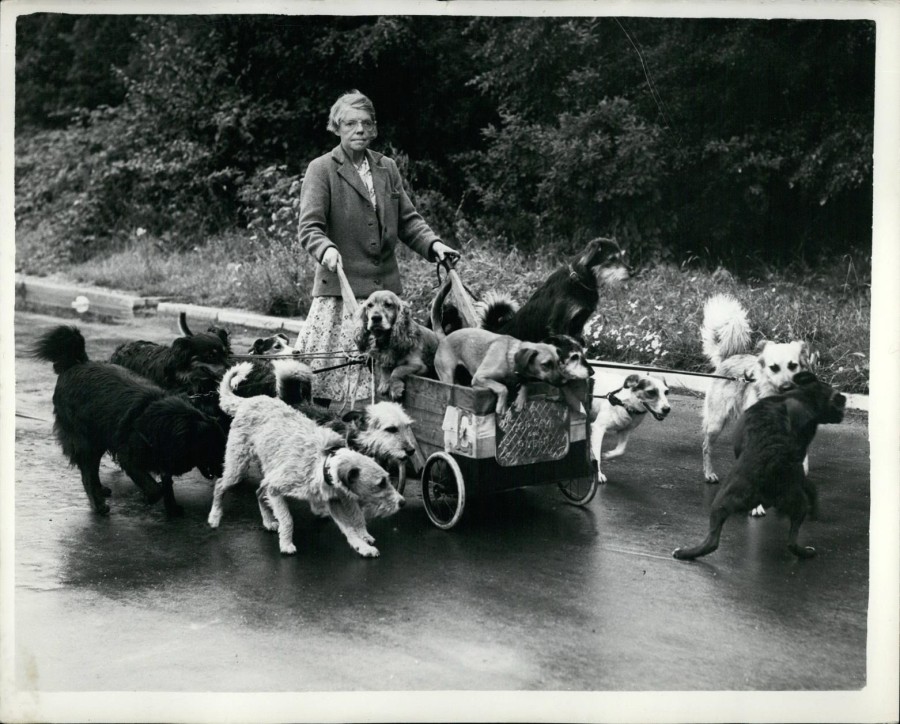
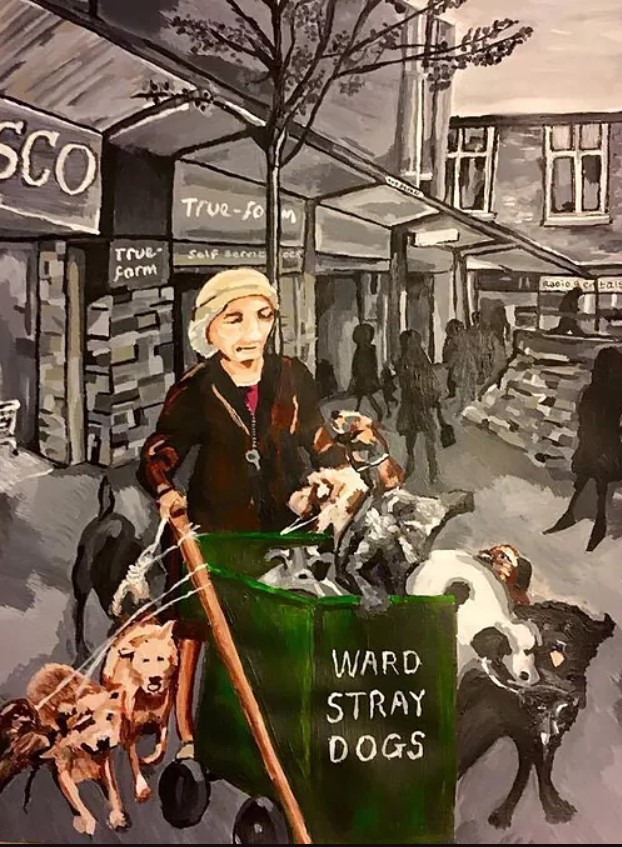
Kate and her olive-green painted hand cart, labelled STRAY DOGS, was a familiar sight locally as she pushed it from Yorktown to Camberley each day, through the town centre and up to Barossa Common, on a route suggested by the police. Some of the dogs were allowed to ride in the cart, others were attached to it with lengths of string, and occasionally a favoured few ran loose alongside. Inside the cart, there was usually some meat for the dogs and a shovel to clean any mess away. The dogs were controlled with the help of a whistle. Locals became used to the sight of Kate pushing her cart along the busy London Road although it never ceased to amaze outsiders.

As a local celebrity Kate and her dogs were much photographed, a situation she tolerated as long as the photographer gave a donation for the upkeep of the animals. She also sold her own photographic postcards, and gave short shrift to those who tried to take their own pictures. Generous supporters gave money to assist her work and some even left bequests. She was scrupulous that this money should be used only for its intended purpose: the dogs had their own bank account, administered by 2 trustees. She left money in trust for the few dogs left at her death.

If you gave her some money, she would INSIST you take a photo. That way she could not be accused of begging.


A diminutive figure with her shock of white hair and her beret, Kate defended herself and her work passionately against her critics, such as those who wanted her out of the town centre or who regarded the dogs as dangerous or a health or traffic hazard. On one occasion she rammed a new car which was blocking her way. She also had a number of disputes with the authorities. These clashes were often recorded in the columns of the press. However she won the backing of the local police for her work in taking abandoned dogs in off the streets.

In 21 August 1969 Kate was in the Camberley News fighting plans to introduce a bye law making it illegal for dogs to be out without a lead. This followed complains from residents of new housing estates, and concerns about road accidents caused by stray dogs. In her customary forthright fashion she condemned “The Council is nothing more than a collection of dog-haters. I think this will be rotten. It means that dogs will be chained up all day”. A proposal to ban dogs from the new precinct in Camberley also met with a terse response, particularly since she was in the habit of shopping at Sainsbury’s and leaving some of the dogs tied up outside. When protests about the local drag-hounds running out of control when being exercised attracted her support Kate, in typical fashion, addressed her complaint directly to the King. The Royal family continued to be a favourite route for correspondence. When a local schoolteacher complained that she had seen her beat her dogs with a stick, Kate immediately wrote in protest to the Queen. This was not their first encounter – when Princess Elizabeth got married one of the dogs sent a present of a dog lead.


As these anecdotes show, Kate was an excellent publicist. A local policemen recalled that occasionally a dog would get loose and be brought to the dog pound. If the Police Station was empty she would pay the fine quietly and readily, but if there was an audience she would protest vocally!

Following a series of strokes old age and ill-health forced her to leave her cottage and her remaining seven dogs were put into kennels. Her last weeks were spent at Kingsclear residential home and she died on 4th August 1979. Her funeral was at St Michael’s, Yorktown.

Despite her avowed dislike of people, Baptist Minister the Rev Chris Russell who officiated at her funeral, remembers her private generosity to those in need. This aspect of her life she kept anonymous, passing on her donations through third parties.

After her death, Camberley vet Geoffrey Craddock was quoted in the Camberley News as saying “Camberley has lost its most celebrated and best known character. She will be greatly missed by those of us who had the rare privilege of knowing her”.


During her lifetime, Kate’s fame spread far and wide. She featured In the national press and on television programmes such as “Nationwide” and “Tonight”. was featured on NBC in the United States and her story appeared in publications across Europe from France to Rumania. She also received the ultimate accolade of a feature in “Time” Magazine, and was photographed by Lord Snowdon. To her surprise, in 1967 she received an award from the magazine “Dog’s Life” for her work. In answer to the inevitable question, why she did it? her invariable reply was that she preferred dogs to humans.


Her home at 218 London Road was just a few doors along from the former Lamb pub, near the present Meadows roundabout, but Is no longer standing. The Katherine Court retirement flats were named after her at the suggestion of a local resident in 2000.

There are so many great lessons we can learn from the life of Kate Ward, both as responsible dog owners, human beings, and as pet rescue charities. Most of all Kate recognized the value of a photograph and how it could be used for the positive influence of others, to bring light to a cause, and to help raise money.

Please share for others to enjoy.

THE LIMBE WILDLIFE CENTRE URGENTLY NEEDS HELP TO SECURE THE FUTURE FOR CAMEROON’S WILDLIFE

SECURING A FUTURE FOR CAMEROON’S WILDLIFE

The Limbe Wildlife Centre (LWC) is a conservation education centre in Limbe, Cameroon. Above all, they provide a solution to law enforcement agencies for where to place wildlife seized from the illegal wildlife trade. For all elements of their work, they collaborate with state and national government, communities, and other international and local NGOs to protect habitats and endangered species. In brief, they  in-situ and ex-situ activities that include rescue, rehabilitation and reintroduction, conservation education and advocacy, law reinforcement, creating alternative livelihoods to hunting, and research. Through a holistic approach, the LWC aims to ensure the survival of Cameroon’s unique flora and fauna.

Ultimately, there are three main pillars to our work: rescue and rehabilitation, education and community.

The Limbe Wildlife Centre (LWC) is being hit hard by the current Covid-19 pandemic. With no volunteers or visitors coming to the centre, they have lost an important source of income, and much of their grant funding has been cut due to the global economic downturn. With travel and business restrictions happening across Cameroon, like in many other countries, they are struggling to obtain the food and medication needed every day for their rescued wildlife.

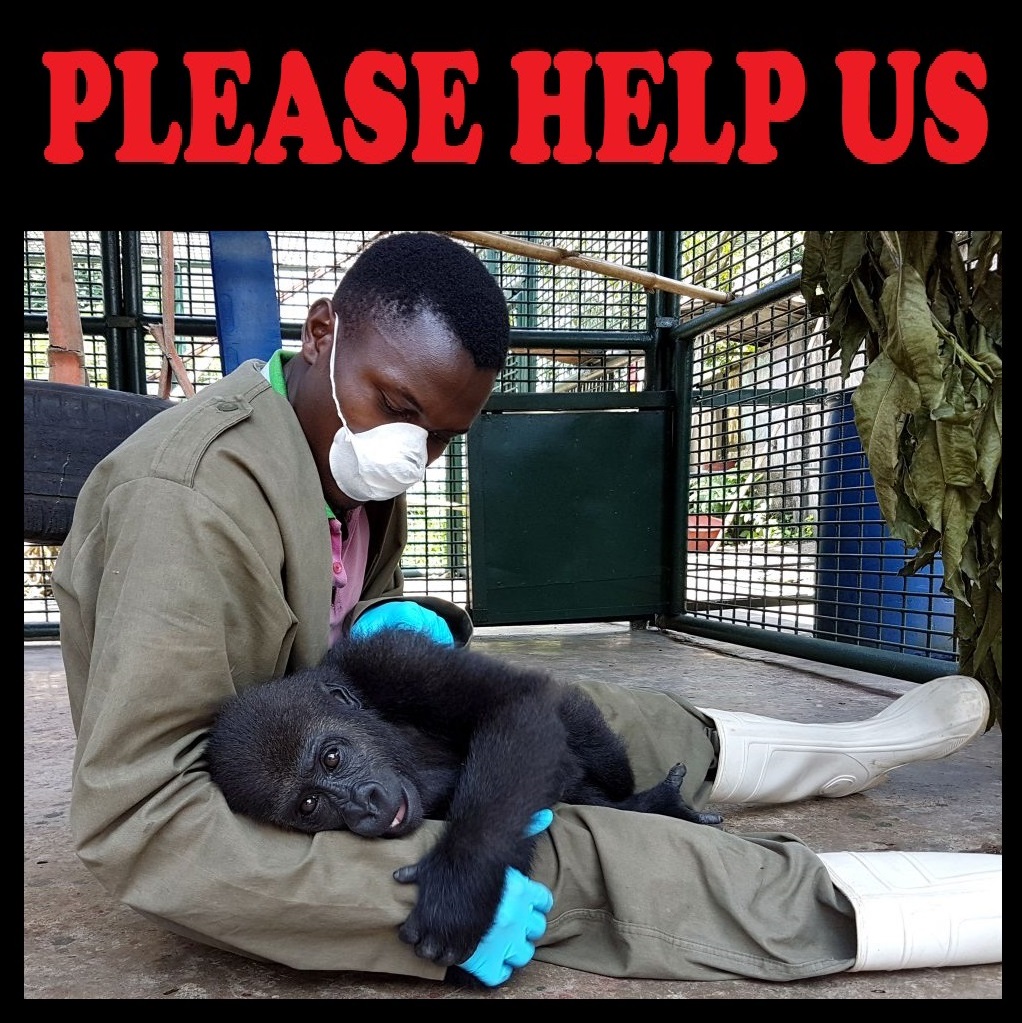
At this difficult time, they urgently need your helpThey are dependent on your kindness to continue providing daily essential care to the more than 450 animals currently in their care.

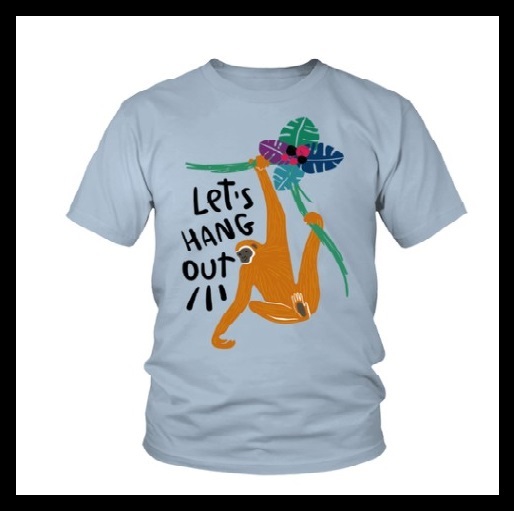
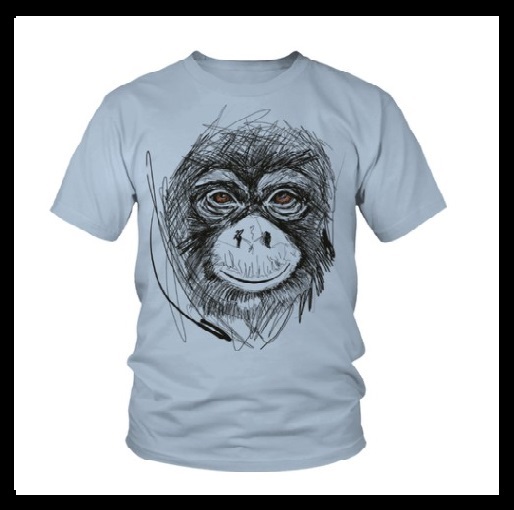
Protect All Wildlife are supporting LWC continue their amazing work by selling these unique Ltd Edition tops to raise funds.

Please help @LimbeWildlife rescue, rehabilitate & release primates & other animals orphaned by the illegal bush meat and pet trades. These beautiful Ltd Edition tops are available in a variety styles & colours at https://teezily.com/stores/limbe-wildlife-centre…. All profits help this wonderful charity.