A viral video taken under a California highway captured a playful intimacy between two predators that’s rarely seen by humans.
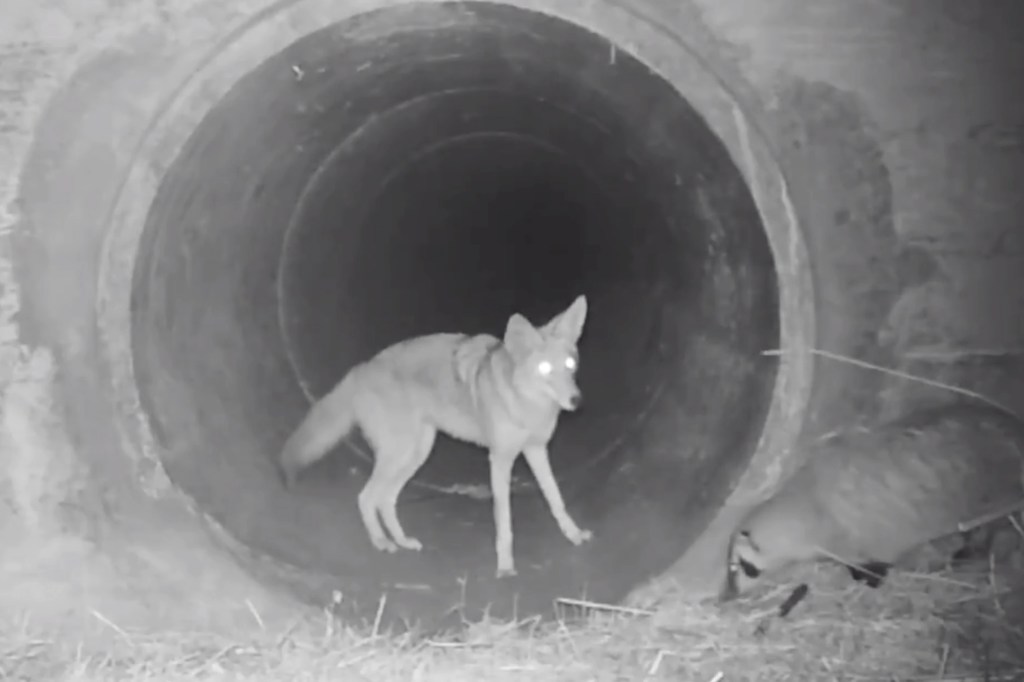
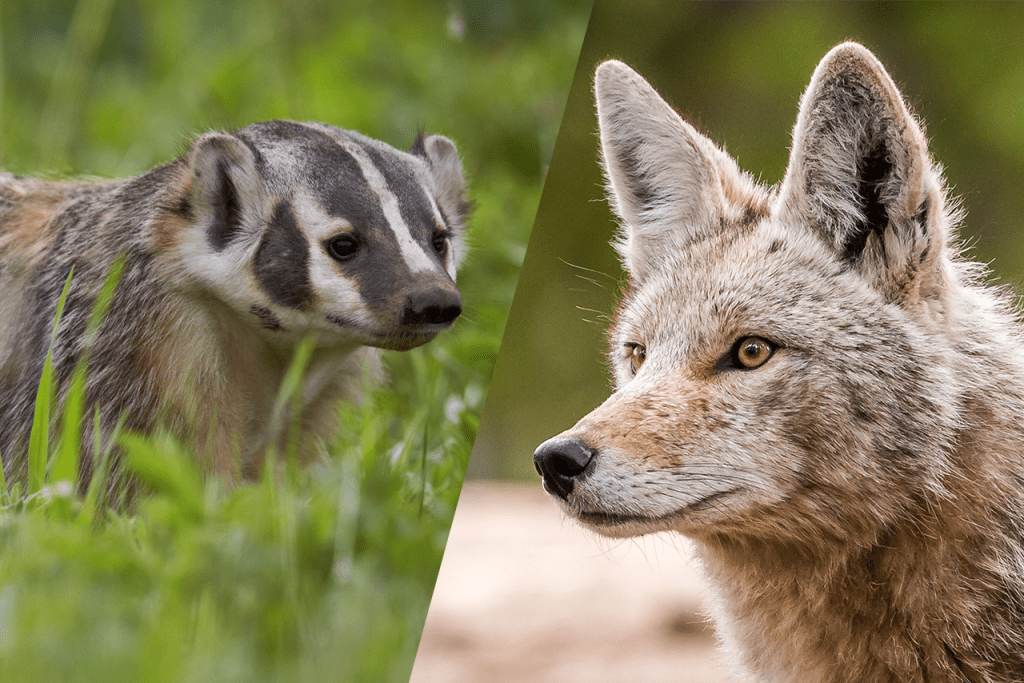
An unlikely friendship between a Badger and a Coyote has been recorded on camera for the first time ever. The two animals were spotted trotting side by side under a busy highway in California’s Santa Cruz Mountains. The video, taken by the nonprofit group Peninsula Open Space Trust (POST), has gone viral online with more than 18.5 million views on Twitter.
COYOTE AND BADGER
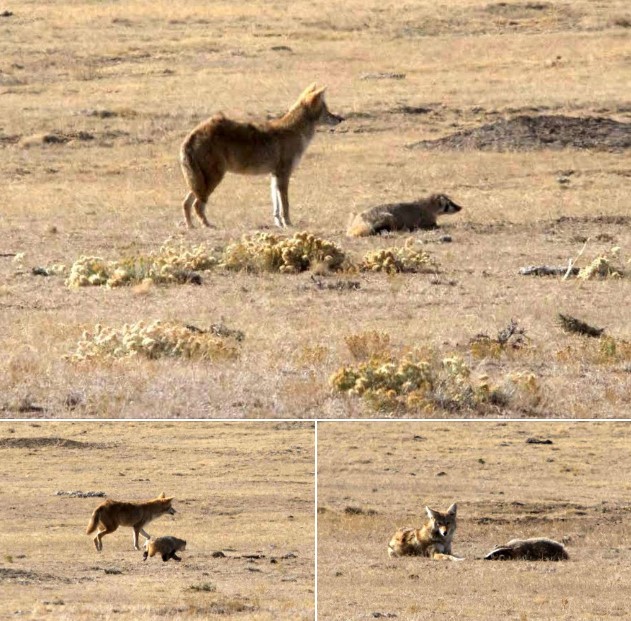
National Geographic explains that the video shows a playful intimacy between the badger and coyote that has never been observed before. While Coyotes and Badgers have been known to hunt cooperatively, those interactions were thought to be “purely transactional”.
Here, the Coyote is seen wagging its tail and bowing down playfully as the Badger approaches. Meanwhile, the Badger’s body language is relaxed as it follows the Coyote into the tunnel and even lifts its tail to keep pace with its friend.
Scientists have known for a long time that Coyotes and Badgers in the American West hunt cooperatively for small mammals; the partnership is even featured in Native American mythology. But until now, the association between these two predators, each at the top of their respective food chains, has always been thought to be purely transactional. What’s so striking about the video, says independent behavioral ecologist Jennifer Campbell-Smith, is that it’s not “these cold, robotic animals taking advantage of each other—they’re instead at ease and friendly.”
While the unlikely friendship has left social media users delighted, the video, according to National Geographic, also presents an important discovery for scientists. It is the first time that Coyote-Badger cooperation has been filmed in the San Francisco Bay Area. It is also the first video that shows the two species sharing a culvert – a tunnel carrying a stream or open drain under a road or railway.
A Coyote and Badger Hunting Together
“To our knowledge, that’s the first time that’s ever been observed,” Neal Sharma, POST’s wildlife linkages program manager told CNN. “Having that interaction on film and seeing how these two different animals that lead different lives, how they interact, it’s just so exciting.”
A Lion named Bob Junior, who was known as the “King of the Serengeti,” has been killed by rival Lions. The fearsome big cat, also known as Snyggve, had dominated his territory for seven years alongside his brother, Tryggve, who is also presumed dead.
Bob Junior has ruled his territory for seven years. Credit: James Lewin.
“These incidents normally happen when the head of a pride becomes old or sometimes when the other male Lions are not happy with his control over a large territory,” Fredy Shirima, a Serengeti conservation officer, told the BBC.
Tour operators and visitors to the national park have paid tribute to the “legendary” Bob Junior – also known as Snyggve – online.
The “photogenic” and “coolest cat” in the Serengeti, Bob Jr had a fearsome reputation among his rivals and had ruled for seven years with the help of his brother, Tryggve.
The Serengeti is home to approximately 3,000 Lions. National Geographic reports adult males can up to around 12 years.
Bob Junior, who was named after Bob Marley, was thought to be around 10 years old. He had a distinctive black mane and was often spotted by wildlife groups touring the park.
Online tributes called him “Legendary” and “Iconic.”
He reportedly did not put up a fight when he was attacked on Saturday.
Bob Junior’s Last Stand – He Fought To The End!
Wildlife officials are preparing a special burial on a day yet to be announced.
RIP Bob Junior – Credit: Giles Laurent.
WHAT YOU CAN DO TO HELP WILDLIFE:
You can support ‘Protect All Wildlife’ by donating as little as £1 – It only takes a minute but it can last a lifetime for an animal in need. Please donate below.
Everyone who donates will receive a Certificate of Appreciation as a thank you for helping animals in need.
He remains very much at the forefront of our minds. Not many Rhinos live to such an age but Sudan led an extraordinary life and his legacy, as the last male of the species, continues to live on, reminding us of the disastrous impact human ignorance and greed has on all wildlife species.
Joseph Wachira, a keeper at the Ol Pejeta Conservancy in Kenya, says goodbye to Sudan, the last male Northern White Rhino. Credit: Ami Vitale
Though the Northern White Rhino is functionally extinct – following the loss of Sudan, the last known living male, five years ago this week – conservationists are finding hope in a technique that is creating new embryos using genetic material taken from him and two remaining females.
To mark the occasion, photographer Ami Vitale has released a new short film called “Remembering Sudan,” which will be screened at upcoming film festivals.
“Our fate is linked to the fate of animals. What happens next is in all of our hands.” said Ami Vitale.
Sudan, a 45-year-old rhino believed to be the world’s last surviving male Northern White Rhino, died five years ago at the Ol Pejeta Conservancy in Kenya on March 19, 2018. He had been battling ill health for months, and after his condition worsened considerably, veterinarians decided to euthanize him.
Since then, an international consortium of scientists and conservationists known as the BioRescue Project – a consortium made up of Leibniz Institute for Zoo and Wildlife Research (Leibniz-IZW) in Germany; Safari Park Dvůr Králové in the Czech Republic; the Kenya Wildlife Service; and Ol Pejeta Conservancy in Kenya – have been working to bring the species back from extinction through in vitro fertilization and stem cell research. They have already created 24 viable embryos using eggs from the last two female White Rhinos that are still alive, and the frozen sperm of deceased male Northern White Rhinos like Sudan.
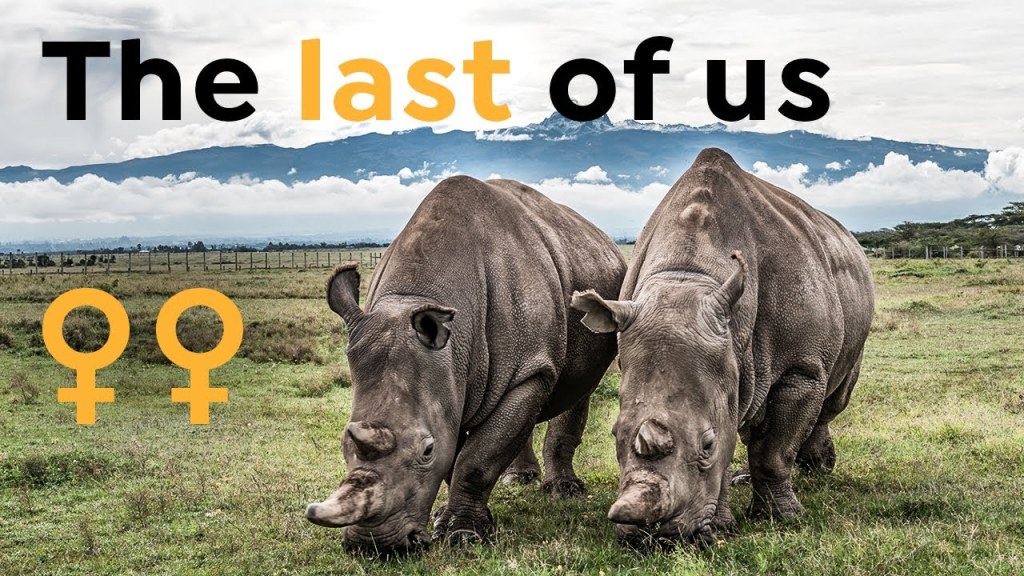
Fatu (left) and Najin (right) are the last two Northern White Rhinos left on the planet. They are both female and are a mother-daughter duo. Credit: Gurcharan Roopra
To mark the occasion, photographer Ami Vitale has released a new short film, Remembering Sudan, which will be screened at upcoming film festivals and can be viewed online, here’s the trailer:
Remembering Sudan: The Trailer
Though the Northern White Rhino is functionally extinct following the loss of the last male of the species, conservationists like Vitale find great hope in BioRescue, and in the power of humanity to react positively:
“What happens next is in all of our hands. What’s going to save us all is to get beyond our routine ways of thinking. Wonder is what allows us to reimagine our future together. Wonder allows us to believe that we can fundamentally change the course we are currently on.” Vitale said when reflecting on the anniversary.
“Our fate is linked to the fate of animals. Without Rhinos and other wildlife, we suffer more than loss of ecosystem health. We suffer a loss of imagination, a loss of wonder, a loss of beautiful possibilities,” she said.
Readers can view the film, learn more and support the project at its website, www.rememberingsudan.org..
WHAT YOU CAN DO TO HELP WILDLIFE:
You can support ‘Protect All Wildlife’ by donating as little as £1 – It only takes a minute but it can last a lifetime for an animal in need. Please donate below.
Everyone who donates will receive a Certificate of Appreciation as a thank you for helping animals in need.
Kiska, the Orca dubbed the “World’s Loneliest Whale,” died recently after 44 years in captivity. Her life was a tragic one, and her death could be seen as a sort of release. She was believed to be 47 years old, although her exact age isn’t positively known. She was the last captive Killer Whale in Canada.
In 1979, when Kiska was three years old, she was caught in Icelandic waters and taken to MarineLand, a theme park in Niagara Falls, Ontario, Canada. Kiska was captured along with Keiko, the whale made famous in the movie Free Willy, and for a few years in the ’80s, the pair shared a pool. Kiska spent 40 years there, swimming in a concrete tank.
For the last 12 years of her life, Kiska was alone in her tank. Orcas are social animals that live in tight-knit pods, hunting together and communicating with each other. Her tank at MarineLand was bare and featureless, and her depression was caught on film recently in a hard-to-watch video that went viral.
Kiska’s death comes four years after Canada passed bill S-203, banning the captivity and breeding of Whales, Dolphins and Porpoises. Although the new law was too late for Kiska – individuals already in captivity were excluded from protection – activists say her story was instrumental in drawing public attention to the plight of captive marine mammals.
In one of the last recorded videos of her, she drifts listlessly in aquamarine water as a boy behind the glass wall tries to get her attention. “Kis-kaaa! Kis-kaa! Kis-kaaa!” he calls as the Whale floats by, seemingly oblivious.
The heartbreaking footage below shows Kiska floating listlessly and hurling herself against the walls of her cramped tank. This unnatural behaviour was the result of stress, frustration, distress, and loneliness caused by cruel confinement.
Kiska’s harrowing story is not unique – around the world, Orcas just like her are languishing in marine parks so that humans can gawk at them and watch them do demeaning tricks.
Help end their suffering. Speak out against the exploitation of Whales and Dolphins in tourism.
WHAT YOU CAN DO TO HELP WILDLIFE:
You can support ‘Protect All Wildlife’ by donating as little as £1 – It only takes a minute but it can last a lifetime for an animal in need. Please donate below.
Everyone who donates will receive a Certificate of Appreciation as a thank you for helping animals in need.
Plans to ban imports of animal hunting trophies to Great Britain are set to become law.
The government has backed legislation which would stop hunters bringing back body parts of thousands of species, including Lions, Rhinos, Elephants and Polar Bears, killed abroad.
Tory MP Henry Smith, who proposed the bill, said it would help conserve the world’s most endangered species.
It was approved by MPs and will now face further scrutiny in the Lords.
As it has the support of the government, the Hunting Trophies (Import Prohibition) Bill is likely to become law.
Every year, hunters from the UK travel abroad, often to southern Africa, and pay thousands of pounds to legally shoot animals, such as Lions and Elephants.
Under current rules, with the right paperwork, they can then bring trophies, such as stuffed heads or horns, back to the UK.
Campaigners backing the bill had feared it could be blocked after more than 30 amendments were tabled by two Conservative MPs, Sir Christopher Chope and Sir Bill Wiggin.
However, after the government accepted two of their proposals – to establish an advisory board on hunting trophies and to limit the power of the secretary of state to add new species to the list the ban would apply to – the pair dropped their other demands for further changes to the bill.
Critics of the plans have argued that profits from hunting are used to pay for conservation projects in African countries and can ultimately help to protect endangered species.
Sir Bill, the Tory MP for North Herefordshire, told the Commons there were concerns that removing the revenue supplied by trophy hunters could “open the floodgate to poachers, who will cause far more cruelty and pain to the animals and will pose a far greater threat to endangered species”.
However, animal welfare charities have rejected this, arguing that hardly any of the revenues from trophy hunting ever reach local communities.
Environment Minister Trudy Harrison told MPs: “I do recognise that some of the income from trophy hunting has contributed towards the protection of habitat and the prevention of poaching.
“But to bring back the body parts of endangered species… is not the way forward.”
Sir Bill also suggested the legislation was a “a neo-colonial attempt to control conservation management programmes of African democratic countries”.
This was denied by Mr Smith, who insisted: “This is about the values that we in Britain have, that we do not want to be part of a trade in endangered species’ body parts.
“We are not telling other countries how to run their trade, or their conservation or hunting policies.”
Some MPs, including the Democratic Unionist Party’s Sammy Wilson, also raised concerns Northern Ireland could become a “back door” for hunting imports as the law would not apply there.
Ms Harrison said the government would do “everything we possibly can” to ensure Northern Ireland was not a “stepping stone for imports to Great Britain”.
Explorer Sir Ranulph Fiennes, singer Ed Sheeran and actress Dame Judi Dench are among the celebrities who have backed the proposed legislation.
Animal charities welcomed the progress of the bill, with Born Free saying it sent “a clear signal that, with wildlife in crisis, allowing rich people to kill wild animals for kicks has no place in the modern world”.
Humane Society International said it was “relieved” only two amendments to the bill were accepted, although the charity added that it was disappointed one removed the power of the environment secretary to add other species in need of protection to the legislation.
WHAT YOU CAN DO TO HELP WILDLIFE:
You can support ‘Protect All Wildlife’ by donating as little as £1 – It only takes a minute but it can last a lifetime for an animal in need. Please donate below.
Everyone who donates will receive a Certificate of Appreciation as a thank you for helping animals in need.
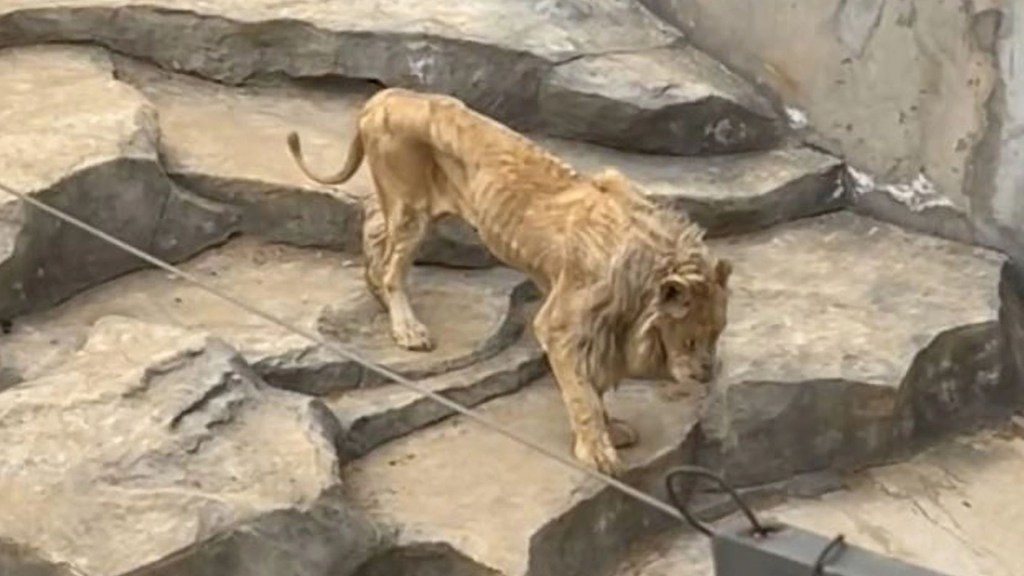
A frail Lion that looks like a walking skeleton has become too weak to chew.
Shocking footage showed the skinny lion walking through its enclosed cage
The Lion, called Ala, is so emaciated he can barely walk through his enclosure at the Jinniu Lake Safari Park in Nanjing, China with outraged social media users accusing the zoo of inflicting suffering on the lion and starving their animals.
Shocking footage has emerged of a starving lion which is barely more than skin and bones at a Chinese zoo.
Many have been left furious and disturbed by the sight of the big cat who looks so malnourished it is struggling to carry out basic functions such as walking.
In the horrifying video viewers can see the Lion’s ribs because it is so thin.
The clip – shared later on Douyin, China’s version of TikTok – shows the ultra-skinny Lion wobbling down a walkway.
The lion is so frail he can barely walk
It caused outrage among viewers who accused the zoo of not taking proper care of the feeble feline.
One user said: ‘This is too much suffering. If you can’t afford to feed it, send it to a different zoo that can.
‘Why let him suffer? It should have been left living in nature.’
Meanwhile, another added: ‘This zoo is too much, starving the lions like this.’
Officials at the zoo later attributed the lion’s shocking appearance to its old age because he can no longer chew his food.
They claimed that the 25-year-old big cat would be 80 if he was a human.
Officials say he is fed a special diet of liquid protein and small cuts of meat and is watched over by specially trained vets and keepers in a private cage.
The zoo added: ‘Usually, we let it out for a walk in the morning or evening.’
Despite the concerning footage, Jinniu Lake Safari Park is ranked in the top five family-friendly things to do in Nanjing on Trip.com.
It has an overall rating of 4.2 out of 5 but there are also hundreds of negative reviews, with some visitors citing the zoo’s ‘poor management’ and others complaining of the huge costs.
What you can do to help wildlife:
You can support ‘Protect All Wildlife’ by donating as little as £1 – It only takes a minute but it can last a lifetime for an animal in need. Please donate below.
Everyone who donates will receive a Certificate of Appreciation as a thank you for helping animals in need.
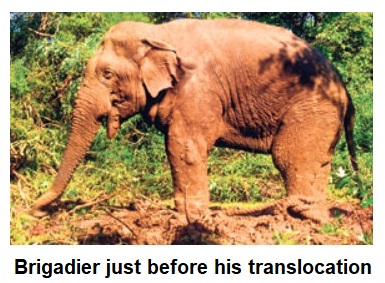
Like many young bull Elephants, Brigadier had a strategy. Spending his days in a small patch of forest in northwest Sri Lanka, he would emerge under cover of darkness to feast on crops. One evening, he bundled into an army brigadier’s property, earning him his name and sealing his fate.
Government officials captured Brigadier and trucked him to Maduru Oya National Park. But he immediately took off, probably intending to find his way home, got lost, and wound up 120 kilometres north at Sampur beach. Incredibly, a navy boat discovered him swimming 5 kilometres offshore and towed him to safety.
After his big adventure, Brigadier settled down again, returning to his nocturnal crop-raiding routine. Six months later, he was found dead at the bottom of a well.
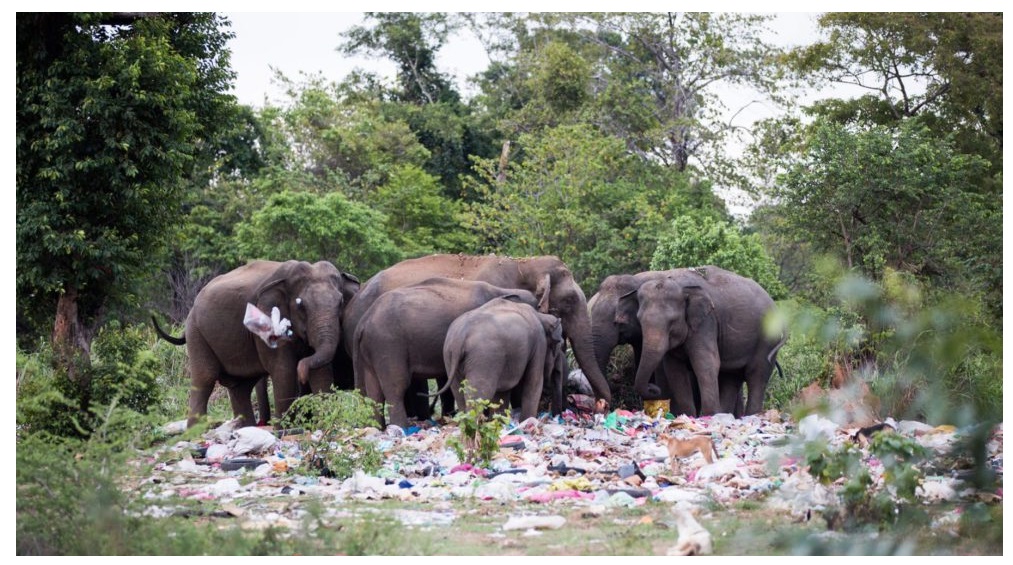
Apart from the swimming bit, stories like this are common in Sri Lanka, where habitat loss is forcing Elephants into an increasingly bloody conflict with humans. When I visited the country to report on efforts to stem the bloodshed, I found that the government’s favoured solution of moving problem Elephants into fenced-off national parks isn’t working. Some experts believe it will even backfire, pushing the species to the brink in the country.
The only way to secure the future of Sri Lanka’s Elephants, they argue, is to find ways to peacefully coexist with them. That is no mean feat. And yet, as I saw for myself in several villages, there is a simple solution. The question is, will it be implemented across the island? And will people accept that the Elephants must live among us or not at all?
Asian Elephants are under pressure. Their numbers have declined by an estimated 50 percent in the last 75 years, leaving just 40,000 to 50,000 in the wild. Although they aren’t poached anywhere near as much as their African cousins, their forest homes are being rapidly fragmented. Nowhere is the problem more acute than in Sri Lanka. It accounts for just 2 percent of their total habitat yet is home to over 5000 Asian Elephants – more than 10 percent of the remaining global population.
That so many Elephants remain here is a testament to the species’ cultural importance in the country. The majority of Sri Lankans are Buddhist and Elephants feature prominently in a number of stories about the Buddha’s previous reincarnations. Hinduism, Sri Lanka’s second-largest religion, also enjoys a close association with the animals in the form of the god Ganesh. “Elephants hold a very special place in our hearts,” says Prithiviraj Fernando, chairman of the Centre for Conservation and Research in Tissamaharama.
Yet as the island grows increasingly crowded and their habitat disappears, the lives of Elephants and humans are overlapping more and more. This puts Sri Lanka’s many farmers at constant odds with the animals, often with deadly consequences.
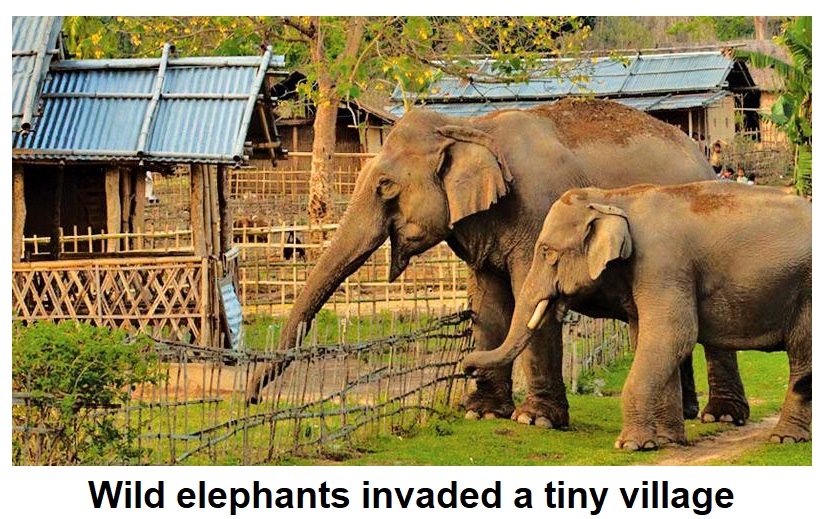
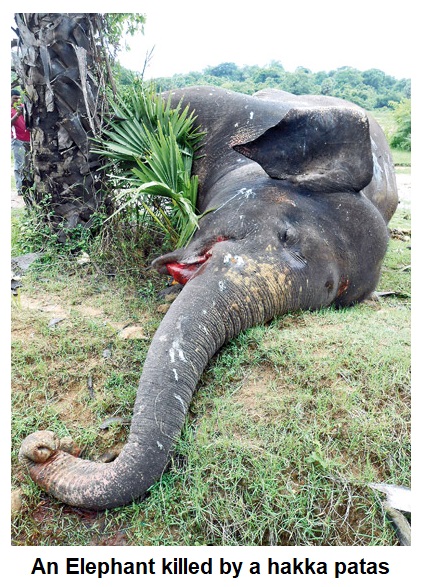
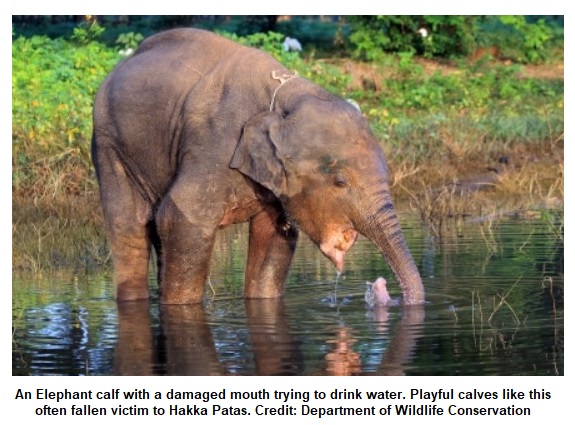
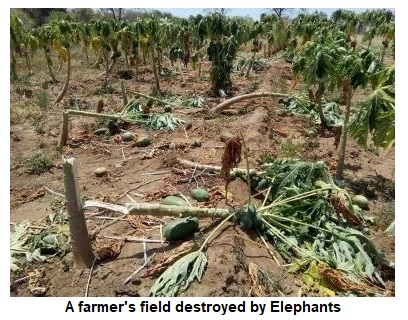
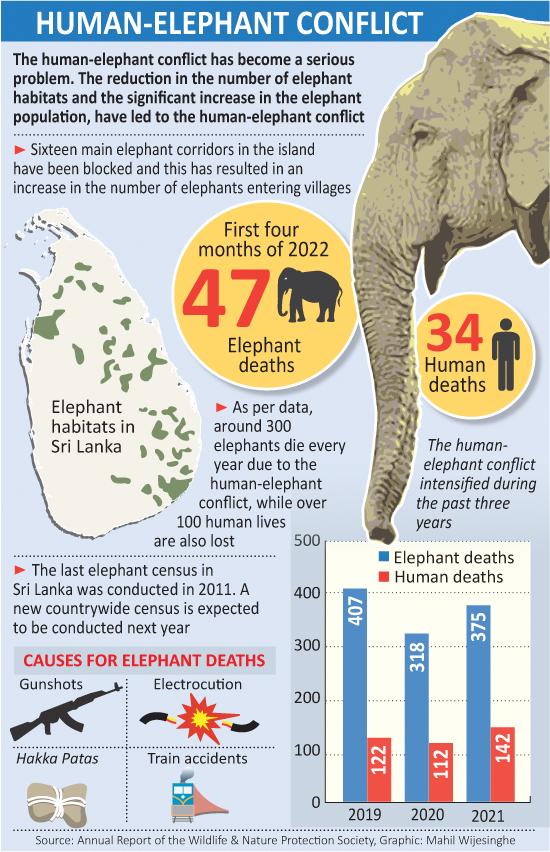
Hungry Elephants raid crops, trampling fields and sometimes people. In response, farmers attack the animals with flaming torches, firecrackers, home-made guns and even explosives embedded in fruit, known as hakka patas or “jaw exploders”. Last year, more than 300 Elephants were killed in altercations with humans and around 70 people lost their lives to Elephants. “Sri Lanka has the highest level of Human-Elephant conflict in the world,” says Fernando. “Wherever there are people and Elephants, there’s conflict.”
For more than 70 years, Sri Lanka has attempted to solve the problem by moving Elephants to national parks. According to the government’s approach, the world’s second-largest land animal belongs in protected areas surrounded by electric fencing, while people belong everywhere else. In many cases, as with Brigadier, problem animals are specifically targeted for translocation. Officials also attempt to clear whole herds using a colonial-era tactic called an Elephant drive. Day after day, sometimes for a year or more, hundreds of people venture into Elephant territory, setting off guns and thousands of “Elephant thunders” (a type of huge firecracker) to corral the animals into fenced areas.
Whichever method officials use to try to confine Elephants to parks, it doesn’t work. In 2012, Fernando and his colleagues published a study showing that of 16 translocated bull Elephants that the researchers had monitored over several years, two were killed within the park they were released in and none of the others stayed put. Some broke out and returned home while others established a new territory where they began raiding crops again.
Elephant drives produce similar results. Many males evade the round-up or break out soon after arriving at a park. The only ones that stick around are the females and calves, which tend to be more risk averse. They soon experience first-hand that Sri Lanka’s parks often lack the resources necessary to support hundreds of additional residents, each of which eats up to 140 kilograms of vegetation per day. The newcomers quickly become “emaciated, walking skeletons, and many starve to death”, says Fernando. “We’ve seen this over and over again wherever Elephants have been driven to parks and fenced in.”
I saw it for myself at Udawalawe National Park. Tourists raised their cameras as a mother and calf stepped out of the thick brush, but the Elephants were a disturbing sight, with jutting ribs, protruding shoulder blades and rope-like backbones. They plucked placidly at the short grass beneath their feet, but it clearly isn’t enough to sustain them. Like many Elephants confined to overcrowded national parks, they were on the verge of starvation.
That females and calves tend to suffer this fate is especially concerning, says Shermin de Silva, director of the Udawalawe Elephant Research Project and founder of Trunks & Leaves, a non-profit organisation focusing on Elephant research and outreach. Elephants have extremely slow reproduction rates, usually producing just one calf every six years. Earlier this year, based on mathematical modelling of Elephant population demographics from Udawalawe, de Silva reported that for Asian Elephants to maintain their numbers, females must reproduce at near-optimal rates and most calves must survive. Nutritional stress, in other words, can quickly push Elephant populations in Sri Lanka and beyond into tailspins. “For Elephants, the biggest threat is the calf that’s never born,” says de Silva.
The stark implications of this finding were reinforced earlier this year, when Fernando and his colleagues published the first nationwide Elephant survey. It showed that Elephants occur across 60 percent of the country – virtually everywhere that isn’t highly urbanised – and that 70 percent of them live side-by-side with humans. This not only means that Sri Lanka’s attempt to confine Elephants to parks has “completely failed”, says Fernando, but also that non-protected areas will have to play a critical role in the species’ survival. If Sri Lanka wants to save its Elephants, it has to find a way for people to live peacefully alongside them.
I saw just how difficult this is when I came across a bloated bull Elephant lying in a ditch by the side of a dirt road in north-west Sri Lanka, flies buzzing around two bullet wounds. A local man guessed it had been shot by a farmer in a nearby field and ran away before collapsing here. The animal was still alive when it was discovered, and a small crowd had gathered and erected a makeshift tent to give it some shade. Someone brought coconuts and bananas to try to feed it. Someone else brought water. Another person called the vet. When the Elephant died, a monk performed a ceremony to help ease it into the next life.
I left the scene feeling nauseous. But just a few minutes’ drive away, past neon green rice paddies and homes shaded by coconut and banana trees, I visited a place that is showing by example that there is an alternative.
In 2013, the village of Galewewa pioneered a programme designed by Fernando and his colleagues to use electric fences to encircle crops and homes rather than Elephants. The locals took some convincing. “People just assumed it wouldn’t be successful because they’d seen the government fences,” says Sampath Ekanayaka, manager of the Centre for Conservation and Research’s community programmes in the region. “To them, this was just another fence.”
In many ways, it is. But there are reasons to think the scheme would work. Elephants that encounter fences in national parks have “all the time in the world” to figure out how to get past the obstacles, says Fernando. Those that encounter a fence surrounding a village or crop field are unlikely to invest the time and energy required to break in because there will usually be people around, and Elephants are afraid of them.
Do Fence Me In
Eventually, after several years of deliberation, the village elders agreed to try the method. Fernando’s organisation paid for 90 percent of the installation costs, but villagers paid the rest, as well as shouldering the burden of maintaining the fences throughout the growing season. After harvesting, they take down the fences, allowing Elephants to forage on the crop remains.
The results have been encouraging. After six years with the fences, no people or Elephants have been killed, nocturnal raids are practically non-existent and crop yields and earnings have significantly increased. Galewewa’s success has prompted around 25 more villages to join the programme, and Sri Lanka’s wildlife department has now established another 30 village fences.
“I would 100 percent recommend this system to others in Sri Lanka,” says J.M.Muthubanda, president of the Fence Maintenance Society in Manakkuliya Gama, a village near Galewewa. “If we didn’t have this fence, many people would have been killed and we would have had to abandon the land. This was the best decision we ever made.”
Fencing can only ever be one part of the solution. Just as important is persuading people to change the way they think about living alongside Elephants – and to adapt their behaviour. People need to take responsibility for protecting themselves and the Elephants they share the land with, says Fernando.
Take drinking, for example. Around 70 percent of men who are killed by Elephants are intoxicated when the incident happens. Simply staying inside after a night of drinking would greatly reduce those deaths, says Sumith Pilapitiya, an independent Elephant researcher and former director general of wildlife conservation in Sri Lanka. “If you’re out drunk on a bike at night and you ride into an Elephant, what do you expect the Elephant to do at that point?” says Pilapitiya. “As human beings, we should be taking much more responsibility for our lives.”
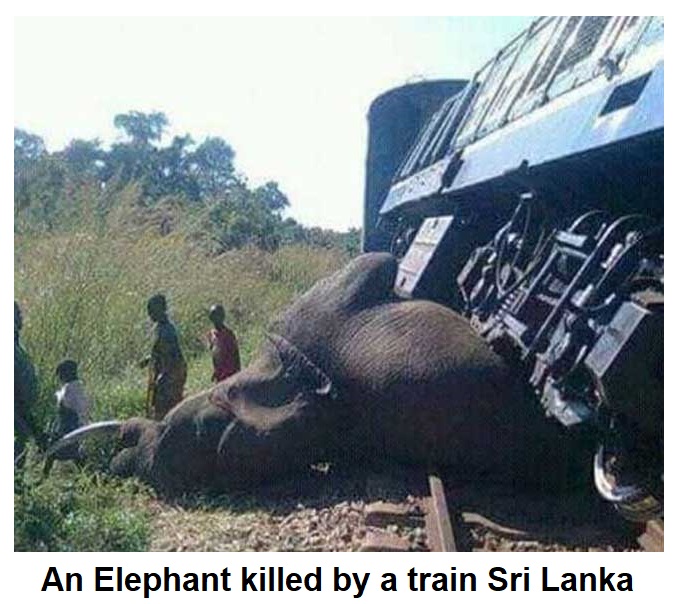
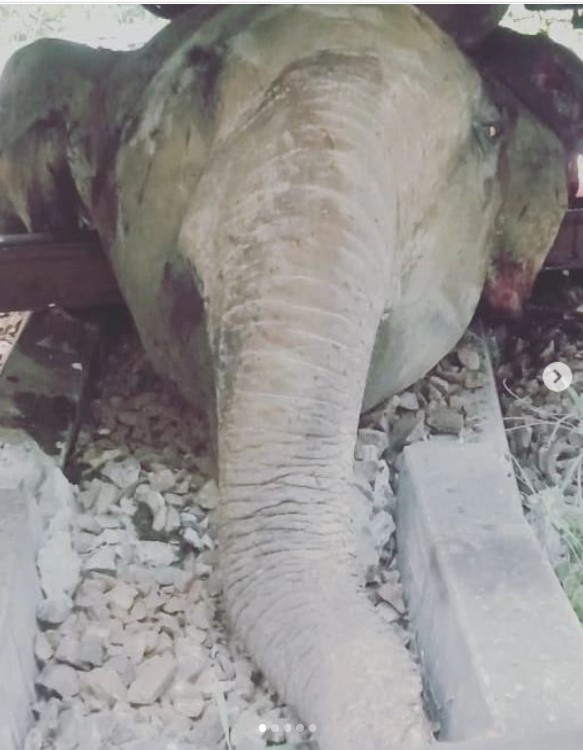
Trains are another problem. Around 15 Elephants are killed each year on the tracks. Sri Lanka has few underpasses or overpasses but there is a straightforward fix. Train drivers could simply slowdown in the areas where Elephants tend to get hit.
What I saw in Galewewa shows that people can peacefully coexist with Elephants, so long as they have the right attitude and some semblance of support. Notionally at least, the Sri Lankan government is on board. As early as 2007, it created a national Elephant conservation plan that largely reflected the findings of Fernando, Pilapitiya and other Elephant researchers, including provisions for implementing seasonal agricultural fencing and educational programmes. But the plan was implemented ad hoc and has failed to live up to its potential as a result, says Pilapitiya, who resigned from his job heading Sri Lanka’s wildlife department in 2015 because of “systemic political interference”. G.C.Sooriyabandara, the current director-general of the Department of Wildlife Conservation, didn’t respond to repeated interview requests.
Still, there are signs of progress. In a first for Sri Lanka, the country’s Southern Development Board, following advice from Pilapitiya and Fernando, agreed to use radio tracking collars to study the movements of several herds of Elephants so it could select a site for a major industrial project that would minimise impact on the animals. “It’s the right thing to do, as far as I’m concerned,” says a high-level official at the board, who asked not to be named because he didn’t have permission to speak to the media.
As more and more villages sign up for his fencing programme, Fernando and his colleagues believe the country as a whole will eventually follow. “This is not something that can be done in a day or a year or even 10 years,” says Fernando. “It might take 25 years. But we’re hopeful that common sense will prevail.”
It is already too late for Brigadier. But if Fernando is right, Asian Elephants can look forward to a brighter future, and not only in Sri Lanka. The country’s human population density isn’t far behind that of India and Bangladesh, but it has almost 10 times the number of Elephants. This makes it a test case for Human-Elephant coexistence, says de Silva. “If we can get it to work in Sri Lanka, we can get it to work anywhere.”
From an original article by Rachel Nuwer for New Scientist
What you can do to help wildlife:
You can support ‘Protect All Wildlife’ by donating as little as £1 – It only takes a minute but it can last a lifetime for an animal in need. Please donate below.
One Elephant has died after colliding with a train between Habarana and Hatharaskotuwa, leaving two more Elephants injured, according to Habarana Police.
The Pulatisi inter-city express train, which was running from Batticaloa to Colombo Fort, was derailed at 01.30 a.m. today (13) after colliding with three wild Elephants between the Galoya and Hatharaskotuwa railway stations.
The train engine and another carriage were both derailed in this accident. As a result, the train will not run to Colombo Fort.
435 Elephants were killed due to Human Elephant Conflict in Sri Lanka in 2022.
“We have robbed Elephants of their homes to build rail roads, roads, villages and agricultural farms. They have been living in Sri Lanka from way before humans arrived. They have an equal right to live in Sri Lanka” said a spokesperson for Rally for Animal Rights- (RARE)
It’s alleged that the driver of the train has not reduced speed at this wildlife area.
Animal inspectors were heartbroken to find nearly a hundred suffering dogs in a single house. The RSPCA has now launched one of the biggest rehoming campaigns ever in a bid to find these puppies loving homes.
More than 90 malnourished Shih-Tzu dogs were rescued from a filthy breeding house.
The dogs were living in horrendous conditions and needed urgent vet care.
They were split and distributed to the RSPCA centres in southern England and are now in need of loving homes.
Neglected and abused
The RSPCA is looking to re-home a record number of Shih-Tzus dogs and their puppies after they were found neglected in a breeding house in Torquay, Devon, England last year.
Upon discovery, the animals were malnourished and infested with fleas and worms. They were living in filthy conditions and covered in faeces.
This is Chips. He’s one of 96 Shih-Tzus that were removed from a home in Torquay which was breeding dogs in poor conditions. Image Credit: BBC.
The charity has launched an appeal to find loving owners for the original 96 of the breed, along with around 50 puppies that have been born since.
According to its spokesperson Sammy Howard, the RSPCA discovered the dogs as a result of a noise complaint by a resident nearby.
Nearly 150 dogs need caring owners
Although 96 pups were rescued and taken to different RSPCA branches for rehabilitation, there are now around 150 of them as many were pregnant at that time.
The Cornwall branch alone is now looking to re-home 13 of them. According to the staff, many pets came to the shelter fearful as a result of their difficult start to life, so new owners must be patient and support the dogs as they go through training and socialisation.
Matted with faeces, flea-infested, urine stained and terrified, this is the result of over-breeding. Image Credit: RSPCA Cornwall Branch.
Sammy added:
They have had a difficult start to life and will not just slot into a home, and be grateful that someone took them on.
According to her, the dogs will be terrified and may take months before they start trusting people’, which is a ‘hard sell’ when asking for someone to welcome a dog into their home.
But the charity assures they ‘won’t give up hope that there are people out there for these dogs.’
When a hunter in Manitoba, Canada legally shot and killed a Gray Wolf in early December 2022, a radio collar found around its neck was the first clue to the incredible journey this animal had been on. The Wolf had been collared in Michigan’s Upper Peninsula in the summer of 2021, and its GPS data since then showed this Wolf’s multi-state and two-country trek was one for the record books.
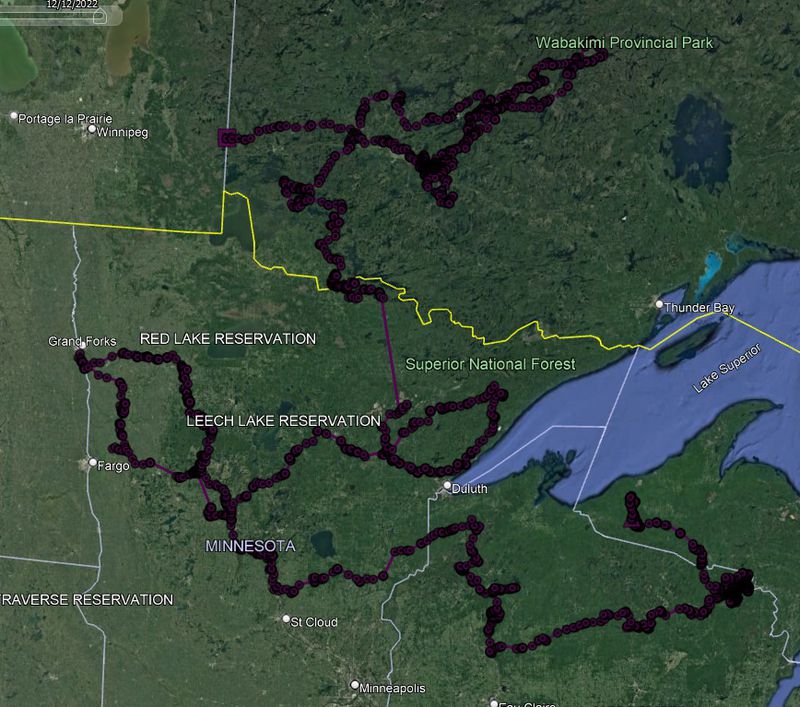
A map plotted by Michigan Department of Natural Resources researchers showed this male Wolf travelled through Wisconsin, then Minnesota, made a short stop in North Dakota, crossed the Canadian border into Ontario, then swung up into the Whiteshell area of Manitoba, where the hunter’s bullet found him. In all, this Wolf had travelled 4,200 miles in about 18 months.
This map from Michigan DNR shows the lengthy trek of a collared Gray Wolf from the Upper Peninsula, through other northern states and into Canada.
“The use of GPS collars will certainly add more insight to the movement of these amazing animals and likely show that others may make similar movements over time, but I suspect this will stand as a record for some time for Michigan,” said Brian Roell, a wildlife biologist with Michigan’s DNR.
Use of Wolf Collars
Michigan’s Wolf population has been stable for the last several years, with anywhere from 600 to 700 Wolves spread out across every county in the state’s Upper Peninsula. There’s been evidence a few Wolves have crossed the Straits of Mackinac to enter the Lower Peninsula, but there’s no documented population there so far, the DNR says.
State biologists have run a Wolf-collaring program since 1992. Currently, about 30 of the U.P.’s Wolves are wearing collars. Researchers can typically get about three years of data from a Wolf before the newer GPS collars stop working. Each spring, the DNR catches and collars new Wolves. They try to target Wolves from specific packs they want more information about – packs that might have overlapping territories, where researchers want to get a better handle on the pack boundaries. Or packs that are reportedly getting too close to livestock farms. By tracking any troublemaking packs, the DNR can use hazing methods to try to push them away from specific areas.
Beyond just population measurements, Roell said the collaring effort has given biologists lots of important information on Michigan’s 130 to 140 Wolf packs. “It also gives us insight into biological information on Michigan Wolves, their movement, their territory sizes.”
A Well-Travelled Wolf
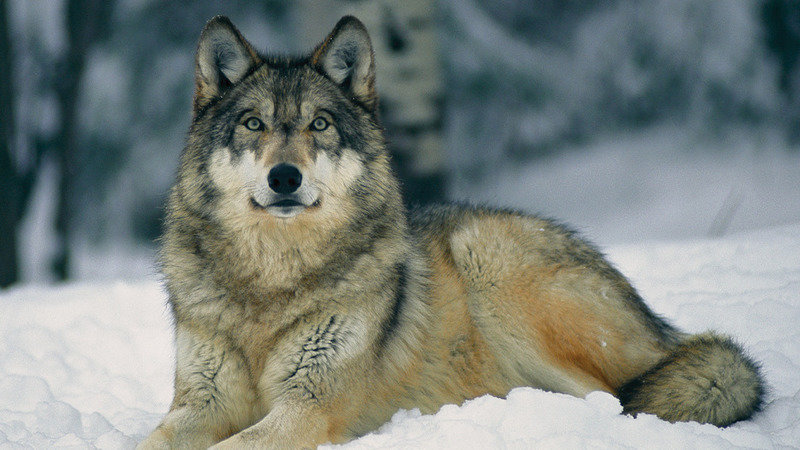
But this lone Wolf making the 4,200-mile trip was unusual in the breadth of his roaming, researchers agree. The 92-pound male was collared in the summer of 2021 near Lake Gogebic. This is in the Ottawa National Forest in the north-western part of the U.P.
“It did not stay in Michigan very long after that,” Roell said the GPS data showed. “So it really never settled down.”
The DNR has documented other Michigan Wolves that have taken long trips. One showed up in Missouri. Others have been found in closer locales like Wisconsin or Minnesota. Some have crossed into Canada.
“The new technology that we have been using … has really given us some insight into these long-distance movements,” Roell said. “Often it seems like some of these animals are destined to stay loners.”
As for this particular Wolf, “we know this animal had been going for a while,” before it was legally harvested, he said.
Great Lakes Wolves: One Big Population?
Another group that was interested in this Michigan Wolf’s long trek was the Voyageurs Wolf Project, researchers who study Wolves and their prey in and around Voyageurs National Park in northern Minnesota. This Michigan Wolf walked though part of Voyageurs – and through at least two Wolf pack territories in that park – on its way north to Canada. When the group recently shared this information and the Michigan DNR’s maps on social media, the post amassed thousands of likes and shares.
A Pack Of Wolves On The Ice At Voyageurs National Park
But beyond just sharing the information, the Voyageurs group said this Michigan Wolf’s trek helps expand people’s understanding of the “Lone Wolf” concept. And it shows how Wolves in the Great Lakes region are more connected than some people might think. After all, Wolves don’t know when they’re crossing state lines, or stepping into another country.
“The travels of this Michigan Wolf, along with many others that our project and other researchers have documented, show how Wolves across the Midwest states and Canadian provinces are connected,” their social media post reads.
“Although we tend to think of Wolf populations based on geopolitical boundaries (e.g. the Wolf population in a given state or province), which are useful for management and conservation decisions, there isn’t much to indicate that these boundaries actually denote the boundaries between Wolf populations.
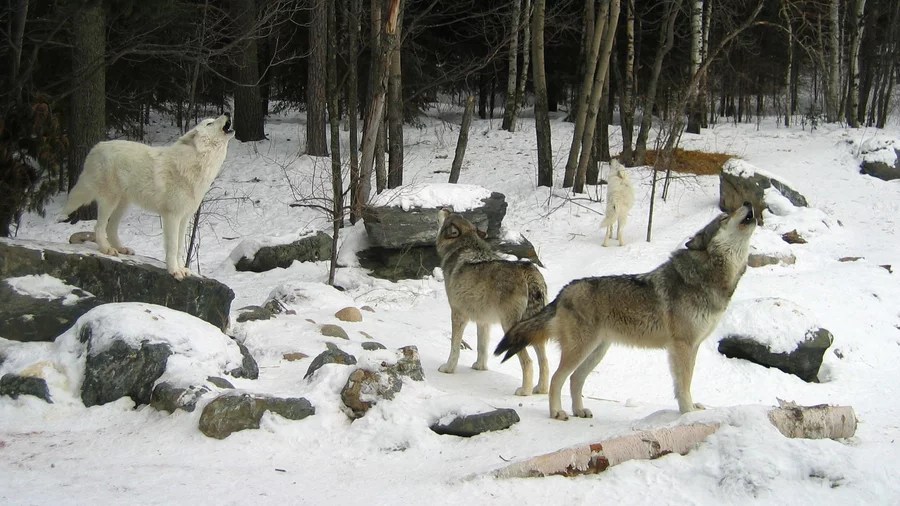
Four Of The Great Lakes Gray Wolves Population Howling
“Instead, probably the best way to think of Wolf populations in the western Great Lakes area is to think of them as one large, connected population with dispersing Wolves moving between provinces and states all the time.”
Originally posted by Michigan Live.
What you can do to help wildlife:
You can support ‘Protect All Wildlife’ by donating as little as £1 – It only takes a minute but it can last a lifetime for an animal in need.













 PROTECT ALL WILDLIFE