Remembering Wildlife Launches Milestone 10th Book To Help Save Pangolins

The Mission Is To Raise Awareness Of The Threats Facing Pangolins Through The Stunning Images From Many Of The World’s Top Wildlife Photographers
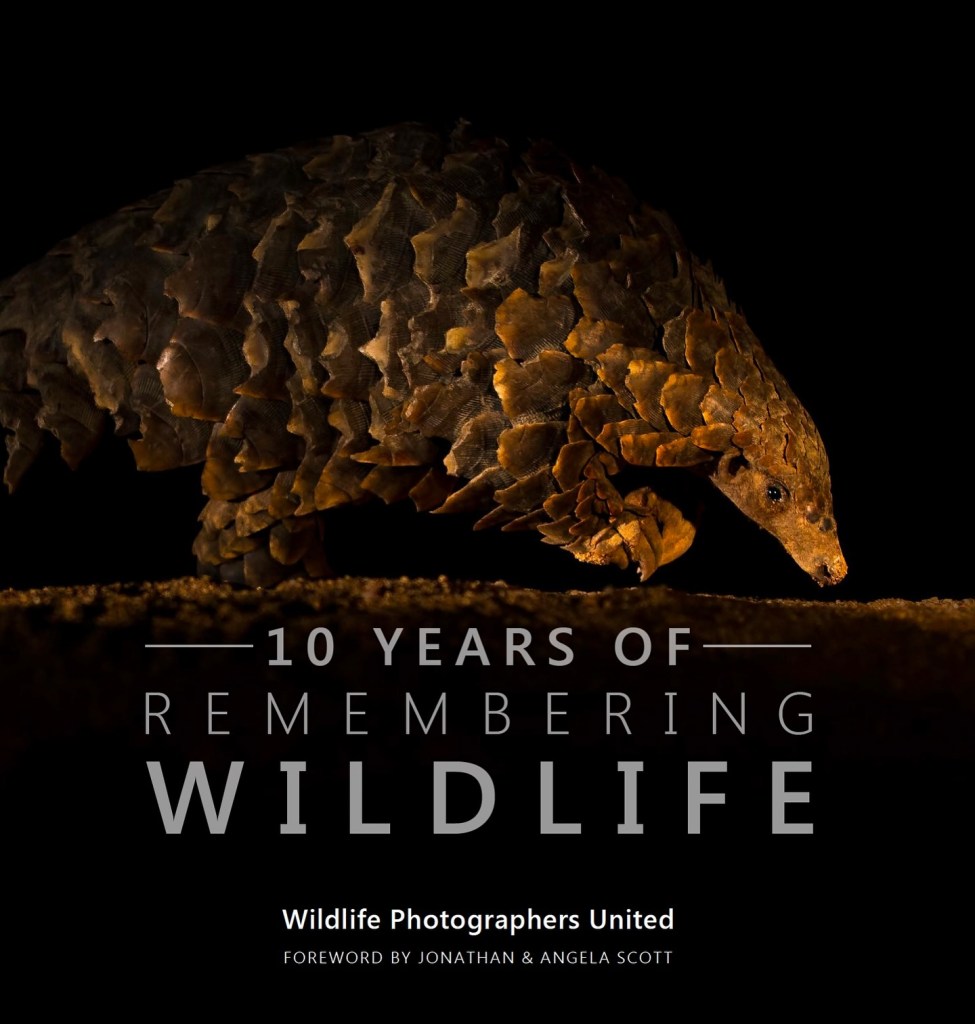
Front Cover: Pangolin image by Tristan Dicks.

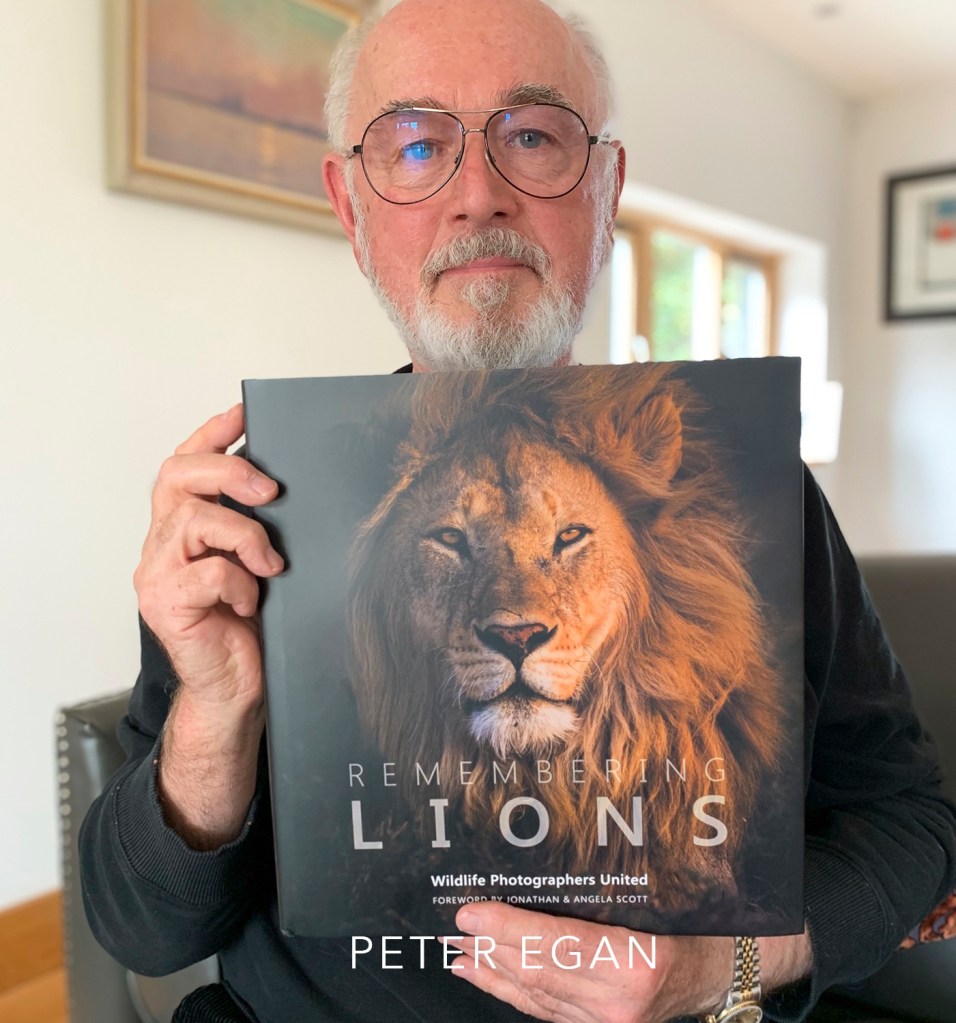
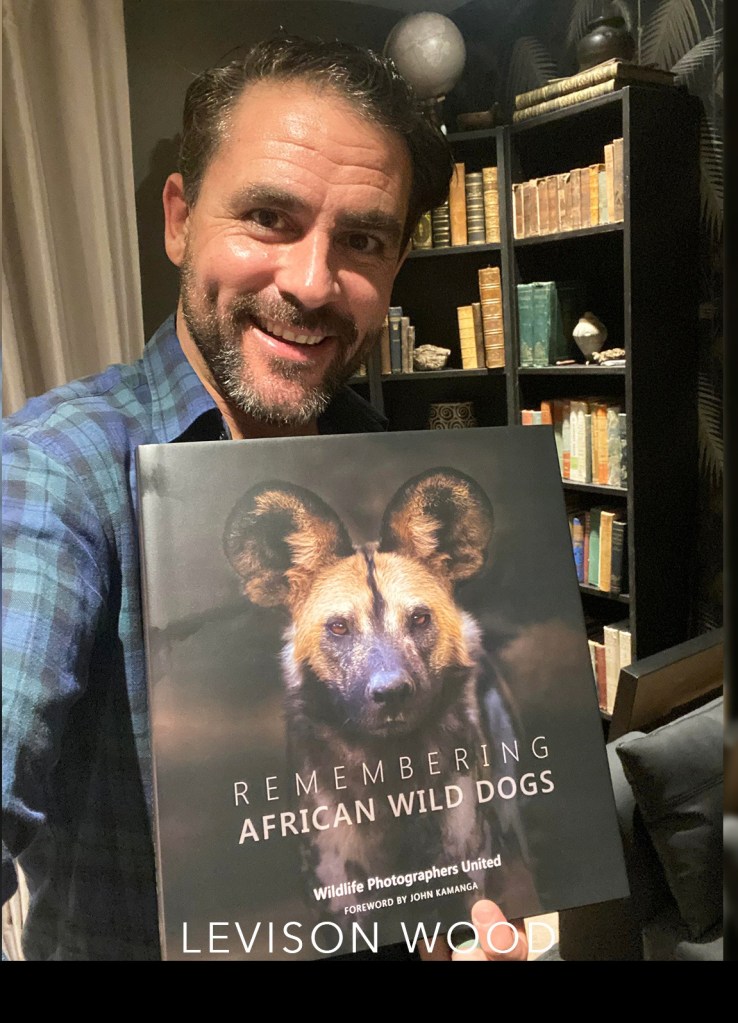
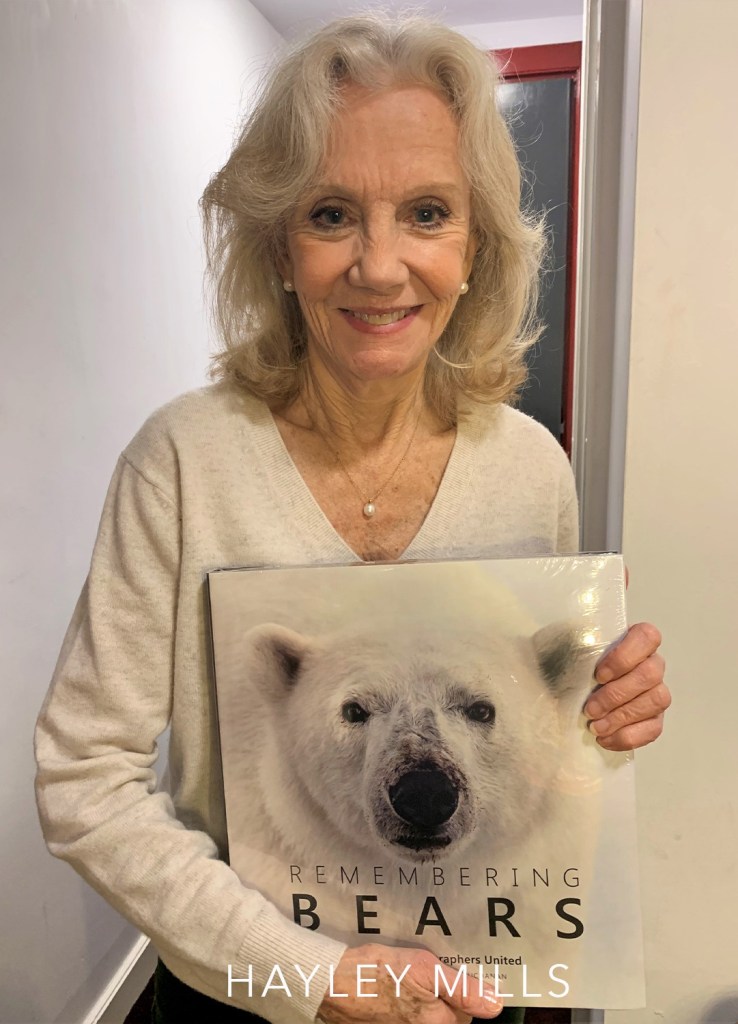
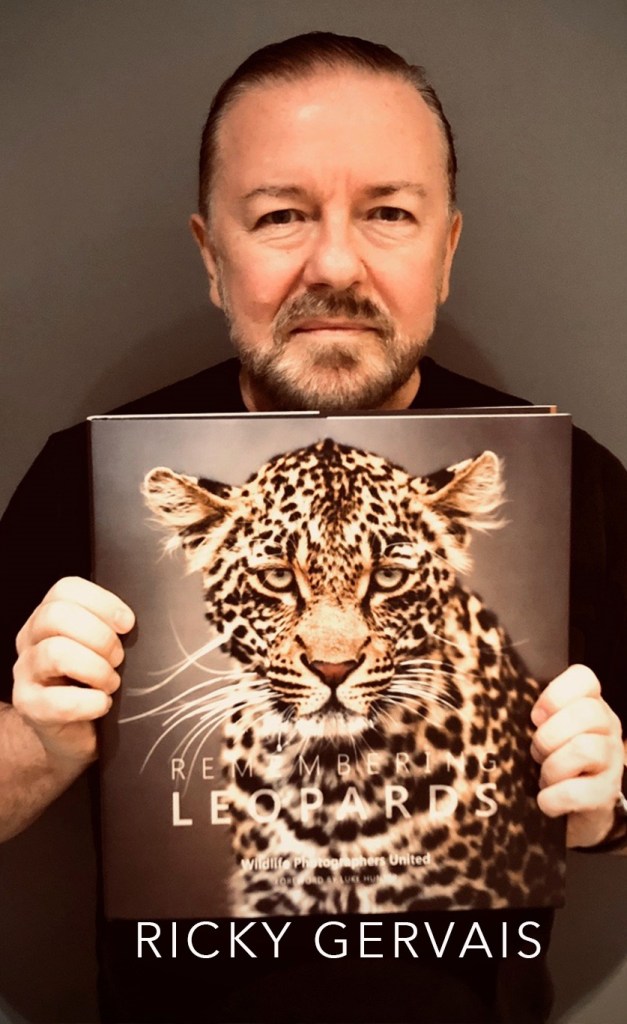
Remembering Wildlife has launched several charity photo books over the years that highlight endangered species and act to raise funds for the protection of the animals featured with the help of famous supporters and talented photographers around the world. Remembering Elephants, Remembering Rhinos, Remembering Great Apes, Remembering Lions, Remembering Cheetahs, Remembering African Wild Dogs, Remembering Bears, and Remembering Leopards have already been produced, Remembering Tigers was funded and delivered last year. Remembering Wildlife is the latest release in the series and will bring attention to Pangolins that are threatened around the world with the help of beautiful images of Pangolins generously donated by many of the world’s top wildlife photographers.

The aim of the book is to raise awareness of the plight facing Pangolins and to raise money to protect them, with all profits from book sales going to conservation.
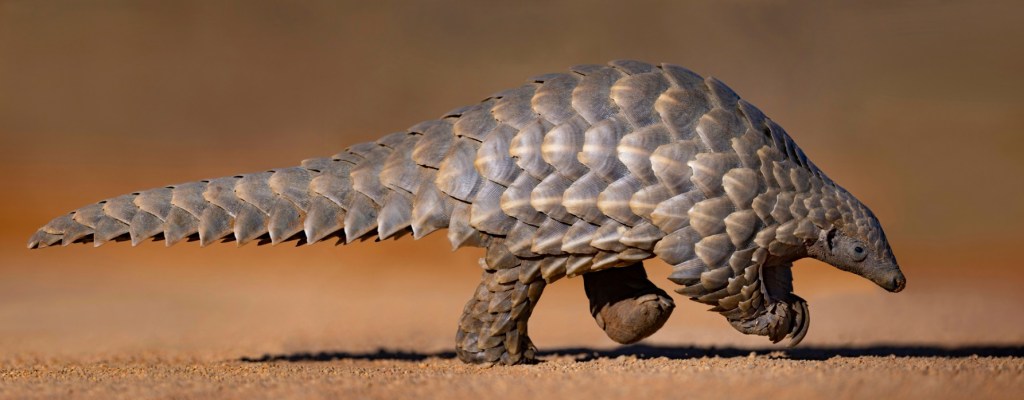
Temminck’s Pangolin in Central Namibia. Credit: Todd Gustafson/Remembering Wildife.

Pangolins have been around for 80 million years. It is estimated one is taken from the wild by poachers every five minutes. Demand is largely for pangolin scales for medicine and for meat as a delicacy, mostly in Asia. Pangolins also face habitat loss and electrocution – if they walk into an electric fence, their defence mechanism is to curl around it.

There are eight species, four in Africa and four in Asia, and the International Union for the Conservation of Nature (IUCN), lists them as endangered, critically endangered or vulnerable, depending on the species.
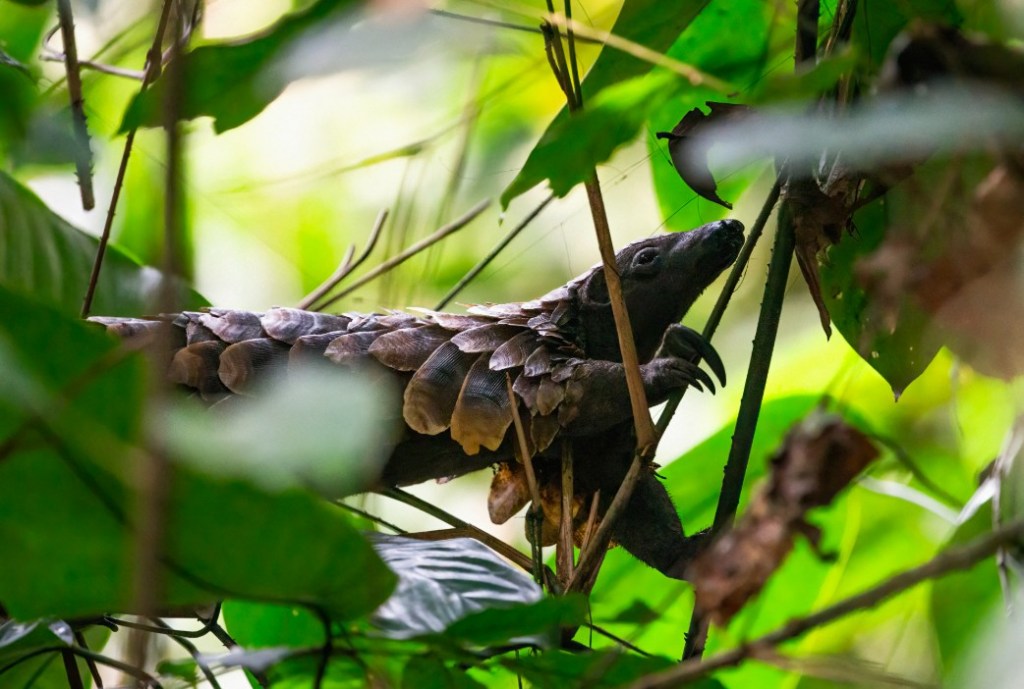
A Black-Bellied Pangolin in Sangha Lodge, Dzanga Sangha, Central African Republic. Credit: Michael Lorentz/Remembering Wildlife.

Margot Raggett MBE, founder and producer of Remembering Wildlife, said: “Pangolins are fascinating and endearing creatures, most closely related to mongooses and cats and each has its own individual character. The size of the illegal trade in Pangolins may be higher than we know.

“We don’t know how many are trafficked, but we do know that poachers will use their ingenuity to literally sniff them out of their hiding places. Fortunately, there are conservationists, researchers, vets and volunteers all lending their energy and determination to a fight they are resolute they won’t lose. It is they we will support with funds from this book
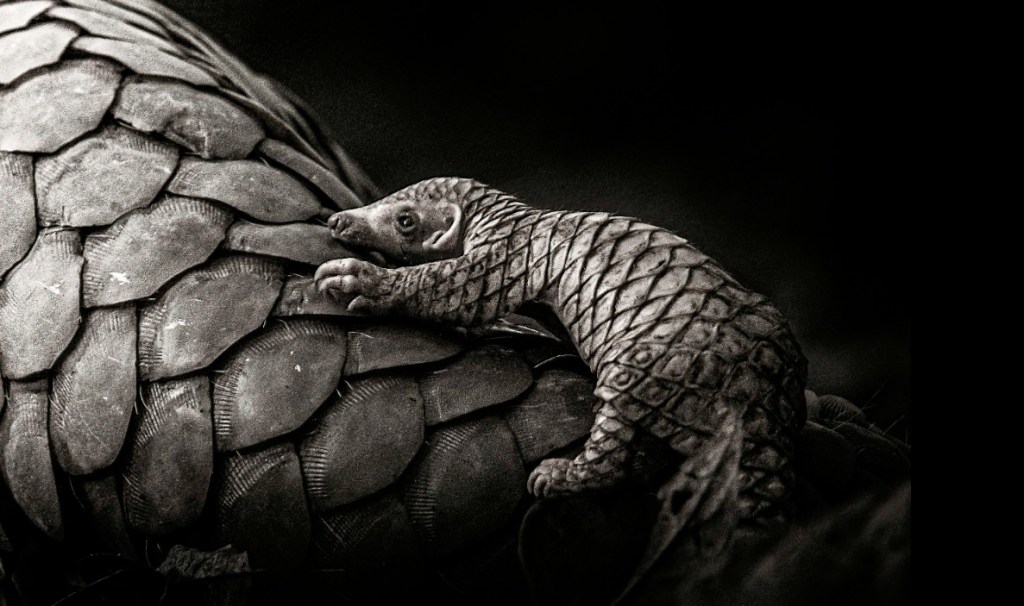
An Indian Pangolin in Matale, Sri Lanka. Credit: Heshan Peiris/Remembering Wildlife.

“This book raises awareness of the threats not only facing Pangolins but also wildlife as a whole. Through sales of this book, we can raise funds to support those on the frontline protecting wildlife.  My hope is that this book can remind us all just what will be lost if we don’t.”
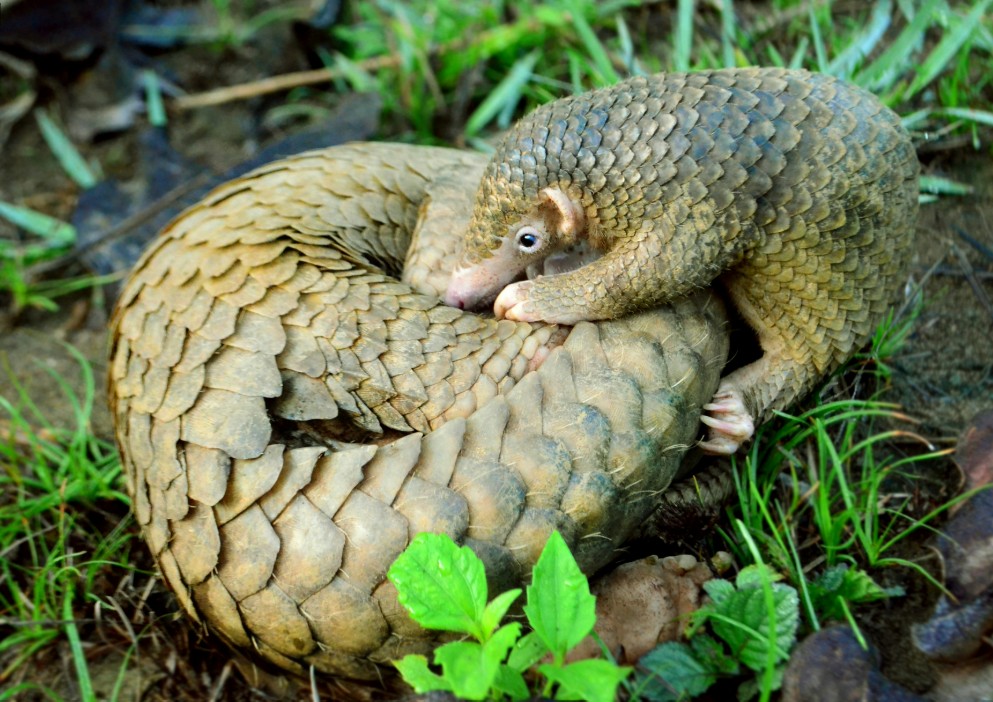
A Philippine Pangolin in Victoria-Anepahan Mountain Range, Southern Palawan, Philippines. Credit: Gregg Yan/Remembering Wildlife.

More than 280 wildlife photographers have contributed to the Remembering Wildlife series since it started in 2016, working under the banner Wildlife Photographers United. It has now raised over £1.15m GBP/$1.5m USD for 74 conservation projects in 33 countries. 

The photographers who have donated their images for this edition are: Alessandra Sikand (Switzerland, USA, India)  Black-bellied pangolin, Sangha Lodge, Dzanga Sangha, Central African Republic

Andy Skillen (UK) White-bellied pangolin, Sangha Lodge, Dzanga Sangha, Central African Republic

Armand Grobler (South Africa) Sunset Scales Temminck’s pangolin, Manyeleti Game Reserve, South Africa  

Ben Cranke (South Africa) Temminck’s pangolin, Sabi Sand Game Reserve, South Africa

Chad Cocking (South Africa) Temminck’s pangolin, Tanda Tula, Timbavati Private Nature Reserve, South Africa

Dharmendra Khandal (India) Indian Pangolin,  Karauli Tiger Reserve, India

Gregg Yan (Philippines) Philippine pangolin,  Victoria-Anepahan Mountain Range, Southern Palawan, Philippines

Hannes Lochner (South Africa)  Temminck’s pangolin, Kgalagadi Transfrontier Park, Botswana    

Hendri Venter (South Africa) Temminck’s pangolin, Game Farm, Namibia  

Heshan Peiris (Sri Lanka) Indian pangolin, Matale, Sri Lanka

Jacha Potgieter (UK)  Black-bellied pangolin, Sangha Lodge, Dzanga Sangha, Central African Republic

Marcus Westberg (Sweden) White Bellied Pangolin, Garamba National Park, Democratic Republic of the Congo

Marlon du Toit (South Africa) Black Bellied Pangolin, Sangha Lodge, Dzanga Sangha, Central African Republic

Michael Lorentz (South Africa) Black-bellied pangolin, Sangha Lodge, Dzanga Sangha, Central African Republic

Naun Amable Silva (Peru) Temminck’s Pangolin,  Okonjima Nature Reserve, Namibia

Pete Oxford (South Africa) White-bellied pangolin, Bwindi Impenetrable National Park, Uganda

Pete Oxford (South Africa) White-bellied pangolin, Bwindi Impenetrable National Park, Uganda

Shem Compion (South Africa) Temminck’s pangolin Gorongosa National Park, Mozambique

Shivang Mehta (India) Indian pangolin, Corbett Tiger Reserve, India

Suzi Eszterhas (USA) Chinese pangolin, Cuc Phuong Național Park, Vietnam  
Todd Gustafson (USA) Temminck’s pangolin, Central Namibia Tom Mason (UK) Temminck’s pangolin, Okonjima Nature Reserve, Namibia

Tristan Dicks (South Africa) Temminck’s pangolin ‘ScalesOfFortune’ , Sabi Sands Game Reserve, South Africa

Will Burrard-Lucas (UK) giant pangolin, Nyakweri Forest, Kenya
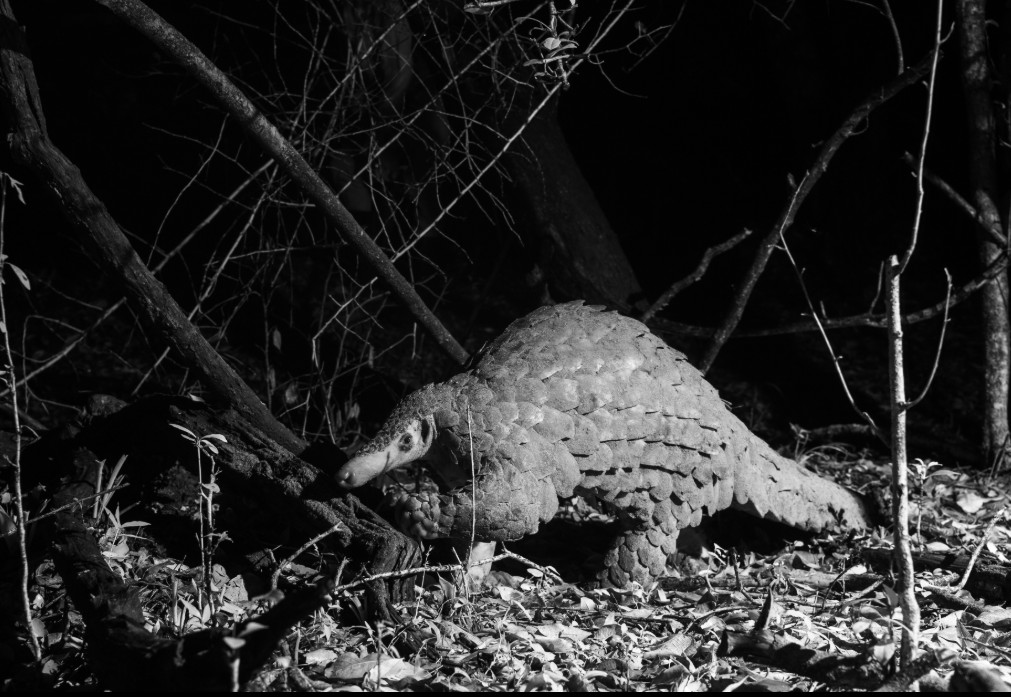
A Giant Pangolin in Nyakweri Forest, Kenya. Credit: Will Burrard-Lucas/Remembering Wildlife.

How have the Remembering Wildlife books helped conservation

Together, the series has now sold more than 50,000 books and distributed more than £1.15 million GBP / $1.5 million USD to 74 different conservation projects in 33 countries across Africa, North and South America, Asia and Europe.

All books were prefunded by successful Kickstarter campaigns, meaning that all profits can be given straight to projects protecting the species that the book is focused on. 

Since the launch of Remembering Elephants in 2016, over 270 of the world’s best wildlife photographers have generously contributed to the series. Here is the full list of those whose images have appeared in one or more of the Remembering Wildlife titles so far:

Jane Addey, Karine Aigner, Oriol Alamany, Taylor Thomas Albright, Neil Aldridge, Maxime Aliaga, Theo Allofs, Matt Armstrong-Ford, Grant Atkinson, Andrew Aveley, Daniel Bailey, Daryl & Sharna Balfour, Adam Bannister, Brooke Bartleson, Stephen Belcher, Rick Beldegreen, Patrick Bentley, Sabine Bernert, Andy Biggs, Giorgio Bighi, Jayaprakash Bojan, Donal Boyd, Sean Brogan, Kate Brooks, Seyms Brugger, Volodymyr Burdiak, Matt Burrard-Lucas, Will Burrard-Lucas, Benoit Bussard, Alison Buttigieg, Marina Cano, Ayesha Cantor, Mark Cawardine, David Cayless, Vladimir Cech, Vladimir Cech Jr., Peter Chadwick, Paras Chandaria, Sam Clark, Alwyn Coates, Chad Cocking, Marius Coetzee, Martyn Colbeck, Marco Colombo, Shem Compion, Alain Compost, Keith Connelly, Rob Cottle, Ross Couper, Ben Cranke, Brendon Cremer, Mark Deeble & Victoria Stone, Tanja Dekker, Willem Dekker, Melanie Delamare, Peter Delaney, M & C Denis-Huot, Anja Denker, Richard Denyer, Tristan Dicks, Sebastián Di Doménico, Billy Dodson, Kevin Dooley, Mark Dumbleton, Julie Duncan, Michelle & Ken Dyball, Nicholas Dyer, Andy Edge, Kairav Engineer, Morkel Erasmus, Denise Eriksson, Amit Eshel, Suzi Eszterhas, Chris Fallows, Sascha Fonseca, James Gifford, Daisy Gilardini, Paul Goldstein, Sergey Gorshkov, Marc Graf, Fredrik Granath, Chris Grech, Jan van der Greef, Kim Griffin, Owen Grobler, Melissa Groo, Fabrice Guerin, Richard Guijt, Amy Gulick, Todd Gustafson, Josh Guyan, Drew Hamilton, Charlie Hamilton James, Thorsten Hanewald, Hilary Hann, Peter Haygarth, Tony Heald, Harman Singh Heer, Trish Hennessy, Naudé Heunis, Torie Hilley, Joshua Holko, Roger Hooper, Friedrich von Horsten, Andy Howe, Jabruson, Britta Jaschinski, Vicki Jauron, Brendon Jennings, Arnfinn Johansen, Morten Jørgensen, Paul Joynson-Hicks, Jocelin Kagan, Lakshitha Karunarathna, Kyriakos Kaziras, Steven Kazlowski, Sebastian Kennerknecht, Bob Keyser, Clement Kiragu, Agung Ganthar Kusumanto, Tim Laman, Lisa A. Langell, Frans Lanting, Behzad J. Larry, Chien Lee, Ole J Liodden, David Lloyd, Hannes Lochner, George Logan, Michael Lorentz, Nick Lyon, Piper Mackay, Russell MacLaughlin, Kate Malone, Thomas D. Mangelsen, Suhail Manji, Tin Man Lee, Johan Marais, Matt Maran, Tom Mason, Jo-Anne McArthur, Molly McCormick, Phil McFadden, Paul McKenzie, Shivang Mehta, Garry Mills, Sumeet Moghe, Marc Mol, Dale R Morris, Sue Morris, Margot Muir, Mike Muizebelt, Dhritiman Mukherjee, Yashas Narayan, Shareen Nash, Latika Nath, Elliott Neep, Heinrich Neumeyer, Nick Newman, Thomas Nicolon, Kyle de Nobrega, Jules Oldroyd, Hilary O’Leary, Marsel van Oosten, Xavier Ortega, Ben Osborne, Prelena Soma Owen, Pete Oxford, Chris Packham, Richard Packwood, Parinya Padungtin, Andy Parkinson, Dawn Perkins, Richard Peters, Mevan Piyasena, Julien Polet, Michael Poliza, Jacha Potgieter, Isak Pretorius, Graeme Purdy, Nick Rabjohn, Cameron Raffan, Margot Raggett, Abdul Rashid, Ian Redmond, Pierluigi Rizzato, Gregg Robinson, Dee Roelofsz, Fiona Rogers, Gurcharan Roopra, Matthew Roper, Daniel Rosengren, Andy Rouse, David Sandford, Nima Sarikhani, Joel Sartore, Melissa Schäfer, Chris Schmid, Yaron Schmid, Sabrina Schumann, Jonathan & Angela Scott, Pasan Senevirathne, Anup Shah, Ismail Shariff, Amy Shutt, Anjali Singh, Andy Skillen, Andy Skinner, Sarah Skinner, Paul Souders, Kathryn Sowerbutts, Brent Stapelkamp, William Steel, Jonas Stenqvist, Brent Stirton, Charl Stols, Sabine Stols, James Suter, Tom Svensson, Jami Tarris, Austin Thomas, Jessica Tingley Dunn, Roy Toft, Greg du Toit, Marlon du Toit, Steve & Ann Toon, Paolo Torchio, R.J. Turner, Christophe Vasselin, Albie Venter, Bertus Venter, Hendri Venter, Federico Veronesi, Francesco Veronesi, Thomas Vijayan, Fred Vogt, Marion Vollborn, Pim Volkers, Lance van de Vyver, Tami Walker, James Warwick, Tom Way, Marcus Westberg, Christopher Whittier, Staffan Widstrand, Shannon Wild, Jon Wilson, Steve Winter, Shannon Witz, Art Wolfe, Kim Wolhuter, Nelis Wolmarans, Ian Wood, and Jeffrey Wu.

All of the stunning images used in the books and exhibitions have been generously donated by the photographers, as their way to give back to the species they make their livings from photographing.

Margot Raggett, founder of Remembering Wildlife

I fell in love with wildlife and safaris many years before picking up a camera! In the 2000s, I worked in PR in London and used all my spare cash to book safaris to Africa, as I had become totally addicted to being in nature. It was when I inadvertently signed up to a photography-based safari in 2010 that everything changed for me. It was a trip to see Kenya’s ‘Great Migration’ led by Jonathan & Angela Scott and it was only a few days before I went, that I realised I was supposed to bring a camera. I bought a cheap kit camera & lens and headed to Kenya. It turned out that camera was no good at all for wildlife (it was a very short lens) but nonetheless, I was totally inspired by Jonathan & Angela’s photography. When I got home, I immediately upgraded my gear and signed up for a course at the London School of Photography to learn the basics and I’ve never looked back. For a few years I went on as many photographer-led trips as I could, to learn from the best and then in 2012, agreed a deal to work as a Photographer in Residence at a camp in the Maasai Mara called Entim Camp. At that point I started selling my photos and attracting followers on social media.  

It was in 2014 that everything changed for me once again. I had been working as a resident photographer in Kenya at that point for about three months a year, for three years, and it was at the end of one of those stays that I travelled to Laikipia to visit a friend. We were woken very early in camp by the sound of Hyenas going crazy and at first light, went to investigate. What I saw changed my life, It was an Elephant who had died from a poisoned arrow, likely  poachers had shot him but he’d got away, only to die a slow, painful death over the next few days. The Hyenas had started to eat his body and the sight – and the smell – was so shocking. I came to realise that poaching and the many other threats that wildlife faces are often hidden away from tourists and as a result, many like me at that point, had any idea how bad things really are. I was incredibly angry and upset and resolved to channel those emotions into something positive. That was the trigger for me to start work on what I thought would be a one-off book on Elephants, to raise awareness about poaching and funds for projects working to protect Elephants. I started to approach wildlife photographers I’d met in the field and invited them to donate an image each and it took off from there. 18 months later, Remembering Elephants was published. It sold out in 2 months and raised more than £100,000 and without me knowing it, a series was born. We’ve published seven more books since (Remembering Rhinos, Remembering Great Apes, Remembering Lions, Remembering Cheetahs , Remembering African Wild Dogs, Remembering Bears, Remembering Leopards) and Remembering Tigers will be published in October 2024. Nowadays I spend far less time in the field taking traditional wildlife pictures like before but rather, I spend more time visiting the projects we are able to support with our funds, so I can see how our money is making a difference.  

Margot was awarded an MBE in the The King’s Birthday Honours 2023 for services to International Wildlife Conservation.

This image has an empty alt attribute; its file name is margotraggott_gitzo_profile-pic_350.jpeg_1.jpg
Margot Raggett MBE

Celebrity supporters of Remembering Wildlife

To find out more about Remembering Wildlife, click here: https://rememberingwildlife.com/

To find out more about the projects that Remembering Wildlife has already funded, click here: https://rememberingwildlife.com/projects/

Each book costs £59.50 GBP (approximately $75 USD) and copies can be ordered at www.rememberingwildlife.com.


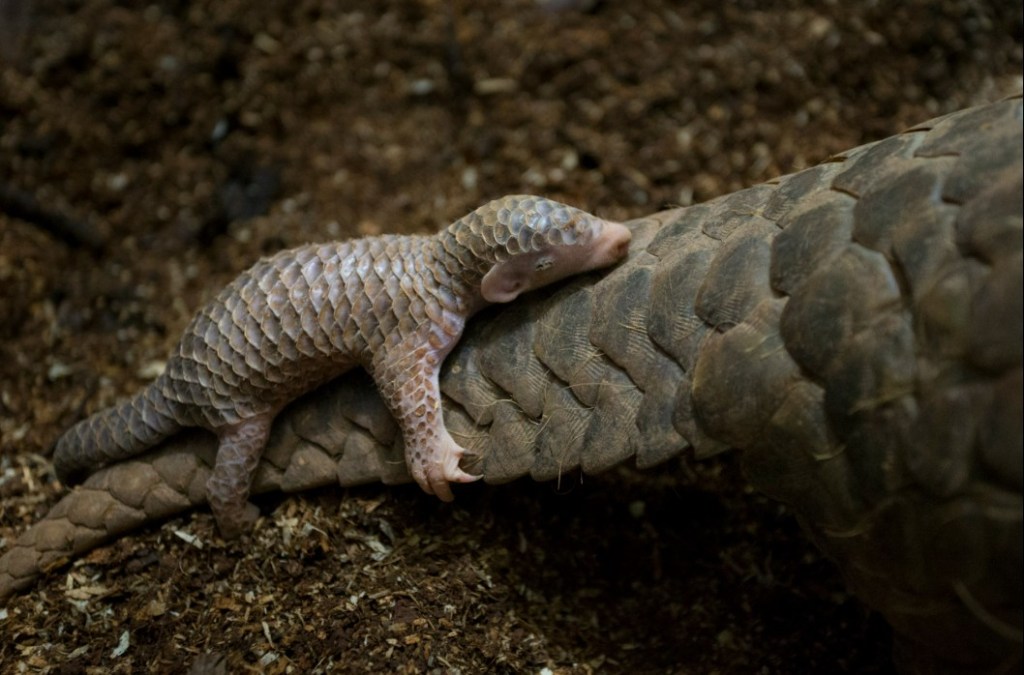
A Chinese Pangolin in Taipei Zoo, Taipei, Taiwan. Credit: Suzi Eszterhas/Remembering Wildlife.

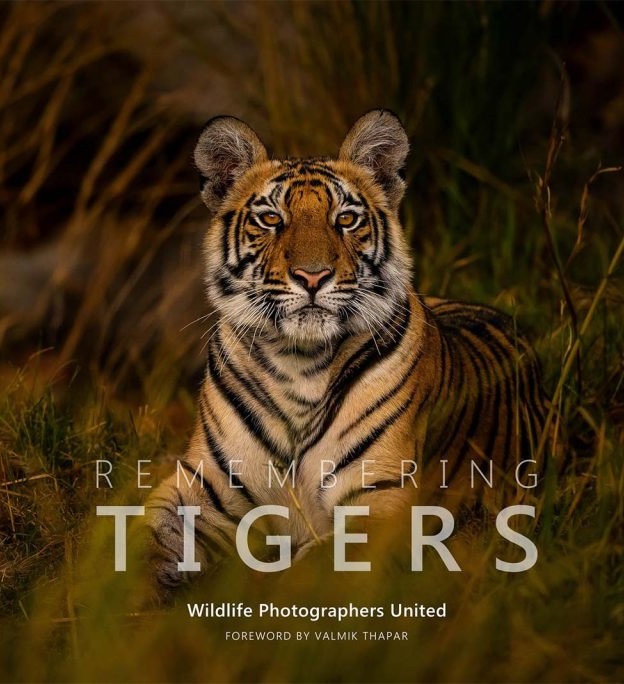
Remembering Tigers: The 9th Book In The Critically Acclaimed Remembering Wildlife Series.

The Mission Is To Raise Awareness Of The Threats Facing Tigers Through The Stunning Images From Many Of The World’s Top Wildlife Photographers

Front Cover: Bengal Tiger in Bandhavgarh National Park, India by Sarah Skinner.

Remembering Wildlife has launched several charity photo books over the years that highlight endangered species and act to raise funds for the protection of the animals featured with the help of famous supporters and talented photographers around the world. Remembering Elephants, Remembering Rhinos, Remembering Great Apes, Remembering Lions, Remembering Cheetahs, Remembering African Wild Dogs, Remembering Bears have already been produced, and Remembering Leopards was funded and delivered last year. Remembering Tigers is the latest release in the series and will bring attention to Tiger species that are threatened around the world with the help of beautiful images of Tigers generously donated by many of the world’s top wildlife photographers.

The aim of the book is to raise awareness of the plight facing Tigers and to raise money to protect them, with all profits from book sales going to conservation.

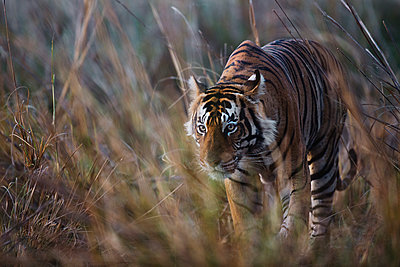
Fighting Bengal tigers in Bandhavgarh National Park, India. Credit: Andy Parkinson/Remembering Tigers)

Weighing up to 260kg and measuring up to 3 metres in length, the Tiger is the largest of the big cats. It is found in Asia, from India – where two-thirds of all wild Tigers live – through to the Russian Far East and into China. Its habitat ranges from sub-tropical forests to snow-covered mountainous terrain. Numbers are increasing in some areas, thanks to conservation efforts, yet the Tiger is the least numerous of all the large wild cats and is listed as ‘endangered’ by the International Union for Conservation of Nature (IUCN).

The stunning colours of a Bengal Tiger superbly captured by Jami Tarris. Credit: Jami Tarris/Remembering Tigers.

Threats include loss of habitat, illegal hunting for the Chinese medicinal trade (Traditional Chinese Medicine), widespread killing of their prey for bushmeat, and retaliation for attacks on humans and livestock.

Founder and Producer of Remembering Wildlife Margot Raggett MBE said: “It’s an oft-quoted fact that there are more Tigers in captivity in the US than there are left in the world, a stark reminder of how the future of Tigers might end if conservationists do not continue their focus and their fight. Tigers are a bellwether for the health of an ecosystem. For every Tiger protected in the forest, there are plants, trees, insects, birds and other mammals who thrive.”

The book is endorsed by cricketing legend and conservation champion Kevin Pietersen MBE, who says on the back cover: “The Remembering Wildlife series goes from strength to strength, with Remembering Tigers sure to be another huge hit.”

The foreword for the book is by Tiger conservationist and author Valmik Thapar, who will also speak at the official book launch and whose brilliant documentary, My Tiger Family, was broadcast on the BBC in August. 

He said: “I hope Remembering Tigers, with its wonderful pictures, inspires a passion in those who see it and stirs them to new heights in order that this magnificent predator continues to walk our planet.”

The afterword is by Amit Sankhala, Trustee of the Tiger Trust, who said: “Seeing a Tiger in its natural habitat is a mesmerising encounter and I am thankful for Margot Raggett’s book which not only shows the beauty of the Tiger, but will also inspire the next generation of conservationists.”

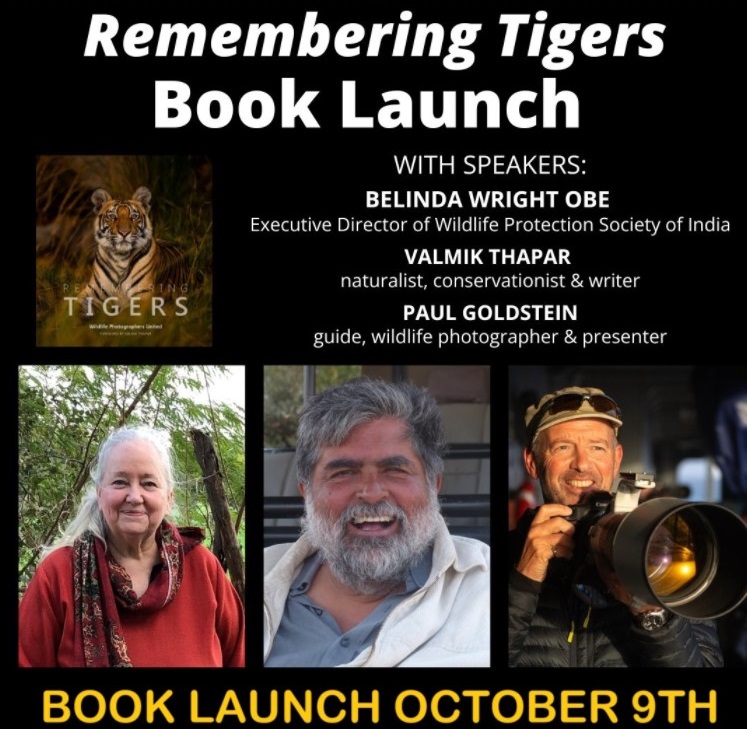
Speaking alongside Margot Raggett MBE at the official launch event for Remembering Tigers at the Royal Geographical Society on 9 October will be Executive Director of Wildlife Protection Society of India (WPSI) Belinda Wright OBE; Tiger conservationist and author Valmik Thapar, and wildlife photographer and guide Paul Goldstein, who has raised hundreds of thousands of pounds by running 25 marathons dressed as a Tiger.

Remembering Tigers official book launch is in October 9th. Credit: Remembering Wildlife

It is estimated that there are around 10,000 captive Tigers in the US, more than the approximately 5,500 remaining in the wild. A vast majority of these captive Tigers are privately owned and living in people’s backyards, roadside attractions, and private breeding facilities. Only an estimated 6% of the US captive Tiger population resides in zoos and other facilities accredited by the Association of Zoos and Aquariums. Many of these private Tiger owners aren’t properly trained to care for wild animals, making the animals vulnerable to mistreatment and exploitation. Often these facilities will allow public contact with the Tigers, including photo ops and playtimes with tiger cubs. Not only is the welfare of these Tigers compromised, but public health and safety is at risk during these encounters.

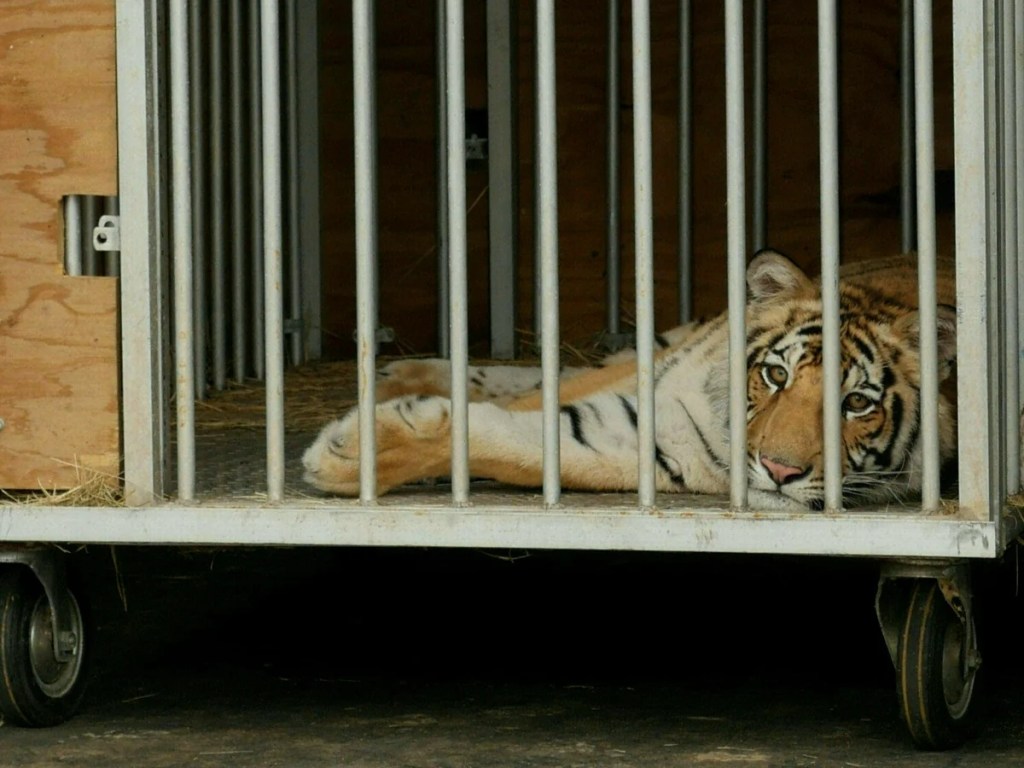
A nine-month-old Bengal Tiger, which was seen roaming the lawns of suburban Houston, in a cage after being captured by authorities. Credit: Francois Picard

More than 280 wildlife photographers have contributed to the Remembering Wildlife series since it started in 2016, working under the banner Wildlife Photographers United. It has now raised over £1.15m GBP/$1.5m USD for 74 conservation projects in 33 countries. 

The photographers who have donated their images for this edition are: Harmit Ahuja, Theo Allofs, Daryl & Sharna Balfour, Adam Bannister, Chris Brunskill, Clive Burns, Will Burrard-Lucas, Alison Buttigieg, Vladimir Cech, Vladimir Cech Jr., Sandra Clayton, Marius J Coetzee, Shem Compion, Ben Cranke, Nick Dale, Tristan Dicks, Kevin Dooley, Kairav Engineer, Suzi Eszterhas, Mark Farrington, Sascha Fonseca, Arijeet Ghosh, Paul Goldstein, Sergey Gorshkov, Sagar Gosavi, Jan van der Greef, Todd Gustafson, Andrew Holt, Sebastian Kennerknecht, Suyash Keshari, Tim Laman, Anirudh Laxmipathy, Chien C. Lee, Tin Man Lee, Russell MacLaughlin & Shannon Wild, Nitish Madan, Thomas D. Mangelsen, Anuradha Marwah, Shivang Mehta, Dale R Morris, Dhritiman Mukherjee, Sunil V. Nair, Latika Nath, Tom Nicholson, Pete Oxford, Parinya Padungtin, Sarah Parker, Andy Parkinson, Graeme Purdy, Margot Raggett, Sachin Rai, Gaurav Ramnarayanan, Aly Rashid, Yashpal Rathore, Andy Rouse, Sabrina Schumann, Jonathan & Angela Scott, Khushboo Rahul Sharma, Anjali Singh, Archna Singh, Dicky Singh, Jaisal Singh, Andy Skinner, Sarah Skinner, Kim Sullivan, Tom Svensson, Jami Tarris, Valmik Thapar, Greg du Toit, Marlon du Toit, Turgay Uzer, Francesco Veronesi, Thomas Vijayan, Lance van de Vyver, James Warwick, Steve Winter, Art Wolfe

A stunning image of a Sumatran Tiger in Aceh Province, Northern Sumatra by Steve Winter. Credit: Steve Winter/Remembering Tigers.

Sales from Remembering Tigers will be used to fund conservation projects in areas where they are vulnerable.

Further information about Remembering Wildlife can be found here .

To find out more about the projects that Remembering Wildlife has already funded, click here

Each book costs £49.50 GBP (approximately $60 USD) and copies can be ordered at www.rememberingwildlife.com

How have the Remembering Wildlife books helped conservation

Together, the series has now sold more than 50,000 books and distributed more than £1.15 million GBP / $1.5 million USD to 74 different conservation projects in 33 countries across Africa, North and South America, Asia and Europe.

All books were prefunded by successful Kickstarter campaigns, meaning that all profits can be given straight to projects protecting the species that the book is focused on. 

Since the launch of Remembering Elephants in 2016, over 270 of the world’s best wildlife photographers have generously contributed to the series. Here is the full list of those whose images have appeared in one or more of the Remembering Wildlife titles so far:

Jane Addey, Karine Aigner, Oriol Alamany, Taylor Thomas Albright, Neil Aldridge, Maxime Aliaga, Theo Allofs, Matt Armstrong-Ford, Grant Atkinson, Andrew Aveley, Daniel Bailey, Daryl & Sharna Balfour, Adam Bannister, Brooke Bartleson, Stephen Belcher, Rick Beldegreen, Patrick Bentley, Sabine Bernert, Andy Biggs, Giorgio Bighi, Jayaprakash Bojan, Donal Boyd, Sean Brogan, Kate Brooks, Seyms Brugger, Volodymyr Burdiak, Matt Burrard-Lucas, Will Burrard-Lucas, Benoit Bussard, Alison Buttigieg, Marina Cano, Ayesha Cantor, Mark Cawardine, David Cayless, Vladimir Cech, Vladimir Cech Jr., Peter Chadwick, Paras Chandaria, Sam Clark, Alwyn Coates, Chad Cocking, Marius Coetzee, Martyn Colbeck, Marco Colombo, Shem Compion, Alain Compost, Keith Connelly, Rob Cottle, Ross Couper, Ben Cranke, Brendon Cremer, Mark Deeble & Victoria Stone, Tanja Dekker, Willem Dekker, Melanie Delamare, Peter Delaney, M & C Denis-Huot, Anja Denker, Richard Denyer, Tristan Dicks, Sebastián Di Doménico, Billy Dodson, Kevin Dooley, Mark Dumbleton, Julie Duncan, Michelle & Ken Dyball, Nicholas Dyer, Andy Edge, Kairav Engineer, Morkel Erasmus, Denise Eriksson, Amit Eshel, Suzi Eszterhas, Chris Fallows, Sascha Fonseca, James Gifford, Daisy Gilardini, Paul Goldstein, Sergey Gorshkov, Marc Graf, Fredrik Granath, Chris Grech, Jan van der Greef, Kim Griffin, Owen Grobler, Melissa Groo, Fabrice Guerin, Richard Guijt, Amy Gulick, Todd Gustafson, Josh Guyan, Drew Hamilton, Charlie Hamilton James, Thorsten Hanewald, Hilary Hann, Peter Haygarth, Tony Heald, Harman Singh Heer, Trish Hennessy, Naudé Heunis, Torie Hilley, Joshua Holko, Roger Hooper, Friedrich von Horsten, Andy Howe, Jabruson, Britta Jaschinski, Vicki Jauron, Brendon Jennings, Arnfinn Johansen, Morten Jørgensen, Paul Joynson-Hicks, Jocelin Kagan, Lakshitha Karunarathna, Kyriakos Kaziras, Steven Kazlowski, Sebastian Kennerknecht, Bob Keyser, Clement Kiragu, Agung Ganthar Kusumanto, Tim Laman, Lisa A. Langell, Frans Lanting, Behzad J. Larry, Chien Lee, Ole J Liodden, David Lloyd, Hannes Lochner, George Logan, Michael Lorentz, Nick Lyon, Piper Mackay, Russell MacLaughlin, Kate Malone, Thomas D. Mangelsen, Suhail Manji, Tin Man Lee, Johan Marais, Matt Maran, Tom Mason, Jo-Anne McArthur, Molly McCormick, Phil McFadden, Paul McKenzie, Shivang Mehta, Garry Mills, Sumeet Moghe, Marc Mol, Dale R Morris, Sue Morris, Margot Muir, Mike Muizebelt, Dhritiman Mukherjee, Yashas Narayan, Shareen Nash, Latika Nath, Elliott Neep, Heinrich Neumeyer, Nick Newman, Thomas Nicolon, Kyle de Nobrega, Jules Oldroyd, Hilary O’Leary, Marsel van Oosten, Xavier Ortega, Ben Osborne, Prelena Soma Owen, Pete Oxford, Chris Packham, Richard Packwood, Parinya Padungtin, Andy Parkinson, Dawn Perkins, Richard Peters, Mevan Piyasena, Julien Polet, Michael Poliza, Jacha Potgieter, Isak Pretorius, Graeme Purdy, Nick Rabjohn, Cameron Raffan, Margot Raggett, Abdul Rashid, Ian Redmond, Pierluigi Rizzato, Gregg Robinson, Dee Roelofsz, Fiona Rogers, Gurcharan Roopra, Matthew Roper, Daniel Rosengren, Andy Rouse, David Sandford, Nima Sarikhani, Joel Sartore, Melissa Schäfer, Chris Schmid, Yaron Schmid, Sabrina Schumann, Jonathan & Angela Scott, Pasan Senevirathne, Anup Shah, Ismail Shariff, Amy Shutt, Anjali Singh, Andy Skillen, Andy Skinner, Sarah Skinner, Paul Souders, Kathryn Sowerbutts, Brent Stapelkamp, William Steel, Jonas Stenqvist, Brent Stirton, Charl Stols, Sabine Stols, James Suter, Tom Svensson, Jami Tarris, Austin Thomas, Jessica Tingley Dunn, Roy Toft, Greg du Toit, Marlon du Toit, Steve & Ann Toon, Paolo Torchio, R.J. Turner, Christophe Vasselin, Albie Venter, Bertus Venter, Hendri Venter, Federico Veronesi, Francesco Veronesi, Thomas Vijayan, Fred Vogt, Marion Vollborn, Pim Volkers, Lance van de Vyver, Tami Walker, James Warwick, Tom Way, Marcus Westberg, Christopher Whittier, Staffan Widstrand, Shannon Wild, Jon Wilson, Steve Winter, Shannon Witz, Art Wolfe, Kim Wolhuter, Nelis Wolmarans, Ian Wood, and Jeffrey Wu.

All of the stunning images used in the books and exhibitions have been generously donated by the photographers, as their way to give back to the species they make their livings from photographing.

Margot Raggett, founder of Remembering Wildlife

I fell in love with wildlife and safaris many years before picking up a camera! In the 2000s, I worked in PR in London and used all my spare cash to book safaris to Africa, as I had become totally addicted to being in nature. It was when I inadvertently signed up to a photography-based safari in 2010 that everything changed for me. It was a trip to see Kenya’s ‘Great Migration’ led by Jonathan & Angela Scott and it was only a few days before I went, that I realised I was supposed to bring a camera. I bought a cheap kit camera & lens and headed to Kenya. It turned out that camera was no good at all for wildlife (it was a very short lens) but nonetheless, I was totally inspired by Jonathan & Angela’s photography. When I got home, I immediately upgraded my gear and signed up for a course at the London School of Photography to learn the basics and I’ve never looked back. For a few years I went on as many photographer-led trips as I could, to learn from the best and then in 2012, agreed a deal to work as a Photographer in Residence at a camp in the Maasai Mara called Entim Camp. At that point I started selling my photos and attracting followers on social media.  

It was in 2014 that everything changed for me once again. I had been working as a resident photographer in Kenya at that point for about three months a year, for three years, and it was at the end of one of those stays that I travelled to Laikipia to visit a friend. We were woken very early in camp by the sound of Hyenas going crazy and at first light, went to investigate. What I saw changed my life, It was an Elephant who had died from a poisoned arrow, likely  poachers had shot him but he’d got away, only to die a slow, painful death over the next few days. The Hyenas had started to eat his body and the sight – and the smell – was so shocking. I came to realise that poaching and the many other threats that wildlife faces are often hidden away from tourists and as a result, many like me at that point, had any idea how bad things really are. I was incredibly angry and upset and resolved to channel those emotions into something positive. That was the trigger for me to start work on what I thought would be a one-off book on Elephants, to raise awareness about poaching and funds for projects working to protect Elephants. I started to approach wildlife photographers I’d met in the field and invited them to donate an image each and it took off from there. 18 months later, Remembering Elephants was published. It sold out in 2 months and raised more than £100,000 and without me knowing it, a series was born. We’ve published seven more books since (Remembering Rhinos, Remembering Great Apes, Remembering Lions, Remembering Cheetahs , Remembering African Wild Dogs, Remembering Bears, Remembering Leopards) and Remembering Tigers will be published in October 2024. Nowadays I spend far less time in the field taking traditional wildlife pictures like before but rather, I spend more time visiting the projects we are able to support with our funds, so I can see how our money is making a difference.  

Margot was awarded an MBE in the The King’s Birthday Honours 2023 for services to International Wildlife Conservation.

This image has an empty alt attribute; its file name is margotraggott_gitzo_profile-pic_350.jpeg_1.jpg
Margot Raggett MBE

Celebrity supporters of Remembering Wildlife
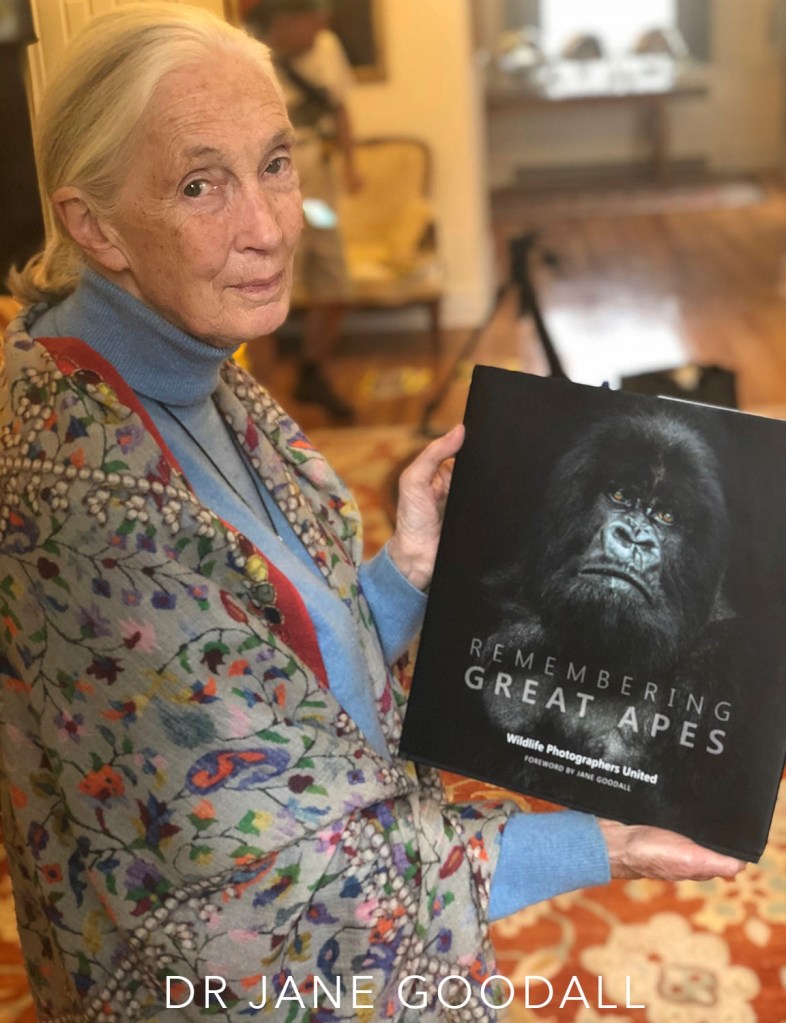

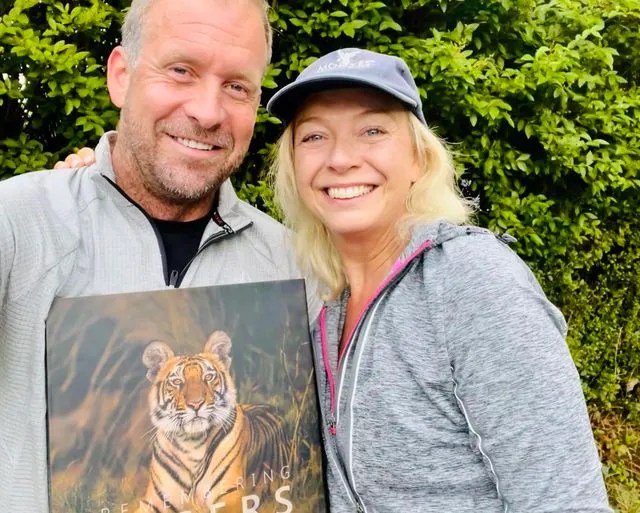
Remembering Wildlife Founder Margot Raggett with actor, filmmaker and animal conservationist Dan Richardson. Credit: Dan Richardson

A Tragic Wolf Called ‘Romeo’ Was Loved Too Much And Deserved Better.

On a twilit night in Juneau, Alaska, in December 2003, Nick and Sherrie Jans were walking with Dakotah, their yellow Lab, in the Mendenhall Glacier Recreation Area not far from their house. Suddenly, a young black wolf appeared on the ice—and began running in their direction. Awestruck but scared, the couple watched as Dakotah broke loose and charged the predator, which was twice the size of the dog. The animals stopped yards apart and gazed at each other “as if each were glimpsing an almost-forgotten face and trying to remember,” recalled Jans. After a few moments, Dakotah ran back to her owners, and the three hurried home, listening to the wolf howl

The locals named him Romeo, and soon his presence was noted by the entire town. Most found it fascinating that Romeo was so friendly, while others assumed that this naturally predatory animal would give into his natural instincts at any moment, potentially attacking their pets and children.

During this time Nick Jans started documenting Romeo. When he did, he uncovered an emotional story, the heart of which describes the tenuous relationships between wild animals and the humans around them.
“The first thing I saw was tracks out on the lake in front of our house on the outskirts of Juneau,” Jans said in an interview with National Geographic. “A few days later, I looked out from my house and there was this wolf out on the ice. I’d had 20 years of experience around wolves up in the Arctic and immediately knew it was a wolf, not a dog. I threw on my skis and found him.”

ROMEO

According to Jans, Romeo seemed totally relaxed and friendly.

And it wasn’t just one interaction, either: Romeo remained his curious, friendly self for the better part of six years.

“For want of a better word,” Jans said, “The only thing I can say from a human perspective is that it amounted to friendship. If you wanted to be scientifically correct, it would be “social mutual tolerance.” But it was more than that. The wolf would come trotting over to say hi, and give a little bow and a relaxed yawn, and go trotting after us when we went skiing. There was no survival benefit. He obviously just enjoyed our company.”

Romeo’s behavior was definitely unusual, as many wolves tend to assert dominance by attacking dogs and other animals.

The wolf got his name because Jans and his family noticed how Romeo was kind of a flirt — particularly with their “Juliet,” a dog named Dakotah. Here, they’re standing nose-to-nose in what seems to be an all-too-perfect photo moment.

Romeo survived for years despite many mortal threats: scented traps, busy roads, illegal hunting, and even a poisoning attempt. He also had to contend with the natural dangers of starvation, injury, and attack by another pack of wolves. By almost any standard, his prolonged proximity to humans and dogs constituted incredibly rare behaviour. There was no obvious survival benefit to his socializing, yet the wolf lingered persistently, a late echo of the original process that must have initiated the domestication of dogs.

“When you get down to the genetic difference between a wolf and a domestic dog, whether it is a Chihuahua or a Great Dane, all dogs are 99.98 percent genetically a wolf. That 0.02 percent obviously looms huge, because if you raise a wolf cub from the time it opens its eyes, it may make a wonderfully bonded animal, but it will not be a dog, no matter what you do. It will act like a wolf and be a wolf. It takes generations to shape the soul of a wolf and its physical shape into man’s best friend.”

Romeo stayed in the area for as long as he lived — and he lived three times longer than most wild wolves do.

“Romeo was the single most transformative event of my life,” Jans said. “The amazing thing was Romeo’s understanding. It wasn’t just our understanding and tolerance. It was the combination of his and ours and the dogs’. We were these three species working out how to get along harmoniously. And we did.”

What happened to Romeo?                                                                                                   Romeo disappeared in late September 2009. After some sleuthing, a supporter found he had been shot and killed by Juneau resident Park Myers III and his Pennsylvanian friend Jeff Peacock. Both men were arrested and ended up paying fines, serving a few years on probation, and losing hunting and fishing privileges for a limited time. In late November 2010, a memorial service was held for Romeo and this plaque was laid along a path where he once roamed.

“Nothing can take away the miracle that was Romeo and the years we spent in his company,” writes Jans. “Love, not hate, is the burden we carry.”

Nick Jans’ beautiful account of his unusual relationship is now in a book called A Wolf Called Romeo.

WHAT YOU CAN DO TO HELP WILDLIFE

You can support ‘Protect All Wildlife’ by donating as little as £1 – It only takes a minute but it can last a lifetime for an animal in need. Please donate below.

PLEASE CLICK HERE TO HELP ANIMALS IN NEED

Everyone who donates will receive a Certificate of Appreciation as a thank you for helping animals in need.

The Mission of Protect All Wildlife is to prevent cruelty and promote the welfare of ALL animals.

We believe EVERY animal should be treated with respect, empathy, and understanding. We raise awareness to protect and conserve wild, captive, companion and farm animals.

It is vital that we protect animals against acts of cruelty, abuse, and neglect by enforcing established animal welfare laws and, when necessary, take action to ensure that those who abuse animals are brought to justice.

Protect All Wildlife are involved in many projects to protect animals’ rights, welfare, and habitats. Money contributed to Protect All Wildlife supports ALL of our worthy programmes and gives us the flexibility to respond to emerging needs. Your donations

First Scientific Record As An Orangutan In Sumatra Treats An Open Wound With A Poultice Made From A Medicinal Plant.

An Orangutan in Sumatra surprised scientists when he was seen treating an open wound on his cheek with a poultice made from a medicinal plant. It’s the first scientific record of a wild animal healing a wound using a plant with known medicinal properties. The findings were published this week in Scientific Reports1.

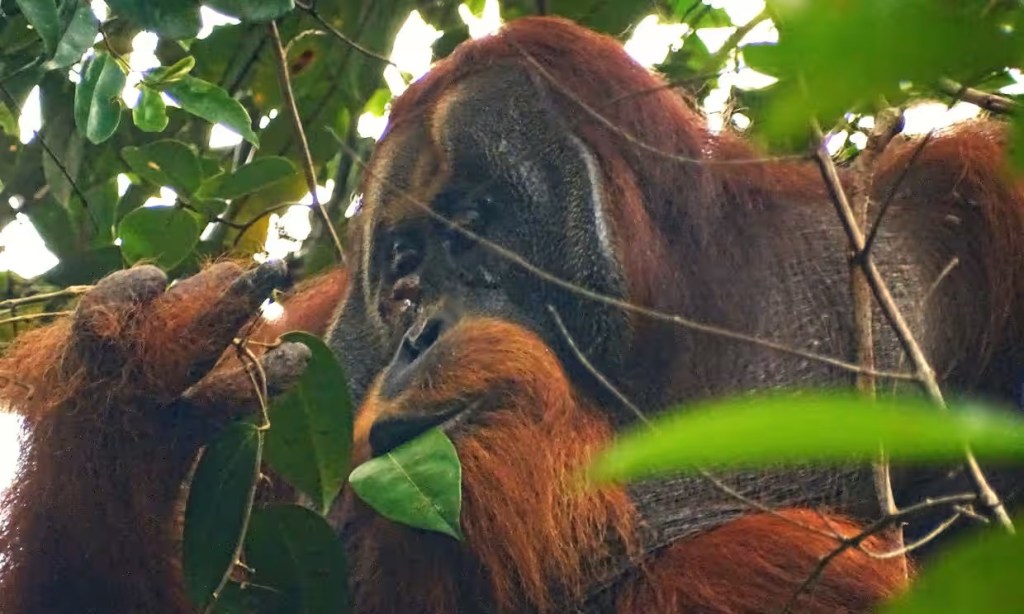
Rakus used leaves from a liana climbing vine known to have anti-inflammatory and pain-relieving properties. Photograph: Saidi Agam/Suaq Project

“It shows that Orangutans and humans share knowledge. Since they live in the same habitat, I would say that’s quite obvious, but still intriguing to realize,” says Caroline Schuppli, a primatologist at the Max Planck Institute of Animal Behavior in Konstanz, Germany, and a co-author of the study.

In 2009, Schuppli’s team was observing Sumatran Orangutans (Pongo abelii) in the Gunung Leuser National Park in South Aceh, Indonesia, when a young male moved into the forest. He did not have a mature male’s big cheek pads, called flanges, and was probably around 20 years old, Schuppli says. He was named Rakus, or ‘greedy’ in Indonesian, after he ate all the flowers off a gardenia bush in one sitting.

In 2021, Rakus underwent a growth spurt and became a mature flanged male. The researchers observed Rakus fighting with other flanged males to establish dominance and, in June 2022, a field assistant noted an open wound on his face, possibly made by the canines of another male, Schuppli says.

Days later, Rakus was observed eating the stems and leaves of the creeper akar kuning, which local people use to treat diabetes, dysentery and malaria, among other conditions. Orangutans in the area rarely eat this plant.

Leaves from the akar kuning variety of liana climbing vines. Photograph: Saidi Agam/Suaq Project

In addition to eating the leaves, Rakus chewed them without swallowing and used his fingers to smear the juice on his facial wound over seven minutes. Some flies settled on the wound, whereupon Rakus spread a poultice of leaf-mash on the wound. He ate the plant again the next day. Eight days after his injury, his wound was fully closed.

The research group has seen no other orangutans in the national park self-medicate using akar kuning in 21 years of observation. This could be because wild Orangutans in the region are rarely injured. Or perhaps Rakus is the only one who knows of this treatment, which could be a behaviour he picked up before he moved into the area.

Rakus with his open wound, two days before he was observed applying a poultice of medicinal leaves. Credit: Armas

“It is the first study to scientifically demonstrate that an animal is using a plant with medicinal properties applicable to wounds, and putting those on the wounds and consistently treating over a period of time,” says Michael Huffman, who studies animal self-medication at the Institute for Tropical Medicine at Nagasaki University in Japan.

Huffman says self-medication is seen in many species. Canadian Snow Geese swallow leaves whole to expel tape worms. Dusky-footed Wood Rats line their nests with aromatic plants to fumigate parasites. And Chimpanzees in Gabon have been observed rubbing insects near their wounds, potentially as treatment.

Humans might even have discovered some remedies by watching animals, he says. “Probably our ancestors were looking at other animals and learning about medicines.” When social animals communicate, “that information sticks and can last over generations”.

  1. Laumer, I. B. et al. Sci. Rep. Active Self-Treatment Of A Facial Wound With A Biologically Active Plant By A Male Sumatran Orangutan

WHAT YOU CAN DO TO HELP WILDLIFE

You can support ‘Protect All Wildlife’ by donating as little as £1 – It only takes a minute but it can last a lifetime for an animal in need. Please donate below.

PLEASE CLICK HERE TO HELP ANIMALS IN NEED

Everyone who donates will receive a Certificate of Appreciation as a thank you for helping animals in need.

The Mission of Protect All Wildlife is to prevent cruelty and promote the welfare of ALL animals.

We believe EVERY animal should be treated with respect, empathy, and understanding. We raise awareness to protect and conserve wild, captive, companion and farm animals.

It is vital that we protect animals against acts of cruelty, abuse, and neglect by enforcing established animal welfare laws and, when necessary, take action to ensure that those who abuse animals are brought to justice.

Protect All Wildlife are involved in many projects to protect animals’ rights, welfare, and habitats. Money contributed to Protect All Wildlife supports ALL of our worthy programmes and gives us the flexibility to respond to emerging needs. Your donations make our work possible.

US Trophy Hunter Pays $181,000 To Kill An Astore Markhor In Gilgit-Baltistan, Pakistan.

According to Gilgit Baltistan wildlife officials, Brian Douglas Williams from the US successfully hunted an Astore Markhor (Capra falconeri) in Doyan, with a ‘trophy size’ of 40-inch horns.

US trophy hunter Brian Douglas Williams with the endangered Astore Markhor.

The hunter paid a $181,000 trophy hunting permit fee to the GB Wildlife Department (GBWD) for the hunt.

The trophy hunting programme starts in October and ends in April the following year.

The Gilgit-Baltistan (GB) government’s wildlife department on auctioned trophy hunting permits for 104 endangered animals, with the highest permit to hunt the Astor Markhor fetching a record $186,000, a wildlife department official confirmed.

The licenses included four for Astore Markhors, 14 for Blue Sheep, and 88 for Himalayan Ibex in various community conservation areas across US Trophy Hunter Pays $181,000 To Kill An Astore Markhor In Gilgit-Baltistan, Pakistan.

The enormous license fee to kill the rare Markhor, a long-horned goat native to Pakistan and found in its snowy northern mountains, is one of the highest in the world. The trophy hunting program was first introduced by the region’s administration in GB’s Nagar Valley in 1990, attracting international hunters who have since been paying hundreds of thousands of dollars to target a limited number of wild animals in the area. The program was later extended to different areas of GB.

The Astore Markhor

Trophy hunting is viewed worldwide as a controversial practice as it involves hunting of rare animals for sport and displaying their parts as trophies. Conservationists argue the trophy hunting program in northern Pakistan prevents poaching and empowers local communities. Markhors are usually found at heights of 8,000-11,000 feet, but during the winter months descend to between 5,000-6,000 feet, which is when the hunting season kicks off.

Pakistan is famous for the Markhor, which is distinguished by its nimble and sure-footed nature, as well as long winter coat and massive spiral horns, which can grow to more than 1.5 meters (5 feet) in length for males.

The Markhor’s current estimated population is between 3,500 and 5,000, a majority of them in Khyber Pakhtunkhwa (KP), followed by Gilgit-Baltistan (GB) and Balochistan.

WHAT YOU CAN DO TO HELP WILDLIFE

You can support ‘Protect All Wildlife’ many projects by donating as little as £5 – It only takes a minute but it can last a lifetime for an animal in need. Please donate below.

Donate Here: Please Help Animals In Need

Everyone who donates will receive a Certificate of Appreciation as a thank you for helping animals in need.

The Mission of Protect All Wildlife is to prevent cruelty and promote the welfare of ALL animals.

We believe EVERY animal should be treated with respect, empathy, and understanding. We raise awareness to protect and conserve wild, captive, companion and farm animals.

It is vital that we protect animals against acts of cruelty, abuse, and neglect by enforcing established animal welfare laws and, when necessary, take action to ensure that those who abuse animals are brought to justice.

Protect All Wildlife are involved in many projects to protect animals’ rights, welfare, and habitats. Money contributed to Protect All Wildlife supports ALL of our worthy programmes and gives us the flexibility to respond to emerging needs. Your donations make our work possible.

Donate Here: Please Help Animals In Need

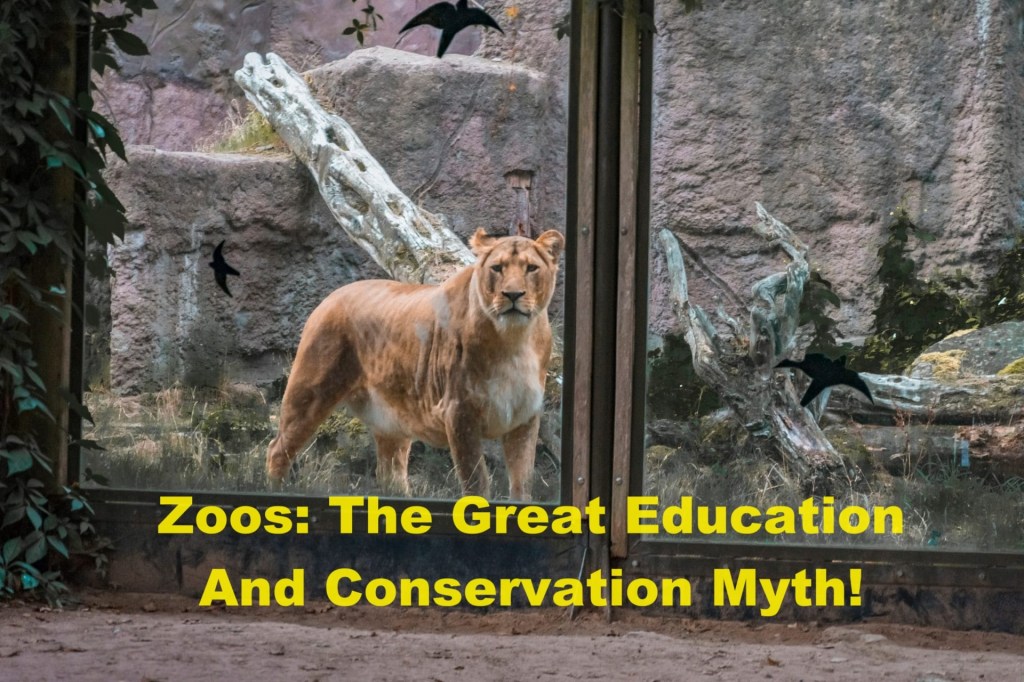
Zoos: The Great Education And Conservation Myth

Zoos: the great education and conservation myth!

Here, Andy Davidson lists the hard-hitting facts, revealing what zoos really spend their money on, and how you’re better off spending yours elsewhere if you care about conservation. 

If you’re planning to a visit a zoo this weekend, ask yourself this question. How much of your ticket fee is being used for conservation? Let’s say you pay £15 for your ticket. You may be surprised to hear that the answer is as little as 45p to £1. 

Zoo expenditure is vastly different to the expenditure of conservation organisations based in the wild. For example, Chester Zoo spent £40 million on the construction of ‘the islands’, an expansion of more enclosures to the zoo site. Other Western zoos over a ten-year period have spent £400 million on updating enclosures for a mere 200 elephants. 

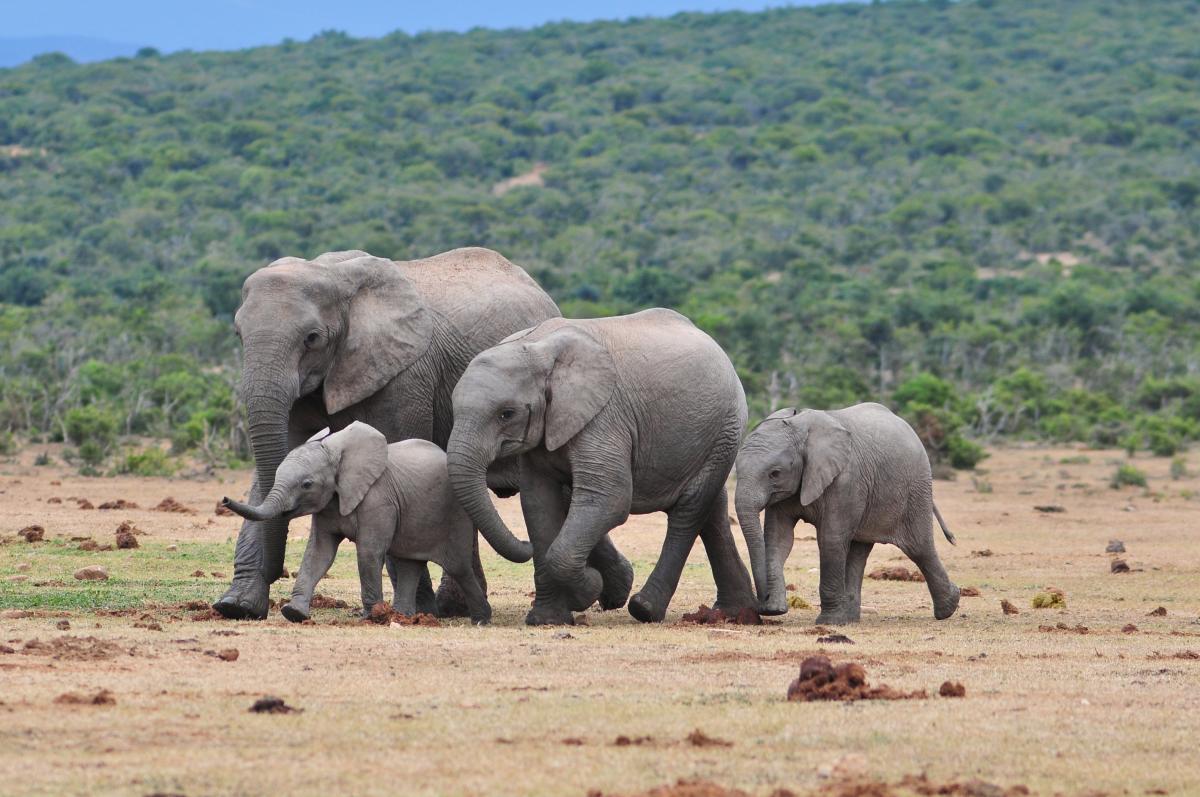
family of elephants in the wild

The Kenya Wildlife Service (KWS) and South African National Parks are conservation organisations that protect animals in their natural habitats.  KWS has an annual budget of £13-14 million with which they protect 2.6 million hectares of that country’s National Parks. On that land are 33,000 Elephants, 2200 Lions and many vitally important habitats that are home to thousands of species of both plant and animal. The annual budget for the South African National Parks is £58 million and this consists of 19 national parks which make up 6% of the total land of South Africa. Just one of these parks houses 600 elephants. 

The money used by Western zoos to update elephant enclosures for 200 Elephants could have kept Kenya Wildlife Service going for 14 to 15 years.

Sound shocking? It is. That’s why the chief consultant to the UN Great Ape Survival Project said he was uneasy at the mismatch between lavish spending at zoos and the scarcity of resources available for conserving threatened species in the wild. 

Where Is Your Money Going? 

Since the 1800s, the zoo has not fundamentally changed. Well known and entertaining animals such as Elephants, Chimps and Giraffes are front and centre and baby animals give zoos a boost in visitors.

The main driver for zoos is boosting public visitation, a goal that has far reaching implications into all zoo management decisions. Conservation, research and education are not their primary goals, making it impossible to term zoos as research or education organisations. In fact, zoos are places of entertainment, where animal welfare is governed by financial feasibility and entertainment value.  

90% of species encaged by European zoos are not threatened from extinction. Over 90% of zoo animals are born in captivity.  These animals are then paired across zoos to ensure genetic diversity. Gender cannot be predicted and genes are sometimes over represented leading to what the zoos call a ‘surplus of animals’. 3000-5000 of these animals in European zoos are killed each year. On the 8th of February 2014, Copenhagen Zoo (in)famously killed Marius, a healthy 18-month-old male Giraffe.

Afterward, zoo officials performed a three-hour-long demonstration of how to butcher a giraffe before a large crowd of visitors, including many children. The meat was then fed to the zoo’s four Lions. The four Lions, including two young Lions, were killed to make way for a new male. The Giraffe was killed because she could not produce anymore young.

Marius, a healthy male Giraffe, lies dead after he was euthanized at Copenhagen Zoo. Visitors, including children, were invited to watch while the he was dissected. Photo: Peter Hove Olesen.

Even for threatened species such as Pandas, breeding campaigns rarely work. 400 Pandas have been bred by zoos, yet only five have been released into the wild: three survived. It’s not hard to see that captive breeding is not feasible.  Animals not brought up in the wild are less likely to survive there if reintroduced.  For example, captive populations of Red Junglefowl (wild ancestors of chickens) differ significantly in response to predators after just a handful of generations in captivity.  And, a 2008 study by the University of Exeter found that the odds of animals such as Tigers and Wolves surviving freedom is only 33 percent. Animals in captivity do not usually have the natural behaviours needed for success in the wild.

But it’s not just endangered species that are being bred. A 2014 analysis of the European Endangered Species Breeding Programmes, conducted by the European Association of Zoos and Aquaria, showed that half of the animals being bred were not classed as endangered in the wild, while 25% were not threatened at all. In fact, all zoos only accommodate a tiny fraction of the 22,000 + species threatened with extinction.

With only 3% of budgets being spent on conversation projects, we can see why wildlife continues to disappear. Zoos show little interest in tackling the root causes of wildlife destruction. Species-rich habitats are being converted to pasture and feed crops as the human appetite for meat swells. Many of the places expected to see the greatest shift in land use from forest to livestock are in 15 ‘megadiverse’ countries, which harbour the largest number of species. As wildlife disappears, zoos ignore the problem. Instead, they contribute to it by feeding millions of customers meat. 

The Education Myth

Zoos rebranded in the 1970s as the public became informed to the suffering of zoo animals. UK legislation in the form of 1981 Zoo Licensing Act forced zoos to promote ‘public education and awareness in relation to conservation’. Advocates will say zoos inspire the next generation of conservationists.

This has been categorically debunked by a number of studies, while little information is required to meet the standards of legislation. A 2014 academic study in the Conservation Biology Journal surveyed 2800 children following visits to London Zoo. 62% of the 2800 children were deemed to show no change in learning or, worse, experienced negative learning during their trip to the zoo. It was concluded that the zoo’s impact on children’s belief in their ability to actively do something about conservation was ‘weak’.

In what way could this sad image of a Bear be considered educational?

Do children need to see the animals up close to learn about them?  Many children seem to have an encyclopedic knowledge about dinosaurs, far more so than Lions and Tigers. Perhaps the general public wish to see exotic animals up close as we attach closeness to care. But why, then, do they tap on the windows and show disappointment when the Lions are asleep? This is a misplaced, harmful interest, surely. 

A Lion Is Taunted By Zoo Visitors At Animal City In Lebanon

In reality there is nothing sufficient in the mainstream that educates the public about animals and their conservation. Zoos, school, television – they all fail in this respect. The evidence is very clear: the World Wildlife Fund report that the planet’s fish, bird, mammal and reptile populations plunged 52 per cent from 1970 to 2010.  That’s a stunning 52% of all fish, bird, mammal and reptile life lost in 40 years.

Human encroachment is destroying wildlife, but zoos do not consider that information entertaining and, as mentioned, entertainment is the only real driver of ticket sales. Paul Boyle, senior vice president for conservation and education at the Association of Zoos and Aquariums, says “People leave their homes, and the intent is not to save animals in Africa—it’s to have a family outing.”

The Imprisonment Of Animals

An Oxford University study based over four decades of observing animals in captivity and in the wild found that animals such as Polar Bears, Lions, Tigers, Cheetahs show the most evidence of stress and/or psychological dysfunction in captivity. In the same study, 80% of carnivores show abnormal repetitive behaviour. This is a major problem for zoos as these animals are the most popular with visitors.

There are approximately 3200 Tigers left in the wild. In the United States alone, there are over 5000 Tigers in captivity.  This is not the result of successful breeding programmes. These Tigers are being born in captivity and they die in captivity. They are the star attraction. It’s hard to imagine a zoo without a Tiger. One particular zoo in the US houses dozens of Tigers. They let visitors handle cubs and have their picture taken while talking up their conservation programmes, despite the fact that their average Tiger enclosure is about 18,000 times smaller than the animals’ natural roaming range. It is simply impossible for these poor Tigers to express instinctive behaviour.  

Tourists watch a Tiger cub play with a stuffed toy during a petting and photo opportunity at Myrtle Beach Safari. Photo Credit: Steve Winter, Nat Geo Image Collection.

In two extensive studies, it was found that the lifespan of Elephants is more than halved by living in zoos.  A government-funded study of Elephants in UK zoos found that 54% of the Elephants showed behavioural problems during the daytime. In 2016 18 African Elephants, a species designated as threatened within their natural habitats in Swaziland, were captured and transported to three zoos in the US to entertain the public there.

Despite the best intentions of zoo employees to create a happy environment for an animal, zoos are fundamentally unable to recreate the wild setting. Cheetahs cannot run at maximum speed, Elephants cannot walk hundreds of miles (except in circles), birds cannot migrate and fly long distances. Animals are unable to hunt, choose who to spend time with and find their suitable home. Another problem is privacy and noise levels. Human interaction is not normal and constant noise can cause problems. Animals often become depressed and obsessive.

Sometimes zoos are nothing but cages on concrete. Here in the UK, zoos have higher welfare standards, yet its employees and its visitors are still blissfully ignorant to the damage we cause to them. Zoos are well-versed in spreading misinformation and exaggerating the small areas of conservation they achieve to placate the public, ensuring visitor numbers stay high.

Today, the decisions relating to the conservation of animals fall under the power of Western organisations and trusts, not with local communities in Africa or the Amazon. So not only does the money firmly stay within the West, but so does the decision making process. Wildlife can only be saved by empowering their protection in their natural habitats.

If you really care about putting an end to poaching, saving wildlife and keeping wild animals where they belong then pound for pound, your donation should be going to conservation organisations that protect animals in their natural habitats. You won’t receive anything in return and you will have to find somewhere else to visit on your Saturdays, BUT you will be directly saving wild animals. They are the FUTURE: zoos are the PAST.

An Original Article By Andy Davidson, Vegan Society.

Stereotypic behaviors, also known as “zoochosis” are performed sometimes for hours each day, sometimes endlessly. It is unnatural & indicates underlying stress. Credit: In Defence Of Animals

WHAT YOU CAN DO TO HELP WILDLIFE

You can support ‘Protect All Wildlife’ many projects by donating as little as £5 – It only takes a minute but it can last a lifetime for an animal in need. Please donate below.

Donate Here: Please Help Animals In Need

Everyone who donates will receive a Certificate of Appreciation as a thank you for helping animals in need.

The Mission of Protect All Wildlife is to prevent cruelty and promote the welfare of ALL animals.

We believe EVERY animal should be treated with respect, empathy, and understanding. We raise awareness to protect and conserve wild, captive, companion and farm animals.

It is vital that we protect animals against acts of cruelty, abuse, and neglect by enforcing established animal welfare laws and, when necessary, take action to ensure that those who abuse animals are brought to justice.

Protect All Wildlife are involved in many projects to protect animals’ rights, welfare, and habitats. Money contributed to Protect All Wildlife supports ALL of our worthy programmes and gives us the flexibility to respond to emerging needs. Your donations make our work possible.

Donate Here: Please Help Animals In Need

After Whales And Dolphins, Ottawa Intends To Ban Captive Monkeys And Elephants.

After Whales and Dolphins, Ottawa intends to ban keeping Elephants and great Apes in captivity in the country “because of the cruelty they represent”.

A new bill, called The Jane Goodall Act, was introduced in the Senate on Tuesday to ban anyone from taking an Elephant or a great Ape, a term that includes Chimpanzees, Gorillas and Orangutans.

Canadian zoos won’t be able to bring in new elephants or apes under new federal legislation introduced this week, except under specific circumstances. Bill S-15 looks to ban all new captivity of the species except where a licence is granted for conservation, research or an animal’s best interest.

“The recapture of any Elephant or great Ape in Canada must meet very strict criteria demonstrating that the activity is for animal welfare, conservation or science,” commented the Minister of Environment and Climate Change, Steven Guilbeault.

Senator Marky Klyne of Saskatchewan sponsored the bill that was introduced on Tuesday. “It is upsetting to know that according to current standards, a person does not need to hold a permit to own a chimpanzee in some regions of Canada,” he lamented to explain the interest of his fee.

Elephants, for their part, are very intelligent animals that suffer when kept in captivity or presented to the public in an unnatural environment, added the senator in the second reading of the law on Thursday.

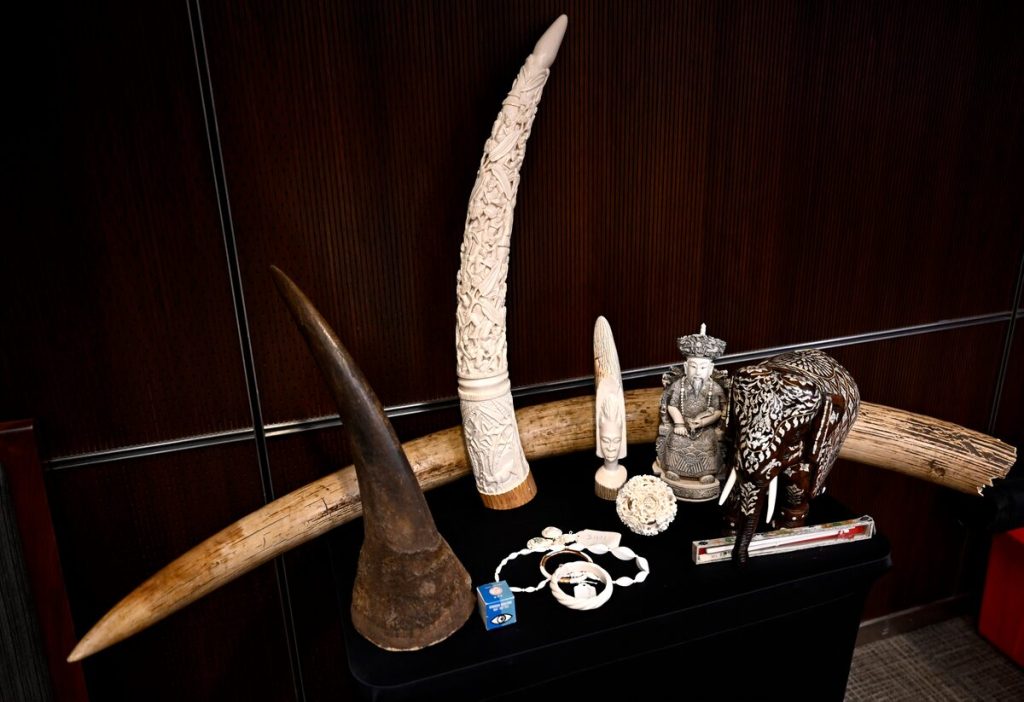
Minister Guilbeault announced the ban on the import of ivory from Elephant tusks and Rhino horns, including hunting trophies and articles carved from ivory, for which it is necessary to obtain a permit. Few exceptions are planned for museums and scientific research.

Elephant ivory and rhino horn imports have been banned by Ottawa
Tightening the laws

The law banning the captivity of great Apes and Elephants is part of a series of laws adopted to better protect animals in Canada and elsewhere in the world.

In 2019, Canada also banned the keeping of Whales and Dolphins in captivity.

WHAT YOU CAN DO TO HELP ANIMALS IN NEED

You can support our work by donating as little as £5 – It only takes a minute but it can last a lifetime for an animal in need.

PLEASE CLICK HERE TO HELP ANIMALS IN NEED

Everyone who donates will receive a Certificate of Appreciation as a thank you for helping animals in need.

The Mission of Protect All Wildlife is to prevent cruelty and promote the welfare of ALL animals. We believe EVERY animal should be treated with respect, empathy, and understanding. We raise awareness to protect and conserve wild, captive, companion and farm animals.

It is vital that we protect animals against acts of cruelty, abuse, and neglect by enforcing established animal welfare laws and, when necessary, take action to ensure that those who abuse animals are brought to justice.

Protect All Wildlife are involved in many projects to protect animals’ rights, welfare, and habitats. Money contributed to Protect All Wildlife supports ALL of our worthy programmes and gives us the flexibility to respond to emerging needs. Your donations make our work possible.

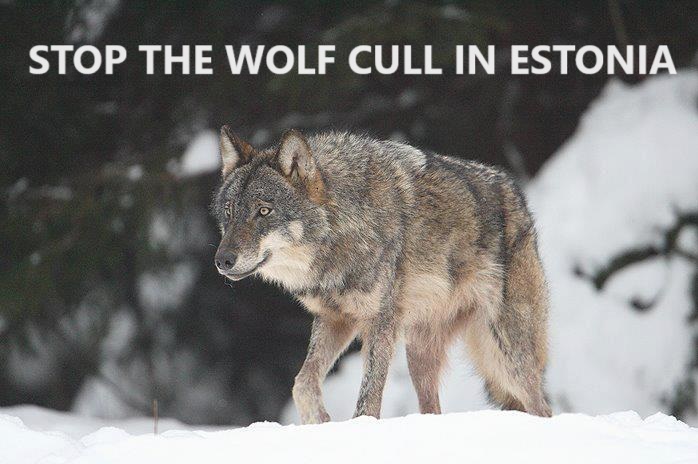
Wolf Cull Begins In Estonia: Conservationists Fear It Could Wipe Out 50% Of The Population

Concerns have been raised that the science behind the killing is untenable, and that killing Wolves could lead to harmful behavior against humans.

Estonia has once again begun culling its Wolf population.

A certain number of Wolves are killed every year in the Baltic country, although this time conservationists are worried.

Estonia’s environment agency has set the killing quota at 144, claiming there are more wolves in the country than conservation plans allow.

However, Wolf researcher Maris Hindrikson at the University of Tartu told Euronews that he and fellow scientists are “not convinced” about their data.

She claims that Wolf populations are being counted based on “old-fashioned” and “messy” techniques – such as hunter observations – that may not accurately reflect their numbers.

This means that the killing quota may be much higher, given the already threatened species under even more strain.

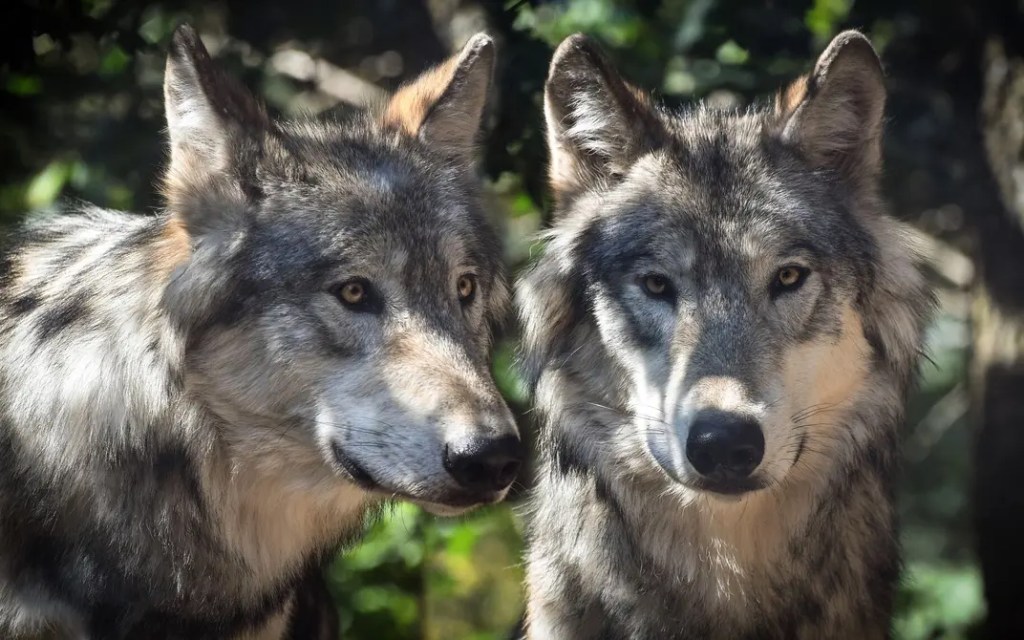
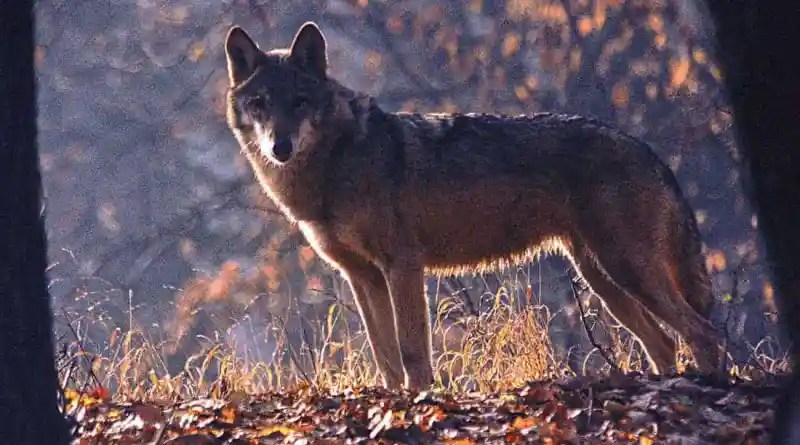
A pair of Estonian Gray Wolves

“The problem is we don’t know how many Wolves there are,” Hindrickson says, estimating that the cull could wipe out 30 percent to 50 percent of the country’s entire Wolf population.

In a statement sent to Euronews, the Estonian Environment Agency said its “method was in use in Nordic countries such as Sweden, Finland and Norway.”

“We find the current methodology comprehensive, objective and reasonable,” he said.

Even though Wolf numbers have recovered in recent years, their total number is considered “stable/decreasing” by the International Wolf Centre. Estimates put their total population at between 150 – 300 in Estonia. 

Officials claim their culling is necessary because Wolves attack livestock, especially sheep, causing economic losses to the country’s farmers.

According to the Environmental Board of Estonia (Keskonamet), a total of 946 sheep were killed by predatory Wolves in 2022.

It said the figure has crossed 1,100 this year, with several weeks left for 2023.

One particularly grizzly attack at a farm in southeastern Tartu County killed an entire breeding flock of more than a dozen ewes in October, with farmer Rein Mirka telling Estonian Public Broadcasting (ERR) the incident had cost him between €15,000 to €20,000.

Hindrickson still questions whether killing is the best approach to the problem. “Science has always shown that culling doesn’t actually help reduce sheep deaths”.

As habitats are destroyed – limiting available food resources – Hindrickson claims lethal solutions could be counterproductive, driving Wolves to prey on livestock in the first place.

Killing is a really big problem because it destroys herds. Wolves are very social animals and we know that large packs hunt larger animals such as deer. But generally, small herds seek out smaller prey because they cannot develop cooperative methods of hunting,” she explains.

The researcher says another problem is that when older Wolves are killed younger Wolves do not experience and learn more complex hunting strategies, meaning they resort to eating livestock. . Hindrickson likens it to “fast food” for wolves.

“What I’m against is killing that kills a lot of wolves. We don’t really know how many wolves we have and what impact actually killing them has. It seems like they create a pattern Where we kill so many wolves, they affect how the herds are structured, they go after the sheep, then sheep attacks increase. So then people say yes, sheep are in danger. Please more wolves. kill.

“It’s a continuous cycle,” she adds.

A Wolf killed in a previous cull.

Better alternatives Hindrikson proposes are “ensuring adequate numbers of natural prey in the wild”, such as Deer and Wild Boar, and taking steps to deter Wolves.

“Farmers should build more fences and get guard dogs to scare off Wolves. This is something that has worked all over Europe. We get news of a sheep attack, but often farmers haven’t prevented a thing. We always blame the Wolves, it is easy, but actually, people do everything.

“Prevention and making society understand where this problem comes from and how to mitigate it are very important,” she continues.

Bizarrely, in 2018 Estonia chose the Wolf as their national animal and symbol of Estonian nature and culture.

WHAT YOU CAN DO TO HELP ANIMALS IN NEED

You can support our work by donating as little as £5 – It only takes a minute but it can last a lifetime for an animal in need.

PLEASE CLICK HERE TO HELP ANIMALS IN NEED

Everyone who donates will receive a Certificate of Appreciation as a thank you for helping animals in need.

The Mission of Protect All Wildlife is to prevent cruelty and promote the welfare of ALL animals. We believe EVERY animal should be treated with respect, empathy, and understanding. We raise awareness to protect and conserve wild, captive, companion and farm animals.

It is vital that we protect animals against acts of cruelty, abuse, and neglect by enforcing established animal welfare laws and, when necessary, take action to ensure that those who abuse animals are brought to justice.

Protect All Wildlife are involved in many projects to protect animals’ rights, welfare, and habitats. Money contributed to Protect All Wildlife supports ALL of our worthy programmes and gives us the flexibility to respond to emerging needs. Your donations make our work possible.

A Poacher’s Attack: Through The Eyes Of A Rhino Calf

As the number of Rhinos killed by poachers keep rising and more traumatized orphaned calves are in need of care, Kirsten Everett, a volunteer at Nikela, takes us on a touching journey as she looks at the horrors of a poacher attack though the eyes of a young Rhino calf.

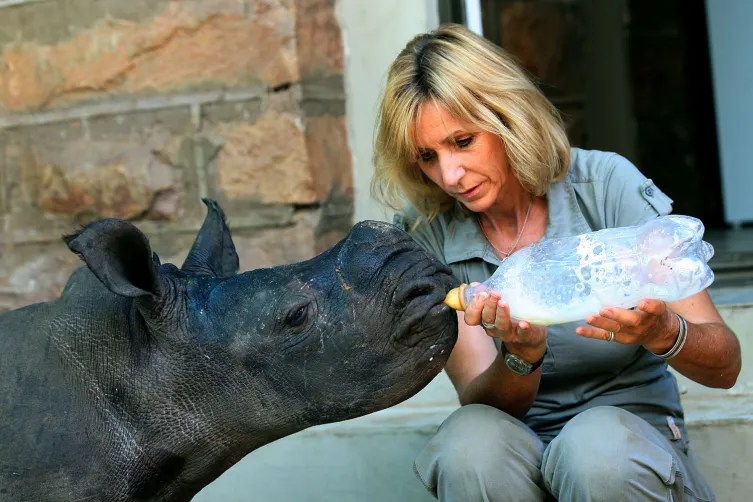
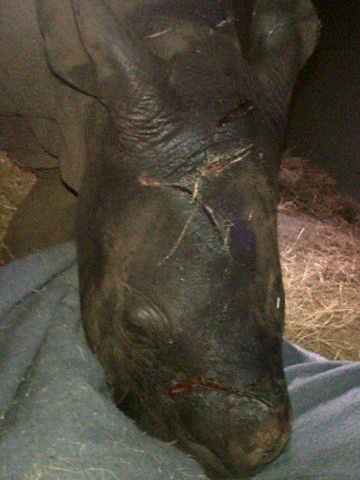
LIMPOPO, SOUTH AFRICA: Karen Trendler cares for Ntombi, a two-month old White Rhino. Ntombi survived a brutal attack, when poachers killed her mother earlier in the week. She sustained severe head injuries and was cared for in a rhino orphanage. Credit: Kevin Sutherland.

“My mother and I were contently filling our hungry stomachs when we heard a strange noise. I carried on eating but she smelt the air for unknown scents. I saw the terrified look in her eye before she managed to control it; the unnatural smell meant something. A few minutes later we heard the ‘whop, whop’ of a metal monster flying closer towards us. Just when my mother focussed on it the men crept out of the bushes with a crunch of sticks. Something seemed to hit her and she grunted in surprise. The birds abandoned their posts heading away from the danger. I stood helplessly as she tried to run but ended up falling to the ground. The men surrounded her and tried to chase me away. I ran forward scared enough to not care about the men as they had done something to my mother, I needed her and they must go away.

Out of nowhere one of the big men spun on me and hit me hard with something sharp. Blood oozed from my wound as my mother answered my cry for help with a weak beg, ‘Away, away’. I backed away nursing my wound, how could I get to her?? She grunted again so I didn’t give up. I ran forward again but this time the angry man was merciless, determined to get his message across. As quietly as possible I took the cuts to my poor head trying not to worry my mother even more.

Confused I backed away into the bushes calling to her to get up, but the eerie silence dragged on and she didn’t move a muscle. Fear glued me to the floor as I felt my young heart pulsing with anger and fear. A breeze blew, as I waited for the monsters to go so I could go to my poor mommy and find out what was wrong. My heart skipped a beat when I realised this was what my cousin had gone through only a full moon ago. It was terrible, my body couldn’t stop shaking and I couldn’t think clearly, I felt lightheaded from all my blood loss.

Finally when the monsters left I ran to her side, ‘Mom wake up.’ My voice cracked with emotion but still she didn’t respond. I took a step back and saw the pool of blood. Her horn had been brutally cut off and she lay lifeless. Above me a crow flew over.

I turned to run then I asked myself some important questions… where would I go? I wasn’t old enough to know the way to the dam yet. Who would protect me from predators? The truth was that I wasn’t strong enough to survive by myself yet. Would I be with my mother in the sky sooner than I thought? The last question scared me the most; out in the wild without my mother I might just be able to survive a week.

I heard the snap of a twig, I wasn’t alone. This time I didn’t have the strength to care what these humans wanted with me. I collapsed and slept for a few hours. I was almost completely unconscious though I sensed kindness near me. Too traumatised to do anything I lay as they treated my wounds. The people who tried to comfort me planted a seed of hope. Hope that I could survive and hope that the rest of the human race would come to its senses and help my species and all the others out there”.

Let’s stop the babies’ cries! Let’s Save The Last Rhin0!

Written by Kirsten Everett. Based loosely on the story of “Ntombi” who was rescued by Karen Trendler and her team.

Ntombi bears the poacher’s scars

WHAT YOU CAN DO TO HELP ANIMALS IN NEED

You can support our work by donating as little as £5 – It only takes a minute but it can last a lifetime for an animal in need.

PLEASE DONATE HERE

PLEASE HELP ANIMALS IN NEED

Everyone who donates will receive a Certificate of Appreciation as a thank you for helping animals in need.

The Mission of Protect All Wildlife is to prevent cruelty and promote the welfare of ALL animals. We believe EVERY animal should be treated with respect, empathy, and understanding. We raise awareness to protect and conserve wild, captive, companion and farm animals.

It is vital that we protect animals against acts of cruelty, abuse, and neglect by enforcing established animal welfare laws and, when necessary, take action to ensure that those who abuse animals are brought to justice.

Protect All Wildlife are involved in many projects to protect animals’ rights, welfare, and habitats. Money contributed to Protect All Wildlife supports ALL of our worthy programmes and gives us the flexibility to respond to emerging needs. Your donations make our work possible.

Scientists Have Uncovered The Cause Of The Mysterious Deaths Of 35 Elephants In Zimbabwe.

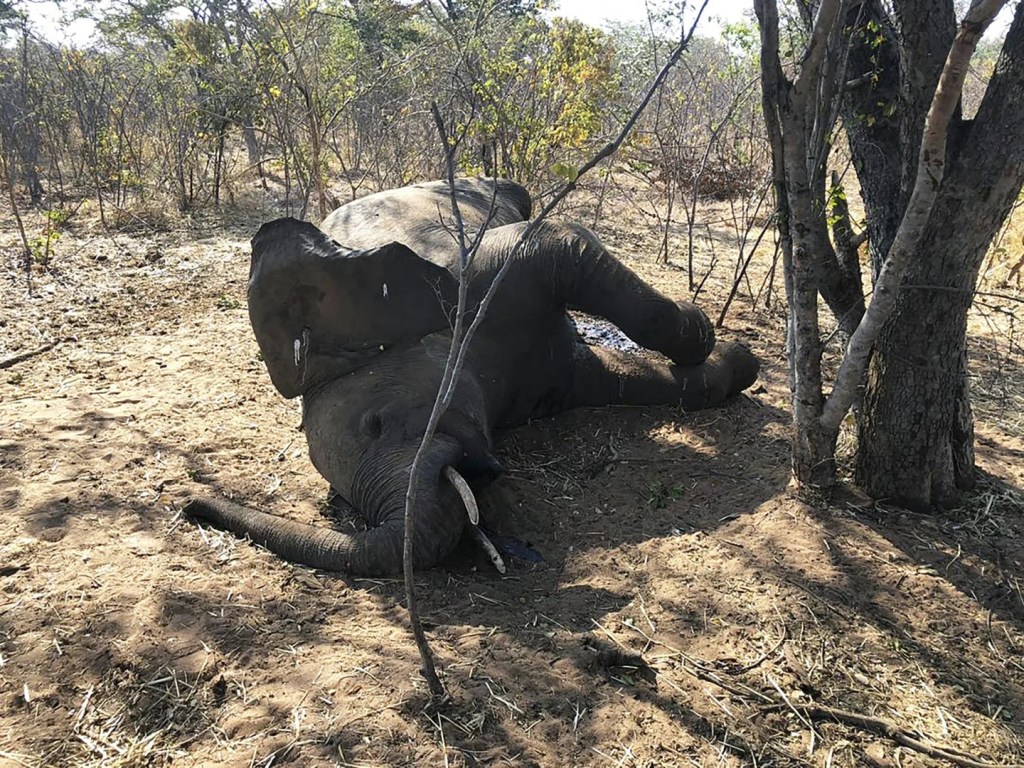
A dead Elephant found in Hwange National Park, Zimbabwe, Aug. 29, 2020. Credit: AP Photo

Elephants that dropped dead in Zimbabwe were victims of an obscure bacteria combined with extreme heat. Scientists fear more Elephants – and other species – could suffer the same fate

No one knew precisely what caused the unexplained tragedy in which 35 African Elephants in Zimbabwe mysteriously dropped dead in August/September 2020.

This incident followed the death of approximately 350 Elephants in neighbouring northern Botswana from May to June 2020, which triggered much international concern. 

Aerial views of of some of the Elephants that were been found dead in Botswana  Credit: National Park Rescue

At first, anthrax was a possible contender, along with poaching or intentional poisoning, but they were all ruled out early on.

Three years later, a new study by a group of scientists has found that a rare bacterium that causes organ inflammation is responsible for the Elephants’ untimely deaths.

A variant of the Pasteurella bacteria, named Bisgaard taxon 45, was identified by the scientists in their study of samples from six of 15 dead Elephants that they analysed.

This variant of this bacteria showed up in their sample, making the scientists conclude that the Elephants died from the lethal infection.

At first, scientists reviewed the possibility of Pasteurella multocida, which is known to cause hemorrhagic septicemia, a common disease amongst cattle and buffaloes that is highly fatal.

However, after further testing, they found that the findings were more complicated than thought.

“It became clear from the culture samples that we did not have P. multocida but something else similar,” Laura Rosen, an epistemologist who worked on the study, said, according to Science News.

While samples from the other elephants were not obtained due to rotting or not being able to get permits quick enough, six of the samples they did get showed this rare bacteria.

Little is known about this bacteria, as a few rare cases have only been documented so far.

The study cites that Bisgaard taxon 45 has in the past been linked to bite wounds on humans from tigers and lions.

It was also previously found in a chipmunk and a captive health parrot.

However, the researchers suspect this is not the first time that an outbreak of the disease has caused mass fatalities within Elephants.

In 2019, 14 Elephants were found dead in Zimbabwe within the same time period as this group was a year later.

While no bacterial samples were taken at the time, the noted conditions of the deceased animals were similar to those of the 2020 group.

It is unclear what caused this bacteria to enter the Elephants’ body, whether it is part of its “normal flora,” but the researchers believe that stress and heat would have contributed to the outbreak.

“It’s premature to say that climate change has influenced [this], but it may do so in future if we get more and prolonged droughts, or the rainfall patterns [change] and we have a much harsher dry season,” Dr Chris Foggin, a researcher on the study said.

“I do think that if that is the case, then we are more likely to see this sort of mortality event occurring again.”

This study is essential for organisations that seek to conserve these Elephants, who are already an endangered species.

Earlier that same year, around 350 Elephants dropped dead within the space of three months in neighbouring Botswana.

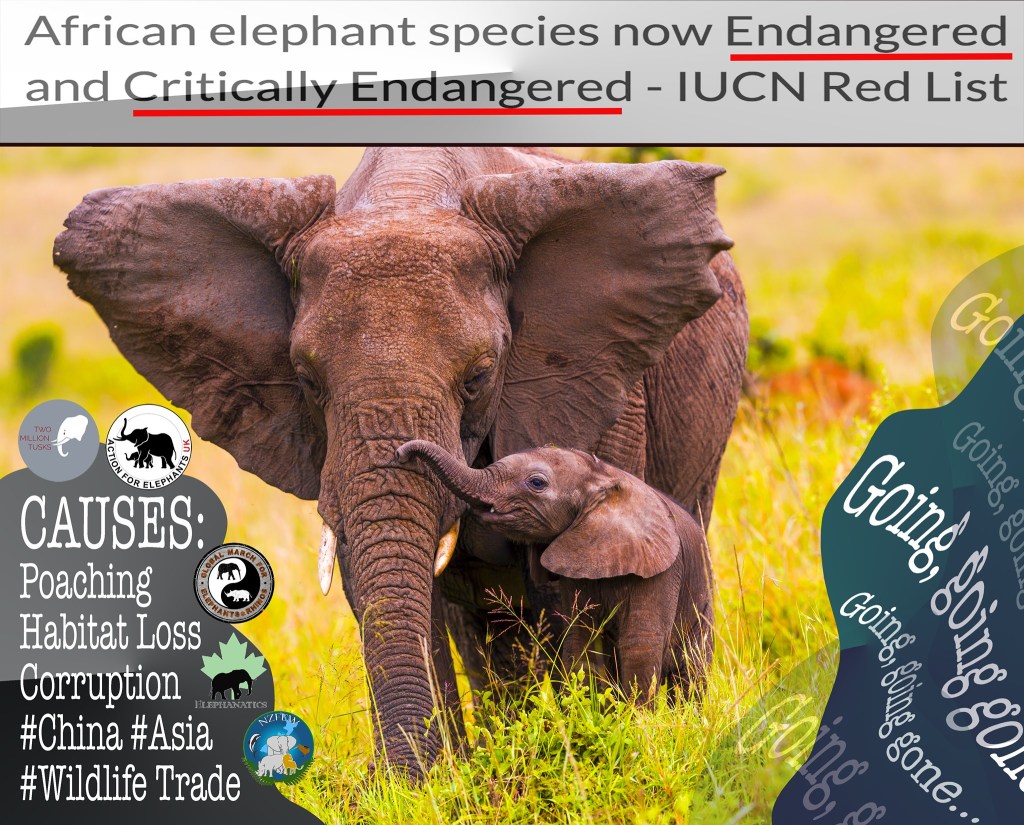
African Elephants are listed as endangered on the IUCN Red List. Credit: GMFER

African Elephants are listed as endangered on the International Union for Conservation of Nature Red List, with only approximately 415,000 left in the wild as of 2023.

According to the World Elephant Day organization, Elephant numbers have dropped by 62% over the last decade. They estimate that 100 African Elephants are killed each day by poachers.

WHAT YOU CAN DO TO HELP ANIMALS IN NEED

You can support our work by donating as little as £5 – It only takes a minute but it can last a lifetime for an animal in need.

PLEASE CLICK BELOW TO DONATE PLEASE HELP ANIMALS IN NEED

Everyone who donates will receive a Certificate of Appreciation as a thank you for helping animals in need.

The Mission of Protect All Wildlife is to prevent cruelty and promote the welfare of ALL animals.

We believe EVERY animal should be treated with respect, empathy, and understanding. We raise awareness to protect and conserve wild, captive, companion and farm animals.

It is vital that we protect animals against acts of cruelty, abuse, and neglect by enforcing established animal welfare laws and, when necessary, take action to ensure that those who abuse animals are brought to justice.

Protect All Wildlife are involved in many projects to protect animals’ rights, welfare, and habitats. Money contributed to Protect All Wildlife supports ALL of our worthy programmes and gives us the flexibility to respond to emerging needs. Your donations make our work possible.