A three-year investigation has led authorities in the Democratic Republic of Congo to 2 metric tons of ivory hidden in a stash house in the southern city of Lubumbashi.
The tusks are valued at $6 million on the international market and estimated to have come from more than 150 elephants.
The three people arrested in the May 14 raid are allegedly members of a major wildlife trafficking ring in the Southern African region.
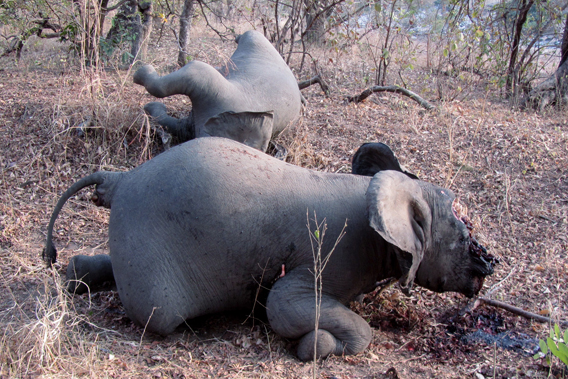
POACHED ELEPHANT ON ITS KNEES WITH ANOTHER LYING DEAD BEHIND IT
Authorities in the Democratic Republic of Congo have seized 2 metric tons of ivory in the city of Lubumbashi, a hub for ivory trafficking.
The May 14 seizure is one of the largest in recent years, according to Adams Cassinga, who heads Conserv Congo, an NGO that fights wildlife trafficking and which took part in the operation. The seized ivory is estimated to be worth $6 million.
Authorities arrested three people, believed to be members of one of the major wildlife trafficking rings in the region. The network is linked to the smuggling of 20 metric tons of ivory in the past five years alone.
The latest seizure represents more than 150 elephants killed for their tusks, Cassinga said. The tusks originated from countries in Southern Africa, which has seen a surge in ivory trafficking in the 2000s, fueled by demand from Asia, particularly China.
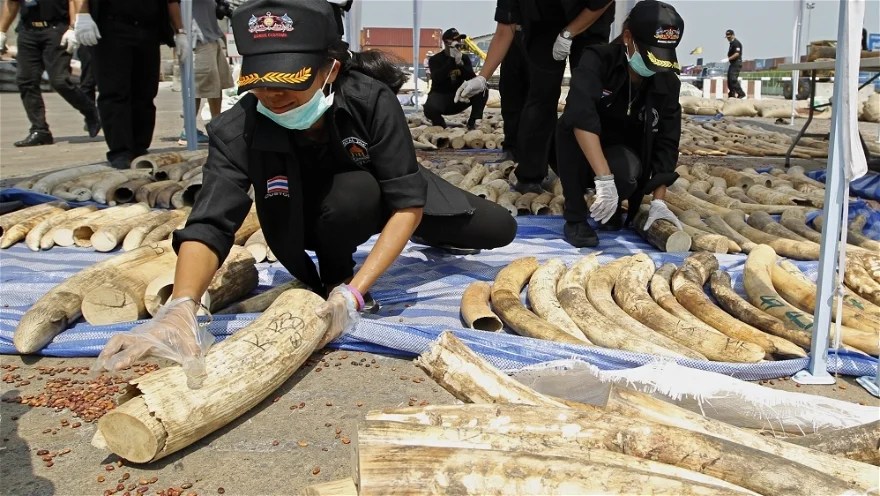
Ivory found in a stash house in Lubumbashi, the Democratic Republic of Congo. Image courtesy of Adams Cassinga/Conserv Congo
At the height of the crisis, 30,000 elephants were being killed every year, an average of 80 a day. African elephant populations have shrunk by 80% in the past 100 years, according to an analysis by WWF. The African savanna elephant (Loxodonta africana) is considered endangered on the IUCN Red List, while the forest elephant (Loxodonta cyclotis) is critically endangered, only a step away from being extinct in the wild.
Poaching has declined in recent years, a 2021 report by Geneva-based nonprofit Global Initiative Against Transnational Organized Crime (GI-TOC) found. One of the factors cited for the dip is the weakening of criminal networks because of raids and arrests.
DR CONGO AUTHORITIES SEIZE 1.5 TONNES OF ELEPHANT IVORY
“The reduced poaching seems to be the result of the dismembering through arrests and prosecutions of a large number of transnational organized criminal networks involved in ivory poaching and trafficking in East and southern Africa between 2014 and 2020,” the GI-TOC report said.
The Lubumbashi raid was led by the DRC’s top conservation authority, known by its French acronym, the ICCN. It included members of the national police force, court officials and the NGO Conserv Congo.
The team recovered the ivory from a stash house in Lubumbashi in the southern DRC. Traffickers brought the poached parts into the DRC from Zambia, which lies on the country’s southern border. Lubumbashi has emerged as a major hub from where poached wildlife parts are funneled out of Africa. The items originate primarily in Southern African countries like South Africa, Zimbabwe and Zambia.
“We are sure it will bring a great deal of deterrence in a place where previously wildlife laws were neglected and not applied,” Cassinga said in a tweet.
Weak enforcement of laws, armed conflict and corruption have allowed international gangs to operate with impunity in western and Central Africa. The DRC, which shares borders with nine countries, serves as an important transit point for the movement of trafficked parts. The Central African nation, which hosts the largest swath of Congo Basin rainforest, is also a source country for illegal wildlife goods.
Yet, from 2000 to 2014, when elephant poaching was rampant, the DRC recovered only around 8 metric tons of ivory in seizures. Then, between 2015 and 2019, authorities there confiscated 20 metric tons, according to data collected by the Environmental Investigation Agency, an NGO based in the U.K.
“We are making strong efforts to take down all the illegal trade networks. With time, we have bigger impacts on the illegal networks,” Olivier Mushiete, head of the ICCN, said in a phone interview with Mongabay.
The Lubumbashi raid follows a series of raids in the DRC capital, Kinshasa, last year. Mushiete told Reuters at that time that they expect to recover more than 60 metric tons in future seizures. The current operation was a result of three years of investigation.
“The relationship between the government and the civil society is improving. You can see that it is yielding results,” Cassinga said. He added that support from partners like Zambia-based Wildlife Crime Prevention and international donors like the Rhino Recovery Fund is helping them combat wildlife trafficking.
The skull of an elephant recently killed by poachers who ripped out its tusks in Province Orientale, DRC. Image by Matchbox Media Collective via Flickr (CC BY-NC-SA 2.0).
Ivory poaching is one of the most lucrative illicit trades, valued at around $23 billion a year, according to Bloomberg.
CITES, the global convention on the wildlife trade, banned the international commercial trade in ivory in 1989. However, some countries continue to allow domestic trade and international trade, subject to varying degrees of regulation.
In the past decade, efforts to curb ivory demand have gathered pace, with the U.S. imposing a near-complete ban on elephant ivory trade in 2016 and China banning the domestic trade in 2017. The EU tightened its rules on the ivory trade in 2021. Narrower exemptions limit the legal ivory trade, which conservationists say often serves as a cover for unlawful transactions.
The three suspected traffickers from the Lubumbashi raid are due to appear in court this week.
Even if seizures and arrests increase, the impact on poaching could be limited by countries’ failure to prosecute alleged traffickers. Coordinating cross-border investigations and amassing the necessary evidence is tricky. Wildlife crimes are often not prioritized by law enforcement agencies or judicial authorities.
The arrest of two Vietnamese nationals during the seizure of 3.3 metric tons of ivory from Uganda’s capital, Kampala, in 2019 did not result in convictions because both suspects skipped bail.
Raids also tend to net intermediaries but rarely lead to the capture of those who organize, fund and benefit the most from this illegal trade. “As far as dismantling the network, that is unlikely. It may be slowed down,” said Chris Morris, who works with the Kenya-based organization Saving Elephants through Education and Justice (SEEJ). “These cartels are a business. They are prepared for losses from seizures and arrests.”
What you can do to help
Please support Protect All Wildlife‘s work by donating as little as £1 – it only takes a minute. Please donate ANY amount, large or small,at HELP PROTECT ALL WILDLIFE. Thank you.
What else you can do to help
Please SHARE to raise awareness to wildlife and environmental issues from around the world. You can also receive NEWS and UPDATES by signing up in the top right of this page.
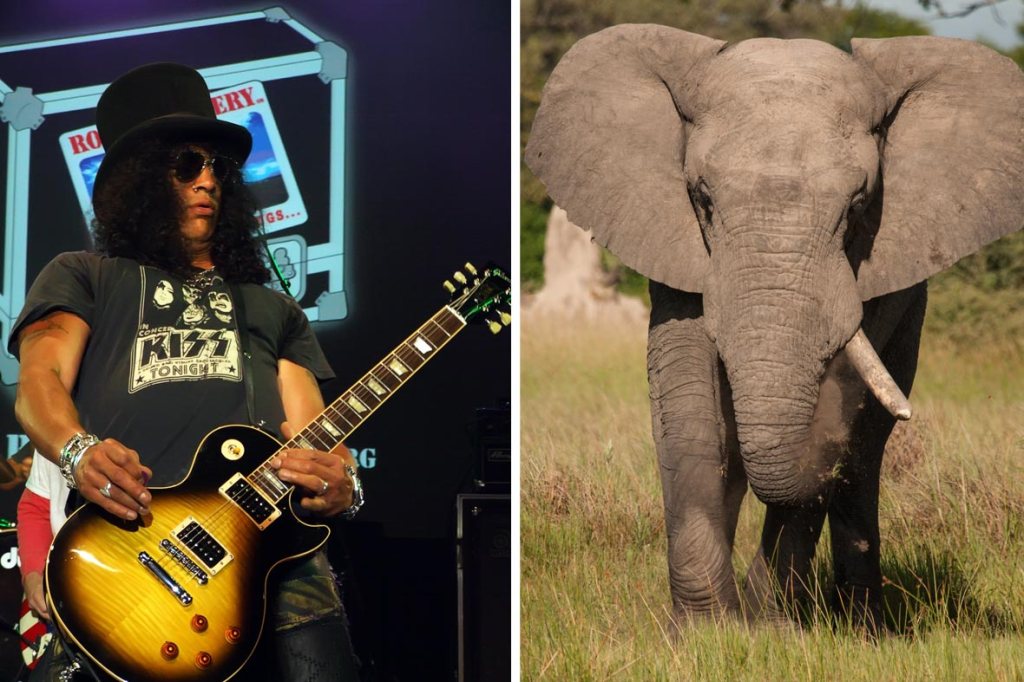
ICONIC ROCKER SLASH IS DOING HIS BIT TO HELP CURB ELEPHANT POACHING
If former Guns & Roses guitarist Slash hadn’t put all his heart and soul into music and becoming one of the world’s greatest rock guitarists, perhaps he would’ve sought a career in zoology?
He is a trustee of the private, non-profit Greater Los Angeles Zoo Association (GLAZA) and shot a commercial for Los Angeles Zoo and Botanical Gardens with veteran actress Betty White to promote their new exhibit The Lair, which displays over 60 species of weird, rare and endangered amphibians, invertebrates and reptiles. He has shot other ads and PSAs before for the zoo.
“I used to not believe in zoos as a concept, but now because there are so many endangered animals; there’s so much poaching,” Slash tells Samaritanmag. “With zoos now, it’s really about conservation. They become safe houses for a lot of species so, I think, now, zoos are really necessary places, not totally about just family entertainment at any cost. It’s about education; it’s about conservation.”
Anyone familiar with Guns N’ Roses, Slash’s former band, knows he used to own snakes — as many as 80, which he got rid of when he became a father. He has been on the cover of Reptiles magazine and even had a band called Slash’s Snakepit post GNR. But he’s actually a lover of all animals.
Slash has been visiting the LA Zoo since the age of 5 and later in childhood went every weekend, sometimes twice. As a touring musician, he often visits the local zoos on his downtime.
in 2011, Slash received the inaugural Tom F. Mankiewicz Leadership Award from GLAZA at the 41st Annual Beastly Ball recognizing his long-time support of the zoo and the welfare of the world’s natural and civic environment (filmmaker Mankiewicz was GLAZA chairman who died in 2010).
The award will recognises his long-time contributions to environmental welfare programs and his support to the LA Zoo and zoos around the world.
GLAZA (Greater Los Angeles Zoo Association) President Connie Morgan declared: ‘Tom [Mankiewicz] advocated opportunities for interaction among our diverse communities and championed the cause of animals and the environment through education and on-the-ground conservation. He strongly believed the Los Angeles Zoo exemplifies both missions as a place where people come together having a good time while learning the importance of saving and protecting wildlife.’
To which Slash responded: ‘The biggest compliment for me is that it’s Tom’s award. I really adored that man. I miss him very much, and that aspect is very special and resonates deeply. Additionally, I profoundly appreciate the implications of the award itself. It’s a fantastic honour.’
But Zoo director John Lewis could not stop there: ‘Slash is a great example of our mission of nurturing wildlife and enriching the human experience. He is a champion for wildlife and conservation and has introduced our mission, his passion, to millions of his fans’.
“I just try to help the zoo,” says Slash of his role as a trustee. “We all on the board support and help the zoo’s best interests. We just try to keep all that together. It’s a pretty big thing. It’s a city-owned zoo and we’re trying to make it a private zoo and there’s just always something going on with that.”
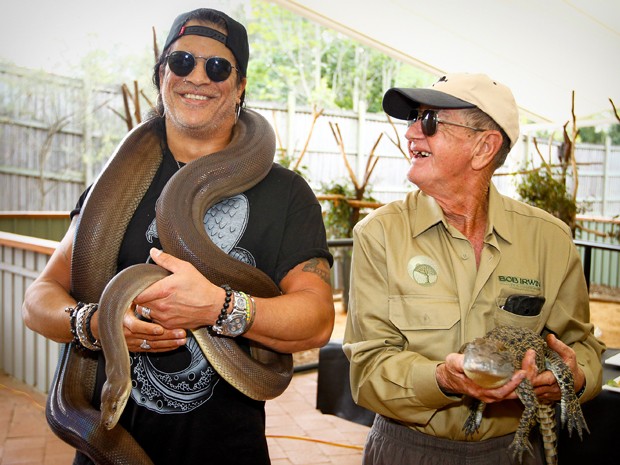
In 2012, while on a trip to Australia, Slash took wildlife warrior Bob Irwin up on an invite, but left the meeting by signing on to aid Irwin’s new conservation initiative.
SLASH loves reptiles. So does Bob. And that’s enough.
A deep affinity for the cold-blooded creatures has forged an unlikely friendship between the legendary Guns N’ Roses guitarist and wildlife warrior Bob Irwin.
Irwin, who is the father of late ‘Crocodile Hunter’ host Steve Irwin, reached out to the guitarist when he learned the tour was coming to Australia, and invited him down to Queensland to visit the crocodiles and snakes.
After lending his support, Irwin returned the favour by urging his followers to catch one of Slash’s performances while he was visiting the country.
Slash and Bob Irwin at the launch of the Bob Irwin Foundation
In 2013, Slash performed in South Africa with rock super group Kings of Chaos and spent extra time seeing the local wildlife. Although he had been aware of the diminishing numbers of Elephants in the world, the former Guns N’ Roses guitarist learned on this trip that the situation was becoming increasingly more dire. While poaching rangers had increased their efforts to stop the illegal ivory trade, Slash believed that people needed to be more aware of the situation.
The guitarist also released the “Beneath the Savage Sun” video, which details the illegal ivory trade and tells the story of an Elephant who has lost a loved one from the Elephant’s point of view.
“How many killing seasons can you justify?” he asks. “How many dead and bleeding / only for an ivory lie?
“I was shocked that the poachers still manage to get away with it,” he told Rolling Stone in the above video. “A lot of people don’t know that every time they purchase anything that has even a smidgen of ivory in it, it comes from a dead Elephant. I think if people were more aware of that, it would have a dramatic effect on the whole ivory trade.”
Slash’s singer, Myles Kennedy, was equally affected by the situation. Kennedy wrote the lyrics for what would become “Beneath the Savage Sun,” a doomy hard rocker told from the perspective of an Elephant who witnessed the death of a fellow pachyderm.
SLASH AND MYLES KENNEDY
Slash made a powerful video for the track – which is featured on the guitarist’s last solo album, 2014’s World on Fire – illustrating the brutality of the ivory trade with written facts, images of both living and murdered Elephants and poachers’ spoils. The video notes that the U.S. is the world’s second-largest consumer of ivory, so Slash hopes the clip serves as a wake-up call.
“We wanted to give the viewer an idea of the atrocities that are going on, to hit them full in the face with it,” says Slash, an animal lover who is on the board at the Los Angeles Zoo and has long been active in animal conservation. “It’s more of an immersive experience. The most important thing is to reach as many people as possible.
“Elephants are so beautiful, intelligent and sensitive,” the guitarist continues. “They have emotions we’re all familiar with. They care for their young. They move in big family groups that live on for generation after generation. They very visibly mourn their dead. When you actually meet Elephants and get to know them a little bit, they have a whole myriad of personalities.” (Slash was previously part of the campaign for Billy the Elephant.)
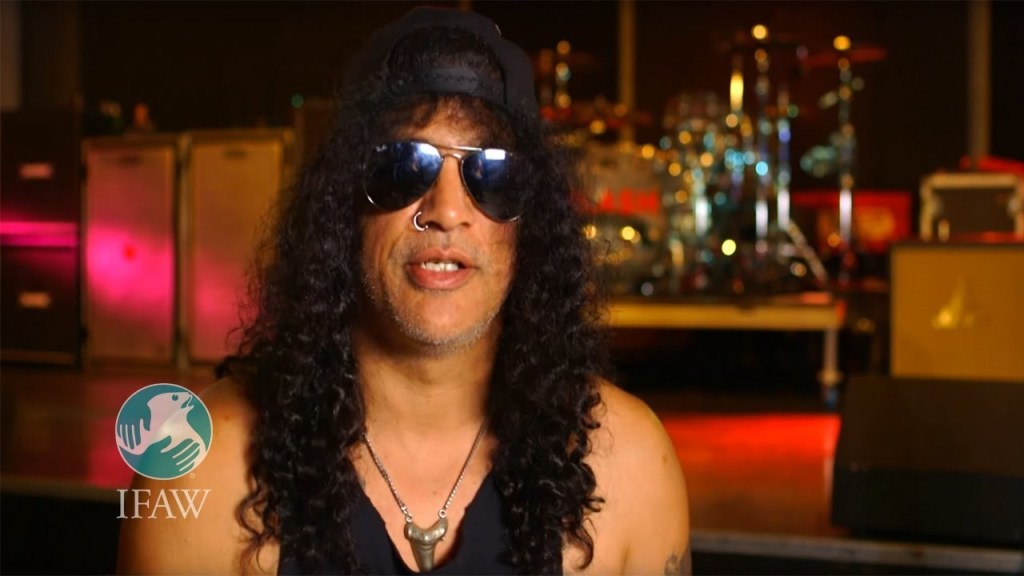
In addition to educating people about Elephants, Slash has also partnered with the International Fund for Animal Welfare (IFAW), an organization he reached out to personally because he had worked with them in the past and liked how they were “hands on” in their causes.
Jeff Flocken, IFAW’s regional director, North America, has been working with the Obama Administration to draft and implement laws to regulate ivory. “Any legal trade of ivory encourages illegal trade,” he says. “Our laws are riddled with loopholes like Swiss cheese.”
He believes that if the U.S. led by example, real change is possible. “Last November, the U.S. crushed six tons of ivory that was seized illegally here in the U.S., and within months, China crushed 6.1 tons of their own ivory,” he tells Rolling Stone, adding that China is the world’s Number One ivory consumer. “It’s the first time they’ve ever done that. It shows that other countries are watching what we’re doing.”
Trade in elephant ivory is driving these amazing animals to extinction; largely at the hands of criminal networks that kill local wildlife rangers and support organized crime, smuggle drugs and transport illegal firearms. They do all this to meet the lucrative demands of consumers in China, the United States and elsewhere, many who don’t even realize that every piece of ivory comes from a dead elephant, but who still value the stuff as jewellery, trinkets, and yes, instruments.
Flocken added that the anti-ivory movement has begun facing opposition from the N.R.A., who want to protect ivory for ornamentation on gun handles, among other causes. Slash says that ivory ornamentation is not necessary and uses musical instruments as an example.
We love our instruments. We know that many of you love your guitars with ivory bridges and pianos with ivory keys, but we need you to think about where things came from and what are your ethics when buying and selling them?” Piano keys don’t have to be ivory,” he says. “It’s not important. And for inlays on guitars and tuning pegs, it’s absolutely not necessary and I won’t use it.” Do we really want to profit off of the extinction of such a beautiful and majestic species?
To prove his point, Slash donated proceeds from the sale of the song to the IFAW and has redesigned his website to provide more information about the ivory trade and serve as a place where people can donate to the organization. Supporters can also donate to the IFAW.
“Donating is great – that’s hugely necessary – but the other thing to do is to stop purchasing ivory,” Slash says. “Do not buy it. I think the more people that stop buying ivory is going to have a significant effect on the Elephant poaching trade.”
The Mission of Protect All Wildlife is to prevent cruelty, promote the welfare of ALL animals EVERYWHERE, and help END animal abuse.
Please support our work by donating ANY amount, large or small. It only takes a minute and your donations make it all possible. Thank you for your support.
Save The Asian Elephants (STAE) and all the animal welfare sector are aghast at the weekend’s media reports that the Government has abandoned the Animals Abroad Bill despite all its commitments otherwise, received regularly by STAE’s team as pledges, promises, “it’s been cleared in Cabinet” and “you’re pushing at an open door” in over 20 meetings with No 10 and Defra since lockdown.
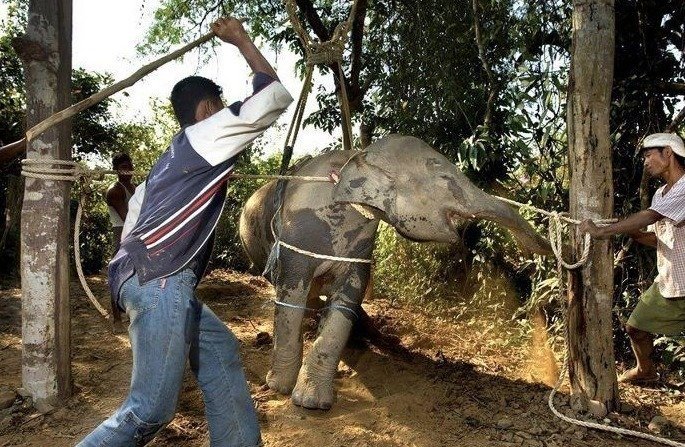
THE ANIMALS ABROAD BILL WOULD HELP STOP CRUELTY LIKE THIS
STAE is working to bring the entire sector together to ensure all is done to see this decision, if confirmed, reversed. Indeed with public support for a ban to protect elephants from the most extreme violence largely driven by the UK market running at over 90%, STAE’s petition now touching 1.1 million, and extreme emotions evoked in the electorate by torture of baby elephants, any such decision seems extraordinary as a General Election looms before late 2024.
PHAJAAN OR ‘CRUSHING’ IS THE TRADITIONAL ASIAN TORTURE OF YOUNG ELEPHANTS TO BREAK THEIR SPIRIT. IT IS DONE SO THAT THEY ARE SUBMISSIVE TO HUMANS.
Why on earth would Government be committed to these cruel acts? It must surely be in its own interests to take a principled lead over other parties (who will support it) and other nations, by pursuing the Bill. They are important measures now expanded in the Action Plan for Animal Welfare to all species abused in overseas tourism (including big cats, apes, bears, equines, dolphins) and not particularly controversial or difficult. On the contrary they are welcomed across the political divide. None of the measures to ban ads for “low welfare venues” impinge on Tory peers’ shooting weekends or even pigging out on foie gras, if that’s their tragic choice.
STAE CEO Duncan McNair speaking to Protect All Wildlife said “If confirmed, its sickening and foreshadowed in STAE’s communications with Govt and officials over the past year and my US TV interview on Unchained TV, despite every reassurance from Govt (including a letter signed by the Minister a week ago) all was on track.”
Muted claims that the Russian war on Ukraine has stolen all available Parliamentary time are unconvincing. STAE traces the evidence of wavering elements in Govt much further back. As they say, the first casualty of war is the truth. We hope the Defra Ministers at the helm will turn this round, publish the Bill, consult and bring it into Parliament soon.
They are the country’s icon – but behind the dazzle of religious festivals, these giants of the wild are painfully abused in Kerala.
When Audrey Gaffney first read about Raju, an Elephant kept in chains with spikes embedded in his ankles, she couldn’t stop the tears pouring down her face. “In fact, I cried again and again: I found over the next few days I just couldn’t get this story out of my head, I couldn’t stop thinking about Raju,” she recalls.
“I couldn’t believe the cruelty of my race.”
The young Elephant had been snatched from his family, she
explains – his mother either would have been killed or spent weeks searching
and crying for him – and he was beaten into submission. Raju then spent the
next 50 years forced by his handler to beg in the street, starved, frightened
and suffering infected wounds to his flesh. By the time of his rescue, he had
resorted to eating plastic and paper.
Going on to discover that Raju was just one of thousands of
Elephants treated this way in India, Ms Gaffney, a single mother from
Liverpool, was spurred into becoming an activist for the first time. In the
four years since, she says, her life has changed beyond recognition as she
dropped her wariness of social media and teamed up with other volunteers
working to raise awareness of the horrors to which the temple Elephants of
India are subjected.
Taken from their families in the wild, shackled, beaten,
whipped and exploited like slaves, these Elephants – ironically India’s icons –
are painted and dressed in colourful decorations, to be paraded in regular
festivals and processions organised by religious temples.
They are the world’s forgotten Elephant victims of mankind. While the world has focused on the threat of extinction to Africa’s Elephants caused by the ivory poaching crisis and the cruelty of tourist Elephant rides in Thailand and Cambodia, the plight of their captive counterparts in India has remained largely hidden from public gaze.
Fed the wrong diets, Kerala’s Elephants suffer malnourishment (Action for Elephants UK)
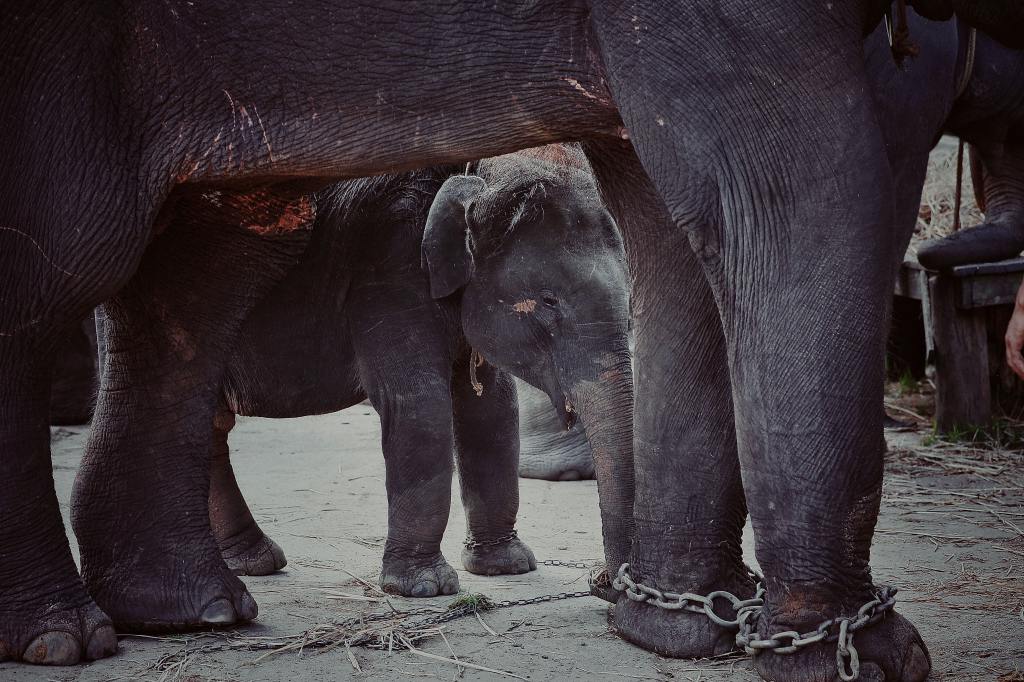
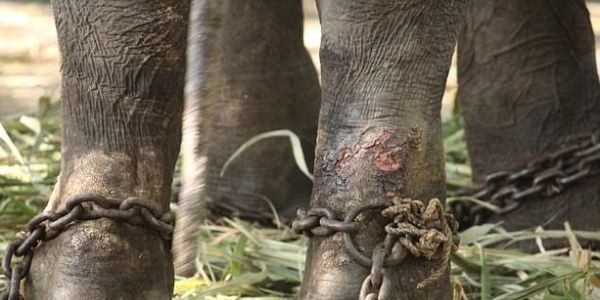
Photographs and videos posted online have shown how, away from the glitz of the festivals, these sensitive, intelligent and naturally sociable creatures are tied to the spot by ropes or chains that eat into their skin and inflict agonising injuries to their legs; they are hit with metal rods or bull-hooks – sharp tools – and “trained” with punishments to hold their heads high.
When the six-month festival season begins in December, they are forced to walk for miles in searing heat on hot, stinging tar roads and ridden into processions noisy with crowds and fireworks – terrifying for a creature whose home is the forest. While still shackled in chains they are made to run races or carry people and are subjected to “painful and unnatural” “head-lifting” competitions.
Some Elephants are carted from one festival to another – in
some cases hundreds of miles – and despite suffering sometimes infected wounds
from the chains, are ridden in searing temperatures by people who apparently
see no harm in what they do.
The southern coastal state of Kerala has the highest number of festival Elephants, about 500 out of 3,500-4,000 across the country. Action for Elephants UK (AfE) brands Kerala “ground zero for elephant torture” and has called their illegal treatment “the worst case of animal cruelty in the world”. The plight of the 150 captive elephants in neighbouring Tamil Nadu is feared to be just as BAD.
Footage posted by local group Kerala Suffering Elephants (KSE) reveals how an Elephant named Gurvayur Nandan was paraded at a festival until dawn, before being transported for eight hours standing on the back of a truck in the scorching sun for eight hours without rest to a separate event that ran until midnight.
Malnourished and deprived of medical care, captive individuals of the endangered species rarely survive this “unrelenting neglect and torture” for a natural lifespan. The mortality rate in Kerala is shocking: 58 have died in 27 months, and already in 2018, 12 have succumbed, according to KSE. In seven years, the death toll is 350. “There could be no more damning proof of the hellish conditions and treatment meted out to these Elephants,” says Maria Mossman, founder of AfE.
Elephants are shackled in heavy chains that wound the flesh (Action for Elephants UK
For all the abuse, injuries and mental torment, it’s not the pain or infections that usually kills them early, it’s “intestinal impactions”: a blocked colon caused by being fed the wrong diet and insufficient quantities of water. The condition means they die “a miserable and painful” early death.
Campaigners have had enough. Gathering outside the Indian
High Commission in London, they staged a protest to draw the attention of the
New Delhi government and the world at large to the animals’ plight. Wearing
large Elephant masks and waving placards, they came from a variety of
backgrounds; some had travelled hundreds of miles to be there.
What unites these women – and yes, the campaigners are
nearly all women – is a shared abhorrence of the “abuse and torture”. They
adamantly deny attempting to interfere with religious culture.
“Temple Elephants are not part of any tradition,” explains
Ms Mossman.
Their use in temples and festivals is not part of Indian
culture, nor do Hindu scriptures anywhere say that Elephants should be used in
temple rituals. On the contrary, the barbaric treatment of these elephants goes
completely against the core beliefs of Hinduism”
In fact, the cruelty behind Kerala’s rituals is thought to
have begun about a century ago as India’s nouveaux riches started to buy
Elephants to flaunt their wealth. Denise Dresner, a co-organiser of AfE,
recalls the heart-wrenching moment that opened her eyes to the scale of the
problem: “In 2013 I saw a video by Peta of Sunder the temple Elephant being
beaten. This was something I’d never witnessed before.
“An Elephant was on its side on the ground, struggling to
get up. His feet were shackled and he was being beaten violently by several
men, over and over again. He kept struggling, unable to get away from the blows
raining down on him. I learned later he had been kept in a dark shed and beaten
incessantly for seven years.
“That moment of seeing him being beaten and tortured was
seared into my brain and heart. It’s an image that will never leave me, one
that shows the extremes of human violence and brutality towards other living
beings. The unspeakable cruelty perpetrated on these majestic, sentient and
highly intelligent creatures must end.”
For Maria Harper, another protester, it’s the duration of
the suffering that is worst. “What upset me most was when I realised the length
of time the temple and festival Elephants suffer,” she says.
“They can endure cruelty and abuse for more than 50 years –
if they are unfortunate enough to survive that long. It’s a life sentence”
Seeing the photos and hearing the accounts is harrowing. But
Ms Mossman says it’s vital if their welfare is to improve. “The world needs to
know how handlers use banned weapons and restrain them with heavy shackles,
often tightened so severely that they cut through the flesh, causing raw
bleeding wounds that are seldom treated. “They are often forced to stand in the
same position 24/7, in their own urine and excrement, suffering from foot rot.
They are beaten and tortured time and again.”
Some mahouts think nothing of whipping an Elephant to make
it bend to his will, such as climbing into a truck. But the abuse doesn’t end
there.
Most of Kerala’s captive Elephants are bulls. When they
enter their annual musth – mating season – their testosterone levels and energy
surge, so the mahouts tighten their shackles further until the creatures are
unable to move. In addition, food and water are restricted to weaken them.
But then comes the cruellest torture yet. Several men, often
drunken, beat the chained Elephant for up to 72 hours relentlessly. The
practice is based on a superstitious belief that the Elephants may have
forgotten their commands during their musth, and is designed to break the
Elephant’s spirit, “reminding him that his masters are in control”.
All bull Elephants in Kerala undergo this horror every year.
These practices are banned by the Prevention of Cruelty to
Animals Act 1960 and the Wildlife Protection Act 1972, but campaigners point
out that the laws are routinely ignored.
Elephants are paraded with no ownership papers or parade certificates, or with fake fitness certificates, breaking the Wildlife Protection Act 1972, which says they cannot be exploited for profit, AfE says. Recent laws banning the use of disabled, sick or pregnant elephants in festivals are also ignored.
“The plight of these Elephants is arguably the worst case of
animal abuse in the world. The suffering that temple Elephants endure is
unimaginable”
“India has very good laws, but they are ignored daily and
the abusers go unpunished,” says Ms Mossman. “Not only are Elephants
intelligent and sentient beings, they are an endangered species. It is the duty
not only of India to enforce the laws to protect them, but of the world to hear
their cries of suffering and respond to end the brutality against them.”
She and KSE agree that making profits and keeping the status
quo are at the root of the problem. “These sentient animals are seen only as
commodities, earning huge sums of money for their owners and the temples,” says
Ms Mossman. “Exploited under the veneer of culture and religion, they are big
business. Everyone, from the chief minister downwards, has a stake.”
The 3,000 temples that rent out Elephants to festival
organisers are run by four devaswom (socio-religious trusts), appointed by the
state government, and each temple earns many millions of rupees from festivals.
Any Elephant that makes it beyond 60 is purposely neglected
and abused – treated as a disposable item – so the owners can make hefty
insurance claims, according to AfE.
Sangita Iyer, who was born and raised in Kerala and made an
award-winning 2016 film, Gods in Shackles, revealing what goes on behind the
scenes at the festivals, is convinced greed is to blame.
“Elephants are allowed to die so the owners can receive the pay-outs.
There’s a whole insurance industry surrounding this, in which the owners and
brokers make the most profit.”
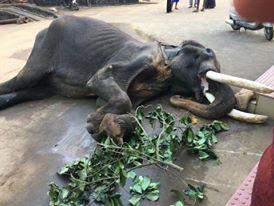
A dead tusker that suffered intestinal blockages is covered
with a cloth. Most captive elephants die young after years of pain (Action for
Elephants UK)
According to India’s Wildlife Rescue and Rehabilitation Centre, which in 2014 petitioned the Supreme Court of India to order better conditions for the animals, another factor is young men showing off. “Today’s mahouts are in it for the glamour and the thrill. Unlike the mahouts of the old, who learnt the ways of handling the Elephants over time, these guys know only oppression and violence,” one rescuer says.
Nor does Ms Iyer particularly blame festival-goers. “Most
people are unaware of the crushing burden these Elephants carry, in the literal
sense, on their backs, and in their hearts and souls. Most people don’t realise
the brutality that these sentient beings undergo to entertain them. They are so
hypnotised by the majestic, ornate Elephants and lost in their own selfish
world that they don’t even look at the raw bleeding ankles.”
However bad the suffering of the individuals, the abuse has
wider repercussions. KSE warns it could even lead to the extinction of Indian
Elephants.
“As each of these Elephants die from overwork, intestinal
impactions etc, the surviving ones are going to be overworked even more. It’s a
vicious cycle and will probably end only when there are no Elephants left”
Taking young Elephants from the wild has a serious impact on
wild Elephant populations in India and elsewhere, activists fear. People’s
lives, too, are being put at risk. Some elephants, driven frantic by their
suffering, break free and run amok. Behind media reports of people being killed
by a rampaging Elephant there almost always lies a story of a brutalised
animal.
There have also been 300 incidents of Elephants running amok
in the first three months of this year. Earlier this month there were
unconfirmed reports of Elephants running amok at festivals in Ernakulam and
Kollam districts. Unofficial counts put it at 20 incidents in one week.
Action for Elephants is warning prime minister Narendra Modi
these rituals are not just harming the country’s most iconic wildlife, but also
India’s multi-million-pound tourism industry and reputation. “We hope tourists
and visitors to India will make ethical choices and will shun all forms of
Elephant tourism that use elephants in any unnatural way, whether in festivals
or for trekking or rides or any other purpose,” a statement by the group says.
“In this day and age, when we have gained so much knowledge about the intelligence, emotional capacity, and social bonds of these majestic creatures, and when we know how endangered they are, we believe that all countries have a duty to protect them, treat them humanely, and give them sanctuary.”
India is positioned to take a global lead in ethical
wildlife tourism, the letter says.
As long as the current system of cruelty is allowed to
continue, the more it will negatively impact India’s tourism and tarnish
India’s reputation and image in the world
Signatories include primatologist Jane Goodall, TV star
Michael Palin, author Jilly Cooper, TV presenter Anneka Svenska and radio
presenter Nicky Campbell, as well as MP Zac Goldsmith.
Filmmaker Ms Iyer believes educating the public is the only
way to achieve change. “Ignorance and arrogance make for a bad potion, and
unless and until we are able to create attitude shifts in the public eye,
there’s little hope for these sentient beings.
“There is no point in fighting the owners or brokers.
Enlightening the people is the only way to stop the audience from participating
in festivals that use live Elephants and reduce demand for such cultural
festivals. When the demand dies down, the Elephants will be ultimately phased
out.”
The Indian High Commission in London did not respond to a
request by The Independent to comment and refused to send anybody to open the
door when visited in person.
There are some glimmers of hope, however. Occasionally, news
of progress made by welfare workers on the ground emerges, and an elephant
rescue can become a stand-out memory for followers. The film that startled Ms
Gaffney was called Raju the Elephant Cried on the Day he was Released from
Chains. His rescue made headlines.
Ms Dresner says she followed each step in a protracted legal case to free Sunder with her heart in her throat. “Finally, when he was freed, the joy was overwhelming. Like so many others, I then followed his progress in his new home at Bannerghatta Biological Park, crying (happily) with every bit of good news: his healing leg, his first swim in the pond, his making new friends, his putting weight on his skeletal frame.”
Fellow demonstrator Joanne Smith agrees. “The terrible
delays with the court case were so hard to take but the day Sunder was given
his freedom was thrilling,” she recalls. “It proved to me that we can make a
difference with hard work and determination.”
In the past two years, three temples have done away with
renting Elephants for festivals. One used mechanical stand-in; another used an
8ft dummy made of plaster of Paris and bamboo. Organisers say they may even
offer the model to neighbouring temples for their own festivals, allowing the
idea to catch on.
The London protest and letter also have the support of
Absolutely Fabulous star Joanna Lumley, whose message was: “One of the most
influential Indians of all time, Mahatma Gandhi, said: ‘The greatness of a
nation and its moral progress can be judged by the way its animals are treated.’
“India! Listen to his words and implement them. The world
supports your laws against cruelties to temple Elephants, but only you can
ensure that they are enforced.”
And that, say campaigners, really would be worth a
celebration.








 PROTECT ALL WILDLIFE