
Asian Elephants, like their African cousins, seem to mourn their dead.
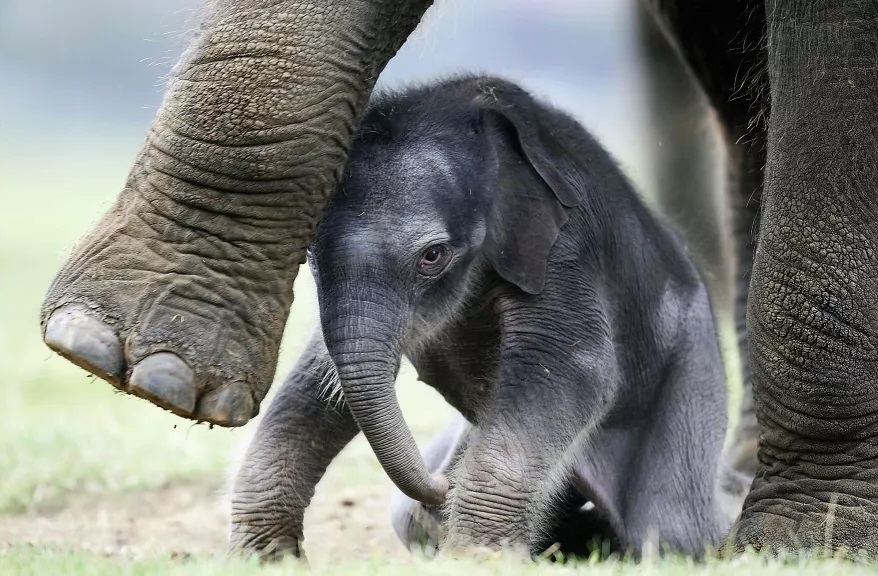
Female Elephants are very protective of their calves, and when youngsters die, some mothers continue carrying their babies’ corpses.
Asian Elephants, like their African cousins, seem to mourn their dead, sometimes even carrying their lost infants in their trunks for days or weeks, new research finds.
Whether Elephants understand death in the same way humans do is unknown — and probably unknowable. But Asian Elephants are social creatures, and the new research adds to the evidence that they experience some sort of emotional response when they lose one of their own.
“Understanding Elephants’ response to death might have some far reaching effects on their conservation,” study co-authors Sanjeeta Sharma Pokharel of the Smithsonian’s National Zoo and Conservation Biology Institute and Nachiketha Sharma of the Kyoto University Institute for Advanced Study, wrote to Live Science in an email. “We have personally observed that when people witness an elephant responding to a dead kin, there will be some sense of relatedness, compassion and empathy towards the species. Therefore, anything which instantly connects people might pave the way for coexistence in elephant ranging countries.”
Death ritual
African bush Elephants have long been observed reacting emotionally when a herd member dies. They might approach the body and touch it with their trunks, kick at the corpse or stand nearby as if on guard. Asian Elephants, however, are less well-understood. They tend to live in forested habitat, so they are harder to observe in the wild than savanna-dwelling African elephants.
“They can be 100 feet [30 meters] away from you, and you might not see them because the forest is so dense,” said Brian Aucone, the senior vice president for life sciences at the Denver Zoo, who was not involved in the new study. .
To get around this, Pokharel, Sharma, and their co-author Raman Sukumar, all of the Indian Institute of Science at the time, turned to YouTube, where remarkable animal videos are a staple. They searched the site for keywords related to Asian Elephants and death, and uncovered 39 videos of 24 cases between 2010 and 2021 in which one or more Asian Elephants were seen reacting to the loss of a herd mate. Eighty percent of the videos showed wild Elephants, 16% captive Elephants and 4% semi-captive Elephants (typically, semi-captive Elephants are animals that work in the timber industry or in tourist parks in Asia).
Some of the most striking behaviors seen in the videos occurred when a calf died. In five of the 12 videos showing a deceased calf, a female adult — likely the mother — was seen carrying the calf. Based on the state of decomposition of the corpse, it appeared that this carrying behavior went on for days or weeks.
Indian Forest Service ranger Parveen Kaswan uploaded one such video in 2019, showing an Asian Elephant dragging the body of a calf across a road in what he likened to a “funeral procession” in a post on Twitter at the time.
“I think they’re holding on and trying to grasp what has happened, and there’s something happening there with their interaction with their offspring, just like it would be with us,” Aucone said of the behavior.
Other commonEelephant reactions seen in the videos included restlessness or alertness when near the corpse; exploratory movements such as approaching or investigating the body; or touching and smelling. Elephants communicate through scent, Aucone said, so the sniffing is not surprising. In 10 cases, the elephants tried to lift, nudge or shake the body, as if to attempt to revive their lost comrade. In 22 cases, they seemed to stand vigil over the body.
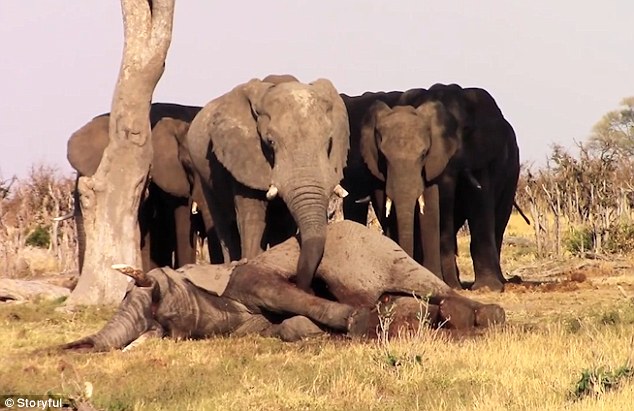
“We’ve seen some of this before ourselves,” Aucone told Live Science. When the zoo euthanizes older Elephants due to illness or infirmity, the staff give herd mates a chance to say goodbye, Aucone said. The survivors often sniff the deceased Elephant or lay their trunks by its mouth, a social behavior.
Animal grief
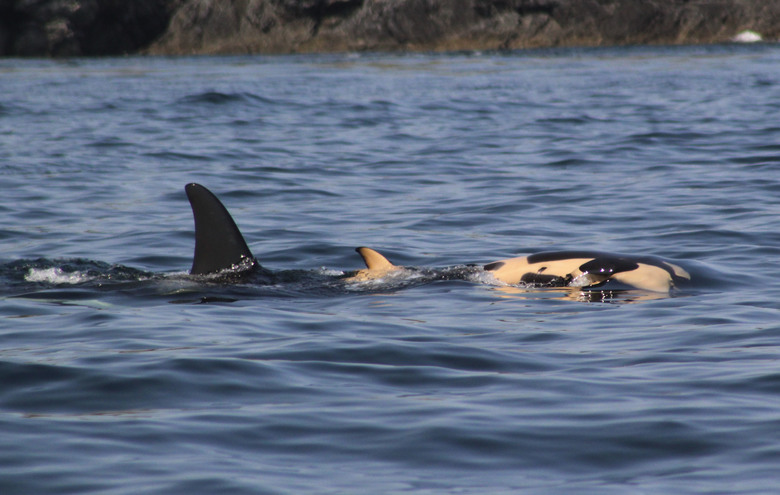
Elephants aren’t the only social creatures that react to death, especially to the death of babies. Orca mothers have been observed pushing their dead calves around, as have dolphins. In 2018, an orca female named Tahlequah off the coast of Washington held on to her lost baby for 17 days. Other female orcas were seen huddled around Tahlequah and her dead newborn in the hours after the baby’s death in what looked like a circle of grief. Ape and monkey mothers sometimes carry around dead infants for weeks or months.
In the case of the Elephants, which are devoted to caring for their young, the mother-calf bond is fundamental, Pokharel, Sharma and Sukumar wrote in the study, published Wednesday (May 18) in the journal Royal Society Open Science(opens in new tab). This is true of primates, as well, Pokharel and Sharma told Live Science.
“[T]he mother-calf/infant bonding in both Elephants and primates have some striking similarities as both nurture their young until they become strong enough to forage and defend themselves,” they wrote. “Therefore, this long lasting bond between mothers and calves/infants may potentially motivate mothers to respond towards their unresponsive calves. It is very difficult to predict the exact causations and functionality behind the dead infants carrying. But, some of the YouTube videos certainly provide evidence that some species may have some sense of death awareness.”
What you can do to help
Support Protect All Wildlife’s work by donating as little as £1 – it only takes a minute. Please donate ANY amount, large or small, at HELP PROTECT ALL WILDLIFE. Thank you.

What else you can do to help
Please SHARE to raise awareness to wildlife and environmental issues from around the world. You can also receive NEWS and UPDATES by signing up in the top right of this page.


 PROTECT ALL WILDLIFE