Trophy Hunting in Botswana: A Tale Of Declining Wildlife, Corruption, Exploitation And Impoverishment

In May 2019, Botswana’s President Masisi justified the decision to recommence trophy hunting by emphasising that local communities will be guaranteed more than just menial jobs and enjoy sustainable wildlife management’s economic benefits.
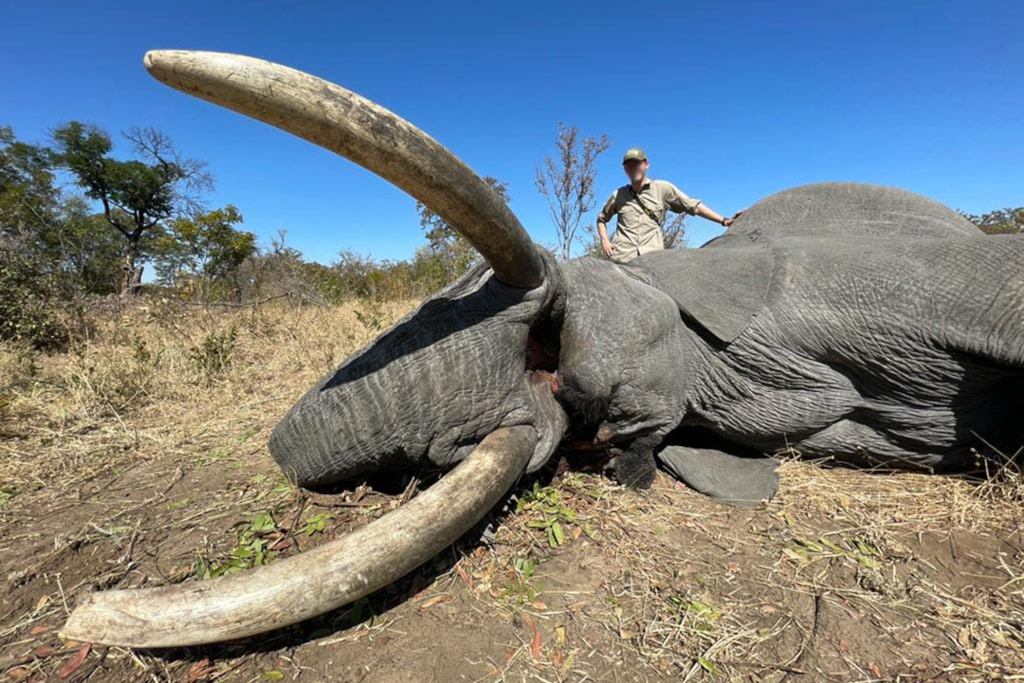
A Bull Elephant shot in Botswana – a so-called ‘100 pounder’.

As the passage of the Hunting Trophies (Import Prohibition) Bill moves to the Committee Stage of the House of Lords, a suite of amendments has been tabled for deliberation. These amendments include amending the Bill from a blanket ban to a case-by-case assessment of trophies imported into the United Kingdom based on whether they contribute to the conservation of wildlife and human economic upliftment.

For example: Amendment Clause 2(d) states that hunting imports may only be granted if:

“a hunting area where the hunting operator can demonstrate that financial or non-financial benefits of trophy hunting materially contributes to the conservation of the trophy hunted species, including habitat protection, anti-poaching measures, and support for community livelihoods.”
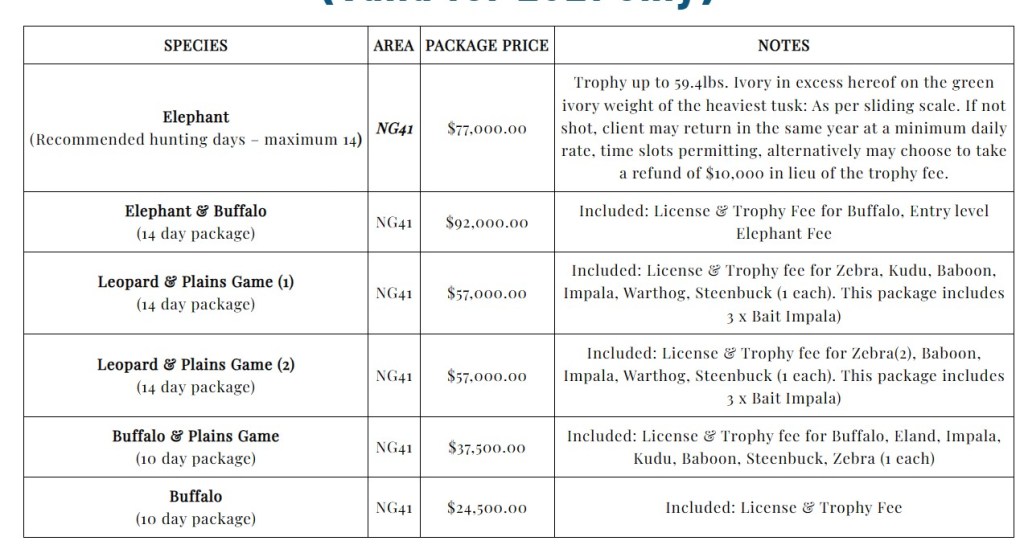
A Shopping List For Trophy Hunters

At face value, this appears to be equitable. Ignoring the obvious ethical dispute, if trophy hunting can be proven to benefit the conservation of wildlife and human livelihoods, then perhaps it may be a case to consider.  However, the problem in the majority of trophy hunting cases, and in most countries where trophy hunting takes place, the activity not only is wholly unable to benefit wildlife and human communities, but precipitates the opposite.

Botswana, one of the major destinations for trophy hunters, is a particular case in point.

The southern African nation has been promoted by some in the House of Lords as an example of a trophy hunting ‘success.’ So much so that a high-level delegation of government officials from Botswana, including a minister, an ambassador and a wildlife department head of authority were invited to the House of Lords in June 2023 to make a case for the benefits of trophy hunting in their country. Yet, serious questions surround Botswana’s ability to adequately regulate trophy hunting and provide any meaningful benefits for communities living among and alongside wildlife.

Field investigations, in-person interviews and literature, financial audit, international policy document reviews have been undertaken over the course of a year to assess the validity that Botswana can provide meaningful and tangible benefits to its wildlife and people. This is a summary of the results:

  • On an international level, the country has been flagged for non-compliance under the Convention on International Trade of Endangered Species of Wild Fauna and Flora (CITES) due to its failure to submit annual reports, which provide crucial information for validating offtake of elephants for trophies for the international trophy trade. This indicates that the wildlife conservation in Botswana is not adequately managed.
  • Hunting quotas are not based on scientific data. A total quota of 356 Elephants and 74 Leopards are on the Wildlife Hunting Quota List for 2023. These figures are regarded as abnormally high. The list also includes Zebra, Buffalo, Ostrich, Wildebeest, Kudu, Eland, Gemsbok, Warthog, Baboon, and Lechwe.
  • There is evidence of widespread unethical hunting practices including over-use of already overly high quotas, fraudulent practices, corruption, baiting, and hunting near and within photographic tourism zones. As well as the deployment of aerial support to search for large tuskers and killing Elephant bulls near artificial waterholes.
  • Trophy hunting activities in Botswana are forcing communities, which are expected to rely on the proceeds of trophy hunting, into a perpetual cycle of impoverishment and economic disenfranchisement. Trophy hunting obstructs the development of more meaningful activities like photographic tourism while the proceeds from trophy hunting are so miniscule that individual community members are practically receiving nothing.
  • There is also widespread evidence of corruption and mismanagement of funds generated by the Community-Based Natural Resource Management (CBNRM) system in areas centred on trophy hunting as the main economic activity. The mismanagement and corruption are directly linked to trophy hunting.
  • The current government has revoked scientific research permits of organisations that have been committed to providing peer reviewed scientific data on the conservation status and ecology of Elephants and suppress those that have dared to voice concern over unsustainable and unethical hunting practices.
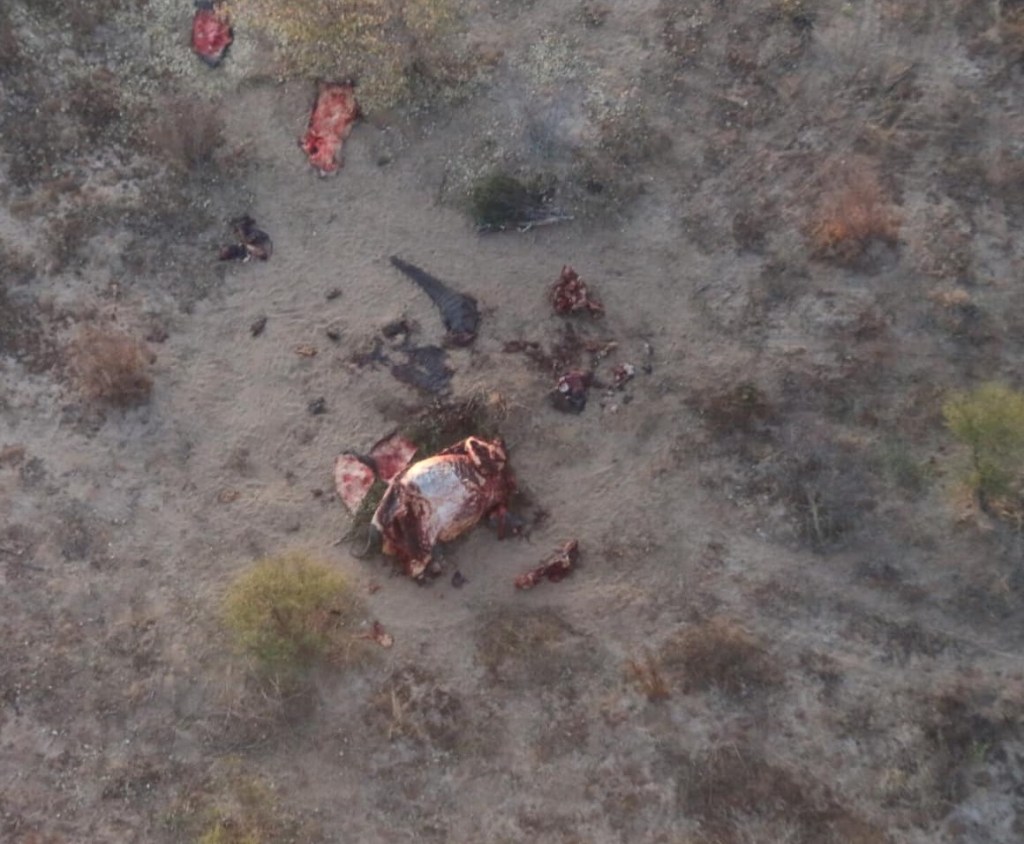
An aerial photograph of a butchered Elephant, shot by trophy hunters in Botswana.

The adult Elephant Bull (above) has been stripped of its body-parts. The trunk has been hacked off. There are large portions of the Elephant’s skin cut off. All four feet have been removed – presumably to make foot / table stools (the Botswana president, Mokgweetsi Masisi, (in)famously gave Elephant foot stools to the presidents of neighbouring countries at an Elephant Management meeting in Kasane in 2019). The tusks and skull have been taken to a taxidermy. These body parts represent the prize – the trophy – that the hunter was after, and which will be displayed on a wall in their home in Europe or America or Asia. There is also some flesh cut off on the flanks of one side, possibly to provide some meat for the trackers and skinners as a ‘tip’.

It has been claimed in Botswana that trophy hunting is only undertaken in ‘marginal’ wilderness areas that are not deemed viable for photographic tourism. It is also claimed that attempts to convert trophy hunting areas not viable for photographic tourism into photographic tourism areas is a challenge. Areas that are deemed not viable for photographic tourism are remoteness, lower densities of wildlife and monotonous natural landscapes. In these spaces, trophy hunting becomes a necessary evil as the sole provider of revenue for remote communities living within and alongside wildlife.

And yet, this Elephant was shot in a hunting concession (NG41) that is neatly wedged between two national parks – Moremi Game Reserve and Chobe National Park. These two parks are globally renowned for photographic tourism and are consequently brimming with tourists wanting to photograph what Botswana showcases best – wildlife. The fact that that this Elephant was shot right in the middle of these tourist hotspots makes a mockery of the claim that trophy hunting in Botswana only takes place in marginal areas.
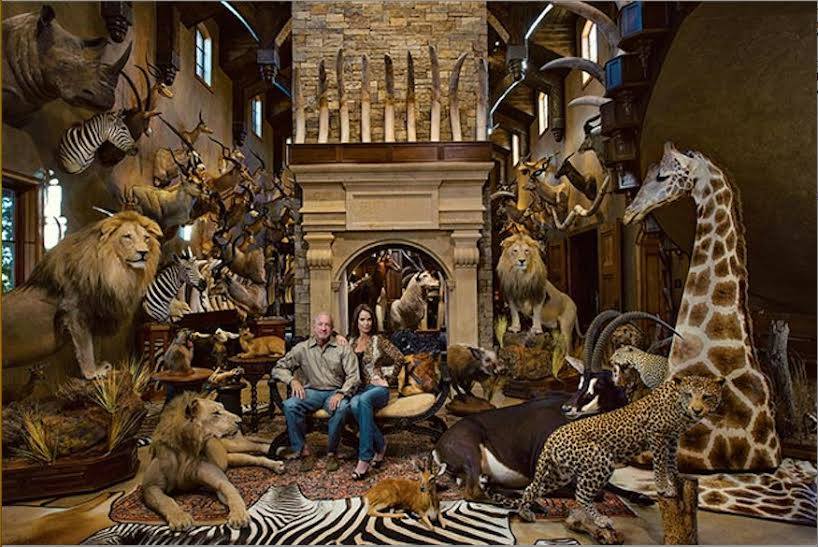
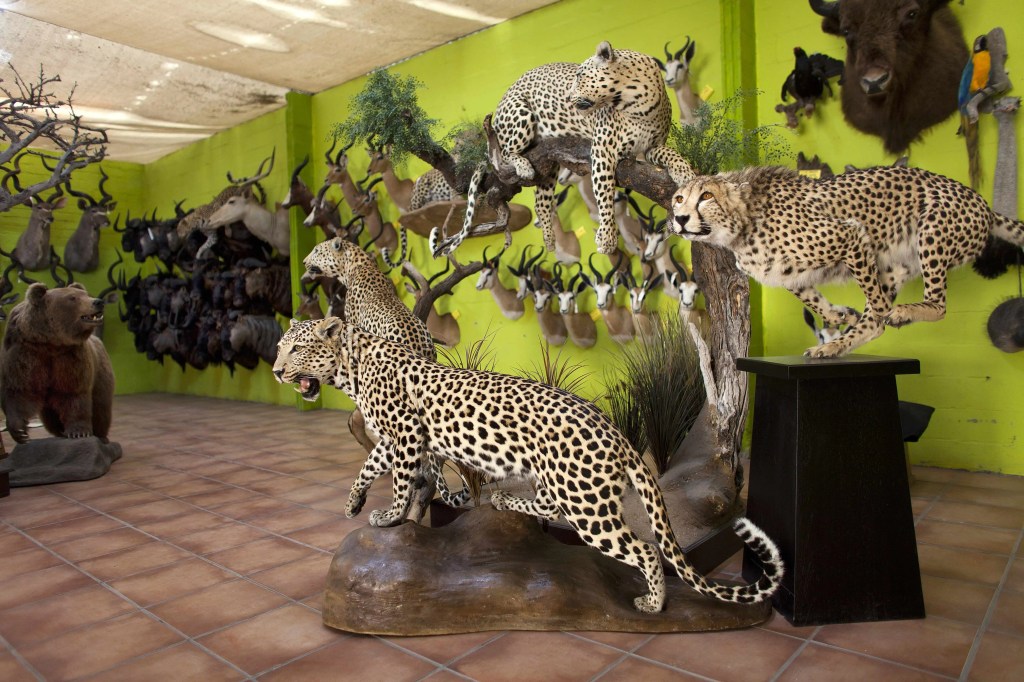
The Wall Of Death: A Hunter’s ‘Trophy’ Room

The standard narrative from hunters and their proponents is that trophy hunting is an essential conservation tool that, if conducted ‘ethically’, preserves endangered wildlife and provides revenue for impoverished communities living in marginalised areas where photographic tourism is absent. Yet as this case shows, as they all do, that narrative is a false one. Stripped of its protective fairy-tale veil, the true face of trophy hunting lays bare, a narcissistic bloodlust of a few depraved individuals who care little for ethics, community upliftment or wildlife conservation. ~ Adam Cruise.
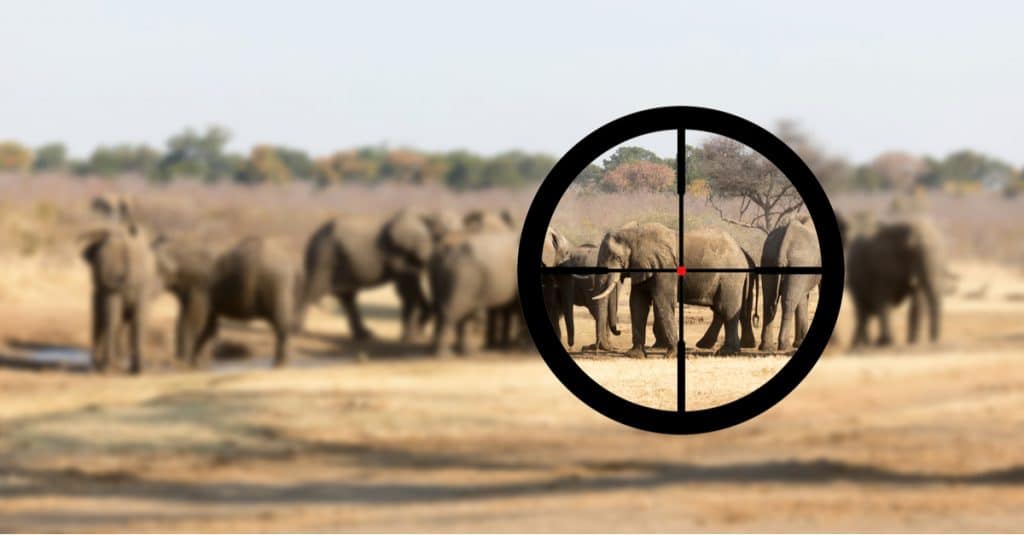
In The Trophy Hunter’s Sights: Botswana’s Elephants

WHAT YOU CAN DO TO HELP WILDLIFE:

You can support ‘Protect All Wildlife’ by donating as little as £1 – It only takes a minute but it can last a lifetime for an animal in need. Please donate below.

Everyone who donates will receive a Certificate of Appreciation as a thank you for helping animals in need.

The Mission of Protect All Wildlife is to prevent cruelty and promote the welfare of ALL animals.

We believe EVERY animal should be treated with respect, empathy, and understanding. We raise awareness to protect and conserve wild, captive, companion and farm animals.

It is vital that we protect animals against acts of cruelty, abuse, and neglect by enforcing established animal welfare laws and, when necessary, take action to ensure that those who abuse animals are brought to justice.

Protect All Wildlife are involved in many projects to protect animals’ rights, welfare, and habitats. Money contributed to Protect All Wildlife supports ALL of our worthy programmes and gives us the flexibility to respond to emerging needs. Your donations make our work possible.

Therese Coffey: We Will Do All We Can To Help Trophy-Hunting Ban Become Law

The Environment Secretary offered assurances about the Hunting Trophies (Import Prohibition) Bill in a letter to campaigners.

The Government has pledged to do “all we can” to ensure a ban on trophy hunting imports becomes law amid fears pro-hunting peers could “wreck” the reforms.

Environment Secretary Therese Coffey said the Government will not support any further amendments to the Hunting Trophies (Import Prohibition) Bill.

The proposed legislation would prohibit bringing into the country body parts from species deemed of conservation concern.

The Bill, introduced by Conservative MP Henry Smith, has already cleared the House of Commons.

But a group of peers have raised concerns and tabled amendments that threaten to derail the proposals.

Time is running out to consider the Bill and it will fall if it does not receive royal assent before the current parliamentary session stops ahead of the King’s Speech on November 7.

Ms Coffey, in a letter to the Humane Society International/UK dated August 17, wrote: “It is a manifesto commitment to ban the import of hunting trophies from endangered animals and we are working hard to deliver.

“The Bill passed the Commons in March, with the Government’s support, and we will do all we can to support its progress through the House of Lords working with Baroness Fookes.

“I can confirm that we will not be supporting any further amendments to the Bill. I expect committee stage to progress next month.”

Conservative peer Lady Fookes is the Bill’s sponsor in the House of Lords.

Claire Bass, senior director of campaigns and public affairs at Humane Society International/UK, said: “There is a small and vocal group of pro-hunting peers doing their best to wreck this Bill, but we need the Government to remain focused on the almost 90% of the public who want this ban on the import of hunting trophies.

“The timing for this Bill is indeed extremely tight but we were encouraged to receive a letter from Environment Secretary Therese Coffey yesterday.”

No Friday sittings to consider private members’ bills are expected in the House of Lords in September, according to the Government whips’ office in the Lords.

With the party conference recess running until October 16, there are expected to be just two possible Friday sittings before the parliamentary session ends.

Mr Smith, MP for Crawley, said he is speaking with the Government in a bid to secure more parliamentary time for his Bill.

Conservative peer Lord Mancroft, who opposes the proposals, said amendments have been tabled in a bid to “clean up” or clarify parts of the “badly drafted” Bill.

He acknowledged it is “very possible” the amendments could halt the Bill’s progress and rated its chances as “less than 10%”.

Mr Smith said the planned legislation is about UK import policy, adding opponents have pressed “spurious arguments” about how trophy hunting helps conservation.

A House of Lords briefing paper on the Bill stated: “According to figures from the Cites (Convention on International Trade in Endangered Species of Wild Flora and Fauna) trade database, 190 hunting trophies from Cites-listed species were imported into the UK in 2020 (the most recent complete year for which figures are available).”

By Richard Wheeler – The Independent

Please Help Rescue Animals In Need DONATE HERE

Trophy Hunting Is Driving The African Lion Into Extinction

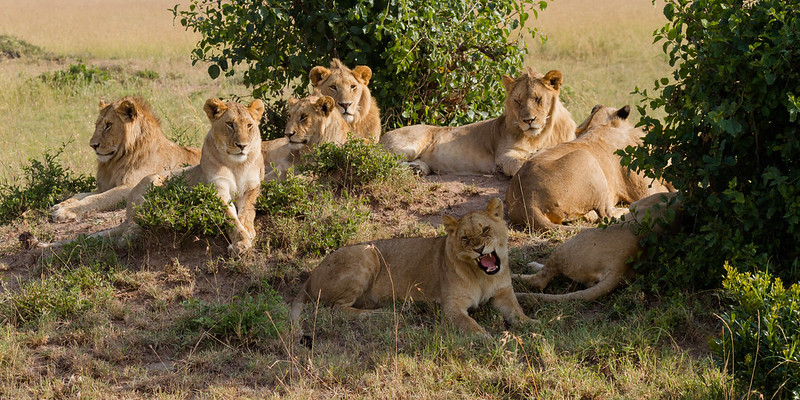
THERE ARE LESS THAN 10,000 WILD LIONS LEFT IN AFRICA

A leading global Lion conservationist has warned of the impending extinction of lions in Africa where the overall population has fallen below 10 000 from a peak estimate of over 20 000 eight years ago.

In a presentation to the British parliamentary committee debating proposals to ban the importation of African wildlife trophies into the United Kingdom, African Lion specialist Pieter Kat said a recent field study by the organisation Lion Aid, revealed worrying prospects for the survival of African Lions:

“Our conclusion is that there are less than 10,000 wild Lions left in Africa. We base that number on the latest information from the ground,” Kat said.

“The current estimate of 20 000-30 000 Lions (in Africa) as stated by the International Union for the Conservation of Nature (Red List) of 2016 is grossly inaccurate and urgently needs to be updated.”

In Africa, wild Lion populations are mostly found in South Africa, Zimbabwe, Botswana, Namibia, Zambia, Tanzania and Kenya.

Smaller clustered populations also exist in Uganda, Mozambique, Eswatini and Angola.

While Elephant population estimates can be done effectively by aerial survey, Kat said Lion population estimates can only be derived from small sample counts which are conducted using different techniques to ensure they are not misleading.

Kat said the IUCN 2016 African Lion population estimate was flawed because it included thousands of non-wild, captive-bred and fenced-off South African Lions in the final count.

“What we did in our latest study is to review the number of Lions in what are called lion conservation units,” he said.

“We went back to look at these conservation units in detail.

“Most people agree that Lions should be classified as endangered on the IUCN Red List.

“However, they are not. Instead, they are classified as ‘vulnerable’.

“One reason for this is that the IUCN partly based their estimates on 16 fenced Lion populations in Southern Africa, mostly in South Africa.

“Those fenced populations are not truly wild Lions.”

He said the IUCN estimate was also heavily influenced by trophy hunters who manipulated Lion census data to support their own claims that Lion populations are healthy enough to support trophy hunting business.

Kat said trophy hunting remains one of the biggest contributors to the decline of African Lion populations as well as the depletion of breeder gene pools through its deliberate targeting of big male Lions.

“In order to be able to develop an effective Lion conservation strategy for Africa, we need to know exactly how many Lions are where. We need to know how many lions exist in trophy hunting areas,” he added.

“The best hunting concessions in terms of tenders and bids all happen to be right on the borders of the national parks.

“We know that they are luring the Lions out of national parks to be killed in private hunting concessions, just like Cecil (in Zimbabwe) was.

“More hunting concessions in Tanzania and Zimbabwe are not being bid on anymore because they are no longer profitable. The Lions have all been shot out.”

According to Kat, the claims often made by the trophy hunting lobby to the effect that trophy hunting funds the conservation of African wildlife are grossly inaccurate and deliberately misleading:

“Trophy hunters are allowed to sit on the IUCN committee of lion experts.

“More and more people have been allowed into the group who were not primarily concerned with lion conservation but rather Lion utilisation.

“This causes problems, because whenever politicians want to make decisions on wildlife conservation, the first place they turn to is the IUCN.

“They view the IUCN as the organisation that supposedly has the knowledge and information about how to best conserve species in the wild.

“However, many of the “experts” that are being consulted are not the ones who have the right information.”

Kat said there is clear evidence that Lions are being badly affected by trophy hunting since the hunters select the best animals, which are often the biggest-maned male breeding Lions.

“A number of studies in Zambia, Zimbabwe, Botswana and Namibia have shown this.

“A hunter does not want a young male (although these were hunted in Tanzania when they ran out of the big males).

“The big-maned Lions hunters target are often the leaders in a pride. This way, trophy hunting results in heavy disruptions of Lion prides.

“The females do not produce cubs anymore because new males will come in and say, “that’s not my cub” and kill the cubs.

“The pride structure of Lions simply falls apart as a result of trophy hunting.”

To save Lions from extinction, Africa range states should adopt conservation strategies to save the biggest and the best remaining Lion cluster populations.

They also need to craft holistic conservation strategies that include the use of effective, tried and tested techniques to protect rural communities and keep livestock safe from predators in order to reduce human-wildlife conflicts.

This article by Oscar Nkala was first published by The Standard on 7 August 2022.

What you can do to help animals in need:
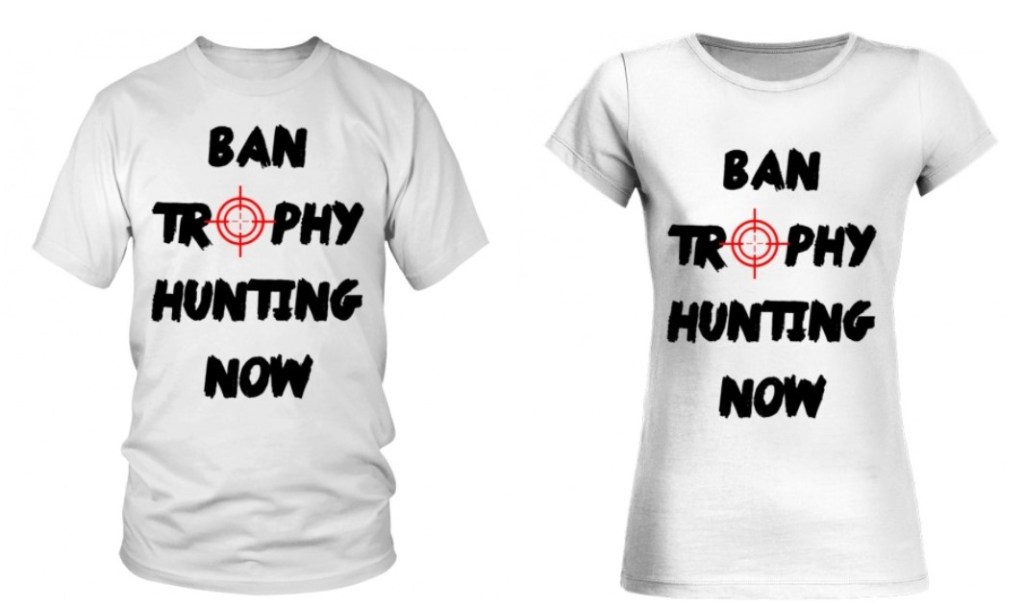
You can purchase a Ban Trophy Hunting Now tops (more styles and colours available) at Ban Trophy Hunting
Support ‘Protect All Wildlife’ by donating as little as £1 – It only takes a minute but it can last a lifetime for an animal in need.

We believe EVERY animal should be treated with respect, empathy, and understanding. We raise awareness to protect and conserve wild, captive, companion and farm animals. It is vital that we protect animals against acts of cruelty, abuse, and neglect by enforcing established animal welfare laws and, when necessary, take action to ensure that those who abuse animals are brought to justice.

Protect All Wildlife are involved in many projects to protect animals’ rights, welfare, and habitats. Money contributed to Protect All Wildlife supports ALL of our worthy programmes and gives us the flexibility to respond to emerging needs. Your donations make our work possible. Thank you for your support.
Everyone who donates will receive a Certificate of Appreciation as a thank you for supporting wildlife.

CERTIFICATE OF APPRECIATION