
A Mozambican national serving a prison sentence for Rhino poaching has been slapped with another lengthy jail term after being convicted of killing a second Rhino in the Skukuza National Park.

The National Prosecuting Authority said 47-year-old Lucky Mabunda, was sentenced in the town’s Regional Court on Thursday to ten years direct imprisonment.
NPA spokesperson, Monica Nyuswa, said he was already serving a 19-year jail term for Rhino poaching and was convicted and sentenced for the second incident in 2019.
She said the court heard that Mabunda had entered the Skukuza National Park between February and September 2019. Field Rangers were patrolling and found the accused in possession of a firearm, axe, ammunition, and other items geared for hunting. They also found the carcasses of two Rhinos.
Nyuswa said he pleaded guilty to killing one rhino, before ballistic evidence taken from the Rhino killed in February, later provided the link back to him.
“It confirmed that the bullets found on the carcass were fired from the rifle found in the accused’s possession,” she said.
State prosecutor Lot Mgiba underscored the gravity of the offense, advocating for an appropriate sentence in court.
Consequently, the accused was found guilty and received a ten-year jail term. The importance of such legal actions in combating poaching, which poses a severe threat to endangered species and the potential for species extinction, was highlighted by Director of Public Prosecutions Advocate Nkebe Kanyane.
SANParks spokesperson, Ike Phaahla, says they welcome the sentence.
“We are elated at the sentencing, which is in addition to the 18 years he has already served since he was found inside the park. In this instance, a projectile was discovered next to the carcass and taken for ballistics. They came back pointing towards the accused, and he was requisitioned from the Department of Correctional Services to get an additional 10-year sentence. It’s a well-known fact that we still have people who, around this time, want to come in, but we want to warn them that Kruger National Park is a dangerous place to come.”
Kruger has lost 70% of ITS Rhinos in 10 years
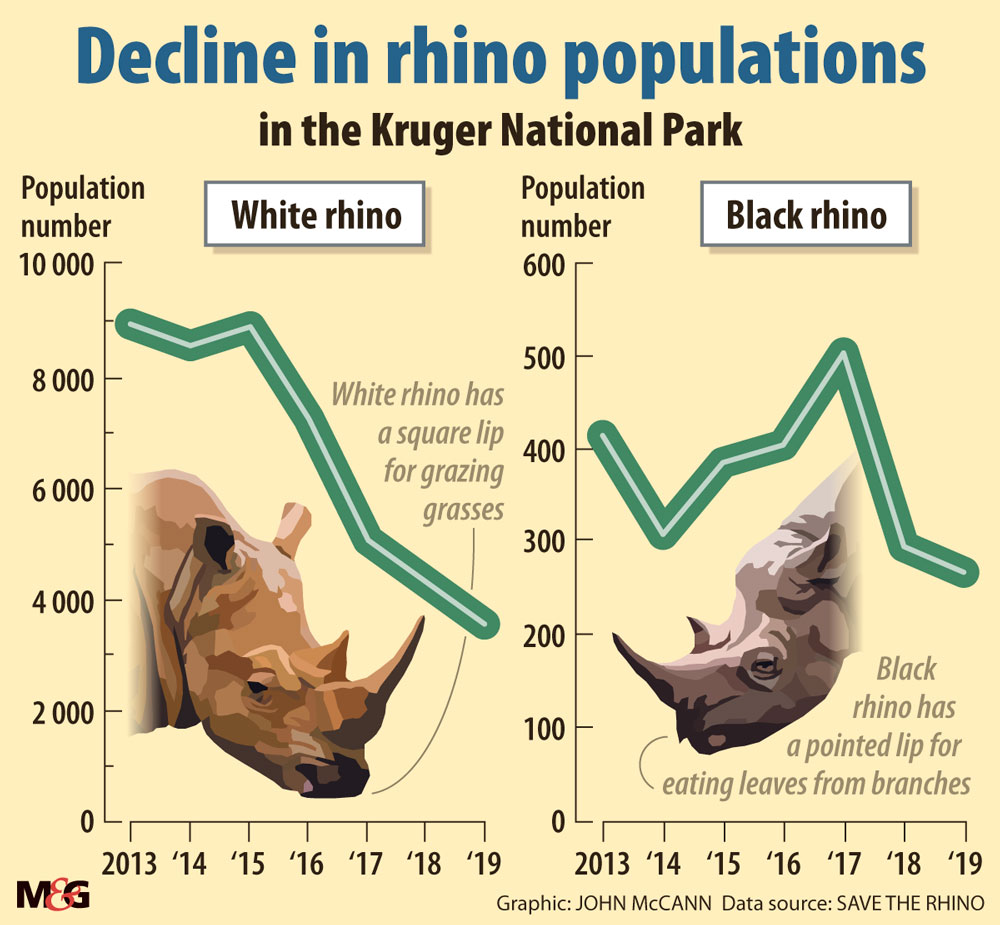
Rhino populations in the Kruger National Park have dropped by about 70% in the past decade because of the onslaught of poaching and prolonged drought. In its 2019-20 annual report, SANParks said that only about 3 549 White Rhinos and 268 Black Rhinos remain in the Kruger.
The environment department said poachers killing cows also ultimately kill dependent calves and cause future loss of calves — this effect equates to an additional five rhinos lost to the population per loss of one cow, now and in future. “Poaching also causes factors such as social disruption of Black Rhino societies. Cows then conceive less often.”

WHAT YOU CAN DO TO HELP ANIMALS IN NEED
You can support our work by donating as little as £5 – It only takes a minute but it can last a lifetime for an animal in need.
PLEASE DONATE HERE
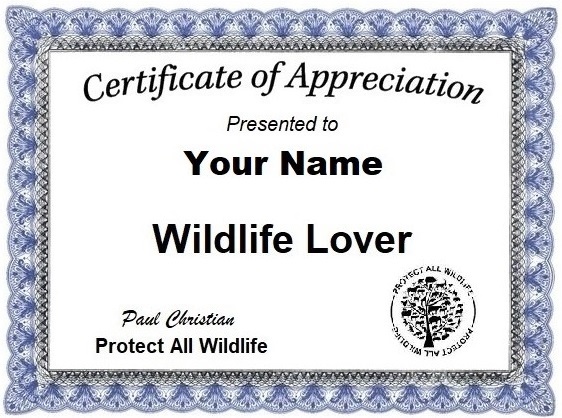
Everyone who donates will receive a Certificate of Appreciation as a thank you for helping animals in need.

The Mission of Protect All Wildlife is to prevent cruelty and promote the welfare of ALL animals.
We believe EVERY animal should be treated with respect, empathy, and understanding. We raise awareness to protect and conserve wild, captive, companion and farm animals.
It is vital that we protect animals against acts of cruelty, abuse, and neglect by enforcing established animal welfare laws and, when necessary, take action to ensure that those who abuse animals are brought to justice.
Protect All Wildlife are involved in many projects to protect animals’ rights, welfare, and habitats. Money contributed to Protect All Wildlife supports ALL of our worthy programmes and gives us the flexibility to respond to emerging needs. Your donations make our work possible.


 PROTECT ALL WILDLIFE