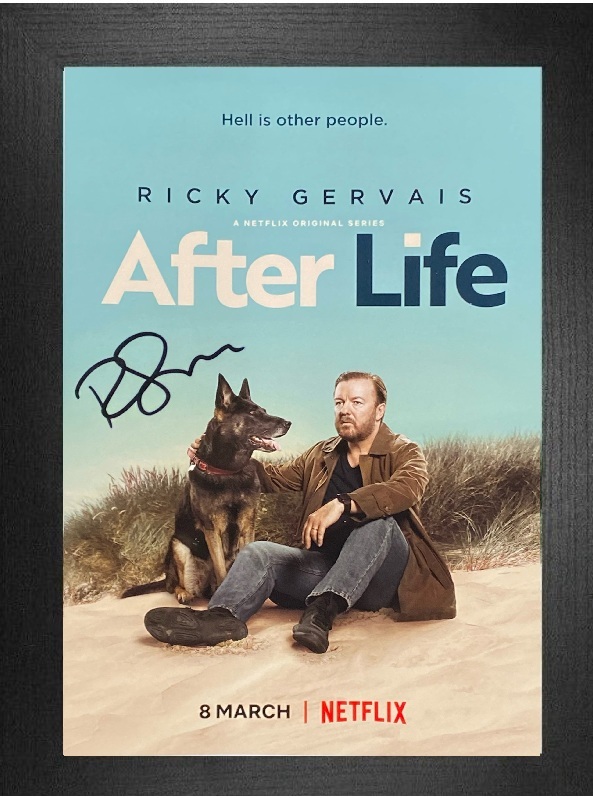
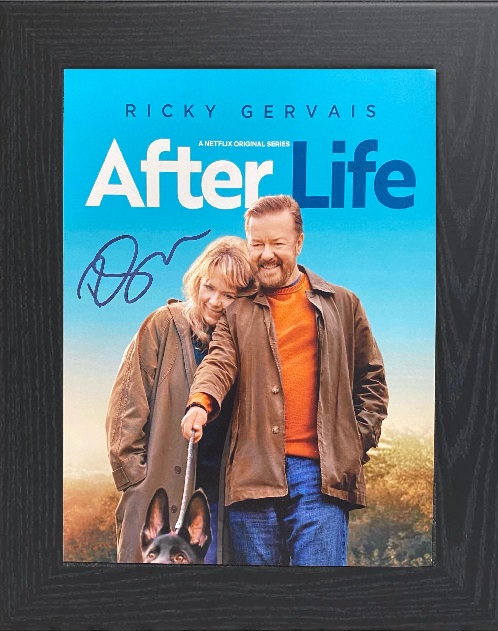
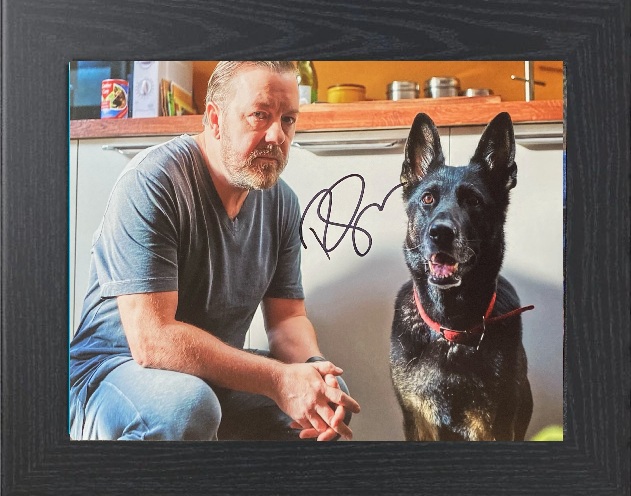
This is your chance to bid on signed pictures very kindly donated by Ricky Gervais in our ‘Charity Auction To Help Disabled Animals’.
This is a sealed bid auction, so all you need to do is decide which item you would like to bid for and send us your bid with the LOT NUMBER and name by email to protectallwildlife@btinternet.com by 21:00 on the 31st of October 2024. We will email you to let you know if your bid is the highest. Postage costs will be calculated when the auction ends. If you need any more information etc please email Paul at protectallwildlife@btinternet.com.
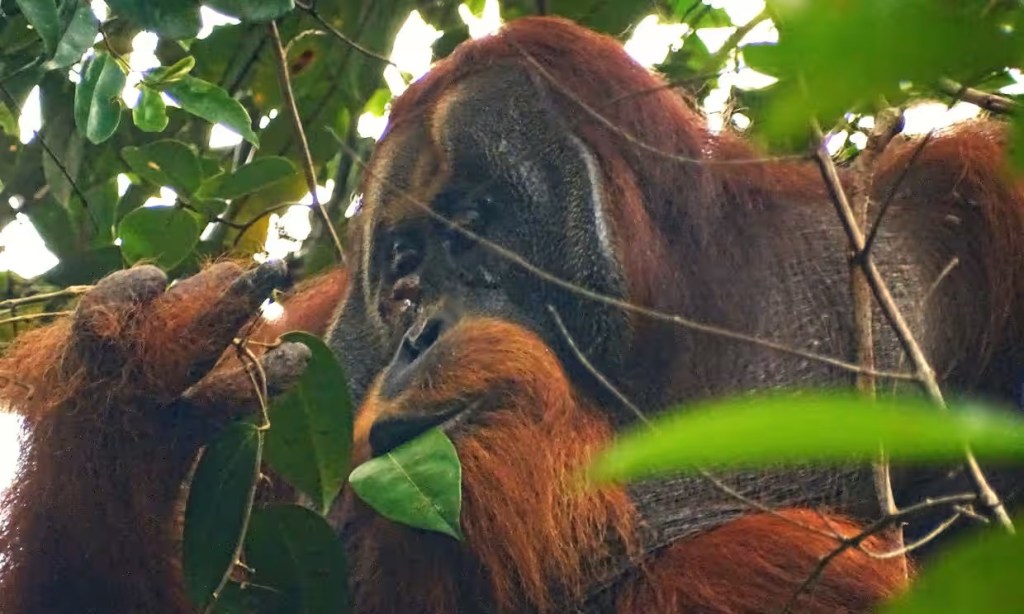
An Orangutan in Sumatra surprised scientists when he was seen treating an open wound on his cheek with a poultice made from a medicinal plant. It’s the first scientific record of a wild animal healing a wound using a plant with known medicinal properties. The findings were published this week in Scientific Reports1.
Rakus used leaves from a liana climbing vine known to have anti-inflammatory and pain-relieving properties. Photograph: Saidi Agam/Suaq Project
“It shows that Orangutans and humans share knowledge. Since they live in the same habitat, I would say that’s quite obvious, but still intriguing to realize,” says Caroline Schuppli, a primatologist at the Max Planck Institute of Animal Behavior in Konstanz, Germany, and a co-author of the study.
In 2009, Schuppli’s team was observing Sumatran Orangutans (Pongo abelii) in the Gunung Leuser National Park in South Aceh, Indonesia, when a young male moved into the forest. He did not have a mature male’s big cheek pads, called flanges, and was probably around 20 years old, Schuppli says. He was named Rakus, or ‘greedy’ in Indonesian, after he ate all the flowers off a gardenia bush in one sitting.
In 2021, Rakus underwent a growth spurt and became a mature flanged male. The researchers observed Rakus fighting with other flanged males to establish dominance and, in June 2022, a field assistant noted an open wound on his face, possibly made by the canines of another male, Schuppli says.
Days later, Rakus was observed eating the stems and leaves of the creeper akar kuning, which local people use to treat diabetes, dysentery and malaria, among other conditions. Orangutans in the area rarely eat this plant.
Leaves from the akar kuning variety of liana climbing vines. Photograph: Saidi Agam/Suaq Project
In addition to eating the leaves, Rakus chewed them without swallowing and used his fingers to smear the juice on his facial wound over seven minutes. Some flies settled on the wound, whereupon Rakus spread a poultice of leaf-mash on the wound. He ate the plant again the next day. Eight days after his injury, his wound was fully closed.
The research group has seen no other orangutans in the national park self-medicate using akar kuning in 21 years of observation. This could be because wild Orangutans in the region are rarely injured. Or perhaps Rakus is the only one who knows of this treatment, which could be a behaviour he picked up before he moved into the area.
Rakus with his open wound, two days before he was observed applying a poultice of medicinal leaves. Credit: Armas
“It is the first study to scientifically demonstrate that an animal is using a plant with medicinal properties applicable to wounds, and putting those on the wounds and consistently treating over a period of time,” says Michael Huffman, who studies animal self-medication at the Institute for Tropical Medicine at Nagasaki University in Japan.
Huffman says self-medication is seen in many species. Canadian Snow Geese swallow leaves whole to expel tape worms. Dusky-footed Wood Rats line their nests with aromatic plants to fumigate parasites. And Chimpanzees in Gabon have been observed rubbing insects near their wounds, potentially as treatment.
Humans might even have discovered some remedies by watching animals, he says. “Probably our ancestors were looking at other animals and learning about medicines.” When social animals communicate, “that information sticks and can last over generations”.
You can support ‘Protect All Wildlife’ by donating as little as £1 – It only takes a minute but it can last a lifetime for an animal in need. Please donate below.
Everyone who donates will receive a Certificate of Appreciation as a thank you for helping animals in need.
The Mission of Protect All Wildlife is to prevent cruelty and promote the welfare of ALL animals.
We believe EVERY animal should be treated with respect, empathy, and understanding. We raise awareness to protect and conserve wild, captive, companion and farm animals.
It is vital that we protect animals against acts of cruelty, abuse, and neglect by enforcing established animal welfare laws and, when necessary, take action to ensure that those who abuse animals are brought to justice.
Protect All Wildlife are involved in many projects to protect animals’ rights, welfare, and habitats. Money contributed to Protect All Wildlife supports ALL of our worthy programmes and gives us the flexibility to respond to emerging needs. Your donations make our work possible.
This is your chance to bid on beautiful original artworks in our ‘Charity Auction To Help Disabled Animals’.
This is a sealed bid auction, so all you need to do is decide which item you would like to bid for and send us your bid with the LOT NUMBER and name by email to protectallwildlife@btinternet.com by 21:00 on the 30th of June. We will email you to let you know if your bid is the highest. Postage costs will be calculated when the auction ends. If you need any more information etc please email Paul at protectallwildlife@btinternet.com.
This is an ORIGINAL watercolour, pastel and pencil study of a Badger by wildlife artist Milo. This STUNNING piece is on high grade art paper measuring 59 x 42 cms.
A Badger by Milo ~ 2020.
Lot 2
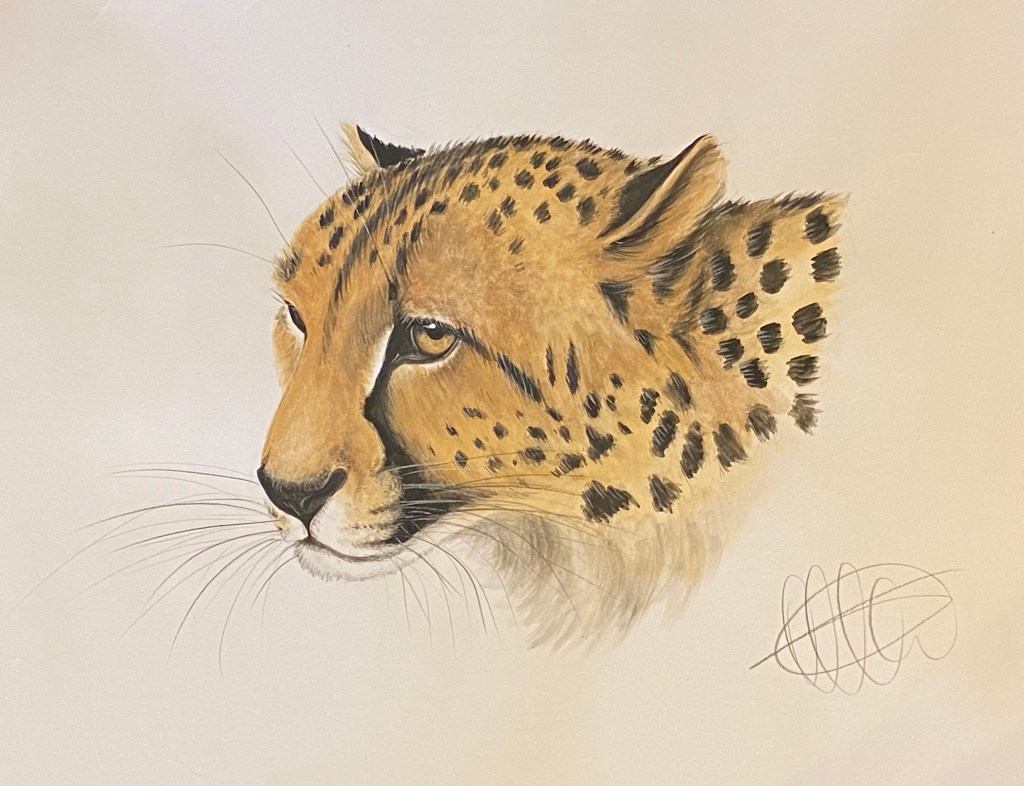
This is an ORIGINAL watercolour, pastel and pencil study of a Cheetah by wildlife artist Milo. This STUNNING piece is on high grade art paper measuring 59 x 42 cms.
A Cheetah by Milo ~ 2020.
Lot 3
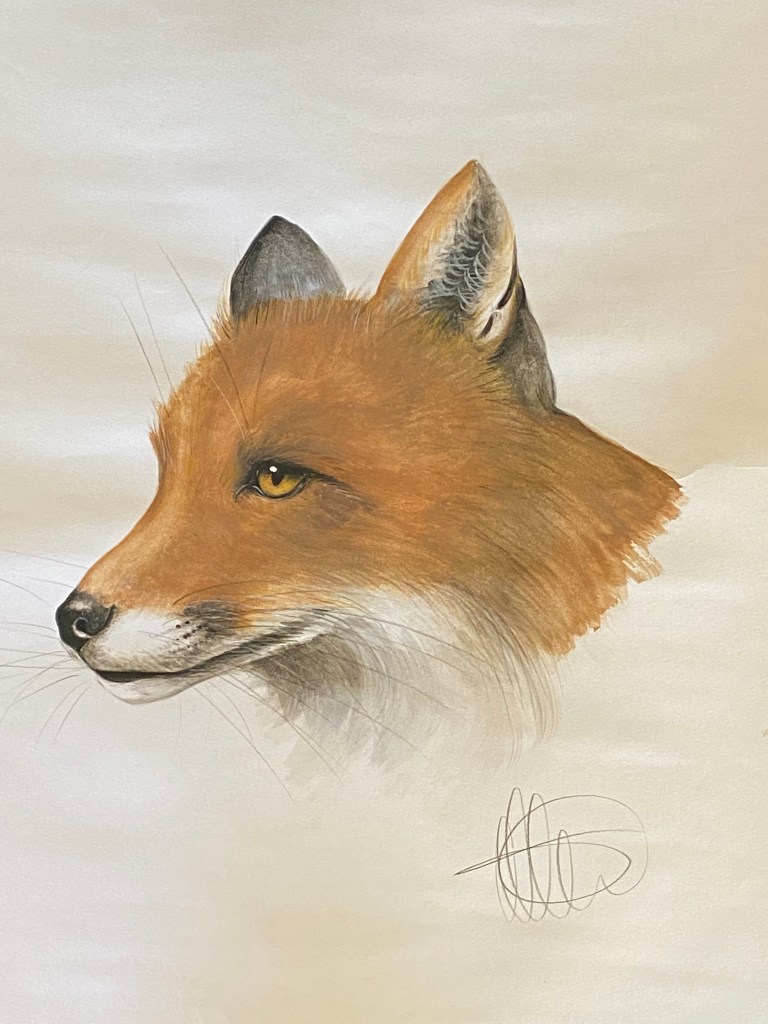
This is an ORIGINAL watercolour, pastel and pencil study of a Fox by wildlife artist Milo. This STUNNING piece is on high grade art paper measuring 42 x 59 cms. (#19).
A Fox by Milo ~ 2020.
Lot 4
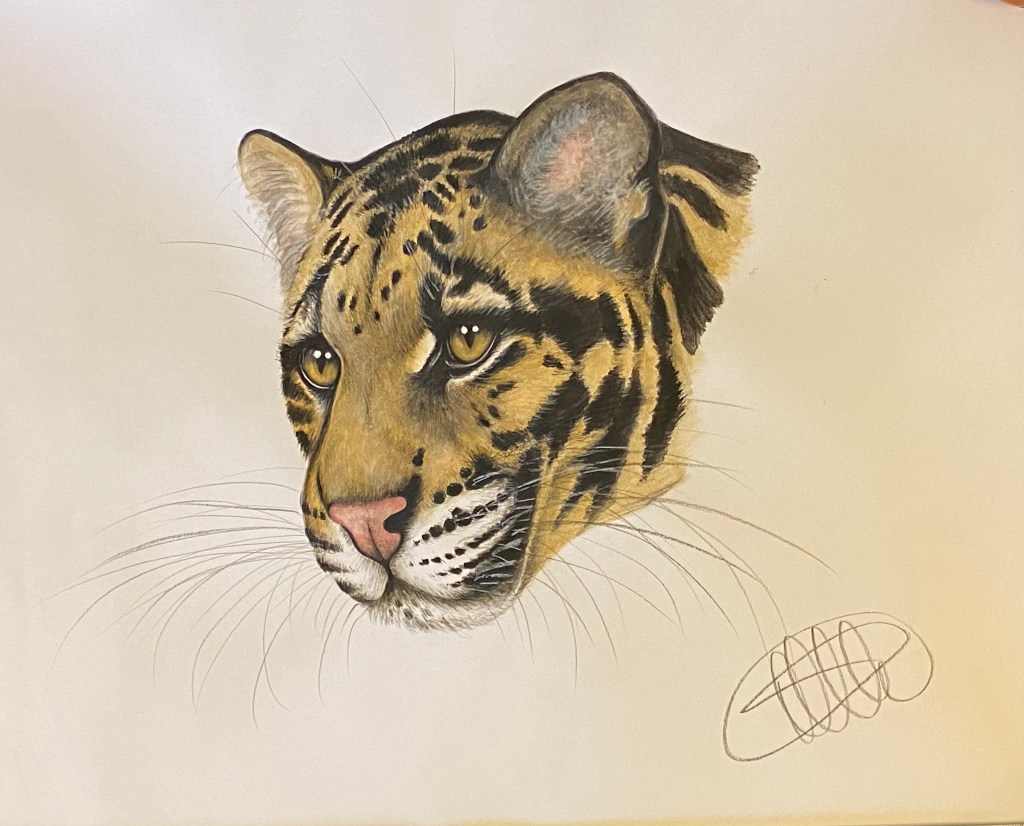
This is an ORIGINAL watercolour, pastel and pencil study of a Clouded Leopard by wildlife artist Milo. This STUNNING piece is on high grade art paper measuring 57 x 42 cms. (#34).
A Clouded Leopard by Milo ~ 2020
Lot 5
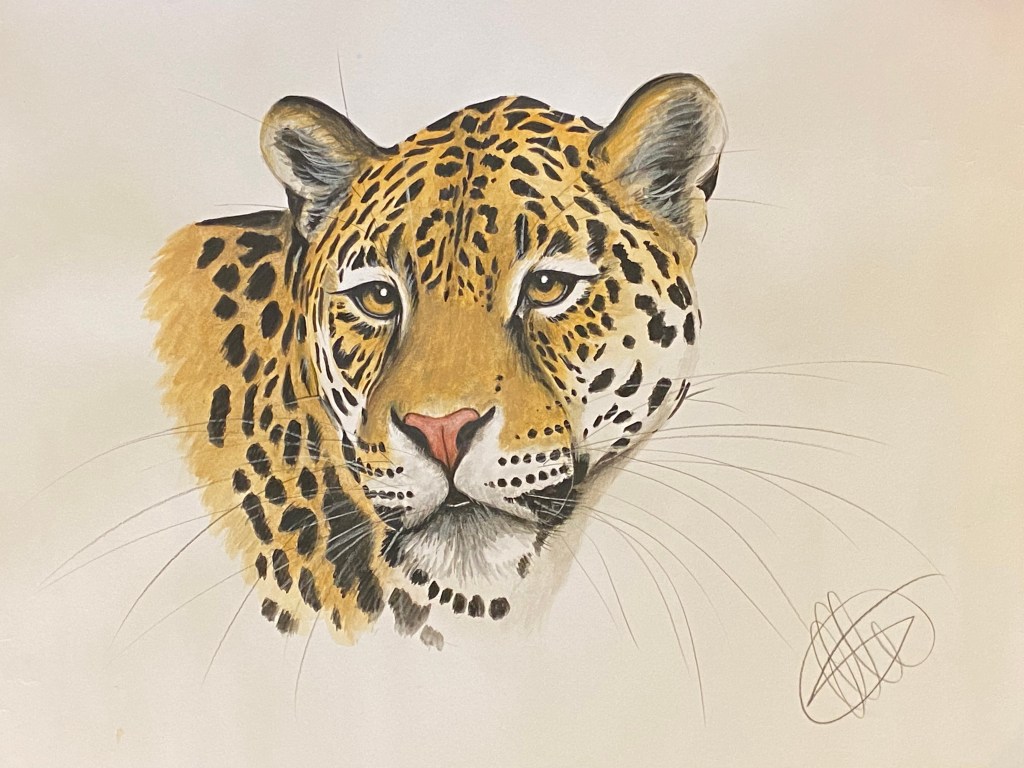
This is an ORIGINAL watercolour, pastel and pencil study of a Jaguar by wildlife artist Milo. This STUNNING piece is on high grade art paper measuring 57 x 42 cms. (#8
A Jaguar by Milo ~ 2020.
Lot 6
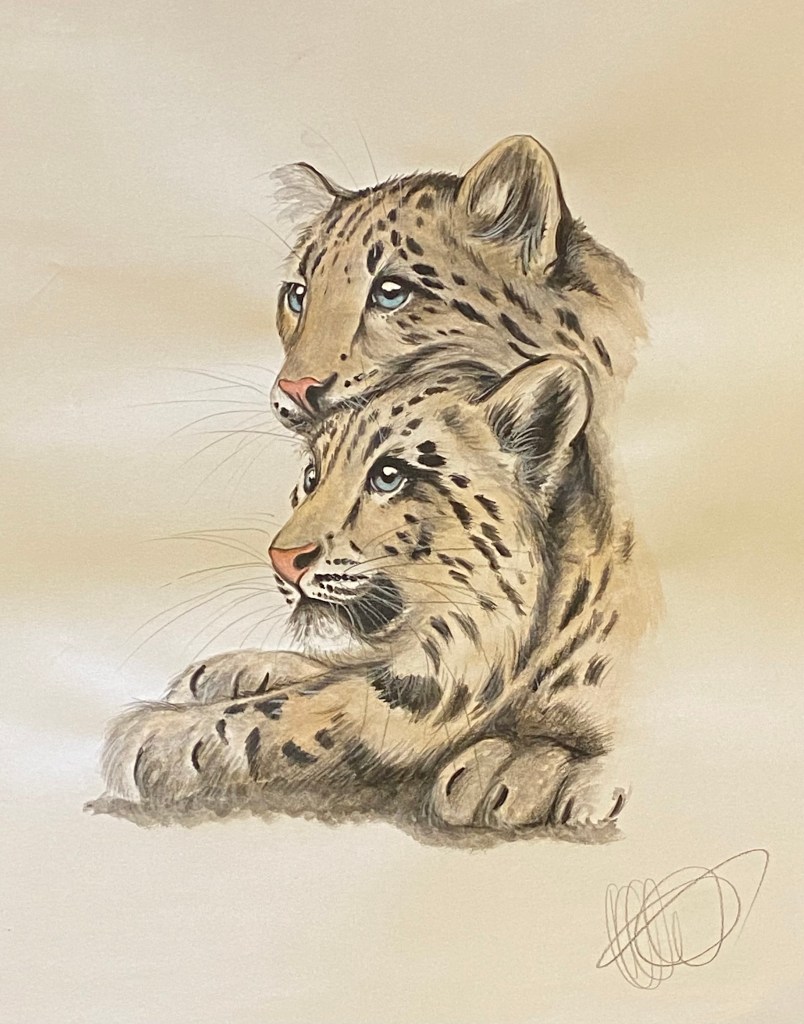
This is an ORIGINAL watercolour, pastel and pencil study of a pair of Snow leopard cubs by wildlife artist Milo. This STUNNING piece is on high grade art paper measuring 42 x 59cms. (#26).
A pair of Snow Leopard cubs by Milo ~ 2020.
Lot 7
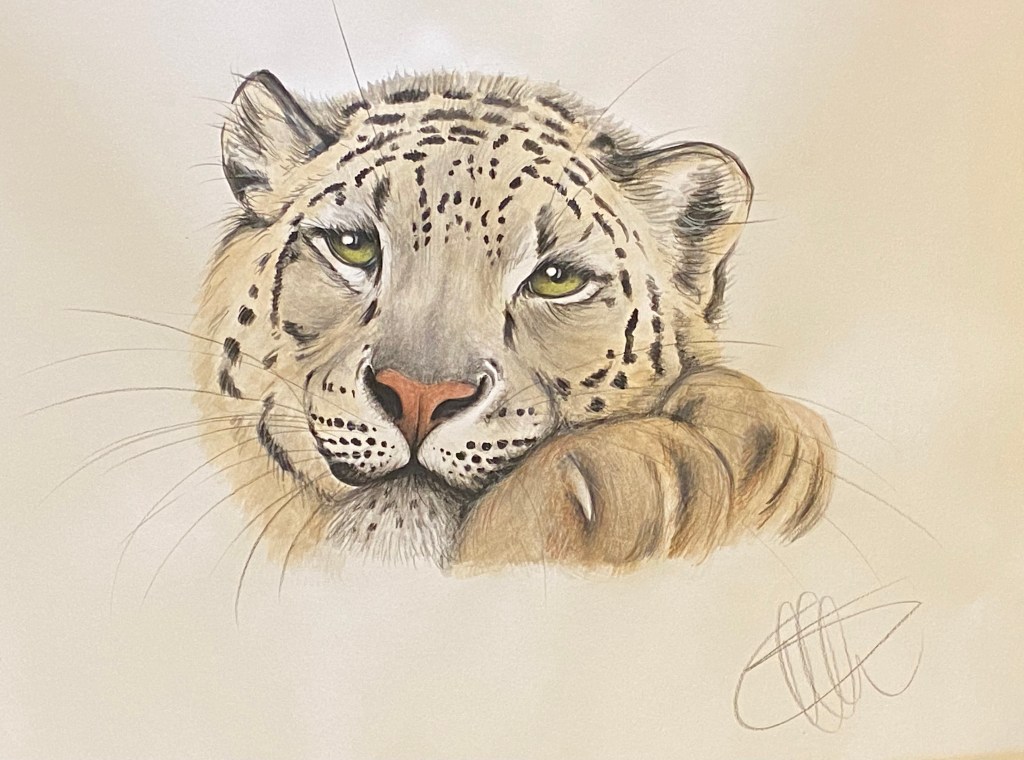
This is a stunning ORIGINAL watercolour, pastel and pencil study of a Snow Leopard by wildlife artist Milo. This STUNNING piece is on high grade art paper measuring 59×42 cms. (#7).
A Snow Leopard by Milo ~ 2020
Lot 8
This lot is ‘A Mother’s Love’, an adorable original watercolour, pastel and pencil of a Lioness and her cubs by wildlife artist Milo. This BEAUTIFUL piece is on high grade art paper measuring 30.5×27.6 cms. (#17).
A Mother’s Love by Milo ~ 2012
Lot 9
Who can resist ‘Those Eyes’? This delightful original watercolour, pastel and pencil study of a baby Orangutan is by Milo and is on high grade art paper measuring 59×42 cms. (#12).
‘Those Eyes’ by Milo ~ 2021.
Lot 10
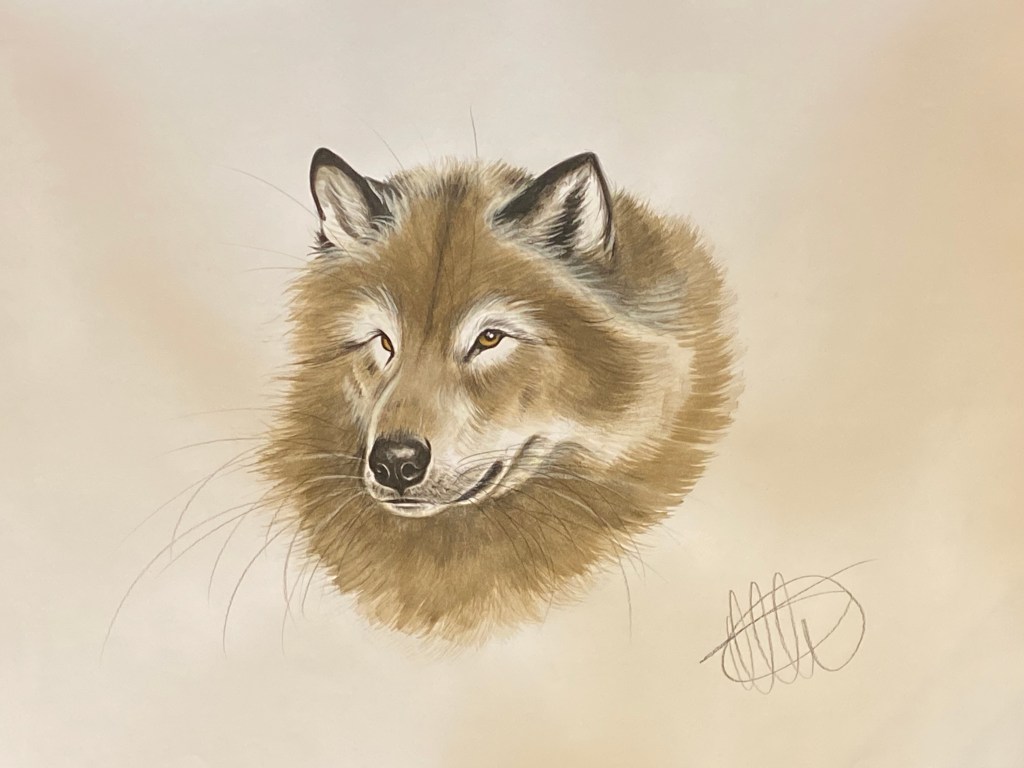
This is a stunning ORIGINAL watercolour, pastel and pencil study of a Wolf by wildlife artist Milo. This beautiful piece is on high grade art paper measuring 59×42 cms. (#13).
A Wolf by Milo ~ 2021.
Lot 11
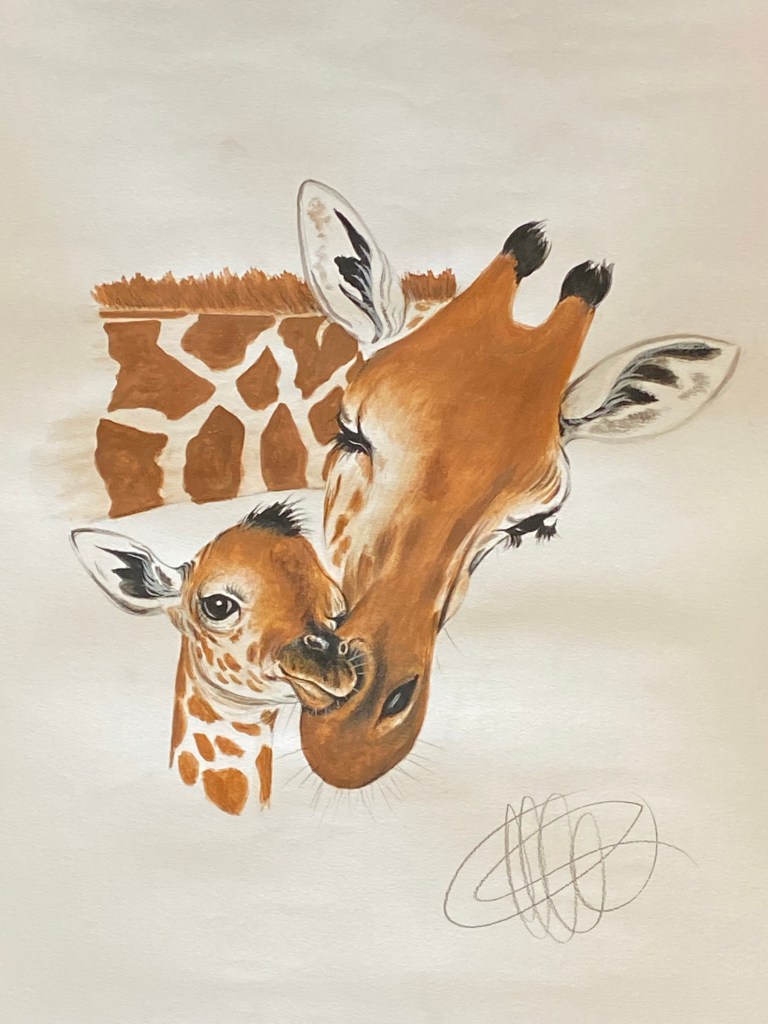
‘A Mother’s Love’ is an ORIGINAL watercolour, pastel and pencil study of a Giraffe and her baby by wildlife artist Milo. This STUNNING piece is on high grade art paper measuring 42 x 59 cms. (#18).
‘A Mother’s Love’ (Giraffe & Baby) by Milo ~ 2021.
Lot 12
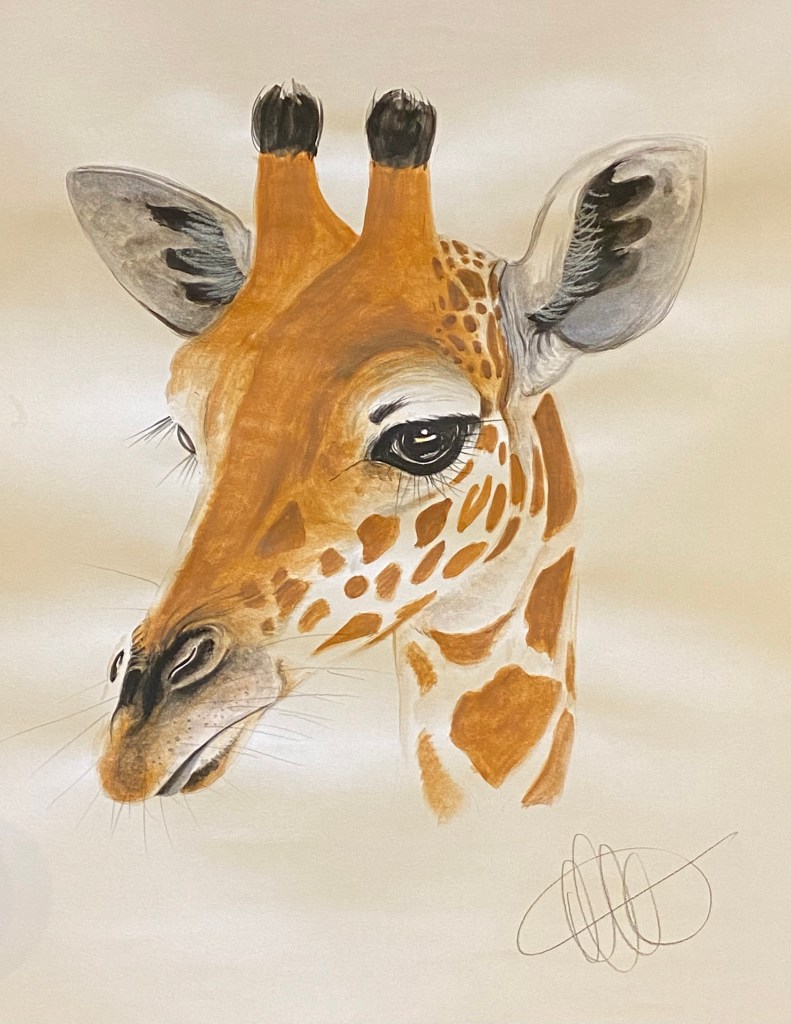
This is an ORIGINAL watercolour, pastel and pencil study of a Giraffe by wildlife artist Milo. This BEAUTIFUL piece is on high grade art paper measuring 42 x 59 cms. (#25).
A Giraffe by Mido ~ 2020.
Lot 13
This is an ORIGINAL watercolour, pastel and pencil study of an Amur Leopard by wildlife artist Milo. This BEAUTIFUL piece is on high grade art paper measuring 59 x 42 cms. (#27).
An Amur Leopard by Milo ~ 2021.
Lot 14
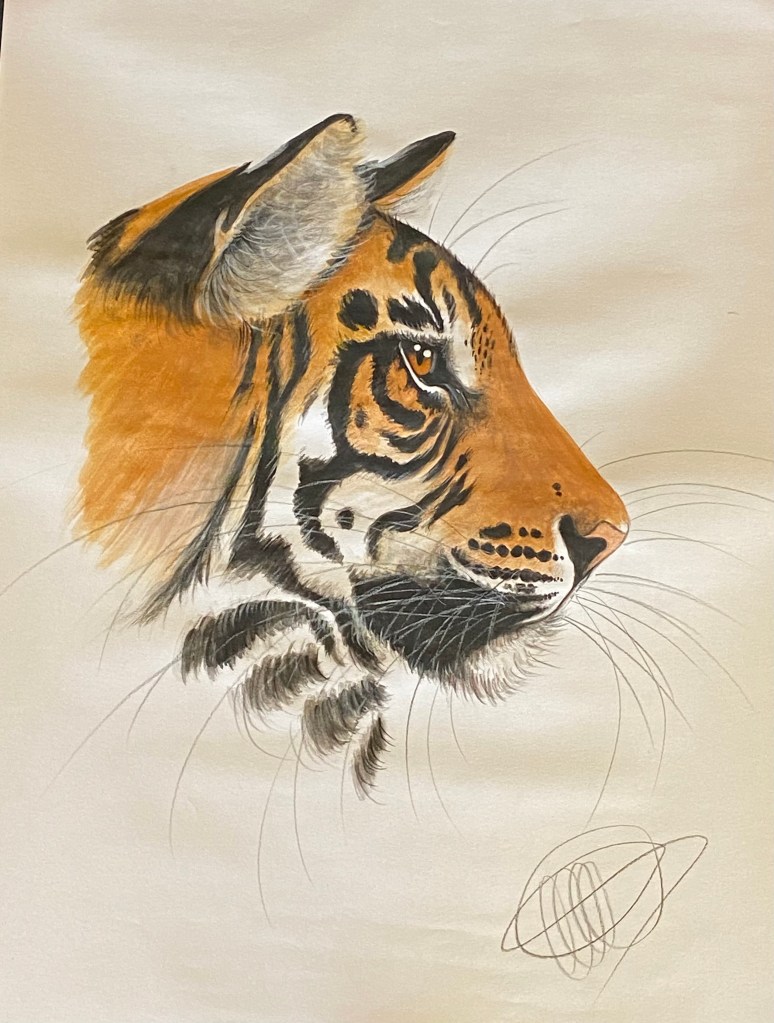
This is an ORIGINAL watercolour, pastel and pencil study of a Sumatran Tiger by wildlife artist Milo. This BEAUTIFUL piece is on high grade art paper measuring 59 x 42 cms. (#1).
A Sumatran Tiger by Milo ~ 2019.
Lot 15
This is an ORIGINAL watercolour, pastel and pencil study of a beautiful pair of Cheetah cubs by wildlife artist Milo. This BEAUTIFUL piece is on high grade art paper measuring 59 x 42 cms. (#16).
A pair of Cheetah cubs by Milo ~ 2020.
Lot 16
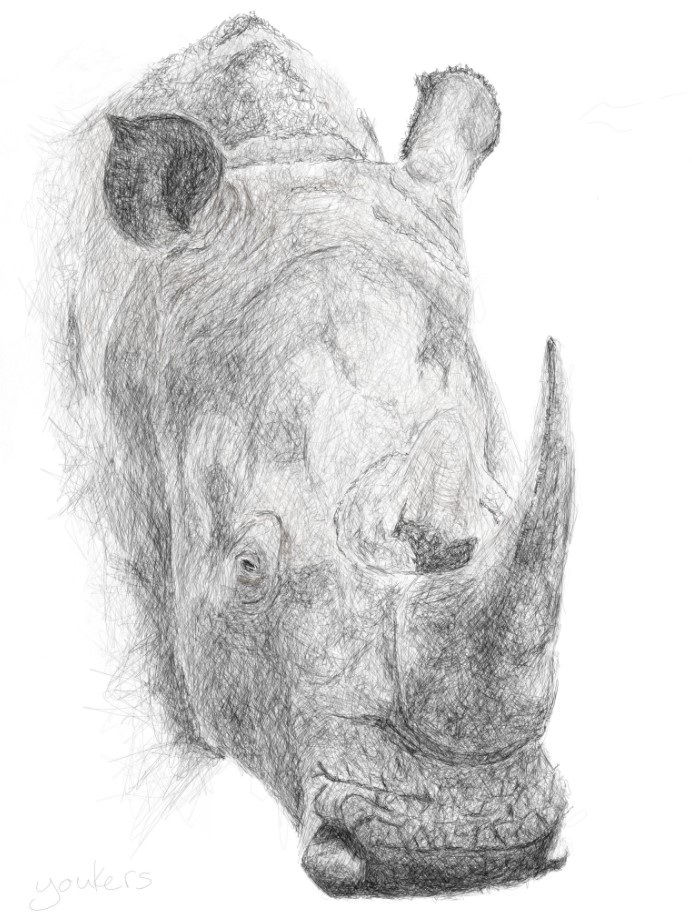
This is an ORIGINAL pencil study of a Rhino by Dane Youkers . This beautiful piece measures 28 x 36 cms .
A Rhino by Dane Youkers ~2022.
Lot 17
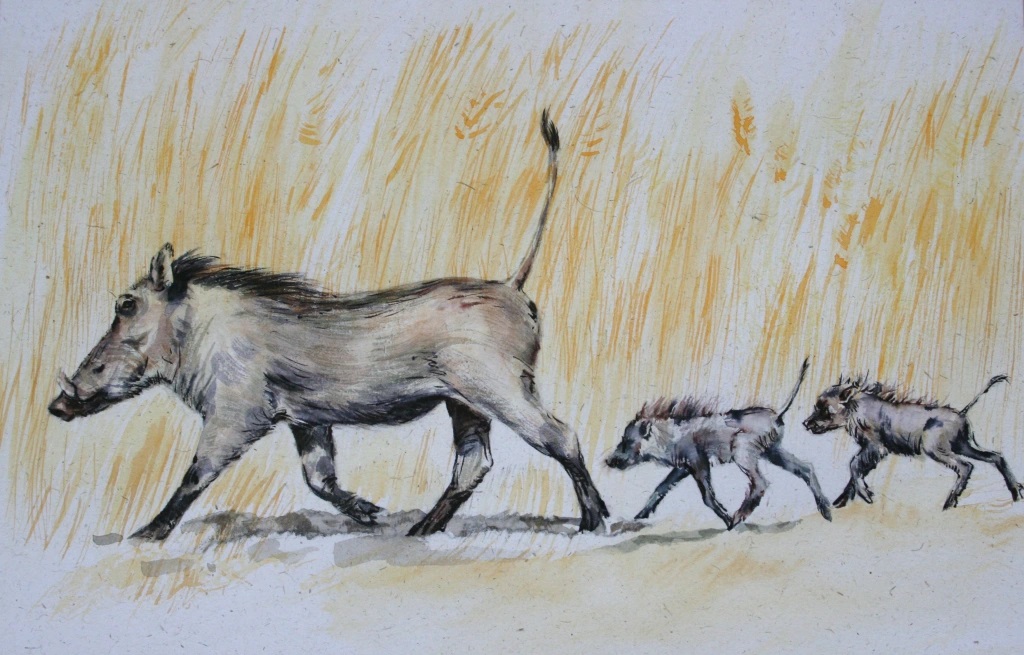
‘Tails Erect’ by Wildlife Artist Carol Barrett. This ORIGINAL study of Warthogs is in watercolour and ink and is on Rhino Dung Paper! It is mounted and measures 40 x 30 cm.
‘Tails Erect’ by Carol Barrett.
Lot 18
This is an ORIGINAL watercolour study of a Badger by Diane Antoine. This beautiful piece measures 30 x 21 cms .
‘The Badger’ by Diane Antoine ~2020.
Lot 19
This is an ORIGINAL pencil study of a Wolf (artist unknown). This beautiful piece measures 30 x 21 cms .
A Wolf In Thought
Lot 20
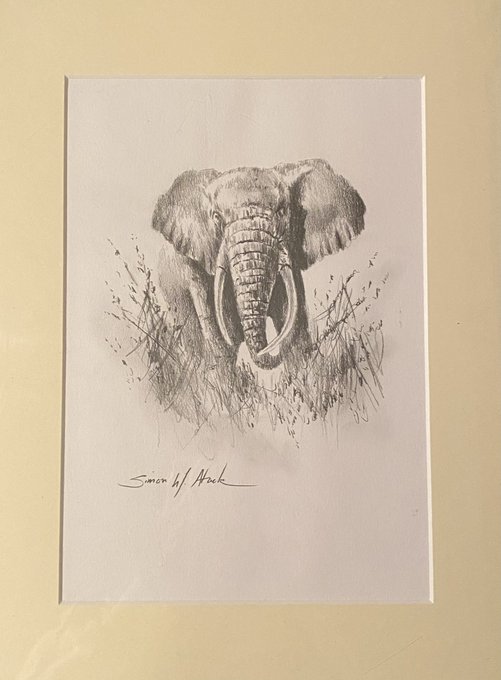
This is an ORIGINAL study of an Elephant in pencil by Simon W. Atack. This BEAUTIFUL piece measures 30 x 21 cms and is mounted.
The Leader Of The Herd by Simon W. Atack.
Lot 21
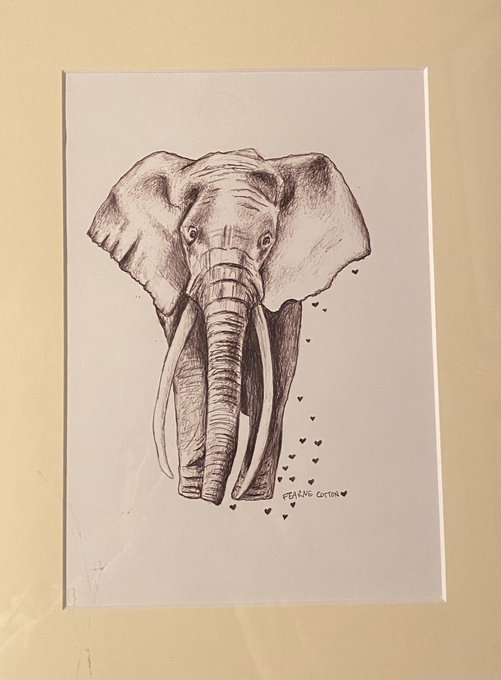
This is an ORIGINAL study of an Elephant in pencil by presenter and author Fearne Cotton. This BEAUTIFUL piece measures 30 x 21 cms and is mounted.
Super Tusker by Fearne Cotton.
Lot 22
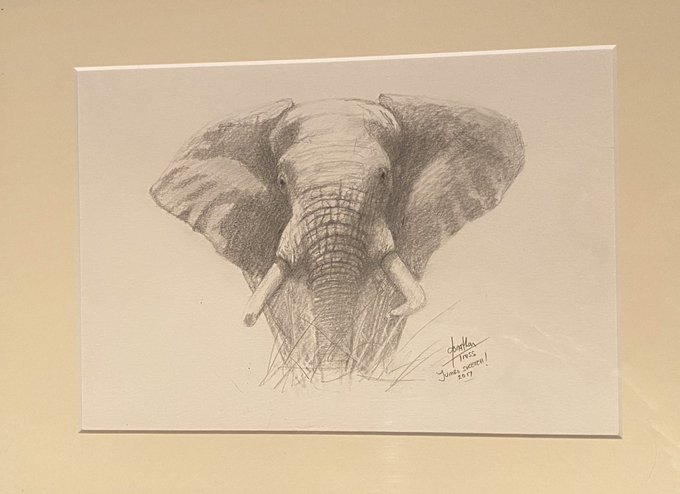
This is an ORIGINAL study of an Elephant in pencil by Jonathan Truss. This BEAUTIFUL piece measures 30 x 21 cms and is mounted.
Jumbo Sketch by Jonathan Truss.
Lot 23
‘Gentle Elephant’ is an ORIGINAL watercolour study by Anne Jolivet. This BEAUTIFUL piece measures 30 x 21 cms .
‘Gentle Elephant’ by Anne Jolivet ~ 2021.
Lot 24
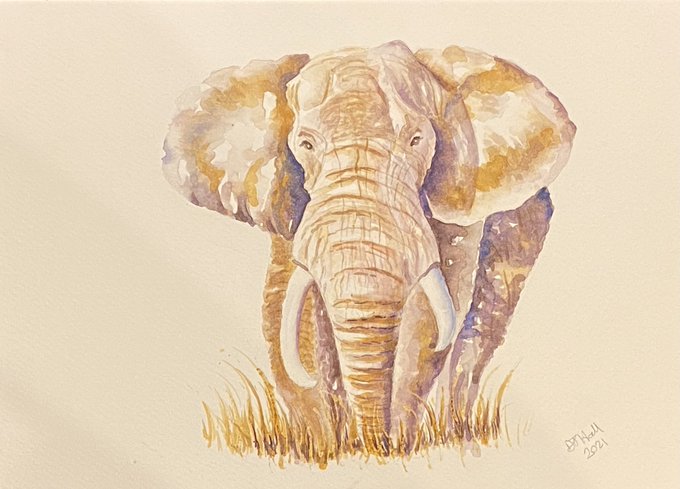
This is an ORIGINAL watercolour study of an Elephant by Debra J. Hall. This BEAUTIFUL piece measures 30 x 21 cms .
An Elephant by Debra J. Hall ~ 2021.
Lot 25
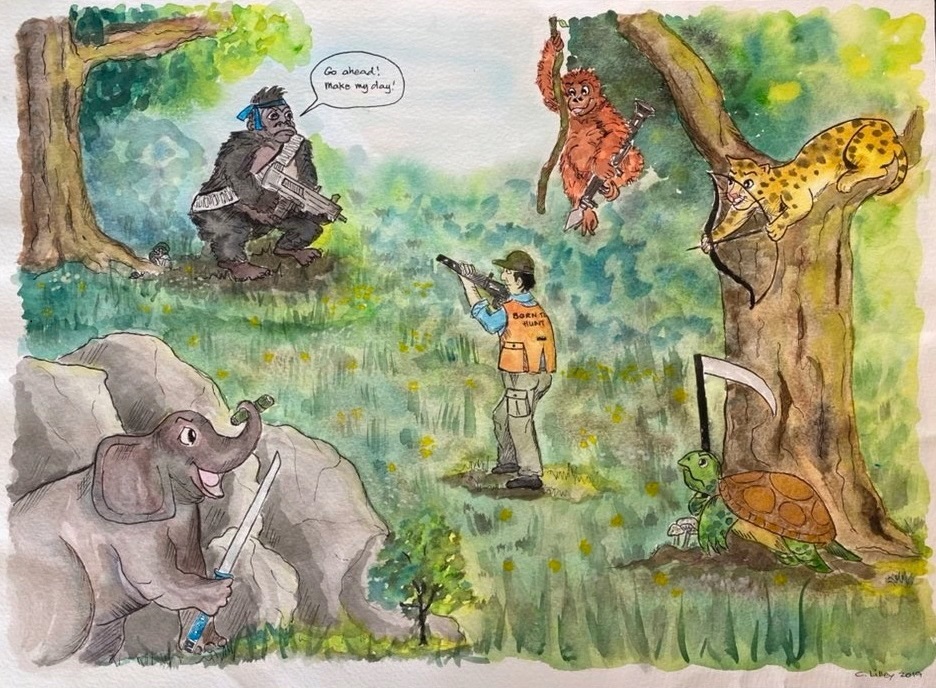
‘The Animals Fight Back’ ORIGINAL watercolour Charito Lilley. This thought-provoking piece measures 40 x 30 cms
‘The Animals Fight Back’ by Charito Lilley ~ 2019.
Lot 26
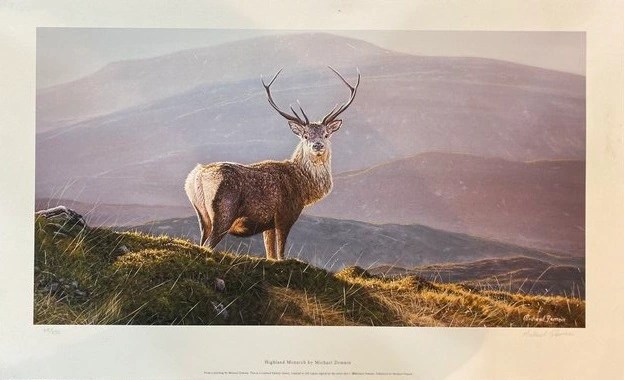
This is a Limited Edition (No. 46/250) print is ‘Highland Monarch’ by Michael Demain. This stunning print measures 56 x 34 cms.
‘Highland Monarch’ by Michael Demain.
Lot 27
A beautiful print of Tiger cubs by Jan Ferguson. This piece measures 41 x 31 cms.
‘Tiger Cubs’ by Jan Ferguson.
Lot 28
A stunning Limited Edition print (No. 7/100) titled ‘Endangered Nobility’ by Kim Thompson. This beautiful study of the noble Lion measures 60 x 42 cms.
‘Endangered Nobility’ by Kim Thompson ~ 2011.
Lot 29
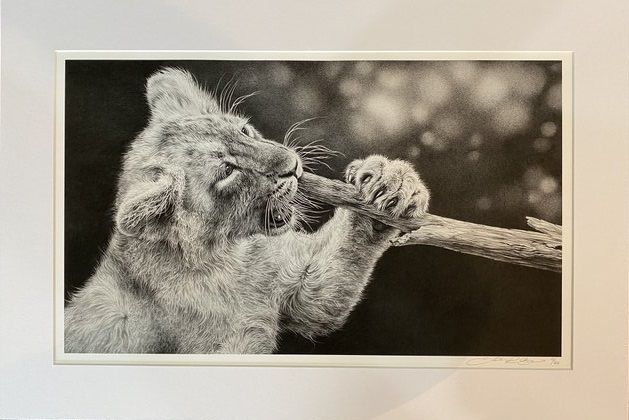
‘Mischief Maker’ is a beautiful Ltd Edition study of a playful Lion cub by Julie Rhodes. It is mounted and measures 56 x 38 cms.
‘Mischief Maker’ by Julie Rhodes.
Lot 30
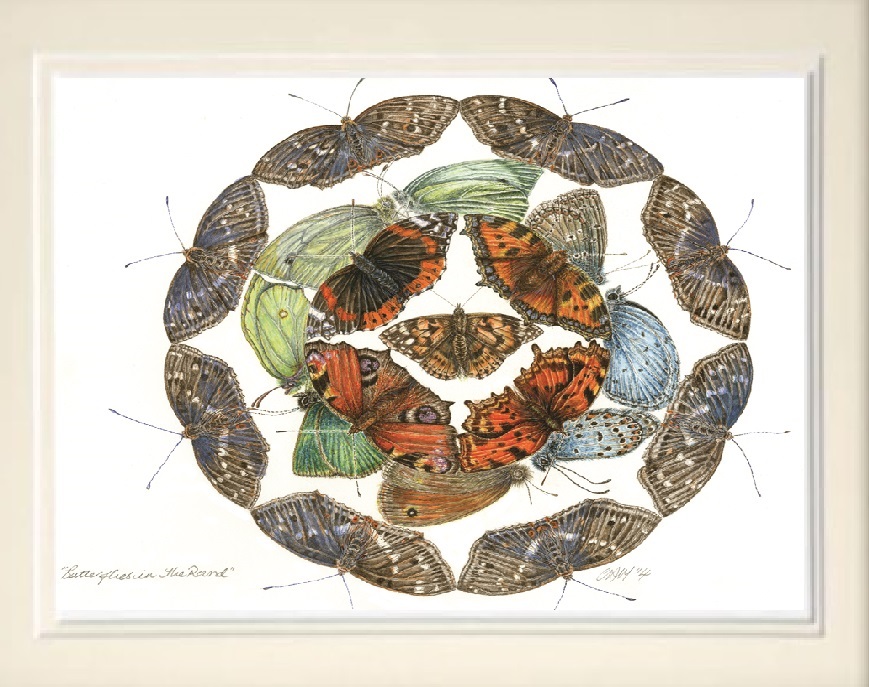
The beautiful Butterflies In The Round by Cath Hodsman. This Limited Edition print measures 51 x 41 cms.
‘Butterflies In The Round’ by Cath Hodsman.
Lot 31
Street artist Sonny Sundancer’s gigantic painting of an Amur Leopard overlooked the city of Vladivostok, Russia and was part of his worldwide ‘To The Bone’ project aimed at raising awareness about endangered species.
This STUNNING piece of his work is caught brilliantly in this VERY Limited Edition of only 45 prints (No. 29/45) and measures 50 x 35 cms.
Amur Leopard street art by Sunny Sundancer ~ 2017.
Lot 32
In a very Limited Edition of only 75 prints (No. 6/75), this beautiful study of a Sumatran Tiger is by Nick Day. It measures 38 x 41 cms.
A Sumatran Tiger by Nick Day ~ 2015.
Lot 33
This is a stunning Limited Edition print of a commission for The Miracle’s Mission Rehabilitation Centre. This beautiful piece measures 30 x 21 cms.
THE MIRACLE’S MISSION REHABILITATION CENTRE
Thank you for taking the time to look at our auction and happy bidding.
If you would like to make a donation to our fundraiser to help support our work you can do so at Fundraiser To Help Disabled Animals. Thank you.
After Whales and Dolphins, Ottawa intends to ban keeping Elephants and great Apes in captivity in the country “because of the cruelty they represent”.
A new bill, calledThe Jane Goodall Act, was introduced in the Senate on Tuesday to ban anyone from taking an Elephant or a great Ape, a term that includes Chimpanzees, Gorillas and Orangutans.
Canadian zoos won’t be able to bring in new elephants or apes under new federal legislation introduced this week, except under specific circumstances. Bill S-15 looks to ban all new captivity of the species except where a licence is granted for conservation, research or an animal’s best interest.
“The recapture of any Elephant or great Ape in Canada must meet very strict criteria demonstrating that the activity is for animal welfare, conservation or science,” commented the Minister of Environment and Climate Change, Steven Guilbeault.
Senator Marky Klyne of Saskatchewan sponsored the bill that was introduced on Tuesday. “It is upsetting to know that according to current standards, a person does not need to hold a permit to own a chimpanzee in some regions of Canada,” he lamented to explain the interest of his fee.
Elephants, for their part, are very intelligent animals that suffer when kept in captivity or presented to the public in an unnatural environment, added the senator in the second reading of the law on Thursday.
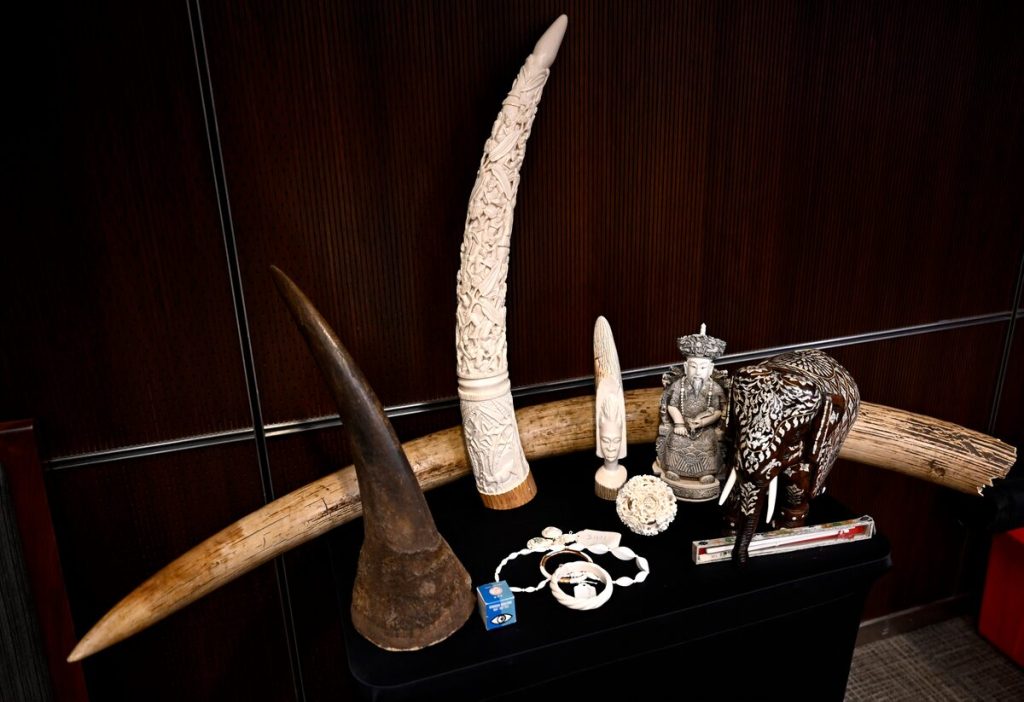
Minister Guilbeault announced the ban on the import of ivory from Elephant tusks and Rhino horns, including hunting trophies and articles carved from ivory, for which it is necessary to obtain a permit. Few exceptions are planned for museums and scientific research.
Elephant ivory and rhino horn imports have been banned by Ottawa
Tightening the laws
The law banning the captivity of great Apes and Elephants is part of a series of laws adopted to better protect animals in Canada and elsewhere in the world.
In 2019, Canada also banned the keeping of Whales and Dolphins in captivity.
WHAT YOU CAN DO TO HELP ANIMALS IN NEED
You can support our work by donating as little as £5 – It only takes a minute but it can last a lifetime for an animal in need.
Everyone who donates will receive a Certificate of Appreciation as a thank you for helping animals in need.
The Mission of Protect All Wildlife is to prevent cruelty and promote the welfare of ALL animals. We believe EVERY animal should be treated with respect, empathy, and understanding. We raise awareness to protect and conserve wild, captive, companion and farm animals.
It is vital that we protect animals against acts of cruelty, abuse, and neglect by enforcing established animal welfare laws and, when necessary, take action to ensure that those who abuse animals are brought to justice.
Protect All Wildlife are involved in many projects to protect animals’ rights, welfare, and habitats. Money contributed to Protect All Wildlife supports ALL of our worthy programmes and gives us the flexibility to respond to emerging needs. Your donations make our work possible.
ACTOR, COMEDIAN AND ANIMAL RIGHTS ACTIVIST RICKY GERVAIS
Cruelty to animals, also called animal abuse, animal neglect or animal cruelty, is the infliction by omission (neglect) or by commission by humans of suffering or harm upon any animal. More narrowly, it can be the causing of harm or suffering for specific achievement, such as killing animals for entertainment; cruelty to animals sometimes encompasses inflicting harm or suffering as an end in itself, defined as zoosadism.
Animal cruelty can be broken down into two main categories: active and passive. Passive cruelty is typified by cases of neglect, in which the cruelty is a lack of action rather than the action itself. Oftentimes passive animal cruelty is accidental, born of ignorance. In many cases of neglect in which an investigator believes that the cruelty occurred out of ignorance, the investigator may attempt to educate the pet owner, then revisit the situation. In more severe cases, exigent circumstances may require that the animal be removed for veterinary care.
Whether it is Elephants killed for their tusks or beaten so they comply in the Asian tourism ‘industry’, Rhino slaughtered for their horns for ‘traditional Chinese medicine (TCM), animals skinned alive for the fur trade etc, animal activists need to stand together to fight for their rights.
At many elephant ‘sanctuaries’ across Thailand and in other countries, the elephants are taught to fear humans. This is so that they will act with compliancy. From babies they are tied up, starved and beaten in what is known as a ‘crush’. This is the act of breaking a young elephant’s spirit. And it’s mostly true what they say: an elephant never forgets. This means that, with their long memories, elephants remember this period of abuse for the rest of their lives. It ensures that the elephants will do what the trainers (also known as mahouts) say, and are more easily trained.
They are also commonly beaten with hooks and sticks that have nails poking out of them – this is when they are seen to be misbehaving or not following orders, or being too slow to respond. The mahouts want the animals to be constantly putting on a performance for those tourists who are there for elephant riding in Thailand.
UNDERCOVER FOOTAGE SHOWS CRUEL TRAINING USED ON BABY ELEPHANTS TO BOOST THAILAND TOURISM
As poaching and habitat loss ravage rhinoceros and elephant populations, protections for these species are vitally important. Today, all five rhino species and both elephant species are threatened with extinction. Efforts are underway across the globe to save these iconic animals.
Elephants and rhinos often experience painful deaths when poached. Rhinos may have their horns cut off while they are still alive and contrary to belief, elephants do not lose their tusks; they are hacked out by poachers.
More than a thousand rhinos and tens of thousands of elephants are killed each year to feed demand for ivory and rhino horn. The international trade in elephants, rhinos, and other species is the second-largest threat to wildlife after habitat loss. If the market continues to drive poaching, both rhinos and elephants could vanish from the wild as early as 2034.
HORRIFIC IMAGES OF ELEPHANTS POACHED FOR THEIR TUSKS AND A RHINO FOR ITS HORN
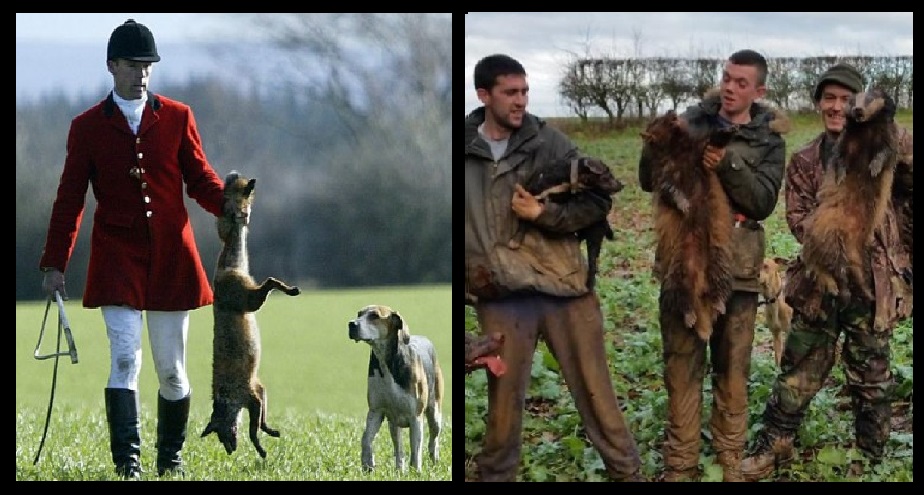
Every year, hundreds of badgers meet a horrific death in the name of ‘sport’ in the UK at the hands of terriermen. Many of those who have been caught digging into badger setts have used the excuse that they were after foxes – and many have escaped prosecution by so doing.
More than 10,000 are caught, tortured and killed in the UK each year by huntsmen with terriers – with almost a third of these illegal acts being carried out in Wales. Alarmingly, this figure is rising constantly. Terry Spamer, a former RSPCA inspector, believes that there are around 2,000 people involved in badger baiting currently. However, only around three people are caught and convicted of badger baiting each year, while the majority carry on breaking the law.
Traditional fox hunting was banned in England and Wales under the Hunting Act 2004. In spite of existing legislation, there has been 500 successful prosecutions under the Act. However, many incidents of illegal hunting have gone unpunished.
FOX HUNTING AND BADGER BAITING IS ILLEGAL IN THE UK BUT CARRIES ON WITH WITH APPARENT IMPUNITY
Dogfighting is an inhumane ‘bloodsport’ where dogs who have been bred, conditioned and trained to fight are placed in a pit to fight each other for spectator ‘entertainment’ and profit. Fights average one to two hours, ending when one of the dogs cannot continue.
Dog fights usually take part in quiet, private locations, such as in an industrial unit or farm building. Participants will spend months training their dogs in preparation, much like boxing, the fighters will have to hit a target weight to take part. Organisers will create a fighting ‘pit’ for the dogs to fight within.
Dogs who have been used in fighting often have serious injuries to their head, ears, front legs and chest that are caused as they go head-to-head in a pit. They will also have injuries of different ages, some old scars and some fresh wounds.
IT IS BELIEVED OVER 16000 DOGS DIE EACH YEAR IN ORGANIZED DOG FIGHTS
Each year, thousands of bulls are barbarically slaughtered in bullrings around the world. Over the centuries, bullfighters have found countless ways to rig the “fight” in their favor. Bulls are often weakened with drugs or by having sandbags dropped on their backs. Their horns have been shaved to keep them off balance, or petroleum jelly has been rubbed into their eyes to impair their vision.
Every year, approximately 250,000 bulls are killed in bullfights. Bullfighting is already banned by law in many countries including Argentina, Canada, Cuba, Denmark, Italy and the United Kingdom. Although legal in Spain, some Spanish cities, such as Calonge, Tossa de Mar, Vilamacolum and La Vajol, have outlawed the practice of bullfighting. There are only a few countries throughout the world where this practice still takes place (Spain, France, Portugal, Mexico, Colombia, Venezuela, Peru, and Ecuador). ~ HSI.
BULLS ARE TORTURED IN THE NAME OF CULTURE AND TRADITION
Each year from approximately September 1 to March 1, a large-scale hunt of dolphins takes place in the small village of Taiji, Japan, as featured in the 2010 Academy Award-winning documentary The Cove. During this six month season, dolphin hunters utilize drive hunt techniques to herd large numbers of dolphins to shore, resulting in their capture or death.
The captured dolphins may be selected for live trade to aquariums and marine parks for display, while others are slaughtered for their meat. The price for live captures is many times higher than those killed.
THE ANNUAL TAIJI DOLPHIN SLAUGHTER
What you can do to help animals in need:
Support ‘Protect All Wildlife’ by donating as little as £1 – It only takes a minute but it can last a lifetime for an animal in need. Thank you.
We believe EVERY animal should be treated with respect, empathy, and understanding. We raise awareness to protect and conserve wild, captive, companion and farm animals. It is vital that we protect animals against acts of cruelty, abuse, and neglect by enforcing established animal welfare laws and, when necessary, take action to ensure that those who abuse animals are brought to justice.
Protect All Wildlife are involved in many projects to protect animals’ rights, welfare, and habitats. Money contributed to Protect All Wildlife supports ALL of our worthy programmes and gives us the flexibility to respond to emerging needs. Your donations make our work possible. Thank you for your support.
“Animals are not here for us to do as we please with. We are not their superiors. We are their equals. We are their family. Be kind to them.” ~ Ricky Gervais.
Cruelty to animals, also called animal abuse, animal neglect or animal cruelty, is the infliction by omission (neglect) or by commission by humans of suffering or harm upon any animal. More narrowly, it can be the causing of harm or suffering for specific achievement, such as killing animals for entertainment; cruelty to animals sometimes encompasses inflicting harm or suffering as an end in itself, defined as zoosadism.
Animal cruelty can be broken down into two main categories: active and passive. Passive cruelty is typified by cases of neglect, in which the cruelty is a lack of action rather than the action itself. Oftentimes passive animal cruelty is accidental, born of ignorance. In many cases of neglect in which an investigator believes that the cruelty occurred out of ignorance, the investigator may attempt to educate the pet owner, then revisit the situation. In more severe cases, exigent circumstances may require that the animal be removed for veterinary care.
Whether it is Elephants killed for their tusks or beaten so they comply in the Asian tourism ‘industry’, Rhino slaughtered for their horns for ‘traditional Chinese medicine (TCM), animals skinned alive for the fur trade etc, animal activists need to stand together to fight for their rights.
At many elephant ‘sanctuaries’ across Thailand and in other countries, the elephants are taught to fear humans. This is so that they will act with compliancy. From babies they are tied up, starved and beaten in what is known as a ‘crush’. This is the act of breaking a young elephant’s spirit. And it’s mostly true what they say: an elephant never forgets. This means that, with their long memories, elephants remember this period of abuse for the rest of their lives. It ensures that the elephants will do what the trainers (also known as mahouts) say, and are more easily trained.
They are also commonly beaten with hooks and sticks that have nails poking out of them – this is when they are seen to be misbehaving or not following orders, or being too slow to respond. The mahouts want the animals to be constantly putting on a performance for those tourists who are there for elephant riding in Thailand.
UNDERCOVER FOOTAGE SHOWS CRUEL TRAINING USED ON BABY ELEPHANTS TO BOOST THAILAND TOURISM
As poaching and habitat loss ravage rhinoceros and elephant populations, protections for these species are vitally important. Today, all five rhino species and both elephant species are threatened with extinction. Efforts are underway across the globe to save these iconic animals.
Elephants and rhinos often experience painful deaths when poached. Rhinos may have their horns cut off while they are still alive and contrary to belief, elephants do not lose their tusks; they are hacked out by poachers.
More than a thousand rhinos and tens of thousands of elephants are killed each year to feed demand for ivory and rhino horn. The international trade in elephants, rhinos, and other species is the second-largest threat to wildlife after habitat loss. If the market continues to drive poaching, both rhinos and elephants could vanish from the wild as early as 2034.
HORRIFIC IMAGES OF ELEPHANTS POACHED FOR THEIR TUSKS AND A RHINO FOR ITS HORN
Every year, hundreds of badgers meet a horrific death in the name of ‘sport’ in the UK at the hands of terriermen. Many of those who have been caught digging into badger setts have used the excuse that they were after foxes – and many have escaped prosecution by so doing.
The Lychee and Dog Meat Festival, commonly referred to as the Yulin Dog Meat Festival is an annual event starting on 20th of June where an estimated 10,000 – 15,000 dogs and cats are slaughtered for their meat.
The ‘festival’ began in 2010 to celebrate summer solstice. Advocates and restaurant owners say that eating dog is traditional in the summertime. Around 10-20 million dogs are killed for their meat each year in China. However, critics argue there is no cultural value in the festival and it was mainly devised as a way of making money.
While slaughtering dogs is common in China, the festival is seen as representative of the cruelty and lack of hygiene associated with the largely unregulated industry. In addition, many of the animals killed are stolen pets some of which have been seen still wearing their collars.
Some are sent to the festival in small cages without food or water on trucks that can travel hundreds of miles.
Slaughtering takes place in front of the live animals, usually with a club or with a blow-torch to induce the pain and fear that some restaurant owners claim makes their adrenaline-rich meat tastier.
“Psychologically and mentally, they have already died many times,” said Peter Li, a China policy specialist with the Humane Society International.
DOGS ARE TORTURED TO DEATH IN THE BELIEF THAT IT MAKES THE MEAT TASTIER
Trophy hunters pay large sums of money, often tens of thousands of dollars, to travel around the world to kill wild animals. Who can forget the killing of Cecil the Lion in 2015 in Zimbabwe? He was hunted over many hours with a bow and arrow, before being skinned and beheaded by Dentist Walter Palmer.
More often than not animals in their prime and in breeding age are targeted by trophy hunting because of their specific characteristics; their black mane, their long tusks, the size of their antlers, in fact Safari Club International offers prizes for the largest animals killed. Where older males are targeted this can have extreme negative consequences for the herd or pride; older males offer protection to groups and keep juvenile males in line, when they are killed less experienced animals move in, increasing the risk of human wildlife conflict and killing the cubs of the older male. When the elephants with the largest tusks are killed, we have seen the size of elephant tusks in the population decrease over time, making it harder to find food and defend themselves.
CECIL THE LION WAS SHOT BY DENTIST WALTER PALMER IN JULY 2015 AND CAUSED INTERNATIONAL OUTRAGE
More than 10,000 are caught, tortured and killed in the UK each year by huntsmen with terriers – with almost a third of these illegal acts being carried out in Wales. Alarmingly, this figure is rising constantly. Terry Spamer, a former RSPCA inspector, believes that there are around 2,000 people involved in badger baiting currently. However, only around three people are caught and convicted of badger baiting each year, while the majority carry on breaking the law.
Traditional fox hunting was banned in England and Wales under the Hunting Act 2004. In spite of existing legislation, there has been 500 successful prosecutions under the Act. However, many incidents of illegal hunting have gone unpunished.
FOX HUNTING AND BADGER BAITING IS ILLEGAL IN THE UK BUT CARRIES ON WITH WITH APPARENT IMPUNITY
Dogfighting is an inhumane ‘bloodsport’ where dogs who have been bred, conditioned and trained to fight are placed in a pit to fight each other for spectator ‘entertainment’ and profit. Fights average one to two hours, ending when one of the dogs cannot continue.
Dog fights usually take part in quiet, private locations, such as in an industrial unit or farm building. Participants will spend months training their dogs in preparation, much like boxing, the fighters will have to hit a target weight to take part. Organisers will create a fighting ‘pit’ for the dogs to fight within.
Dogs who have been used in fighting often have serious injuries to their head, ears, front legs and chest that are caused as they go head-to-head in a pit. They will also have injuries of different ages, some old scars and some fresh wounds.
IT IS BELIEVED OVER 16000 DOGS DIE EACH YEAR IN ORGANIZED DOG FIGHTS
Each year, thousands of bulls are barbarically slaughtered in bullrings around the world. Over the centuries, bullfighters have found countless ways to rig the “fight” in their favor. Bulls are often weakened with drugs or by having sandbags dropped on their backs. Their horns have been shaved to keep them off balance, or petroleum jelly has been rubbed into their eyes to impair their vision.
Every year, approximately 250,000 bulls are killed in bullfights. Bullfighting is already banned by law in many countries including Argentina, Canada, Cuba, Denmark, Italy and the United Kingdom. Although legal in Spain, some Spanish cities, such as Calonge, Tossa de Mar, Vilamacolum and La Vajol, have outlawed the practice of bullfighting. There are only a few countries throughout the world where this practice still takes place (Spain, France, Portugal, Mexico, Colombia, Venezuela, Peru, and Ecuador). ~ HSI.
BULLS ARE TORTURED IN THE NAME OF CULTURE AND TRADITION
Each year from approximately September 1 to March 1, a large-scale hunt of dolphins takes place in the small village of Taiji, Japan, as featured in the 2010 Academy Award-winning documentary The Cove. During this six month season, dolphin hunters utilize drive hunt techniques to herd large numbers of dolphins to shore, resulting in their capture or death.
The captured dolphins may be selected for live trade to aquariums and marine parks for display, while others are slaughtered for their meat. The price for live captures is many times higher than those killed.
THE ANNUAL TAIJI DOLPHIN SLAUGHTER
What you can do to help end animal abuse
We believe EVERY animal should be treated with respect, empathy, and understanding. We raise awareness to protect and conserve wild, captive, companion and farm animals.
It is vital that we protect animals against acts of cruelty, abuse, and neglect by enforcing established animal welfare laws and, when necessary, taking action to ensure that those who abuse animals are brought to justice.
The Mission of Protect All Wildlife is to prevent cruelty, promote the welfare of ALL animals EVERYWHERE, and help END animal abuse.
Please support our work by donating ANY amount, large or small. It only takes a minute and your donations make it all possible. Thank you for your support.
What else you can do to help
Please SHARE to raise awareness to wildlife and environmental issues from around the world.
Baby orangutans are prized possessions on the illegal black market, where many other critically endangered species are trafficked. Aman is just one of many infant Orangutans who were stolen from their mothers in the past couple of years, but his story highlights the extent of the illegal wildlife trade and the trauma that young orangutans suffer.
An infant Orangutan cannot be taken from its mother without force. Mother Orangutans will fight to the death to save their babies. To feed this insidious illegal trade, the mothers are almost certainly killed, often with machetes or guns. Not only are the infants traumatized and smuggled far from the forest, but the whole species is also robbed of future generations through the brutal murders of female orangutans.
Traumatic Transportation
Once captured by wildlife criminals, the babies are typically forced into boxes, crates, or even postage bags to be smuggled through or out of Indonesia, often to far-flung places like Thailand, the Middle East, Europe, or Singapore. Many also end up in small wooden cages, hidden away in homes across Indonesia. Owning a baby Orangutan is seen as a status symbol, even though the practice is illegal in both Indonesia and Malaysia.
Regardless of where these highly intelligent beings end up, their freedom is gone forever unless they can be rescued. They are often fed the wrong food, are unable to climb or make nests in trees, and can become unwell and experience mental health issues. Some, like Aman, will carry the physical reminders of their early trauma for the rest of their lives.
Aman’s Story – From Trauma to Safety
Aman is missing the tops of his fingers on his left hand. His rescuers in Borneo believe his fingers were most likely hacked off while he clung to his mother as she was killed. It’s almost impossible to imagine what this young orangutan has been through in his short life: from being torn from his mother’s arms and experiencing her murder, to the pain of losing his fingers, to being shoved into a chicken coop and forced to look out at the world through wooden slats.
Aman was rescued in June 2020 by the Bornean Orangutan Rescue Alliance (BORA) from a family home in Berau in East Kalimantan, Borneo. The BKSDA (Nature and Conservation Agency) contacted the BORA rescue team to notify them about an illegally held Orangutan, who they believed was about two years of age, and asked the team to help confiscate him.
The team immediately set to work and prepared an enclosure in their rescue center for the pending arrival at their vet clinic of the rescued Orangutan. They loaded a transport cage into their vehicle, left early one morning, and traveled to the home in Berau, where they found the young Orangutan peering up at them through the slats of a chicken coop. They learned he’d been fed mostly on bananas, water, and candy, and as soon as he was in their transportation crate, he was given leaves to rest on and fruit to eat. The confiscation and transport back to the rescue center went smoothly, although that is not always the case.
Within days of being rescued, the young Orangutan was recovering, learning to eat leaves and twigs, and finding simple joy in his freedom. Soon after he arrived at the rescue center, the team at The Orangutan Project, one of the BORA partners, contacted a bequestor to ask for a new name for the young orangutan. The name Aman was chosen as it means ‘safe’ in Indonesian.
Nearly two years later, Aman still occasionally struggles to climb trees or open fruit, but he never gives up. Through the love and kindness of the Orangutan carers, the good diet of fruit, leaves, twigs, and termites; and the opportunity to learn from older orangutans and carers how to climb trees, swing through the branches and build a nest, Aman is flourishing.
Jungle School was a new experience, but despite his missing fingertips, Aman is not daunted and is learning how to climb, swing through the trees, and forage for his food. He is a sweet, courageous young Orangutan who gives everything a go. Aman’s story is a testament to the resilience of young Orangutans who have been orphaned by the illegal wildlife trade, as long as they are one of the ‘lucky’ ones to be rescued from a life of captivity.
The Most Trafficked Great Ape
Orangutans are one of the most heavily trafficked critically endangered animals sold on the black market. International Orangutan conservation organization, The Orangutan Project, estimates that only one in six orangutans are rescued. Of the hundreds that the organization and its partners care for, there are thousands more that have been killed.
Surprisingly, some baby Orangutans are even bought and sold online through sites such as Facebook, Whatsapp, and Instagram. At a price tag of $1,000 or more, baby orangutans are highly prized within the illegal wildlife trade, which is also responsible for poaching Tigers, Elephants, Pangolins, Rhinos, and many more species.
As the forests of Borneo and Sumatra are destroyed, critically endangered species become more accessible to poachers. This, in turn, helps drive biodiversity loss throughout the remaining fragmented habitat. These dense, rich forests are healthiest when species like Orangutans, elephants, and tigers are flourishing.
Less than Ten Years to Save the Orangutan
I believe, along with many other scientists and primatologists, that there are less than ten years to save orangutan populations from becoming too small, vulnerable, and fragmented to stop them from spiraling towards extinction. Without urgent action to safeguard the remaining rainforests of Indonesia, many species will die out. As forests are cut down for timber, mining, and unsustainable monocultures such as palm oil, pulp paper, or rubber trees, orangutans and other species become easier prey for wildlife traffickers.
There are still forests in Borneo and Sumatra. There are still Orangutans, Tigers, and Elephants living wild and free in these forests. But without massive injections of funds to safeguard the remaining ecosystems, it won’t matter how many Orangutans are rescued from the illegal wildlife trade. While being rescued matters to individuals like Aman, this highly sentient species will have no forest habitat to return to without intact ecosystems.
We might save individual Orangutans, but if we don’t save the right size, type, and shape of the forest, Orangutans will become extinct in the wild. In 10 years, we might still have some forest left but not enough to sustain Orangutan populations. We might have some Orangutans left, but their numbers will be too low to secure the future of the species. And zoo populations are too small and too problematic to provide meaningful help.
The most important act we can take now is to safeguard the remaining forests of Sumatra and Borneo. The Orangutan Project aims to protect eight key ecosystems across Borneo and Sumatra through legally binding agreements that put a stop to legal deforestation, unsustainable monocultures, and mining in those forests. At present, this world-renowned international organization has formed partnerships that have helped secure the future of two key ecosystems: the Bukit Tigapuluh Ecosystem in Sumatra and the Sebangau Ecosystem in Borneo.
Working with key partners in Borneo and Sumatra, The Orangutan Project is approaching the problem from all sides. To ensure these forests stay intact, they employ teams of wildlife rangers to patrol the ecosystems to reduce all illegal activities such as logging, hunting, and snares. Their teams work closely with local communities, supporting economic development projects that provide incentives for forest conservation.
They engage with and empower indigenous communities in Borneo and Sumatra, responding to their immediate, expressed needs and aspirations with projects that support strength, resilience, and education. The evidence is encouraging; everywhere these rangers patrol the forest and engage local communities, illegal activities reduce over time, and farmers, children, and villagers become protectors of the forest.
All these efforts – from rescuing and rehabilitating Orangutans like Aman to patrolling vast tracts of forest and educating and empowering communities – require significant funds each year. Without funds from donors all over the world, such as Australia, the United States, Europe, and more, these activities would not be possible. Without support, many more Orangutans would be poached and illegally traded, and the richly biodiverse forests of Sumatra and Borneo would not be protected.
Although actions now save Orangutans like little Aman, these steps taken will also bear fruit in the future – in 10, 20, or more years. Some of us will not be alive to see the outcomes of our actions and support – but we know that if we are part of this solution, we are helping bring about long-term survival, not only of Orangutans but also of Tigers, Elephants, Rhinos and the local people who live in and near the forests.
The Mission of Protect All Wildlife is to prevent cruelty, promote the welfare of ALL animals EVERYWHERE, and help END animal abuse.
Please support our work by donating ANY amount, large or small. It only takes a minute and your donations make it all possible. Thank you for your support.
After completing rehabilitation at the BORA Rescue & Rehabilitation Centre in East Kalimantan, Indonesia, Bornean Orangutans Ucockwati, 18, and Mungil, 8, were deemed eligible for release.
Bornean Orangutans Ucockwati, 18, and Mungil, 8 Were Released into the Wild To ‘Revert Impending Extinction Crisis’
A pair of Orangutans, mother and daughter, were released into their natural habitat.
According to a release from The Orangutan Project, Bornean Orangutans Ucokwati, 18, and Mungil, 8, moved to the wild in the first in a series of Orangutan releases planned for 2022 by the Bornean Orangutan Rescue Alliance (BORA) — a joint initiative of the Indonesian Nature Conservation Agency (BKSD), Centre for Orangutan Protection and The Orangutan Project.
Conservationists deemed the two primates eligible for release after the animals completed their rehabilitation at the BORA Rescue & Rehabilitation Centre in East Kalimantan, Indonesia.
“Both had demonstrated advanced foraging and nest-making skills, as well as a healthy dislike for humans,” Hardi Baktiantoro, a field manager for The Orangutan Project and Founder of the Centre for Orangutan Protection, shared. “Ucokwati is particularly aggressive towards humans, no doubt due to her ill-treatment while in captivity, and this made her a prime candidate to successfully transition back into the wild.”
Before BORA, the Orangutan duo lived at the Wildlife Rescue Centre in Yogyakarta on the Indonesian Island of Java. Ucokwati moved to the centre after being rescued from an amusement park in October 2011. She gave birth to her daughter at the centre in May 2013.
“We don’t know how long Ucokwati had been held in captivity at the park,” Hardi Baktiantoro added. “As with most Orangutans that end up in such places like these, it is highly probable that she was taken from her mother as an infant and sold into the illegal pet trade.”
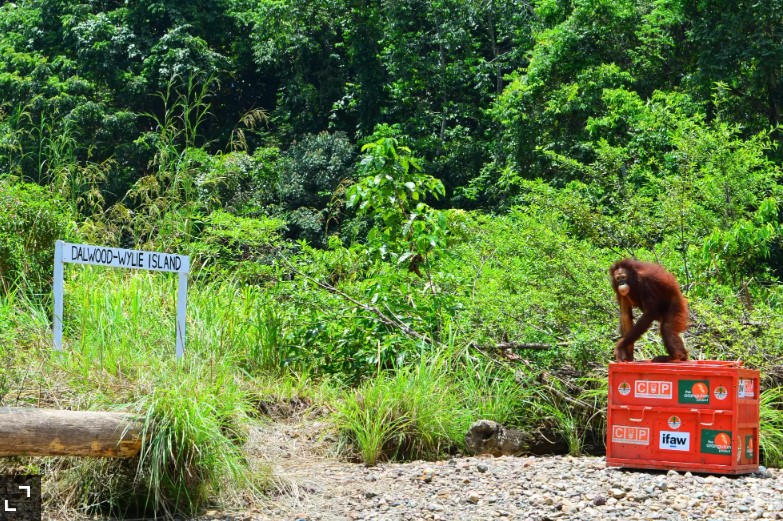
Ucokwati Surveying Her New Surroundings
Due to financial difficulties caused by the pandemic, the rescue centre shut down. As a result, the mother-daughter duo moved to the BORA Centre in April 2021.
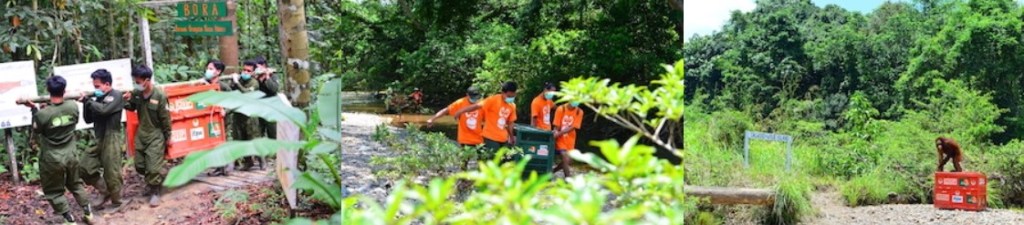
Ucokwati and Mungil now live on Dalwood-Wylie Island, located in the Busang Ecosystem, one of the last remaining viable rainforest habitats for Orangutans on the island of Borneo. The location is a 10-hour trip by vehicle from the BORA Centre followed by a three-hour boat ride along the Busang River.
The area was chosen for the release so BORA’s staff can monitor the apes while the animals adjust to life in the wild. The Orangutans’ rescuers expect Ucokwati and Mungil to venture further into the Busang Ecosystem as they become increasingly independent.
Bornean Orangutans Ucockwati, 18, and Mungil, 8 Were Released into the Wild
Two other male Orangutans are set to follow in the mother-daughter duo’s footsteps and will soon be released into the Busang Ecosystem. The releases are part of a mission to ensure the future survival of critically endangered Orangutans.
“The alliance has been granted approximately 20,000 hectares within the 260,000-hectare Busang Ecosystem to undertake Orangutan rehabilitation and release for critically endangered Bornean Orangutans,” Leif Cocks, the founder of The Orangutan Project, said.
“The release of Orangutans like Ucokwati and Mungil back to the wild gives hope that we can revert the impending extinction crisis,” Cocks added. “But we cannot do it alone. We need more individuals to join us to secure and protect viable rainforest habitat before it is too late.”
What can you do to help END animal abuse!
The Mission of Protect All Wildlife is to prevent cruelty, promote the welfare of ALL animals EVERYWHERE, and help END animal abuse.
Please support our work by donating ANY amount, large or small. It only takes a minute and your donations help make our work possible. Thank you for your support.



























 PROTECT ALL WILDLIFE