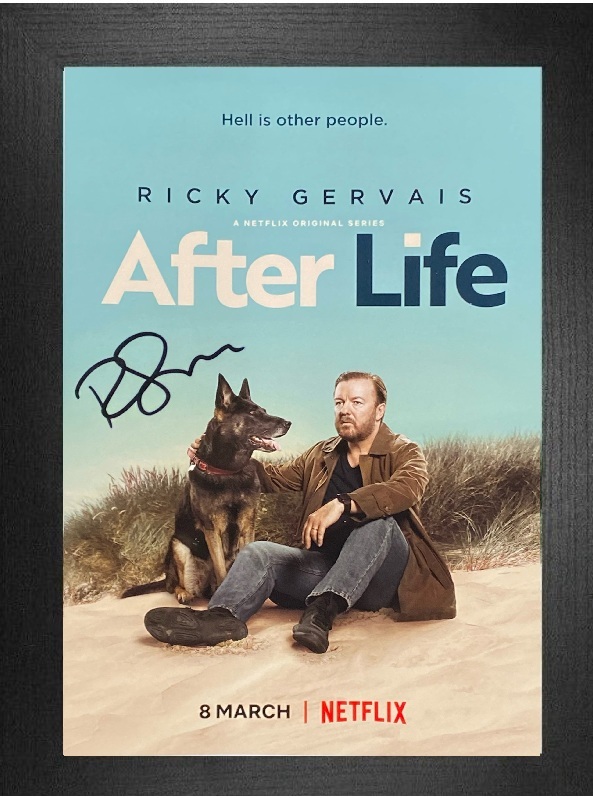
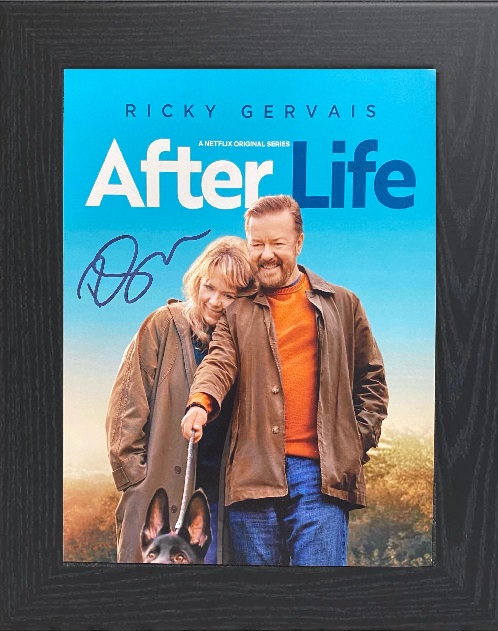
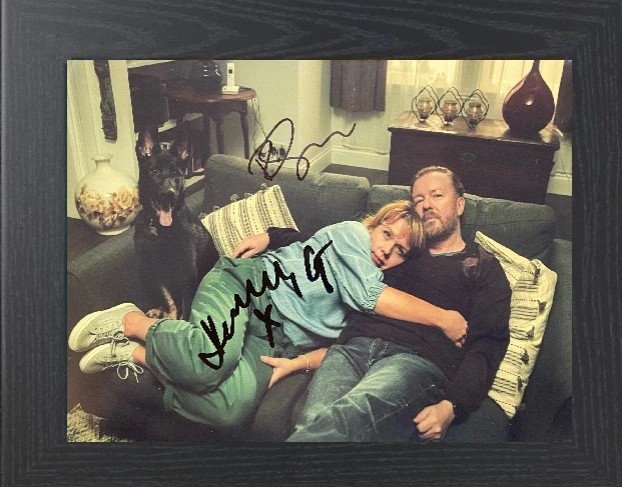
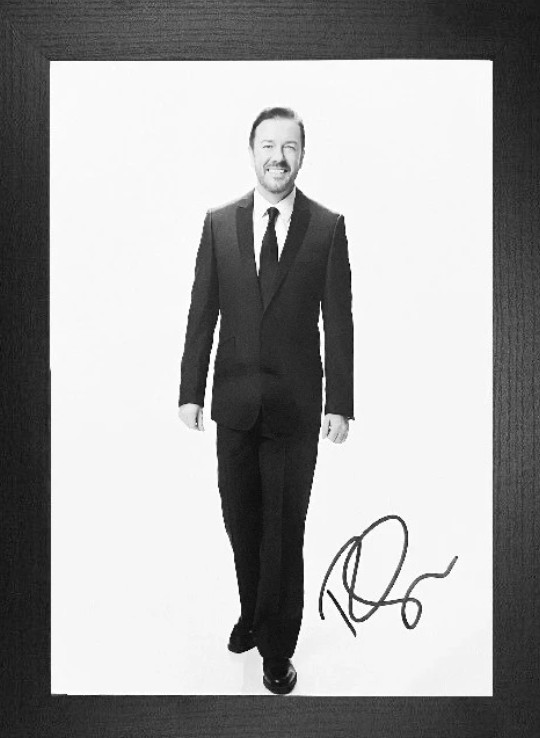
This is your chance to bid on signed pictures very kindly donated by Ricky Gervais in our ‘Charity Auction To Help Disabled Animals’.
This is a sealed bid auction, so all you need to do is decide which item you would like to bid for and send us your bid with the LOT NUMBER and name by email to protectallwildlife@btinternet.com by 21:00 on the 24th of August 2025. We will email you to let you know if your bid is the highest. Postage costs will be calculated when the auction ends. If you need any more information etc please email Paul at protectallwildlife@btinternet.com.
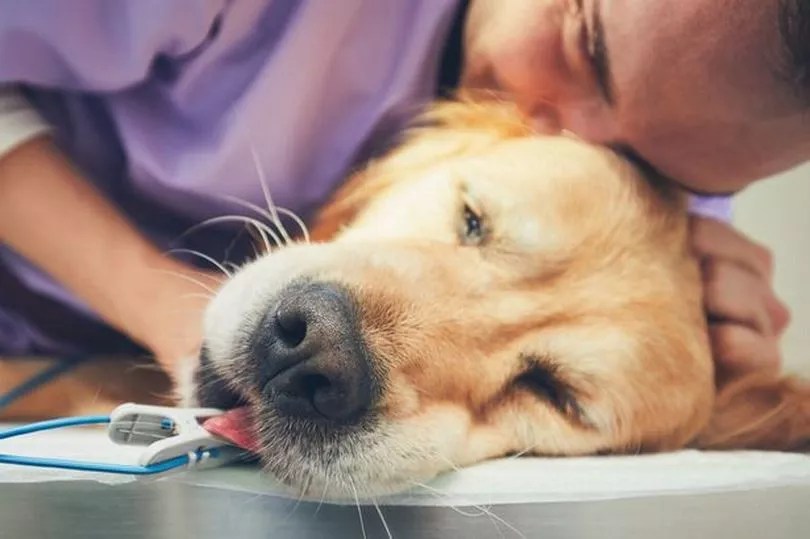
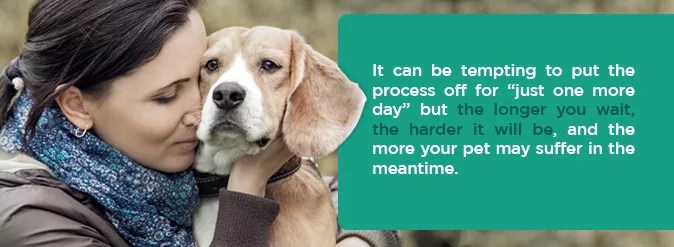
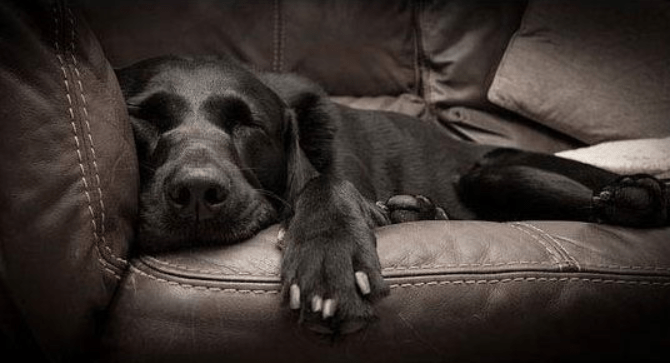
Many choose to stay at their dog’s side in their final moments, however some fear ‘tarnishing’ the last memory of their four-legged friend by remaining in the room.
A vet has urged owners to stay in the room while their pet in their final moments.
Nothing can prepare you for the last goodbye to a family pet. Many choose to stay at their dog’s side in their final moments, however for some the situation is too painful, and they fear ‘tarnishing’ the last memory of their four-legged friend by remaining in the room as they are put to sleep.
But a vet has issued a heartbreaking plea to owners after a truly devastating experience with one dog. Taking to Reddit, the woman urged owners not to leave their pets as they are put to sleep after the harrowing situation left her ‘in tears for weeks’.
She said: “I will always try to give grace and save my judgements on how people are able to deal with grief because everyone is different, but it is depressing to have a dog spending it’s final moments looking for where their owner went. I feel like it’s the very last comfort you can give your friend, just being there by their side to comfort them.
“We had one recently that hit me hard, I just wish it could have ended differently.”
xplaining how the owner stepped out into the hallway while their dog took their final breath, she said the poor pooch tried to follow his master before his medication hit him. She added: “I am not judging the owner’s emotional capacity for grief and I am not saying the dog died thinking ‘omg I’m dying alone’. I’m not even talking about the actual euthanasia, but the moments leading to it.
The vet said staying with your pet as they are put to sleep is the “very last comfort you can give your friend”.
“For those of you saying dogs ‘just think their owners stepped out for a moment’ are missing it. Even if that was the case, they still stress out.
“This dog we euthanised literally tried so hard to walk himself out the front door with his leash after his owners left and continued to cry and stress out until the Propofol got him. We did our jobs and gave all the treats and love, but the focus was always ‘where did they go?’
“Say what you want, I just think it’s a bummer that those were his final moments. He was a really good boy and I wish he could have been more relaxed because I think he deserved it.”
While most users agreed owners should stay in the room no matter how painful it is for them, other vets tried to explain how it is simply just too much for some people to handle. One vet explained: “I used to work at a clinic that did boarding, and we had one where an elderly boarder wasn’t doing well and the owner couldn’t get back in time to be there.
“The poor lady was literally on a plane that had just taken off on her way to her grandson’s graduation when we called. We all felt so bad so we made sure to all love on this elderly golden retriever extra because it was so sad.
“I still remember this cute little old dog to this day. That was one I definitely understood why the owner couldn’t be there.
Nothing can prepare you for the last goodbye.
“But on the same coin, not everyone can handle seeing death the way we do, especially when it’s a loved one. So I can certainly understand why someone can’t be there when their pet is euthanised.
“But it does suck for the animal, but we just make sure to give them the extra love they need before they pass on. The main thing is that you’re helping them be free from pain, and that’s the most important part.”
Another vet said: “I used to be very judgemental of this but now I’m a few more years into the field, I’m much more understanding.
“Not everyone can handle seeing the moment of death happen. I mean there’s a reason relatives and visitors are kicked out when a human is coding or critical.
“You’re not meant to watch loved ones die. Its easy to forget how well we cope with things as professionals.
“Although I do hate when people essentially hand the animal over and leave without a care, as if the animal was just a nuisance.
I have included this video of the tender moment when Derek (played wonderfully by Ricky Gervais) says his final goodbyes when Ivor the dog has to be put to sleep.
Derek Says His Final Goodbyes To Ivor. Credit: RickyGervais/Derek.
WHAT YOU CAN DO TO HELP RESCUE ANIMALS
You can support our work by donating as little as £5 – It only takes a minute but it can last a lifetime for an animal in need.
Everyone who donates will receive a Certificate of Appreciation as a thank you for helping rescue animals in need.
OUR MISSION STATEMENT
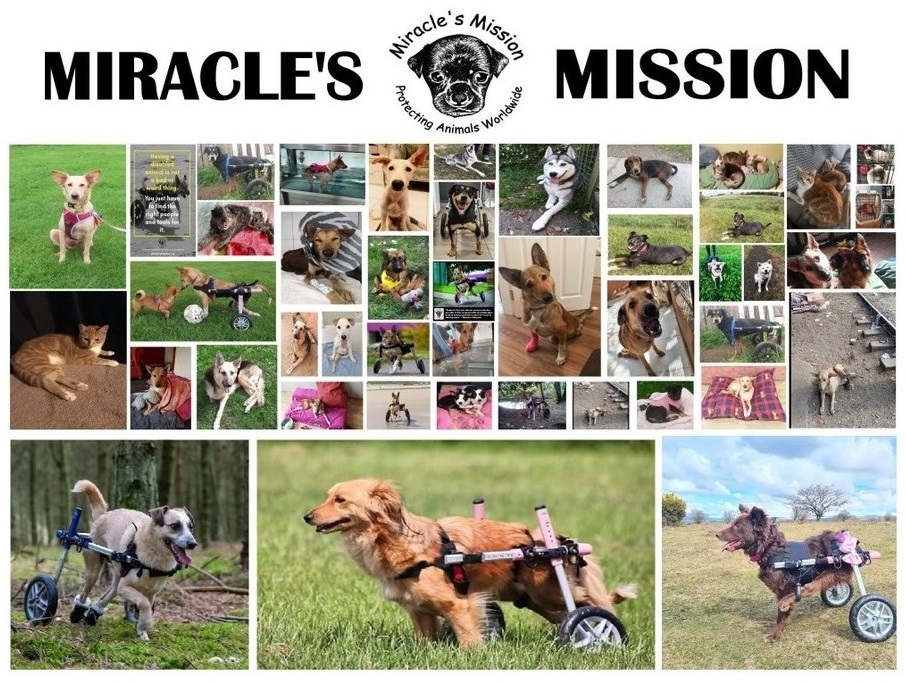
‘Animals that use wheels and prosthetics can live as good a quality of life as fully able-bodied animals and this is what we want to show people’ ~ Victoria Bryceson, founder of Miracle’s Mission.
We do not receive financial support from the government or other institutions. We rely solely on donations from generous animal lovers.
Animal rescues cost a lot of money to run. While we get donations and funding through events like charity runs etc, the costs are EXTREMELY high. We need to pay for food, heating and other bills, as well as any staff costs and expenses like petrol for home visits.
The average cost to feed a dog for one month typically costs somewhere from £16 to £50, depending on the breed. Microchipping costs about £10 to £15. The average cost of essential vaccinations is £64. A routine vet appointment costs between £40-£60, surgery can cost anywhere over £1000. Physiotherapy, Hydrotherapy – the average cost is £50 for a 30-minute session. Prosthetics and dog wheels etc can cost up to £500.
Please help Miracle’s Mission continue to rescue, rehabilitate and rehome MANY MORE sick, injured and disabled animals by kindly donating ANY amount, large or small, today. Thank you.
This rescue dog story will completely change your perspective on animal adoption. Please take the time to read ALL of this poignant story.
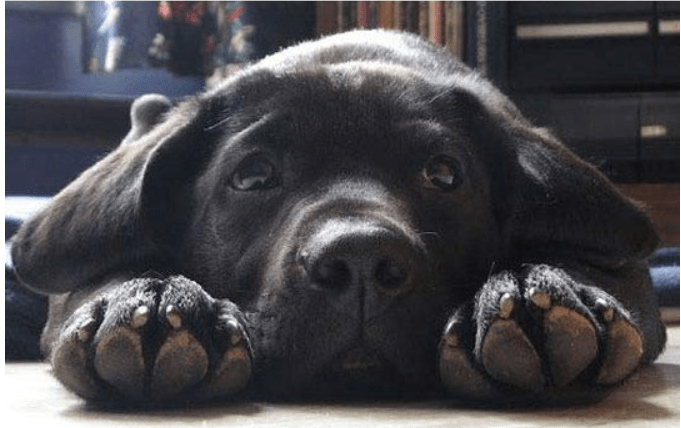
They told me the big black Lab’s name was Reggie as I looked at him lying in his pen. The shelter was clean, no-kill, and the people really friendly. I’d only been in the area for six months, but everywhere I went in the small college town, people were welcoming and open. Everyone waves when you pass them on the street.
But something was still missing as I attempted to settle into my new life here, and I thought a dog couldn’t hurt. Give me someone to talk to. And I had just seen Reggie’s advertisement on the local news. The shelter said they had received numerous calls right after, but they said the people who had come down to see him just didn’t look like “Lab people,” whatever that meant. They must’ve thought I did.
But at first, I thought the shelter had misjudged me in giving me Reggie and his things, which consisted of a dog pad, bag of toys almost all of which were brand new tennis balls, his dishes, and a sealed letter from his previous owner. See, Reggie and I didn’t really hit it off when we got home. We struggled for two weeks (which is how long the shelter told me to give him to adjust to his new home). Maybe it was the fact that I was trying to adjust, too. Maybe we were too much alike.
For some reason, his stuff (except for the tennis balls — he wouldn’t go anywhere without two stuffed in his mouth) got tossed in with all of my other unpacked boxes. I guess I didn’t really think he’d need all his old stuff, that I’d get him new things once he settled in. but it became pretty clear pretty soon that he wasn’t going to.
I tried the normal commands the shelter told me he knew, ones like “sit” and “stay” and “come” and “heel,” and he’d follow them — when he felt like it. He never really seemed to listen when I called his name — sure, he’d look in my direction after the fourth or fifth time I said it, but then he’d just go back to doing whatever. When I’d ask again, you could almost see him sigh and then grudgingly obey.
This just wasn’t going to work. He chewed a couple shoes and some unpacked boxes. I was a little too stern with him and he resented it, I could tell. The friction got so bad that I couldn’t wait for the two weeks to be up, and when it was, I was in full-on search mode for my cell phone amid all of my unpacked stuff. I remembered leaving it on the stack of boxes for the guest room, but I also mumbled, rather cynically, that the “darn dog probably hid it on me.”
Finally I found it, but before I could punch up the shelter’s number, I also found his pad and other toys from the shelter. I tossed the pad in Reggie’s direction and he snuffed it and wagged, some of the most enthusiasm I’d seen since bringing him home. But then I called, “Hey, Reggie, you like that? Come here and I’ll give you a treat.” Instead, he sort of glanced in my direction — maybe “glared” is more accurate — and then gave a discontented sigh and flopped down. With his back to me.
Well, that’s not going to do it either, I thought. And I punched the shelter phone number.
But I hung up when I saw the sealed envelope. I had completely forgotten about that, too. “Okay, Reggie,” I said out loud, “let’s see if your previous owner has any advice.”
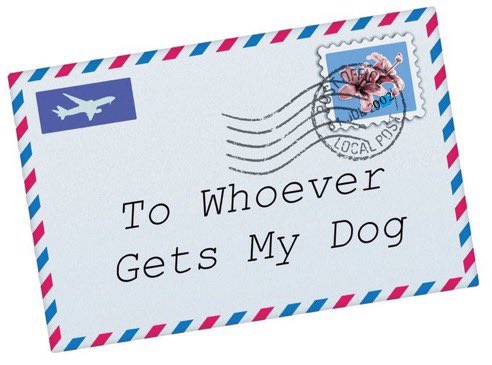
To Whoever Gets My Dog
Well, I can’t say that I’m happy you’re reading this, a letter I told the shelter could only be opened by Reggie’s new owner. I’m not even happy writing it. If you’re reading this, it means I just got back from my last car ride with my Lab after dropping him off at the shelter. He knew something was different. I have packed up his pad and toys before and set them by the back door before a trip, but this time … it’s like he knew something was wrong. And something is wrong … which is why I have to go to try to make it right.
So let me tell you about my Lab in the hopes that it will help you bond with him and he with you.
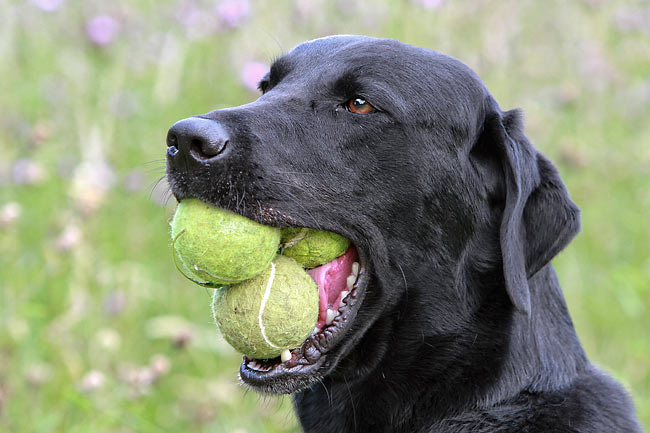
First, he loves tennis balls. the more the merrier. Sometimes I think he’s part squirrel, the way he hoards them. He usually always has two in his mouth, and he tries to get a third in there. Hasn’t done it yet. Doesn’t matter where you throw them, he’ll bound after it, so be careful — really don’t do it by any roads. I made that mistake once, and it almost cost him dearly.
Next, commands. Maybe the shelter staff already told you, but I’ll go over them again: Reggie knows the obvious ones — “sit,” “stay,” “come,” “heel.” He knows hand signals: “back” to turn around and go back when you put your hand straight up; and “over” if you put your hand out right or left. “Shake” for shaking water off, and “paw” for a high-five. He does “down” when he feels like lying down — I bet you could work on that with him some more. He knows “ball” and “food” and “bone” and “treat” like nobody’s business. I trained Reggie with small food treats. Nothing opens his ears like little pieces of hot dog.
Feeding schedule: twice a day, once about seven in the morning, and again at six in the evening. Regular store-bought stuff; the shelter has the brand.
He’s up on his shots. Call the clinic on 9th Street and update his info with yours; they’ll make sure to send you reminders for when he’s due. Be forewarned: Reggie hates the vet. Good luck getting him in the car — I don’t know how he knows when it’s time to go to the vet, but he knows.
Finally, give him some time. I’ve never been married, so it’s only been Reggie and me for his whole life. He’s gone everywhere with me, so please include him on your daily car rides if you can. He sits well in the backseat, and he doesn’t bark or complain. He just loves to be around people, and me most especially. Which means that this transition is going to be hard, with him going to live with someone new.
And that’s why I need to share one more bit of info with you …
His name’s not Reggie.
I don’t know what made me do it, but when I dropped him off at the shelter, I told them his name was Reggie. He’s a smart dog, he’ll get used to it and will respond to it, of that I have no doubt. but I just couldn’t bear to give them his real name. For me to do that, it seemed so final, that handing him over to the shelter was as good as me admitting that I’d never see him again. And if I end up coming back, getting him, and tearing up this letter, it means everything’s fine. But if someone else is reading it, well… well it means that his new owner should know his real name. It’ll help you bond with him. Who knows, maybe you’ll even notice a change in his demeanour if he’s been giving you problems.
His real name is Tank. Because that is what I drive.
Again, if you’re reading this and you’re from the area, maybe my name has been on the news. I told the shelter that they couldn’t make “Reggie” available for adoption until they received word from my company commander. See, my parents are gone, I have no siblings, no one I could’ve left Tank with … and it was my only real request of the Army upon my deployment to Iraq, that they make one phone call to the shelter … in the “event”… to tell them that Tank could be put up for adoption. Luckily, my colonel is a dog guy, too, and he knew where my platoon was headed. He said he’d do it personally. And if you’re reading this, then he made good on his word.
Well, this letter is getting to downright depressing, even though, frankly, I’m just writing it for my dog. I couldn’t imagine if I was writing it for a wife and kids and family. but still, Tank has been my family for the last six years, almost as long as the Army has been my family.
And now I hope and pray that you make him part of your family and that he will adjust and come to love you the same way he loved me.
That unconditional love from a dog is what I took with me to Iraq as an inspiration to do something selfless, to protect innocent people from those who would do terrible things … and to keep those terrible people from coming over here. If I had to give up Tank in order to do it, I am glad to have done so. He was my example of service and of love. I hope I honoured him by my service to my country and comrades.
All right, that’s enough. I deploy this evening and have to drop this letter off at the shelter. I don’t think I’ll say another good-bye to Tank, though. I cried too much the first time. Maybe I’ll peek in on him and see if he finally got that third tennis ball in his mouth.
Good luck with Tank. Give him a good home and give him an extra kiss goodnight — every night — from me.
Thank you, Paul Mallory.
I folded the letter and slipped it back in the envelope. Sure, I had heard of Paul Mallory, everyone in town knew him, even new people like me. Local kid, killed in Iraq a few months ago and posthumously earning the Silver Star when he gave his life to save three buddies. Flags had been at half-mast all summer.
I leaned forward in my chair and rested my elbows on my knees, staring at the dog.
“Hey, Tank,” I said quietly. The dog’s head whipped up, his ears cocked and his eyes bright.
C’mere boy.” He was instantly on his feet, his nails clicking on the hardwood floor. He sat in front of me, his head tilted, searching for the name he hadn’t heard in months.
“Tank,” I whispered. His tail swished.
I kept whispering his name, over and over, and each time, his ears lowered, his eyes softened, and his posture relaxed as a wave of contentment just seemed to flood him. I stroked his ears, rubbed his shoulders, buried my face into his scruff and hugged him.
“It’s me now, Tank, just you and me. Your old pal gave you to me.” Tank reached up and licked my cheek. “So whatdaya say we play some ball? His ears perked again. “Yeah? Ball? You like that? Ball?” Tank tore from my hands and disappeared in the next room.
And when he came back, he had three tennis balls in his mouth.
WHAT YOU CAN DO TO HELP ANIMALS IN NEED
You can support our work by donating as little as £5 – It only takes a minute but it can last a lifetime for an animal in need.
Everyone who donates will receive a Certificate of Appreciation as a thank you for helping animals in need.
The Mission of Protect All Wildlife is to prevent cruelty and promote the welfare of ALL animals.
We believe EVERY animal should be treated with respect, empathy, and understanding. We raise awareness to protect and conserve wild, captive, companion and farm animals.
It is vital that we protect animals against acts of cruelty, abuse, and neglect by enforcing established animal welfare laws and, when necessary, take action to ensure that those who abuse animals are brought to justice.
Protect All Wildlife are involved in many projects to protect animals’ rights, welfare, and habitats. Money contributed to Protect All Wildlife supports ALL of our worthy programmes and gives us the flexibility to respond to emerging needs. Your donations make our work possible.
We are holding a virtual sponsored walk for Batel throughout October 2023 to help raise some much-needed funds for his massive vet bills.
We hope you will all take part!
**************
❤ The rules ❤
Simply walk a mile a day (or whatever is manageable for you and your dog) every day in October.
You can collect sponsorship from your friends, family, and Facebook groups or simply make an affordable donation yourself.
We want to flood the feeds with videos and pictures of you all taking part so PLEASE send us videos of your dogs out having fun in honour of our best boy Batel.
This is open to all pet parents and all species of animals. If they enjoy going for a walk of any kind, then they can get involved.
Please share this event for Batel with the hashtag #WalkForBatel. He really needs our help.
Batel’s Story …….
Batel’s battle started around 2 years ago in Egypt.
He had been horrifically abused having had his paws cut off.
He was rescued and brought to the UK as a Miracle’s Mission dog.
He has been a really medically complex dog both orthopaedically and due to his ongoing chronic renal issues.
Batel has been on the brink of death many times. Not once has he lost the will or the love of life.
He is such a happy boy who exudes joy and fun.
His quality of life has and does remain really high.
He recently underwent a lifesaving amputation to his previously mutilated stump. He is recovering really well from this and has already developed a new way of walking, sitting, and resting in light of his current level of disability.
Batel never gives up. He just adapts, he does it all with a smile on his face.
You can email info@miraclesmission.org or message us with any questions/ queries and to submit videos of your walks.
To make a general donation for Batel please use PayPal info@miraclesmission.org and reference Batel.
To find out more about the amazing work that we do please visit Miracle’s Mission
Join Danny and all of Batel’s friends and family for Batel’s Walk
Animal rescue charities need our help more than ever now. Rising costs coupled with low donations and no government funding etc. coming in are hitting us really hard.
Some of the amazingly brave animals that Miracle’s Mission have helped over the years
Since starting Protect All Wildlife over 10 years ago I have managed to raise over £100,000 for various animal charities including Lions, Elephants, Gorillas, Animal Rescues and victims/survivors of the Australian wildfires etc. With the support of my wonderful followers, friends and family I have been able to do this by doing various charity fundraising events including a 15,000 foot skydive, doing a 10km run dressed as an Elephant, a Tough Mudder assault course and several auctions of items very kindly donated by fellow animal lovers.
Being able to help animal charities in this way has at times given me the motivation to carry on. I have suffered on and off with depression for 30 years or so and at times have had to force myself to get out of bed in the morning. Apart from my mental nursing, animal activism has given me a mission in life – to help those less fortunate in whatever way. As you are probably aware, I became the (very proud) Patron of Miracle’s Mission four years ago. Miracle’s Mission are dedicated to the rescue, rehabilitation and rehoming of sick injured and disabled animals. They also operate a Trap, Neuter and Release (TNR) centres in Borneo and Egypt. They receive no government funding whatsoever and rely totally on donations and volunteers to keep going. The cost of running an animal rescue is high, however the running costs of a specialist rescue service like Miracle’s Mission is even costlier.
When rescues come to Miracle’s Mission they often can’t walk & need surgery. With your help we are able to treat & rehabilitate them. But with vet fees, physio costs, specialist mobility equipment and food/heating etc it is VERY costly to keep going. PLEASE help us treat MANY more animals by donating ANY amount, large or small. EVERY penny counts.
Unfortunately I haven’t been able to do a ‘proper’ fundraising event because in the last year I have not been very well, lacking energy and losing about a stone in weight. I put it down to having long covid after catching covid in October last year. However, it transpired that I actually have cancer of the stomach. My treatment has just started and consists of 4 chemotherapy cycles over 8 weeks then if the tumour has shrunk enough I will have an operation to remove all of my stomach. My oesophagus will then be connected to my small intestine. The recovery period from my stomach operation will be in the region of 4 to 5 months.
So I have come up with a very bizarre charity fundraiser to help the rescues at Miracle’s Mission. I am not sure how ethical it is but here I go – a sponsored CHARITY CANCER TREATMENT FUNDRAISER FOR RESCUE ANIMALS. Knowing that the rescue is still receiving much-needed funds will let me concentrate 100% on MY recovery, something that I have neglected over the years. It would be amazing if you sponsor (donate) ANY amount large or small.
Thank you in advance for your support, it is really appreciated. Please share with friends and family. Thank you for your incredible support, it is REALLY appreciated. Best wishes, Paul. 🐾
My Chemotherapy journey has started at York District Hospital
WHAT YOU CAN DO TO HELP RESCUE ANIMALS
You can support our work by donating as little as £1 – It only takes a minute but it can last a lifetime for an animal in need.
Everyone who donates will receive a Certificate of Appreciation as a thank you for helping rescue animals in need.
The cost of changing a rescue animal’s life forever – PRICELESS!
To feed a dog for one month typically costs somewhere from £16 to £50, depending on the breed. Microchipping costs about £10 to £15. The average cost of essential vaccinations is £64. A vet appointment costs between £40-£60. Physiotherapy/Hydrotherapy – the average cost is £50 for a 30-minute session.
You may wonder, why do you have to pay to adopt a dog?
Well, running an animal shelter is not cheap, with food, heating and other costs, so you money goes towards supporting them in the work. It also pays for vital care that your new pet has had, and covers essential expenses that you’d likely have to pay for anyway if you got your dog another way.
Why do dog shelters charge people to adopt pets?
First of all, animal shelters cost money to run. While they get donations and funding through events like charity runs, the costs are high. They need to pay for food, heating and other bills, as well as any staff costs and expenses like petrol for home visits.
Adoption fees also cover other expenses for the dogs, such as vet bills, which you’d likely have to pay yourself anyway if you acquired a new dog through other means.
Every dog rehomed is vaccinated, microchipped and neutered.
Please help is rescue, rehabilitate and rehome MANY more sick, injured and disabled animals by donating ANY amount, large or small, at HELP RESCUE ANIMALS IN NEED.
10 REASONS WHY YOU SHOULD #ADOPTDON’TSHOP!
Adopting a pet has many benefits, some of which you may have not considered. Here are some reasons why adopting a pet would benefit you and your family.
1. You are saving a life
By adopting from a shelter, you are providing an animal with the second chance they deserve. Many have been rescued from horrific circumstances such as cruelty, neglect and abandonment, or quite simply their owners were no longer able to look after them due to illness or a change in situation.
Before and after: these pictures were taken two months apart
Shelter staff work tirelessly to nurse animals back to health, rehabilitate disturbed animals and do everything they possibly can to ensure they are prepared to go to a new home. Sadly, not all of them are as fortunate. Some shelters have to euthanise due to lack of space, meaning many healthy animals lose their lives. By rehoming a pet you can give an animal that has been abandoned through no fault of their own a loving, stable home, and help to stop overpopulation.
2. You will save money
Shelters often microchip, spay, neuter and vaccinate the animals that come into their care. This saves you a lot of money because you don’t have to pay for the procedures yourself and it ensures the pet you are taking home is healthy. Also, the prices of adopting a pet from a shelter are often a lot lower than the rates charged by breeders.
3. Can help to eradicate puppy farms.
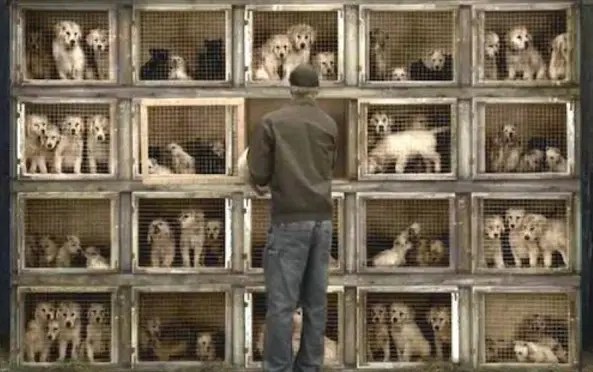
A puppy farm, or mill, is the illegal practice of breeding puppies for the sole purpose of maximising profit, without any regard to the dogs’ health or wellbeing. Dogs at puppy farms are forced to breed several times to their detriment and they are often kept in terrible conditions without basic necessities.
Bred Relentlessly For Profit
People who run such places are not concerned with producing healthy dogs, so they can be born with severe problems that emerge over time. The dogs usually don’t receive any veterinary care, and will often be destroyed once they can no longer reproduce. Additionally, dogs at pet shops are often products of puppy farms. Adopting from a shelter aids in stopping dogs from being subjected to such horrific circumstances, because rather than funding this illegal trade you will be rehoming a pet from somewhere reputable that supports animal welfare.
4. Can improve your health and make you happier
Various studies have shown that a having pet can elongate your life, whilst improving your overall happiness and health. It also helps people with depression, stress, anxiety and many other ailments. The affectionate and loyal nature of dogs as pack animals that form close relationships with their owners can help sufferers of depression, who may feel like they don’t have anybody else.
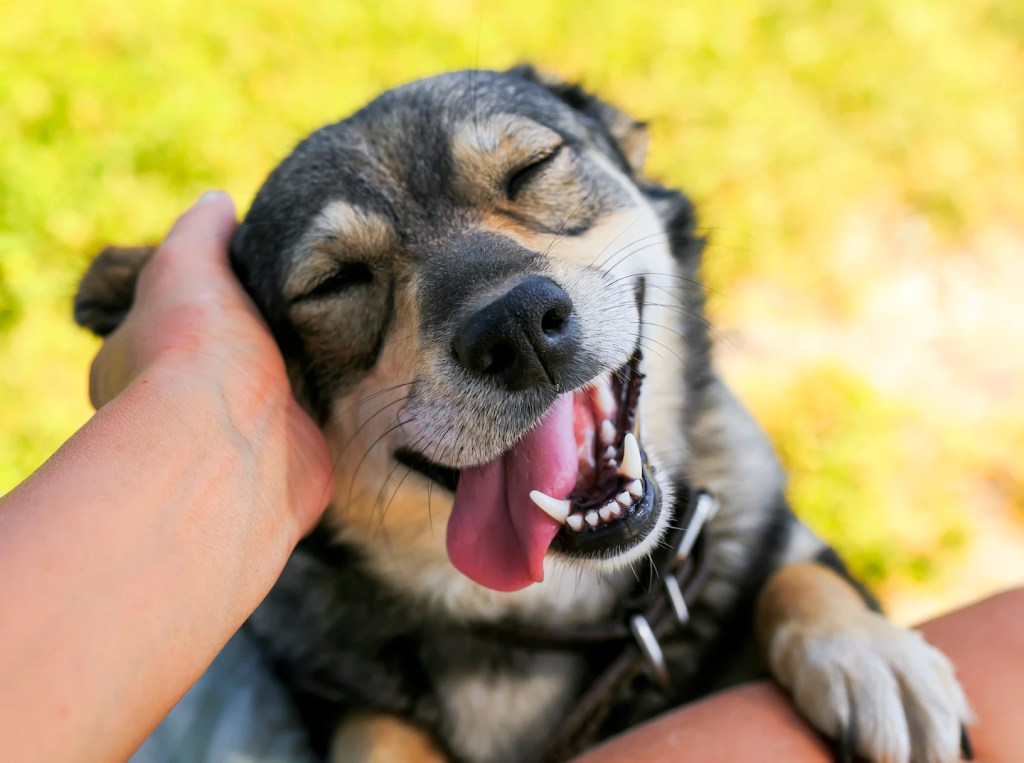
Stroking your pet can reduce your blood pressure and stress levels, and playing with them can increase the levels of serotonin and dopamine your body produces, making you feel calm and relaxed. Walking the pet is a way to exercise and provides sufferers of anxiety and depression with a reason to leave the house. It also creates opportunities for socialising with other dog walkers. The animal you have helped through rehoming can help you.
5. Can benefit children
Children can be taught valuable life skills through pet ownership, such as the importance of maintaining responsibilities. Rehoming a pet will also encourage empathy by making them think about how they have helped to give an unwanted animal a loving home. Pets can help children with separation anxiety and provide them with security, as they can be safe in the knowledge that someone will always be there. As well as this, they can be a loving companion and playmate.
6. Many of the animals are housetrained
Animals at shelters have often been housetrained in their previous home, particularly if they are older. This saves you a lot of time and extra effort when training your new pet where to go to the toilet.
7. Unconditional love
A pet is a companion that will never judge you, will love you regardless of whatever happens and will always be there. As well as making you feel great, their unconditional love raises your self-esteem because of the affection they show you. It is said that animals know when they have been rescued, so the bond between you and your rehomed pet will be especially strong.
8. You could get a pet you never expected
Although you may have an idea of what you are looking for, there are a wide variety of animals waiting to be adopted from shelters. This may mean an animal you would never have imagined could turn out to be the best match for you. Therefore, it is always important to have an open mind when visiting shelters.
9. Older animals can prove to be the best companions
Many people want to adopt puppies and kittens without considering the advantages of having an older pet. If trained in their previous home they will be less likely to destroy furniture than a younger pet, and as such, will probably require less supervision. Older pets are often calmer and quite happy to sit in your company rather than demanding constant attention. They also have more developed personalities than puppies or kittens, so it may be more apparent when visiting them at the shelter whether or not you are suited.
10. Adopting supports spaying and neutering
Spaying and neutering animals is important in controlling the animal population. Many pets that aren’t spayed or neutered often contribute to the problem of unwanted animals, which can lead to more being left at shelters. Adopting an animal from a shelter means that your new pet has been spayed or neutered where possible.
Please help us continue to support animal rescues by donating any amount, large or small. Your donations make our work possible.
And please remember…
…the cost of changing a rescue animal’s life forever is – PRICELESS!
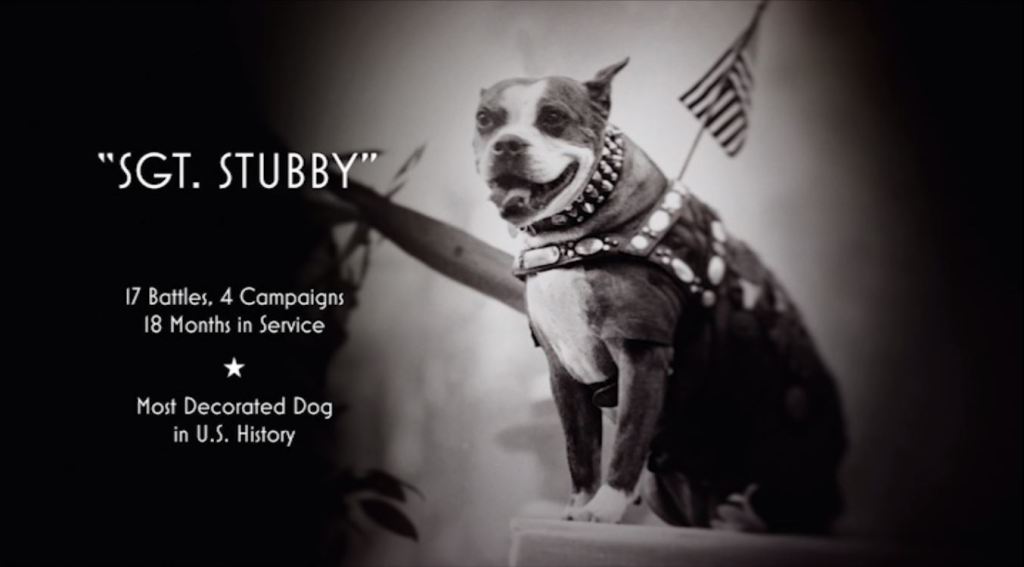
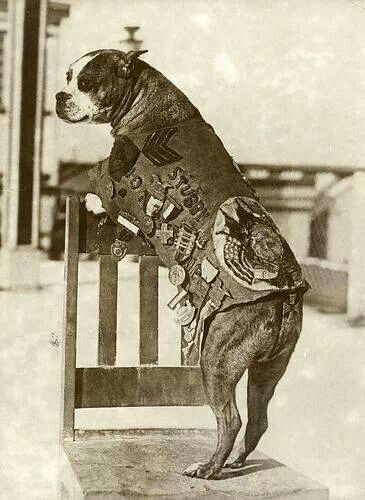
America’s first war dog, Stubby, served 18 months ‘over there’ and participated in seventeen battles on the Western Front. He saved his regiment from surprise mustard gas attacks, located and comforted the wounded, and even once caught a German spy by the seat of his pants. Back home his exploits were front page news of every major newspaper.
Stubby was a bull terrier – broadly speaking, very broadly! No one ever discovered where he hailed from originally. One day he just appeared, when a bunch of soldiers were training at Yale Field in New Haven, Ct; he trotted in and out among the ranks as they drilled, stopping to make a friend here and a friend there, until pretty soon he was on chummy terms with the whole bunch.
One soldier though, in particular, developed a fondest for the dog, a Corporal Robert Conroy, who when it became time for the outfit to ship out, hid Stubby on board the troop ship.
So stowaway Stubby sailed for France, after that Cpl. Conroy became his accepted master, even though he was still on chummy terms with everyone else in the outfit; and in the same spirit of camaraderie that had marked his initial overtures at Yale.
It was at Chemin des Dames that Stubby saw his first action, and it was there that the boys discovered he was a war dog par excellence. The boom of artillery fire didn’t faze him in least, and he soon learned to follow the men’s example of ducking when the big ones started falling close. Naturally he didn’t know why he was ducking, but it became a great game to see who could hit the dugout first. After a few days, Stubby won every time. He could hear the whine of shells long before the men. It got so they’d watch him!
Stand Easy Sgt. Stubby
Then one night Stubby made doggy history. It was an unusually quiet night in the trenches. Some of the boys were catching cat naps in muddy dugouts, and Stubby was stretched out beside Conroy. Suddenly his big blunt head snapped up and his ears pricked alert. The movement woke Conroy, who looked at the dog sleepily just in time to see him sniff the air tentatively, utter a low growl, then spring to his feet, and go bounding from the dugout, around a corner out of sight.
A few seconds later there was a sharp cry of pain and then the sound of a great scuffle outside. Conroy jumped from his bed, grabbed his rifle and went tearing out towards the direction of the noise.
The Highly Decorated Sgt. Stubby
A ludicrous sight met his eyes. Single-pawed, in a vigorous offensive from the rear, Stubby had captured a German spy, who’d been prowling through the trenches. The man was whirling desperately in an effort to shake off the snarling bundle of canine tooth and muscle that had attached itself to his differential. But Stubby was there to stay.
It took only a few moments to capture the Hun and disarm him, but it required considerably more time to convince Stubby that his mission had been successfully carried out and that he should now release the beautiful hold he had on that nice, soft German bottom.
By the end of the war, Stubby was known not only to every regiment, division, and army, but to the whole AEF. Honors by the bale were heaped on his muscled shoulders. At Mandres en Bassigny he was introduced to President Woodrow Wilson, who “shook hands” with him. Medal and emblemed jackets were bestowed upon him for each deed of valor, plus a wound stripe for his grenade splinter. Not to be left out, the Marines even made him an honorary sergeant.
After the Armistice was signed, Stubby returned home with Conroy and his popularity seemed to grow even more. He became a nationally acclaimed hero, and eventually was received by presidents Harding and Coolidge. Even General John “Black Jack” Pershing, who commanded the American Expeditionary Forces during the war, presented Stubby with a gold medal made by the Humane Society and declared him to be a “hero of the highest caliber.”
Stubby toured the country by invitation and probably led more parades than any other dog in American history; he was also promoted to honorary sergeant by the Legion, becoming the highest ranking dog to ever serve in the Army.
He was even made an honorary member of the American Red Cross, the American Legion and the YMCA, which issued him a lifetime membership card good for “three bones a day and a place to sleep.” Afterwards, Stubby became Georgetown University’s mascot. In 1921, Stubby’s owner, Robert Conroy was headed to Georgetown for law school and took the dog along. According to a 1983 account in Georgetown Magazine, Stubby “served several terms as mascot to the football team.” Between the halves, Stubby would nudge a football around the field, much to the delight of the crowd.
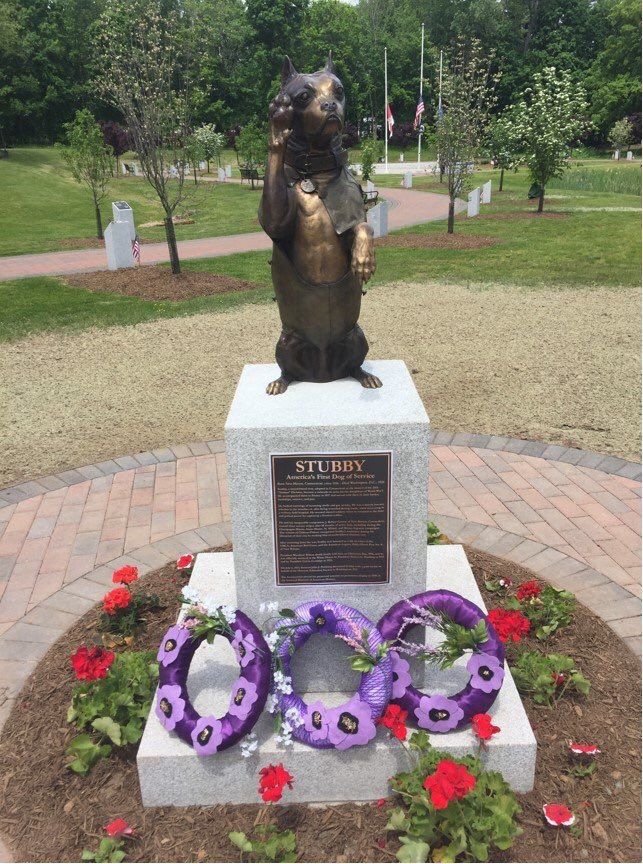
A FITTING TRIBUTE TO A HERO
Old age finally caught up with the small warrior on April 4th, 1926, as he took ill and died in Conroy’s arms.
It’s said, that Stubby and a few of his friends were instrumental in inspiring the creation of the United States ‘K-9 Corps’ just in time for World War ll.
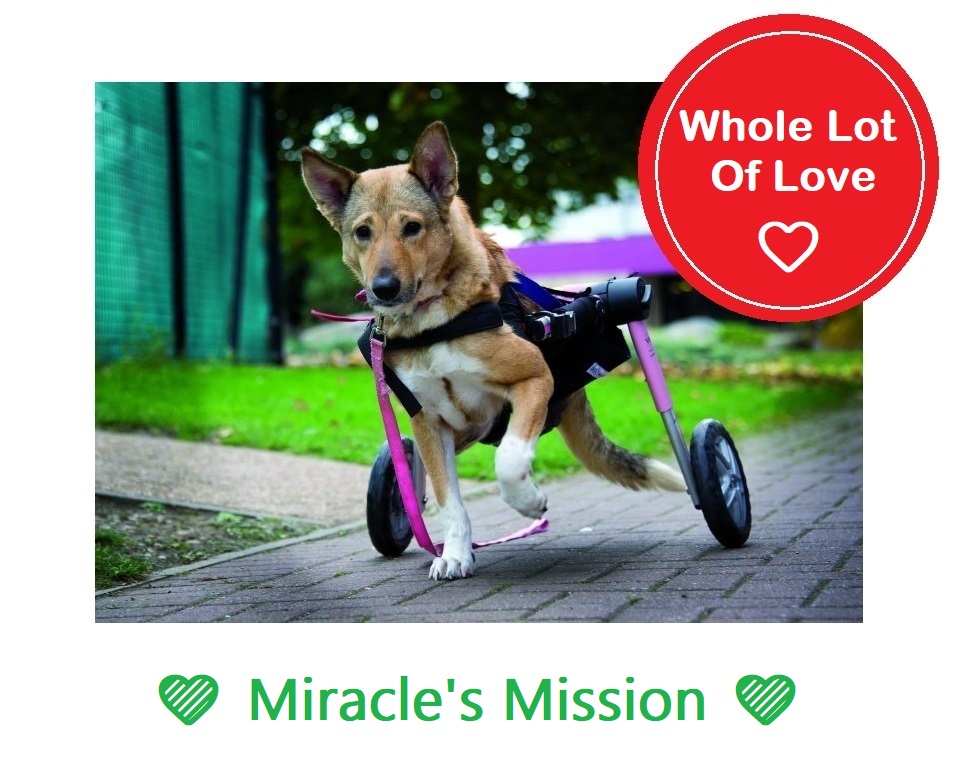
With this virtual gift, you will bring love to the life of a rescue in need this Valentine’s
At Miracle’s Mission, we bring rescued dogs and cats into our care who’ve never known what it feels like to be loved. You could change that by purchasing a virtual gift for them. With your gift, we can continue to give homeless rescues the love and care they deserve – and find their perfect match. What better way to help rescues this Valentine’s?
After purchasing a gift, you’ll receive an email that includes a certificate to download for yourself or your loved one – a nice keepsake as a reminder of the difference your gift has made to rescues.
So, if you can, please help homeless pets find love by purchasing a Whole Lot of Love Pack. We promise this is one gift that’s guaranteed to make someone’s heart flutter this Valentine’s!
How does a virtual gift work?1. Pop your virtual gift into your shopping basket and complete your checkout.
2. Look out for a thank you email including a downloadable virtual certificate.
3. Print out your certificate or email it to your lucky pet-loving Valentine.
All proceeds goes directly to Miracle’s Mission to support vulnerable pets.
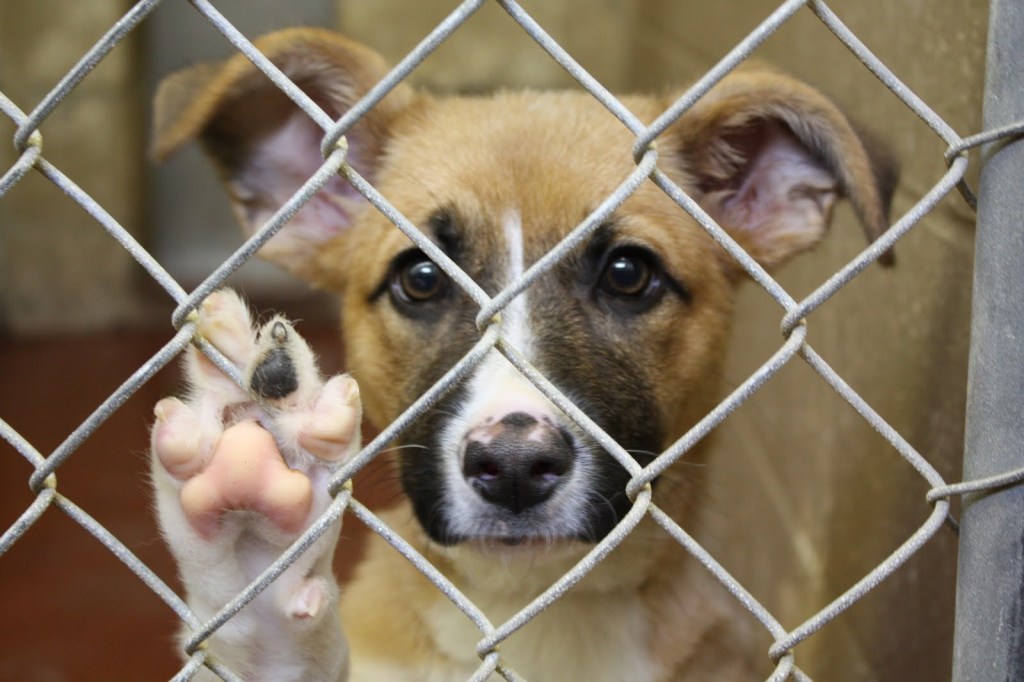
Animal inspectors were heartbroken to find nearly a hundred suffering dogs in a single house. The RSPCA has now launched one of the biggest rehoming campaigns ever in a bid to find these puppies loving homes.
More than 90 malnourished Shih-Tzu dogs were rescued from a filthy breeding house.
The dogs were living in horrendous conditions and needed urgent vet care.
They were split and distributed to the RSPCA centres in southern England and are now in need of loving homes.
Neglected and abused
The RSPCA is looking to re-home a record number of Shih-Tzus dogs and their puppies after they were found neglected in a breeding house in Torquay, Devon, England last year.
Upon discovery, the animals were malnourished and infested with fleas and worms. They were living in filthy conditions and covered in faeces.
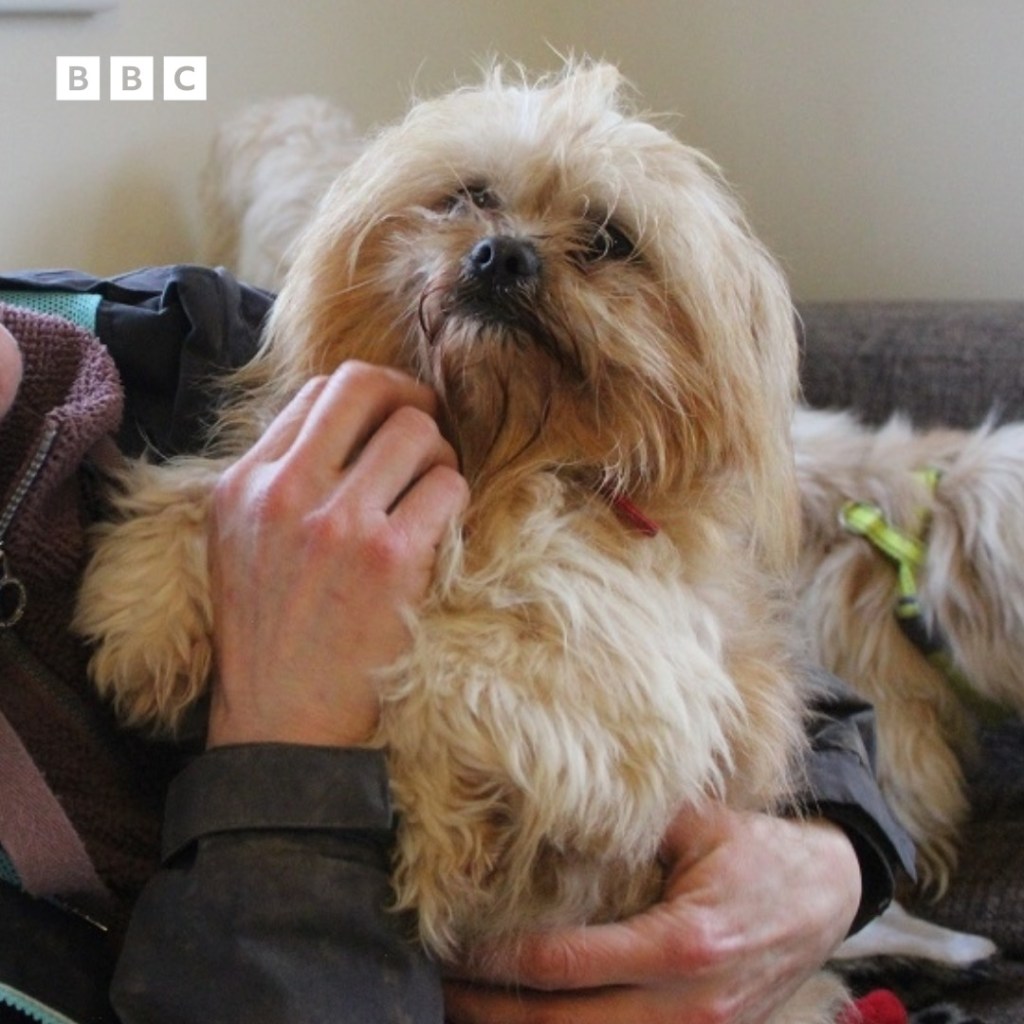
This is Chips. He’s one of 96 Shih-Tzus that were removed from a home in Torquay which was breeding dogs in poor conditions. Image Credit: BBC.
The charity has launched an appeal to find loving owners for the original 96 of the breed, along with around 50 puppies that have been born since.
According to its spokesperson Sammy Howard, the RSPCA discovered the dogs as a result of a noise complaint by a resident nearby.
Nearly 150 dogs need caring owners
Although 96 pups were rescued and taken to different RSPCA branches for rehabilitation, there are now around 150 of them as many were pregnant at that time.
The Cornwall branch alone is now looking to re-home 13 of them. According to the staff, many pets came to the shelter fearful as a result of their difficult start to life, so new owners must be patient and support the dogs as they go through training and socialisation.
Matted with faeces, flea-infested, urine stained and terrified, this is the result of over-breeding. Image Credit: RSPCA Cornwall Branch.
Sammy added:
They have had a difficult start to life and will not just slot into a home, and be grateful that someone took them on.
According to her, the dogs will be terrified and may take months before they start trusting people’, which is a ‘hard sell’ when asking for someone to welcome a dog into their home.
But the charity assures they ‘won’t give up hope that there are people out there for these dogs.’
The cost of changing a rescue animal’s life forever – PRICELESS!
To feed a dog for one month typically costs somewhere from £16 to £50, depending on the breed. Microchipping costs about £10 to £15. The average cost of essential vaccinations is £64. A vet appointment costs between £40-£60. Physiotherapy/Hydrotherapy – the average cost is £50 for a 30-minute session.
You may wonder, why do you have to pay to adopt a dog?
Well, running an animal shelter is not cheap, with food, heating and other costs, so you money goes towards supporting them in the work. It also pays for vital care that your new pet has had, and covers essential expenses that you’d likely have to pay for anyway if you got your dog another way.
Why do dog shelters charge people to adopt pets?
First of all, animal shelters cost money to run. While they get donations and funding through events like charity runs, the costs are high. They need to pay for food, heating and other bills, as well as any staff costs and expenses like petrol for home visits.
Adoption fees also cover other expenses for the dogs, such as vet bills, which you’d likely have to pay yourself anyway if you acquired a new dog through other means.
Every dog rehomed is vaccinated, microchipped and neutered.
10 REASONS WHY YOU SHOULD #ADOPTDON’TSHOP!
Adopting a pet has many benefits, some of which you may have not considered. Here are some reasons why adopting a pet would benefit you and your family.
1. You are saving a life
By adopting from a shelter, you are providing an animal with the second chance they deserve. Many have been rescued from horrific circumstances such as cruelty, neglect and abandonment, or quite simply their owners were no longer able to look after them due to illness or a change in situation.
Before and after: these pictures were taken two months apart
Shelter staff work tirelessly to nurse animals back to health, rehabilitate disturbed animals and do everything they possibly can to ensure they are prepared to go to a new home. Sadly, not all of them are as fortunate. Some shelters have to euthanise due to lack of space, meaning many healthy animals lose their lives. By rehoming a pet you can give an animal that has been abandoned through no fault of their own a loving, stable home, and help to stop overpopulation.
2. You will save money
Shelters often microchip, spay, neuter and vaccinate the animals that come into their care. This saves you a lot of money because you don’t have to pay for the procedures yourself and it ensures the pet you are taking home is healthy. Also, the prices of adopting a pet from a shelter are often a lot lower than the rates charged by breeders.
3. Can help to eradicate puppy farms.
A puppy farm, or mill, is the illegal practice of breeding puppies for the sole purpose of maximising profit, without any regard to the dogs’ health or wellbeing. Dogs at puppy farms are forced to breed several times to their detriment and they are often kept in terrible conditions without basic necessities.
Bred Relentlessly For Profit
People who run such places are not concerned with producing healthy dogs, so they can be born with severe problems that emerge over time. The dogs usually don’t receive any veterinary care, and will often be destroyed once they can no longer reproduce. Additionally, dogs at pet shops are often products of puppy farms. Adopting from a shelter aids in stopping dogs from being subjected to such horrific circumstances, because rather than funding this illegal trade you will be rehoming a pet from somewhere reputable that supports animal welfare.
4. Can improve your health and make you happier
Various studies have shown that a having pet can elongate your life, whilst improving your overall happiness and health. It also helps people with depression, stress, anxiety and many other ailments. The affectionate and loyal nature of dogs as pack animals that form close relationships with their owners can help sufferers of depression, who may feel like they don’t have anybody else.
Stroking your pet can reduce your blood pressure and stress levels, and playing with them can increase the levels of serotonin and dopamine your body produces, making you feel calm and relaxed. Walking the pet is a way to exercise and provides sufferers of anxiety and depression with a reason to leave the house. It also creates opportunities for socialising with other dog walkers. The animal you have helped through rehoming can help you.
5. Can benefit children
Children can be taught valuable life skills through pet ownership, such as the importance of maintaining responsibilities. Rehoming a pet will also encourage empathy by making them think about how they have helped to give an unwanted animal a loving home. Pets can help children with separation anxiety and provide them with security, as they can be safe in the knowledge that someone will always be there. As well as this, they can be a loving companion and playmate.
6. Many of the animals are housetrained
Animals at shelters have often been housetrained in their previous home, particularly if they are older. This saves you a lot of time and extra effort when training your new pet where to go to the toilet.
7. Unconditional love
A pet is a companion that will never judge you, will love you regardless of whatever happens and will always be there. As well as making you feel great, their unconditional love raises your self-esteem because of the affection they show you. It is said that animals know when they have been rescued, so the bond between you and your rehomed pet will be especially strong.
8. You could get a pet you never expected
Although you may have an idea of what you are looking for, there are a wide variety of animals waiting to be adopted from shelters. This may mean an animal you would never have imagined could turn out to be the best match for you. Therefore, it is always important to have an open mind when visiting shelters.
9. Older animals can prove to be the best companions
Many people want to adopt puppies and kittens without considering the advantages of having an older pet. If trained in their previous home they will be less likely to destroy furniture than a younger pet, and as such, will probably require less supervision. Older pets are often calmer and quite happy to sit in your company rather than demanding constant attention. They also have more developed personalities than puppies or kittens, so it may be more apparent when visiting them at the shelter whether or not you are suited.
10. Adopting supports spaying and neutering
Spaying and neutering animals is important in controlling the animal population. Many pets that aren’t spayed or neutered often contribute to the problem of unwanted animals, which can lead to more being left at shelters. Adopting an animal from a shelter means that your new pet has been spayed or neutered where possible.
Please help us continue to support animal rescues by donating any amount, large or small. Your donations make our work possible.
And please remember…
…the cost of changing a rescue animal’s life forever is – PRICELESS!

















 PROTECT ALL WILDLIFE