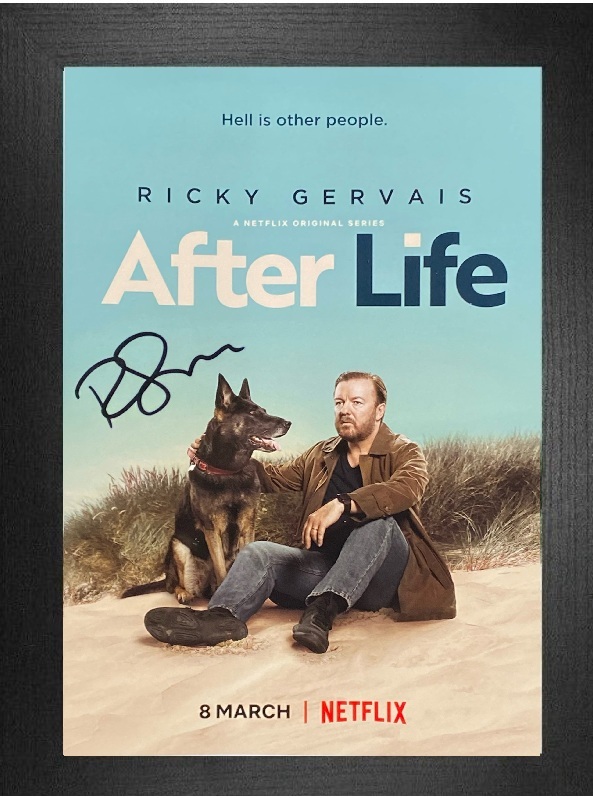
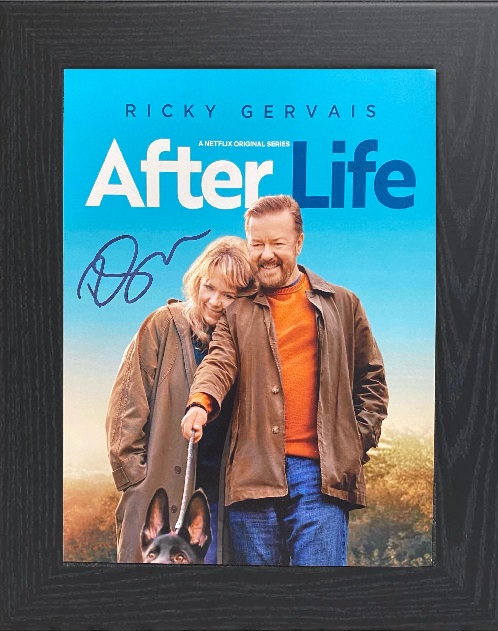
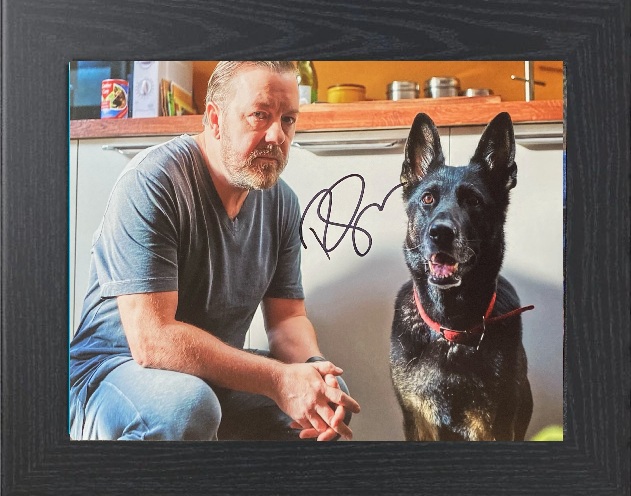
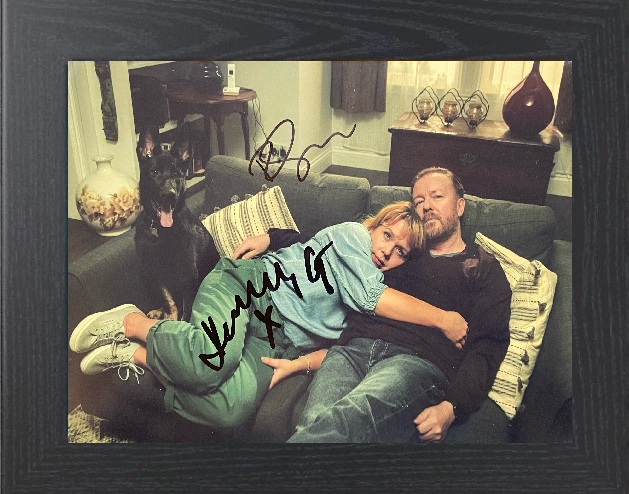
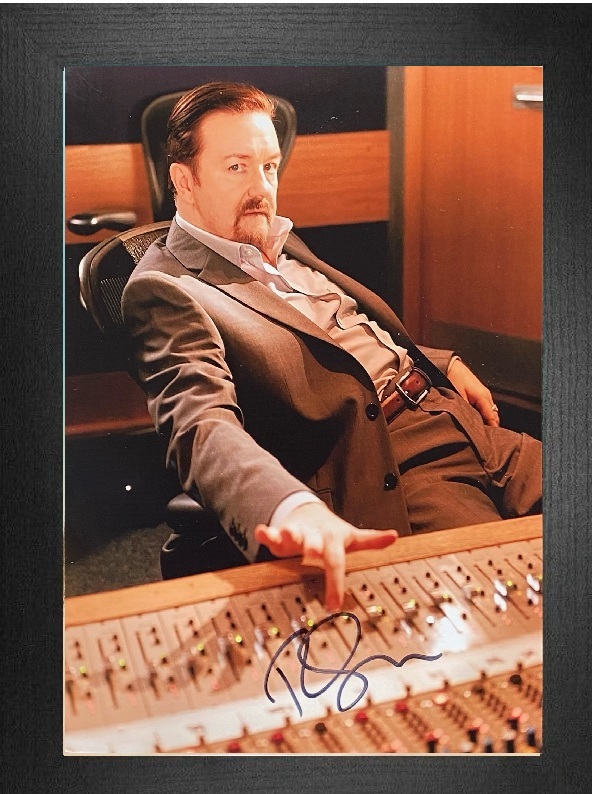
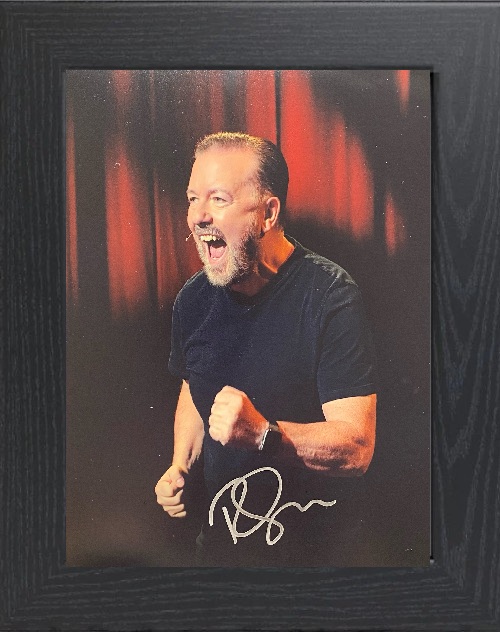
This is your chance to bid on signed pictures very kindly donated by Ricky Gervais in our ‘Charity Auction To Help Disabled Animals’.
This is a sealed bid auction, so all you need to do is decide which item you would like to bid for and send us your bid with the LOT NUMBER and name by email to protectallwildlife@btinternet.com by 21:00 on the 31st of October 2024. We will email you to let you know if your bid is the highest. Postage costs will be calculated when the auction ends. If you need any more information etc please email Paul at protectallwildlife@btinternet.com.
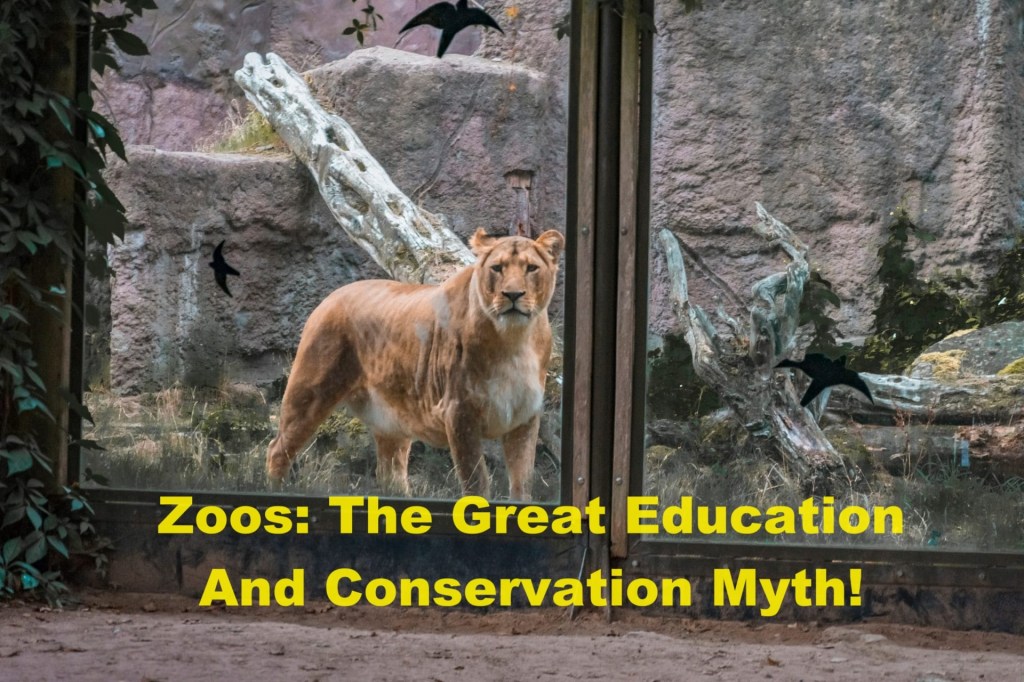
Here, Andy Davidson lists the hard-hitting facts, revealing what zoos really spend their money on, and how you’re better off spending yours elsewhere if you care about conservation.
If you’re planning to a visit a zoo this weekend, ask yourself this question. How much of your ticket fee is being used for conservation? Let’s say you pay £15 for your ticket. You may be surprised to hear that the answer is as little as 45p to £1.
Zoo expenditure is vastly different to the expenditure of conservation organisations based in the wild. For example, Chester Zoo spent £40 million on the construction of ‘the islands’, an expansion of more enclosures to the zoo site. Other Western zoos over a ten-year period have spent £400 million on updating enclosures for a mere 200 elephants.
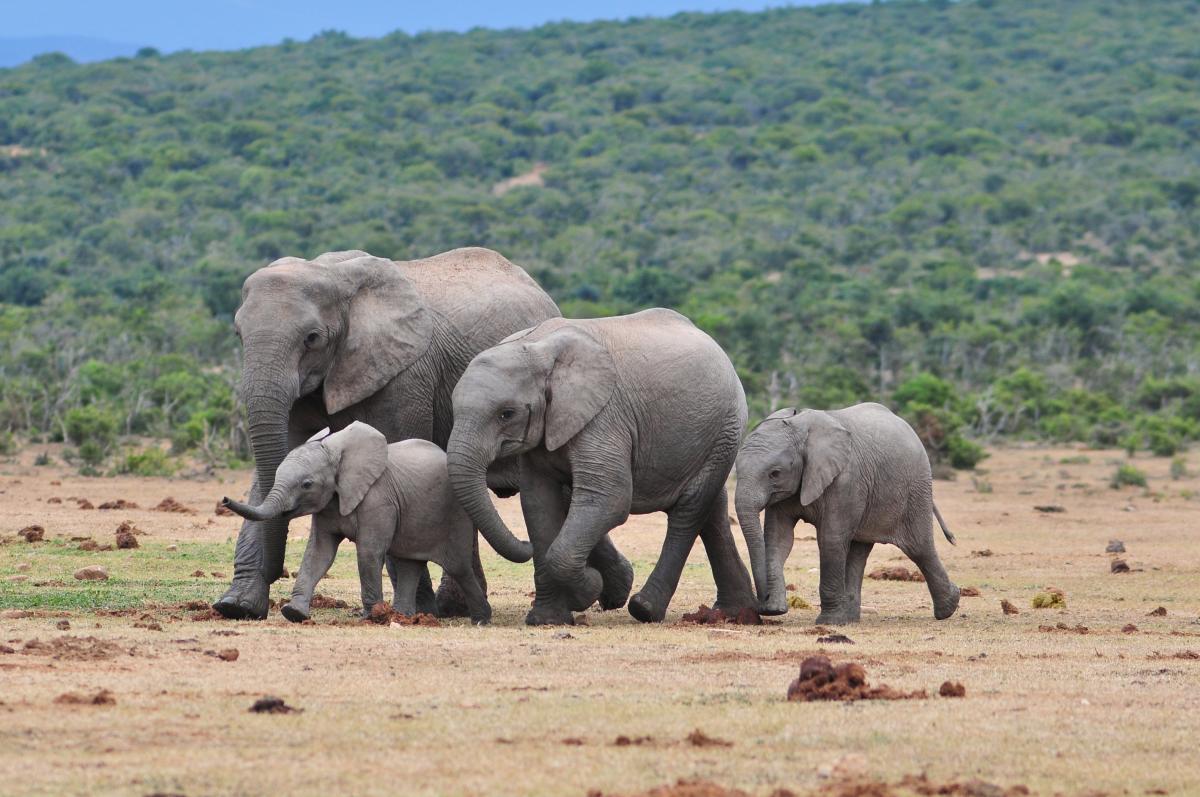
The Kenya Wildlife Service (KWS) and South African National Parks are conservation organisations that protect animals in their natural habitats. KWS has an annual budget of £13-14 million with which they protect 2.6 million hectares of that country’s National Parks. On that land are 33,000 Elephants, 2200 Lions and many vitally important habitats that are home to thousands of species of both plant and animal. The annual budget for the South African National Parks is £58 million and this consists of 19 national parks which make up 6% of the total land of South Africa. Just one of these parks houses 600 elephants.
The money used by Western zoos to update elephant enclosures for 200 Elephants could have kept Kenya Wildlife Service going for 14 to 15 years.
Sound shocking? It is. That’s why the chief consultant to the UN Great Ape Survival Project said he was uneasy at the mismatch between lavish spending at zoos and the scarcity of resources available for conserving threatened species in the wild.
Where Is Your Money Going?
Since the 1800s, the zoo has not fundamentally changed. Well known and entertaining animals such as Elephants, Chimps and Giraffes are front and centre and baby animals give zoos a boost in visitors.
The main driver for zoos is boosting public visitation, a goal that has far reaching implications into all zoo management decisions. Conservation, research and education are not their primary goals, making it impossible to term zoos as research or education organisations. In fact, zoos are places of entertainment, where animal welfare is governed by financial feasibility and entertainment value.
90% of species encaged by European zoos are not threatened from extinction. Over 90% of zoo animals are born in captivity. These animals are then paired across zoos to ensure genetic diversity. Gender cannot be predicted and genes are sometimes over represented leading to what the zoos call a ‘surplus of animals’. 3000-5000 of these animals in European zoos are killed each year. On the 8th of February 2014, Copenhagen Zoo (in)famously killed Marius, a healthy 18-month-old male Giraffe.
Afterward, zoo officials performed a three-hour-long demonstration of how to butcher a giraffe before a large crowd of visitors, including many children. The meat was then fed to the zoo’s four Lions. The four Lions, including two young Lions, were killed to make way for a new male. The Giraffe was killed because she could not produce anymore young.
Marius, a healthy male Giraffe, lies dead after he was euthanized at Copenhagen Zoo. Visitors, including children, were invited to watch while the he was dissected. Photo: Peter Hove Olesen.
Even for threatened species such as Pandas, breeding campaigns rarely work. 400 Pandas have been bred by zoos, yet only five have been released into the wild: three survived. It’s not hard to see that captive breeding is not feasible. Animals not brought up in the wild are less likely to survive there if reintroduced. For example, captive populations of Red Junglefowl (wild ancestors of chickens) differ significantly in response to predators after just a handful of generations in captivity. And, a 2008 study by the University of Exeter found that the odds of animals such as Tigers and Wolves surviving freedom is only 33 percent. Animals in captivity do not usually have the natural behaviours needed for success in the wild.
But it’s not just endangered species that are being bred. A 2014 analysis of the European Endangered Species Breeding Programmes, conducted by the European Association of Zoos and Aquaria, showed that half of the animals being bred were not classed as endangered in the wild, while 25% were not threatened at all. In fact, all zoos only accommodate a tiny fraction of the 22,000 + species threatened with extinction.
With only 3% of budgets being spent on conversation projects, we can see why wildlife continues to disappear. Zoos show little interest in tackling the root causes of wildlife destruction. Species-rich habitats are being converted to pasture and feed crops as the human appetite for meat swells. Many of the places expected to see the greatest shift in land use from forest to livestock are in 15 ‘megadiverse’ countries, which harbour the largest number of species. As wildlife disappears, zoos ignore the problem. Instead, they contribute to it by feeding millions of customers meat.
The Education Myth
Zoos rebranded in the 1970s as the public became informed to the suffering of zoo animals. UK legislation in the form of 1981 Zoo Licensing Act forced zoos to promote ‘public education and awareness in relation to conservation’. Advocates will say zoos inspire the next generation of conservationists.
This has been categorically debunked by a number of studies, while little information is required to meet the standards of legislation. A 2014 academic study in the Conservation Biology Journal surveyed 2800 children following visits to London Zoo. 62% of the 2800 children were deemed to show no change in learning or, worse, experienced negative learning during their trip to the zoo. It was concluded that the zoo’s impact on children’s belief in their ability to actively do something about conservation was ‘weak’.
In what way could this sad image of a Bear be considered educational?
Do children need to see the animals up close to learn about them? Many children seem to have an encyclopedic knowledge about dinosaurs, far more so than Lions and Tigers. Perhaps the general public wish to see exotic animals up close as we attach closeness to care. But why, then, do they tap on the windows and show disappointment when the Lions are asleep? This is a misplaced, harmful interest, surely.
A Lion Is Taunted By Zoo Visitors At Animal City In Lebanon
In reality there is nothing sufficient in the mainstream that educates the public about animals and their conservation. Zoos, school, television – they all fail in this respect. The evidence is very clear: the World Wildlife Fund report that the planet’s fish, bird, mammal and reptile populations plunged 52 per cent from 1970 to 2010. That’s a stunning 52% of all fish, bird, mammal and reptile life lost in 40 years.
Human encroachment is destroying wildlife, but zoos do not consider that information entertaining and, as mentioned, entertainment is the only real driver of ticket sales. Paul Boyle, senior vice president for conservation and education at the Association of Zoos and Aquariums, says “People leave their homes, and the intent is not to save animals in Africa—it’s to have a family outing.”
The Imprisonment Of Animals
An Oxford University study based over four decades of observing animals in captivity and in the wild found that animals such as Polar Bears, Lions, Tigers, Cheetahs show the most evidence of stress and/or psychological dysfunction in captivity. In the same study, 80% of carnivores show abnormal repetitive behaviour. This is a major problem for zoos as these animals are the most popular with visitors.
There are approximately 3200 Tigers left in the wild. In the United States alone, there are over 5000 Tigers in captivity. This is not the result of successful breeding programmes. These Tigers are being born in captivity and they die in captivity. They are the star attraction. It’s hard to imagine a zoo without a Tiger. One particular zoo in the US houses dozens of Tigers. They let visitors handle cubs and have their picture taken while talking up their conservation programmes, despite the fact that their average Tiger enclosure is about 18,000 times smaller than the animals’ natural roaming range. It is simply impossible for these poor Tigers to express instinctive behaviour.
Tourists watch a Tiger cub play with a stuffed toy during a petting and photo opportunity at Myrtle Beach Safari. Photo Credit: Steve Winter, Nat Geo Image Collection.
In two extensive studies, it was found that the lifespan of Elephants is more than halved by living in zoos. A government-funded study of Elephants in UK zoos found that 54% of the Elephants showed behavioural problems during the daytime. In 2016 18 African Elephants, a species designated as threatened within their natural habitats in Swaziland, were captured and transported to three zoos in the US to entertain the public there.
Despite the best intentions of zoo employees to create a happy environment for an animal, zoos are fundamentally unable to recreate the wild setting. Cheetahs cannot run at maximum speed, Elephants cannot walk hundreds of miles (except in circles), birds cannot migrate and fly long distances. Animals are unable to hunt, choose who to spend time with and find their suitable home. Another problem is privacy and noise levels. Human interaction is not normal and constant noise can cause problems. Animals often become depressed and obsessive.
Sometimes zoos are nothing but cages on concrete. Here in the UK, zoos have higher welfare standards, yet its employees and its visitors are still blissfully ignorant to the damage we cause to them. Zoos are well-versed in spreading misinformation and exaggerating the small areas of conservation they achieve to placate the public, ensuring visitor numbers stay high.
Today, the decisions relating to the conservation of animals fall under the power of Western organisations and trusts, not with local communities in Africa or the Amazon. So not only does the money firmly stay within the West, but so does the decision making process. Wildlife can only be saved by empowering their protection in their natural habitats.
If you really care about putting an end to poaching, saving wildlife and keeping wild animals where they belong then pound for pound, your donation should be going to conservation organisations that protect animals in their natural habitats. You won’t receive anything in return and you will have to find somewhere else to visit on your Saturdays, BUT you will be directly saving wild animals. They are the FUTURE: zoos are the PAST.
An Original Article By Andy Davidson, Vegan Society.
Stereotypic behaviors, also known as “zoochosis” are performed sometimes for hours each day, sometimes endlessly. It is unnatural & indicates underlying stress. Credit: In Defence Of Animals
WHAT YOU CAN DO TO HELP WILDLIFE
You can support ‘Protect All Wildlife’ many projects by donating as little as £5 – It only takes a minute but it can last a lifetime for an animal in need. Please donate below.
Everyone who donates will receive a Certificate of Appreciation as a thank you for helping animals in need.
The Mission of Protect All Wildlife is to prevent cruelty and promote the welfare of ALL animals.
We believe EVERY animal should be treated with respect, empathy, and understanding. We raise awareness to protect and conserve wild, captive, companion and farm animals.
It is vital that we protect animals against acts of cruelty, abuse, and neglect by enforcing established animal welfare laws and, when necessary, take action to ensure that those who abuse animals are brought to justice.
Protect All Wildlife are involved in many projects to protect animals’ rights, welfare, and habitats. Money contributed to Protect All Wildlife supports ALL of our worthy programmes and gives us the flexibility to respond to emerging needs. Your donations make our work possible.
This is your chance to bid on beautiful original artworks in our ‘Charity Auction To Help Disabled Animals’.
This is a sealed bid auction, so all you need to do is decide which item you would like to bid for and send us your bid with the LOT NUMBER and name by email to protectallwildlife@btinternet.com by 21:00 on the 30th of June. We will email you to let you know if your bid is the highest. Postage costs will be calculated when the auction ends. If you need any more information etc please email Paul at protectallwildlife@btinternet.com.
This is an ORIGINAL watercolour, pastel and pencil study of a Badger by wildlife artist Milo. This STUNNING piece is on high grade art paper measuring 59 x 42 cms.
A Badger by Milo ~ 2020.
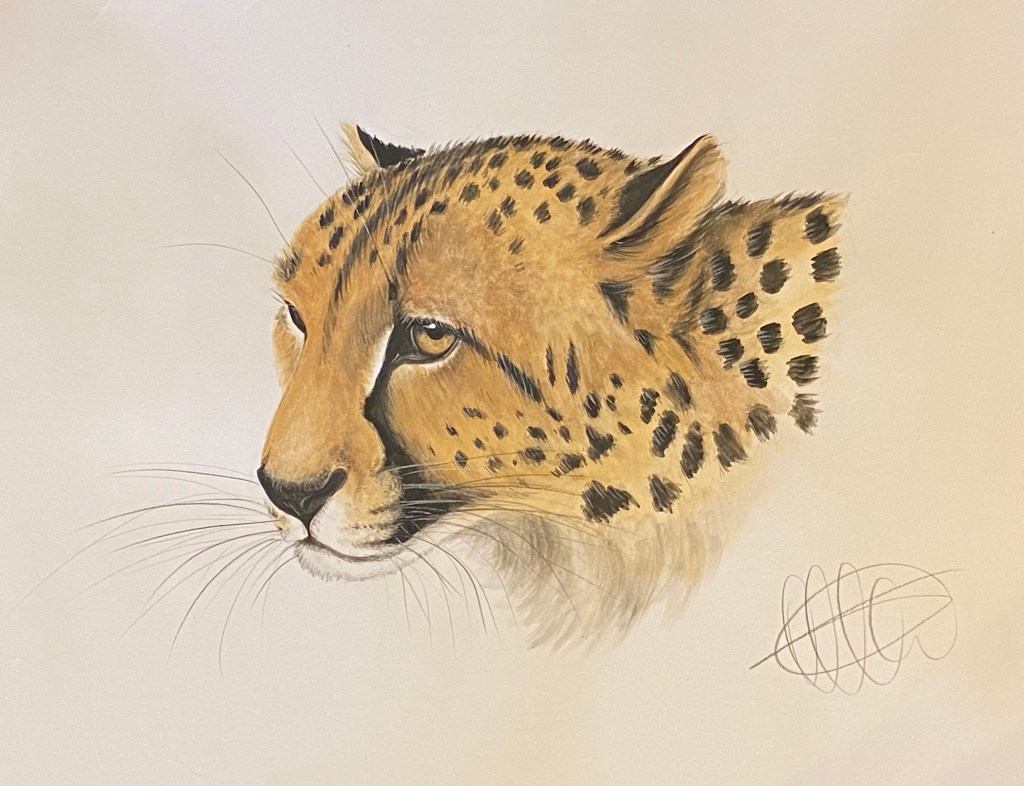
Lot 2
This is an ORIGINAL watercolour, pastel and pencil study of a Cheetah by wildlife artist Milo. This STUNNING piece is on high grade art paper measuring 59 x 42 cms.
A Cheetah by Milo ~ 2020.
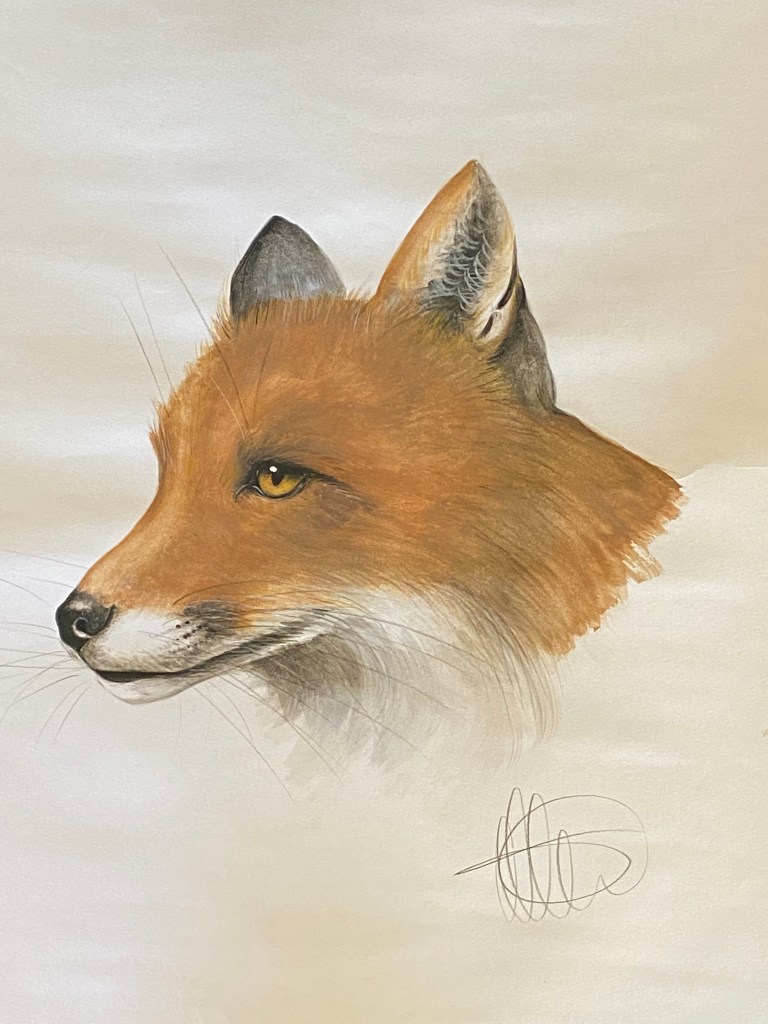
Lot 3
This is an ORIGINAL watercolour, pastel and pencil study of a Fox by wildlife artist Milo. This STUNNING piece is on high grade art paper measuring 42 x 59 cms. (#19).
A Fox by Milo ~ 2020.
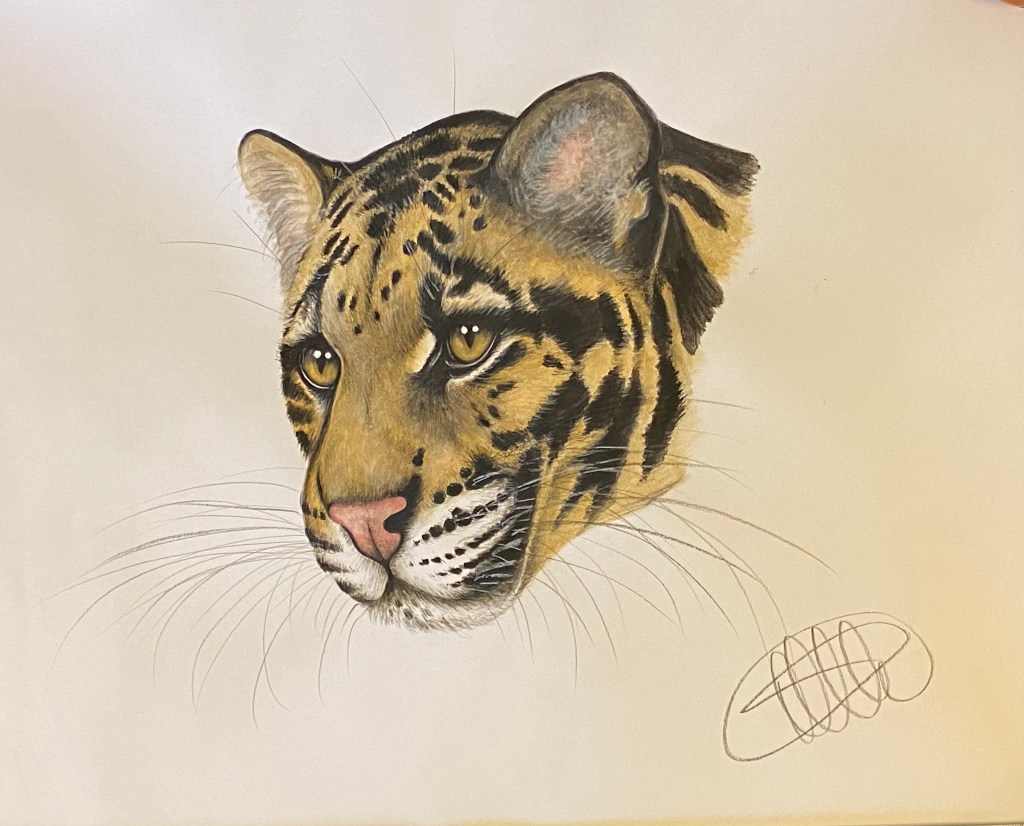
Lot 4
This is an ORIGINAL watercolour, pastel and pencil study of a Clouded Leopard by wildlife artist Milo. This STUNNING piece is on high grade art paper measuring 57 x 42 cms. (#34).
A Clouded Leopard by Milo ~ 2020
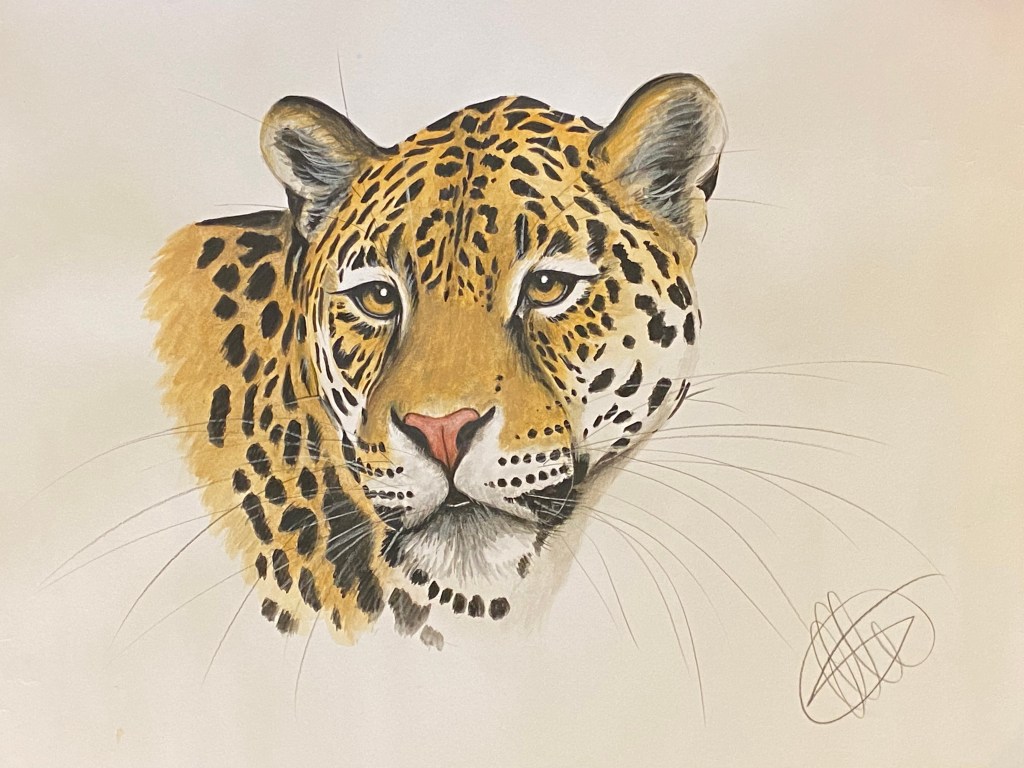
Lot 5
This is an ORIGINAL watercolour, pastel and pencil study of a Jaguar by wildlife artist Milo. This STUNNING piece is on high grade art paper measuring 57 x 42 cms. (#8
A Jaguar by Milo ~ 2020.
Lot 6
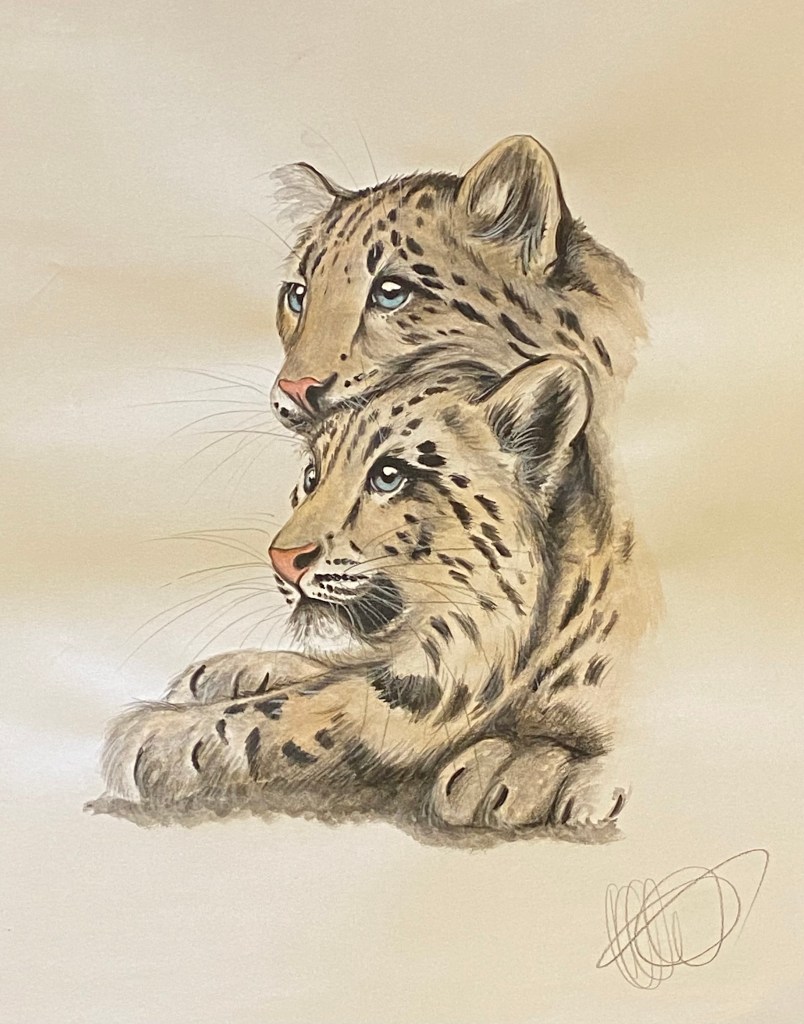
This is an ORIGINAL watercolour, pastel and pencil study of a pair of Snow leopard cubs by wildlife artist Milo. This STUNNING piece is on high grade art paper measuring 42 x 59cms. (#26).
A pair of Snow Leopard cubs by Milo ~ 2020.
Lot 7
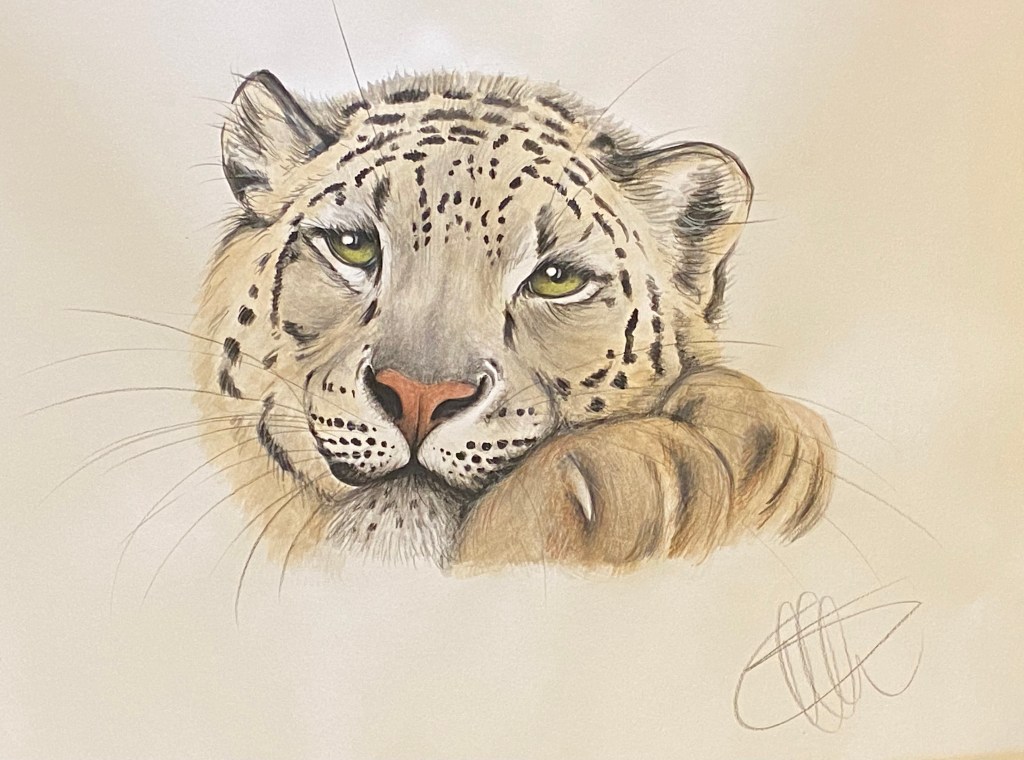
This is a stunning ORIGINAL watercolour, pastel and pencil study of a Snow Leopard by wildlife artist Milo. This STUNNING piece is on high grade art paper measuring 59×42 cms. (#7).
A Snow Leopard by Milo ~ 2020
Lot 8
This lot is ‘A Mother’s Love’, an adorable original watercolour, pastel and pencil of a Lioness and her cubs by wildlife artist Milo. This BEAUTIFUL piece is on high grade art paper measuring 30.5×27.6 cms. (#17).
A Mother’s Love by Milo ~ 2012
Lot 9
Who can resist ‘Those Eyes’? This delightful original watercolour, pastel and pencil study of a baby Orangutan is by Milo and is on high grade art paper measuring 59×42 cms. (#12).
‘Those Eyes’ by Milo ~ 2021.
Lot 10
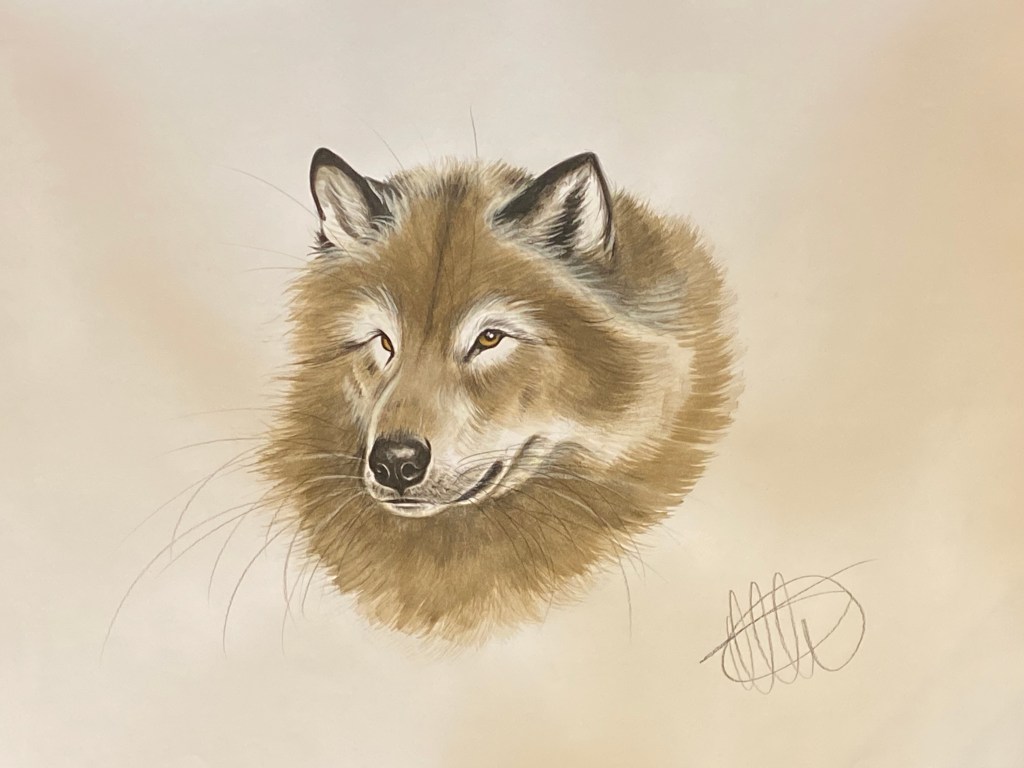
This is a stunning ORIGINAL watercolour, pastel and pencil study of a Wolf by wildlife artist Milo. This beautiful piece is on high grade art paper measuring 59×42 cms. (#13).
A Wolf by Milo ~ 2021.
Lot 11
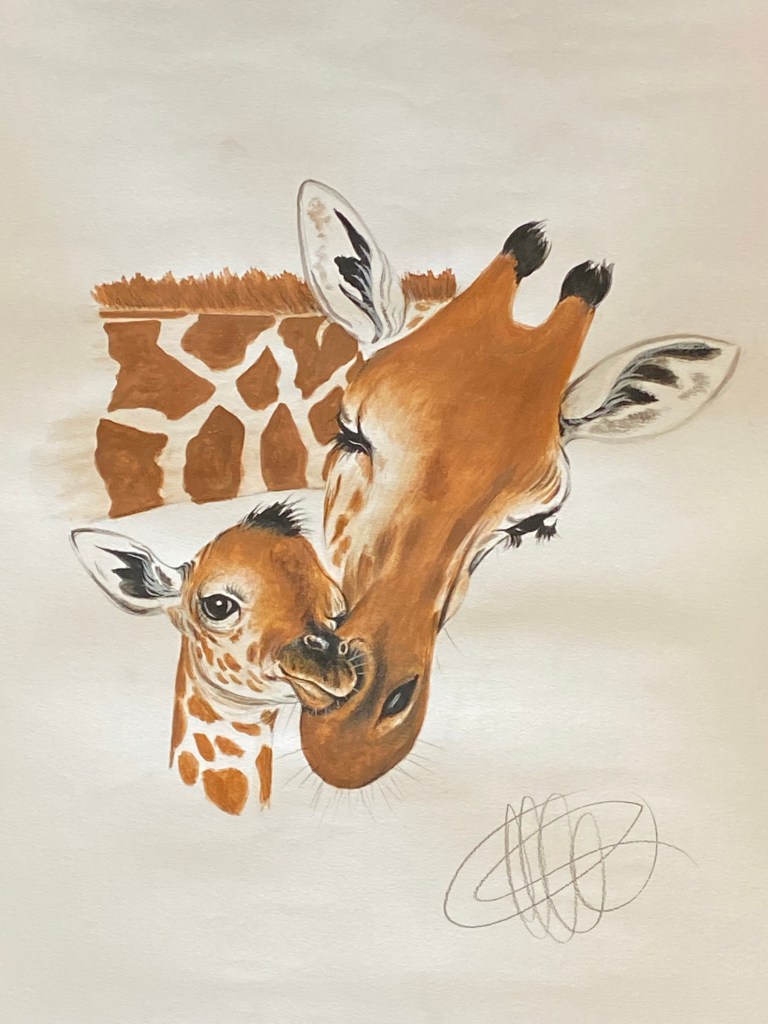
‘A Mother’s Love’ is an ORIGINAL watercolour, pastel and pencil study of a Giraffe and her baby by wildlife artist Milo. This STUNNING piece is on high grade art paper measuring 42 x 59 cms. (#18).
‘A Mother’s Love’ (Giraffe & Baby) by Milo ~ 2021.
Lot 12
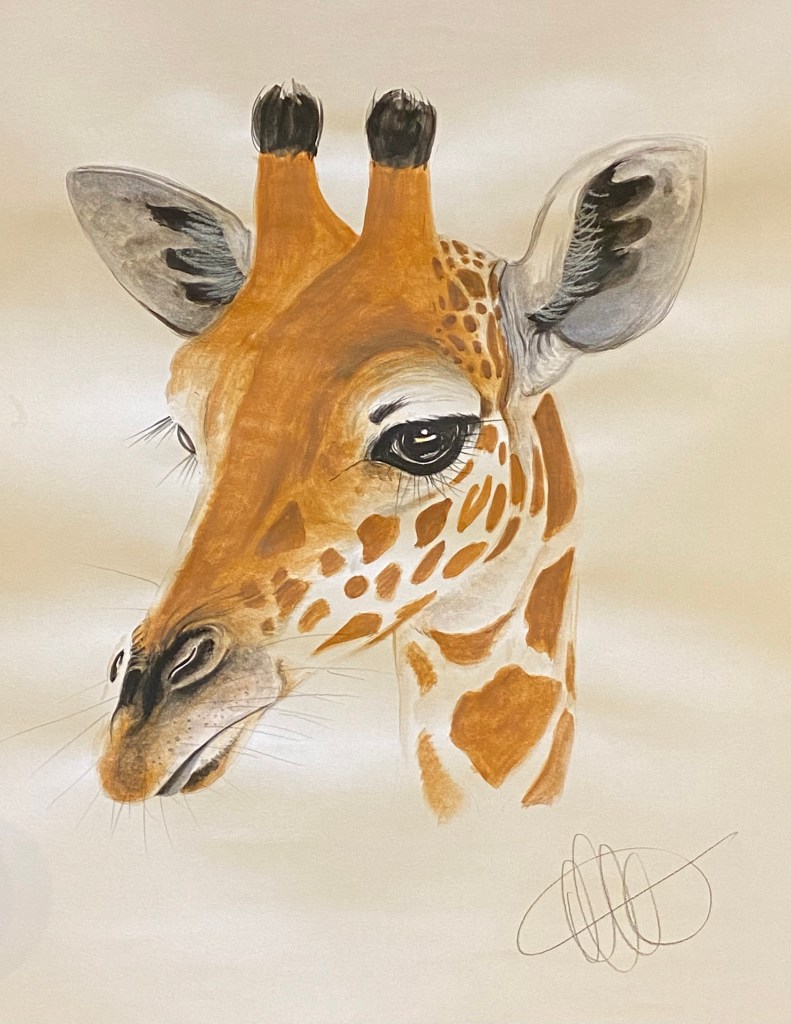
This is an ORIGINAL watercolour, pastel and pencil study of a Giraffe by wildlife artist Milo. This BEAUTIFUL piece is on high grade art paper measuring 42 x 59 cms. (#25).
A Giraffe by Mido ~ 2020.
Lot 13
This is an ORIGINAL watercolour, pastel and pencil study of an Amur Leopard by wildlife artist Milo. This BEAUTIFUL piece is on high grade art paper measuring 59 x 42 cms. (#27).
An Amur Leopard by Milo ~ 2021.
Lot 14
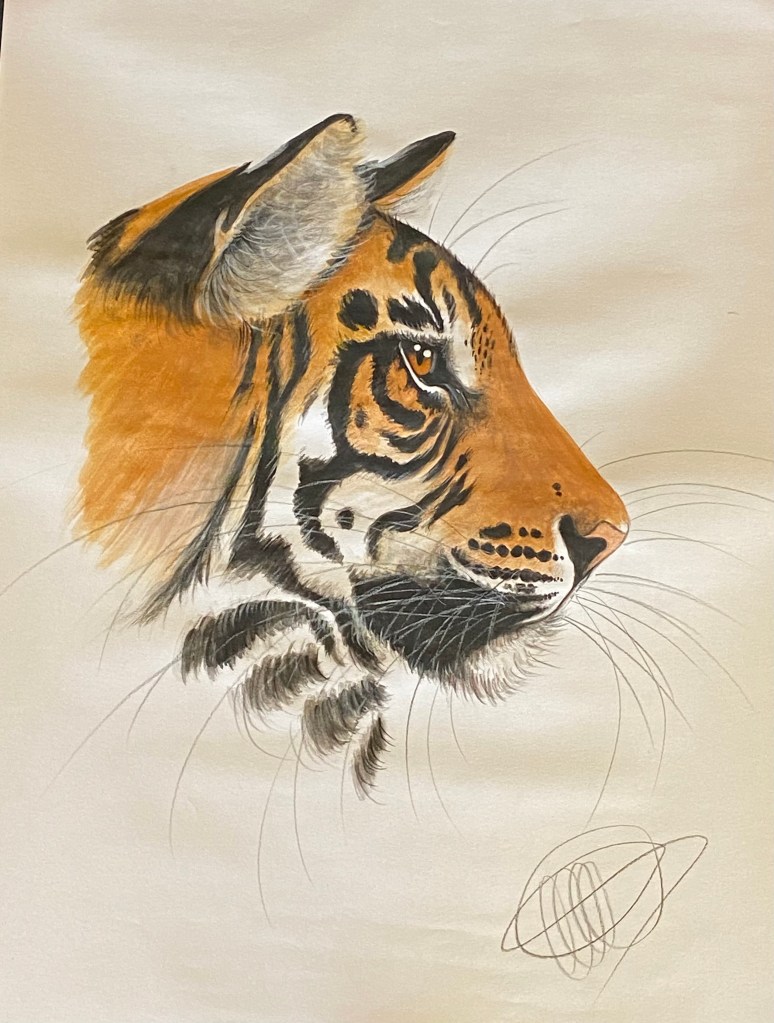
This is an ORIGINAL watercolour, pastel and pencil study of a Sumatran Tiger by wildlife artist Milo. This BEAUTIFUL piece is on high grade art paper measuring 59 x 42 cms. (#1).
A Sumatran Tiger by Milo ~ 2019.
Lot 15
This is an ORIGINAL watercolour, pastel and pencil study of a beautiful pair of Cheetah cubs by wildlife artist Milo. This BEAUTIFUL piece is on high grade art paper measuring 59 x 42 cms. (#16).
A pair of Cheetah cubs by Milo ~ 2020.
Lot 16
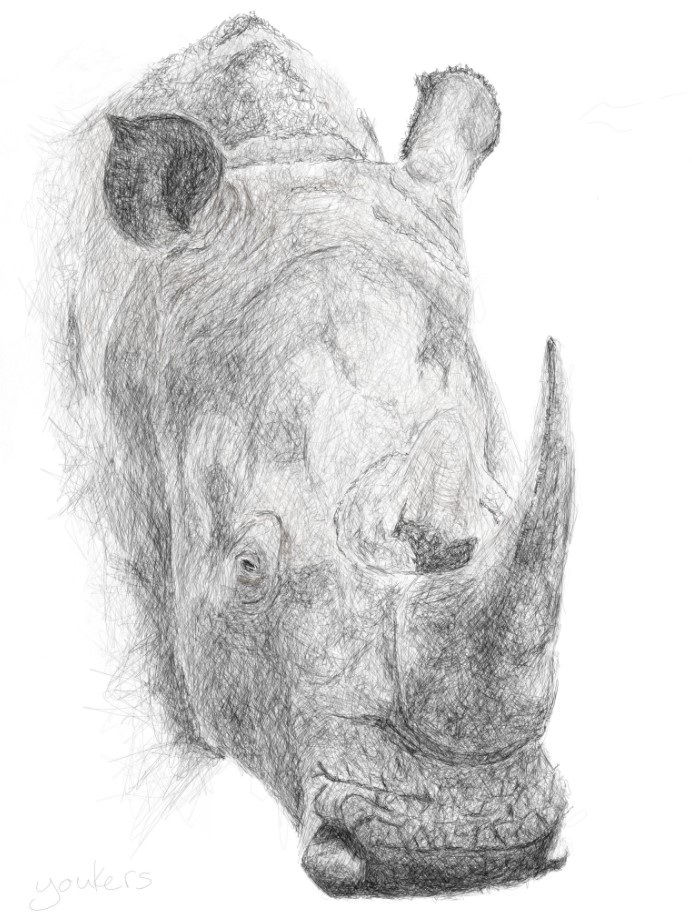
This is an ORIGINAL pencil study of a Rhino by Dane Youkers . This beautiful piece measures 28 x 36 cms .
A Rhino by Dane Youkers ~2022.
Lot 17
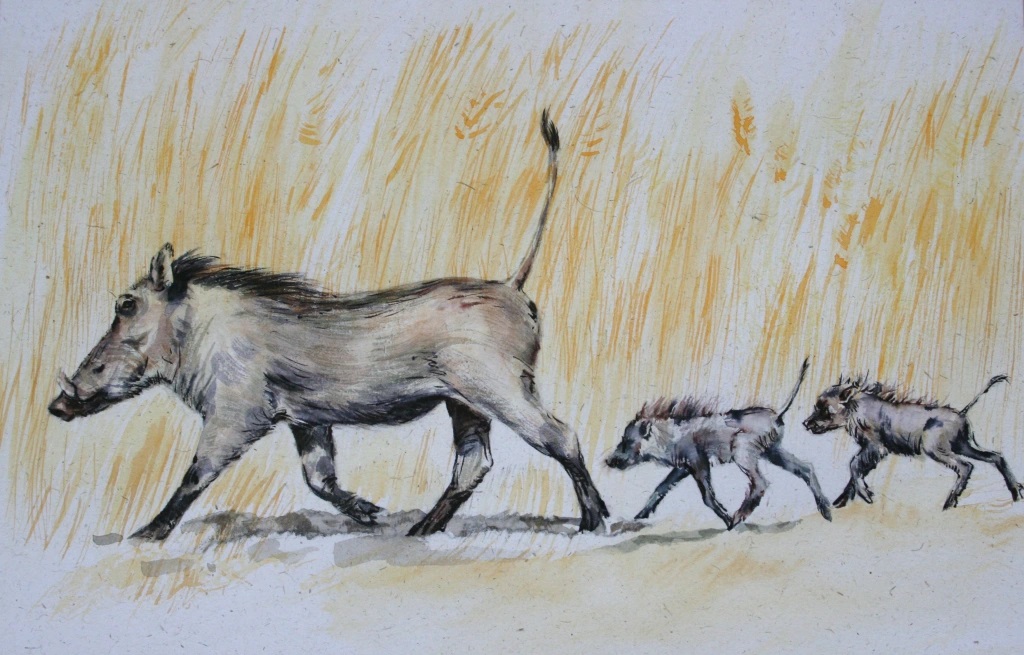
‘Tails Erect’ by Wildlife Artist Carol Barrett. This ORIGINAL study of Warthogs is in watercolour and ink and is on Rhino Dung Paper! It is mounted and measures 40 x 30 cm.
‘Tails Erect’ by Carol Barrett.
Lot 18
This is an ORIGINAL watercolour study of a Badger by Diane Antoine. This beautiful piece measures 30 x 21 cms .
‘The Badger’ by Diane Antoine ~2020.
Lot 19
This is an ORIGINAL pencil study of a Wolf (artist unknown). This beautiful piece measures 30 x 21 cms .
A Wolf In Thought
Lot 20
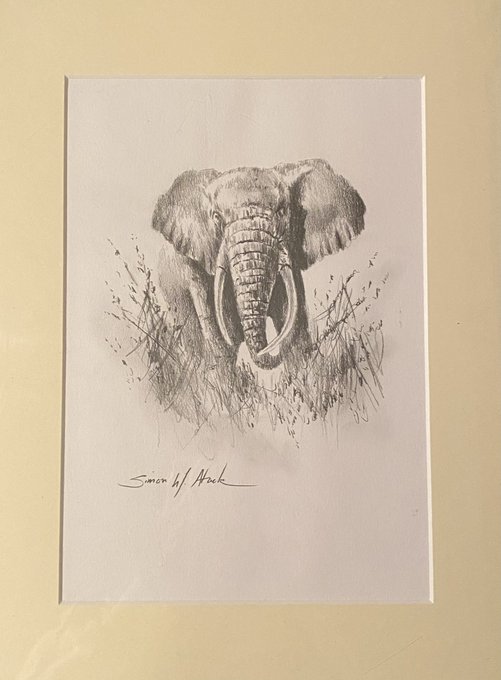
This is an ORIGINAL study of an Elephant in pencil by Simon W. Atack. This BEAUTIFUL piece measures 30 x 21 cms and is mounted.
The Leader Of The Herd by Simon W. Atack.
Lot 21
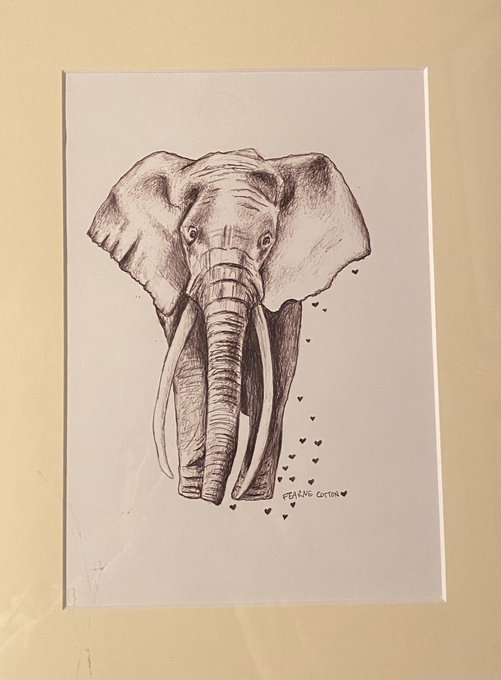
This is an ORIGINAL study of an Elephant in pencil by presenter and author Fearne Cotton. This BEAUTIFUL piece measures 30 x 21 cms and is mounted.
Super Tusker by Fearne Cotton.
Lot 22
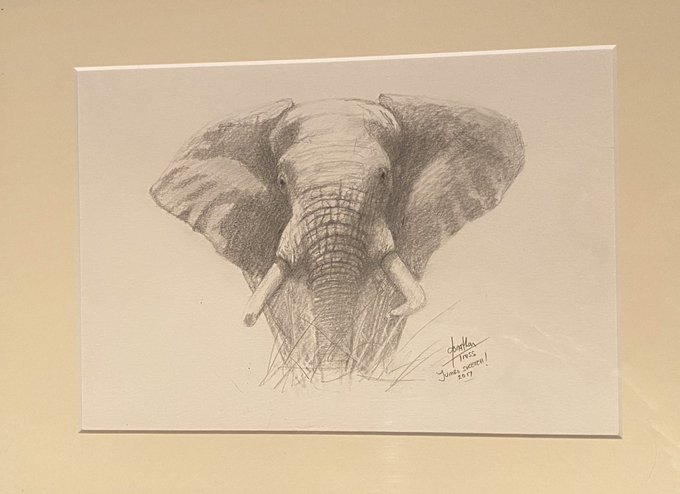
This is an ORIGINAL study of an Elephant in pencil by Jonathan Truss. This BEAUTIFUL piece measures 30 x 21 cms and is mounted.
Jumbo Sketch by Jonathan Truss.
Lot 23
‘Gentle Elephant’ is an ORIGINAL watercolour study by Anne Jolivet. This BEAUTIFUL piece measures 30 x 21 cms .
‘Gentle Elephant’ by Anne Jolivet ~ 2021.
Lot 24
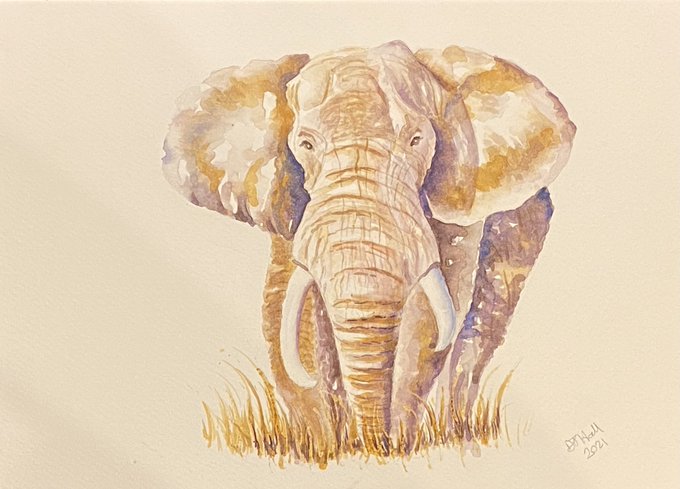
This is an ORIGINAL watercolour study of an Elephant by Debra J. Hall. This BEAUTIFUL piece measures 30 x 21 cms .
An Elephant by Debra J. Hall ~ 2021.
Lot 25
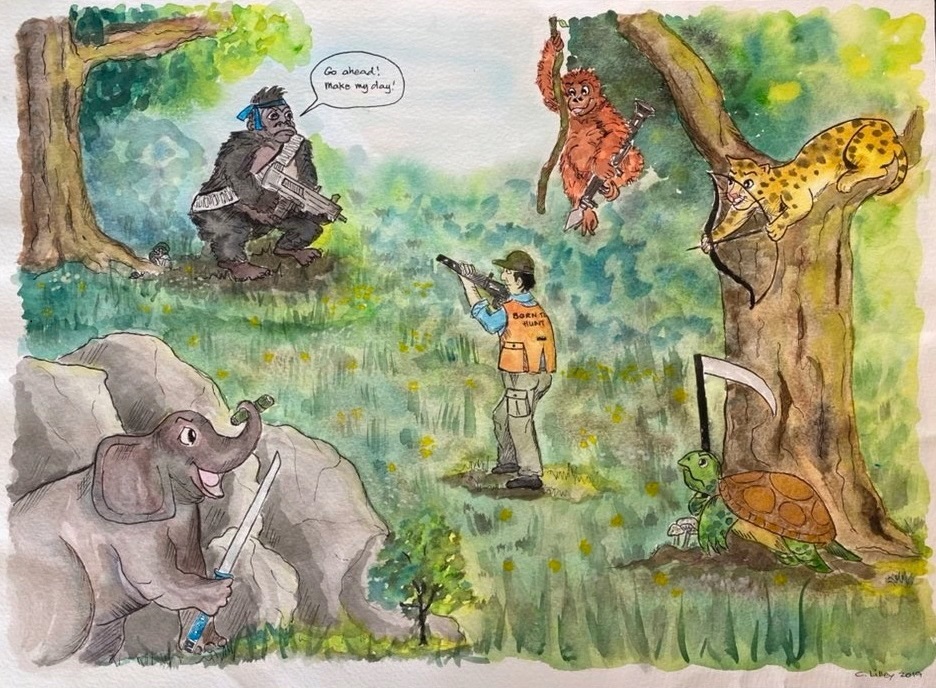
‘The Animals Fight Back’ ORIGINAL watercolour Charito Lilley. This thought-provoking piece measures 40 x 30 cms
‘The Animals Fight Back’ by Charito Lilley ~ 2019.
Lot 26
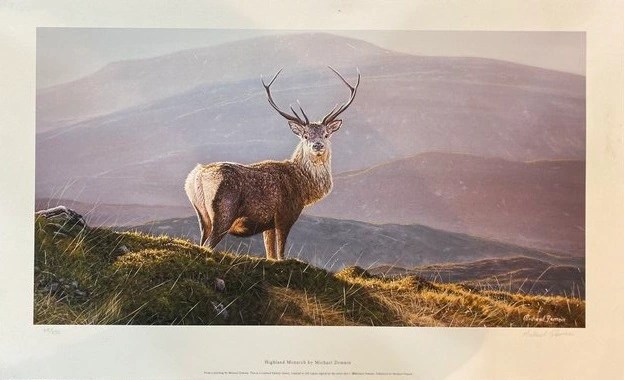
This is a Limited Edition (No. 46/250) print is ‘Highland Monarch’ by Michael Demain. This stunning print measures 56 x 34 cms.
‘Highland Monarch’ by Michael Demain.
Lot 27
A beautiful print of Tiger cubs by Jan Ferguson. This piece measures 41 x 31 cms.
‘Tiger Cubs’ by Jan Ferguson.
Lot 28
A stunning Limited Edition print (No. 7/100) titled ‘Endangered Nobility’ by Kim Thompson. This beautiful study of the noble Lion measures 60 x 42 cms.
‘Endangered Nobility’ by Kim Thompson ~ 2011.
Lot 29
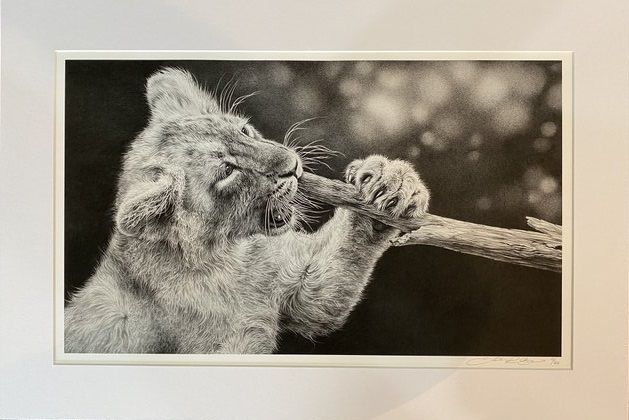
‘Mischief Maker’ is a beautiful Ltd Edition study of a playful Lion cub by Julie Rhodes. It is mounted and measures 56 x 38 cms.
‘Mischief Maker’ by Julie Rhodes.
Lot 30
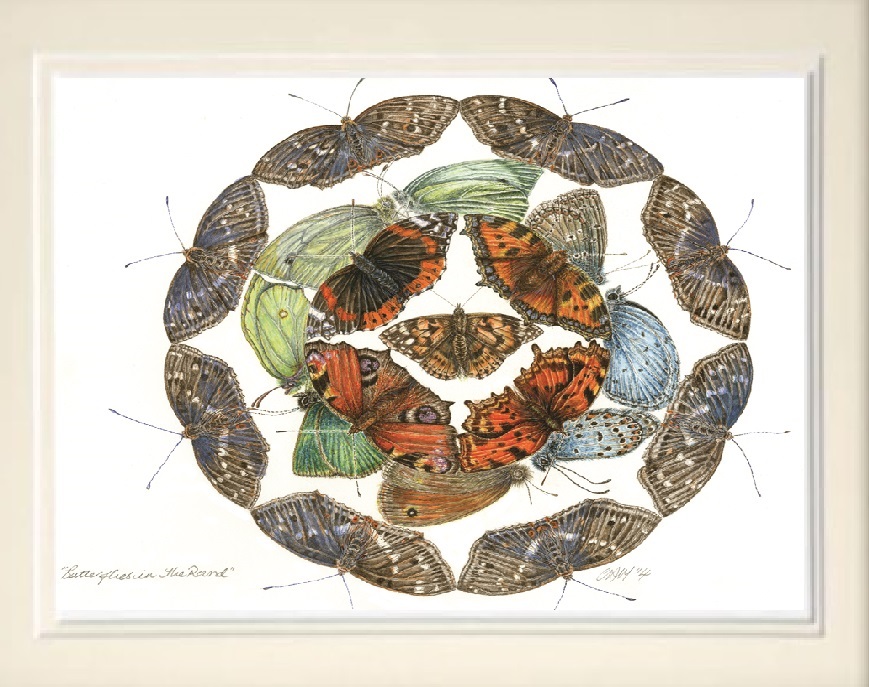
The beautiful Butterflies In The Round by Cath Hodsman. This Limited Edition print measures 51 x 41 cms.
‘Butterflies In The Round’ by Cath Hodsman.
Lot 31
Street artist Sonny Sundancer’s gigantic painting of an Amur Leopard overlooked the city of Vladivostok, Russia and was part of his worldwide ‘To The Bone’ project aimed at raising awareness about endangered species.
This STUNNING piece of his work is caught brilliantly in this VERY Limited Edition of only 45 prints (No. 29/45) and measures 50 x 35 cms.
Amur Leopard street art by Sunny Sundancer ~ 2017.
Lot 32
In a very Limited Edition of only 75 prints (No. 6/75), this beautiful study of a Sumatran Tiger is by Nick Day. It measures 38 x 41 cms.
A Sumatran Tiger by Nick Day ~ 2015.
Lot 33
This is a stunning Limited Edition print of a commission for The Miracle’s Mission Rehabilitation Centre. This beautiful piece measures 30 x 21 cms.
THE MIRACLE’S MISSION REHABILITATION CENTRE
Thank you for taking the time to look at our auction and happy bidding.
If you would like to make a donation to our fundraiser to help support our work you can do so at Fundraiser To Help Disabled Animals. Thank you.
As the number of Rhinos killed by poachers keep rising and more traumatized orphaned calves are in need of care, Kirsten Everett, a volunteer at Nikela, takes us on a touching journey as she looks at the horrors of a poacher attack though the eyes of a young Rhino calf.
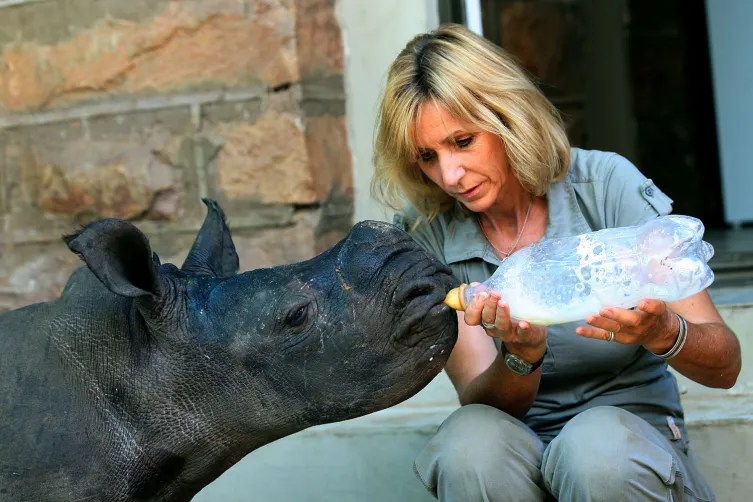
LIMPOPO, SOUTH AFRICA: Karen Trendler cares for Ntombi, a two-month old White Rhino. Ntombi survived a brutal attack, when poachers killed her mother earlier in the week. She sustained severe head injuries and was cared for in a rhino orphanage. Credit: Kevin Sutherland.
“My mother and I were contently filling our hungry stomachs when we heard a strange noise. I carried on eating but she smelt the air for unknown scents. I saw the terrified look in her eye before she managed to control it; the unnatural smell meant something. A few minutes later we heard the ‘whop, whop’ of a metal monster flying closer towards us. Just when my mother focussed on it the men crept out of the bushes with a crunch of sticks. Something seemed to hit her and she grunted in surprise. The birds abandoned their posts heading away from the danger. I stood helplessly as she tried to run but ended up falling to the ground. The men surrounded her and tried to chase me away. I ran forward scared enough to not care about the men as they had done something to my mother, I needed her and they must go away.
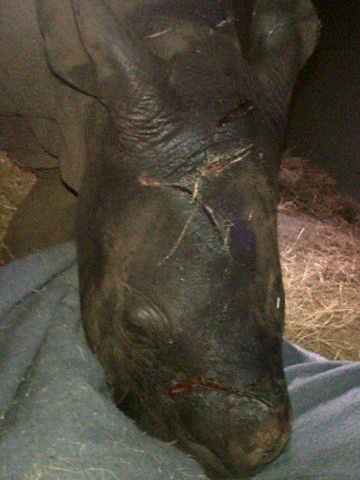
Out of nowhere one of the big men spun on me and hit me hard with something sharp. Blood oozed from my wound as my mother answered my cry for help with a weak beg, ‘Away, away’. I backed away nursing my wound, how could I get to her?? She grunted again so I didn’t give up. I ran forward again but this time the angry man was merciless, determined to get his message across. As quietly as possible I took the cuts to my poor head trying not to worry my mother even more.
Confused I backed away into the bushes calling to her to get up, but the eerie silence dragged on and she didn’t move a muscle. Fear glued me to the floor as I felt my young heart pulsing with anger and fear. A breeze blew, as I waited for the monsters to go so I could go to my poor mommy and find out what was wrong. My heart skipped a beat when I realised this was what my cousin had gone through only a full moon ago. It was terrible, my body couldn’t stop shaking and I couldn’t think clearly, I felt lightheaded from all my blood loss.
Finally when the monsters left I ran to her side, ‘Mom wake up.’ My voice cracked with emotion but still she didn’t respond. I took a step back and saw the pool of blood. Her horn had been brutally cut off and she lay lifeless. Above me a crow flew over.
I turned to run then I asked myself some important questions… where would I go? I wasn’t old enough to know the way to the dam yet. Who would protect me from predators? The truth was that I wasn’t strong enough to survive by myself yet. Would I be with my mother in the sky sooner than I thought? The last question scared me the most; out in the wild without my mother I might just be able to survive a week.
I heard the snap of a twig, I wasn’t alone. This time I didn’t have the strength to care what these humans wanted with me. I collapsed and slept for a few hours. I was almost completely unconscious though I sensed kindness near me. Too traumatised to do anything I lay as they treated my wounds. The people who tried to comfort me planted a seed of hope. Hope that I could survive and hope that the rest of the human race would come to its senses and help my species and all the others out there”.
Let’s stop the babies’ cries! Let’s Save The Last Rhin0!
Written by Kirsten Everett. Based loosely on the story of “Ntombi” who was rescued by Karen Trendler and her team.
Ntombi bears the poacher’s scars
WHAT YOU CAN DO TO HELP ANIMALS IN NEED
You can support our work by donating as little as £5 – It only takes a minute but it can last a lifetime for an animal in need.
Everyone who donates will receive a Certificate of Appreciation as a thank you for helping animals in need.
The Mission of Protect All Wildlife is to prevent cruelty and promote the welfare of ALL animals. We believe EVERY animal should be treated with respect, empathy, and understanding. We raise awareness to protect and conserve wild, captive, companion and farm animals.
It is vital that we protect animals against acts of cruelty, abuse, and neglect by enforcing established animal welfare laws and, when necessary, take action to ensure that those who abuse animals are brought to justice.
Protect All Wildlife are involved in many projects to protect animals’ rights, welfare, and habitats. Money contributed to Protect All Wildlife supports ALL of our worthy programmes and gives us the flexibility to respond to emerging needs. Your donations make our work possible.
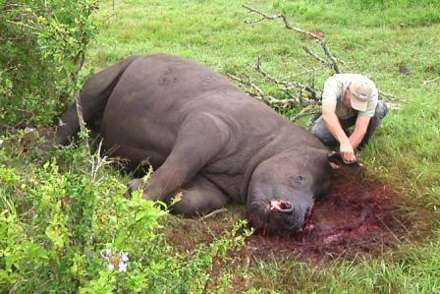
A Mozambican national serving a prison sentence for Rhino poaching has been slapped with another lengthy jail term after being convicted of killing a second Rhino in the Skukuza National Park.
Convicted poacher Lucky Mabunda
The National Prosecuting Authority said 47-year-old Lucky Mabunda, was sentenced in the town’s Regional Court on Thursday to ten years direct imprisonment.
NPA spokesperson, Monica Nyuswa, said he was already serving a 19-year jail term for Rhino poaching and was convicted and sentenced for the second incident in 2019.
She said the court heard that Mabunda had entered the Skukuza National Park between February and September 2019. Field Rangers were patrolling and found the accused in possession of a firearm, axe, ammunition, and other items geared for hunting. They also found the carcasses of two Rhinos.
Nyuswa said he pleaded guilty to killing one rhino, before ballistic evidence taken from the Rhino killed in February, later provided the link back to him.
“It confirmed that the bullets found on the carcass were fired from the rifle found in the accused’s possession,” she said.
State prosecutor Lot Mgiba underscored the gravity of the offense, advocating for an appropriate sentence in court.
Consequently, the accused was found guilty and received a ten-year jail term. The importance of such legal actions in combating poaching, which poses a severe threat to endangered species and the potential for species extinction, was highlighted by Director of Public Prosecutions Advocate Nkebe Kanyane.
SANParks spokesperson, Ike Phaahla, says they welcome the sentence.
“We are elated at the sentencing, which is in addition to the 18 years he has already served since he was found inside the park. In this instance, a projectile was discovered next to the carcass and taken for ballistics. They came back pointing towards the accused, and he was requisitioned from the Department of Correctional Services to get an additional 10-year sentence. It’s a well-known fact that we still have people who, around this time, want to come in, but we want to warn them that Kruger National Park is a dangerous place to come.”
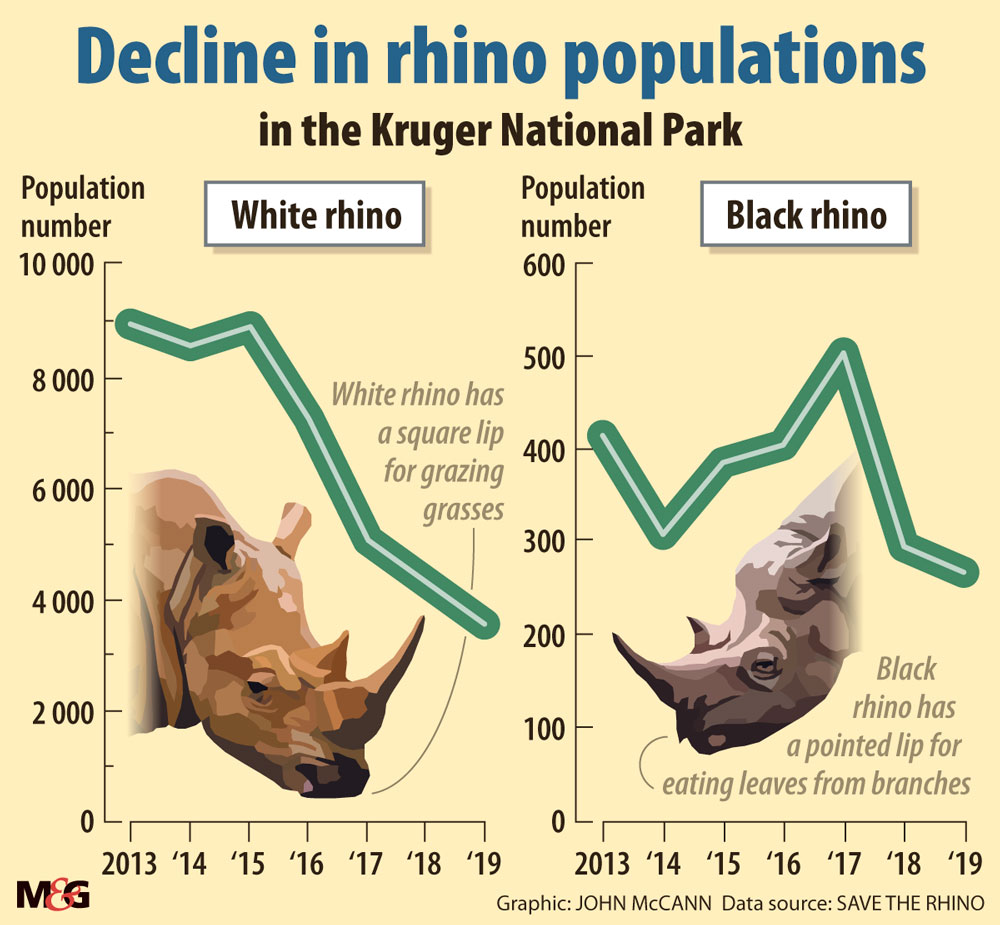
Kruger has lost 70% of ITS Rhinos in 10 years
The Decline In Rhino Populations In KNP Graph: Save The Rhino
Rhino populations in the Kruger National Park have dropped by about 70% in the past decade because of the onslaught of poaching and prolonged drought. In its 2019-20 annual report, SANParks said that only about 3 549 White Rhinos and 268 Black Rhinos remain in the Kruger.
The environment department said poachers killing cows also ultimately kill dependent calves and cause future loss of calves — this effect equates to an additional five rhinos lost to the population per loss of one cow, now and in future. “Poaching also causes factors such as social disruption of Black Rhino societies. Cows then conceive less often.”
WHAT YOU CAN DO TO HELP ANIMALS IN NEED
You can support our work by donating as little as £5 – It only takes a minute but it can last a lifetime for an animal in need.
Everyone who donates will receive a Certificate of Appreciation as a thank you for helping animals in need.
The Mission of Protect All Wildlife is to prevent cruelty and promote the welfare of ALL animals.
We believe EVERY animal should be treated with respect, empathy, and understanding. We raise awareness to protect and conserve wild, captive, companion and farm animals.
It is vital that we protect animals against acts of cruelty, abuse, and neglect by enforcing established animal welfare laws and, when necessary, take action to ensure that those who abuse animals are brought to justice.
Protect All Wildlife are involved in many projects to protect animals’ rights, welfare, and habitats. Money contributed to Protect All Wildlife supports ALL of our worthy programmes and gives us the flexibility to respond to emerging needs. Your donations make our work possible.
World Rhino Day helps us to understand how these animals are struggling to survive and how they are endangered. We should find ways to save them from becoming extinct.
Here is a small collection of thought provoking poems.
Get Together! (Protect The Rhino) by Kitty Lam.
Sometimes I wish that I wasn’t born with a tall, magnificent, towering horn Because I might be killed soon while my horn were torn. Every 8 hours, one of us is dreadfully killed, Only to make their dream fulfilled?
If I were to say we’re nothing special, we’re just like you it’s just not fair. And if I say our horns are made like your nails and your hair. Would people still kill us or let us be free? Maybe they’ll laugh, as you can see.
We’re neither for sale, nor for medicine or as your house souvenirs. I don’t want to be a display and stay there for years! How can it be a work that they’re so proud of? Then does that mean we’re just “stuff”?
There are not many of us now, only 5 species left and yes it is true. White, Black, Greater One- Horned, Sumatran and Javan too. However, I’m afraid that one day we’ll be gone, And by then whom will they look upon?
I know by far that many of you had protected us, and gave us support. Though is it not enough to reach the hunter’s heart? Don’t you think that we’ve had enough? We have to stay strong and tough.
This is why we need your help, to spread the word and show us you care. Help us make a difference, since we are considered as rare. I want us to all get together and to be a part of this. For a happy future that you’ll never miss!
On Seeing A Documentary On Black Rhino by Francis Duggan.
The poachers only shoot them for their horn And they even kill the young and newly born And their numbers in the wild State only few And their last hope of survival now the zoo.
It’s sad to think that African tribal child May not now see black rhino in the wild May live his whole lifetime and never see Black rhino on savanna living free.
Some men don’t kill to eat they kill for greed And only think of their financial need For cash reward rich dealers they supply And Rhino for their horn condemned to die.
The Black Rhino in Africa now so few And some were flown to Australia to Dubbo Zoo In hope they might breed in captivity At least of poachers guns they now are free.
I watched a program on them on T.V. And I felt sad so sad at what I see To think that men would shoot them for their horn And even kill their young and newly born.
Blankets For Baby Rhinos by Anne Moth.
I wear black for the rhinos killed and maimed For what men do they should be so ashamed They take the lives of creatures wild and free For Gods sake will you listen, leave them be.
I wear black for the orphans left behind Because of cruelty caused by some of mankind The babies left behind, they have no mums Evil men shot and killed them with their guns.
I wear black for the stupidity of man’s greed The ones who plant the ever growing evil seed Saying horn so good, it’ll make you strong If only people listened because it is so wrong.
When all the rhinos are allowed to thrive and live For that wonderful day my very soul I’d give Until that day the clothes upon my back Will have no colour, I’ll be the woman dressed in black!
Son by Ray Dearlove.
As we wander through the glade I watch my first born, searching for shade Soon it will be night With the full moon burning bright.
No natural enemies on the plains Certainly confident, perhaps a little vain So little but already has the strut Superior to all animals, no ifs, no buts.
The moon is high, it could be daytime I am blessed with my little man, approaching his prime I feel the pain before I hear the shot A deep burning pain in my side, burning hot.
My son runs towards me, terrified I breathe hard, running for the forest, must hide We crash through the bushes, through the trees More shots, so close, when will it cease.
Deep in the bush we stop, searching for a thicket of thorns All these people want is my horns Why must they kill me to win their gory prize I wish that mine were not such a great size.
I lay down to rest, my boy by my side We must be deathly quiet and hide How long can I withstand this terrible pain I must rise, I stand, but then I fall again.
We stumble a few steps, him nuzzling my neck Sobbing, crying, am I ok, he wants to check My world goes dark and black Someone, anyone, please save my son from this cruel attack.
One Rhino by Tessa Botha
One Rhino Two horns Sitting atop its head Two eyes Resting on its face Two tons Of a big body One rhino Grazing.
One bullet Entering the thick grey skin One Rhino Crashing To the dirt underneath its feet Blood dripping down.
One rhino gone Away from its family Away from its home. One rhino that was killed for its horns One rhino that was taken to Asia Made into medicine Curing nothing.
One rhino wasted One horn made of keratin One head full of hair made of keratin Two different things made of one Both not able to cure anything But one still being used Being hurt Being killed All for nothing!
Leave Us Alone by Nobby Clarke.
PLEASE leave us alone we are tired of running and all we want to do is roam. Our horn is useless so the experts have said. Remember there will be no more horn left once all my family are dead!
RHINOS ARE IN DANGER , AND WE MUST ACT!
Save Rhino slogans are powerful phrases that unite us to save these magnificent creatures. With poaching and habitat loss threatening their existence, it’s time to take a stand.
“Save the Rhino, Save the World” and “Protect Rhinos, Save Tomorrow” are rallying cries that spread awareness and inspire action. Let’s come together and be their guardians.
Say no to ivory and support conservation efforts. “Rhinos Deserve a Future” – let’s make it happen! Together, we can ensure these gentle giants continue to thrive on our planet for generations to come. Join the movement and save the rhinos now!
WHAT YOU CAN DO TO HELP WILDLIFE
You can support ‘Protect All Wildlife’ by donating as little as £1 – It only takes a minute but it can last a lifetime for an animal in need. Please donate below.
Everyone who donates will receive a Certificate of Appreciation as a thank you for helping animals in need.
The Mission of Protect All Wildlife is to prevent cruelty and promote the welfare of ALL animals.
We believe EVERY animal should be treated with respect, empathy, and understanding. We raise awareness to protect and conserve wild, captive, companion and farm animals.
It is vital that we protect animals against acts of cruelty, abuse, and neglect by enforcing established animal welfare laws and, when necessary, take action to ensure that those who abuse animals are brought to justice.
Protect All Wildlife are involved in many projects to protect animals’ rights, welfare, and habitats. Money contributed to Protect All Wildlife supports ALL of our worthy programmes and gives us the flexibility to respond to emerging needs. Your donations make our work possible.
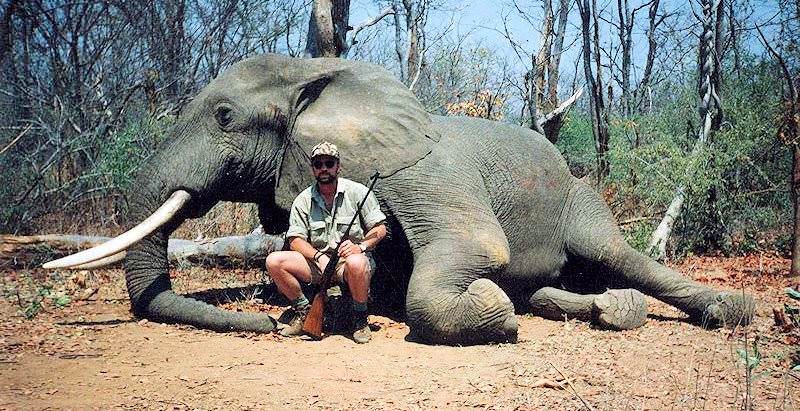
In May 2019, Botswana’s President Masisi justified the decision to recommence trophy hunting by emphasising that local communities will be guaranteed more than just menial jobs and enjoy sustainable wildlife management’s economic benefits.
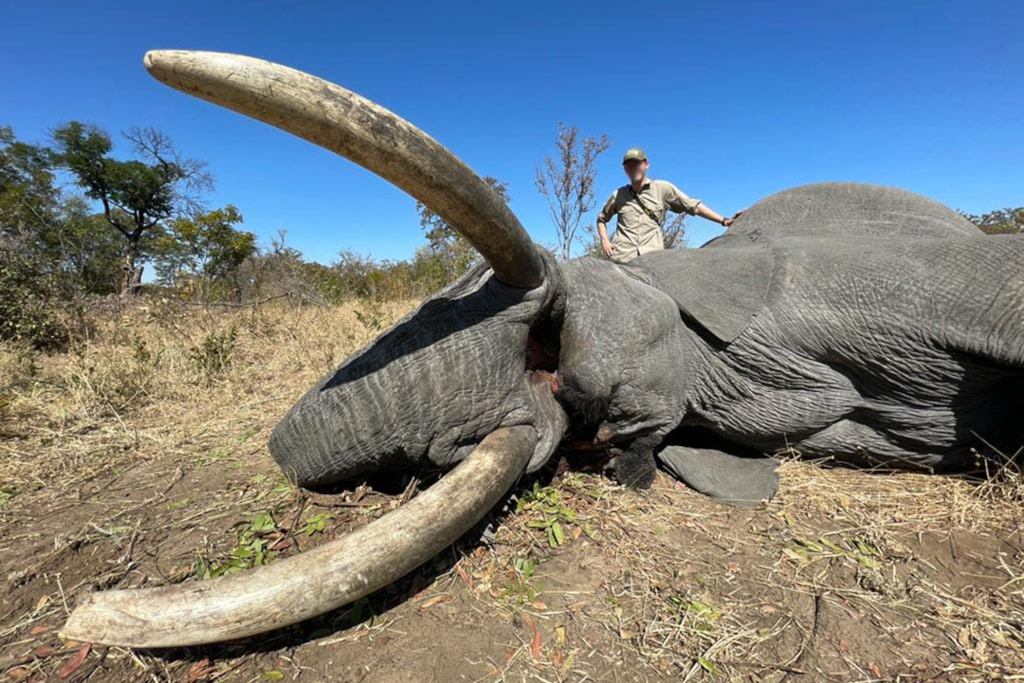
A Bull Elephant shot in Botswana – a so-called ‘100 pounder’.
As the passage of the Hunting Trophies (Import Prohibition) Bill moves to the Committee Stage of the House of Lords, a suite of amendments has been tabled for deliberation. These amendments include amending the Bill from a blanket ban to a case-by-case assessment of trophies imported into the United Kingdom based on whether they contribute to the conservation of wildlife and human economic upliftment.
For example: Amendment Clause 2(d) states that hunting imports may only be granted if:
“a hunting area where the hunting operator can demonstrate that financial or non-financial benefits of trophy hunting materially contributes to the conservation of the trophy hunted species, including habitat protection, anti-poaching measures, and support for community livelihoods.”
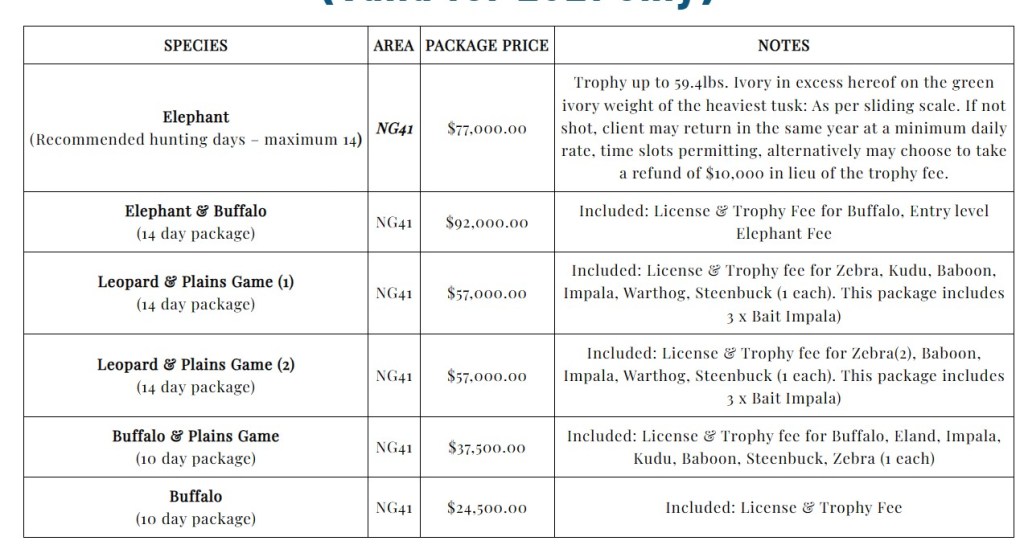
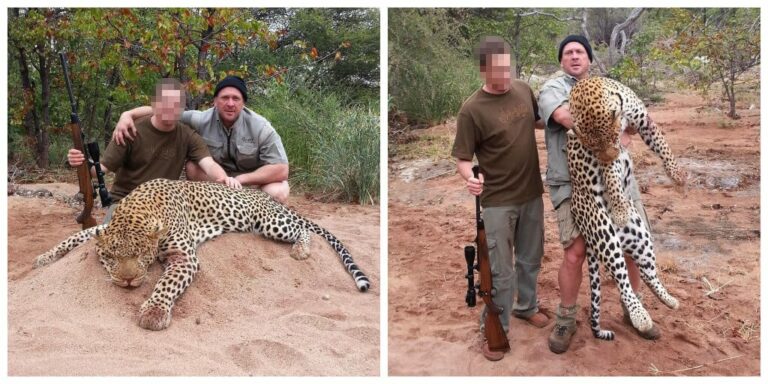
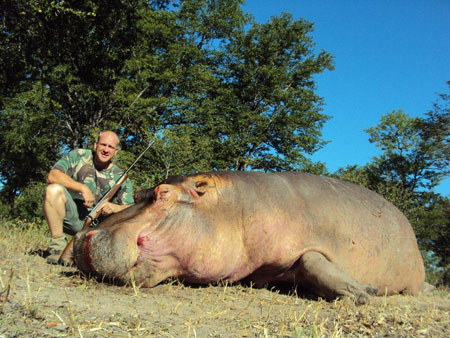
A Shopping List For Trophy Hunters
At face value, this appears to be equitable. Ignoring the obvious ethical dispute, if trophy hunting can be proven to benefit the conservation of wildlife and human livelihoods, then perhaps it may be a case to consider. However, the problem in the majority of trophy hunting cases, and in most countries where trophy hunting takes place, the activity not only is wholly unable to benefit wildlife and human communities, but precipitates the opposite.
Botswana, one of the major destinations for trophy hunters, is a particular case in point.
The southern African nation has been promoted by some in the House of Lords as an example of a trophy hunting ‘success.’ So much so that a high-level delegation of government officials from Botswana, including a minister, an ambassador and a wildlife department head of authority were invited to the House of Lords in June 2023 to make a case for the benefits of trophy hunting in their country. Yet, serious questions surround Botswana’s ability to adequately regulate trophy hunting and provide any meaningful benefits for communities living among and alongside wildlife.
Field investigations, in-person interviews and literature, financial audit, international policy document reviews have been undertaken over the course of a year to assess the validity that Botswana can provide meaningful and tangible benefits to its wildlife and people. This is a summary of the results:
On an international level, the country has been flagged for non-compliance under the Convention on International Trade of Endangered Species of Wild Fauna and Flora (CITES) due to its failure to submit annual reports, which provide crucial information for validating offtake of elephants for trophies for the international trophy trade. This indicates that the wildlife conservation in Botswana is not adequately managed.
Hunting quotas are not based on scientific data. A total quota of 356 Elephants and 74 Leopards are on the Wildlife Hunting Quota List for 2023. These figures are regarded as abnormally high. The list also includes Zebra, Buffalo, Ostrich, Wildebeest, Kudu, Eland, Gemsbok, Warthog, Baboon, and Lechwe.
There is evidence of widespread unethical hunting practices including over-use of already overly high quotas, fraudulent practices, corruption, baiting, and hunting near and within photographic tourism zones. As well as the deployment of aerial support to search for large tuskers and killing Elephant bulls near artificial waterholes.
Trophy hunting activities in Botswana are forcing communities, which are expected to rely on the proceeds of trophy hunting, into a perpetual cycle of impoverishment and economic disenfranchisement. Trophy hunting obstructs the development of more meaningful activities like photographic tourism while the proceeds from trophy hunting are so miniscule that individual community members are practically receiving nothing.
There is also widespread evidence of corruption and mismanagement of funds generated by the Community-Based Natural Resource Management (CBNRM) system in areas centred on trophy hunting as the main economic activity. The mismanagement and corruption are directly linked to trophy hunting.
The current government has revoked scientific research permits of organisations that have been committed to providing peer reviewed scientific data on the conservation status and ecology of Elephants and suppress those that have dared to voice concern over unsustainable and unethical hunting practices.
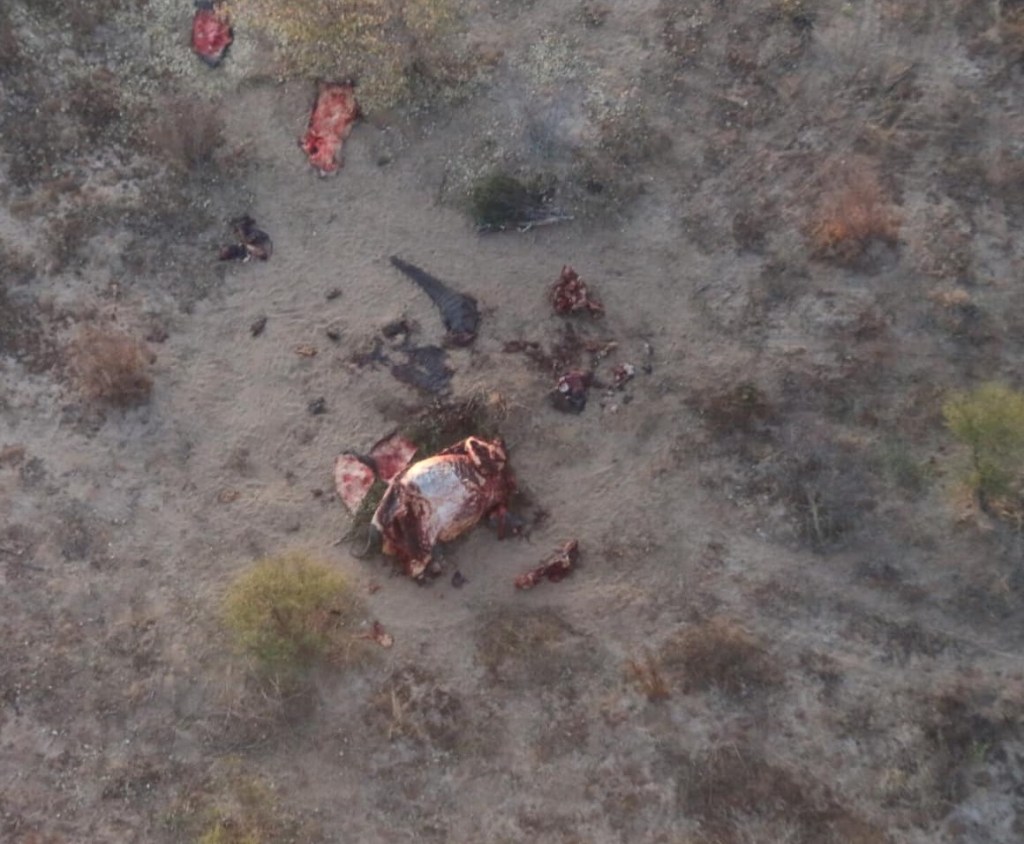
An aerial photograph of a butchered Elephant, shot by trophy hunters in Botswana.
The adult Elephant Bull (above) has been stripped of its body-parts. The trunk has been hacked off. There are large portions of the Elephant’s skin cut off. All four feet have been removed – presumably to make foot / table stools (the Botswana president, Mokgweetsi Masisi, (in)famously gave Elephant foot stools to the presidents of neighbouring countries at an Elephant Management meeting in Kasane in 2019). The tusks and skull have been taken to a taxidermy. These body parts represent the prize – the trophy – that the hunter was after, and which will be displayed on a wall in their home in Europe or America or Asia. There is also some flesh cut off on the flanks of one side, possibly to provide some meat for the trackers and skinners as a ‘tip’.
It has been claimed in Botswana that trophy hunting is only undertaken in ‘marginal’ wilderness areas that are not deemed viable for photographic tourism. It is also claimed that attempts to convert trophy hunting areas not viable for photographic tourism into photographic tourism areas is a challenge. Areas that are deemed not viable for photographic tourism are remoteness, lower densities of wildlife and monotonous natural landscapes. In these spaces, trophy hunting becomes a necessary evil as the sole provider of revenue for remote communities living within and alongside wildlife.
And yet, this Elephant was shot in a hunting concession (NG41) that is neatly wedged between two national parks – Moremi Game Reserve and Chobe National Park. These two parks are globally renowned for photographic tourism and are consequently brimming with tourists wanting to photograph what Botswana showcases best – wildlife. The fact that that this Elephant was shot right in the middle of these tourist hotspots makes a mockery of the claim that trophy hunting in Botswana only takes place in marginal areas.
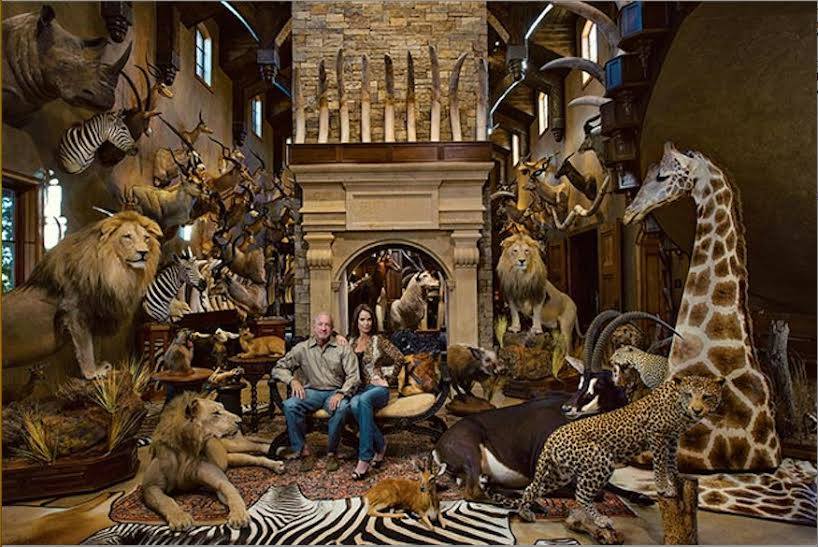
The Wall Of Death: A Hunter’s ‘Trophy’ Room
The standard narrative from hunters and their proponents is that trophy hunting is an essential conservation tool that, if conducted ‘ethically’, preserves endangered wildlife and provides revenue for impoverished communities living in marginalised areas where photographic tourism is absent. Yet as this case shows, as they all do, that narrative is a false one. Stripped of its protective fairy-tale veil, the true face of trophy hunting lays bare, a narcissistic bloodlust of a few depraved individuals who care little for ethics, community upliftment or wildlife conservation. ~ Adam Cruise.
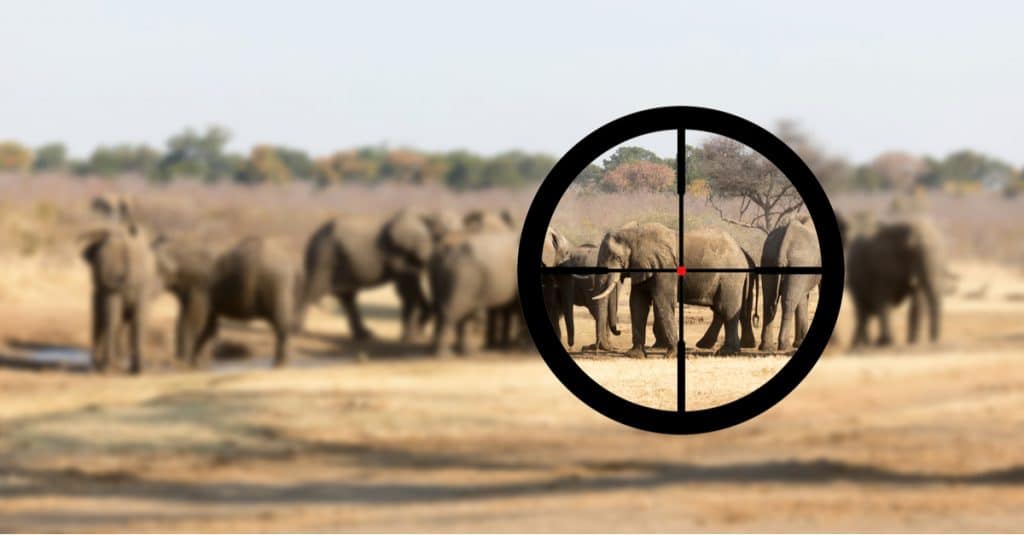
In The Trophy Hunter’s Sights: Botswana’s Elephants
WHAT YOU CAN DO TO HELP WILDLIFE:
You can support ‘Protect All Wildlife’ by donating as little as £1 – It only takes a minute but it can last a lifetime for an animal in need. Please donate below.
Everyone who donates will receive a Certificate of Appreciation as a thank you for helping animals in need.
The Mission of Protect All Wildlife is to prevent cruelty and promote the welfare of ALL animals.
We believe EVERY animal should be treated with respect, empathy, and understanding. We raise awareness to protect and conserve wild, captive, companion and farm animals.
It is vital that we protect animals against acts of cruelty, abuse, and neglect by enforcing established animal welfare laws and, when necessary, take action to ensure that those who abuse animals are brought to justice.
Protect All Wildlife are involved in many projects to protect animals’ rights, welfare, and habitats. Money contributed to Protect All Wildlife supports ALL of our worthy programmes and gives us the flexibility to respond to emerging needs. Your donations make our work possible.
When I got wind of your courageous exploits, I felt I had to congratulate you. For a start, you are British. We adore the British – they are our second favourite colonialists. The first, obviously, are the Dutch. They gave us the Afrikaners who in turn gave us apartheid. What’s not to love about apartheid, right? Was that the reason your parents moved to South Africa in 1980?
Your efforts to encourage tourism to South Africa in these fraught times are laudable, indeed. It’s not easy these days to find a Brit who is interested in anything other than Brexit and that tawdry harlot, Meghan Markle.
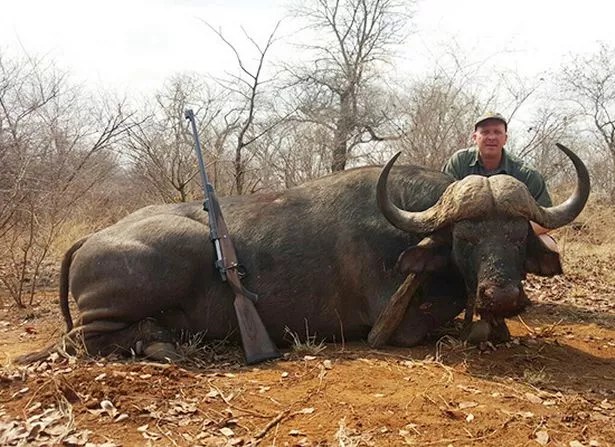
Even though you’re only 46 and hail from Epsom, Surrey, you have your very own company operating out of Johannesburg. It’s called Take Aim Safaris. At first I thought it might be another of those bunny-fondling outfits that think the best way to shoot animals is with a camera. Ha! Poor fools. Unlike you, sir, they have clearly never cradled a 300 Winchester Magnum in one arm and a high-class prostitute in the other.
And you named your eldest son Hunter! You wouldn’t expect a man who enjoys shooting animals in the face to have a sense of humour. Well done.
You spotted a gap in the market. As the plague is still very much with us, people are understandably reluctant to travel. That’s until you reminded them that with fewer hunters around, wild animals have been breeding like, well, wild animals. You can barely walk anywhere in South Africa right now without bumping into an elephant.
So you fired off a newsletter to 3,000 of your clients around the world encouraging them to come here and kill a bunch of stuff for sport. And what a sport it is! Okay, maybe not so much for the animals, but they don’t pay taxes and won’t be missed.
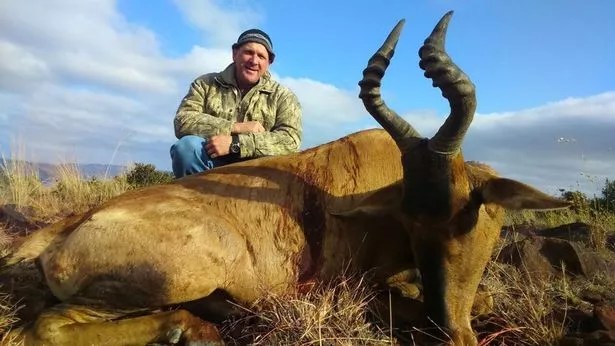
You wrote, “Big elephant and trophy buffalo + hippo, croc are plentiful. The areas are well rested, the animal movement is fantastic.” Let’s see how fantastically they move with a 5.56-caliber bullet lodged in their brain haha.
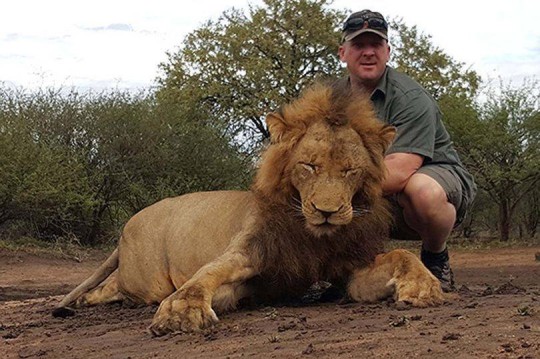
“I have quota available on the big cats: leopard and lion plus elephant bulls at unbeatable prices.” This is great news. I have never trusted an animal that can’t change its spots. Leopards are duplicitous, violent brutes and I am delighted to hear that they are now on special. Lions, too, will pretend to befriend you, then have your throat out just for the sport of it. They are cats, after all. Did you know this? Or do you simply judge everything with four legs according to the price tag on its hairy ass? Fair enough.
Some of your prices do seem a bit steep. $8 for a guinea fowl? Leave a trail of breadcrumbs into your oven and they’ll cook themselves. $150 for a mongoose? Can’t be much left, especially if you’re using hollow-point ammo. And $75 for a vervet monkey? Daylight robbery, that is. Porcupines are priced right at $300. Even though it’s more of an execution than a hunt, you could still get a quill in the eye if you were very drunk and had to fall on him.
In a recent interview with African Hunting Gazette, you said you shot your first leopard at 16. Impressive! I hadn’t even had my first blowjob by that age and there you were on a wild killing spree. Have you had your first blowjob yet? No matter. It’s the killing that’s important.
I love that you hunted for a Christian drug rehab in the Northern Cape when you were younger. You gave them more meat than they knew what to do with. That’s a David Lynch movie, that is. Produced by Oliver Stone. Featuring a young Sylvester Stallone as you.
You’ve hunted all over – Mozambique, Botswana, Zimbabwe … you even shot a bear in Russia. I suppose he didn’t understand when you shouted, “Hands up! Don’t move or I’ll shoot!” You also said Namibia is a great place to hunt.
“Namibia reminds me of South Africa 30 years ago with its low human population and massive open spaces.” Yep, there was hardly anyone living in South Africa in 1991. An easy mistake to make, what with 40 million people being tucked away out of sight. As for the massive open spaces, well, you had the Group Areas Act to thank for that.
The magazine asked what’s your favourite animals to hunt and you said, “Dagga Boys!” What? That was the name of my gang when I was growing up. But you were talking about something else. “Such an exciting hunt … it’s kill or be killed when you’re hunting buffalo.” So you engage in hand-to-hoof combat with these brutes? Respect, bro.
Our president is also into buffalo in a big way. Mainly for breeding purposes, though. No, I don’t mean … never mind.
Your greatest trophy was the buffalo you hunted with your dad in Mozambique. “It was, and remains, the fulfillment of a father and son dream hunt in a perfect environment.”
My greatest trophy was for tennis in Standard 8. It was tiny but I was very proud. My father never taught me how to hunt. Instead, he taught me how to play pool. The thrill just wasn’t the same, although people did die in some of the pubs he took me to.
You talk fondly of the “38-inch bull in Mozambique that put me firmly on a path I’m still on”. That’s, like, just over a metre? What kind of small-ass bull is that? You might as well have kicked him to death. Anyway, what do I know. I’m sure you believe your wife when she tells you that size isn’t everything.
So the hippo-humpers are saying that many of the animals on your list are endangered. This is nonsense. There are around 400 000 African elephants left in the wild. If you shot a hundred a day, they would last for ten years. That’s not exactly endangered in my book.
There are also 20 000 lions roaming about off their leashes. That’s more than enough lions for everyone. You can get through five a day at least, maybe more if they stop hiding up trees and in cardboard boxes. Sure, their numbers have plummeted by over 40% in the last three generations as a result of hunting, but our national IQ has dropped 40 points in three years as a result of bad education and too much CNN and you don’t see us shooting our stupid people, do you? Damn, this stuff is strong.
Where was I? Oh, yes. You charge £10,000 to shoot an elephant? That, my friend, is a small fortune in my pathetic currency. And £14,500 to put a bullet into the back of a lion’s head? That’s way too much. Are you on drugs? Tell you what. I’ll give you R10 000 for two baby elephants, three monkeys and a crocodile. You do mix-and-match packages, right? And you do pay your taxes, right?
I see you have lived in Joburg for almost your entire life. It’s completely understandable, then, that you would want to kill everything in sight. And you’ve been organising assassinations ever since 2008? Nice work if you can get it.
I see those gerbil-suckers over at MailOnline have been questioning your ethics. How very dare they. You told them, “We eat what we hunt … we love and conserve animals.” I’ve often wondered what elephant tastes like. Tough, I imagine. Do you make carpaccio out of the leopards? That would be a winner among the Italians.
You also told the running dogs of the media that “I have broken no laws”. Good one, mate. You and me and Jacob Zuma know it’s impossible to break laws in this country. Well, you can break them alright, but there ain’t jackshit gonna happen to you.
That bastion of truth, The Mirror, asked how you felt about the dwindling number of wild animals in SA. You said they were lying, which they obviously were, and said, “In South Africa we have over 20,000,000 wild animals bred and conserved here. The birth rate per annum is around 3,000,000.” You might want to check your science, son. I think you’re talking about our people, here.
By the way, my friend Ted said you look like a bit of a cunt. You’ll be pleased to know that I had one of the servants horsewhip him soundly. Your name is Knight, for heaven’s sake. You’re a member of the realm. And I do mean member.
I liked the way you wrapped up your interview with that hunting magazine: “For my family and I, there is no life without God.” There’s a rich vein of irony in there somewhere.
Did you know that if your Boris Johnson had kept his word and implemented the ban on trophy imports pledged in his election manifesto and repeated in the Commons last year, you’d be back in Surrey organising weasel hunts by now?
Our president also has trouble keeping his promises. Politicians, eh? Long may they lie.
Ben Trovato is the author of thirteen books, although you wouldn’t think so if you had to see his living conditions. His notorious trilogy of letters illuminated the darkest recesses of the human psyche, while his self-help guide went a long way towards boosting divorce and suicide rates. He also wrote a book that almost turned golf into a blood sport and brought out a survival manual that caused more harm than good. With a background in print and television journalism, Trovato’s popular newspaper columns have earned him a wicked reputation and a fatty liver.He can often be found surfing instead of meeting his deadlines. Trovato lives alone with two regrets and a hangover.
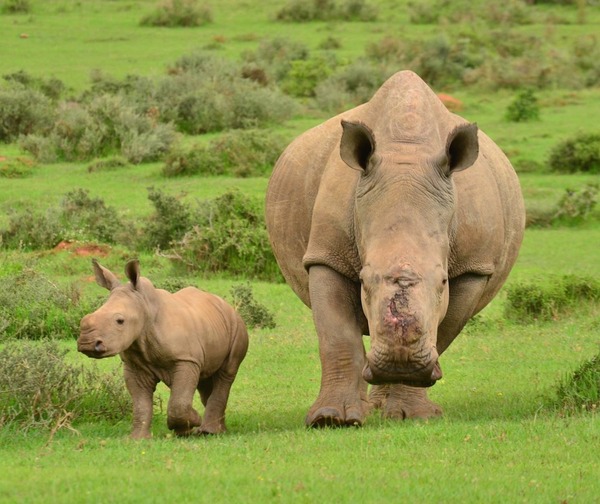
Thandi is a walking miracle who truly should not be here. In 2012, she and two male Rhinos were viciously attacked and poached, leaving them in a pool of blood. When found, one male had already died and rescuers were not sure they would be able to save the remaining male Themba or Thandi.
Dr Will Fowlds Treats Thandi After The Poacher’s Attack
Unfortunately, after three weeks of care, Themba fell victim to his brutal attack and took one last drink from the pool of water. The sheer sadness the rescuer felt after this death would break down the coldest of hearts!
Fortunately, Thandi was a survivor and was able to overcome her mortal wound and go on living. As rescuers continued to help her, she slowly recovered, touching lives all over the world.
Nearly three years after surviving the brutal poaching Thandi gave birth to a calf on 13 January 2015 at Kariega Game Reserve in the Eastern Cape, South Africa.
A Rhino as symbolically special as this one deserved a name to match, and the little calf has just been given a very fitting moniker: ‘Thembi’, which means ‘hope’ in the Xhosa language, one of the official languages of South Africa.
“The name Thembi seemed to fit best given that this little calf has brought fresh hope and energy to those who struggle to secure the future of our Rhino. She is a new generation of life, one I hope will never experience a poaching incident like her mother did” says Dr William Fowlds, one of the vets involved in Thandi’s incredible recovery.
He adds: “Thandi has changed my life. I can’t say it is for the better, as I could never wish to fight a war such as this one but she has inspired action in myself, and many around me. She now celebrates life, and with it the hope that against all odds, we can and we will overcome the massive challenges that threaten the Rhino.”
And then…………
In January 2017 Thembi stepped out without her mother, everyone at Kariega Game Reserve became a little anxious and worried – they thought Thandi had been hit a second time by poachers.
“Kariega started to get worried as Thandi had disappeared for a number of days (which can happen), so they asked me to come and fly my drone to help find her and make sure no harm had come to her. This was the main thing on our minds – to make sure she was alive and not in any trouble.
I met a team at Kariega and we set out flying the area where she goes when she feels threatened or needs to hide away for a while. The wind was gusting badly, which made the search very tricky and by the time flying was reasonably safe, we only had an hour of good light left.
An hour later and there was still no sign of Thandi, but we had seen the rest of her crash, including Thembi. To cover large areas with an aerial camera, you need to fly quite high (80 metres) which also means that even a rhino becomes a spec on a screen and very tricky to spot, even in good light. It’s therefore essential to have a very good camera to record footage but even more important to have a quality screen with excellent resolution to maximise the chance of finding her in real-time.
Fortunately, thanks to Medivet – who sponsored the iPad that I use with the drone – and having the camera set to maximum light sensitivity, we were able to fly for an extra ten minutes after all useful light seems to have gone.
And what a momentous ten minutes it turned out to be! The final sweep back across very dense thicket vegetation on the way back to our home point, the faintest outline of a rhino rolled onto our iPad screen. I could hardly believe my eyes! We found Thandi. At that height. In that light. We could even see if she was dead or alive!
I dropped the drone to 50 metres above her and to our relief, she shifted her body position confirming that she was alive. That in itself was an amazing feeling, knowing that this very special rhino was at least moving around. But we still didn’t know why she had disappeared into the dense thicket.
The drone hovered over her and we stared into that screen, anxious for an explanation. And then suddenly, there he was! From under Thandi’s neck area, out popped the tiniest rhino miniature and we were elated.
What an amazing and wonderful surprise! The gift of a rhino baby delivered by one of the world’s most endearing rhino icons, Thandi. The very fact that this rhino who was severely hacked and left to die five years ago, and who survived against all odds was found, a needle in a haystack, alive and with a toddler at foot.
But there was more good news to come. What happened next wiped away our remaining fears that this baby may be weak or in some sort of trouble. As we watched from above, taking snaps from the iPad, this little bundle began to bump and nuzzle up against Thandi’s pendulous tummy. So small that he couldn’t even reach her udder to feed. His amazing mum responded by sitting down and then lying slightly turned to one side and moved her back leg out to the side, creating a little cove into which this little babe could move and start to feed.
We circled around this scene, absolutely thrilled by what we saw and elated at this incredibly good news. Later that week, when Daniel from Kariega was able to video the two of them in a road-way, we confirmed that he was a baby rhino boy and he was immediately named Colin. This event is so special in so many ways. The founder of this reserve, Colin Rushmere, passed away only days before we found this baby boy and it is very fitting that this special baby boy be named after someone who was such a visionary and a much-loved member of the community”.
May he live a long, safe and happy life, just as his name sake Colin Rushmere had done, and become the father of many.”
Why the name Colin?
The birth of the then unnamed calf came at a time when family and friends were mourning the death of Kariega Game Reserve founder Colin Rushmere 10 days earlier.
Rushmere’s son, Mark, said they had not known Thandi was pregnant when she disappeared and feared she might have been hit a second time by poachers.
“For all we know, the calf was born on the same day dad [Colin] died,” he said.
“We could not find her for a while and were worried. It is all very symbolic.”
Mark said they found out that Thandi had a second calf the day before his father’s funeral, after renowned wildlife vet Dr Will Fowlds sent up a drone to try and locate her.
“The news lifted the mood of the family and we all smiled. It was fantastic and the timing was unbelievable,” he said.
Rushmere, 79, was an Eastern Province cricketer and Mark followed in his footsteps in the provincial team and also turned out for South Africa.
He originally bought 660ha of land on the Kariega River in 1989 and turned it into a 10 000ha mega-park.
Although the sex of the baby rhino has still not been established, Mark said staff and friends were insisting that it be called Colin if it is a male.
Family friend Bronwen d’Oliveira said yesterday everybody was beaming with delight after hearing that Thandi had a second calf.
“Everybody is blown away by the timing. The birth was just so unexpected,” she said.
“Colin’s passing and Thandi’s calf ties everything together very nicely – his vision saved her and then this happens.”
Thandi has given birth to a further three healthy calves.
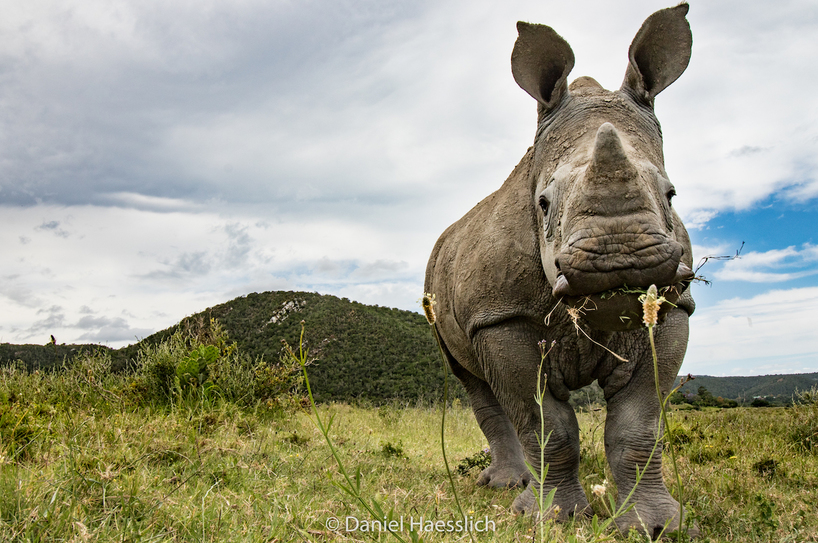
Mthetho: Born 03 April 2019. Credit: Daniel Haesslich
The Meaning Of Mthetho
The meaning of the name Mthetho is significant. Many Kariega staff members attended court proceedings at the Grahamstown High Court and were waiting for the day of justice. The Ndlovu Gang were suspected to have committed the triple poaching at Kariega on 2 March 2012, when Thandi, Themba and bull 84, where brutally attacked. Bull 84, died on the night of the attack; Themba died 24 days later from injuries sustained during the attack and Thandi survived. The sentencing of this gang was a sensitive topic for us all.
There was a huge sense of relief when the Ndlovu Gang were found guilty of 55 wildlife crimes including the poaching of over 100 rhinos. The Kariega team aptly named Thandi’s third calf, Mthetho, meaning justice in the local language IsiXhosa. Justice was served and Mthetho would remind us always of this moment!
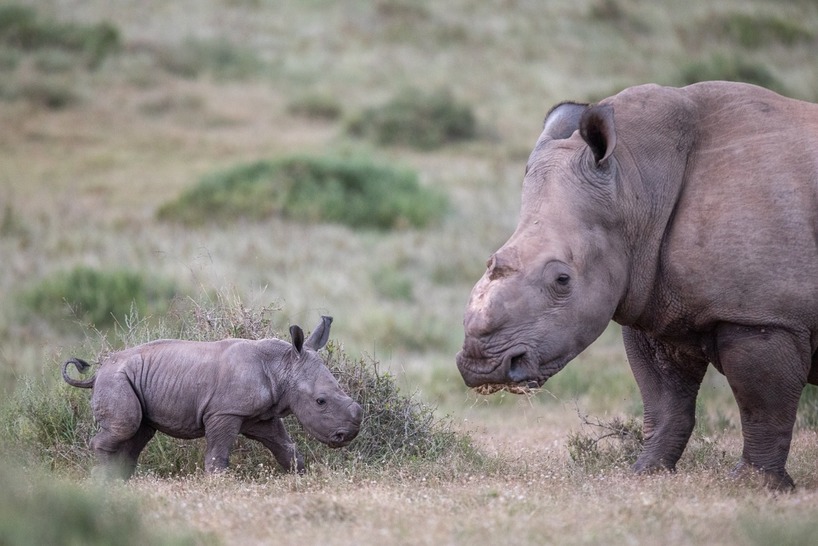
Siya: Born 04 January 2021. Credit: Kariega Game Reserve
In the midst of the Covid-19 crisis, Thandi gifted us with a much needed beacon of hope and birthed her fourth calf. We named this calf Siya, after Springbok rugby captain Siya Kolisi. Siya is an abbreviation of Siyamthanda, which means ‘we love him’ in isiXhosa.
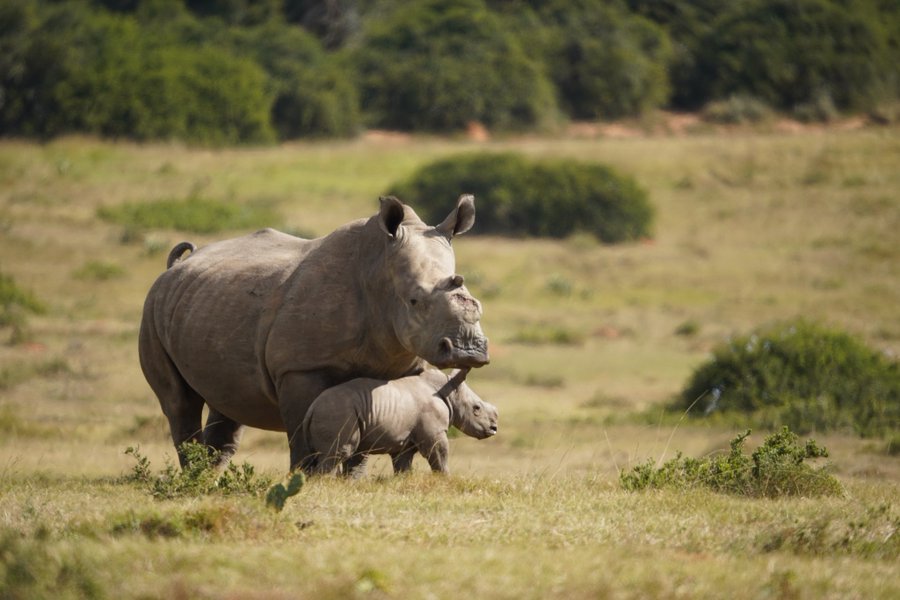
Zolani: Born April 2023 Credit: Kariega Game Reserve
The name Zolani means calm, loving, and free-spirited, and was chosen to honour a @kariega.game.reserve guide who tragically passed away.
The birth of Thandi’s fifth calf is another chapter in the incredible legacy of this magnificent rhino. A legacy that still inspires and motivates us to work harder and do better not only for our rhinos, but the entire natural world.
JOHANNESBURG – The South African government moved to withdraw regulations on threatened species that would have protected vulnerable wildlife from being hunted.
Forestry, Fisheries and Environment Minister Barabara Creecy announced the decision to drop the amended protected species regulations in a government gazette notice – one day before it was supposed to be implemented
The legislation that was intended to be enforced in April was set to widen the number of species that should be protected by stricter wildlife laws.
However, the Wildlife Ranching South Africa and Professional Hunters Association of South Africa challenged the Forestry, Fisheries and Environment Department on the amended list.
After considering various issues raised by the associations, the department decided to withdraw the implementation of the newly-revised legislature.
Forestry, Fisheries and Environment Minister Barabara Creecy announced the decision to drop the amended protected species regulations in a government gazette notice – one day before it was supposed to be implemented.
After the two organisations legally challenged the motion to protect a bigger range of wildlife, Creecy reached an out-of-court settlement with the parties.
Her reasons for withdrawing the regulations protecting terrestrial and freshwater species were not clearly explained, nor did she mention the associations’ issues with the regulations.
In addition, Creecy also retracted revised legislation that would have clamped clamped down on the Trophy Hunting of Leopards and Elephant management
The revised legislation would have clamped down on the trophy hunting of Elephants
——–((((((()))))))——-
WHAT YOU CAN DO TO HELP WILDLIFE:
You can support ‘Protect All Wildlife’ by donating as little as £1 – It only takes a minute but it can last a lifetime for an animal in need. Please donate below.
Everyone who donates will receive a Certificate of Appreciation as a thank you for helping animals in need.
The Mission of Protect All Wildlife is to prevent cruelty and promote the welfare of ALL animals.
We believe EVERY animal should be treated with respect, empathy, and understanding. We raise awareness to protect and conserve wild, captive, companion and farm animals.
It is vital that we protect animals against acts of cruelty, abuse, and neglect by enforcing established animal welfare laws and, when necessary, take action to ensure that those who abuse animals are brought to justice.
Protect All Wildlife are involved in many projects to protect animals’ rights, welfare, and habitats. Money contributed to Protect All Wildlife supports ALL of our worthy programmes and gives us the flexibility to respond to emerging needs. Your donations make our work possible.

























 PROTECT ALL WILDLIFE