Fitzjohn recounted most of his long career working on behalf of African wildlife in his 310-page memoir Born Wild, published in 2010.
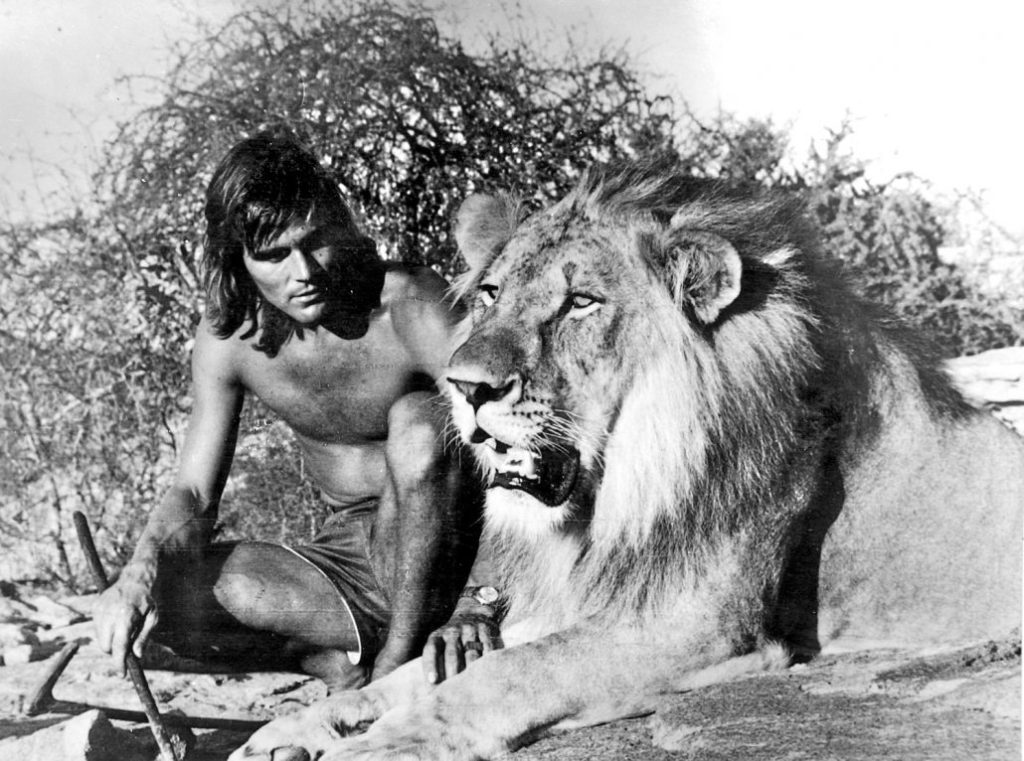
“Growing up in England, Fitzjohn loved Scouting. Tarzan tales enchanted him,” summarized reviewer Debra J. White. “As a troubled teen, Fitzjohn landed in Outward Bound programs. A letter Fitzjohn sent to Born Free author Joy Adamson brought Fitzjohn to Kenya,” by hitchhiking.
Assistant to George Adamson
In 1971, at age 24, Fitzjohn became assistant to Adamson’s then-husband, 65-year-old conservationist George Adamson.
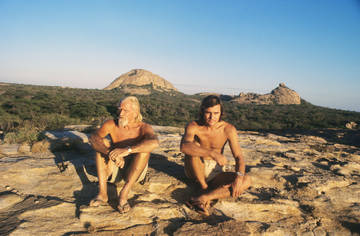
GEORGE ADAMSON AND TONY FITZJOHN SIT WATCHING THE SUNSET ON A ROCK NEAR KORA CAMP IN KENYA. AFRICA. 1987.
Fitzjohn, as a full-time volunteer, helped Adamson to rehabilitate injured or formerly captive lions, leopards, and African wild dogs for return to the wild. Tracking animals post-release was among his duties and was considerably more difficult and dangerous than it is today because radio collars had not yet been developed.
Once, in 1975, “I was incredibly lucky to survive,” Fitzjohn wrote. “My attacker’s teeth had come within millimetres of both my carotid and jugular arteries. There are holes in my throat that I could put a fist through, and I did.”
After several months of recovery Fitzjohn returned to help George Adamson at his camp called Kora, located east of Mount Kenya, near the Tana River, almost in the dead centre of the nation.
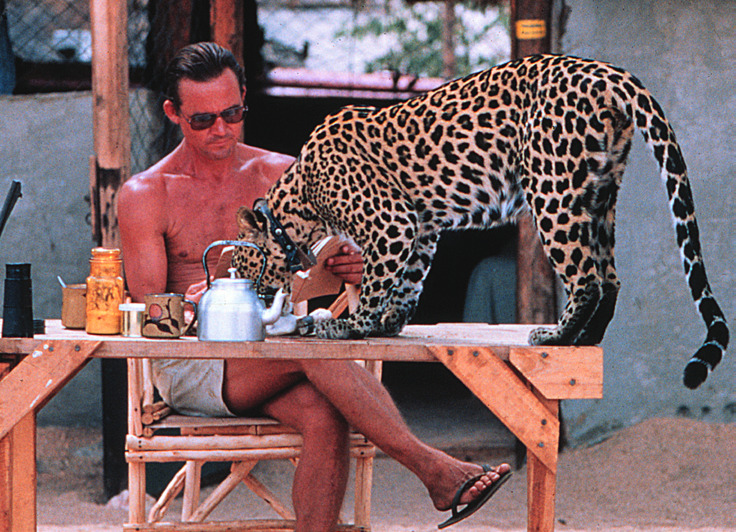
TONY FITZJOHN WITH SQUEAKS, LEOPARD FRIEND
Kenya “became a scary place”
Conflicts with poachers and illegal grazers at Kora intensified after a border conflict between Kenya and Somalia in 1978. Somalia lost the war but, Fitzjohn remembered, “There were suddenly a lot of well-armed Somali men flooding across the border into northern Kenya. They were bandits, well-trained, ruthless and armed.”
“Another camp near Kora was attacked and everything of value was looted. Two workers were killed. Poaching escalated,” White wrote.
“The Kenyan government was either unwilling or unable to stop the raiding, despite warnings that wildlife tourism could be destroyed. Political unrest, corruption, drought, and tribal strife plagued Kenya for more than a decade,” White continued.
Understated Fitzjohn, “Kenya had suddenly become a scary place.”
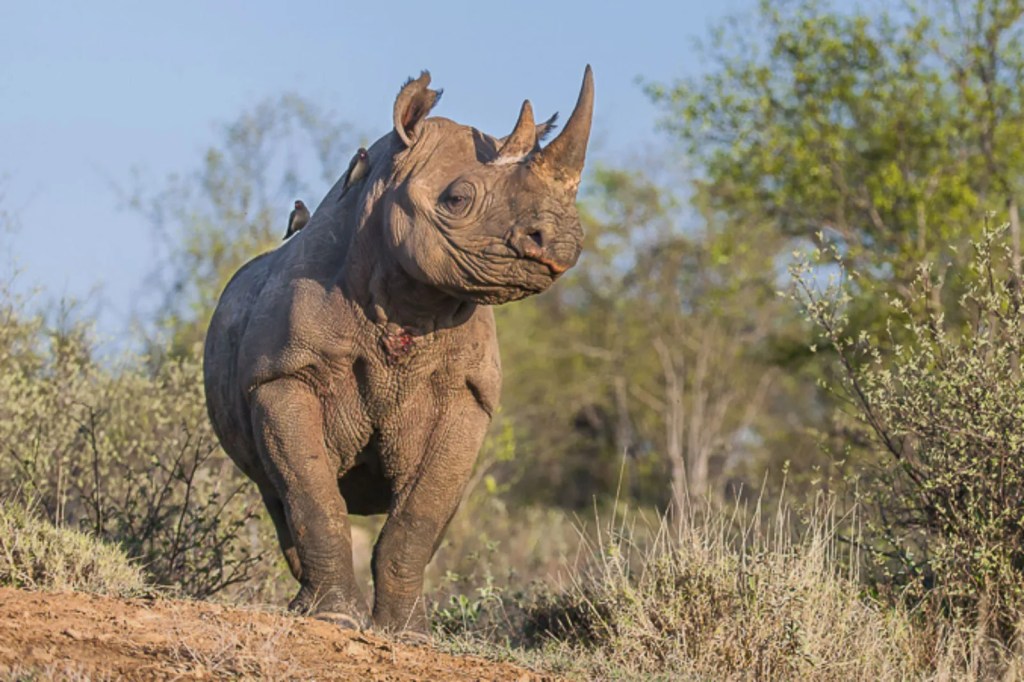
TONY FITZJOHN AND A RHINO FRIEND
Murders brought move to Tanzania
The Kora camp site eventually became the hub of the Kora National Reserve, initially designated in 1973 but not added to the Kenyan national park system until 1989, after George Adamson came to the aid of a tourist who had been robbed and gang-raped by poachers. Adamson was murdered while racing his jeep straight at the bad guys, who fled.
Joy Adamson had already been killed in a confrontation with an ex-employee in January 1980.
Of George Adamson’s murder, Fitzjohn said, “If I had been there, it wouldn’t have happened.”
Fitzjohn had left, temporarily, to assess the prospects for restoring the huge Mkomazi Game Reserve in Tanzania, south of Tsavo National Park in Kenya.
Fitzjohn said of Kora – Life at Kora was one of overwhelming isolation. The camp was situated two days’ travel from the Kenyan capital of Nairobi, and conditions were basic. Aside from a few camp employees and George’s brother Terence, Adamson and Fitzjohn would go months at a time without being visited by an outsider. The work was everything.
“Our whole life was based around the lions: their health, their survival, their coping with going back to the wild. I became a self-taught mechanic, and I learned to maintain all the vehicles. I would also do the supply trips to Garissa [the Somali Kenyan capital], though god knows why the bandits didn’t take me out,” Fitzjohn laughs.
“The police would get shot up, even the commissioner would get shot up. And there I was, a heathen, storming down with a beer in one hand and a joint in the other, the ghetto blaster booming. But they never touched me. I think there was someone up there looking after me. And I’ve always been prepared to take my chances for what I thought was worthwhile.”
Fitzjohn soon became Kora’s de facto PR man and fixer: dealing with the local authorities, talking to the police, keeping things cordial. “It mainly involved a lot of drinking in the police mess and the army mess in Garissa,” he says. “Drinking was a big part of life out there, I suppose, though not so much in the bush.”
At one point, Fitzjohn thought two policemen were trailing him through the city — so he hid in an alleyway and ambushed them, taking them both out with fists flailing. That afternoon, he discovered that they’d been sent to look over him and protect him, should anything turn nasty.
“So I had to go and apologise to them at the station. Well: that turned into a long night on the beers, didn’t it…” he says, slightly sheepishly. “It was the Wild West, in many ways. But the Wild West with Land Rovers.”
Having worked with Adamson for 18 years, but at odds with himself after the murder, Fitzjohn soon afterward moved to Mkomazi.
Mkomazi, in Fitzjohn’s own words, was “the perfect place for me to bury myself and reinvent myself after the events of the past few years.”
Mkomazi Game Reserve
There, said the Tony Fitzjohn-Wildlife Now George Adamson Wildlife Preservation Trust statement announcing Fitzjohn’s death, “His main, towering achievement was the rehabilitation of Mkomazi.
“This was at the invitation of the Tanzanian Government in 1989,” the Tony Fitzjohn-Wildlife Now George Adamson Wildlife Preservation Trust continued. “In the next thirty years, he enlisted a formidable group of supporters, experts and famous institutions in what became an international beacon for conservation of land and wildlife.”
Fitzjohn “created programs for endangered species, including the African wild dog, and one of the most successful rhino sanctuaries in Africa, and pioneered educational programs in the local communities,” the Tony Fitzjohn-Wildlife Now George Adamson Wildlife Preservation Trust memorial statement finished.
Frustrated by the corruption of the John Magafuli regime in Tanzania, Fitzjohn returned management of Mkomazi to the Tanzanian government in 2020 and returned to Kenya to work on rehabilitating Kora.
Magafuli, ironically, who had been the most vehement COVID-19 denier in Africa, died of COVID-19 in March 2021.
Fitzjohn was admitted to the Order of the British Empire in 2006. He also received the Prince Bernhard Order of the Golden Ark, the North of England Zoological Society’s Gold Medal and the Hanno Ellenbogen Citizenship Award for public service.
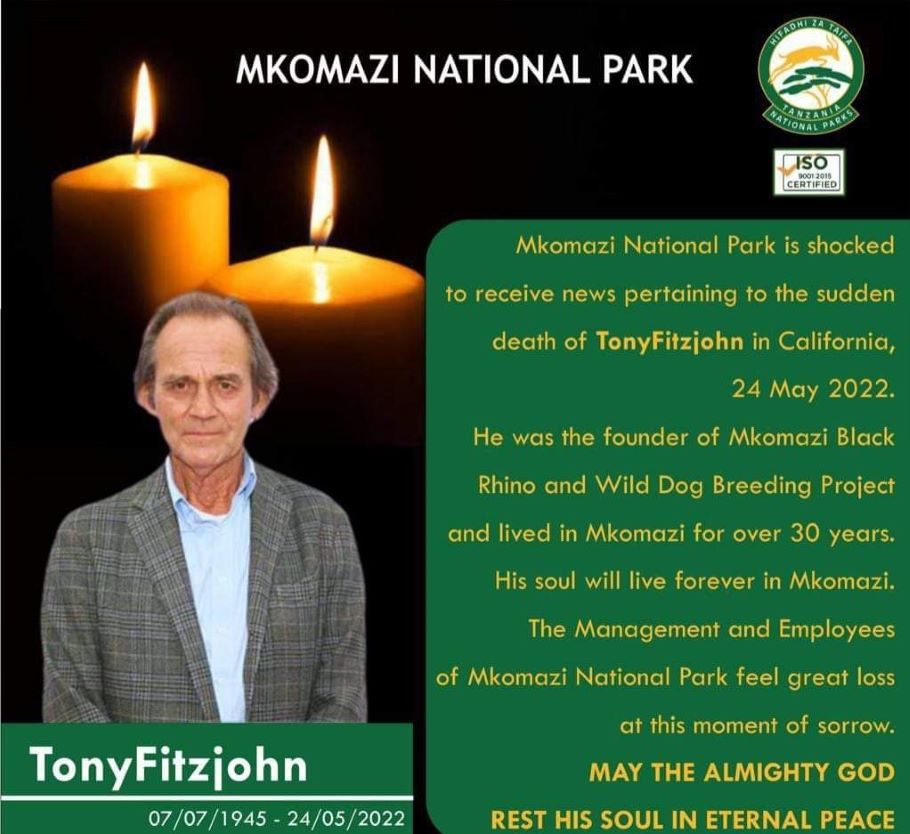
A FITTING TRIBUTE TO TONY FROM MKOMAZI NATIONAL PARK
What you can do to help
The Mission of Protect All Wildlife is to prevent cruelty and promote the welfare of ALL animals EVERYWHERE
Please support our work by donating ANY amount, large or small,at HELP PROTECT ALL WILDLIFE. It only takes a minute. Thank you for your support.
What else you can do to help
Please SHARE to raise awareness to wildlife and environmental issues from around the world. You can also receive NEWS and UPDATES by signing up in the top right of this page.
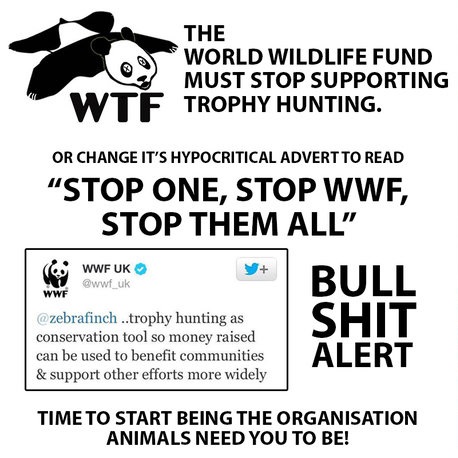
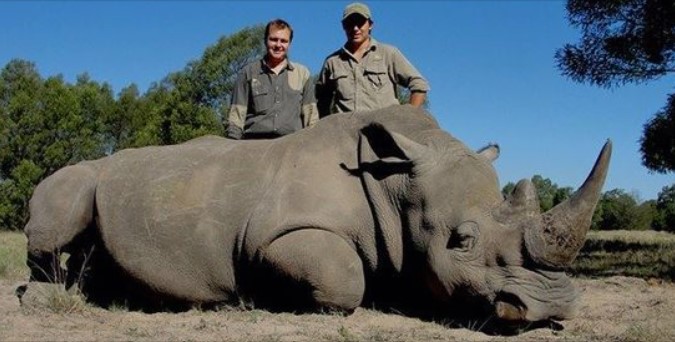
In 2009, WWF sent a letter to the U.S. Fish and Wildlife Service in support of limited, managed hunting of black Rhinos in Namibia.
“WWF believes that sport hunting of Namibia’s black Rhino population will strongly contribute to the enhancement of the survival of the species,” the group wrote, citing the generation of income for conservation and the removal of post-breeding males.
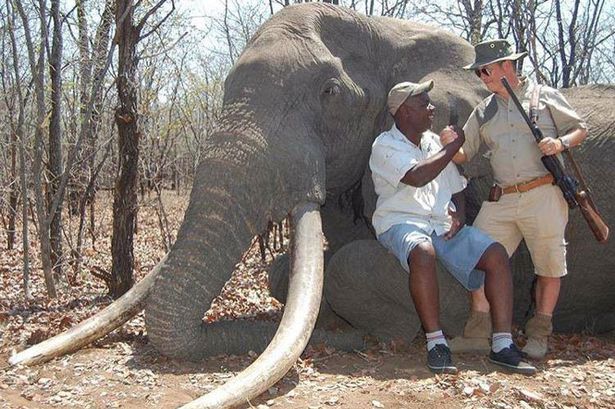
COREY KNOWLTON PAID $350K TO KILL ENDANGERED BLACK RHINO
The WWF Endorses The Killing Of Wild Animals
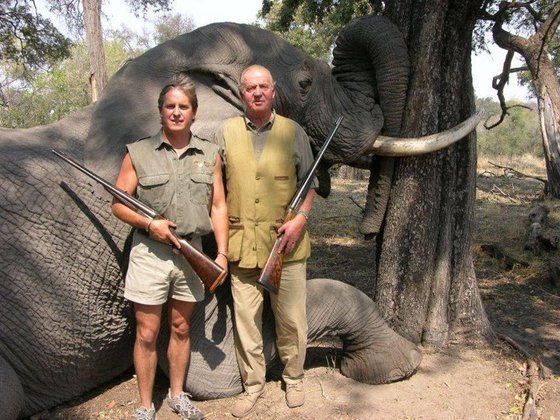
KING JUAN CARLOS OF SPAIN, THE HONORARY PRESIDENT OF THE WWF
Juan Carlos, the King of Spain, sparked widespread criticism for going on an elephant hunting trip in Botswana. The king is the honorary president of the World Wildlife Fund (WWF). When asked should the honorary president of the conservation group WWF be allowed to hunt elephants the press spokesman of WWF Germany said No but insisted that a regulated and controlled hunt can help to protect nature.
The World Wildlife Fund (WWF) gives special meaning to the word “conservation.” The organization, founded in 1961 by a group of wealthy trophy hunters, including HRH Prince Philip, apparently believes that conserving animals means keeping them around long enough for well-heeled “sportsmen” to blast them out of the woods, oceans, skies, plains of Africa, and jungles of Asia. Past WWF chapter presidents include C.R. “Pink” Gutermuth, who also served as president of the National Rifle Association, and trophy hunter Francis L. Kellogg, who is legendary for his massive kills. In its early days, the WWF even used fur auctions to raise funds. Since then, the WWF has learned that most people are appalled by hunting and trapping, so today, the organization veils its true stance under phrases like “sustainable development,” arguing that killing is acceptable under some circumstances. When answering difficult questions about its policy on hunting, trapping, and whaling, the WWF is careful never to state outright that it approves of all these activities. But don’t be fooled, the WWF’s intentions are all too clear and deadly.
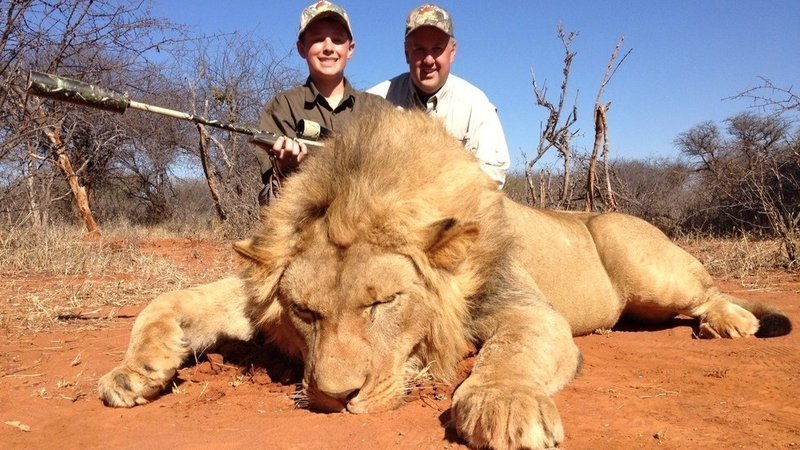
Sport Hunting: As one would expect of an organization founded by hunters, the WWF does not oppose the slaughter of animals with guns and other weapons for sport. Rather than working to stop the killing, the WWF believes that hunting should be regulated, arguing that wealthy trophy hunters can bring income to poorer nations. The WWF claims that it has no power to stop hunting, stating, “The decision to allow trophy hunting is a sovereign one made entirely by the governments concerned. We will continue to monitor governments’ enforcement of important trade laws to ensure that trophy hunting is done within the legal standards of that area.”
Elephants: The WWF believes that culling—another way of saying “killing”—elephants is acceptable, as is the trade in ivory, because the profits that it brings spur governments to keep elephants from going extinct. In 2000, U.S. News & World Report reported that WWF representatives travelled to Nairobi to ask the United Nations to lift the ban on the ivory trade in order to allow a “sustainable harvest of ivory for horns and hunting trophies.” The WWF’s bizarre view—that we must kill some animals now in order to save animals to kill later—has proved false time and again. The trade in ivory has only encouraged rampant poaching, the senseless slaughter of elephants. The WWF tries to duck the issue by falsely stating, “The decision to cull, or to select animals from the herd for removal or death, is indeed an agonizing choice, but it is one made entirely by the governments concerned and there is no international involvement in those decisions.”
As the number of rhinos killed by poachers keep rising and more traumatized orphaned calves are in need of care, Kirsten Everett, a volunteer at Nikela, takes us on a touching journey as she looks at the horrors of a poacher attack though the eyes of a young Rhino calf called Ntombi.
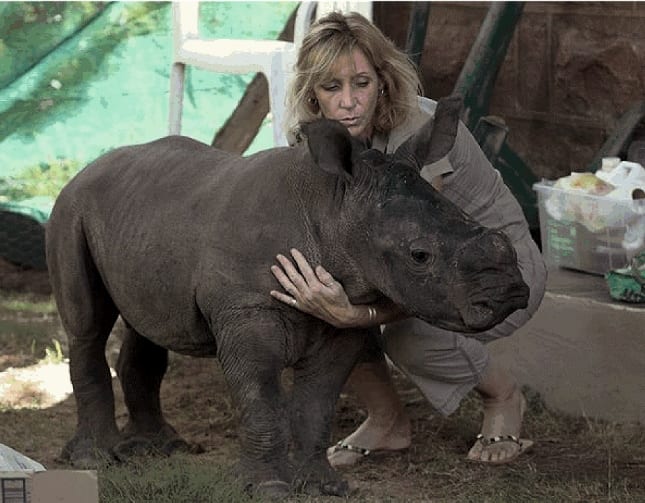
Vet Karen Trendler With Ntombi
“My mother and I were contently filling our hungry stomachs when we heard a strange noise. I carried on eating but she smelt the air for unknown scents. I saw the terrified look in her eye before she managed to control it; the unnatural smell meant something. A few minutes later we heard the ‘whop, whop’ of a metal monster flying closer towards us. Just when my mother focussed on it the men crept out of the bushes with a crunch of sticks. Something seemed to hit her and she grunted in surprise. The birds abandoned their posts heading away from the danger. I stood helplessly as she tried to run but ended up falling to the ground. The men surrounded her and tried to chase me away. I ran forward scared enough to not care about the men as they had done something to my mother, I needed her and they must go away.
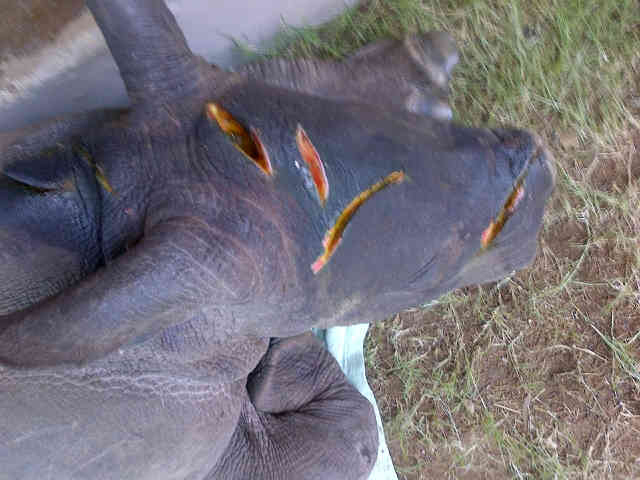
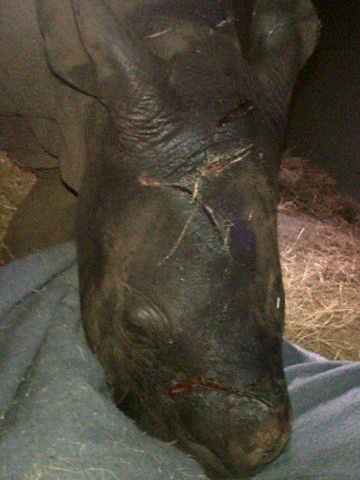
Out of nowhere one of the big men spun on me and hit me hard with something sharp. Blood oozed from my wound as my mother answered my cry for help with a weak beg, ‘Away, away’. I backed away nursing my wound, how could I get to her?? She grunted again so I didn’t give up. I ran forward again but this time the angry man was merciless, determined to get his message across. As quietly as possible I took the cuts to my poor head trying not to worry my mother even more.
This The Work Of Poachers
Confused I backed away into the bushes calling to her to get up, but the eerie silence dragged on and she didn’t move a muscle. Fear glued me to the floor as I felt my young heart pulsing with anger and fear. A breeze blew, as I waited for the monsters to go so I could go to my poor mommy and find out what was wrong. My heart skipped a beat when I realised this was what my cousin had gone through only a full moon ago. It was terrible, my body couldn’t stop shaking and I couldn’t think clearly, I felt lightheaded from all my blood loss.
Finally when the monsters left I ran to her side, ‘Mom wake up.’ My voice cracked with emotion but still she didn’t respond. I took a step back and saw the pool of blood. Her horn had been brutally cut off and she lay lifeless. Above me a crow flew over.
I turned to run then I asked myself some important questions… where would I go? I wasn’t old enough to know the way to the dam yet. Who would protect me from predators? The truth was that I wasn’t strong enough to survive by myself yet. Would I be with my mother in the sky sooner than I thought? The last question scared me the most; out in the wild without my mother I might just be able to survive a week.
I heard the snap of a twig, I wasn’t alone. This time I didn’t have the strength to care what these humans wanted with me. I collapsed and slept for a few hours. I was almost completely unconscious though I sensed kindness near me. Too traumatised to do anything I lay as they treated my wounds. The people who tried to comfort me planted a seed of hope. Hope that I could survive and hope that the rest of the human race would come to its senses and help my species and all the others out there”.
Update (July 31, 2013): This is Ntombi feeling good and playful
NTOMBI
Please SHARE this article to raise awareness about this issue and feel free to leave a comment below. You can also sign up for UPDATES & NEW ARTICLESby submitting your email details in the right-hand column. But most of all NEVER give up fighting for the future of wildlife! Thank You
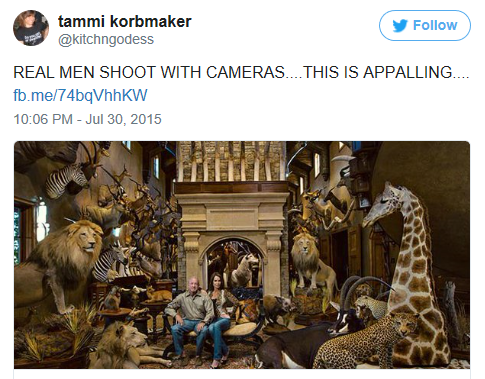
As the Internet went into meltdown over the poaching of Cecil the Lion by Minnesota dentist Walter Palmer, another man was causing a stir after a photo published in National Geographic went viral at the same time.
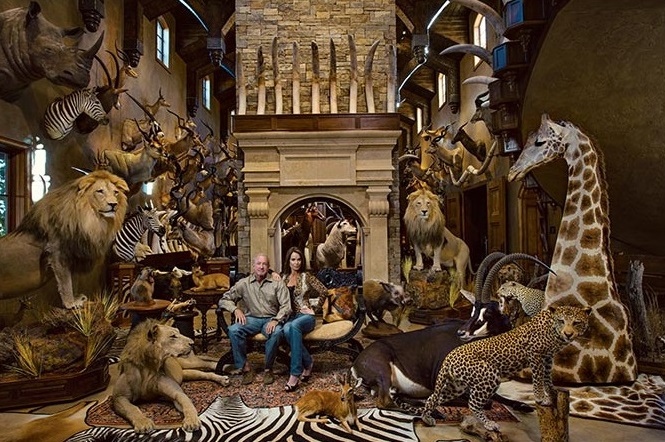
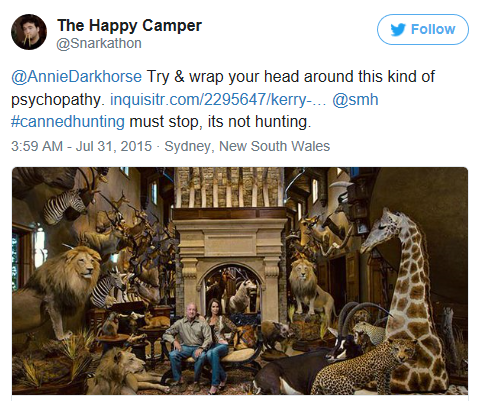
Kerry Krottinger, a wealthy Texas hunter and businessman, has slaughtered so much African wildlife over the years that he amassed a veritable “wall of death” in his Dallas-area home. The National Geographic portrait depicts him sitting with his wife among the taxidermied bodies of Lions, Rhinos, Cheetah, Giraffes and enough Elephant tusks to open a traditional Chinese hospital.
The British-based charity LionAID, which uploaded the photo to their Facebook page, took a markedly dim view. “This is just one Texas trophy hunter with a ‘love’ of Africa,” they write. “Is it any wonder that Africa’s wildlife is disappearing? Just have a count of the various species displayed. Three Lions? So many Elephant tusks? A Giraffe? A Rhino? Kerry must be one of the leading conservation hunters on the planet!”
Kerry and Libby Krottinger in their ‘Wall Of Death’ room
Little is known about Krottinger’s personal life. Aside from being an energy millionaire with multiple companies to his name, he and his wife Libby operate a Gypsy horse farm called Ndugu Ranch. A website about the property had been taken offline, but a cache copy can be viewed here. A Facebook page also associated with the ranch was also taken down. Next to a smiling photo of the pair, Krottinger wrote he named the ranch after the Swahili word for “brother” or “family member,” and that the couple has “a great love for Africa.”
Krottinger’s kingly haul of animal carcasses was acquired through what’s known as “conservation hunting,” a practice that is supposedly designed to protect species by allowing people to hunt animals for a high fee that’s then to be used for other conservation efforts. Palmer, who is now facing indictment in Zimbabwe for poaching, said in a statement that he had trusted his guides and assumed his activities had been legal.
Far from poachers, conservations hunters — and the websites that promote them — see themselves as environmentalists. LionAID’s director Pieter Kat said the whole premise was nonsense.
“Conservation hunting is a complete myth,” he told Mic. “If conservation hunting had been effective, Cecil the Lion would not have to have been poached out of a national park, because conservation hunting would have maintained a viable and sustainable Lion population within their own trophy hunting concession.” According to Kat, steep fees like the more than $50,000 Palmer paid to kill Cecil typically end up in the pockets of tour operators. “Sustainable hunting does not sustain anything,” he said.
PETA president Ingrid Newkirk was blunter still. “The idea of killing animals to ‘protect’ their species is like having 5-year-olds build a child-labor museum,” she said in a statement to Mic. “True conservationists are the people who pay to keep animals alive through highly lucrative eco-tourism, not the power-hungry people who pay for the cheap thrill of taking magnificent animals’ lives and putting their heads on a wall.”
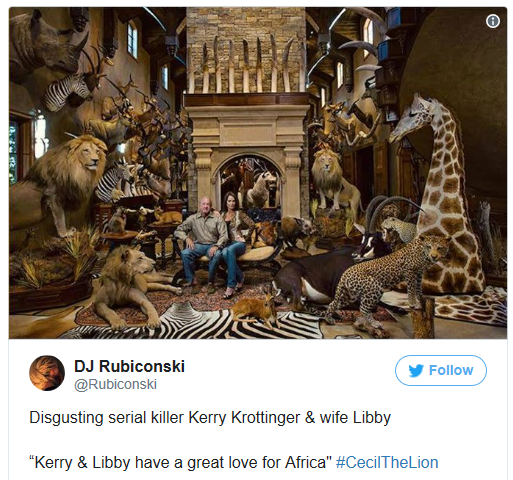
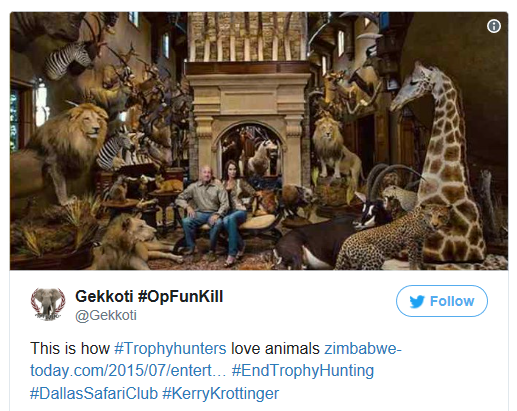
On Twitter, the response was one of almost universal disgust, with the photo generating near Cecil-levels of rage.
Kat was unapologetic about the Krottinger-shaming on LionAID’s Facebook page. “What we were trying to do there is to alert people to the fact that trophy hunters have this sort of enjoyment of their activity, and what we would like to expose to people is these sorts of people belong in the 19th century,” he said.
Please SHARE to raise awareness about this shocking trade. Please SUBSCRIBE to receive wildlife news and updates.
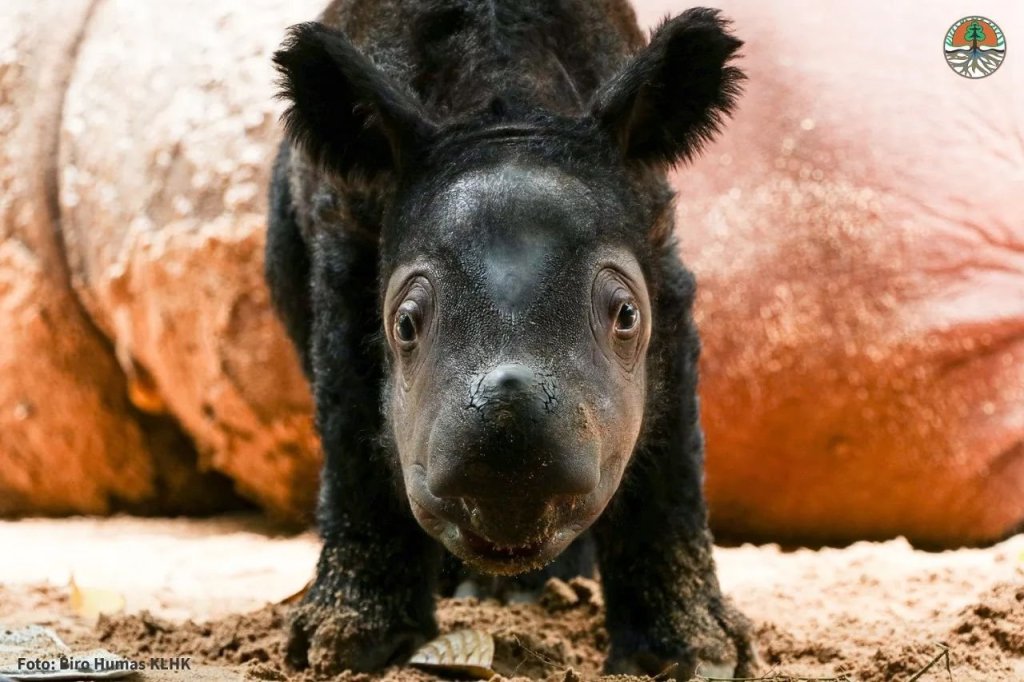
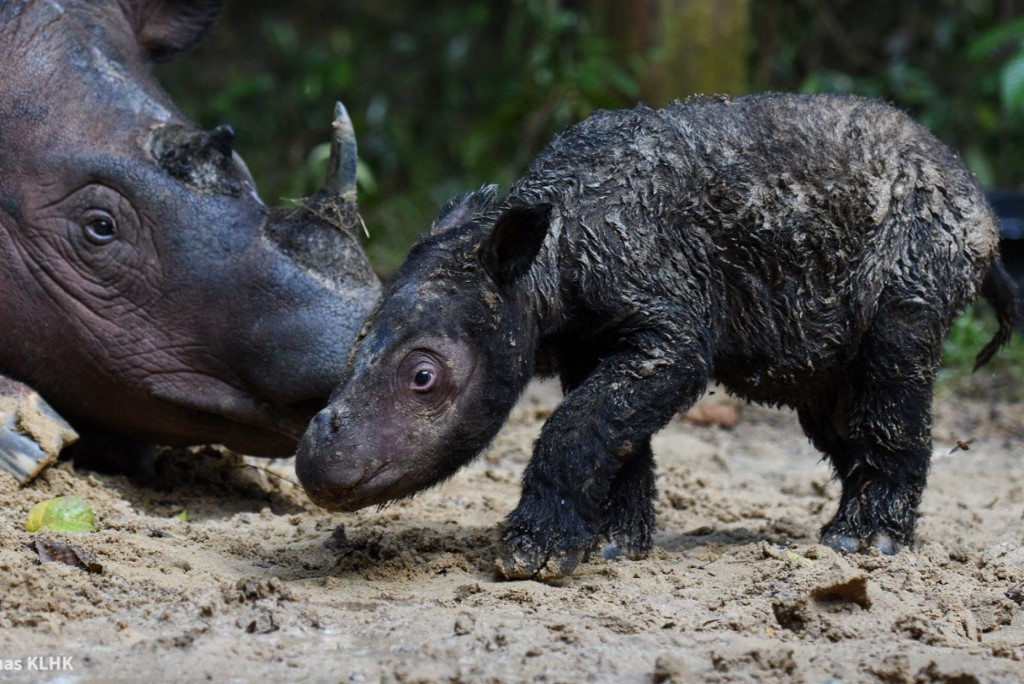
A Sumatran Rhino has successfully given birth in an Lampung sanctuary, environment officials said, in a boost for conservation efforts targeting the critically endangered animal.
THE CLAF BORN IN WAY KAMBAS NATIONAL PARK
The World Wide Fund for Nature estimates fewer than 80 Sumatran Rhinos remain in the world, mainly in Sumatra and Kalimantan.
A Rhino named Rosa gave birth to a female calf on Thursday in Way Kambas National Park in Lampung, after suffering eight miscarriages since 2005, when she was brought in from the wild for a breeding program.
“The birth of this Sumatran Rhino is such happy news amid the government’s and partners’ efforts to increase the population,” Wiratno, a senior official at Indonesia’s environment ministry, said in a statement Monday.
The calf, who has yet to be named, brings the number of Sumatran Rhinos in the Way Kambas sanctuary to eight.
Successful births are rare. The calf’s father, named Andatu, was the first Sumatran Rhino born in a sanctuary in more than 120 years.
Standing between 3.3 – 5 feet, Sumatran Rhinos are the smallest of all Rhinoceroses and they have a lifespan of around 35 – 40 years. They were once found across South and Southeast east, from the foothills of the Eastern Himalayas in Bhutan to eastern India, through Myanmar, Thailand, and possibly to Vietnam and China. Now, the species is critically endangered, with less than 80 individuals remaining in the wild in small fragmented habitats on the island of Sumatra and nearby Borneo.
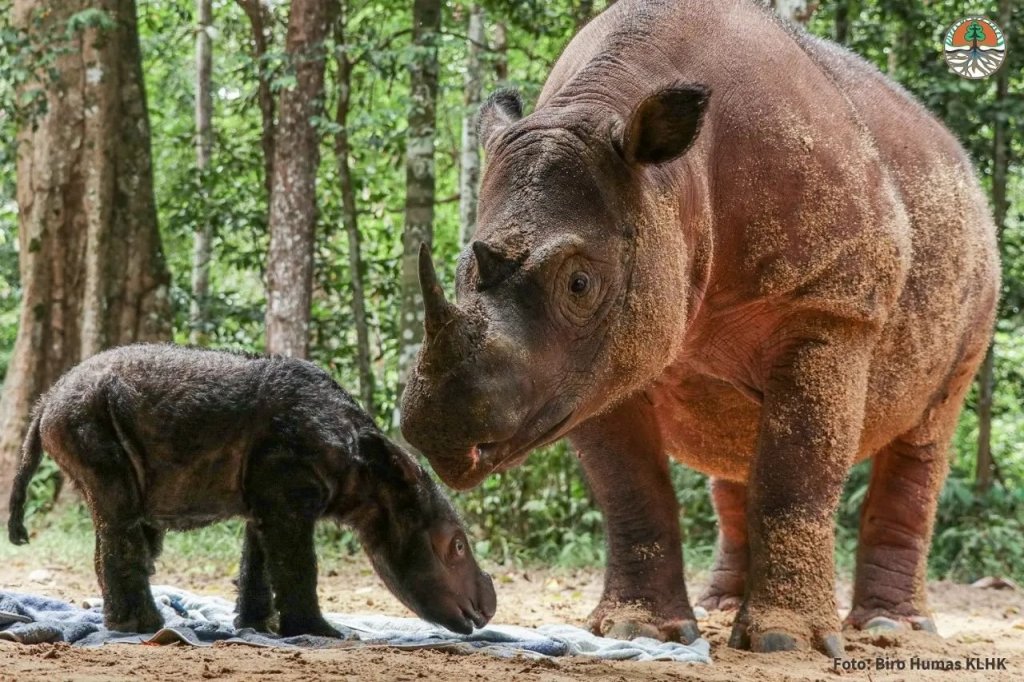
MOTHER ROSA WITH HER CALF
In 2017, Rhino conservation experts and the Indonesian government concluded that the only way to save the species was through a captive breeding program. The move was similar to an initiative launched in the 1980s that saw 40 Sumatran rhinos captured for breeding. But in this case, nearly half of the captive animals had died by 1995 and not a single calf had been born.
The International Union for Conservation of Nature classifies the Sumatran rhino, the smallest of all Rhino species, as critically endangered.
Multiple threats have brought them to the brink of extinction, including poaching and climate change.
This handout photo released on March 28 and made available on March 29, 2022 shows female rhino named Rosa (l) with her new baby born at the Way Kambas National Park, in Way Kambas, in Lampung province. Rosa delivered a baby rhino on March 24, for the first time after translocating from roaming in villages. A critically endangered Sumatran rhino was born in an Indonesian sanctuary bringing hope to the conservation of the rapidly declining species, an official said. (AFP/Handout)
Rhino horn is often illegally traded for traditional Chinese medicine.
Indonesia is also racing to save another critically endangered species – the Javan Rhino.
Once numbering in the thousands across Southeast Asia, fewer than 80 are alive today, mainly in a national park on Indonesia’s main island of Java.
Efforts to conserve the species have shown promising results with the birth of five calves in Ujung Kulon National Park last year.
Please SHARE for others to enjoy. You can also REGISTER for NEWS & UPDATES straight to your inbox by signing up in the top right of this page. Thank you.
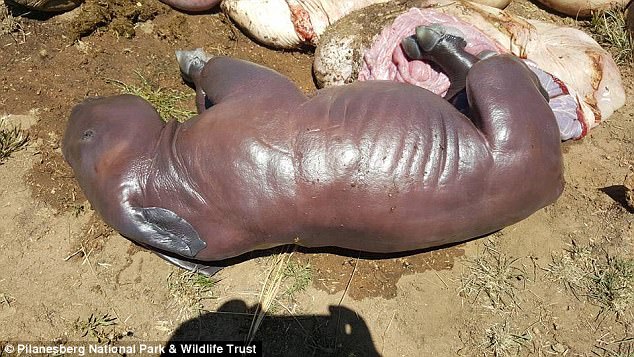
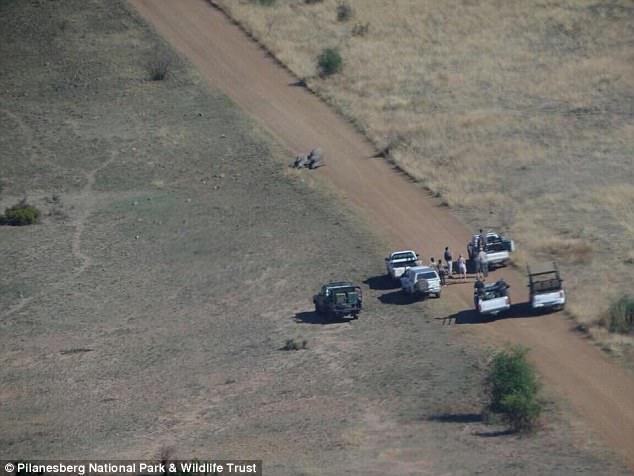
No chance: An unborn Rhino calf who died in its mother’s womb after she and its sibling were shot dead by poachers in South Africa
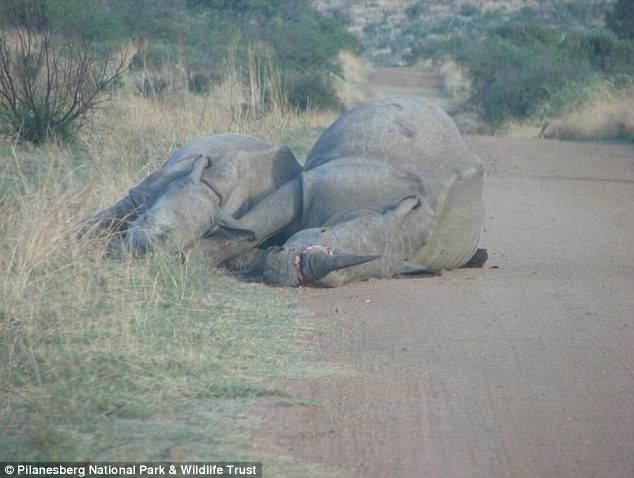
Heartbreaking: The markings around the mother’s horn show that the poachers had made an attempt to cut it off, but fled the scene when park staff arrived
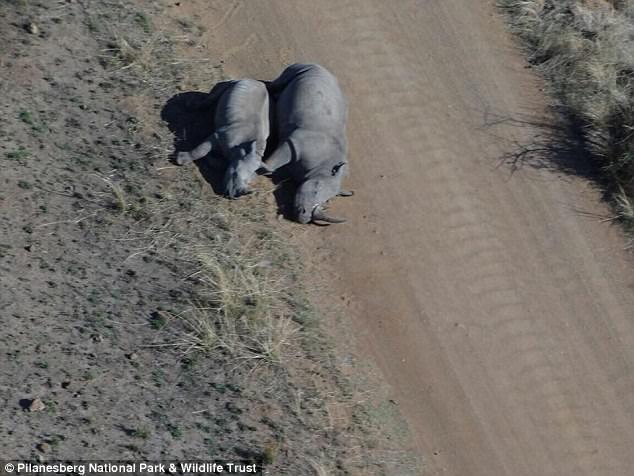
The Rhino was heavily pregnant and roaming Pilanesberg National Park in Mogwase, north-west South Africa, with its calf when they were hunted down for their horns.
These heartbreaking images show an unborn Rhino calf who died after its mother and sibling were shot and killed by poachers.
Photos show the poachers began hacking off the mother’s prized horn, but they were interrupted by park rangers and fled before they had time to remove it.
When park staff tried to save the unborn calf, it was found to have died inside its mother’s womb.
Pilanesberg National Park wrote on its official Facebook page: ‘There are no words.
‘Mom and calf shot and killed by poachers. Horns are still on as the murderers fled the scene when they heard a game drive approach. Mom looks very pregnant as well. We are devastated.’
Pilanesberg National Park added in the post that a reward will be issued for any information leading to an arrest and prosecution of the poachers.
A spokesperson for the park told MailOnline that the mother Rhino was aged eight and the calf just two years old. The unborn foetus would have been due in February next year.
Killed: The heavily pregnant Rhino and its calf lie by the roadside where they were shot
‘We have lost 16 Rhino and 3 unborn calves so far 2017 – that we are aware of,’ the spokesperson said.
‘This loss is not due to lack of interest or effort from Park management, as this is a large park with many valleys and hills, which is a difficult territory to operate in.’
Since 2007, more than 6,000 Rhinos have been shot and butchered for their horns in South Africa alone.
The majority of those have come in the last four years with around a thousand being killed every year since 2013.
Sometimes the Rhinos are shot dead, in other cases they are brought down with a tranquiliser gun before having their horn hacked off – leaving the Rhino to wake up and bleed to death painfully and slowly.
The province of KwaZulu-Natal, which has the greatest density of Rhino in South Africa, has seen 139 slaughtered already this year.
Despite countries such as China, Vietnam, South Korea, Malaysia and even India believing Rhino has medicinal values, repeated studies have not found any evidence to support the claims.
Sad: Park rangers and guests gather at the heartbreaking scene in Pilanesberg
Rhino horns are made from a protein called keratin, the same substance that human fingernails and hair are made of. The horn is essentially just a compacted mass of hairs that continues to grow throughout the animal’s lifetime, just like human hair and nails.
It is similar in structure to horses’ hooves, turtle beaks, and cockatoo bills – however these animals are not hunted and slaughtered in the same way.
Tragically tradition and cultural beliefs in some Asian countries mean the demand for Rhino horn has not waned despite just some 20,000 white Rhino being left in the wild.
Poachers are now being supplied by international criminal gangs with sophisticated equipment to track and kill Rhinos. Based on the value of the Asian black market, Rhino horn price is estimated at $ 65,000 USD per kg*. In the near past, the Rhino horn price soared up around $65,000 per kilogram. This price hike turned the Rhino horn more valuable than gold and many other precious metals, also many times more worthy than Elephant ivory. (*2020 figures)
Please SHAREto raise awareness of the horrific result of poaching. Please SUBSCRIBE for news and updates.
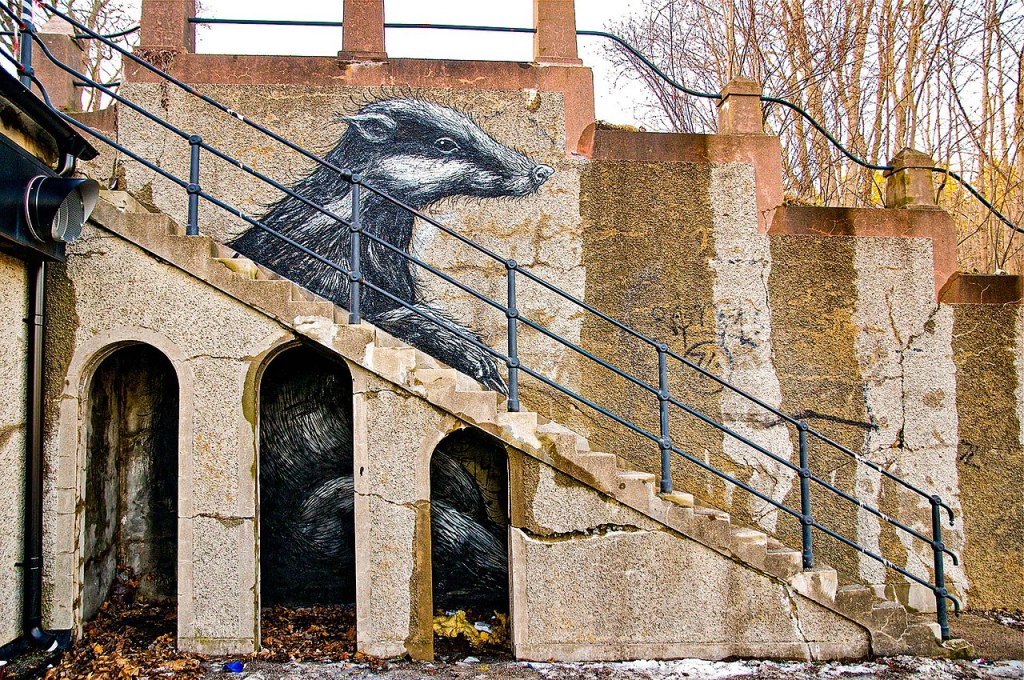
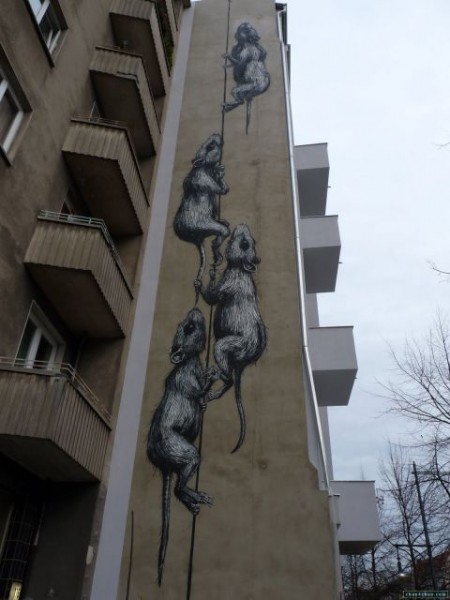
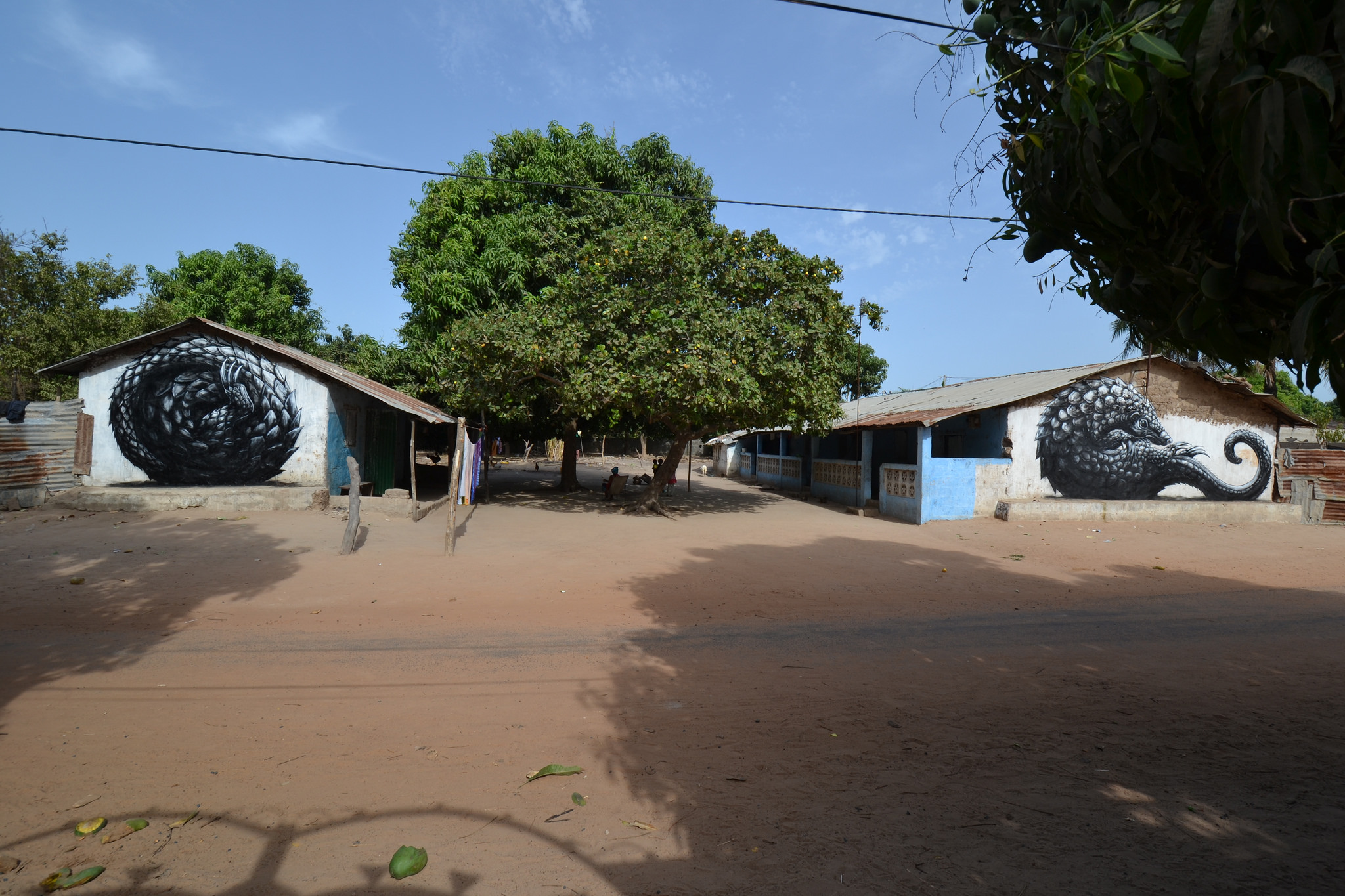
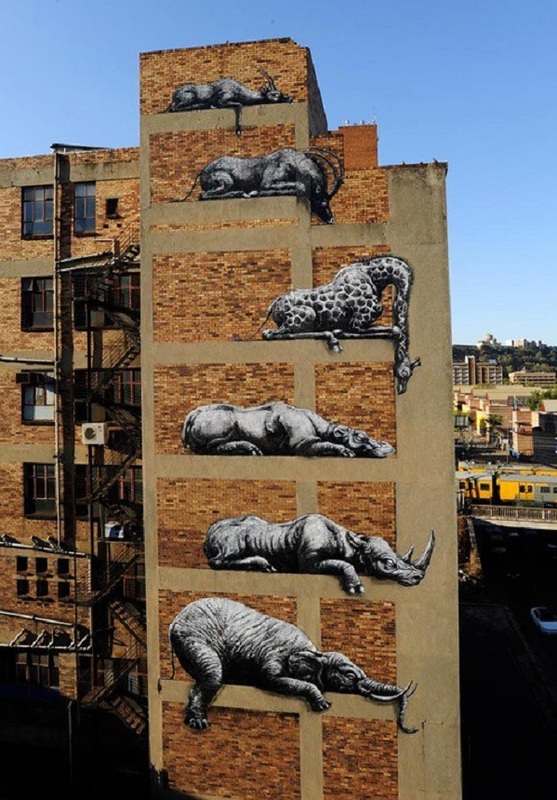
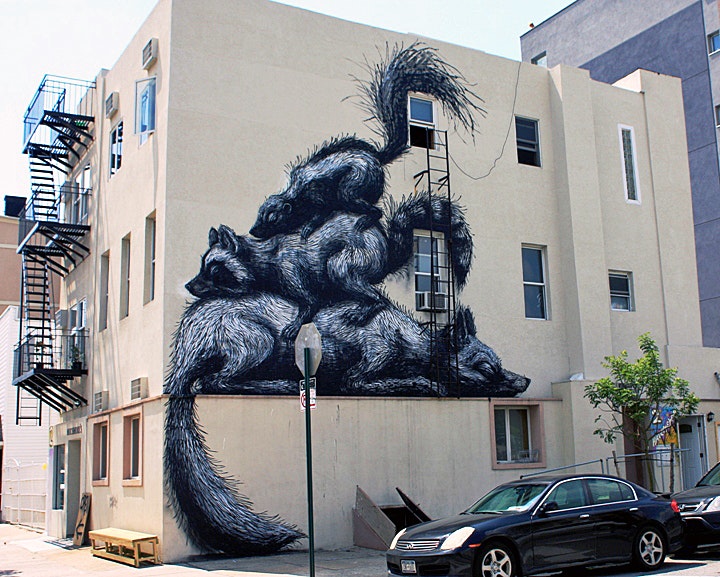
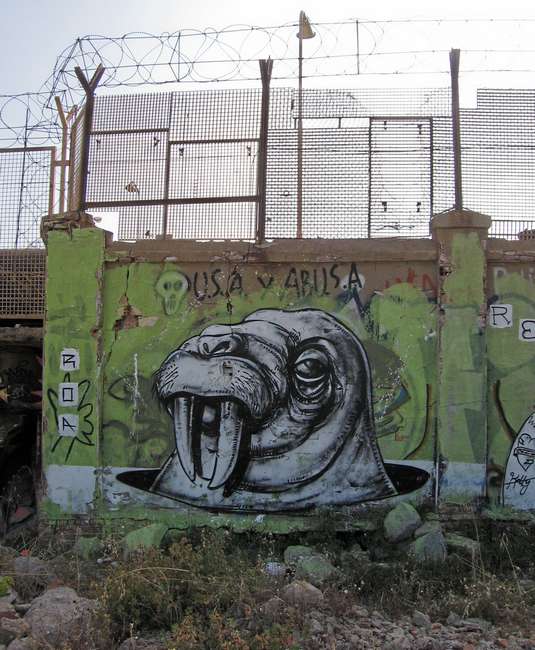
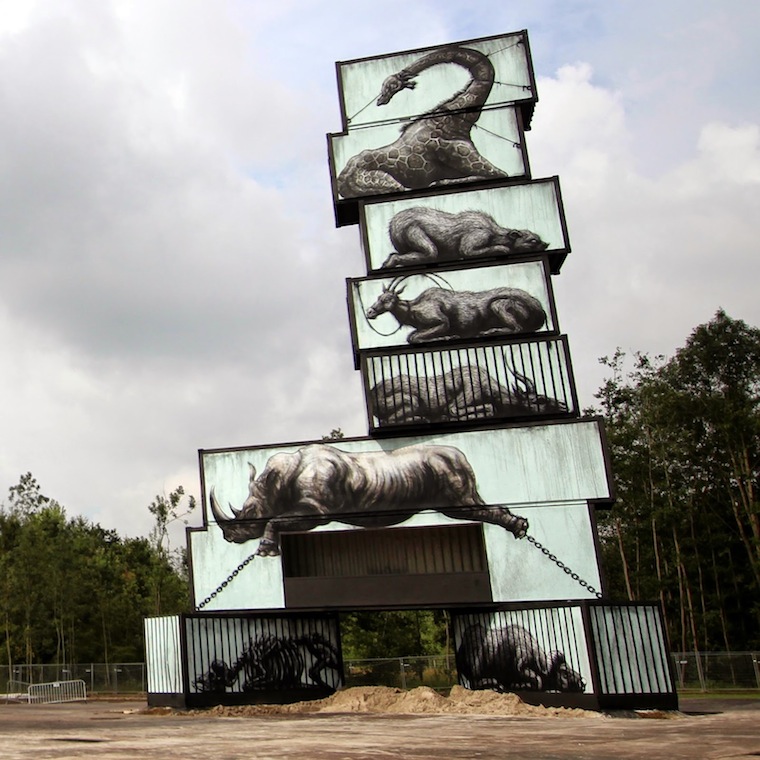
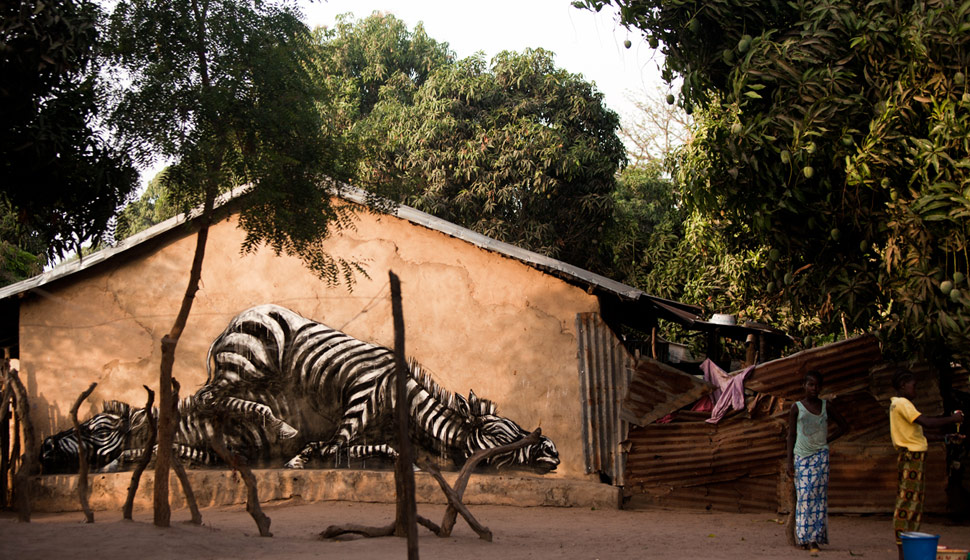
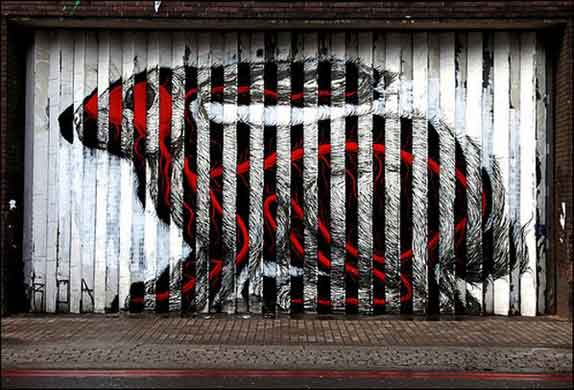
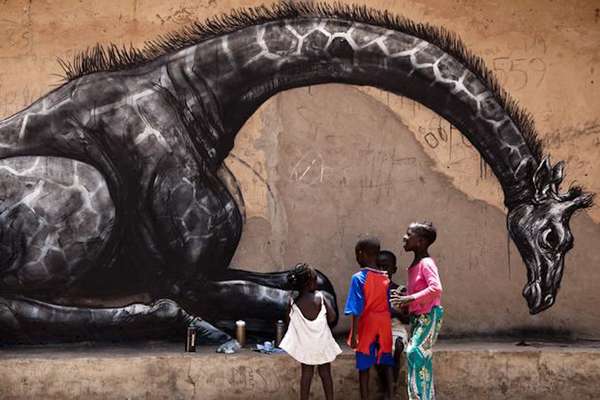
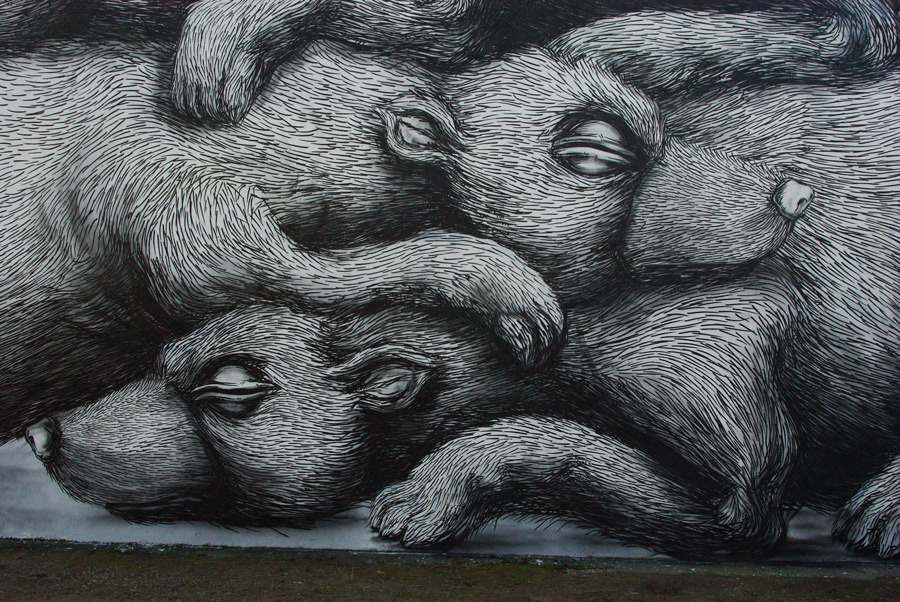
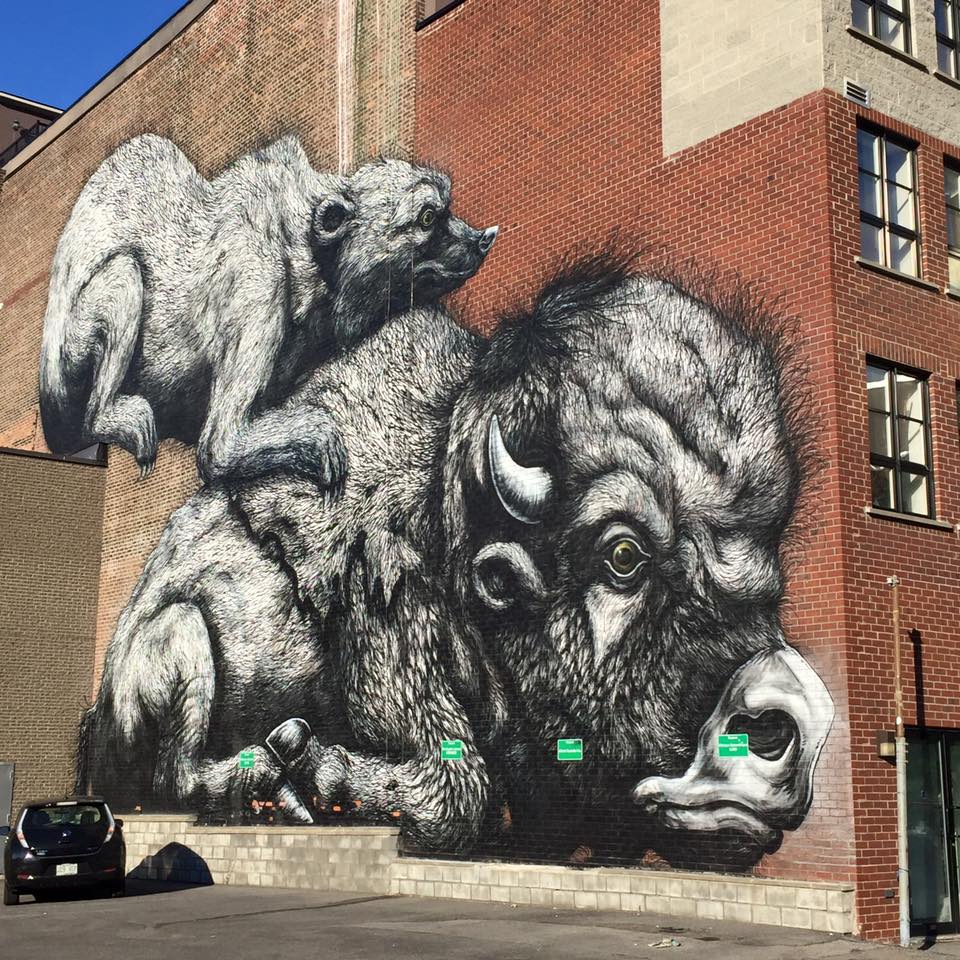
Roa, a hugely talented Belgian street artist from Ghent, is renowned for his giant black and white animal street art. Roa started off in the street art scene painting animals on abandoned buildings and warehouses in the isolated industrial areas of his hometown. Today, Roa’s animals may be found slumbering on the sides of semi derelict buildings and peering out from shop shutters in city streets all across the world from New York to Berlin and Warsaw to Paris.
Stockholm, Sweden.ANONYMITYRoa Lets His Work Do The talking
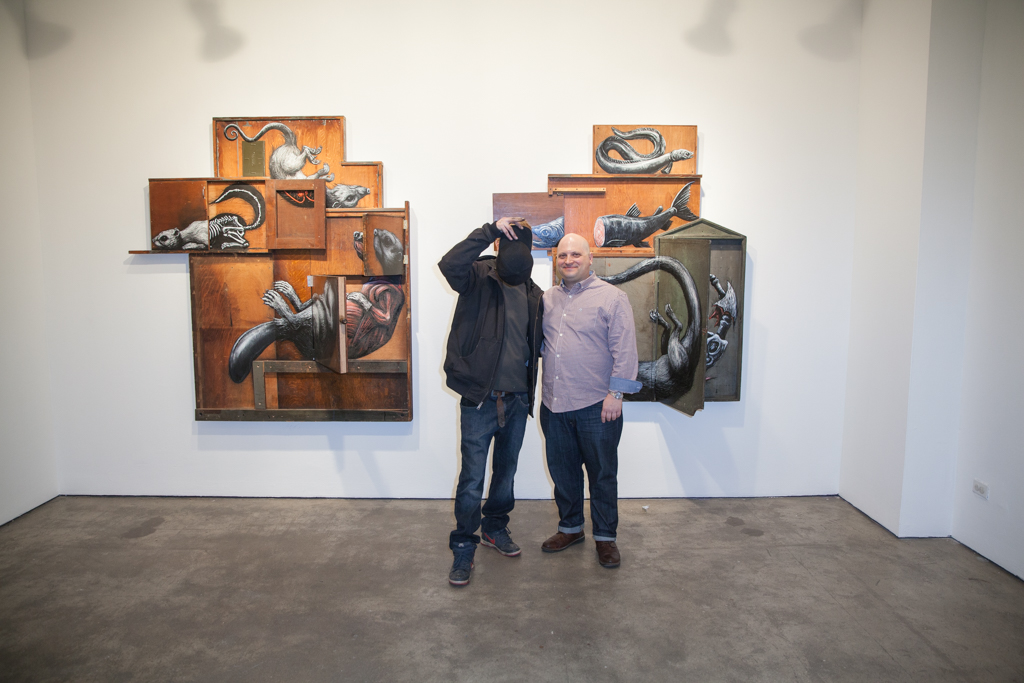
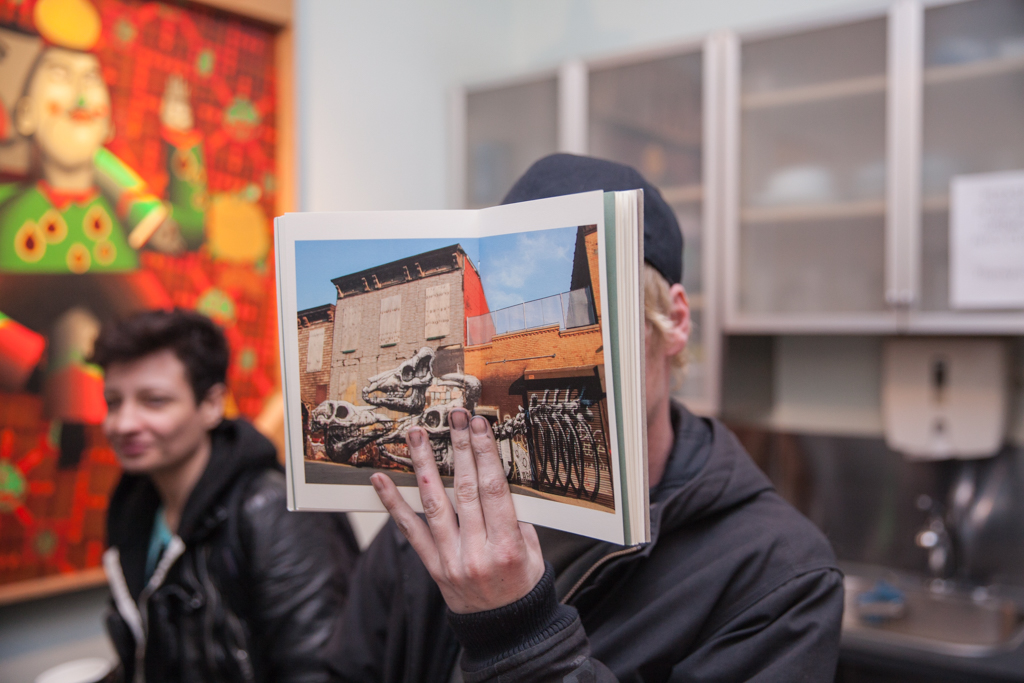
Street artist Roa is a muralist from Ghent, Belgium sprays beautiful illustrations of animals on buildings, walls and anything he can find in cities around the World. His work has often been recorded and photographed, but very little is known about the artist and even less is documented.
Renowned for his monumental black and white paintings of wildlife, ROA is a pseudonym of a Belgian street artist that has been leaving both accidental and intentional viewers in awe for years now. His hand painted, large scale and unique portrayals of rabbits, birds, rats, fish and other animals disquietly cohabit city streets, whilst his more disturbing images of skeletal or dead creatures directly reflect ROA’s pessimistic opinions of society. Although this street artist’s work is definitely a contender when discussing the most famous and recorded urban pieces in recent history, not much is known about this mysterious painter from Ghent who uses this anonymity to make sure both his artwork and spirit remain uncompromised.
At a very young age Roa remembers wanting to be an archaeologist or something adventurous and collecting little skulls from birds and rodents to draw at home. He grew up in the eighties and naturally was inspired by the American life; music, skating and so forth. The love for music, more in particular hip-hop, quickly joined his curiosity in graffiti. Like most muralists, he began by spraying throw-ups under bridges and walls. During his early years, Roa expressed an active, eclectic mix of styles. At the time, there was not prevailing movement in Belgium. As time went on, the scene’s evolution further evolved as foreign visitors left behind an assorted collection of talents and skills. Slowly but sure Roa became addicted to the nature of urban art.
Roa is primarily known for his strong obsession for animals and rodents. He often combines life, death, and life after death in his murals, which quickly distinguishes him amongst traditional muralists. His animals are painted to include skeleton and internal organs, making the sight even more realistic. The artist states, “Organs are the vital substances of our body and they represent a lot of the symbolism which I like!” One’s love for animals could not be expressed nearly as much as our artist Roa. This mysterious Belgian muralist has created hundreds of murals through Europe. He has also travelled to other locations around the world.
His preferred forms of methods to paint are by using spray paint or acrylic paint. In fact, most of his work is created through a mixture of black, white, and grey scale colours. At times, the muralist prefers to sketch, especially those large murals. He first began his artistic career by paining buildings and warehouses in his hometown. Nowadays, his distinctive black and white style street artwork can be found worldwide.
Some major cities, where his work can be found include London, New York, Berlin, Warsaw, Madrid, Moscow, Los Angeles, Mexico City and Paris.
Muralist Roa’s true obsession for animals is unparalleled and he uses this obsession to paint for inspiration. Roa uses native animals based on the location he is painting in. For example, if he goes to a specific location filled with roosters, like Mexico, then he will paint a rooster. Not only does this make him a standout artist, but his attention to detail is phenomenal. He truly has a pure passion for painting. Roa simply paints to paint- no other reason.
Carefully using the placement and the enlarging of the graffiti subject, ROA implies the cruelty and absurd relationship of humans and animals, as well as displaying the roots and origins of the depicted beings – this is what’s his art all about.
Roa’s work has been turning heads across the street art community by bringing birds, rodents, and other animals back into the consciousness in the areas they once inhabited. Although the street art is generally conveyed in a very natural matter, even his dead animal paintings seem at peace. Not only that, but his extra-large scale black and while local rodents may be viewing the image at work from nearby.
Roa’s anonymity has kept his work and his spirit free.
Enjoy Some Of Roa’s Art From Around The World
BERLIN, GERMANY
MAKASUTA, THE GAMBIA
JOHANNESBURG, SOUTH AFROCA
BROOKLYN, USA
BARCELONA, SPAIN
WERCHTER, BELGIUMMAKASUTU, THE GAMBIALONDON, UKMAKASUTU, THE GAMBIAWARSAW, RUSSIA
OREBRO, SWEDEN
MONTREAL, CANADA
These are just SOME of the vast amount of murals that Roa has created. You can visit his Facebook page at Roa Street Artist.
Please let others see Roa’s amazing work by SHARING far and wide. Please SUBSCRIBE to receive regular new and updates straight to your inbox.
In Memory of Impi and Gugu who were killed in the raid.
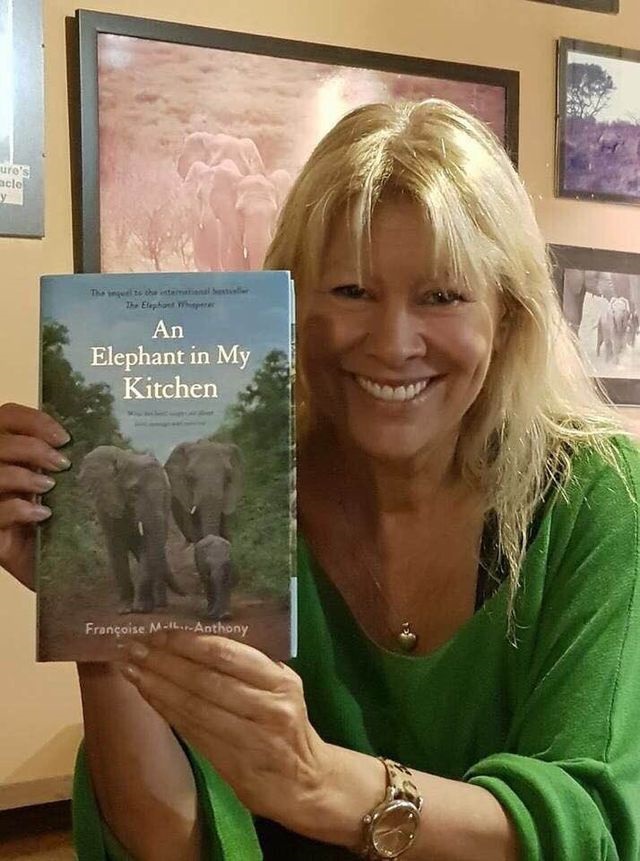
Françoise Malby-Anthony, who founded the Thula Thula game reserve in 1998 with her late husband, the renowned conservationist and internationally bestselling author Lawrence Anthony recalls the awful night that poachers attacked her Rhino orphanage on the 27th of February 2017
THE NIGHT POACHERS ATTACKED A RHINO ORPHANAGE
“Living alone on a vast African game reserve is not for the faint-hearted. And that night, even after 17 years in the wilderness, I felt a strange sense of unease.
It was 2am . White flashes of lightning were lighting up my bedroom. Thunder cracked like gunshots. As I stroked my dog, Gypsy, trying to reassure her, I suddenly realised that the phone was ringing.
‘Hello?’ I mumbled.
‘The orphanage has been hit. They shot two rhinos and attacked the volunteers.’
I sat bolt upright. Hit? Shot? Attacked? I couldn’t process the words.
I’d created the animal orphanage just a year before in order to fill a desperate need. Increasingly, poachers had been targeting adult rhinos for their horns — to sell to the Far East for useless traditional potions.
Any defenceless babies, whose horns had yet to grow, were left to die in the bush. Or if they were found in time, they were brought to my orphanage.
On that very night, I knew that four animal-mad girl volunteers and a permanent carer were providing intensive nursing for six vulnerable baby rhinos and a young hippo.
IMPI WITH ONE OF HIS CARERS
Panic-stricken, I ran to my general manager’s cottage and banged on the door.
‘Lynda! It’s me! Open up!’ I yelled, shivering in the rain. ‘Poachers at the orphanage. I’ll never manage the roads in this weather. We need your 4×4.’
She saw the horror on my face and asked no questions. ‘Give me five minutes.’ The rain smacked our faces as we sprinted to her car.
We crept along the dirt track leading to the orphanage, struggling to see, not speaking, hearts hammering. What would we find?
The men who slash rhinos’ faces for their horns are utterly barbaric — far beyond the conception of my trusting young volunteers. One wrong move or word, and an agitated lunatic could well have killed the girls.
Slowly, painfully slowly, we struggled through the downpour. As we arrived at the orphanage, one of my anti-poaching guards ran out.
‘What were you thinking, driving here on your own?’ he burst out. ‘The attackers could still be in the reserve! Quick. Get under cover.’
I stared at him. ‘Is anyone hurt?’ I asked. He nodded, grim-faced, and took us inside . . .
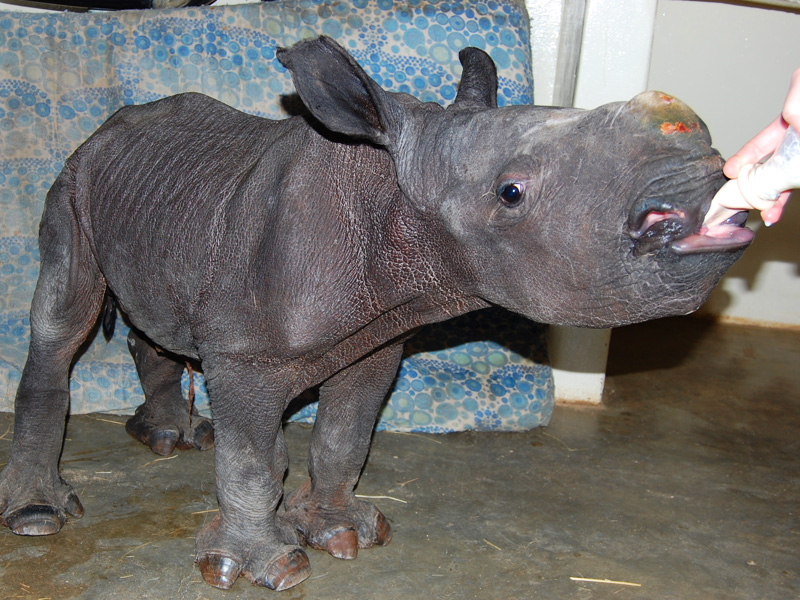
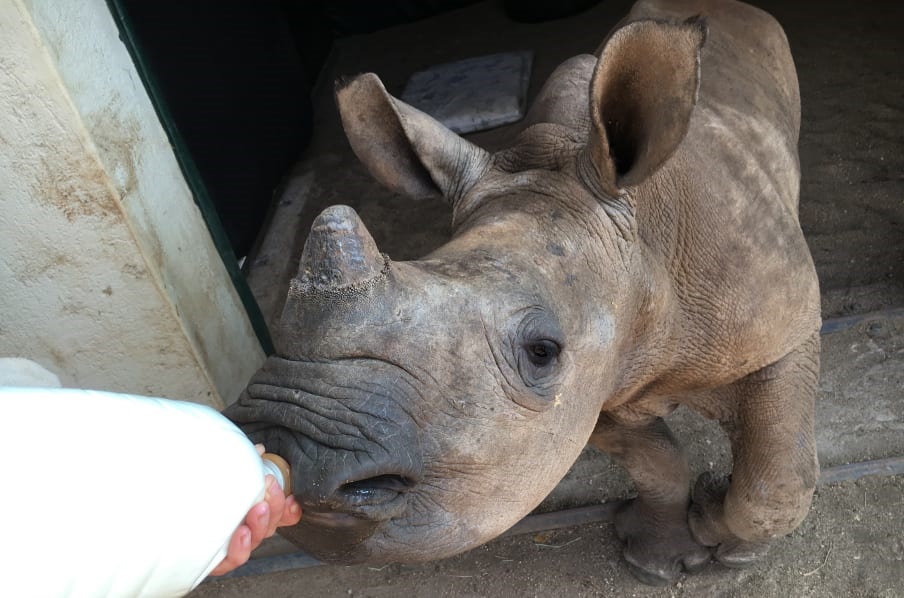
Baby rhinos don’t run. They half-bounce, half-fly as they hurtle towards you with an inquisitive look on their soft faces.
Or so I discovered when I first met Thabo, who’d been a terrified newborn when he was found, his umbilical cord still dragging below him in the dust. His mother had almost certainly been killed by poachers, and it was a miracle he’d survived even a day on his own.
Now Thabo was two months old, and had just arrived from a reserve that could no longer keep him. He nestled his snout gently against my leg — and I melted.
THABO
I’d just agreed to give him a permanent home on the land that my husband and I had bought in South Africa, intending to turn it into a game reserve that would keep animals safe from poachers.
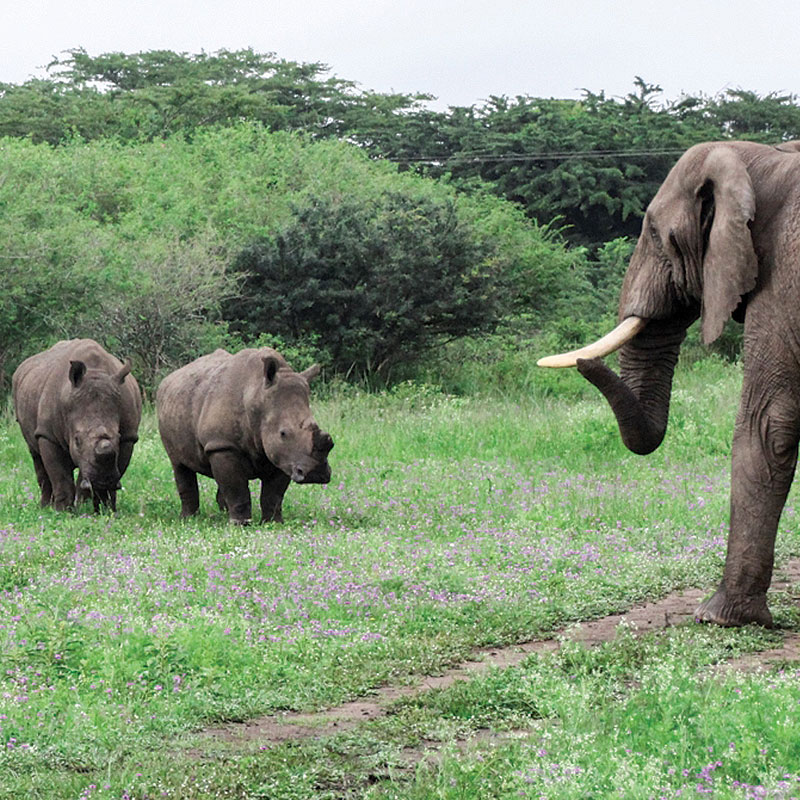
We called it Thula Thula — Zulu for ‘quiet’. Within a few years, we’d built a game lodge, started taking in paying guests and had adopted an entire herd of wild elephants — though no rhinos.
But that was about to change: as I stroked Thabo, I knew with absolute certainty what needed to happen next. I was going to create a haven where orphaned rhinos could heal after their trauma.
That was back in 2011. By the time I’d raised enough funds and rhino-proofed an existing building, my husband Lawrence had died tragically young of a heart attack.
For a long time after I lost him, I lurched from one crisis to the next, never feeling anything was under control. Even small decisions felt overwhelming at first, but creating the orphanage gave me a focus, a reason to get up every day.
LAWRENCE ANTHONY
There was so much at stake. If the heating fails in our game lodge, we might get a bad rating on TripAdvisor, but the guests won’t die. A heating failure in the orphanage’s high-care ward, on the other hand, will soon kill a baby rhino.
Our first call came in April 2015. An anti-poaching unit had just found the carcass of an adult female rhino, with her horn hacked off, but no sign of her calf. Would we take it in if they could track it down? By running away, the six-month old calf had at least avoided being butchered for the tiny horn beginning to grow on his head. With rhino horn fetching £68,000 per kilo on the Far Eastern market, the poachers would have killed him for every gram they could get.
By the time Ithuba was traced, it was a week since his mother had died. Heavily sedated when he arrived, he was covered in infected tick bites and close to death. That first night, he was put on a drip and slept peacefully — but the second night was hell.
It was as if he was going through all the trauma of the past week — his mother’s murder, being transported in a clanging trailer and then finding himself in a strange room with two-legged animals who looked just like the ones who’d killed his mother.
The mere sight of his carers sent him careering around his room in panic — and 200 kilos of agitated rhino can do a lot of damage to a pair of human legs. His high-pitched squeals of terror pierced every corner of the orphanage.
Eventually, we persuaded him to drink milk from a bottle. Then colic struck and nightmares. He’d shiver and jerk about in his sleep; on waking, he’d spin around his room in panic, flinging himself against the walls.
‘What Ithuba’s going through isn’t unusual,’ the vet assured us. ‘People think post-traumatic stress is only experienced by humans, but his emotional recovery is going to be far more complicated than his physical recovery.’
It’s heartbreakingly hard to comfort traumatised animals, but our carers did it with infinite patience and affection. Slowly, Ithuba began to understand they weren’t like the people who’d hurt his mother.
I’ll never forget the day when I saw him trotting happily next to Axel, an easygoing young French carer. Ithuba kept bumping into his leg, as if to reassure himself that he wasn’t alone any more.
Another huge step was the revival of his curiosity. Rejecting other toys, Ithuba homed in on anything made out of tyre, including his food bowl which was a home-made tyre contraption. He’d tip it over, throw out the food, fling the bowl about until it started rolling, then run after it. Finally, he’d balance it on his head, preening and strutting like a dressage horse.
BFFs: The two baby rhinos, Thabo and Ntombi, were soon inseparable
Yet for a long time, he also continued to have panic attacks. He’d be playing happily, then he’d suddenly squeal in fright, latch onto a corner of his carer’s sleeve and suckle it — rather like a baby sucks its thumb.
Slowly, however, his insecurity faded — and his appetite exploded. By the time he was nine months old, he’d doubled his weight and turned into a happy little rhino tank who’d soon be starting a new life in the wild.
The next rhino calf delivered to the orphanage had also lost his mother to poachers. He’d stood by his mother’s body for six days, desperately tugging at her decaying teats while vultures tore her flesh. How do you even start to console a little creature who’s been through that?
Megan, a fresh-faced young British girl, remained with Impi for his entire first night as he ran round and round in circles, crying non-stop, too terrified to sleep, desperate to find his mother.
‘I kept talking to him,’ she said. ‘I told him what had happened to him, that he was safe with us, that there was another baby rhino just like him called Ithuba, and that I was sure they would be friends.
‘He eventually came up to stand silently at my knees. He looked so lost. I longed to take him in my arms to comfort him but I didn’t dare move in case I frightened him. Then he collapsed at my feet and fell asleep.’
Within three days, however, little Impi was on the mend. Ravenously hungry, he’d indignantly head-butt his carers if his bottle wasn’t ready when he wanted it.
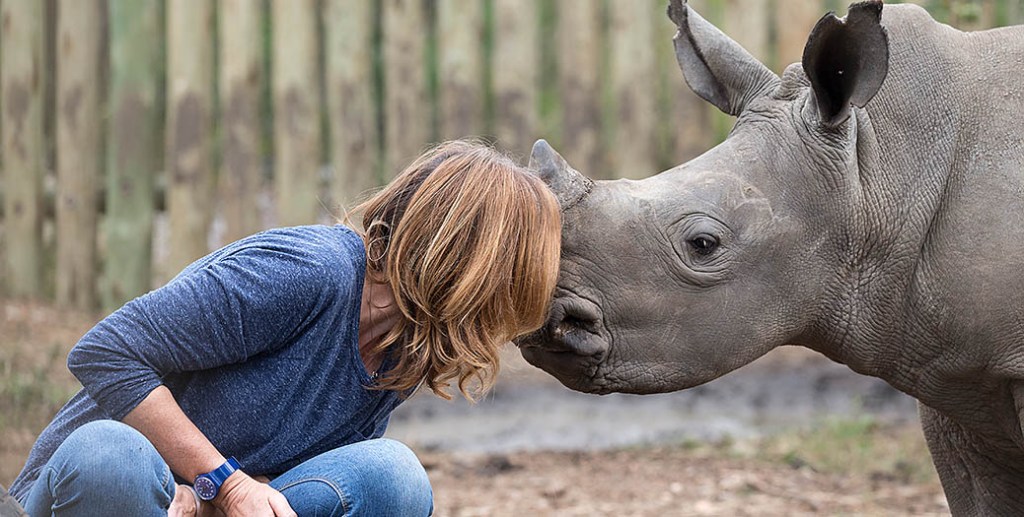
One morning, Megan was on her hands and knees giving the floor a good scrub when she felt two little eyes boring into her. Impi edged closer and nestled his chin on her shoulder. And there it stayed, as he shuffled along to keep pace with Megan’s movements.
Some calves are boisterous and belligerent, but not Impi. He was a tender little creature who was afraid of everything and hated being left alone.
Like Ithuba, he suffered from post-traumatic stress disorder, and unfamiliar sounds — even a bird’s squawk — would send him fleeing, squealing in panic.
Nights were a terrible struggle. No matter how exhausted he was, he didn’t feel safe enough to lie down until a volunteer had started reading him a book. Then he’d quietly nestle on the hay next to her, burrow his head into her legs and fall into the deepest sleep.
Ithuba, meanwhile, wasn’t happy about losing his pampered role as the only rhino at the orphanage — and particularly jealous when he realised that Impi was in his old room. Again and again, he charged the barrier to get in; only the sound of Axel rolling a tyre behind him managed to distract the cross little rhino.
The next orphan to arrive was Thando, who’d been discovered neck-deep in mud and unable to move. There was no sign of his mother.
It took five men to pull Thando out of the mud, and there were whoops of delight when they saw he was strong enough to stand.
The DIFFERENCE in Thando’s behaviour from that of the other two rhinos was startling. Rather than being petrified when he woke up in a strange room surrounded by humans, he was merely stroppy.
Happily, he hadn’t had to witness his mother being hacked to death, nor had he been on his own in the wilderness for nights on end. As a result, he very quickly became one of the orphanage’s most laid-back little rhinos.
Eventually we decided that Impi and Thando should meet, as they were similar ages. So, one overcast summer’s afternoon, we left the doors and barriers to their rooms open at feeding time. The carers hovered out of sight nearby.
Impi, usually such a timid little rhino, immediately charged at Thando, who didn’t so much as blink. Baffled by this non-reaction, Impi skidded to a halt and stared at him.
After a lot of posturing and strutting on both sides, they headed inside and flopped down on a mattress, their stumpy little legs entwined. From then on, they were best friends, constantly cuddling up or practising charging techniques on each other.
Another successful pairing was between Charlie, a baby hippo found alone in a river, terrified of water, and a newborn rhino called Makhosi, abandoned because he was too tiny to reach his mother’s teats. As both were under a week old, we put them in the same room.
Amazingly, Makhosi scampered straight up to the hippo. For his part, Charlie swayed his big head from side to side in greeting and reached his snout towards her.
First, they exchanged interested noisy snuffles. Then Makhosi lowered her head and Charlie gently chomped her ears. Finally, the tiny rhino clambered onto the hippo’s mattress, nuzzled up against him and fell fast asleep.
WILD ENCOUNTERS
After that, they trotted everywhere together, demanded to be fed at the same time, and cuddled up whenever they needed warmth or reassurance.
When Charlie’s teeth started to cut through, his gums became sore and inflamed, and he lost his appetite. His rhino friend knew just what to do: she comforted him with gentle nudges, then fell asleep each night with her snout touching his.
Charlie, the baby hippo who was scared of water standing bravely in his paddling pool with pal Makhosi close by
More orphans were now flooding in. Nandi, our first black rhino, was another newborn whose mother had been killed. She was afraid of the dark and wouldn’t go to sleep without a blanket tucked tightly around her.
If it slid off, she squealed until her carer woke up and tucked her back in again. What a little princess!
Then there was Storm, who’d probably been rejected by his mother. He had so many parasites that we almost lost him.
And finally there was Gugu, a healthy rhino calf who wanted nothing to do with her carers. It was her choice to drink from a bucket rather than a bottle — anything to keep humans at bay.
When she first saw Impi and Thando, however, she broke out into high-pitched calls of delight. And as for Ithuba, our original rhino calf, he became the love of her life.
Poor Ithuba was so much older than the others that we had to keep him in a separate enclosure. Undeterred, Gugu would spend hours walking out with her strapping neighbour, each keeping pace with the other on either side of the fence.
ITHUBA WITH KAREN TRENDLER
By the start of 2016, our baby rhinos were all thriving and protected by round-the-clock security guards. It made no difference.
On the terrible rain-lashed night that poachers attacked the animal orphanage, I arrived to find our terrified girl volunteers huddled together in an office. One of them had only been with us for a few hours, her dream of working with orphaned animals now a savage nightmare.
Slowly, as they sobbed and cried, I started piecing together what had happened.
Just as the team had finished the first evening feed, five heavily armed men had breached the fence, disabling cameras and cutting cables as they crept towards our security guard. Two of them had attacked him from behind and tied him up.
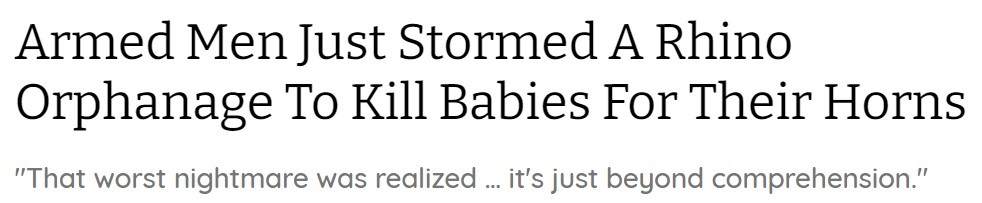
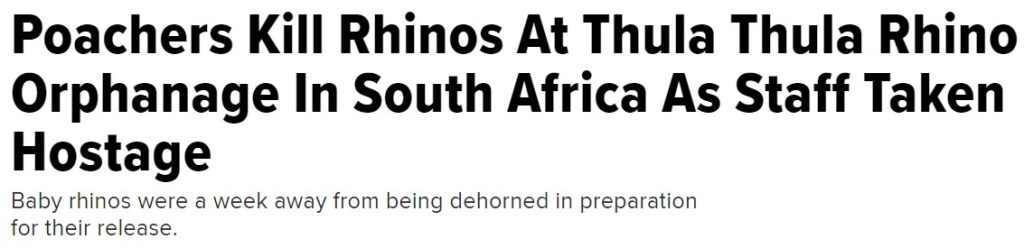
THE DODO’S HEADLINE OF THE ATTACK
Then they waited, patient predators, biding their time until the next feed. Axel, the only staff member there that night, had gone to bed while the two girls on feeding duty chatted and laughed as they prepared bottles for the hippo and the rhino calves.
Suddenly, they were ambushed by the poachers, and shoved into a locked office. At gunpoint, Axel was roused and forced to round up the rest of the volunteers.
‘Where are the rhino horns?’ the attackers kept asking. Needless to say, we didn’t have any, but Axel was beaten and one of the girls was severely assaulted.
THE HUFFPOST’S HEADLINE OF THE ATTACK
The poachers must have known that Gugu and Impi — now our oldest rhinos at the orphanage — were due to leave soon. And that meant they’d already have stubby little horns.
While three men guarded the youngsters, two others, armed with guns and an axe, headed for the calves. They pumped bullets into Gugu and Impi for horns no bigger than a child’s fist.
RIP GUGU
Gugu died instantly, sweet Impi didn’t. The poachers didn’t give a damn. They held him down and hacked his face with the axe.
Were they disconcerted by his terrified expression? Superstitions run deep in rural Zululand, where it’s thought that eyes have memories. So the poachers did the unthinkable — they poked out Impi’s eyes.
Half an hour later, the men and their bounty were gone.
Meanwhile, the guard in the storeroom had escaped and was running barefoot through the reserve to raise the alarm. Petrified of being caught, he avoided roads and tore through the bush in the pitch dark, shredding his feet in the process.
To this day, I can’t bear to think about Impi and the anguish of his carers. They’d hand-raised him, and there was nothing they could do to ease his terror and pain.
Impi was euthanised as soon as our vet arrived. The tragedy was that both calves had been days away from becoming wild rhinos again.
The next 24 hours are a blur. I have flashes of memory: the ashen faces of the girls, the explosive racket of the storm, the atrocity of Impi’s injuries, the chaos in my heart.
For a while, I lost faith in mankind. I lost hope in saving rhinos.
Demand for their horns will never stop; they’ll always be in danger, as will the men and women who risk their lives guarding them.
What I do remember with profound gratitude is the phone call from Megan, the British girl who’d helped look after Impi and Gugu. Now back home, she offered to start a campaign to pay for improving the orphanage’s security.
Donations flooded in from all over the world. The outpouring of love and concern was incredible: more than £45,000 was raised.
The cash has paid for more round-the-clock armed guards and extra protection for staff during night feeds. We’ve also upgraded our entire security system.
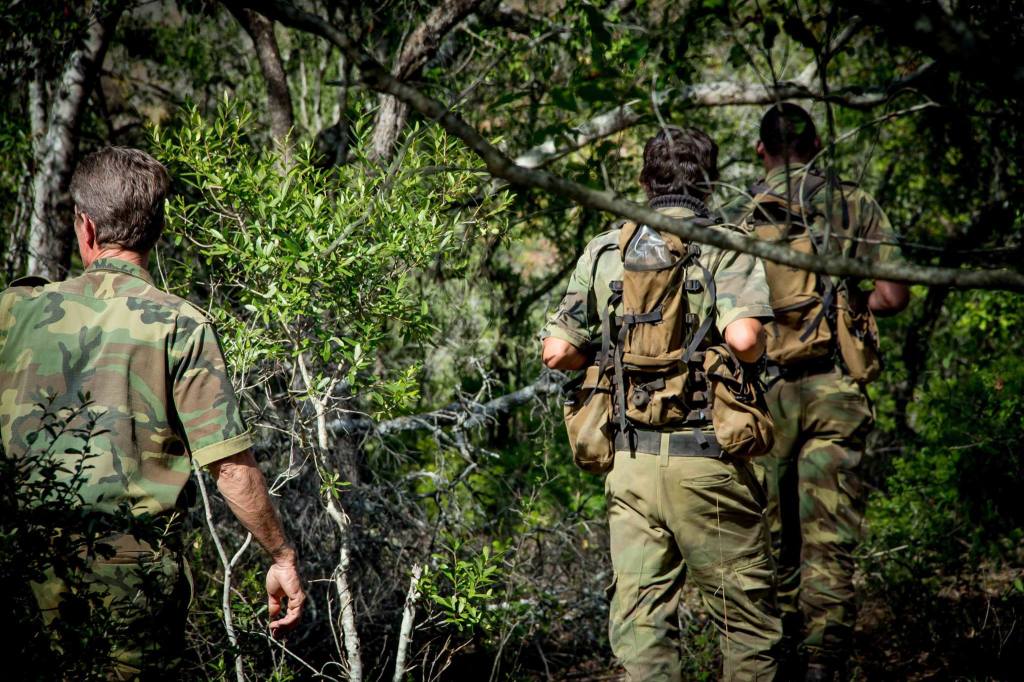
Additional anti poaching team and extra armed security
Update 2/23: Two male suspects have now been arrested for the killing of two baby rhinos and the assault of the staff at Thula Thula Rhino Orphanage, according to SA people. The men are apparently part of a “notorious gang,” and they were heavily armed when police found them.










 PROTECT ALL WILDLIFE