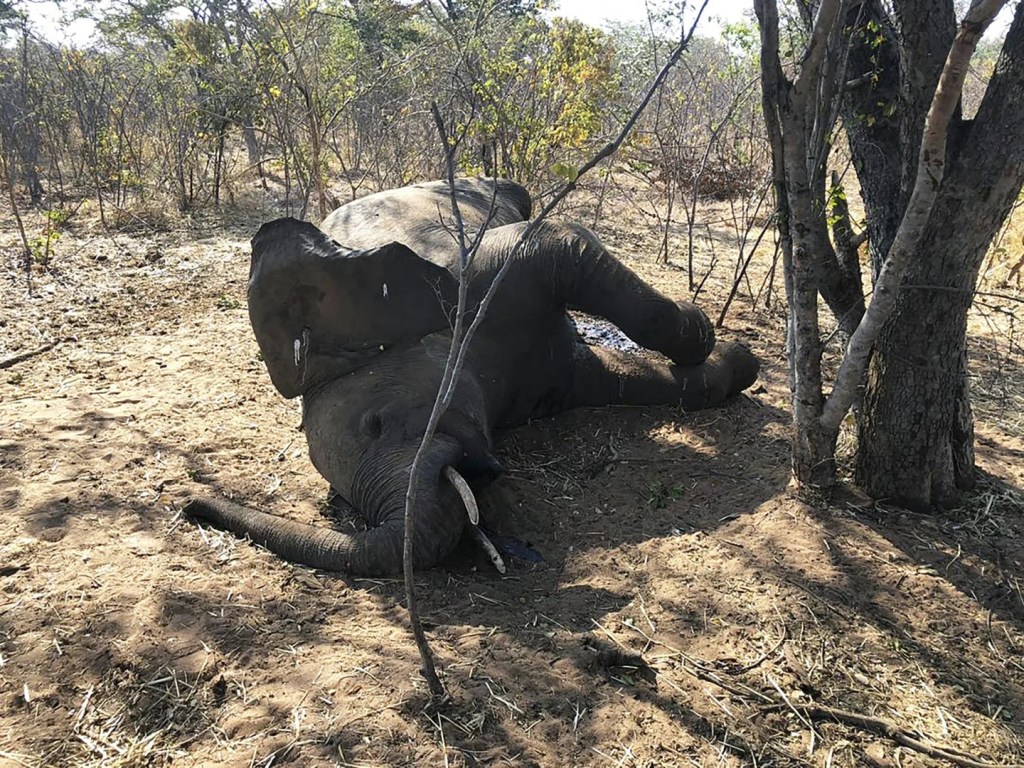
Scientists Have Uncovered The Cause Of The Mysterious Deaths Of 35 Elephants In Zimbabwe.

A dead Elephant found in Hwange National Park, Zimbabwe, Aug. 29, 2020. Credit: AP Photo

Elephants that dropped dead in Zimbabwe were victims of an obscure bacteria combined with extreme heat. Scientists fear more Elephants – and other species – could suffer the same fate

No one knew precisely what caused the unexplained tragedy in which 35 African Elephants in Zimbabwe mysteriously dropped dead in August/September 2020.

This incident followed the death of approximately 350 Elephants in neighbouring northern Botswana from May to June 2020, which triggered much international concern. 

Aerial views of of some of the Elephants that were been found dead in Botswana  Credit: National Park Rescue

At first, anthrax was a possible contender, along with poaching or intentional poisoning, but they were all ruled out early on.

Three years later, a new study by a group of scientists has found that a rare bacterium that causes organ inflammation is responsible for the Elephants’ untimely deaths.

A variant of the Pasteurella bacteria, named Bisgaard taxon 45, was identified by the scientists in their study of samples from six of 15 dead Elephants that they analysed.

This variant of this bacteria showed up in their sample, making the scientists conclude that the Elephants died from the lethal infection.

At first, scientists reviewed the possibility of Pasteurella multocida, which is known to cause hemorrhagic septicemia, a common disease amongst cattle and buffaloes that is highly fatal.

However, after further testing, they found that the findings were more complicated than thought.

“It became clear from the culture samples that we did not have P. multocida but something else similar,” Laura Rosen, an epistemologist who worked on the study, said, according to Science News.

While samples from the other elephants were not obtained due to rotting or not being able to get permits quick enough, six of the samples they did get showed this rare bacteria.

Little is known about this bacteria, as a few rare cases have only been documented so far.

The study cites that Bisgaard taxon 45 has in the past been linked to bite wounds on humans from tigers and lions.

It was also previously found in a chipmunk and a captive health parrot.

However, the researchers suspect this is not the first time that an outbreak of the disease has caused mass fatalities within Elephants.

In 2019, 14 Elephants were found dead in Zimbabwe within the same time period as this group was a year later.

While no bacterial samples were taken at the time, the noted conditions of the deceased animals were similar to those of the 2020 group.

It is unclear what caused this bacteria to enter the Elephants’ body, whether it is part of its “normal flora,” but the researchers believe that stress and heat would have contributed to the outbreak.

“It’s premature to say that climate change has influenced [this], but it may do so in future if we get more and prolonged droughts, or the rainfall patterns [change] and we have a much harsher dry season,” Dr Chris Foggin, a researcher on the study said.

“I do think that if that is the case, then we are more likely to see this sort of mortality event occurring again.”

This study is essential for organisations that seek to conserve these Elephants, who are already an endangered species.

Earlier that same year, around 350 Elephants dropped dead within the space of three months in neighbouring Botswana.
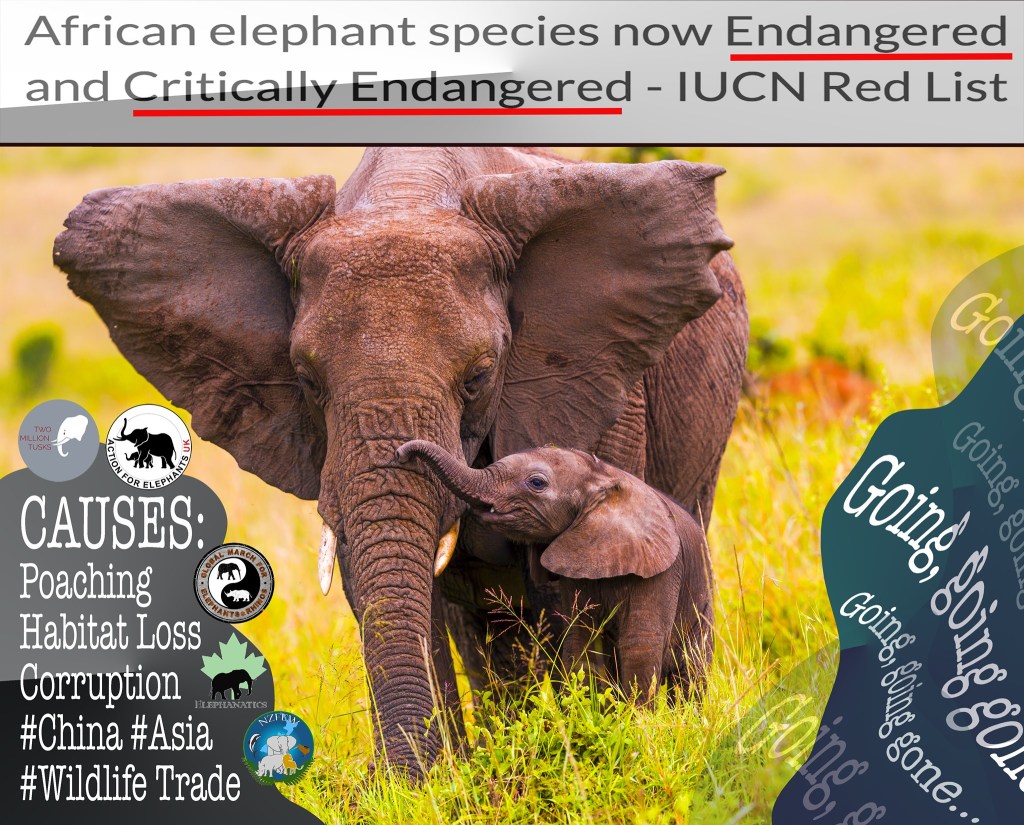
African Elephants are listed as endangered on the IUCN Red List. Credit: GMFER

African Elephants are listed as endangered on the International Union for Conservation of Nature Red List, with only approximately 415,000 left in the wild as of 2023.

According to the World Elephant Day organization, Elephant numbers have dropped by 62% over the last decade. They estimate that 100 African Elephants are killed each day by poachers.

WHAT YOU CAN DO TO HELP ANIMALS IN NEED

You can support our work by donating as little as £5 – It only takes a minute but it can last a lifetime for an animal in need.

PLEASE CLICK BELOW TO DONATE PLEASE HELP ANIMALS IN NEED

Everyone who donates will receive a Certificate of Appreciation as a thank you for helping animals in need.

The Mission of Protect All Wildlife is to prevent cruelty and promote the welfare of ALL animals.

We believe EVERY animal should be treated with respect, empathy, and understanding. We raise awareness to protect and conserve wild, captive, companion and farm animals.

It is vital that we protect animals against acts of cruelty, abuse, and neglect by enforcing established animal welfare laws and, when necessary, take action to ensure that those who abuse animals are brought to justice.

Protect All Wildlife are involved in many projects to protect animals’ rights, welfare, and habitats. Money contributed to Protect All Wildlife supports ALL of our worthy programmes and gives us the flexibility to respond to emerging needs. Your donations make our work possible.
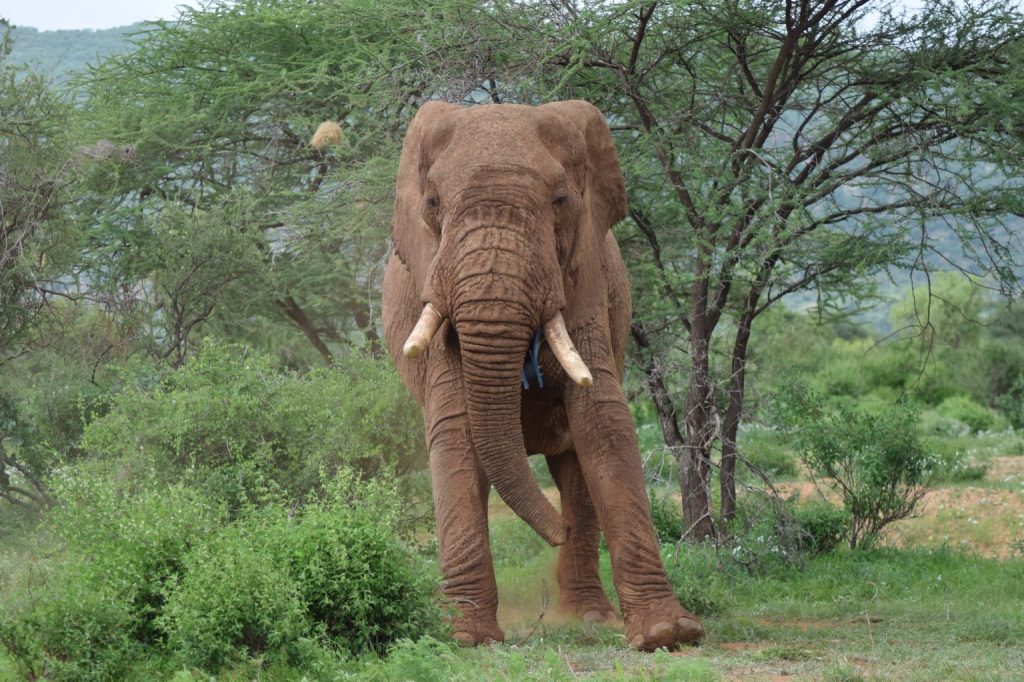
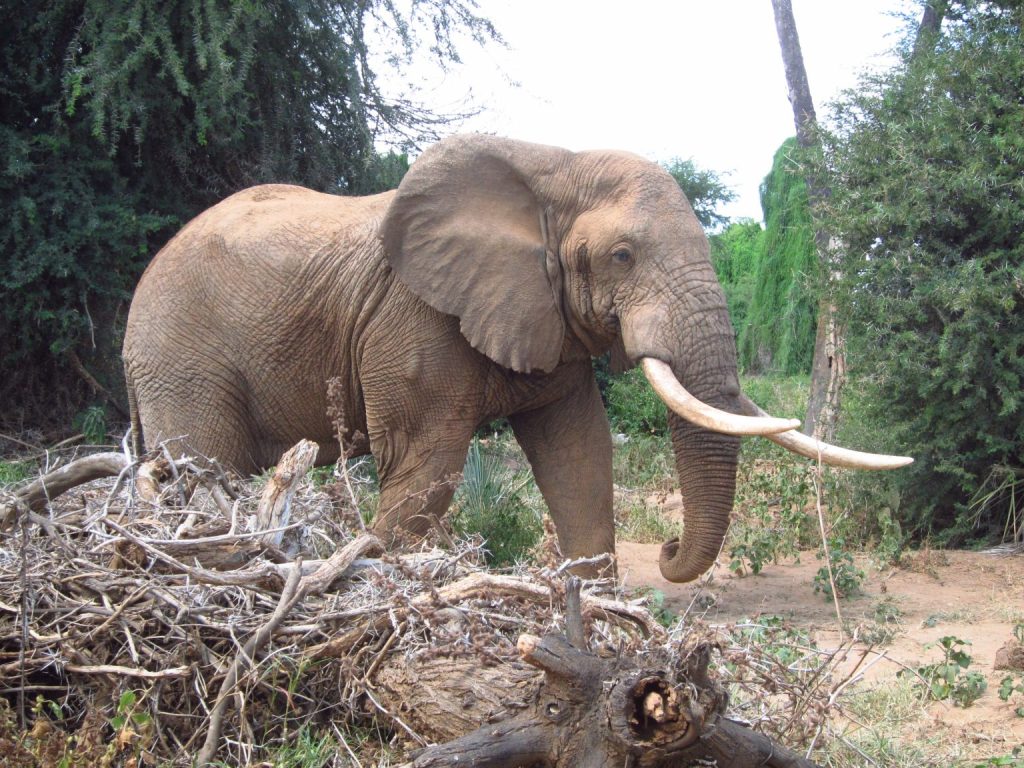
Save The Elephants’ Tribute To Bull Elephant Edison.

An Abrupt End To The Jumbo Life Of Iconic Bull Elephant Edison.

Edison in Samburu National Reserve Credit: Alice Clark/Save the Elephants

We are deeply saddened to report that one of our best-known and most beloved bull Elephants, Edison, has died. Edison’s carcass was found in Westgate Conservancy in Samburu, northern Kenya. We suspect his untimely death could be yet another tragic outcome of the rising cases of Human-Elephant Conflict (HEC) across Africa. Investigations into the cause of death are still continuing. Edison’s death marks the third loss of one of our Samburu study bull Elephants within the span of just under a year. In December, bull Elephants Sarara and Yeagar were both killed in conflict with herders.

Matt, Samburu’s biggest tusker, who faced off with Edison in Samburu National Reserve, Credit: Sarah Jacobson/Save the Elephants

Edison was estimated to be approximately 37 years old and in the prime of his life at the time of his death. Born into the Royals family and known to our researchers since he was a teenager, Edison was a feisty wild bull and quite the mama’s boy too. Most bulls venture out for a life of their own when they are around 10-12 years old but when Edison dispersed, he kept coming back to visit his family on and off for the next couple of years.

Edison’s fearless, spirited nature was well-known to many. He was never one to shy away from confrontation, even challenging older and much larger bull Elephants like the late Matt – then Samburu’s biggest tusker who died in 2019. During one dramatic stand-off between the two-testosterone-fueled bulls in 2016, Save the Elephants’ founder, Iain Douglas-Hamilton, got caught in the middle and found himself face to face with Edison who charged his vehicle.

Save the Elephants has been observing and studying the lives of Elephants for more than three decades, gaining fundamental insights into how they behave and make decisions. By analysing the data from Edison’s GPS tracking collar, STE researchers were surprised to discover that while this adventurous bull spent much of his time travelling north to far flung places such as Kipsing, Westgate, Kalama and Ol Donyiro, he would  always return home to Samburu National Reserve at full speed when in musth to find mates.

Edison was collared by our team multiple times after his collar either dropped off or the batteries ran out – GPS collars only have a lifespan of around three years. While most  collaring operations proceed without a hitch, there’s one incident which is forever etched in our minds.

Our Director of Field Operations, David Daballen, remembers running for the hills during one particular collaring mission when  Edison, an enormous bull by then, suddenly awoke just as he was about to be fitted with the tracking device. The whole team, including the vet, had to abandon what they were doing and run for safety. It turned out that the anaesthesia hadn’t fully kicked in and Edison had momentarily woken up. Fortunately , Edison dropped back to sleep and the team were able to complete the mission successfully. 

Edison’s last collaring in April 2023 was just as nail biting. Edison went down on his chest, the worst position for an Elephant to be in as they risk suffocating. This time, the STE collaring team were able to push him onto his side and he was again successfully fitted with his new collar.

STE researchers, including David Daballen (below in this picture ) recollaring Edison in Samburu National Reserve in April 2023. Credit: Gilbert Sabinga/Save the Elephants

Says David Daballen, “Losing Elephants like Edison, whom we’ve observed throughout their entire lives, is always a profound loss. Their actions and interactions offer valuable insights into Elephant society. By closely tracking and monitoring these intelligent beings, we also gain a deeper understanding of their distinct personalities and characteristics. Edison, in particular, was a bold, maybe even an audacious Elephant, unafraid to assert himself, as demonstrated when he once challenged the venerable Elephant elder, Matt. We will sorely miss his presence in the reserve and following his remarkable adventures.”

Watch the epic confrontation between Edison and Matt below.

Author: Tanya Onserio, Save the Elephants

WHAT YOU CAN DO TO HELP Save The ELEPHANTS

PLEASE PRESS HERE TO DONATE