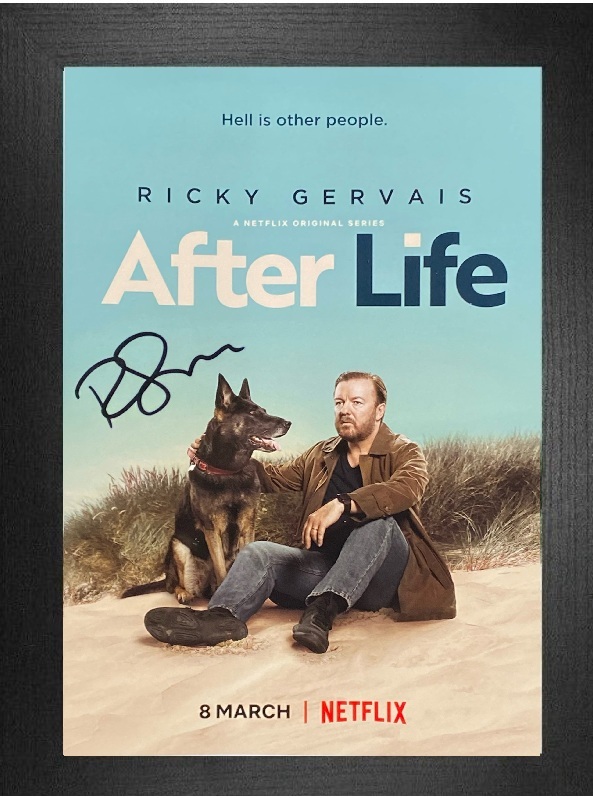
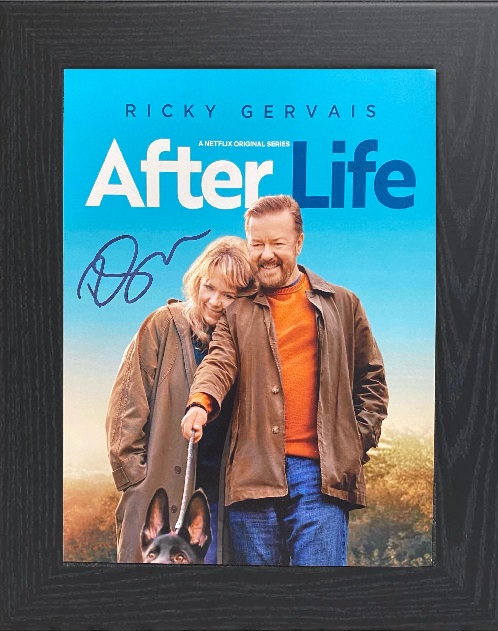
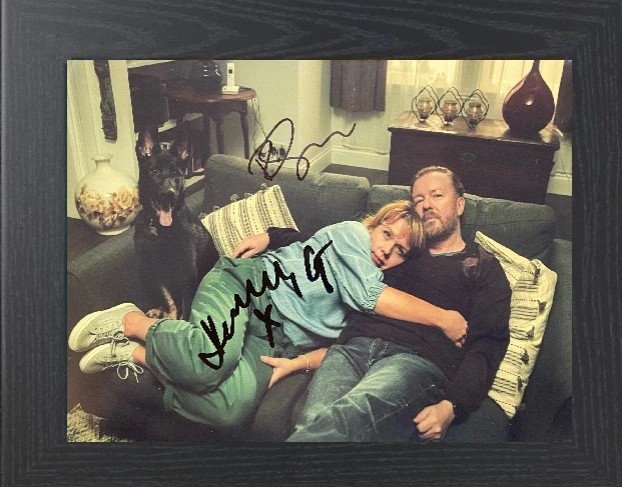
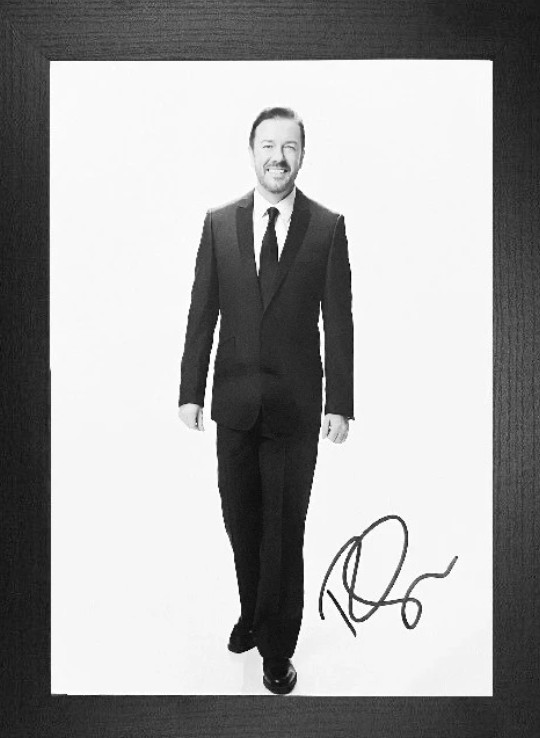
This is your chance to bid on signed pictures very kindly donated by Ricky Gervais in our ‘Charity Auction To Help Disabled Animals’.
This is a sealed bid auction, so all you need to do is decide which item you would like to bid for and send us your bid with the LOT NUMBER and name by email to protectallwildlife@btinternet.com by 21:00 on the 24th of August 2025. We will email you to let you know if your bid is the highest. Postage costs will be calculated when the auction ends. If you need any more information etc please email Paul at protectallwildlife@btinternet.com.
A young, six-year-old boy named Caleb was traveling with his parents and siblings when a negligent driver swerved into their lane, colliding with their car. The young driver, who was just a kid himself, unintentionally took the lives of Caleb’s mother and both of her children, but six-year-old Caleb miraculously survived. His injuries were nevertheless severe enough to be life threatening.
Although he was the only surviving member, Caleb had sustained serious injuries. While his fractured bones would mend, his traumatic brain injury might result in death, paralysis, and brain damage, which went on for a long time. To assist him, Caleb’s father and grandmother did whatever it took; however, each day was a struggle.
Nobody knew what the result of these two approaches would be. The doctors suggested a non-traditional therapy by using a canine. To see if having a dog by Caleb’s side might stimulate activity and, in turn, healing, the medical team wanted to try basic interaction. While he was hesitant, Caleb’s father agreed.
They decided to give it a try and crossed their fingers that this miracle would save their child.
CALEB’S STORY CREDIT: INTERNATIONAL THERAPY ANIMALS
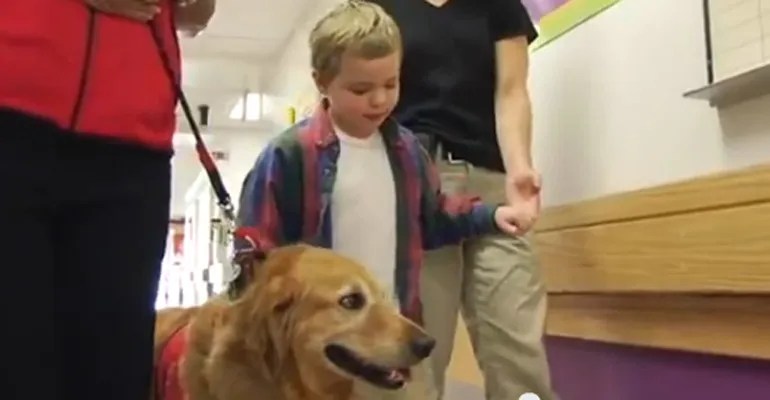
The therapy session began and a dog Colonel walked in. How could an animal sort the whole situation out?! The dog was brought in and the doctors made him lie and sit down next to the injured boy.
Colonel, a golden retriever, served as an inventive and non-invasive way for Caleb to obtain “medicine.” The dog sat beside him quietly with his trainer Susan. They waited for Caleb to react in some manner, but it did not take long at all.
CALEB RELAXING WITH COLONEL CREDIT: BEN HOWARD
Even when Colonel lay on Caleb’s hospital bed, wiggling his way almost onto Caleb’s tiny body to keep him company, and even attempting to mount him while asleep, Caleb reacted. His heart rate increased, and his respiratory function improved. Something wonderful was happening, and it was all thanks to the only modification in Caleb’s routine: Colonel.
The boy glowed whenever Colonel came to see him. The medical team was shocked. Caleb quickly became more awake, wanting to sit up and interact with the adorable dog. Colonel influenced Caleb in an inexplicable manner both physically and emotionally.
BEST FRIENDS CREDIT: BEN HOWARD
Caleb was playing catch with Colonel. And giggling! Sure, it took time and patience– as well as a team of doctors to family– but it was Caleb who truly connected to him on another level that itself encouraged healing.
FOLLOW UP TO CALEB’S STORY CREDIT: INTERNATIONAL THERAPY ANIMALS
WHAT YOU CAN DO TO HELP ANIMALS IN NEED
You can support our work by donating as little as £5 – It only takes a minute but it can last a lifetime for an animal in need.
Everyone who donates will receive a Certificate of Appreciation as a thank you for helping animals in need.
The Mission of Protect All Wildlife is to prevent cruelty and promote the welfare of ALL animals.
We believe EVERY animal should be treated with respect, empathy, and understanding. We raise awareness to protect and conserve wild, captive, companion and farm animals.
It is vital that we protect animals against acts of cruelty, abuse, and neglect by enforcing established animal welfare laws and, when necessary, take action to ensure that those who abuse animals are brought to justice.
Protect All Wildlife are involved in many projects to protect animals’ rights, welfare, and habitats. Money contributed to Protect All Wildlife supports ALL of our worthy programmes and gives us the flexibility to respond to emerging needs. Your donations make our work possible.
The cost of changing a rescue animal’s life forever – PRICELESS!
To feed a dog for one month typically costs somewhere from £16 to £50, depending on the breed. Microchipping costs about £10 to £15. The average cost of essential vaccinations is £64. A vet appointment costs between £40-£60. Physiotherapy/Hydrotherapy – the average cost is £50 for a 30-minute session.
You may wonder, why do you have to pay to adopt a dog?
Well, running an animal shelter is not cheap, with food, heating and other costs, so you money goes towards supporting them in the work. It also pays for vital care that your new pet has had, and covers essential expenses that you’d likely have to pay for anyway if you got your dog another way.
Why do dog shelters charge people to adopt pets?
First of all, animal shelters cost money to run. While they get donations and funding through events like charity runs, the costs are high. They need to pay for food, heating and other bills, as well as any staff costs and expenses like petrol for home visits.
Adoption fees also cover other expenses for the dogs, such as vet bills, which you’d likely have to pay yourself anyway if you acquired a new dog through other means.
Every dog rehomed is vaccinated, microchipped and neutered.
Please help is rescue, rehabilitate and rehome MANY more sick, injured and disabled animals by donating ANY amount, large or small, at HELP RESCUE ANIMALS IN NEED.
10 REASONS WHY YOU SHOULD #ADOPTDON’TSHOP!
Adopting a pet has many benefits, some of which you may have not considered. Here are some reasons why adopting a pet would benefit you and your family.
1. You are saving a life
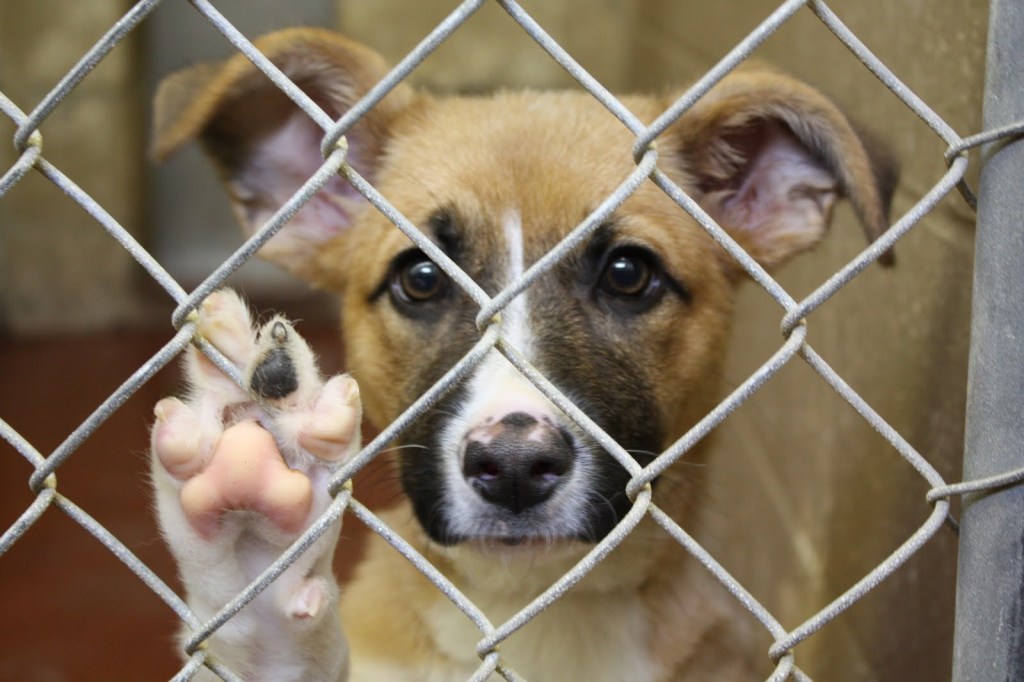
By adopting from a shelter, you are providing an animal with the second chance they deserve. Many have been rescued from horrific circumstances such as cruelty, neglect and abandonment, or quite simply their owners were no longer able to look after them due to illness or a change in situation.
Before and after: these pictures were taken two months apart
Shelter staff work tirelessly to nurse animals back to health, rehabilitate disturbed animals and do everything they possibly can to ensure they are prepared to go to a new home. Sadly, not all of them are as fortunate. Some shelters have to euthanise due to lack of space, meaning many healthy animals lose their lives. By rehoming a pet you can give an animal that has been abandoned through no fault of their own a loving, stable home, and help to stop overpopulation.
2. You will save money
Shelters often microchip, spay, neuter and vaccinate the animals that come into their care. This saves you a lot of money because you don’t have to pay for the procedures yourself and it ensures the pet you are taking home is healthy. Also, the prices of adopting a pet from a shelter are often a lot lower than the rates charged by breeders.
3. Can help to eradicate puppy farms.
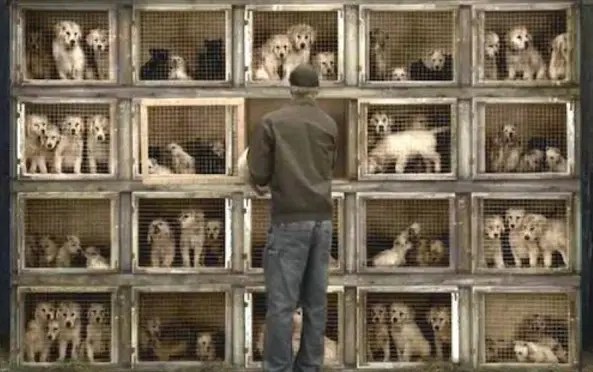
A puppy farm, or mill, is the illegal practice of breeding puppies for the sole purpose of maximising profit, without any regard to the dogs’ health or wellbeing. Dogs at puppy farms are forced to breed several times to their detriment and they are often kept in terrible conditions without basic necessities.
Bred Relentlessly For Profit
People who run such places are not concerned with producing healthy dogs, so they can be born with severe problems that emerge over time. The dogs usually don’t receive any veterinary care, and will often be destroyed once they can no longer reproduce. Additionally, dogs at pet shops are often products of puppy farms. Adopting from a shelter aids in stopping dogs from being subjected to such horrific circumstances, because rather than funding this illegal trade you will be rehoming a pet from somewhere reputable that supports animal welfare.
4. Can improve your health and make you happier
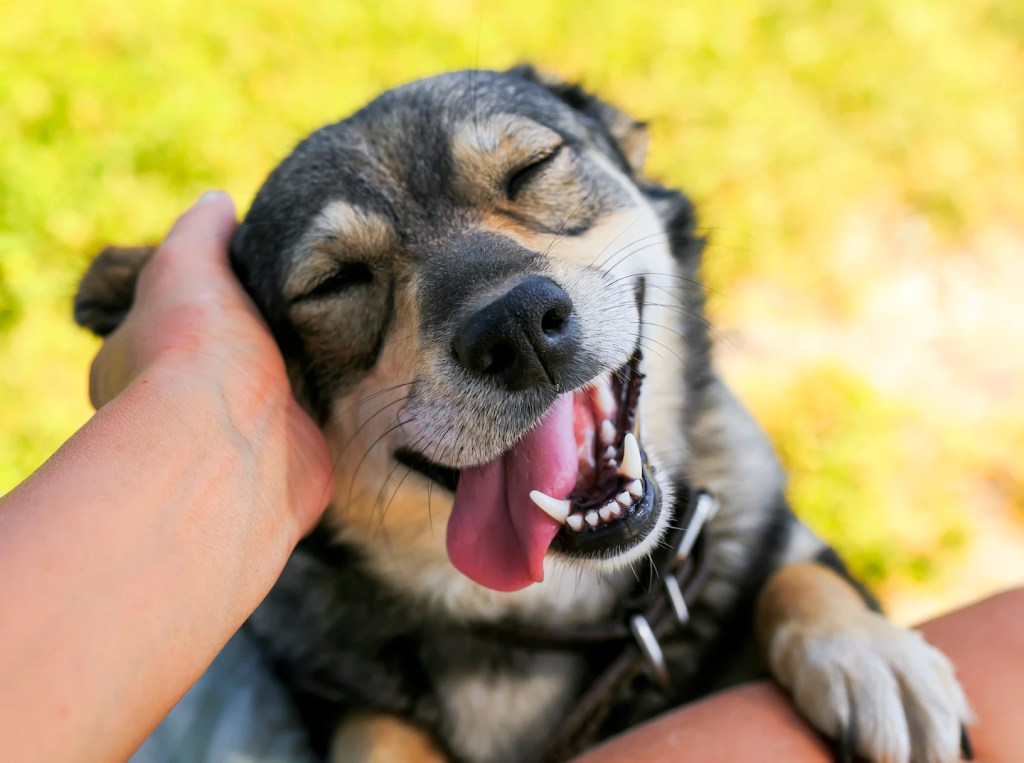
Various studies have shown that a having pet can elongate your life, whilst improving your overall happiness and health. It also helps people with depression, stress, anxiety and many other ailments. The affectionate and loyal nature of dogs as pack animals that form close relationships with their owners can help sufferers of depression, who may feel like they don’t have anybody else.
Stroking your pet can reduce your blood pressure and stress levels, and playing with them can increase the levels of serotonin and dopamine your body produces, making you feel calm and relaxed. Walking the pet is a way to exercise and provides sufferers of anxiety and depression with a reason to leave the house. It also creates opportunities for socialising with other dog walkers. The animal you have helped through rehoming can help you.
5. Can benefit children
Children can be taught valuable life skills through pet ownership, such as the importance of maintaining responsibilities. Rehoming a pet will also encourage empathy by making them think about how they have helped to give an unwanted animal a loving home. Pets can help children with separation anxiety and provide them with security, as they can be safe in the knowledge that someone will always be there. As well as this, they can be a loving companion and playmate.
6. Many of the animals are housetrained
Animals at shelters have often been housetrained in their previous home, particularly if they are older. This saves you a lot of time and extra effort when training your new pet where to go to the toilet.
7. Unconditional love
A pet is a companion that will never judge you, will love you regardless of whatever happens and will always be there. As well as making you feel great, their unconditional love raises your self-esteem because of the affection they show you. It is said that animals know when they have been rescued, so the bond between you and your rehomed pet will be especially strong.
8. You could get a pet you never expected
Although you may have an idea of what you are looking for, there are a wide variety of animals waiting to be adopted from shelters. This may mean an animal you would never have imagined could turn out to be the best match for you. Therefore, it is always important to have an open mind when visiting shelters.
9. Older animals can prove to be the best companions
Many people want to adopt puppies and kittens without considering the advantages of having an older pet. If trained in their previous home they will be less likely to destroy furniture than a younger pet, and as such, will probably require less supervision. Older pets are often calmer and quite happy to sit in your company rather than demanding constant attention. They also have more developed personalities than puppies or kittens, so it may be more apparent when visiting them at the shelter whether or not you are suited.
10. Adopting supports spaying and neutering
Spaying and neutering animals is important in controlling the animal population. Many pets that aren’t spayed or neutered often contribute to the problem of unwanted animals, which can lead to more being left at shelters. Adopting an animal from a shelter means that your new pet has been spayed or neutered where possible.
Please help us continue to support animal rescues by donating any amount, large or small. Your donations make our work possible.
And please remember…
…the cost of changing a rescue animal’s life forever is – PRICELESS!
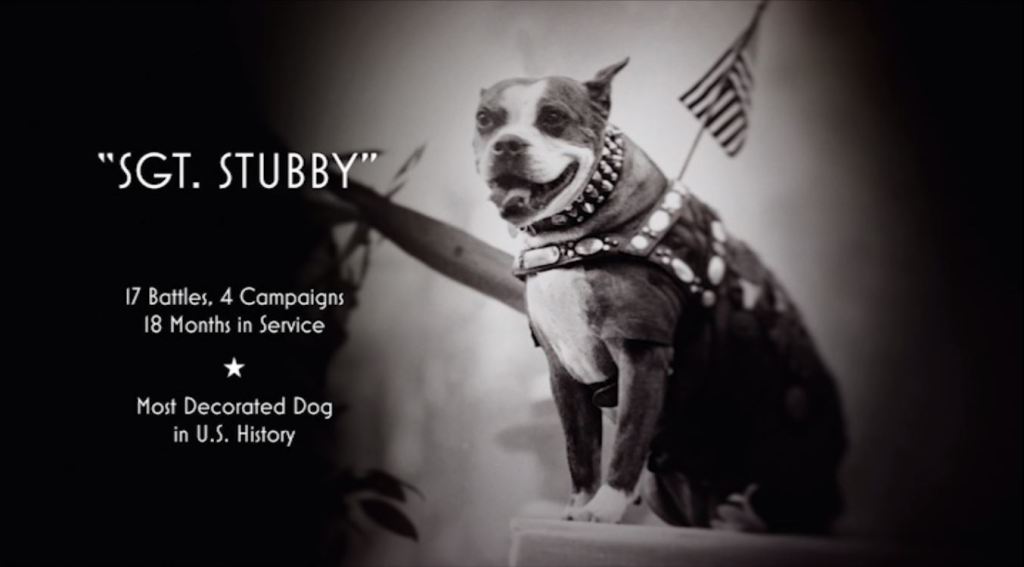
America’s first war dog, Stubby, served 18 months ‘over there’ and participated in seventeen battles on the Western Front. He saved his regiment from surprise mustard gas attacks, located and comforted the wounded, and even once caught a German spy by the seat of his pants. Back home his exploits were front page news of every major newspaper.
Stubby was a bull terrier – broadly speaking, very broadly! No one ever discovered where he hailed from originally. One day he just appeared, when a bunch of soldiers were training at Yale Field in New Haven, Ct; he trotted in and out among the ranks as they drilled, stopping to make a friend here and a friend there, until pretty soon he was on chummy terms with the whole bunch.
One soldier though, in particular, developed a fondest for the dog, a Corporal Robert Conroy, who when it became time for the outfit to ship out, hid Stubby on board the troop ship.
So stowaway Stubby sailed for France, after that Cpl. Conroy became his accepted master, even though he was still on chummy terms with everyone else in the outfit; and in the same spirit of camaraderie that had marked his initial overtures at Yale.
It was at Chemin des Dames that Stubby saw his first action, and it was there that the boys discovered he was a war dog par excellence. The boom of artillery fire didn’t faze him in least, and he soon learned to follow the men’s example of ducking when the big ones started falling close. Naturally he didn’t know why he was ducking, but it became a great game to see who could hit the dugout first. After a few days, Stubby won every time. He could hear the whine of shells long before the men. It got so they’d watch him!
Stand Easy Sgt. Stubby
Then one night Stubby made doggy history. It was an unusually quiet night in the trenches. Some of the boys were catching cat naps in muddy dugouts, and Stubby was stretched out beside Conroy. Suddenly his big blunt head snapped up and his ears pricked alert. The movement woke Conroy, who looked at the dog sleepily just in time to see him sniff the air tentatively, utter a low growl, then spring to his feet, and go bounding from the dugout, around a corner out of sight.
A few seconds later there was a sharp cry of pain and then the sound of a great scuffle outside. Conroy jumped from his bed, grabbed his rifle and went tearing out towards the direction of the noise.
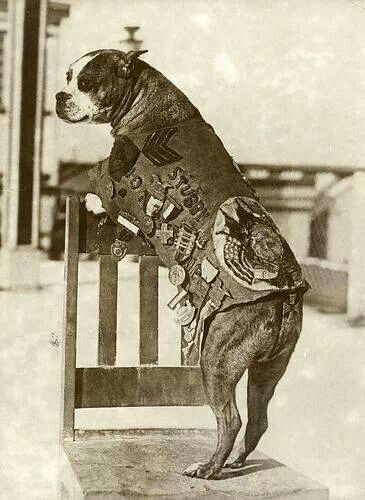
The Highly Decorated Sgt. Stubby
A ludicrous sight met his eyes. Single-pawed, in a vigorous offensive from the rear, Stubby had captured a German spy, who’d been prowling through the trenches. The man was whirling desperately in an effort to shake off the snarling bundle of canine tooth and muscle that had attached itself to his differential. But Stubby was there to stay.
It took only a few moments to capture the Hun and disarm him, but it required considerably more time to convince Stubby that his mission had been successfully carried out and that he should now release the beautiful hold he had on that nice, soft German bottom.
By the end of the war, Stubby was known not only to every regiment, division, and army, but to the whole AEF. Honors by the bale were heaped on his muscled shoulders. At Mandres en Bassigny he was introduced to President Woodrow Wilson, who “shook hands” with him. Medal and emblemed jackets were bestowed upon him for each deed of valor, plus a wound stripe for his grenade splinter. Not to be left out, the Marines even made him an honorary sergeant.
After the Armistice was signed, Stubby returned home with Conroy and his popularity seemed to grow even more. He became a nationally acclaimed hero, and eventually was received by presidents Harding and Coolidge. Even General John “Black Jack” Pershing, who commanded the American Expeditionary Forces during the war, presented Stubby with a gold medal made by the Humane Society and declared him to be a “hero of the highest caliber.”
Stubby toured the country by invitation and probably led more parades than any other dog in American history; he was also promoted to honorary sergeant by the Legion, becoming the highest ranking dog to ever serve in the Army.
He was even made an honorary member of the American Red Cross, the American Legion and the YMCA, which issued him a lifetime membership card good for “three bones a day and a place to sleep.” Afterwards, Stubby became Georgetown University’s mascot. In 1921, Stubby’s owner, Robert Conroy was headed to Georgetown for law school and took the dog along. According to a 1983 account in Georgetown Magazine, Stubby “served several terms as mascot to the football team.” Between the halves, Stubby would nudge a football around the field, much to the delight of the crowd.
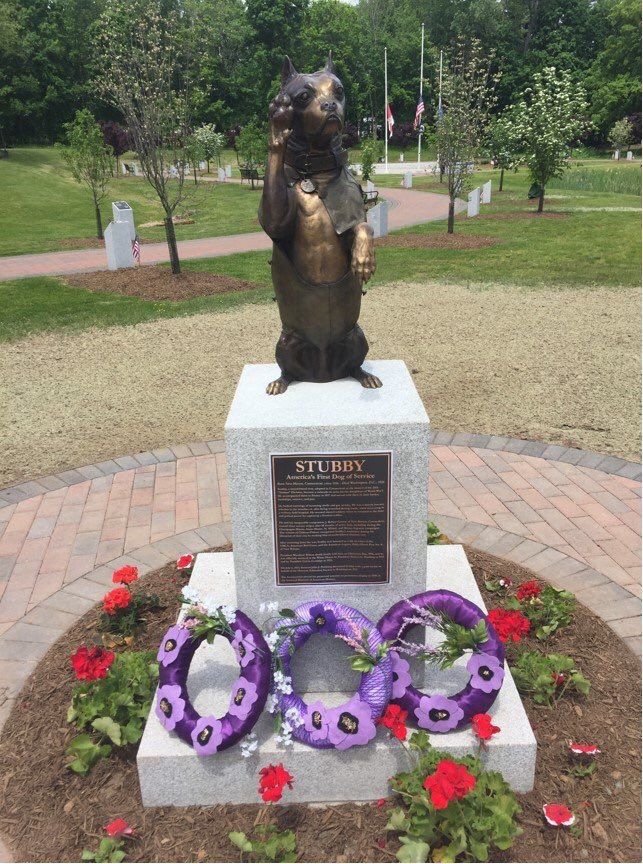
A FITTING TRIBUTE TO A HERO
Old age finally caught up with the small warrior on April 4th, 1926, as he took ill and died in Conroy’s arms.
It’s said, that Stubby and a few of his friends were instrumental in inspiring the creation of the United States ‘K-9 Corps’ just in time for World War ll.
ACTOR, COMEDIAN AND ANIMAL RIGHTS ACTIVIST RICKY GERVAIS
Cruelty to animals, also called animal abuse, animal neglect or animal cruelty, is the infliction by omission (neglect) or by commission by humans of suffering or harm upon any animal. More narrowly, it can be the causing of harm or suffering for specific achievement, such as killing animals for entertainment; cruelty to animals sometimes encompasses inflicting harm or suffering as an end in itself, defined as zoosadism.
Animal cruelty can be broken down into two main categories: active and passive. Passive cruelty is typified by cases of neglect, in which the cruelty is a lack of action rather than the action itself. Oftentimes passive animal cruelty is accidental, born of ignorance. In many cases of neglect in which an investigator believes that the cruelty occurred out of ignorance, the investigator may attempt to educate the pet owner, then revisit the situation. In more severe cases, exigent circumstances may require that the animal be removed for veterinary care.
Whether it is Elephants killed for their tusks or beaten so they comply in the Asian tourism ‘industry’, Rhino slaughtered for their horns for ‘traditional Chinese medicine (TCM), animals skinned alive for the fur trade etc, animal activists need to stand together to fight for their rights.
At many elephant ‘sanctuaries’ across Thailand and in other countries, the elephants are taught to fear humans. This is so that they will act with compliancy. From babies they are tied up, starved and beaten in what is known as a ‘crush’. This is the act of breaking a young elephant’s spirit. And it’s mostly true what they say: an elephant never forgets. This means that, with their long memories, elephants remember this period of abuse for the rest of their lives. It ensures that the elephants will do what the trainers (also known as mahouts) say, and are more easily trained.
They are also commonly beaten with hooks and sticks that have nails poking out of them – this is when they are seen to be misbehaving or not following orders, or being too slow to respond. The mahouts want the animals to be constantly putting on a performance for those tourists who are there for elephant riding in Thailand.
UNDERCOVER FOOTAGE SHOWS CRUEL TRAINING USED ON BABY ELEPHANTS TO BOOST THAILAND TOURISM
As poaching and habitat loss ravage rhinoceros and elephant populations, protections for these species are vitally important. Today, all five rhino species and both elephant species are threatened with extinction. Efforts are underway across the globe to save these iconic animals.
Elephants and rhinos often experience painful deaths when poached. Rhinos may have their horns cut off while they are still alive and contrary to belief, elephants do not lose their tusks; they are hacked out by poachers.
More than a thousand rhinos and tens of thousands of elephants are killed each year to feed demand for ivory and rhino horn. The international trade in elephants, rhinos, and other species is the second-largest threat to wildlife after habitat loss. If the market continues to drive poaching, both rhinos and elephants could vanish from the wild as early as 2034.
HORRIFIC IMAGES OF ELEPHANTS POACHED FOR THEIR TUSKS AND A RHINO FOR ITS HORN
Every year, hundreds of badgers meet a horrific death in the name of ‘sport’ in the UK at the hands of terriermen. Many of those who have been caught digging into badger setts have used the excuse that they were after foxes – and many have escaped prosecution by so doing.
More than 10,000 are caught, tortured and killed in the UK each year by huntsmen with terriers – with almost a third of these illegal acts being carried out in Wales. Alarmingly, this figure is rising constantly. Terry Spamer, a former RSPCA inspector, believes that there are around 2,000 people involved in badger baiting currently. However, only around three people are caught and convicted of badger baiting each year, while the majority carry on breaking the law.
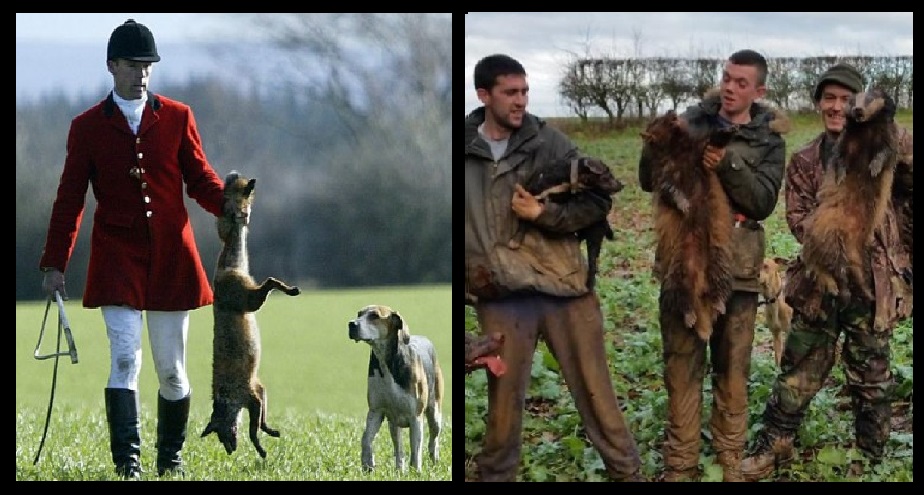
Traditional fox hunting was banned in England and Wales under the Hunting Act 2004. In spite of existing legislation, there has been 500 successful prosecutions under the Act. However, many incidents of illegal hunting have gone unpunished.
FOX HUNTING AND BADGER BAITING IS ILLEGAL IN THE UK BUT CARRIES ON WITH WITH APPARENT IMPUNITY
Dogfighting is an inhumane ‘bloodsport’ where dogs who have been bred, conditioned and trained to fight are placed in a pit to fight each other for spectator ‘entertainment’ and profit. Fights average one to two hours, ending when one of the dogs cannot continue.
Dog fights usually take part in quiet, private locations, such as in an industrial unit or farm building. Participants will spend months training their dogs in preparation, much like boxing, the fighters will have to hit a target weight to take part. Organisers will create a fighting ‘pit’ for the dogs to fight within.
Dogs who have been used in fighting often have serious injuries to their head, ears, front legs and chest that are caused as they go head-to-head in a pit. They will also have injuries of different ages, some old scars and some fresh wounds.
IT IS BELIEVED OVER 16000 DOGS DIE EACH YEAR IN ORGANIZED DOG FIGHTS
Each year, thousands of bulls are barbarically slaughtered in bullrings around the world. Over the centuries, bullfighters have found countless ways to rig the “fight” in their favor. Bulls are often weakened with drugs or by having sandbags dropped on their backs. Their horns have been shaved to keep them off balance, or petroleum jelly has been rubbed into their eyes to impair their vision.
Every year, approximately 250,000 bulls are killed in bullfights. Bullfighting is already banned by law in many countries including Argentina, Canada, Cuba, Denmark, Italy and the United Kingdom. Although legal in Spain, some Spanish cities, such as Calonge, Tossa de Mar, Vilamacolum and La Vajol, have outlawed the practice of bullfighting. There are only a few countries throughout the world where this practice still takes place (Spain, France, Portugal, Mexico, Colombia, Venezuela, Peru, and Ecuador). ~ HSI.
BULLS ARE TORTURED IN THE NAME OF CULTURE AND TRADITION
Each year from approximately September 1 to March 1, a large-scale hunt of dolphins takes place in the small village of Taiji, Japan, as featured in the 2010 Academy Award-winning documentary The Cove. During this six month season, dolphin hunters utilize drive hunt techniques to herd large numbers of dolphins to shore, resulting in their capture or death.
The captured dolphins may be selected for live trade to aquariums and marine parks for display, while others are slaughtered for their meat. The price for live captures is many times higher than those killed.
THE ANNUAL TAIJI DOLPHIN SLAUGHTER
What you can do to help animals in need:
Support ‘Protect All Wildlife’ by donating as little as £1 – It only takes a minute but it can last a lifetime for an animal in need. Thank you.
We believe EVERY animal should be treated with respect, empathy, and understanding. We raise awareness to protect and conserve wild, captive, companion and farm animals. It is vital that we protect animals against acts of cruelty, abuse, and neglect by enforcing established animal welfare laws and, when necessary, take action to ensure that those who abuse animals are brought to justice.
Protect All Wildlife are involved in many projects to protect animals’ rights, welfare, and habitats. Money contributed to Protect All Wildlife supports ALL of our worthy programmes and gives us the flexibility to respond to emerging needs. Your donations make our work possible. Thank you for your support.
“Animals are not here for us to do as we please with. We are not their superiors. We are their equals. We are their family. Be kind to them.” ~ Ricky Gervais.
Cruelty to animals, also called animal abuse, animal neglect or animal cruelty, is the infliction by omission (neglect) or by commission by humans of suffering or harm upon any animal. More narrowly, it can be the causing of harm or suffering for specific achievement, such as killing animals for entertainment; cruelty to animals sometimes encompasses inflicting harm or suffering as an end in itself, defined as zoosadism.
Animal cruelty can be broken down into two main categories: active and passive. Passive cruelty is typified by cases of neglect, in which the cruelty is a lack of action rather than the action itself. Oftentimes passive animal cruelty is accidental, born of ignorance. In many cases of neglect in which an investigator believes that the cruelty occurred out of ignorance, the investigator may attempt to educate the pet owner, then revisit the situation. In more severe cases, exigent circumstances may require that the animal be removed for veterinary care.
Whether it is Elephants killed for their tusks or beaten so they comply in the Asian tourism ‘industry’, Rhino slaughtered for their horns for ‘traditional Chinese medicine (TCM), animals skinned alive for the fur trade etc, animal activists need to stand together to fight for their rights.
At many elephant ‘sanctuaries’ across Thailand and in other countries, the elephants are taught to fear humans. This is so that they will act with compliancy. From babies they are tied up, starved and beaten in what is known as a ‘crush’. This is the act of breaking a young elephant’s spirit. And it’s mostly true what they say: an elephant never forgets. This means that, with their long memories, elephants remember this period of abuse for the rest of their lives. It ensures that the elephants will do what the trainers (also known as mahouts) say, and are more easily trained.
They are also commonly beaten with hooks and sticks that have nails poking out of them – this is when they are seen to be misbehaving or not following orders, or being too slow to respond. The mahouts want the animals to be constantly putting on a performance for those tourists who are there for elephant riding in Thailand.
UNDERCOVER FOOTAGE SHOWS CRUEL TRAINING USED ON BABY ELEPHANTS TO BOOST THAILAND TOURISM
As poaching and habitat loss ravage rhinoceros and elephant populations, protections for these species are vitally important. Today, all five rhino species and both elephant species are threatened with extinction. Efforts are underway across the globe to save these iconic animals.
Elephants and rhinos often experience painful deaths when poached. Rhinos may have their horns cut off while they are still alive and contrary to belief, elephants do not lose their tusks; they are hacked out by poachers.
More than a thousand rhinos and tens of thousands of elephants are killed each year to feed demand for ivory and rhino horn. The international trade in elephants, rhinos, and other species is the second-largest threat to wildlife after habitat loss. If the market continues to drive poaching, both rhinos and elephants could vanish from the wild as early as 2034.
HORRIFIC IMAGES OF ELEPHANTS POACHED FOR THEIR TUSKS AND A RHINO FOR ITS HORN
Every year, hundreds of badgers meet a horrific death in the name of ‘sport’ in the UK at the hands of terriermen. Many of those who have been caught digging into badger setts have used the excuse that they were after foxes – and many have escaped prosecution by so doing.
The Lychee and Dog Meat Festival, commonly referred to as the Yulin Dog Meat Festival is an annual event starting on 20th of June where an estimated 10,000 – 15,000 dogs and cats are slaughtered for their meat.
The ‘festival’ began in 2010 to celebrate summer solstice. Advocates and restaurant owners say that eating dog is traditional in the summertime. Around 10-20 million dogs are killed for their meat each year in China. However, critics argue there is no cultural value in the festival and it was mainly devised as a way of making money.
While slaughtering dogs is common in China, the festival is seen as representative of the cruelty and lack of hygiene associated with the largely unregulated industry. In addition, many of the animals killed are stolen pets some of which have been seen still wearing their collars.
Some are sent to the festival in small cages without food or water on trucks that can travel hundreds of miles.
Slaughtering takes place in front of the live animals, usually with a club or with a blow-torch to induce the pain and fear that some restaurant owners claim makes their adrenaline-rich meat tastier.
“Psychologically and mentally, they have already died many times,” said Peter Li, a China policy specialist with the Humane Society International.
DOGS ARE TORTURED TO DEATH IN THE BELIEF THAT IT MAKES THE MEAT TASTIER
Trophy hunters pay large sums of money, often tens of thousands of dollars, to travel around the world to kill wild animals. Who can forget the killing of Cecil the Lion in 2015 in Zimbabwe? He was hunted over many hours with a bow and arrow, before being skinned and beheaded by Dentist Walter Palmer.
More often than not animals in their prime and in breeding age are targeted by trophy hunting because of their specific characteristics; their black mane, their long tusks, the size of their antlers, in fact Safari Club International offers prizes for the largest animals killed. Where older males are targeted this can have extreme negative consequences for the herd or pride; older males offer protection to groups and keep juvenile males in line, when they are killed less experienced animals move in, increasing the risk of human wildlife conflict and killing the cubs of the older male. When the elephants with the largest tusks are killed, we have seen the size of elephant tusks in the population decrease over time, making it harder to find food and defend themselves.
CECIL THE LION WAS SHOT BY DENTIST WALTER PALMER IN JULY 2015 AND CAUSED INTERNATIONAL OUTRAGE
More than 10,000 are caught, tortured and killed in the UK each year by huntsmen with terriers – with almost a third of these illegal acts being carried out in Wales. Alarmingly, this figure is rising constantly. Terry Spamer, a former RSPCA inspector, believes that there are around 2,000 people involved in badger baiting currently. However, only around three people are caught and convicted of badger baiting each year, while the majority carry on breaking the law.
Traditional fox hunting was banned in England and Wales under the Hunting Act 2004. In spite of existing legislation, there has been 500 successful prosecutions under the Act. However, many incidents of illegal hunting have gone unpunished.
FOX HUNTING AND BADGER BAITING IS ILLEGAL IN THE UK BUT CARRIES ON WITH WITH APPARENT IMPUNITY
Dogfighting is an inhumane ‘bloodsport’ where dogs who have been bred, conditioned and trained to fight are placed in a pit to fight each other for spectator ‘entertainment’ and profit. Fights average one to two hours, ending when one of the dogs cannot continue.
Dog fights usually take part in quiet, private locations, such as in an industrial unit or farm building. Participants will spend months training their dogs in preparation, much like boxing, the fighters will have to hit a target weight to take part. Organisers will create a fighting ‘pit’ for the dogs to fight within.
Dogs who have been used in fighting often have serious injuries to their head, ears, front legs and chest that are caused as they go head-to-head in a pit. They will also have injuries of different ages, some old scars and some fresh wounds.
IT IS BELIEVED OVER 16000 DOGS DIE EACH YEAR IN ORGANIZED DOG FIGHTS
Each year, thousands of bulls are barbarically slaughtered in bullrings around the world. Over the centuries, bullfighters have found countless ways to rig the “fight” in their favor. Bulls are often weakened with drugs or by having sandbags dropped on their backs. Their horns have been shaved to keep them off balance, or petroleum jelly has been rubbed into their eyes to impair their vision.
Every year, approximately 250,000 bulls are killed in bullfights. Bullfighting is already banned by law in many countries including Argentina, Canada, Cuba, Denmark, Italy and the United Kingdom. Although legal in Spain, some Spanish cities, such as Calonge, Tossa de Mar, Vilamacolum and La Vajol, have outlawed the practice of bullfighting. There are only a few countries throughout the world where this practice still takes place (Spain, France, Portugal, Mexico, Colombia, Venezuela, Peru, and Ecuador). ~ HSI.
BULLS ARE TORTURED IN THE NAME OF CULTURE AND TRADITION
Each year from approximately September 1 to March 1, a large-scale hunt of dolphins takes place in the small village of Taiji, Japan, as featured in the 2010 Academy Award-winning documentary The Cove. During this six month season, dolphin hunters utilize drive hunt techniques to herd large numbers of dolphins to shore, resulting in their capture or death.
The captured dolphins may be selected for live trade to aquariums and marine parks for display, while others are slaughtered for their meat. The price for live captures is many times higher than those killed.
THE ANNUAL TAIJI DOLPHIN SLAUGHTER
What you can do to help end animal abuse
We believe EVERY animal should be treated with respect, empathy, and understanding. We raise awareness to protect and conserve wild, captive, companion and farm animals.
It is vital that we protect animals against acts of cruelty, abuse, and neglect by enforcing established animal welfare laws and, when necessary, taking action to ensure that those who abuse animals are brought to justice.
The Mission of Protect All Wildlife is to prevent cruelty, promote the welfare of ALL animals EVERYWHERE, and help END animal abuse.
Please support our work by donating ANY amount, large or small. It only takes a minute and your donations make it all possible. Thank you for your support.
What else you can do to help
Please SHARE to raise awareness to wildlife and environmental issues from around the world.
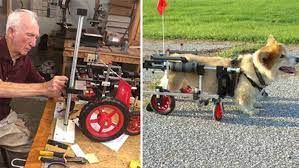
DR LINCOLN PARKES AND ONE OF THE DOGS HE HAS HELPED MOBILISE
Dr. Lincoln Parkes has lived a long life and he’s dedicated much of that life to caring for animals in need.
Lincoln has worked as a veterinarian for many years and has helped countless animals when they needed it most.
Now, at 92, Lincoln is retired, but he’s chosen to spend his retirement doing what he loves most.
Even though Lincoln has hung up his white coat, his love and compassion for animals live on, and Lincoln is happy to be able to spend his golden years focusing on his passion.
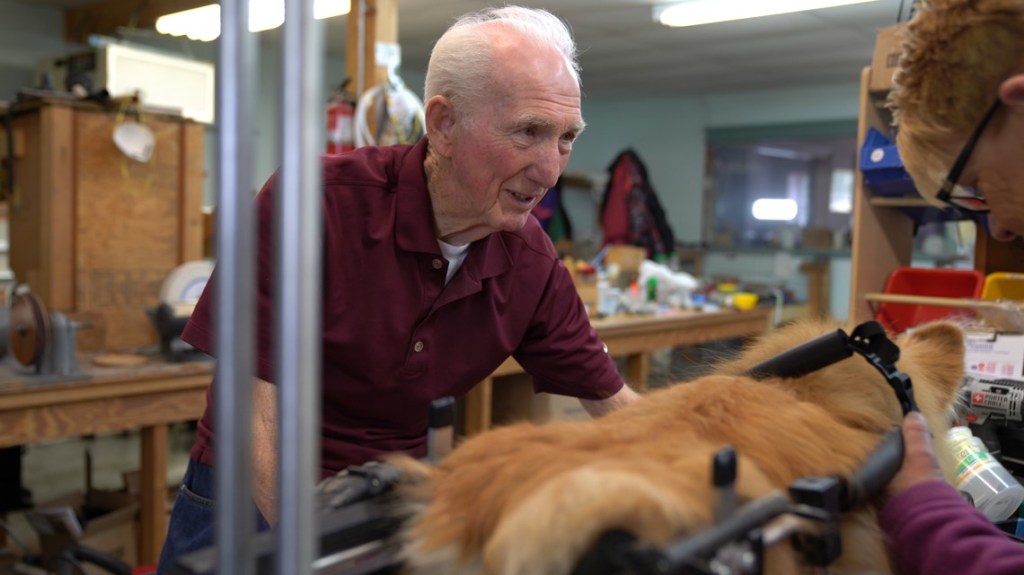
DR PARKES AND A PATIENT
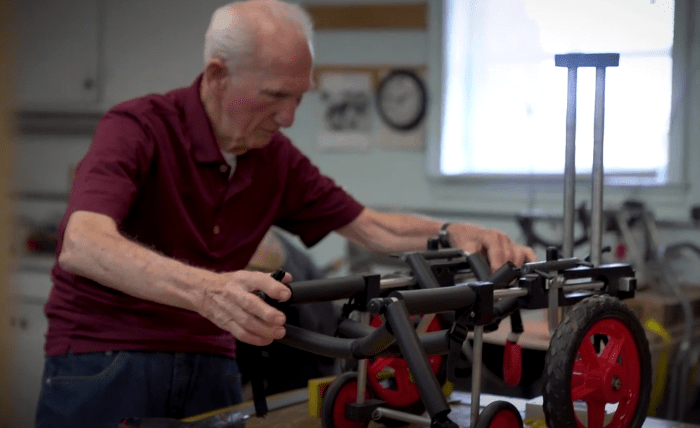
Lincoln has founded a company called K-9 Carts, which produces wheelchairs for disabled dogs.
Lincoln spends his days designing specially carts for animals in need, and nothing makes him happier than seeing a pup light up with happiness after being fitted with a new wheelchair.
Now that he’s retired, Lincoln can put all his time and energy into K-9 Carts, but he began producing doggy wheelchairs long before he entered retirement; Lincoln has been creating wheels for dogs in need ever since the 60’s!
DR PARKES MAKING A SET OF DOGGY WHEELS
It all started when a man came to him with a paralyzed pup.
The dog had been hit by a car and had been left paralyzed from the waist down and was unable to walk.
The distraught pet-dad didn’t know what to do and was considering euthanizing his furbaby.
The poor pup’s quality of life had dropped significantly and the pup was getting very difficult to care for
ONE OF THE DOGS THAT DR PARKES HAS HELPED IS FITTED WITH WHEELS
But Lincoln had an idea.
He built the paralyzed pup its own little cart and took the pup out for a test drive.
Lincoln and the pups pet-dad took the pup to a field and threw a frisbee.
They watched as the pup rushed after the frisbee, jumped, and caught the disc mid-air.
It was truly a lifechanging moment.
Lincoln’s cart had given the pup its life back, and Lincoln had found a new calling in life.
The rest is history.
Lincoln founded K-9 Carts and has been changing disabled pups’ lives ever since.
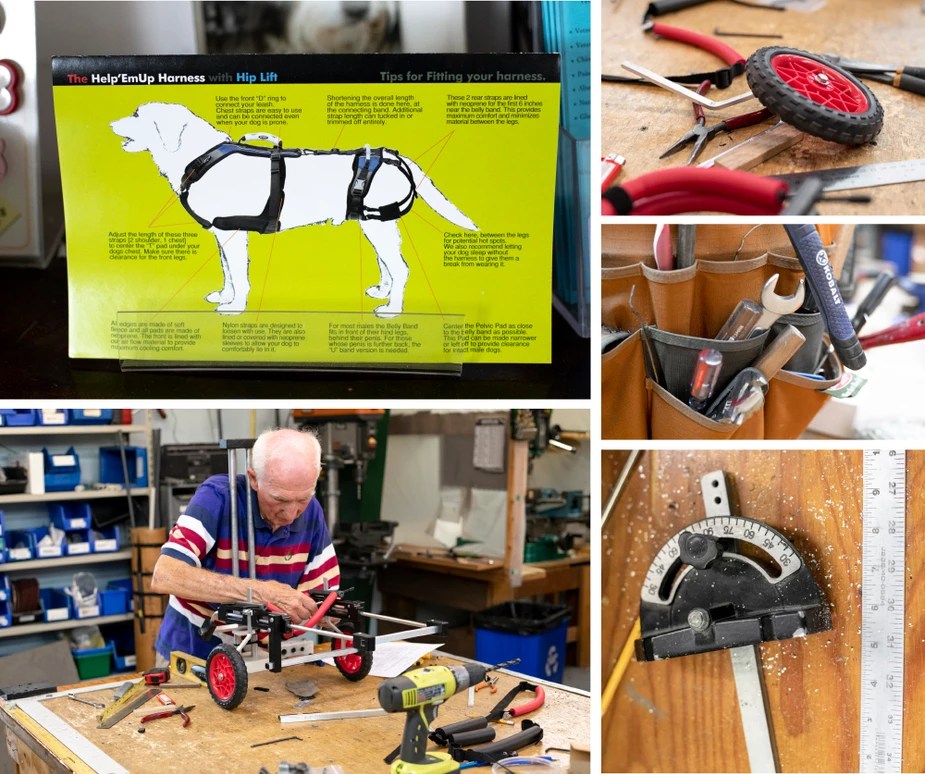
DR PARKES AND THE K-9 CART COMPANY
Lincoln’s custom makes every cart to make sure it suits each dog’s needs, and it’s obvious how much he cares for every little pup who crosses his path.
And even though he’s 92, he’s determined to keep on working and keep on saving lives.
Lincoln is an amazing man and a true inspiration.
He’s saved so many lives, both as a vet and thanks to his puppy wheelchairs, and we’re absolutely in awe of his compassion and dedication.
He’s been highly praised online and has restored many people’s faith in humanity.
A VARIETY OF DOGGY WHEELS
What you can do to help
Support Protect All Wildlife’s work by donating as little as £1 – it only takes a minute. Please donate ANY amount, large or small,at HELP PROTECT ALL WILDLIFE. Thank you.
What else you can do to help
Please SHARE to raise awareness to wildlife and environmental issues from around the world. You can also receive NEWS and UPDATES by signing up in the top right of this page.
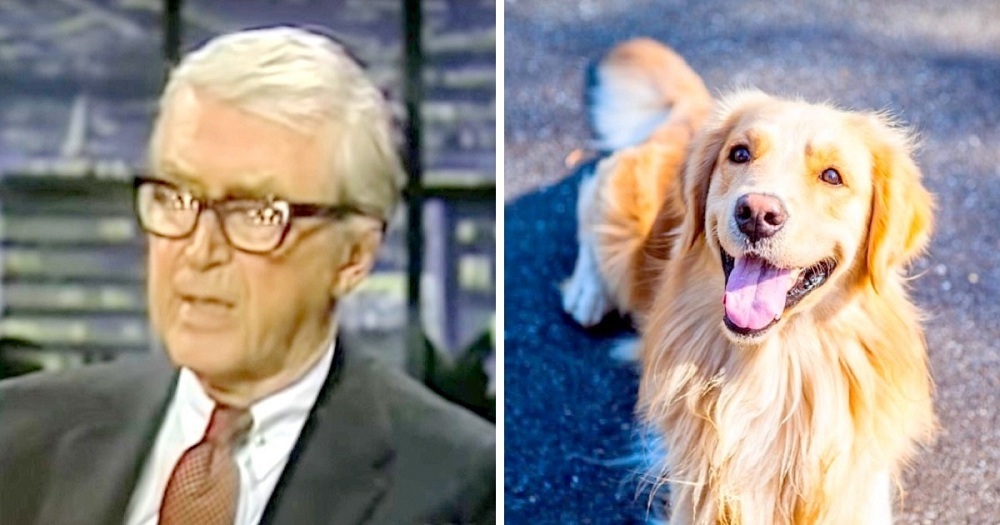
In 1981, renowned actor James ‘Jimmy’ Stewart read a poem about his beloved dog Beau which left talk-show host Johnny Carson in tears.
Jimmy Stewart And His Beloved Golden Retriever Beau
One of the most renowned actors in history, who enthralled us with classics such as “It’s a Wonderful Life,” “Rear Window,” and “Vertigo,” was Jimmy Stewart. He served in World War 2 and the Vietnam War before becoming a veteran of both conflicts. On an episode of “The Tonight Show Starring Johnny Carson” in 1981, we got to see a different side of Jimmy as he spoke at length about his deceased Golden Retriever named Beau.
Beau was a loved companion of Jimmy. The adorable dog would crawl into Jimmy’s bed and demand him to stroke his hair and pat his head. When Jimmy was filming in Arizona, he received a call informing him that Beau was dying terminally ill. He poured all of his sentiments for Beau into a poem entitled “I’ll Never Forget a Dog Named Beau,” which he recited on the Tonight Show with Johnny Carson. We’ll never forget this episode. It touched millions of hearts around the country and world!
You must keep up the volume as you listen to Jimmy deliver his compelling story on Beau. It’s a lovely tribute to his dog, in which he discusses all the wonderful times they spent together. Towards the end of the poem, when Jimmy described with accuracy the emptiness we feel after losing a beloved pet, we were sobbing uncontrollably. Thank you very much, Jimmy, for writing this beautiful and emotion-packed poem.
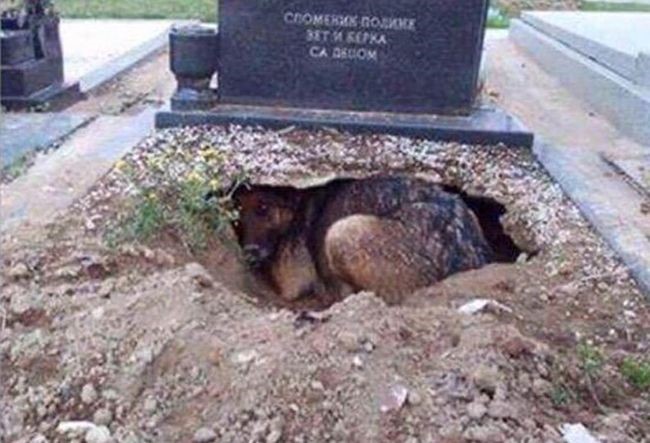
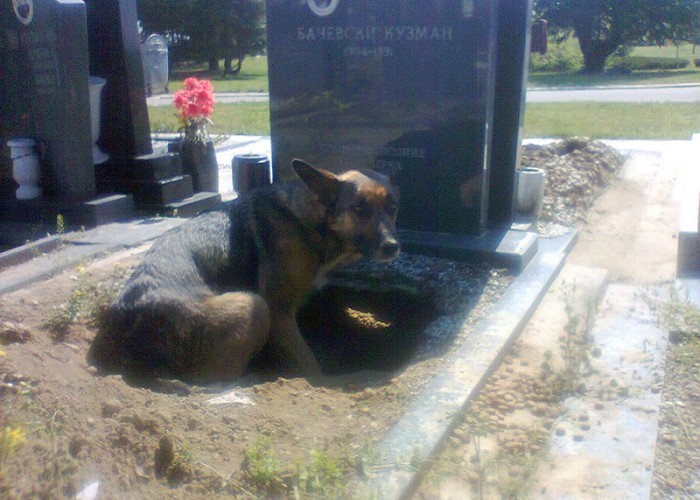
In 2015, a heart-breaking photo circulated online. It was a picture of a broken and exhausted German Shepherd sitting on top of a grave in Serbia. The internet came to the conclusion that the dog was trying to dig a hole to stay close to her late owner. However, this was far from the truth.
When the story was first reported, the public made the assumption that this animal was someone’s pet. Dogs are famous for their loyalty and they have been known as “man’s best friend” for centuries. The story was widely shared on social media sites, people were overcome with sympathy for the grieving animal.
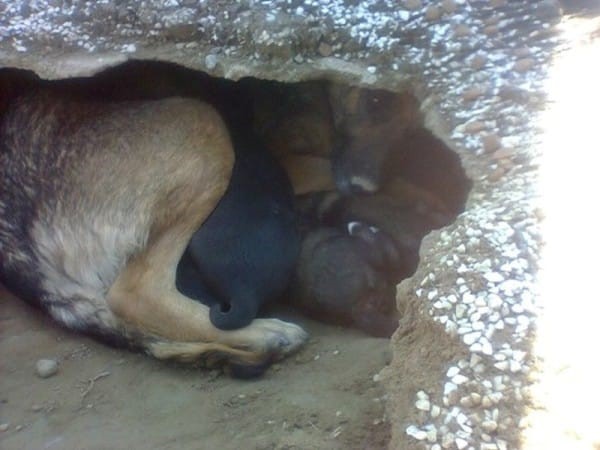
But the real truth behind the viral photo is something no one expected. These photographs were taken in Serbia by an amazing woman named Vesna Mihajloski who is an animal activist and rescuer. She was moved by what she saw but, as she spent more time watching the animal, she discovered that the dog was not attempting to dig any deeper. In fact, the dog appeared to be more concerned about something underneath the grave’s headstone.
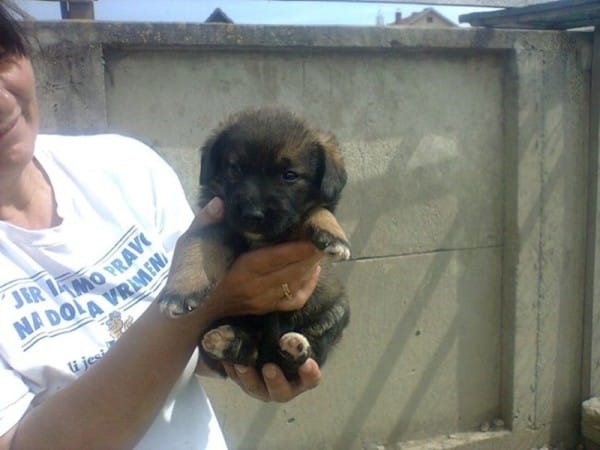
In the photos below, follow along the mother dog’s journey as she and her puppies receive the care they desperately needed. Slowly but surely, thanks to Vesna and the heroes who stepped in to save them, the courageous canine family began to regain their health, and the transformation is astounding. The puppies are growing into playful, energetic, and goofy pups!
With just a little bit of compassion and kindness, this mother and her babies will now live the lives they so deserve.
This is not a story of death, but of life.
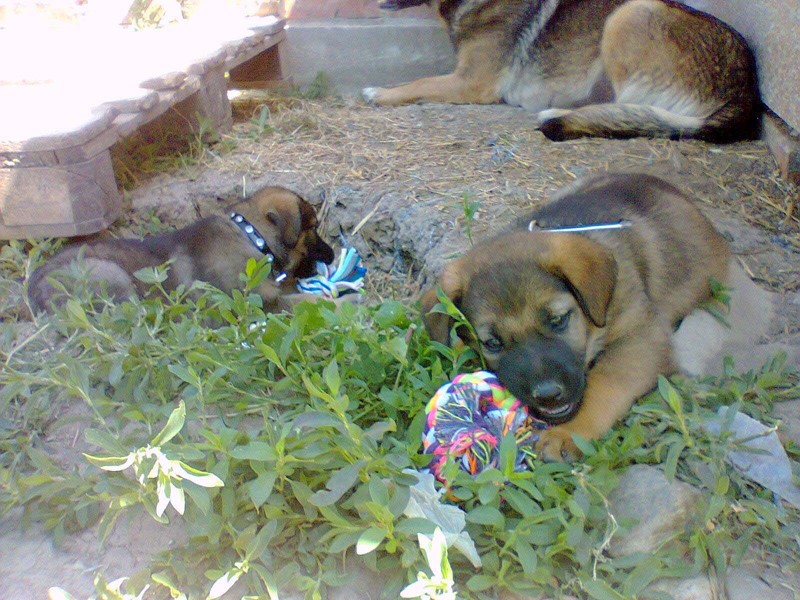
Animal rescuer Vesna Mihajloski realized this is a mother dog who dug a hole under the grave to create a warm and safe den for her four tiny puppies.
Vesna took the dogs home and immediately began caring for them. No longer were they forced to seek shelter in a graveyard.
Fortunately, the puppies were on their way to a full recovery!
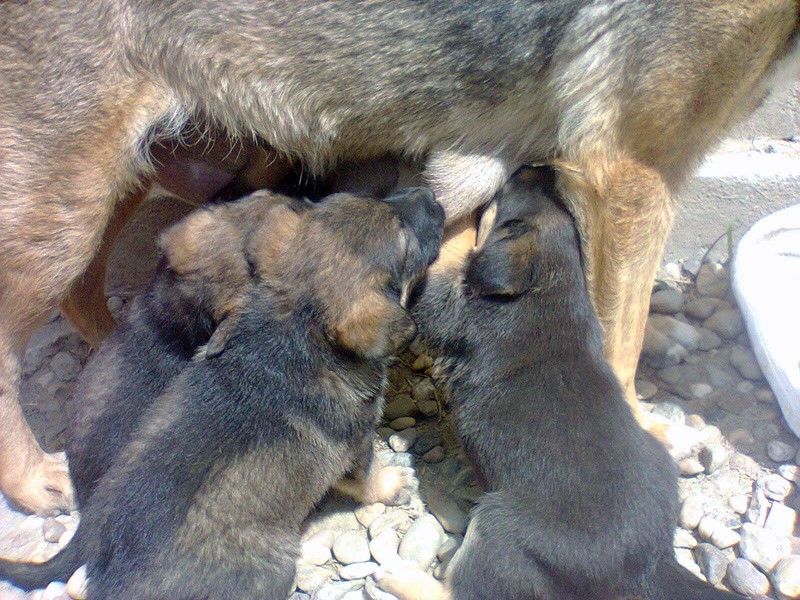
The canine family began to regain their health as they were fed and provided with medical care. Vesna put together a soft bed with a warm blanket, they would no longer have to hide in a hole in a graveyard. Vensa was so moved by how this new mother managed to care for her babies that she simply named her “Mama”.
It was clear to the team of rescuers that Mama took great care of her babies, and always made sure they were safe and warm. Mama never left her puppies’ side, but welcomed Vesna’s help.
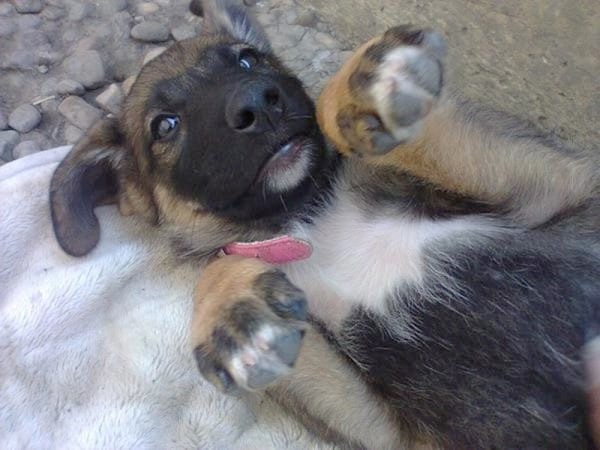
With just a little bit of compassion and kindness, this mother and her babies will now live the lives they so deserve. As you can see, the German Shepherd puppies are growing into playful, energetic, and goofy pups!
Mama couldn’t be happier or more grateful. No more graveyards, no more digging holes for her puppies — just love, care, and warmth.
The puppies quickly grew to love their safe home and gradually began venturing out to explore and play with their toys.
Thank God that what began as a seemingly tragic story ends with a sweet surprise.
Please SHARE this page to raise awareness about this issue and feel free to leave a comment below. You can also sign up for UPDATES & NEW ARTICLES by submitting your email details in the right-hand column. But most of all NEVER give up fighting for the future of wildlife! Thank You, Paul.
And remember – #ThereIsNoExcuseForAnimalAbuse – EVER!!
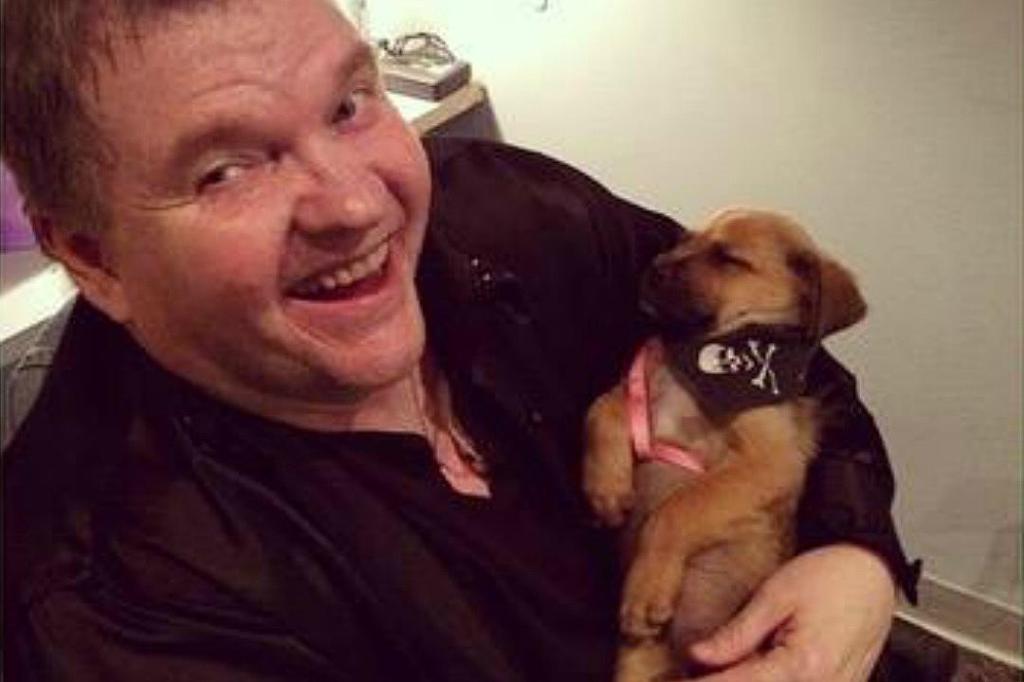
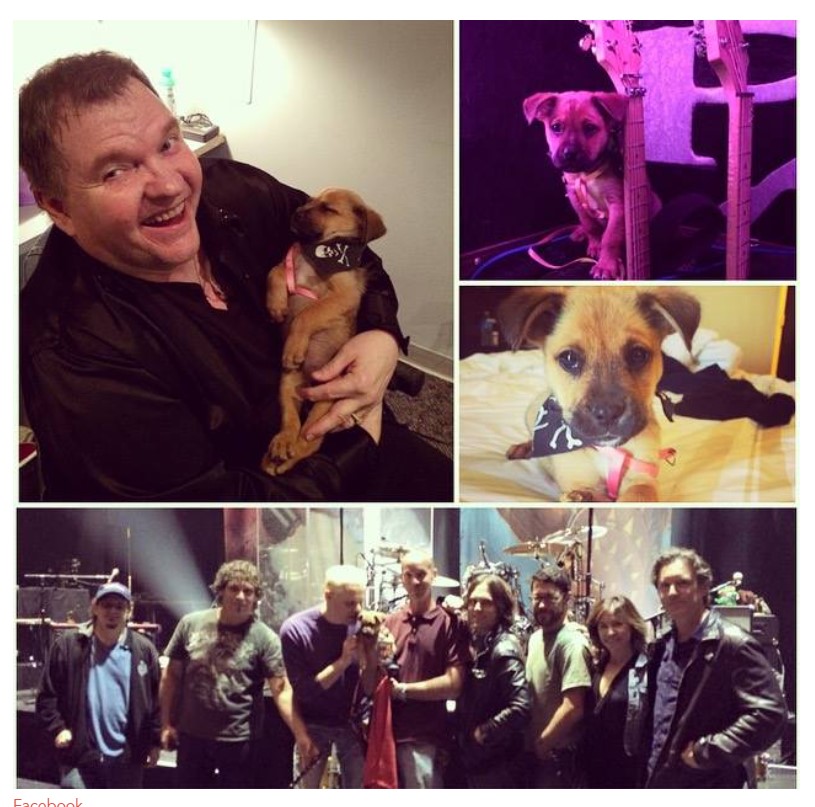
Many abandoned dogs are rescued every day and when rock star singer Meat Loaf was on tour, the crew one night noticed someone left a puppy behind a dumpster. They decided to rescue the puppy and proceeded to feed, cuddle and take her to the vet.
They posted on their Facebook page a picture of the puppy they rescued. The puppy joined the band on the road and they named her Little Ms. Karma. The puppy temporarily joined them on tour and adjusted well as the band took turns giving her lots of love.
Meat said in the post “Some of you already know that the other night after our rehearsal, our crew saw someone dumping this beautiful baby girl behind a dumpster. They scooped her up and after a couple days of Vet visits, sleeping, lots of cuddles and settling into life on the road, Little Ms Karma, left us last night to go to her new forever home. We’ll miss her but she’s on her way to her new momma and sisters and a big ole ranch to run around and we’re even more excited that she’s staying a part of the extended Meat Loaf family forever!!!
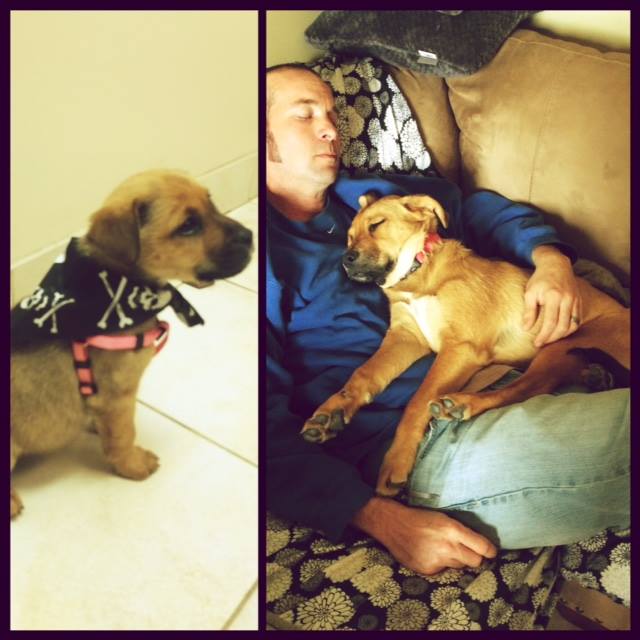
But life on the road is no place for a dog and eventually, a forever home was made with the family of one of the crew. So Little Ms Karma said goodbye to the band to join one member of her extended Meat Loaf family who lives on a ranch with his wife and daughters. Remembering Meat Loaf’s famous Grammy Award for Best Rock Solo Performance for “I’d Do Anything for Love” is truly reflected by the rescue.
Love is what makes us do things to have a little bit of heaven on earth. Love is also paying good karma forward and I think this is the main reason why Meat Loaf and his crew gave this sweet dog a whole lot of loving and a forever home.
Karma is much bigger now and has settled into her new life. She even has fans of her own!
Watch a video about Meat Loaf and Karma here:
Please share if you like this rescue story of love for Little Ms. Karma!
















 PROTECT ALL WILDLIFE