This is your chance to bid on signed pictures very kindly donated by Ricky Gervais in our ‘Charity Auction To Help Disabled Animals’.
This is a sealed bid auction, so all you need to do is decide which item you would like to bid for and send us your bid with the LOT NUMBER and name by email to protectallwildlife@btinternet.com by 21:00 on the 24th of August 2025. We will email you to let you know if your bid is the highest. Postage costs will be calculated when the auction ends. If you need any more information etc please email Paul at protectallwildlife@btinternet.com.
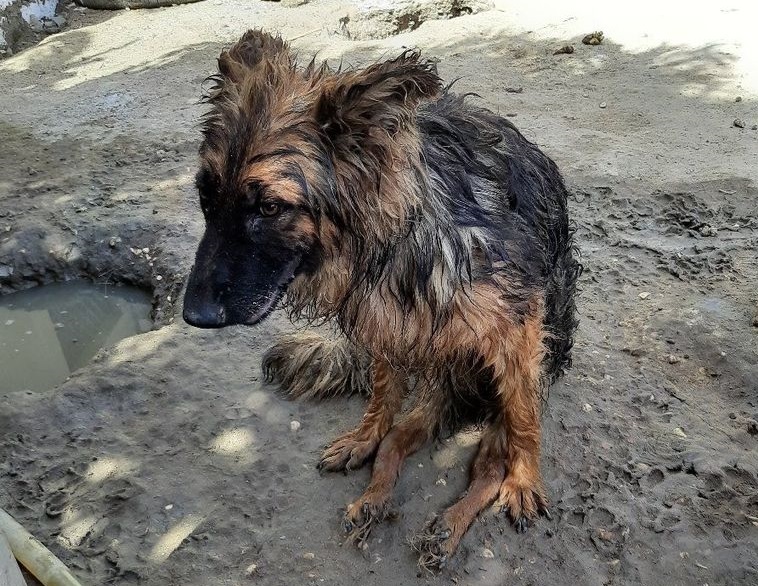
Lara was rescued from her nightmare ‘life’ in Egypt along with five other dogs.
“I may not be easy on the eyes right now, but I beg of you, please don’t pass me by.
I know my appearance may be unsettling, but beneath these scars lies a resilient spirit, yearning for a life filled with warmth and compassion. Together, we can defy the odds and create a future where my past no longer defines me.”
Lara now thanks to Miracle’s Mission
Your donation today is more than just a financial contribution—it is an act of empathy, an expression of love, and a beacon of hope. Your kindness will forever be etched in my heart, reminding me that there are still people who care.
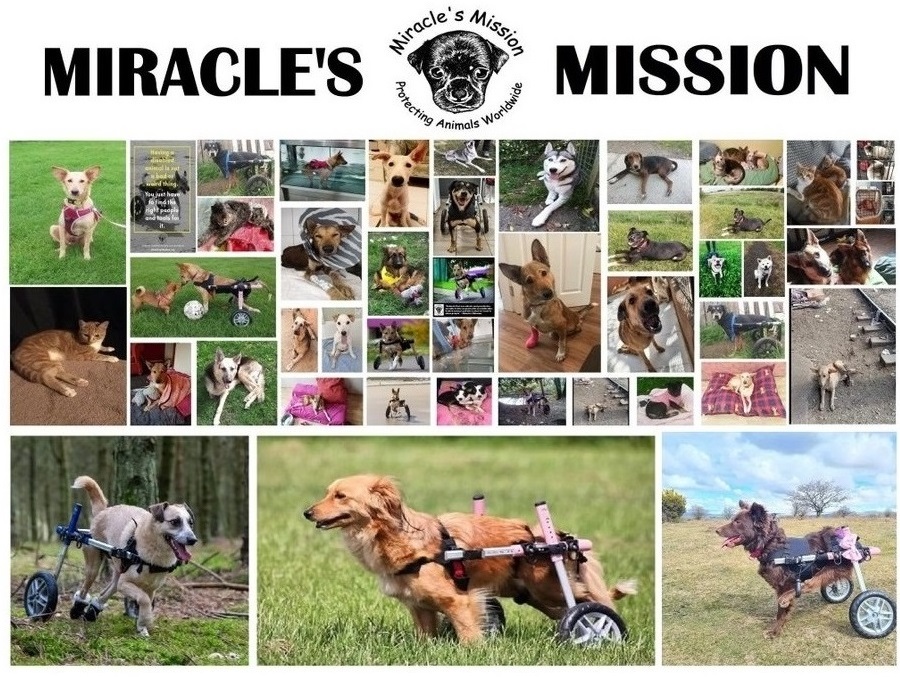
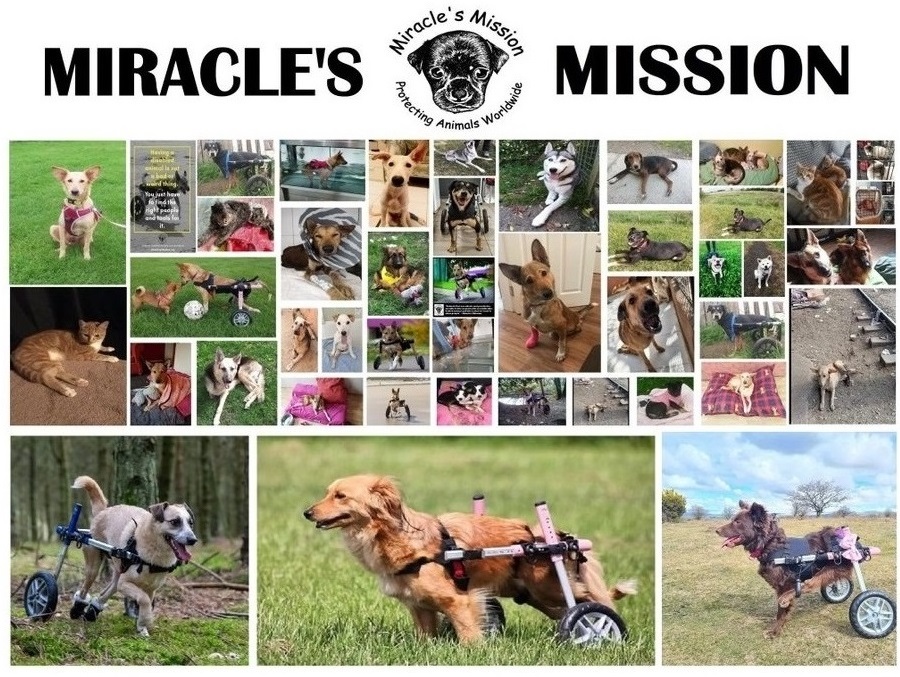
Just some of the animals rescued and rehabilitated by Miracle’s Mission.
Please, don’t turn away. I implore you to donate now and be the difference in my life. With your support, we can prove that even in the face of darkness, there is still light and there is still hope.
Donate now and help me rewrite my story and that of other rescues. Together, let’s pave the way for a future filled with love, compassion, and the opportunity to experience the joy that every living being deserves.
With heartfelt gratitude,
Ella, Max, Princess and Danny ~ And All Of The Other Survivors Of Abuse.
ELLA, MAX, PRINCESS AND DANNY ~ ALL RESCUED BY MIRACLE’S MISSION
WHAT YOU CAN DO TO HELP RESCUE ANIMALS
You can support our work by donating as little as £5 – It only takes a minute but it can last a lifetime for an animal in need.
Everyone who donates will receive a Certificate of Appreciation as a thank you for helping rescue animals in need.
OUR MISSION STATEMENT
‘Animals that use wheels and prosthetics can live as good a quality of life as fully able-bodied animals and this is what we want to show people’ ~ Victoria Bryceson, founder of Miracle’s Mission.
We do not receive financial support from the government or other institutions. We rely solely on donations from generous animal lovers.
Animal rescues cost a lot of money to run. While we get donations and funding through events like charity runs etc, the costs are EXTREMELY high. We need to pay for food, heating and other bills, as well as any staff costs and expenses like petrol for home visits.
The average cost to feed a dog for one month typically costs somewhere from £16 to £50, depending on the breed. Microchipping costs about £10 to £15. The average cost of essential vaccinations is £64. A routine vet appointment costs between £40-£60, surgery can cost anywhere over £1000. Physiotherapy, Hydrotherapy – the average cost is £50 for a 30-minute session. Prosthetics and dog wheels etc can cost up to £500.
Please help Miracle’s Mission continue to rescue, rehabilitate & rehomeMANY MORE sick, injured & disabled animals by kindly donating ANY amount, large or small, today. Thank you.
This is your chance to bid on signed memorabilia kindly donated by animal welfare legend Ricky Gervais in our ‘Charity Auction To Help Disabled Animals’.
This is a sealed bid auction, so all you need to do is decide which item you would like to bid for – noting the reserve price for each – and send us your bid with the lot number and name by email to protectallwildlife@btinternet.com by 21:00 on the 31st of January 2024 . We will email you to let you know if your bid is the highest. Postage costs will be calculated when the auction ends. Good luck!
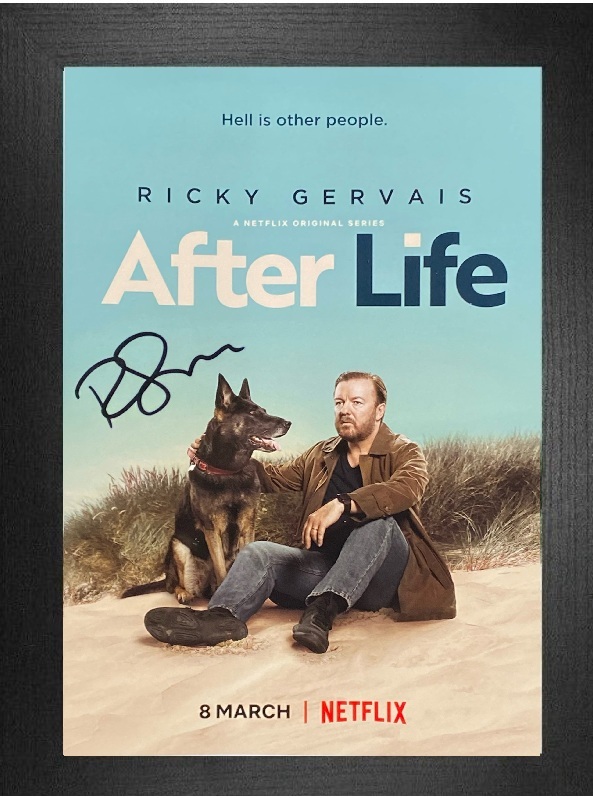
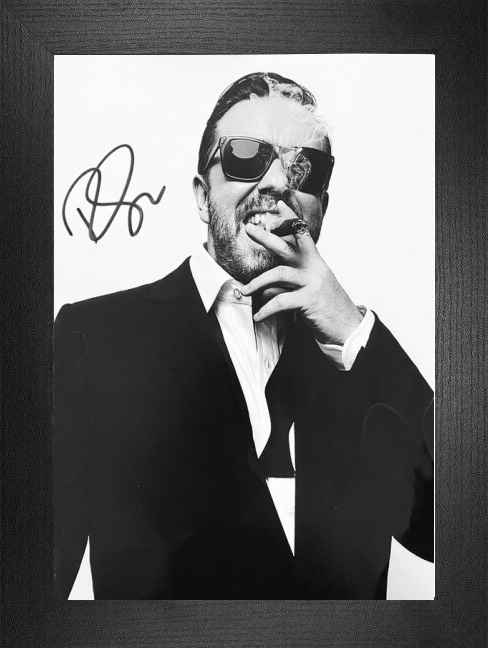
This signed image has been very kindly donated by animal welfare great Ricky Gervais. (Image size 200 cms x 250 cms. Frame is for display purpose and is not included).
Reserve: £100
Lot 2
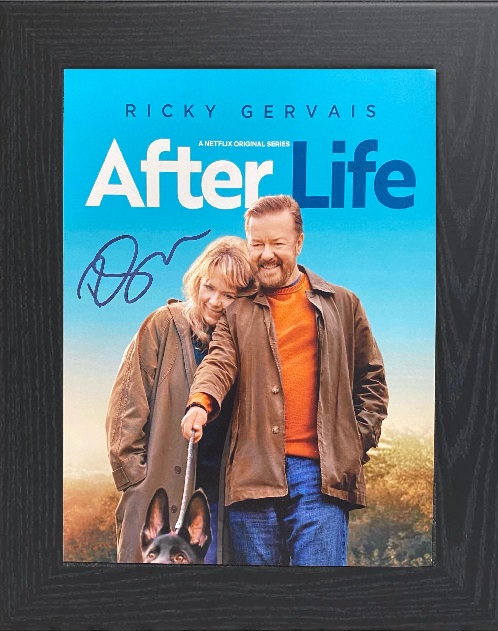
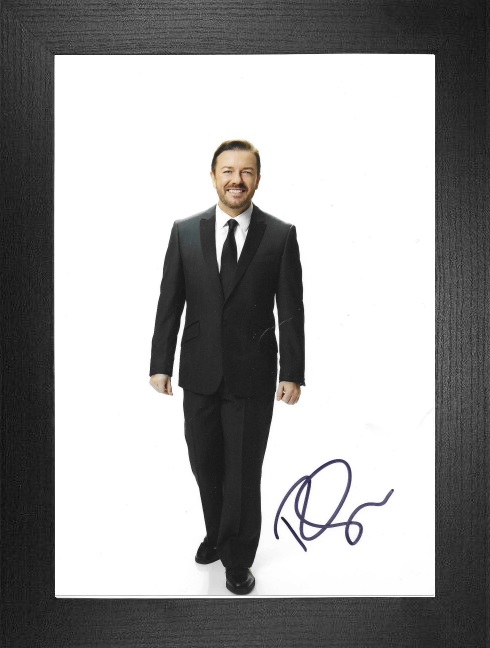
This signed image has been very kindly donated by animal welfare great Ricky Gervais. (Image size 200 cms x 250 cms. Frame is for display purpose and is not included).
Reserve: £100
Lot 3
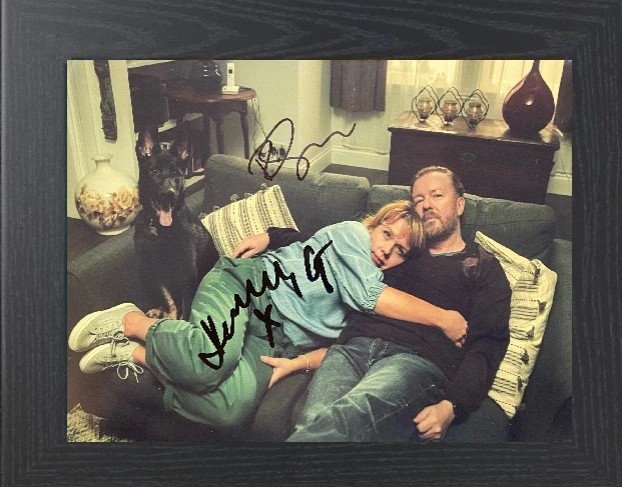
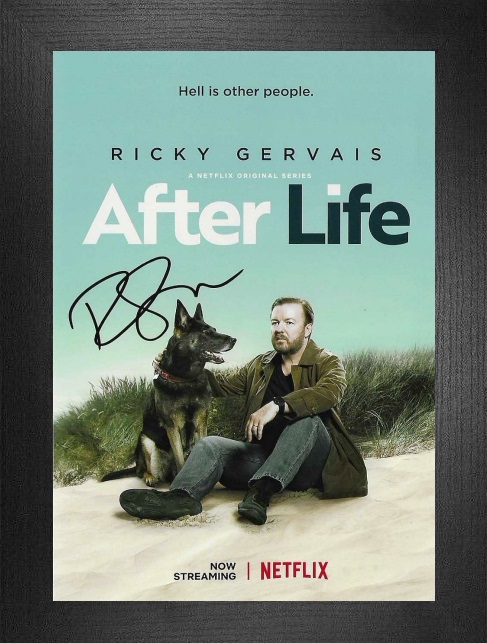
This signed After Life image has been very kindly donated by animal welfare great Ricky Gervais. (Image size 7 inches x 5 inches. Frame is for display purpose and is not included).
Reserve: £100
Lot 4
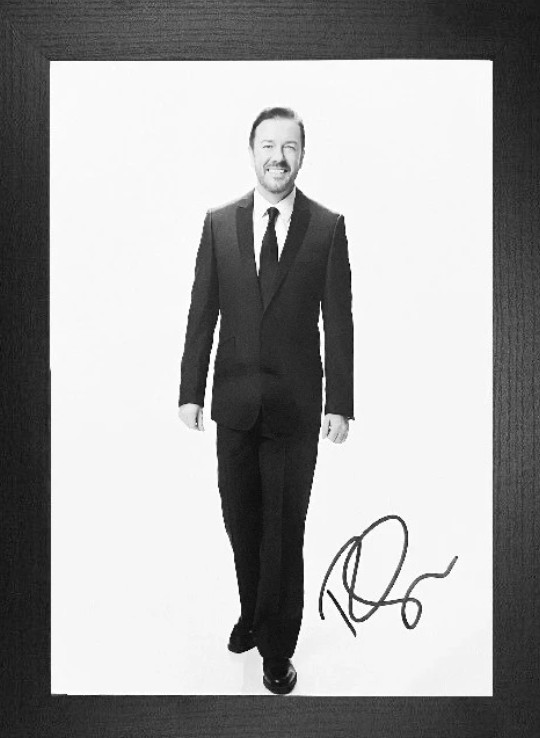
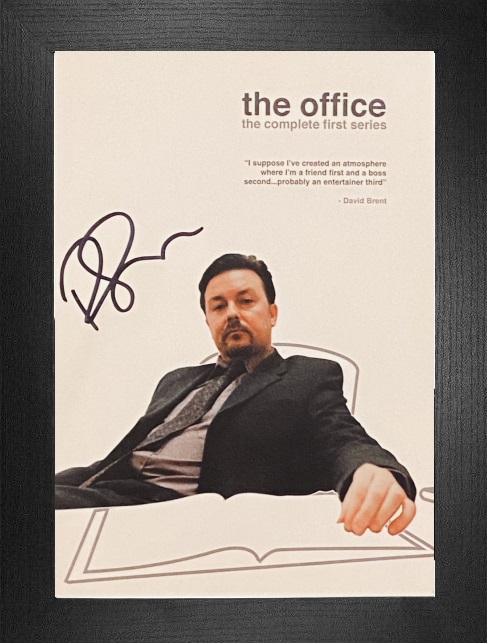
This signed The Office image has been very kindly donated by animal welfare great Ricky Gervais. (Image size 105 cms x 150 cms. Frame is for display purpose and is not included).
Reserve: £100
Thank you for taking the time to look at our auction and happy bidding.
If you would like to make a donation to our fundraiser to help support our work you can do so at Fundraiser To Help Disabled Animals. Thank you.
Miracle’s Mission are a non-profit animal welfare organisation that works with sick, injured and disabled animals worldwide.
Our mission is to provide a place of safety for animals in danger, to educate on the needs of neutering both pets and strays and to neuter stray dogs and cats to prevent the birth of more animals onto the streets. We also rehabilitate and re-home dogs in need, often with disabilities, from our UK rescue base.
Thank you for your support in the past year but we still need your help.
We are wrapping up another year at Miracle’s Mission. In the past year we have continued to provide a place of safety for animals in danger, to educate on the needs of neutering both pets and strays and to neuter stray dogs and cats to prevent the birth of more animals onto the streets. We have also rehabilitated and re-homed many dogs and cats in need, many with disabilities.
Even with all this wonderful news we are still in dire need of funds to help us keep our doors open. We need donations to help pay for food, heating and other bills, as well as staff costs and expenses like petrol for home visits. The average cost to feed a dog for one month typically costs somewhere from £16 to £50, depending on the breed. Microchipping costs about £10 to £15. The average cost of essential vaccinations is £64. A routine vet appointment costs between £40-£60. The average cost of a 30-miunte physiotherapy or hydrotherapy session is £50. Prosthetics and dog wheels etc are upwards of £500.
We appreciate your continuous support, we truly wouldn’t be here without you.
Could you help us with our end of year fundraiser? Any donation helps!
With best wishes, Paul Christian, Patron of Miracle’s Mission.
South Korea aims to ban eating dog meat and put an end to the controversy over the ancient custom amid growing awareness of animal rights, a ruling party policy chief said on Friday.
The Korean practice of eating dog meat has drawn criticism from overseas for its cruelty but there has also been increasing opposition at home, particularly from the younger generation.
“It is time to put an end to social conflicts and controversies around dog meat consumption through the enactment of a special act to end it,” Yu Eui-dong, policy chief of the ruling People Power Party, said at a meeting with government officials and animal rights activists.
The government and ruling party would introduce a bill this year to enforce a ban, Yu said, adding that with expected bipartisan support, the bill should sail through parliament.
Agriculture Minister Chung Hwang-keun told the meeting the government would implement a ban quickly and provide the maximum possible support for those in the dog meat industry to close their businesses.
Rescue workers from Humane Society International rescue a dog at a dog meat farm in Wonju, South Korea. Credit: REUTERS/Kim Hong-Ji
First lady Kim Keon Hee has been a vocal critic of dog meat consumption and, along with her husband, President Yoon Suk Yeol, has adopted stray dogs.
Anti-dog meat bills have failed in the past because of protests by those involved in the industry, and worry about the livelihoods of farmers and restaurant owners.
The proposed ban will include a three-year grace period and financial support for businesses to transition out of the trade.
Eating dog meat has been an age-old practice on the Korean peninsula and is seen as a way to beat the summer heat.
But it is much less common than it used to be in South Korea, though it is still eaten by some older people and served in certain restaurants.
Animal rights groups welcomed the prospect of a ban. “A dream come true for all of us who have campaigned so hard to end this cruelty,” Humane Society International said in a statement.
There are about dog 1,150 breeding farms, 34 slaughter houses, 219 distribution companies, and some 1,600 restaurants serving dog, according to government data.
A Gallup Korea poll last year showed 64% opposed dog meat consumption. The survey found only 8% of respondents had eaten dog within the past year, down from 27% in 2015.
Reporting by Ju-min Park (Reuters).
WHAT YOU CAN DO TO HELP ANIMALS IN NEED
You can support our work by donating as little as £5 – It only takes a minute but it can last a lifetime for an animal in need.
Everyone who donates will receive a Certificate of Appreciation as a thank you for helping animals in need.
The Mission of Protect All Wildlife is to prevent cruelty and promote the welfare of ALL animals. We believe EVERY animal should be treated with respect, empathy, and understanding. We raise awareness to protect and conserve wild, captive, companion and farm animals.
It is vital that we protect animals against acts of cruelty, abuse, and neglect by enforcing established animal welfare laws and, when necessary, take action to ensure that those who abuse animals are brought to justice.
Protect All Wildlife are involved in many projects to protect animals’ rights, welfare, and habitats. Money contributed to Protect All Wildlife supports ALL of our worthy programmes and gives us the flexibility to respond to emerging needs. Your donations make our work possible.
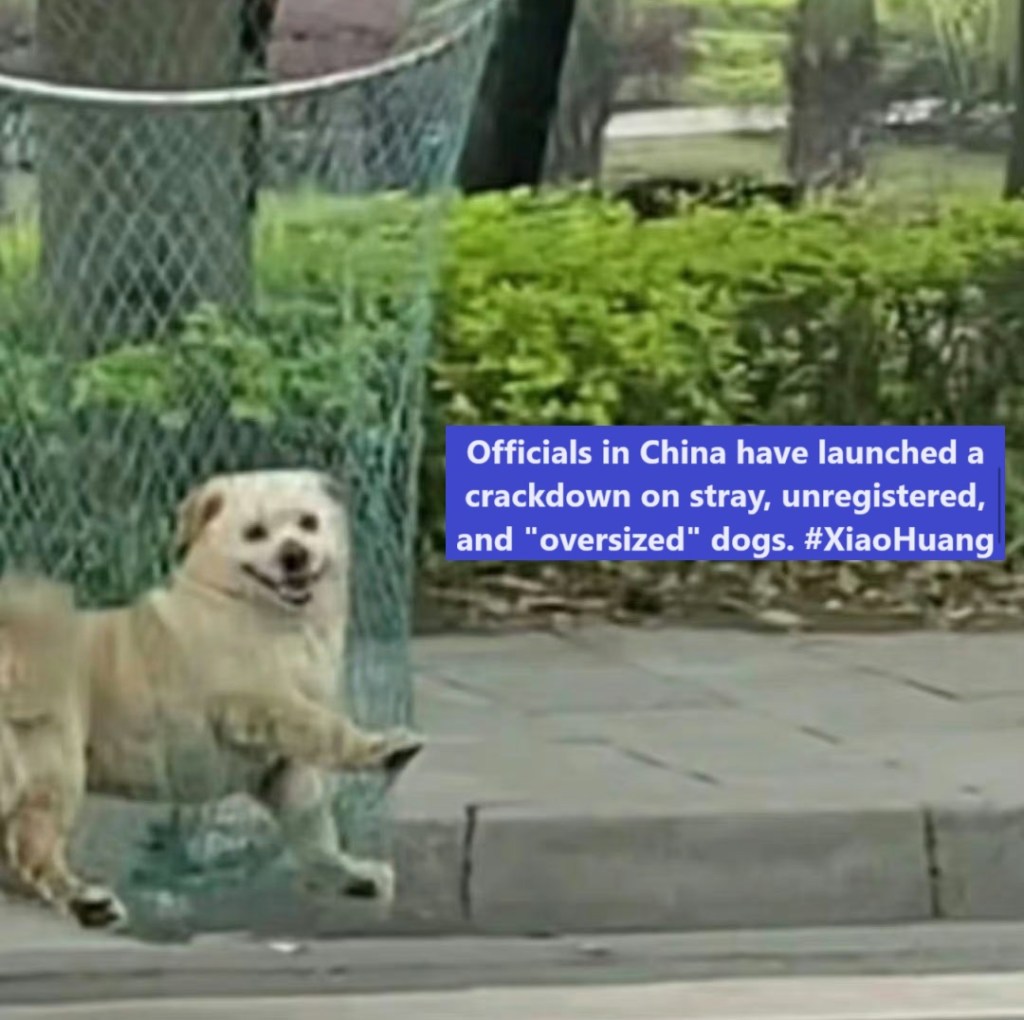
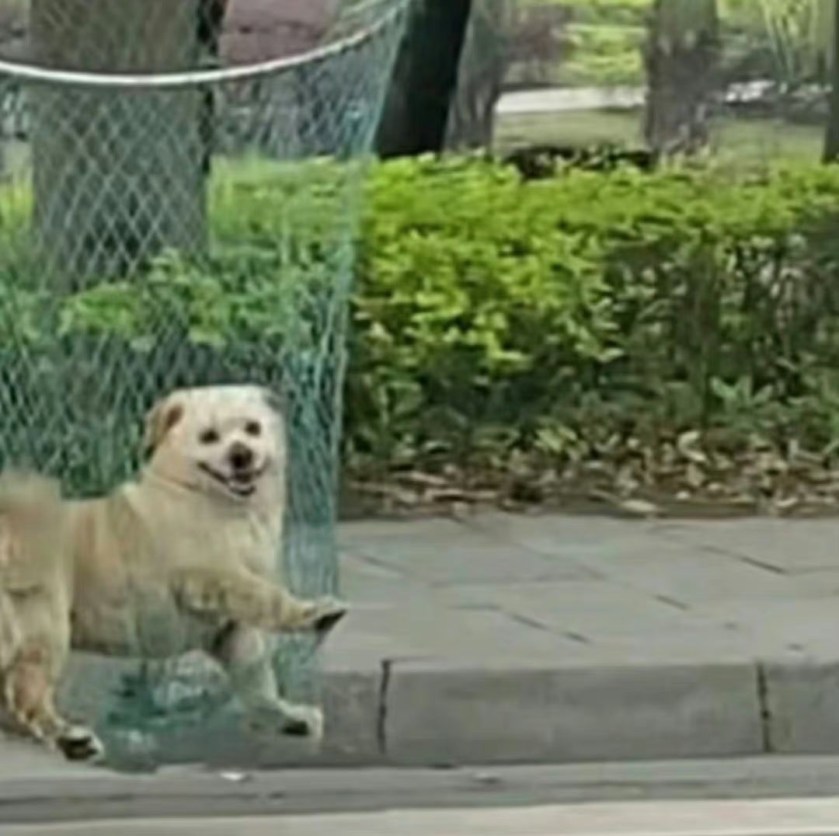
A small, stray dog on a university campus in Chongqing was filmed being grabbed in a net by a dog catcher, prior to being killed. The “smiling” appearance of the dog has prompted a social media hashtag using the name it was given #XiaoHuang.
Officials in China have launched a crackdown on stray, unregistered, and “oversized” dogs.
But the move has been widely criticised after reports that dogs without owners are being rounded up and sometimes euthanised.
It comes after a vicious attack on a two-year-old girl by a Rottweiler last week that shocked the country.
The Rottweiler that attacked the child in Chongzhou, Sichuan Province, WAS NOT A STRAY. It was unleashed and approached the mother who was walking her child to preschool inside their housing compound.
The toddler suffered a ruptured kidney, fractured ribs and lacerations across her body. She is reportedly stable.
The crackdown prompted by the mauling has however, been questioned on social media and by pet owners after several shocking stories came to light.
Community workers in Leshan broke into a house to hunt and kill pet dogs
In one case, security guards and a landlord entered an office without the permission of the tenant and killed both of their dogs.
In another case – which has drawn considerable attention online – a small, stray dog on a university campus in Chongqing was filmed being grabbed in a net by a dog catcher, prior to being killed. The “smiling” appearance of the dog has prompted a social media hashtag using the name it was given #XiaoHuang. University officials said the dog had chased a student.
A small, stray dog on a university campus in Chongqing was filmed being grabbed in a net by a dog catcher, prior to being killed. The “smiling” appearance of the dog prompted a social media hashtag using the name it was given #XiaoHuang.
Some users of Chinese microblogging site Weibo posted pictures claiming security personnel in their residential compounds had started killing strays and dumping their bodies in the trash. Their posts sparked an online outcry, with many calling for more humane measures, including adoption and neutering.
Chinese celebrities have also joined the social media discussion, saying the crackdown across the country was not warranted by the initial attack, terrible though it was.
Chinese actress Cya Liu Ya-se posted on Weibo on Friday, stating that “not all stray dogs are bad dogs” and called for “an end to the killing of animals.”
Celebrity Yang Di also posted a video on short video platform Douyin the same day, saying that people don’t have to all love dogs, but “please do not harm them.” Both accounts were banned shortly after the posts.
Xiao Feng calls for the killing of stray cats and dogs to stop.
However, the Rottweiler that attacked the child in Chongzhou, Sichuan Province, was not a stray. It was unleashed and approached the mother who was walking her child to preschool inside their housing compound.
Statements issued from officials in Shandong, Jiangxi and Hubei Provinces have said that captured stray dogs would be put down if an owner cannot be found for them.
In another instance, a security guard at a university in Liaoning Province was suspended after beating a beloved on-campus stray to death.
Chen Minjie, a staffer from the Cat and Dog Welfare Program with the Animals Asia Foundation, told the Global Times on Monday that the heated debate surrounding uncivilized incidents reflects the expanded pet ownership in the country and the varying quality of pet owners. Attention should be focused on addressing the behavior of uncivilized dog owners, rather than a widespread antagonism between dog owners and non-dog owners.
Internet users also called on the public to go to the State Council website and leave a message asking the government to stop abusing and killing stray animals, to reasonably disclose the way stray cats and dogs are handled, and to call on the state to legislate for the protection of animals.
Editor’s Note: Whilst it is agreed that attacks by dogs should be dealt with severely, in this case the dog(s) involved were not strays. They were pets that were not on leads. No stray dogs were anywhere in the vicinity of the awful attack. Why persecute strays for something they had nothing to do with?
WHAT YOU CAN DO TO HELP RESCUE ANIMALS
You can support our work by donating as little as £5 – It only takes a minute but it can last a lifetime for an animal in need.
Everyone who donates will receive a Certificate of Appreciation as a thank you for helping rescue animals in need.
OUR MISSION STATEMENT
‘Animals that use wheels and prosthetics can live as good a quality of life as fully able-bodied animals and this is what we want to show people’ ~ Victoria Bryceson, founder of Miracle’s Mission.
We do not receive financial support from the government or other institutions. We rely solely on donations from generous animal lovers.
Animal rescues cost a lot of money to run. While we get donations and funding through events like charity runs etc, the costs are EXTREMELY high. We need to pay for food, heating and other bills, as well as any staff costs and expenses like petrol for home visits.
The average cost to feed a dog for one month typically costs somewhere from £16 to £50, depending on the breed. Microchipping costs about £10 to £15. The average cost of essential vaccinations is £64. A routine vet appointment costs between £40-£60, surgery can cost anywhere over £1000. Physiotherapy, Hydrotherapy – the average cost is £50 for a 30-minute session. Prosthetics and dog wheels etc can cost up to £500.
Please help Miracle’s Mission continue to rescue, rehabilitate and rehome MANY MORE sick, injured and disabled animals by kindly donating ANY amount, large or small, today. Thank you.
This rescue dog story will completely change your perspective on animal adoption. Please take the time to read ALL of this poignant story.
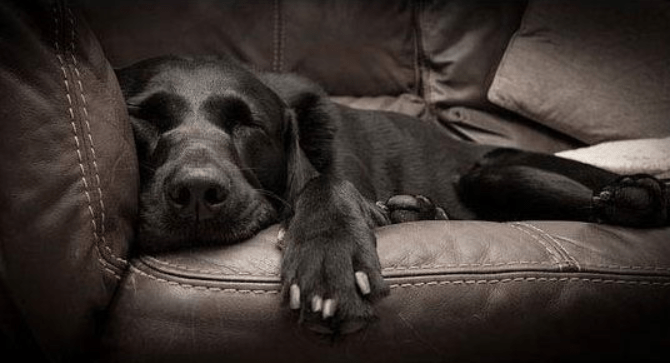
They told me the big black Lab’s name was Reggie as I looked at him lying in his pen. The shelter was clean, no-kill, and the people really friendly. I’d only been in the area for six months, but everywhere I went in the small college town, people were welcoming and open. Everyone waves when you pass them on the street.
But something was still missing as I attempted to settle into my new life here, and I thought a dog couldn’t hurt. Give me someone to talk to. And I had just seen Reggie’s advertisement on the local news. The shelter said they had received numerous calls right after, but they said the people who had come down to see him just didn’t look like “Lab people,” whatever that meant. They must’ve thought I did.
But at first, I thought the shelter had misjudged me in giving me Reggie and his things, which consisted of a dog pad, bag of toys almost all of which were brand new tennis balls, his dishes, and a sealed letter from his previous owner. See, Reggie and I didn’t really hit it off when we got home. We struggled for two weeks (which is how long the shelter told me to give him to adjust to his new home). Maybe it was the fact that I was trying to adjust, too. Maybe we were too much alike.
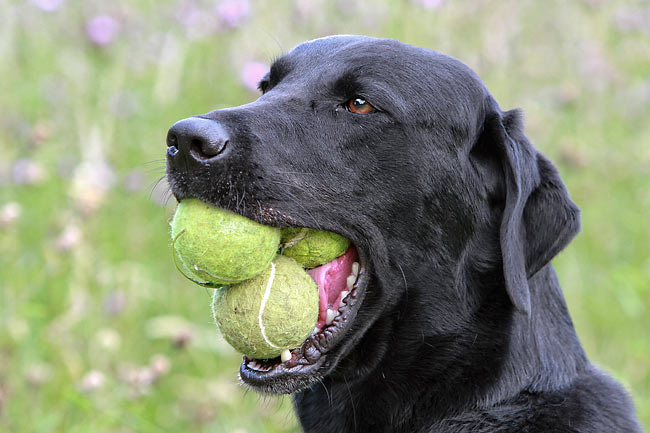
For some reason, his stuff (except for the tennis balls — he wouldn’t go anywhere without two stuffed in his mouth) got tossed in with all of my other unpacked boxes. I guess I didn’t really think he’d need all his old stuff, that I’d get him new things once he settled in. but it became pretty clear pretty soon that he wasn’t going to.
I tried the normal commands the shelter told me he knew, ones like “sit” and “stay” and “come” and “heel,” and he’d follow them — when he felt like it. He never really seemed to listen when I called his name — sure, he’d look in my direction after the fourth or fifth time I said it, but then he’d just go back to doing whatever. When I’d ask again, you could almost see him sigh and then grudgingly obey.
This just wasn’t going to work. He chewed a couple shoes and some unpacked boxes. I was a little too stern with him and he resented it, I could tell. The friction got so bad that I couldn’t wait for the two weeks to be up, and when it was, I was in full-on search mode for my cell phone amid all of my unpacked stuff. I remembered leaving it on the stack of boxes for the guest room, but I also mumbled, rather cynically, that the “darn dog probably hid it on me.”
Finally I found it, but before I could punch up the shelter’s number, I also found his pad and other toys from the shelter. I tossed the pad in Reggie’s direction and he snuffed it and wagged, some of the most enthusiasm I’d seen since bringing him home. But then I called, “Hey, Reggie, you like that? Come here and I’ll give you a treat.” Instead, he sort of glanced in my direction — maybe “glared” is more accurate — and then gave a discontented sigh and flopped down. With his back to me.
Well, that’s not going to do it either, I thought. And I punched the shelter phone number.
But I hung up when I saw the sealed envelope. I had completely forgotten about that, too. “Okay, Reggie,” I said out loud, “let’s see if your previous owner has any advice.”
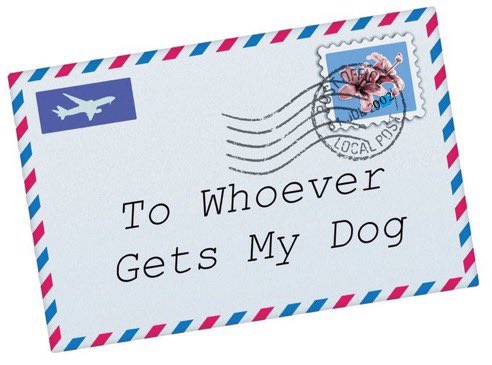
To Whoever Gets My Dog
Well, I can’t say that I’m happy you’re reading this, a letter I told the shelter could only be opened by Reggie’s new owner. I’m not even happy writing it. If you’re reading this, it means I just got back from my last car ride with my Lab after dropping him off at the shelter. He knew something was different. I have packed up his pad and toys before and set them by the back door before a trip, but this time … it’s like he knew something was wrong. And something is wrong … which is why I have to go to try to make it right.
So let me tell you about my Lab in the hopes that it will help you bond with him and he with you.
First, he loves tennis balls. the more the merrier. Sometimes I think he’s part squirrel, the way he hoards them. He usually always has two in his mouth, and he tries to get a third in there. Hasn’t done it yet. Doesn’t matter where you throw them, he’ll bound after it, so be careful — really don’t do it by any roads. I made that mistake once, and it almost cost him dearly.
Next, commands. Maybe the shelter staff already told you, but I’ll go over them again: Reggie knows the obvious ones — “sit,” “stay,” “come,” “heel.” He knows hand signals: “back” to turn around and go back when you put your hand straight up; and “over” if you put your hand out right or left. “Shake” for shaking water off, and “paw” for a high-five. He does “down” when he feels like lying down — I bet you could work on that with him some more. He knows “ball” and “food” and “bone” and “treat” like nobody’s business. I trained Reggie with small food treats. Nothing opens his ears like little pieces of hot dog.
Feeding schedule: twice a day, once about seven in the morning, and again at six in the evening. Regular store-bought stuff; the shelter has the brand.
He’s up on his shots. Call the clinic on 9th Street and update his info with yours; they’ll make sure to send you reminders for when he’s due. Be forewarned: Reggie hates the vet. Good luck getting him in the car — I don’t know how he knows when it’s time to go to the vet, but he knows.
Finally, give him some time. I’ve never been married, so it’s only been Reggie and me for his whole life. He’s gone everywhere with me, so please include him on your daily car rides if you can. He sits well in the backseat, and he doesn’t bark or complain. He just loves to be around people, and me most especially. Which means that this transition is going to be hard, with him going to live with someone new.
And that’s why I need to share one more bit of info with you …
His name’s not Reggie.
I don’t know what made me do it, but when I dropped him off at the shelter, I told them his name was Reggie. He’s a smart dog, he’ll get used to it and will respond to it, of that I have no doubt. but I just couldn’t bear to give them his real name. For me to do that, it seemed so final, that handing him over to the shelter was as good as me admitting that I’d never see him again. And if I end up coming back, getting him, and tearing up this letter, it means everything’s fine. But if someone else is reading it, well… well it means that his new owner should know his real name. It’ll help you bond with him. Who knows, maybe you’ll even notice a change in his demeanour if he’s been giving you problems.
His real name is Tank. Because that is what I drive.
Again, if you’re reading this and you’re from the area, maybe my name has been on the news. I told the shelter that they couldn’t make “Reggie” available for adoption until they received word from my company commander. See, my parents are gone, I have no siblings, no one I could’ve left Tank with … and it was my only real request of the Army upon my deployment to Iraq, that they make one phone call to the shelter … in the “event”… to tell them that Tank could be put up for adoption. Luckily, my colonel is a dog guy, too, and he knew where my platoon was headed. He said he’d do it personally. And if you’re reading this, then he made good on his word.
Well, this letter is getting to downright depressing, even though, frankly, I’m just writing it for my dog. I couldn’t imagine if I was writing it for a wife and kids and family. but still, Tank has been my family for the last six years, almost as long as the Army has been my family.
And now I hope and pray that you make him part of your family and that he will adjust and come to love you the same way he loved me.
That unconditional love from a dog is what I took with me to Iraq as an inspiration to do something selfless, to protect innocent people from those who would do terrible things … and to keep those terrible people from coming over here. If I had to give up Tank in order to do it, I am glad to have done so. He was my example of service and of love. I hope I honoured him by my service to my country and comrades.
All right, that’s enough. I deploy this evening and have to drop this letter off at the shelter. I don’t think I’ll say another good-bye to Tank, though. I cried too much the first time. Maybe I’ll peek in on him and see if he finally got that third tennis ball in his mouth.
Good luck with Tank. Give him a good home and give him an extra kiss goodnight — every night — from me.
Thank you, Paul Mallory.
I folded the letter and slipped it back in the envelope. Sure, I had heard of Paul Mallory, everyone in town knew him, even new people like me. Local kid, killed in Iraq a few months ago and posthumously earning the Silver Star when he gave his life to save three buddies. Flags had been at half-mast all summer.
I leaned forward in my chair and rested my elbows on my knees, staring at the dog.
“Hey, Tank,” I said quietly. The dog’s head whipped up, his ears cocked and his eyes bright.
C’mere boy.” He was instantly on his feet, his nails clicking on the hardwood floor. He sat in front of me, his head tilted, searching for the name he hadn’t heard in months.
“Tank,” I whispered. His tail swished.
I kept whispering his name, over and over, and each time, his ears lowered, his eyes softened, and his posture relaxed as a wave of contentment just seemed to flood him. I stroked his ears, rubbed his shoulders, buried my face into his scruff and hugged him.
“It’s me now, Tank, just you and me. Your old pal gave you to me.” Tank reached up and licked my cheek. “So whatdaya say we play some ball? His ears perked again. “Yeah? Ball? You like that? Ball?” Tank tore from my hands and disappeared in the next room.
And when he came back, he had three tennis balls in his mouth.
WHAT YOU CAN DO TO HELP ANIMALS IN NEED
You can support our work by donating as little as £5 – It only takes a minute but it can last a lifetime for an animal in need.
Everyone who donates will receive a Certificate of Appreciation as a thank you for helping animals in need.
The Mission of Protect All Wildlife is to prevent cruelty and promote the welfare of ALL animals.
We believe EVERY animal should be treated with respect, empathy, and understanding. We raise awareness to protect and conserve wild, captive, companion and farm animals.
It is vital that we protect animals against acts of cruelty, abuse, and neglect by enforcing established animal welfare laws and, when necessary, take action to ensure that those who abuse animals are brought to justice.
Protect All Wildlife are involved in many projects to protect animals’ rights, welfare, and habitats. Money contributed to Protect All Wildlife supports ALL of our worthy programmes and gives us the flexibility to respond to emerging needs. Your donations make our work possible.
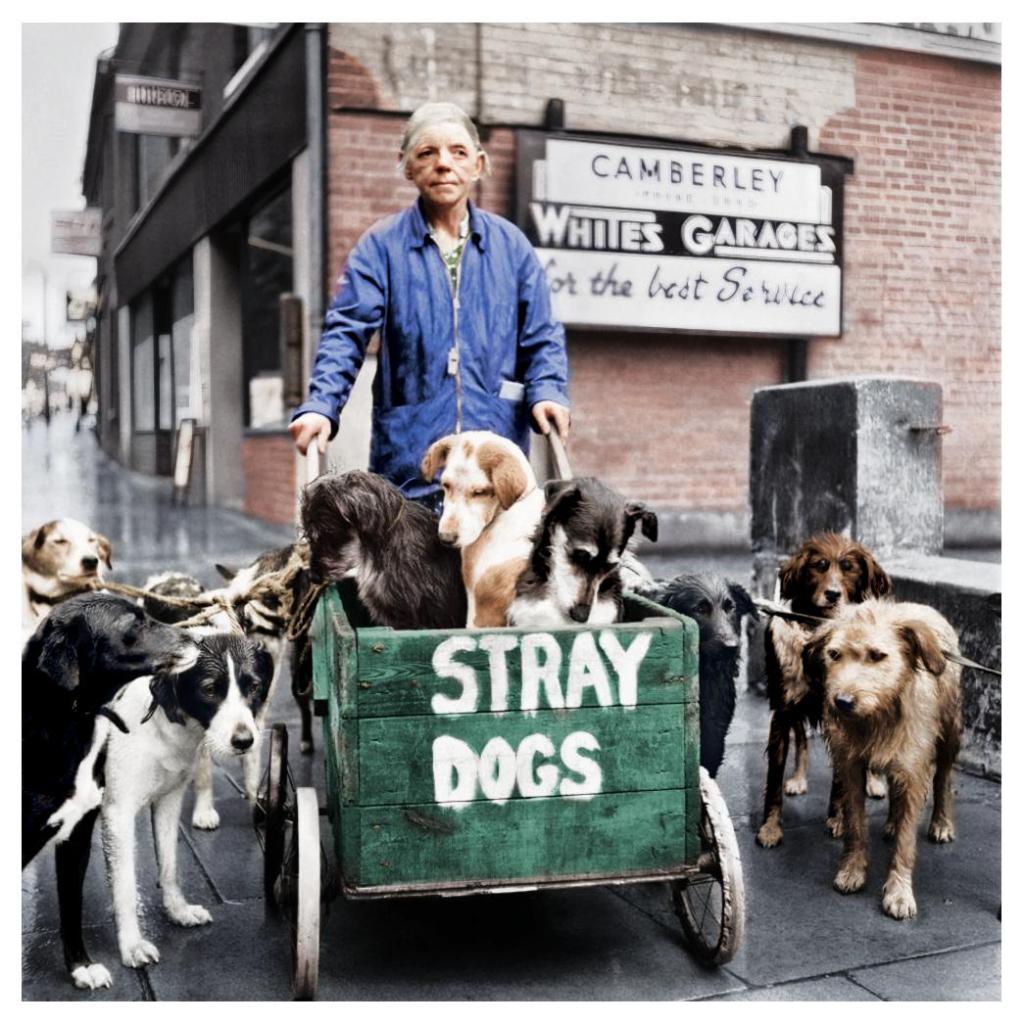
Kate Ward’s nickname “Camberley Kate” is said to have been given to her by historian Sir Arthur Bryant in his book “The Lion and the Unicorn”. It became the title by which she became known to everyone.
Kate’s early history is somewhat hazy – When interviewed she stated that she was born in Middlesbrough on June 13th 1895, and remained proud of her Yorkshire roots. Orphaned before she was ten, she was brought up by an aunt in a strict religious atmosphere. As a young girl she went into service, in Yorkshire and eventually found her way to Camberley. In 1943 Kate bought a cottage in Yorktown, and soon afterwards took in her first stray, a dog which had been about to be put down due to lameness.
As word grew, the number of dogs in her cottage increased – some being tied to her door, some left in carrier bags, others brought in by the police or other agencies. At the end of her life she estimated that she had looked after more than 600 dogs and local vet Geoffrey Craddock, a great admirer of Kate work testified that they were well looked after. An entry in the 1957 directory FOR Camberley reads “Ward K 218 London Road., Cam., Dogs Home”. In 1976 she stated that she had 34 dogs, although by 1977 she had cut this down to 19, as she had been told to go easier at the age of 82! The growth of other dog rescue centres helped in this regard. She also had at least one cat.
CAMBERLEY KATE
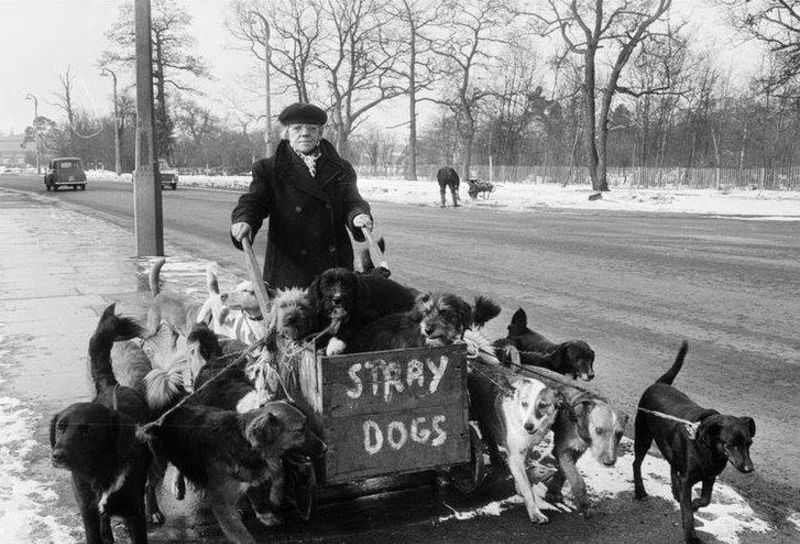
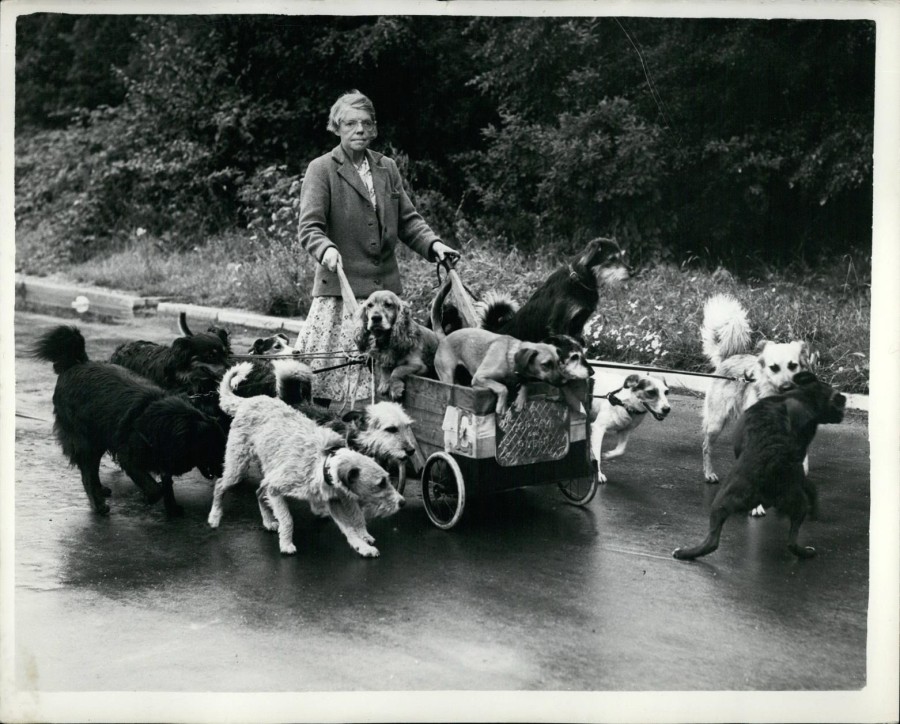
Kate and her olive-green painted hand cart, labelled STRAY DOGS, was a familiar sight locally as she pushed it from Yorktown to Camberley each day, through the town centre and up to Barossa Common, on a route suggested by the police. Some of the dogs were allowed to ride in the cart, others were attached to it with lengths of string, and occasionally a favoured few ran loose alongside. Inside the cart, there was usually some meat for the dogs and a shovel to clean any mess away. The dogs were controlled with the help of a whistle. Locals became used to the sight of Kate pushing her cart along the busy London Road although it never ceased to amaze outsiders.
As a local celebrity Kate and her dogs were much photographed, a situation she tolerated as long as the photographer gave a donation for the upkeep of the animals. She also sold her own photographic postcards, and gave short shrift to those who tried to take their own pictures. Generous supporters gave money to assist her work and some even left bequests. She was scrupulous that this money should be used only for its intended purpose: the dogs had their own bank account, administered by 2 trustees. She left money in trust for the few dogs left at her death.
If you gave her some money, she would INSIST you take a photo. That way she could not be accused of begging.
KATE AND HER CART AND DOGS WERE A WELL-KNOWN SIGHT IN THE TOWN UNTIL HER DEATH IN 1979
A diminutive figure with her shock of white hair and her beret, Kate defended herself and her work passionately against her critics, such as those who wanted her out of the town centre or who regarded the dogs as dangerous or a health or traffic hazard. On one occasion she rammed a new car which was blocking her way. She also had a number of disputes with the authorities. These clashes were often recorded in the columns of the press. However she won the backing of the local police for her work in taking abandoned dogs in off the streets.
In 21 August 1969 Kate was in the Camberley News fighting plans to introduce a bye law making it illegal for dogs to be out without a lead. This followed complains from residents of new housing estates, and concerns about road accidents caused by stray dogs. In her customary forthright fashion she condemned “The Council is nothing more than a collection of dog-haters. I think this will be rotten. It means that dogs will be chained up all day”. A proposal to ban dogs from the new precinct in Camberley also met with a terse response, particularly since she was in the habit of shopping at Sainsbury’s and leaving some of the dogs tied up outside. When protests about the local drag-hounds running out of control when being exercised attracted her support Kate, in typical fashion, addressed her complaint directly to the King. The Royal family continued to be a favourite route for correspondence. When a local schoolteacher complained that she had seen her beat her dogs with a stick, Kate immediately wrote in protest to the Queen. This was not their first encounter – when Princess Elizabeth got married one of the dogs sent a present of a dog lead.
KATE WITH CAT AND SOME OF HER DOGS AT HOME
As these anecdotes show, Kate was an excellent publicist. A local policemen recalled that occasionally a dog would get loose and be brought to the dog pound. If the Police Station was empty she would pay the fine quietly and readily, but if there was an audience she would protest vocally!
Following a series of strokes old age and ill-health forced her to leave her cottage and her remaining seven dogs were put into kennels. Her last weeks were spent at Kingsclear residential home and she died on 4th August 1979. Her funeral was at St Michael’s, Yorktown.
Despite her avowed dislike of people, Baptist Minister the Rev Chris Russell who officiated at her funeral, remembers her private generosity to those in need. This aspect of her life she kept anonymous, passing on her donations through third parties.
After her death, Camberley vet Geoffrey Craddock was quoted in the Camberley News as saying “Camberley has lost its most celebrated and best known character. She will be greatly missed by those of us who had the rare privilege of knowing her”.
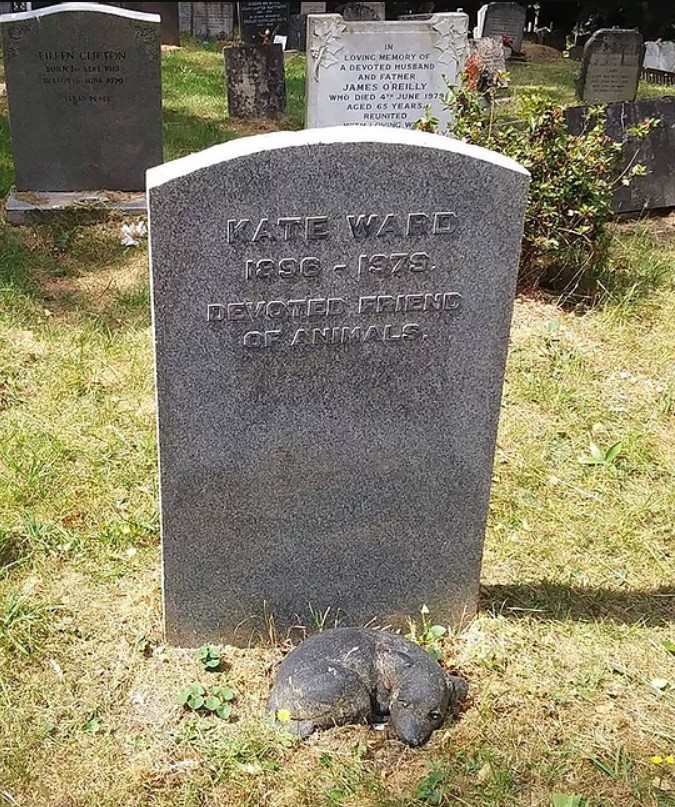
Kate Ward (Camberley Kate) is buried at St Michael’s Church in Camberley and protected by a dog.
During her lifetime, Kate’s fame spread far and wide. She featured In the national press and on television programmes such as “Nationwide” and “Tonight”. was featured on NBC in the United States and her story appeared in publications across Europe from France to Rumania. She also received the ultimate accolade of a feature in “Time” Magazine, and was photographed by Lord Snowdon. To her surprise, in 1967 she received an award from the magazine “Dog’s Life” for her work. In answer to the inevitable question, why she did it? her invariable reply was that she preferred dogs to humans.
KATE PUTS UP WITH A FILM CREW FOR THE BENEFIT OF HER DOGS
Her home at 218 London Road was just a few doors along from the former Lamb pub, near the present Meadows roundabout, but Is no longer standing. The Katherine Court retirement flats were named after her at the suggestion of a local resident in 2000.
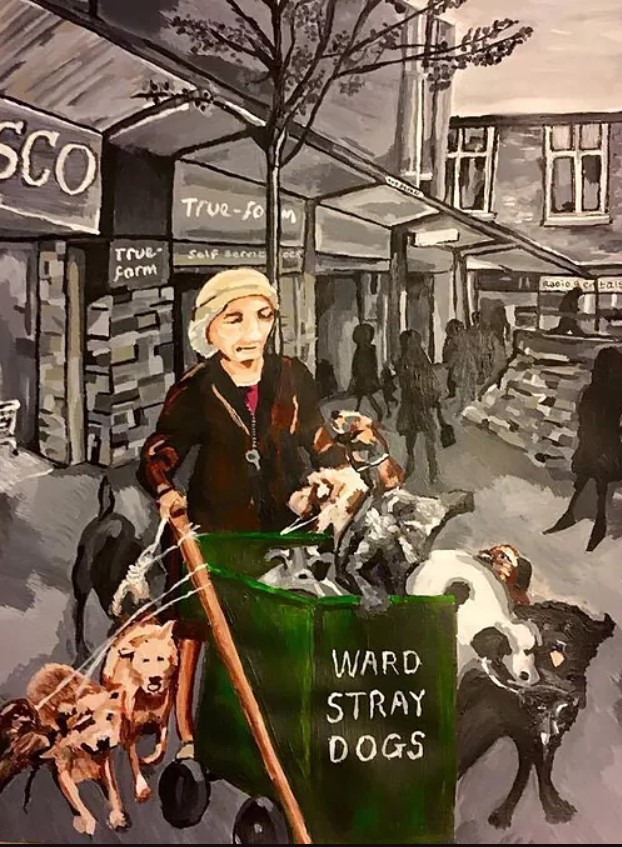
A BEAUTIFUL PAINTING OF KATE AND HER BELOVED DOGS
There are so many great lessons we can learn from the life of Kate Ward, both as responsible dog owners, human beings, and as pet rescue charities. Most of all Kate recognized the value of a photograph and how it could be used for the positive influence of others, to bring light to a cause, and to help raise money.
Please share for others to enjoy.
WHAT YOU CAN DO TO HELP ANIMALS IN NEED
You can support our work by donating as little as £5 – It only takes a minute but it can last a lifetime for an animal in need.
Everyone who donates will receive a Certificate of Appreciation as a thank you for helping animals in need.
The Mission of Protect All Wildlife is to prevent cruelty and promote the welfare of ALL animals.
We believe EVERY animal should be treated with respect, empathy, and understanding. We raise awareness to protect and conserve wild, captive, companion and farm animals.
It is vital that we protect animals against acts of cruelty, abuse, and neglect by enforcing established animal welfare laws and, when necessary, take action to ensure that those who abuse animals are brought to justice.
Protect All Wildlife are involved in many projects to protect animals’ rights, welfare, and habitats. Money contributed to Protect All Wildlife supports ALL of our worthy programmes and gives us the flexibility to respond to emerging needs. Your donations make our work possible.
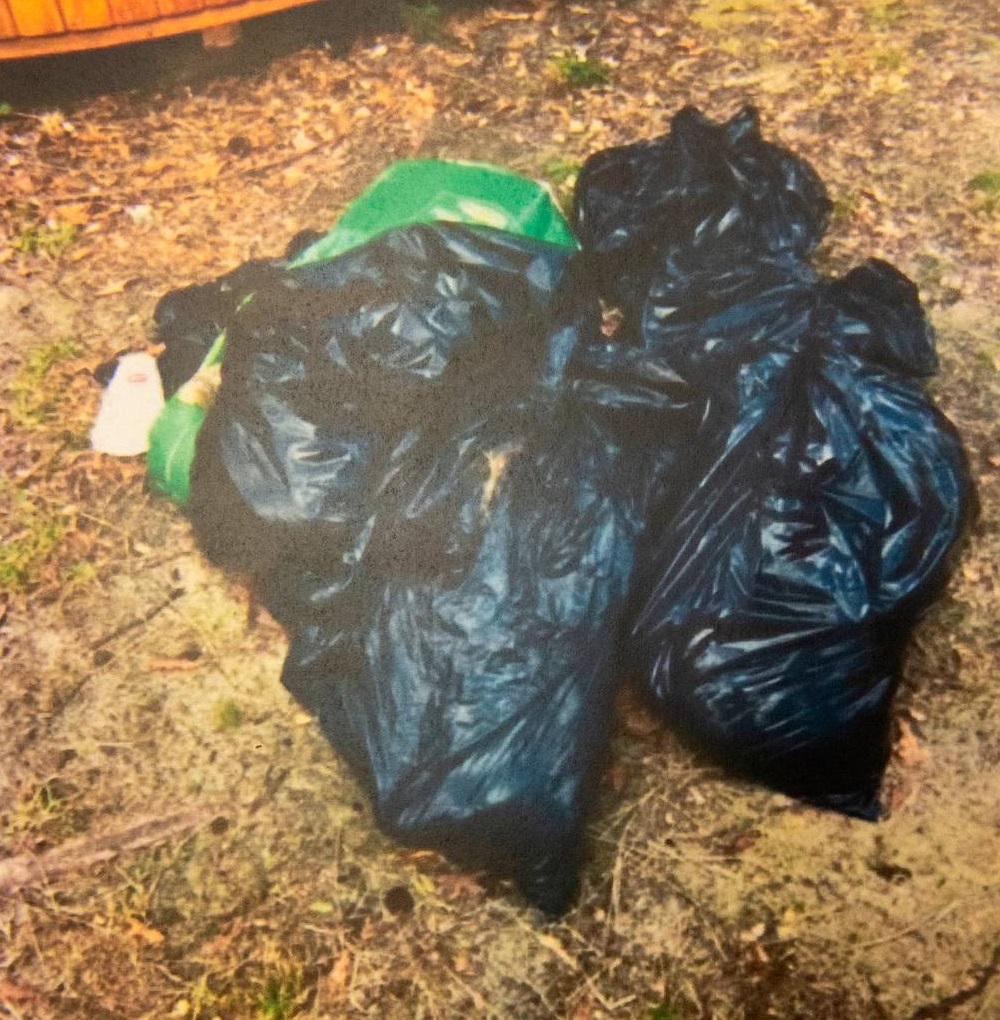
Jessica Collins, of Saucier, ran what she called Deep South Rescue when Harrison County sheriff’s deputies went to the property in March 2022 and found 30 dead dogs, most of them in black trash bags. A cage at her home contained a dead vulture as well as eight dead puppies inside a trash bag.
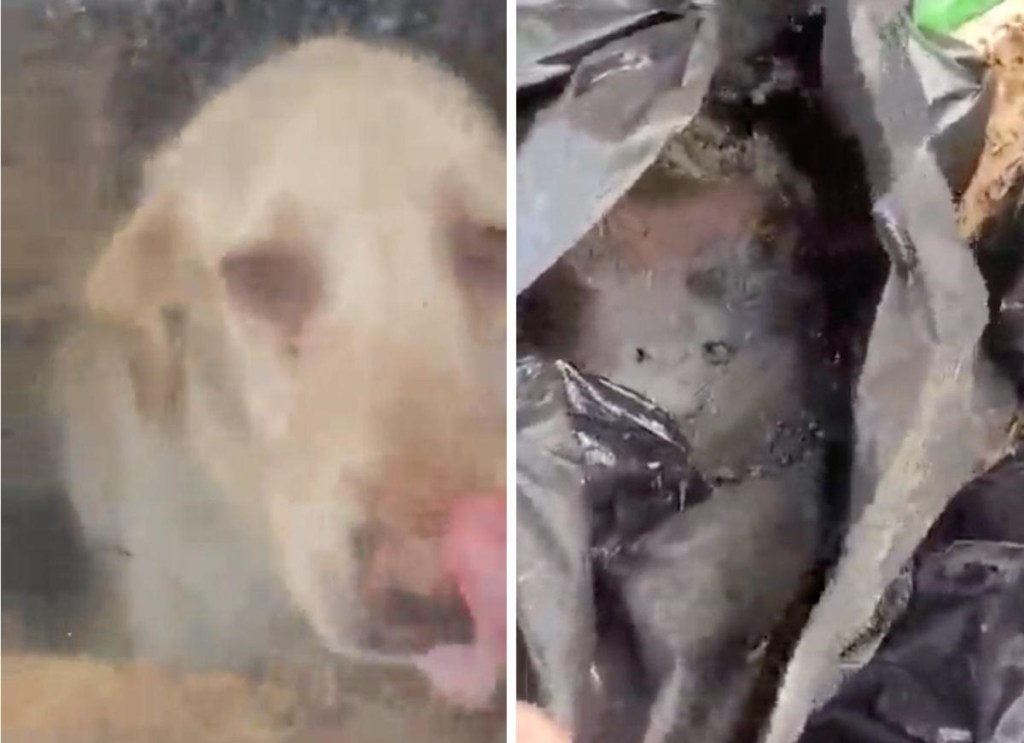
Dead and neglected dogs found at Deep South Animal Rescue
Video shows bodies of dogs all over, with many in trash bags or burned, and in varying states of decomposition. Just one dog was alive, an emaciated Labrador who had been locked in a shed without ventilation, food, or water, along with a dead federally protected Buzzard.
A warrant was issued to rescue the dog and begin disposal of 30 deceased canine remains.
An additional 14 dogs on a property in Pass Christian were also surrendered by Collins.
Collins was arrested in March 2022, and charged with only one felony count of animal cruelty for the federally protected buzzard and 30 misdemeanor counts of simple animal cruelty for the deceased dogs.
A photo taken by a Harrison County Sheriff’s Department Animal Control officer shows dead dogs wrapped in trash bags found on a property where Jessica Collins kept several dead dogs in Saucier.
Collins operated Deep South Animal Rescue under the name Jessica Ann Gallaspy. She was charged with 30 misdemeanor counts for cruelty to a dog under MS § 97-41-16 (2) a. and bonded out of the Harrison County Adult Detention Center. Maliciously injuring dogs or cats is now chargeable as a first-offense felony for each dog or cat killed with malice, MS § 97-41-16 (2) b.
Linda Perry went to the property in Saucier when she saw a plea from Collins on Facebook for help. Collins, she said, lied about being a 501c nonprofit and claimed she needed help because bobcats had been killing the animals.
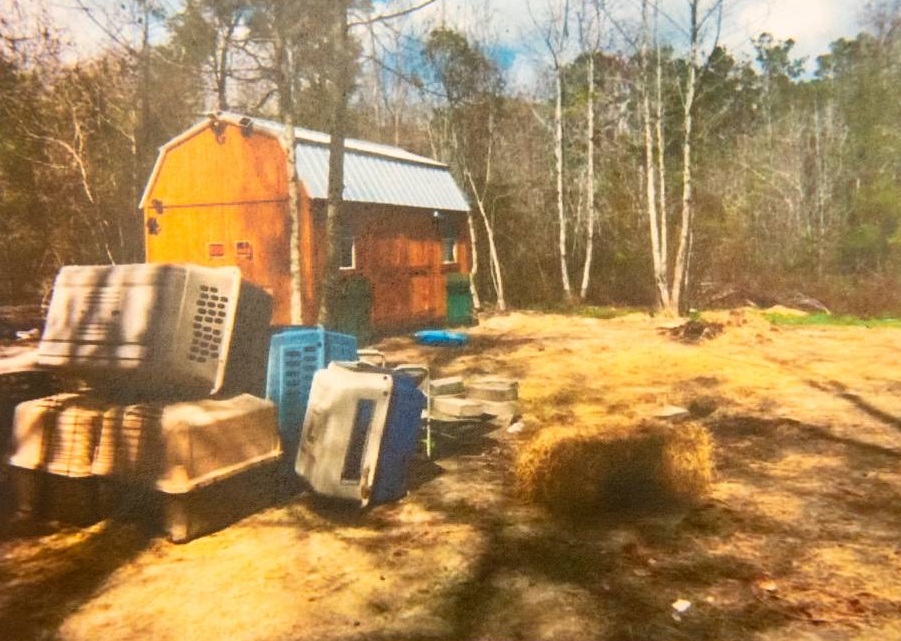
“From the moment I arrived, I started finding dead dogs all across the property,” she said “She said the bobcats were killing them. It was all a lie. Once you see that, you can’t forget it. She fooled everyone in the animal community.” Collins did not live on the property where sheriff’s deputies found the animals. A shed sat on the half-acre lot, and the animals had no electricity or running water.
A photo taken by a Harrison County Sheriff’s Department Animal Control officer shows the shed where Jessica Collins kept several dead dogs in Saucier.
Collins was sentenced to 60 months incarceration, with six months to beserved beginning on August 25. She will serve the remaining 54 months if she violates any term of her sentencing.
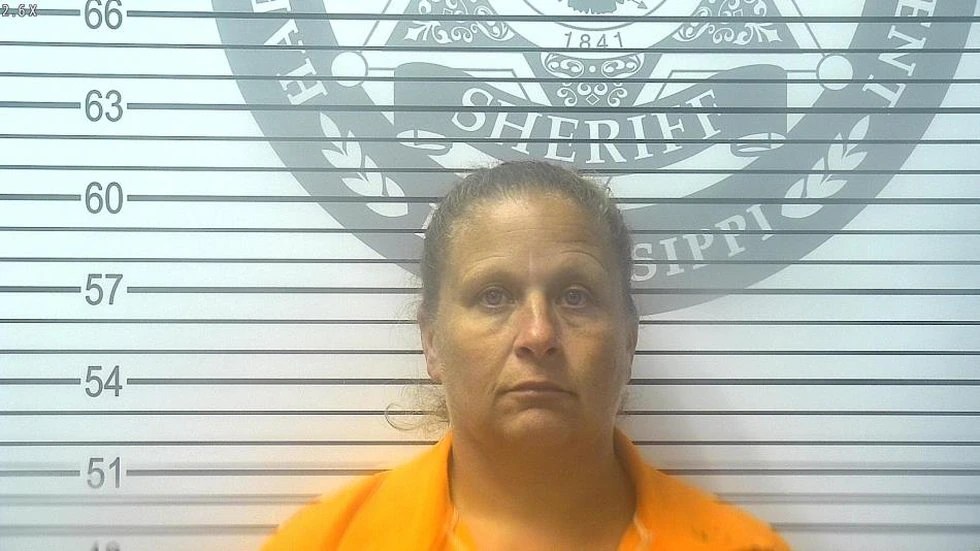
Jessica Collins – Harrison County Adult Detention Center
“It was hard to believe that a person like this defendant, who is supposed to be taking care of animals, had done what she did in that case,” Harrison County prosecuting attorney Herman Cox said. “It was atrocious. There is no excuse for it.”
Collins cannot own a domesticated cat, dog or other animal for 15 years. Once she completes her jail sentence, she will undergo a psychiatric evaluation and return to court every seven months for a review of her case.
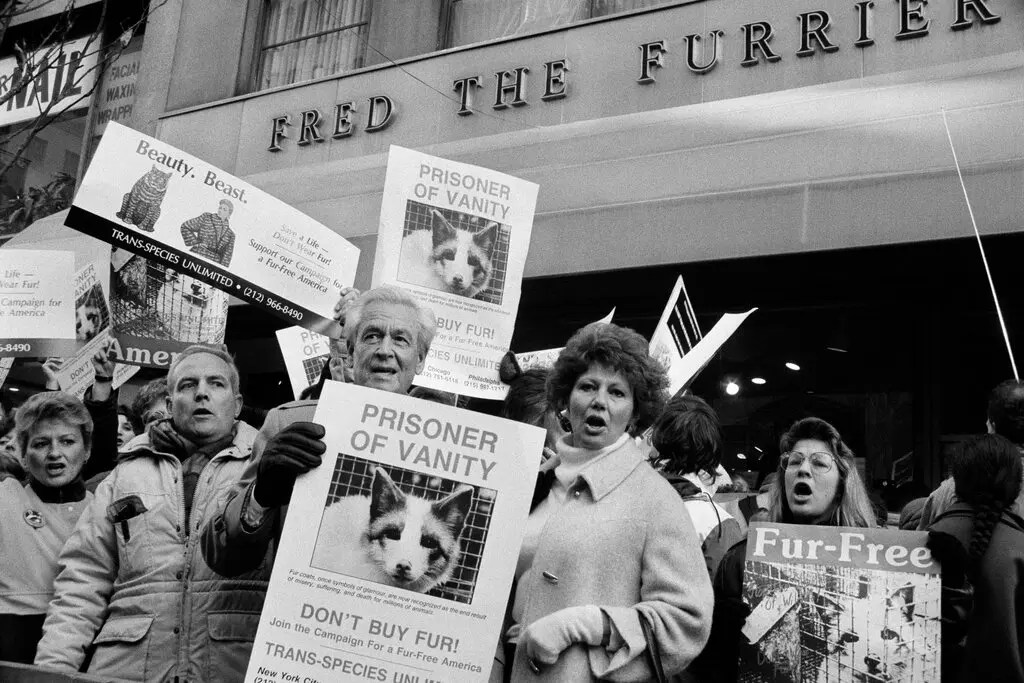
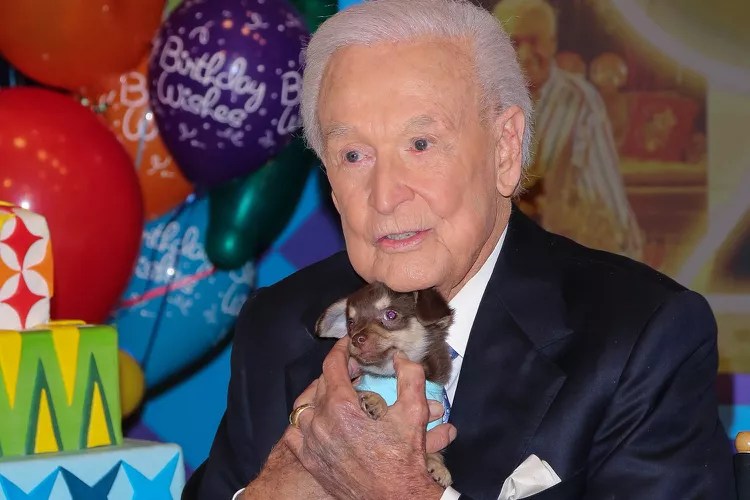
Through Philanthropy and Activism, Bob Barker Fought Animal Cruelty.
All about Bob Barker’s animal activism — from refusing fur prizes to launching a non-profit charity that funds Spay & Neuter clinics.
Bob Barker, an affable fixture on US television for half a century who hosted the popular game show The Price Is Right for 35 years and was a committed animal rights activist, has died at age 99, NBC News and Fox reported on Saturday.
Barker died on Saturday morning of natural causes at his Hollywood Hills, California, home, his publicist Roger Neal said.
Bob Barker with Nancy Burnet, president of United Activist for Animal Rights, in front of a Fifth Avenue furrier in New York in 1988. Credit…Don Hogan Charles/The New York Times
Barker was known for pro-animal causes and campaigned for them into his 90s. He would end episodes of The Price Is Right by urging viewers to get their pets spayed and neutered to control the animal population and began a foundation to subsidise the practices. He also spoke out against the treatment of animals in zoos, rodeos and circuses.
Over decades as the host of The Price Is Right, the longest-running game show in American television history, Mr. Barker, beginning in the 1980, used his pulpit to remind millions of viewers to “help control the pet population; have your pet spayed or neutered.”
He put $25 million into founding the DJ & T Foundation which finances clinics that specialize in spaying and neutering. The foundation was named after Mr. Barker’s wife, Dorothy Jo, and his mother, Matilda Valandra, who was known as Tilly.
In 2004, he donated $1 million to Columbia University School of Law to further the study of animal rights law.
“The Law School is extremely grateful for this generous gift,” said Dean David M. Schizer. “And we look forward to giving our students exposure to this growing area of legal scholarship.”
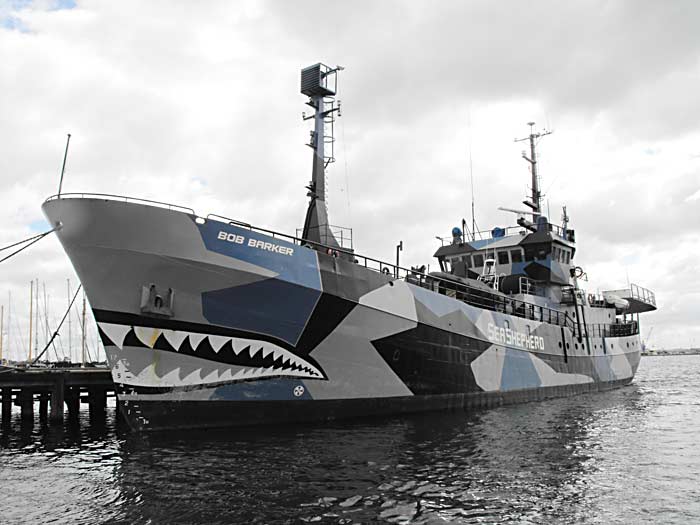
In 2010 he donated US$5 million for a 1,200-ton ship named the Bob Barker that was operated by the Sea Shepherd Conservation Society to stop Japanese whaling ships from killing whales off Antarctica.
The Sea Shepherd Conservation Society Anti-Whaling Ship ‘Bob Barker’
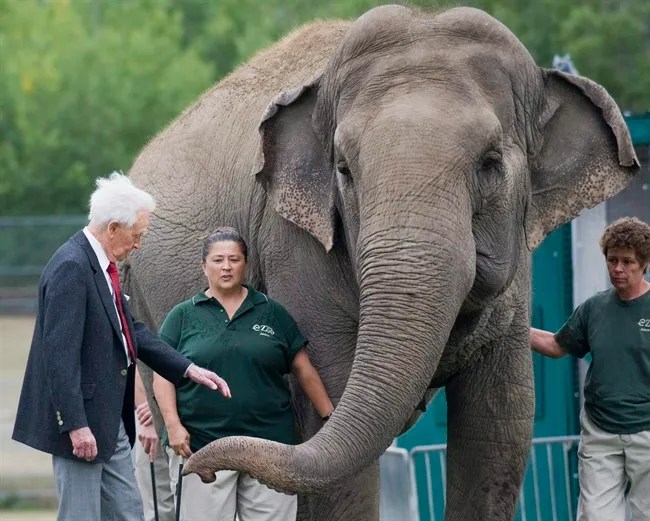
In 2012 Bob funded the travel costs for three Elephants to travel from the Toronto Zoo to a sanctuary in California aboard a private plane.
A spokesman for the TV icon says Barker offered to fund the $880,000 flight after learning that one of the Elephants wasn’t well enough to withstand the long trip by truck.
Henri Bollinger said that the Toronto Zoo agreed to move Thika, Iringa and Toka to the Performing Animals Welfare Society Elephant sanctuary in San Andreas, Calif., but that one of the animals suffers from “a serious foot problem.”
Barker described the Elephants’ new home as a “paradise” and said “to think that one of them might not survive the trip in a truck touched my heart and purse strings.”
Bob Barker with one of the Elephants that he helped travel to PAWS sanctuary
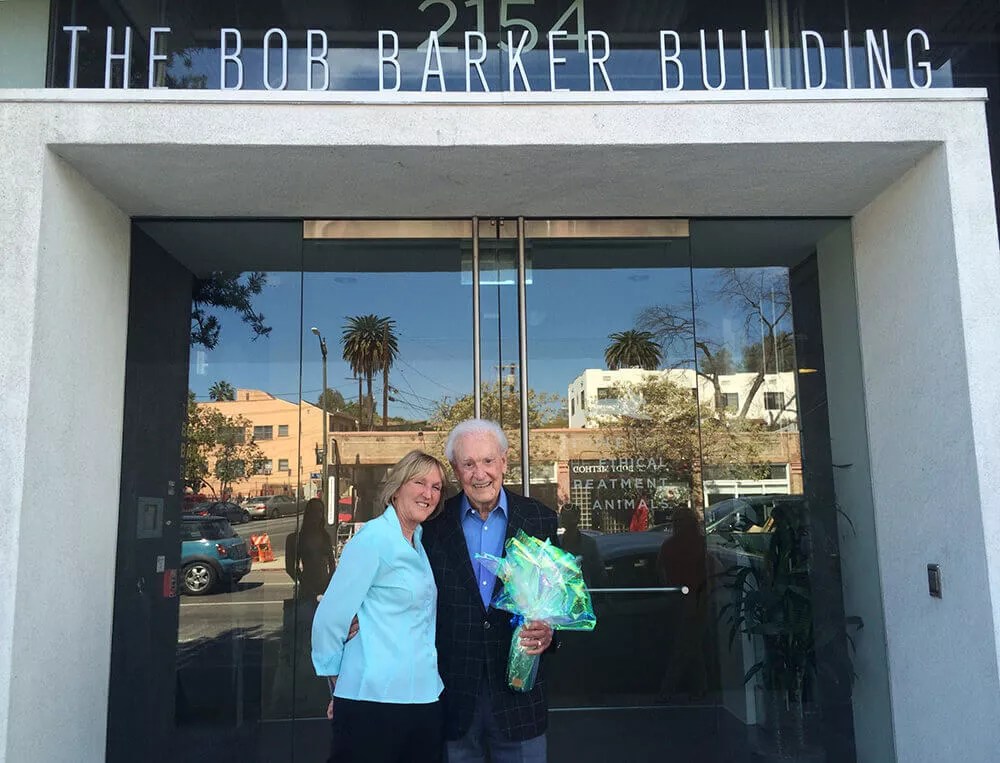
“It is money well-spent. I don’t know where you get more for your dollar, so far as protecting animals is concerned, than you get from PETA,” Barker said.
Bob Barker and Ingrid Newkirk at the opening of the PETA Bob Barker building in Los Angeles
In 2015, he stood behind a podium in an eleventh-floor conference room at the Millennium Biltmore Hotel in downtown Los Angeles. His mission: to publicly shame Foster Farms — among the biggest poultry producers on the West Coast — for cruelty toward animals.
Reporters at the event were shown a secretly taped video, narrated by Barker and shot in May and June at two Foster Farms slaughtering plants in Fresno, Calif. The video showed scenes of thousands of chickens being carelessly hung by their legs on conveyor belts. Factory workers execute the process with brutal efficiency, occasionally punching live birds and plucking out their feathers.
Bob Barker speaking for Mercy For Animals in Los Angeles in 2015. Barker criticised poultry producer Foster Farms after an animal-rights group released video showing chickens being shackled, punched and having their feathers pulled out while still alive. Photo: AP
Julie Woodyer, campaigns director at Zoocheck, knew Barker for years as they collaborated on both successful and failed efforts to free animals from captivity at Canada’s zoos.
She says Barker brought a determination and generosity that was unmatched by other celebrities, often opening his chequebook to support the cause and willingly making public appearances to raise awareness.
“I just can’t imagine there will be somebody to replace that ever,” Woodyer said in a phone interview.
Woodyer first connected with the TV host and his partner Nancy Burnet over email in 2010 as Zoocheck — in co-operation with other animal rights organizations –attempted to free Lucy the elephant from the Edmonton Valley Zoo.
In 2011, Barker appeared on CTV’s “Canada AM” morning show where he explained that elephants were not adapted to brave Canada’s harsh winter climate and Lucy’s health was deteriorating.
While the campaign to relocate Lucy was unsuccessful, Woodyer said a bond was formed with Barker over their shared interest in animal rights.
Together, they were involved in a controversial and years-long effort to move three elephants — Toka, Thika and Iringa — from the Toronto Zoo to a sanctuary in California. The campaign included Barker making public appearances and mingling with local city councillors to explain his view in hopes they would lend their support.
Ultimately, Barker donated $800,000 to the Peoples Animal Welfare Society for the successful transport and care of the animals.
“It would have been years and years for us to try to fundraise that,” Woodyer said, “And it would’ve been too late for some of those elephants.”
Barker later donated $50,000 to help build Manitoba’s first black bear cub rehabilitation centre.
“Lending his celebrity voice … really boosted those campaigns significantly and allowed us to have a broader audience,” Woodyer said.
“He was the funniest man I’ve ever met, extremely sharp, even in his very late years, and he could always come up with something funny, and make us all laugh even in the midst of difficult times in our campaigns.”
Bob Barker was a passionate animal rights advocate throughout his life. PHOTO: PAUL ARCHULETA/FILMMAGIC
I’d like to see animals removed from the entertainment business. Chimpanzees and apes won’t perform unless you beat them. Circuses keep elephants in chains 90 percent of the time. Elephants need freedom of movement. In circuses, they live in cramped quarters, which is not the life intended for them by nature. Some are beaten daily, forced to do ridiculous tricks and robbed of every shred of dignity. ~ Bob Barker.















 PROTECT ALL WILDLIFE