First Scientific Record As An Orangutan In Sumatra Treats An Open Wound With A Poultice Made From A Medicinal Plant.

An Orangutan in Sumatra surprised scientists when he was seen treating an open wound on his cheek with a poultice made from a medicinal plant. It’s the first scientific record of a wild animal healing a wound using a plant with known medicinal properties. The findings were published this week in Scientific Reports1.
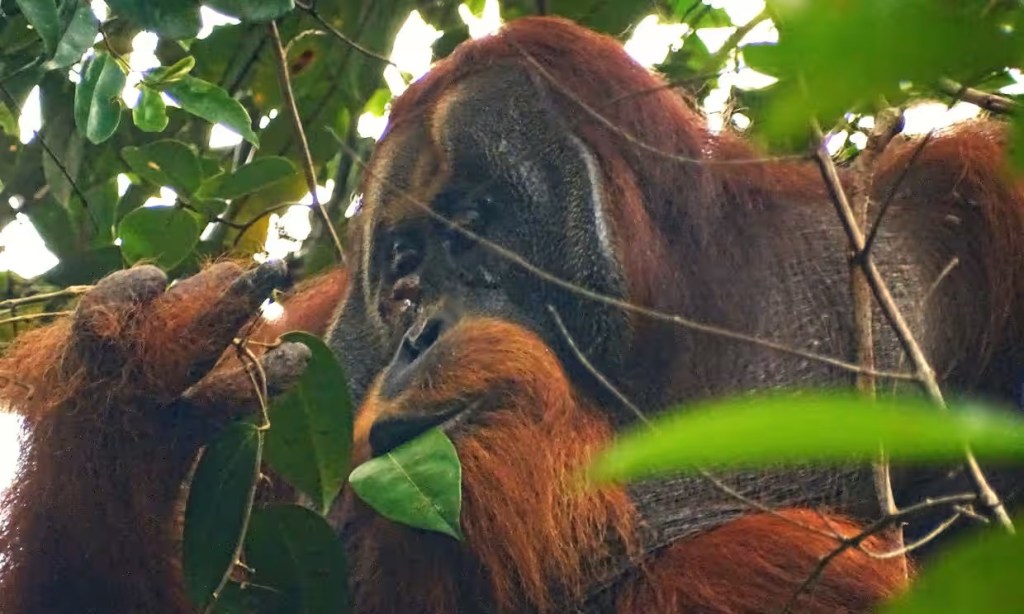
Rakus used leaves from a liana climbing vine known to have anti-inflammatory and pain-relieving properties. Photograph: Saidi Agam/Suaq Project

“It shows that Orangutans and humans share knowledge. Since they live in the same habitat, I would say that’s quite obvious, but still intriguing to realize,” says Caroline Schuppli, a primatologist at the Max Planck Institute of Animal Behavior in Konstanz, Germany, and a co-author of the study.

In 2009, Schuppli’s team was observing Sumatran Orangutans (Pongo abelii) in the Gunung Leuser National Park in South Aceh, Indonesia, when a young male moved into the forest. He did not have a mature male’s big cheek pads, called flanges, and was probably around 20 years old, Schuppli says. He was named Rakus, or ‘greedy’ in Indonesian, after he ate all the flowers off a gardenia bush in one sitting.

In 2021, Rakus underwent a growth spurt and became a mature flanged male. The researchers observed Rakus fighting with other flanged males to establish dominance and, in June 2022, a field assistant noted an open wound on his face, possibly made by the canines of another male, Schuppli says.

Days later, Rakus was observed eating the stems and leaves of the creeper akar kuning, which local people use to treat diabetes, dysentery and malaria, among other conditions. Orangutans in the area rarely eat this plant.

Leaves from the akar kuning variety of liana climbing vines. Photograph: Saidi Agam/Suaq Project

In addition to eating the leaves, Rakus chewed them without swallowing and used his fingers to smear the juice on his facial wound over seven minutes. Some flies settled on the wound, whereupon Rakus spread a poultice of leaf-mash on the wound. He ate the plant again the next day. Eight days after his injury, his wound was fully closed.

The research group has seen no other orangutans in the national park self-medicate using akar kuning in 21 years of observation. This could be because wild Orangutans in the region are rarely injured. Or perhaps Rakus is the only one who knows of this treatment, which could be a behaviour he picked up before he moved into the area.

Rakus with his open wound, two days before he was observed applying a poultice of medicinal leaves. Credit: Armas

“It is the first study to scientifically demonstrate that an animal is using a plant with medicinal properties applicable to wounds, and putting those on the wounds and consistently treating over a period of time,” says Michael Huffman, who studies animal self-medication at the Institute for Tropical Medicine at Nagasaki University in Japan.

Huffman says self-medication is seen in many species. Canadian Snow Geese swallow leaves whole to expel tape worms. Dusky-footed Wood Rats line their nests with aromatic plants to fumigate parasites. And Chimpanzees in Gabon have been observed rubbing insects near their wounds, potentially as treatment.

Humans might even have discovered some remedies by watching animals, he says. “Probably our ancestors were looking at other animals and learning about medicines.” When social animals communicate, “that information sticks and can last over generations”.

  1. Laumer, I. B. et al. Sci. Rep. Active Self-Treatment Of A Facial Wound With A Biologically Active Plant By A Male Sumatran Orangutan

WHAT YOU CAN DO TO HELP WILDLIFE

You can support ‘Protect All Wildlife’ by donating as little as £1 – It only takes a minute but it can last a lifetime for an animal in need. Please donate below.

PLEASE CLICK HERE TO HELP ANIMALS IN NEED

Everyone who donates will receive a Certificate of Appreciation as a thank you for helping animals in need.

The Mission of Protect All Wildlife is to prevent cruelty and promote the welfare of ALL animals.

We believe EVERY animal should be treated with respect, empathy, and understanding. We raise awareness to protect and conserve wild, captive, companion and farm animals.

It is vital that we protect animals against acts of cruelty, abuse, and neglect by enforcing established animal welfare laws and, when necessary, take action to ensure that those who abuse animals are brought to justice.

Protect All Wildlife are involved in many projects to protect animals’ rights, welfare, and habitats. Money contributed to Protect All Wildlife supports ALL of our worthy programmes and gives us the flexibility to respond to emerging needs. Your donations make our work possible.
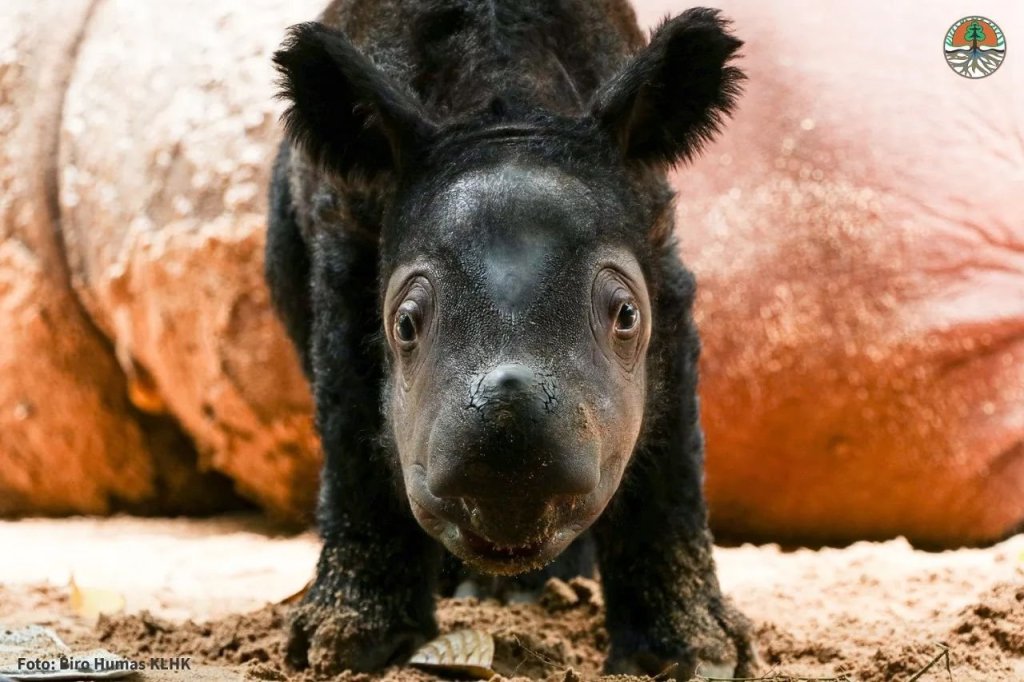
RARE BIRTH OF SUMATRAN RHINO BRINGS HOPE FOR ENDANGERED SPECIES

A Sumatran Rhino has successfully given birth in a Lampung sanctuary, environment officials said, in a boost for conservation efforts targeting the critically endangered animal.

THE CLAF BORN IN WAY KAMBAS NATIONAL PARK

The World Wide Fund for Nature estimates fewer than 80 Sumatran Rhinos remain in the world, mainly in Sumatra and Kalimantan.

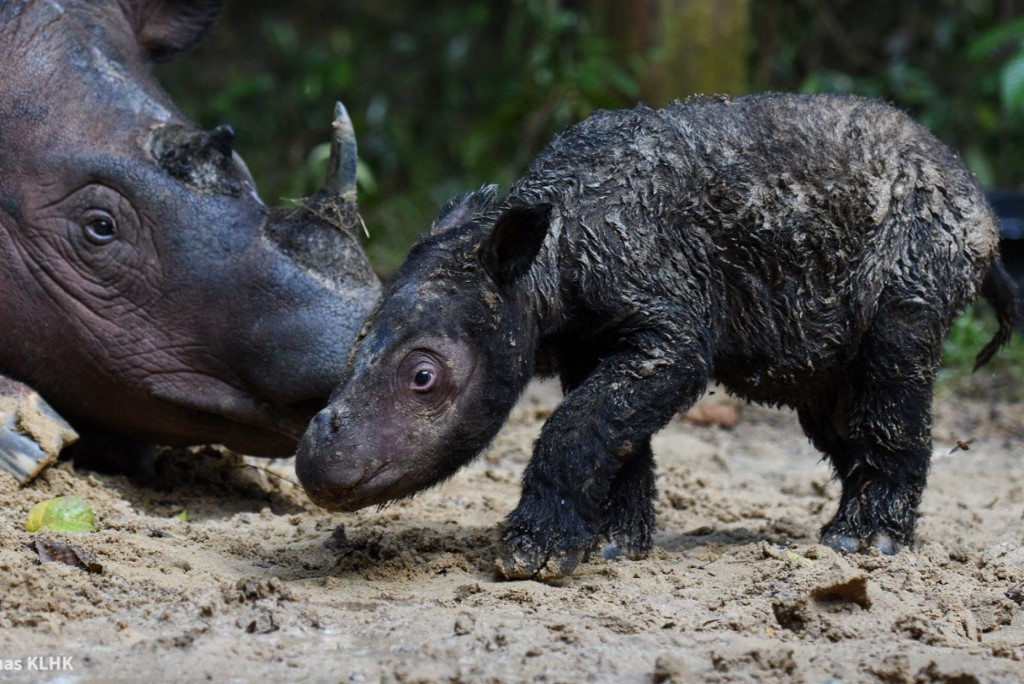
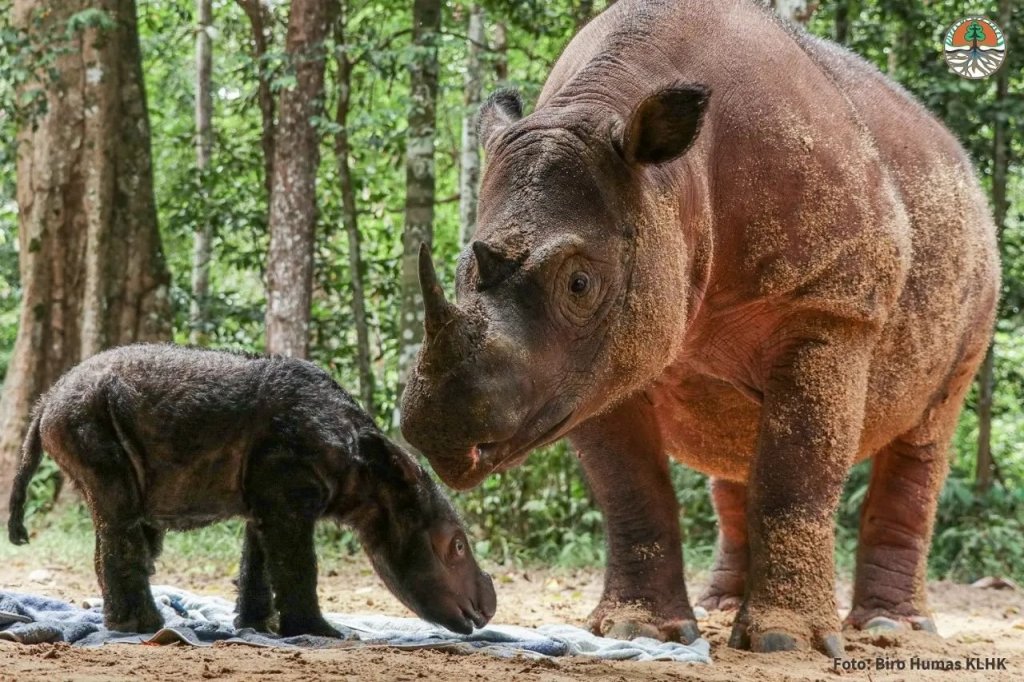
A Rhino named Rosa gave birth to a female calf on Thursday in Way Kambas National Park in Lampung, after suffering eight miscarriages since 2005, when she was brought in from the wild for a breeding program.

“The birth of this Sumatran Rhino is such happy news amid the government’s and partners’ efforts to increase the population,” Wiratno, a senior official at Indonesia’s environment ministry, said in a statement Monday. 

The calf, who has yet to be named, brings the number of Sumatran Rhinos in the Way Kambas sanctuary to eight.

Successful births are rare. The calf’s father, named Andatu, was the first Sumatran Rhino born in a sanctuary in more than 120 years.

Standing between 3.3 – 5 feet, Sumatran Rhinos are the smallest of all Rhinoceroses and they have a lifespan of around 35 – 40 years. They were once found across South and Southeast east, from the foothills of the Eastern Himalayas in Bhutan to eastern India, through Myanmar, Thailand, and  possibly to Vietnam and China. Now, the species is critically endangered, with less than 80 individuals remaining in the wild in small fragmented habitats on the island of Sumatra and nearby Borneo.

MOTHER ROSA WITH HER CALF

In 2017, Rhino conservation experts and the Indonesian government concluded that the only way to save the species was through a captive breeding program. The move was similar to an initiative launched in the 1980s that saw 40 Sumatran rhinos captured for breeding. But in this case, nearly half of the captive animals had died by 1995 and not a single calf had been born.

The International Union for Conservation of Nature classifies the Sumatran rhino, the smallest of all Rhino species, as critically endangered.

Multiple threats have brought them to the brink of extinction, including poaching and climate change.

This handout photo released on March 28 and made available on March 29, 2022 shows female rhino named Rosa (l) with her new baby born at the Way Kambas National Park, in Way Kambas, in Lampung province. Rosa delivered a baby rhino on March 24, for the first time after translocating from roaming in villages. A critically endangered Sumatran rhino was born in an Indonesian sanctuary bringing hope to the conservation of the rapidly declining species, an official said. (AFP/Handout)

Rhino horn is often illegally traded for traditional Chinese medicine. 

Indonesia is also racing to save another critically endangered species – the Javan Rhino.

Once numbering in the thousands across Southeast Asia, fewer than 80 are alive today, mainly in a national park on Indonesia’s main island of Java.

Efforts to conserve the species have shown promising results with the birth of five calves in Ujung Kulon National Park last year.

The Mission of Protect All Wildlife is to prevent cruelty, promote the welfare of ALL animals EVERYWHERE, and help END animal abuse.

Please support our work by donating ANY amount, large or small. It only takes a minute and your donations make it all possible. Thank you for your support.

Please SHARE for others to enjoy. You can also REGISTER for NEWS & UPDATES straight to your inbox by signing up in the top right of this page. Thank you.

Go back

Your message has been sent

Warning
Warning
Warning
Warning
Warning
Warning.

Royal Bengal Tiger Caught On Trap Camera In Neora Valley National Park

Royal Bengal Tiger In The Neora Valley National Park

The Royal Bengal Tiger Seen in Neora Valley National Park was caught on camera. The picture of the Royal Bengal Tiger was captured in Neora valley national park. For the past few years, the Royal Bengal Tiger has been found in the Neora Valley National Park in the Gorumara wildlife division. Once again, the Royal Bengal Tiger can be seen roaming in the forest. Some of these images were captured on The Trap Camera on Sunday. Once again the wildlife department is excited that the picture of the Royal Bengal Tiger has been captured on the trap camera.

The state’s principal chief conservator of forests, Deval Roy, said, “We have received pictures of the Royal Bengal Tiger in the forests of Neora before. But this time the picture was caught on the trap camera several times. Earlier in the winter, pictures of the Royal Bengal Tiger were captured on camera. This time the picture has been taken from December to March. It is being investigated whether the pictures taken are of the same Tiger. “

Earlier there was a lot of evidence that there were Tigers in the jungles of Neora Valley. Once upon a time, there was a Tiger in the Neora Valley, but it was not seen for several years. The foresters thought that some of the places in the forest, which are still unfit for human transport, are suitable for Tigers to live in. At times, the Tiger seems to be scratched at the base of the tree, but no forester has seen the Tiger. On January 18, a Tiger was first spotted on the side of the road from Pedong to Lava. On January 18, a driver in the hills, Anmol Chhetri, caught him on camera.

On December 19, 2017, an automobile driver named Anmol Chhetri captured the first picture of the Tiger on his way from Lava to Rishop on his mobile camera. After that, the trap camera was created by the forest department. The camera captured pictures of the Royal Bengal Tiger several times. And that’s why they guessed that there were more than one number of Tigers in the forests of The Neora Valley. Since then, more or less pictures of Tigers have been captured every year. Even last year, the Tiger was captured on camera. And once again the picture of the Tiger was caught on the trap camera kept in the forest. Ensuring the safety of the Tigers is now the only aim of the forest department. For this, the security of the forests of Nawara is being strengthened, said an official of the concerned department.

The Buxa forest has the recognition of the Tiger Project in the North East. However, there has been a debate over whether there are Tigers or not for the past few years. Meanwhile, there is a rush to bring Tigers from Vin state to Buxa. And in the meantime, the Tiger was seen in the Neora Valley. Not once, but several times.

A Tiger was first spotted in the region in January 2017 by a car driver who took photos of the big cat. Later, the same Tiger was caught on a trail camera installed by the forest department across the 88-sq km the national park in January 2018.

The Tiger Was Earlier Caught On A Trail Camera In The 88-Sq Km Neora Valley National Park

“On December 18, 2019, a trail camera captured a tiger. We are yet to analyse the image. We cannot say right now if it is a male or a female,” said Ravi Kant Sinha, principal chief conservator of forests and chief wildlife warden of West Bengal.

“A thorough analysis of all images captured in the past three years is yet to be done. So, it is not possible for us to say if there are multiple tigers or the same one is being spotted,” Sinha added.

The Mission of Protect All Wildlife is to prevent cruelty, promote the welfare of ALL animals EVERYWHERE, and help END animal abuse.

Please support our work by donating ANY amount, large or small. It only takes a minute and your donations make it all possible. Thank you for your support.

Go back

Your message has been sent

Warning
Warning
Warning
Warning
Warning
Warning.

PREGNANT ELEPHANT FOUND DEAD WITH ‘BLOOD COMING OUT OF ITS MOUTH AND ANUS’

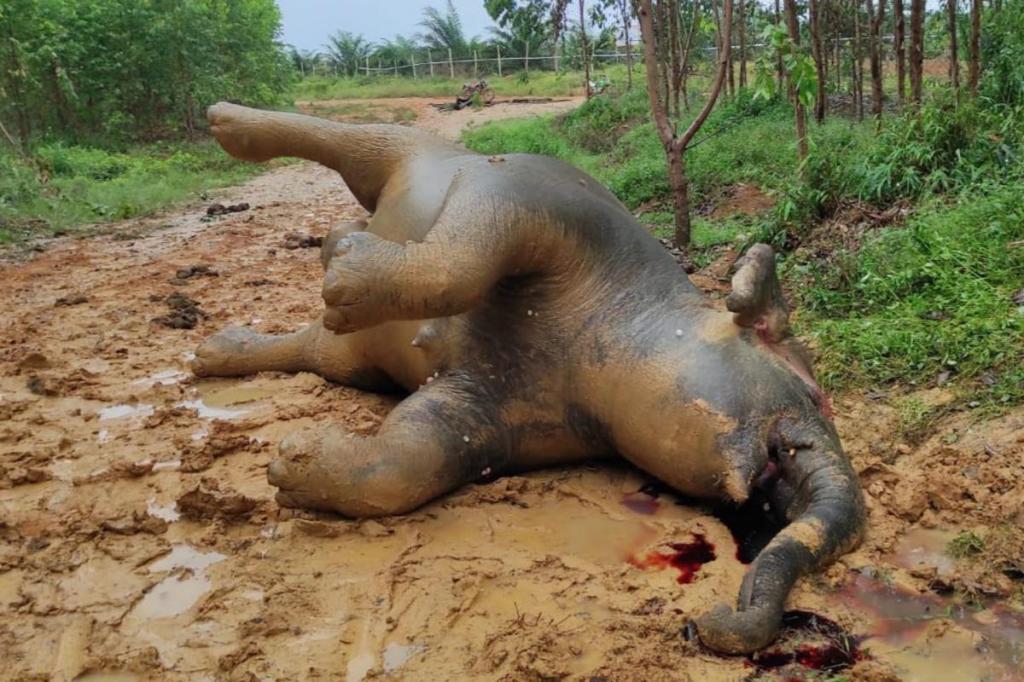
THE PREGNANT SUMATRAN ELEPHANT IS SEEN LYING ON THE GROUND AT A PALM PLANTATION IN BENGKALIS, RIAU PROVINCE (PICTURE: EPA)

A critically endangered Elephant and its unborn baby were found dead in western Indonesia after a suspected poisoning.

Disturbing photographs show the animal with blood coming out of its mouth on the island of Sumatra.

Local authorities are now investigating the death of the pregnant Elephant, which was due to soon give birth.

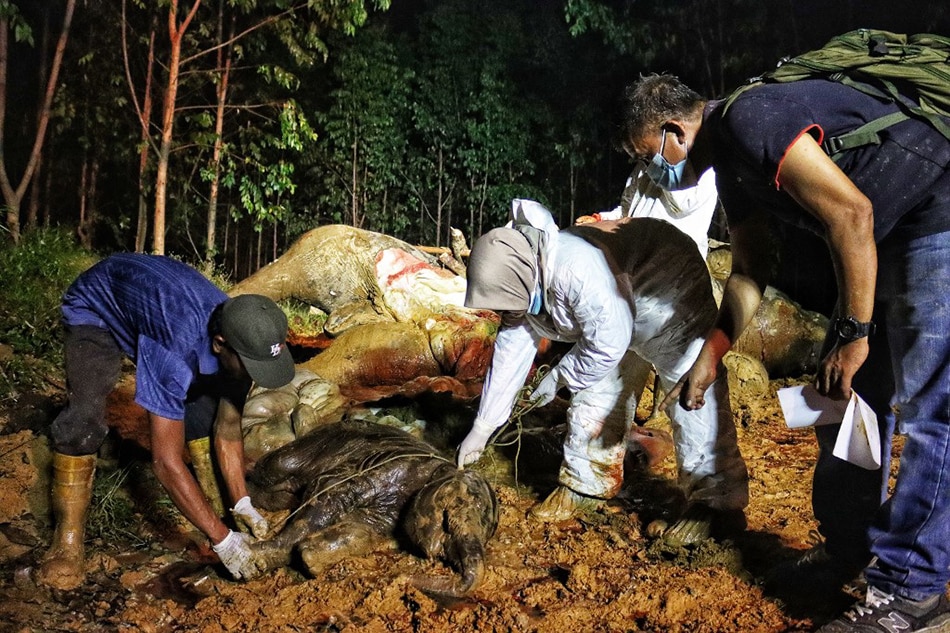
Its corpse was discovered during a joint patrol by conservation groups on Wednesday.

Conservationists suspect the incident may be linked to the palm oil industry, which they say consider the animals a pest.

‘From the sign of changes in the shape of its internal organs, such as the lung, it looks like it is burning, black and oozing from the blood,’ said Zulhusni Syukri, programme director of Rimba Satwa Foundation, one of the groups that found the dead animal.

THE CARCASS OF A DEAD SUMATRAN ELEPHANT AND ITS UNBORN BABY IN BENGKALIS

Rimba Satwa strongly suspect the animal was poisoned as pineapple was found in its stomach, even though the tropical fruit does not grow in that area.

There are already fewer than 700 Sumatran Elephants remaining on the island.

According to Indonesian forestry and environment ministry, the number has gone down from 1,300 in 2014 to 693 last year.

This is why the species is protected under an Indonesian law on the conservation of biological natural resources and their ecosystems.

The decline has occurred amid a loss of more than 69% of the animal’s potential habitat in the last 25 years, the equivalent of one generation.

What you can do to help

Support Protect All Wildlife’s work by donating as little as £1 – it only takes a minute. Please donate ANY amount, large or small, at HELP PROTECT ALL WILDLIFE. Thank you.

What else you can do to help

Please SHARE to raise awareness to wildlife and environmental issues from around the world. You can also receive NEWS and UPDATES by signing up in the top right of this page.