REMEMBERING SATAO, THE ELEPHANT KILLED BY POACHERS FOR HIS TUSKS SO LONG THEY TOUCHED THE GROUND

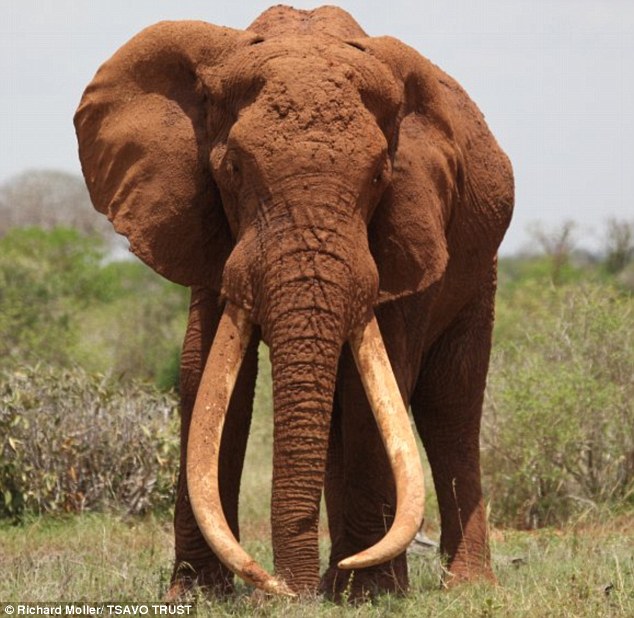
THE MAGNIFICENT SATAO ~ RICHARD MOLLER/TSAVO TRUST

Satao was one of the largest Elephants in the world. His weight was estimated to be over 7 tons and his tusks were so long he could rest them on the ground.

By logic, his size should have made him unreachable for any natural predators. However, in a world of destruction and corruption, logic doesn’t prevent the extinction of the African Elephant. Satao fell prey to poachers for his ivory in May 2014, which triggered a huge wave of grief in Kenya followed by international outrage in the news and on Twitter and Facebook.

Born in the late 1960s in Tsavo, Satao caused great amazement to everyone who ever caught a glimpse of him; rangers, tourists but also poachers. Many believe that Satao had the understanding that his tusks were beyond the ordinary. In fact, he had adjusted his behaviour to keep his tusks out of sight, which was incredibly impressive and heart-breaking at the same time. Impressive, because this once again proved how very intelligent Elephants really are, and sad, because Satao was nonetheless poisoned by arrows that caused his death.

The Tsavo Trust had been monitoring the Elephant’s movements using aerial reconnaissance for the last 18 months, and thanks to his enormous tucks the beast was ‘easily identifiable’ from the air.

But the technology was not enough to save the iconic beast from the hands of the poachers.

A Tsavo Trust spokesman said at the time: ‘With great sadness, we report the death of Satao, one of Tsavo’s most iconic and well-loved tuskers.

‘This magnificent Elephant was widely known in Tsavo East National Park, where he was observed with awe by many thousands of Tsavo’s visitors over the years.

‘No longer will Tsavo and Kenya benefit from his mighty presence.’

‘Satao, whose tusks were so long they trailed the ground, was discovered with his face hacked off at Kenya’s Tsavo East National Park’

He added: ‘The arrow had entered his left flank and he stood no chance of survival. We spotted his carcass on 2nd June but to avoid any potential false alarms, we first took pains to verify the carcass really was his.

‘Today it is with enormous regret that we confirm there is no doubt that Satao is dead, killed by an ivory poacher’s poisoned arrow to feed the seemingly insatiable demand for ivory in far off countries.

‘A great life lost so that someone far away can have a trinket on their mantelpiece.’

‘Rest in peace, Old Friend, you will be missed, he added.

Photos of his hacked off face and tusks circled the Internet and recorded the bitter loss and undignified death of this incredibly rare tusker.
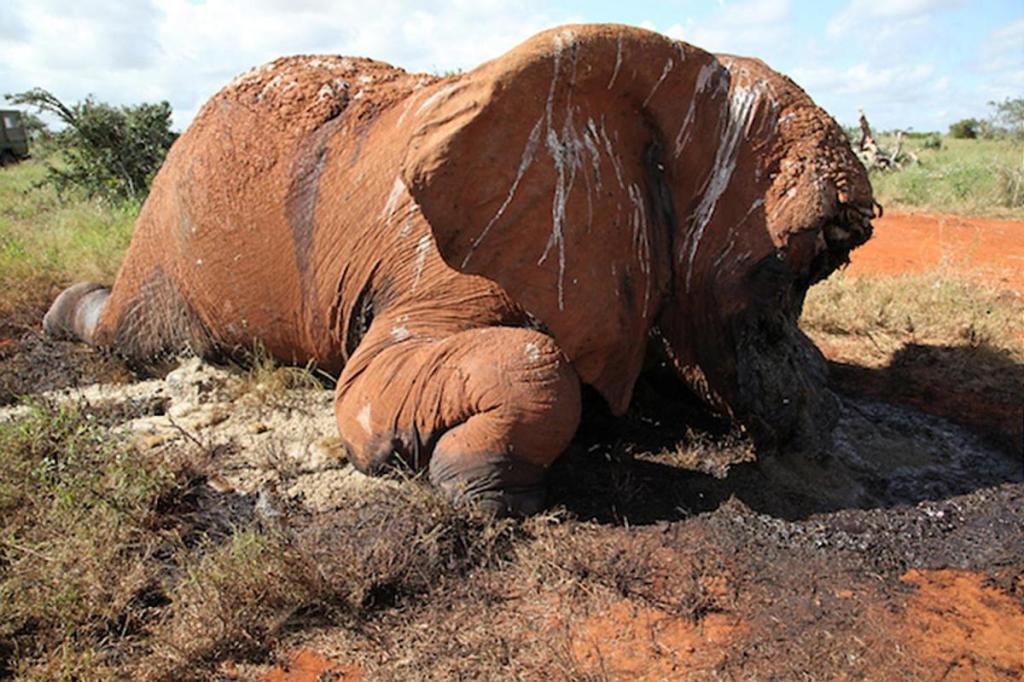
AN UNDIGNIFEID END: SATAO WAS FOUND WITH HIS FACE AND TUSKS HACKED OFF!

Wildlife filmmaker based in Kenya Mark Deeble who had written a blog post Satao: last of the great tuskers about how poachers had been hunting Satao for some time and how he was injured but managed to escape until now:

He said “I was thankful that the bull’s wounds were healing and that we hadn’t had to dart him, but I was devastated that poachers had somehow managed to predict his movements and get close enough to fire two poison arrows into him. I am appalled at what that means – that the survival skills that the bull has painstakingly learnt over half a century have been rendered useless by the poachers’ use of mass-produced Chinese goods, GPS smartphones, cheap motorcycles and night vision goggles.

I think the old bull knows that poachers want his tusks, and I hate that he knows.

More than anything, I hate the thought that poachers are now closing in on one of the world’s most iconic Elephants.”

His fears came to reality on the 30th of May 2014!!

RIP Satao, you will NEVER be forgotten.

SATAO DRINKS AT A WATER HOLE IN TSAVO EAST NATIONAL PARK, KENYA, IN 2013, WHEN THE MAGNIFICENT TUSKER WAS IN HIS PRIME – MARK DEEBLE

NO ONE IN THE WORLD NEEDS AN ELEPHANT TUSK BUT AN ELEPHANT. ~ THOMAS SCHMID

A variety of styles of Nobody In The World Needs An Elephant Tusk Except Elephants tops are available at Save The Elephant with all proceeds helping Elephant charities.

Please SHARE to raise awareness to the plight of Elephants at the hands of poachers. You can also SIGN UP for news and updates straight to your inbox by registering in the top right of this page. Thank you.
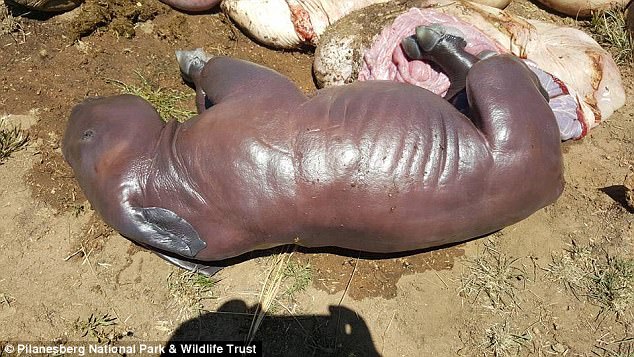
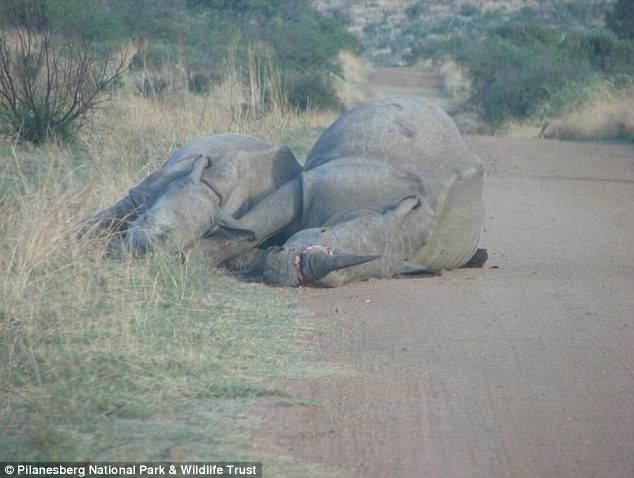
Killed By Poachers Before It Had A Chance To Live. Pregnant Rhino And Calf Shot Dead By Poachers In Pilanesberg National Park

45F1DA9C00000578-5043451-image-a-14_1509637277244
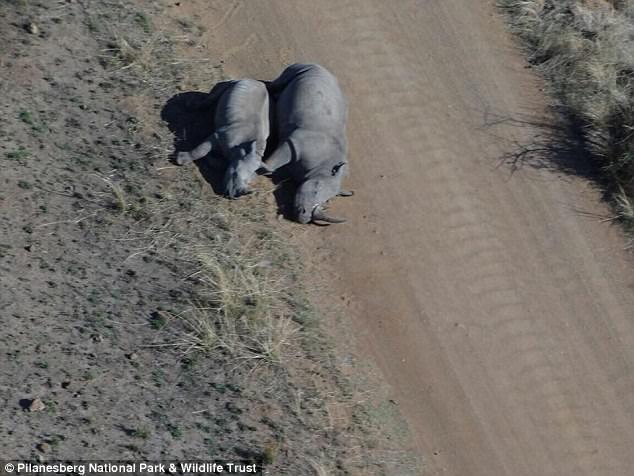
No chance: An unborn Rhino calf who died in its mother’s womb after she and its sibling were shot dead by poachers in South Africa
45F1DAA400000578-5043451-image-a-15_1509637288804
Heartbreaking: The markings around the mother’s horn show that the poachers had made an attempt to cut it off, but fled the scene when park staff arrived

The Rhino was heavily pregnant and roaming Pilanesberg National Park in Mogwase, north-west South Africa, with its calf when they were hunted down for their horns.

These heartbreaking images show an unborn Rhino calf who died after its mother and sibling were shot and killed by poachers.

Photos show the poachers began hacking off the mother’s prized horn, but they were interrupted by park rangers and fled before they had time to remove it.

When park staff tried to save the unborn calf, it was found to have died inside its mother’s womb.

Pilanesberg National Park wrote on its official Facebook page: ‘There are no words.

‘Mom and calf shot and killed by poachers. Horns are still on as the murderers fled the scene when they heard a game drive approach. Mom looks very pregnant as well. We are devastated.’

Pilanesberg National Park added in the post that a reward will be issued for any information leading to an arrest and prosecution of the poachers.

A spokesperson for the park told MailOnline that the mother Rhino was aged eight and the calf just two years old. The unborn foetus would have been due in February next year.

45F1DAA800000578-5043451-image-a-17_1509637322828
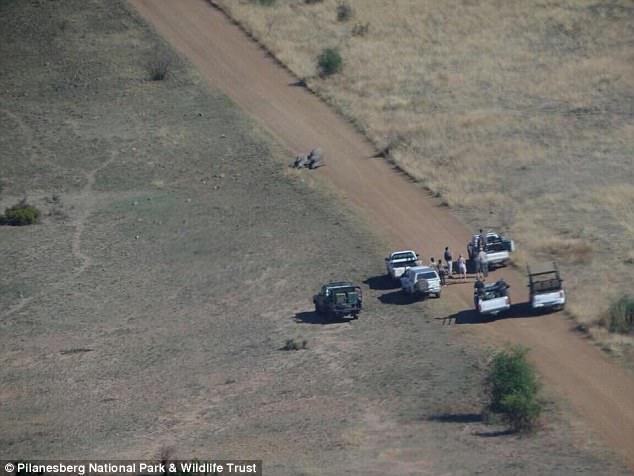
Killed: The heavily pregnant Rhino and its calf lie by the roadside where they were shot

‘We have lost 16 Rhino and 3 unborn calves so far 2017 – that we are aware of,’ the spokesperson said.

‘This loss is not due to lack of interest or effort from Park management, as this is a large park with many valleys and hills, which is a difficult territory to operate in.’

Since 2007, more than 6,000 Rhinos have been shot and butchered for their horns in South Africa alone.

The majority of those have come in the last four years with around a thousand being killed every year since 2013.

Sometimes the Rhinos are shot dead, in other cases they are brought down with a tranquiliser gun before having their horn hacked off – leaving the Rhino to wake up and bleed to death painfully and slowly.

The province of KwaZulu-Natal, which has the greatest density of Rhino in South Africa, has seen 139 slaughtered already this year.

Despite countries such as China, Vietnam, South Korea, Malaysia and even India believing Rhino has medicinal values, repeated studies have not found any evidence to support the claims.

45F1DAAC00000578-5043451-image-a-16_1509637320203
Sad: Park rangers and guests gather at the heartbreaking scene in Pilanesberg

Rhino horns are made from a protein called keratin, the same substance that human fingernails and hair are made of. The horn is essentially just a compacted mass of hairs that continues to grow throughout the animal’s lifetime, just like human hair and nails.

It is similar in structure to horses’ hooves, turtle beaks, and cockatoo bills – however these animals are not hunted and slaughtered in the same way.

Tragically tradition and cultural beliefs in some Asian countries mean the demand for Rhino horn has not waned despite just some 20,000 white Rhino being left in the wild.

Poachers are now being supplied by international criminal gangs with sophisticated equipment to track and kill Rhinos. Based on the value of the Asian black market, Rhino horn price is estimated at $ 65,000 USD per kg*. In the near past, the Rhino horn price soared up around $65,000 per kilogram. This price hike turned the Rhino horn more valuable than gold and many other precious metals, also many times more worthy than Elephant ivory. (*2020 figures)

Please SHARE to raise awareness of the horrific result of poaching. Please SUBSCRIBE for news and updates.