‘World’s Loneliest Orca’ Kshamenk Seen Swimming Alone And Barely Moving In Tiny Pool TWENTY Years After Partner’s Death

A LONELY orca has been filmed swimming by itself in captivity – barely able to move in a tiny pool.

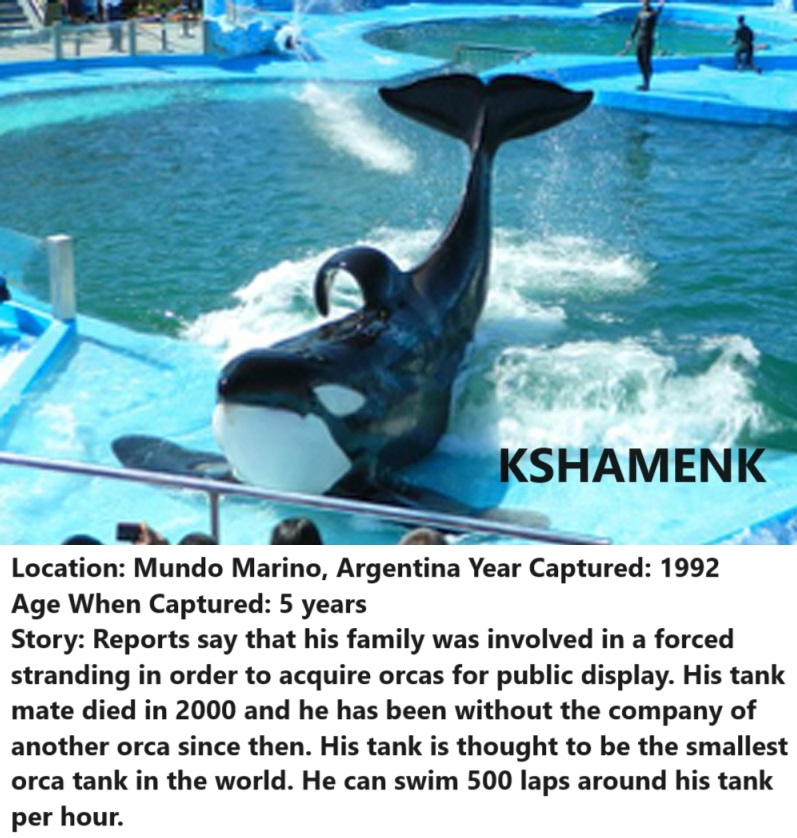
Kshamenk has lived in captivity at Mundo Marino since 1992 Credit: UrgentSeas, Phil Demers

The 35-year-old whale, known as Kshamenk, has lived in captivity at Mundo Marino since 1992 when he was caught in the wild. He had a mate, known as Belen, but she died in 2000, leaving the lonely orca alone. Now a new video shared online shows the orca in a tiny pool at the marine site.

The devastating video shared to social media has gone viral 20 years after the heartbroken orca’s partner died.

Kshamenk has lived in captivity at Mundo Marino since 1992 Credit: UrgentSeas, Phil Demers

He appears very still, floating in the middle of the pool, as a Dolphin swims around him. In the wild, Kshamenk would swim anywhere up to 140 miles in a single day as they swim huge distances over the course of a year.

Animal activist and co-founder of UrgentSeas, Phil Demers, visited the park where he filmed the footage to share knowledge of the lonely Orca’s troubling existence. Phil from Canada, said: “Kshamenk was captured from the wild and brought to the park to accompany another Orca, Belen Sadly, Belen died in 2000 after pregnancy complications, leaving Kshamenk to live with only two Dolphins.

“His sperm has been sold several times to SeaWorld to impregnate orcas. The Argentina government refuses to release Kshamenk or export him out of the country. He appears to be losing weight and is more lethargic in recent videos causing growing concerns for his well-being. Unless Kshamenk is rescued soon, he too will die tragically and senselessly. We must fight for Kshamenk!”

Phil put the video up on his Instagram page. The post has had more than 13,135 likes, as well as 1,290 comments from shocked users.

One said: “This is horrifying. No animal should live like this.”

As another commented: “Imagine being locked in a white padded room for 50 years since you were a baby.

“No education. This is a jail. Solitary confinement.”

Other posts called the treatment “so awful”,  as he can’t even move around while some called it “so sad and heartbreaking”.

A final man went on a passionate cry for help on behalf of nit only Kshamenk but all orcas trapped in captivity.

The man known as Mickey said: “Immoral to the highest degree. #FreeKshamenk and GLOBAL BAN these damn parks, already.

“There are literally thousands on thousands of other things to do than spend ticket money on these hell holes.”

Many agreed with Mickey and labelled it as “complete torture”.

A woman said: “These animals are meant to live in the ocean, not in that damn tank.”

Phil added: “A campaign to outlaw his current captivity is gaining momentum in Argentina by local activists, so bringing awareness and sharing his story surely supports their efforts. It breaks my heart to see Kshamenk’s conditions. He needs to be rescued.”
WHAT YOU CAN DO TO HELP ANIMALS IN NEED

You can support our work by donating as little as £5 – It only takes a minute but it can last a lifetime for an animal in need.

CLICK HERE TO DONATE PLEASE HELP ANIMALS IN NEED

Everyone who donates will receive a Certificate of Appreciation as a thank you for helping animals in need.

The Mission of Protect All Wildlife is to prevent cruelty and promote the welfare of ALL animals.

We believe EVERY animal should be treated with respect, empathy, and understanding. We raise awareness to protect and conserve wild, captive, companion and farm animals.

It is vital that we protect animals against acts of cruelty, abuse, and neglect by enforcing established animal welfare laws and, when necessary, take action to ensure that those who abuse animals are brought to justice.

Protect All Wildlife are involved in many projects to protect animals’ rights, welfare, and habitats. Money contributed to Protect All Wildlife supports ALL of our worthy programmes and gives us the flexibility to respond to emerging needs. Your donations make our work possible.
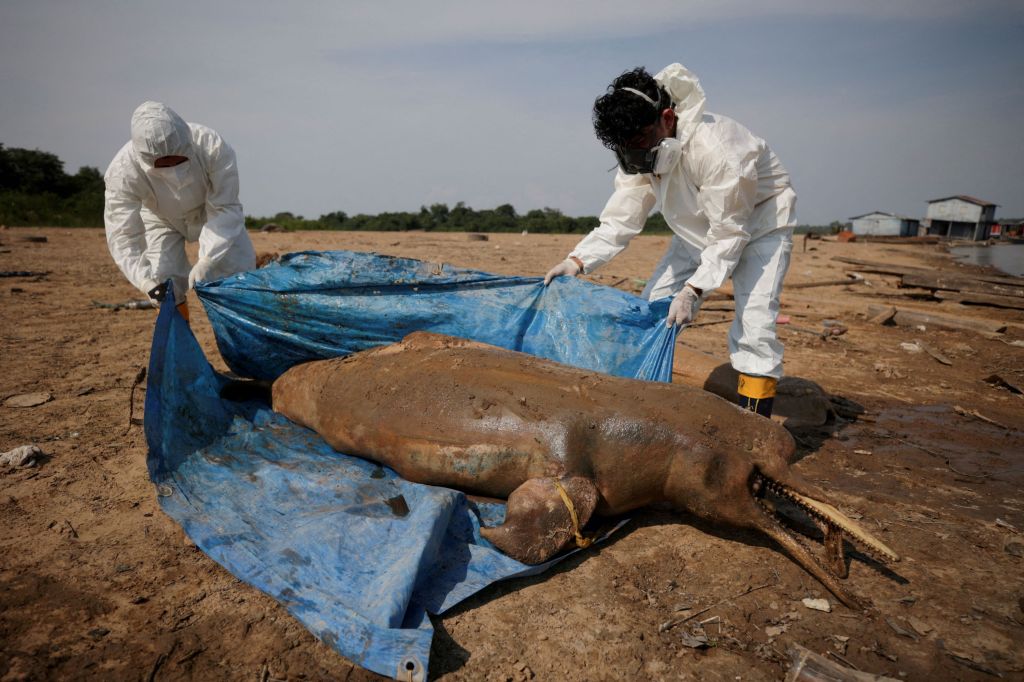
Over 150 Endangered Pink and Tucuxi River Dolphins Have Died As Drought Intensifies In The Amazon

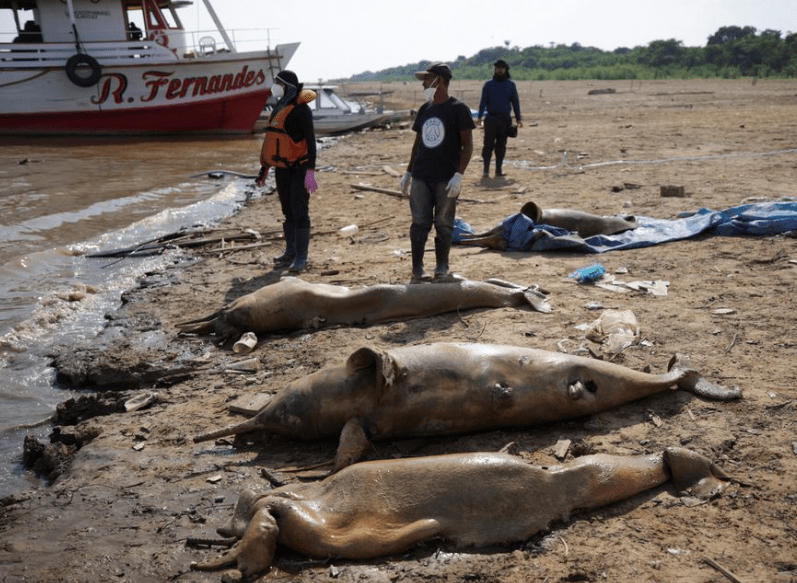
Researchers from the Mamiraua Institute for Sustainable Development retrieve dead dolphins from Tefe lake, which flows into the Solimoes river, that has been affected by the High temperatures and drought in Tefe, Amazonas state, Brazil, October 2, 2023. Credit: Bruno Kelly

Researchers from the Mamirauá Sustainable Development Institute (IDSM) and other organisations are racing against time to mitigate the impacts of the environmental emergency in and around Lake Tefé in the Brazilian state of Amazonas.

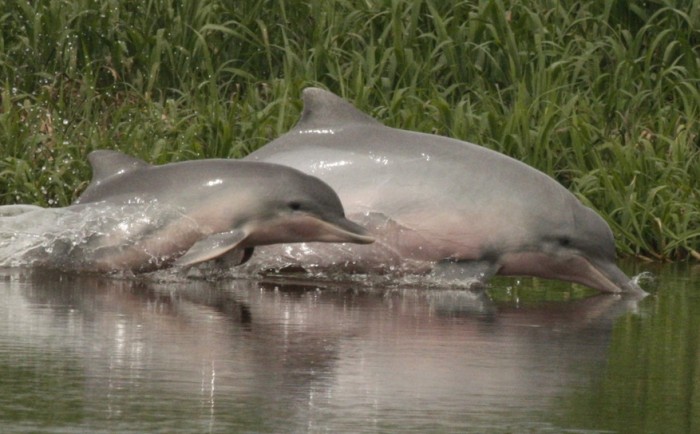
Since September 23, as the drought has worsened and water temperatures have risen, 153 River Dolphins have been found dead in the region: 130 Pink River Dolphins and 23 Tucuxi. In one week, the loss was around 10% of the local river Dolphins population. On the 28th of September alone, when the water temperature exceeded 39ºC, 70 River Dolphin carcasses were recorded, in addition to hundreds of fish.

The crisis, however, goes far beyond the loss of River Dolphins. There is an increase in mortality of fish species in the region, which are essential for the food security and livelihoods of local communities. The drought is also impacted water supplies and transportation, isolating some communities. Overall, 500,000 people have already been impacted.

Researchers are still trying to confirm the cause of death, but they suspect the high water temperatures are to blame.  Image Credit: Bruno Kelly 

“What is happening at Lake Tefé is terrifying. The impact of the loss of these animals is enormous and affects the entire local ecosystem”, warns Mariana Paschoalini Frias, Conservation analyst at WWF-Brazil. “River Dolphins are considered ‘sentinels’. In other words: they are indicative of the health of the environment where they live. What happens to them is reflected in the other species that live around them, including humans.”

“In our studies on Amazonian Dolphins, we found that they suffer from several pressures, such as fishing, mercury contamination and the impact of hydropower plants. But these events in Tefé show that more research needs to be carried out on how they will be affected by worsening climate change,” she added.

The deaths highlight the urgent need to scale up efforts to conserve the world’s River Dolphins – and the importance of the Global Declaration for River Dolphins, which will be signed by South American and Asian range states in Colombia on October 24th.

The operation was divided into different fronts. One of them, called Alive Operation Sector, monitors groups of Pink and Tucuxi River Dolphins along Lake Tefé, an isolated environment that is home to a large population of these two endangered species. When the team finds an individual with signs of abnormality, they are able to rescue them and take them to the Rehabilitation Float. The Operation Dead Sector, in turn, aims to identify and search for carcasses in the region and perform necropsies to collect samples for laboratory analysis. And the Environmental Operation Sector works to monitor water, fish and phytoplankton, organisms composed of microalgae and photosynthetic bacteria.

Tucuxi Amazon river dolphins (Sotalia fluviatilis). Image Credit: Projeto Boto

Of all the variables analysed so far by experts, the one that has shown discrepant changes is water temperature, reinforcing that River Dolphins mortality is related to climate change, the effects of El Niño and extreme drought. The water temperature of Lake Tefé reached close to 40°C, says oceanographer Miriam Marmontel, leader of the Amazon Aquatic Mammals research group at IDSM, when the maximum average over time has been 32 degrees, a fact that certainly generated thermal stress in animals.

Members of the environmental consultancy Aqua Viridi also identified in one of the lake’s points an unusual number of alga Euglena sanguinea, which produces a toxin that can cause mortality in fish. The assessment carried out on the river Dolphins, however, did not confirm that the animals have been affected by possible toxins produced by these organisms. Other analyses are underway to help understand the algae’s possible role in the current environmental and health emergency.

Since the beginning of the crisis, 104 River Dolphins have been necropsied and tissue and organ samples have been sent to specialised laboratories. Seventeen individuals have already been assessed and, to date, there is no evidence of an infectious agent as the primary cause of deaths. Molecular diagnostics of 18 individuals also tested negative for infectious agents, such as viruses and bacteria, associated with mass deaths.

In Lake Tefé, there is a stretch called Enseada do Papucu, which has been critical for animals due to the water temperature. Even so, many Dolphins continue to frequent the area due to the abundance of fish, their basic diet. To prevent further deaths, the area is being isolated with a physical barrier called “pari”, which is made of wooden stakes and is based on traditional riverside knowledge. Subsequently, the species will be moved to deeper, less hot areas.

The International Union for Conservation of Nature lists the species as endangered and reports that its numbers are shrinking. The Dolphins are susceptible to numerous threats, ranging from industrial and agricultural pollution to drilling for oil and gas.

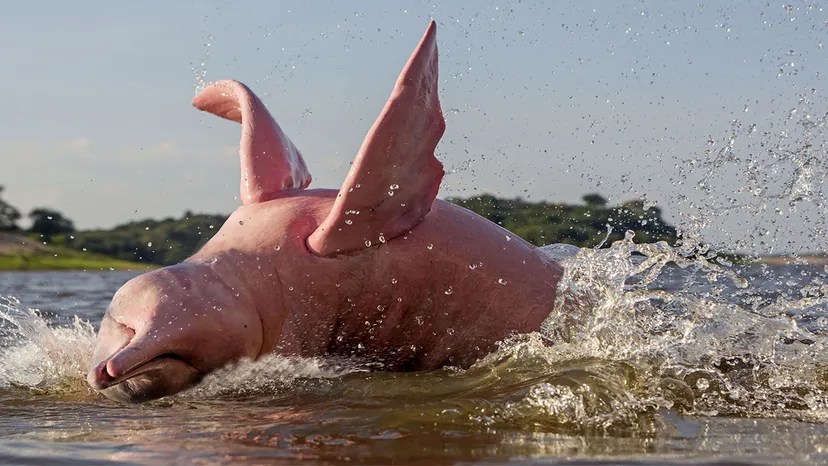
The Amazon River Dolphin (Inia geoffrensis), or boto, acquires its pink hue from repeated abrasion of the skin surface. Males are typically pinker than females because of more frequent trauma due to aggression. Image Credit: Sylvain Cordier

Pink River Dolphins are a source of tourism income for some local communities, which call them “boto” or “bufeo,” per the New York Times. They are part of Amazonian legends and stories, including one in which the Dolphins turn into handsome men to seduce young women. The animals’ well-being is thought to be an indicator of the health of the river ecosystem.

“The past month in Tefé has seemed like a science-fiction climate change scenario,” says Daniel Tregidgo, a British researcher who lives in the region, to the Guardian’s Jonathan Watts. “To know that one [Dolphin] has died is sad, but to see piles of carcasses, knowing that this drought has killed over 100, is a tragedy.”

WHAT YOU CAN DO TO HELP ANIMALS IN NEED

You can support our work by donating as little as £5 – It only takes a minute but it can last a lifetime for an animal in need.

PLEASE DONATE HERE

Everyone who donates will receive a Certificate of Appreciation as a thank you for helping animals in need.

The Mission of Protect All Wildlife is to prevent cruelty and promote the welfare of ALL animals.

We believe EVERY animal should be treated with respect, empathy, and understanding. We raise awareness to protect and conserve wild, captive, companion and farm animals.

It is vital that we protect animals against acts of cruelty, abuse, and neglect by enforcing established animal welfare laws and, when necessary, take action to ensure that those who abuse animals are brought to justice.

Protect All Wildlife are involved in many projects to protect animals’ rights, welfare, and habitats. Money contributed to Protect All Wildlife supports ALL of our worthy programmes and gives us the flexibility to respond to emerging needs. Your donations make our work possible.