Should Wildlife Tourism Be Banned In India?

Tiger T42 – Fateh. A dominant tiger of Ranthambhore Tiger Reserve, he rules over Qualiji area. He is named after the legendary conservationist, synonymous with Ranthambhore, Fateh Singh Rathore-A tribute to a great man.

Wildlife Tourism in India has always been a controversial matter. In 2010, a Public Interest Litigation was filed by tiger activist Ajay Dubey, claiming that the industry was becoming unsustainable and exploitative. As per the 2006 Amendment of the Wildlife (Protection) Act of 1972, “critical Tiger and wildlife habitats” must be inviolate for the vital growth of tiger populations. Any form of human activity was deemed a threat to Tiger conservation. It was on this basis that, on the 24th of July 2012, the Supreme Court ordered a temporary ban on tourism in the core zone of Tiger reserves. The ban stirred significant debate amongst conservationists.

More about the wildlife tourism ban

The underlying principle of the order was questionable. Tiger populations grew remarkably in reserves such as Kahna, Bandhavgarh and Ranthambore, despite substantial amounts of wildlife tourism. Contrastingly, Tiger populations in less popular Protected Areas, such as Buxa and Palamu Tiger Reserve, have depleted immensely despite a lack of tourism. Associating wildlife tourism to the depletion of Tiger populations remains a baseless claim.

The Supreme Court hoped that the ban would instigate the establishment of buffer zones in Protect Areas for wildlife tourism, in accordance with the November 2011 NTCA guidelines. However, despite the Supreme Court mandate, numerous states were reluctant to comply with the guidelines. Tourism in buffer zones was not the most practical alternative. These regions are used extensively by bordering villages for cattle grazing and the collection of forest produce. Habitat degradation would lead to inferior wildlife sightings, hence attenuating the attractiveness of wildlife safaris. 
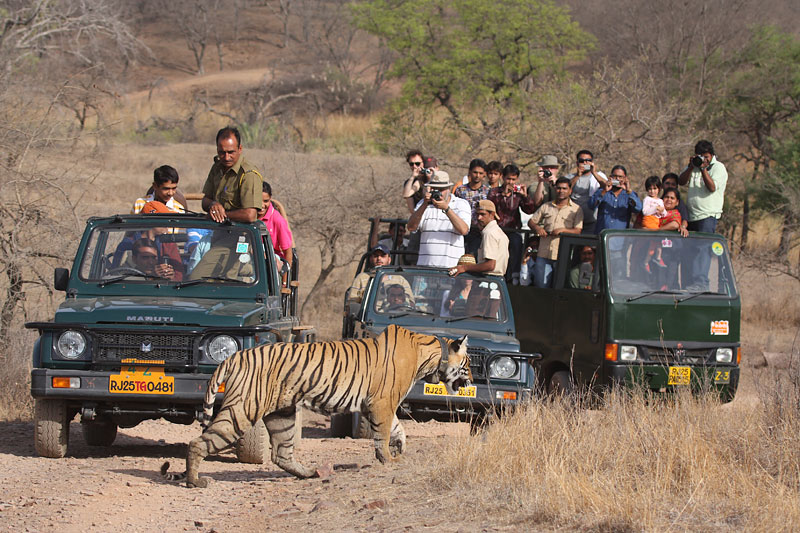
Wildlife Tourism In India

Fortunately the MoEFCC and NTCA redrafted guidelines, allowing for wildlife tourism in up to 20% of the critical Tiger habitat of a reserve. The revised guidelines encouraged states to form their own ecotourism policies. Following this, on the 16th of October 2012, the Supreme Court allowed for the recommencement of tourism in core areas

Are there any benefits of wildlife tourism?

There are numerous benefits to wildlife tourism, particularly for the local communities. Following proper practices, ecotourism brings substantial economic benefits. With over 1 million people visiting tiger reserves annually, a lot of revenue is generated in the form of entry fees, guide salary, lodge bookings amongst others. This provides significant employment opportunities for the local communities and has ripple effects as locals will associate a monetary value with wildlife. This would increase the general acceptance of wildlife, hence reducing human-wildlife conflict. Furthermore, this would prevent locals from turning to game hunting for sustenance. Entry fees would also provide the Forest Department with much required funding for conservation works! It is estimated that in the Fiscal Year of 2019, wildlife tourism in Madhya Pradesh attracted nearly 2 million visitors, generating 27 crore rupees. An organization, TOFTigers, estimated that nearly a quarter of the state’s Forest Department Budget consists of park entry fees in 2017. Moreover, the industry generated an additional 2,500 full time jobs out of which 82% were given to locals. With the industry growing at a healthy 15% annually, local economies stand to benefit immensely, particularly in the North East where the wild wonders are relatively unexplored.

Tourism also has a plethora of benefits in the management of the reserve. With the Forest Departments heavily under resources and understaffed, patrolling Protected Areas is a daunting task. Parks certainly benefit from watchful tourists. Detection of forest fires, illegal activities and injured animals improves with the participation of tourists. In fact, with the development of citizen science software, tourists can contribute even further towards wildlife research. It is no surprise therefore, that within 6 weeks of wildlife tourism shutting down due to the pandemic in 2020, the cases of poaching increased by 151% across India.

Unethical Practices Cloud wildlife tourism

However, in the past, there have been concerns regarding whether the economic benefits of wildlife tourism actually reach local communities.  Wildlife tourism may also lead to some atrocious practices. For example, both captive elephants, and dancing bears, undergo immense torture while being trained for tourist purposes. Similarly, Kopi Luwark, the world’s most expensive coffee, is a major attraction in Indonesia. However, most people are oblivious to the fact that it sponsors the illegal wildlife tradeSnake charming also is equally diastorous.

Unruly visitors are not avoidable

Enforcement of rules and regulation also remains a dark spot in the wildlife industry. I personally have witnessed numerous accounts of wildlife harassment. Unruly tourists littering, wearing excessively bright colours and making excessive noise has made a few safaris unpleasant. Furthermore, in the lure of tips, guides are often overly enthusiastic during a safari. A critical protocol which is frequently ignored during a direct sighting is the minimum distance requirement between two jeeps. Though legally, animals have the right of way in forest roads, this behaviour by jeeps often obstructs their paths and causes distress to the animals. I witnessed this with the dominant male Rudra in Tadoba Tiger Reserve in October 2020 and in my first visit to the park in 2017, where a jeep did some off-roading to show the guests tiger cubs feeding on a kill. Not only did the family flee, the jeeps shamelessly continued chasing them off-roading. Littering is also a prominent issue. On the same trip, I visited the Tipeshwar Tiger Reserve where visitors, despite being confronted by both forest staff and guests, continued to litter in the park. I can name plenty of such personal anecdotes from forests all over India! Seeing the popular tiger of the park overwhelms tourist and guide alike!

The impact of such behaviour has had an observed impact on wildlife. Tigers and other wildlife of popular parks are far more accustomed to jeeps than in the smaller reserves. Despite this, tigers do witness increased stress levels. This is proved by a study of 341 samples of tiger scats by the Centre for Cellular and Molecular Biology (CCMB) in Bandhavgarh and Kanha National Park. The study found that tigers had higher concentrations of the stress hormone, faecal glucocorticoid metabolite (fGCM), during the tourism season than prior. 

This behaviour could be rectified by improved education. While an underlying purpose of ecotourism is education, only 30% of India’s Protected Areas have visitor orientation centres. Private lodges also are not very proactive in the field. 

Wildlife tourism has to become more sustainable

Another issue with wildlife tourism is that lodges are not truly eco-friendly. A nationwide study of 10 of India’s major wildlife tourist destinations was alarming. 85% of tourist facilities were within 5km of the park. 93% of the lodges used local wood while the dependency on local borewells varied from 40% to 100%. Swimming pools in the lodges of Central India prove costly for local communities in the dry summer months. The fragile ecosystem of Ladakh is witnessing widespread decimation in recent years due to scores of tourists flocking to the state following the release of the movie “3 Idiots”.

The same study found that in the 10 parks, 95% of the revenue went to private operators. Only 4.5% and 0.5% went to the park and locals respectively. In fact, only 0.001% of the locals within a 10km buffer of PA were employed. This accentuates the fallacies of India’s wildlife industries! 

Larger mammals steal the limelight

Although only 10% of India’s 500 Protected Areas are Tiger Reserves, they account for 32% of wildlife tourism. Spotting charismatic species such as Tigers, Elephants, Rhinos and Lions still remains the sole interest for most visitors. Much of India’s natural beauties are unheard of by the general public. This is in sharp contrast with countries such as Australia, US, South Africa and Europe. Unlike India, ecotourism is not limited to safaris solely. These countries offer a wide array of sustainable activities across their natural landscapes including bird watching, camping, adventure sports, and natural history museums. Although it is essential to not damage the natural ecosystem, the ecotourism industry in India could be further developed. In fact, developing more activities in the lesser known parks could help distribute tourism more evenly across the country. There is much scope to expand. India could also adopt a private-public partnership in a few regions, much like the Private Game Reserves of South Africa!
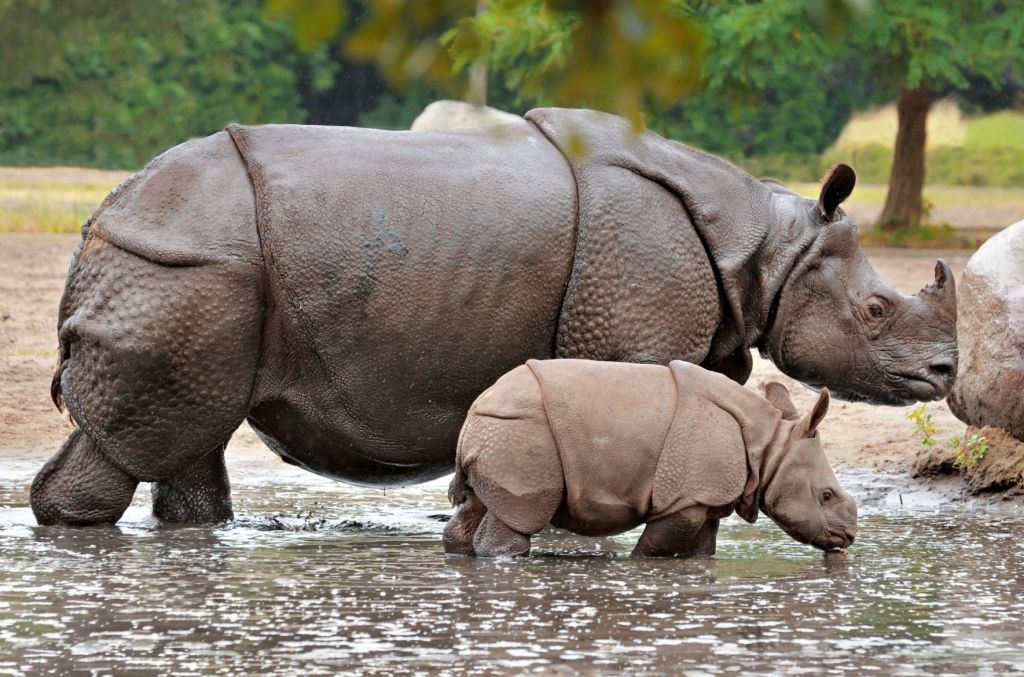
The Greater One-Horned Rhino

All in all, the wildlife tourism industry is still fairly young and has much growth left. It has various benefits to wildlife but there are many issues for India to iron out such that the industry can bolster conservation efforts.

This article was first published on Think Wildlife Foundation. 

How you can help animals in need:

You can support animals in need by donating as little as £1 – It only takes a minute but it can last a lifetime for an animal in need.

Certificate of Appreciation

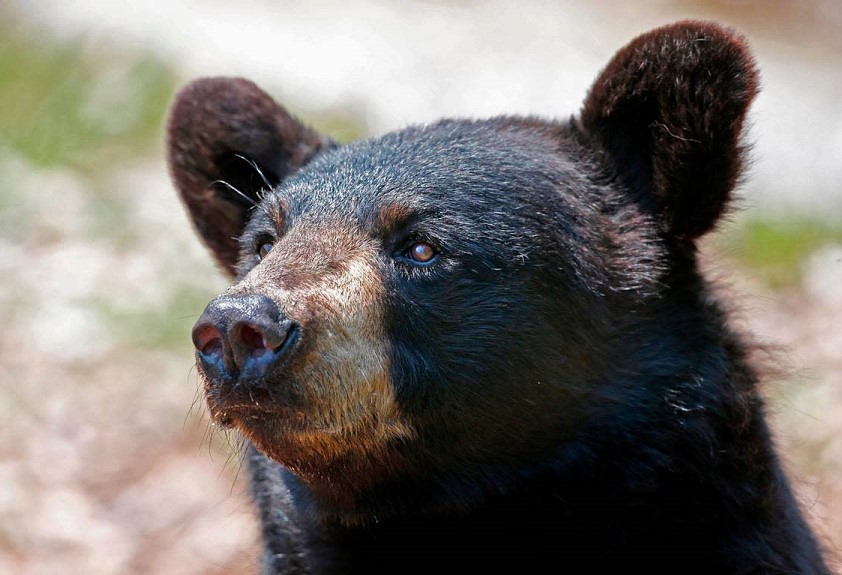
Hunter Illegally Lured A Bear With Bait To Kill It, Georgia Officials Say.

It is illegal for hunters to use bait to lure black bears in Georgia. A hunter in White County is accused of violating the law, officials say.

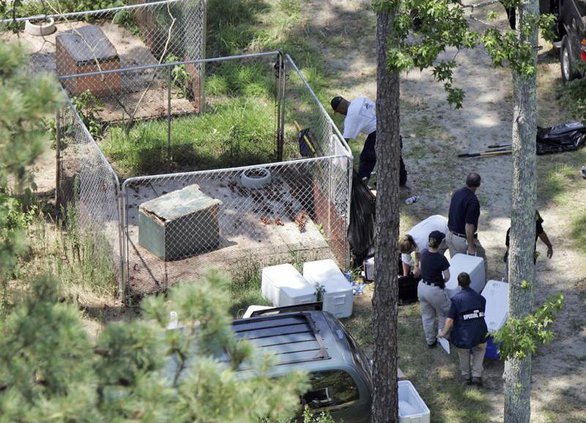
A hunter is facing charges after investigators discovered a Bear had been lured to its death with bait, according to the Georgia Department of Natural Resources Law Enforcement Division.

Game wardens learned of the illegal kill through a tip Sunday, Sept 11, according to a news release.

It happened in White County, about 90 miles northeast of Atlanta.

“After a brief investigation which included an inspection of the kill site, it was determined that the Bear was in fact illegally killed over bait,” the division reported.

“The Bear was seized, and the subject was charged with killing the bear over bait. The meat is being processed and will be donated to a family in need.”

State laws forbid the use of bait to lure Bears to a specific location “which gives or might give a hunter an unnatural advantage when hunting Bear,” according to Georgia State Code.

“Any person violating the provisions of this Code section is guilty of a misdemeanor of a high and aggravated nature and, upon conviction, may be punished by a fine of not less than $500.00 and not to exceed $5,000.00 or by confinement for a term not to exceed 12 months, or both,” the state says.

Bear baiting is considered unethical and is widely condemned as a practice that can increase conflicts with humans.

In late summer and fall, Bears go into a frenzied eating behavior, called hyperphagia, as they attempt to gain 20 to 40 pounds per week to survive hibernation,” according to the Humane Society of the United States.

“Bears subjected to baiting come to associate food with the smells of humans and even livestock. Those who then become habituated to human foods become less shy and more unpredictable, changing their eating habits, home ranges and movement patterns in ways that are sometimes irreversible.”

How you can help animals in need:

Support ‘Protect All Wildlife’ by donating as little as £1 – It only takes a minute but it can last a lifetime for an animal in need.
We believe EVERY animal should be treated with respect, empathy, and understanding. We raise awareness to protect and conserve wild, captive, companion and farm animals. It is vital that we protect animals against acts of cruelty, abuse, and neglect by enforcing established animal welfare laws and, when necessary, take action to ensure that those who abuse animals are brought to justice.

Protect All Wildlife are involved in many projects to protect animals’ rights, welfare, and habitats. Money contributed to Protect All Wildlife supports ALL of our worthy programmes and gives us the flexibility to respond to emerging needs. Your donations make our work possible. Thank you for your support.

Everyone who donates will receive a Certificate Of Appreciation as a thank you for supporting wildlife.

CERTIFICATE OF APPRECIATION

R.I.P. Frodo, The Last Surviving Dog Rescued From Michael Vick’s Dogfighting Ring.

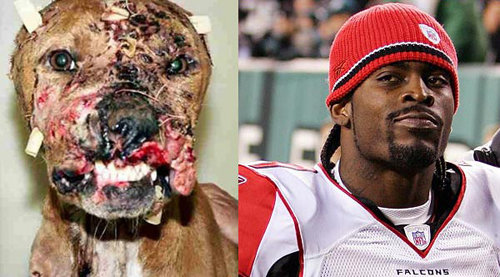
ANIMAL ABUSER MICHAEL VICK AND FRODO

In 2007, authorities rescued 51 Pit Bulls from a Virginia compound belonging to Atlanta Falcons quarterback Michael Vick. These dogs endured horrible torture. They were electrocuted, beaten, hanged, drowned, and forced to fight.

DOGS BEING RESCUED FROM VICK’S PROPERTY

Sadly, four of the dogs did not survive, but 47 brave Pitties did. These frightened, formerly abused dogs were given love and patience by several rescue organizations and their forever families.

THE 47 SURVIVING DOGS OF THE DOG-FIGHTING RING

One of these survivors, Frodo, lived to be 15 years old. He died on December 18th, 2021. After one year of hell at Vick’s compound, he spent the last 14 years being “pampered like a prince.”

R.I.P. “Sweet” Frodo

BAD RAP, an Oakland-based nonprofit animal welfare organization, announced the dog’s passing on Facebook. This organization helped immensely in advocating for the dogs and rehabilitating them.

The post from BAD RAP mourning Frodo’s loss states:

“Sweet Frodo – How we loved him. He was one of the bravest survivors we’ve ever met.”

FRODO

Frodo had a good life with his loving family, and he also went out surrounded by love. BAD RAP described the dog’s final moments:

“Frodo gobbled that big bag of steak under the tears of his mama, Kim Ramirez and her daughter Dominique. Thank you Dr. Williams for tending to his medical needs up until the end. He trusted you and you made this moment so perfect.”

The Story Of Frodo’s Recovery

Throughout his life, Frodo served as a face of the movement to eliminate the negative stereotype against Pit Bulls. He also proved the value of patience and kindness in a dog’s life.

BAD RAP, who have plenty of experience working with dogs seized from fighting situations, believed in these dogs from the start. In a previous post, BAD RAP wrote that dogs with difficult pasts deserve a chance:

“Frodo showed us that younger dogs pulled from cruelty cases need socialization from Day one so they can grow up strong and brave. In his case, he was approx. 3-6mos old when seized by authorities, and then waited six long and damaging months in solitary confinement for rescue help.”

Poor Frodo was especially shy and fearful when rescued from his horrible situation. In a 2009 interview with The Mercury News, Kim Ramirez, Frodo’s adopter, explained:

“Anything mechanical, the sound bothers him. We have ceiling fans at our house and he would become fixated on them, looking up at them with apprehension. If I opened a cabinet, he would shy away. Or popcorn in the microwave. I don’t know, maybe the popcorn equates to gunshots for him. I don’t think he witnessed any of the fights. But I’m sure he heard them.”

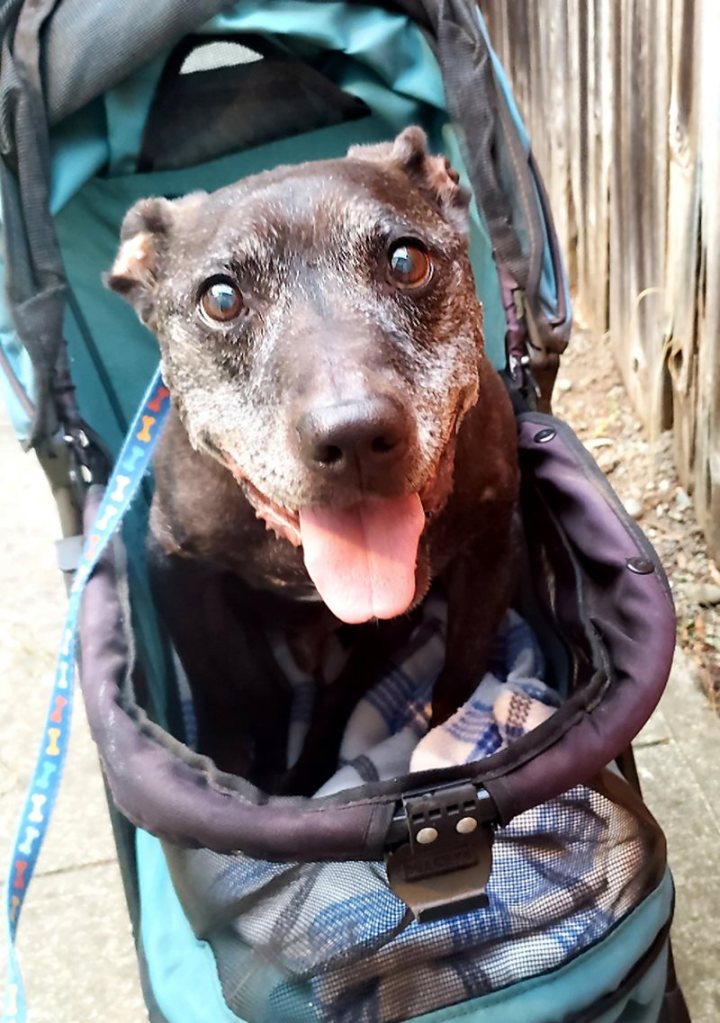
Luckily, Frodo had the Ramirez family, who showed him so much love and patience. The sweet dog’s family even pushed him around in a stroller when his legs started to fail him.

R.I.P. to a true survivor.

The 48 Surviving “Vick” Dogs And Their Heroes

In 2019, 13 dogs freed from Vick’s ring were still alive, 12 years later. Just two days before Frodo passed, Jonny Justice died surrounded by his family, and Uba crossed the rainbow bridge in October 2021.

These dogs were given the chances they deserved, and they all lived happy lives despite their pasts.

BAD RAP also acknowledged how hard several rescue groups worked to change these dogs’ lives for the better. While BAD RAP and Best Friends received most of the public appreciation, these organizations helped rehabilitate the Pitties too:

  • The Richmond Animal League
  • Georgia SPCA
  • SPCA of Monterey County
  • Out of the Pits
  • Our Pack
  • Recycled Love
  • Animal Rescue of Tidewater
  • Animal Farm Foundation

When animal advocates come together, great things can happen. These 48 “Vick” dogs prove that.

What happened to Michael Vick?

Vick served just 19 months in federal prison for bankrolling the dogfighting, even after admitting to killing dogs. Despite this injustice, the high-profile case helped change the way the world sees Pit Bulls and how abused dogs can be rehabilitated.

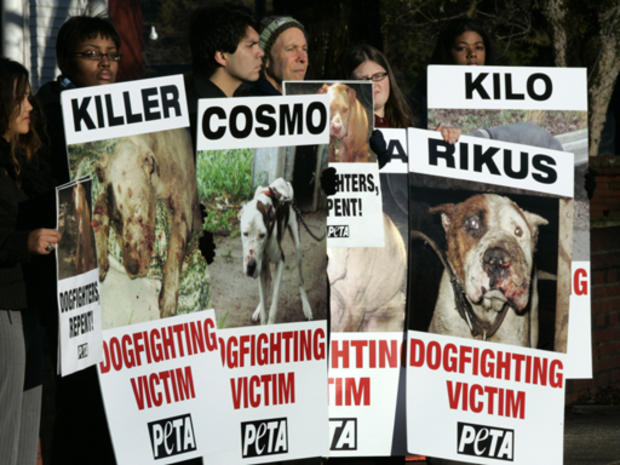
Protesters at the Michael Vick hearing outside the Sussex County Courthouse in Sussex, Va.
What you can do to help animals in need:
Support ‘Protect All Wildlife’ by donating as little as £1 – It only takes a minute but it can last a lifetime for an animal in need.

We believe EVERY animal should be treated with respect, empathy, and understanding. We raise awareness to protect and conserve wild, captive, companion and farm animals. It is vital that we protect animals against acts of cruelty, abuse, and neglect by enforcing established animal welfare laws and, when necessary, take action to ensure that those who abuse animals are brought to justice.

Protect All Wildlife are involved in many projects to protect animals’ rights, welfare, and habitats. Money contributed to Protect All Wildlife supports ALL of our worthy programmes and gives us the flexibility to respond to emerging needs. Your donations make our work possible. Thank you for your support.

Everyone who donates will receive a Certificate of Appreciation as a thank you for supporting wildlife.

CERTIFICATE OF APPRECIATION

The Bloody Truth Behind The Taiji Dolphin Drive Hunt

A new season started on September 1. Entire families of dolphins will be devastated for aquariums to draw crowds.

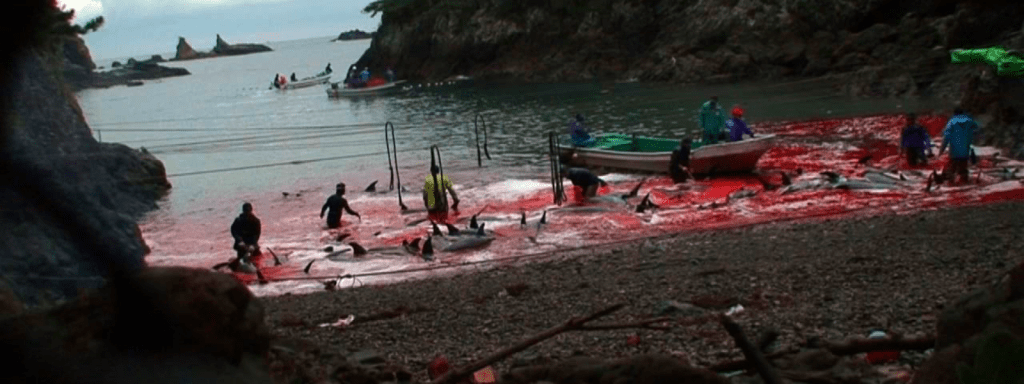
THE BLOODY TAIJI DOLPHIN DRIVE HUNT CREDIT: INTERNATIONAL MARINE MAMMAL PROJECT

Just after 6am, a fleet of 11 fishing boats left Taiji harbour on Japan’s southern Pacific coast. Within an hour, the boats were lined up in a formation, encircling a pod of 18 Risso’s dolphins and forcing them into a cove. Nets were set to trap the dolphins, and soon after, seven dolphin trainers from the Taiji Whale Museum arrived.

One by one, the divers caught the dolphins and took them under grey tarps that were meant to shield their work from the scrutiny of outside observers. Under the tarps, the dolphin trainers examined the sex and size of the dolphins, estimated their age and selected two for sale to aquariums — appearance and suitability for training are usually key factors. They were placed on stretchers and taken to sea pens set in a nearby bay.

Just an hour earlier, these dolphins had been swimming freely in the ocean with their family. Now, they were facing a life in a small concrete pool, performing tricks to entertain people who rarely think about how the dolphins ended up there.

The fate of the 16 unchosen dolphins was even more cruel. Hunters struck them with a sharp metal spike into their necks just behind the blowholes, making them suffocate in their own blood, turning the ocean water around them red. Their dead bodies were dragged into Taiji fishing port, soon to become meat products.

In a matter of a few hours, an entire family of dolphins was destroyed as part of what some local fishermen and Japanese politicians call a “tradition”.

Inconvenient truth

On September 1, a new season of cruelty will begin. The small town of Taiji made global headlines after the 2010 Academy Award-winning documentary film, The Cove, highlighted Japan’s little-known dolphin hunting practice. While the film was highly acclaimed worldwide, it received a backlash in Japan as conservatives called it an attack on the country’s culture.

More than a decade has passed and the world has changed. Climate change is considered humanity’s biggest challenge. Governments and corporations around the world are working towards sustainability goals, including wildlife conservation. Sadly, in Japan, dolphin hunts continue as they did earlier, while the world’s attention has faded away.

During the six-month hunting season each year, I’m confronted with a truth that’s inconvenient for many people considering the enormous popularity of dolphins at aquariums. Dolphins form strong family bonds, moving together to protect the young and old who cannot swim fast enough when chased by hunters. Dolphins are also generally gentle and do not attack humans even to defend themselves. This makes it easy for hunters to catch entire pods.

Our investigation revealed that at least 563 dolphins were taken from the wild in Taiji alone during the 2021-22 season, of which 498 were slaughtered and 65 were kept for aquariums. The dolphin hunts are conducted across Japan, often using spearfishing. Taiji is particularly notorious because hunters here usually catch entire pods, leaving no chance for families to recover and causing a devastating impact on the dolphin population.

2021/2022 STATISTICS COURTESY OF THE DOLPHIN PROJECT

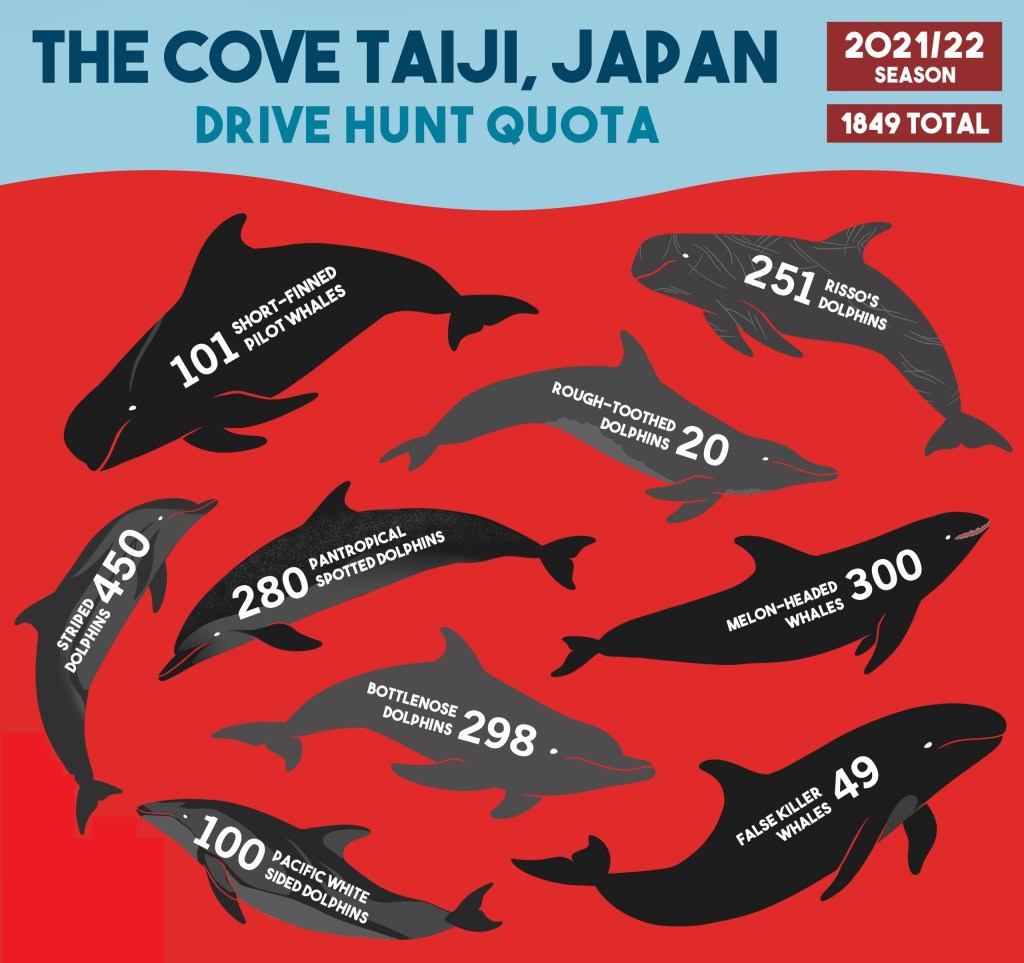
Already, the number of dolphins that hunters are trapping is declining — it has dropped almost to a quarter of the 2,077 dolphins caught in 2000 — even though they go out to the ocean searching for their prey every day during the season. Today, hunters are unable to meet the annual government-set catch quota of 1,849 dolphins.

2021/2022 STATISTICS – TYPES OF DOLPHIN COURTESY OF THE DOLPHIN PROJECT

A wild animal exporting industry

It’s a little-known fact that hunting really started only in 1969 with the establishment of the Taiji Whale Museum in order to display live dolphins. This was around the time when the United States was booming with dolphinariums driven by a popular TV series Flipper, in which a dolphin was a lead character.

A live dolphin is sold for as much as JPY 5 million ($36,000) overseas, while it only fetches JPY 50,000 ($360) as meat.

The Japanese government has defended the hunt as part of local culinary tradition, but hardly anyone in the country eats dolphin meat. In reality, this is about the trade of dolphins to aquariums for entertainment across the world, hiding behind “tradition”. In essence, it’s an animal export industry.

In fact, our research revealed that as of March 11, 2022, 269 dolphins and small whales were being kept as inventory in a massive set of sea pens in Taiji’s Moriura Bay, waiting to be sold to aquariums across Japan and the world. The hunt only continues because of the demand for human entertainment.

Change is coming

There is reason for hope, though. In March of this year, Sweden’s Kolmården zoo, the largest zoo in Scandinavia, announced it will end its dolphin shows. The decision by the zoo, which holds 12 captive dolphins, is symbolic of a new attitude towards animals around the world. Last November, the French parliament passed a bill that bans dolphin shows as well as wild animals used in circuses. A similar ban has been in place in Canada since 2019.

Coastal countries, such as India, Chile, Costa Rica and Brazil, also ban or restrict the captivity of dolphins. Expedia is the latest among travel agencies to stop selling tickets that include dolphin shows.

In Japan, too, there are signs that attitudes are beginning to shift. In May, a Tokyo-based aquarium became the first such facility in the country to end its dolphin show. It claimed financial burden as the primary reason, but it also mentioned the global trend in recent years. And the following month, another aquarium announced that it will discontinue sea lion shows.

Change is coming, slowly but surely. Until then, I will continue my work in Taiji to tell the people of Japan what we are doing to the animal we claim to love.

This article by Ren Yabuki was first published by Aljazeera on 31 August 2022. 

What you can do to help wildlife:

Support ‘Protect All Wildlife’ by donating as little as £1 – It only takes a minute but it can last a lifetime for an animal in need.
We believe EVERY animal should be treated with respect, empathy, and understanding. We raise awareness to protect and conserve wild, captive, companion and farm animals. It is vital that we protect animals against acts of cruelty, abuse, and neglect by enforcing established animal welfare laws and, when necessary, take action to ensure that those who abuse animals are brought to justice.

Protect All Wildlife are involved in many projects to protect animals’ rights, welfare, and habitats. Money contributed to Protect All Wildlife supports ALL of our worthy programmes and gives us the flexibility to respond to emerging needs. Your donations make our work possible. Thank you for your support.

Everyone who donates will receive a Certificate of Appreciation as a thank you for supporting wildlife.

CERTIFICATE OF APPRECIATION

Bobbie The Wonder Dog, The Inspiration Behind Lassie Returns.

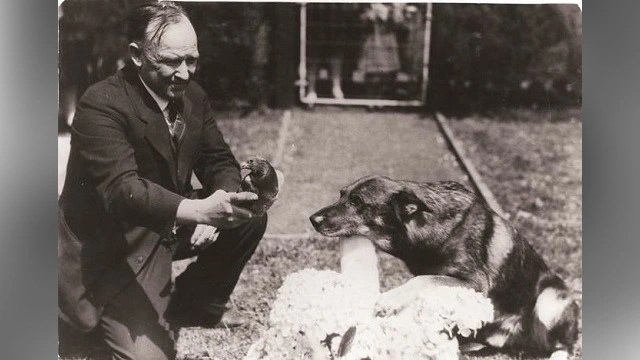
Bobbie and his owner, G. Frank Brazier. Courtesy Vades Crockett, Silverton.

Bob was an average-looking collie puppy in every way, except for his bobbed tail . . . and maybe that’s why the Brazier family named him Bob, or Bobbie. But he was average in no other way. 

In 1923, Bobbie joined Frank and Elizabeth Brazier for a cross-country drive from Silverton, Oregon, to Indiana, Frank’s home state, where they planned to visit family. During a stop in Indiana, Bobbie was chased off by loose dogs, and after a week of searching and placing newspaper ads, the broken-hearted Braziers had to give up and start the drive home.

Bobbie the Wonder Dog perches on the trunk of the Braziers’ touring car in Silverton. Photo Offbeat Oregon

Six months to the day after he was lost in Indiana, a very thin Bobbie was spotted on a Silverton sidewalk, his coat matted, his paws raw from wear. Unbelievable as it seemed, the three-year-old dog had WALKED almost 2,800 miles to get back home.

Though weak and tired, Bobbie went berserk with joy when he was reunited with his family, and from that day, all of their lives changed. In the weeks and months that followed, his story tore across the country in newspapers and even in a hardcover collection of pet stories. He was the main attraction at an Oregon home-builders convention in Portland, where thousands lined up to pet him, and he starred in a short feature film. Also, the Braziers eventually heard from people along Bobbie’s homeward-bound route, places where he’d stopped long enough to recoup, and then he was gone again. These stories verified their thinking. Bobbie had done the impossible.

Bobbie’s remarkable journey thrilled readers around the country, who wanted to know more about “The Wonder Dog.” The Oregon Humane Society in Portland investigated and confirmed that he had traveled about 2,800 miles on foot. They presented Bobbie with a silver medal and keys to the city. Letters and presents poured in daily.

Frank wrote about him in Animal Pals, a book of dog stories, and Bobbie starred in a silent movie. Bobbie’s feat even appeared in Ripley’s Believe It or Not! Bobbie got so famous that at one weeklong appearance, more than 100,000 people showed up to pet him.


In April 1925, Bobbie became a parent with another collie named Tippy. She gave birth to sixteen puppies-all boys-and Bobbie made headlines again.

When Bobbie died 1927, he was buried in Portland, Oregon, by the Oregon Humane Society. Rin Tin-Tin, the dog star of twenty-seven Hollywood movies, was there to lay a wreath at his funeral, which was officiated by the mayor of Portland.

Rin Tin-Tin, the dog star of 27 Hollywood movies, lays a wreath at Bobbie’s funeral.

In 1932, Silverton hosted its first Pet Parade to honor Bobbie, with his son Pal leading the way. Every summer since then, the town has celebrated with a parade and a Bobbie Look-Alike Contest. Bobbie’s Castle, his red-and-white doghouse, stands over his burial place at the Oregon Humane Society’s animal cemetery.

Bobbie’s Castle

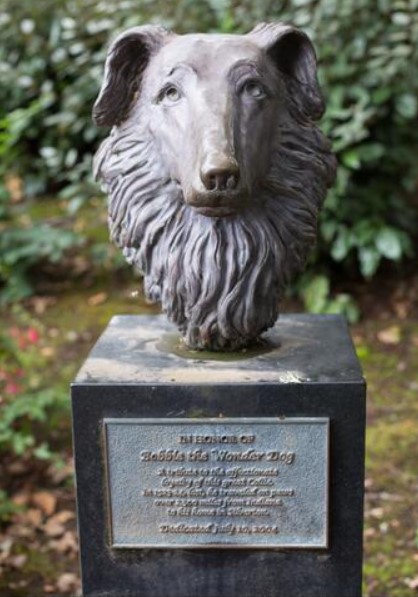
A statue in Silverton pay tribute to their famous dog.

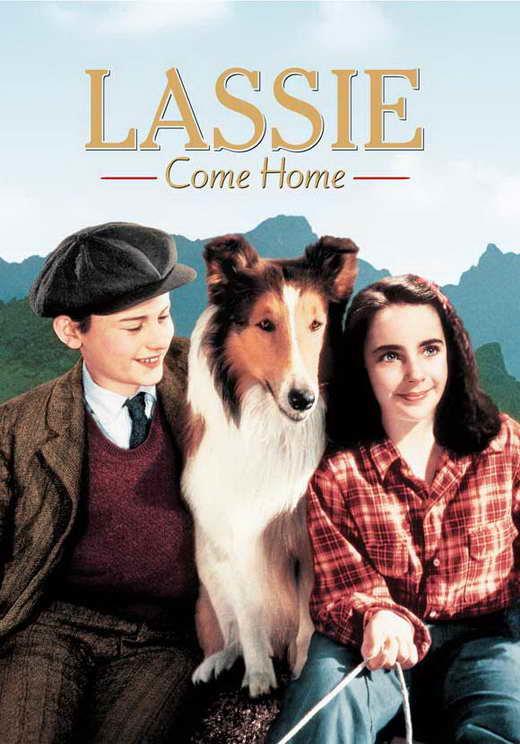
This incredible story is all true, and the origins of Lassie Come Home are said to be traced to the story of Bob of Silverton, also known as Bobbie, the Wonder Dog.

Bobbie The Wonder Dog
Lassie Come Home
What you can do to help animals in need:
Support ‘Protect All Wildlife’ by donating as little as £1 – It only takes a minute but it can last a lifetime for an animal in need.
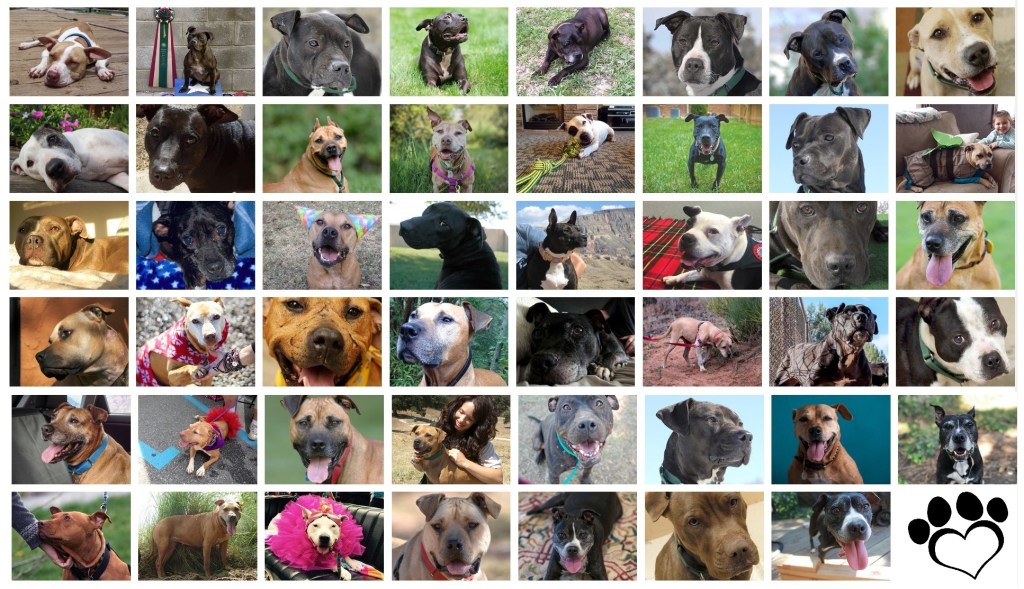
We believe EVERY animal should be treated with respect, empathy, and understanding. We raise awareness to protect and conserve wild, captive, companion and farm animals. It is vital that we protect animals against acts of cruelty, abuse, and neglect by enforcing established animal welfare laws and, when necessary, take action to ensure that those who abuse animals are brought to justice.

Protect All Wildlife are involved in many projects to protect animals’ rights, welfare, and habitats. Money contributed to Protect All Wildlife supports ALL of our worthy programmes and gives us the flexibility to respond to emerging needs. Your donations make our work possible. Thank you for your support.

Everyone who donates will receive a Certificate of Appreciation as a thank you for supporting wildlife.

CERTIFICATE OF APPRECIATION

Go back

Your message has been sent

Warning
Warning
Warning
Warning
Warning
Warning.

Trophy Hunting Is Driving The African Lion Into Extinction

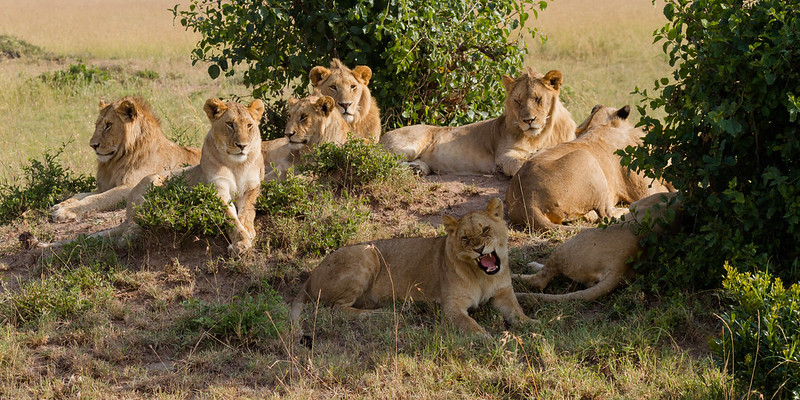
THERE ARE LESS THAN 10,000 WILD LIONS LEFT IN AFRICA

A leading global Lion conservationist has warned of the impending extinction of lions in Africa where the overall population has fallen below 10 000 from a peak estimate of over 20 000 eight years ago.

In a presentation to the British parliamentary committee debating proposals to ban the importation of African wildlife trophies into the United Kingdom, African Lion specialist Pieter Kat said a recent field study by the organisation Lion Aid, revealed worrying prospects for the survival of African Lions:

“Our conclusion is that there are less than 10,000 wild Lions left in Africa. We base that number on the latest information from the ground,” Kat said.

“The current estimate of 20 000-30 000 Lions (in Africa) as stated by the International Union for the Conservation of Nature (Red List) of 2016 is grossly inaccurate and urgently needs to be updated.”

In Africa, wild Lion populations are mostly found in South Africa, Zimbabwe, Botswana, Namibia, Zambia, Tanzania and Kenya.

Smaller clustered populations also exist in Uganda, Mozambique, Eswatini and Angola.

While Elephant population estimates can be done effectively by aerial survey, Kat said Lion population estimates can only be derived from small sample counts which are conducted using different techniques to ensure they are not misleading.

Kat said the IUCN 2016 African Lion population estimate was flawed because it included thousands of non-wild, captive-bred and fenced-off South African Lions in the final count.

“What we did in our latest study is to review the number of Lions in what are called lion conservation units,” he said.

“We went back to look at these conservation units in detail.

“Most people agree that Lions should be classified as endangered on the IUCN Red List.

“However, they are not. Instead, they are classified as ‘vulnerable’.

“One reason for this is that the IUCN partly based their estimates on 16 fenced Lion populations in Southern Africa, mostly in South Africa.

“Those fenced populations are not truly wild Lions.”

He said the IUCN estimate was also heavily influenced by trophy hunters who manipulated Lion census data to support their own claims that Lion populations are healthy enough to support trophy hunting business.

Kat said trophy hunting remains one of the biggest contributors to the decline of African Lion populations as well as the depletion of breeder gene pools through its deliberate targeting of big male Lions.

“In order to be able to develop an effective Lion conservation strategy for Africa, we need to know exactly how many Lions are where. We need to know how many lions exist in trophy hunting areas,” he added.

“The best hunting concessions in terms of tenders and bids all happen to be right on the borders of the national parks.

“We know that they are luring the Lions out of national parks to be killed in private hunting concessions, just like Cecil (in Zimbabwe) was.

“More hunting concessions in Tanzania and Zimbabwe are not being bid on anymore because they are no longer profitable. The Lions have all been shot out.”

According to Kat, the claims often made by the trophy hunting lobby to the effect that trophy hunting funds the conservation of African wildlife are grossly inaccurate and deliberately misleading:

“Trophy hunters are allowed to sit on the IUCN committee of lion experts.

“More and more people have been allowed into the group who were not primarily concerned with lion conservation but rather Lion utilisation.

“This causes problems, because whenever politicians want to make decisions on wildlife conservation, the first place they turn to is the IUCN.

“They view the IUCN as the organisation that supposedly has the knowledge and information about how to best conserve species in the wild.

“However, many of the “experts” that are being consulted are not the ones who have the right information.”

Kat said there is clear evidence that Lions are being badly affected by trophy hunting since the hunters select the best animals, which are often the biggest-maned male breeding Lions.

“A number of studies in Zambia, Zimbabwe, Botswana and Namibia have shown this.

“A hunter does not want a young male (although these were hunted in Tanzania when they ran out of the big males).

“The big-maned Lions hunters target are often the leaders in a pride. This way, trophy hunting results in heavy disruptions of Lion prides.

“The females do not produce cubs anymore because new males will come in and say, “that’s not my cub” and kill the cubs.

“The pride structure of Lions simply falls apart as a result of trophy hunting.”

To save Lions from extinction, Africa range states should adopt conservation strategies to save the biggest and the best remaining Lion cluster populations.

They also need to craft holistic conservation strategies that include the use of effective, tried and tested techniques to protect rural communities and keep livestock safe from predators in order to reduce human-wildlife conflicts.

This article by Oscar Nkala was first published by The Standard on 7 August 2022.

What you can do to help animals in need:
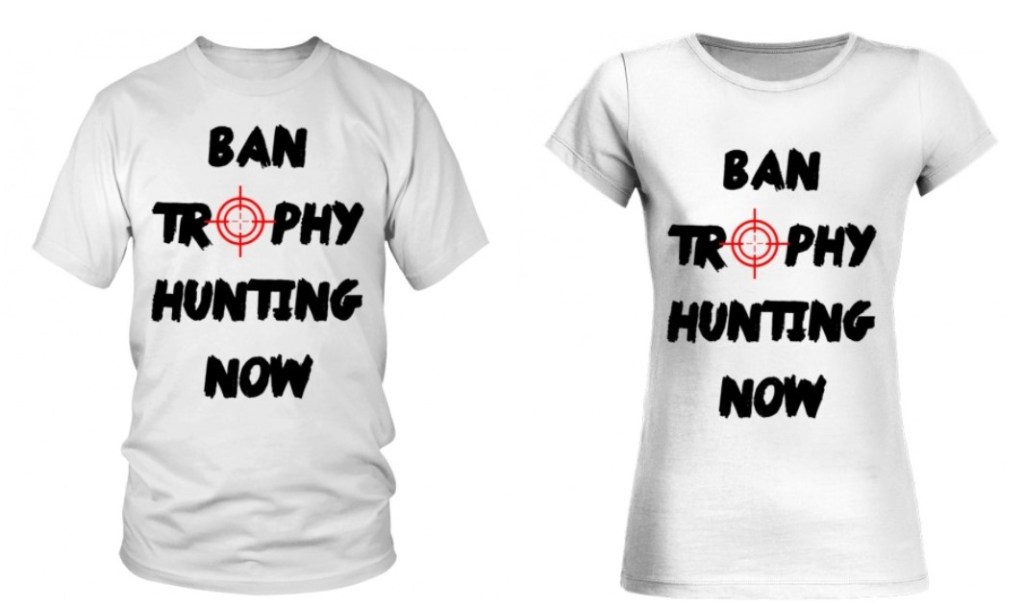
You can purchase a Ban Trophy Hunting Now tops (more styles and colours available) at Ban Trophy Hunting
Support ‘Protect All Wildlife’ by donating as little as £1 – It only takes a minute but it can last a lifetime for an animal in need.
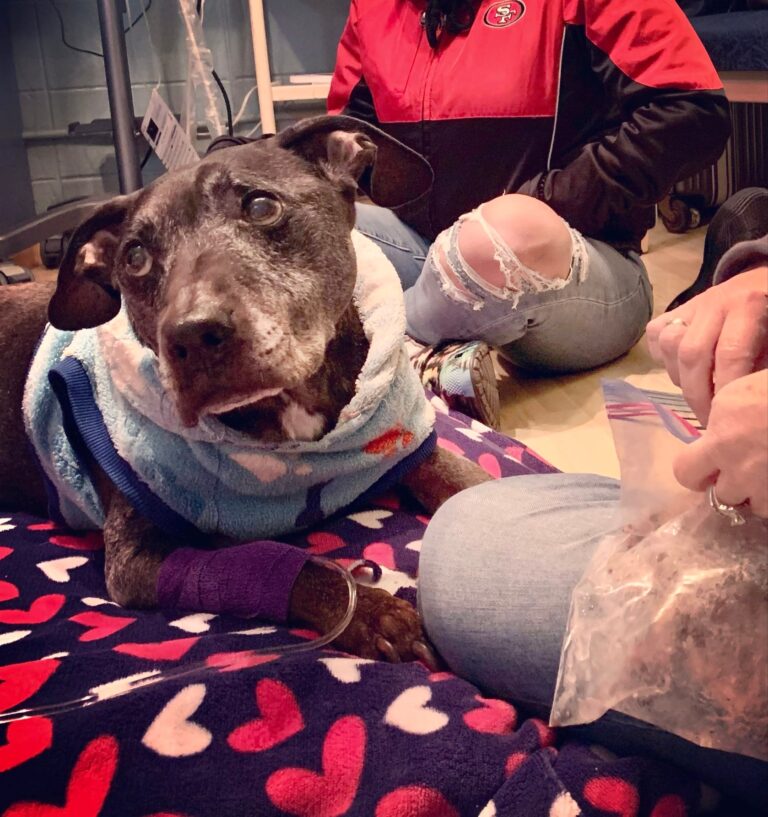
We believe EVERY animal should be treated with respect, empathy, and understanding. We raise awareness to protect and conserve wild, captive, companion and farm animals. It is vital that we protect animals against acts of cruelty, abuse, and neglect by enforcing established animal welfare laws and, when necessary, take action to ensure that those who abuse animals are brought to justice.

Protect All Wildlife are involved in many projects to protect animals’ rights, welfare, and habitats. Money contributed to Protect All Wildlife supports ALL of our worthy programmes and gives us the flexibility to respond to emerging needs. Your donations make our work possible. Thank you for your support.

Everyone who donates will receive a Certificate of Appreciation as a thank you for supporting wildlife.

CERTIFICATE OF APPRECIATION

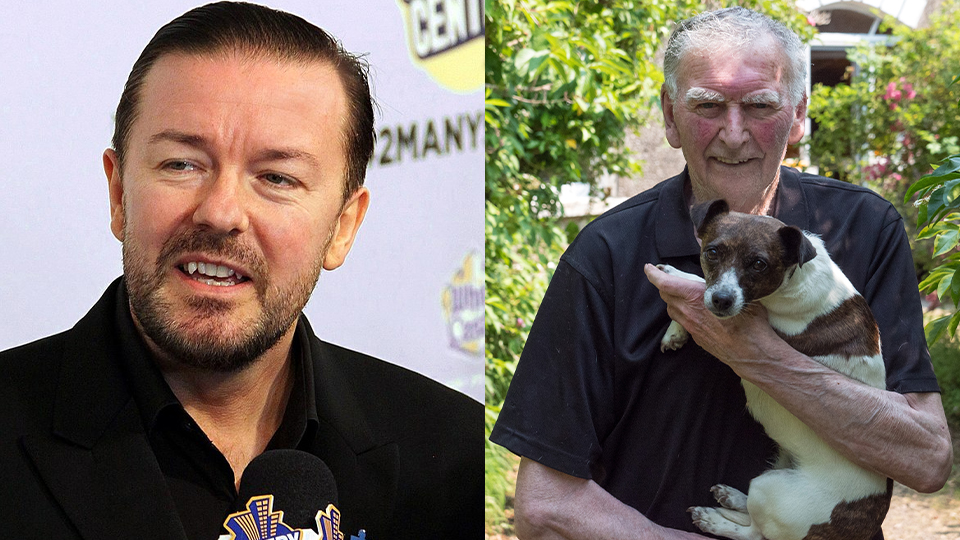
Ricky Gervais Speaks Out To Save Roscommon Ex-Garda’s Dog Kim From Being Put Down

RICKY GERVAIS GIVES HIS SUPPORT FOR DONAL AND KIM

The After Life creator took to Twitter to show his support for Donal Rogers and his dog Kim, calling the situation ‘sad and frustrating’ – his tweet has received masses of support.

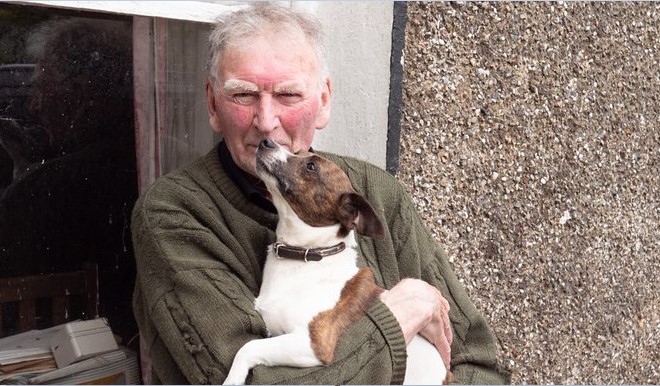
Ricky Gervais has become the latest person to join in the fight to save ex-Garda Donal Rodgers’ dog Kim.

The Jack Russell was ordered by a court to be put down after she reportedly bit a woman while walking on the Strokestown Famine Trail in Co Roscommon on March 6th.

However, the UK comedian has said that the order to put her down is “sad and frustrating”.

More than 600 people have donated €12,868 in a bid to help Roscommon’s Mr Rogers and his beloved pup – surpassing the fundraiser’s goal of €5,000.

Hundreds of thousands of people have also signed a Change.org petition to save the dog.

Retweeting a post about Donal and Kim that asked for “high public exposure”, Ricky Gervais wrote: “This is so sad and frustrating. Anyone out there know how this dog can be saved? #SaveKim”

Donal launched an appeal in the High Court to prevent Kim from being put down, but on July 28th, he withdrew the appeal after the court indicated to him “that there were other avenues to pursue.

“The battle is far from over, not even half over,” Donal told Gript.ie. “My supporters are fighting to keep Kim alive. I have wonderful support from all over the country.”

DONAL ROGERS AND HIS BELOVED JACK RUSSELL KIM

How to help Kim:

Donate at: Help Mr Rogers And Kim

Sign the petition at: https://www.change.org/p/save-kim

Ricky Gervais’ Canine Co-Star Antilly Enjoys Booming Career Following After Life Success

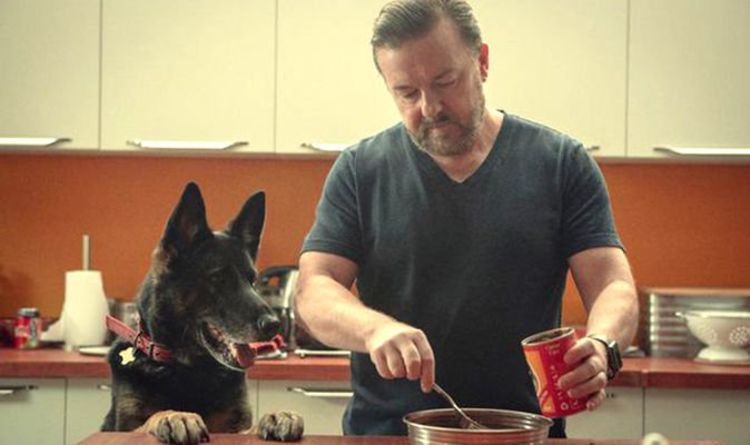
TONY AND BRANDY (RICKY GERVAIS AND ANTILLY)

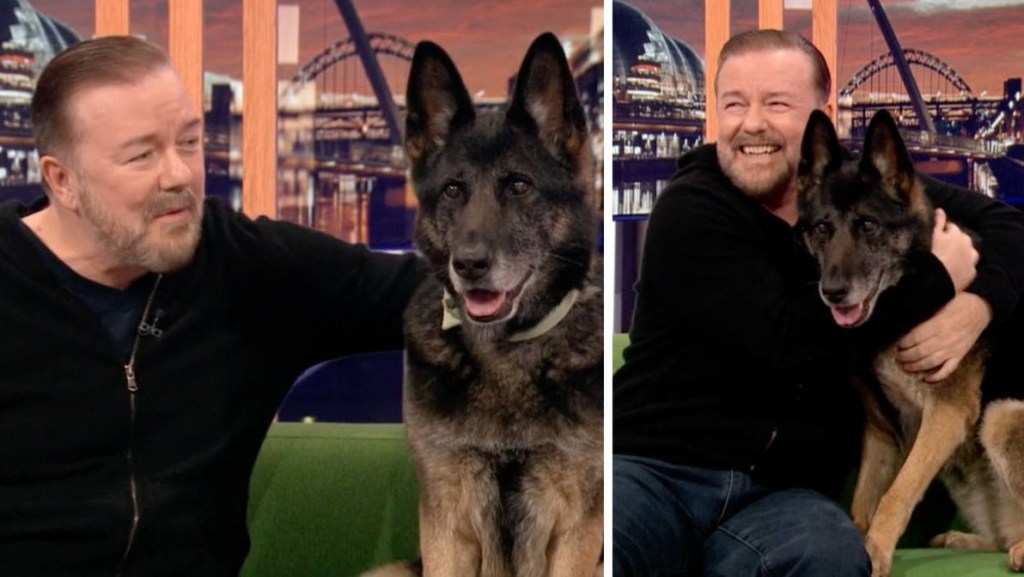
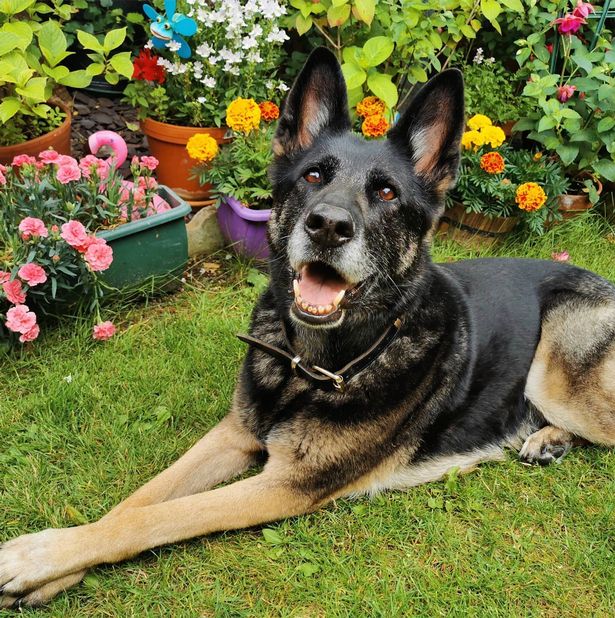
Antilly, the German Shepherd who shared the screen with comedian and actor Ricky Gervais in After Life, is adding plenty of screen credits to her CV since the show.

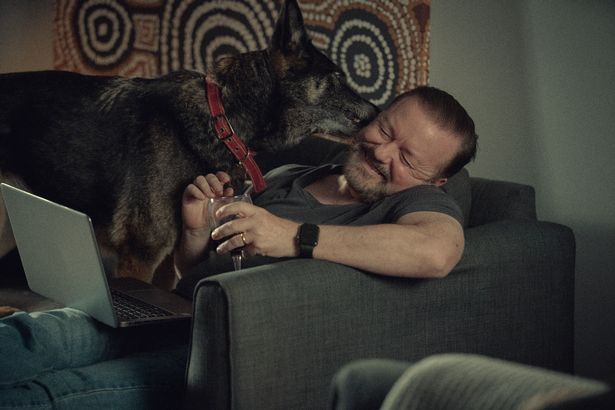
She won the hearts of TV viewers worldwide as Ricky Gervais’ loyal dog in Netflix smash After Life.

RICKY AND ANTILLY

And thanks to her role as Brandy, the pup who gives Ricky’s character Tony Johnson a reason to live after his wife’s death, Antilly’s career is booming.

ANTILLY

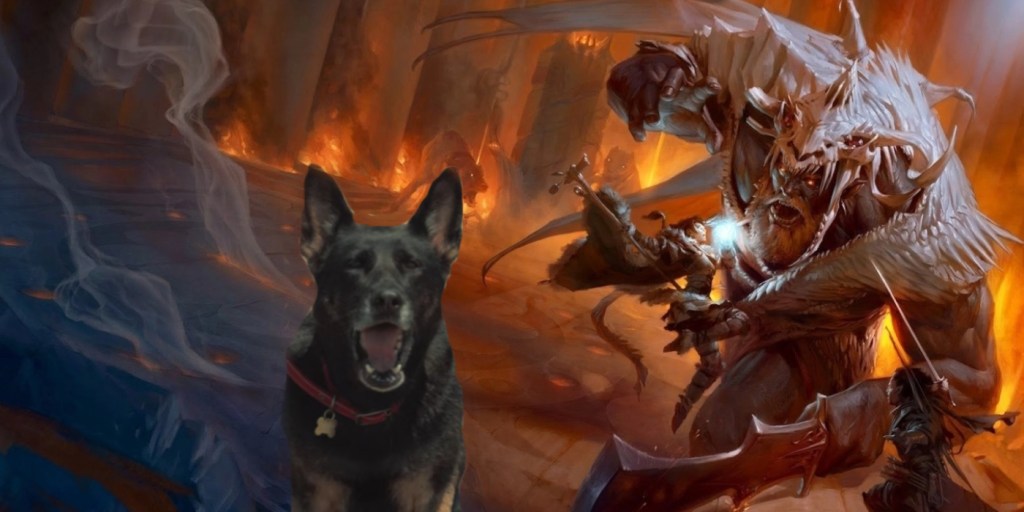
The German Shepherd has been to Belfast to shoot scenes with Hollywood stars Chris Pine and Michelle Rodriguez for a blockbuster Dungeons And Dragons film.

ANTILLY IN DUNGEONS AND DRAGONS

And she’s starring in upcoming BBC drama Sherwood with David Morrissey and Robert Glenister as well as Netflix spy series Treason with Charlie Cox and Olga Kurylenko.

Antilly has graced screens since she was a puppy, playing everything from Army hounds to police dogs.

She’s also worked with A-listers including Tom Cruise and George Clooney, who said she was the best-trained dog he’d seen.

Antilly’s owner Ashley Foster jokes: “They bring us over to do the serious acting.”

Ashley started as an animal trainer 10 years ago and worked on Batman flick The Dark Knight Rises with Antilly’s parents – he was one of villain Bane’s henchmen with the dogs playing attack hounds.

Antilly followed in her parents’ pawprints and signed with Stunt Dogs & Animals. The company was working on a film with Michael Fassbender and wanted a police dog to bite him – one of Antilly’s many skills.

ANTILLY’S DAD ASHLEY

Using protective sleeves, Ashley, 34, safely directs the clever canine where to bite. He says: “She’s very controlled. As soon as the director calls cut and I tell her to let go, she lets go straightaway.”

Antilly’s skills are so honed, she even managed to convince a scared stuntman on Martin Clunes’ series Doc Martin to do a dog bite scene.

ANTILLY CHASES DOC MARTIN (MARTIN CLUNES)

Ashley, from Bicester, Oxon, says: “He’d done one before, they’d used two ex-police dogs and they couldn’t get the dogs off him. I had to show how she works for him to agree to do it.”

The talented pooch, 10, has a wide range of tricks from shaking her head and limping on command to playing dead. All she needs is the reward of a sausage and Ashley stands off-camera, tempting her with his telescopic bait stick.

(OUTTAKE) ANTILLY AND RICKY ON THE SET OF AFTERLIFE

“She’ll lie there, completely still,” he says. “People could be crying and wailing over her and she won’t move. Every time she does something she will get paid with a sausage.”

Ashley often appears alongside Antilly and after receiving the script, they do lots of prep work to make sure she is happy.

PREPARED FOR AN AFTERLIFE SCENE

Ashley adds: “For After Life there wasn’t really much to prepare for. It was straightforward.”

When they’re not filming scenes, he uses the time to work on training.

He also brings other dogs with him to train, including German Shepherd pup Pen, who has already worked as a police dog in TV shows and will eventually take over from Antilly.

For now, though, she is continuing her film work. Ashley says: “She’s still super fit, healthy and happy and loves to work.”

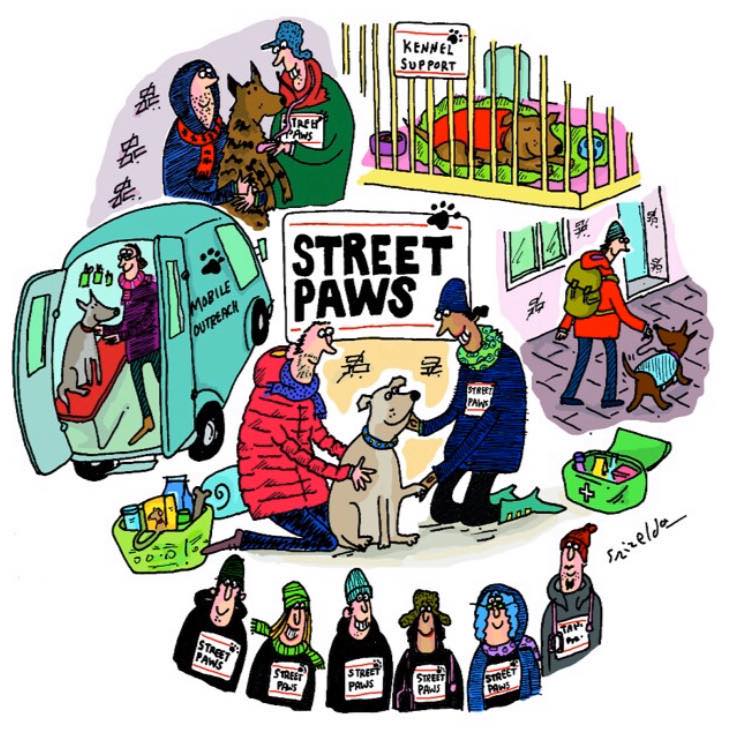
Ashley and Antilly are backing a new challenge from charity Street Paws, encouraging Brits to walk 274,000 steps in April for every homeless person in England.

Founded in Newcastle in 2016, Street Paws provides free accessible vet care and support services to homeless people and their pets.

STREET PAWS

Ashley says: “The work they do can save people. I’ve known people who are struggling to find housing and have got a dog and are really worried about not being able to find somewhere to live with them.”

What you can do to help rescue animals:
Support ‘Protect All Wildlife’ by donating as little as £1 – It only takes a minute but it can last a lifetime for an animal in need.
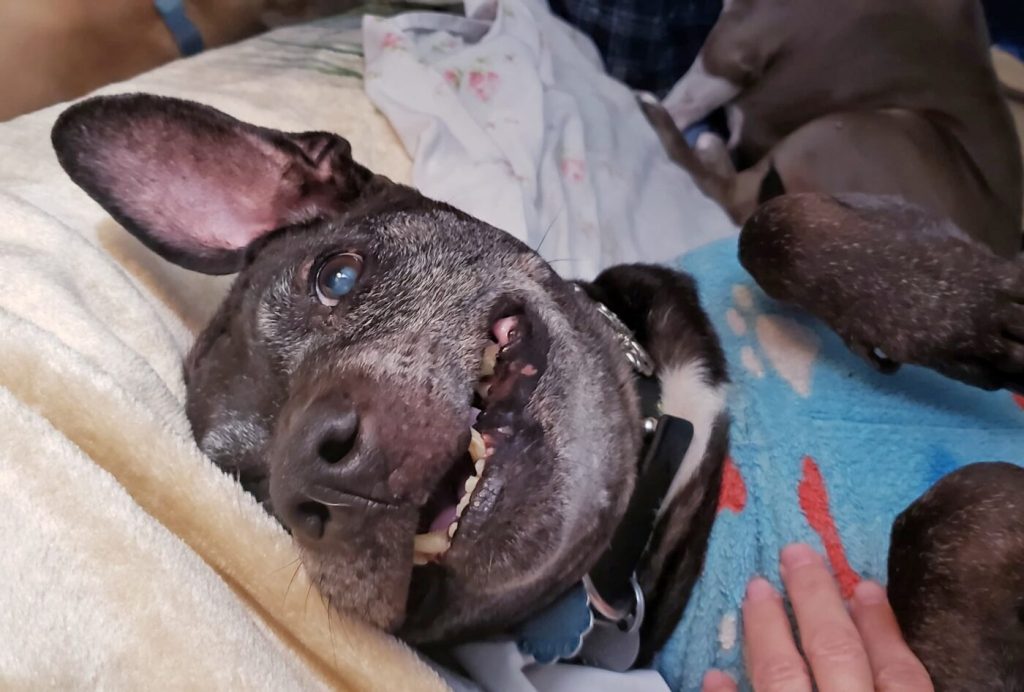
We believe EVERY animal should be treated with respect, empathy, and understanding. We raise awareness to protect and conserve wild, captive, companion and farm animals. It is vital that we protect animals against acts of cruelty, abuse, and neglect by enforcing established animal welfare laws and, when necessary, take action to ensure that those who abuse animals are brought to justice.

Protect All Wildlife are involved in many projects to protect animals’ rights, welfare, and habitats. Money contributed to Protect All Wildlife supports ALL of our worthy programmes and gives us the flexibility to respond to emerging needs. Your donations make our work possible. Thank you for your support.

Everyone who donates will receive a Certificate of Appreciation as a thank you for supporting wildlife.

CERTIFICATE OF APPRECIATION

When Tomorrow Starts Without Me

When tomorrow starts without me, 
And I’m not there to see;
The sun will rise and find your eyes
All filled with tears for me

I wish so much you wouldn’t cry 
The way you did today,
I know how much you loved me,
As much as I love you, 
And each time that you think of me
I know you’ll miss me too.

But when tomorrow starts without me,
please try to understand 
That an angel came and called my name
And petted me with her hand.

She said my place was ready, 
In Heaven far above, 
And that I’d have to leave behind
All those I dearly love. 

But,as I turned to heel away, 
A tear fell from my eye, 
For all my life I never thought 
That I would have to die. 

I had so much to live for, 
So many sits and downs to do,
It seemed almost impossible, 
That I was leaving you. 

I thought about our lives together,
I know you must be sad, 
I thought of all the love we shared, 
And all the fun we had. 

Remember when I’d nudge your hand,
And poke you with my nose? 
The frisbee I would gladly chase,
The bad guy,I’d “bark and hold” 

If I could relive yesterday,
Just even for awhile, 
I’d wag my tail and kiss you,
Just so I could see you smile. 

But then I fully realized, 
That this could never be 
For emptiness and memories 
Will take the place of me. 

And when I thought of treats and toys 
I might miss come tomorrow,
I thought of you and when I did, 
My dog-heart filled with sorrow. 

But when I walked through Heaven’s gate;
And felt so much at home; 
As God looked down and smiled at me,
From His beautiful throne. 

He said,”This is eternity”, 
And now we welcome you, 
Today your life on earth is past, 
But here is starts anew. 

I promise no tomorrow, 
But today will always last; 
For you see,each days’ the same, 
There’s no longing for the past. 

Now you have been so faithful 
So trusting, loyal and true; 
Though there were times you did things, 
You knew you shouldn’t do 

But good dogs are forgiven,
And now at last you’re free;
So won’t you sit here by my side,
And wait right here with me? 

So when tomorrow starts without me,
Don’t think we’re far apart, 
For every time you think of me,
I’m right there, in your heart. 

Author unkown

What you can do to help animals in need:
Support ‘Protect All Wildlife’ by donating as little as £1 – It only takes a minute but it can last a lifetime for an animal in need.
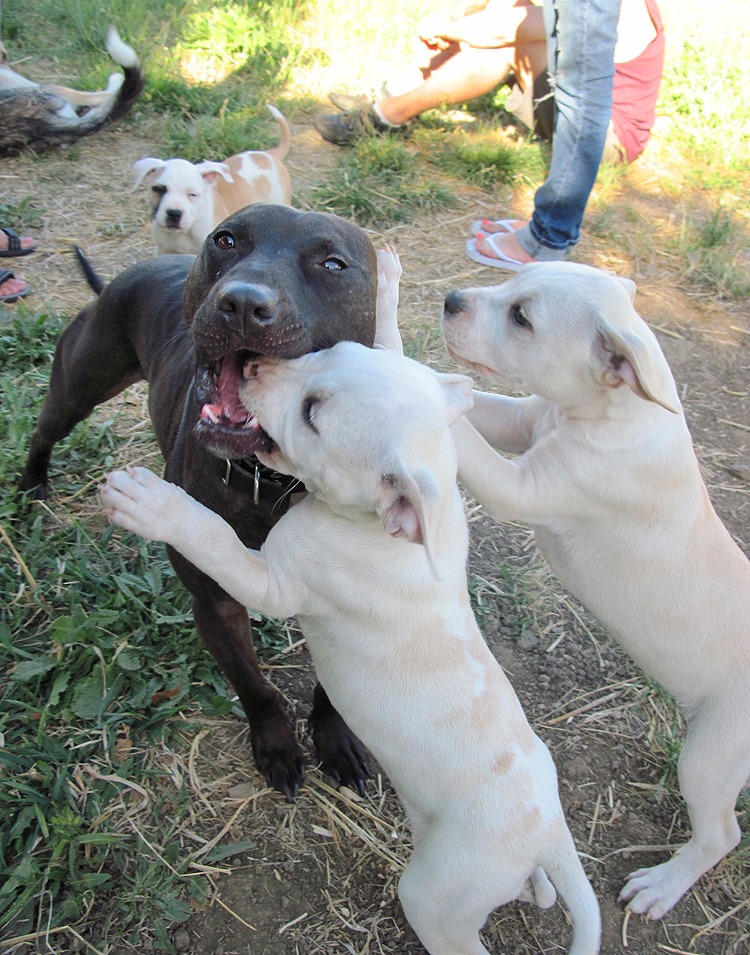
We believe EVERY animal should be treated with respect, empathy, and understanding. We raise awareness to protect and conserve wild, captive, companion and farm animals. It is vital that we protect animals against acts of cruelty, abuse, and neglect by enforcing established animal welfare laws and, when necessary, take action to ensure that those who abuse animals are brought to justice.

Protect All Wildlife are involved in many projects to protect animals’ rights, welfare, and habitats. Money contributed to Protect All Wildlife supports ALL of our worthy programmes and gives us the flexibility to respond to emerging needs. Your donations make our work possible. Thank you for your support.

Everyone who donates will receive a Certificate of Appreciation as a thank you for supporting wildlife.

CERTIFICATE OF APPRECIATION

Australian Dad Of Three Young Girls Tries To Explains Why He Is Teaching Them How To Hunt And Kill Deer And ‘Feral’ Pigs In The Bush

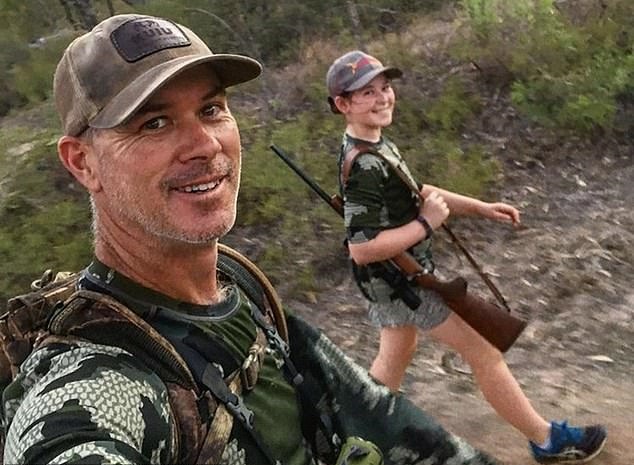
JUSTIN WANN, PICTURED WITH HIS DAUGHTER EMILY, 12, HAS EXPLAINED WHY HE TAKES HE HAS TAUGHT HIS THREE YOUNG CHILDREN HOW TO HUNT

The family almost entirely live off wild game, regularly eating what they shoot and kill to teach the children where their food comes from.

WANN’S DAUGHTER SAMANTHA IS PICTURED POSING WITH A DEER THAT WAS SHOT AND KILLED DURING A FAMILY HUNTING TRIP

A recent picture uploaded online shows Samantha posing next to a deer which she shot from 45m away, before carrying the animal home.  

Emily, ‘not to be outdone by her sister’, shot her first deer just weeks later, while Sophie has also been pictured practicing to shoot with a pink single shot .22 rifle.

SAMANTHA IS PICTURED HERE WITH THE FIRST DEER SHE SHOT AND KILLED HERSELF WHILE ON A HUNTING TRIP

Samantha and Emily, who both first learnt to shoot with the same gun, now hunt with bolt action .243 hunting rifles.  

Mr Wann learnt to hunt and shoot when he was taken on hunting trips as a child by his grandfather in western New South Wales.   

SAMANTHA AND EMILY ARE PICTURED WITH A WILD DOG THAT WAS KILLED DURING A FAMILY HUNTING TRIP

‘I strongly believe in firearm education for kids, especially kids in rural areas where there is a high chance they will be exposed to guns at some stage,’ Mr Wann said. 

WANN’S WIFE SARA WITH THEIR DAUGHTER EMILY, WHO WAS 18-MONTHS-OLD AT THE TIME, POSING BEHIND A ‘FERAL’ PIG

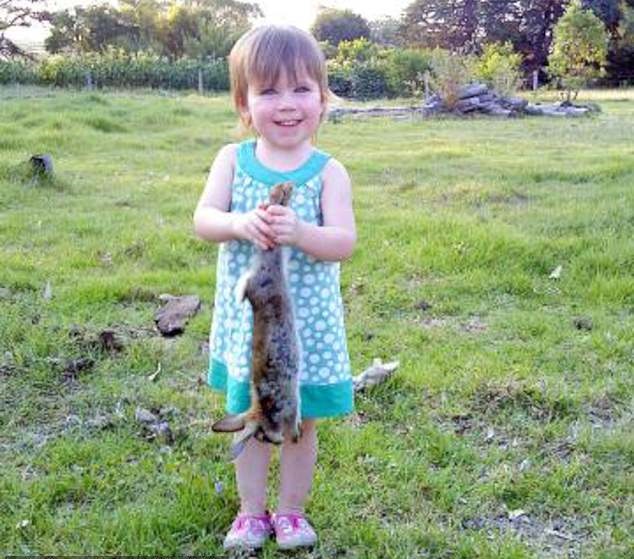
SAMANTHA IS PICTURED WHEN SHE WAS YOUNGER HOLDING A DEAD RABBIT IN HER HANDS
Editor’s Note: Misguided Parenting.

Many hunter’s believe it is their parental duty to teach children to use guns. It’s a difficult viewpoint for others to understand. Yet good parenting involves protecting children from harm. Allowing children to do what we do, regardless of age, safety and moral implications, is not protecting them.

Teaching his daughter to hunt has become a war veteran’s purpose in life. He has a dream that his daughter will be the “first four year old in the world to hunt and kill a hog.” It doesn’t seem to matter whether his young daughter wants to hunt.

“I have to be with her for her very first kill… Can’t take that away from me, you know. It’s going to be a huge accomplishment that her dad’s a triple amputee with one arm and he’s got her to where she can hunt herself,” he says in the documentary Kids and Guns. She has already been made to watch him kill a squirrel from his wheelchair, then hold the corpse for photographs and watch the skinning.

A corruption of childhood

Images of children carrying guns or holding slain animals represent a corruption of childhood. Children enjoy pleasing the adults in their life, but they don’t have to kill to earn our approval, unless we make it that way. They can help to prepare food, or feed animals, or grow vegetables. We can teach them how to create and nurture. When they reach adulthood, they can choose whether or not they want to use guns and kill animals, but before then, let’s not force them down a path.

Perhaps we should look more critically at why we teach children the things we do. Is it for their benefit, for society’s benefit, or our own? It’s one thing to dress our children in our favourite football team kit, although better they make their own choice, but it’s a different matter to place a gun in their hand.

Children are highly impressionable. Killing has no place in childhood if we want a more compassionate society. We first need to teach children to respect nature, otherwise what hope is there for preserving the natural world and for protecting humanity in the long run?

A society that promotes killing surely isn’t a healthy one.

What you can do to help animals in need:
Support ‘Protect All Wildlife’ by donating as little as £1 – It only takes a minute but it can last a lifetime for an animal in need.
We believe EVERY animal should be treated with respect, empathy, and understanding. We raise awareness to protect and conserve wild, captive, companion and farm animals. It is vital that we protect animals against acts of cruelty, abuse, and neglect by enforcing established animal welfare laws and, when necessary, take action to ensure that those who abuse animals are brought to justice.
Protect All Wildlife are involved in many projects to protect animals’ rights, welfare, and habitats. Money contributed to Protect All Wildlife supports ALL of our worthy programmes and gives us the flexibility to respond to emerging needs. Your donations make our work possible. Thank you for your support.

Everyone who donates will receive a Certificate of Appreciation as a thank you for supporting wildlife.

CERTIFICATE OF APPRECIATION