A TURKISH COMPANY MAKE ROOF TILES THAT ALSO DOUBLE AS BIRD NESTING BOXES

Today, approximately 55% of the world’s population lives in urban areas, according to the UN. As a result, animals are forced to find ways to share these tight urban spaces with us humans, and it isn’t always straightforward. Birds are no exception. The creative designs could be key to solving a decline in urban bird populations.

TURKISH COMPANY HITIT TERRA MANUFACTURE ROOF TILES THAT DOUBLE AS BIRD SHELTERS

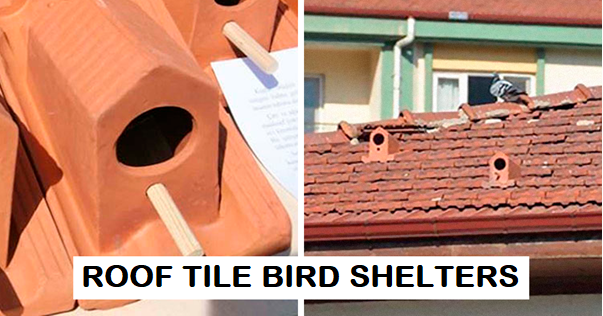
It all began when the Dutch product design agency Klaas Kuiken came up with the idea to design a roof tile that doubles as a bird house. The idea was pounced upon by Hitit Terra, a Turkish terracotta manufacturer based in the town of Çorum, which then started producing the bird nest tiles for the local communities.

Mahmoud Basic, the regional director for Turkish National Parks, told a local news website that the tiles were to be produced and distributed to the people free of charge.
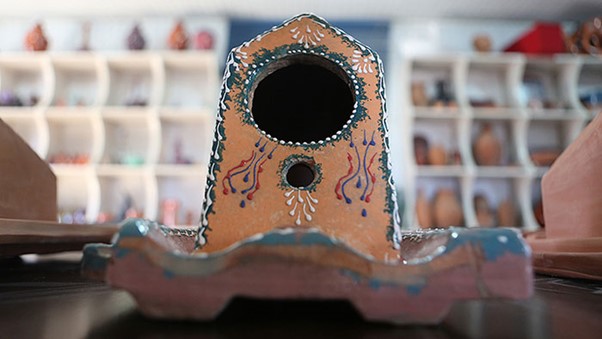
The Hitit Terra founders, Cengiz Başaranhıncal and Ali Arslan, said that the idea to produce bird nest tiles came after they saw the design on social media. Ali explained that the price of the tile online came out at around $70* which, in his opinion, was too high and they started making their own product for a local market.

*The Dutch tiles they are referring to are in fact more than twice that price, so wherever they saw them for $70 was a bargain.
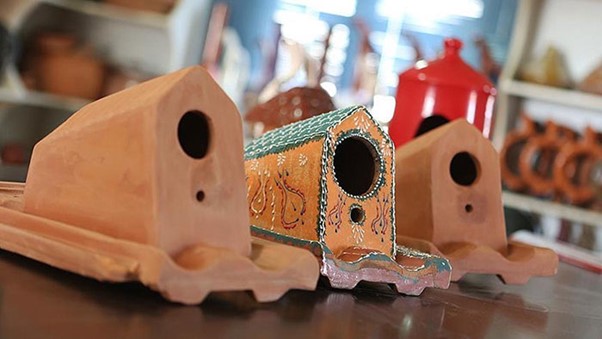
Hitit Terra’s bird nest tiles were tested by Afyon Nature Conservation and the 5th Regional Directorate of National Parks and re-designed according to the demand. They now produce 5 different tile designs that accommodate different bird species.

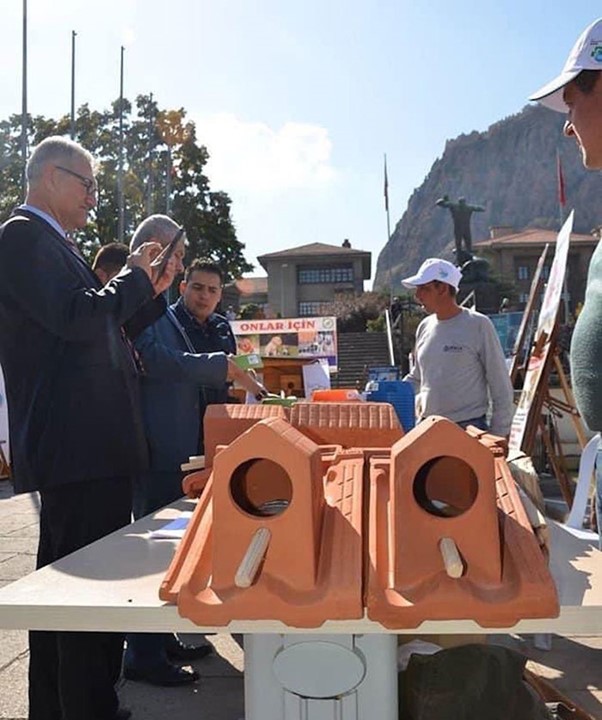
Ali Arslan, one of the company partners, said they started producing roof tiles with bird nests two years ago. They have sent 3 thousand products to various municipalities and institutions so far.

Explaining that they redesigned the birdhouse tile on the internet in a different way, Arslan said, “It was sold on the Internet for around $ 70 each. We thought it was a disadvantage to launch a product related to nature with such a high price. We get the point. Those who want, instead of bringing Turkey from abroad, we provide access to these products from Corum.”
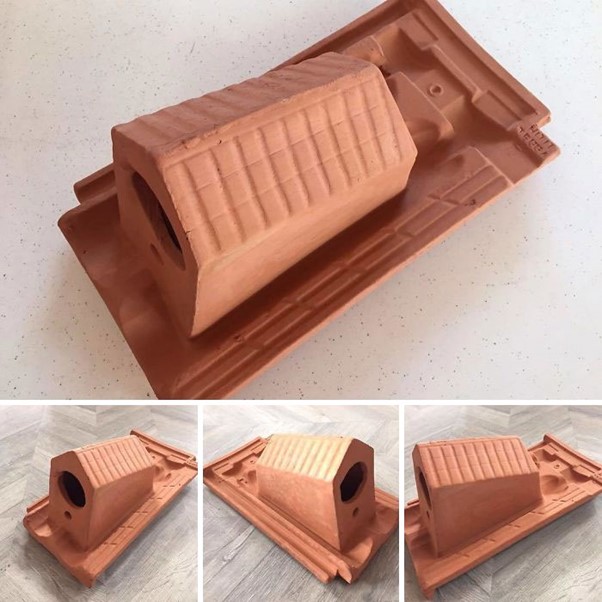
“Demand is increasing as it is a new product” Expressing that the interest in bird nest tiles is increasing day by day, Arslan stated that until today, the 5th Regional Directorate of Afyon Nature Conservation and National Parks, municipalities of various provinces, companies and citizens who want to put them on the roof of their homes have produced 3 thousand pieces.

Stating that they received very good comments, especially on social media, Arslan said: “Especially in many buildings built during the Ottoman period, we see that there are such structures for the eating, drinking and sheltering needs of birds. We also wanted to keep the tradition of our ancestors alive and contribute to the animals we share our world with. We received very good reactions from all segments after production. Congratulations from many places, especially organisations and municipalities, and thanks on social media. This happiness leads us to make more quality and different products. The demands are increasing gradually as it is a new product.
A PRODUCT THAT CONTRIBUTES TO THE INCREASE OF THE BIRD POPULATION IN CITIES AND VILLAGES

In consultation with Vogelbescherming Nederland (Dutch organisation concerning the protection of birds), Klaas Kuiken originally developed “Vogelhuisjesdakpan” (the Birdhouse roof tile); the merge of a basic terracotta roof tile with the archetypal shape of a house. The result is a remarkable product that not only looks good, but also contributes to the increase of the bird population in cities and villages.

Inside the Birdhouse, underneath the roof tile, a carefully designed nesting basket made of wood and bird screen is attached. This nesting basket ensures good ventilation, prevents the birds from moving to other places underneath your roof and makes it really easy to clean the nest after a breeding period.

By installing one or more of these Birdhouse roof tiles, you ensure that birds are provided with a safe place to stay and raise their chicks. Instead of crawling under the roof tiles to build a nest, the birds can now linger in their own cosy cottage.

Bird houses are rooted in Turkish history. Back in the times of the Ottoman Empire, people would build elaborate architectural miniature palaces for the birds. Not only did they give animals shelter, they were also believed to grant good deeds to whoever built them.

Please SHARE for others to enjoy. You can also SIGN UP to receive articles and news updates direct to your inbox
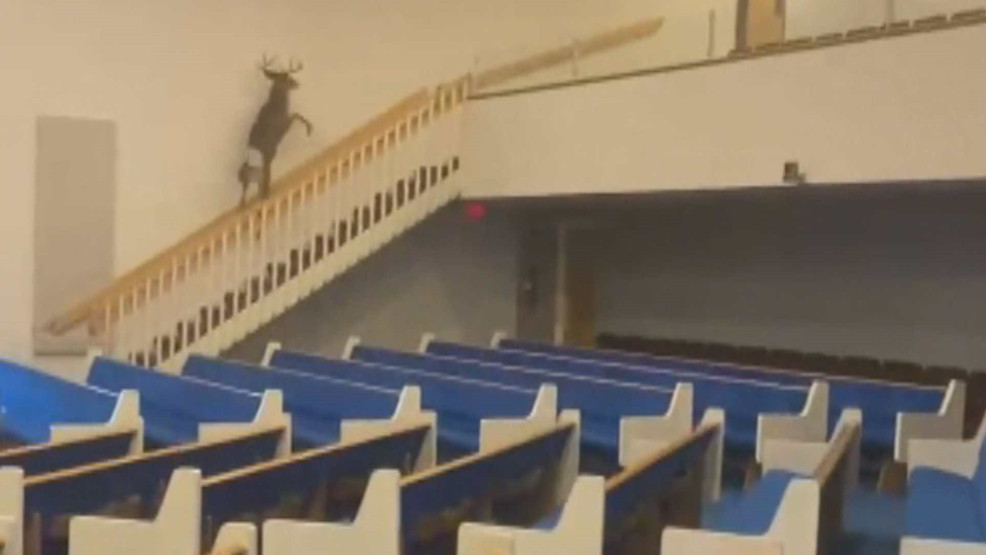
A 10-POINT BUCK SOUGHT SANCTUARY INSIDE A SOUTHERN MICHIGAN CHURCH ON THE OPENING DAY OF THE STATE’S DEER HUNTING SEASON

THE BUCK INSIDE THE CHURCH

On the first day of deer season for firearms in Michigan, a 10-point buck apparently sought to find refuge in Grace Christian Fellowship Church in Sturgis, breaking through a window and becoming a huge surprise to the pastors when they got to the church Monday morning.

“When Luke Eicher, Justin Wickey and Amanda Eicher arrived at the church this morning, they found signs of breaking and entering,” stated the church’s description on the video. “Little did they know that a 10-point buck had come for prayer in the auditorium on opening day of gun season.”

When the three walked into the church’s office Monday morning, they noticed light coming from a darkened window in the auditorium.

“When I peeked inside, I saw the window was broken and heard loud banging,” Amanda Eisher told Storyful. “My husband rushed in and found this 10-point buck. On the opening day of the gun season of all days!”

“I was just shocked by how high he could jump,” Amanda Eicher said. “I was amazed at how big he was.”

The buck didn’t appear to have any gunshot wounds and was bleeding just a bit from what appeared to be cuts from the glass, she told the Kalamazoo Gazette. Besides the broken window, the only other damage was blood stains on the carpet.

“There was some damage to the building and our pastors are a little traumatized,” the church reported. “But the buck left strengthened in the Lord to go face his battles.”

Credit: The Grace Christian Fellowship Church

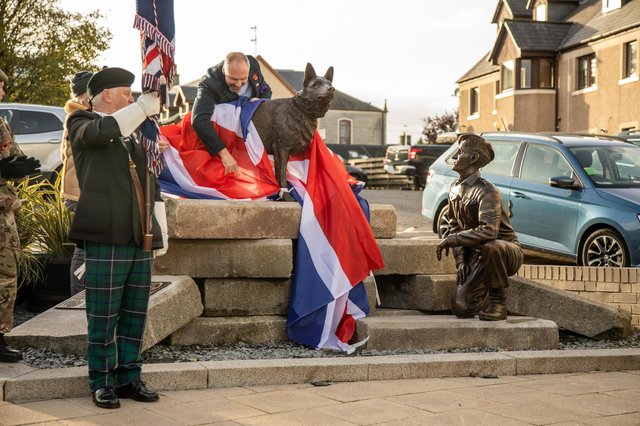
Bronze Statue Of Hero Wartime Dog Unveiled In Hometown Of Strathaven

A hero dog who saved his handler from drowning after being ‘conscripted’ into the British Army has been honoured with his own life-size bronze statue in his hometown of Strathaven in Scotland.

the statue of Khan and L/Cpl Jimmy Muldoon being unveiled on Strathaven Common Green.

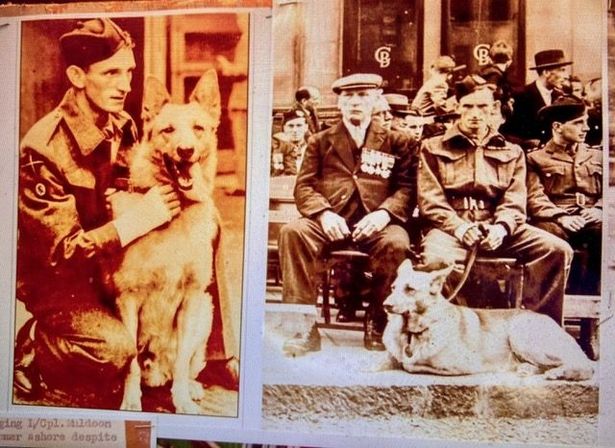
The memorial to Khan was formally unveiled in the Common Green almost exactly 77 years after he pulled Lance Corporal Jimmy Muldoon from the sea.

The dramatic rescue happened after Corporal Muldoon’s landing craft was bombed by German forces defending Walcheren Island, in the Netherlands.

As they approached Walcheren Island, bombs started to rain down and several landing craft were hit.

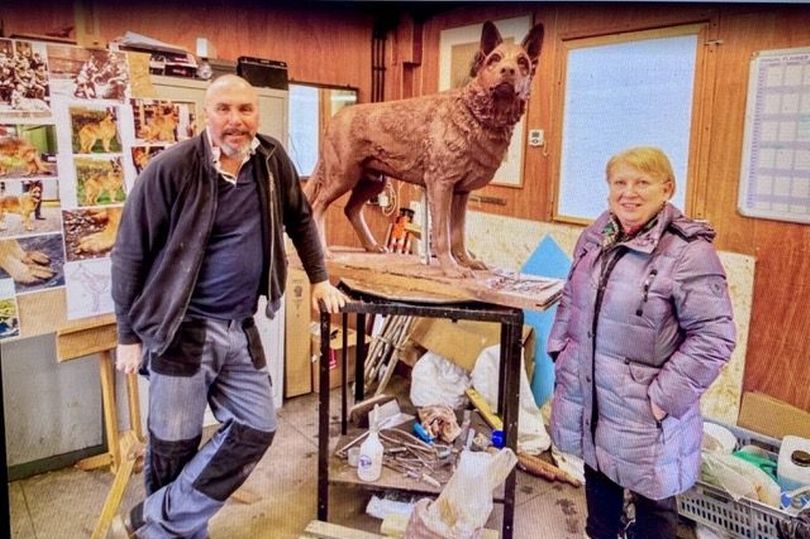
The work, by sculptor John McKenna, has been unveiled almost 77 years to the day that Khan pulled L/Cpl Muldoon from the sea after his landing craft was bombed by German forces at Walcheren Island, The Netherlands, during the Battle of the Sheldt in November 1944.

SCULPTOR JOHN MCKENNA WITH HIS SCULPTURE OF KHAN

Mr Muldoon said: “The dog managed to get to shore, but there was no handler with it.

“He could hear the handler in the water – my father. So he ran down and jumped back in, got him by the scruff of the neck and pulled him out. I think it was about 200yds [182m] to shore.”

Unit members who witnessed the event later said Khan then lay on the shore beside his handler, both exhausted.

Khan, who had been “conscripted” into the British Army, served out the war and was returned home to the Railton family in Tolworth, Surrey.

Khan and L/Cpl Jimmy Muldoon

Members of the soldier’s regiment called for Khan’s bravery to be celebrated.

The dog was awarded the “animal’s Victoria Cross” for bravery, the PDSA Dickin Medal, and L/Cpl Muldoon went to the ceremony.

“People saw there was that much affection between the two of them that they decided he would take it home,” Mr Muldoon said.

In Strathaven Khan was treated like a local hero, especially in the butchers shop where he was given free meat every week.

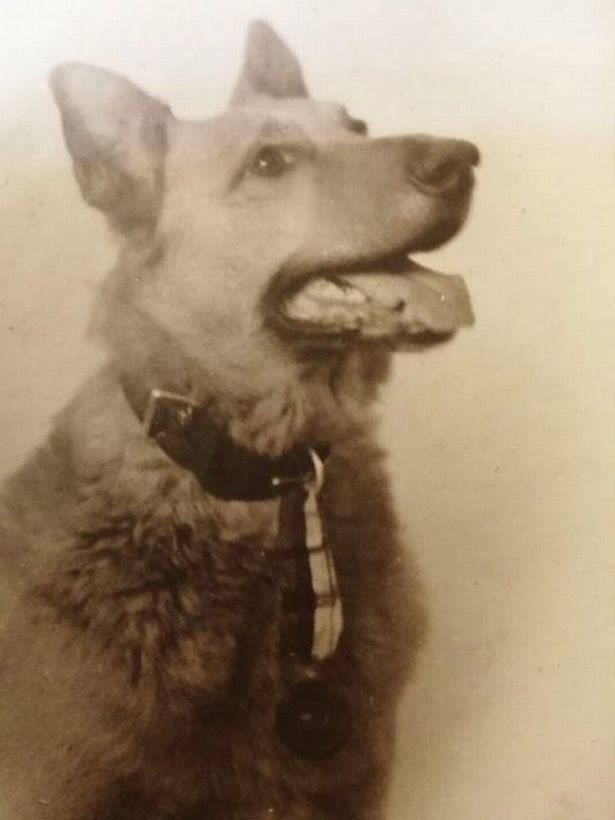
KHAN

Mr Muldoon said: “I have a great deal to be grateful to Khan for.

“There is no doubt he saved my father’s life as he could not swim and was being pulled under water by his pack.

“I guess I wouldn’t be here if it wasn’t for Khan, and I am so pleased the good folk of Strathaven have decided to honour him for his heroism.”

The bronze statue, created by John McKenna whose other works include the statue of Billy McNeill outside Celtic Park, shows the bond between the man and his dog.

Mr McKenna said: “It’s an incredible story and I am really honoured to have been part of the effort to have Khan and Jimmy immortalised.

“Thanks to photos of Khan and Jimmy I was able to capture the way they looked, but I hope I was also able to show their remarkable relationship.”

The work was unveiled in a ceremony attended by representatives of the armed forces, local dignitaries and residents, including some of those who helped raise £60,000 to make the statue.

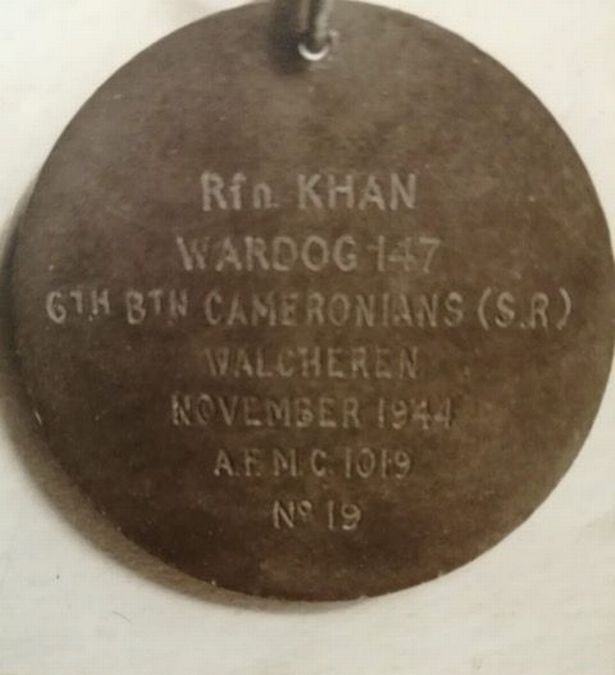
Former members of the 6th Battalion Cameronians, who honoured the dog with the title “Rifleman Khan”, also attended.

KHAN’S MEDAL OF HONOUR

Local councillor Margaret Cooper said fundraising for the statue had been boosted by South Lanarkshire Council and a local businessman who “very generously put up about half of the money needed”.

She added: “People in Strathaven are really proud to have been home to Jimmy and Khan and we now have a new landmark that will tell their story for many decades to come.”

Please SHARE this beautiful story for other to enjoy. You can also SIGN UP to receive updates and stories direct to your inbox.

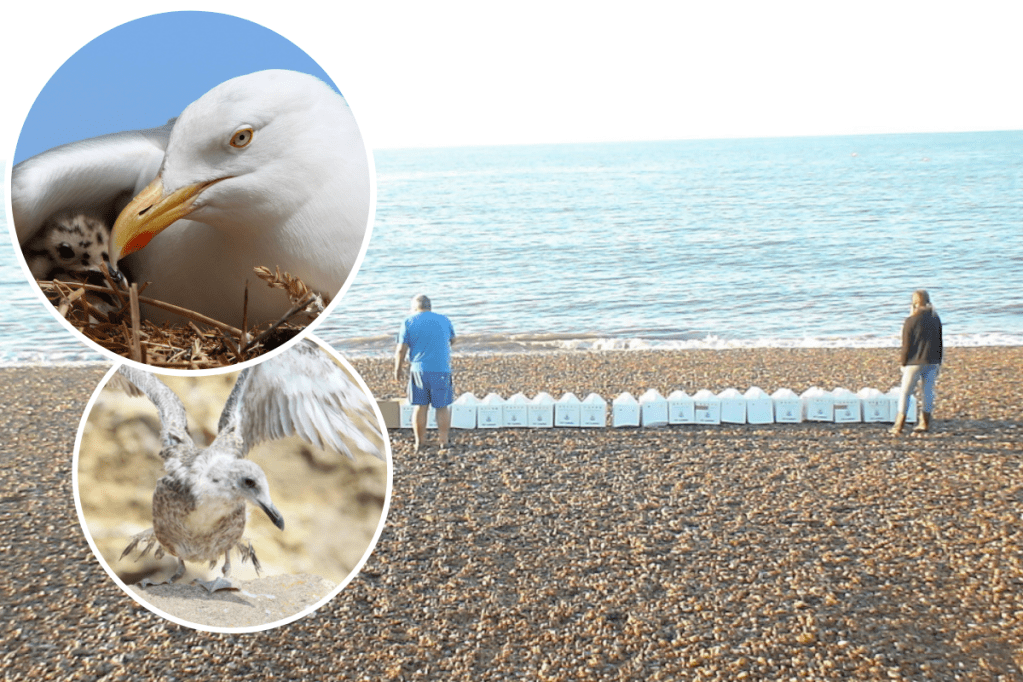
Bird Aid : URGENT Help Needed For Hailsham Gull Sanctuary

A bird charity has very little time to save itself, and the thousands of injured gulls it cares for.

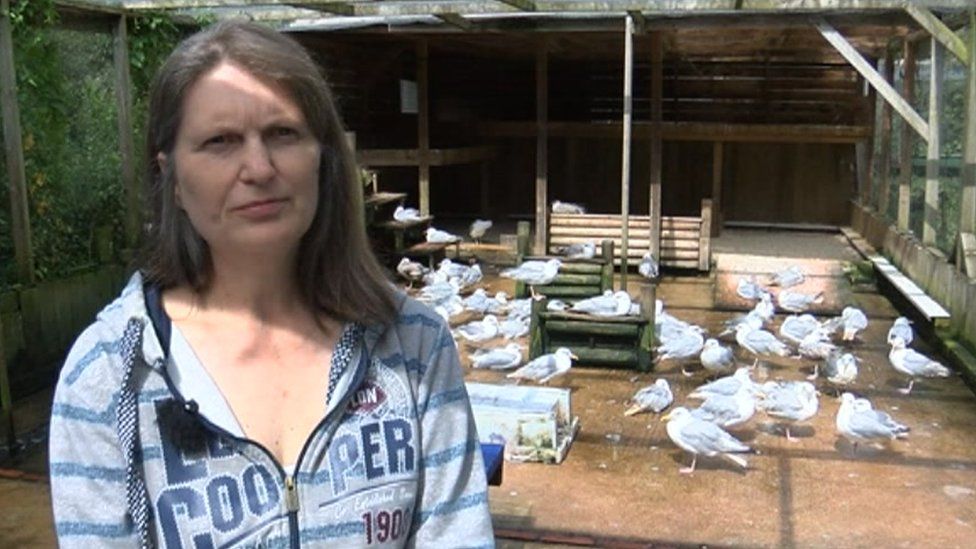
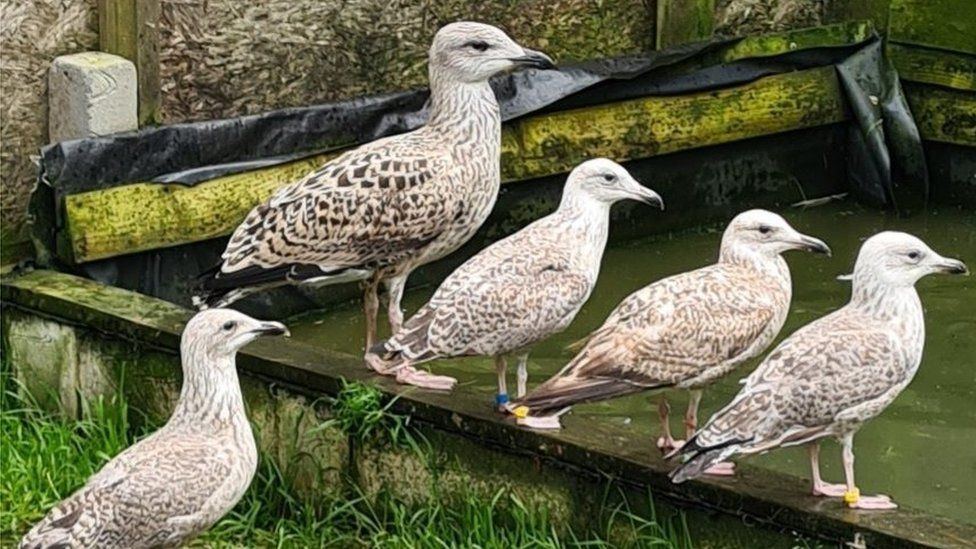
Bird Aid‘s sanctuary in Hailsham, East Sussex, houses 250 attacked or injured birds at any one time, including 100 permanent residents.

It needs £170,000 to buy the land it’s on, after an investor pulled out.

Owner Julia Gould said: “We need help, time is nearly out. We’re the only gull rescue centre in the country, we’re vital, without us thousands will die.”

JULIA GOULD WITH SOME OF HER GULLS

“I know they have a reputation for stealing people’s food, but they’re not nasty birds and they have no talons, no hooked beak, no weapons,” Mrs Gould said.

“It’s a shame Brighton or Sussex doesn’t adopt them as our county bird and do more to appreciate and protect them.

“The seaside wouldn’t be the same without them.”

Bird Aid began in Eastbourne at the home of Julia and Ian Gould. Julia had worked with garden birds and gulls for many years and decided to set up a separate charity dedicated to gulls. They had aviaries in the garden and four learning disabled adults who came for work experience. The facilities were limited so they decided to look for a bigger property. A large factor in their decision was an urgent need to give their, much loved, blind gull a better life by building him a bespoke aviary.

One of the Trustees said he wanted to give some of his own money to the Gould’s so that a larger place could be purchased. He said he was fully supportive of Julia’s work with the gulls and wanted Bird Aid to help as many gulls as possible. After a long search they found Hydeaway, which was perfect for the birds and would provide plenty of work for Learning-Disabled volunteers too. Hydeaway is set on a two-acre site which now has superb facilities that cannot be bettered by any rescue centre. 

 After a change in circumstances we have had to come to an agreement that Bird Aid has one year to raise enough money to buy this person out. If the money cannot be raised, then this centre of excellence for gulls all over Southern England will close.

Herring gulls are on the RSBPs red list for threatened birds, as the species has seen a sharp decrease in population over last 25 years.

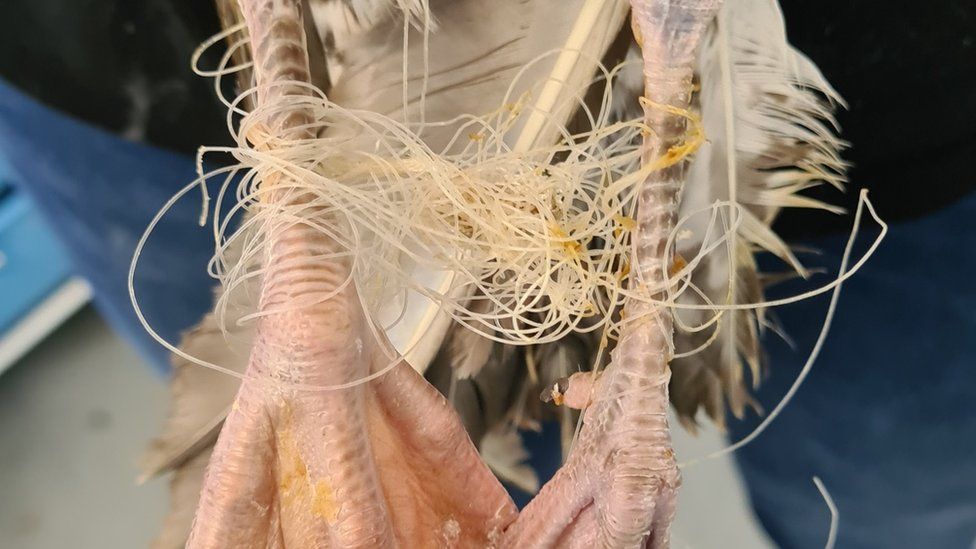
Mrs Gould has been operating the centre for eight years and said she has seen some horrific injuries to the seaside birds.

One came in with a broken leg, wing and ribs after being “beaten to near death” by a man in Eastbourne. t recovered but due to neurological damage can never be released back into the wild.

“People attack them, throw them into bins, it’s horrendous,” she said.

Gulls from across the country are taken to Bird Aid, and people from all over the world ring Mrs Gould for advice on caring for injured gulls.

“People call them a nuisance, but they adapt to us. They’re not wanted on the beach, we keep building hotels, houses, towns on the beachfront and they’re not wanted there either.

“They need to live somewhere. They have a right to be here, and be treated kindly.”

If you would like to help you can donate here: Help Hailsham Bird Sanctuary

Please Help #SaveBirdAid. Share this post to raise awareness. Thank you.

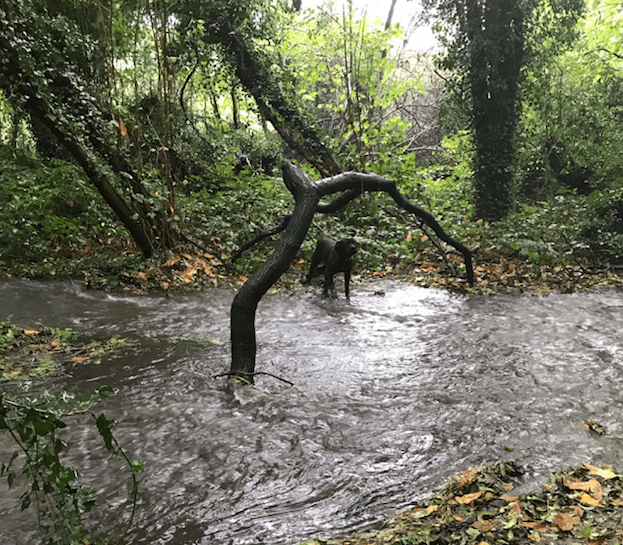
Appeals For Information After A Staffordshire Bull Terrier Was Found Tied To A Tree And Abandoned In A Flooded Area

THE STAFFORDSHIRE BULL TERRIER FOUND TIED TO A TREE BY A METAL LEAD.

The RSPCA is appealing for information after a Staffordshire Bull Terrier was found tied to a tree in a flooded area in Croydon.

The female dog, now named Lorraine by RSPCA staff, was found off Kestral Way in New Addington in the old Pitch and Putt site on an unused footpath which had become severely flooded. She had been tied to a tree by a metal lead and was scared and barking.

Torrential rain had formed a river around her on the footpath which was approximately 1.5ft deep.

RSPCA Inspector James Whipps attended and rescued the dog on Sunday 31 October.

He said: “This poor dog was terrified when I arrived. The area was completely flooded around her and she’d been tied to a tree and abandoned. I rescued her and took her to our RSPCA Leybourne Animal Centre in Kent where she is now getting some much needed TLC.

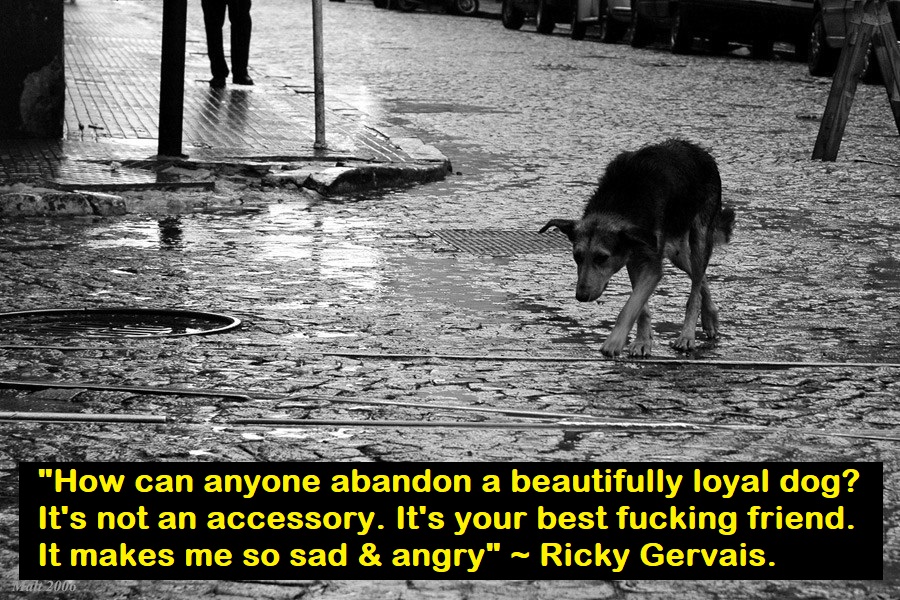
“We know that people’s circumstances may change which means they can no longer care for their pets but there is never an excuse to abandon an animal like this. This dog was scared and cold and in danger due to the flooding. Abandoning a dog like this is just cruel.

“I’d urge anyone who saw anything in the area or who recognises this dog to please contact us, in strictest confidence, on the inspectorate appeal line on 0300 123 8018.”

Editor’s Note: Regardless of the dog owner’s circumstances, there is NO excuse for abandoning Lorraine. Tying her to a tree with no chance of escaping from the floods is DISGUSTING!!!!

A Greek Coffee Shop Opens Its Doors Every Night To Stray Dogs

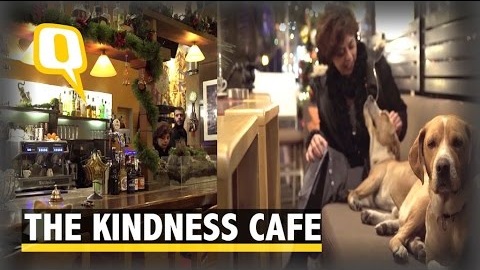
HOTT SPOTT: THE KINDNESS CAFE

Greece has a large stray dog population where stray dogs roam the city looking for a meal, a home, and some warmth. On the Greek island of Lesbos in the north Aegean Sea there is a small coffee shop along the waterfront in the town of Mytilene where all the stray dogs come to hang out. It goes by the kitschy name Hott Spott and offers a warm spot for the dogs to spend a bit of evening and catch up on some sleep for the night. It is kind of a hostel for strays.

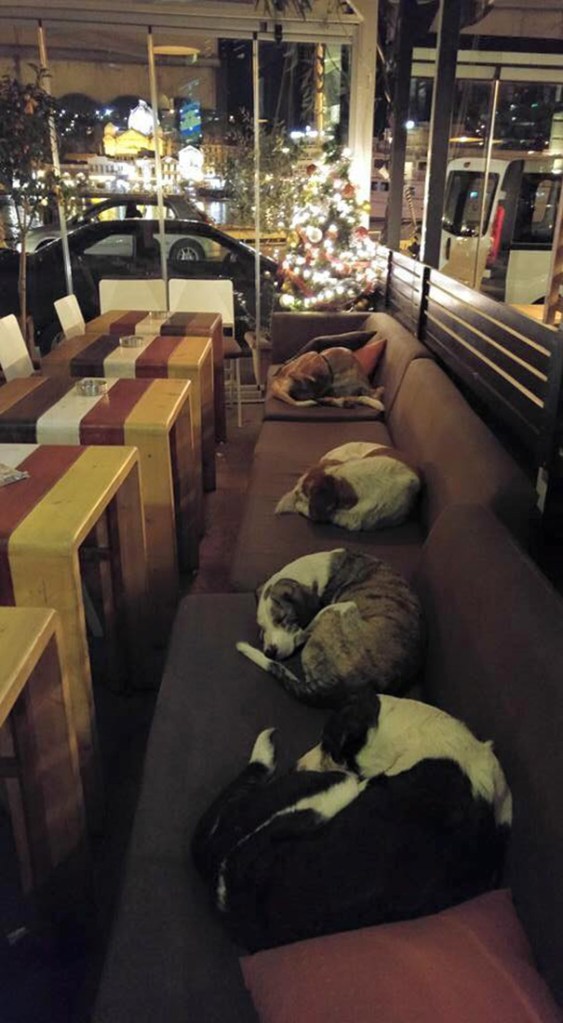
Once all customers are gone, Hott Spott welcomes the city’s homeless dogs to come in and enjoy a safe, warm spot to sleep for the night. Most of them can be seen on the couches of the café, getting that sacred good night sleep that strays on the street are never able to find.

a safe pLace for HOMELESS dogs to sleep

While it may not be possible to open your home to every stray pet in need, an open heart can be just as accommodating.

“When the bar closes each night, the dogs come and sleep here,” says one of the café’s waiters.  “We don’t have a problem. From July, every night there is a dog on the couch.”

The Greek Isles are home to over 1 million stray dogs, says Greek charities, according to White Wolf Pack. So this one café, the Hott Spott, located on the island of Lesbos, is stepping up and doing its part in an act of sheer humanity. Many dogs in Greece without a permanent home receive a collar and are cared for by the community, instead of placing them in overcrowded shelters.

Such random acts of generosity toward animals isn’t uncommon in Greece, which has a large number of stray dogs. Despite being without a permanent home or family, these animals are often collared and cared for by the community — an alternative to putting them into crowded shelters.

“Here in Greece our homes are not large enough for all of us to house animals,” said an Athens resident. “The island of Lesbos has also been the epicenter of the refugee crisis,” said Eustratios Papanis, a 46-year-old assistant professor of sociology at the University of the Aegean on Lesbos island, who posted the pictures and story of the dogs sleeping peacefully on social media. “The locals have increased levels of solidarity towards environmental and humanistic issues. The new generation is more sensitive and well informed.”

It only took this one simple kind act to change the lives of the sweet dogs who come to the café at night, where they now matter to someone.

To learn more about Greece’s stray pet population, and to find out how you can help, visit Greek Animal Rescue and The Friends Of The Strays Of Greece.

The Coffee Shop That Opens Its Doors Every Night To Stray Dogs  VIDEO

Please SHARE this feelgood story for others to enjoy. If you would like to receive updates and news please enter your email address in the box in the right-hand column.

These Service Dogs Attended A Relaxed Performance Of ‘Billy Elliot’ To Learn How To Behave In A Theatre

We’ve all had the misfortune of suffering through some inconsiderate audience members while enjoying ourselves at a theatre. There’s that one person that has to spoil main plot twists or the ever-annoying social media addict that’s glued to their phones with screens blasting on a 100% brightness. But have you ever met a dog in the audience?

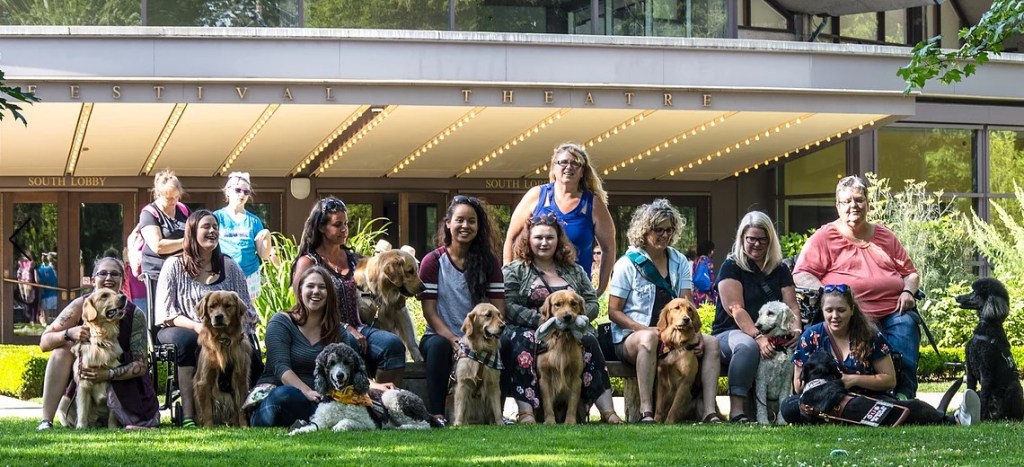
The Stratford Festival in Ontario, Canada hosted a very special kind of audience, a group of adorable service dogs. On August 15, the Stratford Festival shared a gallery of photos on their Twitter account with the caption, “We had some pawsitivly adorable audience members from K-9 Country Inn Service Dogs during last week’s Relaxed Performance of #sfBillyElliot.”

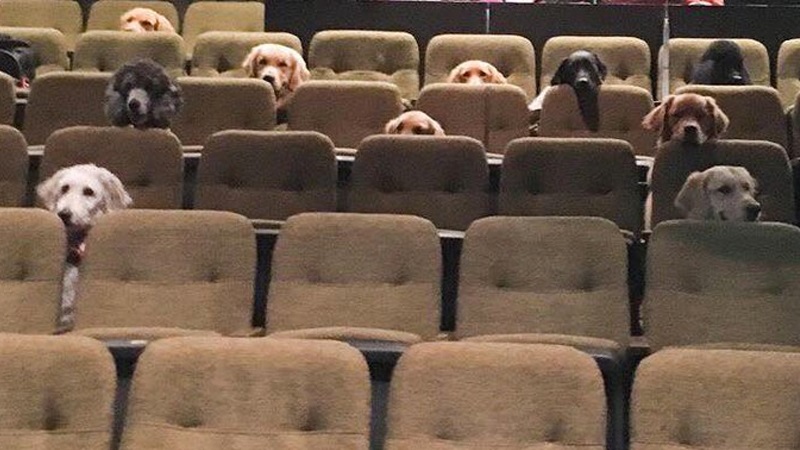
ALL EYES ON BILLY ELLIOT

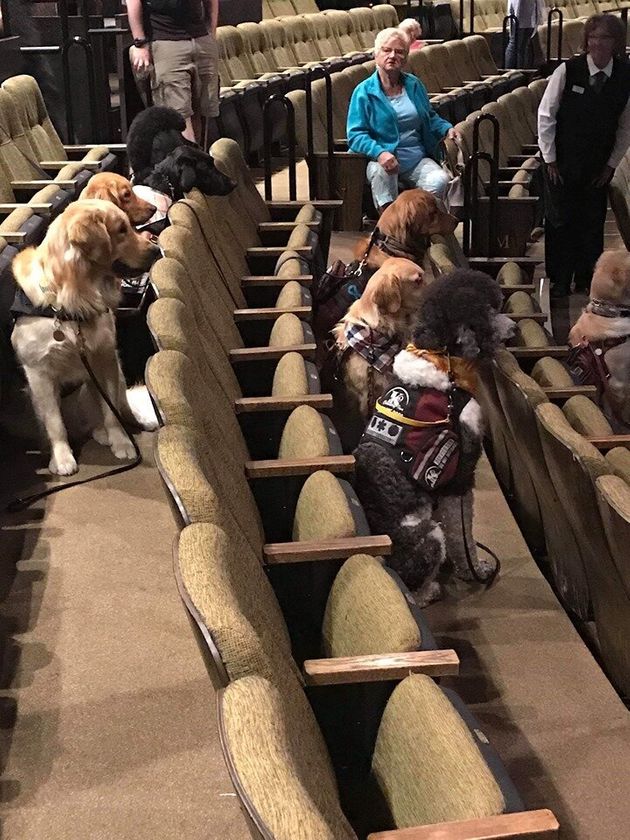
The team of canines were from K-9 Country Inn Service Dogs, a Service dog training Program that specializes “in programs for first responders, front line workers, and victims of trauma with PTSD”. The working dogs probably enjoyed the music and pretty sights, but they were actually on a training plan. They were brought to the Relaxed Performance of “Billy Elliot the Musical” to learn proper theatre behaviour which involved a lot of sitting, quietly.

Laura MacKenzie, the woman behind K-9 Country Inn Working Service Dogs, revealed she’s been dog training for over 35 years. “I made the move to training service and guide dogs years ago because I wanted to give back to society and found a great need within the service dog industry,” she revealed. MacKenzie previously trained police dogs, personal protection dogs, herding dogs, etc. “It’s important to prepare the dogs for any activity the handler may like to attend,” she said.

Who are the Service Dogs Watching Billy Elliot?

This adorable canine pack are from the dog training provider, K-9 Country Inn Working Service Dogs. K-9 Country Inn aims to support first responders, veterans, and civilians suffering from post-traumatic stress disorder (PTSD).

THE K-9 Country Inn Service Dogs

The performance that the pups were observing was also special and as the theatre calls it, relaxed. Their site describes the relaxed performances like this:

“Relaxed performances are specifically designed to welcome patrons who will benefit from a less restricted audience environment. Patrons of all abilities are welcome, including but not limited to those with intellectual or learning disabilities, sensory processing conditions or autism. There is a relaxed attitude to noise and movement within the auditorium, and some minor production changes may be made to reduce the intensity of light, sound and other potentially startling effects. Babes in arms are also welcome to our relaxed performances.”

It’s not the first time that dogs have been seen having a good time in weird and wonderful places.

WHAT A SERIOUS FACE

A cinema in Planto, Texas, became the first in the world to allow dog-lovers to attend the movies along with their pets.

With this in mind, having the service dogs there is actually a huge help to the performers. In Billy Elliott, there are tons of child actors. This specific situation helps the child actor get used to seeing animals in the audience. It’s a win-win!

A Stratford Festival spokesperson told CBC that the festival hosts guests with service dogs several times a week.

“It’s wonderful that going to the theatre is considered one of the things that you want to train a service dog for, rather than thinking that theatre is out of reach for people who require a service animal, because it isn’t,” the spokesperson said.

A VERY WELL-BEHAVED AUDIENCE

Please SHARE so that others can enjoy this article. You can also SIGN UP to receive news and updates direct to your inbox.

A HIKER SAVED THE LIFE OF AN ALASKAN TIMBER WOLF—4 YEARS LATER THE WOLF STILL REMEMBERED HIM

Deep in the Alaskan wilderness, a prospector came to the rescue of an injured mother wolf and her pups, and a lasting connection is formed.

One spring morning many years ago, I had been prospecting for gold along Coho Creek on south-eastern Alaska’s Kupreanof Island, and as I emerged from a forest of spruce and hemlock, I froze in my tracks. No more than 20 paces away in the bog was a huge Alaskan timber wolf—caught in one of Trapper George’s traps.

Old George had died the previous week of a heart attack, so the wolf was lucky I had happened along. Confused and frightened at my approach, the wolf backed away, straining at the trap chain. Then I noticed some­thing else: It was a female, and her teats were full of milk. Somewhere there was a den of hungry pups waiting for their mother.

From her appearance, I guessed that she had been trapped only a few days. That meant her pups were probably still alive, surely no more than a few miles away. But I suspected that if I tried to release the wolf, she would turn aggressive and try to tear me to pieces. Here are the proven skills to survive any emergency.

So I decided to search for her pups instead and began to look for incoming tracks that might lead me to her den. Fortunately, there were still a few remaining patches of snow. After several moments, I spotted paw marks on a trail skirting the bog.

The tracks led a half ­mile through the forest, then up a rock­-strewn slope. I finally spotted the den at the base of an enormous spruce. There wasn’t a sound in­side. Wolf pups are shy and cautious, and I didn’t have much hope of luring them outside. But I had to try. So I began imitating the high­-pitched squeak of a mother wolf calling her young. No response. A few moments later, after I tried another call, four tiny pups appeared.

They couldn’t have been more than a few weeks old. I extended my hands, and they tentatively suckled at my fingers. Perhaps hunger had helped overcome their natural fear. Then, one by one, I placed them in a burlap bag and headed back down the slope.

When the mother wolf spotted me, she stood erect. Possibly picking up the scent of her young, she let out a high­-pitched, plaintive whine. I released the pups, and they raced to her. Within seconds, they were slurping at her belly.

What next? I wondered. The mother wolf was clearly suffering. Yet each time I moved in her direction, a menacing growl rumbled in her throat. With her young to protect, she was becoming belligerent. She needs nourishment, I thought. I have to find her something to eat.

I hiked toward Coho Creek and spotted the leg of a dead deer sticking out of a snowbank. I cut off a hindquarter, then re­turned the remains to nature’s ice­box. Toting the venison haunch back to the wolf, I whispered in a soothing tone, “OK, Mother, your dinner is served. But only if you stop growling at me. C’mon, now. Easy.” I tossed chunks of venison in her direction. She sniffed them, then gobbled them up.

Cutting hemlock boughs, I fashioned a rough shelter for myself and was soon asleep nearby. At dawn, I was awakened by four fluffy bundles of fur sniffing at my face and hands. I glanced toward the agitated moth­er wolf. If I could only win her confidence, I thought. It was her only hope.

Over the next few days, I divided my time between prospecting and trying to win the wolf’s trust. I talked gently with her, threw her more venison, and played with the pups. Little by little, I kept edging closer—though I was careful to re­main beyond the length of her chain. The big animal never took her dark eyes off me. “Come on, Mother,” I pleaded. “You want to go back to your friends on the mountain. Relax.”

At dusk on the fifth day, I delivered her daily fare of venison. “Here’s dinner,” I said softly as I approached. “C’mon, girl. Nothing to be afraid of.” Suddenly, the pups came bounding to me. At least I had their trust. But I was beginning to lose hope of ever winning over the mother. Then I thought I saw a slight wagging of her tail. I moved within the length of her chain. She remained motionless. My heart in my mouth, I sat down eight feet from her. One snap of her huge jaws and she could break my arm … or my neck. I wrapped my blanket around myself and slowly settled onto the cold ground. It was a long time before I fell asleep.

I awoke at dawn, stirred by the sound of the pups nursing. Gently, I leaned over and petted them. The mother wolf stiffened. “Good morning, friends,” I said tentatively. Then I slowly placed my hand on the wolf’s injured leg. She flinched but made no threatening move. This can’t be happening, I thought. Yet it was.

I could see that the trap’s steel jaws had imprisoned only two toes. They were swollen and lacerated, but she wouldn’t lose the paw—if I could free her.

“OK,” I said. “Just a little longer and we’ll have you out of there.” I applied pressure, the trap sprang open, and the wolf pulled free.

Whimpering, she loped about, favouring the injured paw. My experience in the wild suggested that the wolf would now gather her pups and vanish into the woods. But cautiously, she crept toward me. The pups nipped playfully at their mother as she stopped at my elbow. Slowly, she sniffed my hands and arms. Then the wolf began licking my fingers. I was astonished. This went against everything I’d ever heard about timber wolves. Yet, strangely, it all seemed so natural.

After a while, with her pups scurrying around her, the mother wolf was ready to leave and began to limp off toward the forest. Then she turned back to me.

“You want me to come with you, girl?” I asked. Curious, I packed my gear and set off.

Following Coho Creek for a few miles, we ascended Mount Kupreanof ­ until we reached an al­pine meadow. There, lurking in the forested perimeter, was a wolf pack—I counted nine adults and, judging by their playful antics, four nearly full­-grown pups. After a few minutes of greeting, the pack broke into howling. It was an eerie sound, ranging from low wails to high-pitched yodelling.

At dark, I set up camp. By the light of my fire and a glistening moon, I could see furtive wolf shapes dodging in and out of the shadows, eyes shining. I had no fear. They were merely curious. So was I.

I awoke at first light. It was time to leave the wolf to her pack. She watched as I assembled my gear and started walking across the meadow.

Reaching the far side, I looked back. The mother and her pups were sitting where I had left them, watching me. I don’t know why, but I waved. At the same time, the mother wolf sent a long, mournful howl into the crisp air.

Four years later, after serving in World War II, I returned to Coho Creek. It was the fall of 1945. After the horrors of the war, it was good to be back among the soaring spruce and breathing the familiar, bracing air of the Alaskan bush. Then I saw, hanging in the red cedar where I had placed it four years before, the now­-rusted steel trap that had ensnared the mother wolf. The sight of it gave me a strange feeling, and something made me climb Kupreanof Mountain to the meadow where I had last seen her. There, standing on a lofty ledge, I gave out a long, low wolf call—­something I had done many times before.

An echo came back across the distance. Again, I called. And again the echo reverberated, this time followed by a wolf call from a ridge about a half­ mile away.

I had no fear. The wolves were merely curious. So was I.

Then, far off, I saw a dark shape moving slowly in my direction. As it crossed the meadow, I could see it was a timber wolf. A chill spread through my whole body. I knew at once that familiar shape, even after four years. “Hello, old girl,” I called gently. The wolf edged closer, ears erect, body tense, and stopped a few yards off, her bushy tail wagging slightly.

Moments later, the wolf was gone. I left Kupreanof Island a short time after that, and I never saw the animal again. But the memory she left with me—vivid, haunting, a little eerie—will always be there, a reminder that there are things in nature that exist outside the laws and understanding of man.

With four tiny pups to feed, the mother wolf would need to stay nourished.

During that brief instant in time, this injured animal and I had some­how penetrated each other’s worlds, bridging barriers that were never meant to be bridged. There is no explaining experiences like this. We can only accept them and—because they’re tinged with an air of mystery and strangeness—per­haps treasure them all the more.

This story originally appeared in the May 1987 issue of Reader’s Digest.

Please SHARE this beautiful story for others to enjoy. You can also SIGN UP to receive news and stories straight to your inbox.

A Critically Endangered Sumatran Tiger Has Been Found Dead In An Animal Trap In Indonesia

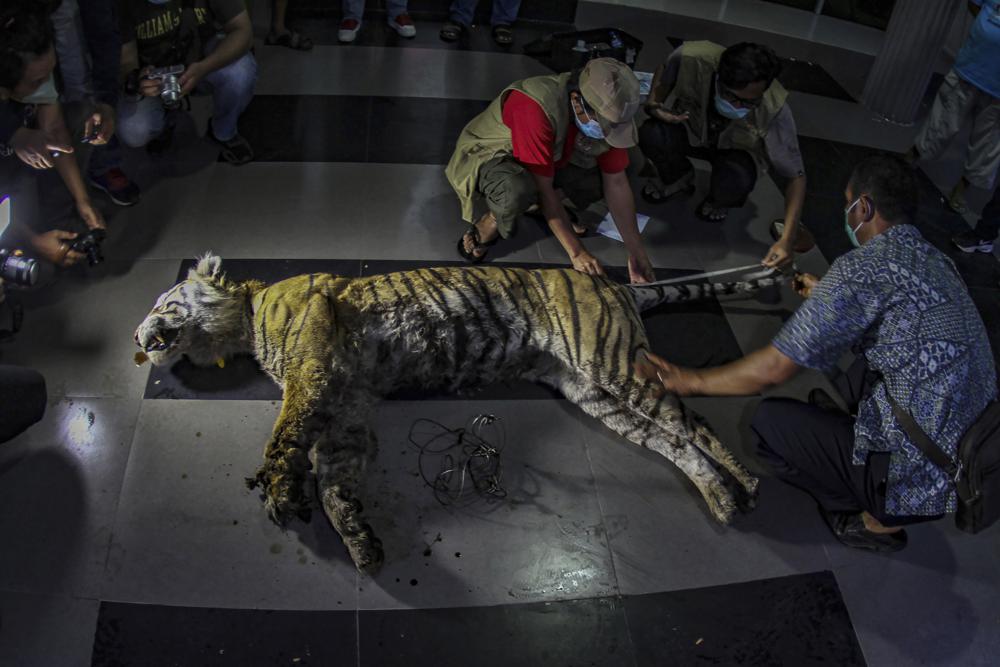
MEMBERS OF NATURAL RESOURCES CONSERVATION AGENCY INSPECT A SUMATRAN TIGER FOUND DEAD AFTER BEING CAUGHT IN A SNARE TRAP IN PEKANBARU, RIAU

A critically endangered Sumatran Tiger was found dead after being caught in a trap on Indonesia’s Sumatra island, authorities said on Monday, in the latest setback for a species whose numbers are estimated to have dwindled to about 400.

A STUNNING SUMATRAN TIGER

The female Tiger, aged between 4 and 5 years, was found dead Sunday near Bukit Batu Wildlife Reserve in the Bengkalis district of Riau province, said Fifin Arfiana Jogasara, the head of Riau’s conservation agency.

Jogasara said an examination determined the Tiger died from dehydration five days after being caught in the snare trap, apparently set by a poacher, which broke one of its legs.

She said her agency will cooperate with law enforcement agencies in an investigation.

Sumatran Tigers, the most critically endangered Tiger subspecies, are under increasing pressure due to poaching as their jungle habitat shrinks, according to the IUCN Red List of Threatened Species. It estimated fewer than 400 Sumatran Tigers remain in the wild.

It was the latest killing of endangered animals on Sumatra island. Conservationists say the coronavirus pandemic has led to increased poaching as villagers turn to hunting for economic reasons.

Three Sumatran Tigers, including two cubs, were found dead in late August after being caught in traps in the Leuser Ecosystem Area, a region for tiger conservation in Aceh province.

In early July, a female Tiger was found dead with injuries caused by a snare trap in South Aceh district.

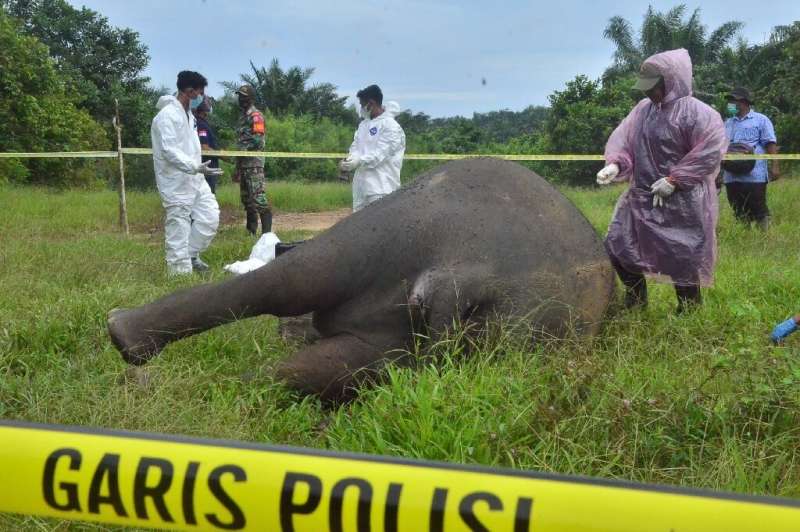
An Elephant was found without its head on July 11 in a palm plantation in East Aceh. Police arrested a suspected poacher along with four people accused of buying ivory from the dead animal.

AN ELEPHANT FOUND WITHOUT ITS HEAD AFTER BEING KILLED BY POACHERS

Aceh police also arrested four men in June for allegedly catching a Tiger with a snare trap and selling its remains for 100 million rupiah ($6,900). Days later, another Sumatran Tiger died after it ate a goat laced with rat poison in neighbouring North Sumatra province.

Via A P News

Please SHARE this article to raise awareness to this issue. You can also SIGN UP to receive latest news and new articles directly to your inbox.

A Dolphin Deemed ‘Too Fat’ To Perform Slammed His Head Against Tank Before Lonely Death

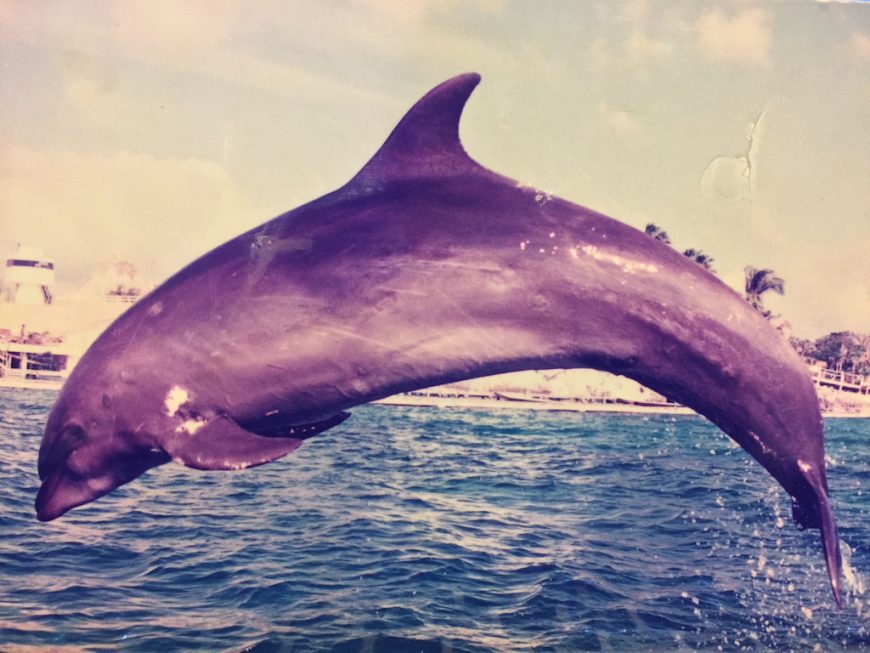
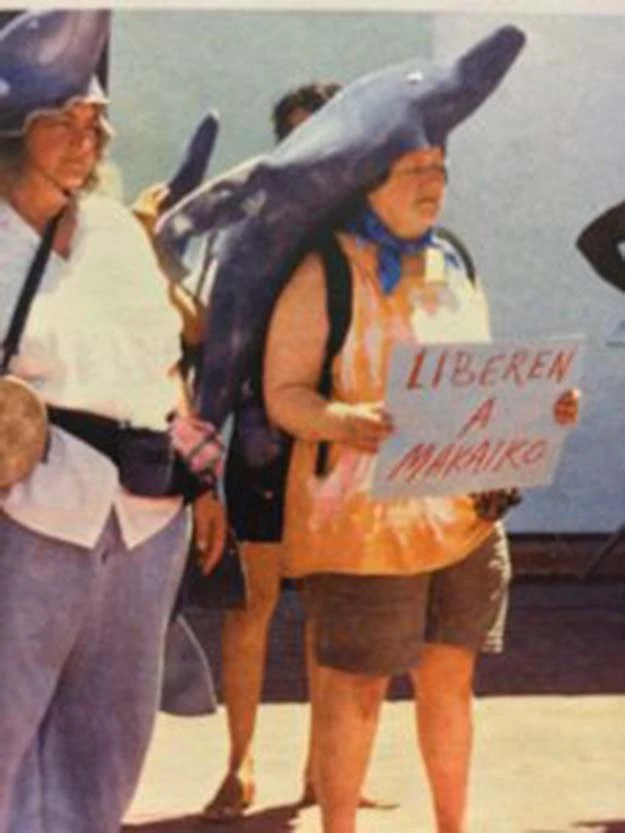
In 1996, Makaiko the Dolphin was driven from his pod in Japan and forced into a life of captivity – hauled from venue to venue in painful conditions and starved in a cruel bid to teach him tricks.

MAKAIKO

Driven mad by years of loneliness, Makaiko took to smacking against his tank in a heartbreaking act of self-harm.

Snatched from his family in 1996, the poor bottlenose was starved and forced to perform for human crowds – but ran out his final years alone after being deemed “too heavy” and “foolish”.

He died a lonely death some ten years ago after being snatched from a life in the sea with his 80-strong family pod – that were either murdered or taken too. No one noticed he had got tangled in a net at the dolphinarium and quietly drowned.

Makaiko  — meaning  “inner strength” — was born in 1996 in the waters of Taiji, Japan, where she socialised with other pods and spent carefree days playing and roaming the wide-open spaces of the Pacific Ocean.

His former trainer Lorena Kya Lopez recently opened up on his heartbreaking tale in a grim warning about the wildlife trade, which “subjects millions of wild animals to suffering every day”.

Born in 1996, Makaiko roamed free with other pods, playing in the Pacific Ocean off the coast of Taiji, Japan.

One day, however, the sound of motorboats approaching the group left mothers desperately scrambling to gather up their young.

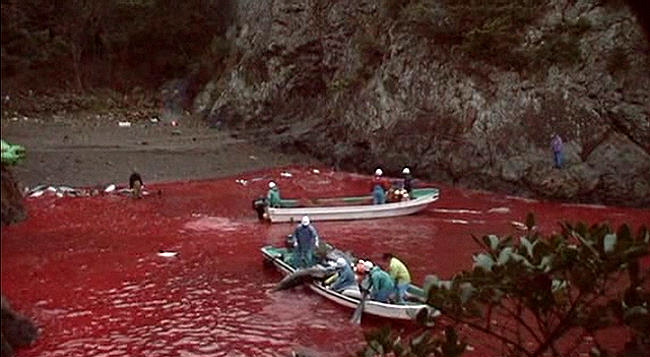
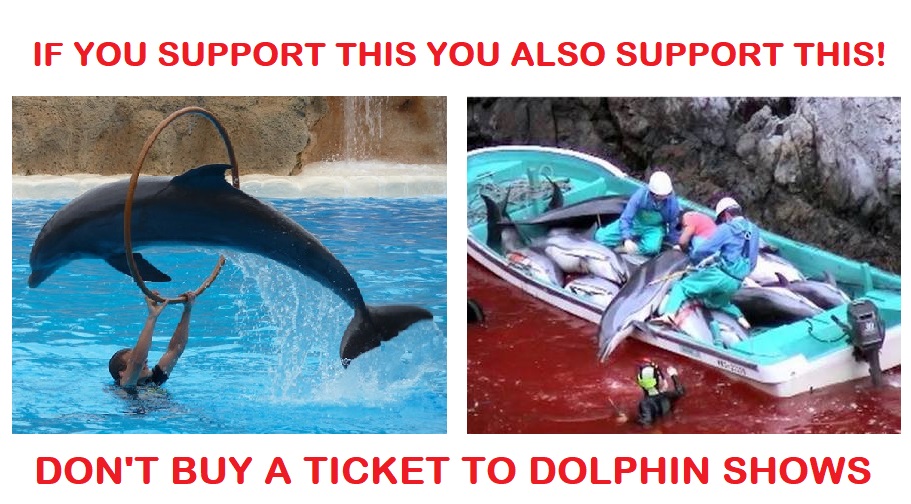
Hunters threw down heavy nets, scooping up dolphins to harvest for their meat or to sell into the tourist entertainment industry.

“While the water turned red from the blood of the dolphins who tried to escape or were killed, Makaiko was lifted out of the water, unable to move in the net,” Lopez told World Animal Protection.

THE ANNUAL TAIJI DOLPHIN DRIVE HUNT

“Makaiko had been captured. And so began the rest of his life in captivity.”

Alongside his sister Kumiko, the young animal was sold to a dolphinarium in Japan.

During transportation, he was painfully laid out on a stretcher and sprayed with water to keep his skin from drying out.

It was days before the pair were given any food. When they finally arrived at their temporary home, Makaiko was put in a small tank treated with chemicals to keep it clean.

“It wasn’t until they went to the surface and people approached them and started throwing dead fish at them that they had a chance to eat,” explained Lopez.

“The dead fish were not as nutritious as the food they would normally get in the ocean, but at that point, it was better than nothing.”

The meals came with a catch – the trainers would only feed the dolphins if they obeyed orders to perform tricks.

Weak and disorientated, Makaiko learned to jump and pushed trainers around the tank for hours on end.

After 10 months, the siblings were suddenly moved into a pitch black transportation box. For over two days, they were unable to see anything.

Hauled out on to a stretcher, Makaiko was treated with a cream to stop his skin drying again, but he was left in agony – visibly bleeding.

Eventually, they landed at the Six Flags dolphin venue in Mexico, where Lopez first came across the distressed creatures.

Here, trainers continued to teach them the tricks they had struggled with in Japan, but Kumiko was depressed and sadly died soon after.

Makaiko was once again moved, this time to the island of Isla Mujeres.

While the tanks here were bigger, the dolphins were still given punishingly little food and Lopez took sympathy.

“I would always come back at night to give them some extra food so they wouldn’t be as hungry,” she said.

“The water was too warm, leading to skin irritations and fungus infections. The sun was too bright, causing skin burns.

“The dolphins were getting weaker each day.”

Concerned about the animals’ welfare, Lopez supported a rescue mission which failed.

MAKAIKO TRAGICALLY DIED ALONE – DESPITE CAMPAIGNS TO FREE HIM

The trainer was fired over her involvement and was only allowed to come back one more time to say goodbye to the dolphins, which was “one of the hardest days” of her life.

Distressed dolphin dumped for being ‘too fat’

For Makaiko, however, the stakes were even higher.

When it came time for his pod to be moved again, he was said to be a “foolish” performer who refused to listen to orders and was deemed too big and too heavy.

While the rest of the animals were transported to another island, he was left behind – increasingly lonely and depressed.

“He stayed alone for some time, without food, and with a growing sense of anxiety he started banging his head against the walls,” said Lopez.

“At some point, people would come in with dead fish, and to clean the water. This was the only time Makaiko wasn’t alone.”

Makaiko’s fortunes changes after an intervention by the Mexican government.

He was rescued and placed with a company called Aqua World, where Lopez was able to lead a rehabilitation process.

Yet the years of mistreatment had left a deep impression on the distressed dolphin, who continued to self-harm.

He was finally transported to Dolphin Discovery at Isla Mujeres, where he would see out the last four years of his life.

While he was able able to swim in the ocean once more, it was only in a confined area and he was required to perform for crowds again.

One day, following Tropical Storm Emily, tragedy struck.

“Nets had been put down due to the destruction and Makaiko got tangled up in them,” said Lopez.

“The people looking after them didn’t see any of this, so Makaiko died. He lay tangled up in the nets in the dolphin venue where he was exploited to entertain thousands of people.”

Image Credits: Rocio Cue

Please SHARE to raise awareness to this issue. You can also SIGN UP to receive news and updates direct to your inbox.