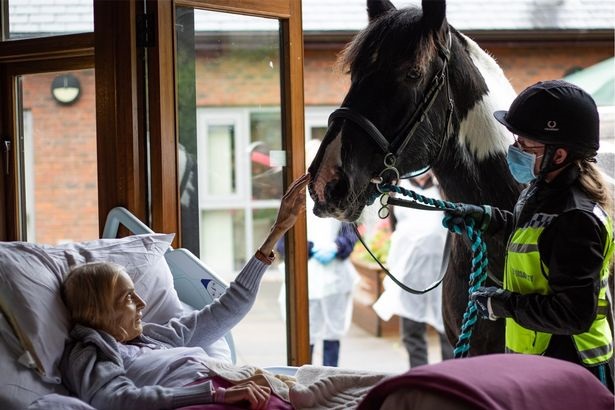
A terminally ill woman was given the chance to say her final goodbyes to her beloved horse and dogs, thanks to the incredible work of hospice staff.
Jan Holman had been separated from her pets since she was admitted to the Hospice of the Good Shepherd in Chester several weeks ago.
JAN HOLMAN SAYS GOODBYE TO BOB
Due to her quick admission to the hospice, which covers Cheshire and North Wales, the 68-year-old didn’t get the chance to say goodbye to her two King Charles Spaniels Monty and Rowley, or her horse of 10 years, Bob.
Coronavirus safety measures meant that hospice patients aren’t allowed visitors, and Jan’s husband of 46 years Dennis says the lack of contact had been very difficult for her.
After four weeks at the hospice, Jan was then moved to end of life care.
Knowing how much Jan was missing her four-legged friends, the staff went above and beyond to organise a special visit.
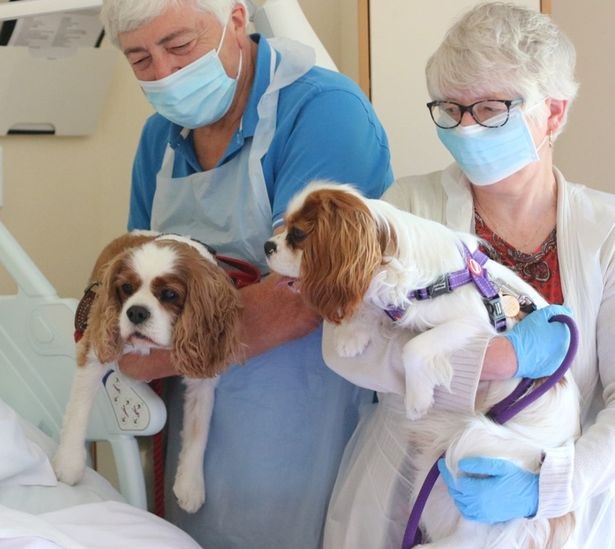
JAN’S CAVALIER KING CHARLES SPANIELS MONTY AND ROWLEY
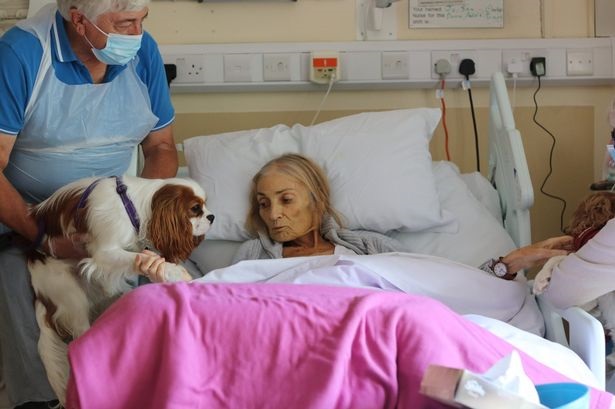
Even though she was unable to get out of bed, Jan was excited to have the chance to see them one more time.
Dennis said: “It was just such a relief once Jan was moved from the hospital to the hospice in Chester and we were able to have named visitors who could come and see Jan regularly, however, we never imagined that we would be able to include Monty, Rowley and Bob on the visiting list.
“All the staff here have been wonderful. Jan has been so well cared for, nothing is too much trouble even down to the chef coming every day to see what he can tempt Jan to eat.
“Nothing is too much trouble, including arranging for a horse to visit!”
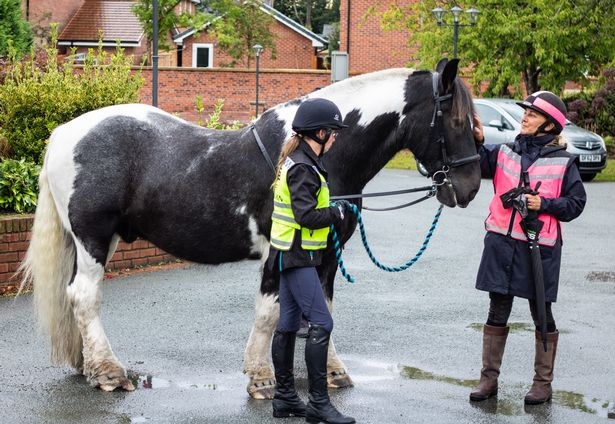
Jan added: “I just can’t believe what the staff here at the hospice have done for me. Until a few weeks ago I was still riding Bob every day and he is such an important part of my life, and I have missed him so much.
10-YEAR-OLD BOB
“I knew that arranging for my dogs to visit was possible as we had a neighbour who was a patient at the hospice a few years ago and we were allowed to bring the dogs to visit her, but I just didn’t expect that they would ever be able to give me the chance to see Bob one more time.”
Louise Saville King, deputy ward manager at the hospice, told North Wales Live: “It was obvious when Jan first came to us that she is passionate about her animals and that horses have played a large part in her life for many years.
THE FINAL GOODBYE
“The ethos of hospice care is not just about caring for the clinical needs of our patients but also looking after their emotional and spiritual needs as well.
“It’s about making a difference to our patients and their families in whatever way we can.
“We know that sometimes people are scared at the thought of coming to the hospice, but it’s a positive place where people are supported and well cared for.
“The work of the hospice really does make a difference to people’s lives.“
If you like this wonderful story please SHARE for others to enjoy. To receive news and other stories like this please SIGN UP to our newsletters
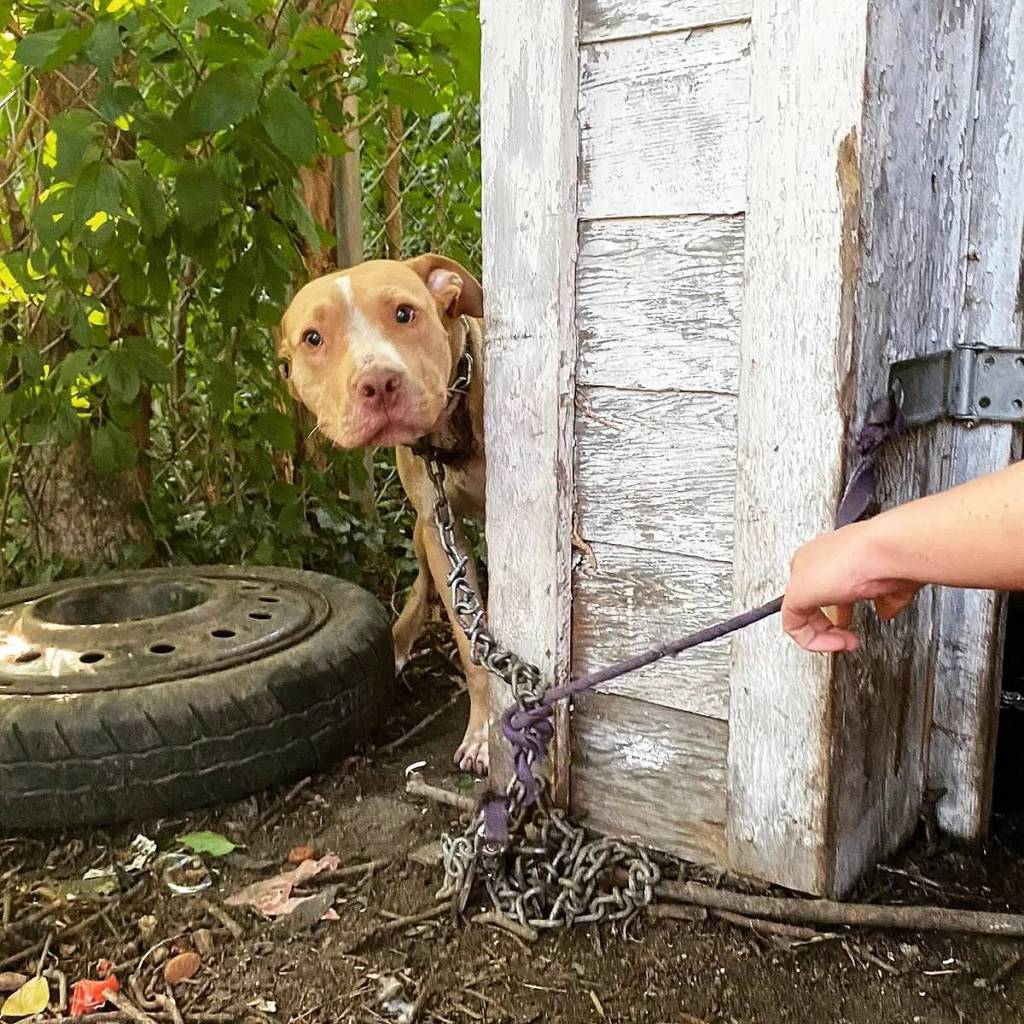
Before he was rescued, the dog was spotted by a man, who returned back home to find the pup chained behind his garage in a neighboring backyard. He frantically began calling around for someone to help. Luckily, Rebel Dogs Detroit took the call and sent a volunteer, Tiffany Perkins, out to investigate. She had no idea what to expect when she first arrived — but as soon as she saw him, her heart just melted.
BEAKER WAS FOUND CHAINED TO A GARAGE
“Beaker was timid and cowered behind the garage to hide,” Perkins told The Dodo. “He peeked out the side as I started calling for him. As I got closer, his tail started wagging. Then he pushed his weight against us for petting him — and seemed to be visibly relieved. He ‘meeped’ like a muppet, he was so excited, so he got the name Beaker!”
After being chained up and abandoned, Beaker was understandably a little nervous at first, but as soon as he realised Perkins was there to help him, he completely relaxed and was so excited to meet his new best friend.
“When the chain was untethered from the garage, he dropped to the ground for belly rubs and kisses and playful chaos,” Perkins said.
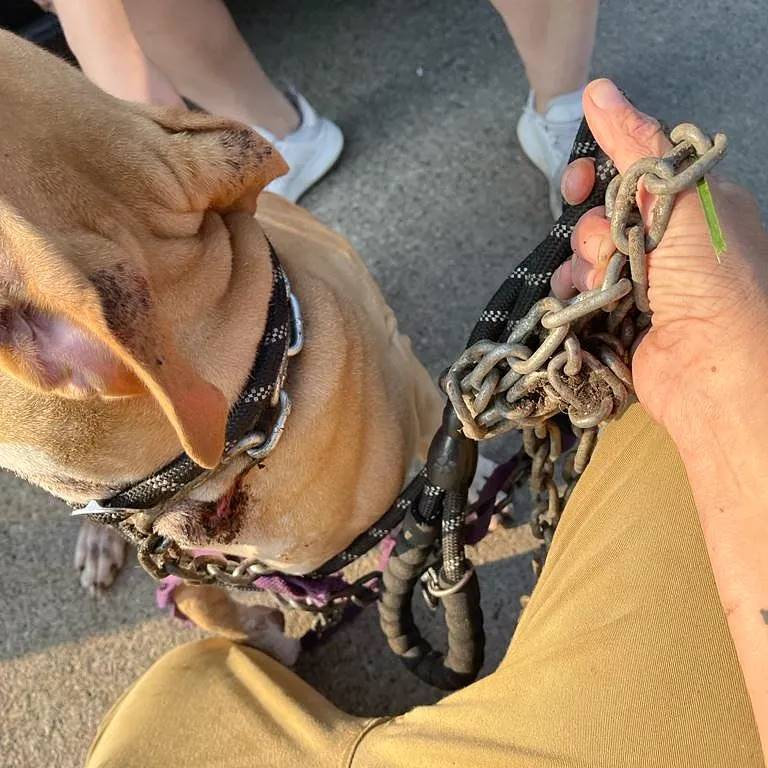
THE CHAIN WAS DIGGING INTO BEAKER
Unfortunately, the chain that Beaker had around him was stuck on his neck, so Perkins quickly rushed him to the vet to get him checked out. While they waited for Beaker’s surgery to remove the chain, Perkins took advantage of the extra time to give Beaker all the love he’d never had before, and the sweet dog appreciated it so much.
PAIN
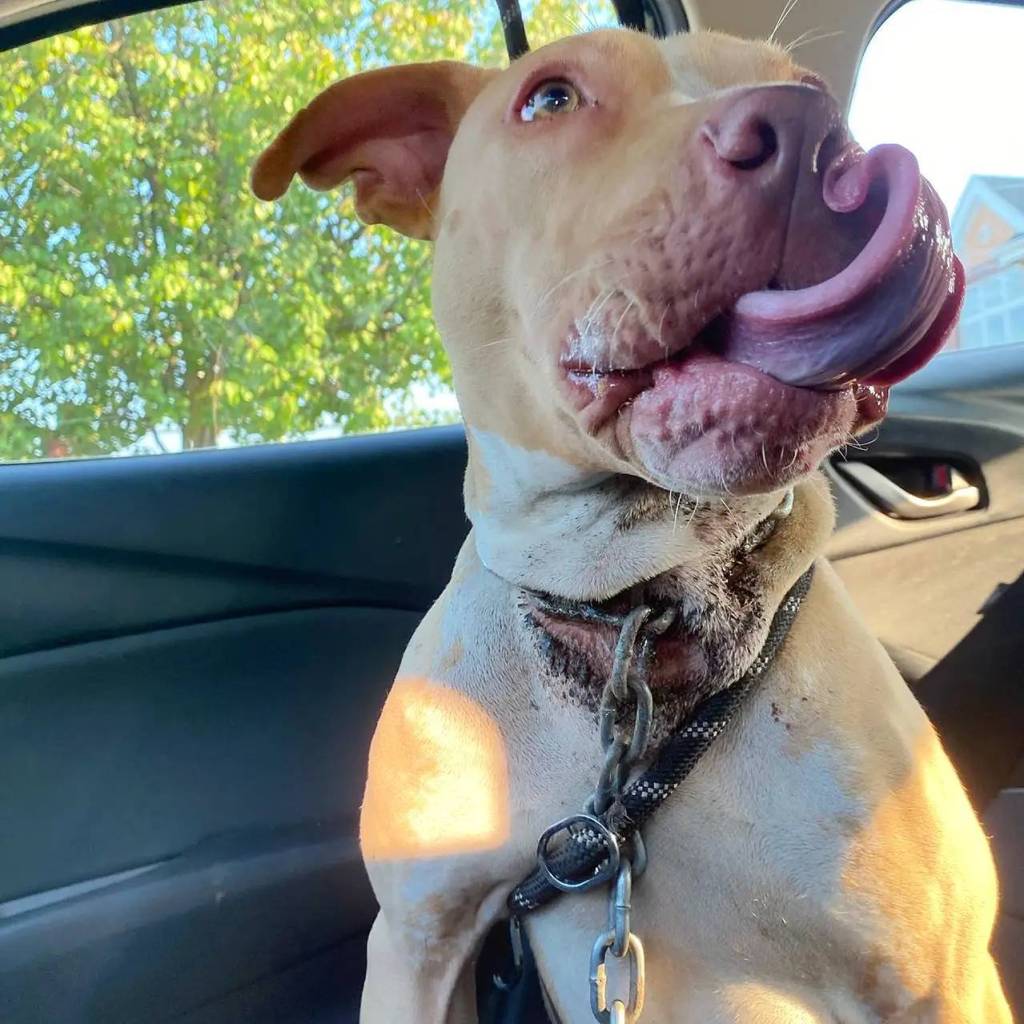
“We had lots of bonding time in the car waiting for his surgery for 5+ hours,” Perkins said. “He was napping with his head in my lap after a while.”
Even after everything Beaker had been through, all he wanted was to be loved — and finally, his wish had come true.
BEAKER ON HIS WAY TO HAPPINESS
Beaker is now healing from his surgery in his foster home and is just the happiest dog anyone has ever met. For Beaker, it doesn’t seem to matter what happened to him in the past. What matters is where he is now and all the new friends he’s made who care about him and are making sure he’s happy and safe.
“He’s learning how to be an indoor dog with unconditional love in his foster home,” Perkins said.
Beaker is currently looking for his forever home and would love a home with another playful, energetic dog who can continue to show him the ropes and become his best buddy. As soon as Beaker laid eyes on his rescuers, he knew he was finally safe, and he’s so excited to find the forever family he deserves.
Please SHARE this heart-warming story for other to enjoy. You can also SIGN UP to receive updates and stories straight into your inbox.
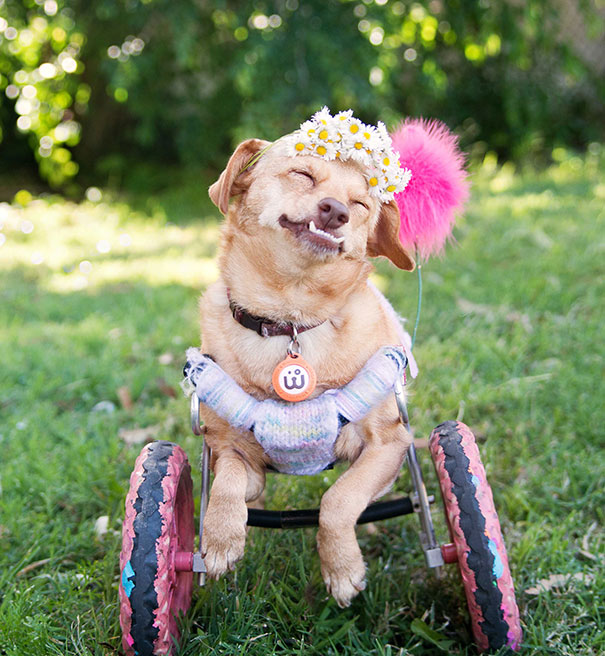
DAISY NEVER LETS HER DISABILITY STOP HER LOVING LIFE
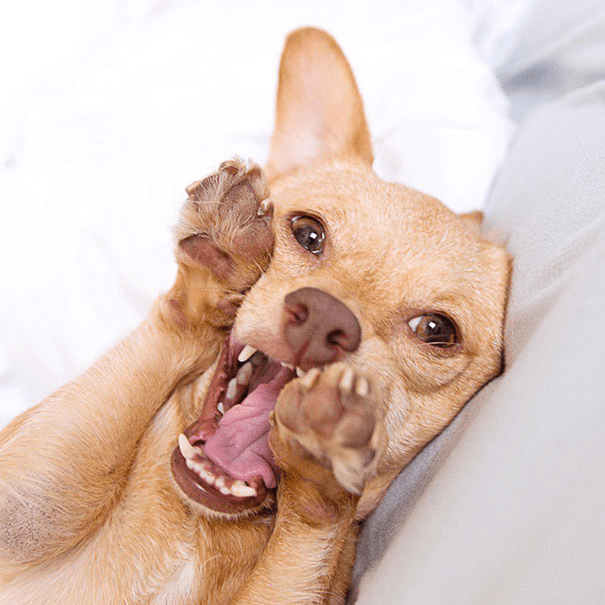
Daisy the adorable terrier didn’t have the best start in life. The pretty tan shorthair cross was born with an underbite, two wobbly front legs that never managed to work properly, and was abandoned when she was only two months old.
Daisy was abandoned on the streets of Bellflower at the age of 2 months, and was found by an animal control officer. 2 months passed and the shelter scheduled to euthanize her, but luckily, a volunteer from A Home 4Ever Rescue pulled her out just in time. Several months later, she found her forever home.
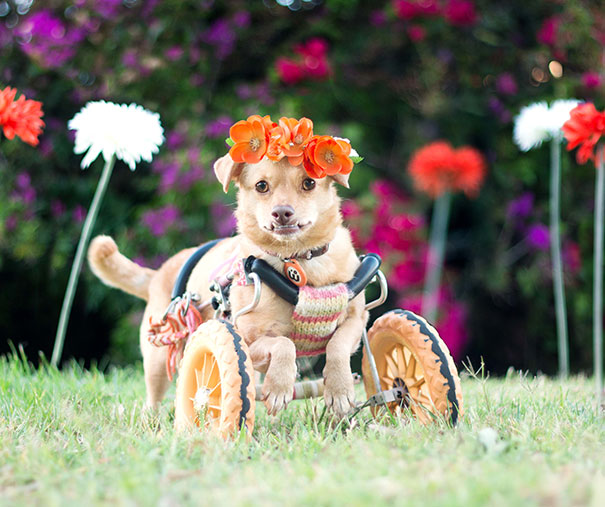
Sheena Main was looking for a special needs dog to adopt and found Daisy in the summer of 2011. Daisy was born with a congenital deformity in her front legs and uses a wheelchair to assist her walk. After learning that disabled dogs have a difficult time finding a forever home and are usually the first ones to be listed to euthanize at the shelter, Sheena was heartbroken.
And although Daisy managed to get around just fine on her paralysed paws, Sheena was concerned about the strain it was putting on her spine, so had a pink glittery wheelchair made especially for her.
DAISY MUST BE ONE OF THE HAPPIETS DOGS YOU WILL EVER SEE
In Sheena’s eyes, Daisy is a strong girl and she doesn’t pity her disability and feel the same way about all disabled dogs. She decided to use social media platforms to share Daisy’s story and raise positive awareness for all disabled dogs.
HITCHING A RIDE
With Daisy’s sweet nature, spunky attitude, and underbite smile, she has gained many fans from all around the world and I am beyond grateful. I hope that Daisy’s story and photos will continue to spread, and more people will open their hearts to dogs with special needs.
You can help dogs just like Daisy and other disabled animals by supporting the Miracle’s Mission Centre For Disabled Animals rescue, rehabilitate and rehome sick, injured and disabled animals worldwide by donating ANY amount, large or small, at ALL Animals DESERVE a 2nd Chance In Life!
“Animals using wheelchairs and prosthetics can live as good a life as fully able-bodied animals and that is what we want to show people” ~ Victoria Bryson, Miracle’s Mission founder.
Please SHARE so that others can enjoy this happy-ending story and perhaps encourage others to adopt disabled animals. Please SUBSCRIBE to receive NEWS & UPDATES straight to your inbox. Thank you.
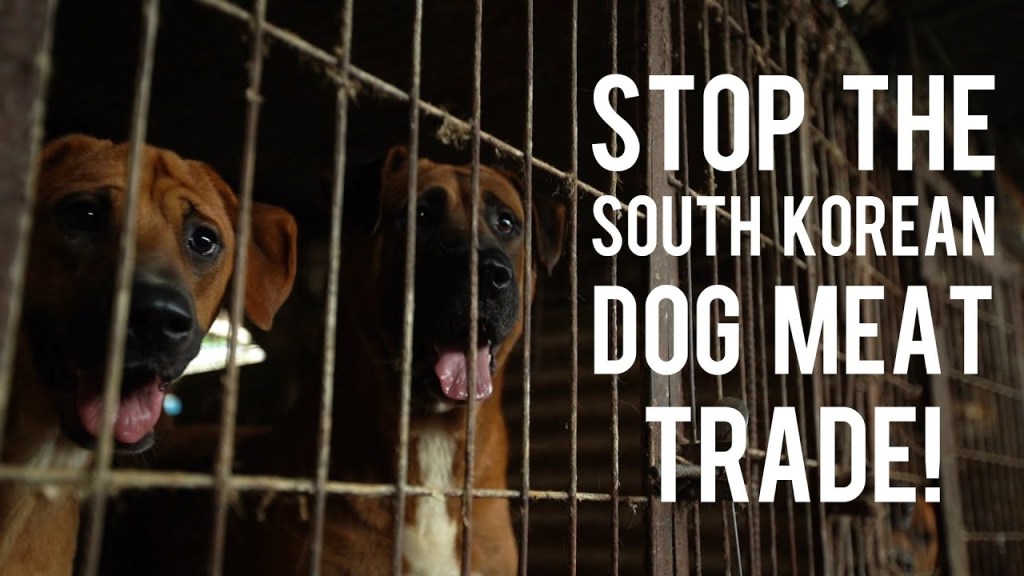
A dog meat farm on South Korea’s famous Jindo Island, which for more than 20 years bred and slaughtered Jindo dogs for human consumption despite them being the country’s national dog breed, has closed its doors for good after coming to an agreement with Humane Society International/Korea and Korean animal protection group LIFE. The 66 year-old dog farmer Mr Kim, who also runs a local restaurant where his dogs were on the menu, was found by local authorities to have breached the Animal Protection Act by killing dogs in front of each other, after concerned residents reported hearing dogs vocalising in terror on the farm. Instead of setting up business elsewhere, the farmer signed a contract with LIFE to give up dog farming forever and agreed to remove dog meat from the menu at his restaurant.
Being Korea’s national dog breed didn’t save countless Jindo dogs from slaughter, but at least for some of them the nightmare is now over. A dog meat farm on South Korea’s Jindo Island has closed its doors after 20 years of breeding and slaughtering dogs for consumptions – including the iconic Jindo.
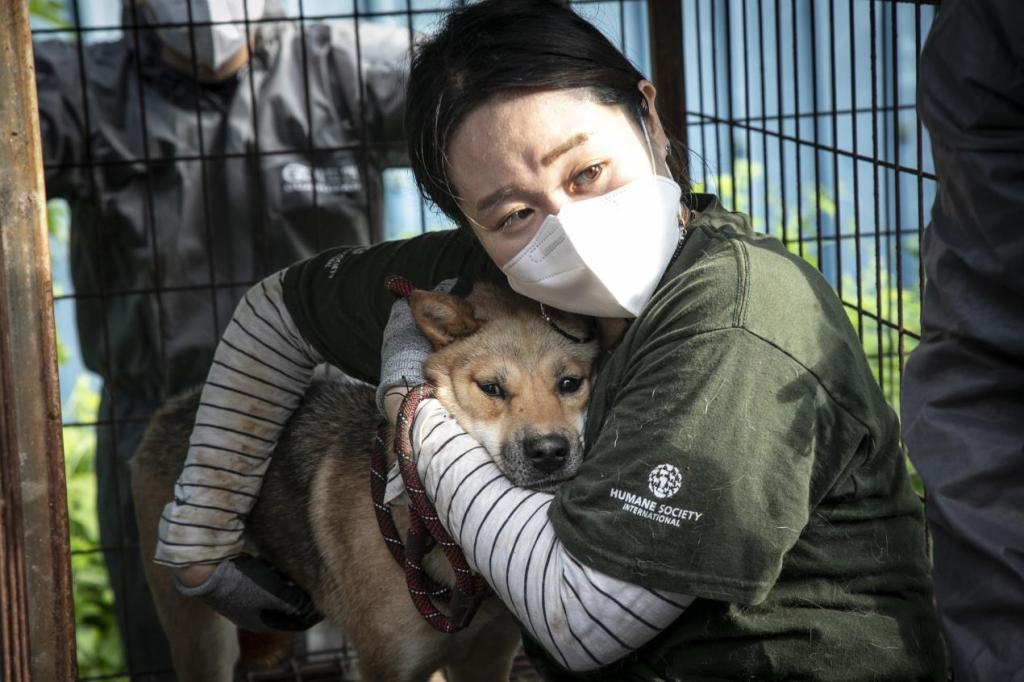
After coming to an agreement with Humane Society International/Korea (HSI/Korea) and Korean animal protection group LIFE, the farmer signed a contract to give up dog farming forever and agreed to remove dog meat from the menu at his restaurant.
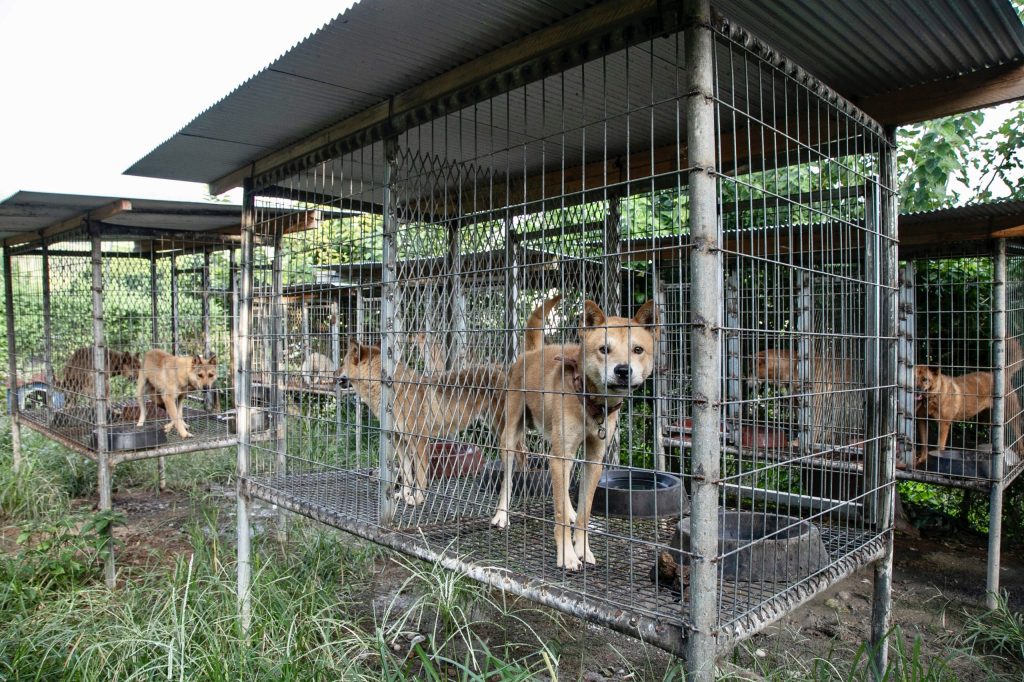
LIFE and HSI/Korea saved all 65 Jindo dogs and puppies found languishing in small, wire battery cages on the farm. A statement reads, “The South Korean government designated the Jindo the country’s 53rd Natural Monument in 1962, nominally affording them protection under the Cultural Heritage Protection Act, meaning the farmer could face additional charges.”
Nara Kim, HSI/Korea’s campaign manager, said, “All the dogs on this meat farm are Jindos which is supposed to be Korea’s national dog breed. But instead, these poor dogs have been locked away in filthy wire cages, fed on restaurant waste, denied even the most basic care and any level of human kindness.
“As a proud Korean I always find it upsetting to see the cruelty of dog meat farms, but it felt especially shocking to see our country’s national dog breed being exploited like this on Jindo Island. I shed tears when I saw the killing area where I know dogs were killed in front of each other. There was a big pile of collars where they were electrocuted.”
She added, “Thankfully, together with our friends at LIFE, we have been able to get these dogs out of that horrible place and ensure that no animals will ever suffer again in those cages. The authorities will also pursue cruelty charges against the farmer.
“As the Animal Protection Act currently offers little protection for dogs on dog meat farms, it’s encouraging to see law enforcement officials making use of those few regulations at their disposal.
“But in order to fully crack down on this brutal industry, we will continue to campaign for a ban on the breeding, slaughter and sale of dogs for meat.”
While only a small minority of South Koreans consumes dog meat, with more and more dog meat farmers retiring from an industry “without a future”, dog meat farms and vendors are still active in the country.
In-Seob Sim, president of LIFE, said, “I feel anger beyond misery. We boast about Jindo dogs being our national dog, but at the same time they are on someone’s dinner table. This is a direct example of the duality of humans, but also of the contradiction in Korean society.
“Is there really a difference between a treasure Jindo dog and an edible Jindo dog as the dog meat traders encourage us to think? The answer is a definite NO! They are both just Jindo dogs, almost perfect pets for companionship with people.”
The Korean jindo
Please SHARE to raise awareness to the issues of the dog meat trade. You can also sign up to receive NEWS & UPDATES straight to your inbox.
As you might have guessed, dogs can be unsure and scared during adoption. Why wouldn’t they be? The process involves removing them from the environment they have likely known all their life! They are then placed in a place that is completely new to them. Luckily, this is not always the case. Some dogs are happy to go through this and instantly adore their new owners! We are glad to report that such meetings have been caught on camera. We are sure the following images will warm your heart.
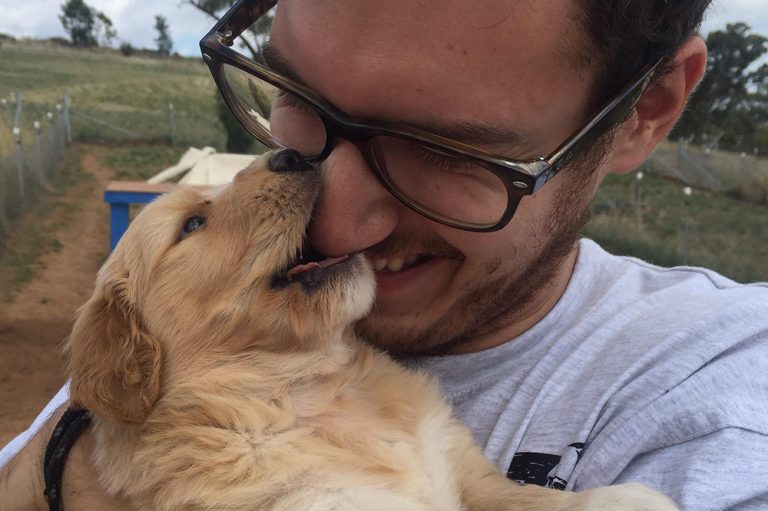
FIRST BITE!
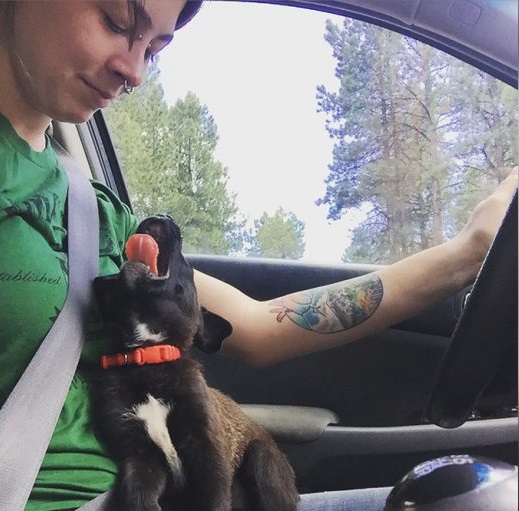
Excitement can occasionally bring out the animal in all of us. And who can blame us when it happens? It sometimes leads to adorable moments as you can see in the photo below. It shows the dog biting his new owner’s nose. “Got your nose” is certainly fitting for the moment you see here.
FIRST BITE
WORTH KEEPING
She found the adorable dog alone on the roadside. As a compassionate human being, she wanted to take the poor pooch to the local shelter. However, her plans took a 360 when she saw adorable the dog was!
WORTH KEEPING
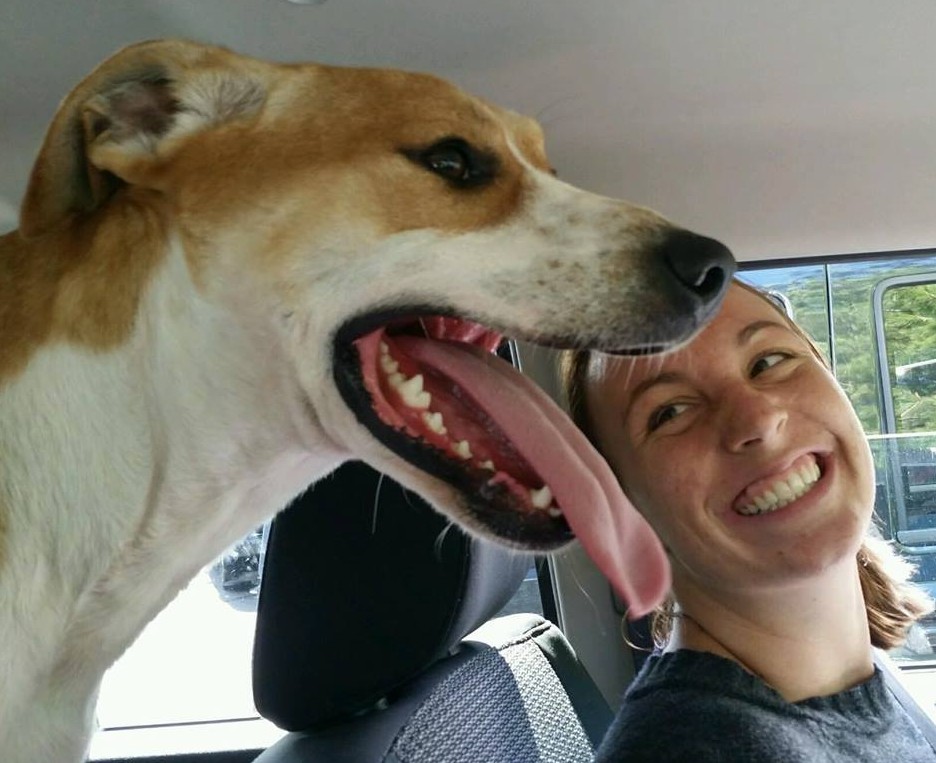
FIRST SELFIE
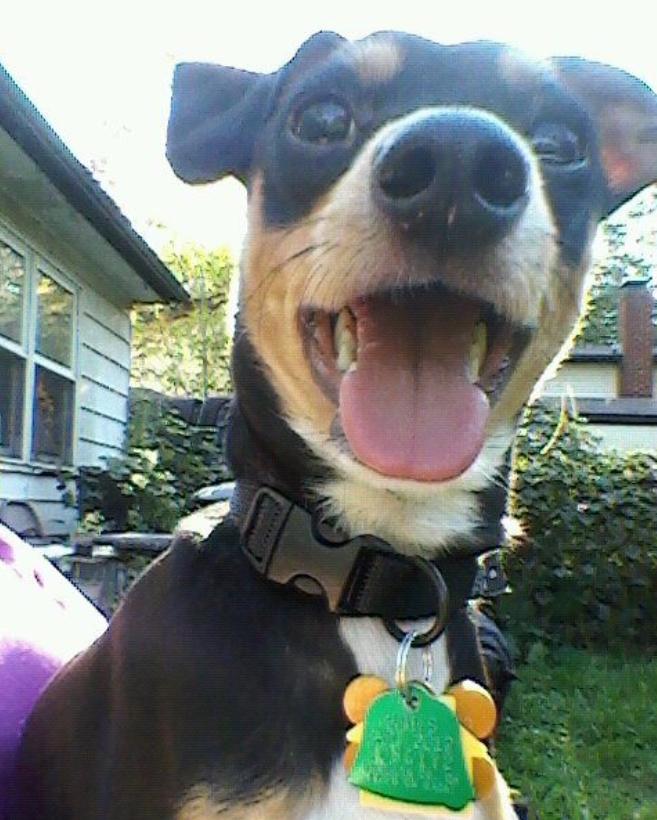
Well, this is one pup you can take as many pictures with as you want. She was not hesitant about posing for a photo. That ear-to-ear smile is truly endearing. We bet the guy was happy he took her home with him!
FIRST SELFIE
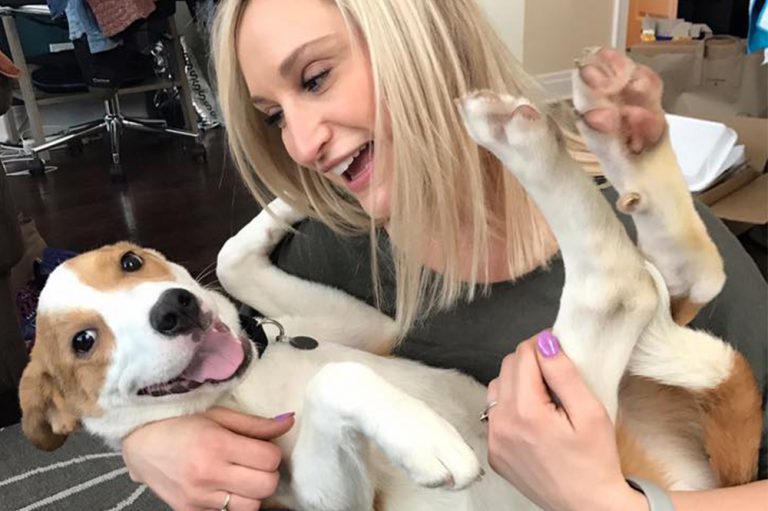
PUT YOUR HANDS UP
Can you guess what this cutie thinks about the adoption? We certainly can. Her face clues us in on how she feels! The same thing goes for her new owners. It looks like a bright future is in store for them.
PUT YOUR HANDS UP
LOVING LOOK
Oh, will you just look at how much they adore each other? Skeptics might think she only wants to get more treats! However, we are certain that they will both love the coming years they will have together.
LOVING LOOK
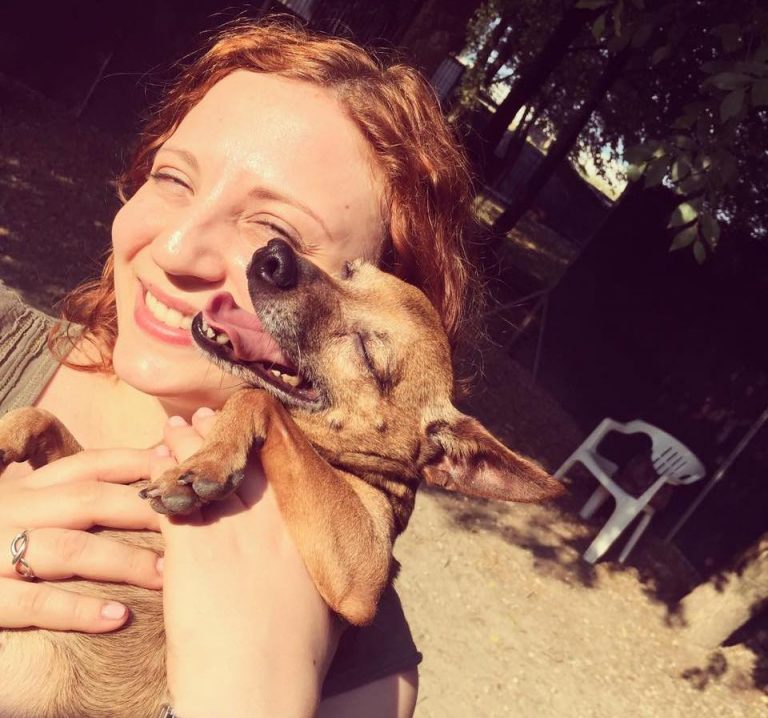
HAPPY SMILE
It seems like this dog is truly living the life. What else could be better than a hug from your owner and sunshine on your face? Nothing at all. We would not be surprised to see this photo on a shampoo ad.
HAPPY SMILE
LOVEY-DOVEY
When you adopt a dog, hugs and kisses should be automatic. Sorry, we don’t make the rules. Tata the pup clearly enjoys this sweet moment. We can totally see why adoption made her as happy as can be!
LOVEY-DOVEY
ROCK-A-BYE BABY
She could not help cradling her new dog as soon as they met each other. She seems to adore him completely, and he does not mind the attention one bit. He seems to enjoy it a lot, as a matter of fact.
ROCK-A-BYE BABY
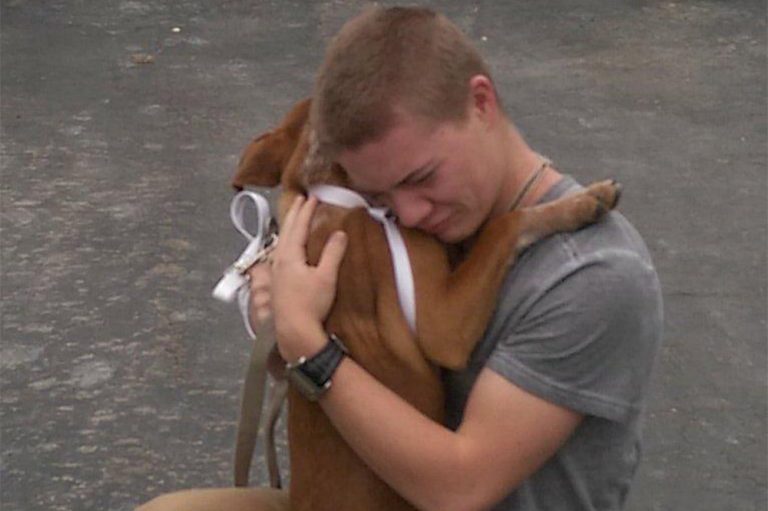
HOLD ME CLOSE
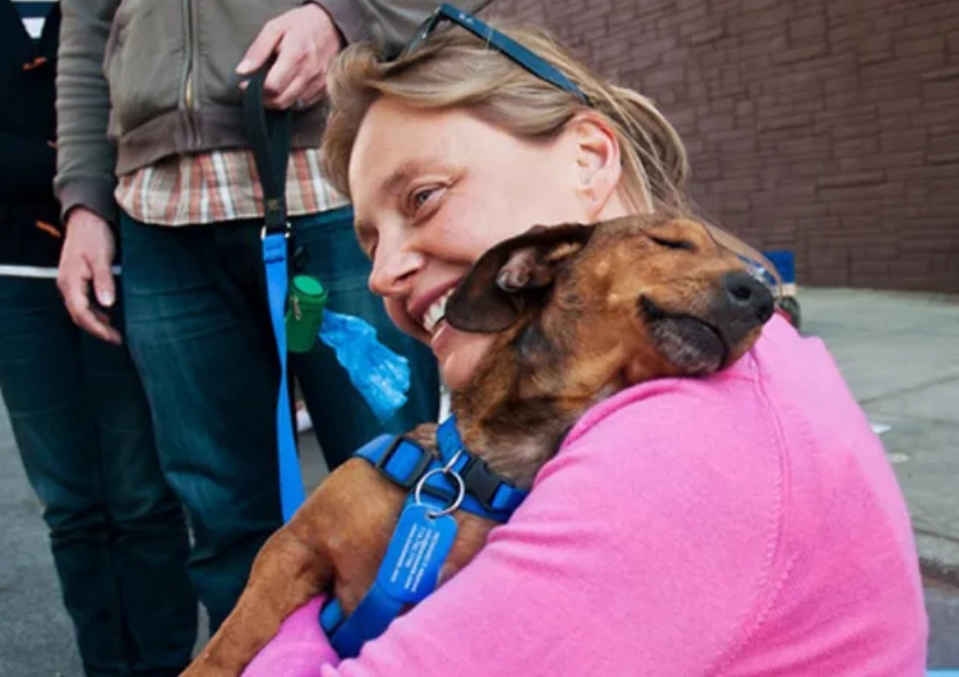
Emotional doesn’t even begin to describe what it is like when you take in a new pet. This guy was so touched by the surprise his significant other had in store for him! He loves it and will love it forever!
HOLD ME CLOSE
A PERFECT MATCH
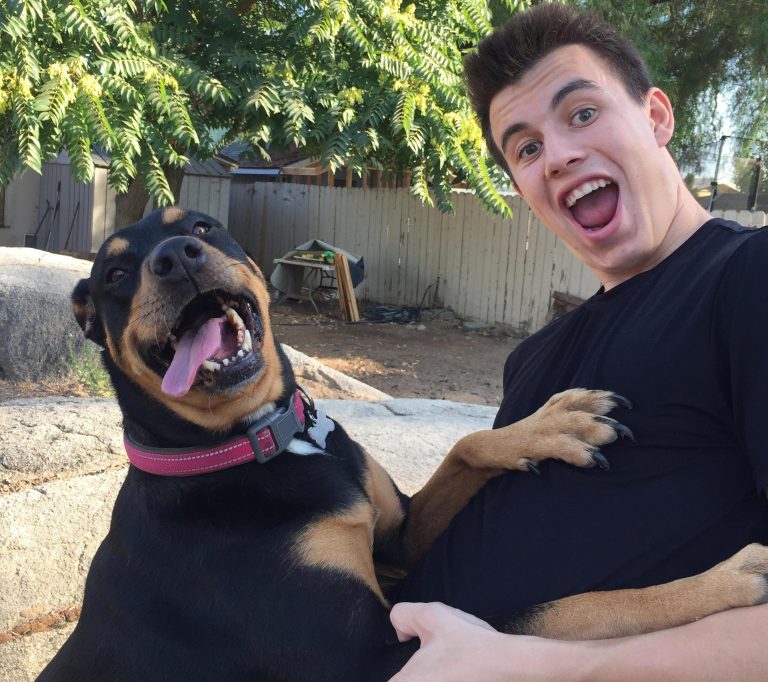
You will have so much fun when your dog can pose like this with you. Can you see how he manages to make the same expression as his owner? Not a lot of dogs can do that, and we feel jealous of this guy.
A PERFECT MATCH
BEAR HUG
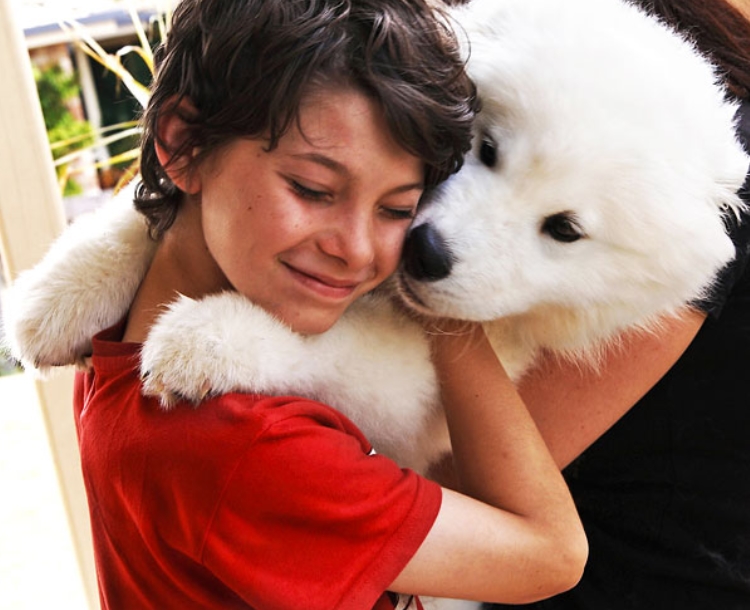
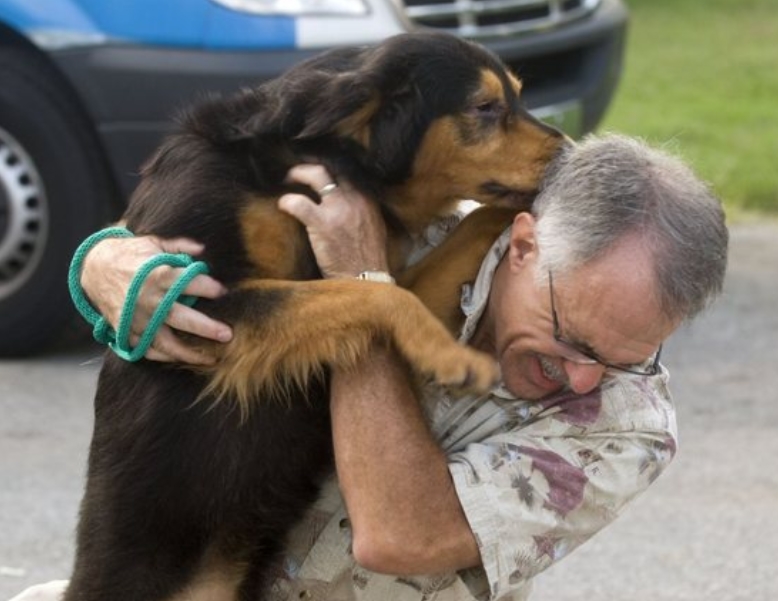
Aww, that look of contentment on this boy is nothing short of adorable. Moreover, we just love how the dog is looking at him to see that he is delivering the best hug in the world. They sure make a good pair!
BEAR HUG
OLD & YOUNG
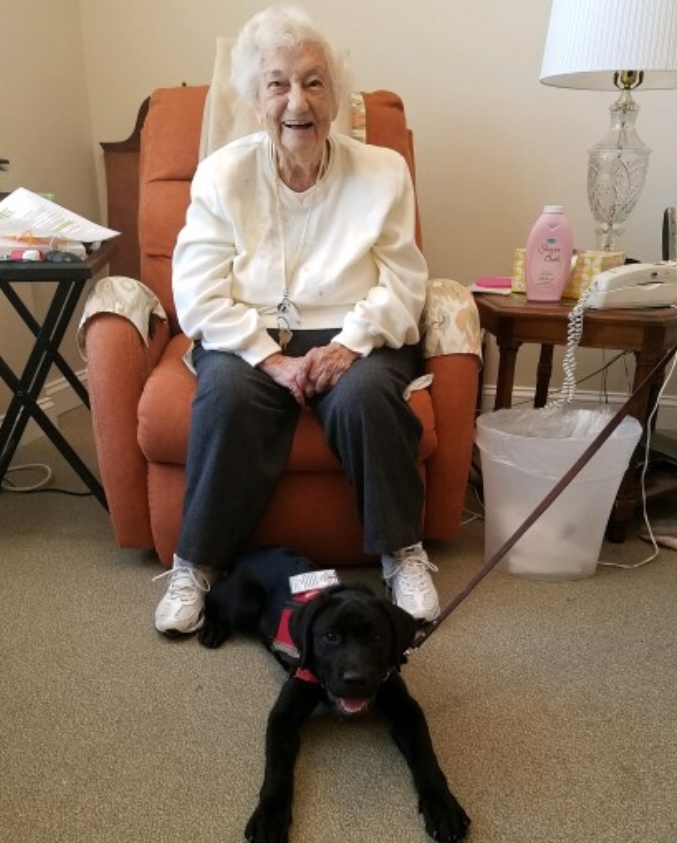
When her husband died, she felt more than a little lonely. We understand, of course. It’s a good thing her son was brilliant enough to get her a new dog. No doubt about it, this dog will be cared for very well.
OLD & YOUNG
WHO’S MORE EXCITED?
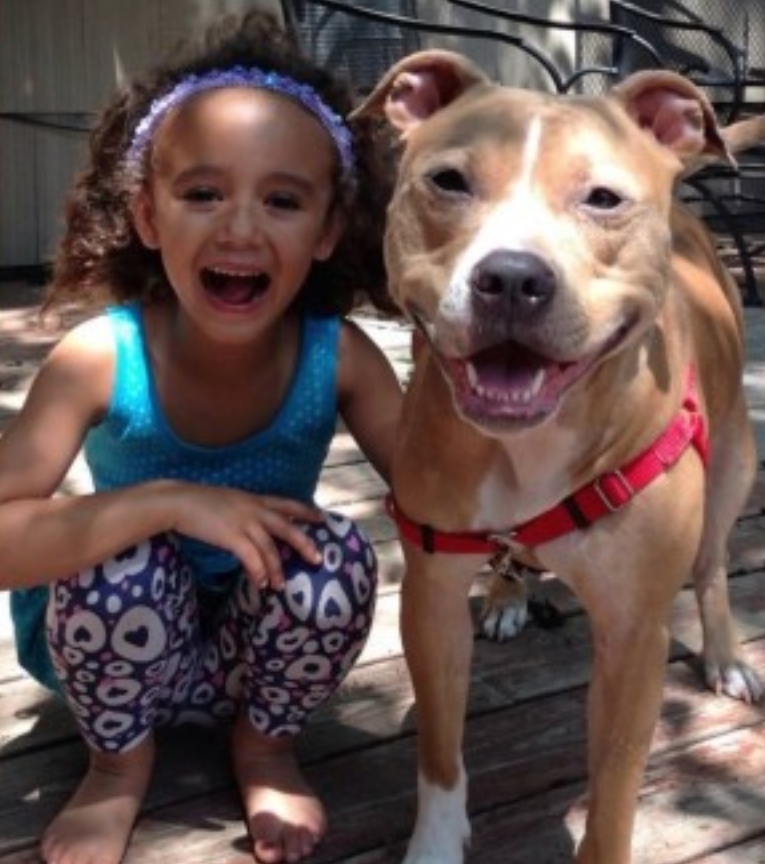
Getting a dog will never not be exciting, but the kids especially enjoy it. After her parents introduced her to Harley the pup, she was absolutely thrilled! It must’ve been unbelievable that they could keep him!
WHO’S MORE EXCITED?
“I’M GOING HOME!”
His collar matches her shirt, and his smile matches her smile. This is a match made in heaven! Max was happy that he finally found someone to take good care of him. What a good pair these two make.
“I’M GOING HOME!
NAP TIME
When dogs are comfortable, sleeping will be very easy. The pup was very contented in the arms of this woman right here. We would feel the same way as well! There is nothing for him to worry about now
NAP TIME
KISSES GALORE
Although there are dogs that go for hugs, some of them like kisses better. Of course, these acts are always reserved for their owners! How would you react if your dog gave you a kiss fest as thanks?
KISSES GALORE
SECRET TIME
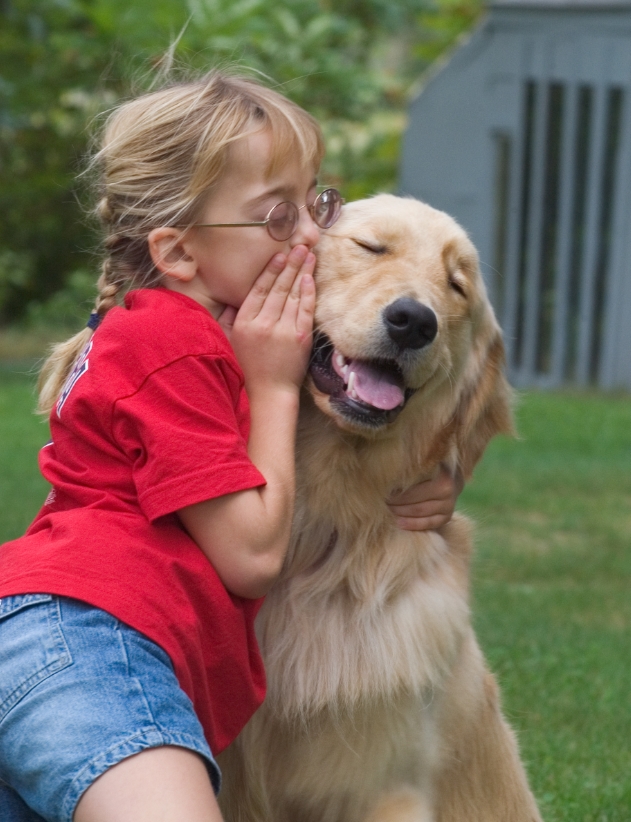
When you have a secret you just want to share, it’s not wise to do so. Unless you do it to your pet! The trustworthy creature here seems to enjoy her secret. Maybe it has something to do with adopting him.
SECRET TIME
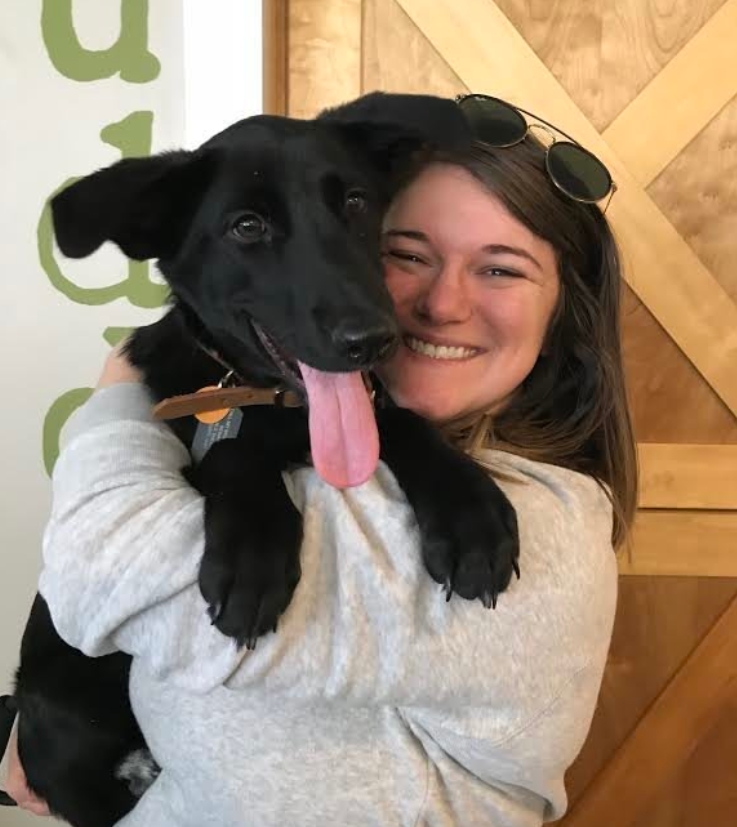
PUPPY EYES
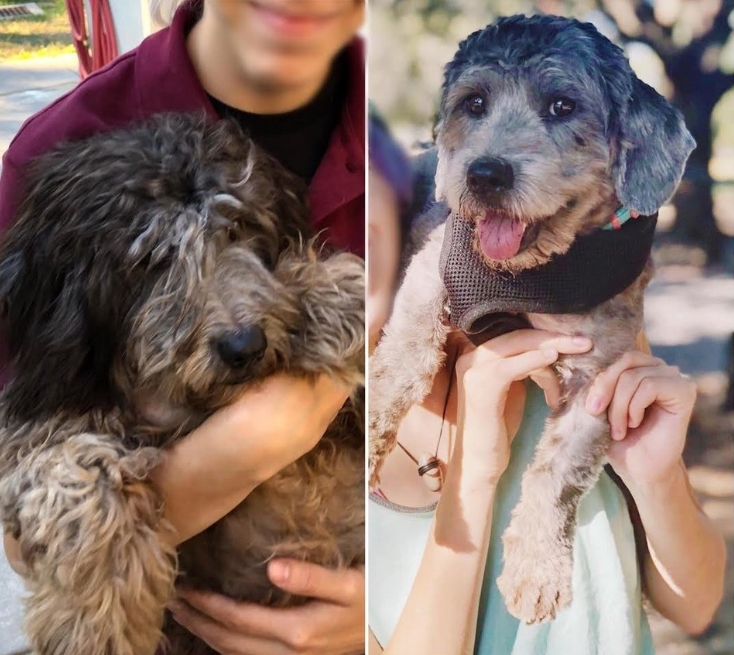
Kodak is probably named for his photogenic smile, and we love it. The beautiful Labrador and Shephard mix was saved from a hoarder. We are glad that he finally found his forever home!
PUPPY EYES
BETTER AND BETTER
You can see the first time Krystal cradled her new pup below. There is a world of difference between the first and second photo. The latter was taken after she was cleaned up and taken in by her new mum.
BETTER AND BETTER
PURE BLISS
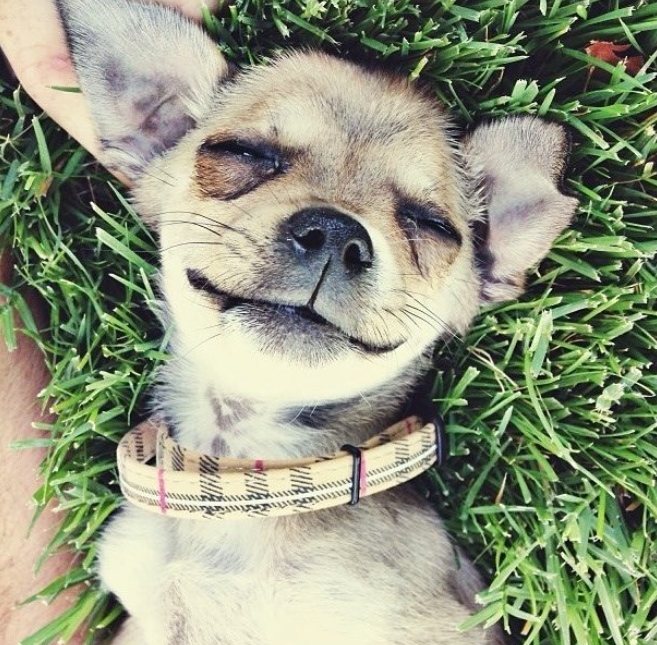
We know dogs are unable to see as many colors as we can, but it seems apt to say that this dog can see all the colors of the rainbow. When you find your new home, it will suddenly seem like life is better!
PURE BLISS
EVERYTHING THE LIGHT TOUCHES
We are sure you remember the iconic scene in Lion King when this line was delivered: “Simba, everything the light touches is our kingdom.” For this pup, this was the version he got: “Everywhere the grass touches is your playground.”
EVERYTHING THE LIGHT TOUCHES
HOME AT LAST
Rex did not have an easy life before Dan decided to adopt him. Before this moment, he got severe neck trauma and suffered from this affliction. It seems like he can now forget about those days and look forward to new ones!
HOME AT LAST
Please ALWAYS consider adopting your next dog. Saving one dog will not change the world, but for that one dog, the world will change forever!
Please SHARE to raise awareness to this issue. You can also SUBSCRIBE to receive news and updates straight to your inbox.
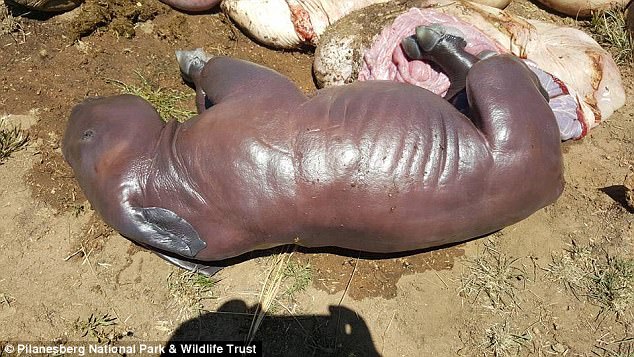
No chance: An unborn Rhino calf who died in its mother’s womb after she and its sibling were shot dead by poachers in South Africa
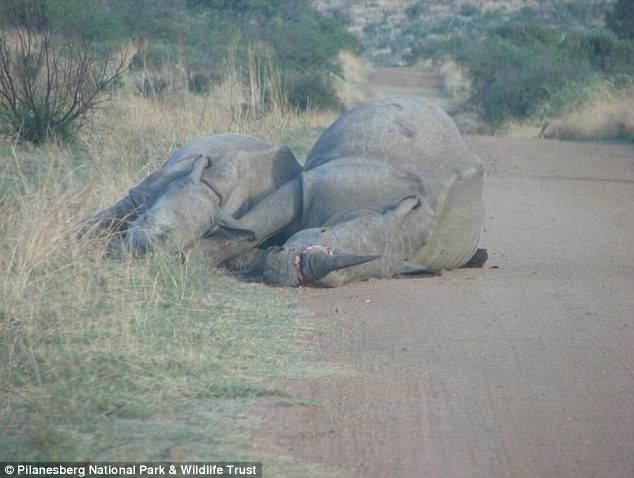
Heartbreaking: The markings around the mother’s horn show that the poachers had made an attempt to cut it off, but fled the scene when park staff arrived
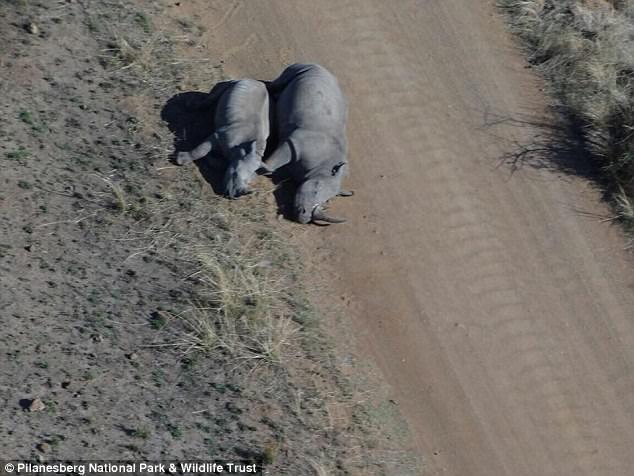
The Rhino was heavily pregnant and roaming Pilanesberg National Park in Mogwase, north-west South Africa, with its calf when they were hunted down for their horns.
These heartbreaking images show an unborn Rhino calf who died after its mother and sibling were shot and killed by poachers.
Photos show the poachers began hacking off the mother’s prized horn, but they were interrupted by park rangers and fled before they had time to remove it.
When park staff tried to save the unborn calf, it was found to have died inside its mother’s womb.
Pilanesberg National Park wrote on its official Facebook page: ‘There are no words.
‘Mom and calf shot and killed by poachers. Horns are still on as the murderers fled the scene when they heard a game drive approach. Mom looks very pregnant as well. We are devastated.’
Pilanesberg National Park added in the post that a reward will be issued for any information leading to an arrest and prosecution of the poachers.
A spokesperson for the park told MailOnline that the mother Rhino was aged eight and the calf just two years old. The unborn foetus would have been due in February next year.
Killed: The heavily pregnant Rhino and its calf lie by the roadside where they were shot
‘We have lost 16 Rhino and 3 unborn calves so far 2017 – that we are aware of,’ the spokesperson said.
‘This loss is not due to lack of interest or effort from Park management, as this is a large park with many valleys and hills, which is a difficult territory to operate in.’
Since 2007, more than 6,000 Rhinos have been shot and butchered for their horns in South Africa alone.
The majority of those have come in the last four years with around a thousand being killed every year since 2013.
Sometimes the Rhinos are shot dead, in other cases they are brought down with a tranquiliser gun before having their horn hacked off – leaving the Rhino to wake up and bleed to death painfully and slowly.
The province of KwaZulu-Natal, which has the greatest density of Rhino in South Africa, has seen 139 slaughtered already this year.
Despite countries such as China, Vietnam, South Korea, Malaysia and even India believing Rhino has medicinal values, repeated studies have not found any evidence to support the claims.
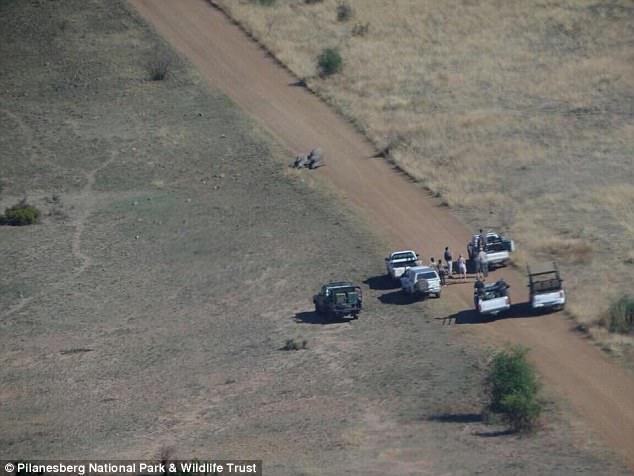
Sad: Park rangers and guests gather at the heartbreaking scene in Pilanesberg
Rhino horns are made from a protein called keratin, the same substance that human fingernails and hair are made of. The horn is essentially just a compacted mass of hairs that continues to grow throughout the animal’s lifetime, just like human hair and nails.
It is similar in structure to horses’ hooves, turtle beaks, and cockatoo bills – however these animals are not hunted and slaughtered in the same way.
Tragically tradition and cultural beliefs in some Asian countries mean the demand for Rhino horn has not waned despite just some 20,000 white Rhino being left in the wild.
Poachers are now being supplied by international criminal gangs with sophisticated equipment to track and kill Rhinos. Based on the value of the Asian black market, Rhino horn price is estimated at $ 65,000 USD per kg*. In the near past, the Rhino horn price soared up around $65,000 per kilogram. This price hike turned the Rhino horn more valuable than gold and many other precious metals, also many times more worthy than Elephant ivory. (*2020 figures)
Please SHAREto raise awareness of the horrific result of poaching. Please SUBSCRIBE for news and updates.
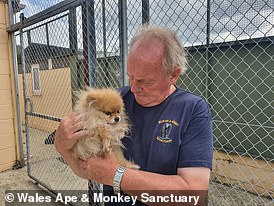
Graham Geran of the Wales Ape & Monkey Sanctuary in Powys collected a number of dogs.
GRAHAM GERAN WITH SOME OF NOWZAD’S DOGS
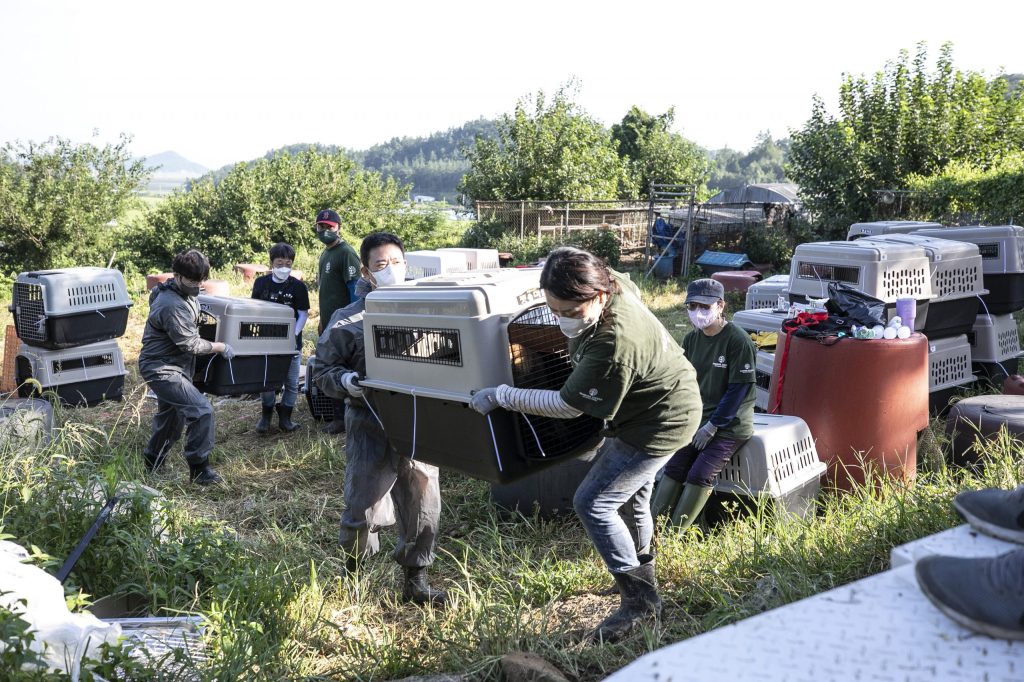
The founder of an animal rescue centre in Wales was among the volunteers who helped transport Pen Farthing’s cats and dogs.
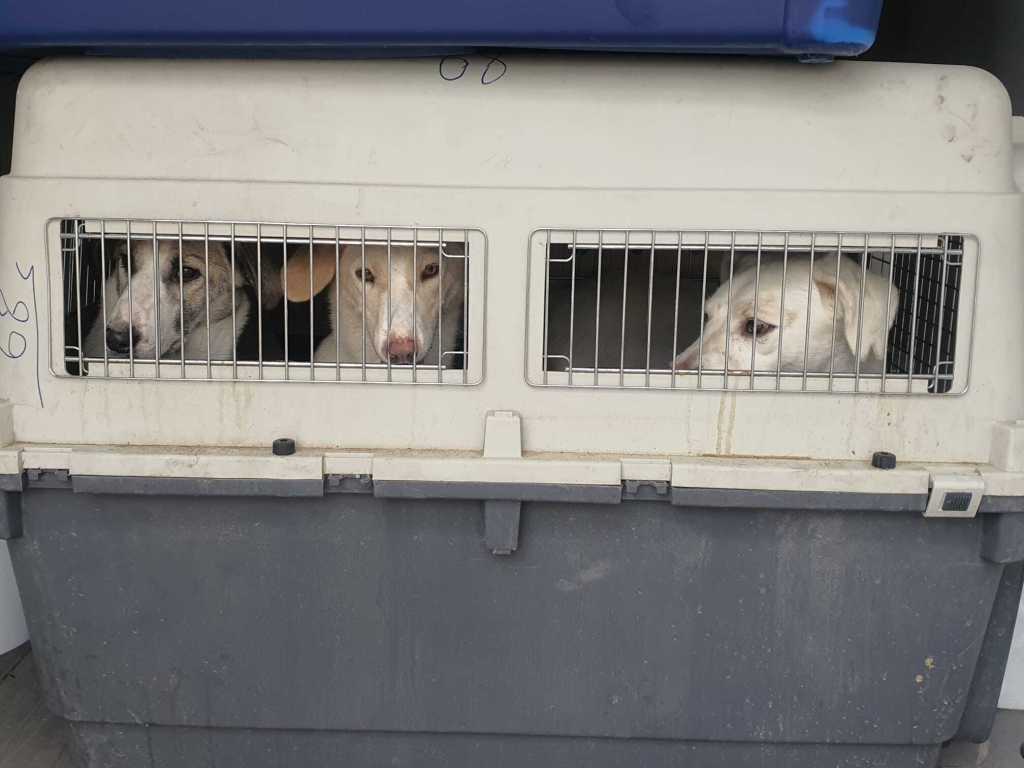
Farthing arrived at Heathrow Airport with 173 rescues from his Nowzad animal charity in Kabul, Afghanistan, on Sunday, August 29, and was met by a number of vehicles involved in transporting them to their quarantine centres.
SOME OF THE DOGS WHO ARRIVED AT HEATHROW
Among them was Wales Ape & Monkey Sanctuary founder Graham Geran, who had volunteered to collect some of the dogs in a special transport vehicle free of charge.
The animal rescue, based in Powys, is on the list of premises and carriers authorised by the Government for rabies quarantine in England, Wales or Scotland.
Graham said “I was up at three o’clock in the morning as I had to be in Heathrow for 7:30… and then it was a case of waiting for the checks and then get them from the plane into the quarantine centre.”
There were said to around 18 other vehicles involved in transporting the animals.
Speaking about the dogs, Graham said: “They came out of the crate and they were straight up jumping on us.
GRAHAM WITH ONE OF THE RESCUED DOGS
Graham also revealed that he had received ‘numerous phones calls’ from people wishing to adopt the animals after it was discovered he was involved in transporting them.
He added: “People want to adopt the dogs, so they will go out to quarantine and to good homes.
The animals, with an estimated total of around 100 dogs and 70 cats, are in quarantine kennels across the UK, with hundreds of people looking to adopt them.
Please SHARE to raise awareness to Nowzad and Operation Ark. Sign up to receive NEWS & UDATES straight to your inbox. Thank you.
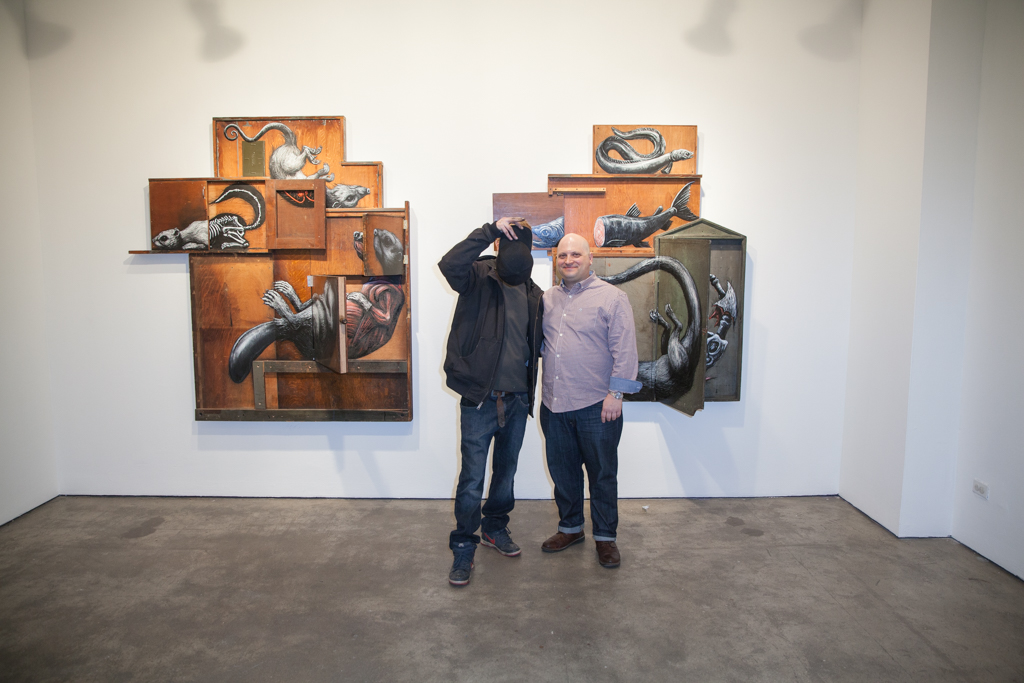
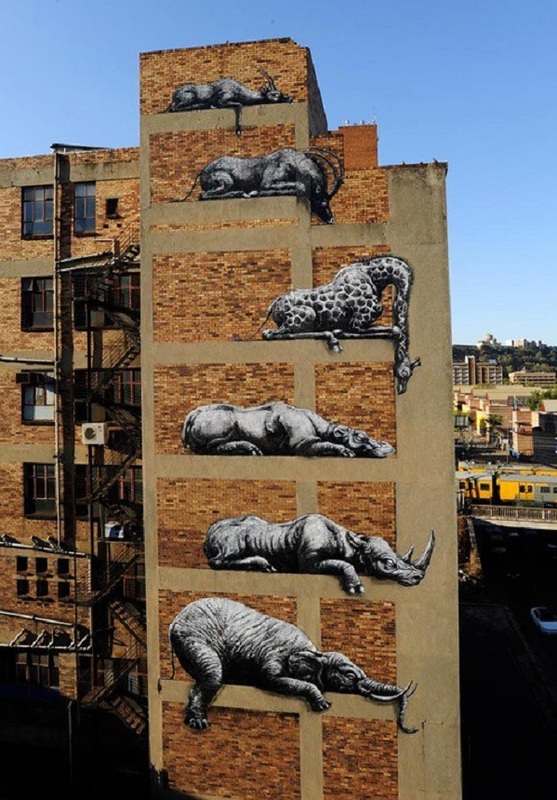
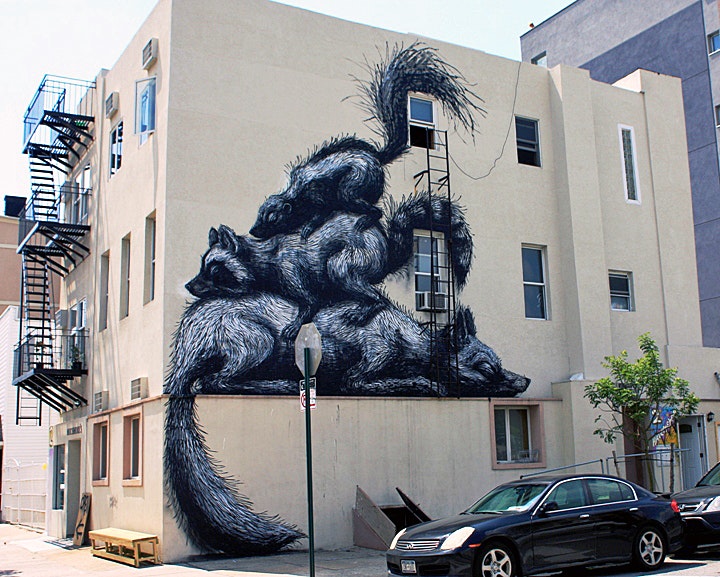
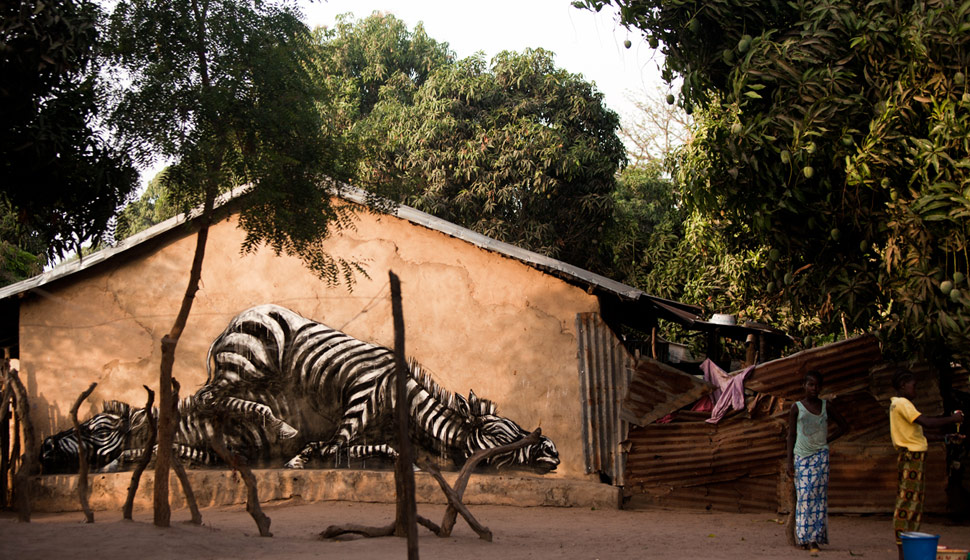
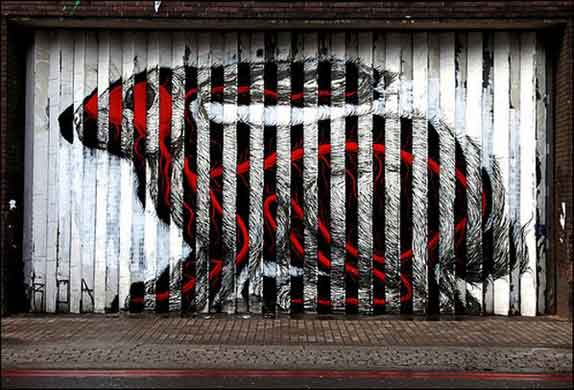
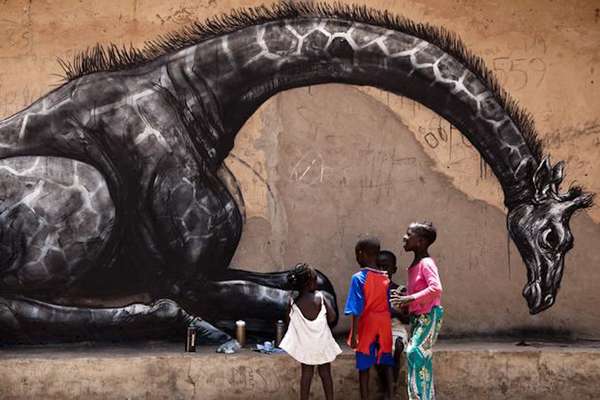
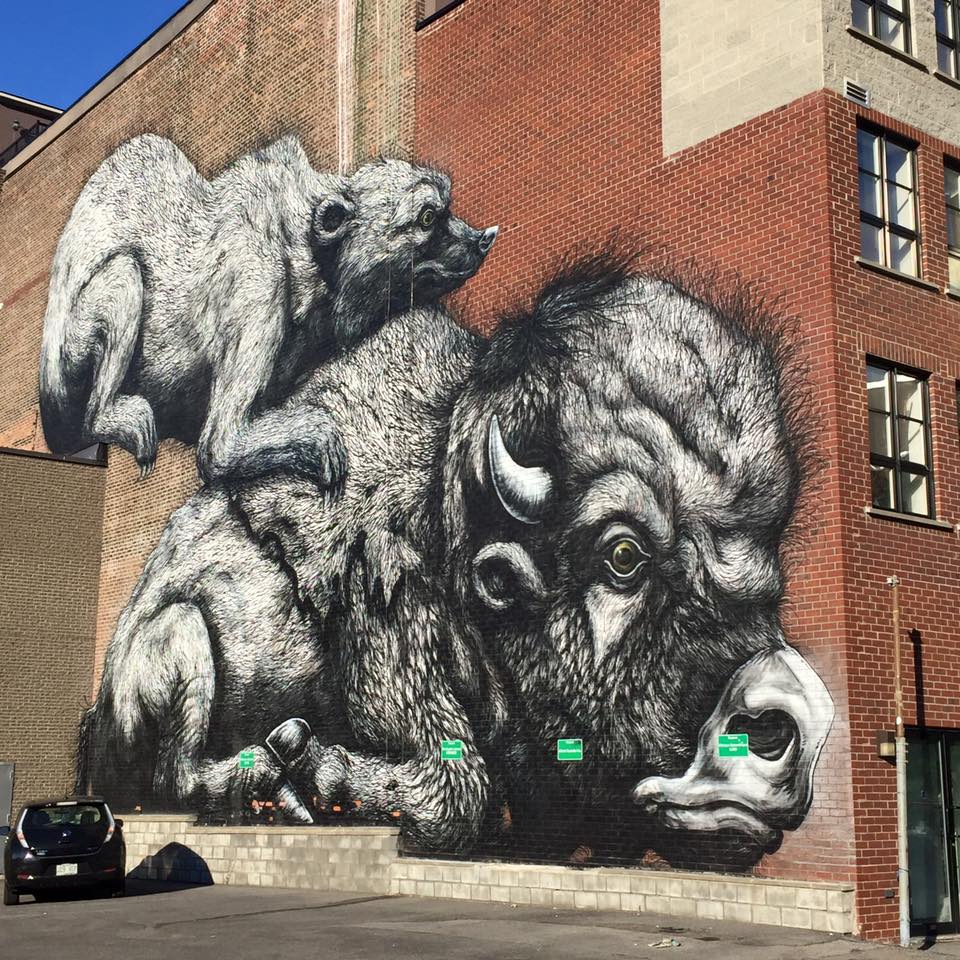
Roa, a hugely talented Belgian street artist from Ghent, is renowned for his giant black and white animal street art. Roa started off in the street art scene painting animals on abandoned buildings and warehouses in the isolated industrial areas of his hometown. Today, Roa’s animals may be found slumbering on the sides of semi derelict buildings and peering out from shop shutters in city streets all across the world from New York to Berlin and Warsaw to Paris.
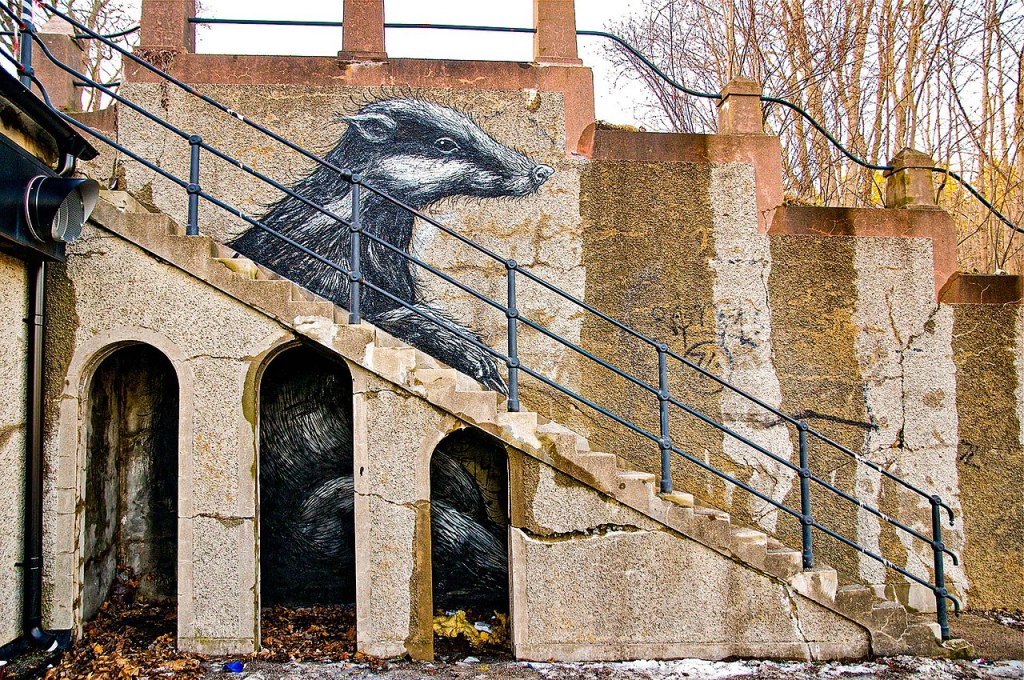
Stockholm, Sweden.ANONYMITYRoa Lets His Work Do The talking
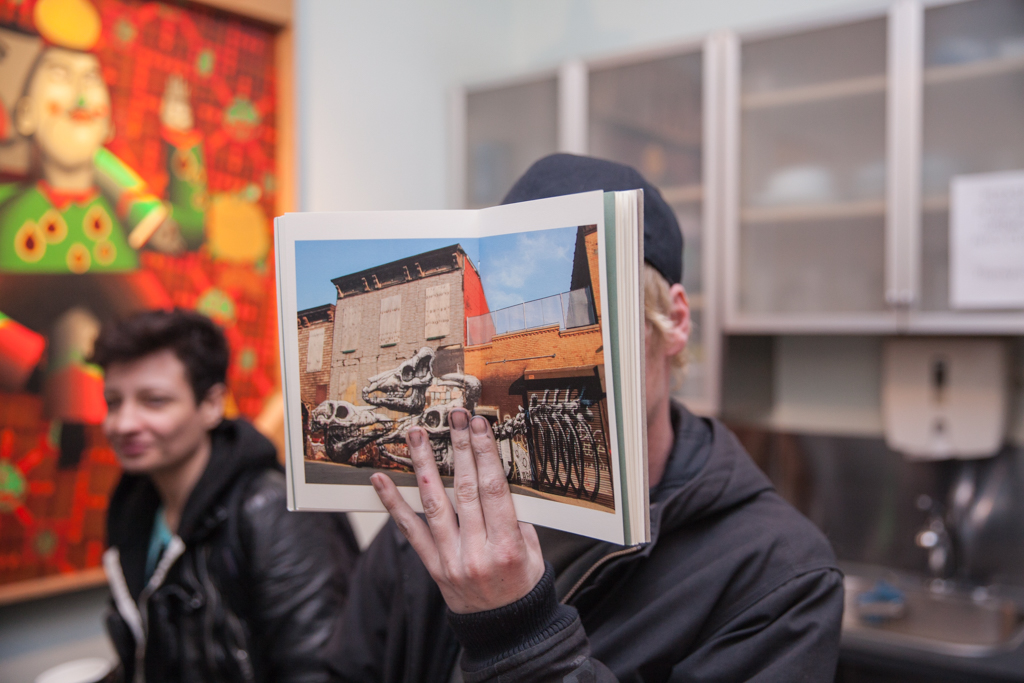
Street artist Roa is a muralist from Ghent, Belgium sprays beautiful illustrations of animals on buildings, walls and anything he can find in cities around the World. His work has often been recorded and photographed, but very little is known about the artist and even less is documented.
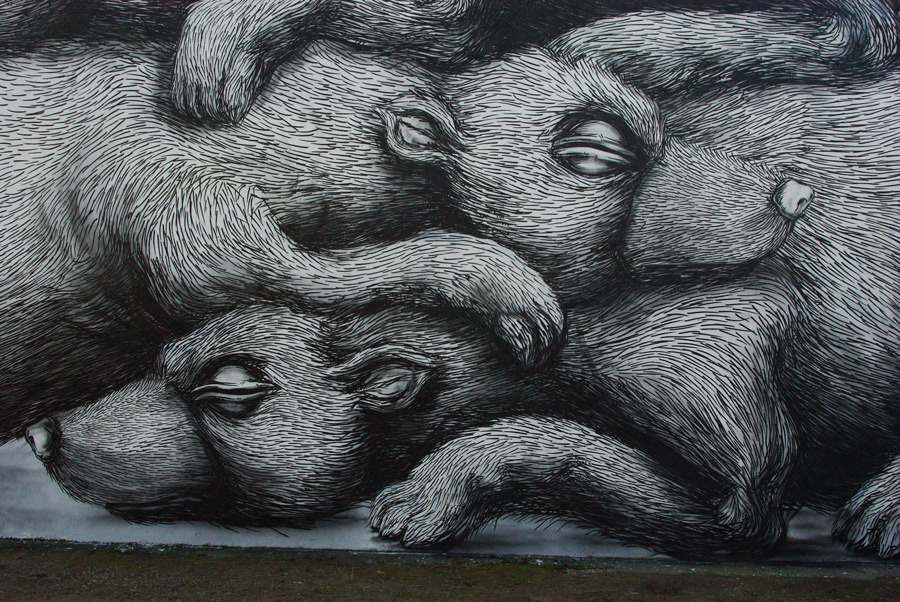
Renowned for his monumental black and white paintings of wildlife, ROA is a pseudonym of a Belgian street artist that has been leaving both accidental and intentional viewers in awe for years now. His hand painted, large scale and unique portrayals of rabbits, birds, rats, fish and other animals disquietly cohabit city streets, whilst his more disturbing images of skeletal or dead creatures directly reflect ROA’s pessimistic opinions of society. Although this street artist’s work is definitely a contender when discussing the most famous and recorded urban pieces in recent history, not much is known about this mysterious painter from Ghent who uses this anonymity to make sure both his artwork and spirit remain uncompromised.
At a very young age Roa remembers wanting to be an archaeologist or something adventurous and collecting little skulls from birds and rodents to draw at home. He grew up in the eighties and naturally was inspired by the American life; music, skating and so forth. The love for music, more in particular hip-hop, quickly joined his curiosity in graffiti. Like most muralists, he began by spraying throw-ups under bridges and walls. During his early years, Roa expressed an active, eclectic mix of styles. At the time, there was not prevailing movement in Belgium. As time went on, the scene’s evolution further evolved as foreign visitors left behind an assorted collection of talents and skills. Slowly but sure Roa became addicted to the nature of urban art.
Roa is primarily known for his strong obsession for animals and rodents. He often combines life, death, and life after death in his murals, which quickly distinguishes him amongst traditional muralists. His animals are painted to include skeleton and internal organs, making the sight even more realistic. The artist states, “Organs are the vital substances of our body and they represent a lot of the symbolism which I like!” One’s love for animals could not be expressed nearly as much as our artist Roa. This mysterious Belgian muralist has created hundreds of murals through Europe. He has also travelled to other locations around the world.
His preferred forms of methods to paint are by using spray paint or acrylic paint. In fact, most of his work is created through a mixture of black, white, and grey scale colours. At times, the muralist prefers to sketch, especially those large murals. He first began his artistic career by paining buildings and warehouses in his hometown. Nowadays, his distinctive black and white style street artwork can be found worldwide.
Some major cities, where his work can be found include London, New York, Berlin, Warsaw, Madrid, Moscow, Los Angeles, Mexico City and Paris.
Muralist Roa’s true obsession for animals is unparalleled and he uses this obsession to paint for inspiration. Roa uses native animals based on the location he is painting in. For example, if he goes to a specific location filled with roosters, like Mexico, then he will paint a rooster. Not only does this make him a standout artist, but his attention to detail is phenomenal. He truly has a pure passion for painting. Roa simply paints to paint- no other reason.
Carefully using the placement and the enlarging of the graffiti subject, ROA implies the cruelty and absurd relationship of humans and animals, as well as displaying the roots and origins of the depicted beings – this is what’s his art all about.
Roa’s work has been turning heads across the street art community by bringing birds, rodents, and other animals back into the consciousness in the areas they once inhabited. Although the street art is generally conveyed in a very natural matter, even his dead animal paintings seem at peace. Not only that, but his extra-large scale black and while local rodents may be viewing the image at work from nearby.
Roa’s anonymity has kept his work and his spirit free.
Enjoy Some Of Roa’s Art From Around The World
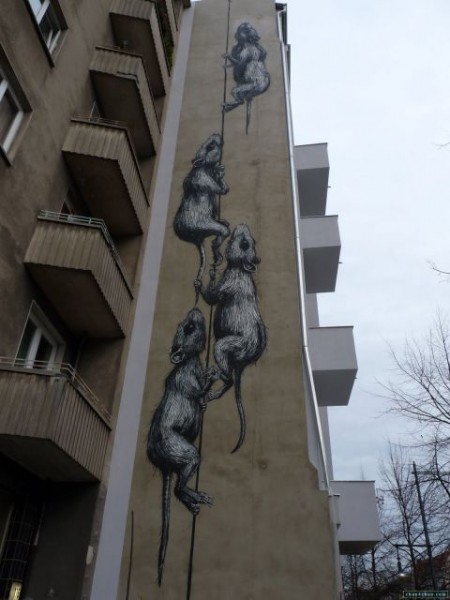
BERLIN, GERMANY
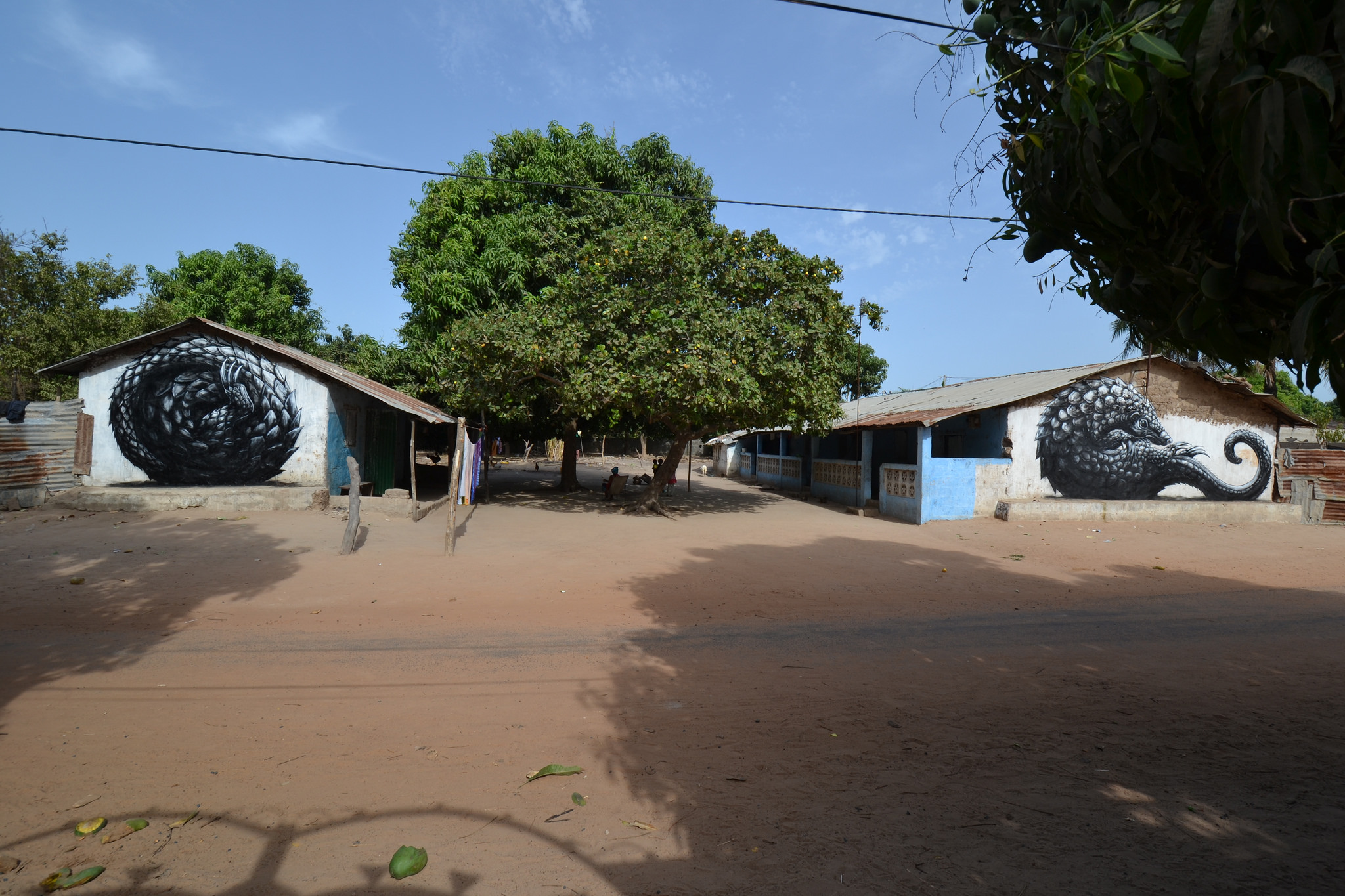
MAKASUTA, THE GAMBIA
JOHANNESBURG, SOUTH AFROCA
BROOKLYN, USA
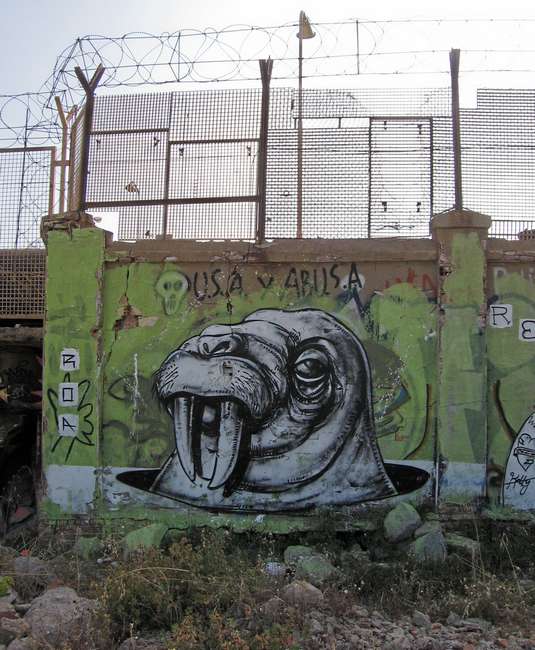
BARCELONA, SPAIN
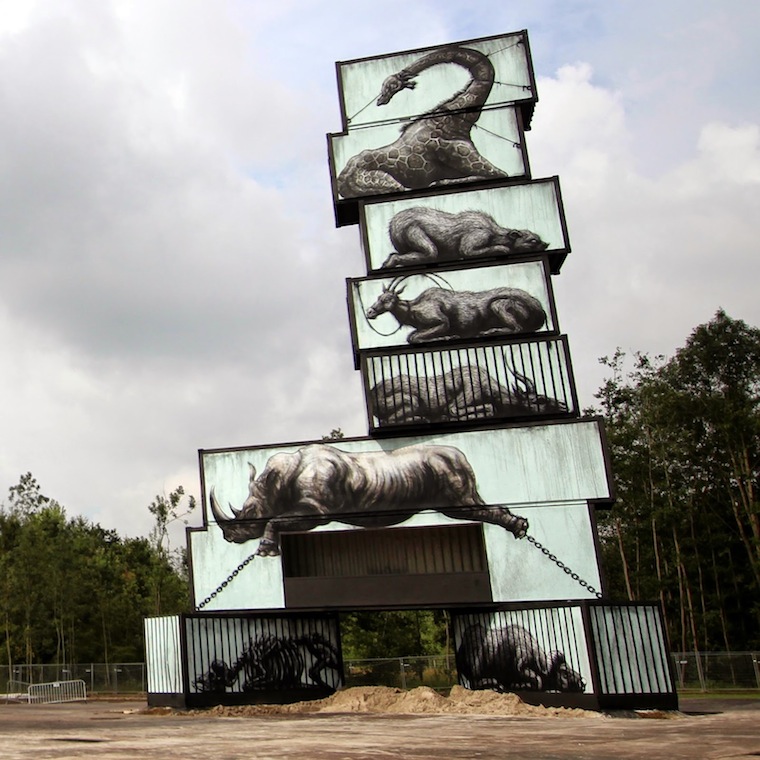
WERCHTER, BELGIUMMAKASUTU, THE GAMBIALONDON, UKMAKASUTU, THE GAMBIAWARSAW, RUSSIA
OREBRO, SWEDEN
MONTREAL, CANADA
These are just SOME of the vast amount of murals that Roa has created. You can visit his Facebook page at Roa Street Artist.
Please let others see Roa’s amazing work by SHARING far and wide. Please SUBSCRIBE to receive regular new and updates straight to your inbox.
Ministers want to change the law so it reflects the severity of the pet thieves’ crimes by considering the emotional distress it can cause the animal and acknowledging that pets represent far more than just property to their owners.
Pet Theft Taskforce delivers report with recommendations to tackle reported rise of pet theft
Government working with the police to improve recording and tracking of pet abduction cases
Improvements to pet microchipping processes to support the identification of lost and stolen dogs
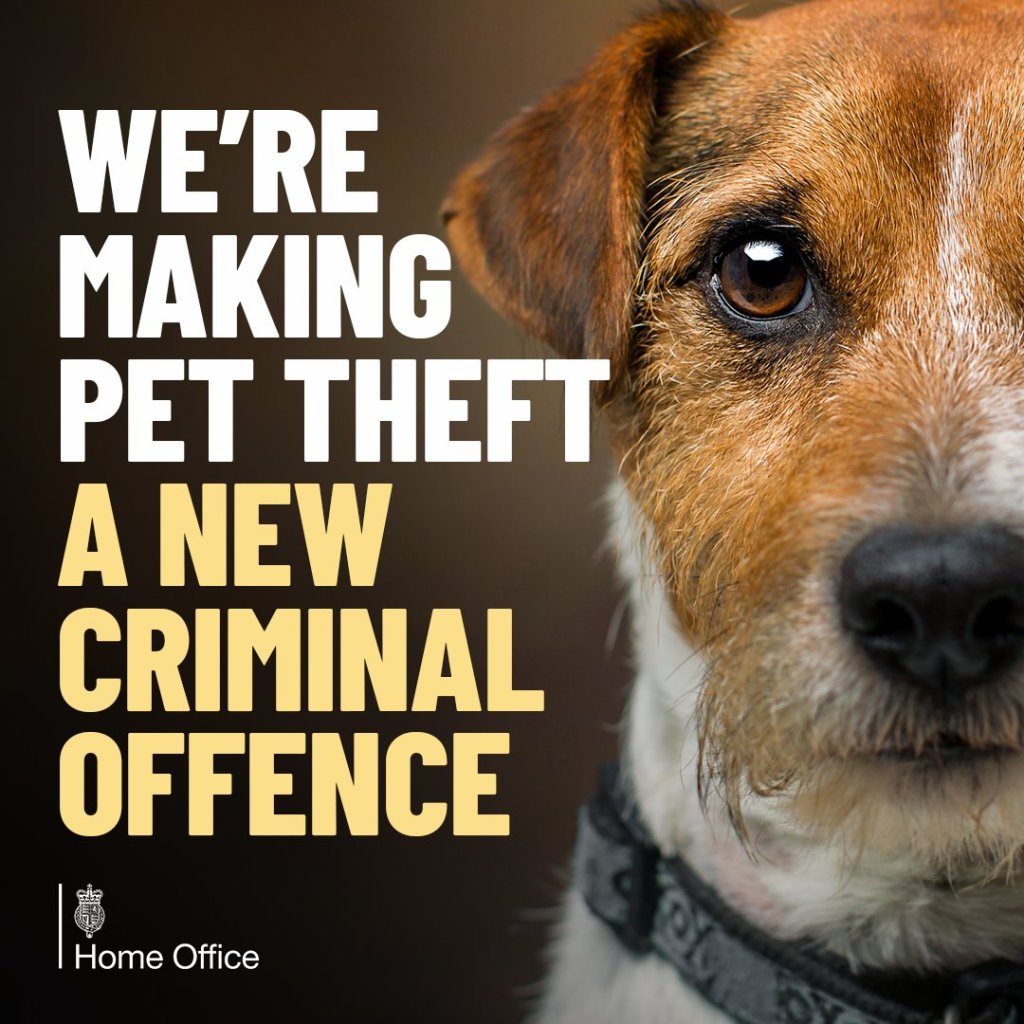
A new criminal offence for pet abduction is set to be introduced under government plans to crack down on pet theft following a reported rise in pets being stolen during the pandemic. The new law will recognise the welfare of animals and that pets are valued as more than property.
The new offence is one of several recommendations in a report published today by the Government’s Pet Theft Taskforce which was launched in May 2021. The Taskforce, made up of officials from Defra, the Home Office and the Ministry of Justice along with operational partners including the police CPS, Border Force and Local Government, considered evidence from academics, animal welfare organisations, campaign groups, enforcement agencies and industry experts.
Since its establishment, the Taskforce has considered available evidence from academics, animal welfare organisations, campaign groups, enforcement agencies and industry experts to help inform its recommendations.
The report found that seven in 10 of the animal thefts recorded by the police involve dogs. Evidence suggests that around 2,000 dog theft crimes were reported to police in 2020, causing considerable distress for owners and their pets alike. The price of some breeds increased by as much as 89% over lockdown as people spent more time at home, potentially making dog theft more appealing to criminals looking to profit from the spike in public interest in owning a pet.
The Taskforce’s recommendations include:
The creation of a new ‘pet abduction’ offence:Pet theft is currently treated as a loss of property to the owner, but we know that does not reflect the true severity of this crime. The new offence will prioritise the welfare of our pets as sentient beings and recognise the emotional distress to the animal in addition to its owner.
Identifying and tracking cases:Reliable data on pet theft is limited and improved recording and data collection about these crimes will build a stronger evidence base about the problem.
Improving the recording of ownership and transfer data:New requirements to register additional details and a single point of access to microchipping databases will support tracking lost and stolen dogs.
Tackling the fear of crime:Police will work together with partner agencies to raise awareness about police initiatives and prevention measures
These changes will make it easier for the police to track pet abduction incidents making it easier to clamp down on offenders. The Home Office will ensure that pet abduction is recorded in a consistent manner across police forces, while officials from each department will be able to review the way data is collected across the criminal justice system.
Pet microchip databases will also be made more accessible under the proposals. There are currently 16 microchipping databases in England, however the Taskforce found that they can be difficult to navigate for pet owners and law enforcement, making it difficult to trace stolen dogs. Under the new proposals a single point of access to all databases will simplify and streamline the system and more robust rules will also be introduced across all of the pet microchipping databases for recording the transfer of dogs to new owners to ensure full traceability.
Taken together, these proposals will make it far harder for thieves to steal and sell pets, will make it easier for the police to catch them, and will ensure that the impact on the animal is reflected in the sentences or penalties given to offenders.
The new measures will also allow the Government to capture more data on pet theft crimes and raise awareness of police activity in combatting the issue and actions owners can take to keep their pets safe.
Environment Secretary George Eustice said:
Pets are much loved members of the family in households up and down the country, and reports of a rise in pet theft have been worrying. Pet owners shouldn’t have to live in fear, and I am pleased this report acknowledges the unique distress caused by this crime.
Its recommendations will reassure pet owners, help the police to tackle pet theft, and deliver justice for victims. We will consider its findings carefully and work with colleagues across Government to start implementing its recommendations.
The Lord Chancellor, Robert Buckland QC MP, said:
Many of us have sought the companionship of pets during the pandemic which makes this crime even more cruel.
These proposals will make sure police can better identify and track down criminals who peddle in this heartless trade, whilst ensuring they are appropriately punished for their actions.
Home Secretary Priti Patel said:
Stealing a pet is an awful crime which can cause families great emotional distress whilst callous criminals line their pockets.
The new offence of pet abduction acknowledges that animals are far more than just property and will give police an additional tool to bring these sickening individuals to justice.
At the same time, police will continue to work to raise awareness about how owners can best to protect pets from being targeted.
The work of the taskforce means that police forces across the country will now be better placed to respond to pet theft through an improved recording process and a specific crime that recognises pets as valued members of the family with a significant emotional impact”.
We would also encourage anyone buying a puppy or dog to make sure that they are buying from a responsible and genuine home. Advice on checks that can help buyers make the right choices is available through Blue Cross or RSPCA website.
RSPCA chief executive Chris Sherwood said:
We’re really pleased to hear the Government’s Pet Theft Taskforce recommendations. Pet theft can leave families in utter turmoil and have serious welfare implications for animals ripped away from everything they know.
The new Pet Abduction Offence will acknowledge the seriousness of this crime and we hope this will encourage courts to hand out much tougher sentences to pet thieves. We’re also thrilled that the Government wants to simplify the microchipping database system and we believe this will help to tackle pet theft as well as other animal welfare issues and irresponsible pet ownership generally.
The police advise that dog owners should avoid leaving their pet unattended while out in public, vary their routines when walking their dogs and should take basic security steps at home such as checking locks on doors and garden gates. The Blue Cross has also published detailed guidance for pet owners on how they can protect their animals from theft.
The Taskforce’s recommendations are part of the Government’s commitment to further strengthening the UK’s position as a global leader in animal welfare standards, as outlined in the Action Plan for Animal Welfare, and follow Defra’s recent announcement of new measures to crack down on the illegal smuggling of dogs and puppies.
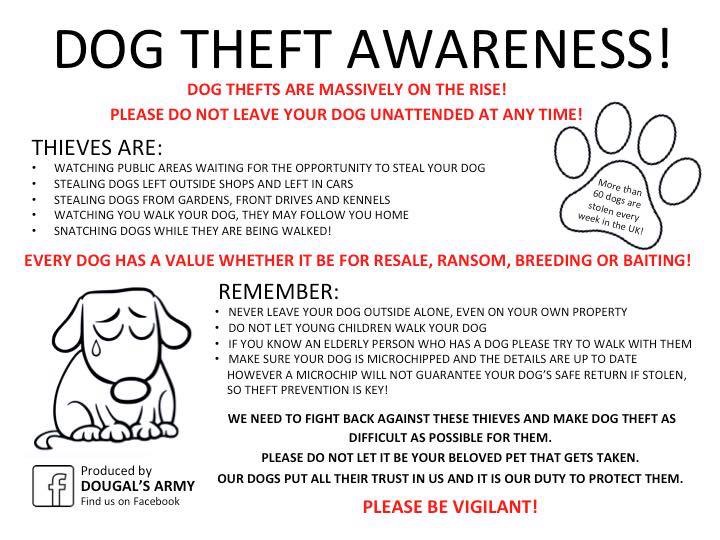
PleaseSHARE to raise awareness to dog theft. You can also sign up for UPDATES & NEW ARTICLES by submitting your email details in the right-hand column. Thank You.
What is the link between trophy hunting, deadly infectious diseases and traditional Chinese medicine? The not so obvious answer is Lions. Paradoxically, these apex predators are now farmed on an increasingly industrial scale in South Africa by the SA government may change this). The estimated number of farmed Lions in the country is already four to five times larger than that of wild Lions. And there is another paradox – in 2019, the South African government amended legislation to reclassify Lions and 32 other wild species as farm animals. Lions, Bones & Bullets (see video link below) tells the astonishing story of how the Lion farming industry adapted to survive losing two-thirds of their trophy hunting clients following Cecil the Lion’s shooting and the US boycott that followed.
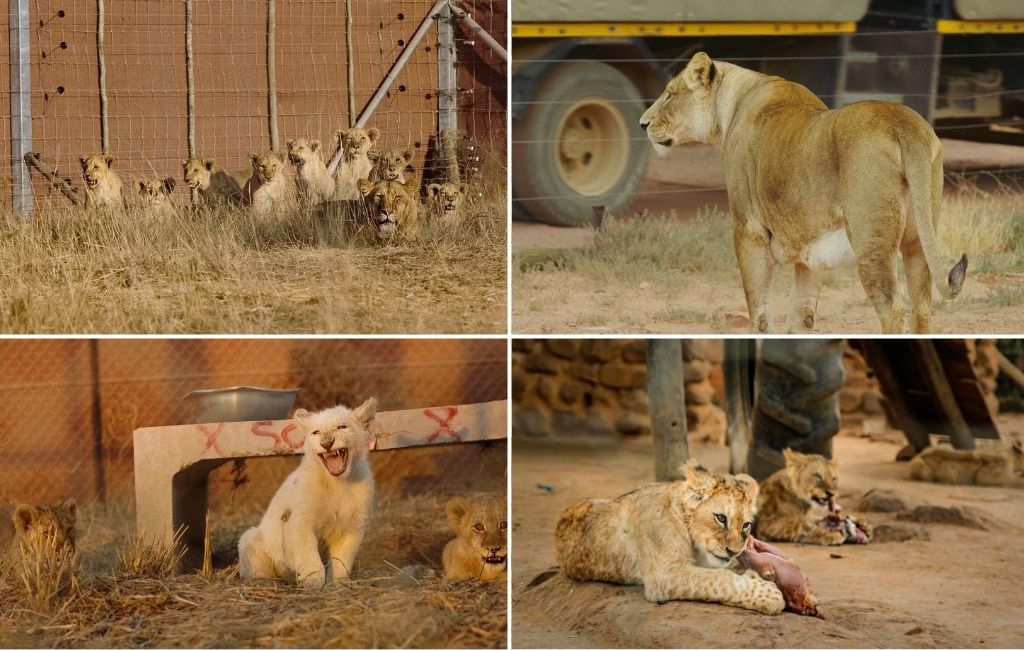
Lions bred in captivity on an industrial scale in South Africa
If trophy hunting was dying out, then what was stimulating the boom in Lion farming? Penguin Random House author Richard Peirce and the Jagged Peak Films team went in search of the answer. They discovered that while canned hunting had decreased, a parallel increase in demand for Lion bones from Southeast Asia was fuelling demand, leading the South African government to establish an annual quota for Lion skeleton exports. Richard followed the Lion bone trail from farms in South Africa to street dealers in Vietnam and Laos.
Inside a South African lion farm
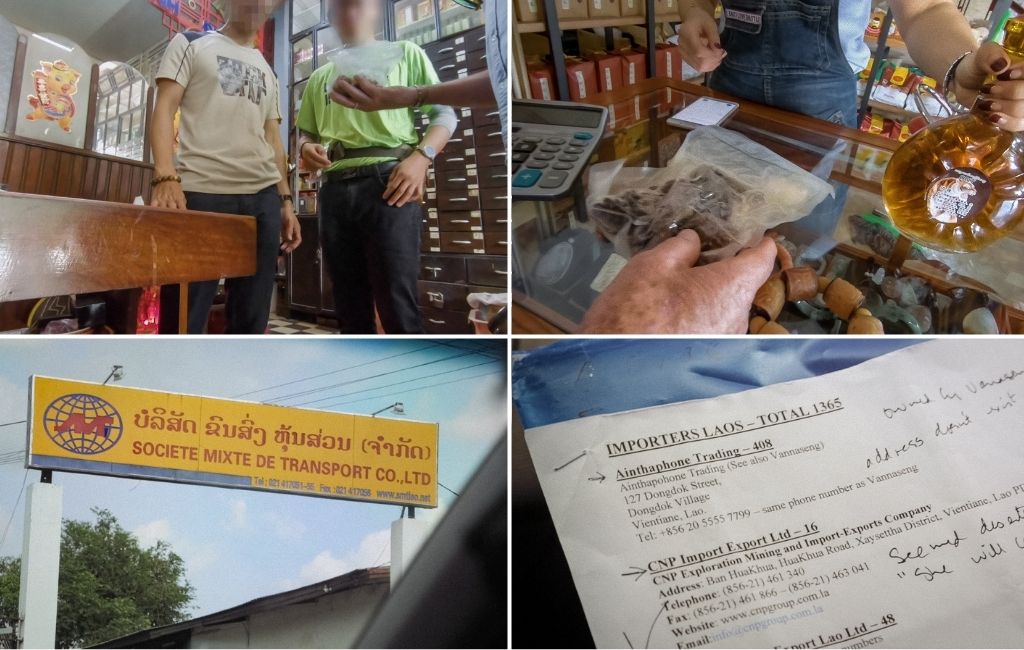
Following the wildlife trafficking trail led to dangerous situations, but the team persisted in their quest for the truth. An undercover informant in Southeast Asia confirmed that Lion bones were being imported and passed off as Tiger to be used in Tiger cake, Tiger wine, and various other ‘Tiger’ products consumed in traditional Chinese medicine. The filmmakers exposed how easy it is to buy ‘Tiger’ or ‘Lion’ products, which are supposed to be illegal by international trade laws. Between the South African skeleton sale value and the end consumer price, they discovered a 60-fold increase. These huge profit margins and the fact that it’s cheaper to import a farmed Lion skeleton and pretend it’s a Tiger than to rear an actual Tiger, drive the South African Lion bone trade.
Richard goes undercover to investigate the trail of lion parts in Southeast Asia. Clockwise from top left: Richard is offered illegal pangolin scales in Vietnam; Richard is offered illegal ‘tiger wine,’ ‘tiger bracelets’ and a mysterious ‘tiger whip’ in a marketplace in Laos; List of companies that have imported lion skeletons from South Africa to Laos. While tracking down each address, Lions, Bones and Bullets proved that most are front companies for the true importer; Entrance to the office of ‘Societe Mixte de Transport’ in Laos, an import-export company which has imported lion skeletons from South Africa to Laos on behalf of a client.
This timely and groundbreaking film is much more than a straightforward exposé. The threats Lion farming and the Lion bone trade pose to conservation are tremendous. Richard, the author of several books on wildlife, explains: ‘Lion farming and the increasing sale of Lion bones to Asia involve exploitation, cruelty, injustice, misconception, fraud and corruption. They are a threat to wild Lion populations. It is mind-blowing in terms of the huge negativity involved and has no redeeming aspects. Lions are a flagship species; what happens to Lion populations will be a major factor in determining the future of wild animals in Africa.’
The threats to global public health are even more significant. The world is paralysed by a pandemic that came to humans via wild animals. Lions, Bones & Bullets reveals how shockingly easy it is to legally develop an expanding wildlife farming industry and then transport products that could be infected with tuberculosis, the ‘world’s deadliest infectious disease’. The disease is still South Africa’s leading cause of death.
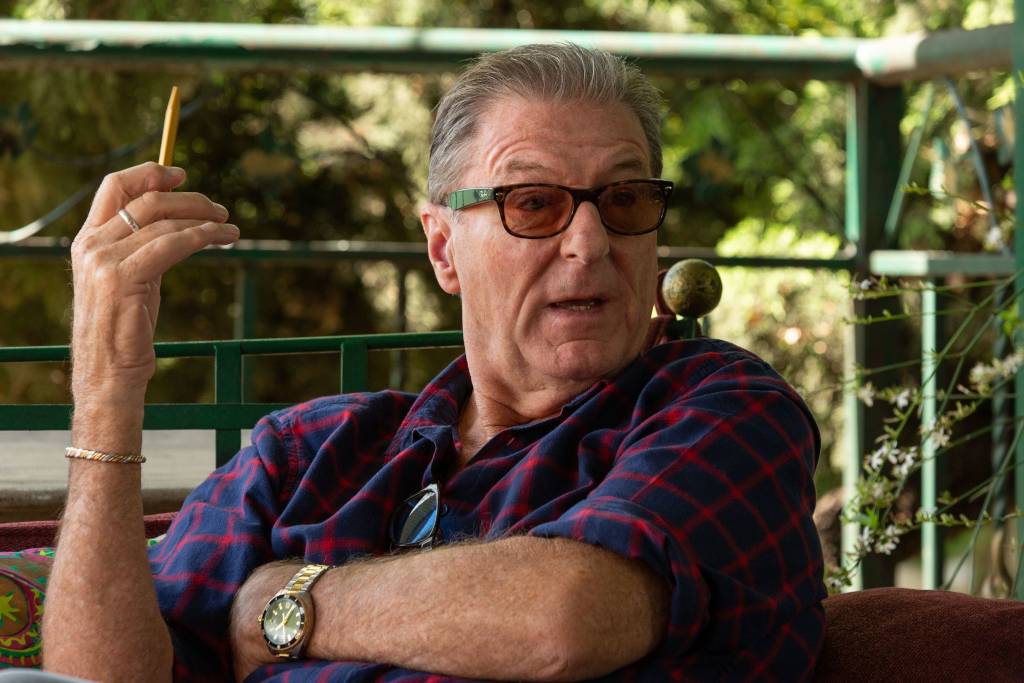
Richard Peirce
The world festival premiere of Lions, Bones & Bullets washosted by the 60th Monte-Carlo Television Festival in June. The Prince Albert II of Monaco Foundation, competition partners to the festival, is dedicated to environmental protection and sustainable development globally. Olivier Wenden, Vice-President and CEO, notes: ‘Lions, Bones & Bullets sends a clear and vital wake-up call to the world, inviting us to open our eyes and rethink our relationship with nature and wildlife.’
The team behind Lions, Bones & Bullets includes Kiwi director and executive producer Anton Leach, who has filmed in more than 20 countries, including war zones in Iraq, Syria and Gaza. Also from New Zealand is the film’s producer, writer and editor, Jasmine Duthie. Her work focuses on character-driven wildlife stories. Lions, Bones & Bullets is narrated by leading British actor and campaigner Peter Egan (Harry Potter, Downtown Abbey, Chariots of Fire).
LICHTENBURG, SOUTH AFRICA: Thirty-four Lions were crammed into a muddy enclosure meant for three. Rotting chicken carcasses and cattle body parts littered the ground. Feces piled up in corners. Algae grew in water bowls. Twenty-seven of the Lions were so afflicted with mange, a painful skin disease caused by parasitic mites, that they’d lost nearly all their fur. Three cubs lay twitching in the dirt, one draped over the blackened leg of a cow, its hoof visible. Mewling, they struggled—but failed—to drag themselves forward. A fourth cub looked on, motionless.
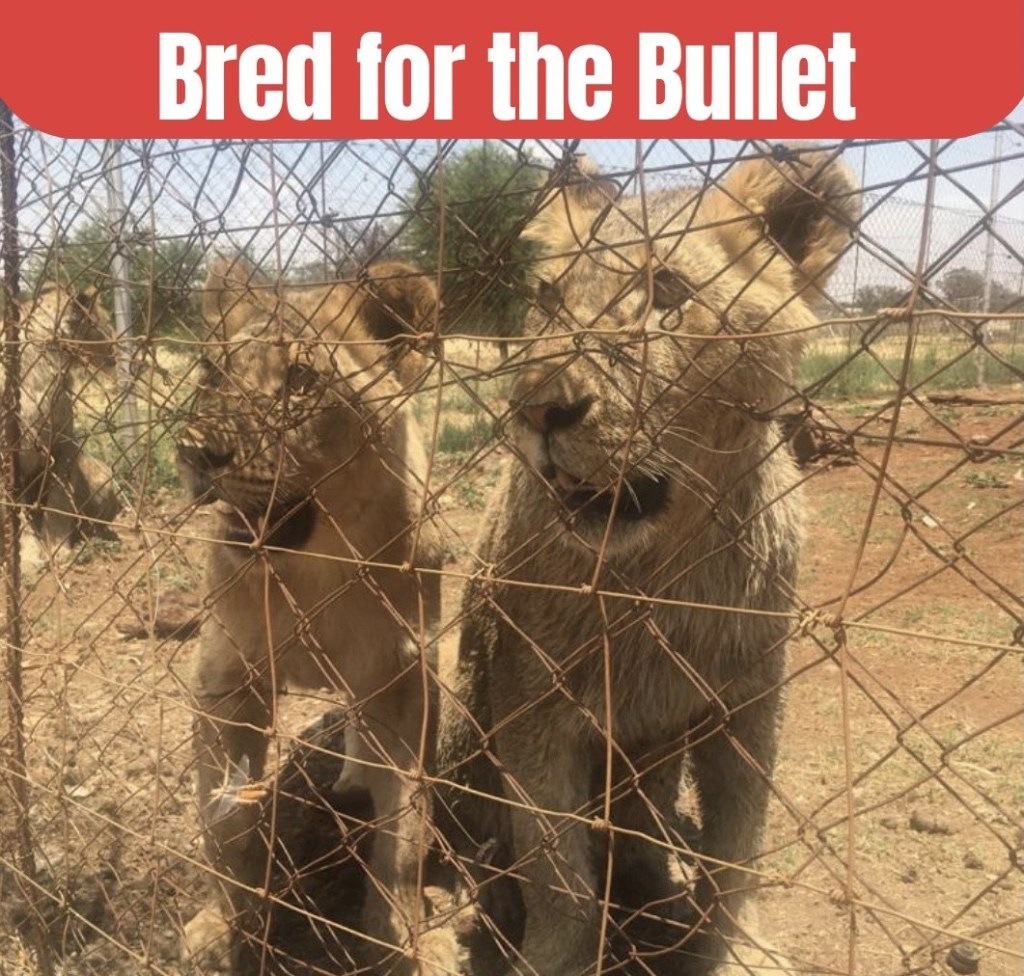
Although the number of captive Lions in South Africa has been estimated at between 6,000 and 8,000, there may now be as many as 10,000, according to conservationist Ian Michler, the protagonist of the 2015 documentary Blood Lions, which goes behind the scenes to examine the country’s Lion-farming industry. At facilities geared to tourists, visitors pay to pet, bottle-feed, and take selfies with cubs and even walk alongside mature Lions. Critics say the cub-petting industry leads to abuse, commercial breeding, and discarding of exotic animals. As the Lions age, they become too dangerous to pet, and they’re often sold to breeding and hunting ranches, which are not open to the public. “It’s this whole macabre, grisly industry with all these little revenue streams, and it’s very, very lucrative,” Michler says.
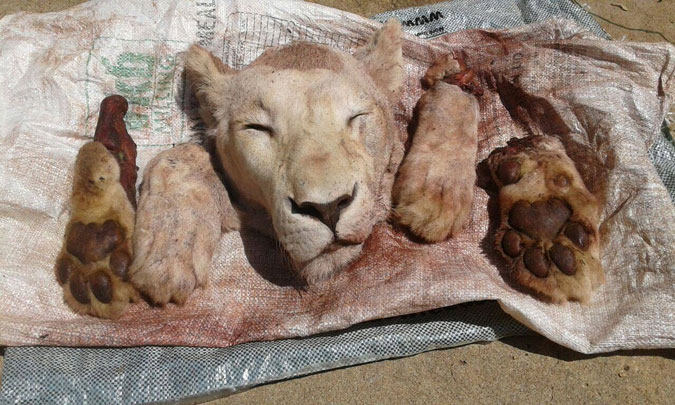
Some ranches may offer “canned” hunts, in which Lions are confined to fenced areas. Sport ‘hunters’ may pay as much as $50,000 to kill Lions so they can keep the skins and heads as trophies. The bones and other unwanted parts may be exported to Asia, where they’re used in traditional medicine. South Africa sets a quota for the number of Lion skeletons that can be exported legally every year.













 PROTECT ALL WILDLIFE