Thank you for your support in the past year but we still need your help.
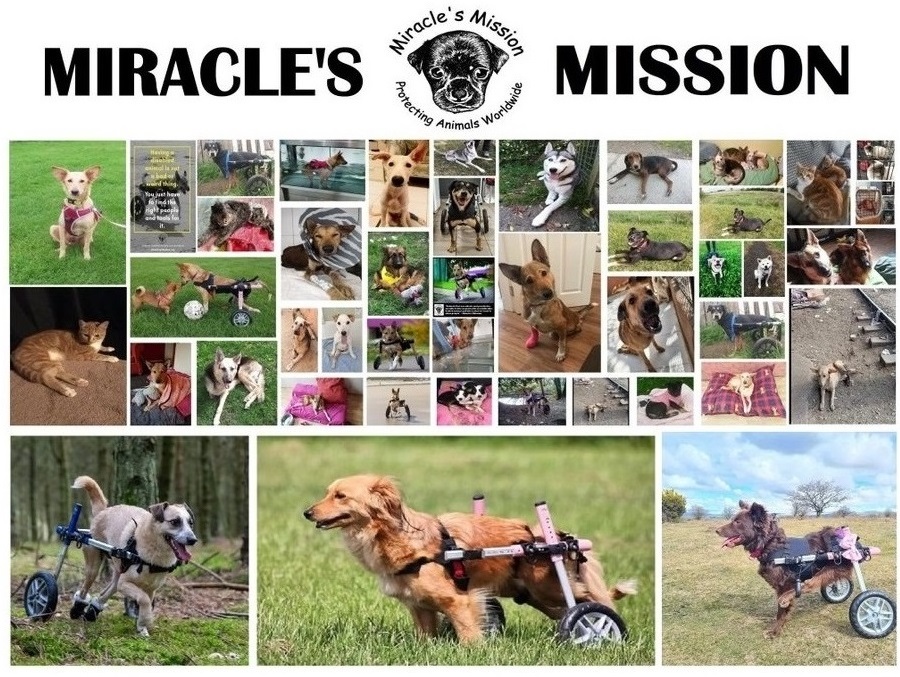
We are wrapping up another year at Miracle’s Mission. In the past year we have continued to provide a place of safety for animals in danger, to educate on the needs of neutering both pets and strays and to neuter stray dogs and cats to prevent the birth of more animals onto the streets. We have also rehabilitated and re-homed many dogs and cats in need, many with disabilities.
Even with all this wonderful news we are still in dire need of funds to help us keep our doors open. We need donations to help pay for food, heating and other bills, as well as staff costs and expenses like petrol for home visits. The average cost to feed a dog for one month typically costs somewhere from £16 to £50, depending on the breed. Microchipping costs about £10 to £15. The average cost of essential vaccinations is £64. A routine vet appointment costs between £40-£60. The average cost of a 30-miunte physiotherapy or hydrotherapy session is £50. Prosthetics and dog wheels etc are upwards of £500.
We appreciate your continuous support, we truly wouldn’t be here without you.
Could you help us with our end of year fundraiser? Any donation helps!
With best wishes, Paul Christian, Patron of Miracle’s Mission.
Chernobyl has become a refuge for wildlife 37 years after the nuclear accident
The Chernobyl disaster happened on April 26, 1986. The city of Pripyat was evacuated, but animals remained in the area. Over 37 years later, some species have thrived, others have been severely affected, and even new species have been introduced. But how did these animals respond to radiation exposure? What were the effects of living in and around the Chernobyl Exclusion Zone?
The explosion at the Chernobyl nuclear power plant in Ukraine sent a radioactive cloud across Europe. Within weeks, nearly 100,000 people who lived in a large zone surrounding the disaster site had been evacuated, never to return to the poisoned land.
Today, the relics of their past — hollowed-out hotels, empty swimming pools, crumbling farming villages and oxidized ferris wheels — stand in ghostly abandonment across a contaminated region larger than Rhode Island
But time has not stood still. Nature has reclaimed the area, and new photographic data show the 1,600 square-mile Chernobyl Exclusion Zone is now “basically an incredibly large sanctuary” for animals large and small.
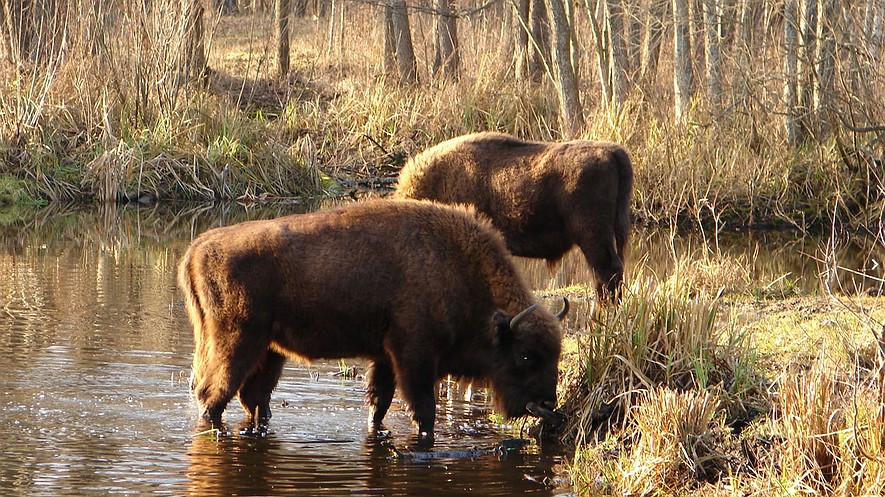
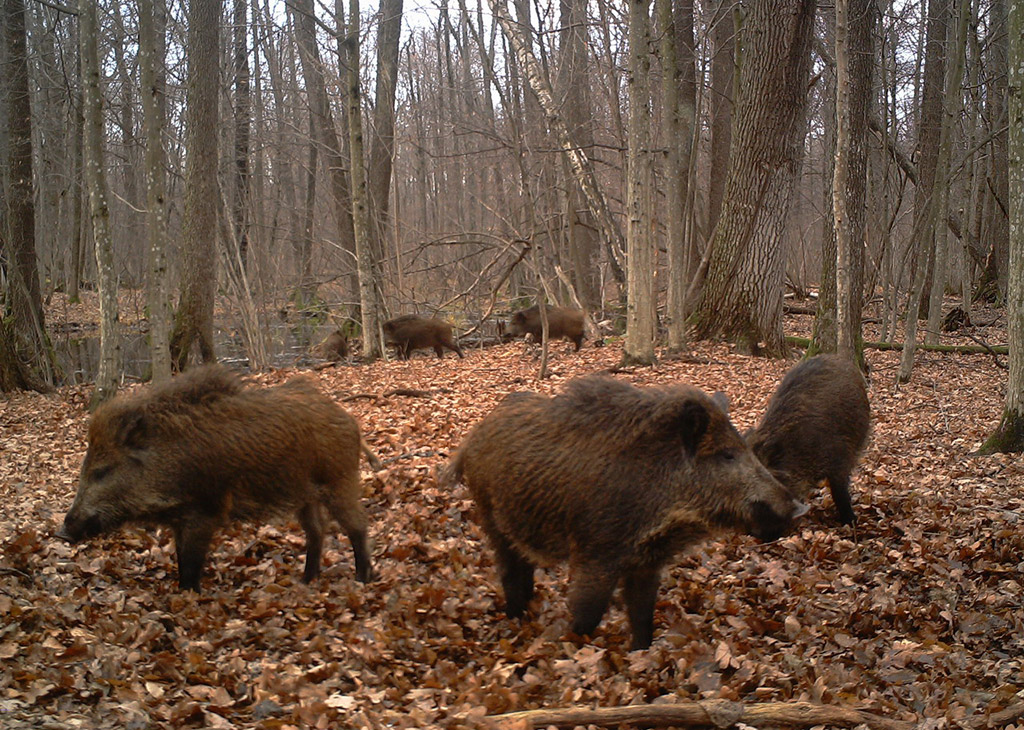
Wildlife in the area surrounding Chernobyl seems to be thriving in the radiation-contaminated exclusion zone, according to a new study. Many large mammal populations were found in the area including Grey Wolves, Wild Boar, Red Deer, Roe Deer, Moose, Bison, Red Foxes and Elk.
The study, published in the journal Current Biology, finds that a nuclear disaster may be less threatening to wildlife than habitation, reports The Los Angeles Times.
The results show that the exclusion zone supports wildlife, “regardless of potential radiation effects on individual animals,” the study authors wrote.
These results demonstrate for the first time that, regardless of potential radiation effects on individual animals, the Chernobyl exclusion zone supports an abundant mammal community after nearly three decades of chronic radiation.
The 1986 Chernobyl incident was one of the world’s most catastrophic nuclear disasters. An explosion and a fire at the nuclear power plant in Ukraine released radioactive material into the air, which spread over several countries. An estimated 116,000 people were permanently evacuated from the 1,622 square-mile Chernobyl exclusion zone.
The study shows that the numbers of wildlife are “much higher than they were before the accident,” according to BBC News.
Professor Jim Smith of the University of Portsmouth said that these findings do “not mean that radiation is good for wildlife.” Rather, the “effects of human habitation, including hunting, farming, and forestry, are a lot worse,” explained Smith, lead author of the study.
It’s just that the effects of human habitation, including hunting, farming, and forestry, are a lot worse.
Smith and his colleagues from the Polesky State Radioecological Reserve in Belarus examined data from aerial surveys that counted the large mammals in the area. The number of these animals “in Chernobyl is similar to the populations in uncontaminated nature reserves,” Smith said.
The numbers of animals we see in Chernobyl is similar to the populations in uncontaminated nature reserves.
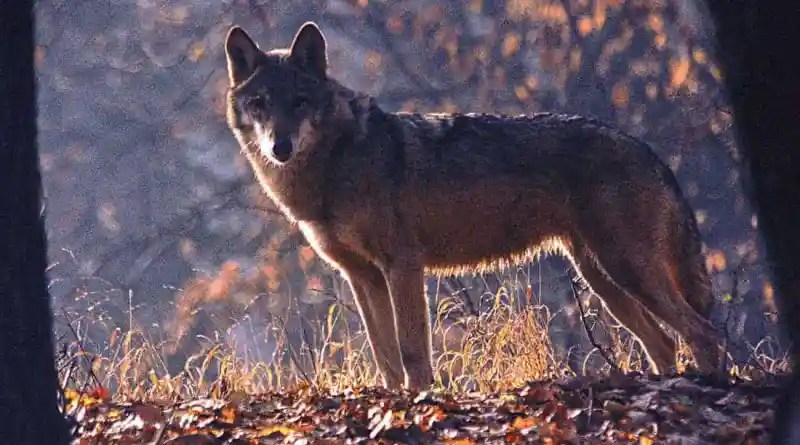
Most surprising was the number of wolves in the exclusion zone – up to seven times higher than the number on nature reserves of a similar size. Smith attributes this to the lack of hunting – and humans – in the area.
The study of the exclusion zone shows what happens to wildlife conservation “when you take humans out of the picture,” said Smith.
WHAT YOU CAN DO TO HELP ANIMALS IN NEED
You can support our work by donating as little as £5 – It only takes a minute but it can last a lifetime for an animal in need.
Everyone who donates will receive a Certificate of Appreciation as a thank you for helping animals in need.
The Mission of Protect All Wildlife is to prevent cruelty and promote the welfare of ALL animals. We believe EVERY animal should be treated with respect, empathy, and understanding. We raise awareness to protect and conserve wild, captive, companion and farm animals.
It is vital that we protect animals against acts of cruelty, abuse, and neglect by enforcing established animal welfare laws and, when necessary, take action to ensure that those who abuse animals are brought to justice.
Protect All Wildlife are involved in many projects to protect animals’ rights, welfare, and habitats. Money contributed to Protect All Wildlife supports ALL of our worthy programmes and gives us the flexibility to respond to emerging needs. Your donations make our work possible.
After Whales and Dolphins, Ottawa intends to ban keeping Elephants and great Apes in captivity in the country “because of the cruelty they represent”.
A new bill, calledThe Jane Goodall Act, was introduced in the Senate on Tuesday to ban anyone from taking an Elephant or a great Ape, a term that includes Chimpanzees, Gorillas and Orangutans.
Canadian zoos won’t be able to bring in new elephants or apes under new federal legislation introduced this week, except under specific circumstances. Bill S-15 looks to ban all new captivity of the species except where a licence is granted for conservation, research or an animal’s best interest.
“The recapture of any Elephant or great Ape in Canada must meet very strict criteria demonstrating that the activity is for animal welfare, conservation or science,” commented the Minister of Environment and Climate Change, Steven Guilbeault.
Senator Marky Klyne of Saskatchewan sponsored the bill that was introduced on Tuesday. “It is upsetting to know that according to current standards, a person does not need to hold a permit to own a chimpanzee in some regions of Canada,” he lamented to explain the interest of his fee.
Elephants, for their part, are very intelligent animals that suffer when kept in captivity or presented to the public in an unnatural environment, added the senator in the second reading of the law on Thursday.
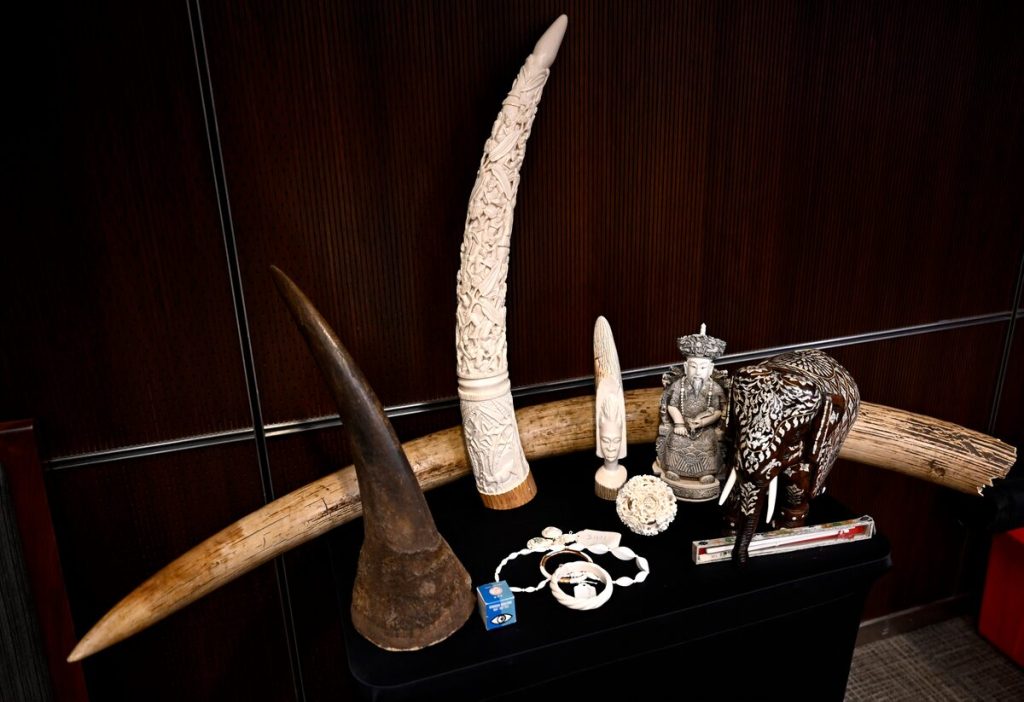
Minister Guilbeault announced the ban on the import of ivory from Elephant tusks and Rhino horns, including hunting trophies and articles carved from ivory, for which it is necessary to obtain a permit. Few exceptions are planned for museums and scientific research.
Elephant ivory and rhino horn imports have been banned by Ottawa
Tightening the laws
The law banning the captivity of great Apes and Elephants is part of a series of laws adopted to better protect animals in Canada and elsewhere in the world.
In 2019, Canada also banned the keeping of Whales and Dolphins in captivity.
WHAT YOU CAN DO TO HELP ANIMALS IN NEED
You can support our work by donating as little as £5 – It only takes a minute but it can last a lifetime for an animal in need.
Everyone who donates will receive a Certificate of Appreciation as a thank you for helping animals in need.
The Mission of Protect All Wildlife is to prevent cruelty and promote the welfare of ALL animals. We believe EVERY animal should be treated with respect, empathy, and understanding. We raise awareness to protect and conserve wild, captive, companion and farm animals.
It is vital that we protect animals against acts of cruelty, abuse, and neglect by enforcing established animal welfare laws and, when necessary, take action to ensure that those who abuse animals are brought to justice.
Protect All Wildlife are involved in many projects to protect animals’ rights, welfare, and habitats. Money contributed to Protect All Wildlife supports ALL of our worthy programmes and gives us the flexibility to respond to emerging needs. Your donations make our work possible.
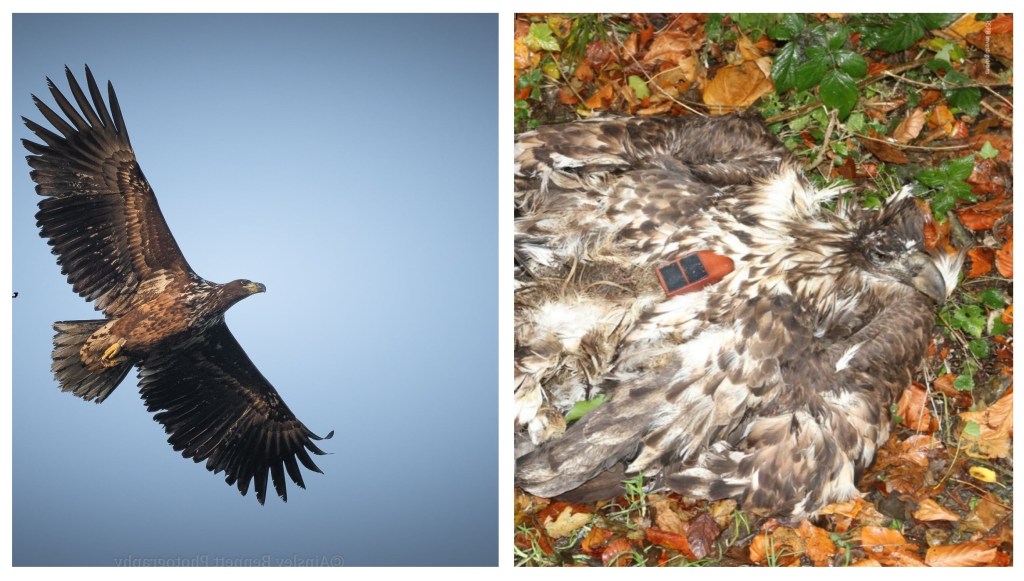
White-Tailed Eagle (G408) found poisoned on a pheasant shoot in West Sussex. Credit: RSPB
Press release from RSPB (24 November 2023):
Birdcrime report reveals Hen Harriers and White-Tailed Eagles amongst victims of continuing illegal persecution
*61 confirmed bird of prey persecution incidents nationally
·*At least 64% of all incidents are linked to land used for gamebird shooting
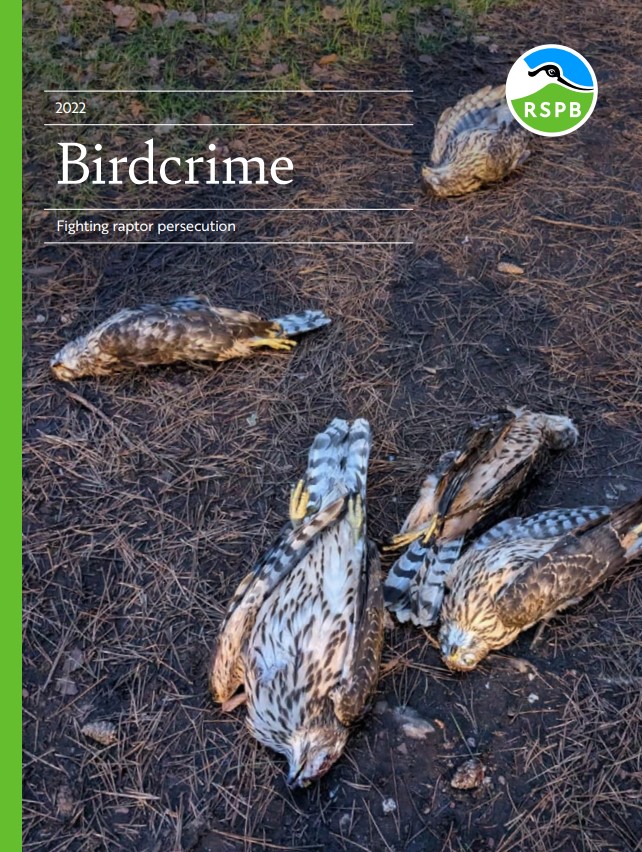
The RSPB’s annual RSPB BIRDCRIME REPORT published today details the illegal shooting, trapping and poisoning of protected birds of prey. Amongst the victims are Buzzards, Red Kites, Goshawks, Hen Harriers, Peregrine Falcons and White-Tailed Eagles. All these species are protected by laws designed to help our rarest and threatened species. There is clearly no place for such crimes against some of our best loved species.
The report documents that Hen Harriers, a red listed species, are being relentlessly targeted, particularly in areas dominated by driven grouse moors. Since January 2022, RSPB and Natural England data reveals that 39 Hen Harriers have been confirmed killed or have ‘suspiciously disappeared’ across the UK, with eight satellite-tagged birds being persecuted or disappearing in suspicious circumstances in the same area near Birkdale in North Yorkshire alone.
Two of the most shocking incidents recorded against Hen Harriers include a Natural England satellite-tagged bird called Free which had its head pulled off while still alive, and four Hen Harrier chicks that were trampled to death in a nest being monitored by Natural England. The report reveals that one RSPB tagged Hen Harrier named Dagda was found shot dead in May 2023 on a moor at Knarsdale, next door to the RSPB nature reserve at Geltsdale on which it was breeding. It is unknown who shot the bird, but the supporting tag data is clear in documenting where and when this incident took place. A recent peer-reviewed study by the RSPB found that survival of tagged Hen Harriers in the UK was very low, with birds living on average for only four months. As much as 75% of annual mortality of tagged birds was due to illegal killing associated with grouse moor management. If this relentless killing continues, the future of these rare and threatened birds remains at serious risk in the UK.
The report also highlights the significant case of a young White-Tailed Eagle from the UK Government licenced re-introduction scheme on the Isle of Wight, which was confirmed poisoned on a shooting estate in West Sussex. This was the first case of this species being illegally killed in England since their extinction due to persecution in the 18th Century. On the same estate, three days after the eagle died from ingesting a banned poison, a Labrador dog suffered the same fate after ingesting the same pesticide – Bendiocarb. Frustratingly the police investigation failed to hold anyone to account for these crimes.
The RSPB Birdcrime report exposes the relentless persecution of Birds of prey across the UK
There were two successful convictions for raptor persecution crimes in 2022, with both individuals being gamekeepers. Disappointingly, in one case, where multiple birds of prey were shot or poisoned – the gamekeeper received a 200-hour community order and was ordered to pay just £1,200 in fines, costs and compensation. As this case highlights, existing wildlife protection laws are failing to protect birds of prey, acting neither as a deterrent nor as an appropriate punishment for the crimes committed.
This latest report, alongside peer-reviewed papers, intelligence and data from wildlife crime incidents continues to affirm that raptor persecution is frequently linked to land managed for gamebird shooting. Evidence shows on some shooting estates birds of prey are deliberately targeted to reduce potential predation on gamebird stocks and sometimes also to reduce disturbance to these quarry species on shoot days. The RSPB continues to call for the licensing of grouse shooting in England, and following such measures now being introduced by the Scottish Government, to provide a meaningful deterrent to the illegal killing of birds of prey.
RSPB Chief Operating Officer, James Robinson said “Sadly, once again, the report documents the shameful illegal killing of rare and vulnerable birds of prey, an important part of our natural heritage. Given the correlation in location between birds of prey persecution and land under game management, the RSPB is calling for greater regulation of shooting, in particular intensive forms of grouse shooting. A Bill to introduce licensing of grouse moors in Scotland to stop raptor persecution is now moving ahead and we need a similar response in England”.
If you have information about anyone killing birds of prey which you wish to report anonymously, call the RSPB’s confidential Raptor Crime Hotline on 0300 999 0101.
WHAT YOU CAN DO TO HELP ANIMALS IN NEED
You can support our work by donating as little as £5 – It only takes a minute but it can last a lifetime for an animal in need.
Everyone who donates will receive a Certificate of Appreciation as a thank you for helping animals in need.
The Mission of Protect All Wildlife is to prevent cruelty and promote the welfare of ALL animals. We believe EVERY animal should be treated with respect, empathy, and understanding. We raise awareness to protect and conserve wild, captive, companion and farm animals.
It is vital that we protect animals against acts of cruelty, abuse, and neglect by enforcing established animal welfare laws and, when necessary, take action to ensure that those who abuse animals are brought to justice.
Protect All Wildlife are involved in many projects to protect animals’ rights, welfare, and habitats. Money contributed to Protect All Wildlife supports ALL of our worthy programmes and gives us the flexibility to respond to emerging needs. Your donations make our work possible.
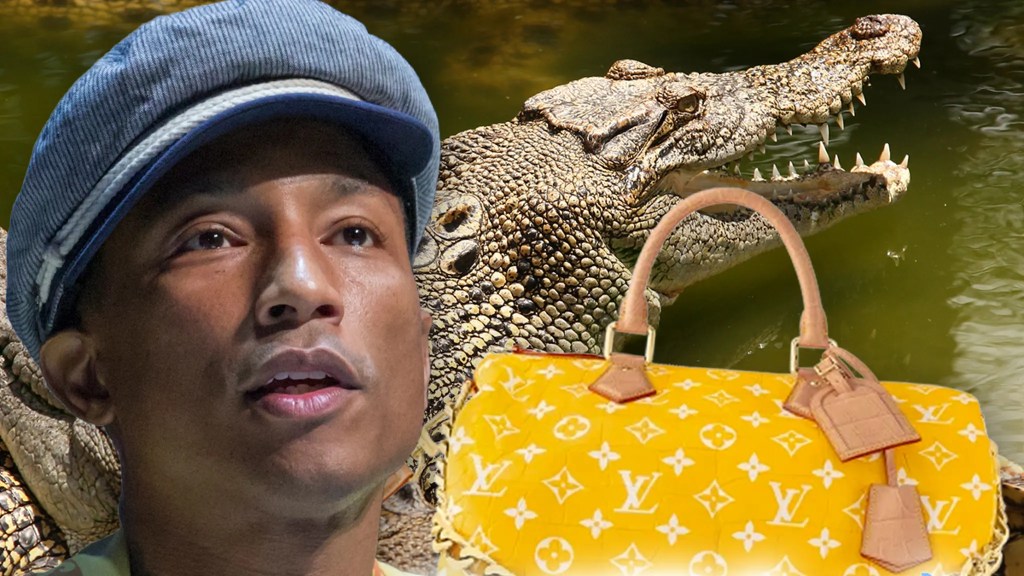
Earlier this year musician Pharrell Williams took on a new role as creative director at Louis Vuitton, and it seems that he has fully embraced the company ethos of ignoring animal cruelty for profit.
Every crocodile-skin handbag represents the hideously gruesome death of a sensitive animal. Credit: PETA
Pharrell has just launched a new Louis Vuitton bag that costs a million dollars and is made of crocodile skin. This bag is not only a symbol of the most grotesque, tone-deaf aspects of extreme wealth and privilege, it is also the product of the torture and death of innocent animals.
This embarrassing choice comes on the heels of Gucci, in partnership with ethical superstar Billie Eilish, announcing the release of their classic 1955 Horsebit bag made from a next-gen vegan leather, proving that high-fashion can and should change with the times. Meanwhile Louis Vuitton is stuck in the past ignoring compassion and common sense and completely missing the moment.
Pharrell Williams with the £1m bag made of crocodile skins
Every year, more than 30,000 crocodiles are violently killed in Vietnam just so that out of touch clothing brands like Louis Vuitton can use their skins to make wallets, shoes, and handbags. These helpless animals endure horrific living conditions crowded into small, barren, tanks and cages for months or even a few years before they are killed. Crocodiles can live for 60 years in the wild, but in the name of old-fashioned fashion they are killed before they even reach the age of two. These ancient, feeling, creatures often have their throats cut and their spinal cords severed but continue to remain conscious as they are skinned alive, suffering unimaginable agony.
Every year, more than 30,000 Crocodiles are killed for the fashion industry
Over 20 major fashion brands, including luxury designers like Chanel and Vivian Westwood have made the ethical decision to stop using exotic animal skins in their products, but Louis Vuitton continues to be on the wrong side of history and continues to profit off of the suffering and abuse of these animals.
Please Join Species Unite in letting Louis Vuitton know there is nothing luxurious or fashionable about animal cruelty.
Everyone who donates will receive a Certificate of Appreciation as a thank you for helping animals in need.
The Mission of Protect All Wildlife is to prevent cruelty and promote the welfare of ALL animals. We believe EVERY animal should be treated with respect, empathy, and understanding. We raise awareness to protect and conserve wild, captive, companion and farm animals.
It is vital that we protect animals against acts of cruelty, abuse, and neglect by enforcing established animal welfare laws and, when necessary, take action to ensure that those who abuse animals are brought to justice.
Protect All Wildlife are involved in many projects to protect animals’ rights, welfare, and habitats. Money contributed to Protect All Wildlife supports ALL of our worthy programmes and gives us the flexibility to respond to emerging needs. Your donations make our work possible.
South Korea aims to ban eating dog meat and put an end to the controversy over the ancient custom amid growing awareness of animal rights, a ruling party policy chief said on Friday.
The Korean practice of eating dog meat has drawn criticism from overseas for its cruelty but there has also been increasing opposition at home, particularly from the younger generation.
“It is time to put an end to social conflicts and controversies around dog meat consumption through the enactment of a special act to end it,” Yu Eui-dong, policy chief of the ruling People Power Party, said at a meeting with government officials and animal rights activists.
The government and ruling party would introduce a bill this year to enforce a ban, Yu said, adding that with expected bipartisan support, the bill should sail through parliament.
Agriculture Minister Chung Hwang-keun told the meeting the government would implement a ban quickly and provide the maximum possible support for those in the dog meat industry to close their businesses.
Rescue workers from Humane Society International rescue a dog at a dog meat farm in Wonju, South Korea. Credit: REUTERS/Kim Hong-Ji
First lady Kim Keon Hee has been a vocal critic of dog meat consumption and, along with her husband, President Yoon Suk Yeol, has adopted stray dogs.
Anti-dog meat bills have failed in the past because of protests by those involved in the industry, and worry about the livelihoods of farmers and restaurant owners.
The proposed ban will include a three-year grace period and financial support for businesses to transition out of the trade.
Eating dog meat has been an age-old practice on the Korean peninsula and is seen as a way to beat the summer heat.
But it is much less common than it used to be in South Korea, though it is still eaten by some older people and served in certain restaurants.
Animal rights groups welcomed the prospect of a ban. “A dream come true for all of us who have campaigned so hard to end this cruelty,” Humane Society International said in a statement.
There are about dog 1,150 breeding farms, 34 slaughter houses, 219 distribution companies, and some 1,600 restaurants serving dog, according to government data.
A Gallup Korea poll last year showed 64% opposed dog meat consumption. The survey found only 8% of respondents had eaten dog within the past year, down from 27% in 2015.
Reporting by Ju-min Park (Reuters).
WHAT YOU CAN DO TO HELP ANIMALS IN NEED
You can support our work by donating as little as £5 – It only takes a minute but it can last a lifetime for an animal in need.
Everyone who donates will receive a Certificate of Appreciation as a thank you for helping animals in need.
The Mission of Protect All Wildlife is to prevent cruelty and promote the welfare of ALL animals. We believe EVERY animal should be treated with respect, empathy, and understanding. We raise awareness to protect and conserve wild, captive, companion and farm animals.
It is vital that we protect animals against acts of cruelty, abuse, and neglect by enforcing established animal welfare laws and, when necessary, take action to ensure that those who abuse animals are brought to justice.
Protect All Wildlife are involved in many projects to protect animals’ rights, welfare, and habitats. Money contributed to Protect All Wildlife supports ALL of our worthy programmes and gives us the flexibility to respond to emerging needs. Your donations make our work possible.
Concerns have been raised that the science behind the killing is untenable, and that killing Wolves could lead to harmful behavior against humans.
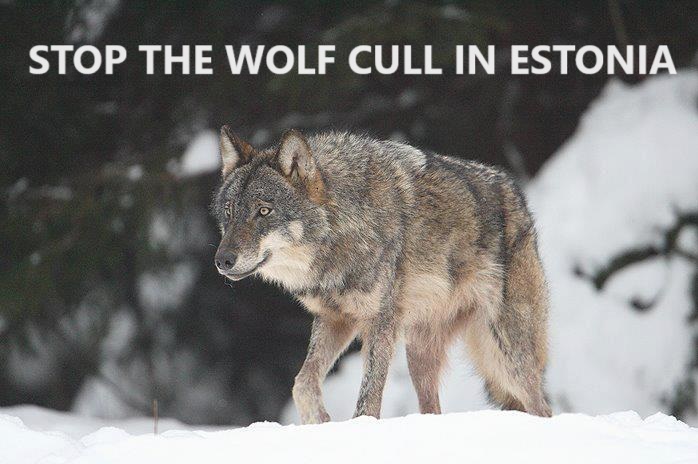
Estonia has once again begun culling its Wolf population.
A certain number of Wolves are killed every year in the Baltic country, although this time conservationists are worried.
Estonia’s environment agency has set the killing quota at 144, claiming there are more wolves in the country than conservation plans allow.
However, Wolf researcher Maris Hindrikson at the University of Tartu told Euronews that he and fellow scientists are “not convinced” about their data.
She claims that Wolf populations are being counted based on “old-fashioned” and “messy” techniques – such as hunter observations – that may not accurately reflect their numbers.
This means that the killing quota may be much higher, given the already threatened speciesunder even more strain.
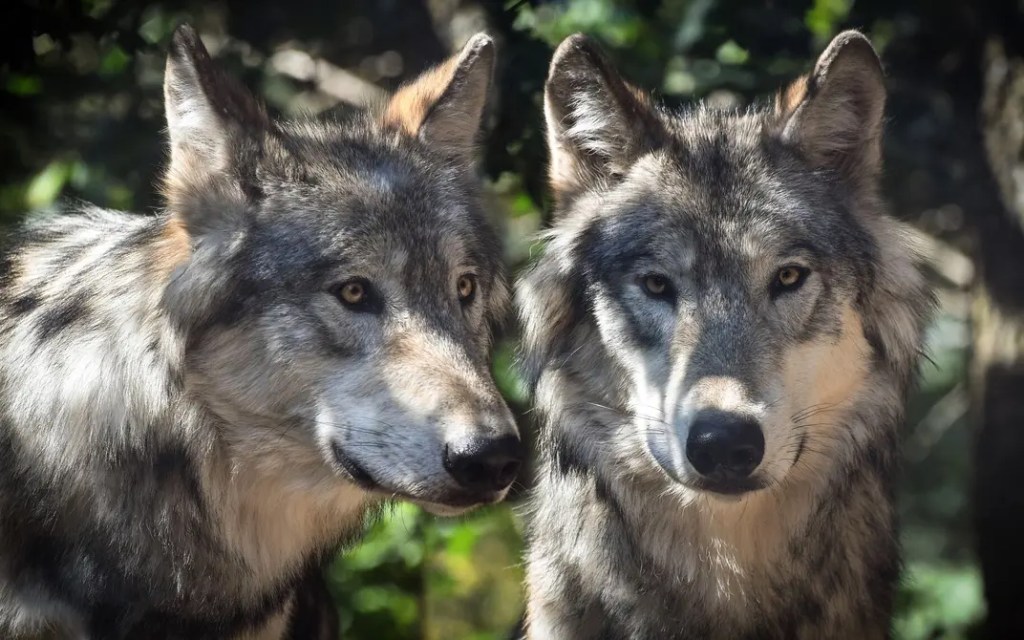
A pair of Estonian Gray Wolves
“The problem is we don’t know how many Wolves there are,” Hindrickson says, estimating that the cull could wipe out 30 percent to 50 percent of the country’s entire Wolf population.
In a statement sent to Euronews, the Estonian Environment Agency said its “method was in use in Nordic countries such as Sweden, Finland and Norway.”
“We find the current methodology comprehensive, objective and reasonable,” he said.
Even though Wolf numbers have recovered in recent years, their total number is considered “stable/decreasing” by the International Wolf Centre. Estimates put their total population at between 150 – 300 in Estonia.
Officials claim their culling is necessary because Wolves attack livestock, especially sheep, causing economic losses to the country’s farmers.
According to the Environmental Board of Estonia (Keskonamet), a total of 946 sheep were killed by predatory Wolves in 2022.
It said the figure has crossed 1,100 this year, with several weeks left for 2023.
One particularly grizzly attack at a farm in southeastern Tartu County killed an entire breeding flock of more than a dozen ewes in October, with farmer Rein Mirka telling Estonian Public Broadcasting (ERR) the incident had cost him between €15,000 to €20,000.
Hindrickson still questions whether killing is the best approach to the problem. “Science has always shown that culling doesn’t actually help reduce sheep deaths”.
As habitats are destroyed – limiting available food resources – Hindrickson claims lethal solutions could be counterproductive, driving Wolves to prey on livestock in the first place.
Killing is a really big problem because it destroys herds. Wolves are very social animals and we know that large packs hunt larger animals such as deer. But generally, small herds seek out smaller prey because they cannot develop cooperative methods of hunting,” she explains.
The researcher says another problem is that when older Wolves are killed younger Wolves do not experience and learn more complex hunting strategies, meaning they resort to eating livestock. . Hindrickson likens it to “fast food” for wolves.
“What I’m against is killing that kills a lot of wolves. We don’t really know how many wolves we have and what impact actually killing them has. It seems like they create a pattern Where we kill so many wolves, they affect how the herds are structured, they go after the sheep, then sheep attacks increase. So then people say yes, sheep are in danger. Please more wolves. kill.
“It’s a continuous cycle,” she adds.
A Wolf killed in a previous cull.
Better alternatives Hindrikson proposes are “ensuring adequate numbers of natural prey in the wild”, such as Deer and Wild Boar, and taking steps to deter Wolves.
“Farmers should build more fences and get guard dogs to scare off Wolves. This is something that has worked all over Europe. We get news of a sheep attack, but often farmers haven’t prevented a thing. We always blame the Wolves, it is easy, but actually, people do everything.
“Prevention and making society understand where this problem comes from and how to mitigate it are very important,” she continues.
Bizarrely, in 2018 Estonia chose the Wolf as their national animal and symbol of Estonian nature and culture.
WHAT YOU CAN DO TO HELP ANIMALS IN NEED
You can support our work by donating as little as £5 – It only takes a minute but it can last a lifetime for an animal in need.
Everyone who donates will receive a Certificate of Appreciation as a thank you for helping animals in need.
The Mission of Protect All Wildlife is to prevent cruelty and promote the welfare of ALL animals. We believe EVERY animal should be treated with respect, empathy, and understanding. We raise awareness to protect and conserve wild, captive, companion and farm animals.
It is vital that we protect animals against acts of cruelty, abuse, and neglect by enforcing established animal welfare laws and, when necessary, take action to ensure that those who abuse animals are brought to justice.
Protect All Wildlife are involved in many projects to protect animals’ rights, welfare, and habitats. Money contributed to Protect All Wildlife supports ALL of our worthy programmes and gives us the flexibility to respond to emerging needs. Your donations make our work possible.
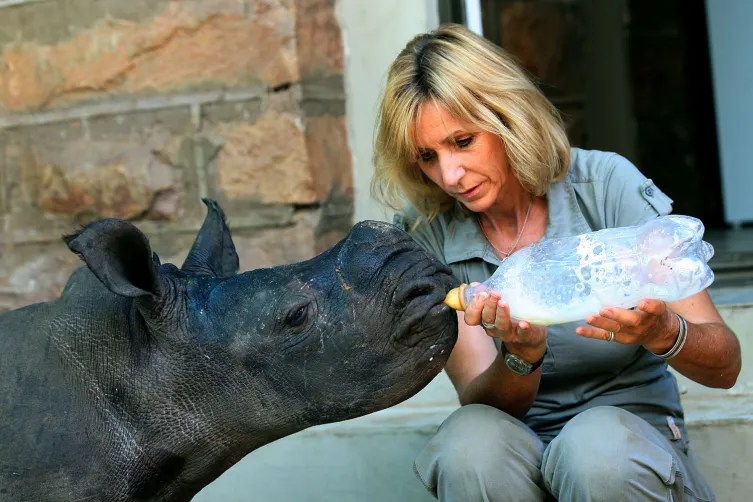
As the number of Rhinos killed by poachers keep rising and more traumatized orphaned calves are in need of care, Kirsten Everett, a volunteer at Nikela, takes us on a touching journey as she looks at the horrors of a poacher attack though the eyes of a young Rhino calf.
LIMPOPO, SOUTH AFRICA: Karen Trendler cares for Ntombi, a two-month old White Rhino. Ntombi survived a brutal attack, when poachers killed her mother earlier in the week. She sustained severe head injuries and was cared for in a rhino orphanage. Credit: Kevin Sutherland.
“My mother and I were contently filling our hungry stomachs when we heard a strange noise. I carried on eating but she smelt the air for unknown scents. I saw the terrified look in her eye before she managed to control it; the unnatural smell meant something. A few minutes later we heard the ‘whop, whop’ of a metal monster flying closer towards us. Just when my mother focussed on it the men crept out of the bushes with a crunch of sticks. Something seemed to hit her and she grunted in surprise. The birds abandoned their posts heading away from the danger. I stood helplessly as she tried to run but ended up falling to the ground. The men surrounded her and tried to chase me away. I ran forward scared enough to not care about the men as they had done something to my mother, I needed her and they must go away.
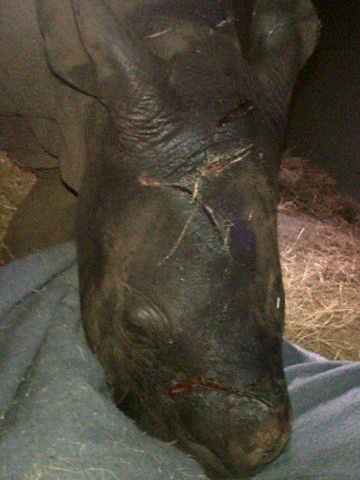
Out of nowhere one of the big men spun on me and hit me hard with something sharp. Blood oozed from my wound as my mother answered my cry for help with a weak beg, ‘Away, away’. I backed away nursing my wound, how could I get to her?? She grunted again so I didn’t give up. I ran forward again but this time the angry man was merciless, determined to get his message across. As quietly as possible I took the cuts to my poor head trying not to worry my mother even more.
Confused I backed away into the bushes calling to her to get up, but the eerie silence dragged on and she didn’t move a muscle. Fear glued me to the floor as I felt my young heart pulsing with anger and fear. A breeze blew, as I waited for the monsters to go so I could go to my poor mommy and find out what was wrong. My heart skipped a beat when I realised this was what my cousin had gone through only a full moon ago. It was terrible, my body couldn’t stop shaking and I couldn’t think clearly, I felt lightheaded from all my blood loss.
Finally when the monsters left I ran to her side, ‘Mom wake up.’ My voice cracked with emotion but still she didn’t respond. I took a step back and saw the pool of blood. Her horn had been brutally cut off and she lay lifeless. Above me a crow flew over.
I turned to run then I asked myself some important questions… where would I go? I wasn’t old enough to know the way to the dam yet. Who would protect me from predators? The truth was that I wasn’t strong enough to survive by myself yet. Would I be with my mother in the sky sooner than I thought? The last question scared me the most; out in the wild without my mother I might just be able to survive a week.
I heard the snap of a twig, I wasn’t alone. This time I didn’t have the strength to care what these humans wanted with me. I collapsed and slept for a few hours. I was almost completely unconscious though I sensed kindness near me. Too traumatised to do anything I lay as they treated my wounds. The people who tried to comfort me planted a seed of hope. Hope that I could survive and hope that the rest of the human race would come to its senses and help my species and all the others out there”.
Let’s stop the babies’ cries! Let’s Save The Last Rhin0!
Written by Kirsten Everett. Based loosely on the story of “Ntombi” who was rescued by Karen Trendler and her team.
Ntombi bears the poacher’s scars
WHAT YOU CAN DO TO HELP ANIMALS IN NEED
You can support our work by donating as little as £5 – It only takes a minute but it can last a lifetime for an animal in need.
Everyone who donates will receive a Certificate of Appreciation as a thank you for helping animals in need.
The Mission of Protect All Wildlife is to prevent cruelty and promote the welfare of ALL animals. We believe EVERY animal should be treated with respect, empathy, and understanding. We raise awareness to protect and conserve wild, captive, companion and farm animals.
It is vital that we protect animals against acts of cruelty, abuse, and neglect by enforcing established animal welfare laws and, when necessary, take action to ensure that those who abuse animals are brought to justice.
Protect All Wildlife are involved in many projects to protect animals’ rights, welfare, and habitats. Money contributed to Protect All Wildlife supports ALL of our worthy programmes and gives us the flexibility to respond to emerging needs. Your donations make our work possible.
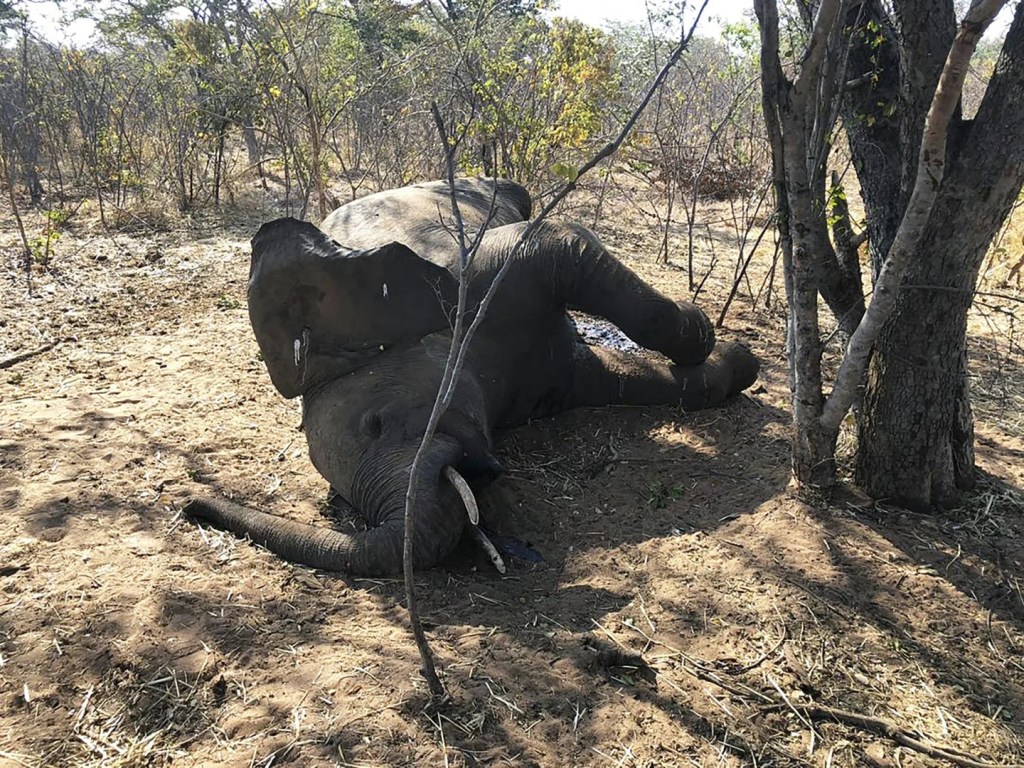
A dead Elephant found in Hwange National Park, Zimbabwe, Aug. 29, 2020. Credit: AP Photo
Elephants that dropped dead in Zimbabwe were victims of an obscure bacteria combined with extreme heat. Scientists fear more Elephants – and other species – could suffer the same fate
No one knew precisely what caused the unexplained tragedy in which 35 African Elephants in Zimbabwe mysteriously dropped dead in August/September 2020.
This incident followed the death of approximately 350 Elephants in neighbouring northern Botswana from May to June 2020, which triggered much international concern.
Aerial views of of some of the Elephants that were been found dead in Botswana Credit: National Park Rescue
At first, anthrax was a possible contender, along with poaching or intentional poisoning, but they were all ruled out early on.
Three years later, a new study by a group of scientists has found that a rare bacterium that causes organ inflammation is responsible for the Elephants’ untimely deaths.
A variant of the Pasteurella bacteria, namedBisgaard taxon 45,was identified by the scientists in their study of samples from six of 15 dead Elephants that they analysed.
This variant of this bacteria showed up in their sample, making the scientists conclude that the Elephants died from the lethal infection.
At first, scientists reviewed the possibility of Pasteurella multocida, which is known to cause hemorrhagic septicemia, a common disease amongst cattle and buffaloes that is highly fatal.
However, after further testing, they found that the findings were more complicated than thought.
“It became clear from the culture samples that we did not have P. multocida but something else similar,” Laura Rosen, an epistemologist who worked on the study, said, according to Science News.
While samples from the other elephants were not obtained due to rotting or not being able to get permits quick enough, six of the samples they did get showed this rare bacteria.
Little is known about this bacteria, as a few rare cases have only been documented so far.
The study cites that Bisgaard taxon 45 has in the past been linked to bite wounds on humans from tigers and lions.
It was also previously found in a chipmunk and a captive health parrot.
However, the researchers suspect this is not the first time that an outbreak of the disease has caused mass fatalities within Elephants.
In 2019, 14 Elephants were found dead in Zimbabwe within the same time period as this group was a year later.
While no bacterial samples were taken at the time, the noted conditions of the deceased animals were similar to those of the 2020 group.
It is unclear what caused this bacteria to enter the Elephants’ body, whether it is part of its “normal flora,” but the researchers believe that stress and heat would have contributed to the outbreak.
“It’s premature to say that climate change has influenced [this], but it may do so in future if we get more and prolonged droughts, or the rainfall patterns [change] and we have a much harsher dry season,” Dr Chris Foggin, a researcher on the study said.
“I do think that if that is the case, then we are more likely to see this sort of mortality event occurring again.”
This study is essential for organisations that seek to conserve these Elephants, who are already an endangered species.
Earlier that same year, around 350 Elephants dropped dead within the space of three months in neighbouring Botswana.
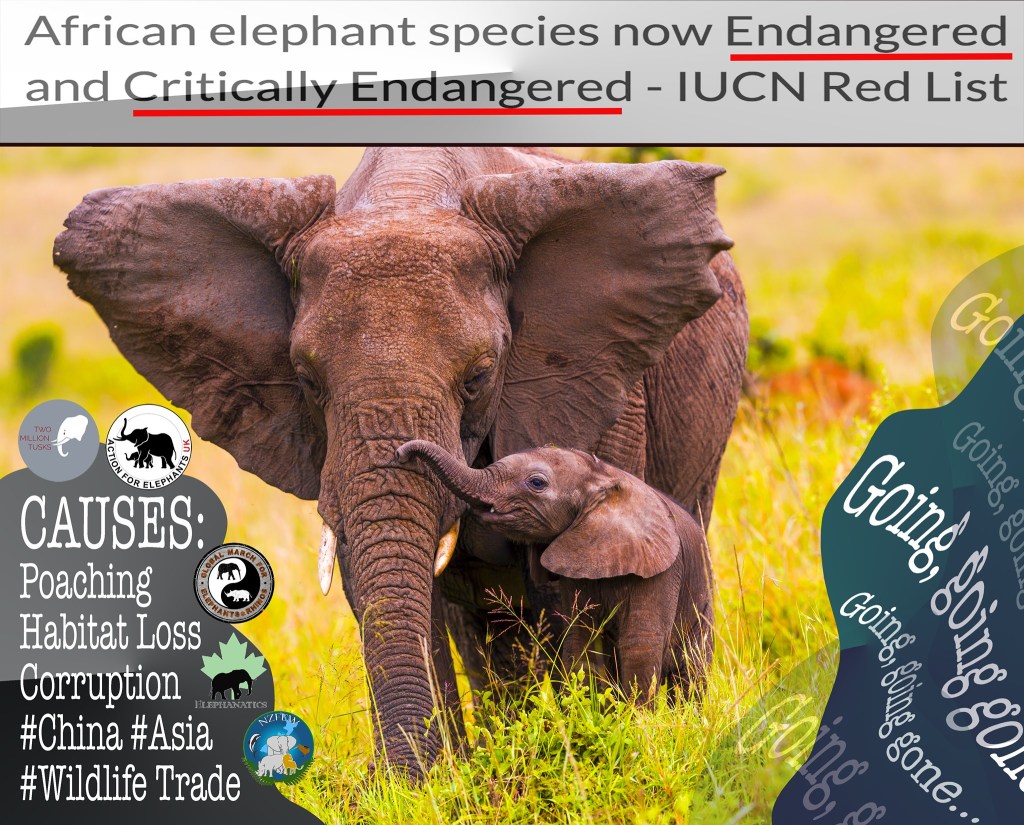
African Elephants are listed as endangered on the IUCN Red List. Credit: GMFER
According to the World Elephant Day organization, Elephant numbers have dropped by 62% over the last decade. They estimate that 100 African Elephantsare killed each day by poachers.
WHAT YOU CAN DO TO HELP ANIMALS IN NEED
You can support our work by donating as little as £5 – It only takes a minute but it can last a lifetime for an animal in need.
Everyone who donates will receive a Certificate of Appreciation as a thank you for helping animals in need.
The Mission of Protect All Wildlife is to prevent cruelty and promote the welfare of ALL animals.
We believe EVERY animal should be treated with respect, empathy, and understanding. We raise awareness to protect and conserve wild, captive, companion and farm animals.
It is vital that we protect animals against acts of cruelty, abuse, and neglect by enforcing established animal welfare laws and, when necessary, take action to ensure that those who abuse animals are brought to justice.
Protect All Wildlife are involved in many projects to protect animals’ rights, welfare, and habitats. Money contributed to Protect All Wildlife supports ALL of our worthy programmes and gives us the flexibility to respond to emerging needs. Your donations make our work possible.
An Abrupt End To The Jumbo Life Of Iconic Bull Elephant Edison.
Edison in Samburu National Reserve Credit: Alice Clark/Save the Elephants
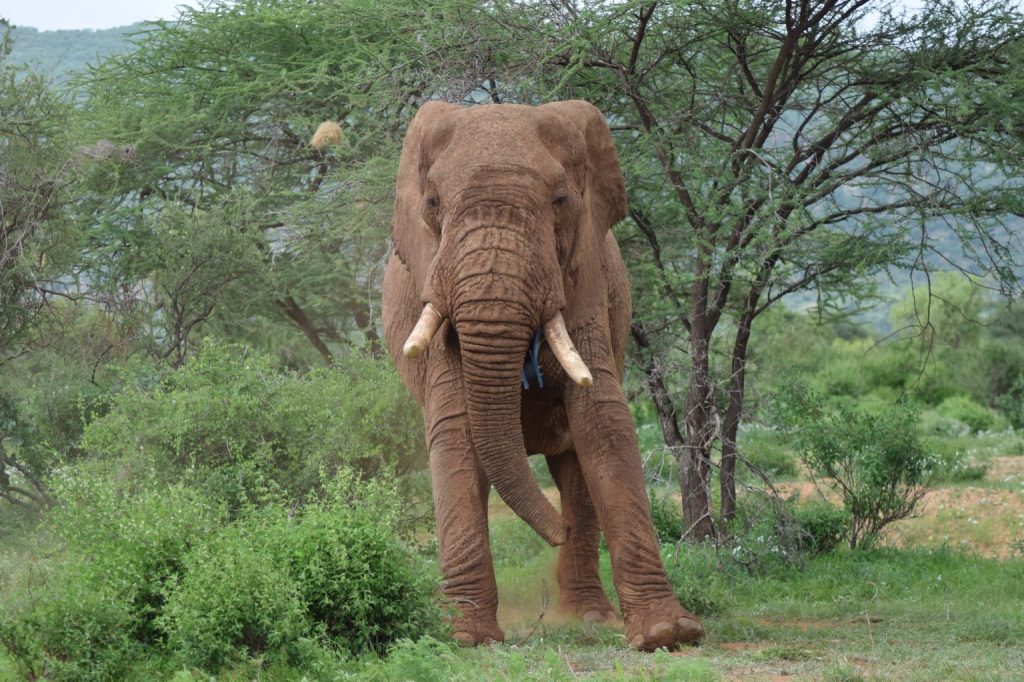
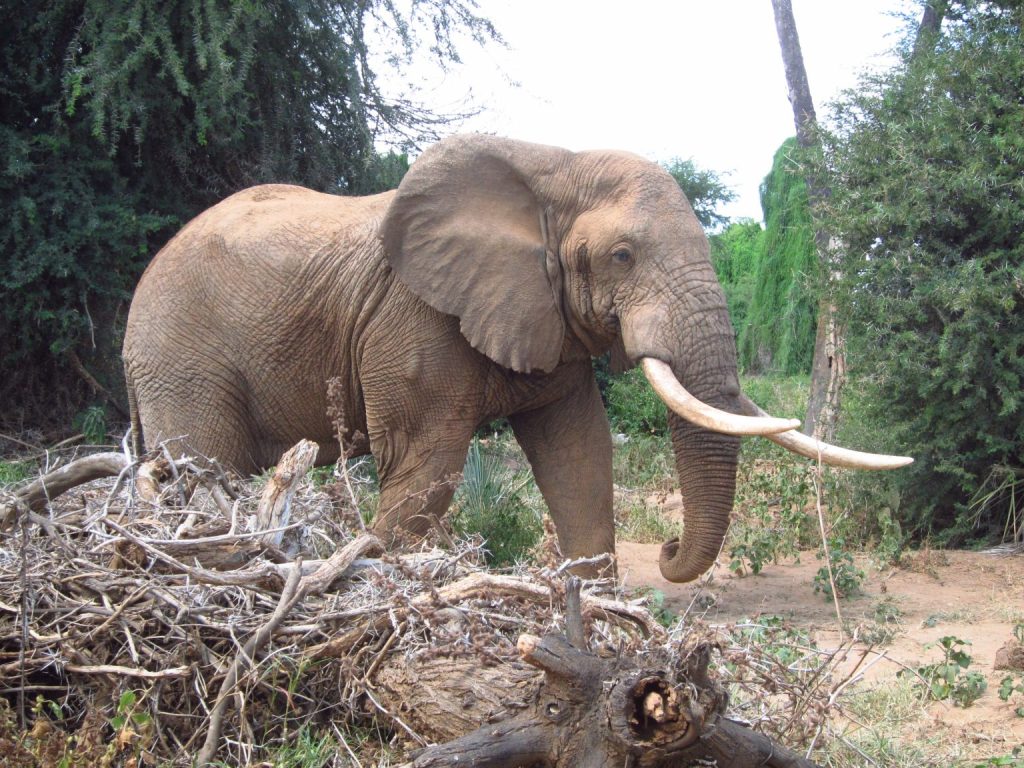
We are deeply saddened to report that one of our best-known and most beloved bull Elephants, Edison, has died. Edison’s carcass was found in Westgate Conservancy in Samburu, northern Kenya. We suspect his untimely death could be yet another tragic outcome of the rising cases of Human-Elephant Conflict (HEC) across Africa. Investigations into the cause of death are still continuing. Edison’s death marks the third loss of one of our Samburu study bull Elephants within the span of just under a year. In December, bull Elephants Sarara and Yeagar were both killed in conflict with herders.
Matt, Samburu’s biggest tusker, who faced off with Edison in Samburu National Reserve, Credit: Sarah Jacobson/Save the Elephants
Edison was estimated to be approximately 37 years old and in the prime of his life at the time of his death. Born into the Royals family and known to our researchers since he was a teenager, Edison was a feisty wild bull and quite the mama’s boy too. Most bulls venture out for a life of their own when they are around 10-12 years old but when Edison dispersed, he kept coming back to visit his family on and off for the next couple of years.
Edison’s fearless, spirited nature was well-known to many. He was never one to shy away from confrontation, even challenging older and much larger bull Elephants like the late Matt – then Samburu’s biggest tusker who died in 2019. During one dramatic stand-off between the two-testosterone-fueled bulls in 2016, Save the Elephants’ founder, Iain Douglas-Hamilton, got caught in the middle and found himself face to face with Edison who charged his vehicle.
Save the Elephants has been observing and studying the lives of Elephants for more than three decades, gaining fundamental insights into how they behave and make decisions. By analysing the data from Edison’s GPS tracking collar, STE researchers were surprised to discover that while this adventurous bull spent much of his time travelling north to far flung places such as Kipsing, Westgate, Kalama and Ol Donyiro, he would always return home to Samburu National Reserve at full speed when in musth to find mates.
Edison was collared by our team multiple times after his collar either dropped off or the batteries ran out – GPS collars only have a lifespan of around three years. While most collaring operations proceed without a hitch, there’s one incident which is forever etched in our minds.
Our Director of Field Operations, David Daballen, remembers running for the hills during one particular collaring mission when Edison, an enormous bull by then, suddenly awoke just as he was about to be fitted with the tracking device. The whole team, including the vet, had to abandon what they were doing and run for safety. It turned out that the anaesthesia hadn’t fully kicked in and Edison had momentarily woken up. Fortunately , Edison dropped back to sleep and the team were able to complete the mission successfully.
Edison’s last collaring in April 2023 was just as nail biting. Edison went down on his chest, the worst position for an Elephant to be in as they risk suffocating. This time, the STE collaring team were able to push him onto his side and he was again successfully fitted with his new collar.
STE researchers, including David Daballen (below in this picture ) recollaring Edison in Samburu National Reserve in April 2023. Credit: Gilbert Sabinga/Save the Elephants
Says David Daballen, “Losing Elephants like Edison, whom we’ve observed throughout their entire lives, is always a profound loss. Their actions and interactions offer valuable insights into Elephant society. By closely tracking and monitoring these intelligent beings, we also gain a deeper understanding of their distinct personalities and characteristics. Edison, in particular, was a bold, maybe even an audacious Elephant, unafraid to assert himself, as demonstrated when he once challenged the venerable Elephant elder, Matt. We will sorely miss his presence in the reserve and following his remarkable adventures.”
Watch the epic confrontation between Edison and Matt below.



 The study, published in the journal Current Biology, finds that a nuclear disaster may be less threatening to wildlife than habitation, reports
  These results demonstrate for the first time that, regardless of potential radiation effects on individual animals, the Chernobyl exclusion zone supports an abundant mammal community after nearly three decades of chronic radiation.
 The study shows that the numbers of wildlife are “much higher than they were before the accident,” according to
 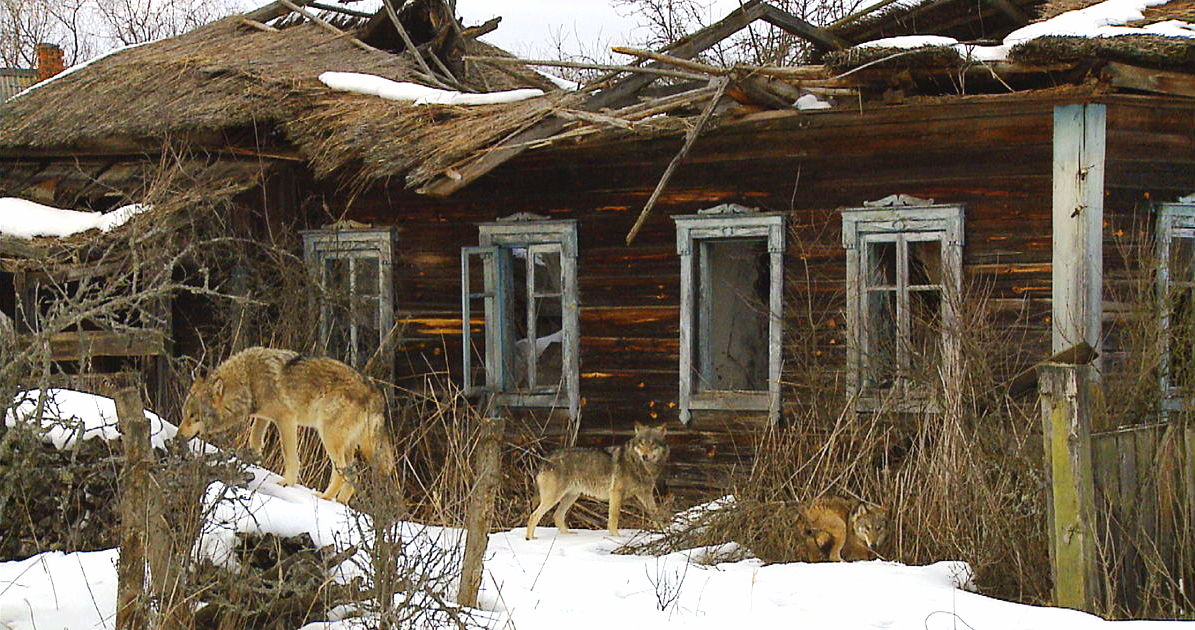 Most surprising was the number of wolves in the exclusion zone – up to seven times higher than the number on nature reserves of a similar size. Smith attributes this to the lack of hunting – and humans – in the area.











 PROTECT ALL WILDLIFE