Jailed Poacher Sentenced For Killing Second Skukuza Rhino

A Mozambican national serving a prison sentence for Rhino poaching has been slapped with another lengthy jail term after being convicted of killing a second Rhino in the Skukuza National Park.

Convicted poacher Lucky Mabunda

The National Prosecuting Authority said 47-year-old Lucky Mabunda, was sentenced in the town’s  Regional Court on Thursday to ten years direct imprisonment.

NPA spokesperson, Monica Nyuswa, said he was already serving a 19-year jail term for Rhino poaching and was convicted and sentenced for the second incident in 2019.

She said the court heard that Mabunda had entered the Skukuza National Park between February and September 2019. Field Rangers were patrolling and found the accused in possession of a firearm, axe, ammunition, and other items geared for hunting. They also found the carcasses of two Rhinos.

Nyuswa said he pleaded guilty to killing one rhino, before ballistic evidence taken from the Rhino killed in February, later provided the link back to him.

“It confirmed that the bullets found on the carcass were fired from the rifle found in the accused’s possession,” she said.

State prosecutor Lot Mgiba underscored the gravity of the offense, advocating for an appropriate sentence in court.

Consequently, the accused was found guilty and received a ten-year jail term. The importance of such legal actions in combating poaching, which poses a severe threat to endangered species and the potential for species extinction, was highlighted by Director of Public Prosecutions Advocate Nkebe Kanyane.

SANParks spokesperson, Ike Phaahla, says they welcome the sentence.

“We are elated at the sentencing, which is in addition to the 18 years he has already served since he was found inside the park. In this instance, a projectile was discovered next to the carcass and taken for ballistics. They came back pointing towards the accused, and he was requisitioned from the Department of Correctional Services to get an additional 10-year sentence. It’s a well-known fact that we still have people who, around this time, want to come in, but we want to warn them that Kruger National Park is a dangerous place to come.”

Kruger has lost 70% of ITS Rhinos in 10 years
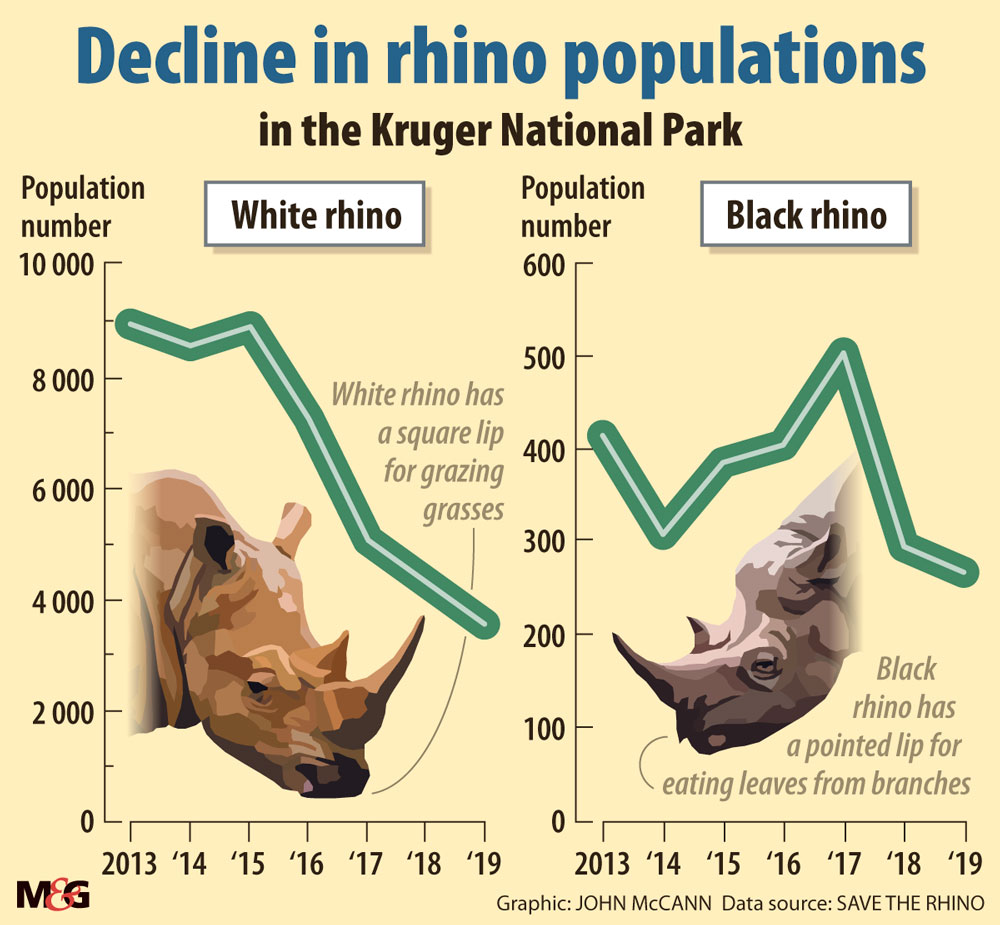
The Decline In Rhino Populations In KNP Graph: Save The Rhino

Rhino populations in the Kruger National Park have dropped by about 70% in the past decade because of the onslaught of poaching and prolonged drought. In its 2019-20 annual report, SANParks said that only about 3 549 White Rhinos and 268 Black Rhinos remain in the Kruger.

The environment department said poachers killing cows also ultimately kill dependent calves and cause future loss of calves — this effect equates to an additional five rhinos lost to the population per loss of one cow, now and in future. “Poaching also causes factors such as social disruption of Black Rhino societies. Cows then conceive less often.”

WHAT YOU CAN DO TO HELP ANIMALS IN NEED

You can support our work by donating as little as £5 – It only takes a minute but it can last a lifetime for an animal in need.

PLEASE DONATE HERE

Everyone who donates will receive a Certificate of Appreciation as a thank you for helping animals in need.

The Mission of Protect All Wildlife is to prevent cruelty and promote the welfare of ALL animals.

We believe EVERY animal should be treated with respect, empathy, and understanding. We raise awareness to protect and conserve wild, captive, companion and farm animals.

It is vital that we protect animals against acts of cruelty, abuse, and neglect by enforcing established animal welfare laws and, when necessary, take action to ensure that those who abuse animals are brought to justice.

Protect All Wildlife are involved in many projects to protect animals’ rights, welfare, and habitats. Money contributed to Protect All Wildlife supports ALL of our worthy programmes and gives us the flexibility to respond to emerging needs. Your donations make our work possible.
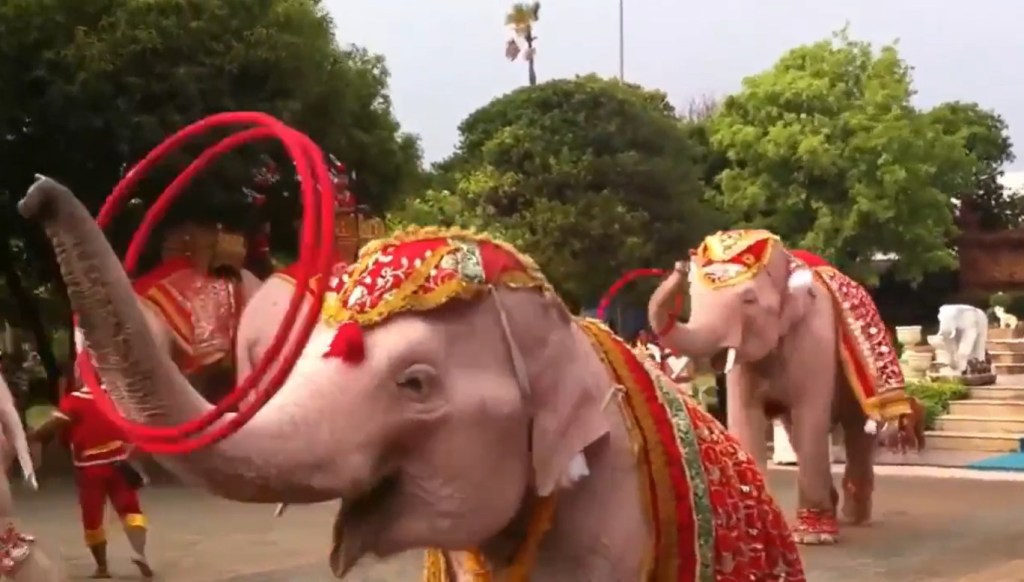
Chained, Beaten, Whipped And Exploited Like Slaves: The Hidden Horrors Meted Out To Thailand’s Performing Elephants

When you pay they suffer!

They are the country’s icon – but behind the dazzle of religious festivals and tourist ‘attractions’, these giants of the wild are painfully abused in Thailand.

Some Elephants in Thailand are captured from the wild or bred in captivity and then forced to perform like monkeys to humans for the rest of their lives. When small they are beaten with sticks until they are broken, like a horse, or else they would not do what the humans tell them.

When small they are beaten with sticks until they are broken.

When they are not performing they are shackled in chains and when they come into heat or ‘musk’ they are re-beaten again to make them tame – THIS IS THE REALITY of your trip to see the Elephants in Thailand! Please do not support captive Elephants and only visit the ones that are free and not shackled – humans paying these people only make this continue – if we cut our money off, they will not continue doing this.

ALL temple Elephants are shackled and beaten – do not be tricked into thinking they are not.

When You Buy A Ticket They Suffer

I WILL STAND UP AND NOT BE AFRAID

I will stand up and not be afraid Of those who ask why I share the Elephants suffering And show them on video coloured pink

I do it, Not because I support what I see I do it, Not to encourage you to go I do it, Not so you find the link To the website advertising such horror shows

I do it, To remind those that have a life That many who walk amongst us Are suffering at the hands of man Because humans say they can As there is no law to fight And animals have no rights

I do it, So the voiceless will be heard. I do it, To show you that it it is wrong of man To sink so low as to abuse these magnificent beasts So you may feast Upon the evil show Now you know.

Sadly, the person clapping knows The Elephants do not love these shows These Elephants are forced to perform for your enjoyment They have been abused since very young With bull hooks and chains To force them to obey A command by the human, Which destroys their natural ways And makes them servants of man

I call the Elephants slaves to its mahout Because they cannot call a halt to the video shoot Because they cannot escape the  strife That is their life.

Rachel Bose.

WHAT YOU CAN DO TO HELP ANIMALS IN NEED

You can support our work by donating as little as £5 – It only takes a minute but it can last a lifetime for an animal in need.

PLEASE DONATE HERE

Everyone who donates will receive a Certificate of Appreciation as a thank you for helping animals in need.

The Mission of Protect All Wildlife is to prevent cruelty and promote the welfare of ALL animals.

We believe EVERY animal should be treated with respect, empathy, and understanding. We raise awareness to protect and conserve wild, captive, companion and farm animals.

It is vital that we protect animals against acts of cruelty, abuse, and neglect by enforcing established animal welfare laws and, when necessary, take action to ensure that those who abuse animals are brought to justice.

Protect All Wildlife are involved in many projects to protect animals’ rights, welfare, and habitats. Money contributed to Protect All Wildlife supports ALL of our worthy programmes and gives us the flexibility to respond to emerging needs. Your donations make our work possible.
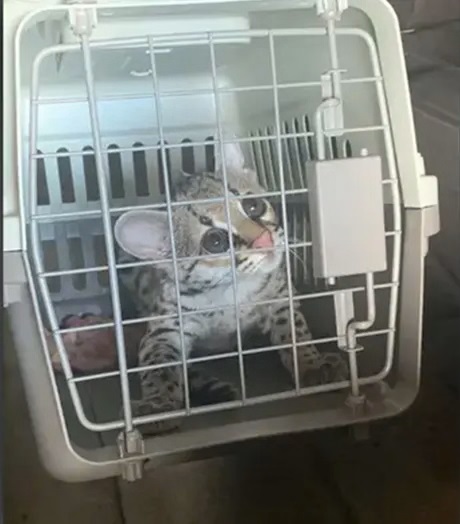
Undercover Texas Jaguar Cub Sting Results In Country’s First Charges Under ‘Big Cat Act’

A Texas couple was arrested for selling protected wildlife, marking the first case in the U.S. filed under The Big Cat Act.

On Wednesday, 29-year-old Rafael Gutierrez-Galvan and his wife Deyanira Garza, 28, had their initial court appearances in McAllen, as U.S. Attorney Alamdar S. Hamdani announced.

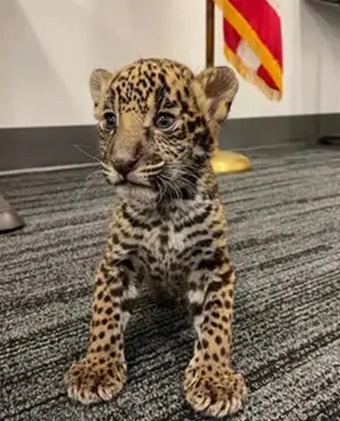
Based on the criminal complaint, Gutierrez-Galvan was accused of selling a Margay cub for $7,500 in a parking lot of a local Academy Sports and Outdoors on Aug. 24. Later on Sept. 26, he tried to sell a Jaguar cub to the same buyer. He instructed his wife to bring a case filled with cash from their home to the meeting point. However, the police stopped her on the way and found the money.

According to the criminal complaint, Rafael Gutierrez-Galvan tried to sell this Jaguar cub. Credit: JUSTICE DEPARTMENT

Neither Gutierrez-Galvan or Garza possess a license to buy, sell, trade or transport exotic animals such as Margays and Jaguars, federal authorities said.

In December 2022, the Big Cat Act was put into effect, which made it illegal to import, transport, sell or possess any wildlife species that are prohibited. This includes Jaguars, which are considered a prohibited species. 

The rescued Margay cub. Credit: JUSTICE DEPARTMENT

Gutierrez-Galvan and Garza face up to five years in federal prison and a possible $20,000 maximum fine if convicted.

Authorities said they were able to recover both animals in the case.

WHAT YOU CAN DO TO HELP ANIMALS IN NEED

You can support our work by donating as little as £5 – It only takes a minute but it can last a lifetime for an animal in need.

PLEASE DONATE HERE

Everyone who donates will receive a Certificate of Appreciation as a thank you for helping animals in need.

The Mission of Protect All Wildlife is to prevent cruelty and promote the welfare of ALL animals.

We believe EVERY animal should be treated with respect, empathy, and understanding. We raise awareness to protect and conserve wild, captive, companion and farm animals.

It is vital that we protect animals against acts of cruelty, abuse, and neglect by enforcing established animal welfare laws and, when necessary, take action to ensure that those who abuse animals are brought to justice.

Protect All Wildlife are involved in many projects to protect animals’ rights, welfare, and habitats. Money contributed to Protect All Wildlife supports ALL of our worthy programmes and gives us the flexibility to respond to emerging needs. Your donations make our work possible.
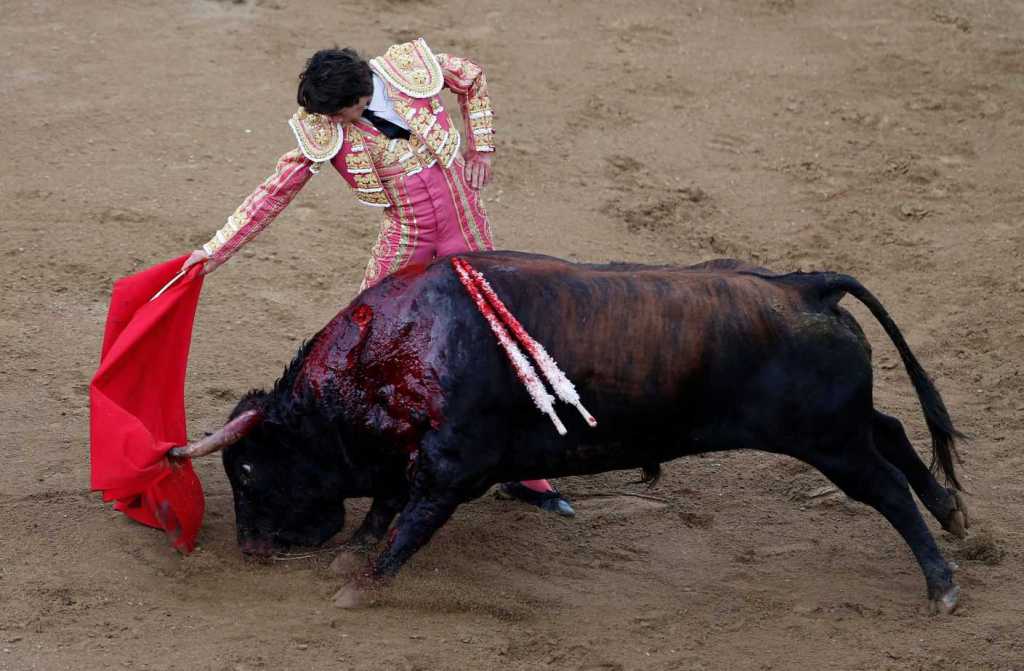
A New Spanish Law Strengthens Animal Rights But Was There Any Point When They Exempt Bullfighting And Hunting With Dogs – The Two Most Important Animal Welfare Issues!

A new animal welfare law in Spain outlaws the use of animals for recreational activities that cause them pain and suffering but allows bullfights and hunting with dogs.

A new animal welfare law in Spain outlaws the use of animals for recreational activities that cause them pain and suffering – but allows bullfights and hunting with dogs.

Spain’s first specific animal rights legislation, which came into force on Friday, is intended to crack down on abuses.

The law particularly targets the mistreatment of domestic animals, introducing fines of up to 200,000 euro (£173,000).

It bans the buying of pets in stores or online, but gives stores a grace period to find homes for their animals.

Bullfights are regarded as part of Spain’s cultural heritage. A proposal to include hunting dogs in the law prompted an outcry in some rural communities, and the government backed down.

Editors Note: The new animal welfare law in Spain outlaws the use of animals for recreational activities that cause them pain and suffering – SURELY bullfighting and hunting with dogs is a recreational activity!!!

WHAT YOU CAN DO TO HELP ANIMALS IN NEED

You can support our work by donating as little as £5 – It only takes a minute but it can last a lifetime for an animal in need. Please donate below.
Everyone who donates will receive a Certificate of Appreciation as a thank you for helping animals in need.

The Mission of Protect All Wildlife is to prevent cruelty and promote the welfare of ALL animals.

We believe EVERY animal should be treated with respect, empathy, and understanding. We raise awareness to protect and conserve wild, captive, companion and farm animals.

It is vital that we protect animals against acts of cruelty, abuse, and neglect by enforcing established animal welfare laws and, when necessary, take action to ensure that those who abuse animals are brought to justice.

Protect All Wildlife are involved in many projects to protect animals’ rights, welfare, and habitats. Money contributed to Protect All Wildlife supports ALL of our worthy programmes and gives us the flexibility to respond to emerging needs. Your donations make our work possible.

Miracle’s Mission Animal Rescue Centre Urgently Needs Your Help

Animal rescue charities need our help more than ever now. Rising costs coupled with low donations and no government funding etc. coming in are hitting us really hard.

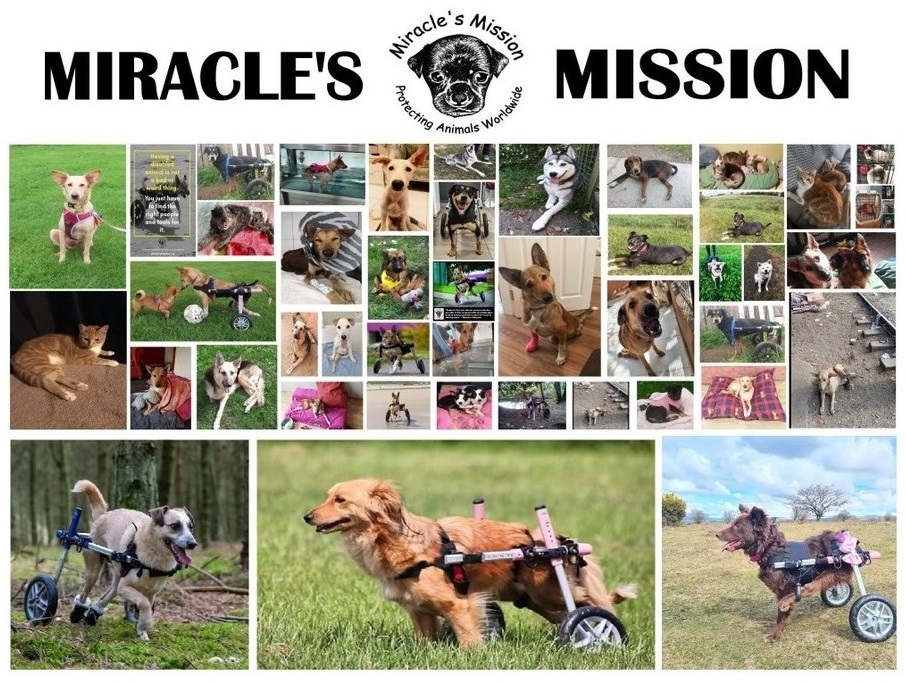
Some of the amazingly brave animals that Miracle’s Mission have helped over the years

Since starting Protect All Wildlife over 10 years ago I have managed to raise over £100,000 for various animal charities including Lions, Elephants, Gorillas, Animal Rescues and victims/survivors of the Australian wildfires etc. With the support of my wonderful followers, friends and family I have been able to do this by doing various charity fundraising events including a 15,000 foot skydive, doing a 10km run dressed as an Elephant, a Tough Mudder assault course and several auctions of items very kindly donated by fellow animal lovers.

Being able to help animal charities in this way has at times given me the motivation to carry on. I have suffered on and off with depression for 30 years or so and at times have had to force myself to get out of bed in the morning. Apart from my mental nursing, animal activism has given me a mission in life – to help those less fortunate in whatever way. As you are probably aware, I became the (very proud) Patron of Miracle’s Mission four years ago. Miracle’s Mission are dedicated to the rescue, rehabilitation and rehoming of sick injured and disabled animals. They also operate a Trap, Neuter and Release (TNR) centres in Borneo and Egypt. They receive no government funding whatsoever and rely totally on donations and volunteers to keep going. The cost of running an animal rescue is high, however the running costs of a specialist rescue service like Miracle’s Mission is even costlier.

When rescues come to Miracle’s Mission they often can’t walk & need surgery. With your help we are able to treat & rehabilitate them. But with vet fees, physio costs, specialist mobility equipment and food/heating etc it is VERY costly to keep going. PLEASE help us treat MANY more animals by donating ANY amount, large or small. EVERY penny counts.

Unfortunately I haven’t been able to do a ‘proper’ fundraising event because in the last year I have not been very well, lacking energy and losing about a stone in weight. I put it down to having long covid after catching covid in October last year. However, it transpired that I actually have cancer of the stomach. My treatment has just started and consists of 4 chemotherapy cycles over 8 weeks then if the tumour has shrunk enough I will have an operation to remove all of my stomach. My oesophagus will then be connected to my small intestine. The recovery period from my stomach operation will be in the region of 4 to 5 months.

So I have come up with a very bizarre charity fundraiser to help the rescues at Miracle’s Mission. I am not sure how ethical it is but here I go – a sponsored CHARITY CANCER TREATMENT FUNDRAISER FOR RESCUE ANIMALS. Knowing that the rescue is still receiving much-needed funds will let me concentrate 100% on MY recovery, something that I have neglected over the years. It would be amazing if you sponsor (donate) ANY amount large or small.

Thank you in advance for your support, it is really appreciated.  Please share with friends and family. Thank you for your incredible support, it is REALLY appreciated. Best wishes, Paul. 🐾

My Chemotherapy journey has started at York District Hospital

WHAT YOU CAN DO TO HELP RESCUE ANIMALS

You can support our work by donating as little as £1 – It only takes a minute but it can last a lifetime for an animal in need.

Everyone who donates will receive a Certificate of Appreciation as a thank you for helping rescue animals in need.

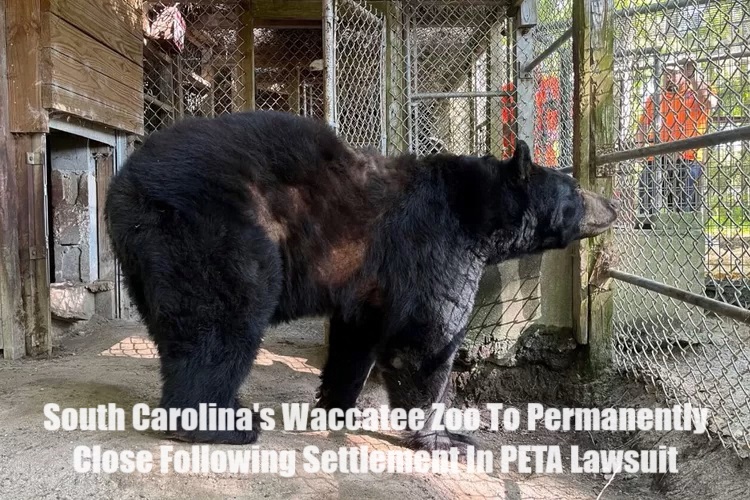
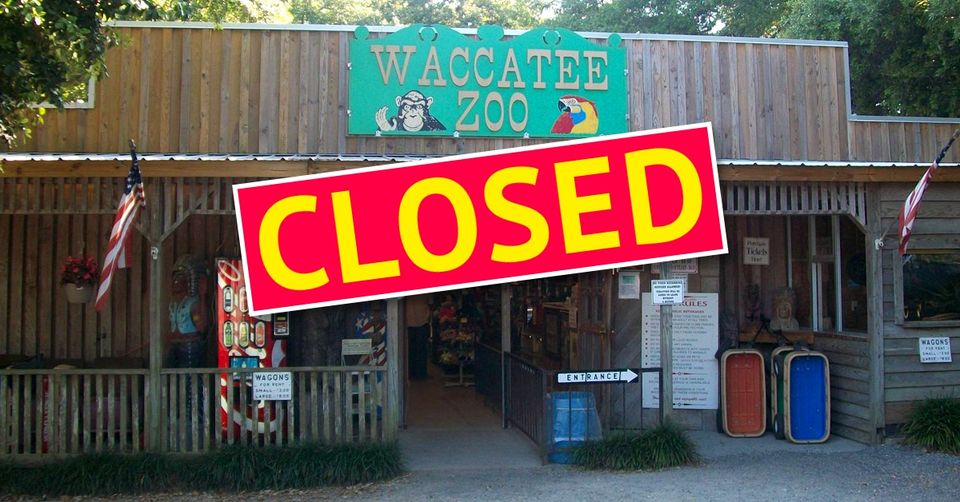
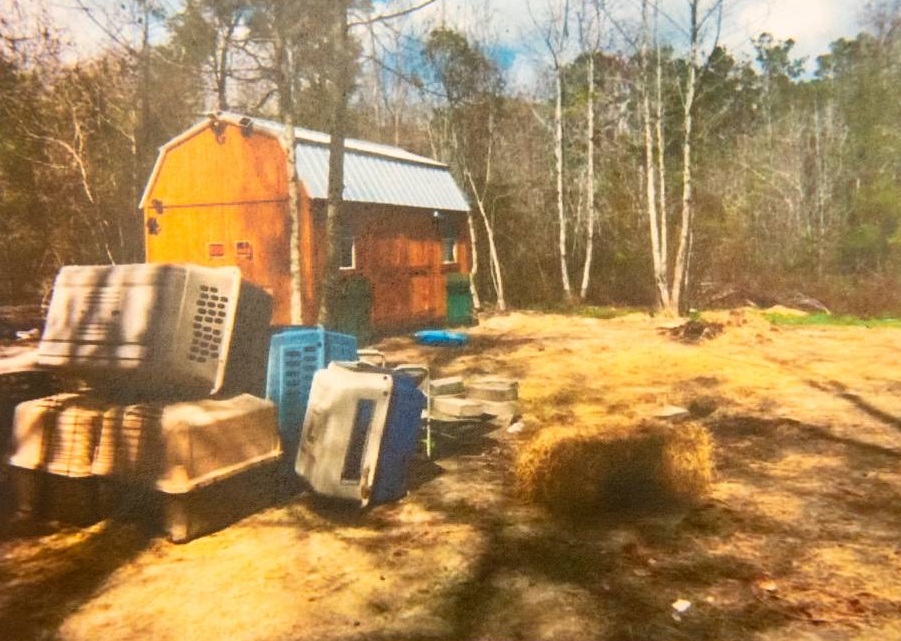
South Carolina’s Waccatee Zoo To Permanently Close Following Settlement In PETA Lawsuit

A Bear removed from the Waccatee Zoo.  PHOTO: PETA

In its complaint, the animal rights organization described Waccatee Zoo as “one of the worst roadside zoos in America”

A South Carolina roadside zoo will permanently close following the settlement of a federal lawsuit brought on by People for the Ethical Treatment of Animals (PETA).

In a press statement Thursday, the animal rights organization said the Waccatee Zoo in Horry County will be permanently closed. Additionally, as part of the settlement, per PETA, the operators of the South Carolina facility are banned from owning or exhibiting wild or exotic animals, breeding domestic animals, exploiting domestic animals for profit, and working or volunteering at other roadside zoos.

In its lawsuit filed under the federal Endangered Species Act and South Carolina’s public nuisance law in April 2022, PETA described Waccatee Zoo as “one of the worst roadside zoos in America.” The complaint alleged the zoo’s operators confined and exhibited more than 460 animals and that the facility’s conditions deprived them of “adequate veterinary care, shelter, food, and water.”

An attorney for the Waccatee Zoo and the defendants, Reese Boyd III, told the Myrtle Beach Sun News that the lawsuit has been settled and the facility will be shut down. He said that his client’s agreement to the settlement terms was not an admission “to the exploitation of animals in their care” – adding that a number of PETA’s accusations were “factually untrue,” per the newspaper.

PETA also said in the lawsuit that it regularly received complaints about Waccatee from zoo visitors.

“Day after day, animals at Waccatee sway and pace back and forth—unnatural behaviors that signify the animals’ needs are not being met,” read PETA’s lawsuit. “Many animals experience negative stress due to small, insufficiently enriched spaces that provide little to do, offer inadequate opportunities to socialize, and are affirmatively dangerous.”

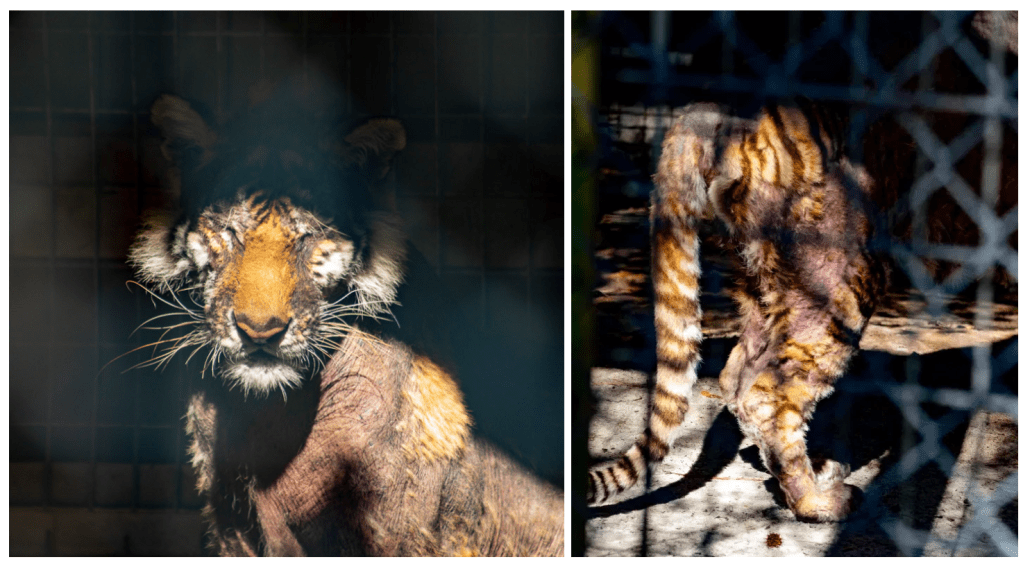
The lawsuit cited the case of Lila, a tiger who either died in late 2020 or 2021, saying that she “became so emaciated that much of her skeleton—including her vertebrae, scapula, shoulder, hip, and other joints—was visible through her skin.” The complaint also alleged that other animals at the zoo experienced hair loss and emaciation—adding that “isolated, frustrated, and bored animals exhibit alarming and repetitive behavior, indicating that they are experiencing psychological distress.”

Emaciated Lila suddenly disappeared resulting in PETA asking for a necropsy report.

Lila passed away after a fall from old age, zoo owner Jeff Futrell said.

According to a letter PETA sent to Waccatee Zoo on Feb. 25, the organization wanted answers to the whereabouts of Lila after she was the subject of a PETA campaign because of her ill health.

“After months of wasting away, losing fur, and turning in endless circles in her dismal cage, Lila has disappeared—and PETA is asking whether she died, in pain and in the cold, and if her death is being covered up,” says PETA Foundation Associate Director of Captive Animal Law Enforcement Michelle Sinnott. “Nothing can undo Lila’s suffering, and PETA is calling on Waccatee Zoo to release the other big cats before they suffer as she did.”

And now, PETA is asking the owners of the zoo to release the necropsy report.

In a press statement, Brittany Peet, PETA’s general counsel for captive animal law enforcement, responded to the settlement: “This victory blocks Waccatee’s operators from ever again mistreating wild animals as they did for decades. PETA is delighted to see the survivors thriving in their new sanctuary home and will continue to ask everyone to help us advocate for all animals still trapped in roadside zoos by never patronizing such operations.

In May, PETA and The Wild Animal Sanctuary (TWAS) rescued nine remaining animals left at the Waccatee Zoo. Among the animals retrieved were a llama, two North American black bears, and six emus. PETA said the rescued animals would head to a TWAS sanctuary in Colorado.

WHAT YOU CAN DO TO HELP WILDLIFE

You can support ‘Protect All Wildlife’ by donating as little as £1 – It only takes a minute but it can last a lifetime for an animal in need. Please donate below.

Everyone who donates will receive a Certificate of Appreciation as a thank you for helping animals in need.

The Mission of Protect All Wildlife is to prevent cruelty and promote the welfare of ALL animals.

We believe EVERY animal should be treated with respect, empathy, and understanding. We raise awareness to protect and conserve wild, captive, companion and farm animals.

It is vital that we protect animals against acts of cruelty, abuse, and neglect by enforcing established animal welfare laws and, when necessary, take action to ensure that those who abuse animals are brought to justice.

Protect All Wildlife are involved in many projects to protect animals’ rights, welfare, and habitats. Money contributed to Protect All Wildlife supports ALL of our worthy programmes and gives us the flexibility to respond to emerging needs. Your donations make our work possible.
Conservation Groups Launch Lawsuit To Protect Grizzlies & Lynx From Forest Clearcutting Project Near Yellowstone National Park

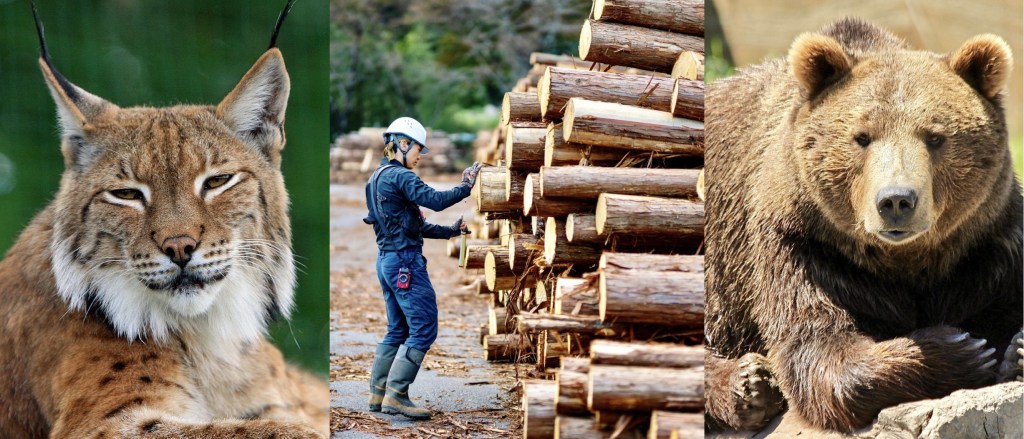
Conservation groups have filed a formal notice of their intent to sue the U.S. Forest Service and U.S. Fish and Wildlife Service for approving a massive timber sale on the border of Yellowstone National Park that would destroy habitat for Grizzly Bears, Lynx, and other embattled wildlife.

The South Plateau project proposes to clearcut more than 5,500 acres of pine forest in the Custer-Gallatin National Forest. The project also calls for logging on an additional 9,000 acres and bulldozing up to 56 miles of roads, many through mature, old-growth forests.

“This reckless project was approved without considering its threats to Grizzly Bears, Lynx, and other wildlife,” said Kristine Akland, Northern Rockies director and senior attorney at the Center for Biological Diversity. “The fragile Yellowstone ecosystem surrounding this iconic national park is vital for Montana’s rich biodiversity and climate. This project must be stopped before our beautiful backcountry forests are bulldozed.”

The Forest Service approved the logging project without identifying the locations, timing or scope of the logging units or roads. Instead, the agency said it will make those decisions when crews are on the ground, which inhibits analysis of potential harm to protected species and prevents public involvement.

“The Forest Service needs to drop the South Plateau project and quit clearcutting old-growth forests,” said Mike Garrity, executive director of the Alliance for the Wild Rockies. “Especially clearcutting and bulldozing new logging roads in grizzly habitat on the border of Yellowstone National Park.”

“Clearcutting high-elevation lodgepole forests across thousands of acres is not going to improve ecological conditions and will not help protect communities from wildfire as the Forest Service claims,” said Adam Rissien, a rewilding advocate at WildEarth Guardians. “Rather, this is another misguided, old-style timber sale that will undermine the forest’s ability to store carbon.”

The project allows for significantly more logging and road building than is authorized by the Custer-Gallatin Forest plan. The notice also says that the South Plateau project will destroy and remove thousands of acres of habitat for Grizzly Bears and Lynx, which are both listed as threatened under the Endangered Species Act.

The plan conflicts with President Biden’s pledge to protect old-growth and mature forests and trees, an important climate solution because they absorb and store tons of carbon.

WHAT YOU CAN DO TO HELP WILDLIFE

You can support ‘Protect All Wildlife’ by donating as little as £1 – It only takes a minute but it can last a lifetime for an animal in need. Please donate below.

Everyone who donates will receive a Certificate of Appreciation as a thank you for helping animals in need.

The Mission of Protect All Wildlife is to prevent cruelty and promote the welfare of ALL animals.

We believe EVERY animal should be treated with respect, empathy, and understanding. We raise awareness to protect and conserve wild, captive, companion and farm animals.

It is vital that we protect animals against acts of cruelty, abuse, and neglect by enforcing established animal welfare laws and, when necessary, take action to ensure that those who abuse animals are brought to justice.

Protect All Wildlife are involved in many projects to protect animals’ rights, welfare, and habitats. Money contributed to Protect All Wildlife supports ALL of our worthy programmes and gives us the flexibility to respond to emerging needs. Your donations make our work possible.

Trophy Hunting in Botswana: A Tale Of Declining Wildlife, Corruption, Exploitation And Impoverishment

In May 2019, Botswana’s President Masisi justified the decision to recommence trophy hunting by emphasising that local communities will be guaranteed more than just menial jobs and enjoy sustainable wildlife management’s economic benefits.

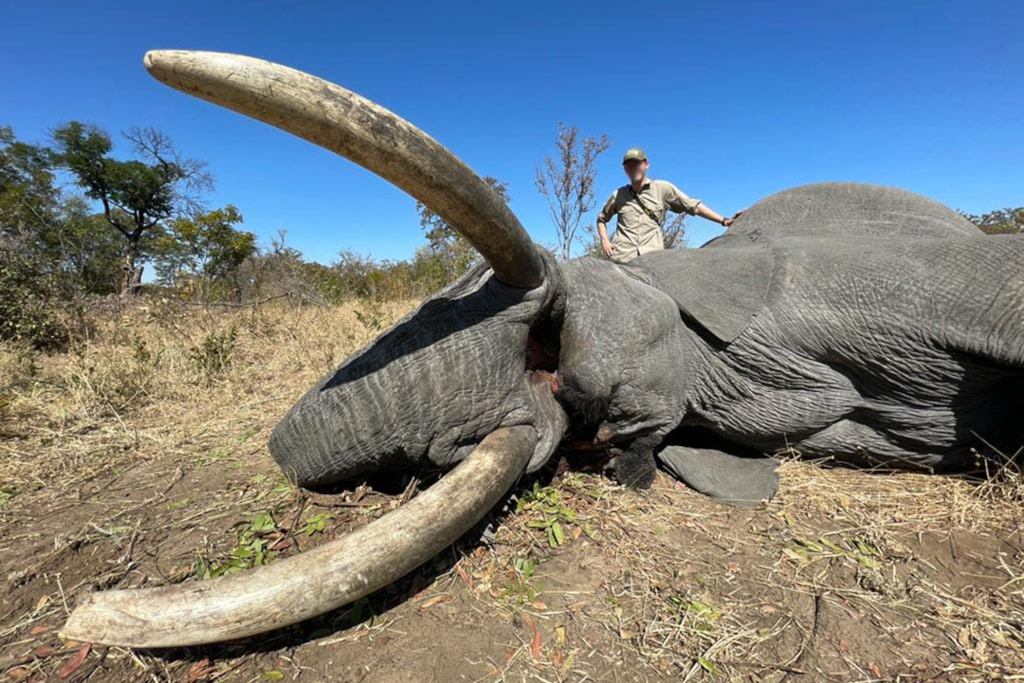
A Bull Elephant shot in Botswana – a so-called ‘100 pounder’.

As the passage of the Hunting Trophies (Import Prohibition) Bill moves to the Committee Stage of the House of Lords, a suite of amendments has been tabled for deliberation. These amendments include amending the Bill from a blanket ban to a case-by-case assessment of trophies imported into the United Kingdom based on whether they contribute to the conservation of wildlife and human economic upliftment.

For example: Amendment Clause 2(d) states that hunting imports may only be granted if:

“a hunting area where the hunting operator can demonstrate that financial or non-financial benefits of trophy hunting materially contributes to the conservation of the trophy hunted species, including habitat protection, anti-poaching measures, and support for community livelihoods.”

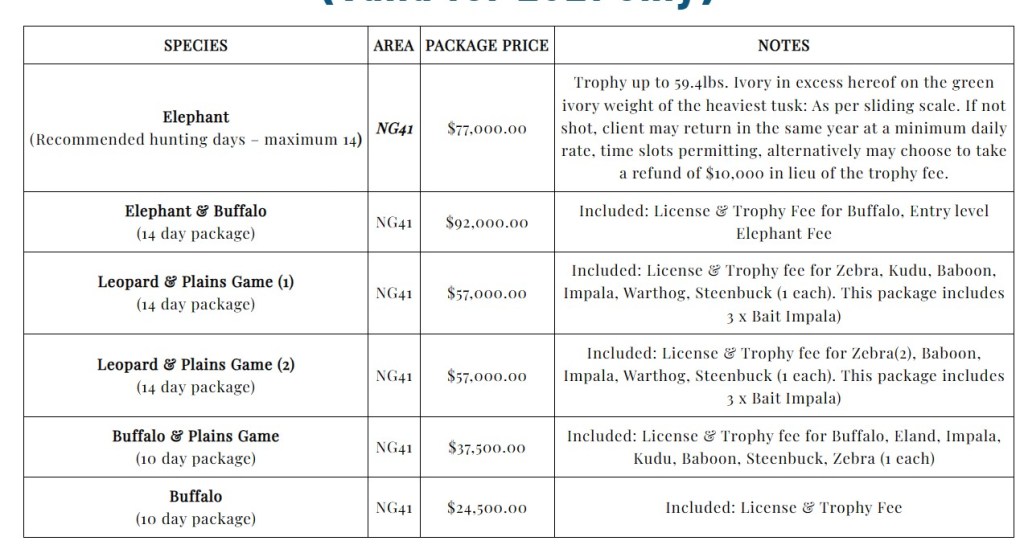
A Shopping List For Trophy Hunters

At face value, this appears to be equitable. Ignoring the obvious ethical dispute, if trophy hunting can be proven to benefit the conservation of wildlife and human livelihoods, then perhaps it may be a case to consider.  However, the problem in the majority of trophy hunting cases, and in most countries where trophy hunting takes place, the activity not only is wholly unable to benefit wildlife and human communities, but precipitates the opposite.

Botswana, one of the major destinations for trophy hunters, is a particular case in point.

The southern African nation has been promoted by some in the House of Lords as an example of a trophy hunting ‘success.’ So much so that a high-level delegation of government officials from Botswana, including a minister, an ambassador and a wildlife department head of authority were invited to the House of Lords in June 2023 to make a case for the benefits of trophy hunting in their country. Yet, serious questions surround Botswana’s ability to adequately regulate trophy hunting and provide any meaningful benefits for communities living among and alongside wildlife.

Field investigations, in-person interviews and literature, financial audit, international policy document reviews have been undertaken over the course of a year to assess the validity that Botswana can provide meaningful and tangible benefits to its wildlife and people. This is a summary of the results:

  • On an international level, the country has been flagged for non-compliance under the Convention on International Trade of Endangered Species of Wild Fauna and Flora (CITES) due to its failure to submit annual reports, which provide crucial information for validating offtake of elephants for trophies for the international trophy trade. This indicates that the wildlife conservation in Botswana is not adequately managed.
  • Hunting quotas are not based on scientific data. A total quota of 356 Elephants and 74 Leopards are on the Wildlife Hunting Quota List for 2023. These figures are regarded as abnormally high. The list also includes Zebra, Buffalo, Ostrich, Wildebeest, Kudu, Eland, Gemsbok, Warthog, Baboon, and Lechwe.
  • There is evidence of widespread unethical hunting practices including over-use of already overly high quotas, fraudulent practices, corruption, baiting, and hunting near and within photographic tourism zones. As well as the deployment of aerial support to search for large tuskers and killing Elephant bulls near artificial waterholes.
  • Trophy hunting activities in Botswana are forcing communities, which are expected to rely on the proceeds of trophy hunting, into a perpetual cycle of impoverishment and economic disenfranchisement. Trophy hunting obstructs the development of more meaningful activities like photographic tourism while the proceeds from trophy hunting are so miniscule that individual community members are practically receiving nothing.
  • There is also widespread evidence of corruption and mismanagement of funds generated by the Community-Based Natural Resource Management (CBNRM) system in areas centred on trophy hunting as the main economic activity. The mismanagement and corruption are directly linked to trophy hunting.
  • The current government has revoked scientific research permits of organisations that have been committed to providing peer reviewed scientific data on the conservation status and ecology of Elephants and suppress those that have dared to voice concern over unsustainable and unethical hunting practices.
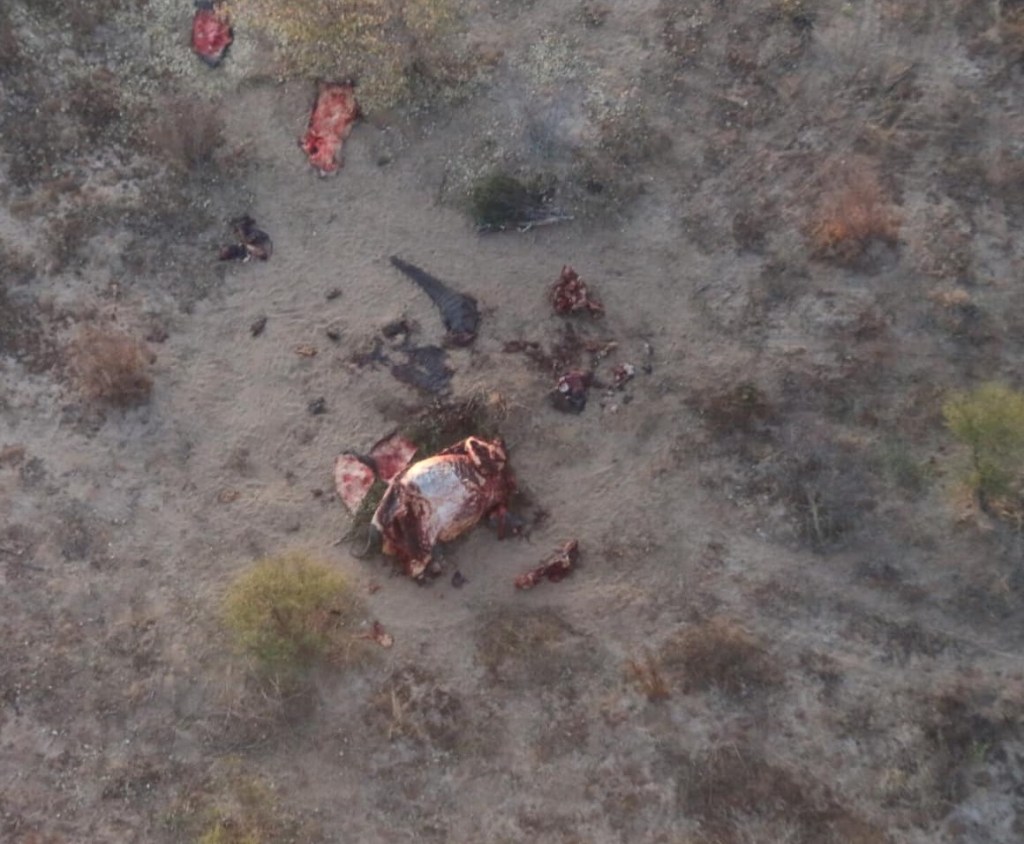
An aerial photograph of a butchered Elephant, shot by trophy hunters in Botswana.

The adult Elephant Bull (above) has been stripped of its body-parts. The trunk has been hacked off. There are large portions of the Elephant’s skin cut off. All four feet have been removed – presumably to make foot / table stools (the Botswana president, Mokgweetsi Masisi, (in)famously gave Elephant foot stools to the presidents of neighbouring countries at an Elephant Management meeting in Kasane in 2019). The tusks and skull have been taken to a taxidermy. These body parts represent the prize – the trophy – that the hunter was after, and which will be displayed on a wall in their home in Europe or America or Asia. There is also some flesh cut off on the flanks of one side, possibly to provide some meat for the trackers and skinners as a ‘tip’.

It has been claimed in Botswana that trophy hunting is only undertaken in ‘marginal’ wilderness areas that are not deemed viable for photographic tourism. It is also claimed that attempts to convert trophy hunting areas not viable for photographic tourism into photographic tourism areas is a challenge. Areas that are deemed not viable for photographic tourism are remoteness, lower densities of wildlife and monotonous natural landscapes. In these spaces, trophy hunting becomes a necessary evil as the sole provider of revenue for remote communities living within and alongside wildlife.

And yet, this Elephant was shot in a hunting concession (NG41) that is neatly wedged between two national parks – Moremi Game Reserve and Chobe National Park. These two parks are globally renowned for photographic tourism and are consequently brimming with tourists wanting to photograph what Botswana showcases best – wildlife. The fact that that this Elephant was shot right in the middle of these tourist hotspots makes a mockery of the claim that trophy hunting in Botswana only takes place in marginal areas.

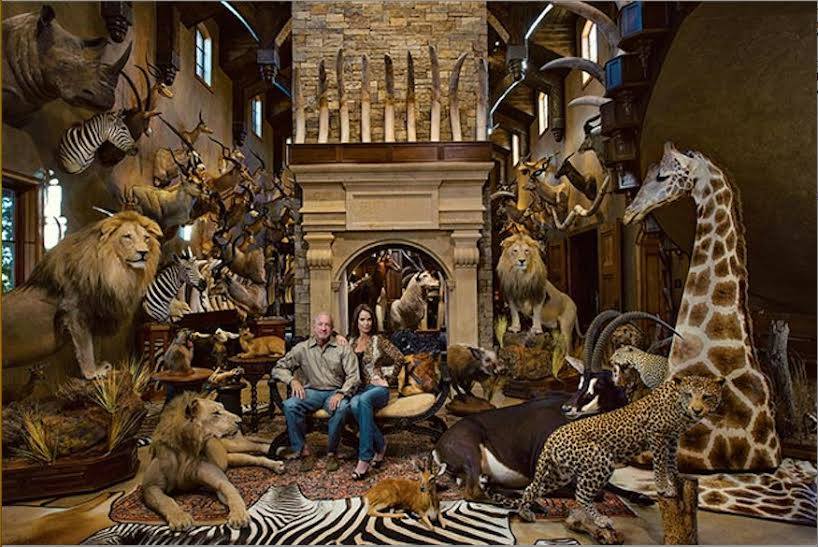
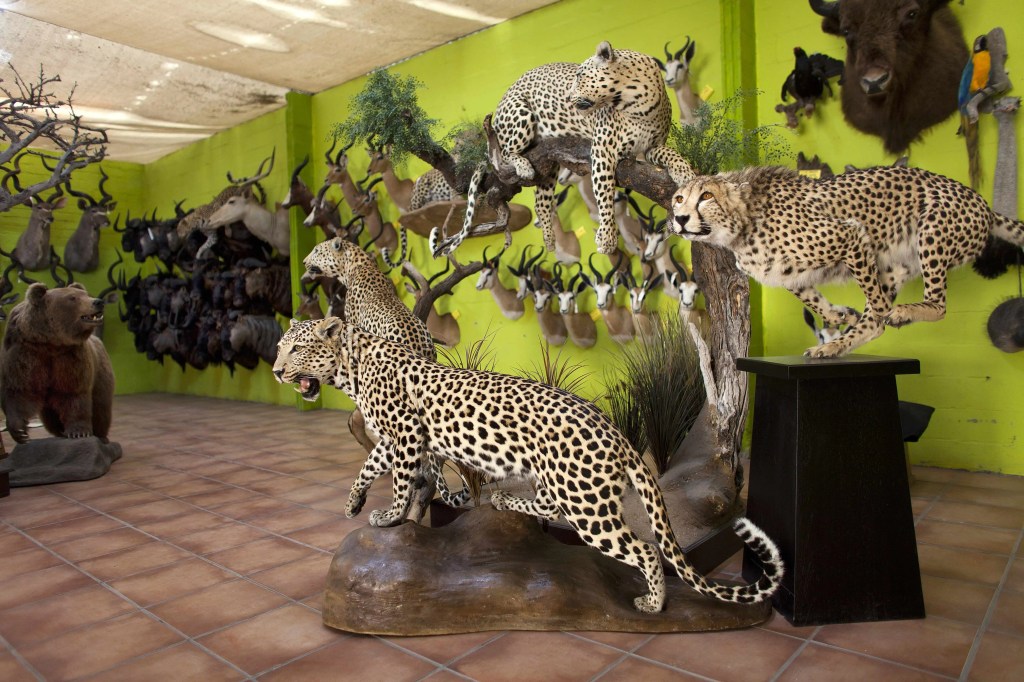
The Wall Of Death: A Hunter’s ‘Trophy’ Room

The standard narrative from hunters and their proponents is that trophy hunting is an essential conservation tool that, if conducted ‘ethically’, preserves endangered wildlife and provides revenue for impoverished communities living in marginalised areas where photographic tourism is absent. Yet as this case shows, as they all do, that narrative is a false one. Stripped of its protective fairy-tale veil, the true face of trophy hunting lays bare, a narcissistic bloodlust of a few depraved individuals who care little for ethics, community upliftment or wildlife conservation. ~ Adam Cruise.

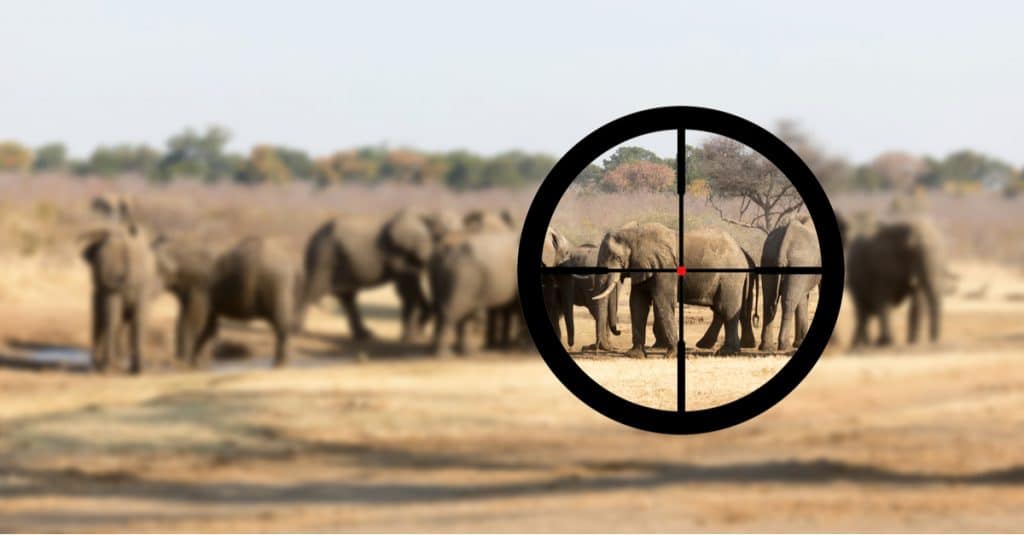
In The Trophy Hunter’s Sights: Botswana’s Elephants

WHAT YOU CAN DO TO HELP WILDLIFE:

You can support ‘Protect All Wildlife’ by donating as little as £1 – It only takes a minute but it can last a lifetime for an animal in need. Please donate below.

Everyone who donates will receive a Certificate of Appreciation as a thank you for helping animals in need.

The Mission of Protect All Wildlife is to prevent cruelty and promote the welfare of ALL animals.

We believe EVERY animal should be treated with respect, empathy, and understanding. We raise awareness to protect and conserve wild, captive, companion and farm animals.

It is vital that we protect animals against acts of cruelty, abuse, and neglect by enforcing established animal welfare laws and, when necessary, take action to ensure that those who abuse animals are brought to justice.

Protect All Wildlife are involved in many projects to protect animals’ rights, welfare, and habitats. Money contributed to Protect All Wildlife supports ALL of our worthy programmes and gives us the flexibility to respond to emerging needs. Your donations make our work possible.

Therese Coffey: We Will Do All We Can To Help Trophy-Hunting Ban Become Law

The Environment Secretary offered assurances about the Hunting Trophies (Import Prohibition) Bill in a letter to campaigners.

The Government has pledged to do “all we can” to ensure a ban on trophy hunting imports becomes law amid fears pro-hunting peers could “wreck” the reforms.

Environment Secretary Therese Coffey said the Government will not support any further amendments to the Hunting Trophies (Import Prohibition) Bill.

The proposed legislation would prohibit bringing into the country body parts from species deemed of conservation concern.

The Bill, introduced by Conservative MP Henry Smith, has already cleared the House of Commons.

But a group of peers have raised concerns and tabled amendments that threaten to derail the proposals.

Time is running out to consider the Bill and it will fall if it does not receive royal assent before the current parliamentary session stops ahead of the King’s Speech on November 7.

Ms Coffey, in a letter to the Humane Society International/UK dated August 17, wrote: “It is a manifesto commitment to ban the import of hunting trophies from endangered animals and we are working hard to deliver.

“The Bill passed the Commons in March, with the Government’s support, and we will do all we can to support its progress through the House of Lords working with Baroness Fookes.

“I can confirm that we will not be supporting any further amendments to the Bill. I expect committee stage to progress next month.”

Conservative peer Lady Fookes is the Bill’s sponsor in the House of Lords.

Claire Bass, senior director of campaigns and public affairs at Humane Society International/UK, said: “There is a small and vocal group of pro-hunting peers doing their best to wreck this Bill, but we need the Government to remain focused on the almost 90% of the public who want this ban on the import of hunting trophies.

“The timing for this Bill is indeed extremely tight but we were encouraged to receive a letter from Environment Secretary Therese Coffey yesterday.”

No Friday sittings to consider private members’ bills are expected in the House of Lords in September, according to the Government whips’ office in the Lords.

With the party conference recess running until October 16, there are expected to be just two possible Friday sittings before the parliamentary session ends.

Mr Smith, MP for Crawley, said he is speaking with the Government in a bid to secure more parliamentary time for his Bill.

Conservative peer Lord Mancroft, who opposes the proposals, said amendments have been tabled in a bid to “clean up” or clarify parts of the “badly drafted” Bill.

He acknowledged it is “very possible” the amendments could halt the Bill’s progress and rated its chances as “less than 10%”.

Mr Smith said the planned legislation is about UK import policy, adding opponents have pressed “spurious arguments” about how trophy hunting helps conservation.

A House of Lords briefing paper on the Bill stated: “According to figures from the Cites (Convention on International Trade in Endangered Species of Wild Flora and Fauna) trade database, 190 hunting trophies from Cites-listed species were imported into the UK in 2020 (the most recent complete year for which figures are available).”

By Richard Wheeler – The Independent

Please Help Rescue Animals In Need DONATE HERE

Fake Rescue Operator Jailed After 30 Dogs Were Found Dead And Bagged On Her ‘Rescue’ Premises

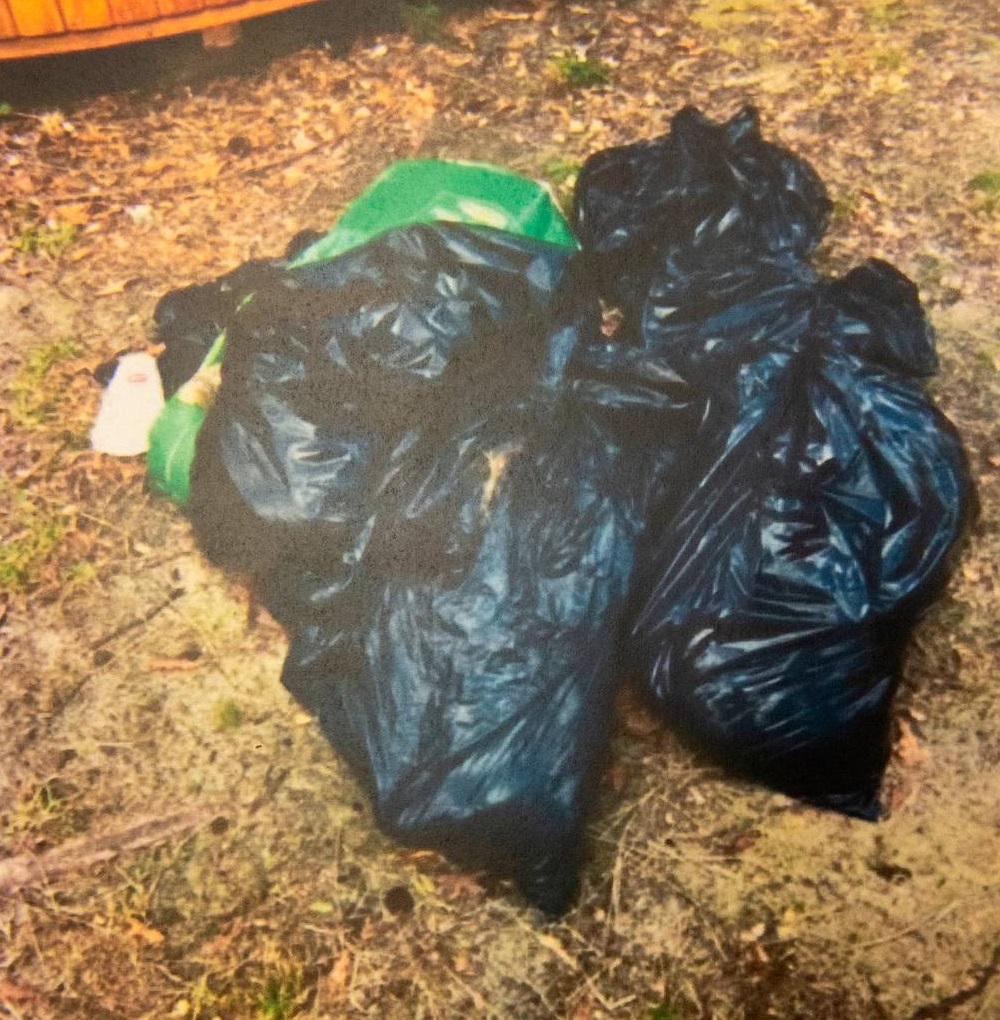
Jessica Collins, of Saucier, ran what she called Deep South Rescue when Harrison County sheriff’s deputies went to the property in March 2022 and found 30 dead dogs, most of them in black trash bags. A cage at her home contained a dead vulture as well as eight dead puppies inside a trash bag.

Dead and neglected dogs found at Deep South Animal Rescue

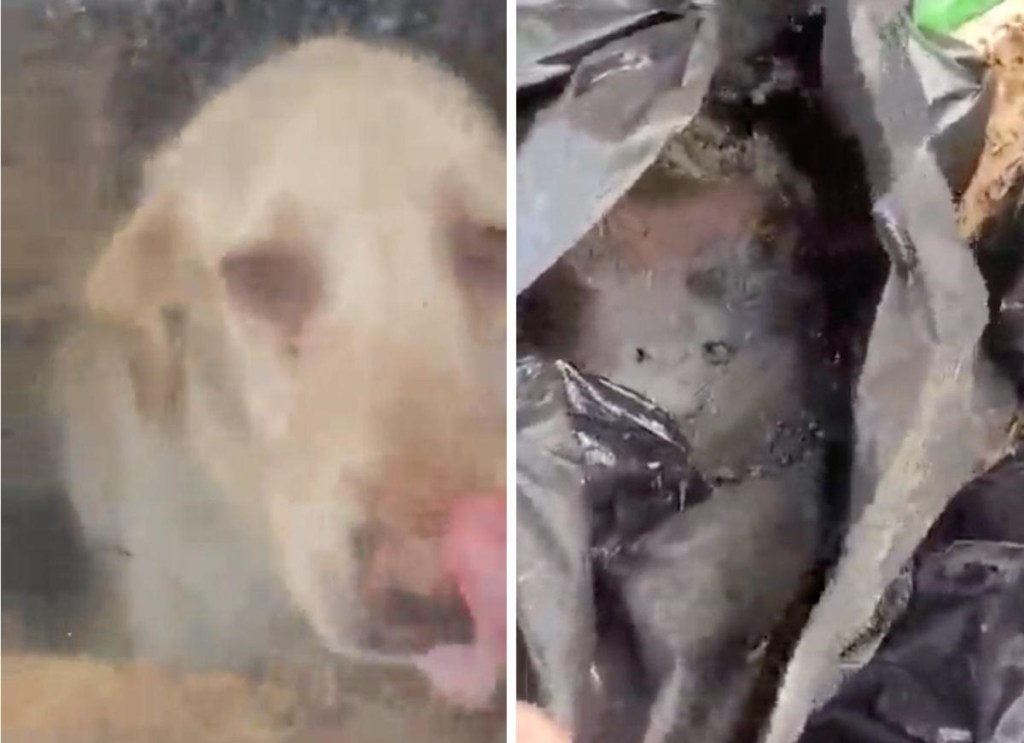
Video shows bodies of dogs all over, with many in trash bags or burned, and in varying states of decomposition. Just one dog was alive, an emaciated Labrador who had been locked in a shed without ventilation, food, or water, along with a dead federally protected Buzzard.

A warrant was issued to rescue the dog and begin disposal of 30 deceased canine remains.

An additional 14 dogs on a property in Pass Christian were also surrendered by Collins. 

Collins was arrested in March 2022, and charged with only one felony count of animal cruelty for the federally protected buzzard and 30 misdemeanor counts of simple animal cruelty for the deceased dogs. 

A photo taken by a Harrison County Sheriff’s Department Animal Control officer shows dead dogs wrapped in trash bags found on a property where Jessica Collins kept several dead dogs in Saucier.

Collins operated Deep South Animal Rescue under the name Jessica Ann Gallaspy. She was charged with 30 misdemeanor counts for cruelty to a dog under MS § 97-41-16 (2) a. and bonded out of the Harrison County Adult Detention Center. Maliciously injuring dogs or cats is now chargeable as a first-offense felony for each dog or cat killed with malice, MS § 97-41-16 (2) b.  

Linda Perry went to the property in Saucier when she saw a plea from Collins on Facebook for help. Collins, she said, lied about being a 501c nonprofit and claimed she needed help because bobcats had been killing the animals.

“From the moment I arrived, I started finding dead dogs all across the property,” she said “She said the bobcats were killing them. It was all a lie. Once you see that, you can’t forget it. She fooled everyone in the animal community.” Collins did not live on the property where sheriff’s deputies found the animals. A shed sat on the half-acre lot, and the animals had no electricity or running water.

A photo taken by a Harrison County Sheriff’s Department Animal Control officer shows the shed where Jessica Collins kept several dead dogs in Saucier.

Collins was sentenced to 60 months incarceration, with six months to be served beginning on August 25. She will serve the remaining 54 months if she violates any term of her sentencing.

Jessica Collins – Harrison County Adult Detention Center

“It was hard to believe that a person like this defendant, who is supposed to be taking care of animals, had done what she did in that case,” Harrison County prosecuting attorney Herman Cox said. “It was atrocious. There is no excuse for it.”

Collins cannot own a domesticated cat, dog or other animal for 15 years. Once she completes her jail sentence, she will undergo a psychiatric evaluation and return to court every seven months for a review of her case.

Please Help Rescue Animals In Need DONATE HERE