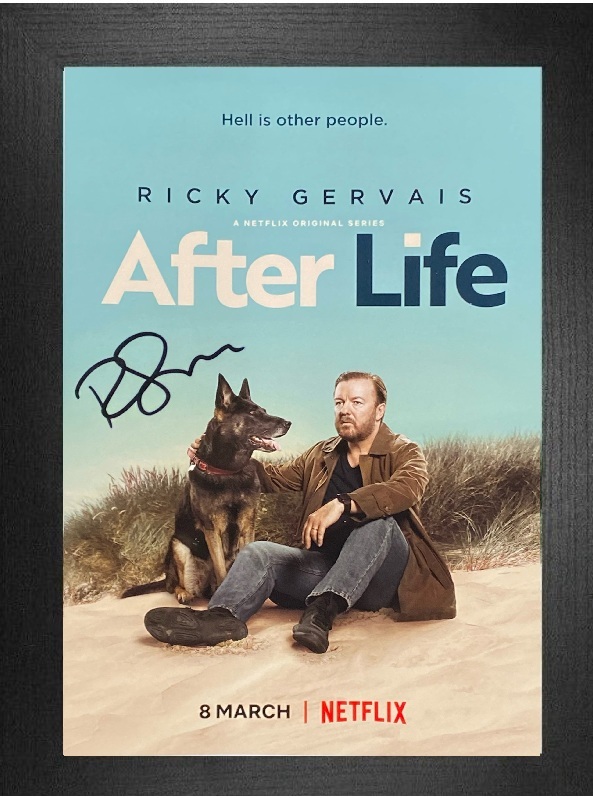
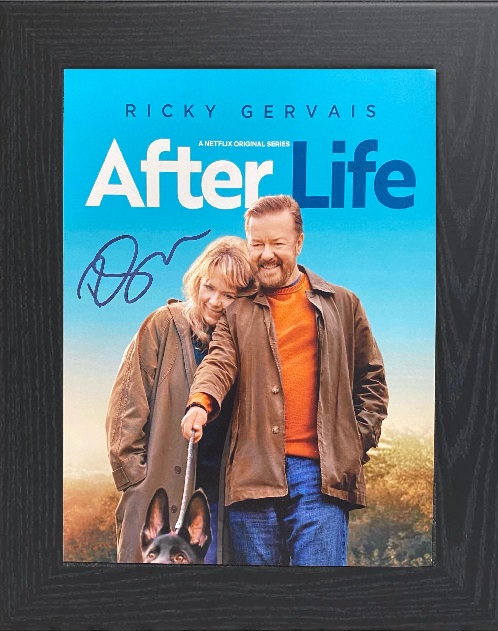
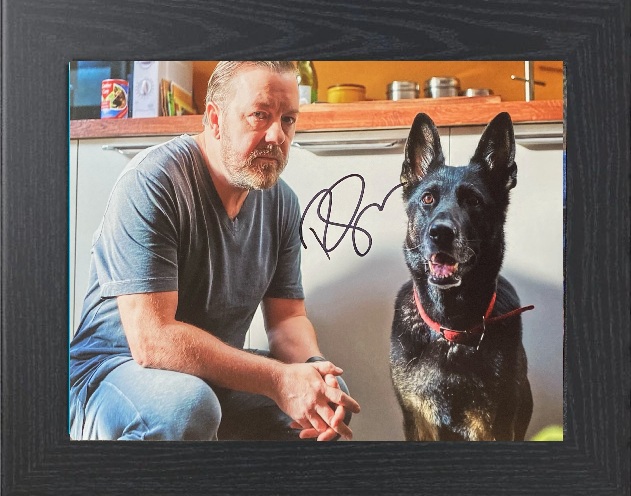
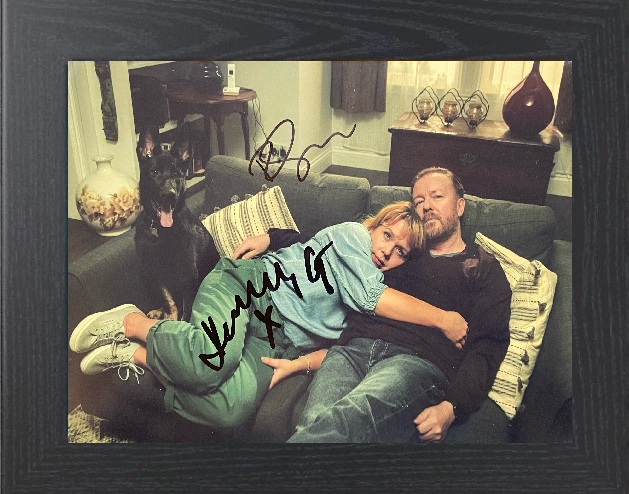
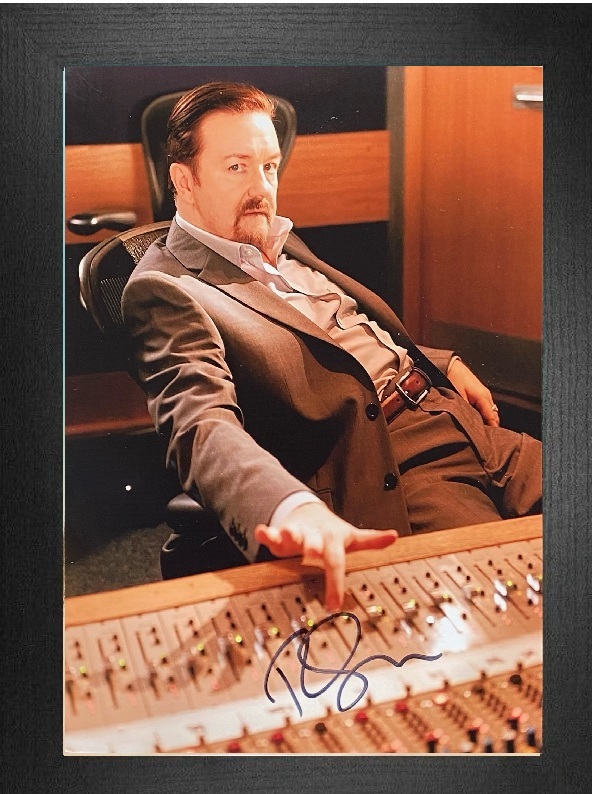
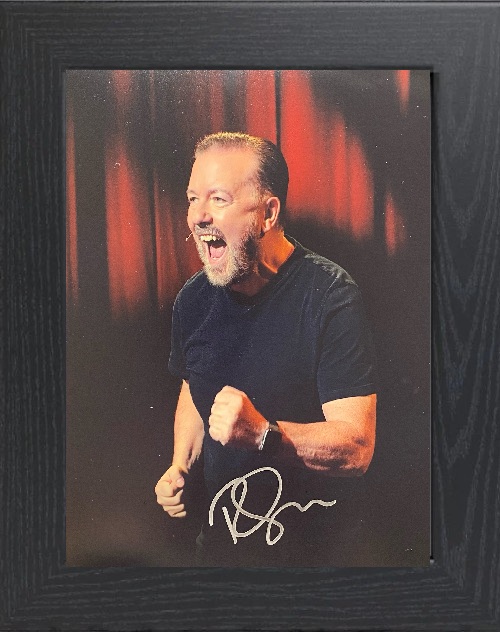
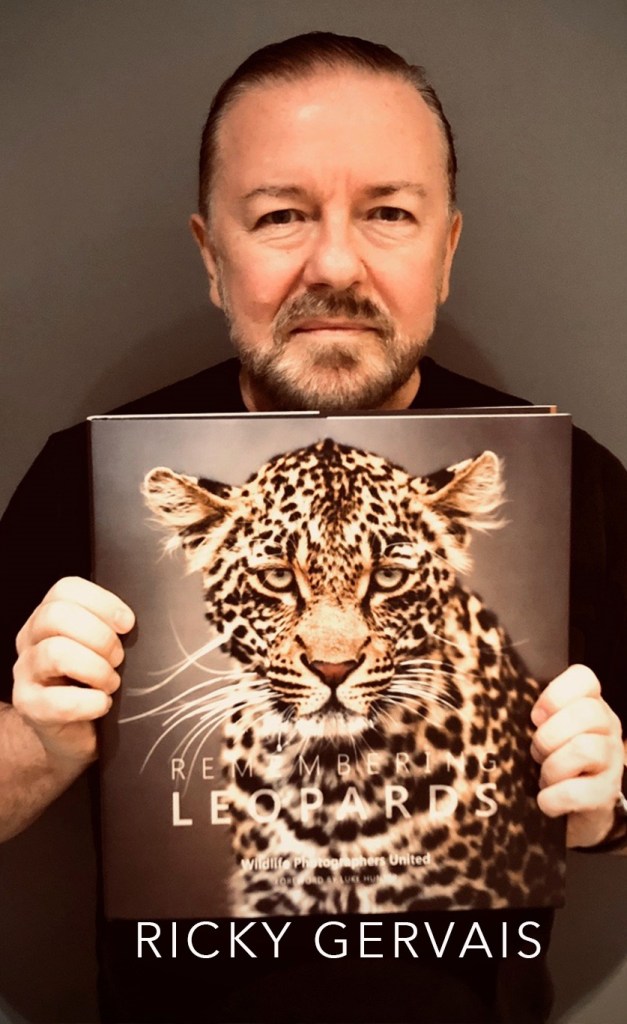
This is your chance to bid on signed pictures very kindly donated by Ricky Gervais in our ‘Charity Auction To Help Disabled Animals’.
This is a sealed bid auction, so all you need to do is decide which item you would like to bid for and send us your bid with the LOT NUMBER and name by email to protectallwildlife@btinternet.com by 21:00 on the 31st of October 2024. We will email you to let you know if your bid is the highest. Postage costs will be calculated when the auction ends. If you need any more information etc please email Paul at protectallwildlife@btinternet.com.
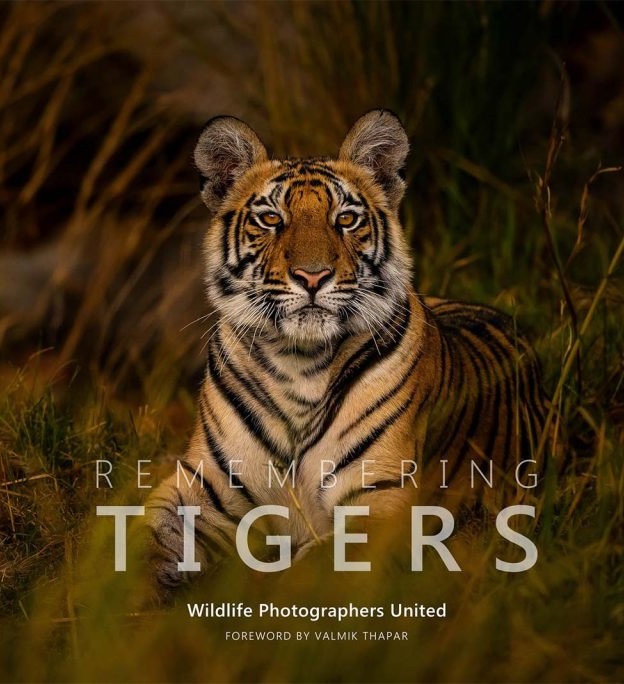
The Mission Is To Raise Awareness Of The Threats Facing Tigers Through The Stunning Images From Many Of The World’s Top Wildlife Photographers
Front Cover: Bengal Tiger in Bandhavgarh National Park, India by Sarah Skinner.
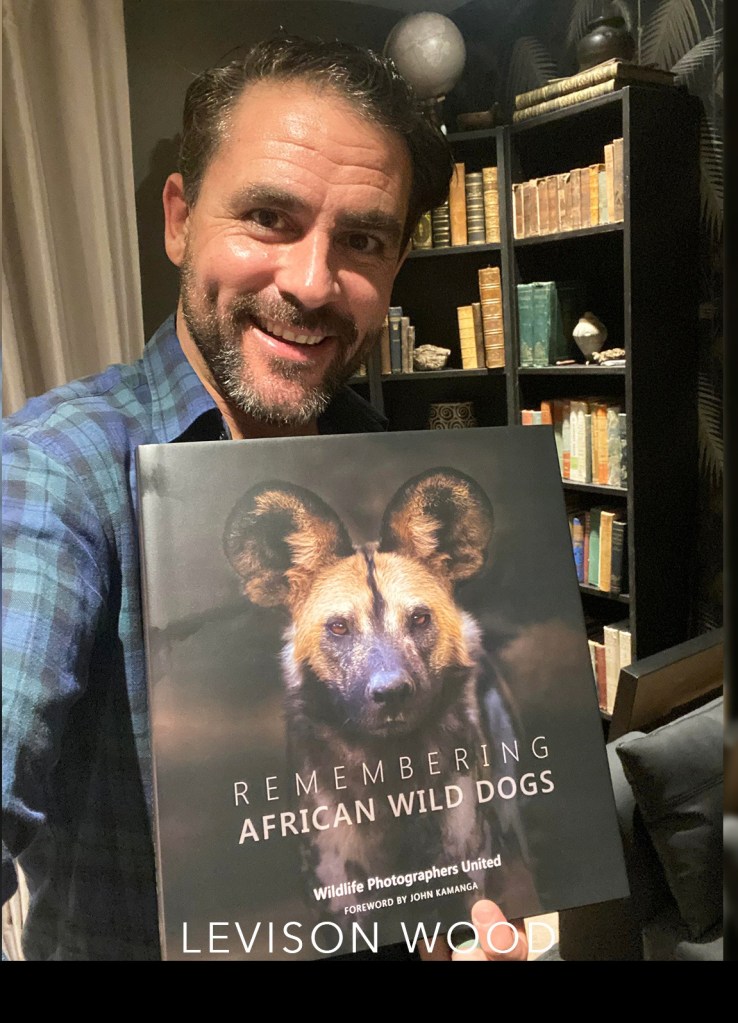
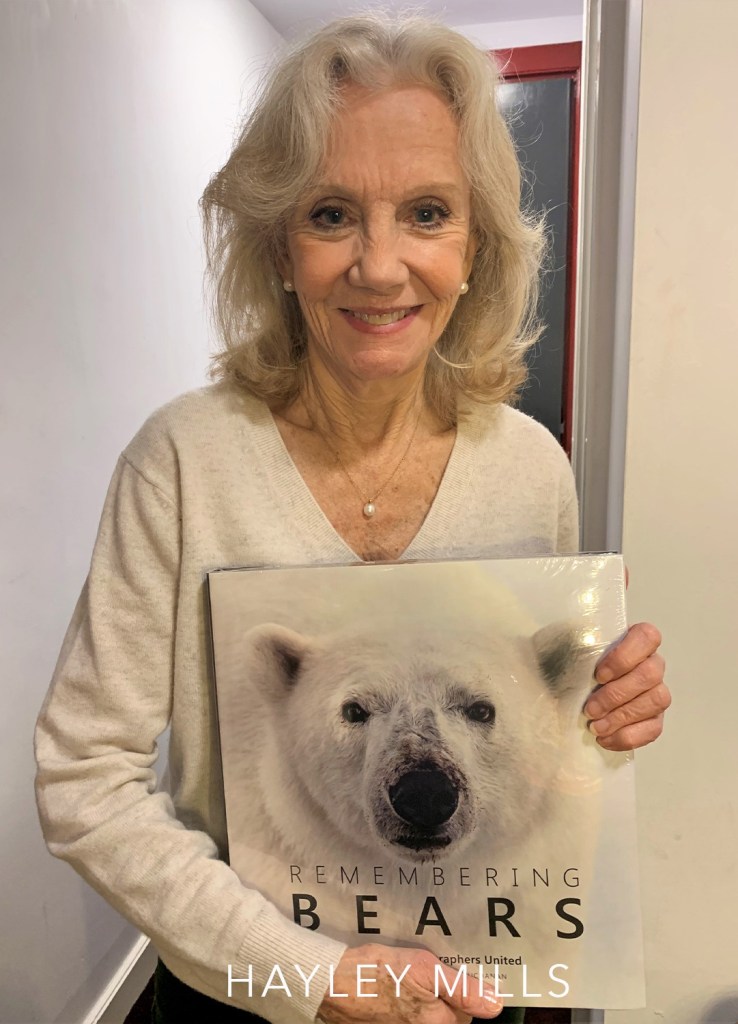
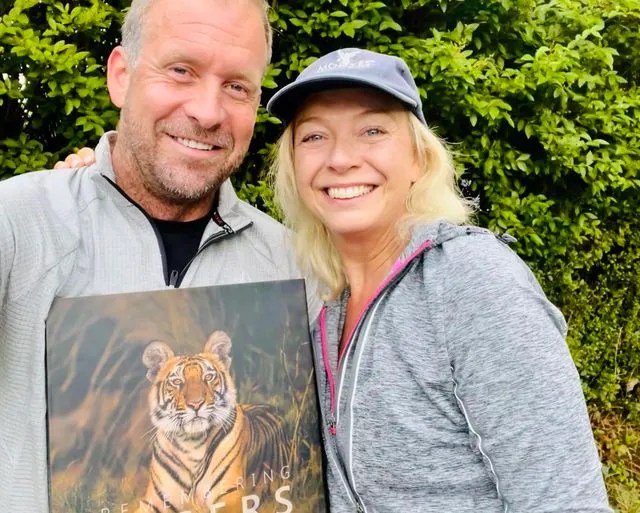
Remembering Wildlife has launched several charity photo books over the years that highlight endangered species and act to raise funds for the protection of the animals featured with the help of famous supporters and talented photographers around the world. Remembering Elephants, Remembering Rhinos, Remembering Great Apes, Remembering Lions, Remembering Cheetahs, Remembering African Wild Dogs, Remembering Bears have already been produced, and Remembering Leopards was funded and delivered last year. Remembering Tigers is the latest release in the series and will bring attention to Tiger species that are threatened around the world with the help of beautiful images of Tigers generously donated by many of the world’s top wildlife photographers.
The aim of the book is to raise awareness of the plight facing Tigers and to raise money to protect them, with all profits from book sales going to conservation.
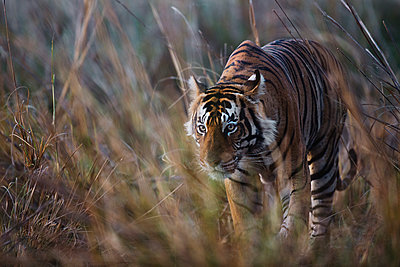
Fighting Bengal tigers in Bandhavgarh National Park, India. Credit: Andy Parkinson/Remembering Tigers)
Weighing up to 260kg and measuring up to 3 metres in length, the Tiger is the largest of the big cats. It is found in Asia, from India – where two-thirds of all wild Tigers live – through to the Russian Far East and into China. Its habitat ranges from sub-tropical forests to snow-covered mountainous terrain. Numbers are increasing in some areas, thanks to conservation efforts, yet the Tiger is the least numerous of all the large wild cats and is listed as ‘endangered’ by the International Union for Conservation of Nature (IUCN).
The stunning colours of a Bengal Tiger superbly captured by Jami Tarris. Credit: Jami Tarris/Remembering Tigers.
Threats include loss of habitat, illegal hunting for the Chinese medicinal trade (Traditional Chinese Medicine), widespread killing of their prey for bushmeat, and retaliation for attacks on humans and livestock.
Founder and Producer of Remembering Wildlife Margot Raggett MBE said: “It’s an oft-quoted fact that there are more Tigers in captivity in the US than there are left in the world, a stark reminder of how the future of Tigers might end if conservationists do not continue their focus and their fight. Tigers are a bellwether for the health of an ecosystem. For every Tiger protected in the forest, there are plants, trees, insects, birds and other mammals who thrive.”
The book is endorsed by cricketing legend and conservation champion Kevin Pietersen MBE, who says on the back cover: “The Remembering Wildlife series goes from strength to strength, with Remembering Tigers sure to be another huge hit.”
The foreword for the book is by Tiger conservationist and author Valmik Thapar, who will also speak at the official book launch and whose brilliant documentary, My Tiger Family, was broadcast on the BBC in August.
He said: “I hope Remembering Tigers, with its wonderful pictures, inspires a passion in those who see it and stirs them to new heights in order that this magnificent predator continues to walk our planet.”
The afterword is by Amit Sankhala, Trustee of the Tiger Trust, who said: “Seeing a Tiger in its natural habitat is a mesmerising encounter and I am thankful for Margot Raggett’s book which not only shows the beauty of the Tiger, but will also inspire the next generation of conservationists.”
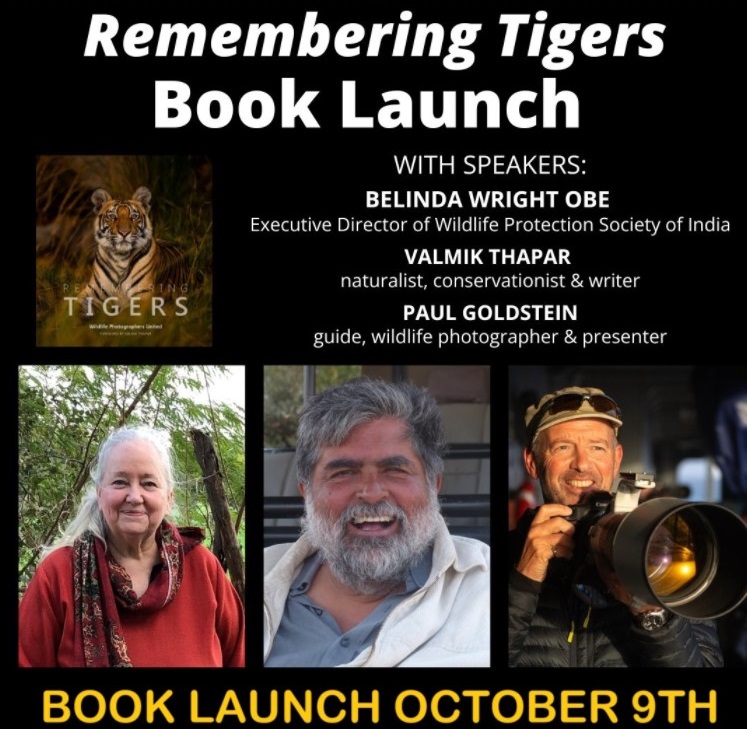
Speaking alongside Margot Raggett MBE at the official launch event for Remembering Tigers at the Royal Geographical Society on 9 October will be Executive Director of Wildlife Protection Society of India (WPSI) Belinda Wright OBE; Tiger conservationist and author Valmik Thapar, and wildlife photographer and guide Paul Goldstein, who has raised hundreds of thousands of pounds by running 25 marathons dressed as a Tiger.
Remembering Tigers official book launch is in October 9th. Credit: Remembering Wildlife
It is estimated that there are around 10,000 captive Tigers in the US, more than the approximately 5,500 remaining in the wild. A vast majority of these captive Tigers are privately owned and living in people’s backyards, roadside attractions, and private breeding facilities. Only an estimated 6% of the US captive Tiger population resides in zoos and other facilities accredited by the Association of Zoos and Aquariums. Many of these private Tiger owners aren’t properly trained to care for wild animals, making the animals vulnerable to mistreatment and exploitation. Often these facilities will allow public contact with the Tigers, including photo ops and playtimes with tiger cubs. Not only is the welfare of these Tigers compromised, but public health and safety is at risk during these encounters.
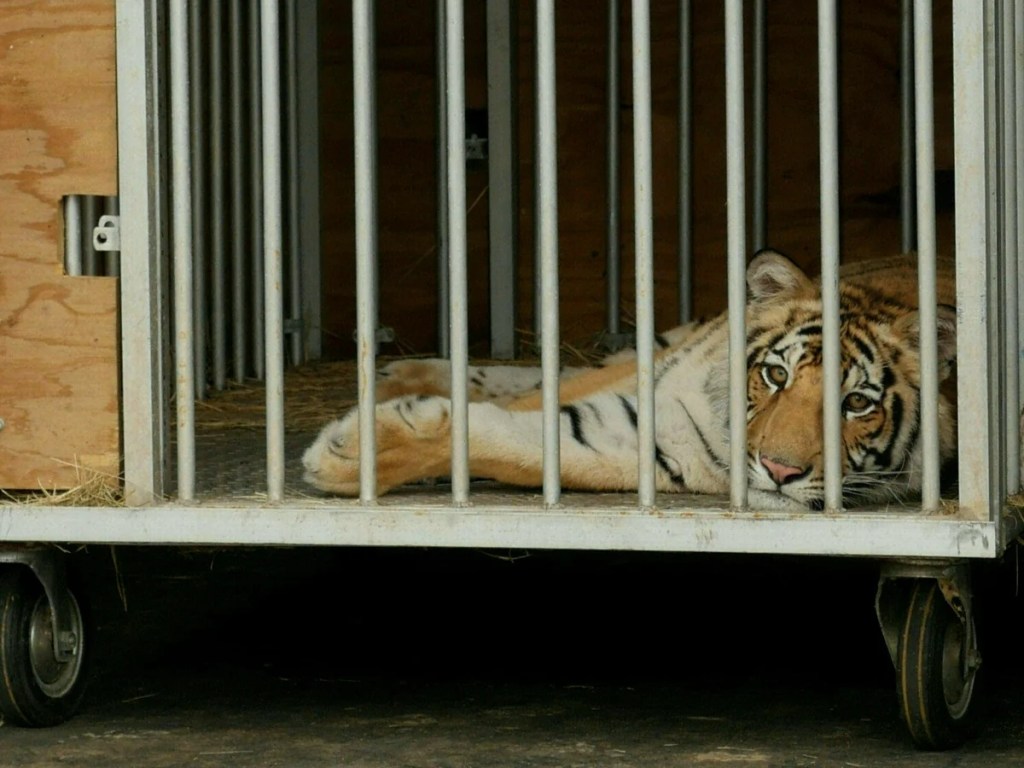
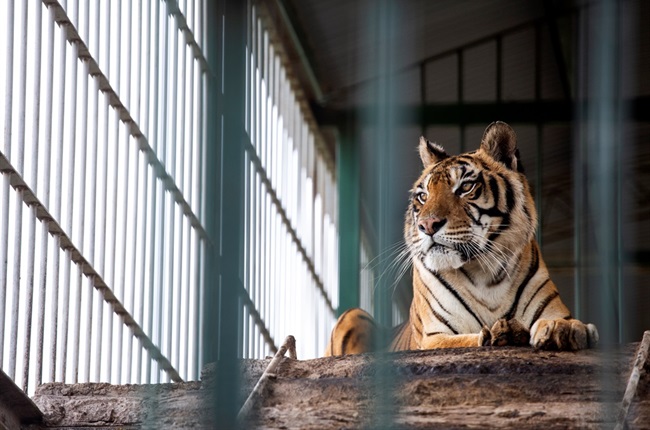
A nine-month-old Bengal Tiger, which was seen roaming the lawns of suburban Houston, in a cage after being captured by authorities. Credit: Francois Picard
More than 280 wildlife photographers have contributed to the Remembering Wildlife series since it started in 2016, working under the banner Wildlife Photographers United. It has now raised over £1.15m GBP/$1.5m USD for 74 conservation projects in 33 countries.
The photographers who have donated their images for this edition are: Harmit Ahuja, Theo Allofs, Daryl & Sharna Balfour, Adam Bannister, Chris Brunskill, Clive Burns, Will Burrard-Lucas, Alison Buttigieg, Vladimir Cech, Vladimir Cech Jr., Sandra Clayton, Marius J Coetzee, Shem Compion, Ben Cranke, Nick Dale, Tristan Dicks, Kevin Dooley, Kairav Engineer, Suzi Eszterhas, Mark Farrington, Sascha Fonseca, Arijeet Ghosh, Paul Goldstein, Sergey Gorshkov, Sagar Gosavi, Jan van der Greef, Todd Gustafson, Andrew Holt, Sebastian Kennerknecht, Suyash Keshari, Tim Laman, Anirudh Laxmipathy, Chien C. Lee, Tin Man Lee, Russell MacLaughlin & Shannon Wild, Nitish Madan, Thomas D. Mangelsen, Anuradha Marwah, Shivang Mehta, Dale R Morris, Dhritiman Mukherjee, Sunil V. Nair, Latika Nath, Tom Nicholson, Pete Oxford, Parinya Padungtin, Sarah Parker, Andy Parkinson, Graeme Purdy, Margot Raggett, Sachin Rai, Gaurav Ramnarayanan, Aly Rashid, Yashpal Rathore, Andy Rouse, Sabrina Schumann, Jonathan & Angela Scott, Khushboo Rahul Sharma, Anjali Singh, Archna Singh, Dicky Singh, Jaisal Singh, Andy Skinner, Sarah Skinner, Kim Sullivan, Tom Svensson, Jami Tarris, Valmik Thapar, Greg du Toit, Marlon du Toit, Turgay Uzer, Francesco Veronesi, Thomas Vijayan, Lance van de Vyver, James Warwick, Steve Winter, Art Wolfe
A stunning image of a Sumatran Tiger in Aceh Province, Northern Sumatra by Steve Winter. Credit: Steve Winter/Remembering Tigers.
Sales from Remembering Tigers will be used to fund conservation projects in areas where they are vulnerable.
Further information about Remembering Wildlife can be found here .
To find out more about the projects that Remembering Wildlife has already funded, click here
How have the Remembering Wildlife books helped conservation
Together, the series has now sold more than 50,000 books and distributed more than £1.15 million GBP / $1.5 million USD to 74 different conservation projects in 33 countries across Africa, North and South America, Asia and Europe.
All books were prefunded by successful Kickstarter campaigns, meaning that all profits can be given straight to projects protecting the species that the book is focused on.
Since the launch of Remembering Elephants in 2016, over 270 of the world’s best wildlife photographers have generously contributed to the series. Here is the full list of those whose images have appeared in one or more of the Remembering Wildlife titles so far:
Jane Addey, Karine Aigner, Oriol Alamany, Taylor Thomas Albright, Neil Aldridge, Maxime Aliaga, Theo Allofs, Matt Armstrong-Ford, Grant Atkinson, Andrew Aveley, Daniel Bailey, Daryl & Sharna Balfour, Adam Bannister, Brooke Bartleson, Stephen Belcher, Rick Beldegreen, Patrick Bentley, Sabine Bernert, Andy Biggs, Giorgio Bighi, Jayaprakash Bojan, Donal Boyd, Sean Brogan, Kate Brooks, Seyms Brugger, Volodymyr Burdiak, Matt Burrard-Lucas, Will Burrard-Lucas, Benoit Bussard, Alison Buttigieg, Marina Cano, Ayesha Cantor, Mark Cawardine, David Cayless, Vladimir Cech, Vladimir Cech Jr., Peter Chadwick, Paras Chandaria, Sam Clark, Alwyn Coates, Chad Cocking, Marius Coetzee, Martyn Colbeck, Marco Colombo, Shem Compion, Alain Compost, Keith Connelly, Rob Cottle, Ross Couper, Ben Cranke, Brendon Cremer, Mark Deeble & Victoria Stone, Tanja Dekker, Willem Dekker, Melanie Delamare, Peter Delaney, M & C Denis-Huot, Anja Denker, Richard Denyer, Tristan Dicks, Sebastián Di Doménico, Billy Dodson, Kevin Dooley, Mark Dumbleton, Julie Duncan, Michelle & Ken Dyball, Nicholas Dyer, Andy Edge, Kairav Engineer, Morkel Erasmus, Denise Eriksson, Amit Eshel, Suzi Eszterhas, Chris Fallows, Sascha Fonseca, James Gifford, Daisy Gilardini, Paul Goldstein, Sergey Gorshkov, Marc Graf, Fredrik Granath, Chris Grech, Jan van der Greef, Kim Griffin, Owen Grobler, Melissa Groo, Fabrice Guerin, Richard Guijt, Amy Gulick, Todd Gustafson, Josh Guyan, Drew Hamilton, Charlie Hamilton James, Thorsten Hanewald, Hilary Hann, Peter Haygarth, Tony Heald, Harman Singh Heer, Trish Hennessy, Naudé Heunis, Torie Hilley, Joshua Holko, Roger Hooper, Friedrich von Horsten, Andy Howe, Jabruson, Britta Jaschinski, Vicki Jauron, Brendon Jennings, Arnfinn Johansen, Morten Jørgensen, Paul Joynson-Hicks, Jocelin Kagan, Lakshitha Karunarathna, Kyriakos Kaziras, Steven Kazlowski, Sebastian Kennerknecht, Bob Keyser, Clement Kiragu, Agung Ganthar Kusumanto, Tim Laman, Lisa A. Langell, Frans Lanting, Behzad J. Larry, Chien Lee, Ole J Liodden, David Lloyd, Hannes Lochner, George Logan, Michael Lorentz, Nick Lyon, Piper Mackay, Russell MacLaughlin, Kate Malone, Thomas D. Mangelsen, Suhail Manji, Tin Man Lee, Johan Marais, Matt Maran, Tom Mason, Jo-Anne McArthur, Molly McCormick, Phil McFadden, Paul McKenzie, Shivang Mehta, Garry Mills, Sumeet Moghe, Marc Mol, Dale R Morris, Sue Morris, Margot Muir, Mike Muizebelt, Dhritiman Mukherjee, Yashas Narayan, Shareen Nash, Latika Nath, Elliott Neep, Heinrich Neumeyer, Nick Newman, Thomas Nicolon, Kyle de Nobrega, Jules Oldroyd, Hilary O’Leary, Marsel van Oosten, Xavier Ortega, Ben Osborne, Prelena Soma Owen, Pete Oxford, Chris Packham, Richard Packwood, Parinya Padungtin, Andy Parkinson, Dawn Perkins, Richard Peters, Mevan Piyasena, Julien Polet, Michael Poliza, Jacha Potgieter, Isak Pretorius, Graeme Purdy, Nick Rabjohn, Cameron Raffan, Margot Raggett, Abdul Rashid, Ian Redmond, Pierluigi Rizzato, Gregg Robinson, Dee Roelofsz, Fiona Rogers, Gurcharan Roopra, Matthew Roper, Daniel Rosengren, Andy Rouse, David Sandford, Nima Sarikhani, Joel Sartore, Melissa Schäfer, Chris Schmid, Yaron Schmid, Sabrina Schumann, Jonathan & Angela Scott, Pasan Senevirathne, Anup Shah, Ismail Shariff, Amy Shutt, Anjali Singh, Andy Skillen, Andy Skinner, Sarah Skinner, Paul Souders, Kathryn Sowerbutts, Brent Stapelkamp, William Steel, Jonas Stenqvist, Brent Stirton, Charl Stols, Sabine Stols, James Suter, Tom Svensson, Jami Tarris, Austin Thomas, Jessica Tingley Dunn, Roy Toft, Greg du Toit, Marlon du Toit, Steve & Ann Toon, Paolo Torchio, R.J. Turner, Christophe Vasselin, Albie Venter, Bertus Venter, Hendri Venter, Federico Veronesi, Francesco Veronesi, Thomas Vijayan, Fred Vogt, Marion Vollborn, Pim Volkers, Lance van de Vyver, Tami Walker, James Warwick, Tom Way, Marcus Westberg, Christopher Whittier, Staffan Widstrand, Shannon Wild, Jon Wilson, Steve Winter, Shannon Witz, Art Wolfe, Kim Wolhuter, Nelis Wolmarans, Ian Wood, and Jeffrey Wu.
All of the stunning images used in the books and exhibitions have been generously donated by the photographers, as their way to give back to the species they make their livings from photographing.
Margot Raggett, founder of Remembering Wildlife
I fell in love with wildlife and safaris many years before picking up a camera! In the 2000s, I worked in PR in London and used all my spare cash to book safaris to Africa, as I had become totally addicted to being in nature. It was when I inadvertently signed up to a photography-based safari in 2010 that everything changed for me. It was a trip to see Kenya’s ‘Great Migration’ led by Jonathan & Angela Scott and it was only a few days before I went, that I realised I was supposed to bring a camera. I bought a cheap kit camera & lens and headed to Kenya. It turned out that camera was no good at all for wildlife (it was a very short lens) but nonetheless, I was totally inspired by Jonathan & Angela’s photography. When I got home, I immediately upgraded my gear and signed up for a course at the London School of Photography to learn the basics and I’ve never looked back. For a few years I went on as many photographer-led trips as I could, to learn from the best and then in 2012, agreed a deal to work as a Photographer in Residence at a camp in the Maasai Mara called Entim Camp. At that point I started selling my photos and attracting followers on social media.
It was in 2014 that everything changed for me once again. I had been working as a resident photographer in Kenya at that point for about three months a year, for three years, and it was at the end of one of those stays that I travelled to Laikipia to visit a friend. We were woken very early in camp by the sound of Hyenas going crazy and at first light, went to investigate. What I saw changed my life, It was an Elephant who had died from a poisoned arrow, likely poachers had shot him but he’d got away, only to die a slow, painful death over the next few days. The Hyenas had started to eat his body and the sight – and the smell – was so shocking. I came to realise that poaching and the many other threats that wildlife faces are often hidden away from tourists and as a result, many like me at that point, had any idea how bad things really are. I was incredibly angry and upset and resolved to channel those emotions into something positive. That was the trigger for me to start work on what I thought would be a one-off book on Elephants, to raise awareness about poaching and funds for projects working to protect Elephants. I started to approach wildlife photographers I’d met in the field and invited them to donate an image each and it took off from there. 18 months later, Remembering Elephants was published. It sold out in 2 months and raised more than £100,000 and without me knowing it, a series was born. We’ve published seven more books since (Remembering Rhinos, Remembering Great Apes, Remembering Lions, Remembering Cheetahs , Remembering African Wild Dogs, Remembering Bears, Remembering Leopards) and Remembering Tigers will be published in October 2024. Nowadays I spend far less time in the field taking traditional wildlife pictures like before but rather, I spend more time visiting the projects we are able to support with our funds, so I can see how our money is making a difference.
Margot was awarded an MBE in the The King’s Birthday Honours 2023 for services to International Wildlife Conservation.
Margot Raggett MBE
Celebrity supporters of Remembering Wildlife
Remembering Wildlife Founder Margot Raggett with actor, filmmaker and animal conservationist Dan Richardson. Credit: Dan Richardson
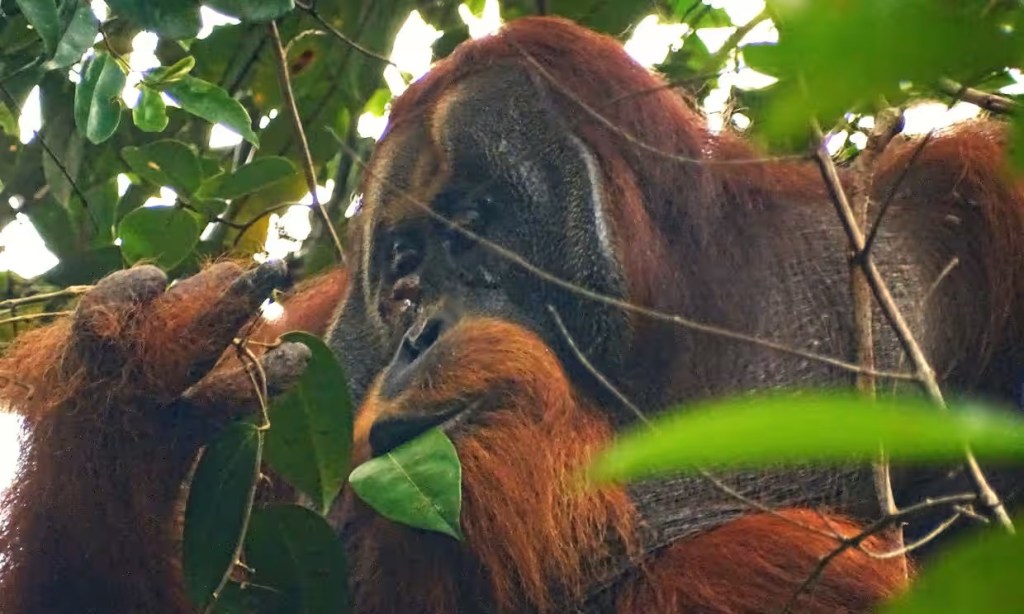
An Orangutan in Sumatra surprised scientists when he was seen treating an open wound on his cheek with a poultice made from a medicinal plant. It’s the first scientific record of a wild animal healing a wound using a plant with known medicinal properties. The findings were published this week in Scientific Reports1.
Rakus used leaves from a liana climbing vine known to have anti-inflammatory and pain-relieving properties. Photograph: Saidi Agam/Suaq Project
“It shows that Orangutans and humans share knowledge. Since they live in the same habitat, I would say that’s quite obvious, but still intriguing to realize,” says Caroline Schuppli, a primatologist at the Max Planck Institute of Animal Behavior in Konstanz, Germany, and a co-author of the study.
In 2009, Schuppli’s team was observing Sumatran Orangutans (Pongo abelii) in the Gunung Leuser National Park in South Aceh, Indonesia, when a young male moved into the forest. He did not have a mature male’s big cheek pads, called flanges, and was probably around 20 years old, Schuppli says. He was named Rakus, or ‘greedy’ in Indonesian, after he ate all the flowers off a gardenia bush in one sitting.
In 2021, Rakus underwent a growth spurt and became a mature flanged male. The researchers observed Rakus fighting with other flanged males to establish dominance and, in June 2022, a field assistant noted an open wound on his face, possibly made by the canines of another male, Schuppli says.
Days later, Rakus was observed eating the stems and leaves of the creeper akar kuning, which local people use to treat diabetes, dysentery and malaria, among other conditions. Orangutans in the area rarely eat this plant.
Leaves from the akar kuning variety of liana climbing vines. Photograph: Saidi Agam/Suaq Project
In addition to eating the leaves, Rakus chewed them without swallowing and used his fingers to smear the juice on his facial wound over seven minutes. Some flies settled on the wound, whereupon Rakus spread a poultice of leaf-mash on the wound. He ate the plant again the next day. Eight days after his injury, his wound was fully closed.
The research group has seen no other orangutans in the national park self-medicate using akar kuning in 21 years of observation. This could be because wild Orangutans in the region are rarely injured. Or perhaps Rakus is the only one who knows of this treatment, which could be a behaviour he picked up before he moved into the area.
Rakus with his open wound, two days before he was observed applying a poultice of medicinal leaves. Credit: Armas
“It is the first study to scientifically demonstrate that an animal is using a plant with medicinal properties applicable to wounds, and putting those on the wounds and consistently treating over a period of time,” says Michael Huffman, who studies animal self-medication at the Institute for Tropical Medicine at Nagasaki University in Japan.
Huffman says self-medication is seen in many species. Canadian Snow Geese swallow leaves whole to expel tape worms. Dusky-footed Wood Rats line their nests with aromatic plants to fumigate parasites. And Chimpanzees in Gabon have been observed rubbing insects near their wounds, potentially as treatment.
Humans might even have discovered some remedies by watching animals, he says. “Probably our ancestors were looking at other animals and learning about medicines.” When social animals communicate, “that information sticks and can last over generations”.
You can support ‘Protect All Wildlife’ by donating as little as £1 – It only takes a minute but it can last a lifetime for an animal in need. Please donate below.
Everyone who donates will receive a Certificate of Appreciation as a thank you for helping animals in need.
The Mission of Protect All Wildlife is to prevent cruelty and promote the welfare of ALL animals.
We believe EVERY animal should be treated with respect, empathy, and understanding. We raise awareness to protect and conserve wild, captive, companion and farm animals.
It is vital that we protect animals against acts of cruelty, abuse, and neglect by enforcing established animal welfare laws and, when necessary, take action to ensure that those who abuse animals are brought to justice.
Protect All Wildlife are involved in many projects to protect animals’ rights, welfare, and habitats. Money contributed to Protect All Wildlife supports ALL of our worthy programmes and gives us the flexibility to respond to emerging needs. Your donations make our work possible.
The train carriage that was ‘home’ to four Bengal Tigers. Credit: Four Paws/Nicolas Cabona.
The four Bengal Tigers, who lived 15 years in a train carriage in Argentina, have now been at their new home in South Africa for two years.
FAMILY OF FOUR
In 2007, a travelling circus abandoned the 18-year-old male and 15-year-old female Tiger in a train carriage in San Luis province in the west of Argentina. The circus asked a local farmer to temporarily take care of them, but never returned. The animals remained in the train carriage and had two babies.
The farmer didn’t inform the authorities of the situation given that it is illegal to keep wild animals privately in Argentina and simply tried to take care of them as best he could.
PRISON. Credit: Four Paws/Hristo Vladev
In 2021, Argentinian authorities became aware of the bad living conditions of the Tigers and began looking for solutions for the animals.
FOUR PAWS TO THE RESCUE
By February 2022, through the bars of their cages, the four Tigers had watched the sunrise over the meadow more than 5,000 times. Freedom had always been right in front of them, yet so far away.
The cages were barely larger than the size of two parking spaces and were part of an old train carriage – unfit for any animal. In the beginning, it was only two of them. Then two cubs were born, who are 10 years old today. They were trapped behind bars in dirty conditions, with little space to move on a train wagon – which has been stood still since then.
Animal welfare organization Four Paws rescued Sandro, Mafalda, Messi and Gustavo from their cages and transferred them to LionsRock Big Cat Sanctuary.
Veterinarians of Four Paws spent weeks on-site to prepare the Tigers with positive reinforcement so that the transfer would be as safe as possible for the animals.
“These Tigers spent over 15 years in the same 75m² space, surrounded by the same landscape and without any stimulation of their instincts or natural behaviour. Our team needed to be around them so they would stay calm in our presence and during the transfer,” Four Paws veterinarian Amir Khalil, who led the rescue mission, said.
The Tigers had to be taken out of their cages, moved into transport crates and on a truck to the airport, flown from Argentina to South Africa, and taken off the airport on trucks to their new home. The total journey took more than 70 hours.
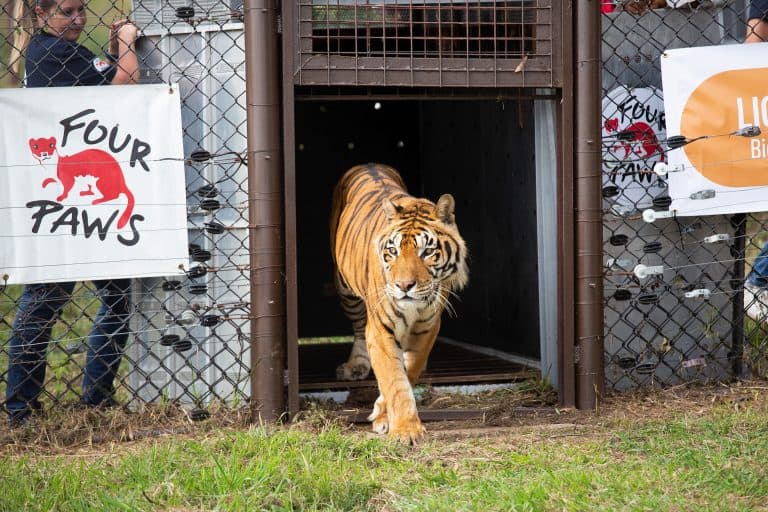
At LionsRock, Mafalda took a little time before leaving her transport crate, but the three other Tigers started to explore the new surroundings almost immediately, Four Paws said.
Mafalda hesitantly enters her new life of freedom. Credit: Four Paws
“These Tigers have never felt grass or earth under their paws. It’s the first time they can see the sky above them, not just metal bars and a roof,” Khalil said.
“Now they have hundreds of square meters full of new feelings, tastes and smells. It is overwhelming for them to be in a completely new environment, but animals are quick at adapting to better living conditions,” he added.
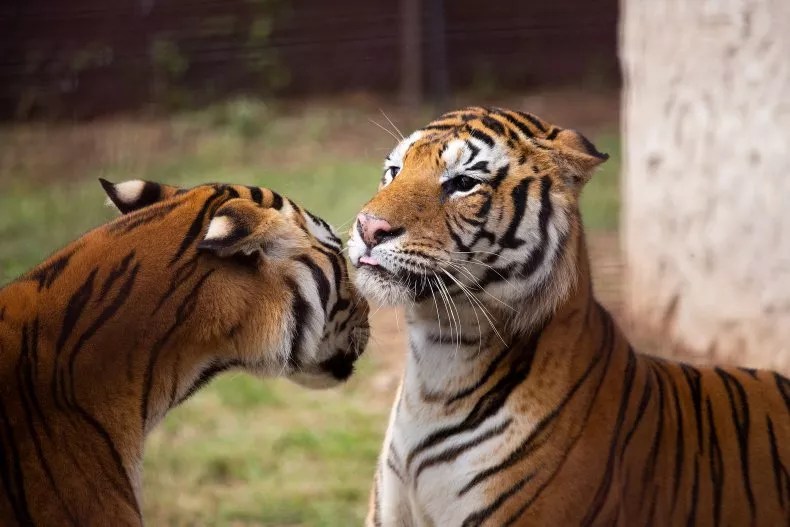
Messi and Sandro enjoying their freedom. Credit: Four Paws/Daniel Born
“The road to rehabilitation for these animals now begins,” Hildegard Pirker, who manages LionsRock Big Cat Sanctuary, said
There are only around 3,900 Tigers left in the wild, Four Paws said, adding that due to a lack of regulations, Tigers are kept in captivity and traded around the world for human entertainment and killed for their skin, fur, bones, and teeth.
The Train Tigers of Argentina – two years on. Credit: Four Paws.
WHAT YOU CAN DO TO HELP WILDLIFE
You can support ‘Protect All Wildlife’ by donating as little as £1 – It only takes a minute but it can last a lifetime for an animal in need. Please donate below.
Everyone who donates will receive a Certificate of Appreciation as a thank you for helping animals in need.
The Mission of Protect All Wildlife is to prevent cruelty and promote the welfare of ALL animals.
We believe EVERY animal should be treated with respect, empathy, and understanding. We raise awareness to protect and conserve wild, captive, companion and farm animals.
It is vital that we protect animals against acts of cruelty, abuse, and neglect by enforcing established animal welfare laws and, when necessary, take action to ensure that those who abuse animals are brought to justice.
Protect All Wildlife are involved in many projects to protect animals’ rights, welfare, and habitats. Money contributed to Protect All Wildlife supports ALL of our worthy programmes and gives us the flexibility to respond to emerging needs. Your donations make our work possible.
This is your chance to bid on beautiful original artworks in our ‘Charity Auction To Help Disabled Animals’.
This is a sealed bid auction, so all you need to do is decide which item you would like to bid for and send us your bid with the LOT NUMBER and name by email to protectallwildlife@btinternet.com by 21:00 on the 30th of June. We will email you to let you know if your bid is the highest. Postage costs will be calculated when the auction ends. If you need any more information etc please email Paul at protectallwildlife@btinternet.com.
This is an ORIGINAL watercolour, pastel and pencil study of a Badger by wildlife artist Milo. This STUNNING piece is on high grade art paper measuring 59 x 42 cms.
A Badger by Milo ~ 2020.
Lot 2
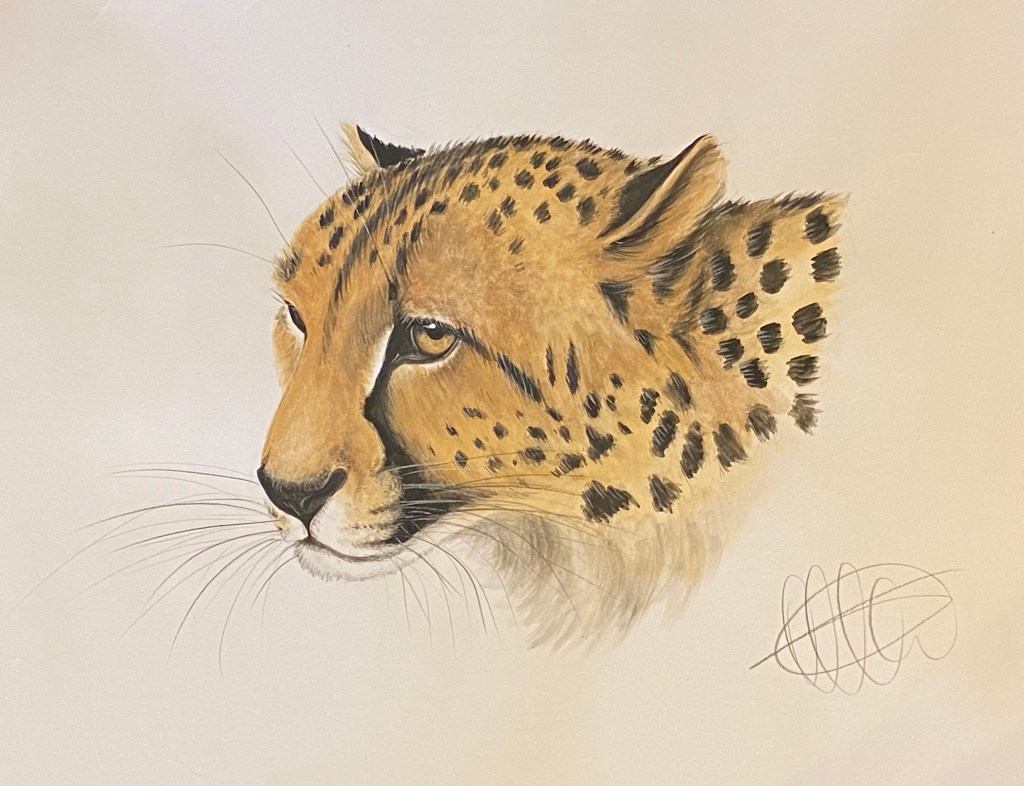
This is an ORIGINAL watercolour, pastel and pencil study of a Cheetah by wildlife artist Milo. This STUNNING piece is on high grade art paper measuring 59 x 42 cms.
A Cheetah by Milo ~ 2020.
Lot 3
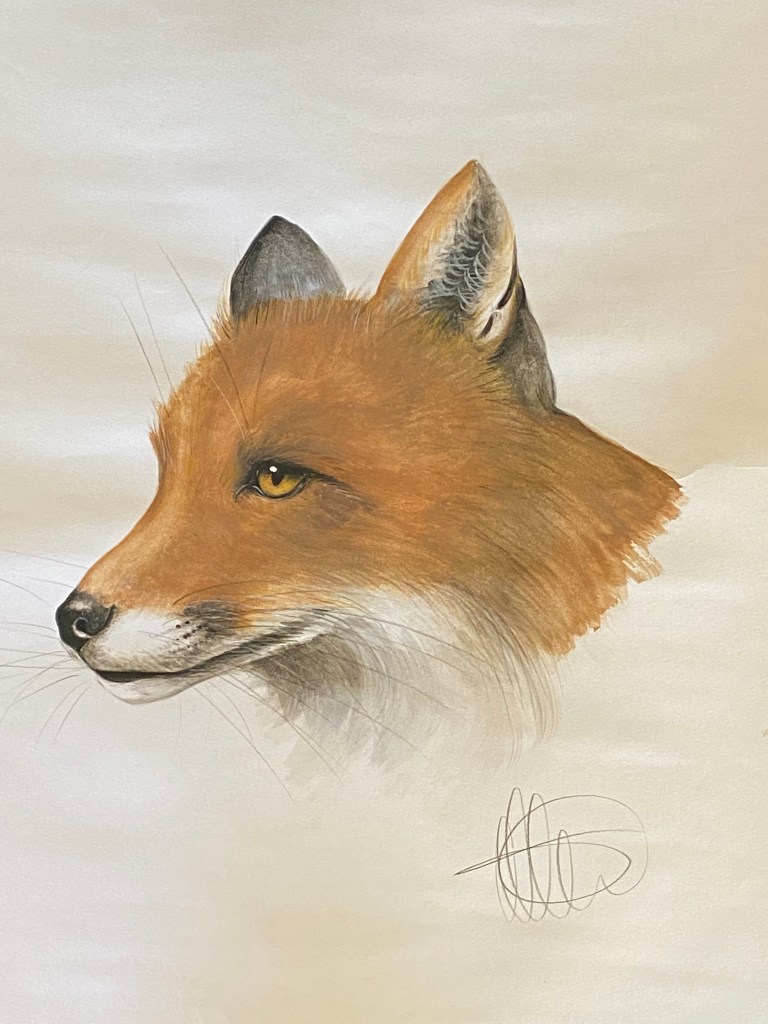
This is an ORIGINAL watercolour, pastel and pencil study of a Fox by wildlife artist Milo. This STUNNING piece is on high grade art paper measuring 42 x 59 cms. (#19).
A Fox by Milo ~ 2020.
Lot 4
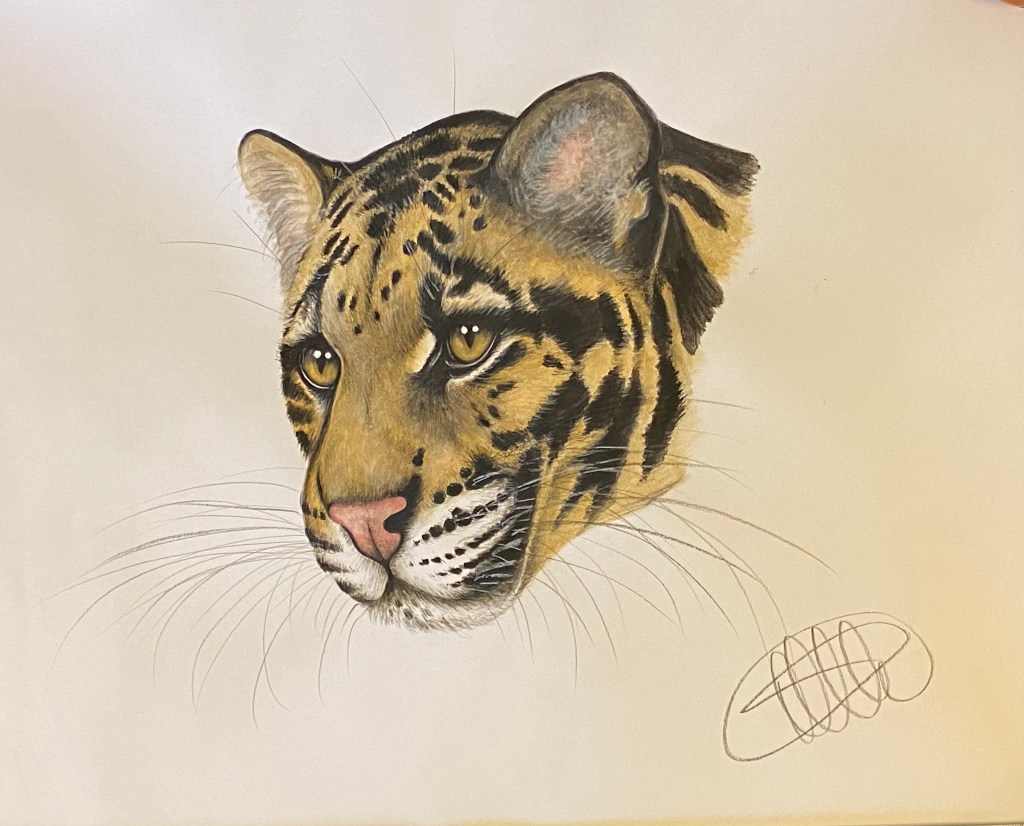
This is an ORIGINAL watercolour, pastel and pencil study of a Clouded Leopard by wildlife artist Milo. This STUNNING piece is on high grade art paper measuring 57 x 42 cms. (#34).
A Clouded Leopard by Milo ~ 2020
Lot 5
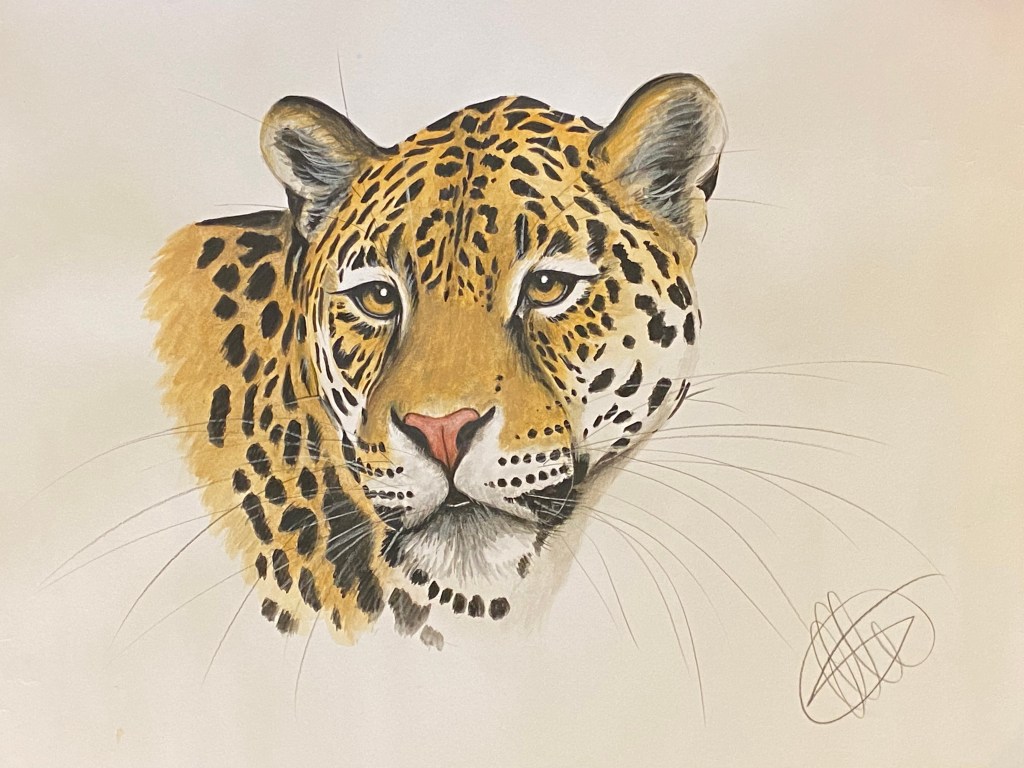
This is an ORIGINAL watercolour, pastel and pencil study of a Jaguar by wildlife artist Milo. This STUNNING piece is on high grade art paper measuring 57 x 42 cms. (#8
A Jaguar by Milo ~ 2020.
Lot 6
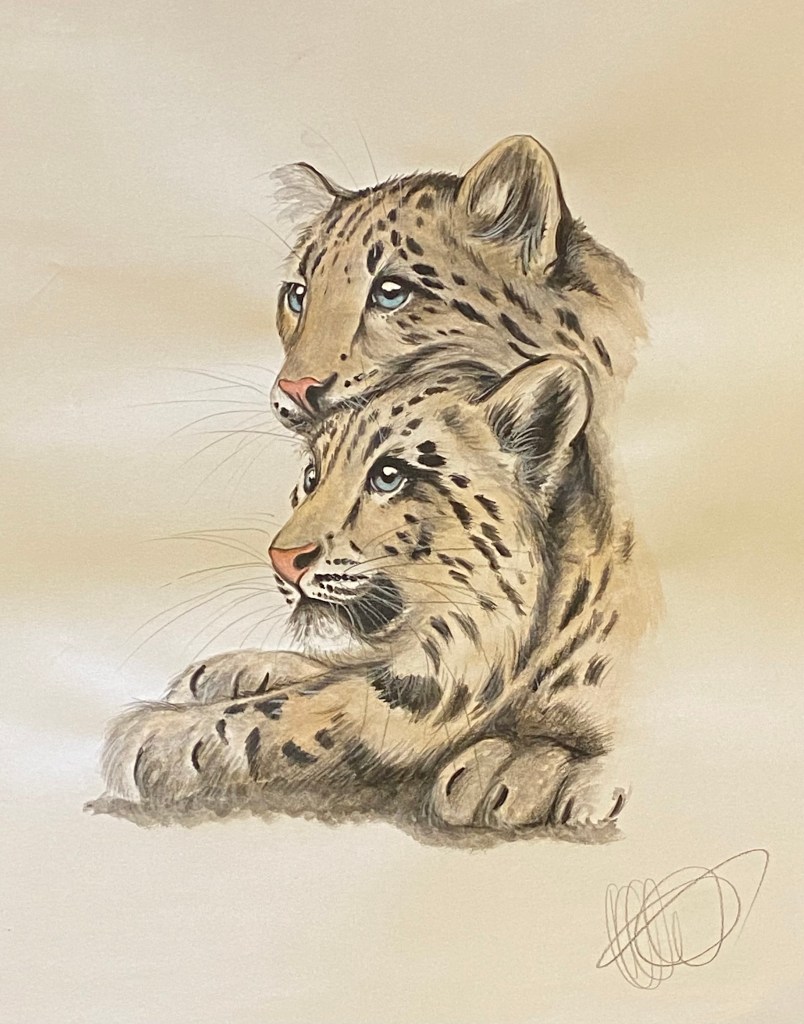
This is an ORIGINAL watercolour, pastel and pencil study of a pair of Snow leopard cubs by wildlife artist Milo. This STUNNING piece is on high grade art paper measuring 42 x 59cms. (#26).
A pair of Snow Leopard cubs by Milo ~ 2020.
Lot 7
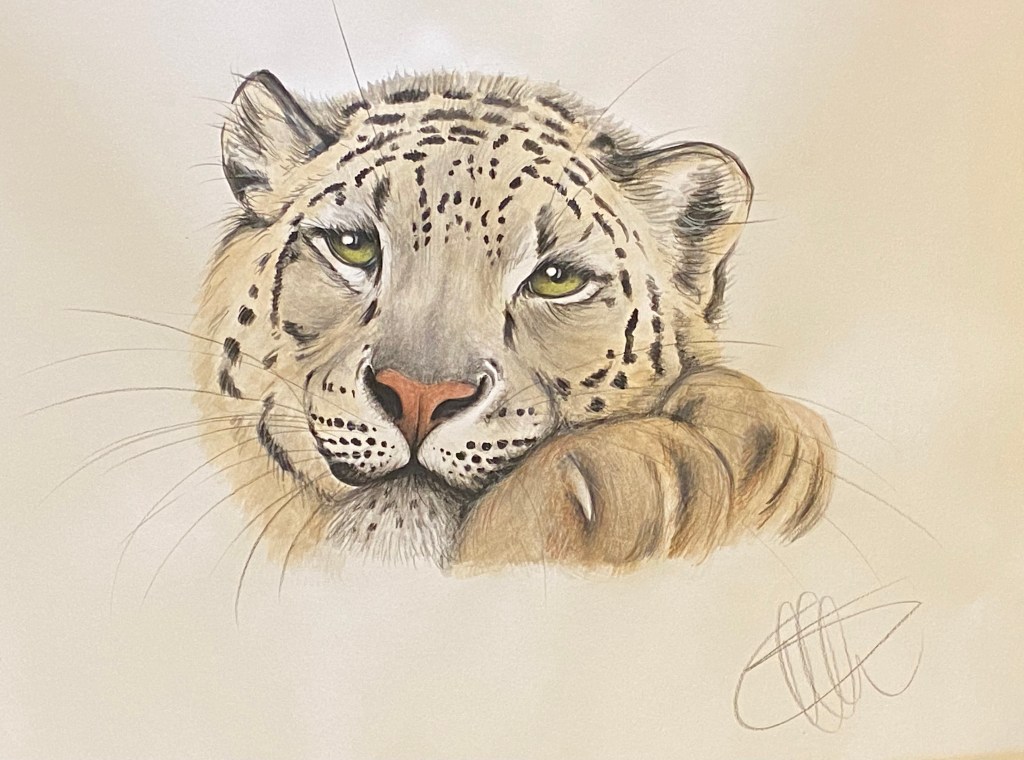
This is a stunning ORIGINAL watercolour, pastel and pencil study of a Snow Leopard by wildlife artist Milo. This STUNNING piece is on high grade art paper measuring 59×42 cms. (#7).
A Snow Leopard by Milo ~ 2020
Lot 8
This lot is ‘A Mother’s Love’, an adorable original watercolour, pastel and pencil of a Lioness and her cubs by wildlife artist Milo. This BEAUTIFUL piece is on high grade art paper measuring 30.5×27.6 cms. (#17).
A Mother’s Love by Milo ~ 2012
Lot 9
Who can resist ‘Those Eyes’? This delightful original watercolour, pastel and pencil study of a baby Orangutan is by Milo and is on high grade art paper measuring 59×42 cms. (#12).
‘Those Eyes’ by Milo ~ 2021.
Lot 10
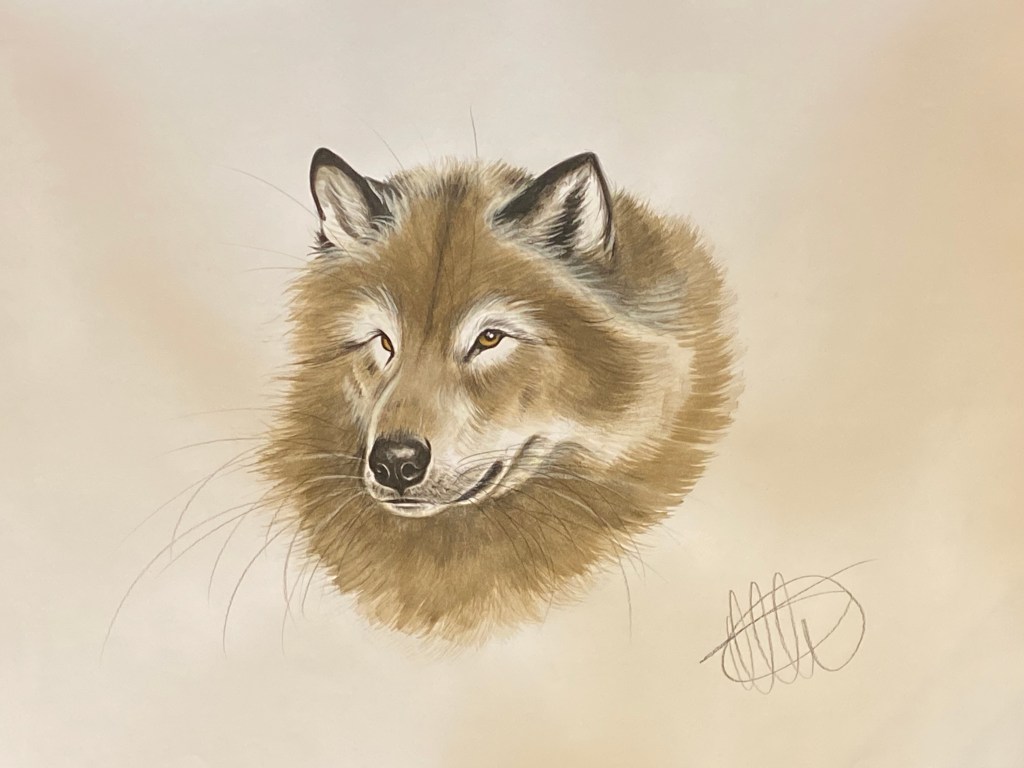
This is a stunning ORIGINAL watercolour, pastel and pencil study of a Wolf by wildlife artist Milo. This beautiful piece is on high grade art paper measuring 59×42 cms. (#13).
A Wolf by Milo ~ 2021.
Lot 11
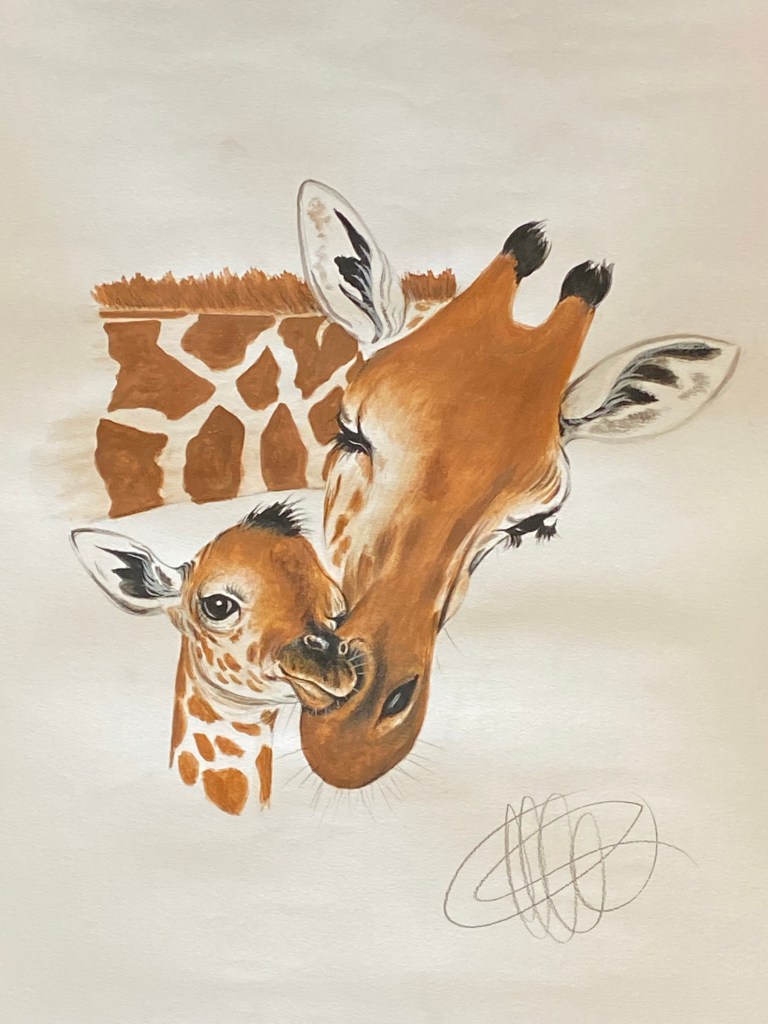
‘A Mother’s Love’ is an ORIGINAL watercolour, pastel and pencil study of a Giraffe and her baby by wildlife artist Milo. This STUNNING piece is on high grade art paper measuring 42 x 59 cms. (#18).
‘A Mother’s Love’ (Giraffe & Baby) by Milo ~ 2021.
Lot 12
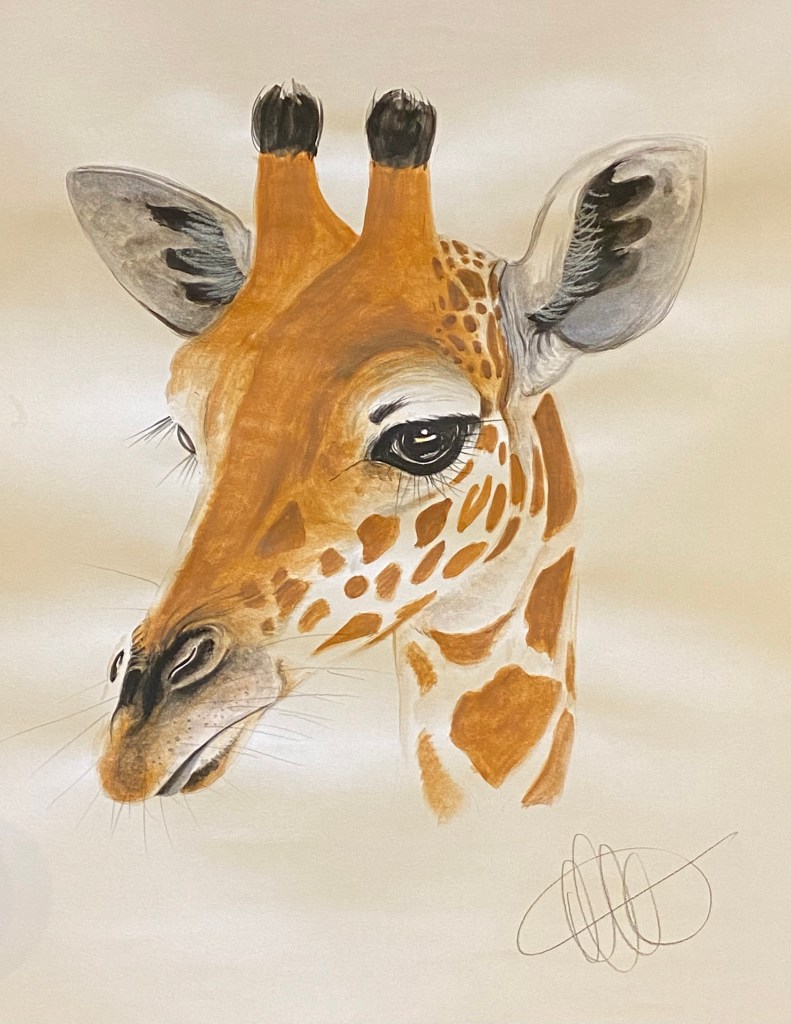
This is an ORIGINAL watercolour, pastel and pencil study of a Giraffe by wildlife artist Milo. This BEAUTIFUL piece is on high grade art paper measuring 42 x 59 cms. (#25).
A Giraffe by Mido ~ 2020.
Lot 13
This is an ORIGINAL watercolour, pastel and pencil study of an Amur Leopard by wildlife artist Milo. This BEAUTIFUL piece is on high grade art paper measuring 59 x 42 cms. (#27).
An Amur Leopard by Milo ~ 2021.
Lot 14
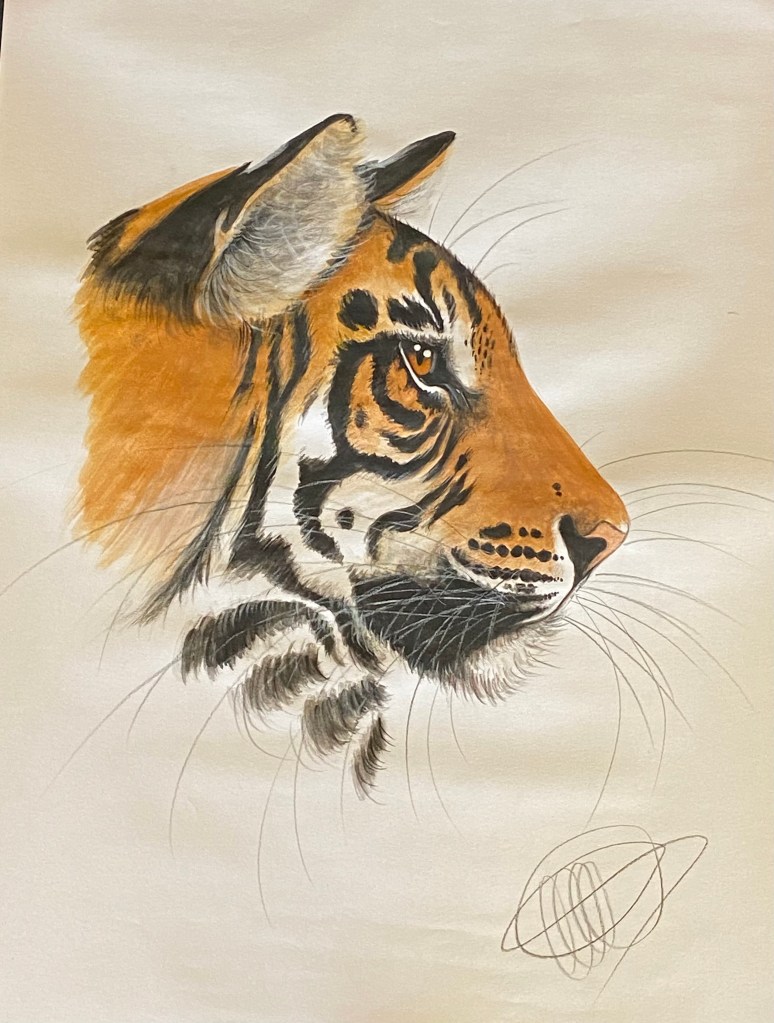
This is an ORIGINAL watercolour, pastel and pencil study of a Sumatran Tiger by wildlife artist Milo. This BEAUTIFUL piece is on high grade art paper measuring 59 x 42 cms. (#1).
A Sumatran Tiger by Milo ~ 2019.
Lot 15
This is an ORIGINAL watercolour, pastel and pencil study of a beautiful pair of Cheetah cubs by wildlife artist Milo. This BEAUTIFUL piece is on high grade art paper measuring 59 x 42 cms. (#16).
A pair of Cheetah cubs by Milo ~ 2020.
Lot 16
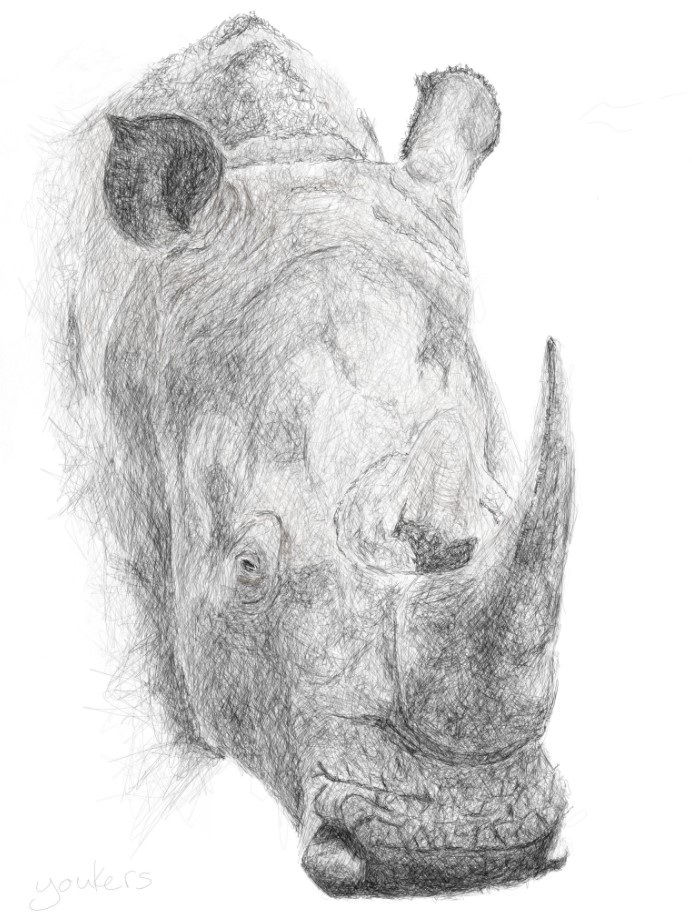
This is an ORIGINAL pencil study of a Rhino by Dane Youkers . This beautiful piece measures 28 x 36 cms .
A Rhino by Dane Youkers ~2022.
Lot 17
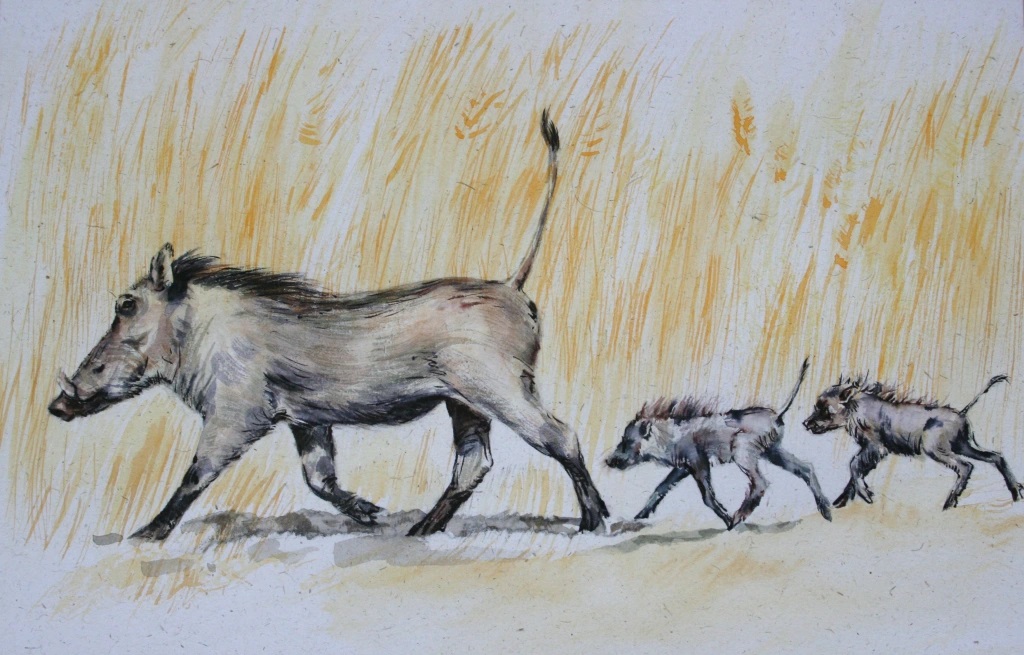
‘Tails Erect’ by Wildlife Artist Carol Barrett. This ORIGINAL study of Warthogs is in watercolour and ink and is on Rhino Dung Paper! It is mounted and measures 40 x 30 cm.
‘Tails Erect’ by Carol Barrett.
Lot 18
This is an ORIGINAL watercolour study of a Badger by Diane Antoine. This beautiful piece measures 30 x 21 cms .
‘The Badger’ by Diane Antoine ~2020.
Lot 19
This is an ORIGINAL pencil study of a Wolf (artist unknown). This beautiful piece measures 30 x 21 cms .
A Wolf In Thought
Lot 20
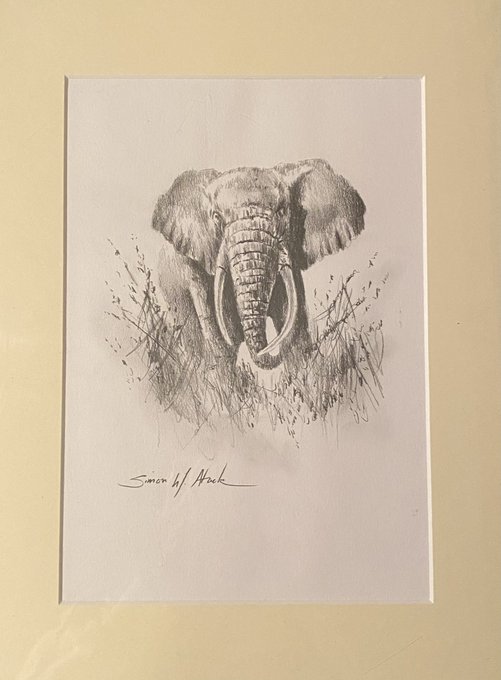
This is an ORIGINAL study of an Elephant in pencil by Simon W. Atack. This BEAUTIFUL piece measures 30 x 21 cms and is mounted.
The Leader Of The Herd by Simon W. Atack.
Lot 21
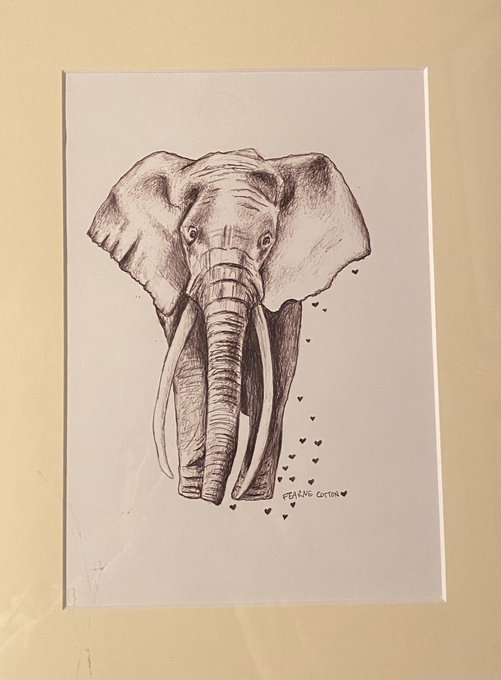
This is an ORIGINAL study of an Elephant in pencil by presenter and author Fearne Cotton. This BEAUTIFUL piece measures 30 x 21 cms and is mounted.
Super Tusker by Fearne Cotton.
Lot 22
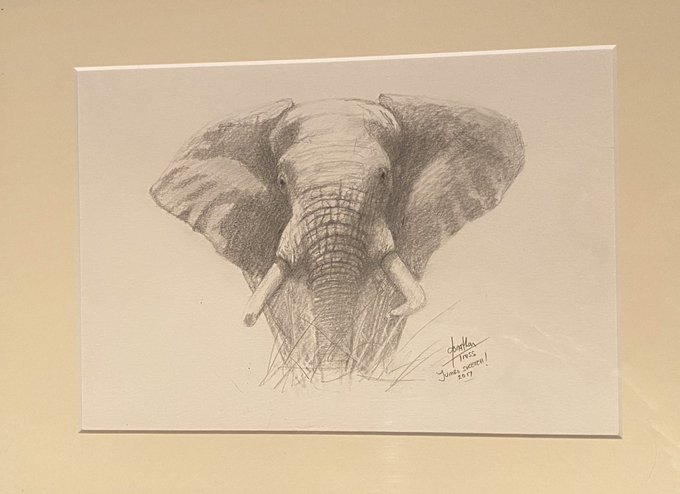
This is an ORIGINAL study of an Elephant in pencil by Jonathan Truss. This BEAUTIFUL piece measures 30 x 21 cms and is mounted.
Jumbo Sketch by Jonathan Truss.
Lot 23
‘Gentle Elephant’ is an ORIGINAL watercolour study by Anne Jolivet. This BEAUTIFUL piece measures 30 x 21 cms .
‘Gentle Elephant’ by Anne Jolivet ~ 2021.
Lot 24
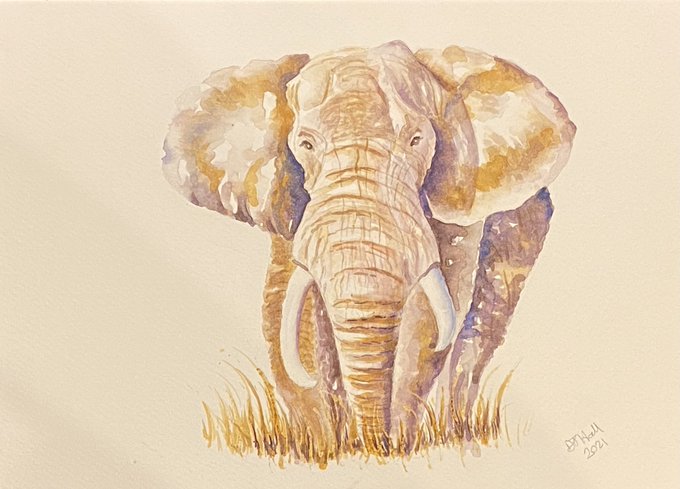
This is an ORIGINAL watercolour study of an Elephant by Debra J. Hall. This BEAUTIFUL piece measures 30 x 21 cms .
An Elephant by Debra J. Hall ~ 2021.
Lot 25
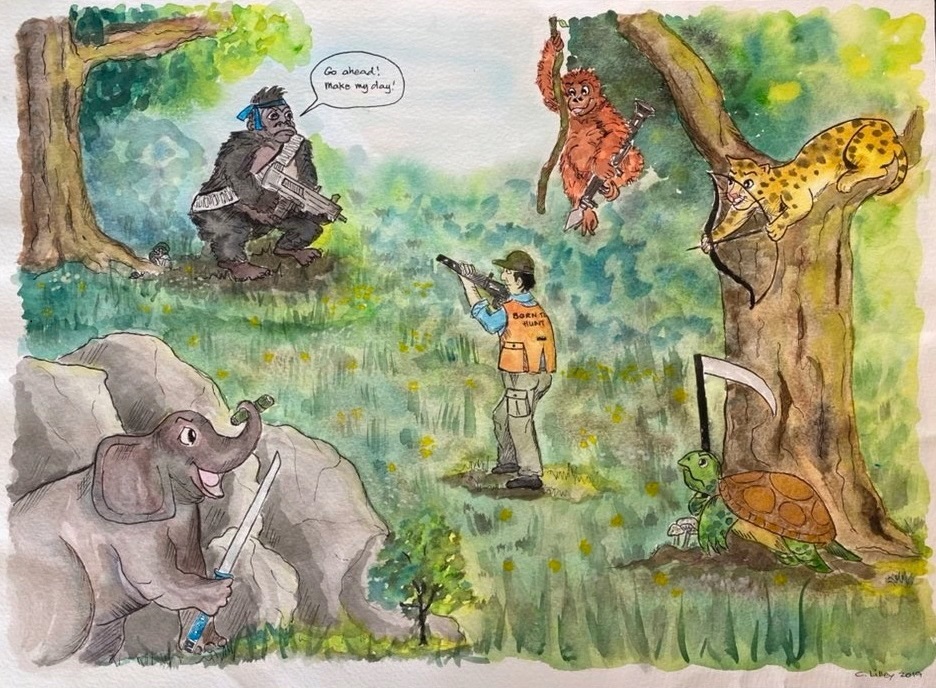
‘The Animals Fight Back’ ORIGINAL watercolour Charito Lilley. This thought-provoking piece measures 40 x 30 cms
‘The Animals Fight Back’ by Charito Lilley ~ 2019.
Lot 26
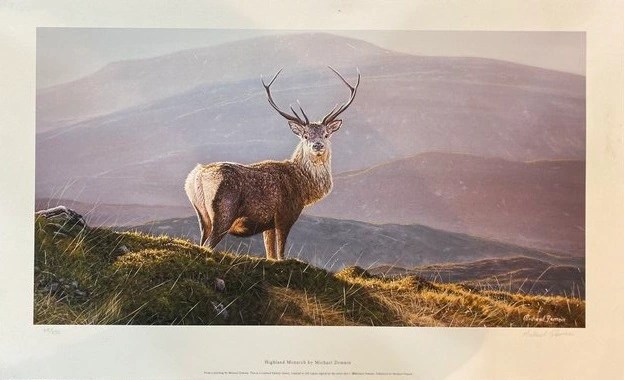
This is a Limited Edition (No. 46/250) print is ‘Highland Monarch’ by Michael Demain. This stunning print measures 56 x 34 cms.
‘Highland Monarch’ by Michael Demain.
Lot 27
A beautiful print of Tiger cubs by Jan Ferguson. This piece measures 41 x 31 cms.
‘Tiger Cubs’ by Jan Ferguson.
Lot 28
A stunning Limited Edition print (No. 7/100) titled ‘Endangered Nobility’ by Kim Thompson. This beautiful study of the noble Lion measures 60 x 42 cms.
‘Endangered Nobility’ by Kim Thompson ~ 2011.
Lot 29
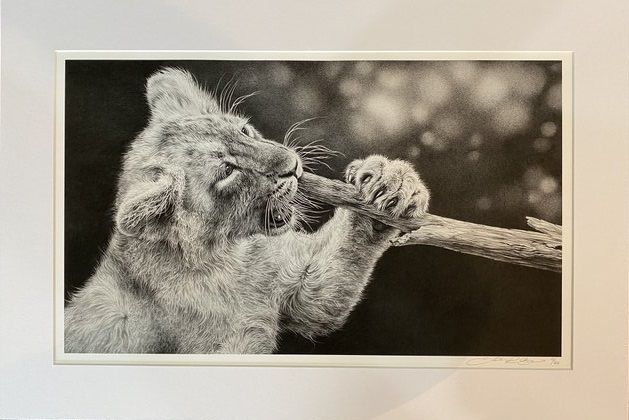
‘Mischief Maker’ is a beautiful Ltd Edition study of a playful Lion cub by Julie Rhodes. It is mounted and measures 56 x 38 cms.
‘Mischief Maker’ by Julie Rhodes.
Lot 30
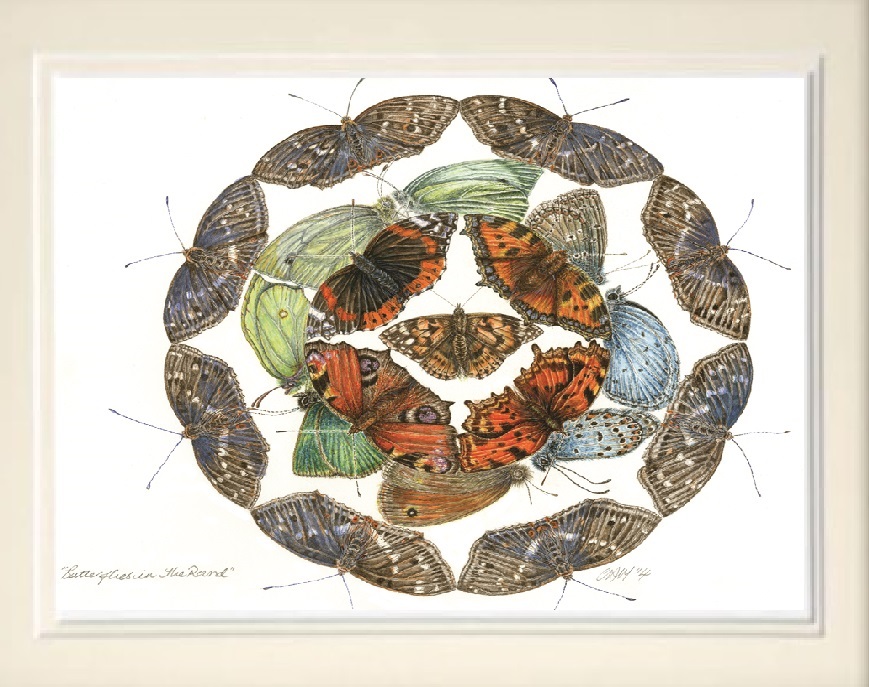
The beautiful Butterflies In The Round by Cath Hodsman. This Limited Edition print measures 51 x 41 cms.
‘Butterflies In The Round’ by Cath Hodsman.
Lot 31
Street artist Sonny Sundancer’s gigantic painting of an Amur Leopard overlooked the city of Vladivostok, Russia and was part of his worldwide ‘To The Bone’ project aimed at raising awareness about endangered species.
This STUNNING piece of his work is caught brilliantly in this VERY Limited Edition of only 45 prints (No. 29/45) and measures 50 x 35 cms.
Amur Leopard street art by Sunny Sundancer ~ 2017.
Lot 32
In a very Limited Edition of only 75 prints (No. 6/75), this beautiful study of a Sumatran Tiger is by Nick Day. It measures 38 x 41 cms.
A Sumatran Tiger by Nick Day ~ 2015.
Lot 33
This is a stunning Limited Edition print of a commission for The Miracle’s Mission Rehabilitation Centre. This beautiful piece measures 30 x 21 cms.
THE MIRACLE’S MISSION REHABILITATION CENTRE
Thank you for taking the time to look at our auction and happy bidding.
If you would like to make a donation to our fundraiser to help support our work you can do so at Fundraiser To Help Disabled Animals. Thank you.
Chernobyl has become a refuge for wildlife 37 years after the nuclear accident
The Chernobyl disaster happened on April 26, 1986. The city of Pripyat was evacuated, but animals remained in the area. Over 37 years later, some species have thrived, others have been severely affected, and even new species have been introduced. But how did these animals respond to radiation exposure? What were the effects of living in and around the Chernobyl Exclusion Zone?
The explosion at the Chernobyl nuclear power plant in Ukraine sent a radioactive cloud across Europe. Within weeks, nearly 100,000 people who lived in a large zone surrounding the disaster site had been evacuated, never to return to the poisoned land.
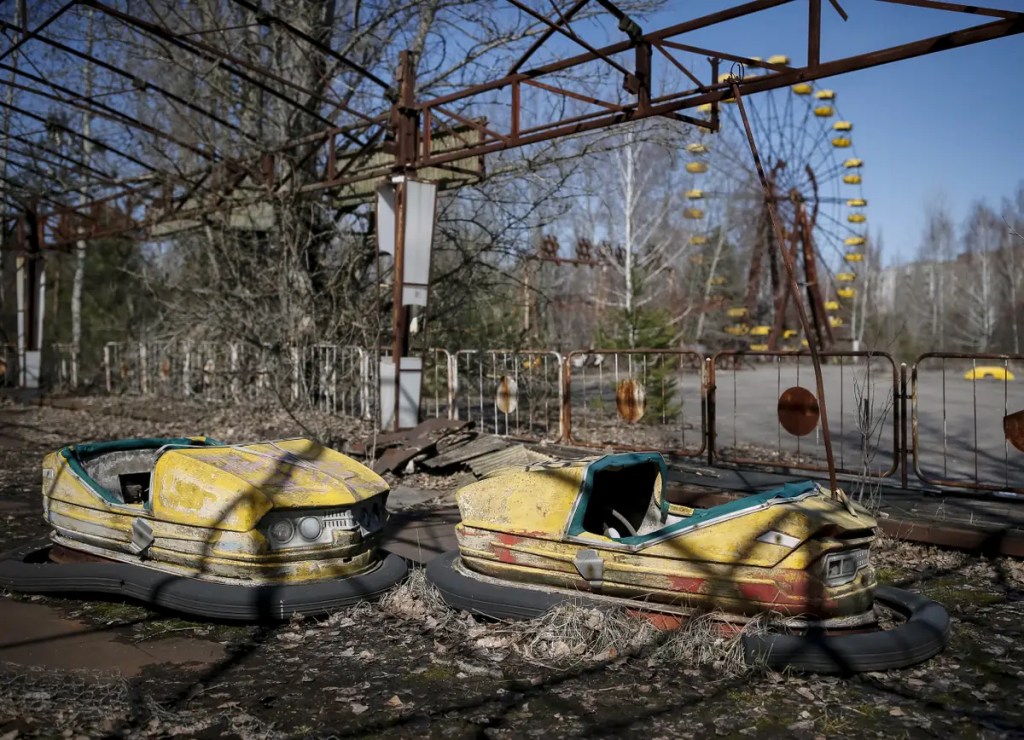
Today, the relics of their past — hollowed-out hotels, empty swimming pools, crumbling farming villages and oxidized ferris wheels — stand in ghostly abandonment across a contaminated region larger than Rhode Island
But time has not stood still. Nature has reclaimed the area, and new photographic data show the 1,600 square-mile Chernobyl Exclusion Zone is now “basically an incredibly large sanctuary” for animals large and small.
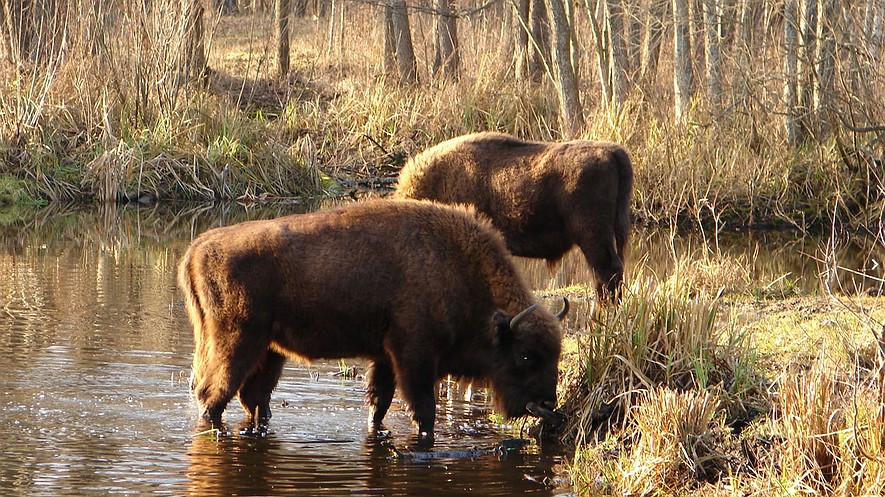
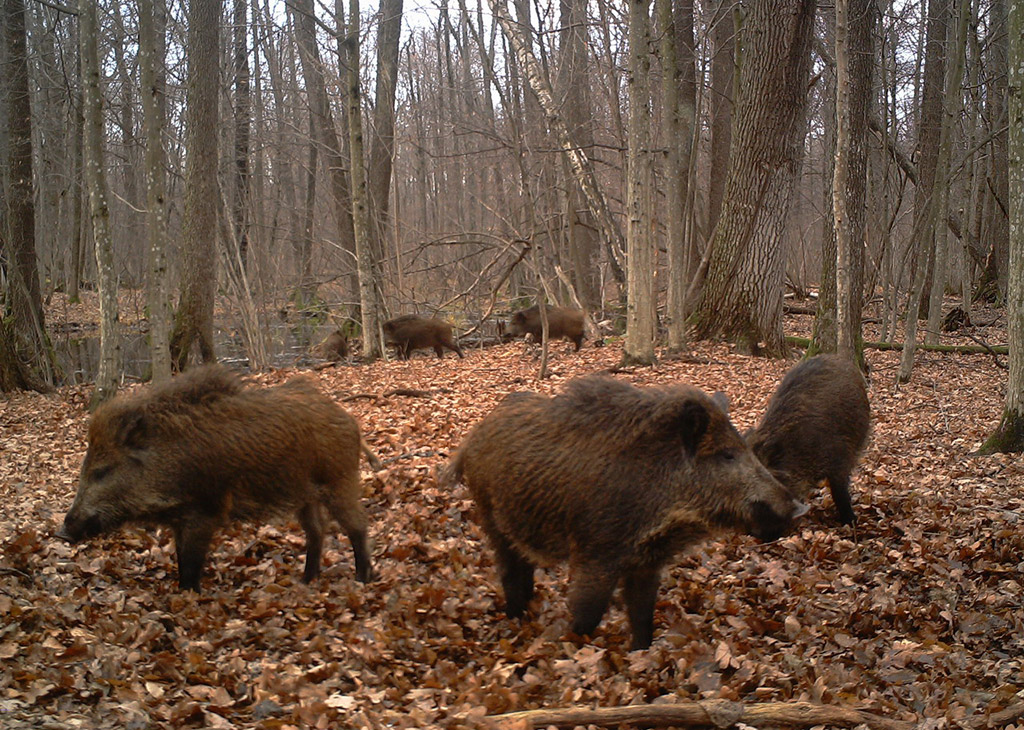
Wildlife in the area surrounding Chernobyl seems to be thriving in the radiation-contaminated exclusion zone, according to a new study. Many large mammal populations were found in the area including Grey Wolves, Wild Boar, Red Deer, Roe Deer, Moose, Bison, Red Foxes and Elk.
The study, published in the journal Current Biology, finds that a nuclear disaster may be less threatening to wildlife than habitation, reports The Los Angeles Times.
The results show that the exclusion zone supports wildlife, “regardless of potential radiation effects on individual animals,” the study authors wrote.
These results demonstrate for the first time that, regardless of potential radiation effects on individual animals, the Chernobyl exclusion zone supports an abundant mammal community after nearly three decades of chronic radiation.
The 1986 Chernobyl incident was one of the world’s most catastrophic nuclear disasters. An explosion and a fire at the nuclear power plant in Ukraine released radioactive material into the air, which spread over several countries. An estimated 116,000 people were permanently evacuated from the 1,622 square-mile Chernobyl exclusion zone.
The study shows that the numbers of wildlife are “much higher than they were before the accident,” according to BBC News.
Professor Jim Smith of the University of Portsmouth said that these findings do “not mean that radiation is good for wildlife.” Rather, the “effects of human habitation, including hunting, farming, and forestry, are a lot worse,” explained Smith, lead author of the study.
It’s just that the effects of human habitation, including hunting, farming, and forestry, are a lot worse.
Smith and his colleagues from the Polesky State Radioecological Reserve in Belarus examined data from aerial surveys that counted the large mammals in the area. The number of these animals “in Chernobyl is similar to the populations in uncontaminated nature reserves,” Smith said.
The numbers of animals we see in Chernobyl is similar to the populations in uncontaminated nature reserves.
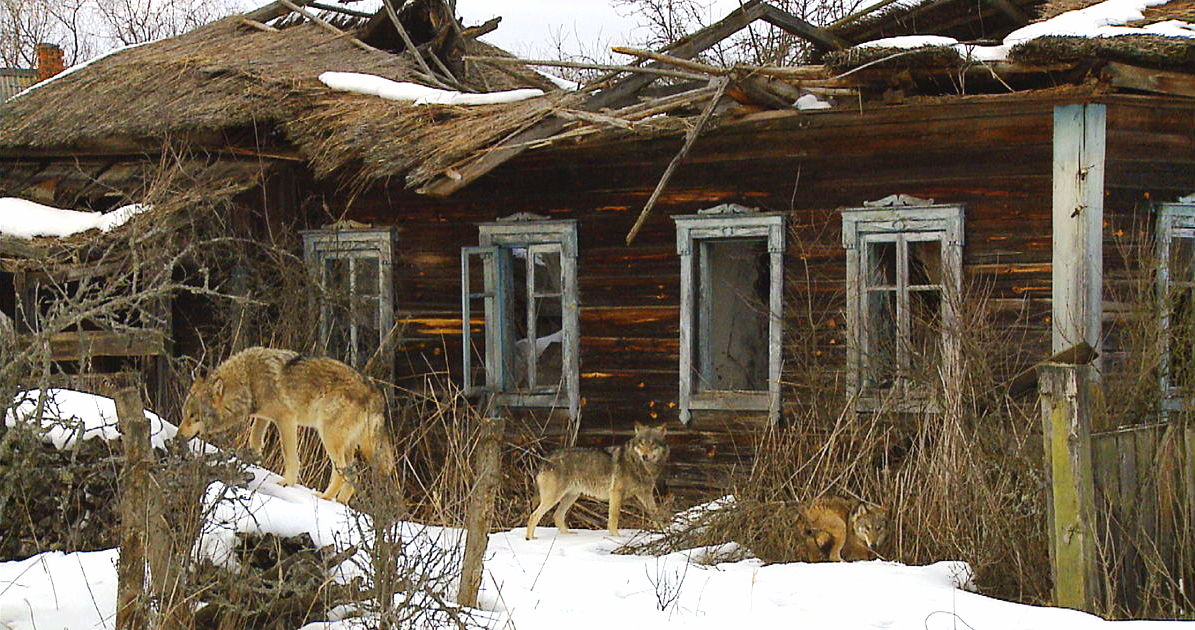
Most surprising was the number of wolves in the exclusion zone – up to seven times higher than the number on nature reserves of a similar size. Smith attributes this to the lack of hunting – and humans – in the area.
The study of the exclusion zone shows what happens to wildlife conservation “when you take humans out of the picture,” said Smith.
WHAT YOU CAN DO TO HELP ANIMALS IN NEED
You can support our work by donating as little as £5 – It only takes a minute but it can last a lifetime for an animal in need.
Everyone who donates will receive a Certificate of Appreciation as a thank you for helping animals in need.
The Mission of Protect All Wildlife is to prevent cruelty and promote the welfare of ALL animals. We believe EVERY animal should be treated with respect, empathy, and understanding. We raise awareness to protect and conserve wild, captive, companion and farm animals.
It is vital that we protect animals against acts of cruelty, abuse, and neglect by enforcing established animal welfare laws and, when necessary, take action to ensure that those who abuse animals are brought to justice.
Protect All Wildlife are involved in many projects to protect animals’ rights, welfare, and habitats. Money contributed to Protect All Wildlife supports ALL of our worthy programmes and gives us the flexibility to respond to emerging needs. Your donations make our work possible.
After Whales and Dolphins, Ottawa intends to ban keeping Elephants and great Apes in captivity in the country “because of the cruelty they represent”.
A new bill, calledThe Jane Goodall Act, was introduced in the Senate on Tuesday to ban anyone from taking an Elephant or a great Ape, a term that includes Chimpanzees, Gorillas and Orangutans.
Canadian zoos won’t be able to bring in new elephants or apes under new federal legislation introduced this week, except under specific circumstances. Bill S-15 looks to ban all new captivity of the species except where a licence is granted for conservation, research or an animal’s best interest.
“The recapture of any Elephant or great Ape in Canada must meet very strict criteria demonstrating that the activity is for animal welfare, conservation or science,” commented the Minister of Environment and Climate Change, Steven Guilbeault.
Senator Marky Klyne of Saskatchewan sponsored the bill that was introduced on Tuesday. “It is upsetting to know that according to current standards, a person does not need to hold a permit to own a chimpanzee in some regions of Canada,” he lamented to explain the interest of his fee.
Elephants, for their part, are very intelligent animals that suffer when kept in captivity or presented to the public in an unnatural environment, added the senator in the second reading of the law on Thursday.
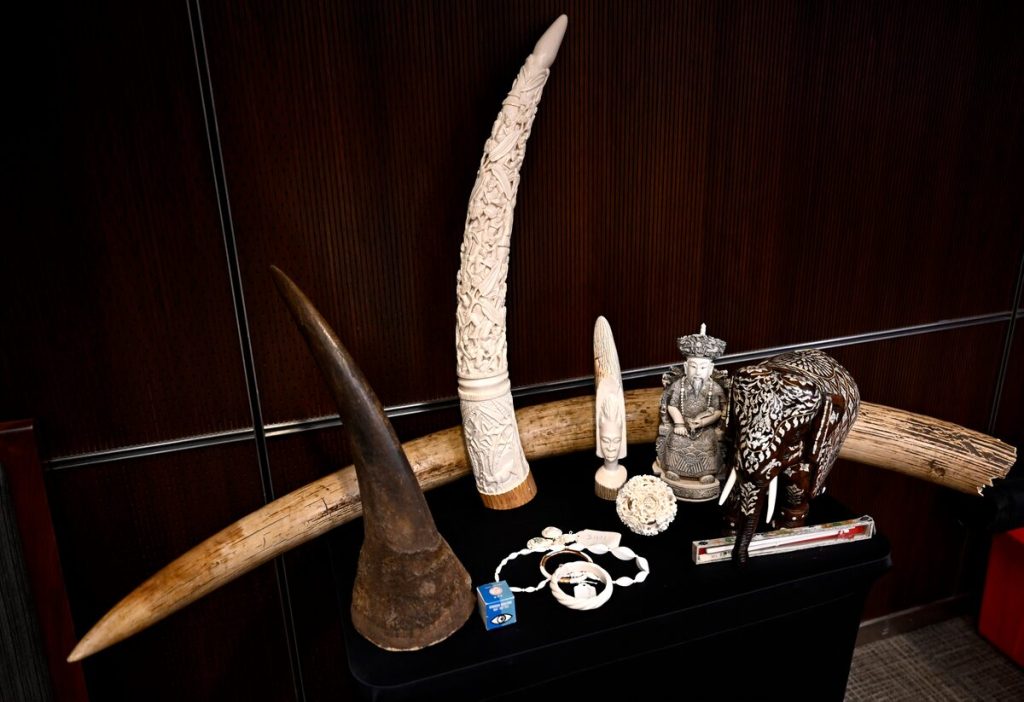
Minister Guilbeault announced the ban on the import of ivory from Elephant tusks and Rhino horns, including hunting trophies and articles carved from ivory, for which it is necessary to obtain a permit. Few exceptions are planned for museums and scientific research.
Elephant ivory and rhino horn imports have been banned by Ottawa
Tightening the laws
The law banning the captivity of great Apes and Elephants is part of a series of laws adopted to better protect animals in Canada and elsewhere in the world.
In 2019, Canada also banned the keeping of Whales and Dolphins in captivity.
WHAT YOU CAN DO TO HELP ANIMALS IN NEED
You can support our work by donating as little as £5 – It only takes a minute but it can last a lifetime for an animal in need.
Everyone who donates will receive a Certificate of Appreciation as a thank you for helping animals in need.
The Mission of Protect All Wildlife is to prevent cruelty and promote the welfare of ALL animals. We believe EVERY animal should be treated with respect, empathy, and understanding. We raise awareness to protect and conserve wild, captive, companion and farm animals.
It is vital that we protect animals against acts of cruelty, abuse, and neglect by enforcing established animal welfare laws and, when necessary, take action to ensure that those who abuse animals are brought to justice.
Protect All Wildlife are involved in many projects to protect animals’ rights, welfare, and habitats. Money contributed to Protect All Wildlife supports ALL of our worthy programmes and gives us the flexibility to respond to emerging needs. Your donations make our work possible.
An Abrupt End To The Jumbo Life Of Iconic Bull Elephant Edison.
Edison in Samburu National Reserve Credit: Alice Clark/Save the Elephants
We are deeply saddened to report that one of our best-known and most beloved bull Elephants, Edison, has died. Edison’s carcass was found in Westgate Conservancy in Samburu, northern Kenya. We suspect his untimely death could be yet another tragic outcome of the rising cases of Human-Elephant Conflict (HEC) across Africa. Investigations into the cause of death are still continuing. Edison’s death marks the third loss of one of our Samburu study bull Elephants within the span of just under a year. In December, bull Elephants Sarara and Yeagar were both killed in conflict with herders.
Matt, Samburu’s biggest tusker, who faced off with Edison in Samburu National Reserve, Credit: Sarah Jacobson/Save the Elephants
Edison was estimated to be approximately 37 years old and in the prime of his life at the time of his death. Born into the Royals family and known to our researchers since he was a teenager, Edison was a feisty wild bull and quite the mama’s boy too. Most bulls venture out for a life of their own when they are around 10-12 years old but when Edison dispersed, he kept coming back to visit his family on and off for the next couple of years.
Edison’s fearless, spirited nature was well-known to many. He was never one to shy away from confrontation, even challenging older and much larger bull Elephants like the late Matt – then Samburu’s biggest tusker who died in 2019. During one dramatic stand-off between the two-testosterone-fueled bulls in 2016, Save the Elephants’ founder, Iain Douglas-Hamilton, got caught in the middle and found himself face to face with Edison who charged his vehicle.
Save the Elephants has been observing and studying the lives of Elephants for more than three decades, gaining fundamental insights into how they behave and make decisions. By analysing the data from Edison’s GPS tracking collar, STE researchers were surprised to discover that while this adventurous bull spent much of his time travelling north to far flung places such as Kipsing, Westgate, Kalama and Ol Donyiro, he would always return home to Samburu National Reserve at full speed when in musth to find mates.
Edison was collared by our team multiple times after his collar either dropped off or the batteries ran out – GPS collars only have a lifespan of around three years. While most collaring operations proceed without a hitch, there’s one incident which is forever etched in our minds.
Our Director of Field Operations, David Daballen, remembers running for the hills during one particular collaring mission when Edison, an enormous bull by then, suddenly awoke just as he was about to be fitted with the tracking device. The whole team, including the vet, had to abandon what they were doing and run for safety. It turned out that the anaesthesia hadn’t fully kicked in and Edison had momentarily woken up. Fortunately , Edison dropped back to sleep and the team were able to complete the mission successfully.
Edison’s last collaring in April 2023 was just as nail biting. Edison went down on his chest, the worst position for an Elephant to be in as they risk suffocating. This time, the STE collaring team were able to push him onto his side and he was again successfully fitted with his new collar.
STE researchers, including David Daballen (below in this picture ) recollaring Edison in Samburu National Reserve in April 2023. Credit: Gilbert Sabinga/Save the Elephants
Says David Daballen, “Losing Elephants like Edison, whom we’ve observed throughout their entire lives, is always a profound loss. Their actions and interactions offer valuable insights into Elephant society. By closely tracking and monitoring these intelligent beings, we also gain a deeper understanding of their distinct personalities and characteristics. Edison, in particular, was a bold, maybe even an audacious Elephant, unafraid to assert himself, as demonstrated when he once challenged the venerable Elephant elder, Matt. We will sorely miss his presence in the reserve and following his remarkable adventures.”
Watch the epic confrontation between Edison and Matt below.
Chris Packham outside the Royal Courts of Justice complex in London
Press release from Leigh Day (6 November 2023)
Chris Packham settles defamation claim with Fieldsports Channel after it admits death threat claims were untrue.
Environmental campaigner and naturalist Chris Packham CBE has settled a defamation claim against the website Fieldsports Channel after it falsely accused him of writing a fake death threat letter to himself.
The online shooting and hunting channel has agreed to pay Mr Packham substantial damages and contribute to his legal costs as well as provide an undertaking never to repeat the allegation.
In June 2022, Fieldsports Channel and one of its journalists, Ben O’Rourke, published an online video and article alleging the TV presenter had written a fake death threat letter to himself and lied about it being sent by an anonymous third party. The serious allegation was not put to Mr Packham directly to offer him right of reply.
Chris Packham with his legal team. Credit: Ruth Tingay.
In bringing the claim against Fieldsports Channel Ltd and Mr O’Rourke, Mr Packham’s lawyers argued the allegations were plainly baseless and had caused him enormous reputational damage and distress. They pointed out that the only possible basis for the allegation was handwriting analysis of the letter which has since been comprehensively discredited.
Of particular concern to Mr Packham was the implication he had lied to his family about the death threat, knowing it would cause them considerable anxiety. Also, that he had lied to, and knowingly wasted the time of, Hampshire Police, who investigated the letter and on whom he relies for his and his family’s safety.
Mr Packham’s distress was later compounded by Fieldsports Channel’s derisive response to his claim, in particular mounting caricatures of his head on a “trophy wall” at the British Shooting Show in February 2023. Mr Packham has been the victim of arson attacks and has received numerous death threats, and he considers its actions to have been utterly reckless and irresponsible in that context.
As well as paying Mr Packham substantial damages and contributing to his legal costs, Fieldsports Channel and Mr O’Rourke have agreed never to repeat the allegation and will publish a legal statement, which is also to be read in the High Court on 6 November 2023, explaining the matter on its platforms.
Mr Packham was represented by Mr Jonathan Price and Ms Claire Overman of Doughty Street Chambers, who are instructed by partner Tessa Gregory and solicitor Carol Day of law firm Leigh Day.
Chris Packham, naturalist, television presenter, writer, photographer, conservationist, campaigner and filmmaker.
Chris Packham said:
“Fieldsports TV displayed a complete contempt of even the basic codes of real journalism. They allowed a vicious vendetta to drive a targeted catalogue of lies in an attempt to destroy my credibility, integrity and reputation. Further, even when involved in this litigation they recklessly posted images of myself contrived to fuel hatred amongst fire-arms owners when they knew I was already the victim of targeted attacks from members of this community. They also failed to show any respect for the legal process. As a consequence, Fieldsports TV have now issued a full apology and agreed to pay substantial costs and damages. My message is clear – if anyone publishes or perpetuates lies about me or my conduct I will challenge them and I will win.”
Carol Day, solicitor at law firm Leigh Day said:
“Our client Mr Packham was the subject of an egregious slur against his reputation based on the flimsiest of evidence that failed to stand up to even the most basic form of scrutiny. To be accused of writing a fake death threat to himself, with all the consequences that brings for his family and the authorities, was a highly damaging attack on Mr Packham’s integrity. The fact he was then mocked publicly for objecting tothese defamatory remarks shows how little regard the defendants had for the reputation of others. Our client can only hope that lessons have been learned from this sorry episode and it brings an end to these gratuitous attacks on Mr Packham’s character by people who simply disagree with his views.”
WHAT YOU CAN DO TO HELP ANIMALS IN NEED
You can support our work by donating as little as £5 – It only takes a minute but it can last a lifetime for an animal in need.
Everyone who donates will receive a Certificate of Appreciation as a thank you for helping animals in need.
The Mission of Protect All Wildlife is to prevent cruelty and promote the welfare of ALL animals.
We believe EVERY animal should be treated with respect, empathy, and understanding. We raise awareness to protect and conserve wild, captive, companion and farm animals.
It is vital that we protect animals against acts of cruelty, abuse, and neglect by enforcing established animal welfare laws and, when necessary, take action to ensure that those who abuse animals are brought to justice.
Protect All Wildlife are involved in many projects to protect animals’ rights, welfare, and habitats. Money contributed to Protect All Wildlife supports ALL of our worthy programmes and gives us the flexibility to respond to emerging needs. Your donations make our work possible.
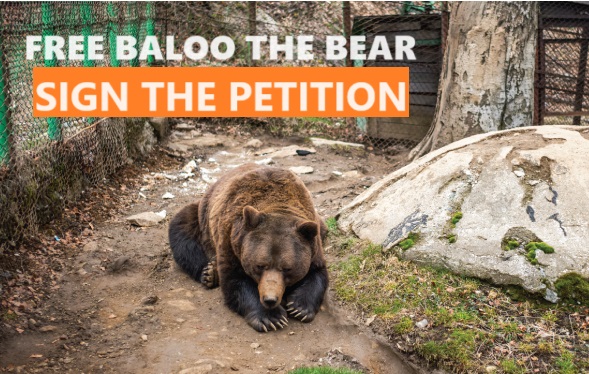
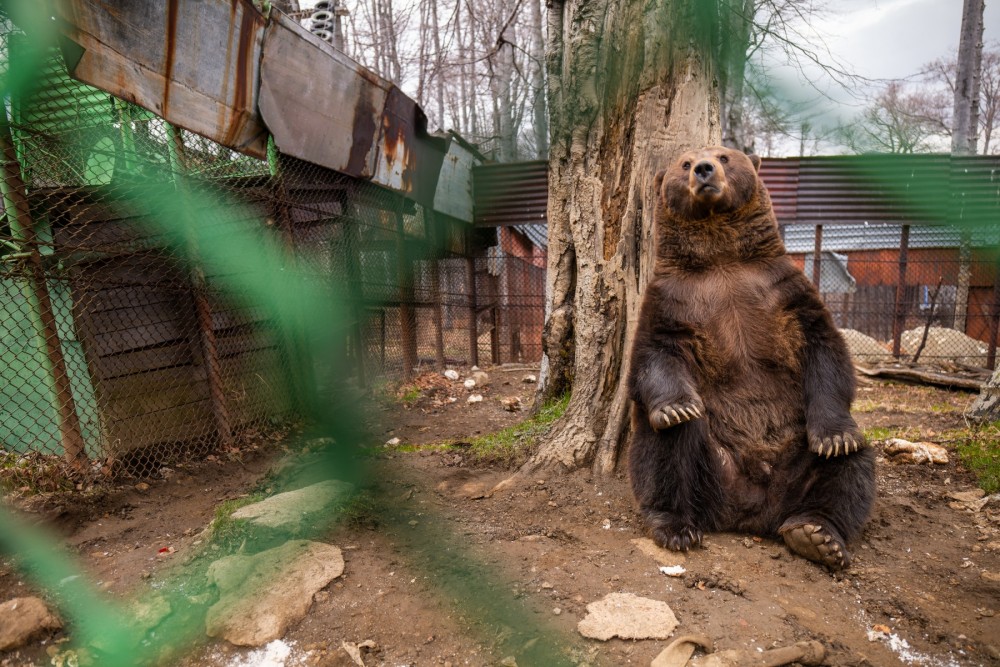
BALOO THE BEAR HAS BEEN LOCKED UP IN A CAGE FOR 23 YEARS CREDIT: JASPER DOEST
Baloo the Bear has been locked up in a cage at a ski resort in Romania under horrific conditions for 23 years. But together with our supporters around the world, we are working to rescue Baloo from this nightmare.
Baloo was found injured as a cub in the Romanian wilderness and was taken in by park rangers for medical care. However, instead of being released back into the wild, Baloo ended up as private property of a ski resort. Despite a 2005 ban by the Romanian government on private individuals keeping Bears, enforcement of the law has been lax, resulting in the bear’s ongoing confinement.
Baloo has been living on display in a tiny cage next to a ski lift and is poorly cared for. He is fed cornflakes and lemonade, sometimes even alcohol to drink, and children frequently poke him through the bars of the cage with sticks. This is no life for a bear.
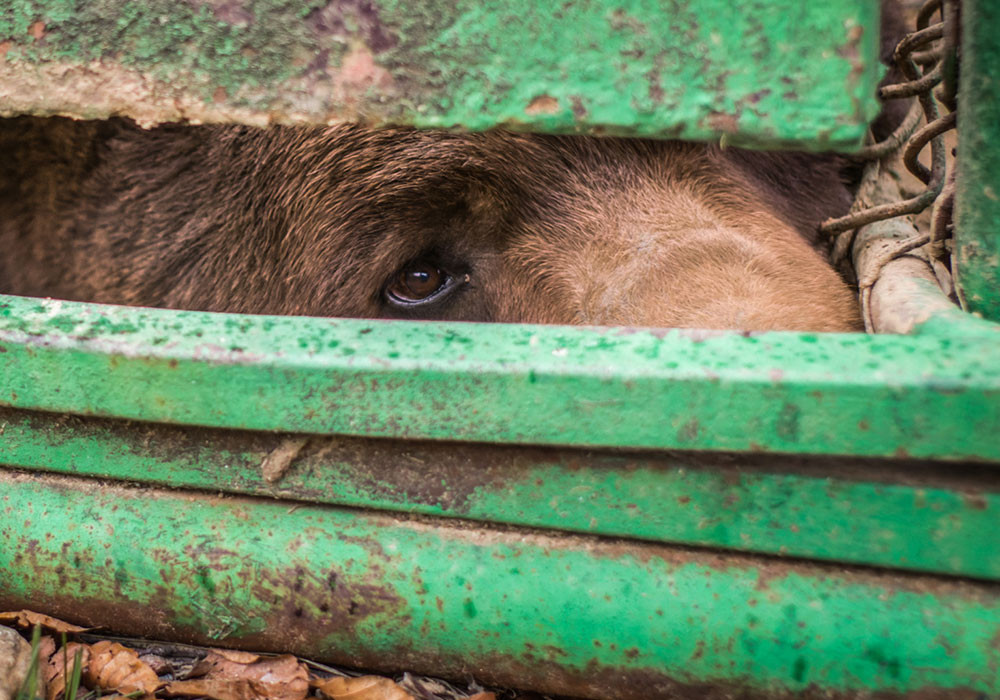
HELL ON EARTH! CREDIT: JASPER DOEST
23 years ago, Baloo was found wounded in the mountains and he was taken to a hospital by the mountain rescuers from Straja. When he recovered, he came into the care of the businessman Emil Părău, who turned him into the resort’s mascot and has refused to give him up under any circumstances. Although it is obvious that it would be better for him to live among the old oaks of the Bear Sanctuary in Zărnești.
Two other Bears, Puppy and Pamy, would have tasted the same cake of frustration if they hadn’t been confiscated and released in the sanctuary at Zarnesti. They grew big and handsome, while poor Baloo remains to serve his punishment.
Animal protection organisations have been trying for years to free Baloo with no success. But fortunately, a petition started by Dutch television host, Floortje Dessing, is drawing much needed global attention to his cause. Floortje’s show “Floortje gaat mee” (“Floortje Goes Along” in English), explores the complex relationships between humans and animals. In the episode, she shows first-hand the distressing conditions Baloo faces.
BALOO THE BEAR: AN UNWILLING MASCOT!
Join us in our efforts to liberate Baloo from a lifetime of misery by signing the petition now!
23 years in an undeserved prison!
23 years of stress, inappropriate food, even alcohol given to him through steel bars!
23 years of objects thrown at him, noise, and lack of hibernation!
A mascot in a European resort, for selfish “love”… This is how Baloo lives his life in Straja, Hunedoara county.
HELP FREE BALOO FROM HIS LIVING HELL! CREDIT: JASPER DOEST
Everyone who donates will receive a Certificate of Appreciation as a thank you for helping animals in need.
The Mission of Protect All Wildlife is to prevent cruelty and promote the welfare of ALL animals.
We believe EVERY animal should be treated with respect, empathy, and understanding. We raise awareness to protect and conserve wild, captive, companion and farm animals.
It is vital that we protect animals against acts of cruelty, abuse, and neglect by enforcing established animal welfare laws and, when necessary, take action to ensure that those who abuse animals are brought to justice.
Protect All Wildlife are involved in many projects to protect animals’ rights, welfare, and habitats. Money contributed to Protect All Wildlife supports ALL of our worthy programmes and gives us the flexibility to respond to emerging needs. Your donations make our work possible.






















 The study, published in the journal Current Biology, finds that a nuclear disaster may be less threatening to wildlife than habitation, reports
  These results demonstrate for the first time that, regardless of potential radiation effects on individual animals, the Chernobyl exclusion zone supports an abundant mammal community after nearly three decades of chronic radiation.
 The study shows that the numbers of wildlife are “much higher than they were before the accident,” according to
  Most surprising was the number of wolves in the exclusion zone – up to seven times higher than the number on nature reserves of a similar size. Smith attributes this to the lack of hunting – and humans – in the area.




 PROTECT ALL WILDLIFE