Through Philanthropy and Activism, Bob Barker Fought Animal Cruelty.
All about Bob Barker’s animal activism — from refusing fur prizes to launching a non-profit charity that funds Spay & Neuter clinics.
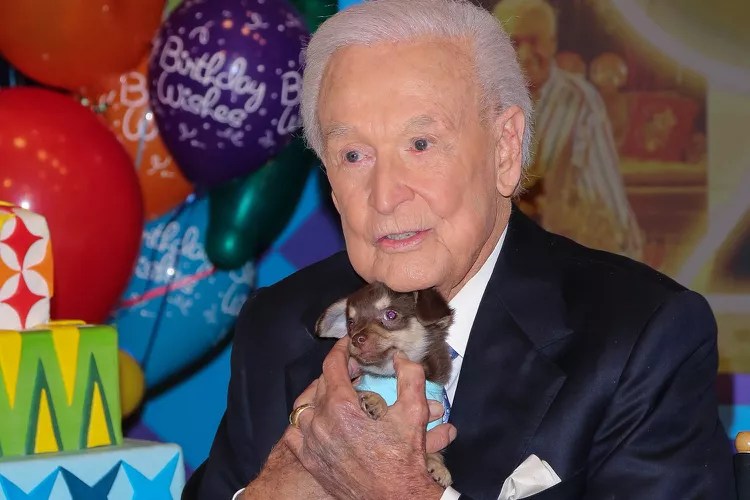
Bob Barker, an affable fixture on US television for half a century who hosted the popular game show The Price Is Right for 35 years and was a committed animal rights activist, has died at age 99, NBC News and Fox reported on Saturday.
Barker died on Saturday morning of natural causes at his Hollywood Hills, California, home, his publicist Roger Neal said.
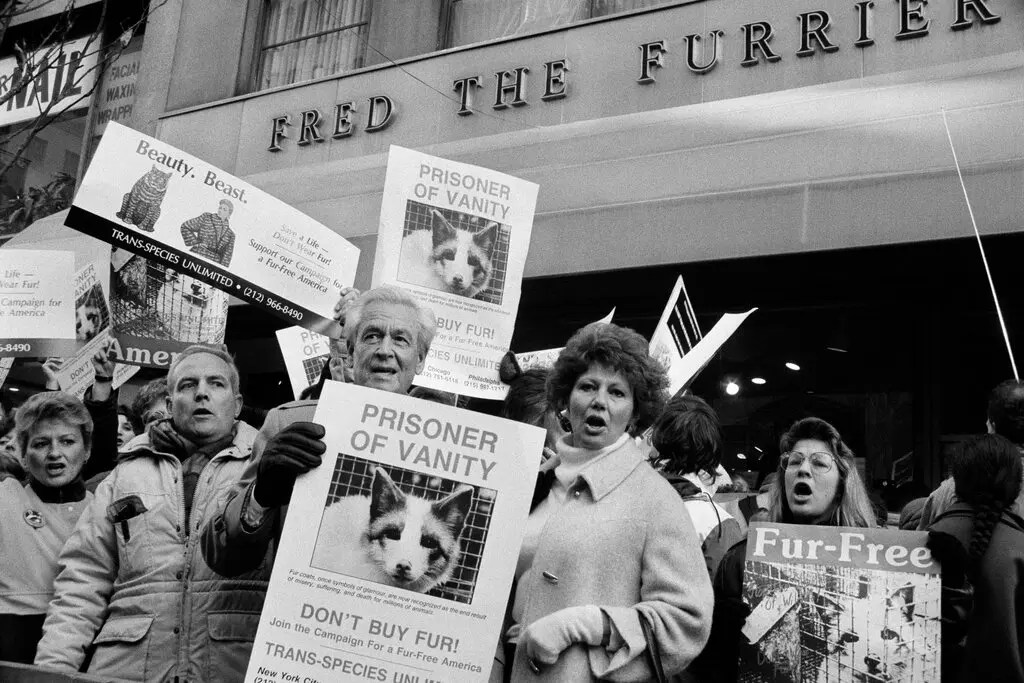
Bob Barker with Nancy Burnet, president of United Activist for Animal Rights, in front of a Fifth Avenue furrier in New York in 1988. Credit…Don Hogan Charles/The New York Times
Barker was known for pro-animal causes and campaigned for them into his 90s. He would end episodes of The Price Is Right by urging viewers to get their pets spayed and neutered to control the animal population and began a foundation to subsidise the practices. He also spoke out against the treatment of animals in zoos, rodeos and circuses.
Over decades as the host of The Price Is Right, the longest-running game show in American television history, Mr. Barker, beginning in the 1980, used his pulpit to remind millions of viewers to “help control the pet population; have your pet spayed or neutered.”
He put $25 million into founding the DJ & T Foundation which finances clinics that specialize in spaying and neutering. The foundation was named after Mr. Barker’s wife, Dorothy Jo, and his mother, Matilda Valandra, who was known as Tilly.
In 2004, he donated $1 million to Columbia University School of Law to further the study of animal rights law.
“The Law School is extremely grateful for this generous gift,” said Dean David M. Schizer. “And we look forward to giving our students exposure to this growing area of legal scholarship.”
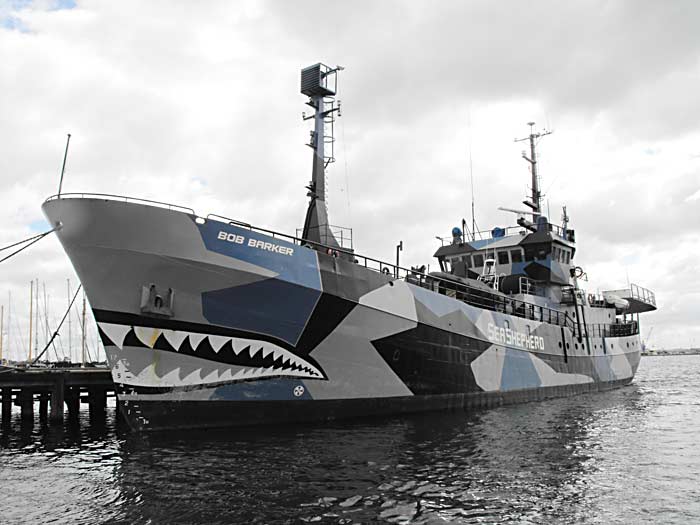
In 2010 he donated US$5 million for a 1,200-ton ship named the Bob Barker that was operated by the Sea Shepherd Conservation Society to stop Japanese whaling ships from killing whales off Antarctica.
The Sea Shepherd Conservation Society Anti-Whaling Ship ‘Bob Barker’
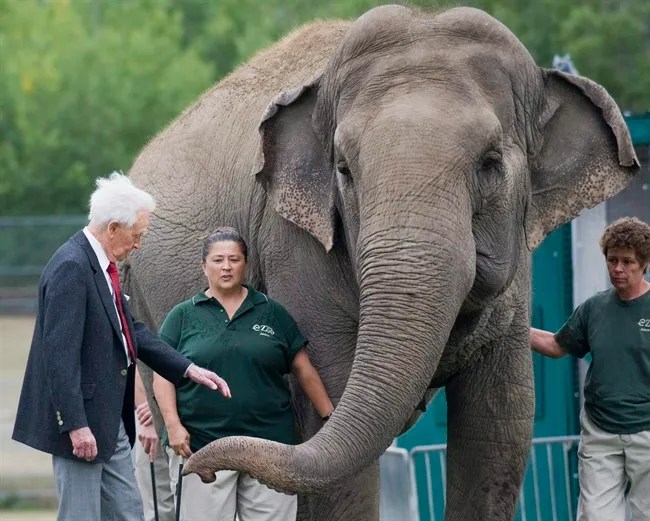
In 2012 Bob funded the travel costs for three Elephants to travel from the Toronto Zoo to a sanctuary in California aboard a private plane.
A spokesman for the TV icon says Barker offered to fund the $880,000 flight after learning that one of the Elephants wasn’t well enough to withstand the long trip by truck.
Henri Bollinger said that the Toronto Zoo agreed to move Thika, Iringa and Toka to the Performing Animals Welfare Society Elephant sanctuary in San Andreas, Calif., but that one of the animals suffers from “a serious foot problem.”
Barker described the Elephants’ new home as a “paradise” and said “to think that one of them might not survive the trip in a truck touched my heart and purse strings.”
Bob Barker with one of the Elephants that he helped travel to PAWS sanctuary
“It is money well-spent. I don’t know where you get more for your dollar, so far as protecting animals is concerned, than you get from PETA,” Barker said.
Bob Barker and Ingrid Newkirk at the opening of the PETA Bob Barker building in Los Angeles
In 2015, he stood behind a podium in an eleventh-floor conference room at the Millennium Biltmore Hotel in downtown Los Angeles. His mission: to publicly shame Foster Farms — among the biggest poultry producers on the West Coast — for cruelty toward animals.
Reporters at the event were shown a secretly taped video, narrated by Barker and shot in May and June at two Foster Farms slaughtering plants in Fresno, Calif. The video showed scenes of thousands of chickens being carelessly hung by their legs on conveyor belts. Factory workers execute the process with brutal efficiency, occasionally punching live birds and plucking out their feathers.
Bob Barker speaking for Mercy For Animals in Los Angeles in 2015. Barker criticised poultry producer Foster Farms after an animal-rights group released video showing chickens being shackled, punched and having their feathers pulled out while still alive. Photo: AP
Julie Woodyer, campaigns director at Zoocheck, knew Barker for years as they collaborated on both successful and failed efforts to free animals from captivity at Canada’s zoos.
She says Barker brought a determination and generosity that was unmatched by other celebrities, often opening his chequebook to support the cause and willingly making public appearances to raise awareness.
“I just can’t imagine there will be somebody to replace that ever,” Woodyer said in a phone interview.
Woodyer first connected with the TV host and his partner Nancy Burnet over email in 2010 as Zoocheck — in co-operation with other animal rights organizations –attempted to free Lucy the elephant from the Edmonton Valley Zoo.
In 2011, Barker appeared on CTV’s “Canada AM” morning show where he explained that elephants were not adapted to brave Canada’s harsh winter climate and Lucy’s health was deteriorating.
While the campaign to relocate Lucy was unsuccessful, Woodyer said a bond was formed with Barker over their shared interest in animal rights.
Together, they were involved in a controversial and years-long effort to move three elephants — Toka, Thika and Iringa — from the Toronto Zoo to a sanctuary in California. The campaign included Barker making public appearances and mingling with local city councillors to explain his view in hopes they would lend their support.
Ultimately, Barker donated $800,000 to the Peoples Animal Welfare Society for the successful transport and care of the animals.
“It would have been years and years for us to try to fundraise that,” Woodyer said, “And it would’ve been too late for some of those elephants.”
Barker later donated $50,000 to help build Manitoba’s first black bear cub rehabilitation centre.
“Lending his celebrity voice … really boosted those campaigns significantly and allowed us to have a broader audience,” Woodyer said.
“He was the funniest man I’ve ever met, extremely sharp, even in his very late years, and he could always come up with something funny, and make us all laugh even in the midst of difficult times in our campaigns.”
Bob Barker was a passionate animal rights advocate throughout his life. PHOTO: PAUL ARCHULETA/FILMMAGIC
I’d like to see animals removed from the entertainment business. Chimpanzees and apes won’t perform unless you beat them. Circuses keep elephants in chains 90 percent of the time. Elephants need freedom of movement. In circuses, they live in cramped quarters, which is not the life intended for them by nature. Some are beaten daily, forced to do ridiculous tricks and robbed of every shred of dignity. ~ Bob Barker.
A large group of tourists have been caught on camera at Yellowstone National Park refusing to move away from a Bear, despite intervention from two Park Rangers.
In the video, which you can watch below, at least eight people with cameras and phones are gathered near a Black Bear while Rangers attempt to move them along, explaining that it’s for their own safety and that of the animals, and that the rules apply to everyone. Despite these warnings, a few people refuse to budge until they’re satisfied with their pictures, despite the Rangers standing right in front of them.
“Yellowstone National Park isn’t Disney Land. Everything here is beautiful but has the potential of serious harm or death. This bear was 35 yards off the Road don’t get out of your car. It’s a wild animal and can go from grazing to attack in a moment. A man had his kids out of the car 35 yards from a big Black Bear and accused the Rangers of taking the fun out of it. Yellowstone is not a zoo animals can be unpredictable. Be smart be safe and give the animals their space. Stay in your car when they are close to the road.”
“The lack of respect for the rangers and wildlife is beyond infuriating. These people need to understand Yellowstone is not a petting zoo” said one onlooker.
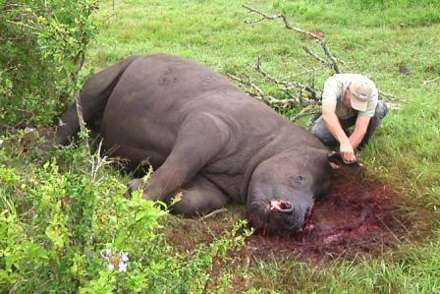
Thandi is a walking miracle who truly should not be here. In 2012, she and two male Rhinos were viciously attacked and poached, leaving them in a pool of blood. When found, one male had already died and rescuers were not sure they would be able to save the remaining male Themba or Thandi.
Dr Will Fowlds Treats Thandi After The Poacher’s Attack
Unfortunately, after three weeks of care, Themba fell victim to his brutal attack and took one last drink from the pool of water. The sheer sadness the rescuer felt after this death would break down the coldest of hearts!
Fortunately, Thandi was a survivor and was able to overcome her mortal wound and go on living. As rescuers continued to help her, she slowly recovered, touching lives all over the world.
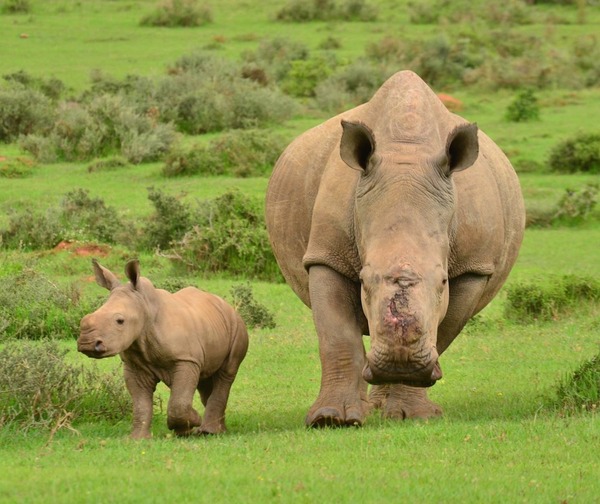
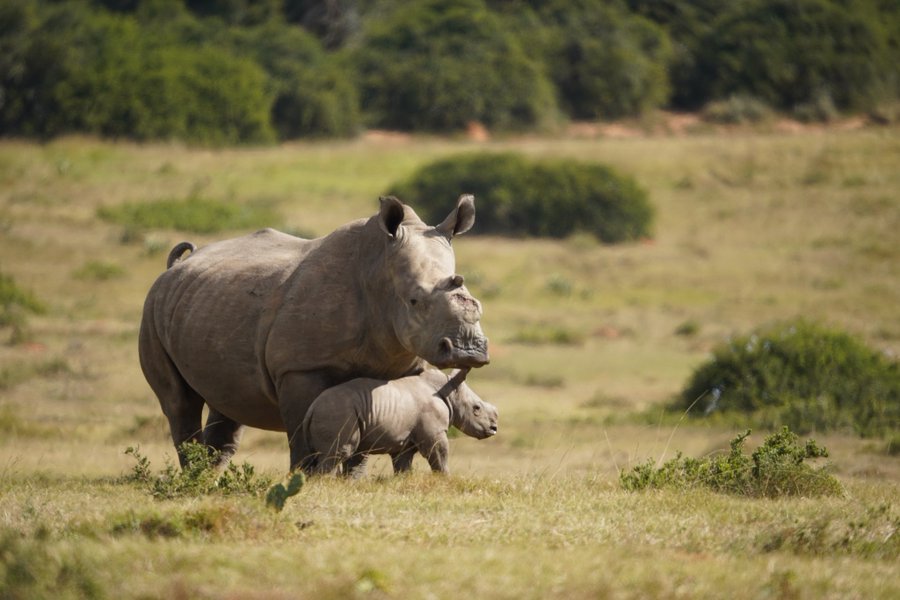
Nearly three years after surviving the brutal poaching Thandi gave birth to a calf on 13 January 2015 at Kariega Game Reserve in the Eastern Cape, South Africa.
A Rhino as symbolically special as this one deserved a name to match, and the little calf has just been given a very fitting moniker: ‘Thembi’, which means ‘hope’ in the Xhosa language, one of the official languages of South Africa.
“The name Thembi seemed to fit best given that this little calf has brought fresh hope and energy to those who struggle to secure the future of our Rhino. She is a new generation of life, one I hope will never experience a poaching incident like her mother did” says Dr William Fowlds, one of the vets involved in Thandi’s incredible recovery.
He adds: “Thandi has changed my life. I can’t say it is for the better, as I could never wish to fight a war such as this one but she has inspired action in myself, and many around me. She now celebrates life, and with it the hope that against all odds, we can and we will overcome the massive challenges that threaten the Rhino.”
And then…………
In January 2017 Thembi stepped out without her mother, everyone at Kariega Game Reserve became a little anxious and worried – they thought Thandi had been hit a second time by poachers.
“Kariega started to get worried as Thandi had disappeared for a number of days (which can happen), so they asked me to come and fly my drone to help find her and make sure no harm had come to her. This was the main thing on our minds – to make sure she was alive and not in any trouble.
I met a team at Kariega and we set out flying the area where she goes when she feels threatened or needs to hide away for a while. The wind was gusting badly, which made the search very tricky and by the time flying was reasonably safe, we only had an hour of good light left.
An hour later and there was still no sign of Thandi, but we had seen the rest of her crash, including Thembi. To cover large areas with an aerial camera, you need to fly quite high (80 metres) which also means that even a rhino becomes a spec on a screen and very tricky to spot, even in good light. It’s therefore essential to have a very good camera to record footage but even more important to have a quality screen with excellent resolution to maximise the chance of finding her in real-time.
Fortunately, thanks to Medivet – who sponsored the iPad that I use with the drone – and having the camera set to maximum light sensitivity, we were able to fly for an extra ten minutes after all useful light seems to have gone.
And what a momentous ten minutes it turned out to be! The final sweep back across very dense thicket vegetation on the way back to our home point, the faintest outline of a rhino rolled onto our iPad screen. I could hardly believe my eyes! We found Thandi. At that height. In that light. We could even see if she was dead or alive!
I dropped the drone to 50 metres above her and to our relief, she shifted her body position confirming that she was alive. That in itself was an amazing feeling, knowing that this very special rhino was at least moving around. But we still didn’t know why she had disappeared into the dense thicket.
The drone hovered over her and we stared into that screen, anxious for an explanation. And then suddenly, there he was! From under Thandi’s neck area, out popped the tiniest rhino miniature and we were elated.
What an amazing and wonderful surprise! The gift of a rhino baby delivered by one of the world’s most endearing rhino icons, Thandi. The very fact that this rhino who was severely hacked and left to die five years ago, and who survived against all odds was found, a needle in a haystack, alive and with a toddler at foot.
But there was more good news to come. What happened next wiped away our remaining fears that this baby may be weak or in some sort of trouble. As we watched from above, taking snaps from the iPad, this little bundle began to bump and nuzzle up against Thandi’s pendulous tummy. So small that he couldn’t even reach her udder to feed. His amazing mum responded by sitting down and then lying slightly turned to one side and moved her back leg out to the side, creating a little cove into which this little babe could move and start to feed.
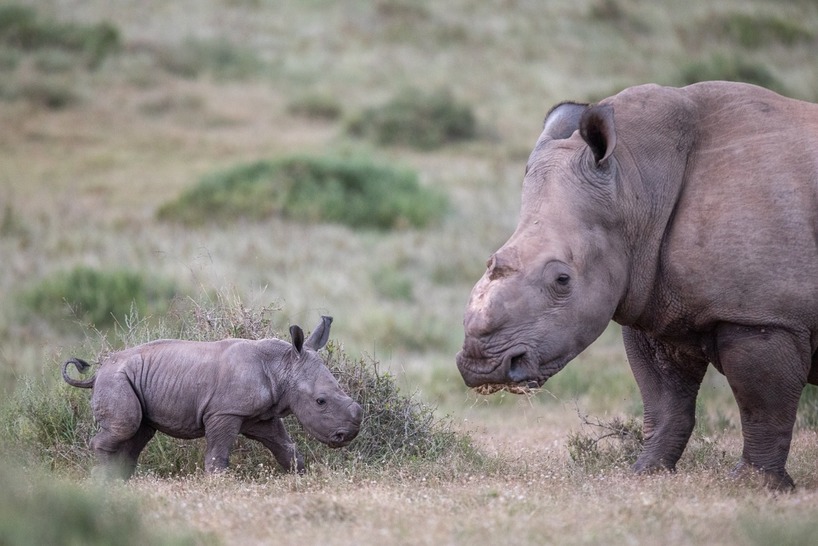
We circled around this scene, absolutely thrilled by what we saw and elated at this incredibly good news. Later that week, when Daniel from Kariega was able to video the two of them in a road-way, we confirmed that he was a baby rhino boy and he was immediately named Colin. This event is so special in so many ways. The founder of this reserve, Colin Rushmere, passed away only days before we found this baby boy and it is very fitting that this special baby boy be named after someone who was such a visionary and a much-loved member of the community”.
May he live a long, safe and happy life, just as his name sake Colin Rushmere had done, and become the father of many.”
Why the name Colin?
The birth of the then unnamed calf came at a time when family and friends were mourning the death of Kariega Game Reserve founder Colin Rushmere 10 days earlier.
Rushmere’s son, Mark, said they had not known Thandi was pregnant when she disappeared and feared she might have been hit a second time by poachers.
“For all we know, the calf was born on the same day dad [Colin] died,” he said.
“We could not find her for a while and were worried. It is all very symbolic.”
Mark said they found out that Thandi had a second calf the day before his father’s funeral, after renowned wildlife vet Dr Will Fowlds sent up a drone to try and locate her.
“The news lifted the mood of the family and we all smiled. It was fantastic and the timing was unbelievable,” he said.
Rushmere, 79, was an Eastern Province cricketer and Mark followed in his footsteps in the provincial team and also turned out for South Africa.
He originally bought 660ha of land on the Kariega River in 1989 and turned it into a 10 000ha mega-park.
Although the sex of the baby rhino has still not been established, Mark said staff and friends were insisting that it be called Colin if it is a male.
Family friend Bronwen d’Oliveira said yesterday everybody was beaming with delight after hearing that Thandi had a second calf.
“Everybody is blown away by the timing. The birth was just so unexpected,” she said.
“Colin’s passing and Thandi’s calf ties everything together very nicely – his vision saved her and then this happens.”
Thandi has given birth to a further three healthy calves.
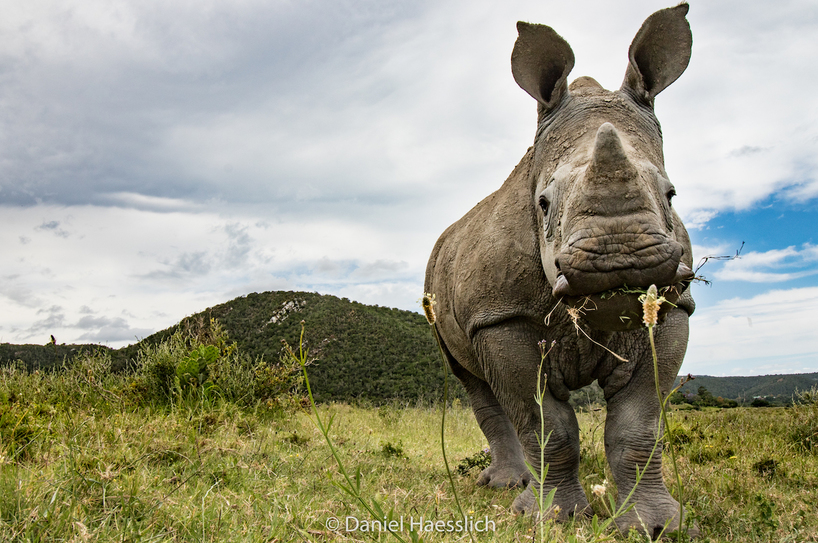
Mthetho: Born 03 April 2019. Credit: Daniel Haesslich
The Meaning Of Mthetho
The meaning of the name Mthetho is significant. Many Kariega staff members attended court proceedings at the Grahamstown High Court and were waiting for the day of justice. The Ndlovu Gang were suspected to have committed the triple poaching at Kariega on 2 March 2012, when Thandi, Themba and bull 84, where brutally attacked. Bull 84, died on the night of the attack; Themba died 24 days later from injuries sustained during the attack and Thandi survived. The sentencing of this gang was a sensitive topic for us all.
There was a huge sense of relief when the Ndlovu Gang were found guilty of 55 wildlife crimes including the poaching of over 100 rhinos. The Kariega team aptly named Thandi’s third calf, Mthetho, meaning justice in the local language IsiXhosa. Justice was served and Mthetho would remind us always of this moment!
Siya: Born 04 January 2021. Credit: Kariega Game Reserve
In the midst of the Covid-19 crisis, Thandi gifted us with a much needed beacon of hope and birthed her fourth calf. We named this calf Siya, after Springbok rugby captain Siya Kolisi. Siya is an abbreviation of Siyamthanda, which means ‘we love him’ in isiXhosa.
Zolani: Born April 2023 Credit: Kariega Game Reserve
The name Zolani means calm, loving, and free-spirited, and was chosen to honour a @kariega.game.reserve guide who tragically passed away.
The birth of Thandi’s fifth calf is another chapter in the incredible legacy of this magnificent rhino. A legacy that still inspires and motivates us to work harder and do better not only for our rhinos, but the entire natural world.
JOHANNESBURG – The South African government moved to withdraw regulations on threatened species that would have protected vulnerable wildlife from being hunted.
Forestry, Fisheries and Environment Minister Barabara Creecy announced the decision to drop the amended protected species regulations in a government gazette notice – one day before it was supposed to be implemented
The legislation that was intended to be enforced in April was set to widen the number of species that should be protected by stricter wildlife laws.
However, the Wildlife Ranching South Africa and Professional Hunters Association of South Africa challenged the Forestry, Fisheries and Environment Department on the amended list.
After considering various issues raised by the associations, the department decided to withdraw the implementation of the newly-revised legislature.
Forestry, Fisheries and Environment Minister Barabara Creecy announced the decision to drop the amended protected species regulations in a government gazette notice – one day before it was supposed to be implemented.
After the two organisations legally challenged the motion to protect a bigger range of wildlife, Creecy reached an out-of-court settlement with the parties.
Her reasons for withdrawing the regulations protecting terrestrial and freshwater species were not clearly explained, nor did she mention the associations’ issues with the regulations.
In addition, Creecy also retracted revised legislation that would have clamped clamped down on the Trophy Hunting of Leopards and Elephant management
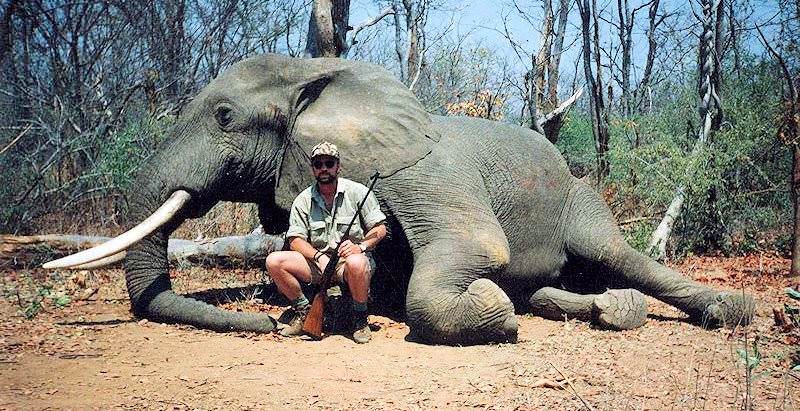
The revised legislation would have clamped down on the trophy hunting of Elephants
——–((((((()))))))——-
WHAT YOU CAN DO TO HELP WILDLIFE:
You can support ‘Protect All Wildlife’ by donating as little as £1 – It only takes a minute but it can last a lifetime for an animal in need. Please donate below.
Everyone who donates will receive a Certificate of Appreciation as a thank you for helping animals in need.
The Mission of Protect All Wildlife is to prevent cruelty and promote the welfare of ALL animals.
We believe EVERY animal should be treated with respect, empathy, and understanding. We raise awareness to protect and conserve wild, captive, companion and farm animals.
It is vital that we protect animals against acts of cruelty, abuse, and neglect by enforcing established animal welfare laws and, when necessary, take action to ensure that those who abuse animals are brought to justice.
Protect All Wildlife are involved in many projects to protect animals’ rights, welfare, and habitats. Money contributed to Protect All Wildlife supports ALL of our worthy programmes and gives us the flexibility to respond to emerging needs. Your donations make our work possible.
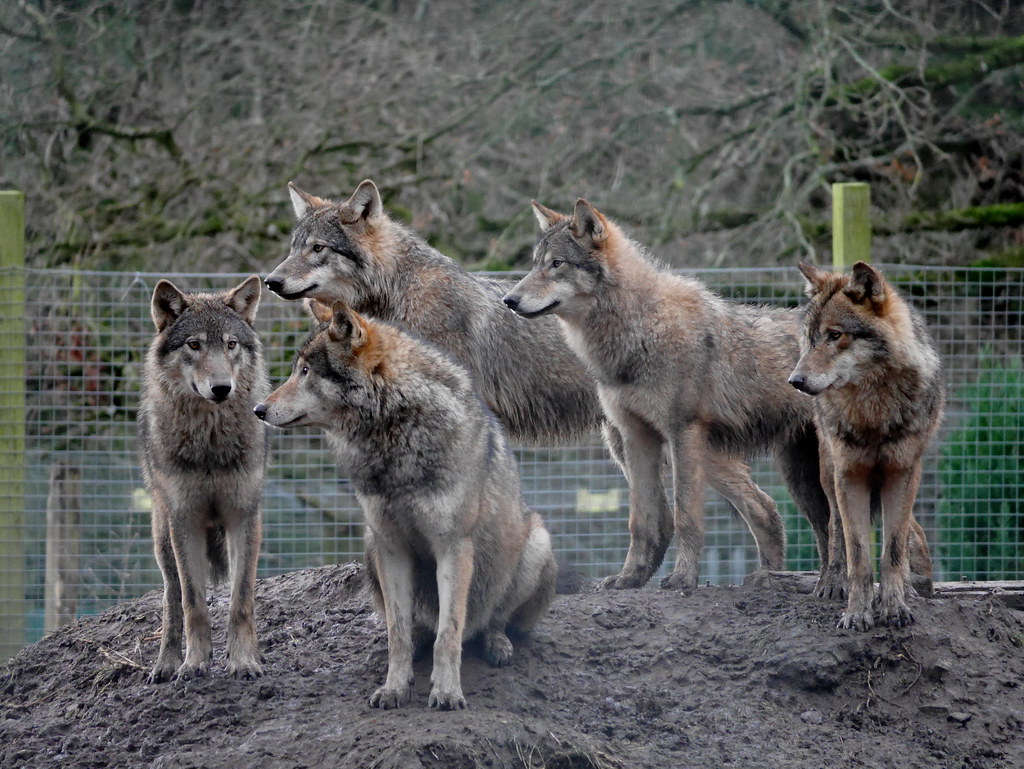
The entire pack was euthanised due to ‘abnormal behaviour’ after Alpha male Loki died.
The pack at Camperdown Wildlife Centre in Dundee started displaying ‘abnormal behaviour’ when alpha Loki was put down after he underwent an operation and suffered complications leaving the team “absolutely heartbroken”.
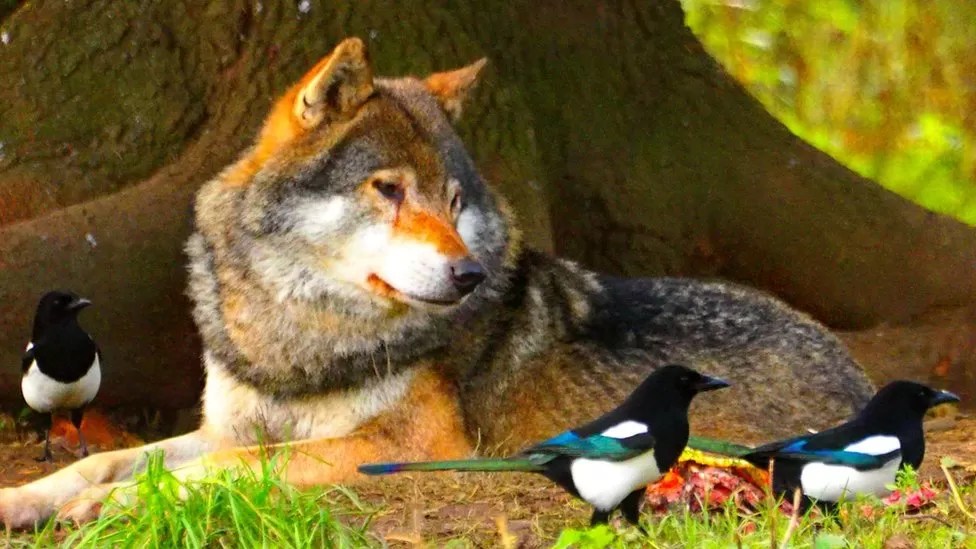
The full statement read: “We are devastated to announce that our alpha male Wolf, Loki, has been humanely euthanised today.
Loki had to be euthanised after complications following an operation. Pic: Camperdown Wildlife Centre
“Despite an initially successful operation, there have been subsequent complications, and the difficult decision was reached to save the animal from further pain.
“The other four Wolves in the pack have been exhibiting unusually anxious and abnormal behaviour since the operation, and it is with great sadness that these wolves have also been euthanised as a result.
The entire pack was euthanised due to ‘abnormal behaviour’ after Alpha male Loki died.
“This course of action was a last resort, and our team is absolutely heartbroken. We ask you for your kind consideration at this time.
The wildlife centre went on to thank the public and confirmed it’s closure on Wednesday as the team “processed recent events”.
The statement added: “We thank members of the public who have sent messages of support and for their kind consideration during this painful time for our team.
“We can assure everyone that this difficult decision was taken following expert advice and consultation with the relevant professional bodies.
“Camperdown Wildlife Centre will be closed to the public on Wednesday to allow our colleagues to process recent events. We thank-you for your patience and understanding.”
In a similar incident in 2006, a pack of Wolves was culled at Highland Wildlife Park by operator Royal Zoological Society of Scotland – after the animals stopped displaying “normal behaviour”.
While many expressed sympathy for the park and its employees, others were outraged. The move has sparked an outcry from members of the public with some left angry and branded the mass euthanising as “extreme”.
One local resident has now started a petition demanding an inquiry into why the entire pack was put down.
Online, one visitor wrote: “I’m so sorry to read this news and my thoughts are with all involved but if you wouldn’t mind could more of an explanation be given into why the 4 others were destroyed?
LOKI
“This is heartbreaking to read and I can’t help but think the public should be given more information to help with understanding this dreadful news.”
“Very disappointed you euthanized all 5,” a comment said. “It seems like the animals weren’t even given time to grieve or acclimatise to the death of their family member. What a tragic loss of life.”
Another added: “I think the Wolves should have been given some time before euthanasia for the whole pack. That seems a bit extreme. Can you please explain just anxiety and abnormal behaviour in a more direct way.”
“We can assure everyone that this difficult decision was taken following expert advice and consultation with the relevant professional bodies,” the park commented.
The way Wolves behave in captivity is very different from what researchers see in the wild, according to the Scientific American.
The “Alpha Wolf” concept is at best misunderstood by the public and is a phenomenon far more common among captive packs than those roaming free, wolf expert L. David Mech told the publication.
——–((((((()))))))——–
WHAT YOU CAN DO TO HELP WILDLIFE:
You can support ‘Protect All Wildlife’ by donating as little as £1 – It only takes a minute but it can last a lifetime for an animal in need. Please donate below.
Everyone who donates will receive a Certificate of Appreciation as a thank you for helping animals in need.
The Mission of Protect All Wildlife is to prevent cruelty and promote the welfare of ALL animals.
We believe EVERY animal should be treated with respect, empathy, and understanding. We raise awareness to protect and conserve wild, captive, companion and farm animals.
It is vital that we protect animals against acts of cruelty, abuse, and neglect by enforcing established animal welfare laws and, when necessary, take action to ensure that those who abuse animals are brought to justice.
Protect All Wildlife are involved in many projects to protect animals’ rights, welfare, and habitats. Money contributed to Protect All Wildlife supports ALL of our worthy programmes and gives us the flexibility to respond to emerging needs. Your donations make our work possible.
A Lion named Bob Junior, who was known as the “King of the Serengeti,” has been killed by rival Lions. The fearsome big cat, also known as Snyggve, had dominated his territory for seven years alongside his brother, Tryggve, who is also presumed dead.
Bob Junior has ruled his territory for seven years. Credit: James Lewin.
“These incidents normally happen when the head of a pride becomes old or sometimes when the other male Lions are not happy with his control over a large territory,” Fredy Shirima, a Serengeti conservation officer, told the BBC.
Tour operators and visitors to the national park have paid tribute to the “legendary” Bob Junior – also known as Snyggve – online.
The “photogenic” and “coolest cat” in the Serengeti, Bob Jr had a fearsome reputation among his rivals and had ruled for seven years with the help of his brother, Tryggve.
The Serengeti is home to approximately 3,000 Lions. National Geographic reports adult males can up to around 12 years.
Bob Junior, who was named after Bob Marley, was thought to be around 10 years old. He had a distinctive black mane and was often spotted by wildlife groups touring the park.
Online tributes called him “Legendary” and “Iconic.”
He reportedly did not put up a fight when he was attacked on Saturday.
Bob Junior’s Last Stand – He Fought To The End!
Wildlife officials are preparing a special burial on a day yet to be announced.
RIP Bob Junior – Credit: Giles Laurent.
WHAT YOU CAN DO TO HELP WILDLIFE:
You can support ‘Protect All Wildlife’ by donating as little as £1 – It only takes a minute but it can last a lifetime for an animal in need. Please donate below.
Everyone who donates will receive a Certificate of Appreciation as a thank you for helping animals in need.
He remains very much at the forefront of our minds. Not many Rhinos live to such an age but Sudan led an extraordinary life and his legacy, as the last male of the species, continues to live on, reminding us of the disastrous impact human ignorance and greed has on all wildlife species.
Joseph Wachira, a keeper at the Ol Pejeta Conservancy in Kenya, says goodbye to Sudan, the last male Northern White Rhino. Credit: Ami Vitale
Though the Northern White Rhino is functionally extinct – following the loss of Sudan, the last known living male, five years ago this week – conservationists are finding hope in a technique that is creating new embryos using genetic material taken from him and two remaining females.
To mark the occasion, photographer Ami Vitale has released a new short film called “Remembering Sudan,” which will be screened at upcoming film festivals.
“Our fate is linked to the fate of animals. What happens next is in all of our hands.” said Ami Vitale.
Sudan, a 45-year-old rhino believed to be the world’s last surviving male Northern White Rhino, died five years ago at the Ol Pejeta Conservancy in Kenya on March 19, 2018. He had been battling ill health for months, and after his condition worsened considerably, veterinarians decided to euthanize him.
Since then, an international consortium of scientists and conservationists known as the BioRescue Project – a consortium made up of Leibniz Institute for Zoo and Wildlife Research (Leibniz-IZW) in Germany; Safari Park Dvůr Králové in the Czech Republic; the Kenya Wildlife Service; and Ol Pejeta Conservancy in Kenya – have been working to bring the species back from extinction through in vitro fertilization and stem cell research. They have already created 24 viable embryos using eggs from the last two female White Rhinos that are still alive, and the frozen sperm of deceased male Northern White Rhinos like Sudan.
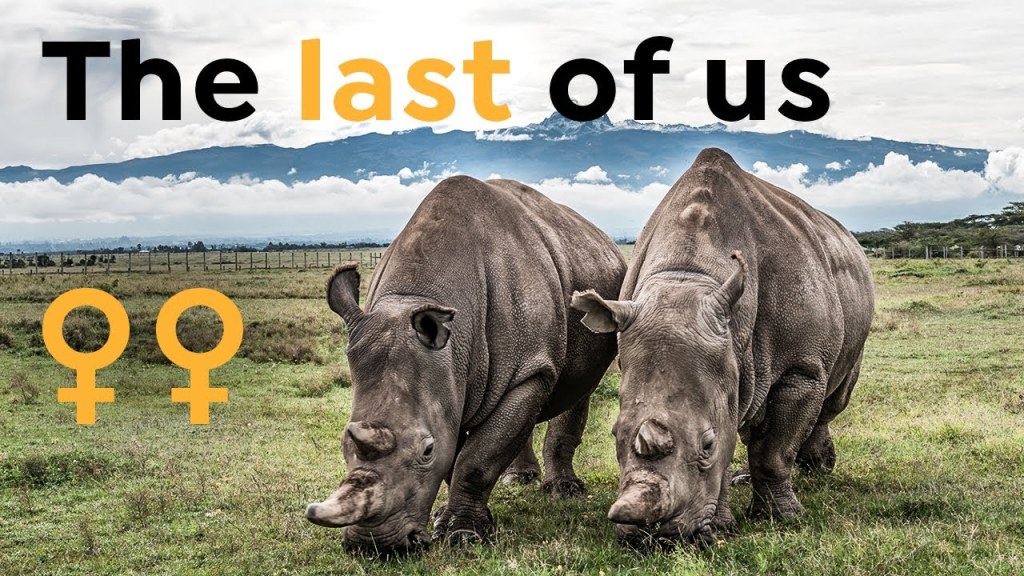
Fatu (left) and Najin (right) are the last two Northern White Rhinos left on the planet. They are both female and are a mother-daughter duo. Credit: Gurcharan Roopra
To mark the occasion, photographer Ami Vitale has released a new short film, Remembering Sudan, which will be screened at upcoming film festivals and can be viewed online, here’s the trailer:
Remembering Sudan: The Trailer
Though the Northern White Rhino is functionally extinct following the loss of the last male of the species, conservationists like Vitale find great hope in BioRescue, and in the power of humanity to react positively:
“What happens next is in all of our hands. What’s going to save us all is to get beyond our routine ways of thinking. Wonder is what allows us to reimagine our future together. Wonder allows us to believe that we can fundamentally change the course we are currently on.” Vitale said when reflecting on the anniversary.
“Our fate is linked to the fate of animals. Without Rhinos and other wildlife, we suffer more than loss of ecosystem health. We suffer a loss of imagination, a loss of wonder, a loss of beautiful possibilities,” she said.
Readers can view the film, learn more and support the project at its website, www.rememberingsudan.org..
WHAT YOU CAN DO TO HELP WILDLIFE:
You can support ‘Protect All Wildlife’ by donating as little as £1 – It only takes a minute but it can last a lifetime for an animal in need. Please donate below.
Everyone who donates will receive a Certificate of Appreciation as a thank you for helping animals in need.
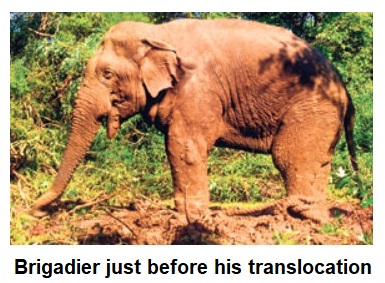
Like many young bull Elephants, Brigadier had a strategy. Spending his days in a small patch of forest in northwest Sri Lanka, he would emerge under cover of darkness to feast on crops. One evening, he bundled into an army brigadier’s property, earning him his name and sealing his fate.
Government officials captured Brigadier and trucked him to Maduru Oya National Park. But he immediately took off, probably intending to find his way home, got lost, and wound up 120 kilometres north at Sampur beach. Incredibly, a navy boat discovered him swimming 5 kilometres offshore and towed him to safety.
After his big adventure, Brigadier settled down again, returning to his nocturnal crop-raiding routine. Six months later, he was found dead at the bottom of a well.
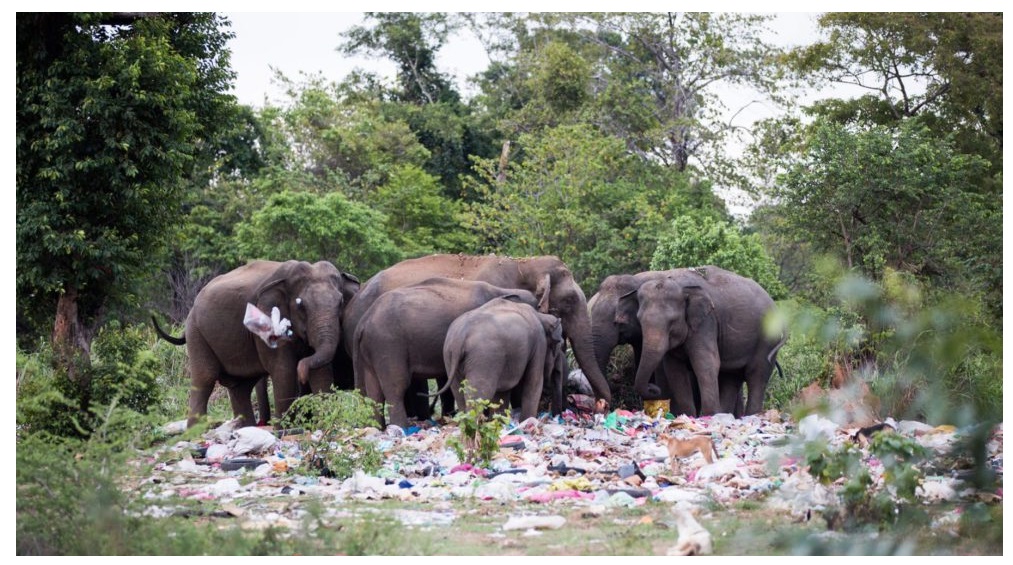
Apart from the swimming bit, stories like this are common in Sri Lanka, where habitat loss is forcing Elephants into an increasingly bloody conflict with humans. When I visited the country to report on efforts to stem the bloodshed, I found that the government’s favoured solution of moving problem Elephants into fenced-off national parks isn’t working. Some experts believe it will even backfire, pushing the species to the brink in the country.
The only way to secure the future of Sri Lanka’s Elephants, they argue, is to find ways to peacefully coexist with them. That is no mean feat. And yet, as I saw for myself in several villages, there is a simple solution. The question is, will it be implemented across the island? And will people accept that the Elephants must live among us or not at all?
Asian Elephants are under pressure. Their numbers have declined by an estimated 50 percent in the last 75 years, leaving just 40,000 to 50,000 in the wild. Although they aren’t poached anywhere near as much as their African cousins, their forest homes are being rapidly fragmented. Nowhere is the problem more acute than in Sri Lanka. It accounts for just 2 percent of their total habitat yet is home to over 5000 Asian Elephants – more than 10 percent of the remaining global population.
That so many Elephants remain here is a testament to the species’ cultural importance in the country. The majority of Sri Lankans are Buddhist and Elephants feature prominently in a number of stories about the Buddha’s previous reincarnations. Hinduism, Sri Lanka’s second-largest religion, also enjoys a close association with the animals in the form of the god Ganesh. “Elephants hold a very special place in our hearts,” says Prithiviraj Fernando, chairman of the Centre for Conservation and Research in Tissamaharama.
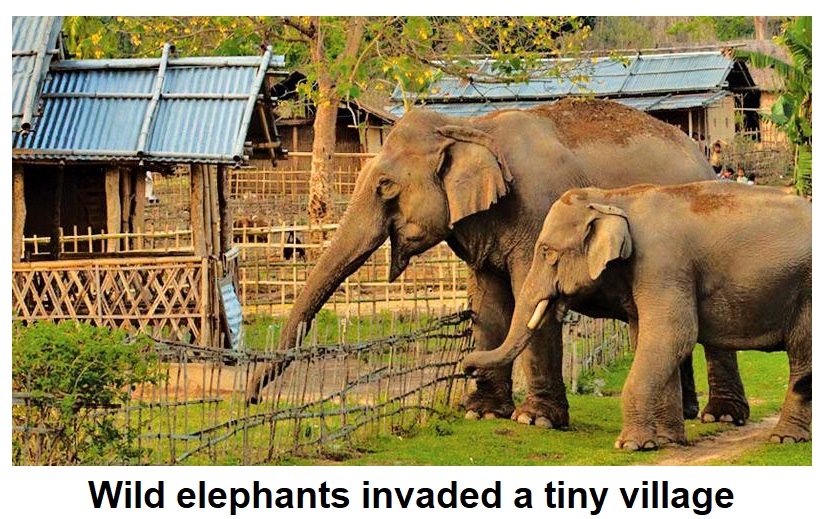
Yet as the island grows increasingly crowded and their habitat disappears, the lives of Elephants and humans are overlapping more and more. This puts Sri Lanka’s many farmers at constant odds with the animals, often with deadly consequences.
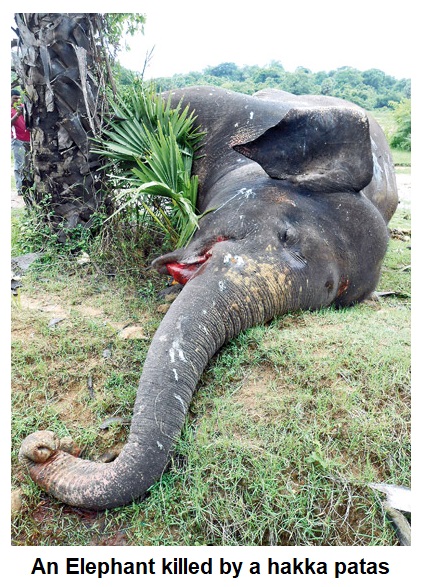
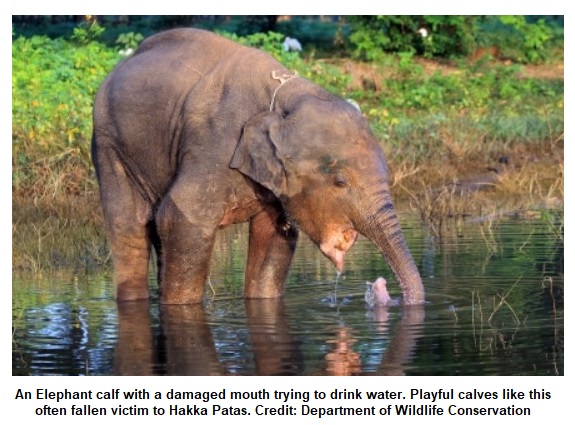
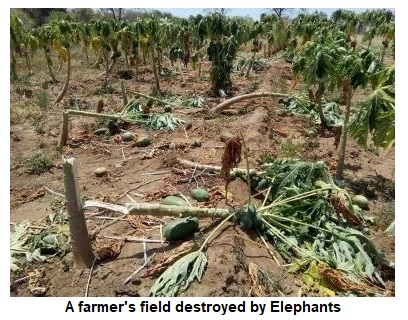
Hungry Elephants raid crops, trampling fields and sometimes people. In response, farmers attack the animals with flaming torches, firecrackers, home-made guns and even explosives embedded in fruit, known as hakka patas or “jaw exploders”. Last year, more than 300 Elephants were killed in altercations with humans and around 70 people lost their lives to Elephants. “Sri Lanka has the highest level of Human-Elephant conflict in the world,” says Fernando. “Wherever there are people and Elephants, there’s conflict.”
For more than 70 years, Sri Lanka has attempted to solve the problem by moving Elephants to national parks. According to the government’s approach, the world’s second-largest land animal belongs in protected areas surrounded by electric fencing, while people belong everywhere else. In many cases, as with Brigadier, problem animals are specifically targeted for translocation. Officials also attempt to clear whole herds using a colonial-era tactic called an Elephant drive. Day after day, sometimes for a year or more, hundreds of people venture into Elephant territory, setting off guns and thousands of “Elephant thunders” (a type of huge firecracker) to corral the animals into fenced areas.
Whichever method officials use to try to confine Elephants to parks, it doesn’t work. In 2012, Fernando and his colleagues published a study showing that of 16 translocated bull Elephants that the researchers had monitored over several years, two were killed within the park they were released in and none of the others stayed put. Some broke out and returned home while others established a new territory where they began raiding crops again.
Elephant drives produce similar results. Many males evade the round-up or break out soon after arriving at a park. The only ones that stick around are the females and calves, which tend to be more risk averse. They soon experience first-hand that Sri Lanka’s parks often lack the resources necessary to support hundreds of additional residents, each of which eats up to 140 kilograms of vegetation per day. The newcomers quickly become “emaciated, walking skeletons, and many starve to death”, says Fernando. “We’ve seen this over and over again wherever Elephants have been driven to parks and fenced in.”
I saw it for myself at Udawalawe National Park. Tourists raised their cameras as a mother and calf stepped out of the thick brush, but the Elephants were a disturbing sight, with jutting ribs, protruding shoulder blades and rope-like backbones. They plucked placidly at the short grass beneath their feet, but it clearly isn’t enough to sustain them. Like many Elephants confined to overcrowded national parks, they were on the verge of starvation.
That females and calves tend to suffer this fate is especially concerning, says Shermin de Silva, director of the Udawalawe Elephant Research Project and founder of Trunks & Leaves, a non-profit organisation focusing on Elephant research and outreach. Elephants have extremely slow reproduction rates, usually producing just one calf every six years. Earlier this year, based on mathematical modelling of Elephant population demographics from Udawalawe, de Silva reported that for Asian Elephants to maintain their numbers, females must reproduce at near-optimal rates and most calves must survive. Nutritional stress, in other words, can quickly push Elephant populations in Sri Lanka and beyond into tailspins. “For Elephants, the biggest threat is the calf that’s never born,” says de Silva.
The stark implications of this finding were reinforced earlier this year, when Fernando and his colleagues published the first nationwide Elephant survey. It showed that Elephants occur across 60 percent of the country – virtually everywhere that isn’t highly urbanised – and that 70 percent of them live side-by-side with humans. This not only means that Sri Lanka’s attempt to confine Elephants to parks has “completely failed”, says Fernando, but also that non-protected areas will have to play a critical role in the species’ survival. If Sri Lanka wants to save its Elephants, it has to find a way for people to live peacefully alongside them.
I saw just how difficult this is when I came across a bloated bull Elephant lying in a ditch by the side of a dirt road in north-west Sri Lanka, flies buzzing around two bullet wounds. A local man guessed it had been shot by a farmer in a nearby field and ran away before collapsing here. The animal was still alive when it was discovered, and a small crowd had gathered and erected a makeshift tent to give it some shade. Someone brought coconuts and bananas to try to feed it. Someone else brought water. Another person called the vet. When the Elephant died, a monk performed a ceremony to help ease it into the next life.
I left the scene feeling nauseous. But just a few minutes’ drive away, past neon green rice paddies and homes shaded by coconut and banana trees, I visited a place that is showing by example that there is an alternative.
In 2013, the village of Galewewa pioneered a programme designed by Fernando and his colleagues to use electric fences to encircle crops and homes rather than Elephants. The locals took some convincing. “People just assumed it wouldn’t be successful because they’d seen the government fences,” says Sampath Ekanayaka, manager of the Centre for Conservation and Research’s community programmes in the region. “To them, this was just another fence.”
In many ways, it is. But there are reasons to think the scheme would work. Elephants that encounter fences in national parks have “all the time in the world” to figure out how to get past the obstacles, says Fernando. Those that encounter a fence surrounding a village or crop field are unlikely to invest the time and energy required to break in because there will usually be people around, and Elephants are afraid of them.
Do Fence Me In
Eventually, after several years of deliberation, the village elders agreed to try the method. Fernando’s organisation paid for 90 percent of the installation costs, but villagers paid the rest, as well as shouldering the burden of maintaining the fences throughout the growing season. After harvesting, they take down the fences, allowing Elephants to forage on the crop remains.
The results have been encouraging. After six years with the fences, no people or Elephants have been killed, nocturnal raids are practically non-existent and crop yields and earnings have significantly increased. Galewewa’s success has prompted around 25 more villages to join the programme, and Sri Lanka’s wildlife department has now established another 30 village fences.
“I would 100 percent recommend this system to others in Sri Lanka,” says J.M.Muthubanda, president of the Fence Maintenance Society in Manakkuliya Gama, a village near Galewewa. “If we didn’t have this fence, many people would have been killed and we would have had to abandon the land. This was the best decision we ever made.”
Fencing can only ever be one part of the solution. Just as important is persuading people to change the way they think about living alongside Elephants – and to adapt their behaviour. People need to take responsibility for protecting themselves and the Elephants they share the land with, says Fernando.
Take drinking, for example. Around 70 percent of men who are killed by Elephants are intoxicated when the incident happens. Simply staying inside after a night of drinking would greatly reduce those deaths, says Sumith Pilapitiya, an independent Elephant researcher and former director general of wildlife conservation in Sri Lanka. “If you’re out drunk on a bike at night and you ride into an Elephant, what do you expect the Elephant to do at that point?” says Pilapitiya. “As human beings, we should be taking much more responsibility for our lives.”
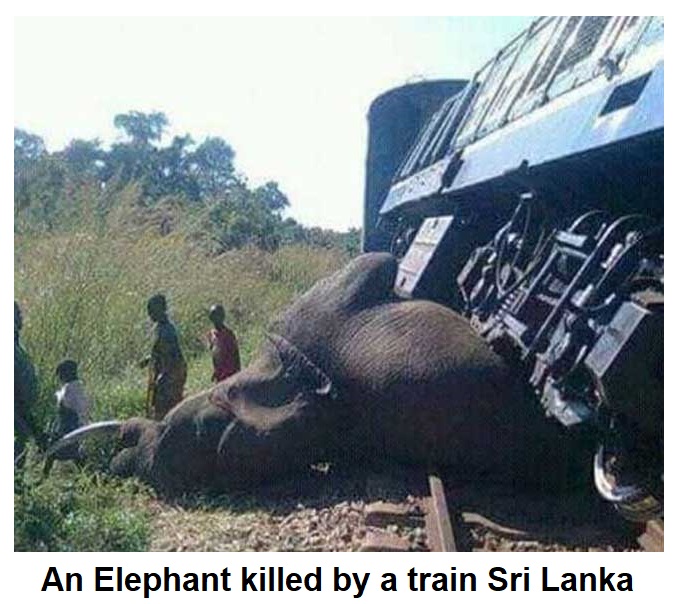
Trains are another problem. Around 15 Elephants are killed each year on the tracks. Sri Lanka has few underpasses or overpasses but there is a straightforward fix. Train drivers could simply slowdown in the areas where Elephants tend to get hit.
What I saw in Galewewa shows that people can peacefully coexist with Elephants, so long as they have the right attitude and some semblance of support. Notionally at least, the Sri Lankan government is on board. As early as 2007, it created a national Elephant conservation plan that largely reflected the findings of Fernando, Pilapitiya and other Elephant researchers, including provisions for implementing seasonal agricultural fencing and educational programmes. But the plan was implemented ad hoc and has failed to live up to its potential as a result, says Pilapitiya, who resigned from his job heading Sri Lanka’s wildlife department in 2015 because of “systemic political interference”. G.C.Sooriyabandara, the current director-general of the Department of Wildlife Conservation, didn’t respond to repeated interview requests.
Still, there are signs of progress. In a first for Sri Lanka, the country’s Southern Development Board, following advice from Pilapitiya and Fernando, agreed to use radio tracking collars to study the movements of several herds of Elephants so it could select a site for a major industrial project that would minimise impact on the animals. “It’s the right thing to do, as far as I’m concerned,” says a high-level official at the board, who asked not to be named because he didn’t have permission to speak to the media.
As more and more villages sign up for his fencing programme, Fernando and his colleagues believe the country as a whole will eventually follow. “This is not something that can be done in a day or a year or even 10 years,” says Fernando. “It might take 25 years. But we’re hopeful that common sense will prevail.”
It is already too late for Brigadier. But if Fernando is right, Asian Elephants can look forward to a brighter future, and not only in Sri Lanka. The country’s human population density isn’t far behind that of India and Bangladesh, but it has almost 10 times the number of Elephants. This makes it a test case for Human-Elephant coexistence, says de Silva. “If we can get it to work in Sri Lanka, we can get it to work anywhere.”
From an original article by Rachel Nuwer for New Scientist
What you can do to help wildlife:
You can support ‘Protect All Wildlife’ by donating as little as £1 – It only takes a minute but it can last a lifetime for an animal in need. Please donate below.
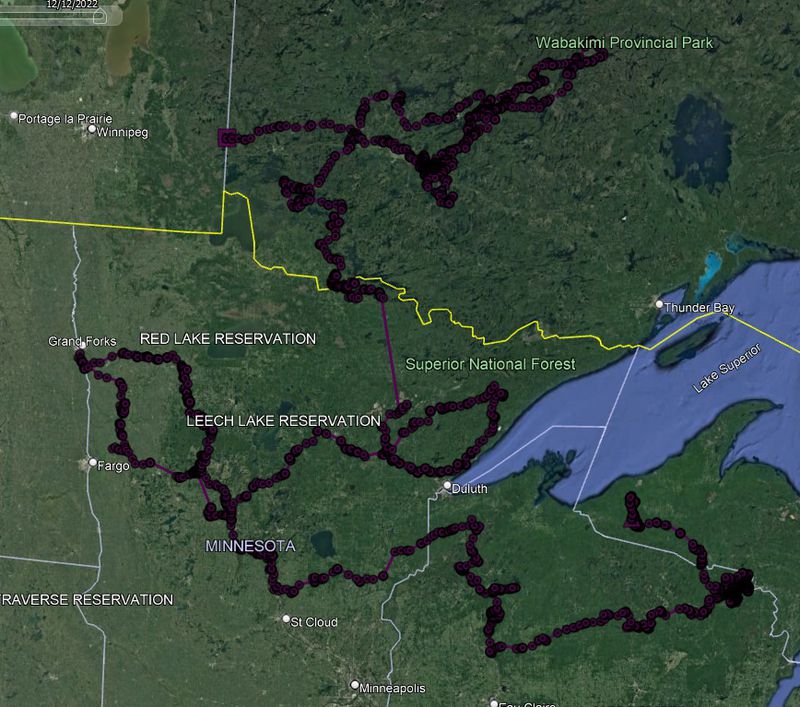
When a hunter in Manitoba, Canada legally shot and killed a Gray Wolf in early December 2022, a radio collar found around its neck was the first clue to the incredible journey this animal had been on. The Wolf had been collared in Michigan’s Upper Peninsula in the summer of 2021, and its GPS data since then showed this Wolf’s multi-state and two-country trek was one for the record books.
A map plotted by Michigan Department of Natural Resources researchers showed this male Wolf travelled through Wisconsin, then Minnesota, made a short stop in North Dakota, crossed the Canadian border into Ontario, then swung up into the Whiteshell area of Manitoba, where the hunter’s bullet found him. In all, this Wolf had travelled 4,200 miles in about 18 months.
This map from Michigan DNR shows the lengthy trek of a collared Gray Wolf from the Upper Peninsula, through other northern states and into Canada.
“The use of GPS collars will certainly add more insight to the movement of these amazing animals and likely show that others may make similar movements over time, but I suspect this will stand as a record for some time for Michigan,” said Brian Roell, a wildlife biologist with Michigan’s DNR.
Use of Wolf Collars
Michigan’s Wolf population has been stable for the last several years, with anywhere from 600 to 700 Wolves spread out across every county in the state’s Upper Peninsula. There’s been evidence a few Wolves have crossed the Straits of Mackinac to enter the Lower Peninsula, but there’s no documented population there so far, the DNR says.
State biologists have run a Wolf-collaring program since 1992. Currently, about 30 of the U.P.’s Wolves are wearing collars. Researchers can typically get about three years of data from a Wolf before the newer GPS collars stop working. Each spring, the DNR catches and collars new Wolves. They try to target Wolves from specific packs they want more information about – packs that might have overlapping territories, where researchers want to get a better handle on the pack boundaries. Or packs that are reportedly getting too close to livestock farms. By tracking any troublemaking packs, the DNR can use hazing methods to try to push them away from specific areas.
Beyond just population measurements, Roell said the collaring effort has given biologists lots of important information on Michigan’s 130 to 140 Wolf packs. “It also gives us insight into biological information on Michigan Wolves, their movement, their territory sizes.”
A Well-Travelled Wolf
But this lone Wolf making the 4,200-mile trip was unusual in the breadth of his roaming, researchers agree. The 92-pound male was collared in the summer of 2021 near Lake Gogebic. This is in the Ottawa National Forest in the north-western part of the U.P.
“It did not stay in Michigan very long after that,” Roell said the GPS data showed. “So it really never settled down.”
The DNR has documented other Michigan Wolves that have taken long trips. One showed up in Missouri. Others have been found in closer locales like Wisconsin or Minnesota. Some have crossed into Canada.
“The new technology that we have been using … has really given us some insight into these long-distance movements,” Roell said. “Often it seems like some of these animals are destined to stay loners.”
As for this particular Wolf, “we know this animal had been going for a while,” before it was legally harvested, he said.
Great Lakes Wolves: One Big Population?
Another group that was interested in this Michigan Wolf’s long trek was the Voyageurs Wolf Project, researchers who study Wolves and their prey in and around Voyageurs National Park in northern Minnesota. This Michigan Wolf walked though part of Voyageurs – and through at least two Wolf pack territories in that park – on its way north to Canada. When the group recently shared this information and the Michigan DNR’s maps on social media, the post amassed thousands of likes and shares.
A Pack Of Wolves On The Ice At Voyageurs National Park
But beyond just sharing the information, the Voyageurs group said this Michigan Wolf’s trek helps expand people’s understanding of the “Lone Wolf” concept. And it shows how Wolves in the Great Lakes region are more connected than some people might think. After all, Wolves don’t know when they’re crossing state lines, or stepping into another country.
“The travels of this Michigan Wolf, along with many others that our project and other researchers have documented, show how Wolves across the Midwest states and Canadian provinces are connected,” their social media post reads.
“Although we tend to think of Wolf populations based on geopolitical boundaries (e.g. the Wolf population in a given state or province), which are useful for management and conservation decisions, there isn’t much to indicate that these boundaries actually denote the boundaries between Wolf populations.
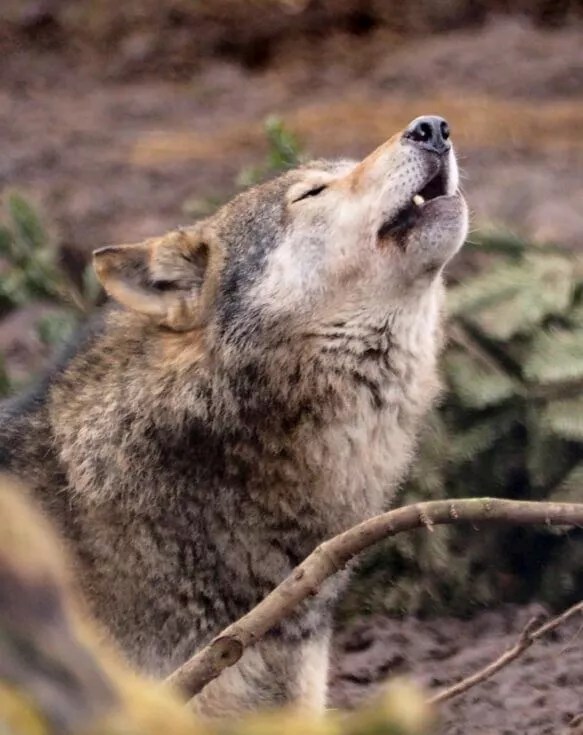
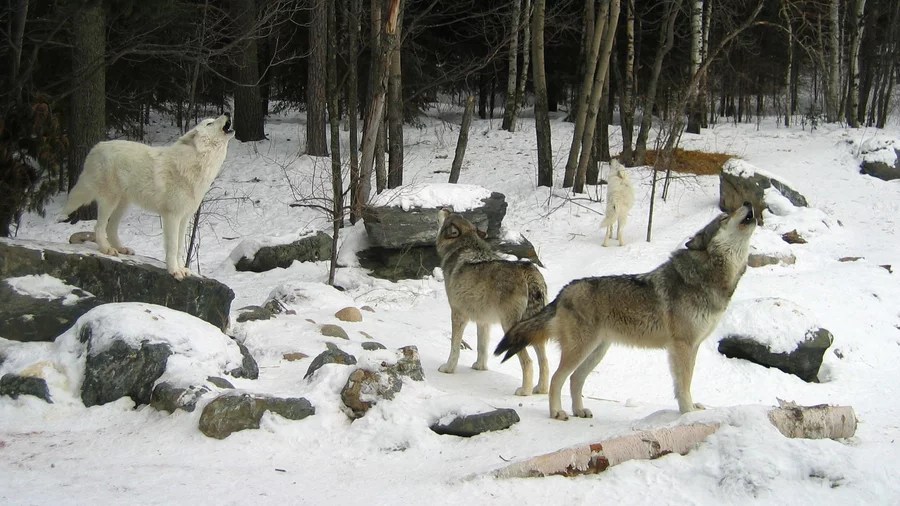
Four Of The Great Lakes Gray Wolves Population Howling
“Instead, probably the best way to think of Wolf populations in the western Great Lakes area is to think of them as one large, connected population with dispersing Wolves moving between provinces and states all the time.”
Originally posted by Michigan Live.
What you can do to help wildlife:
You can support ‘Protect All Wildlife’ by donating as little as £1 – It only takes a minute but it can last a lifetime for an animal in need.
“The greatness of a nation and its moral progress can be judged by the way its animals are treated” ~ Mathatma Gandhi.
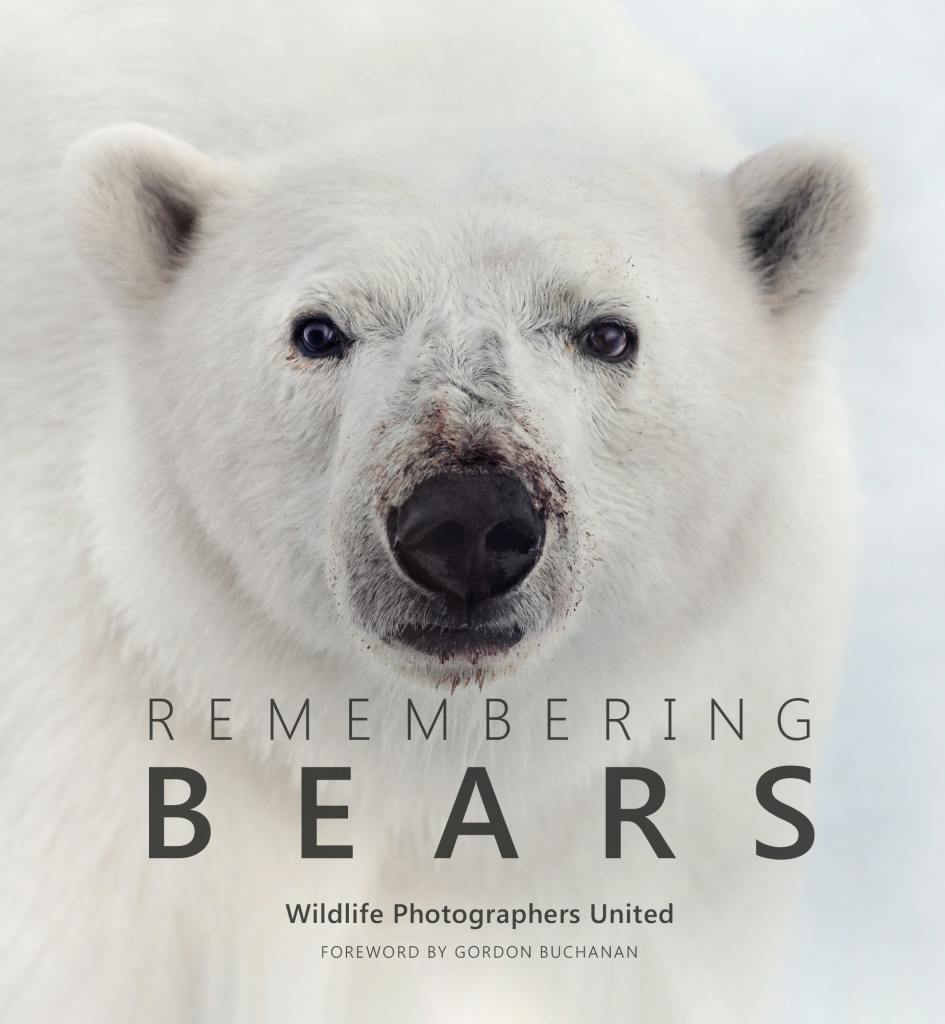
A new book aims to raise awareness of the plight facing Bears and to raise money to protect them. This is the latest book in the Remembering Wildlife series which has so far raised more than £952,000 for conservation through book sales around the world.
“There can be few species that we humans have such a contradictory relationship with, than Bears. From hugging toys of them at night as children, to labelling them as anything from a nuisance to a threat, entertainment to medicine, we are nothing but hypocritical in how we relate to this most awe inspiring creature. At Remembering Wildlife, we believe it is time to stop and think about this contradiction.
As you’ll see in this stunning collection of images, the eight Bear species roam from ice sheets to forests, meadows to mountains. From tender moments with their young, to fierce territorial battles between males, we tell their story in a way that commands respect, awe and reappraisal.
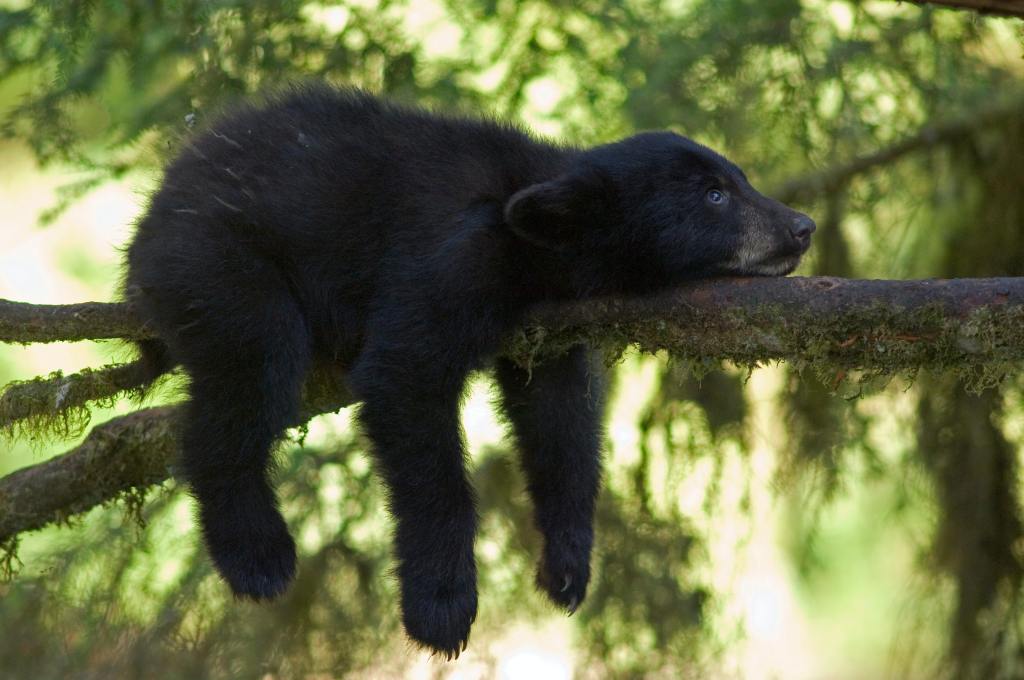
American Black Bear (Ursus Americans) by Amy Gulick Tongass. National Forest, Alaska This Black Bear cub was sent up a tree by its mother for safekeeping while she fished in the stream below. It was an unusually hot day and the cub flopped out on the branch until mom gave the signal to come down for a meal.
With this book, we aim to shine a spotlight on their diversity and beauty, their resilience and fortitude and most importantly, to raise funds for those working to protect them. We are supported in this mission once again by many of the world’s top wildlife photographers, who have all generously donated their work. Together, we are determined to stand up for Bears and penetrate the moral consciousness of all those who would exploit or see them destroyed. Because the planet would be poorer without them” – Margot Raggett, Remembering Wildlife Founder.
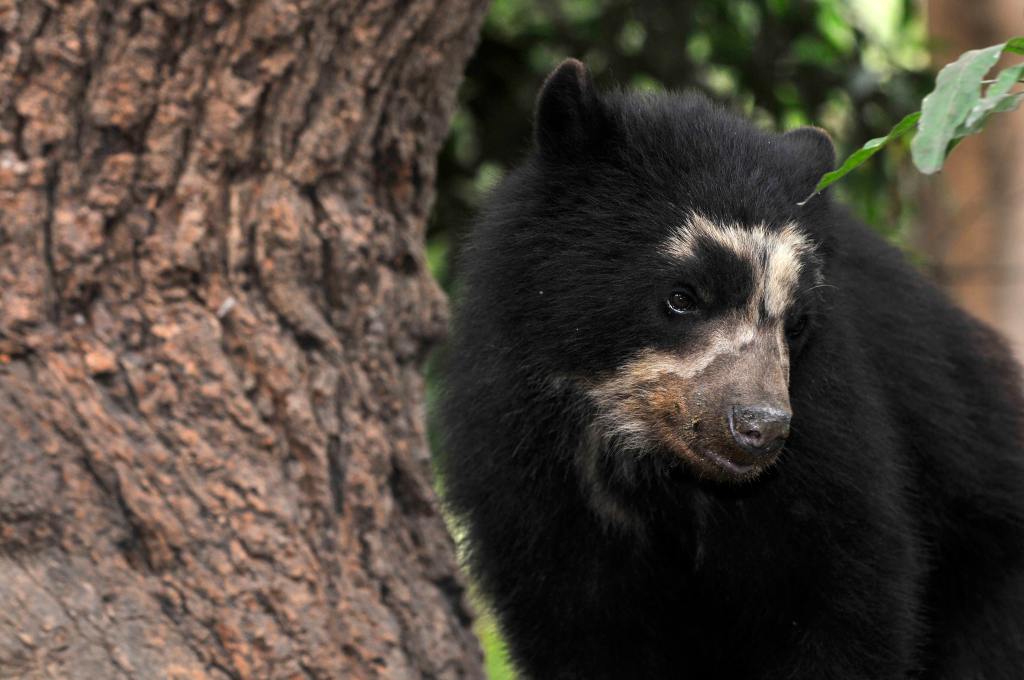
Chaparri Ecological Reserve, Peru Andean Bear. Photographer Daniel Rosengren was visiting a bear sanctuary in Chaparri when suddenly this wild bear appeared and climbed a tree. Staff explained it visited sometimes and was not shy.
All profits from the sale of the book will be used to support projects working to protect Bears.
Each turn of the page reveals another striking image of one of the eight Bear species –American Black Bear, Andean Bear, Asiatic Black Bear, Brown Bear, Giant Panda, Polar Bear, Sloth Bear and Sun Bear – revealing tender moments with family members, fierce territorial battles and the harsh reality of life as a bear, for example, when searching for food.
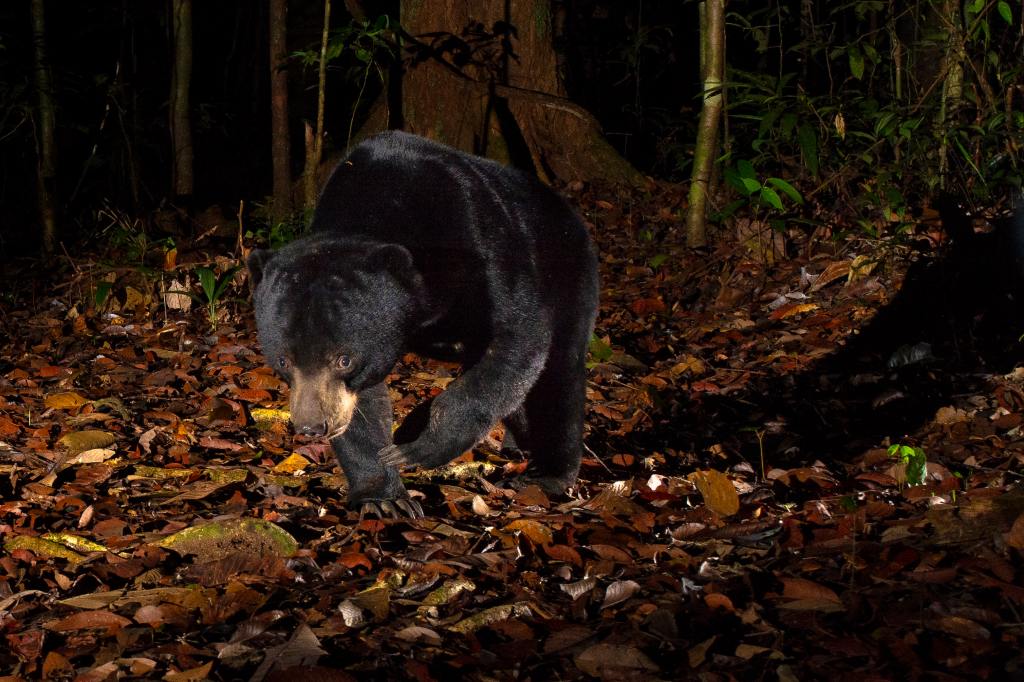
Sun Bear (Helarctos malayanus) by Tim Laman Gunung Palung National Park, West Kalimantan, Indonesia Sun Bears are rare, and this image was one of a handful of obtained during two years of intensive camera trapping, deep in the remote rainforest of Gunung Palung National Park in Indonesian Borneo.
Actor and comedian Ricky Gervais has endorsed the book, saying it is: “A wonderful book that shows how beautiful Bears are and just what we have to lose if we don’t stand up for them now. They deserve better.”
The hardback coffee table book is a collection of 88 stunning images taken by the world’s top wildlife photographers – including Marsel van Oosten, Art Wolfe, Frans Lanting, Greg du Toit and Daisy Gilardini – who have generously donated images to help protect Bears in the wild.
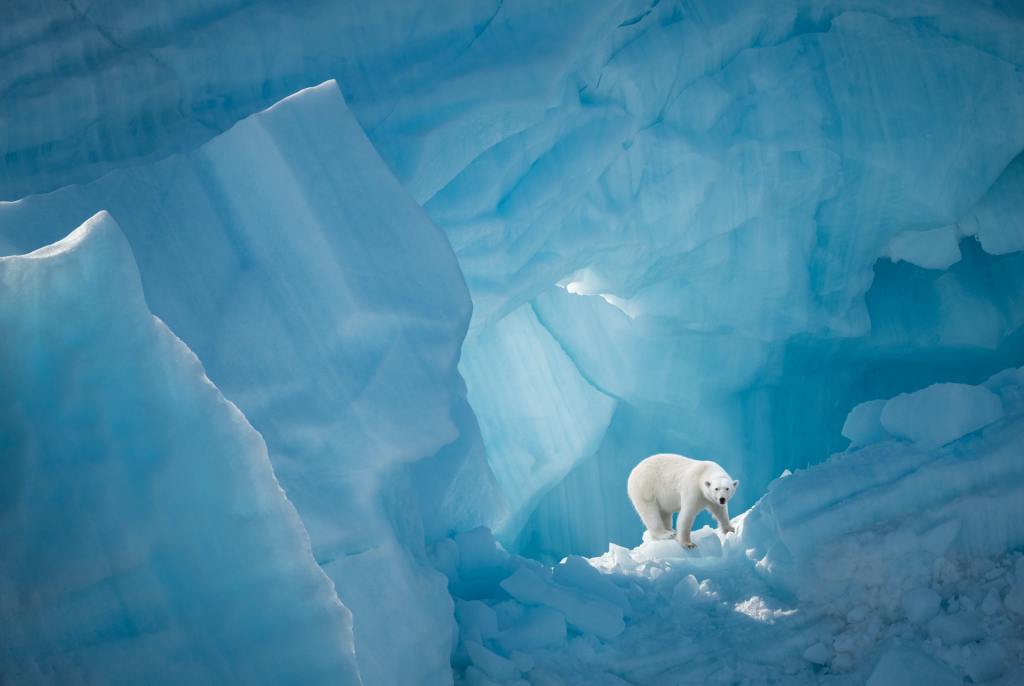
Polar Bear (Ursus maritimus) by Marsel van Oosten Svalbard. Climate change is not the only threat to Polar Bears. In Canada, the world’s largest exporter of Polar Bear skins, more than 600 Bears are legally killed every year. Hunters worldwide kill more Polar Bears than African Rhinos, which are protected by guards against poaching.
Six out of the eight Bear species are listed by the International Union for Conservation of Nature (IUCN) as Vulnerable or Endangered due to pressures ranging from climate change to human-wildlife conflict. Even those Bears of least concern, such as Brown Bears, are at risk of being lost for good in certain countries.
Founder of Remembering Wildlife Margot Raggett said: “Humans have long had a special relationship with Bears – we hug them at night as children and love seeing them in story books and on screen. Yet, in the real world, they’re not always viewed with the same affection and can been seen as a nuisance or a threat.
“Some face lives of misery – as dancing Bears, illegally trafficked as pets or used for medicine – or face serious threats and extinction through climate change, hunting or human-wildlife conflict.
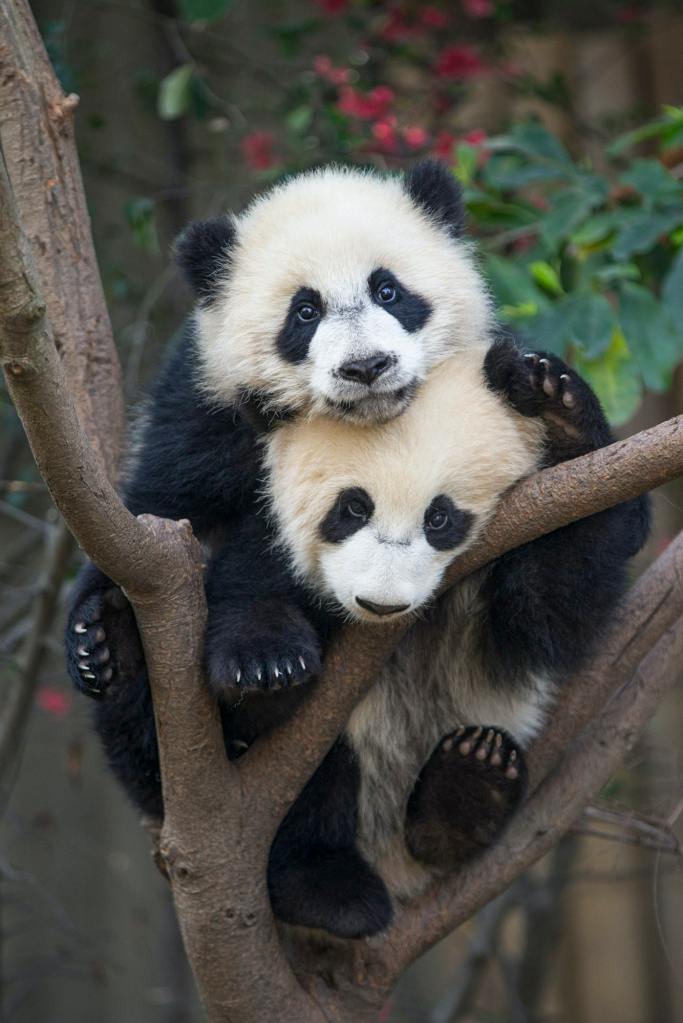
Giant Panda (Ailuropoda melanoleuca) by Suzi Estzerhas. Two playful seven-month-old Giant Panda cubs in a tree Chengdu, China
“Through images and words, this book shines a spotlight on their diversity, beauty and resilience as well as raising awareness of their plight and raising funds for organisations passionately fighting for the future of Bears.”
The foreword for the book is by award-winning wildlife filmmaker, presenter and public speaker Gordon Buchanan MBE.
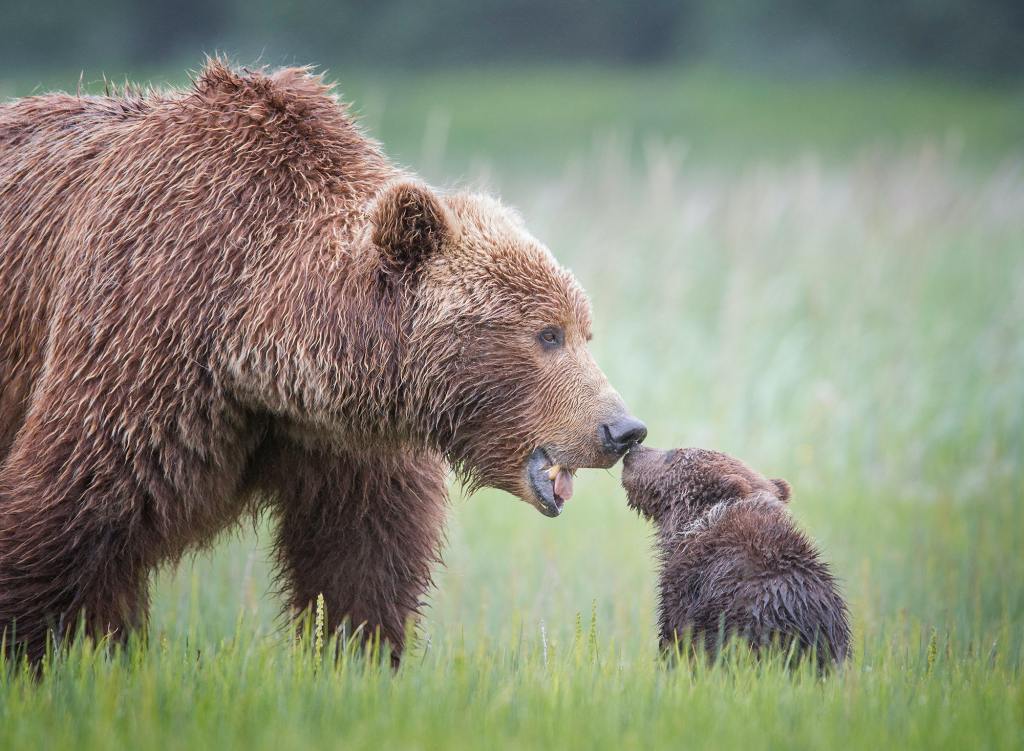
Brown Bear (Ursus arctos) by Tin Man Lee Lake Clark National Park, Alaska. After three hours lying motionless in remote Alaska, the photographer caught this picture of a spring cub waking up from a deep sleep and sitting up, with mother Bear, who was 20 feet away, dashing back to give a cub a nose touch.
Further information about Remembering Wildlife can be found here .
To find out more about the projects that Remembering Wildlife has already funded, click here
Each book costs £45 GBP (approximately $50 USD) and copies can be ordered at Remembering Wildlife












 PROTECT ALL WILDLIFE