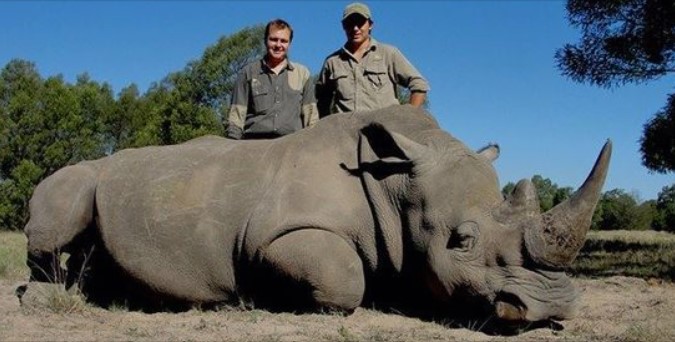
In 2009, WWF sent a letter to the U.S. Fish and Wildlife Service in support of limited, managed hunting of black Rhinos in Namibia.
“WWF believes that sport hunting of Namibia’s black Rhino population will strongly contribute to the enhancement of the survival of the species,” the group wrote, citing the generation of income for conservation and the removal of post-breeding males.
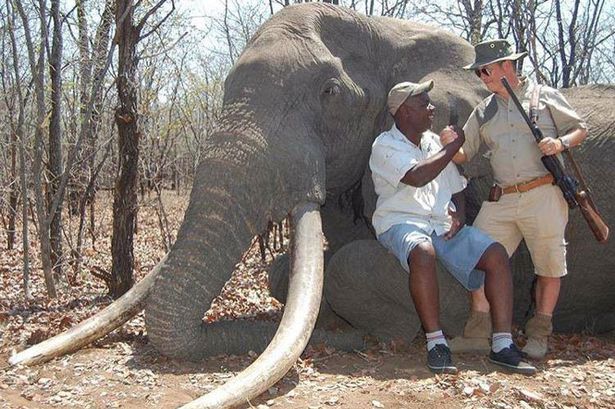
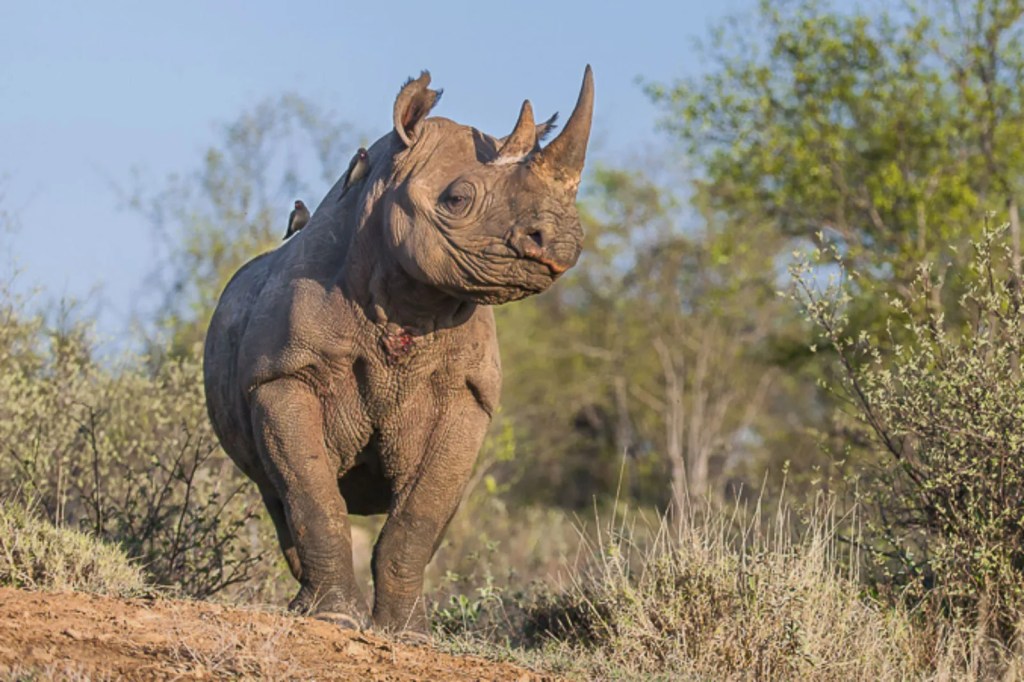
COREY KNOWLTON PAID $350K TO KILL ENDANGERED BLACK RHINO
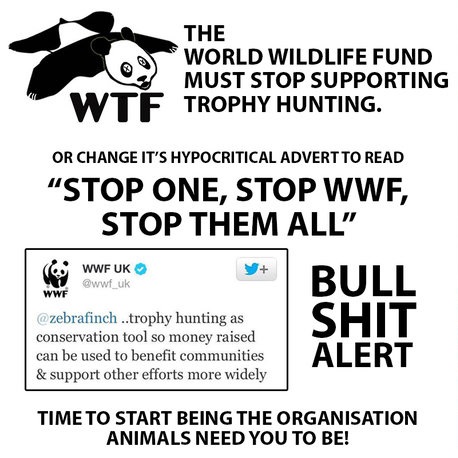
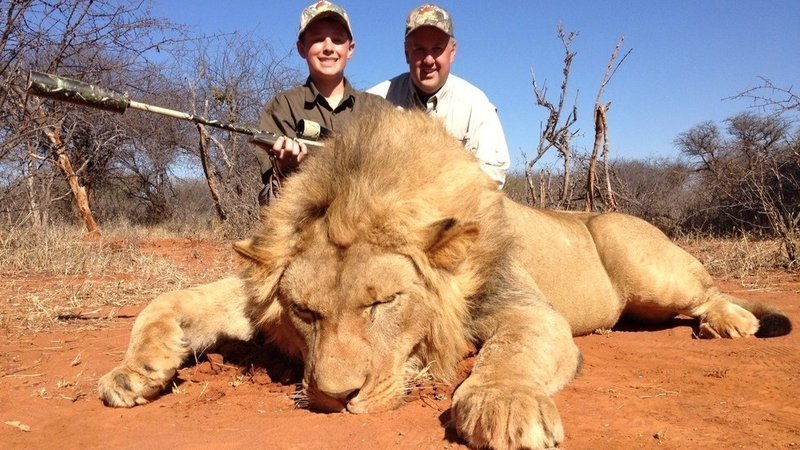
The WWF Endorses The Killing Of Wild Animals
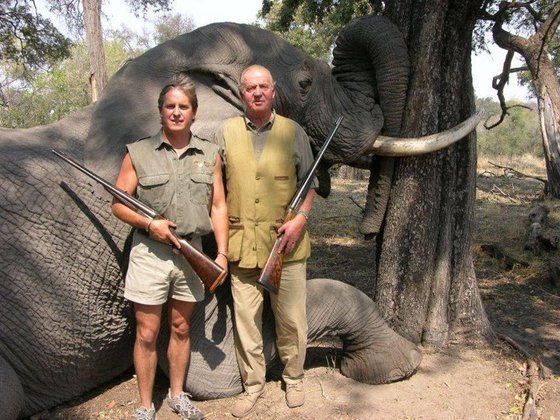
KING JUAN CARLOS OF SPAIN, THE HONORARY PRESIDENT OF THE WWF
Juan Carlos, the King of Spain, sparked widespread criticism for going on an elephant hunting trip in Botswana. The king is the honorary president of the World Wildlife Fund (WWF). When asked should the honorary president of the conservation group WWF be allowed to hunt elephants the press spokesman of WWF Germany said No but insisted that a regulated and controlled hunt can help to protect nature.
The World Wildlife Fund (WWF) gives special meaning to the word “conservation.” The organization, founded in 1961 by a group of wealthy trophy hunters, including HRH Prince Philip, apparently believes that conserving animals means keeping them around long enough for well-heeled “sportsmen” to blast them out of the woods, oceans, skies, plains of Africa, and jungles of Asia. Past WWF chapter presidents include C.R. “Pink” Gutermuth, who also served as president of the National Rifle Association, and trophy hunter Francis L. Kellogg, who is legendary for his massive kills. In its early days, the WWF even used fur auctions to raise funds. Since then, the WWF has learned that most people are appalled by hunting and trapping, so today, the organization veils its true stance under phrases like “sustainable development,” arguing that killing is acceptable under some circumstances. When answering difficult questions about its policy on hunting, trapping, and whaling, the WWF is careful never to state outright that it approves of all these activities. But don’t be fooled, the WWF’s intentions are all too clear and deadly.
Sport Hunting: As one would expect of an organization founded by hunters, the WWF does not oppose the slaughter of animals with guns and other weapons for sport. Rather than working to stop the killing, the WWF believes that hunting should be regulated, arguing that wealthy trophy hunters can bring income to poorer nations. The WWF claims that it has no power to stop hunting, stating, “The decision to allow trophy hunting is a sovereign one made entirely by the governments concerned. We will continue to monitor governments’ enforcement of important trade laws to ensure that trophy hunting is done within the legal standards of that area.”
Elephants: The WWF believes that culling—another way of saying “killing”—elephants is acceptable, as is the trade in ivory, because the profits that it brings spur governments to keep elephants from going extinct. In 2000, U.S. News & World Report reported that WWF representatives travelled to Nairobi to ask the United Nations to lift the ban on the ivory trade in order to allow a “sustainable harvest of ivory for horns and hunting trophies.” The WWF’s bizarre view—that we must kill some animals now in order to save animals to kill later—has proved false time and again. The trade in ivory has only encouraged rampant poaching, the senseless slaughter of elephants. The WWF tries to duck the issue by falsely stating, “The decision to cull, or to select animals from the herd for removal or death, is indeed an agonizing choice, but it is one made entirely by the governments concerned and there is no international involvement in those decisions.”
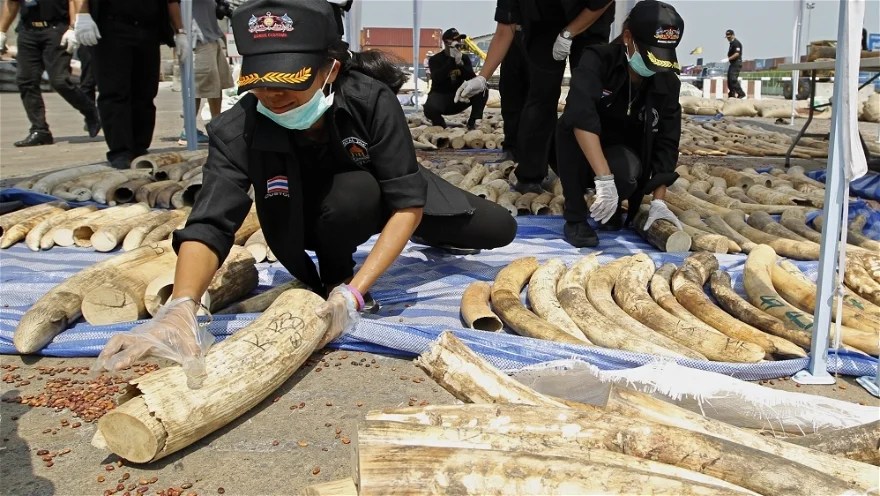
A three-year investigation has led authorities in the Democratic Republic of Congo to 2 metric tons of ivory hidden in a stash house in the southern city of Lubumbashi.
The tusks are valued at $6 million on the international market and estimated to have come from more than 150 elephants.
The three people arrested in the May 14 raid are allegedly members of a major wildlife trafficking ring in the Southern African region.
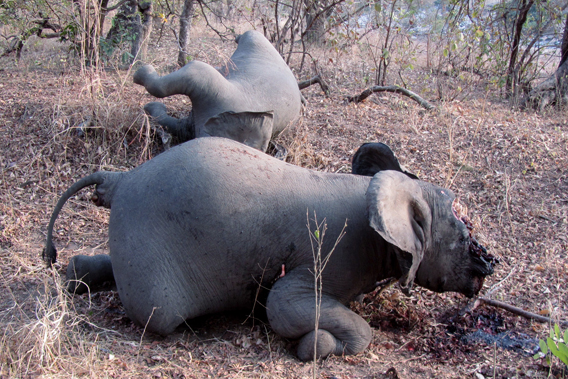
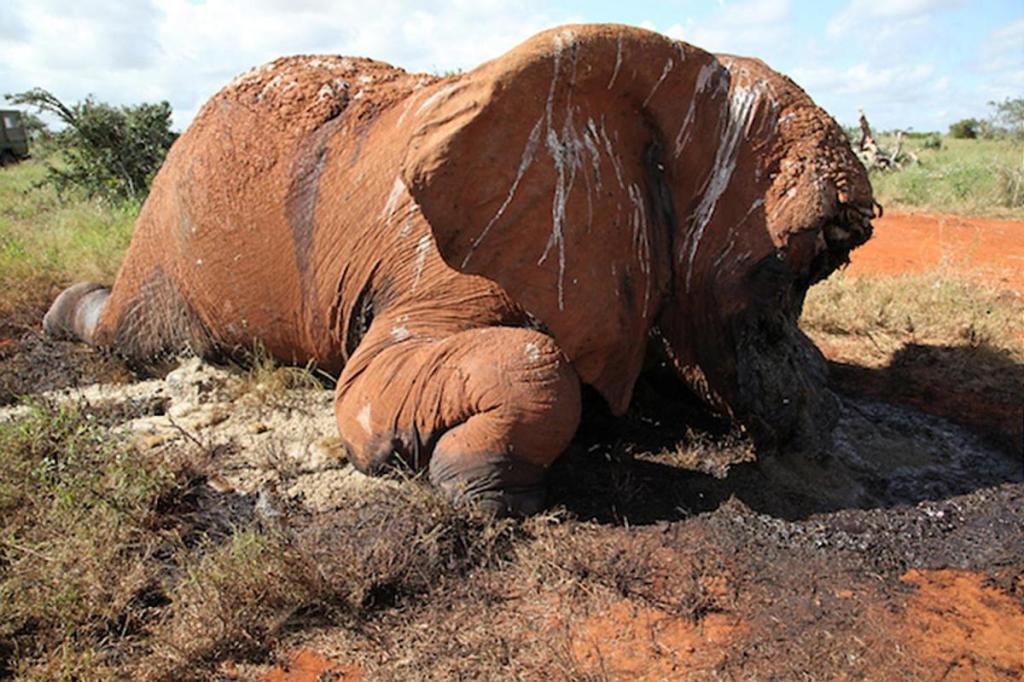
POACHED ELEPHANT ON ITS KNEES WITH ANOTHER LYING DEAD BEHIND IT
Authorities in the Democratic Republic of Congo have seized 2 metric tons of ivory in the city of Lubumbashi, a hub for ivory trafficking.
The May 14 seizure is one of the largest in recent years, according to Adams Cassinga, who heads Conserv Congo, an NGO that fights wildlife trafficking and which took part in the operation. The seized ivory is estimated to be worth $6 million.
Authorities arrested three people, believed to be members of one of the major wildlife trafficking rings in the region. The network is linked to the smuggling of 20 metric tons of ivory in the past five years alone.
The latest seizure represents more than 150 elephants killed for their tusks, Cassinga said. The tusks originated from countries in Southern Africa, which has seen a surge in ivory trafficking in the 2000s, fueled by demand from Asia, particularly China.
Ivory found in a stash house in Lubumbashi, the Democratic Republic of Congo. Image courtesy of Adams Cassinga/Conserv Congo
At the height of the crisis, 30,000 elephants were being killed every year, an average of 80 a day. African elephant populations have shrunk by 80% in the past 100 years, according to an analysis by WWF. The African savanna elephant (Loxodonta africana) is considered endangered on the IUCN Red List, while the forest elephant (Loxodonta cyclotis) is critically endangered, only a step away from being extinct in the wild.
Poaching has declined in recent years, a 2021 report by Geneva-based nonprofit Global Initiative Against Transnational Organized Crime (GI-TOC) found. One of the factors cited for the dip is the weakening of criminal networks because of raids and arrests.
DR CONGO AUTHORITIES SEIZE 1.5 TONNES OF ELEPHANT IVORY
“The reduced poaching seems to be the result of the dismembering through arrests and prosecutions of a large number of transnational organized criminal networks involved in ivory poaching and trafficking in East and southern Africa between 2014 and 2020,” the GI-TOC report said.
The Lubumbashi raid was led by the DRC’s top conservation authority, known by its French acronym, the ICCN. It included members of the national police force, court officials and the NGO Conserv Congo.
The team recovered the ivory from a stash house in Lubumbashi in the southern DRC. Traffickers brought the poached parts into the DRC from Zambia, which lies on the country’s southern border. Lubumbashi has emerged as a major hub from where poached wildlife parts are funneled out of Africa. The items originate primarily in Southern African countries like South Africa, Zimbabwe and Zambia.
“We are sure it will bring a great deal of deterrence in a place where previously wildlife laws were neglected and not applied,” Cassinga said in a tweet.
Weak enforcement of laws, armed conflict and corruption have allowed international gangs to operate with impunity in western and Central Africa. The DRC, which shares borders with nine countries, serves as an important transit point for the movement of trafficked parts. The Central African nation, which hosts the largest swath of Congo Basin rainforest, is also a source country for illegal wildlife goods.
Yet, from 2000 to 2014, when elephant poaching was rampant, the DRC recovered only around 8 metric tons of ivory in seizures. Then, between 2015 and 2019, authorities there confiscated 20 metric tons, according to data collected by the Environmental Investigation Agency, an NGO based in the U.K.
“We are making strong efforts to take down all the illegal trade networks. With time, we have bigger impacts on the illegal networks,” Olivier Mushiete, head of the ICCN, said in a phone interview with Mongabay.
The Lubumbashi raid follows a series of raids in the DRC capital, Kinshasa, last year. Mushiete told Reuters at that time that they expect to recover more than 60 metric tons in future seizures. The current operation was a result of three years of investigation.
“The relationship between the government and the civil society is improving. You can see that it is yielding results,” Cassinga said. He added that support from partners like Zambia-based Wildlife Crime Prevention and international donors like the Rhino Recovery Fund is helping them combat wildlife trafficking.
The skull of an elephant recently killed by poachers who ripped out its tusks in Province Orientale, DRC. Image by Matchbox Media Collective via Flickr (CC BY-NC-SA 2.0).
Ivory poaching is one of the most lucrative illicit trades, valued at around $23 billion a year, according to Bloomberg.
CITES, the global convention on the wildlife trade, banned the international commercial trade in ivory in 1989. However, some countries continue to allow domestic trade and international trade, subject to varying degrees of regulation.
In the past decade, efforts to curb ivory demand have gathered pace, with the U.S. imposing a near-complete ban on elephant ivory trade in 2016 and China banning the domestic trade in 2017. The EU tightened its rules on the ivory trade in 2021. Narrower exemptions limit the legal ivory trade, which conservationists say often serves as a cover for unlawful transactions.
The three suspected traffickers from the Lubumbashi raid are due to appear in court this week.
Even if seizures and arrests increase, the impact on poaching could be limited by countries’ failure to prosecute alleged traffickers. Coordinating cross-border investigations and amassing the necessary evidence is tricky. Wildlife crimes are often not prioritized by law enforcement agencies or judicial authorities.
The arrest of two Vietnamese nationals during the seizure of 3.3 metric tons of ivory from Uganda’s capital, Kampala, in 2019 did not result in convictions because both suspects skipped bail.
Raids also tend to net intermediaries but rarely lead to the capture of those who organize, fund and benefit the most from this illegal trade. “As far as dismantling the network, that is unlikely. It may be slowed down,” said Chris Morris, who works with the Kenya-based organization Saving Elephants through Education and Justice (SEEJ). “These cartels are a business. They are prepared for losses from seizures and arrests.”
What you can do to help
Please support Protect All Wildlife‘s work by donating as little as £1 – it only takes a minute. Please donate ANY amount, large or small,at HELP PROTECT ALL WILDLIFE. Thank you.
What else you can do to help
Please SHARE to raise awareness to wildlife and environmental issues from around the world. You can also receive NEWS and UPDATES by signing up in the top right of this page.
A recent study confirms alarming declines in raptor populations in Kenya. Incidental poisoning is a major problem for vultures in particular, depriving ecosystems of the birds’ vital role as scavengers. Conservationists are working with communities to help species recover.
“The population of raptors today bears no resemblance to those numbers we saw a half century ago,” said Simon Thomsett, director of the Kenya Bird of Prey Trust and one of the study’s authors. “And those had already drastically declined 25 years ago before we started to take notice.”
Drawing on road surveys carried out from 2003-2020, as well as historical data from similar surveys done between 1970 and 1977, the researchers found that populations of vultures and large eagle species had all declined. Numbers of previously common small and medium-sized raptors like black-winged kites (Elanus caeruleus) had also fallen sharply.
“The level of decline for many species was huge,” co-lead author Darcy Ogada told Mongabay. “But more surprising was the decline in medium-sized raptors like augur buzzards [Buteo augur] and long-crested eagles [Lophaetus occipitalis] which were once very commonly seen roadside birds and often seen in farms where they are the farmer’s friend because they prey on rodents.”
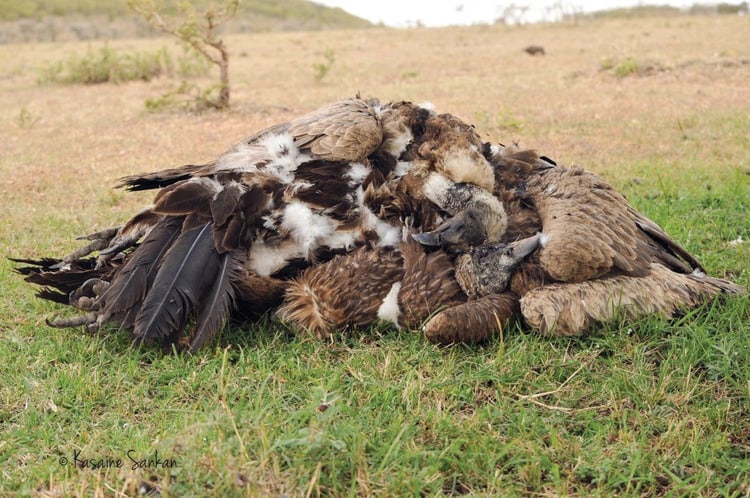
Vultures that died from poisoning in Maasai Mara, Kenya. Image courtesy of Nature Kenya
Ogada, who is assistant director for the Peregrine Fund’s Africa program, and her co-lead author, Phil Shaw of the University of St. Andrews in the U.K., led the team of scientists drawn from Kenya, the U.K., France and the U.S., which published the first report on nationwide trends for Kenya’s raptors.
“Given what we know about biodiversity loss in general in Kenya, we wanted to know specifically about the fate of Kenya’s raptors,” she said. “Fortunately, there was already historical data from the 1970s that was collected using the same method [road surveys], which could be used for comparison.”
Each year from 2010, the researchers spent four or five days driving slowly along roads in different parts of the country, identifying how many of each raptor species they saw. One team of scientists covered Laikipia, Samburu and Meru counties in central Kenya, while another team surveyed the southern part of the country, in Kajiado county and the national parks of Amboseli, Tsavo East and Tsavo West.
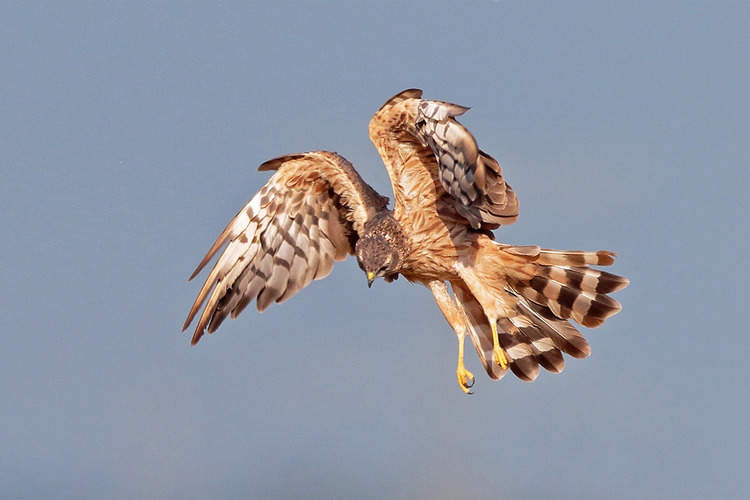
Raptors have fared better in protected areas, with the overall rate of decline for vultures and large eagles less pronounced in national parks and private conservancies than in unprotected areas. Medium-sized and small raptors like Montagu’s harriers (Circus pygargus) were actually seen more frequently in protected areas in the 2000s than during surveys in the 1970s, but those gains are tempered by an 85% drop outside of protected areas. Ten of the 22 species covered by the surveys are now found almost exclusively within protected areas, underlining the importance of these areas to their continued survival.
Andre Botha, co-chair of the IUCN’s Vulture Specialist Group, who was not involved with the recent study, said the survey method was a sound one.
“The method that was used to conduct the recent assessment is the same as that followed in 2010 [by these researchers] and also similar to approaches to surveys in various other parts of the world, so it is one way to assess populations,” he said. “It was, however, also scientifically important to follow the same method as previously to enable reliable comparison between the two counts.”
Medium-sized and small raptors like Montagu’s harriers (Circus pygargus) were seen more frequently in protected areas in the 2000s than during surveys in the 1970s, but those gains are tempered by an 85% drop outside of protected areas. Image by Radovan Václav via Flickr (CC BY-NC 2.0).
Grim findings
“Outside of Kenya’s protected area network, there is evidence that populations of many raptors have almost collapsed,” study co-lead Phil Shaw told Mongabay, “and this cuts across species size, diet or ecological requirements. While most species have fared better within protected areas, several large raptor species have shown worrying declines even here, suggesting a need to bolster site protection and connectivity.”
Both the reasons for the decline and possible remedies are well-known.
“Some threats, like raptor electrocutions, can be easily mitigated and some excellent work is being done around the world to reduce raptor mortalities,” said co-author Munir Virani, CEO of the Mohamed Bin Zayed Raptor Conservation Fund. “A case in point is the remediation of power lines done in Mongolia where raptor mortalities from electrocution has been reduced by 98% per year.”
More complicated is eliminating the use of pesticides used on crops and medicine given to livestock, both of which harm raptors’ health.
“Mitigation in the form of banning the veterinary drug diclofenac, which was responsible for the decline of up to 99% of populations of vulture species in Asia, has dramatically lowered additional mortality in these populations,” Ogada said. “In the U.S., banning of the chemical DDT also led to national resurgence of the country’s national bird, the bald eagle, such that populations today are growing at 10% per year.”
Other threats faced by raptors include habitat destruction caused by expanding agriculture and logging, being trapped or shot (including for use in traditional medicine), and poisoning. Vultures in particular are vulnerable to poisoned carcasses targeting other predators.
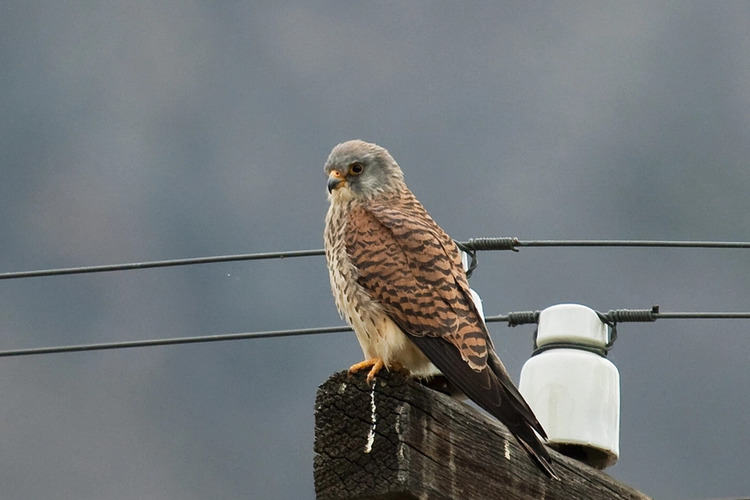
A lesser kestrel (Falco naumanni). Some threats, like raptor electrocutions, can be easily mitigated and some excellent work is being done around the world to reduce raptor mortalities, say experts. Image by Sergey Pisarevskiy via Flickr (CC BY-NC-SA 2.0).
Helping vultures recover
Responding to the worrying collapse in vulture populations, the Peregrine Fund, Nature Kenya, BirdLife International, the Kenya Bird of Prey Trust and others are working to reduce cases of poisoning by tagging and tracking vultures, training people in the raptors’ range to help protect and rescue birds from poison, and building predator-proof livestock sheds as an alternative to poisoning.
Conservationists have documented cases of poisoning across the country to map hotspot zones.
“Keeping the records of poisoning incidences help us map the hotspot zones in areas where conflicts are rife so that awareness can be increased,” said Vincent Otieno, vulture conservation program coordinator with Nature Kenya. “From our records, such areas prone to poisoning are those that border conservancies and national parks.”
In Narok and Kajiado counties, at the southern end of the Rift Valley, community volunteers have been trained to respond quickly to vulture poisoning incidents. Equipped with rubber gloves, face masks, plastic containers, and fuel, they bag and burn poisoned carcasses so more vultures don’t gather and gorge themselves on a deadly meal.
They can also bring stricken birds to raptor centers at Naivasha and Soysambu, clinics set up to treat poisoned vultures. Once the birds recover, they are fitted with GPS trackers and released.
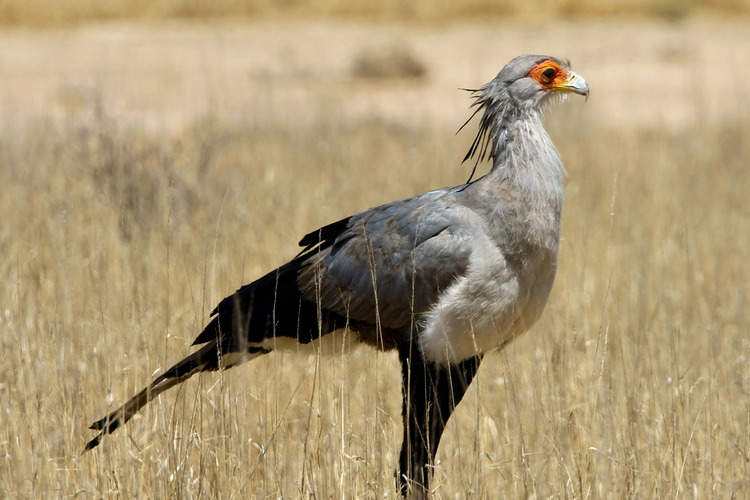
Encounters with 19 of 22 species studied using road surveys fell, including for the secretary bird (Sagittarius serpentarius), which was encountered 94% less frequently. Image by Ansie Potgieter via Unsplash.Several conservation organizations are working to reduce cases of poisoning by tagging and tracking vultures, training people in the raptors’ range to help protect and rescue birds from poison, and building predator-proof livestock enclosure as an alternative to poisoning. Image courtesy of Caroline Chebet.
“Tagging these vultures with GPS trackers helps us map out the areas where they spent most of the times,” said study co-author Shiv Kapila, from the Kenya Bird of Prey Trust. “The information we get helps when conducting anti-poisoning campaigns and education.”
Similar work with communities is taking place in the central counties of Laikipia and Samburu. In addition to training volunteers to respond to poisoning incidents, the Peregrine Fund is working alongside conservation nonprofit Lion Landscapes to construct predator-proof bomas, offering herders an alternative to way to protect their livestock from lions than leaving poisoned carcasses where the big cats — as well as vultures, hyenas and other scavengers — will find them.
Conservation groups have also trained rangers, police officers and Kenya Wildlife Service officers.
Botha, who is also the program manager of the Endangered Wildlife Trust’s Vultures for Africa program, noted that conservationists in Kenya and South Africa have been working together for almost 15 years, training thousands of people across 15 African countries to reduce wildlife poisoning.
“We continually communicate and share expertise between countries and beyond, but the uptake of certain interventions are done with different degrees of success, largely due to different circumstances in-country and limited resources that are always a challenge,” he said.
This article by Caroline Chebet was first published by Mongabay.com on 17 May 2022
What you can do
Support Protect All Wildlife’s work by donating as little as £1 – It only takes a minute. Please donate at HELP PROTECT ALL WILDLIFE. Thank you.
What you can do
Please SHARE to raise awareness to wildlife and environmental issues from around the world. You can also receive NEWS and UPDATES by signing up in the top right of this page.
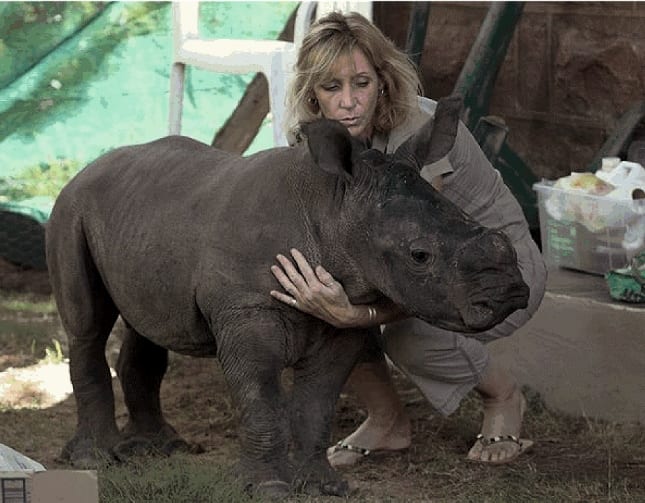
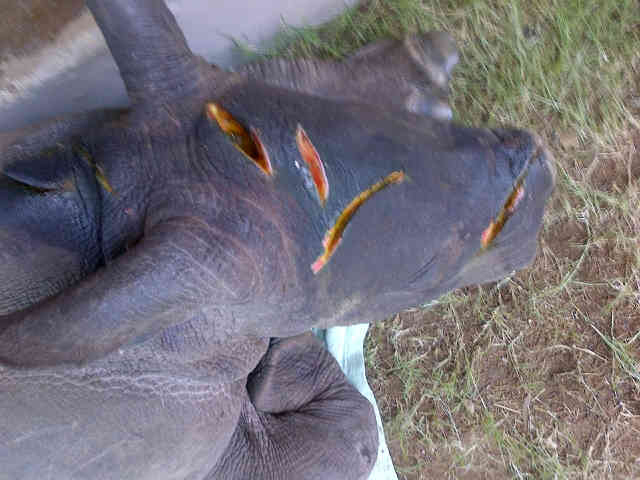
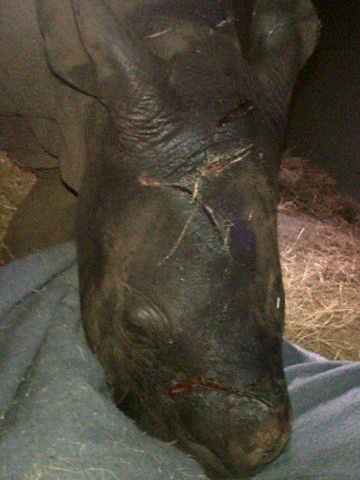
As the number of rhinos killed by poachers keep rising and more traumatized orphaned calves are in need of care, Kirsten Everett, a volunteer at Nikela, takes us on a touching journey as she looks at the horrors of a poacher attack though the eyes of a young Rhino calf called Ntombi.
Vet Karen Trendler With Ntombi
“My mother and I were contently filling our hungry stomachs when we heard a strange noise. I carried on eating but she smelt the air for unknown scents. I saw the terrified look in her eye before she managed to control it; the unnatural smell meant something. A few minutes later we heard the ‘whop, whop’ of a metal monster flying closer towards us. Just when my mother focussed on it the men crept out of the bushes with a crunch of sticks. Something seemed to hit her and she grunted in surprise. The birds abandoned their posts heading away from the danger. I stood helplessly as she tried to run but ended up falling to the ground. The men surrounded her and tried to chase me away. I ran forward scared enough to not care about the men as they had done something to my mother, I needed her and they must go away.
Out of nowhere one of the big men spun on me and hit me hard with something sharp. Blood oozed from my wound as my mother answered my cry for help with a weak beg, ‘Away, away’. I backed away nursing my wound, how could I get to her?? She grunted again so I didn’t give up. I ran forward again but this time the angry man was merciless, determined to get his message across. As quietly as possible I took the cuts to my poor head trying not to worry my mother even more.
This The Work Of Poachers
Confused I backed away into the bushes calling to her to get up, but the eerie silence dragged on and she didn’t move a muscle. Fear glued me to the floor as I felt my young heart pulsing with anger and fear. A breeze blew, as I waited for the monsters to go so I could go to my poor mommy and find out what was wrong. My heart skipped a beat when I realised this was what my cousin had gone through only a full moon ago. It was terrible, my body couldn’t stop shaking and I couldn’t think clearly, I felt lightheaded from all my blood loss.
Finally when the monsters left I ran to her side, ‘Mom wake up.’ My voice cracked with emotion but still she didn’t respond. I took a step back and saw the pool of blood. Her horn had been brutally cut off and she lay lifeless. Above me a crow flew over.
I turned to run then I asked myself some important questions… where would I go? I wasn’t old enough to know the way to the dam yet. Who would protect me from predators? The truth was that I wasn’t strong enough to survive by myself yet. Would I be with my mother in the sky sooner than I thought? The last question scared me the most; out in the wild without my mother I might just be able to survive a week.
I heard the snap of a twig, I wasn’t alone. This time I didn’t have the strength to care what these humans wanted with me. I collapsed and slept for a few hours. I was almost completely unconscious though I sensed kindness near me. Too traumatised to do anything I lay as they treated my wounds. The people who tried to comfort me planted a seed of hope. Hope that I could survive and hope that the rest of the human race would come to its senses and help my species and all the others out there”.
Update (July 31, 2013): This is Ntombi feeling good and playful
NTOMBI
Please SHARE this article to raise awareness about this issue and feel free to leave a comment below. You can also sign up for UPDATES & NEW ARTICLESby submitting your email details in the right-hand column. But most of all NEVER give up fighting for the future of wildlife! Thank You
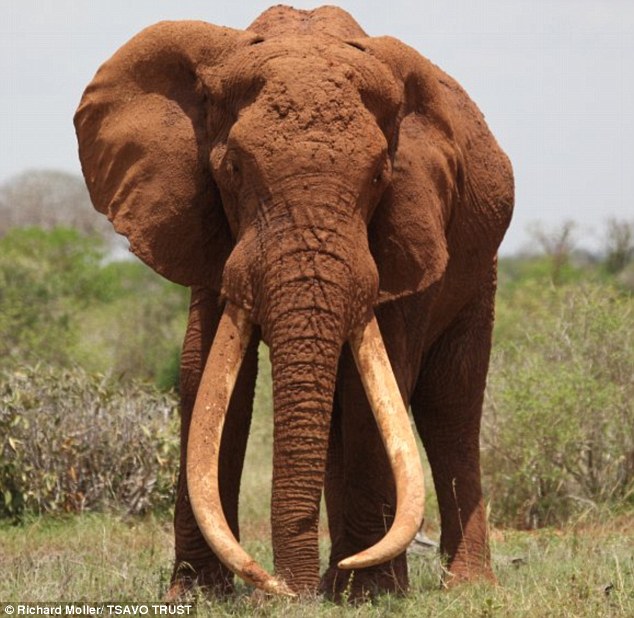
THE MAGNIFICENT SATAO ~ RICHARD MOLLER/TSAVO TRUST
Satao was one of the largest Elephants in the world. His weight was estimated to be over 7 tons and his tusks were so long he could rest them on the ground.
By logic, his size should have made him unreachable for any natural predators. However, in a world of destruction and corruption, logic doesn’t prevent the extinction of the African Elephant. Satao fell prey to poachers for his ivory in May 2014, which triggered a huge wave of grief in Kenya followed by international outrage in the news and on Twitter and Facebook.
Born in the late 1960s in Tsavo, Satao caused great amazement to everyone who ever caught a glimpse of him; rangers, tourists but also poachers. Many believe that Satao had the understanding that his tusks were beyond the ordinary. In fact, he had adjusted his behaviour to keep his tusks out of sight, which was incredibly impressive and heart-breaking at the same time. Impressive, because this once again proved how very intelligent Elephants really are, and sad, because Satao was nonetheless poisoned by arrows that caused his death.
The Tsavo Trust had been monitoring the Elephant’s movements using aerial reconnaissance for the last 18 months, and thanks to his enormous tucks the beast was ‘easily identifiable’ from the air.
But the technology was not enough to save the iconic beast from the hands of the poachers.
A Tsavo Trust spokesman said at the time: ‘With great sadness, we report the death of Satao, one of Tsavo’s most iconic and well-loved tuskers.
‘This magnificent Elephant was widely known in Tsavo East National Park, where he was observed with awe by many thousands of Tsavo’s visitors over the years.
‘No longer will Tsavo and Kenya benefit from his mighty presence.’
‘Satao, whose tusks were so long they trailed the ground, was discovered with his face hacked off at Kenya’s Tsavo East National Park’
He added: ‘The arrow had entered his left flank and he stood no chance of survival. We spotted his carcass on 2nd June but to avoid any potential false alarms, we first took pains to verify the carcass really was his.
‘Today it is with enormous regret that we confirm there is no doubt that Satao is dead, killed by an ivory poacher’s poisoned arrow to feed the seemingly insatiable demand for ivory in far off countries.
‘A great life lost so that someone far away can have a trinket on their mantelpiece.’
‘Rest in peace, Old Friend, you will be missed, he added.
Photos of his hacked off face and tusks circled the Internet and recorded the bitter loss and undignified death of this incredibly rare tusker.
AN UNDIGNIFEID END: SATAO WAS FOUND WITH HIS FACE AND TUSKS HACKED OFF!
Wildlife filmmaker based in Kenya Mark Deeble who had written a blog post Satao: last of the great tuskers about how poachers had been hunting Satao for some time and how he was injured but managed to escape until now:
He said “I was thankful that the bull’s wounds were healing and that we hadn’t had to dart him, but I was devastated that poachers had somehow managed to predict his movements and get close enough to fire two poison arrows into him. I am appalled at what that means – that the survival skills that the bull has painstakingly learnt over half a century have been rendered useless by the poachers’ use of mass-produced Chinese goods, GPS smartphones, cheap motorcycles and night vision goggles.
I think the old bull knows that poachers want his tusks, and I hate that he knows.
More than anything, I hate the thought that poachers are now closing in on one of the world’s most iconic Elephants.”
His fears came to reality on the 30th of May 2014!!
RIP Satao, you will NEVER be forgotten.
SATAO DRINKS AT A WATER HOLE IN TSAVO EAST NATIONAL PARK, KENYA, IN 2013, WHEN THE MAGNIFICENT TUSKER WAS IN HIS PRIME – MARK DEEBLE
NO ONE IN THE WORLD NEEDS AN ELEPHANT TUSK BUT AN ELEPHANT. ~ THOMAS SCHMID
A variety of styles of Nobody In The World Needs An Elephant Tusk Except Elephants tops are available at Save The Elephant with all proceeds helping Elephant charities.
Please SHARE to raise awareness to the plight of Elephants at the hands of poachers. You can also SIGN UP for news and updates straight to your inbox by registering in the top right of this page. Thank you.
A Sumatran Rhino has successfully given birth in an Lampung sanctuary, environment officials said, in a boost for conservation efforts targeting the critically endangered animal.
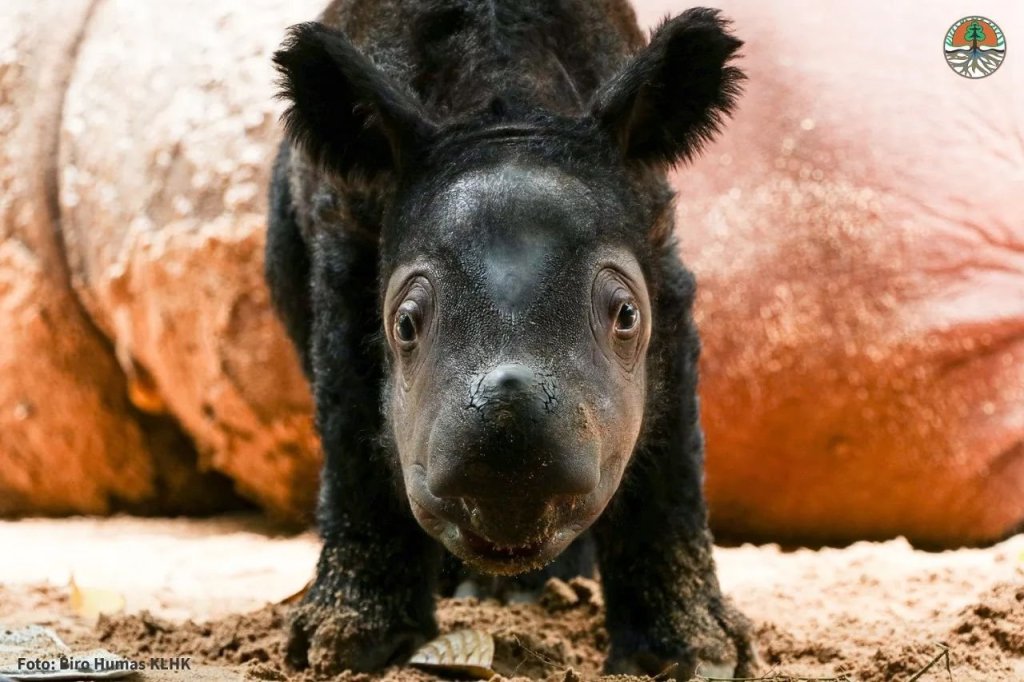
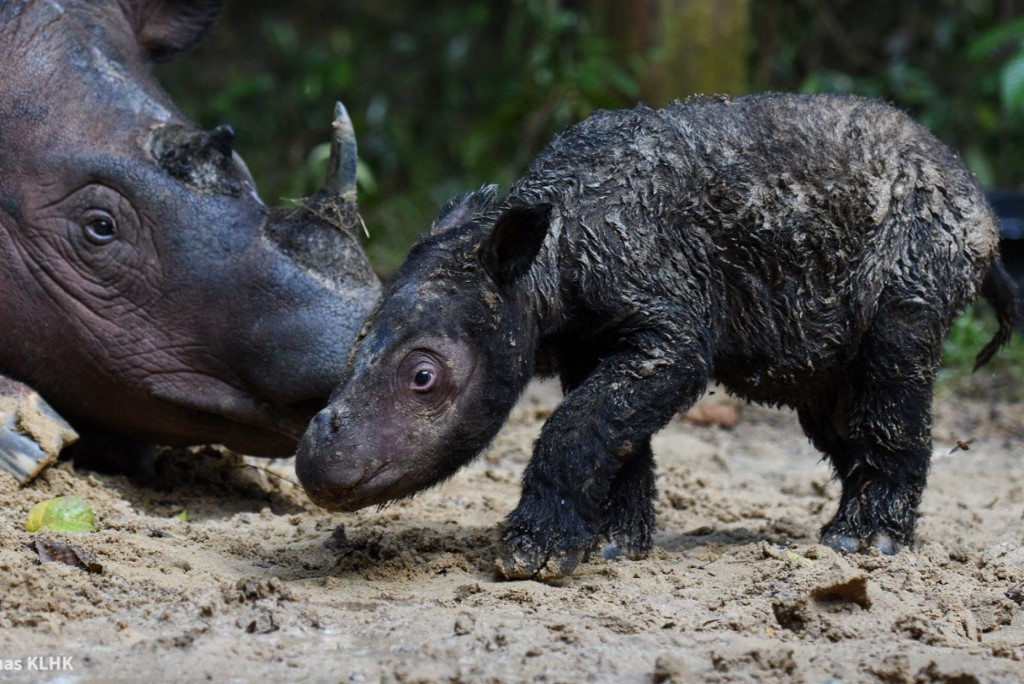
THE CLAF BORN IN WAY KAMBAS NATIONAL PARK
The World Wide Fund for Nature estimates fewer than 80 Sumatran Rhinos remain in the world, mainly in Sumatra and Kalimantan.
A Rhino named Rosa gave birth to a female calf on Thursday in Way Kambas National Park in Lampung, after suffering eight miscarriages since 2005, when she was brought in from the wild for a breeding program.
“The birth of this Sumatran Rhino is such happy news amid the government’s and partners’ efforts to increase the population,” Wiratno, a senior official at Indonesia’s environment ministry, said in a statement Monday.
The calf, who has yet to be named, brings the number of Sumatran Rhinos in the Way Kambas sanctuary to eight.
Successful births are rare. The calf’s father, named Andatu, was the first Sumatran Rhino born in a sanctuary in more than 120 years.
Standing between 3.3 – 5 feet, Sumatran Rhinos are the smallest of all Rhinoceroses and they have a lifespan of around 35 – 40 years. They were once found across South and Southeast east, from the foothills of the Eastern Himalayas in Bhutan to eastern India, through Myanmar, Thailand, and possibly to Vietnam and China. Now, the species is critically endangered, with less than 80 individuals remaining in the wild in small fragmented habitats on the island of Sumatra and nearby Borneo.
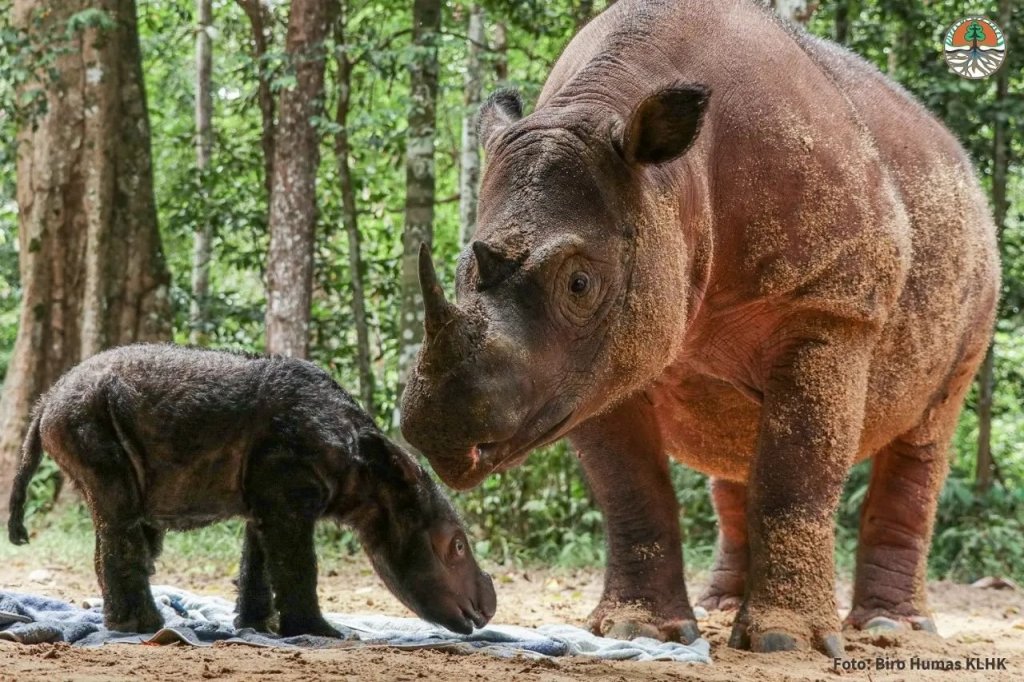
MOTHER ROSA WITH HER CALF
In 2017, Rhino conservation experts and the Indonesian government concluded that the only way to save the species was through a captive breeding program. The move was similar to an initiative launched in the 1980s that saw 40 Sumatran rhinos captured for breeding. But in this case, nearly half of the captive animals had died by 1995 and not a single calf had been born.
The International Union for Conservation of Nature classifies the Sumatran rhino, the smallest of all Rhino species, as critically endangered.
Multiple threats have brought them to the brink of extinction, including poaching and climate change.
This handout photo released on March 28 and made available on March 29, 2022 shows female rhino named Rosa (l) with her new baby born at the Way Kambas National Park, in Way Kambas, in Lampung province. Rosa delivered a baby rhino on March 24, for the first time after translocating from roaming in villages. A critically endangered Sumatran rhino was born in an Indonesian sanctuary bringing hope to the conservation of the rapidly declining species, an official said. (AFP/Handout)
Rhino horn is often illegally traded for traditional Chinese medicine.
Indonesia is also racing to save another critically endangered species – the Javan Rhino.
Once numbering in the thousands across Southeast Asia, fewer than 80 are alive today, mainly in a national park on Indonesia’s main island of Java.
Efforts to conserve the species have shown promising results with the birth of five calves in Ujung Kulon National Park last year.
Please SHARE for others to enjoy. You can also REGISTER for NEWS & UPDATES straight to your inbox by signing up in the top right of this page. Thank you.
Save The Asian Elephants (STAE) and all the animal welfare sector are aghast at the weekend’s media reports that the Government has abandoned the Animals Abroad Bill despite all its commitments otherwise, received regularly by STAE’s team as pledges, promises, “it’s been cleared in Cabinet” and “you’re pushing at an open door” in over 20 meetings with No 10 and Defra since lockdown.
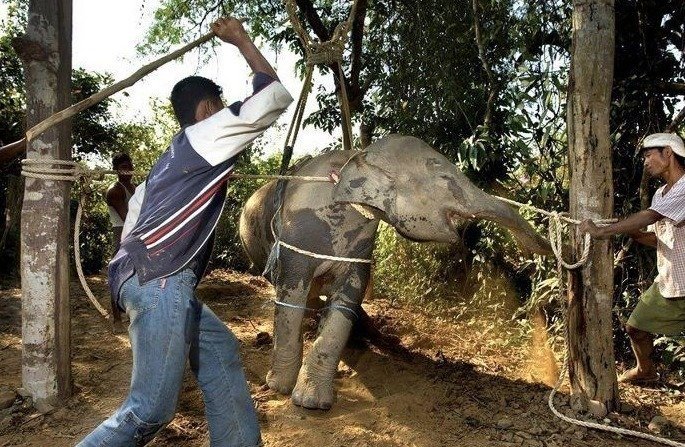
THE ANIMALS ABROAD BILL WOULD HELP STOP CRUELTY LIKE THIS
STAE is working to bring the entire sector together to ensure all is done to see this decision, if confirmed, reversed. Indeed with public support for a ban to protect elephants from the most extreme violence largely driven by the UK market running at over 90%, STAE’s petition now touching 1.1 million, and extreme emotions evoked in the electorate by torture of baby elephants, any such decision seems extraordinary as a General Election looms before late 2024.
PHAJAAN OR ‘CRUSHING’ IS THE TRADITIONAL ASIAN TORTURE OF YOUNG ELEPHANTS TO BREAK THEIR SPIRIT. IT IS DONE SO THAT THEY ARE SUBMISSIVE TO HUMANS.
Why on earth would Government be committed to these cruel acts? It must surely be in its own interests to take a principled lead over other parties (who will support it) and other nations, by pursuing the Bill. They are important measures now expanded in the Action Plan for Animal Welfare to all species abused in overseas tourism (including big cats, apes, bears, equines, dolphins) and not particularly controversial or difficult. On the contrary they are welcomed across the political divide. None of the measures to ban ads for “low welfare venues” impinge on Tory peers’ shooting weekends or even pigging out on foie gras, if that’s their tragic choice.
STAE CEO Duncan McNair speaking to Protect All Wildlife said “If confirmed, its sickening and foreshadowed in STAE’s communications with Govt and officials over the past year and my US TV interview on Unchained TV, despite every reassurance from Govt (including a letter signed by the Minister a week ago) all was on track.”
Muted claims that the Russian war on Ukraine has stolen all available Parliamentary time are unconvincing. STAE traces the evidence of wavering elements in Govt much further back. As they say, the first casualty of war is the truth. We hope the Defra Ministers at the helm will turn this round, publish the Bill, consult and bring it into Parliament soon.
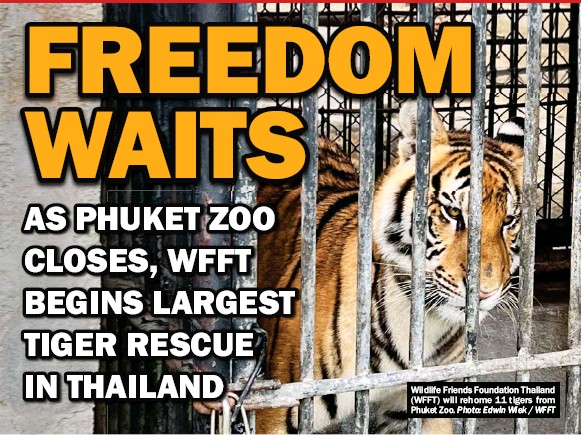
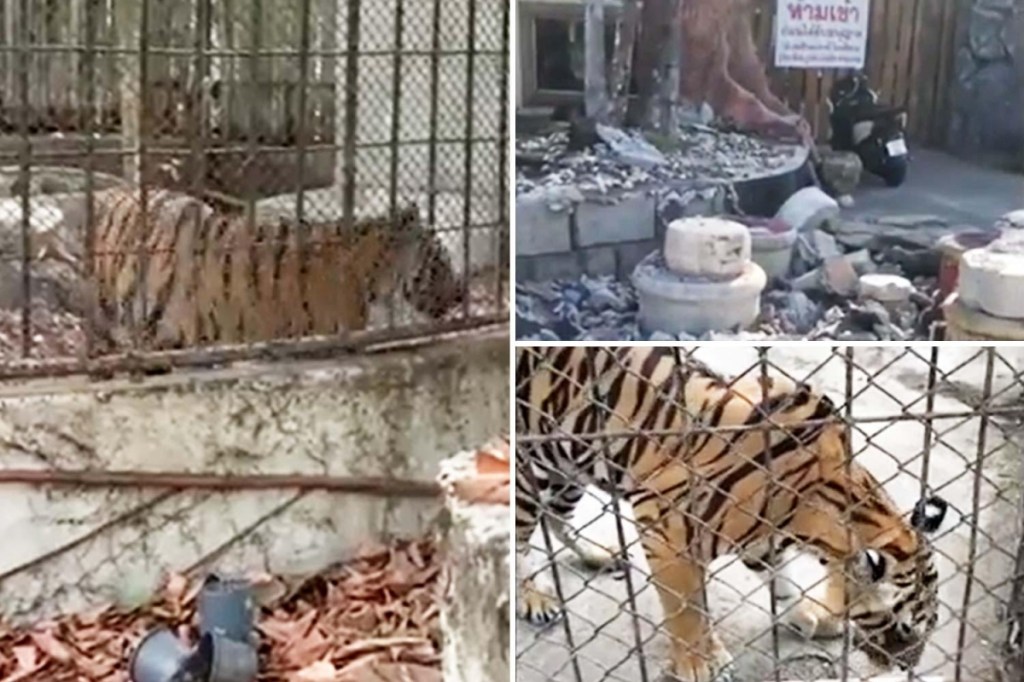
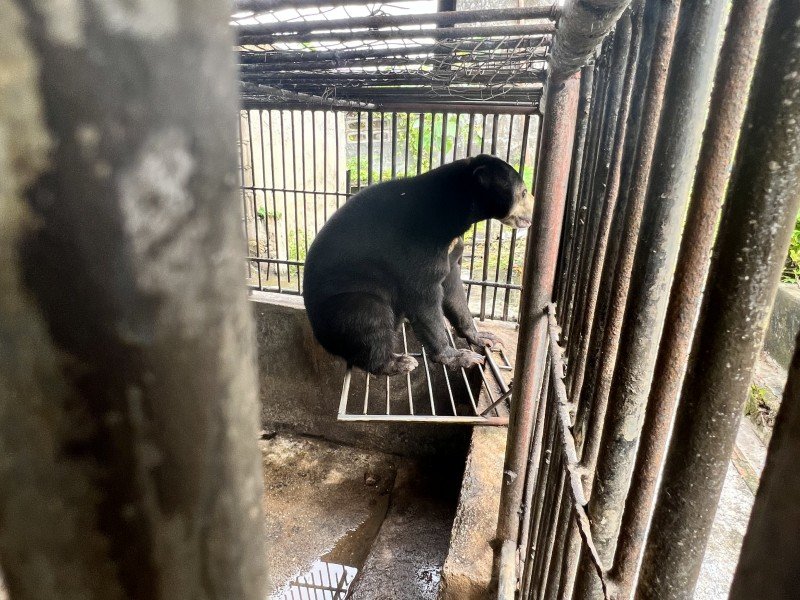
The Wildlife Friends Foundation Thailand (WFFT) is carrying out the largest tiger rescue in Thailand’s history as the renowned wildlife animal welfare and rescue organisation prepares to take custody of 11 tigers and two bears handed over by Phuket Zoo.
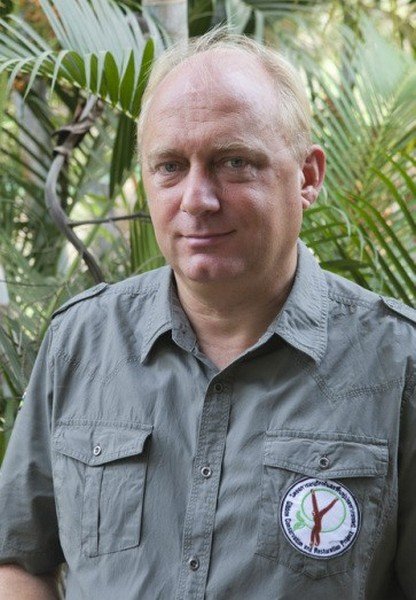
WFFT founder and director Edwin Wiek confirmed the news.
Edwin Wiek of the Wildlife Friends Foundation
“We are finishing off the new side enclosures for the Tigers right now, and we will be ready to pick up the first 4-6 in the coming week. We are still waiting for documents to move the Tigers, but I am pretty sure this ill be done by the end of the week.” Mr Wiek toldProtect All Wildlife.
Part of the area at the WFFT site in Phetchaburi that the tigers and bears from Phuket Zoo will soon call home. Photo: Edwin Wiek / WFFT
Mr Wiek explained that he and Sangduen “Lek” Chailert, founder of the Elephant Nature Park, discussed the handover of the animals with the Phuket Zoo owners.
The zoo has been hard hit by the financial crisis brought on by the COVID-19 pandemic, leaving the facility without tourist visitors for nearly two years.
Despite previous encounters between WFFT and Phuket Zoo over the conditions many of the animals were kept in at the zoo, the parties set aside any animosity in order to determine the safe future for the animals, Mr Wiek noted.
Horrifying scenes inside abandoned Phuket zoo where starving animals are forced to live in squalor
“They were genuinely very concerned about the animals. They said they had refused offers for the animals’ skins and bones,” he said.
“As WFFT has the facilities and expertise to take care of large carnivores and currently houses more than 30 other bears, it was concluded that WFFT could provide the best life-long care for these animals which require urgent rehoming,” Mr Wiek explained.
Wildlife Friends Foundation Thailand (WFFT) will also rehome two bears from Phuket Zoo. Photo: Edwin Wiek / WFFT
The rescue and rehoming of 11 Tigers to a sanctuary will be the biggest Tiger rescue in Thailand’s history. However, due to the financial impact of COVID-219, WFFT must first raise the funds required to rescue these 13 animals. As such WFFT is asking for financial support to undertake this historic rescue, he noted.
“This rescue will be no small feat for WFFT. The financial resources required to rescue and transport 13 large animals from Phuket to WFFT alone will be significant,” Mr Wiek said.
“Throughout the COVID-19 pandemic we have received more calls than ever from entertainment venues who cannot afford to feed their animals anymore. We try to help as many as we can. The fact is, though, that without financial support, we cannot help more.
“We are urging our friends in Phuket, in Thailand and around the world to please help with what will be a huge rescue, not only for WFFT, but for Tigers in Thailand,” he said.
WFFT is a registered foundation in Thailand.
“In Thailand, like in every country in the world, animals are abused and exploited for profit and human gratification. There are many examples of animal exploitation within the tourist industry, for example, photo prop animals, animals performing in degrading shows, and elephant camps. Furthermore, there is still a thriving illegal trade in wild animals for pets and medicine,” the organisation explains on its website.
The top three major goals of the organisation are:
To rescue and rehabilitate captive wild animals and provide high-quality care and a safe environment for them to live for the rest of their lives, in a setting as close to nature as possible.
To campaign against all forms of animal abuse and exploitation in Thailand, work towards ending the illegal pet trade and discourage people from keeping all wild animals as pets. WFFT actively seeks to combat the illegal wildlife trade and to rescue animals from poor conditions or exploitation from human entertainment.
To provide veterinary assistance to any sick or injured animal; wild or domestic.
To learn more about Wildlife Friends Foundation Thailand (WFFT), visit the official website here: https://www.wfft.org/
This video shows various animals including Tigers, Bears, and Alligators left for dead at Phuket Zoo due to the Coronavirus pandemic. The tourism industry all over the world has definitely been brought to a sudden halt but the animals who played a major role in that have also been abandoned. The clip was originally uploaded on YouTube and was shot by an Australian named Minh Nguyen, who lives and works in Thailand.
“We are still fundraising for the tigers, and hopefully we will get some more much needed financial support in the weeks to come.” toldProtect All Wildlife.
If you like to help fund this amazing rescue operation please donate ANY amount, large or small, at Phuket Zoo Animal Rescue.
Please SHARE to raise awareness to this urgent rescue. You can also SIGN UP to receive News and Updates straight to your inbox.
One lucky little Elephant has captured the hearts of people across the internet after it was rescued from a mud pit in the Southern India state of Karnataka.
A video of the rescue operation staged by state forest officials has charmed netizens, as it also shows what some people say was an appreciative gesture from the Elephant, who turned to address the crane that helped to dig it out.
THE BABY ELEPHANT BEING RESCUED FROM A DEEP PIT BY A JCB
The incident took place in Siddapura Village in Coorg district of Karnataka, reported Indian Express.
A good Samaritan recorded and shared the clip, which has been viewed over one million times on Twitter alone. The beginning of the video shows the Elephant struggling to climb up and out of a slippery mud put. Each time it tries, it slips back down the hole’s steep walls. Eventually, an excavator machine pulls in and begins to dig mud out from around the Elephant.
THE ELEPHANT KEPT SLIDING BACK INTO THE PIT
Bystanders can be heard cheering as the arm of the JBC crane reaches behind the Elephant and gives it a gentle push, giving it the boost it needs to finally get its feet back on solid ground.
The lumbering animal then turns back around to face its rescuers, bumping its head and tusk to the machine’s bucket in what some are viewing as a sign of appreciation. Onlookers can be heard cheering loudly as it does, then officials set off a small firecracker to encourage the Elephant to leave the area and return to the forest.
Sudha Ramen, Deputy Conservator of Forests, Tamilnadu Forest Department shared the video from her Twitter account. She told Newsweek, “Elephants are mostly human-friendly until they get aggressive stimulated by human behaviour or have some hormonal imbalances. They are known to recognize the aid received when they are in need.”
Even though this behaviour can be observed in subadult and adult Elephants, young ones are not as human-friendly or expressive.
She added that when such rescues happen in a crowded environment, the animal is usually in panic mode and may get aggressive because of human presence or too much noise.
“But in this situation not many outsiders were present. Still, I do not say that the animal returned a gesture in this case. It may be an exhibit of stress too,” Ramen told Newsweek, addressing the belief shared by many that the head bump was ‘thank you’ in the Elephant language.
Her tweet with the video has been viewed more than a million times. She credited the video to Indian actor Satish Shah who initially shared it on his Twitter page.
Sudha Ramen, Deputy Conservator of Forests, Tamilnadu Forest Department shared the video from her Twitter account.
The usage of machinery such as a JBC depends upon the terrain, the animal involved in the rescue, and other safety factors, according to Ramen. The vehicle often comes in handy as many of its features make it able to handle slushy, slippery ground, and many rescue operations are carried out in the forest or nearby in areas that are usually non-motorable larger vehicles.
“Such operations are done only in the presence of the forest officials and vet doctors, so the driver gets guided by them,” Ramen told Newsweek.
“This made my day 1,000 times. Kudos to the construction crew and operator. And Mr. Elephant is the classiest mammal I’ve ever seen,” commented one user.
While many appreciated the machine operator’s work, some also questioned the use of smoke crackers in the end.
“It seems the Elephant was actually very grateful to the JCB for helping her/him by doing a head bump with it. Instead of busting smoke to scare it away, we could be gentler next time by keeping some food nearby so that they can replenish and get busy without charging at anyone,” wrote another.
THE RESCUED ELEPHANT APPEARS TO THANK THE JCB
However, the rescue team is always advised to carry the smokers along for safety reasons, Ramen told Newsweek, saying it is not necessarily standard practice to use them but they are commonly deployed when herds venture into villages or human habitations.
“It is used on occasions to direct the animal back into the forest and also to protect the nearby people if the animal tries to attack them,” she said.
Please SHARE for others to enjoy. You can also SIGN UP to receive news and updates direct to your inbox.
What you can do to help animals in need:
Support ‘Protect All Wildlife’ by donating as little as £1 – It only takes a minute but it can last a lifetime for an animal in need. Thank you.
We believe EVERY animal should be treated with respect, empathy, and understanding. We raise awareness to protect and conserve wild, captive, companion and farm animals. It is vital that we protect animals against acts of cruelty, abuse, and neglect by enforcing established animal welfare laws and, when necessary, take action to ensure that those who abuse animals are brought to justice.
Protect All Wildlife are involved in many projects to protect animals’ rights, welfare, and habitats. Money contributed to Protect All Wildlife supports ALL of our worthy programmes and gives us the flexibility to respond to emerging needs. Your donations make our work possible. Thank you for your support.
Everyone who donates will receive a Certificate of Appreciation as a thank you for supporting wildlife.
On the first day of deer season for firearms in Michigan, a 10-point buck apparently sought to find refuge in Grace Christian Fellowship Church in Sturgis, breaking through a window and becoming a huge surprise to the pastors when they got to the church Monday morning.
“When Luke Eicher, Justin Wickey and Amanda Eicher arrived at the church this morning, they found signs of breaking and entering,” stated the church’s description on the video. “Little did they know that a 10-point buck had come for prayer in the auditorium on opening day of gun season.”
When the three walked into the church’s office Monday morning, they noticed light coming from a darkened window in the auditorium.
“When I peeked inside, I saw the window was broken and heard loud banging,” Amanda Eisher told Storyful. “My husband rushed in and found this 10-point buck. On the opening day of the gun season of all days!”
“I was just shocked by how high he could jump,” Amanda Eicher said. “I was amazed at how big he was.”
The buck didn’t appear to have any gunshot wounds and was bleeding just a bit from what appeared to be cuts from the glass, she told the Kalamazoo Gazette. Besides the broken window, the only other damage was blood stains on the carpet.
“There was some damage to the building and our pastors are a little traumatized,” the church reported. “But the buck left strengthened in the Lord to go face his battles.”
















 PROTECT ALL WILDLIFE