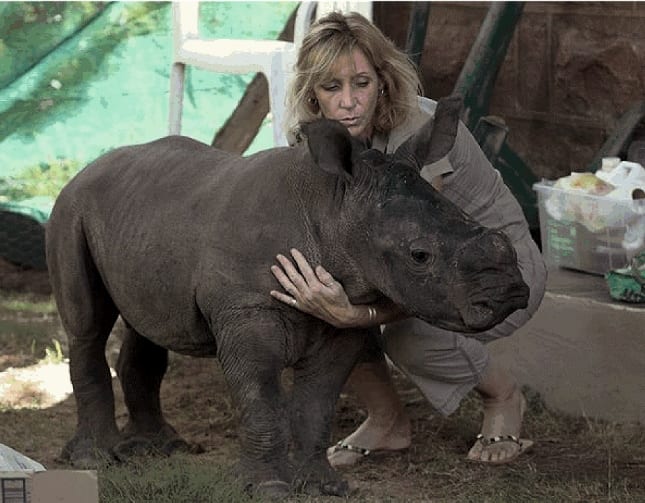
As the number of rhinos killed by poachers keep rising and more traumatized orphaned calves are in need of care, Kirsten Everett, a volunteer at Nikela, takes us on a touching journey as she looks at the horrors of a poacher attack though the eyes of a young Rhino calf called Ntombi.
Vet Karen Trendler With Ntombi
“My mother and I were contently filling our hungry stomachs when we heard a strange noise. I carried on eating but she smelt the air for unknown scents. I saw the terrified look in her eye before she managed to control it; the unnatural smell meant something. A few minutes later we heard the ‘whop, whop’ of a metal monster flying closer towards us. Just when my mother focussed on it the men crept out of the bushes with a crunch of sticks. Something seemed to hit her and she grunted in surprise. The birds abandoned their posts heading away from the danger. I stood helplessly as she tried to run but ended up falling to the ground. The men surrounded her and tried to chase me away. I ran forward scared enough to not care about the men as they had done something to my mother, I needed her and they must go away.
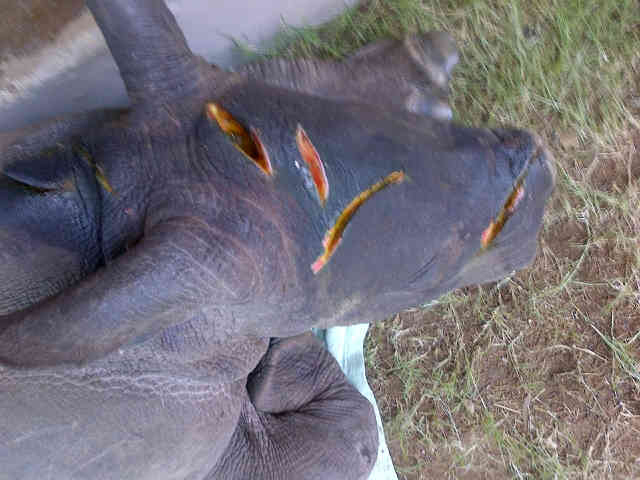
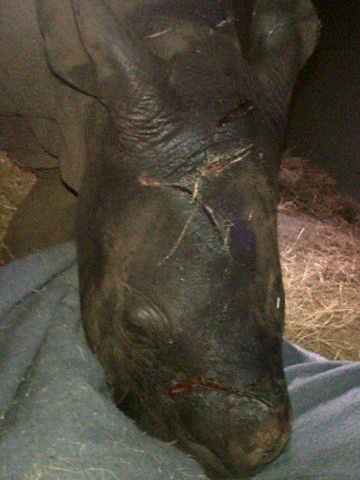
Out of nowhere one of the big men spun on me and hit me hard with something sharp. Blood oozed from my wound as my mother answered my cry for help with a weak beg, ‘Away, away’. I backed away nursing my wound, how could I get to her?? She grunted again so I didn’t give up. I ran forward again but this time the angry man was merciless, determined to get his message across. As quietly as possible I took the cuts to my poor head trying not to worry my mother even more.
This The Work Of Poachers
Confused I backed away into the bushes calling to her to get up, but the eerie silence dragged on and she didn’t move a muscle. Fear glued me to the floor as I felt my young heart pulsing with anger and fear. A breeze blew, as I waited for the monsters to go so I could go to my poor mommy and find out what was wrong. My heart skipped a beat when I realised this was what my cousin had gone through only a full moon ago. It was terrible, my body couldn’t stop shaking and I couldn’t think clearly, I felt lightheaded from all my blood loss.
Finally when the monsters left I ran to her side, ‘Mom wake up.’ My voice cracked with emotion but still she didn’t respond. I took a step back and saw the pool of blood. Her horn had been brutally cut off and she lay lifeless. Above me a crow flew over.
I turned to run then I asked myself some important questions… where would I go? I wasn’t old enough to know the way to the dam yet. Who would protect me from predators? The truth was that I wasn’t strong enough to survive by myself yet. Would I be with my mother in the sky sooner than I thought? The last question scared me the most; out in the wild without my mother I might just be able to survive a week.
I heard the snap of a twig, I wasn’t alone. This time I didn’t have the strength to care what these humans wanted with me. I collapsed and slept for a few hours. I was almost completely unconscious though I sensed kindness near me. Too traumatised to do anything I lay as they treated my wounds. The people who tried to comfort me planted a seed of hope. Hope that I could survive and hope that the rest of the human race would come to its senses and help my species and all the others out there”.
Update (July 31, 2013): This is Ntombi feeling good and playful
NTOMBI
Please SHARE this article to raise awareness about this issue and feel free to leave a comment below. You can also sign up for UPDATES & NEW ARTICLESby submitting your email details in the right-hand column. But most of all NEVER give up fighting for the future of wildlife! Thank You
As the Internet went into meltdown over the poaching of Cecil the Lion by Minnesota dentist Walter Palmer, another man was causing a stir after a photo published in National Geographic went viral at the same time.
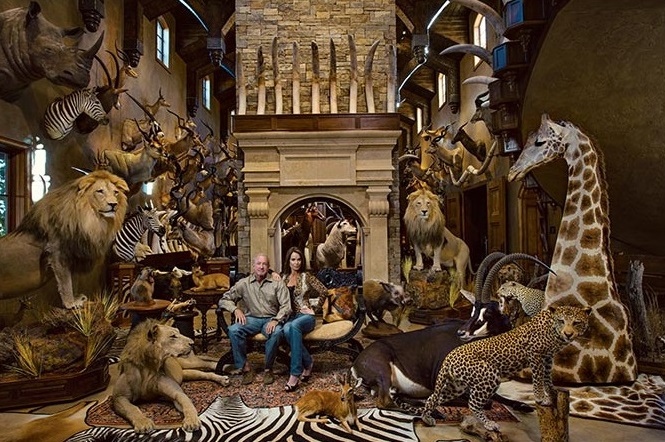
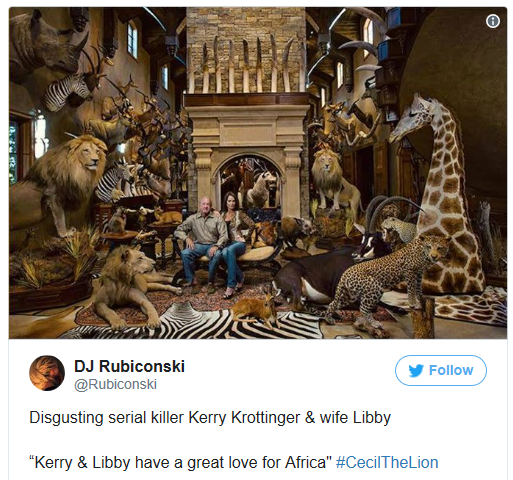
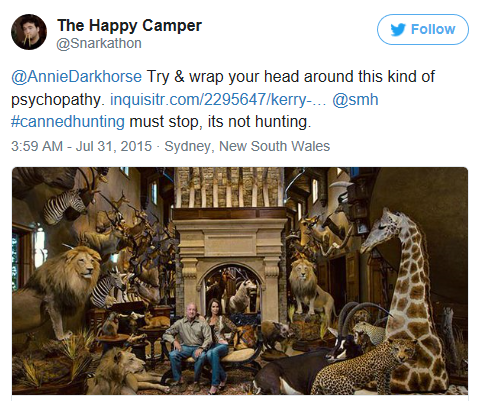
Kerry Krottinger, a wealthy Texas hunter and businessman, has slaughtered so much African wildlife over the years that he amassed a veritable “wall of death” in his Dallas-area home. The National Geographic portrait depicts him sitting with his wife among the taxidermied bodies of Lions, Rhinos, Cheetah, Giraffes and enough Elephant tusks to open a traditional Chinese hospital.
The British-based charity LionAID, which uploaded the photo to their Facebook page, took a markedly dim view. “This is just one Texas trophy hunter with a ‘love’ of Africa,” they write. “Is it any wonder that Africa’s wildlife is disappearing? Just have a count of the various species displayed. Three Lions? So many Elephant tusks? A Giraffe? A Rhino? Kerry must be one of the leading conservation hunters on the planet!”
Kerry and Libby Krottinger in their ‘Wall Of Death’ room
Little is known about Krottinger’s personal life. Aside from being an energy millionaire with multiple companies to his name, he and his wife Libby operate a Gypsy horse farm called Ndugu Ranch. A website about the property had been taken offline, but a cache copy can be viewed here. A Facebook page also associated with the ranch was also taken down. Next to a smiling photo of the pair, Krottinger wrote he named the ranch after the Swahili word for “brother” or “family member,” and that the couple has “a great love for Africa.”
Krottinger’s kingly haul of animal carcasses was acquired through what’s known as “conservation hunting,” a practice that is supposedly designed to protect species by allowing people to hunt animals for a high fee that’s then to be used for other conservation efforts. Palmer, who is now facing indictment in Zimbabwe for poaching, said in a statement that he had trusted his guides and assumed his activities had been legal.
Far from poachers, conservations hunters — and the websites that promote them — see themselves as environmentalists. LionAID’s director Pieter Kat said the whole premise was nonsense.
“Conservation hunting is a complete myth,” he told Mic. “If conservation hunting had been effective, Cecil the Lion would not have to have been poached out of a national park, because conservation hunting would have maintained a viable and sustainable Lion population within their own trophy hunting concession.” According to Kat, steep fees like the more than $50,000 Palmer paid to kill Cecil typically end up in the pockets of tour operators. “Sustainable hunting does not sustain anything,” he said.
PETA president Ingrid Newkirk was blunter still. “The idea of killing animals to ‘protect’ their species is like having 5-year-olds build a child-labor museum,” she said in a statement to Mic. “True conservationists are the people who pay to keep animals alive through highly lucrative eco-tourism, not the power-hungry people who pay for the cheap thrill of taking magnificent animals’ lives and putting their heads on a wall.”
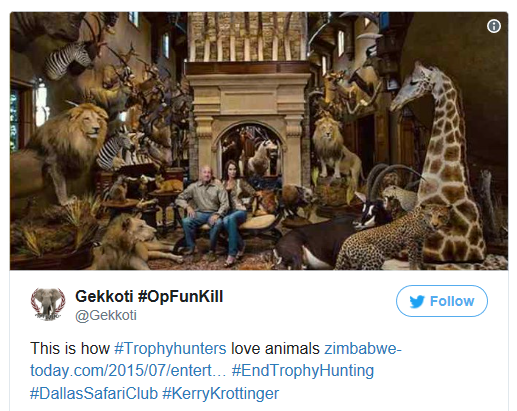
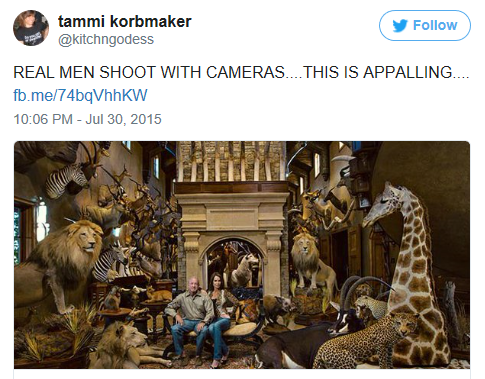
On Twitter, the response was one of almost universal disgust, with the photo generating near Cecil-levels of rage.
Kat was unapologetic about the Krottinger-shaming on LionAID’s Facebook page. “What we were trying to do there is to alert people to the fact that trophy hunters have this sort of enjoyment of their activity, and what we would like to expose to people is these sorts of people belong in the 19th century,” he said.
Please SHARE to raise awareness about this shocking trade. Please SUBSCRIBE to receive wildlife news and updates.
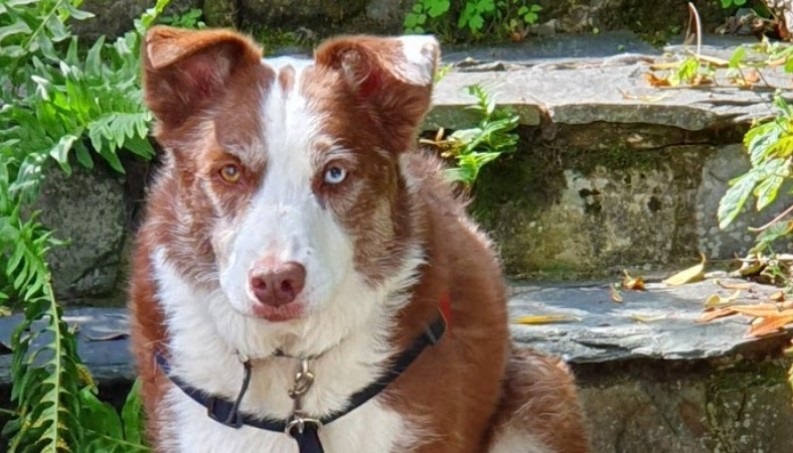
After many years of raising money for animal charities (£70,000 so far) I now find myself needing help for Gem, one of my beloved dogs.
GEM
Gem started limping and wouldn’t put her right left leg down. We took her to the vet where she had x-rays etc. It now looks like she has a fracture of her right cruciate ligament which may need operating on in the future. Gem was hit by a land rover when she was only two which hasn’t seemed to bother her but perhaps it does now.
So far her treatment has cost £1,100. Unfortunately Gem’s insurers won’t pay out because we have only started with them and it is within the the first 14 days!. Any help would be greatly appreciated. If she needs an operation on her cruciate ligament it will cost £3,500.
Anything raised over the total cost will be given to Miracle’s Mission to help them rescue and rehabilitate sick and injured animals.
Please donate ANY amount, large or small, at HELP GEM.
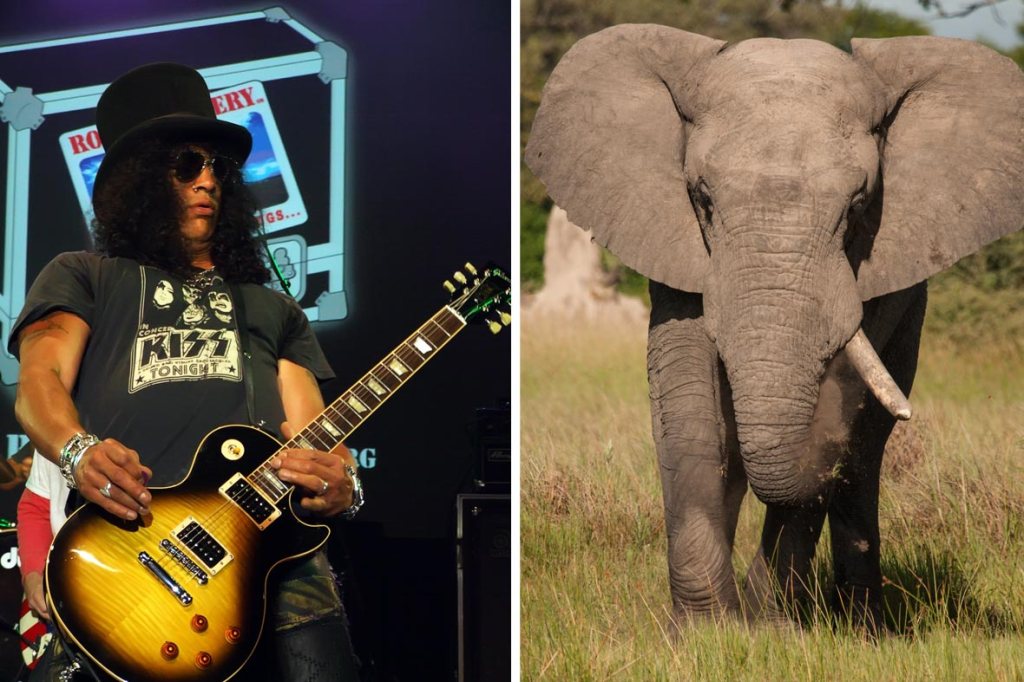
ICONIC ROCKER SLASH IS DOING HIS BIT TO HELP CURB ELEPHANT POACHING
If former Guns & Roses guitarist Slash hadn’t put all his heart and soul into music and becoming one of the world’s greatest rock guitarists, perhaps he would’ve sought a career in zoology?
He is a trustee of the private, non-profit Greater Los Angeles Zoo Association (GLAZA) and shot a commercial for Los Angeles Zoo and Botanical Gardens with veteran actress Betty White to promote their new exhibit The Lair, which displays over 60 species of weird, rare and endangered amphibians, invertebrates and reptiles. He has shot other ads and PSAs before for the zoo.
“I used to not believe in zoos as a concept, but now because there are so many endangered animals; there’s so much poaching,” Slash tells Samaritanmag. “With zoos now, it’s really about conservation. They become safe houses for a lot of species so, I think, now, zoos are really necessary places, not totally about just family entertainment at any cost. It’s about education; it’s about conservation.”
Anyone familiar with Guns N’ Roses, Slash’s former band, knows he used to own snakes — as many as 80, which he got rid of when he became a father. He has been on the cover of Reptiles magazine and even had a band called Slash’s Snakepit post GNR. But he’s actually a lover of all animals.
Slash has been visiting the LA Zoo since the age of 5 and later in childhood went every weekend, sometimes twice. As a touring musician, he often visits the local zoos on his downtime.
in 2011, Slash received the inaugural Tom F. Mankiewicz Leadership Award from GLAZA at the 41st Annual Beastly Ball recognizing his long-time support of the zoo and the welfare of the world’s natural and civic environment (filmmaker Mankiewicz was GLAZA chairman who died in 2010).
The award will recognises his long-time contributions to environmental welfare programs and his support to the LA Zoo and zoos around the world.
GLAZA (Greater Los Angeles Zoo Association) President Connie Morgan declared: ‘Tom [Mankiewicz] advocated opportunities for interaction among our diverse communities and championed the cause of animals and the environment through education and on-the-ground conservation. He strongly believed the Los Angeles Zoo exemplifies both missions as a place where people come together having a good time while learning the importance of saving and protecting wildlife.’
To which Slash responded: ‘The biggest compliment for me is that it’s Tom’s award. I really adored that man. I miss him very much, and that aspect is very special and resonates deeply. Additionally, I profoundly appreciate the implications of the award itself. It’s a fantastic honour.’
But Zoo director John Lewis could not stop there: ‘Slash is a great example of our mission of nurturing wildlife and enriching the human experience. He is a champion for wildlife and conservation and has introduced our mission, his passion, to millions of his fans’.
“I just try to help the zoo,” says Slash of his role as a trustee. “We all on the board support and help the zoo’s best interests. We just try to keep all that together. It’s a pretty big thing. It’s a city-owned zoo and we’re trying to make it a private zoo and there’s just always something going on with that.”
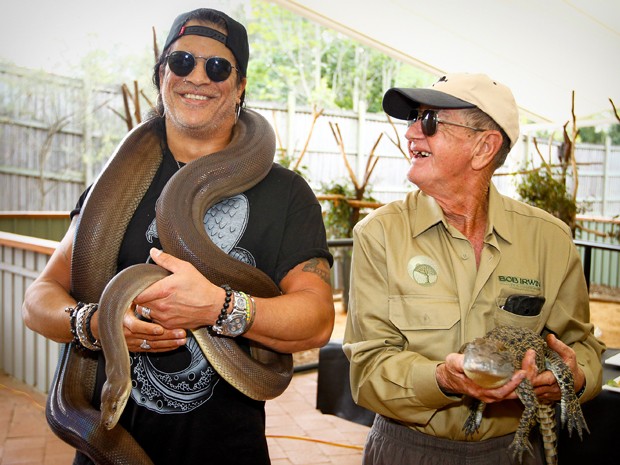
In 2012, while on a trip to Australia, Slash took wildlife warrior Bob Irwin up on an invite, but left the meeting by signing on to aid Irwin’s new conservation initiative.
SLASH loves reptiles. So does Bob. And that’s enough.
A deep affinity for the cold-blooded creatures has forged an unlikely friendship between the legendary Guns N’ Roses guitarist and wildlife warrior Bob Irwin.
Irwin, who is the father of late ‘Crocodile Hunter’ host Steve Irwin, reached out to the guitarist when he learned the tour was coming to Australia, and invited him down to Queensland to visit the crocodiles and snakes.
After lending his support, Irwin returned the favour by urging his followers to catch one of Slash’s performances while he was visiting the country.
Slash and Bob Irwin at the launch of the Bob Irwin Foundation
In 2013, Slash performed in South Africa with rock super group Kings of Chaos and spent extra time seeing the local wildlife. Although he had been aware of the diminishing numbers of Elephants in the world, the former Guns N’ Roses guitarist learned on this trip that the situation was becoming increasingly more dire. While poaching rangers had increased their efforts to stop the illegal ivory trade, Slash believed that people needed to be more aware of the situation.
The guitarist also released the “Beneath the Savage Sun” video, which details the illegal ivory trade and tells the story of an Elephant who has lost a loved one from the Elephant’s point of view.
“How many killing seasons can you justify?” he asks. “How many dead and bleeding / only for an ivory lie?
“I was shocked that the poachers still manage to get away with it,” he told Rolling Stone in the above video. “A lot of people don’t know that every time they purchase anything that has even a smidgen of ivory in it, it comes from a dead Elephant. I think if people were more aware of that, it would have a dramatic effect on the whole ivory trade.”
Slash’s singer, Myles Kennedy, was equally affected by the situation. Kennedy wrote the lyrics for what would become “Beneath the Savage Sun,” a doomy hard rocker told from the perspective of an Elephant who witnessed the death of a fellow pachyderm.
SLASH AND MYLES KENNEDY
Slash made a powerful video for the track – which is featured on the guitarist’s last solo album, 2014’s World on Fire – illustrating the brutality of the ivory trade with written facts, images of both living and murdered Elephants and poachers’ spoils. The video notes that the U.S. is the world’s second-largest consumer of ivory, so Slash hopes the clip serves as a wake-up call.
“We wanted to give the viewer an idea of the atrocities that are going on, to hit them full in the face with it,” says Slash, an animal lover who is on the board at the Los Angeles Zoo and has long been active in animal conservation. “It’s more of an immersive experience. The most important thing is to reach as many people as possible.
“Elephants are so beautiful, intelligent and sensitive,” the guitarist continues. “They have emotions we’re all familiar with. They care for their young. They move in big family groups that live on for generation after generation. They very visibly mourn their dead. When you actually meet Elephants and get to know them a little bit, they have a whole myriad of personalities.” (Slash was previously part of the campaign for Billy the Elephant.)
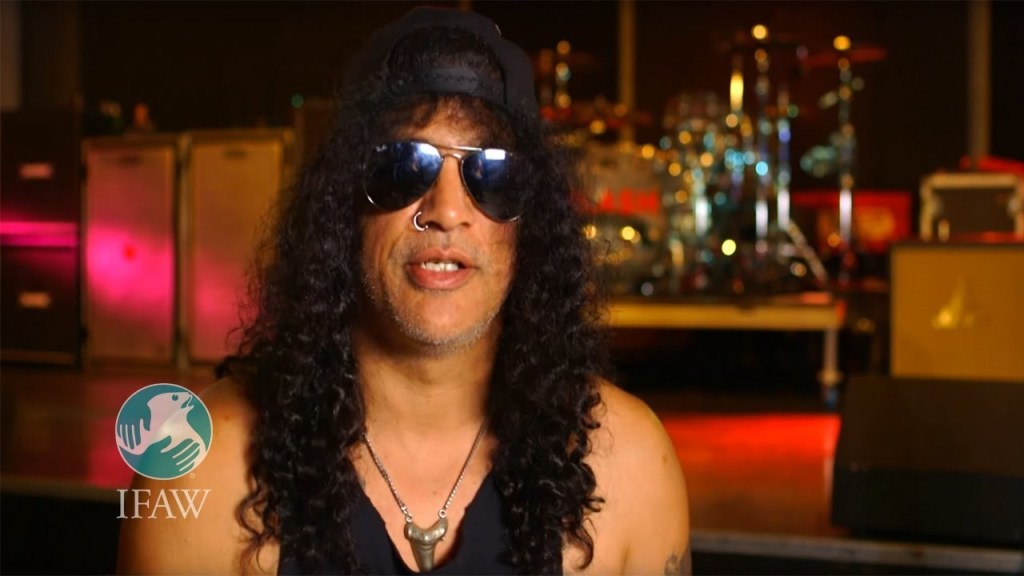
In addition to educating people about Elephants, Slash has also partnered with the International Fund for Animal Welfare (IFAW), an organization he reached out to personally because he had worked with them in the past and liked how they were “hands on” in their causes.
Jeff Flocken, IFAW’s regional director, North America, has been working with the Obama Administration to draft and implement laws to regulate ivory. “Any legal trade of ivory encourages illegal trade,” he says. “Our laws are riddled with loopholes like Swiss cheese.”
He believes that if the U.S. led by example, real change is possible. “Last November, the U.S. crushed six tons of ivory that was seized illegally here in the U.S., and within months, China crushed 6.1 tons of their own ivory,” he tells Rolling Stone, adding that China is the world’s Number One ivory consumer. “It’s the first time they’ve ever done that. It shows that other countries are watching what we’re doing.”
Trade in elephant ivory is driving these amazing animals to extinction; largely at the hands of criminal networks that kill local wildlife rangers and support organized crime, smuggle drugs and transport illegal firearms. They do all this to meet the lucrative demands of consumers in China, the United States and elsewhere, many who don’t even realize that every piece of ivory comes from a dead elephant, but who still value the stuff as jewellery, trinkets, and yes, instruments.
Flocken added that the anti-ivory movement has begun facing opposition from the N.R.A., who want to protect ivory for ornamentation on gun handles, among other causes. Slash says that ivory ornamentation is not necessary and uses musical instruments as an example.
We love our instruments. We know that many of you love your guitars with ivory bridges and pianos with ivory keys, but we need you to think about where things came from and what are your ethics when buying and selling them?” Piano keys don’t have to be ivory,” he says. “It’s not important. And for inlays on guitars and tuning pegs, it’s absolutely not necessary and I won’t use it.” Do we really want to profit off of the extinction of such a beautiful and majestic species?
To prove his point, Slash donated proceeds from the sale of the song to the IFAW and has redesigned his website to provide more information about the ivory trade and serve as a place where people can donate to the organization. Supporters can also donate to the IFAW.
“Donating is great – that’s hugely necessary – but the other thing to do is to stop purchasing ivory,” Slash says. “Do not buy it. I think the more people that stop buying ivory is going to have a significant effect on the Elephant poaching trade.”
The Mission of Protect All Wildlife is to prevent cruelty, promote the welfare of ALL animals EVERYWHERE, and help END animal abuse.
Please support our work by donating ANY amount, large or small. It only takes a minute and your donations make it all possible. Thank you for your support.
Fox Hunting:- “The English country gentleman galloping after the Fox – the unspeakable in full pursuit of the uneatable” ~ Oscar Wilde.
When Mike Trowler first met Cropper the Fox he had been in a tangle with a dog and came off worse. Cropper had been rescued by The Fox Project in Tunbridge Wells. Not only was he badly injured, he was also suffering from toxoplasmosis, a dangerous parasitic infection. He was in no shape to be returned to the wild. There were only two choices: euthanize Cropper or find him a home. That is where Mike came in.
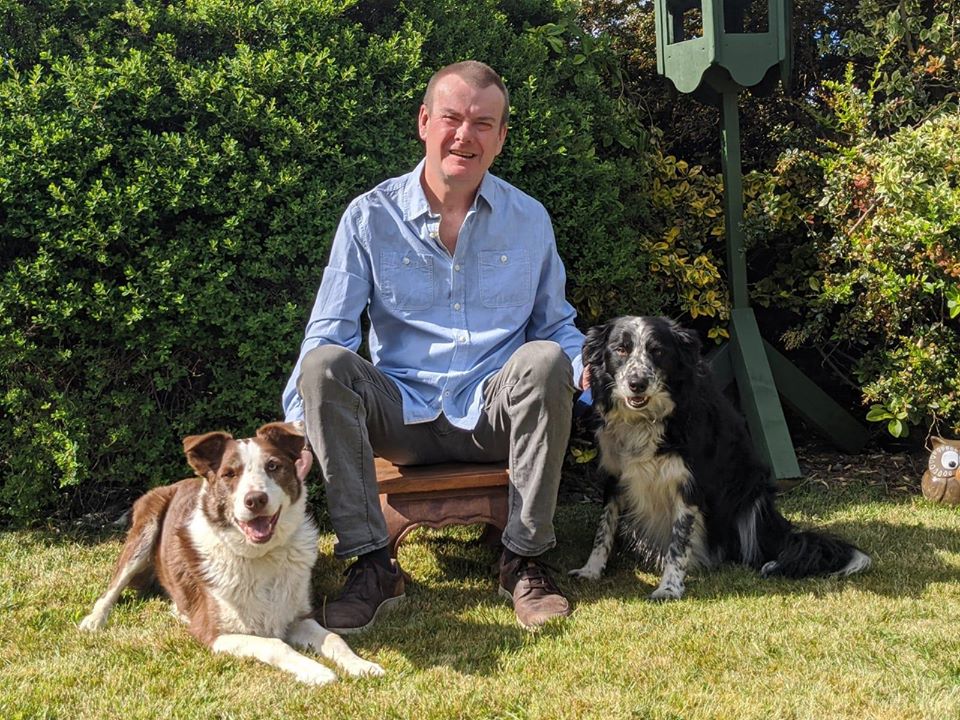
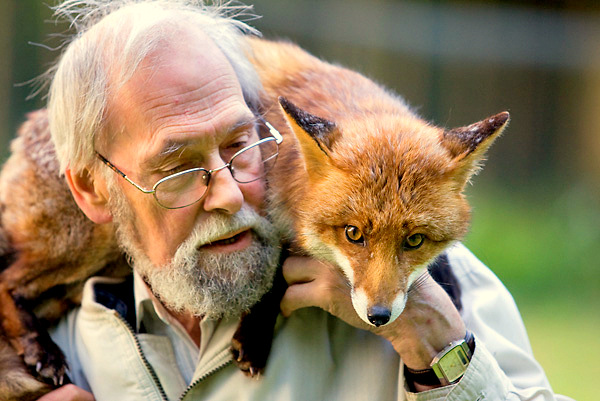
Mike Trowler with Cropper, the rescued Red Fox in his garden.
Mike Trowler gave Cropper a home. A retired engineer, has been described as a man on a mission. Mike is fascinated by Fox behaviour and spends a great deal of time with them. In addition to nursing injured Foxes back to health, he also takes in orphaned Fox cubs and raises them until they can be released back into the wild. He does this by releasing them into his nine-acre garden. A few remain to be fed each night, some stay in the area for several years, while others take off to establish their own territories further afield.
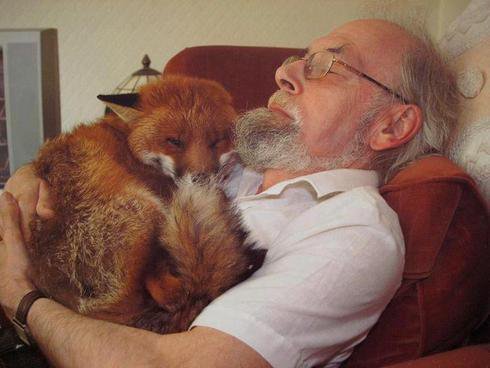
Mike and Cropper having a nap
When Cropper was nursed back to health by Mike’s patience, love and determination, Cropper became a member of Mike’s family. Cropper would eat food from the dog’s dish and curl up with the cats, but mostly, he would spend time with Mike. The two would even go for walks together and Mike would roll him over and give him belly rubs
After six happy years with Mike, Cropper passed away in 2007. However, another Fox, Jack, who had been suffering similar ailments, has moved in with Mike. Jack enjoys watching TV with Mike and even reluctantly tolerates a bath in the sink.
In addition to Foxes, Mike is also friends with a couple of Badgers. One of the Badgers, a female he named Benji, eats from a bowl while he holds it and allow him to pet her.
Mike warns that rescuing Foxes takes a great deal of patience and understanding, and a strong awareness of Fox behaviour. He says that Fox urine is especially odorous and difficult to remove.
The Fox Project is a Wildlife Information Bureau and Fox Deterrence Consultancy that was established in 1991, they added a Wildlife Hospital in 1993. They admit and treat around 700 Foxes and 250 cubs annually.
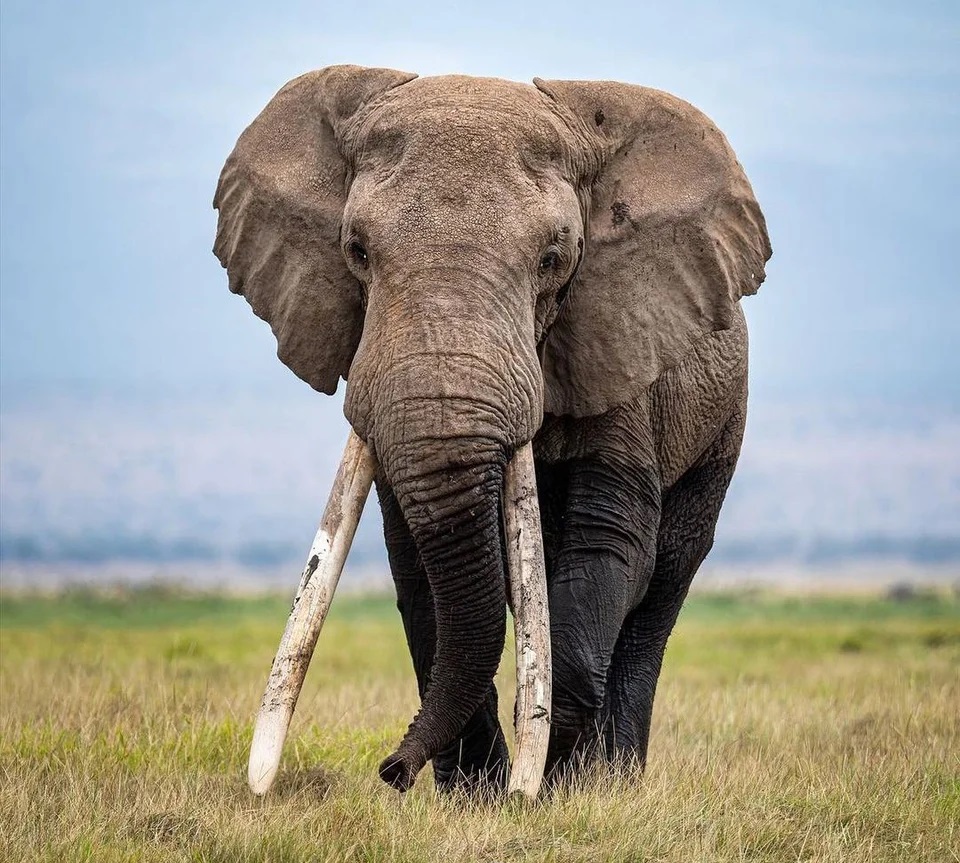
18th March 2021: Just after dawn, Tolstoy lumbers into view. A wandering giant, with tusks almost scraping the earth, this great elephant has roamed beneath Mount Kilimanjaro for nearly 50 years.
He has survived ivory poachers, spear attacks and terrible drought, but the mighty bull could be confronting a new threat to his natural realm: surging demand for avocados.
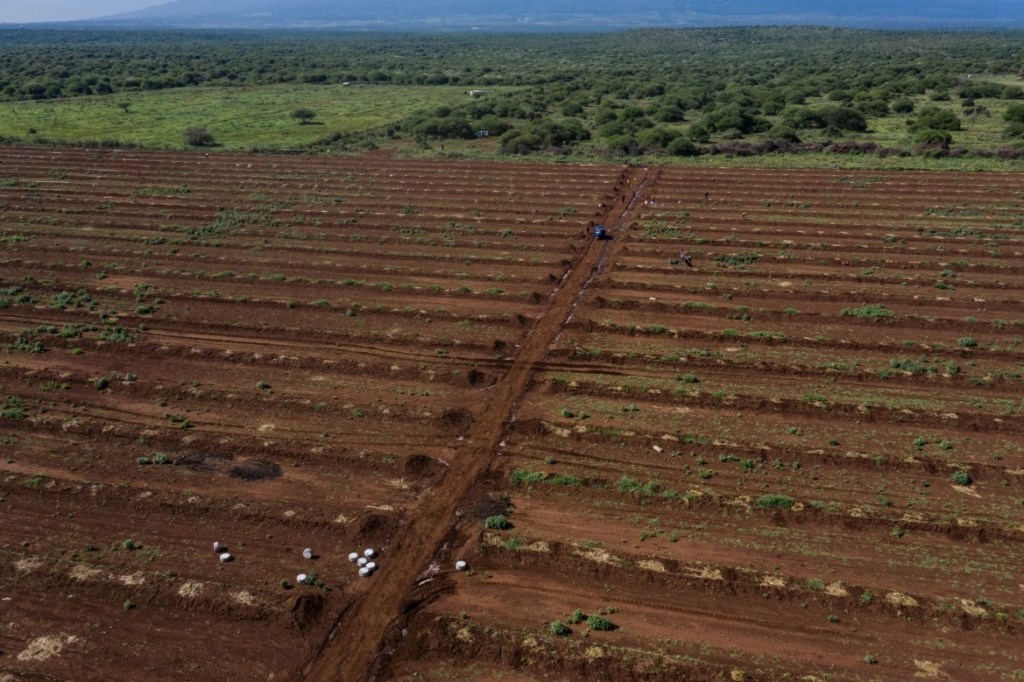
A turf war has erupted over a 180-acre (73-hectare) avocado farm near Amboseli, one of Kenya’s premier national parks, where elephants and other wildlife graze against the striking backdrop of Mount Kilimanjaro, Africa’s highest peak.
In 2020 Kenyan agribusiness KiliAvo Fresh Ltd received approval from the National Environment Management Authority (NEMA) to start its own avocado farm on land in Kimana, southern Kenya it purchased from local Masai owners. [Yasuyoshi Chiba/AFP]
Opponents of the farm say it obstructs the free movement of iconic tuskers like Tolstoy – putting their very existence at risk – and clashes with traditional ways of using the land.
Adjacent landowners and wildlife experts say elephants have already collided with KiliAvo’s electric fence – proof that it impedes migratory routes used by an estimated 2,000 tuskers as they depart Amboseli into surrounding lands to breed and find water and pasture. “Can you imagine if elephants in Amboseli died of starvation so that people in Europe can eat avocados?” Kenyan conservationist Paula Kahumbu, who heads the campaign group WildlifeDirect, said.
HUMAN WILDLIFE CONFLICT
16th March 2022: The Elephant named Tolstoy is a living natural wonder, carrying some of the largest tusks on the planet. So when Big Life’s rangers don’t see him for a while, they go looking.
They searched beyond their normal patrol areas and eventually found him resting under a tree. All appeared fine, until he took a step… something was badly wrong. Tolstoy could barely walk. Upon getting closer, the rangers could see the problem: a puncture wound in the joint on his front right leg.
Tolstoy being treated for his leg wound
A wound like this was no accident. Tolstoy frequently plays a high-stakes game called crop-raiding. When he wins, he comes away with a bellyful of highly nutritious crops. But when he loses, he gets speared.
Tolstoy doesn’t know it, but his crop raids can cost a farmer their entire season’s income in one night, and these farmers (justifiably) care little that Tolstoy is one of Africa’s dwindling number of ‘super tuskers’. It’s not the first time this has happened: in 2018 he was treated for three spear wounds, also a result of crop-raiding.
The Kenya Wildlife Service vet unit, funded by our partners at Sheldrick Wildlife Trust, was quick to respond, but the decision to treat him was not made immediately. Darting an animal of this size, particularly with a wound in a sensitive joint, is extremely risky because the Elephant may not be able to stand after treatment. The decision was made to wait 24 hours and see if his condition improved.
Big Life’s rangers stayed by his side, spending the entire night out with him, but the wound showed no signs of improvement. The decision was made to dart him, and it was done quickly and professionally. His wound was thoroughly cleaned and treated, and Tolstoy was given antibiotics and painkillers before a jab to wake him up.
Tolstoy comes round watched by members of the KWS team
With great effort, he finally stood and stared back at the treatment team, before retreating into the shade. For now, his prognosis looks good, but he’s not out of the woods just yet as he continues to heal. Big Life rangers will continue to monitor him while he recovers. And they will continue to spend their nights out in the farms, keeping Elephants safe and helping farmers to protect their crops, in order to prevent this from happening again.
The elephant named Tolstoy is a living natural wonder, carrying some of the largest tusks on the planet. So when Big Life’s rangers don’t see him for a while, they go looking.
They searched beyond their normal patrol areas and eventually found him resting under a tree. All appeared fine, until he took a step… something was badly wrong. Tolstoy could barely walk. Upon getting closer, the rangers could see the problem: a puncture wound in the joint on his front right leg.
A wound like this was no accident. Tolstoy frequently plays a high-stakes game called crop-raiding. When he wins, he comes away with a bellyful of highly nutritious crops. But when he loses, he gets speared.
Tolstoy doesn’t know it, but his crop raids can cost a farmer their entire season’s income in one night, and these farmers (justifiably) care little that Tolstoy is one of Africa’s dwindling number of ‘super tuskers’. It’s not the first time this has happened: in 2018 he was treated for three spear wounds, also a result of crop-raiding.
THE SADDEST DAY
27TH April 2022: “This is so painful.”
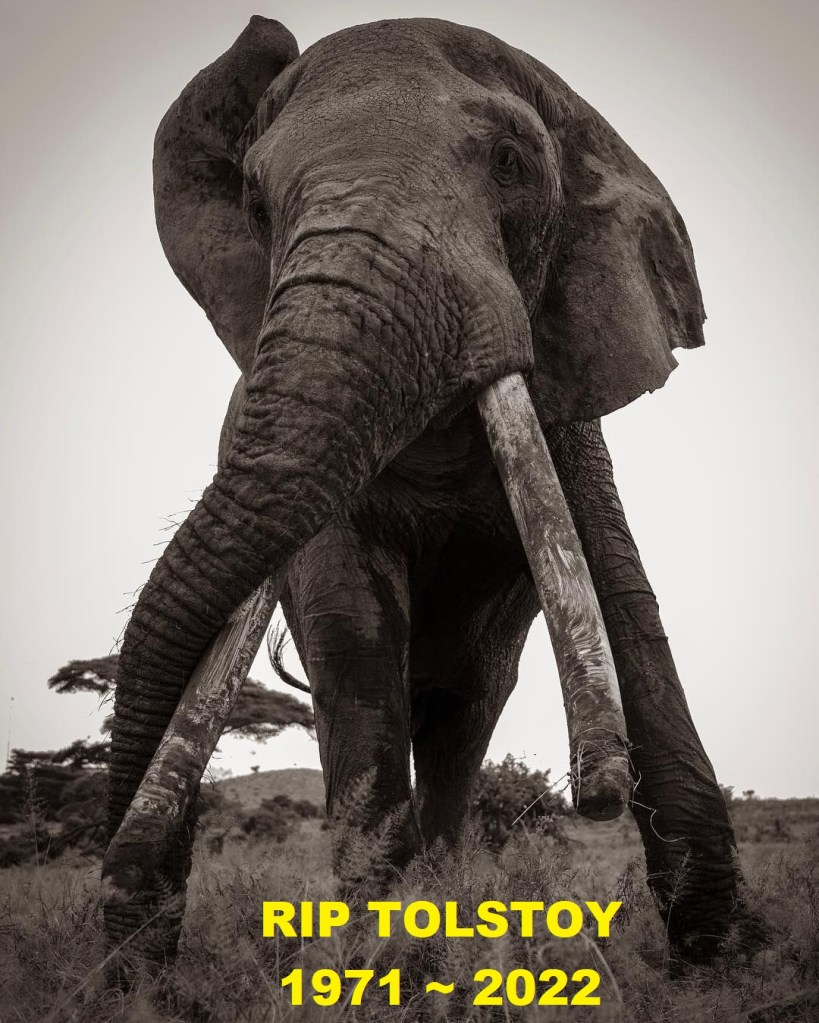
These few words spoken by ranger Daudi Ninaai describe well how we are all feeling at Big Life. Tolstoy, one of Africa’s biggest ‘tusker’ Elephants, and an icon of the Amboseli ecosystem, has died at 51 years old.
He was speared in the leg 6 weeks ago, almost certainly by a farmer defending his crops from one of Tolstoy’s night-time crop raids. The wound was treated, but the resultant infection has ultimately had the worst possible consequences.
Big Life’s rangers in Kimana Sanctuary have been monitoring Tolstoy since his treatment. Yesterday morning, they found him lying down. This was not unusual for an Elephant who took frequent horizontal naps despite his enormous size, but upon getting closer, the rangers could see signs of his failed struggle to stand up. They knew that this time was different.
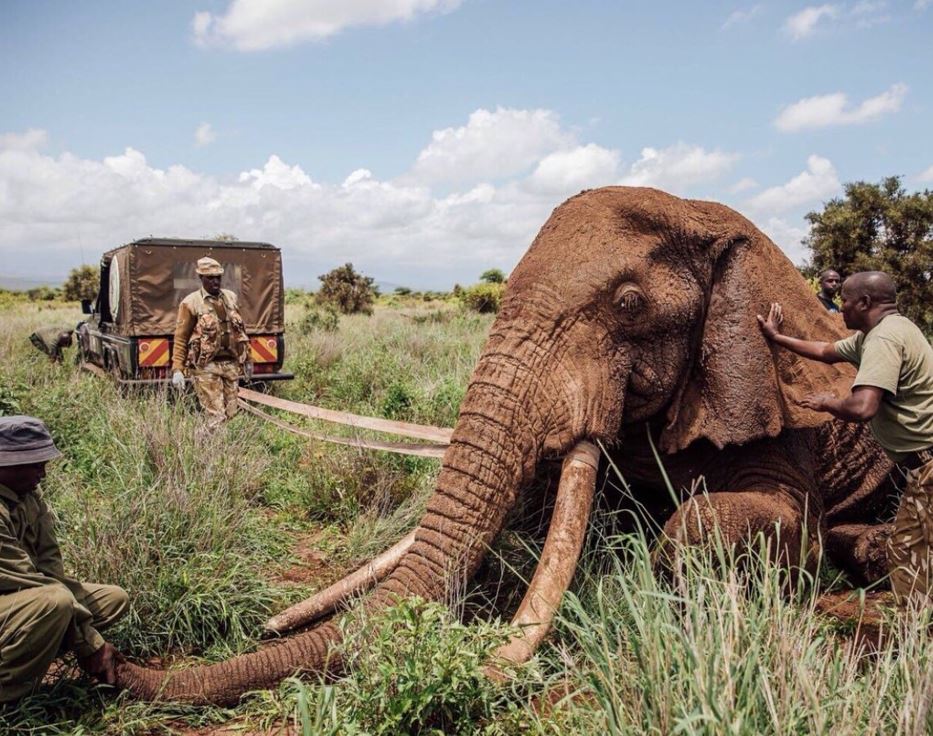
Tolstoy was still alive and two Kenya Wildlife Service vet units (both funded by the Sheldrick Wildlife Trust) responded. He was given further treatment, but getting him on his feet again was unlikely from the start. For hours the rangers and vets tried to pull him up with vehicles and ropes, with no success. A front-end loader was called in as a last desperate attempt, but Tolstoy was just too weak to stand.
With the rescue team running out of ideas, and night fast approaching, Tolstoy finally ran out of strength and died, surrounded by the rangers who have looked over him for so long.
Ranger Job Lekanayia is one of these: “Today is the saddest day in my job as a ranger, having lost one of the Elephants that I treasured the most. We tried everything that we could. I thought he would wake up, but he just couldn’t lift himself up.”
After 50 years on earth, there isn’t much that Tolstoy hadn’t seen. And there isn’t much that looks the same. His home has been transformed by the human species, and it is the consequences of rapidly expanding farmlands that eventually killed him.
His death is a reminder of the vulnerability of even the largest of animals, as well as the urgent need to protect habitat for wildlife and manage the interface between wild animals and human activities. There are solutions, and we are making progress despite a tragic setback such as this.
Over his long time on this planet, Tolstoy had a positive impact on countless people, and will be remembered as a calm and gentle giant. As ranger Lekanayia says, “All I can say is: rest in peace Tolstoy, we will miss you.”
TOLSTOY
Please SHARE to raise awareness to the plight of Africa’s Elephants. You can also SUBSCRIBE to receive news and updates straight to your inbox by registering in the top left of this page. Thank you.
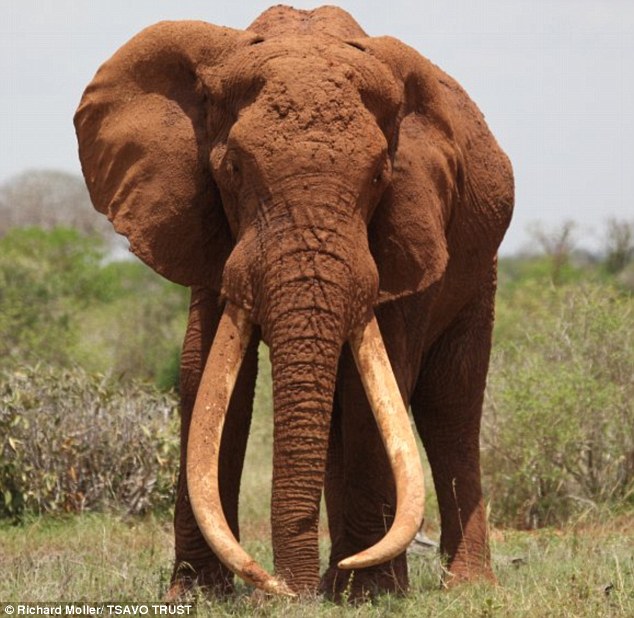
THE MAGNIFICENT SATAO ~ RICHARD MOLLER/TSAVO TRUST
Satao was one of the largest Elephants in the world. His weight was estimated to be over 7 tons and his tusks were so long he could rest them on the ground.
By logic, his size should have made him unreachable for any natural predators. However, in a world of destruction and corruption, logic doesn’t prevent the extinction of the African Elephant. Satao fell prey to poachers for his ivory in May 2014, which triggered a huge wave of grief in Kenya followed by international outrage in the news and on Twitter and Facebook.
Born in the late 1960s in Tsavo, Satao caused great amazement to everyone who ever caught a glimpse of him; rangers, tourists but also poachers. Many believe that Satao had the understanding that his tusks were beyond the ordinary. In fact, he had adjusted his behaviour to keep his tusks out of sight, which was incredibly impressive and heart-breaking at the same time. Impressive, because this once again proved how very intelligent Elephants really are, and sad, because Satao was nonetheless poisoned by arrows that caused his death.
The Tsavo Trust had been monitoring the Elephant’s movements using aerial reconnaissance for the last 18 months, and thanks to his enormous tucks the beast was ‘easily identifiable’ from the air.
But the technology was not enough to save the iconic beast from the hands of the poachers.
A Tsavo Trust spokesman said at the time: ‘With great sadness, we report the death of Satao, one of Tsavo’s most iconic and well-loved tuskers.
‘This magnificent Elephant was widely known in Tsavo East National Park, where he was observed with awe by many thousands of Tsavo’s visitors over the years.
‘No longer will Tsavo and Kenya benefit from his mighty presence.’
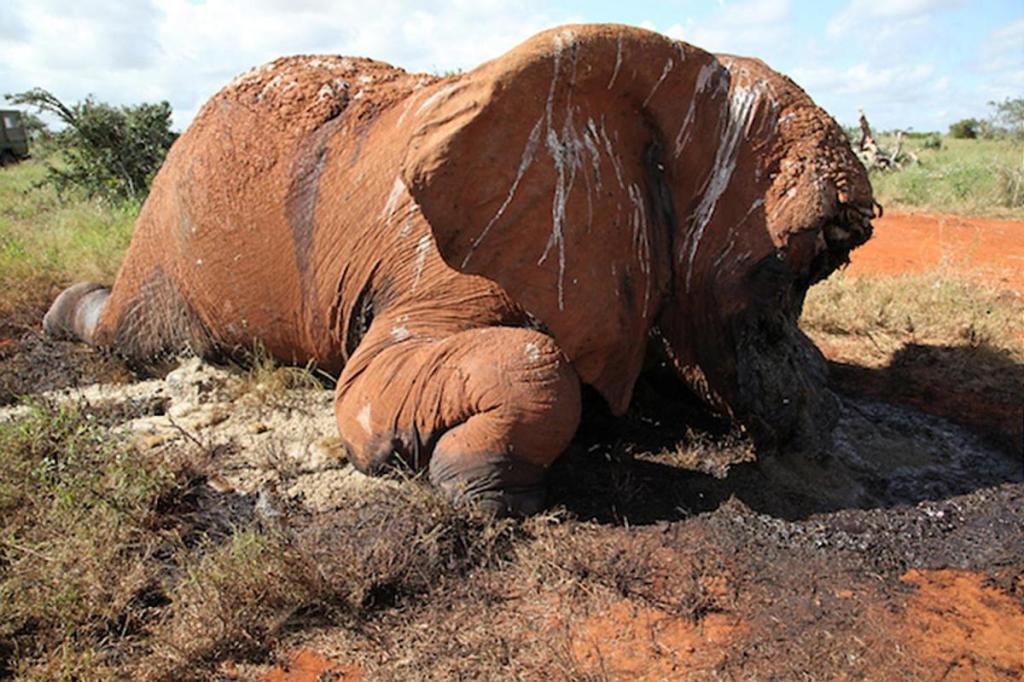
‘Satao, whose tusks were so long they trailed the ground, was discovered with his face hacked off at Kenya’s Tsavo East National Park’
He added: ‘The arrow had entered his left flank and he stood no chance of survival. We spotted his carcass on 2nd June but to avoid any potential false alarms, we first took pains to verify the carcass really was his.
‘Today it is with enormous regret that we confirm there is no doubt that Satao is dead, killed by an ivory poacher’s poisoned arrow to feed the seemingly insatiable demand for ivory in far off countries.
‘A great life lost so that someone far away can have a trinket on their mantelpiece.’
‘Rest in peace, Old Friend, you will be missed, he added.
Photos of his hacked off face and tusks circled the Internet and recorded the bitter loss and undignified death of this incredibly rare tusker.
AN UNDIGNIFEID END: SATAO WAS FOUND WITH HIS FACE AND TUSKS HACKED OFF!
Wildlife filmmaker based in Kenya Mark Deeble who had written a blog post Satao: last of the great tuskers about how poachers had been hunting Satao for some time and how he was injured but managed to escape until now:
He said “I was thankful that the bull’s wounds were healing and that we hadn’t had to dart him, but I was devastated that poachers had somehow managed to predict his movements and get close enough to fire two poison arrows into him. I am appalled at what that means – that the survival skills that the bull has painstakingly learnt over half a century have been rendered useless by the poachers’ use of mass-produced Chinese goods, GPS smartphones, cheap motorcycles and night vision goggles.
I think the old bull knows that poachers want his tusks, and I hate that he knows.
More than anything, I hate the thought that poachers are now closing in on one of the world’s most iconic Elephants.”
His fears came to reality on the 30th of May 2014!!
RIP Satao, you will NEVER be forgotten.
SATAO DRINKS AT A WATER HOLE IN TSAVO EAST NATIONAL PARK, KENYA, IN 2013, WHEN THE MAGNIFICENT TUSKER WAS IN HIS PRIME – MARK DEEBLE
NO ONE IN THE WORLD NEEDS AN ELEPHANT TUSK BUT AN ELEPHANT. ~ THOMAS SCHMID
A variety of styles of Nobody In The World Needs An Elephant Tusk Except Elephants tops are available at Save The Elephant with all proceeds helping Elephant charities.
Please SHARE to raise awareness to the plight of Elephants at the hands of poachers. You can also SIGN UP for news and updates straight to your inbox by registering in the top right of this page. Thank you.
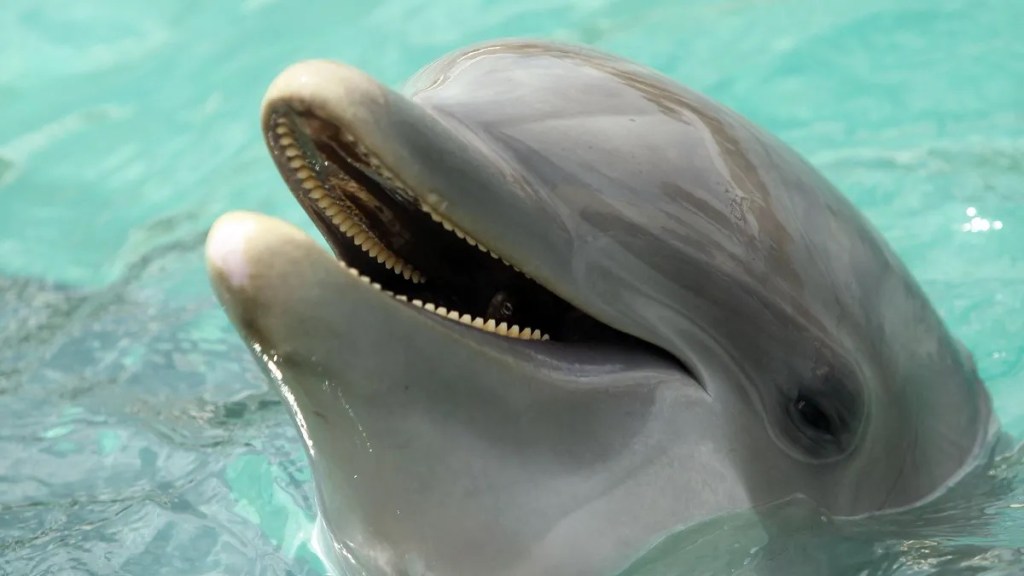
The Miami Seaquarium has once again made news after a USDA investigation discovered that a captive dolphin attacked a trainer, resulting in her hospitalization.
A video of a dolphin body slamming a trainer in the sea was shared on TikTok.
Sundance, the trainer’s dolphin, slammed into her three times and dragged her underwater at one point.
The trainer struggled to free himself and swam to the pool’s edge.
“The recent news of a dolphin attacking a trainer at Miami Seaquarium is terrible and highlights how dolphins suffer for entertainment while putting workers in danger,” Nicole Barrantes, a wildlife campaign manager with World Animal Protection, stated.
Sundance and all other dolphins in captivity should be retired and released to a seaside sanctuary. This cruel industry must end.”
Please SHARE to raise awareness to the cruelty of captivity. You can also SIGN UP to have regular news and updates delivered straight to your inbox by registering in the top left-hand of the page.
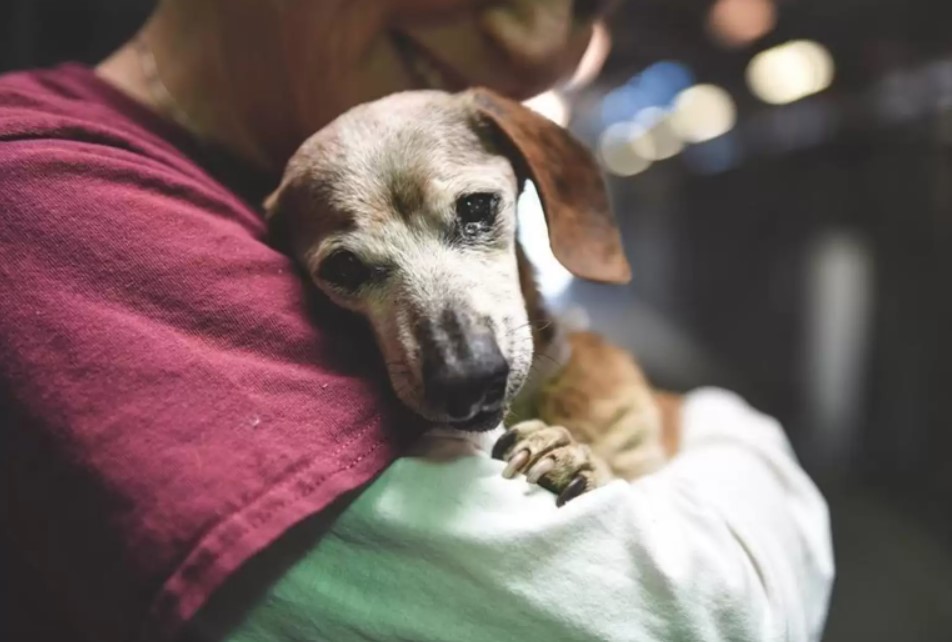
She wagged her tail as her new mom signed the papers to adopt her.
Old, blind and lost at a kill shelter, Muneca didn’t seem like she had much left to hold on to.
Until the first person to show her kindness came along.
And then, the 18-year-old dachshund refused to let go.
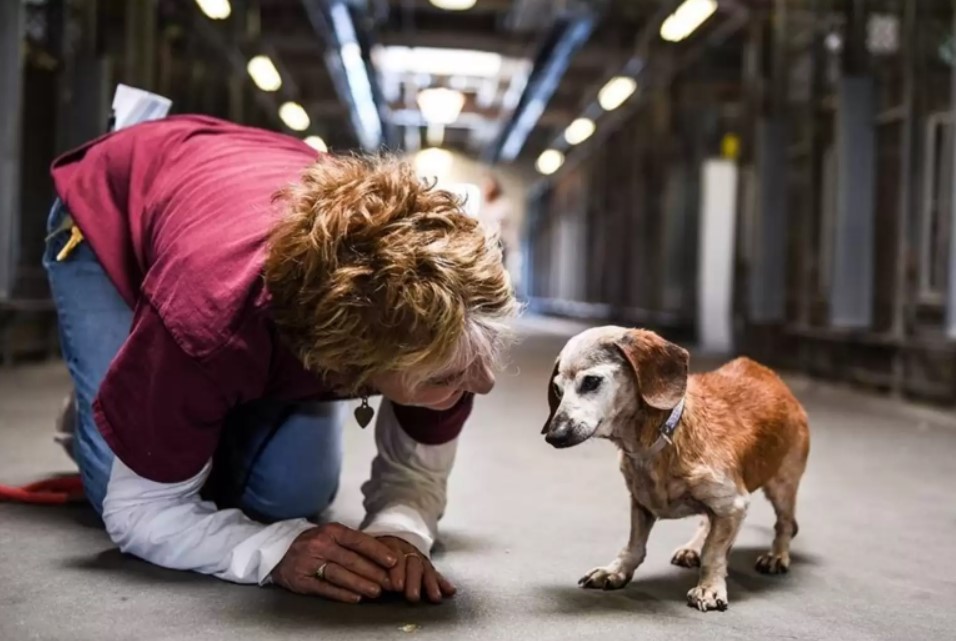
Muneca, an 18-year-old blind Dachshund, was dumped at an animal shelter, leaving her alone and terrified. At this time, she no longer had a home, her vision, or someone to love her.
But Muneca’s story didn’t end with a bittersweet moment at what seemed the end of the line. Hwang’s photograph moved thousands to share her plight.
Just two days after being dumped at the shelter, the Frosted Faces Foundation stepped up to get Muneca out of there.
Suddenly, a dog who seemed to have no one had people all over the world lining up to take her home. She found the perfect fit with Amy Gann. Literally.
“We screened a lot of people and talked to all their references,” Kelly Smíšek, executive director of Frosted Faces, tells The Dodo. “We home-checked a bunch of people.
“By the time we approved someone and they drove to San Diego, I met them, I was very nervous. I thought, ‘I hope we picked the right person.’ And immediately, it was, ‘Oh my Gosh. I’m so glad she’s going home with you.'”
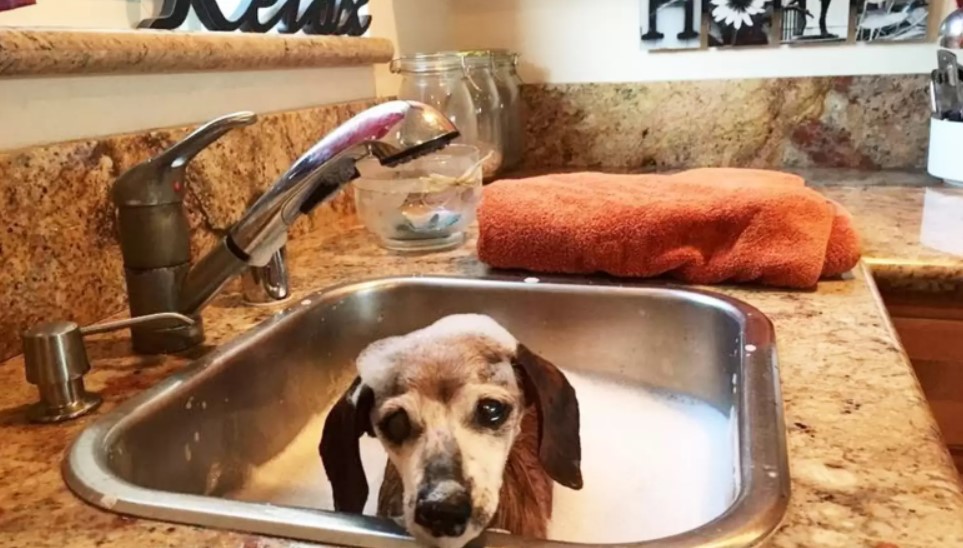
It turned out Muneca had a lot more memories to make outside of that shelter. Even before she found her real home. Like when she soaked in a much-needed bath.
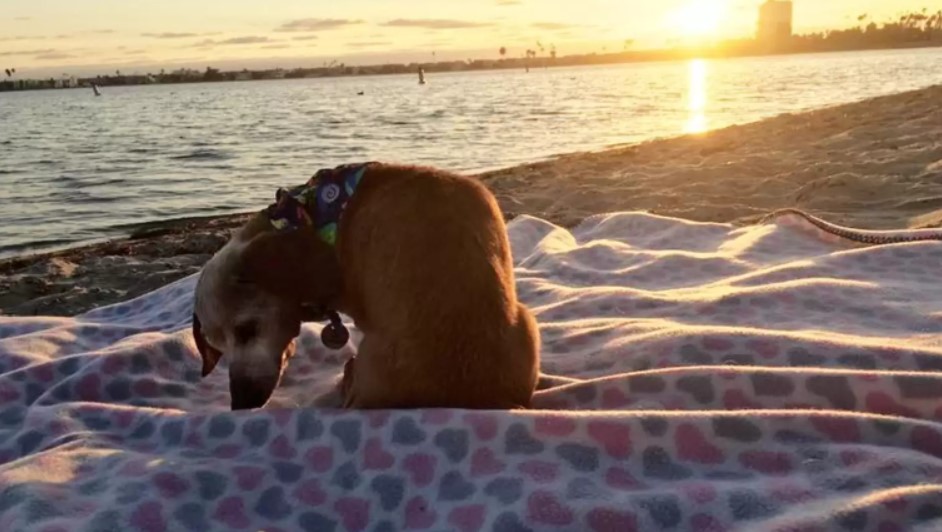
Or when she sprawled out on a picnic blanket, chomping on a treat.
“I can’t put her down,” Gann wrote to Smíšek in a text message. “I have very close family and we pass her along like a new baby in the family.”
In fact, Gann even made a sling for Muneca, so she can keep her close to her while doing chores around the house.
Muneca may not be able to see the setting sun on a California beach, but she can surely feel the warmth that will embrace her for the rest of her days.
Please SHARE this beautiful story to highlight the importance of adopting rescue animals. You can also SIGN UP to receive NEWS & UPDATES direct to your inbox by registering in the top righthand corner of this page.
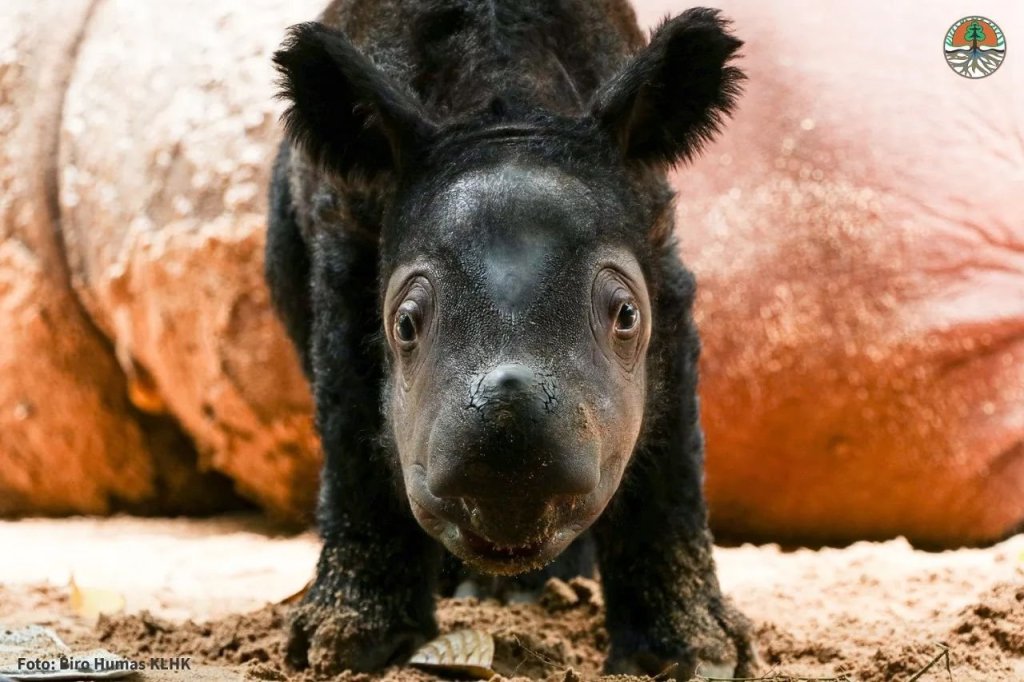
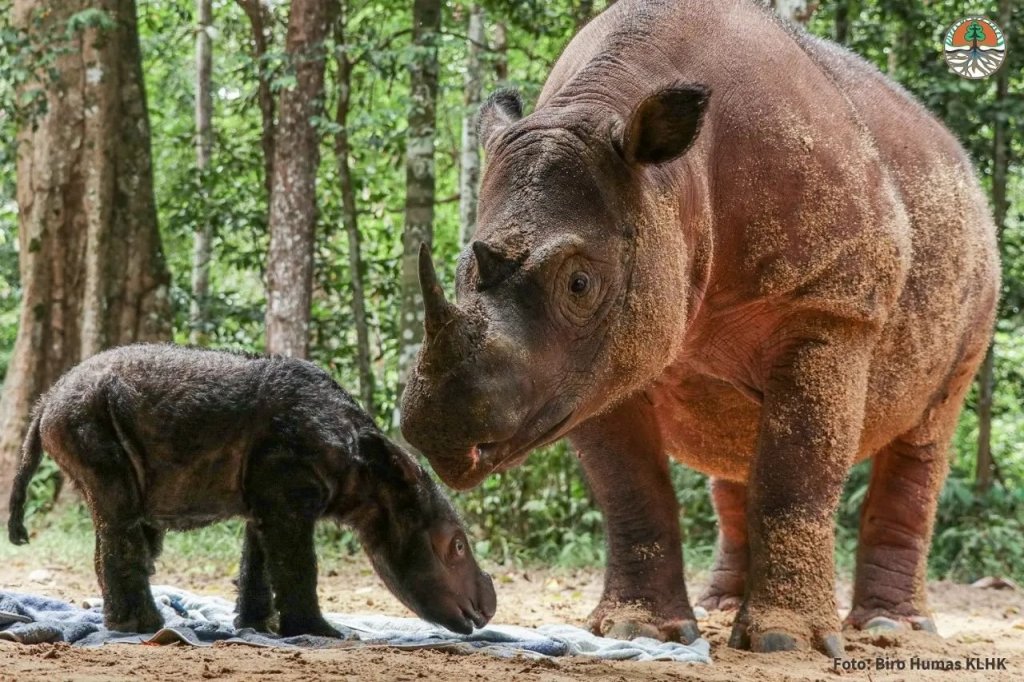
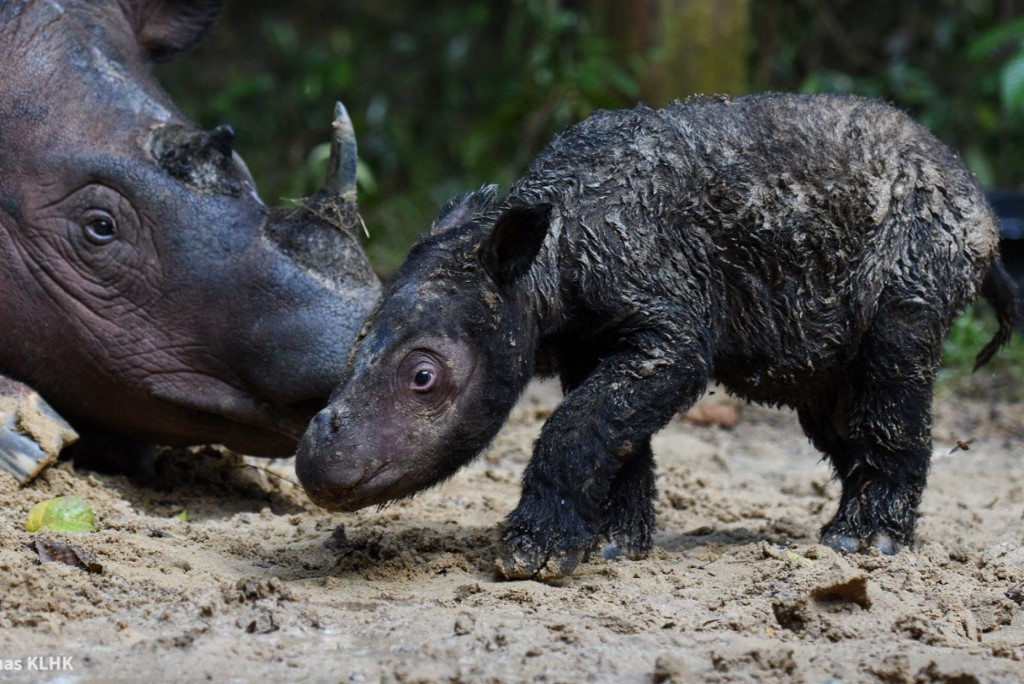
A Sumatran Rhino has successfully given birth in an Lampung sanctuary, environment officials said, in a boost for conservation efforts targeting the critically endangered animal.
THE CLAF BORN IN WAY KAMBAS NATIONAL PARK
The World Wide Fund for Nature estimates fewer than 80 Sumatran Rhinos remain in the world, mainly in Sumatra and Kalimantan.
A Rhino named Rosa gave birth to a female calf on Thursday in Way Kambas National Park in Lampung, after suffering eight miscarriages since 2005, when she was brought in from the wild for a breeding program.
“The birth of this Sumatran Rhino is such happy news amid the government’s and partners’ efforts to increase the population,” Wiratno, a senior official at Indonesia’s environment ministry, said in a statement Monday.
The calf, who has yet to be named, brings the number of Sumatran Rhinos in the Way Kambas sanctuary to eight.
Successful births are rare. The calf’s father, named Andatu, was the first Sumatran Rhino born in a sanctuary in more than 120 years.
Standing between 3.3 – 5 feet, Sumatran Rhinos are the smallest of all Rhinoceroses and they have a lifespan of around 35 – 40 years. They were once found across South and Southeast east, from the foothills of the Eastern Himalayas in Bhutan to eastern India, through Myanmar, Thailand, and possibly to Vietnam and China. Now, the species is critically endangered, with less than 80 individuals remaining in the wild in small fragmented habitats on the island of Sumatra and nearby Borneo.
MOTHER ROSA WITH HER CALF
In 2017, Rhino conservation experts and the Indonesian government concluded that the only way to save the species was through a captive breeding program. The move was similar to an initiative launched in the 1980s that saw 40 Sumatran rhinos captured for breeding. But in this case, nearly half of the captive animals had died by 1995 and not a single calf had been born.
The International Union for Conservation of Nature classifies the Sumatran rhino, the smallest of all Rhino species, as critically endangered.
Multiple threats have brought them to the brink of extinction, including poaching and climate change.
This handout photo released on March 28 and made available on March 29, 2022 shows female rhino named Rosa (l) with her new baby born at the Way Kambas National Park, in Way Kambas, in Lampung province. Rosa delivered a baby rhino on March 24, for the first time after translocating from roaming in villages. A critically endangered Sumatran rhino was born in an Indonesian sanctuary bringing hope to the conservation of the rapidly declining species, an official said. (AFP/Handout)
Rhino horn is often illegally traded for traditional Chinese medicine.
Indonesia is also racing to save another critically endangered species – the Javan Rhino.
Once numbering in the thousands across Southeast Asia, fewer than 80 are alive today, mainly in a national park on Indonesia’s main island of Java.
Efforts to conserve the species have shown promising results with the birth of five calves in Ujung Kulon National Park last year.
Please SHARE for others to enjoy. You can also REGISTER for NEWS & UPDATES straight to your inbox by signing up in the top right of this page. Thank you.






 PROTECT ALL WILDLIFE