Two Orcas were seen swimming close to the children in a bay in New Zealand. The footage, captured by a local resident at Enclosure Bay in Waiheke Island, shows the kids frantically trying to swim away as the Orcas head straight to them.
The massive beasts can be seen swimming within feet past the youngsters and out to sea. The filmer writes: ”While in Auckland’s Waiheke Island at Enclosure Bay two orca whales entered the bay. ”At first all I saw was a fin in the water and thought a shark had entered the bay. I realised it was a whale and not a shark. ”Everyone got out of the water, however, there were two children in the middle of the bay who must not have heard the call to get out. ”By the time they realised what was going on it was too late, it appeared the whales heard the children calling for help and headed directly for them”
In the clip below, you see a pair of dorsal fins rip through the ocean at pace as they head towards the kids.
The Orca Pass Within Feet Of The Children
The children panic and cling on to each other for dear life.
You also hear them scream as they believe they are about to be devoured by the predators, which can measure up to 8 metres in length and weigh up to 6 tons.
“That’s a lifetime experience for you,” one onlooker could be heard saying as the two orcas swam past the children and back out to sea.
”It was extremely frightening for both onlookers and the children in the water that came face to face with these massive Orcas.”
Killer whales rarely attack humans
Attacks on humans by wild killer whales are rare and are usually blamed on the animals mistaking people for prey. Attacks on wild killer whales by humans were, until recently, far more common and governments encouraged their shooting because of the competition for fish.
A large group of tourists have been caught on camera at Yellowstone National Park refusing to move away from a Bear, despite intervention from two Park Rangers.
In the video, which you can watch below, at least eight people with cameras and phones are gathered near a Black Bear while Rangers attempt to move them along, explaining that it’s for their own safety and that of the animals, and that the rules apply to everyone. Despite these warnings, a few people refuse to budge until they’re satisfied with their pictures, despite the Rangers standing right in front of them.
“Yellowstone National Park isn’t Disney Land. Everything here is beautiful but has the potential of serious harm or death. This bear was 35 yards off the Road don’t get out of your car. It’s a wild animal and can go from grazing to attack in a moment. A man had his kids out of the car 35 yards from a big Black Bear and accused the Rangers of taking the fun out of it. Yellowstone is not a zoo animals can be unpredictable. Be smart be safe and give the animals their space. Stay in your car when they are close to the road.”
“The lack of respect for the rangers and wildlife is beyond infuriating. These people need to understand Yellowstone is not a petting zoo” said one onlooker.
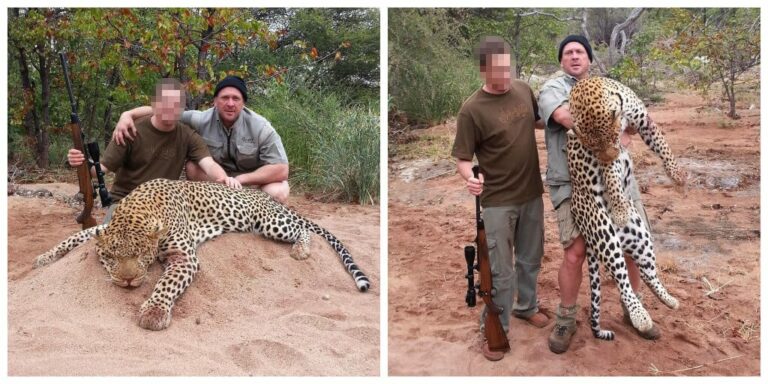
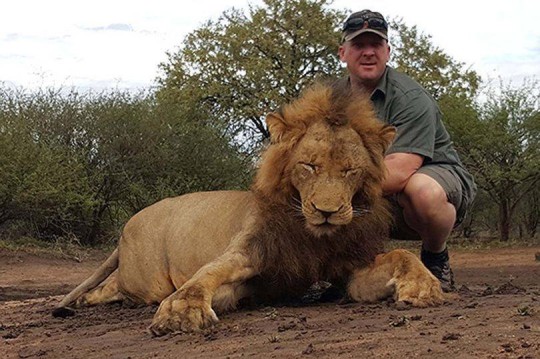
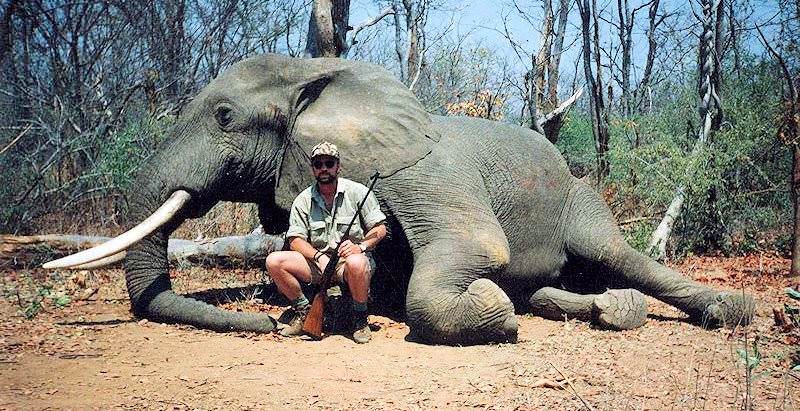
When I got wind of your courageous exploits, I felt I had to congratulate you. For a start, you are British. We adore the British – they are our second favourite colonialists. The first, obviously, are the Dutch. They gave us the Afrikaners who in turn gave us apartheid. What’s not to love about apartheid, right? Was that the reason your parents moved to South Africa in 1980?
Your efforts to encourage tourism to South Africa in these fraught times are laudable, indeed. It’s not easy these days to find a Brit who is interested in anything other than Brexit and that tawdry harlot, Meghan Markle.
Even though you’re only 46 and hail from Epsom, Surrey, you have your very own company operating out of Johannesburg. It’s called Take Aim Safaris. At first I thought it might be another of those bunny-fondling outfits that think the best way to shoot animals is with a camera. Ha! Poor fools. Unlike you, sir, they have clearly never cradled a 300 Winchester Magnum in one arm and a high-class prostitute in the other.
And you named your eldest son Hunter! You wouldn’t expect a man who enjoys shooting animals in the face to have a sense of humour. Well done.
You spotted a gap in the market. As the plague is still very much with us, people are understandably reluctant to travel. That’s until you reminded them that with fewer hunters around, wild animals have been breeding like, well, wild animals. You can barely walk anywhere in South Africa right now without bumping into an elephant.
So you fired off a newsletter to 3,000 of your clients around the world encouraging them to come here and kill a bunch of stuff for sport. And what a sport it is! Okay, maybe not so much for the animals, but they don’t pay taxes and won’t be missed.
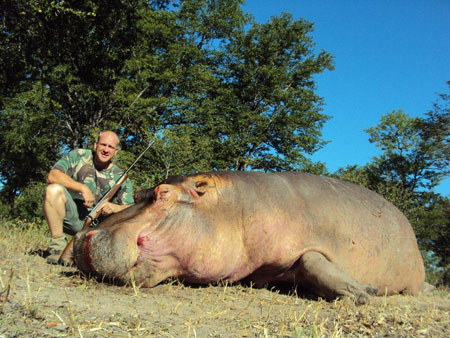
You wrote, “Big elephant and trophy buffalo + hippo, croc are plentiful. The areas are well rested, the animal movement is fantastic.” Let’s see how fantastically they move with a 5.56-caliber bullet lodged in their brain haha.
“I have quota available on the big cats: leopard and lion plus elephant bulls at unbeatable prices.” This is great news. I have never trusted an animal that can’t change its spots. Leopards are duplicitous, violent brutes and I am delighted to hear that they are now on special. Lions, too, will pretend to befriend you, then have your throat out just for the sport of it. They are cats, after all. Did you know this? Or do you simply judge everything with four legs according to the price tag on its hairy ass? Fair enough.
Some of your prices do seem a bit steep. $8 for a guinea fowl? Leave a trail of breadcrumbs into your oven and they’ll cook themselves. $150 for a mongoose? Can’t be much left, especially if you’re using hollow-point ammo. And $75 for a vervet monkey? Daylight robbery, that is. Porcupines are priced right at $300. Even though it’s more of an execution than a hunt, you could still get a quill in the eye if you were very drunk and had to fall on him.
In a recent interview with African Hunting Gazette, you said you shot your first leopard at 16. Impressive! I hadn’t even had my first blowjob by that age and there you were on a wild killing spree. Have you had your first blowjob yet? No matter. It’s the killing that’s important.
I love that you hunted for a Christian drug rehab in the Northern Cape when you were younger. You gave them more meat than they knew what to do with. That’s a David Lynch movie, that is. Produced by Oliver Stone. Featuring a young Sylvester Stallone as you.
You’ve hunted all over – Mozambique, Botswana, Zimbabwe … you even shot a bear in Russia. I suppose he didn’t understand when you shouted, “Hands up! Don’t move or I’ll shoot!” You also said Namibia is a great place to hunt.
“Namibia reminds me of South Africa 30 years ago with its low human population and massive open spaces.” Yep, there was hardly anyone living in South Africa in 1991. An easy mistake to make, what with 40 million people being tucked away out of sight. As for the massive open spaces, well, you had the Group Areas Act to thank for that.
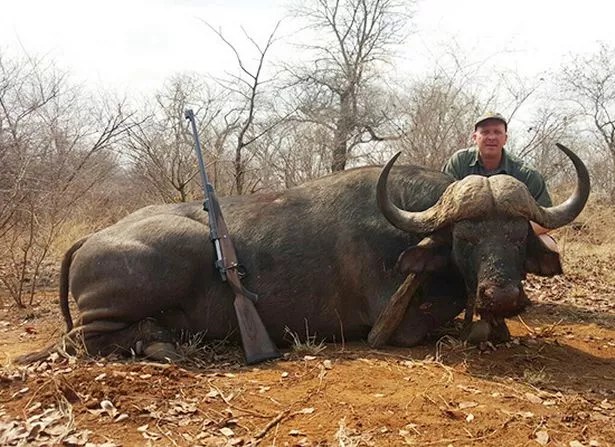
The magazine asked what’s your favourite animals to hunt and you said, “Dagga Boys!” What? That was the name of my gang when I was growing up. But you were talking about something else. “Such an exciting hunt … it’s kill or be killed when you’re hunting buffalo.” So you engage in hand-to-hoof combat with these brutes? Respect, bro.
Our president is also into buffalo in a big way. Mainly for breeding purposes, though. No, I don’t mean … never mind.
Your greatest trophy was the buffalo you hunted with your dad in Mozambique. “It was, and remains, the fulfillment of a father and son dream hunt in a perfect environment.”
My greatest trophy was for tennis in Standard 8. It was tiny but I was very proud. My father never taught me how to hunt. Instead, he taught me how to play pool. The thrill just wasn’t the same, although people did die in some of the pubs he took me to.
You talk fondly of the “38-inch bull in Mozambique that put me firmly on a path I’m still on”. That’s, like, just over a metre? What kind of small-ass bull is that? You might as well have kicked him to death. Anyway, what do I know. I’m sure you believe your wife when she tells you that size isn’t everything.
So the hippo-humpers are saying that many of the animals on your list are endangered. This is nonsense. There are around 400 000 African elephants left in the wild. If you shot a hundred a day, they would last for ten years. That’s not exactly endangered in my book.
There are also 20 000 lions roaming about off their leashes. That’s more than enough lions for everyone. You can get through five a day at least, maybe more if they stop hiding up trees and in cardboard boxes. Sure, their numbers have plummeted by over 40% in the last three generations as a result of hunting, but our national IQ has dropped 40 points in three years as a result of bad education and too much CNN and you don’t see us shooting our stupid people, do you? Damn, this stuff is strong.
Where was I? Oh, yes. You charge £10,000 to shoot an elephant? That, my friend, is a small fortune in my pathetic currency. And £14,500 to put a bullet into the back of a lion’s head? That’s way too much. Are you on drugs? Tell you what. I’ll give you R10 000 for two baby elephants, three monkeys and a crocodile. You do mix-and-match packages, right? And you do pay your taxes, right?
I see you have lived in Joburg for almost your entire life. It’s completely understandable, then, that you would want to kill everything in sight. And you’ve been organising assassinations ever since 2008? Nice work if you can get it.
I see those gerbil-suckers over at MailOnline have been questioning your ethics. How very dare they. You told them, “We eat what we hunt … we love and conserve animals.” I’ve often wondered what elephant tastes like. Tough, I imagine. Do you make carpaccio out of the leopards? That would be a winner among the Italians.
You also told the running dogs of the media that “I have broken no laws”. Good one, mate. You and me and Jacob Zuma know it’s impossible to break laws in this country. Well, you can break them alright, but there ain’t jackshit gonna happen to you.
That bastion of truth, The Mirror, asked how you felt about the dwindling number of wild animals in SA. You said they were lying, which they obviously were, and said, “In South Africa we have over 20,000,000 wild animals bred and conserved here. The birth rate per annum is around 3,000,000.” You might want to check your science, son. I think you’re talking about our people, here.
By the way, my friend Ted said you look like a bit of a cunt. You’ll be pleased to know that I had one of the servants horsewhip him soundly. Your name is Knight, for heaven’s sake. You’re a member of the realm. And I do mean member.
I liked the way you wrapped up your interview with that hunting magazine: “For my family and I, there is no life without God.” There’s a rich vein of irony in there somewhere.
Did you know that if your Boris Johnson had kept his word and implemented the ban on trophy imports pledged in his election manifesto and repeated in the Commons last year, you’d be back in Surrey organising weasel hunts by now?
Our president also has trouble keeping his promises. Politicians, eh? Long may they lie.
Ben Trovato is the author of thirteen books, although you wouldn’t think so if you had to see his living conditions. His notorious trilogy of letters illuminated the darkest recesses of the human psyche, while his self-help guide went a long way towards boosting divorce and suicide rates. He also wrote a book that almost turned golf into a blood sport and brought out a survival manual that caused more harm than good. With a background in print and television journalism, Trovato’s popular newspaper columns have earned him a wicked reputation and a fatty liver.He can often be found surfing instead of meeting his deadlines. Trovato lives alone with two regrets and a hangover.
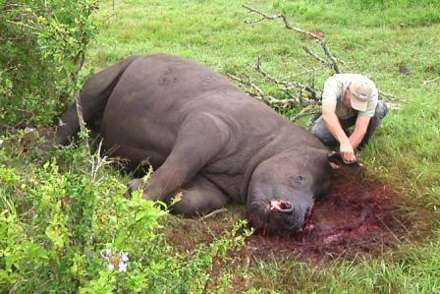
Thandi is a walking miracle who truly should not be here. In 2012, she and two male Rhinos were viciously attacked and poached, leaving them in a pool of blood. When found, one male had already died and rescuers were not sure they would be able to save the remaining male Themba or Thandi.
Dr Will Fowlds Treats Thandi After The Poacher’s Attack
Unfortunately, after three weeks of care, Themba fell victim to his brutal attack and took one last drink from the pool of water. The sheer sadness the rescuer felt after this death would break down the coldest of hearts!
Fortunately, Thandi was a survivor and was able to overcome her mortal wound and go on living. As rescuers continued to help her, she slowly recovered, touching lives all over the world.
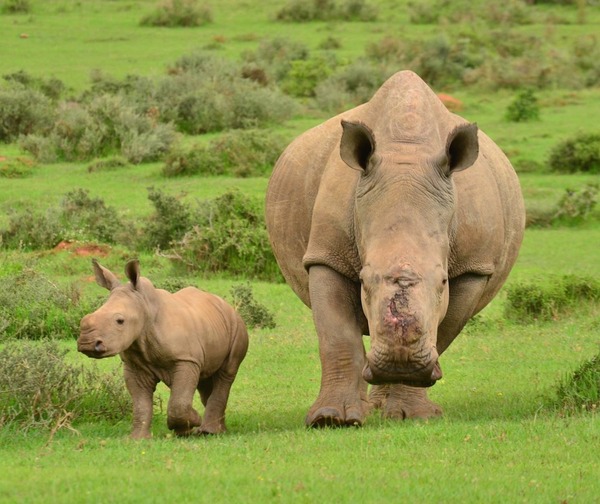
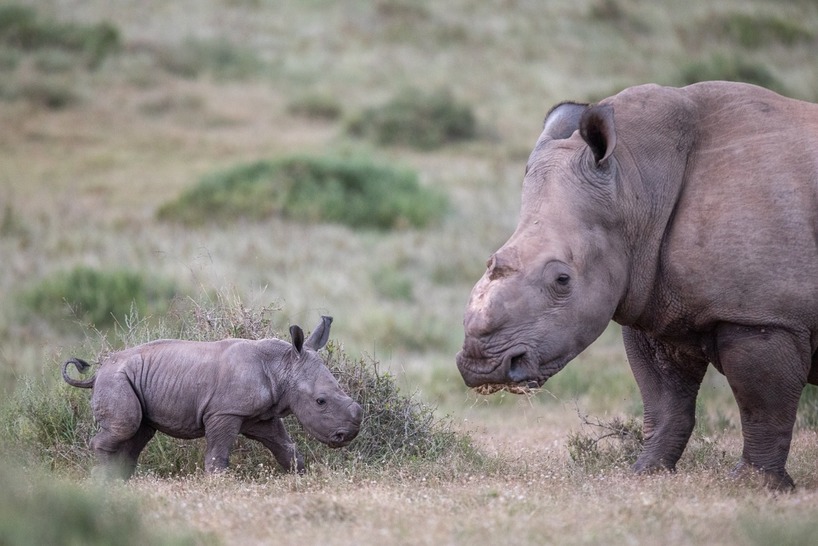
Nearly three years after surviving the brutal poaching Thandi gave birth to a calf on 13 January 2015 at Kariega Game Reserve in the Eastern Cape, South Africa.
A Rhino as symbolically special as this one deserved a name to match, and the little calf has just been given a very fitting moniker: ‘Thembi’, which means ‘hope’ in the Xhosa language, one of the official languages of South Africa.
“The name Thembi seemed to fit best given that this little calf has brought fresh hope and energy to those who struggle to secure the future of our Rhino. She is a new generation of life, one I hope will never experience a poaching incident like her mother did” says Dr William Fowlds, one of the vets involved in Thandi’s incredible recovery.
He adds: “Thandi has changed my life. I can’t say it is for the better, as I could never wish to fight a war such as this one but she has inspired action in myself, and many around me. She now celebrates life, and with it the hope that against all odds, we can and we will overcome the massive challenges that threaten the Rhino.”
And then…………
In January 2017 Thembi stepped out without her mother, everyone at Kariega Game Reserve became a little anxious and worried – they thought Thandi had been hit a second time by poachers.
“Kariega started to get worried as Thandi had disappeared for a number of days (which can happen), so they asked me to come and fly my drone to help find her and make sure no harm had come to her. This was the main thing on our minds – to make sure she was alive and not in any trouble.
I met a team at Kariega and we set out flying the area where she goes when she feels threatened or needs to hide away for a while. The wind was gusting badly, which made the search very tricky and by the time flying was reasonably safe, we only had an hour of good light left.
An hour later and there was still no sign of Thandi, but we had seen the rest of her crash, including Thembi. To cover large areas with an aerial camera, you need to fly quite high (80 metres) which also means that even a rhino becomes a spec on a screen and very tricky to spot, even in good light. It’s therefore essential to have a very good camera to record footage but even more important to have a quality screen with excellent resolution to maximise the chance of finding her in real-time.
Fortunately, thanks to Medivet – who sponsored the iPad that I use with the drone – and having the camera set to maximum light sensitivity, we were able to fly for an extra ten minutes after all useful light seems to have gone.
And what a momentous ten minutes it turned out to be! The final sweep back across very dense thicket vegetation on the way back to our home point, the faintest outline of a rhino rolled onto our iPad screen. I could hardly believe my eyes! We found Thandi. At that height. In that light. We could even see if she was dead or alive!
I dropped the drone to 50 metres above her and to our relief, she shifted her body position confirming that she was alive. That in itself was an amazing feeling, knowing that this very special rhino was at least moving around. But we still didn’t know why she had disappeared into the dense thicket.
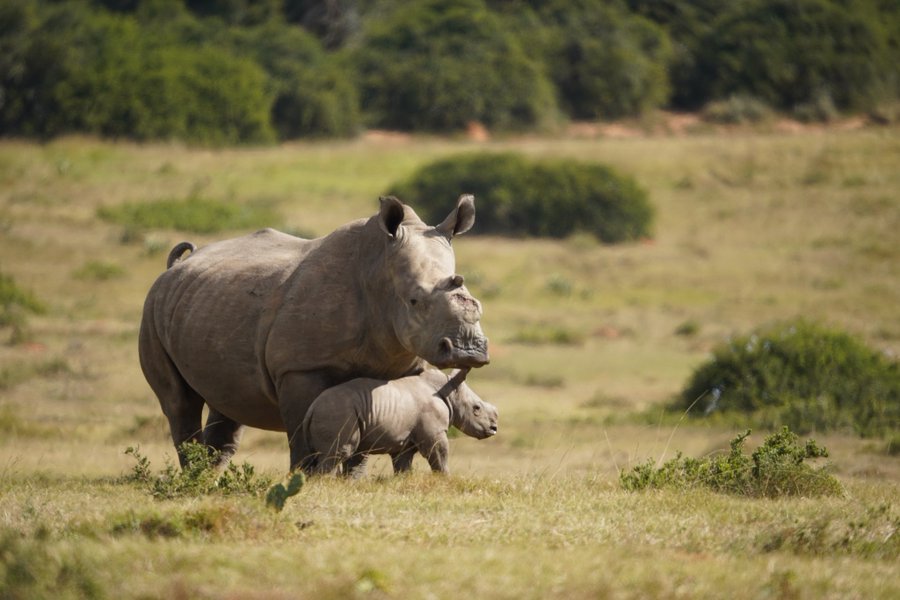
The drone hovered over her and we stared into that screen, anxious for an explanation. And then suddenly, there he was! From under Thandi’s neck area, out popped the tiniest rhino miniature and we were elated.
What an amazing and wonderful surprise! The gift of a rhino baby delivered by one of the world’s most endearing rhino icons, Thandi. The very fact that this rhino who was severely hacked and left to die five years ago, and who survived against all odds was found, a needle in a haystack, alive and with a toddler at foot.
But there was more good news to come. What happened next wiped away our remaining fears that this baby may be weak or in some sort of trouble. As we watched from above, taking snaps from the iPad, this little bundle began to bump and nuzzle up against Thandi’s pendulous tummy. So small that he couldn’t even reach her udder to feed. His amazing mum responded by sitting down and then lying slightly turned to one side and moved her back leg out to the side, creating a little cove into which this little babe could move and start to feed.
We circled around this scene, absolutely thrilled by what we saw and elated at this incredibly good news. Later that week, when Daniel from Kariega was able to video the two of them in a road-way, we confirmed that he was a baby rhino boy and he was immediately named Colin. This event is so special in so many ways. The founder of this reserve, Colin Rushmere, passed away only days before we found this baby boy and it is very fitting that this special baby boy be named after someone who was such a visionary and a much-loved member of the community”.
May he live a long, safe and happy life, just as his name sake Colin Rushmere had done, and become the father of many.”
Why the name Colin?
The birth of the then unnamed calf came at a time when family and friends were mourning the death of Kariega Game Reserve founder Colin Rushmere 10 days earlier.
Rushmere’s son, Mark, said they had not known Thandi was pregnant when she disappeared and feared she might have been hit a second time by poachers.
“For all we know, the calf was born on the same day dad [Colin] died,” he said.
“We could not find her for a while and were worried. It is all very symbolic.”
Mark said they found out that Thandi had a second calf the day before his father’s funeral, after renowned wildlife vet Dr Will Fowlds sent up a drone to try and locate her.
“The news lifted the mood of the family and we all smiled. It was fantastic and the timing was unbelievable,” he said.
Rushmere, 79, was an Eastern Province cricketer and Mark followed in his footsteps in the provincial team and also turned out for South Africa.
He originally bought 660ha of land on the Kariega River in 1989 and turned it into a 10 000ha mega-park.
Although the sex of the baby rhino has still not been established, Mark said staff and friends were insisting that it be called Colin if it is a male.
Family friend Bronwen d’Oliveira said yesterday everybody was beaming with delight after hearing that Thandi had a second calf.
“Everybody is blown away by the timing. The birth was just so unexpected,” she said.
“Colin’s passing and Thandi’s calf ties everything together very nicely – his vision saved her and then this happens.”
Thandi has given birth to a further three healthy calves.
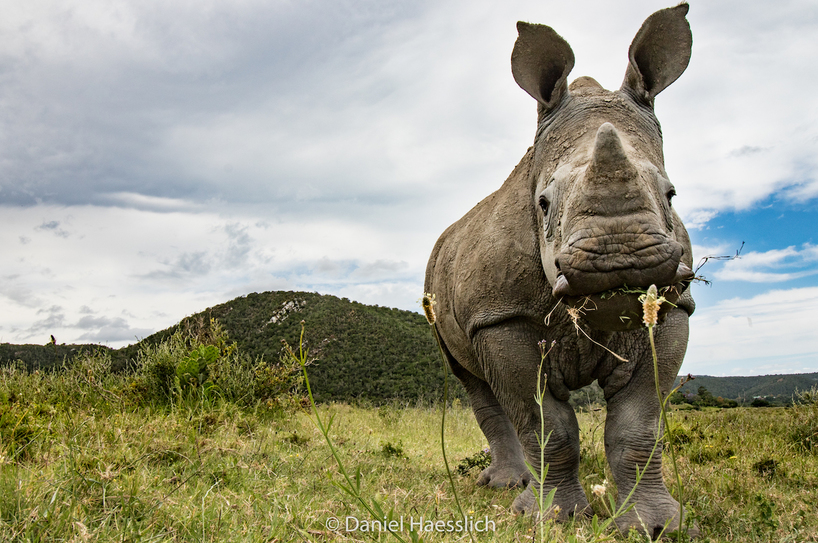
Mthetho: Born 03 April 2019. Credit: Daniel Haesslich
The Meaning Of Mthetho
The meaning of the name Mthetho is significant. Many Kariega staff members attended court proceedings at the Grahamstown High Court and were waiting for the day of justice. The Ndlovu Gang were suspected to have committed the triple poaching at Kariega on 2 March 2012, when Thandi, Themba and bull 84, where brutally attacked. Bull 84, died on the night of the attack; Themba died 24 days later from injuries sustained during the attack and Thandi survived. The sentencing of this gang was a sensitive topic for us all.
There was a huge sense of relief when the Ndlovu Gang were found guilty of 55 wildlife crimes including the poaching of over 100 rhinos. The Kariega team aptly named Thandi’s third calf, Mthetho, meaning justice in the local language IsiXhosa. Justice was served and Mthetho would remind us always of this moment!
Siya: Born 04 January 2021. Credit: Kariega Game Reserve
In the midst of the Covid-19 crisis, Thandi gifted us with a much needed beacon of hope and birthed her fourth calf. We named this calf Siya, after Springbok rugby captain Siya Kolisi. Siya is an abbreviation of Siyamthanda, which means ‘we love him’ in isiXhosa.
Zolani: Born April 2023 Credit: Kariega Game Reserve
The name Zolani means calm, loving, and free-spirited, and was chosen to honour a @kariega.game.reserve guide who tragically passed away.
The birth of Thandi’s fifth calf is another chapter in the incredible legacy of this magnificent rhino. A legacy that still inspires and motivates us to work harder and do better not only for our rhinos, but the entire natural world.
This is your chance to bid on a pair of signed David De Gea goal keeper gloves in our ‘Charity Auction To Help Disabled Animals’.
This is a sealed bid auction, so all you need to do is decide which item you would like to bid for – noting the reserve price for each – and send us your bid with your name by email to protectallwildlife@btinternet.com by 21:00 on the 31st of May. We will email you to let you know if your bid is the highest. Postage costs will be calculated when the auction ends. Good luck!
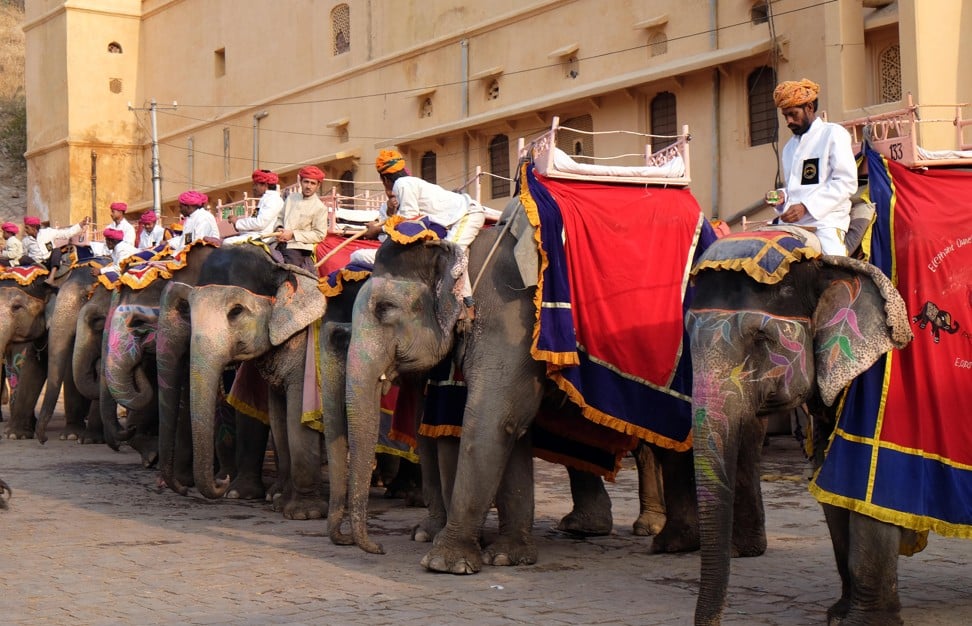
Taking an Elephant ride up the hill has become an indispensable part of a visit to the Amer Fort in Jaipur, Rajasthan.
It has become so popular that tourists are made to feel like they have missed out on something if they don’t take the ride.
While there is no doubt that the Elephant rides uphill through the majestic fort gives the tourists an experience of a lifetime, there is a dark side to it.
The ‘Elephant In The Room’ here is the Elephants themselves, or the way they are treated, to be exact.
The nearly half-an-hour long joyride up and down the hill costs Rs 1,100 for two passengers however has a hidden cost – the health and wellbeing of the Elephants.
Waiting for the tourists!
Amer Fort is a tourist attraction in India where sick, blind, and suffering Elephants are forced to give tourists rides hour after hour. Day after day. For years and years.
The Elephants at the fort which are used to ferry the tourists have to make multiple trips up and down throughout the day, even in the scorching heat.
As the tourist numbers grow and the popularity of the joyrides increases the Elephants have to overwork, often without proper time for food and rest. There have been at least a couple of incidents in the past few years exhausted Elephants collapsed and died.
Trainers beat Elephants with weapons and traumatise these gentle giants with a life of exhausting work, violence, neglected injuries, malnourishment, dehydration, and routine chaining. In fact, one foreign tourist recently filed an official cruelty complaint after witnessing trainers assault an Elephant for 10 minutes after the suffering animal tried to escape at the Amber Fort near Jaipur, Rajasthan. Even though the majority of Indians are Hindus – who deem Elephants sacred and worship the Elephant-headed god Ganesha – in the tourist industry, life for these animals consists of fear and agony. Those whose open wounds cause them pain or whose vision is impaired aren’t even allowed to rest. They’re forced to carry humans on their backs in the oppressive heat by men who threaten them with rods and bullhooks (sticks with a sharp metal hook at the end).
World Animal Protection, an international NGO has been running a campaign for years to end the use of Elephants for rides in the Amer Fort, alleging that the animals have been subjected to cruelty and ill-treatment for the sake of the tourists.
World Animal Protection held a screening of a documentary that showed how the animals are treated.
“Elephants are wild animals and they deserve to be in the wild. Amer Fort in Jaipur city is not a place for an Elephant. This is not their natural habitat. We must put an end of Elephant rides at Amer Fort,” said Gajender K Sharma, Country Director, World Animal Protection India.
An Amber Fort Elephant, with damaged feet from carrying tourists, kneels on a concrete floor.
According to Shubhubroto Ghosh, Wildlife Research Manager, World Animal Protection India, the campaign is aimed at ending the practice of using wildlife as a source of entertainment and have them retired and give them a life of dignity.
But where did the Elephants come from?
Given the fact that Rajasthan is a desert state, it is only natural to assume that Elephants are not native species, which is genetically adapted to live in the hot and dry conditions there.
According to wildlife campaigners, these Elephants were captured from the forests of Assam at a young age and sold at the traditional ‘Hathi bazar’ (elephant market) in Bihar’s Sonpur until 2004 when it was declared illegal. They also allege that despite the ban, elephants are still sold at the fair and are brought to states like Rajasthan.
Once the Elephants are brought to Jaipur, they are sheltered at the Hathi Gaon (Elephant village) where they are tamed and trained as ride animals.
“The village was meant to be a safe and comfortable place for the elephants to stay. But it is nothing than a car shed for Elephants. It is ill-equipped to house an animal like an Elephant. During the training, Elephants are starved, kept on chains. They go through a process called ‘the crush’, they are beaten badly to make them obedient,” Ghosh explained.
Another striking thing that one can notice at the Amer Fort is the sheer number of female Elephants. This, Ghosh said is no accident, but is a part of the design as it is easier to train and control female Elephants.
According to Ghosh, they are demanding a total ban on using the Elephants for rides as the authorities have failed to implement the existing rules.
Rangoli’s story
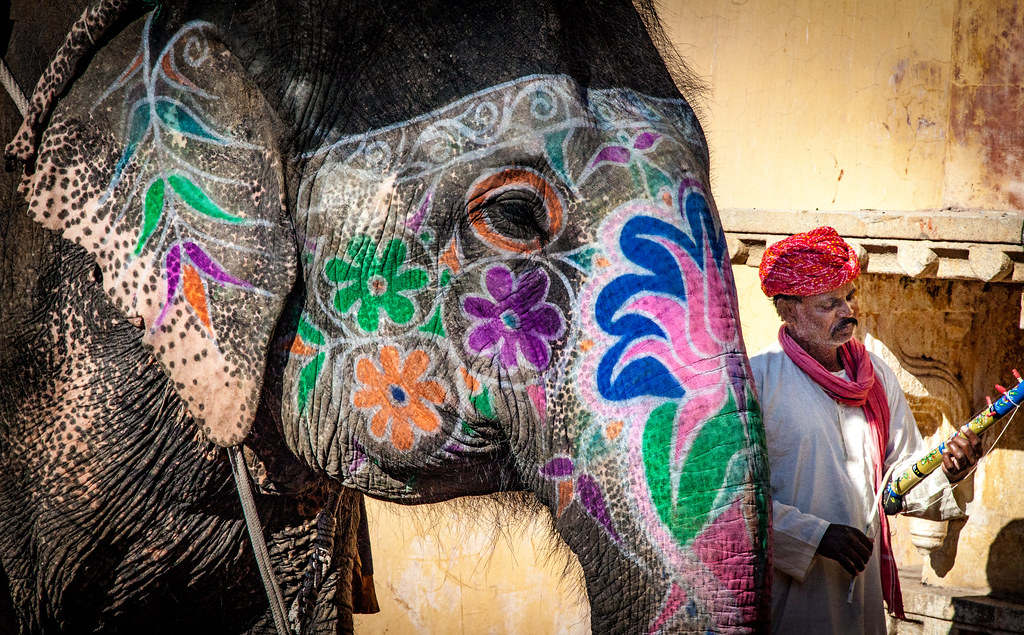
Rangoli was born at UNESCO World Heritage Site, Amer Fort, into a life of pain, captivity, and cruelty. For her entire 51-year life, Rangoli has suffered for the entertainment of tourists.
Currently, Rangoli is forced to carry tourists on her back, which is painful and creates sores. Rangoli endures this pain while walking over hot concrete and difficult cobblestones that damage their feet every day. Only to then spend her nights standing in her own feces, while chained when she ‘rests’.
With your support you can help end Elephant rides at Amer Fort and can begin the process of safely retiring Rangoli and all the other Elephants that are suffering.
A “once-in-a-lifetime” experience for you is a lifetime of suffering for them. Now is our moment to end this cruelty.
You can support ‘Protect All Wildlife’ by donating as little as £1 – It only takes a minute but it can last a lifetime for an animal in need. Please donate below.
Everyone who donates will receive a Certificate of Appreciation as a thank you for helping animals in need.
The Mission of Protect All Wildlife is to prevent cruelty and promote the welfare of ALL animals.
We believe EVERY animal should be treated with respect, empathy, and understanding. We raise awareness to protect and conserve wild, captive, companion and farm animals.
It is vital that we protect animals against acts of cruelty, abuse, and neglect by enforcing established animal welfare laws and, when necessary, take action to ensure that those who abuse animals are brought to justice.
Protect All Wildlife are involved in many projects to protect animals’ rights, welfare, and habitats. Money contributed to Protect All Wildlife supports ALL of our worthy programmes and gives us the flexibility to respond to emerging needs. Your donations make our work possible.
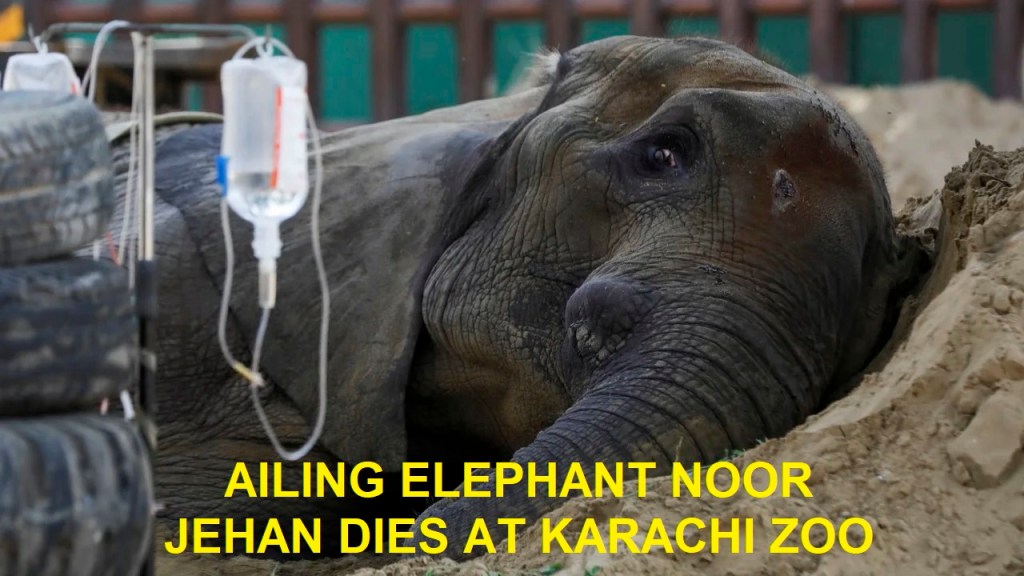
The ailing Elephant died on Saturday, vets said, calling on the ill-equipped menagerie to evacuate her “mourning” partner to avert a second tragedy.
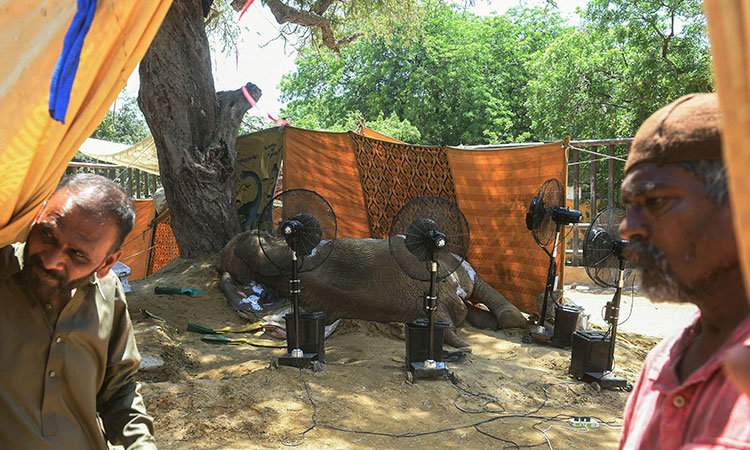
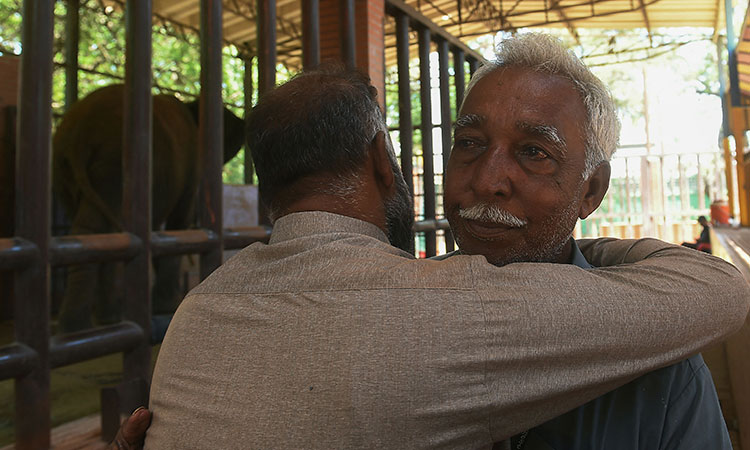
Zoo staff stand near the dead body of Noor Jehan at an enclosure in Karachi Zoological Gardens on Saturday. AFP
Pakistan’s zoos are frequently accused of being blasé about animal welfare, and the plight of Noor Jehan was cited by animal rights activists campaigning to shut the wildlife exhibition in southern Karachi city.
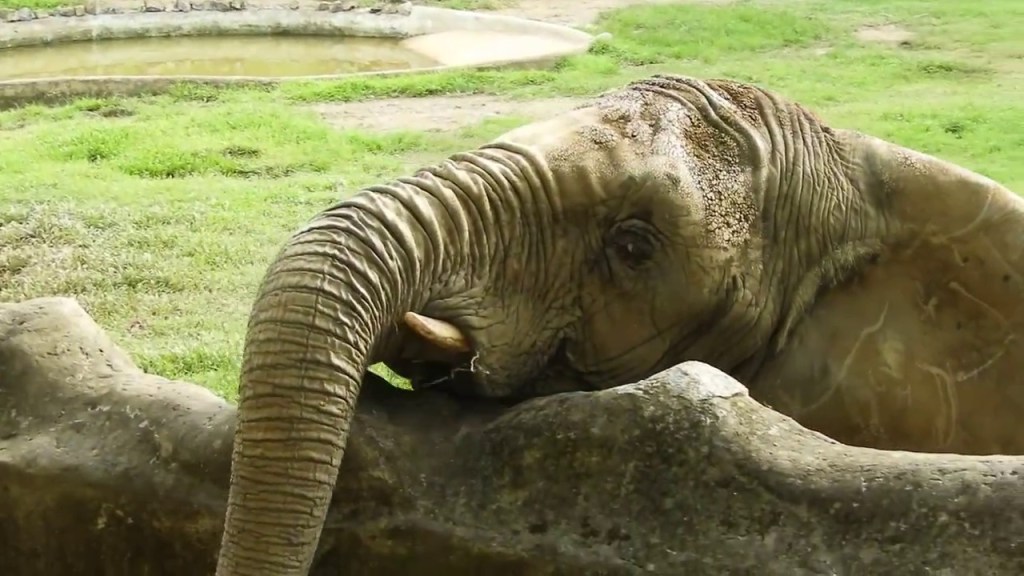
This month the 17-year-old African Elephant underwent emergency treatment for a tumour, which had crippled her back legs, but while in recovery she became trapped in her enclosure’s pool.
Zoo workers hauled out the 3.5-tonne pachyderm but she was unable to stand and lay stricken for nine days, “a life-threatening situation for Elephants”, said animal charity Four Paws International.
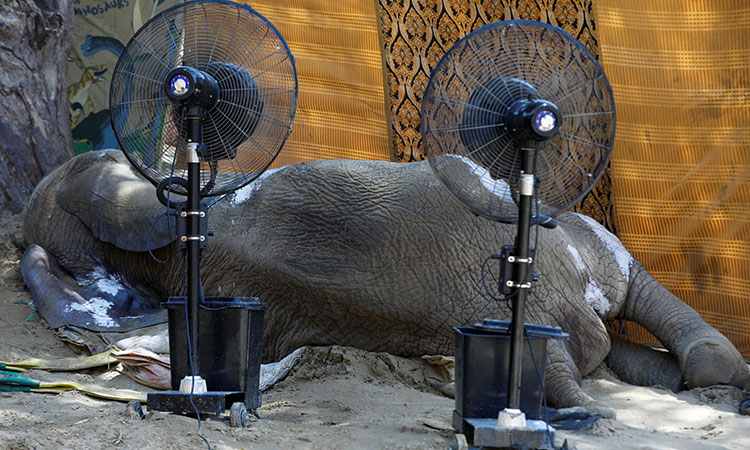
Misting fans are placed beside the body of Noor Jehan at Karachi Zoo. AP
Experts were considering euthanasia but before a decision was taken “she succumbed to her critical condition,” said a statement from the charity, which organised last-ditch medical efforts to save her.
Karachi Zoo director Kanwar Ayub confirmed Noor Jehan’s death on Saturday and an AFP reporter saw her caretaker openly weeping outside her enclosure. “It’s very sad,” said Four Paws International’s Austria-based chief vet Amir Khalil. “Noor Jehan deserved a chance.”
But the deceased Elephant’s pen pal Madhubala “should not have the same future”, he told AFP, saying he plans to arrive in Pakistan on Sunday to assess her health and organise her evacuation.
“Karachi Zoo does not fulfil international standards and is not equipped to take appropriate care of Elephants,” the Four Paws International statement said, expressing support for a forced closure.
Caretaker Yusuf Masseih (R) mourns following the death of Noor Jehan at Karachi Zoological Gardens. AFP
“It is now more urgent than ever that the remaining Elephant, who is mourning her long-time companion, is transferred to a more species-appropriate location as soon as possible, to prevent another potential tragedy.”
In April 2020, a court ordered the only zoo in Pakistan’s capital Islamabad to shut after poor facilities and mistreatment of the animals there were revealed.
The facility had drawn international condemnation for its treatment of an Asian Elephant named Kaavan, who was later airlifted to retirement in Cambodia in a project spearheaded by US popstar and actor Cher, and carried out by Four Paws.
Agence France-Presse
~~~~~(((())))~~~~~
WHAT YOU CAN DO TO HELP WILDLIFE
You can support Protect All Wildlife by donating as little as £1 – It only takes a minute but it can last a lifetime for an animal in need. Please donate below.
The Mission of Protect All Wildlife is to prevent cruelty and promote the welfare of ALL animals.
We believe EVERY animal should be treated with respect, empathy, and understanding. We raise awareness to protect and conserve wild, captive, companion and farm animals.
It is vital that we protect animals against acts of cruelty, abuse, and neglect by enforcing established animal welfare laws and, when necessary, take action to ensure that those who abuse animals are brought to justice.
Protect All Wildlife are involved in many projects to protect animals’ rights, welfare, and habitats. Money contributed to Protect All Wildlife supports ALL of our worthy programmes and gives us the flexibility to respond to emerging needs. Your donations make our work possible.
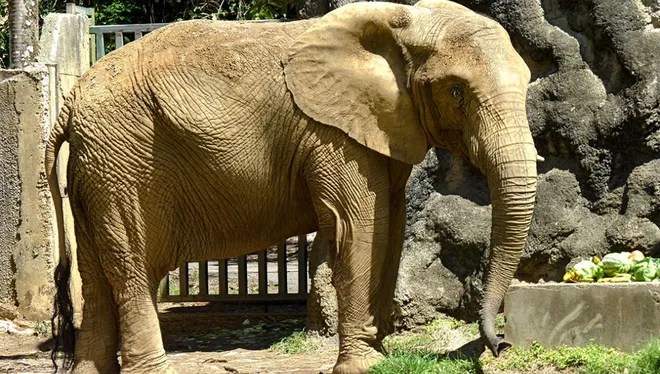
A 41-year-old African Elephant who had lived alone at a Puerto Rican zoo could get a new lease on life in Georgia.
Mundi, the only Elephant at Puerto Rico Zoo
For years, Mundi and the other animals at the Puerto Rico Zoo have been suffering in silence. In 2018, the USDA cancelled the zoo’s exhibitor’s license after citing dozens of violations including lack of veterinary care, expired food and medications, and a failure to protect animals from extreme heat and physical hazards, among other issues.
Nonprofit Elephant Aid International says they were recently asked to rescue Mundi the Elephant, who has been living in the defunct Dr. Juan A. Rivero Zoo in Mayaguez, Puerto Rico. According to NBC News, the zoo had been closed to the public since hurricanes Irma and Maria in 2017 and was forced to shut down in February after accusations of negligence and the death of animals.
MUNDI
“For nearly 35 years, she has lived alone in a small yard with access to an enclosed shelter where she is chained at night,” the nonprofit said in a statement.
Now the organization, which is located in Attapulgus, Georgia, wants to help Mundi live her best and most fulfilling life for the rest of her days.
Elephant Aid International is raising money to help transport Mundi to their sanctuary, where she can remain outdoors and live as naturally as possible.
“Mundi will fly on a dedicated 747 flight. If everything goes as planned, she will arrive at the Refuge the first week of May,” the organization said. “Mundi’s future will be spent living free at ERNA, experiencing independence for the first time ever. She will immerse herself in nature and develop deep friendships that will help her discover her authentic elephant self.”
The nonprofit’s Georgia refuge spans 850 acres of hills, forests, lakes, and creeks. It is not open to the public, though Elephant lovers can watch on the organization’s “EleCam” on Youtube.
Currently, two Elephants live in the refuge. Bo and Tarra are both Asian Elephants who were rescued after years of performing in circuses.
——–((((((()))))))——–
WHAT YOU CAN DO TO HELP WILDLIFE:
You can support ‘Protect All Wildlife’ by donating as little as £1 – It only takes a minute but it can last a lifetime for an animal in need. Please donate below.
Everyone who donates will receive a Certificate of Appreciation as a thank you for helping animals in need.
The Mission of Protect All Wildlife is to prevent cruelty and promote the welfare of ALL animals.
We believe EVERY animal should be treated with respect, empathy, and understanding. We raise awareness to protect and conserve wild, captive, companion and farm animals.
It is vital that we protect animals against acts of cruelty, abuse, and neglect by enforcing established animal welfare laws and, when necessary, take action to ensure that those who abuse animals are brought to justice.
Protect All Wildlife are involved in many projects to protect animals’ rights, welfare, and habitats. Money contributed to Protect All Wildlife supports ALL of our worthy programmes and gives us the flexibility to respond to emerging needs. Your donations make our work possible.
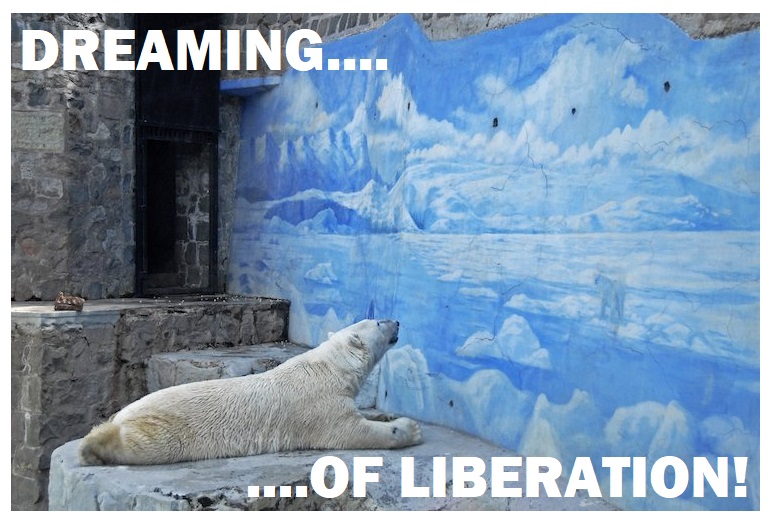
Sadly, unhealthy and dreary polar bear enclosures such as this still exist. Chile’s only polar bear “Taco” died in 2015 at the age of 18 at the National Zoo in Santiago. For years, activists protested its captivity, sometimes with blockades and burning barricades. [Photo by Aldo Fontana]
In urban areas of the western hemisphere, polar bears have lived in our midst since the Middle Ages—a result of our fascination with these charismatic carnivores. As early as 1252, Henry III of England kept a muzzled and chained polar bear, which was allowed to catch fish and frolic about in the Thames. The first undisputed documentation of polar bears in Europe shows that the bears arrived by way of Greenlandic Norse traders and from Iceland, where sea currents still sometimes maroon them. Viking entrepreneurs distributed them to royalty throughout Europe, who kept them in ostentatious menageries or passed them on as gifts to grease diplomatic gears and careers.
Beginning in 1693, the first King of Prussia, Frederick I, kept a polar bear and other large mammals for public amusement in a baroque-style hunting enclosure inspired by Roman arenas. These rare animals were too valuable to be killed but, defanged and de-clawed, were pitted against each other in faux fights. During medieval times in England, entertainers displayed all sorts of animals at carnivals and fairs. The traveling menagerie, which derived from the processions of Europe’s ambulatory monarchs and their entourages, first took to the roads at the turn of the eighteenth century. In a bid for respectability, the owner of one bragged he was doing “more to familiarize the minds of the masses of our people with the denizens of the forest than all the books of natural history ever printed.”
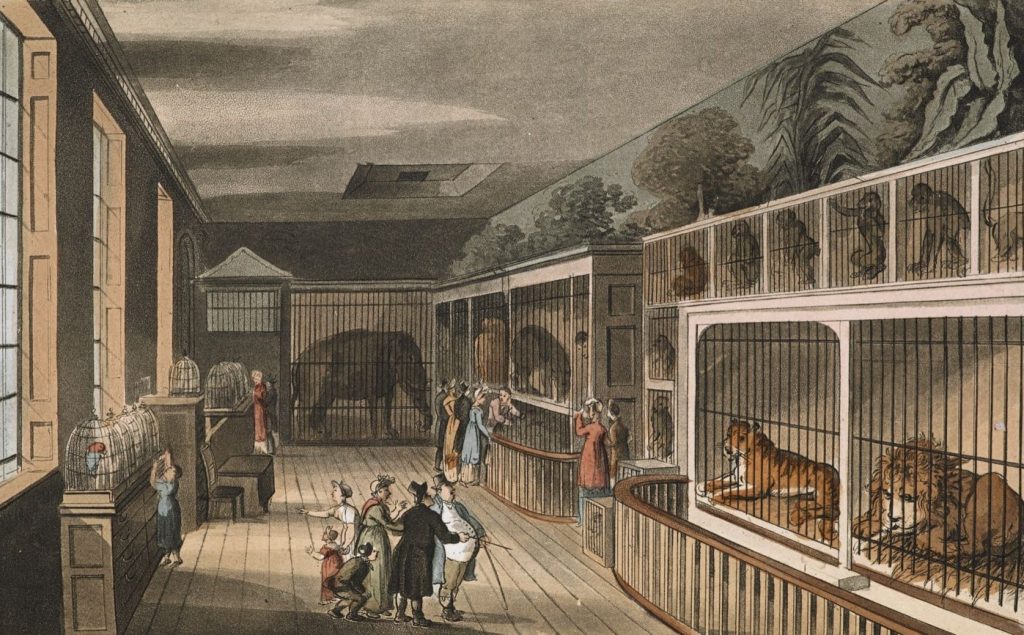
Around this same period of time, a burgeoning middle class and expeditions to the Americas, Asia, and Africa, as well as new developments in science and philosophy, brought about changes in how polar bears were displayed. Animal collections in Europe—until then largely a privilege of nobility—increasingly welcomed the public. Featured in these publicly accessible collections, polar bears drew a good deal of attention, just as they did in medieval wildlife collections or “menageries” (such as the one in the Tower of London).
The Royal Menagerie: An illustration of how the zoo within the Tower looked in 1816
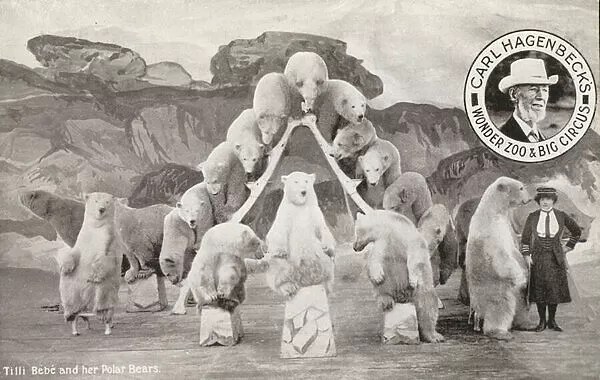
Nobody contributed more to the popularity of captive polar bears or the looks of modern zoos than Carl Hagenbeck. In 1848, Carl Hagenbeck Sr., a Hamburg fishmonger, exhibited six seals he’d received as bycatch from fishermen before selling the seals at a handsome profit. At age fifteen, Carl Hagenbeck Jr. took over what would become Europe’s most famous animal-trade business. He soon supplied zoos, menageries, and wealthy individuals, including the Kaiser. In his early twenties, Hagenbeck already ranked among Europe’s top dealers in exotics. With a nose for opportunity, he branched out into the budding entertainment industry, mounting “ethnological” and large carnivore shows as well as a circus.
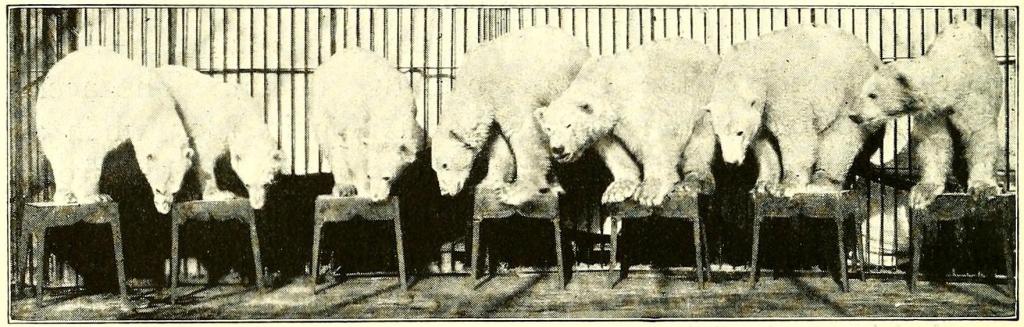
Some of the Polar Bears abducted by the Hagenbecks faced a fate worse than zoo captivity. These seven polar bears were forced to become performers by Carl’s relative Wilhelm Hagenbeck.
From their very beginnings as cultural institutions, zoos have tried to balance entertainment and education. Today, with climate change and habitat loss from development threatening the polar bear’s natural habitat, many zoos have added conservation to their mission, contributing to captive breeding programs and scientific research.
Austrian circus performer Mathilde Rupp (stage name Tilly Bébé) and her Polar Bears at Carl Hagenbeck’s Wonder Zoo in 1918.
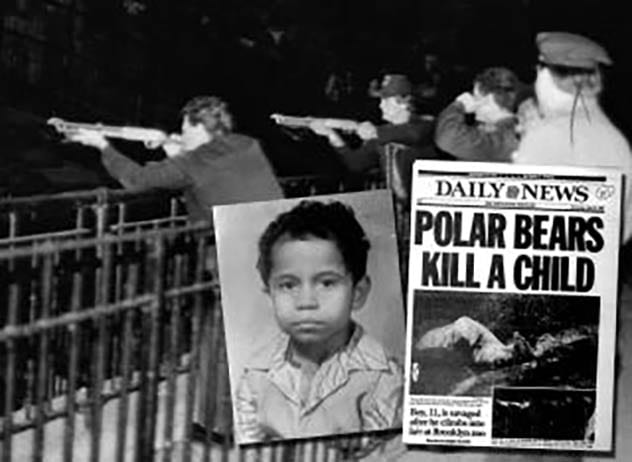
The urge to be close to the wildness (fettered as it may be) that cannot be bred out of zoo polar bears, or perhaps a desire to better get to know these ursine celebrities, has caused numerous incidents at zoos. Such trespassing is not a recent phenomenon. In 1891, a female servant from Bavaria, Karoline Wolf, climbed down a rope into the Frankfurt Zoo’s bear pit—after undressing and neatly folding her clothes—in order to be “eaten alive by a white bear.” People will forever seek operatic ways to end their lives, but accidental zoo maulings are telling because of what these incidents reveal about attitudes toward the animal. In 1987, two polar bears at the Brooklyn Zoo dragged into their den and then killed eleven-year-old Juan Perez, who had entered the enclosure after hours on a dare. The boy thought the bears were slow and afraid of people and water. After invading their space, he provoked the female, throwing bottles and sticks. Police, who suspected that more kids were in danger, riddled both bears with shotgun slugs and pistol bullets.
On May 19, 1987, 11-year-old Juan Perez and two of his friends were visiting the Prospect Park Zoo in Brooklyn, New York, after the zoo had closed for the day.
The old animal magic, that attraction of people to bears, remains strong. Drawn like foxes to a bear kill, we take risks to breach barriers that once, long ago, did not exist. Juan Perez’s death and similar cases recall an Inuit boy’s test of courage and coming-of-age rite: his first polar bear kill. The crucial difference, of course, is the cultural context. Whereas Inuit children grew up listening to their elders, respecting the animal, observing bear habits and how bears are hunted, young Juan had never been inducted into the White Bear’s ways.
A Polar Bear riding a motorcycle circa 1960. (Photo by John Cuneo)
——–((((((()))))))——–
WHAT YOU CAN DO TO HELP WILDLIFE:
You can support ‘Protect All Wildlife’ by donating as little as £1 – It only takes a minute but it can last a lifetime for an animal in need. Please donate below.
Everyone who donates will receive a Certificate of Appreciation as a thank you for helping animals in need.
The Mission of Protect All Wildlife is to prevent cruelty and promote the welfare of ALL animals.
We believe EVERY animal should be treated with respect, empathy, and understanding. We raise awareness to protect and conserve wild, captive, companion and farm animals.
It is vital that we protect animals against acts of cruelty, abuse, and neglect by enforcing established animal welfare laws and, when necessary, take action to ensure that those who abuse animals are brought to justice.
Protect All Wildlife are involved in many projects to protect animals’ rights, welfare, and habitats. Money contributed to Protect All Wildlife supports ALL of our worthy programmes and gives us the flexibility to respond to emerging needs. Your donations make our work possible.
JOHANNESBURG – The South African government moved to withdraw regulations on threatened species that would have protected vulnerable wildlife from being hunted.
Forestry, Fisheries and Environment Minister Barabara Creecy announced the decision to drop the amended protected species regulations in a government gazette notice – one day before it was supposed to be implemented
The legislation that was intended to be enforced in April was set to widen the number of species that should be protected by stricter wildlife laws.
However, the Wildlife Ranching South Africa and Professional Hunters Association of South Africa challenged the Forestry, Fisheries and Environment Department on the amended list.
After considering various issues raised by the associations, the department decided to withdraw the implementation of the newly-revised legislature.
Forestry, Fisheries and Environment Minister Barabara Creecy announced the decision to drop the amended protected species regulations in a government gazette notice – one day before it was supposed to be implemented.
After the two organisations legally challenged the motion to protect a bigger range of wildlife, Creecy reached an out-of-court settlement with the parties.
Her reasons for withdrawing the regulations protecting terrestrial and freshwater species were not clearly explained, nor did she mention the associations’ issues with the regulations.
In addition, Creecy also retracted revised legislation that would have clamped clamped down on the Trophy Hunting of Leopards and Elephant management
The revised legislation would have clamped down on the trophy hunting of Elephants
——–((((((()))))))——-
WHAT YOU CAN DO TO HELP WILDLIFE:
You can support ‘Protect All Wildlife’ by donating as little as £1 – It only takes a minute but it can last a lifetime for an animal in need. Please donate below.
Everyone who donates will receive a Certificate of Appreciation as a thank you for helping animals in need.
The Mission of Protect All Wildlife is to prevent cruelty and promote the welfare of ALL animals.
We believe EVERY animal should be treated with respect, empathy, and understanding. We raise awareness to protect and conserve wild, captive, companion and farm animals.
It is vital that we protect animals against acts of cruelty, abuse, and neglect by enforcing established animal welfare laws and, when necessary, take action to ensure that those who abuse animals are brought to justice.
Protect All Wildlife are involved in many projects to protect animals’ rights, welfare, and habitats. Money contributed to Protect All Wildlife supports ALL of our worthy programmes and gives us the flexibility to respond to emerging needs. Your donations make our work possible.














 PROTECT ALL WILDLIFE