Tiger King Star Carole Baskin To Close Big Cat Rescue And Move Wildlife To Arkansas Refuge

Baskin, who shot to fame in 2020 when her feud with Joe Exotic became a Netflix hit, has decided to close her Big Cat Rescue centre and transfer most of its wildlife from Florida to a sanctuary in Arkansas.

“The win-win solution both for our captive cats and the cats in the wild is for us to merge our cat population with the population at another existing accredited sanctuary.”  

In a memo published on the sanctuary’s website, her husband, Howard Baskin, announced that the 30-year-old center in Tampa has agreed to move most of its cats to the Turpentine Creek Wildlife Refuge.

“We will continue to fund their care for the rest of their lives,” the statement said.

The Big Cat Rescue has provided a safe haven for exotic cats that people have abandoned, mistreated, or retired from performing since 1992. Locals and tourists alike have frequented the rescue, located at 12802 Easy Street.

However, due to the COVID-19 pandemic, the rescue center closed its doors to the public and has not reopened to visitors.

 BCPSA Has Led To A Decrease In Tiger Rescues

The decision to close the center comes after the federal Big Cat Public Safety Act, or BCPSA, was passed, which prohibits cub petting and the private ownership of big cats, including Lions, Tigers, Leopards, Cheetahs, Jaguars, Cougars, or any hybrid of these species.

Howard and Carole Baskin at their Big Cat Rescue sanctuary

“With the passage of the BCPSA, we expect the need for rescues to decline over the coming decade. If the need were going to continue at the pace we saw up until a few years ago, we would be making a different decision,” read the statement.

“Having ended most of the abuse of big cats via the BCPSA, focusing on the third prong of our mission, i.e., maximizing the amount we can donate to in situ projects to save the cats from extinction, is the best way to fulfill our mission and impact the most cats going forward.”

A financial liability

Moreover, mounting expenses have also placed considerable financial pressure on the estate.

According to the Baskins, currently the property’s overhead costs are $1.5 million per year, or over $36,000 per cat.

Carol Baskin, pictured in Tiger King, has announced her Florida property is closing, with 2023 expected to be ‘the most challenging financial year in the sanctuary’s history’.

“As the population declines, it becomes an increasingly inefficient use of donor funds per cat to operate a facility like ours,” Mr. Baskin explained.

“The win-win solution both for our captive cats and the cats in the wild is for us to merge our cat population with the population at another existing accredited sanctuary.”  

He added: “Supporting our cats in larger enclosures at Turpentine Creek, at a much lower cost per cat than we incur by continuing to operate Big Cat Rescue, will free up resources to let us do much more to save big cats in the wild.”

New home for the big cats

Turpentine’s founder and president, Tanya Smith, said that her organization and Big Cat Rescue “share similar ideologies and core values, so it seemed quite logical that Carole and Howard would approach us.”

According to Smith, the sanctuary has already taken measures to accommodate the incoming cats.

“In 2021, [Turpentine] launched a capital campaign initiative to build a visitor education center and museum,” Smith said.

“Part of that project includes a five-year plan to develop another 13 acres on our 459-acre property to provide additional habitats.

“We anticipate the construction will be completed within the next six months. This increased space will not only accommodate the remaining cats at Big Cat Rescue but some additional space for other rescue needs.”

The memo also mentioned that once all the cats at the sanctuary have been moved, the Hillsborough County sanctuary property will be sold, and the proceeds will be used to “fund these species-saving projects in the wild.”

Moreover, Big Cat Rescue will also help fund the building of the enclosures at Turpentine Creek, which “is expected to cost $1.8 million.”

Tiger King
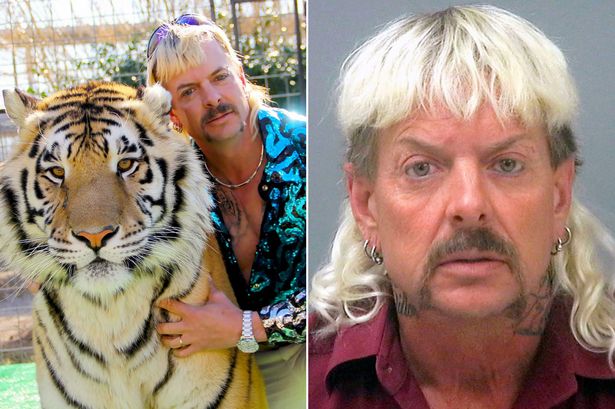
Tiger King ‘star’ Joe Exotic was sentenced to 22 years in prison for hiring a hitman to kill Bastin.

Big Cat Rescue and Carole Baskin caught global attention three years ago when Netflix released its popular Tiger King docuseries.

As well as focusing on the illegal wildlife trade, the documentary followed Baskin’s feud with Joe Exotic, an eccentric zookeeper serving a 21-year sentence for hiring hitmen to kill her.
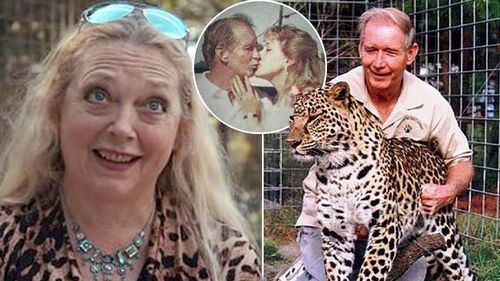
Exotic accused Baskin of murdering her ex-husband, Don Lewis, and feeding him to their Tigers

In the documentary, Exotic accused Baskin of murdering her ex-husband, Don Lewis, and feeding him to their Tigers. However, Baskin denies these accusations. Don Lewis disappeared without a trace in 1997, and authorities are still investigating his disappearance.

——–((((((()))))))——–

WHAT YOU CAN DO TO HELP WILDLIFE:

You can support ‘Protect All Wildlife’ by donating as little as £1 – It only takes a minute but it can last a lifetime for an animal in need. Please donate below.

Everyone who donates will receive a Certificate of Appreciation as a thank you for helping animals in need.
The Mission of Protect All Wildlife is to prevent cruelty and promote the welfare of ALL animals.

We believe EVERY animal should be treated with respect, empathy, and understanding. We raise awareness to protect and conserve wild, captive, companion and farm animals.

It is vital that we protect animals against acts of cruelty, abuse, and neglect by enforcing established animal welfare laws and, when necessary, take action to ensure that those who abuse animals are brought to justice.

Protect All Wildlife are involved in many projects to protect animals’ rights, welfare, and habitats. Money contributed to Protect All Wildlife supports ALL of our worthy programmes and gives us the flexibility to respond to emerging needs. Your donations make our work possible.

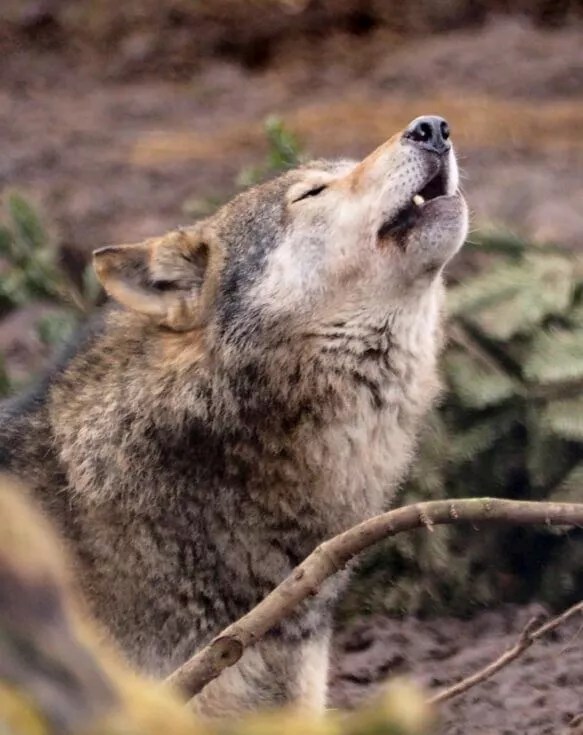
UK Wildlife Park Sparks Fury After Putting Down An Entire Pack Of Wolves After Alpha Male Died

The entire pack was euthanised due to ‘abnormal behaviour’ after Alpha male Loki died.

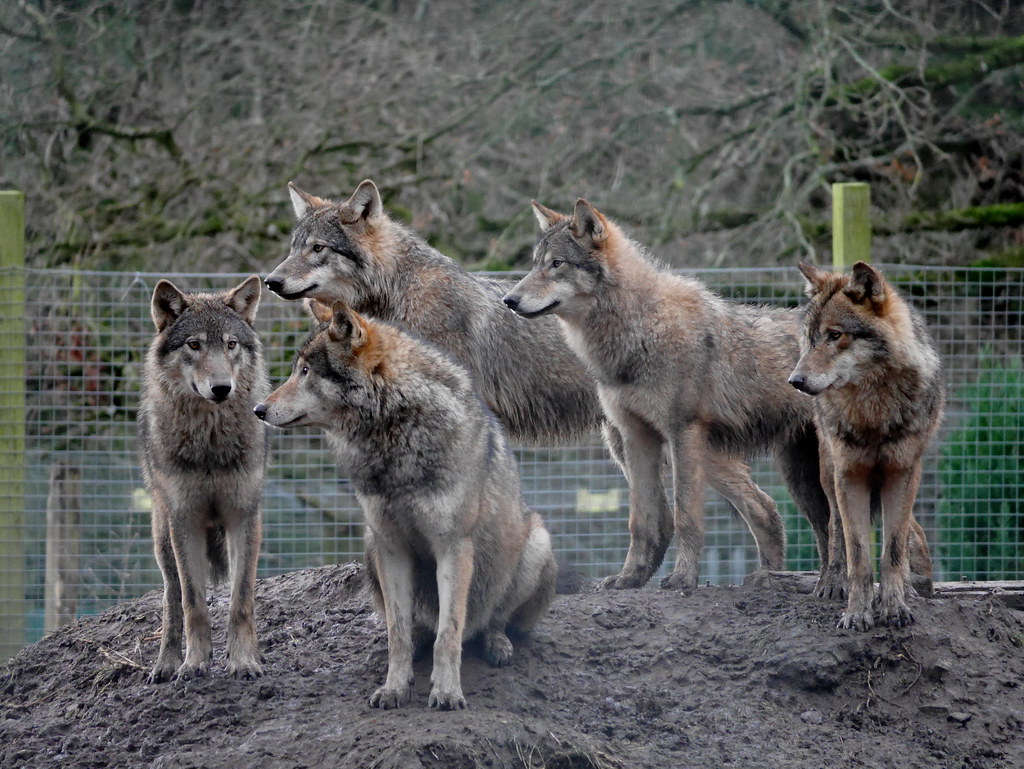
The pack at Camperdown Wildlife Centre in Dundee started displaying ‘abnormal behaviour’ when alpha Loki was put down after he underwent an operation and suffered complications leaving the team “absolutely heartbroken”.

The full statement read: “We are devastated to announce that our alpha male Wolf, Loki, has been humanely euthanised today.

Loki had to be euthanised after complications following an operation. Pic: Camperdown Wildlife Centre

“Despite an initially successful operation, there have been subsequent complications, and the difficult decision was reached to save the animal from further pain.

“The other four Wolves in the pack have been exhibiting unusually anxious and abnormal behaviour since the operation, and it is with great sadness that these wolves have also been euthanised as a result.

The entire pack was euthanised due to ‘abnormal behaviour’ after Alpha male Loki died.

“This course of action was a last resort, and our team is absolutely heartbroken. We ask you for your kind consideration at this time.

The wildlife centre went on to thank the public and confirmed it’s closure on Wednesday as the team “processed recent events”.

The statement added: “We thank members of the public who have sent messages of support and for their kind consideration during this painful time for our team.

“We can assure everyone that this difficult decision was taken following expert advice and consultation with the relevant professional bodies.

“Camperdown Wildlife Centre will be closed to the public on Wednesday to allow our colleagues to process recent events. We thank-you for your patience and understanding.”

In a similar incident in 2006, a pack of Wolves was culled at Highland Wildlife Park by operator Royal Zoological Society of Scotland – after the animals stopped displaying “normal behaviour”.

While many expressed sympathy for the park and its employees, others were outraged. The move has sparked an outcry from members of the public with some left angry and branded the mass euthanising as “extreme”.

One local resident has now started a petition demanding an inquiry into why the entire pack was put down.

Online, one visitor wrote: “I’m so sorry to read this news and my thoughts are with all involved but if you wouldn’t mind could more of an explanation be given into why the 4 others were destroyed?

LOKI

“This is heartbreaking to read and I can’t help but think the public should be given more information to help with understanding this dreadful news.”

“Very disappointed you euthanized all 5,” a comment said. “It seems like the animals weren’t even given time to grieve or acclimatise to the death of their family member. What a tragic loss of life.”

Another added: “I think the Wolves should have been given some time before euthanasia for the whole pack. That seems a bit extreme. Can you please explain just anxiety and abnormal behaviour in a more direct way.”

“We can assure everyone that this difficult decision was taken following expert advice and consultation with the relevant professional bodies,” the park commented.

The way Wolves behave in captivity is very different from what researchers see in the wild, according to the Scientific American.

The “Alpha Wolf” concept is at best misunderstood by the public and is a phenomenon far more common among captive packs than those roaming free, wolf expert L. David Mech told the publication.

——–((((((()))))))——–

WHAT YOU CAN DO TO HELP WILDLIFE:

You can support ‘Protect All Wildlife’ by donating as little as £1 – It only takes a minute but it can last a lifetime for an animal in need. Please donate below.

Everyone who donates will receive a Certificate of Appreciation as a thank you for helping animals in need.

The Mission of Protect All Wildlife is to prevent cruelty and promote the welfare of ALL animals.

We believe EVERY animal should be treated with respect, empathy, and understanding. We raise awareness to protect and conserve wild, captive, companion and farm animals.

It is vital that we protect animals against acts of cruelty, abuse, and neglect by enforcing established animal welfare laws and, when necessary, take action to ensure that those who abuse animals are brought to justice.

Protect All Wildlife are involved in many projects to protect animals’ rights, welfare, and habitats. Money contributed to Protect All Wildlife supports ALL of our worthy programmes and gives us the flexibility to respond to emerging needs. Your donations make our work possible.
Street Dogs In Jordan Are Being Subjected To The Most Unimaginable Cruelty And Torture. It Has To Stop NOW!

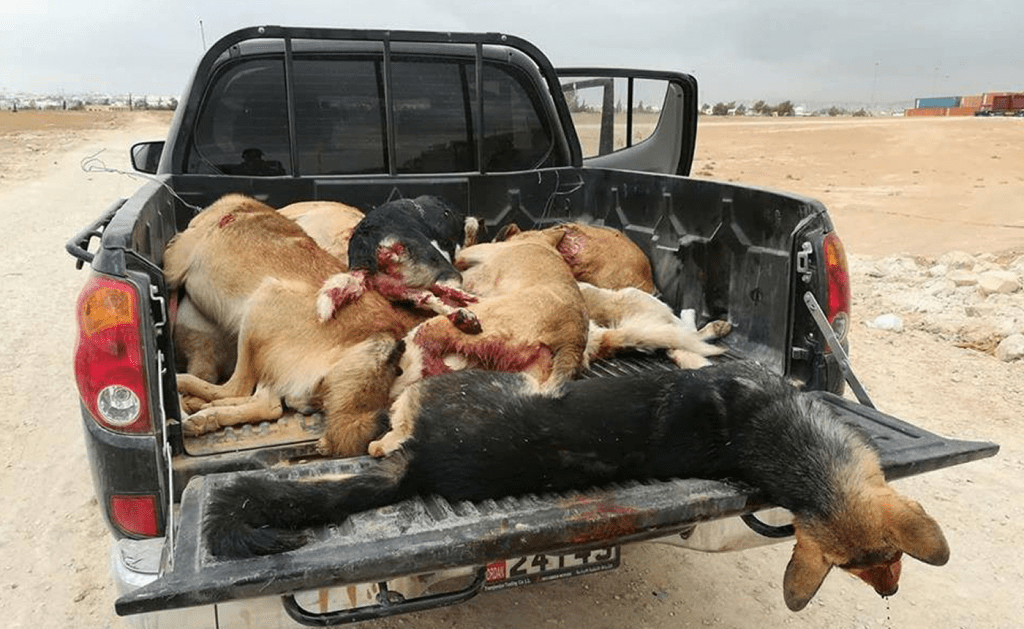
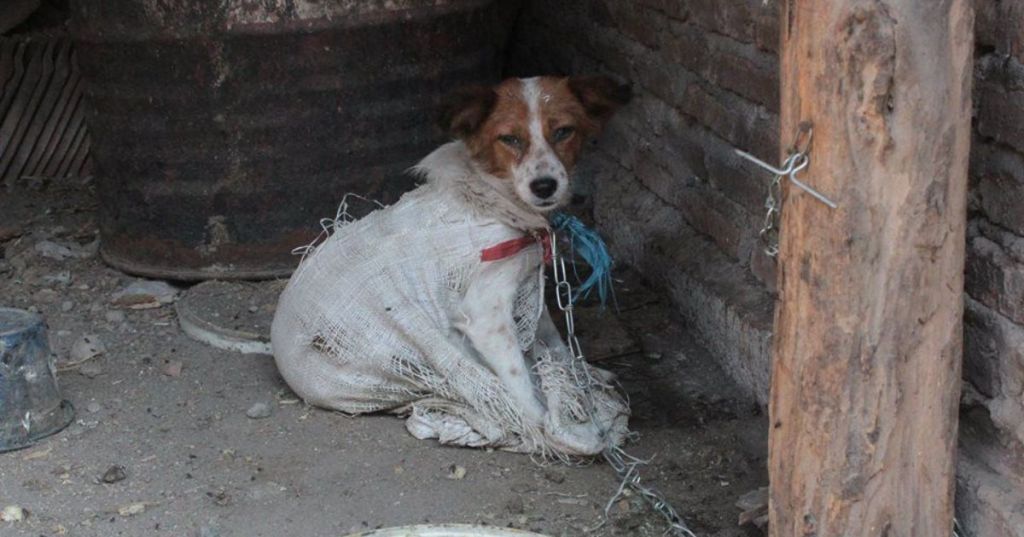
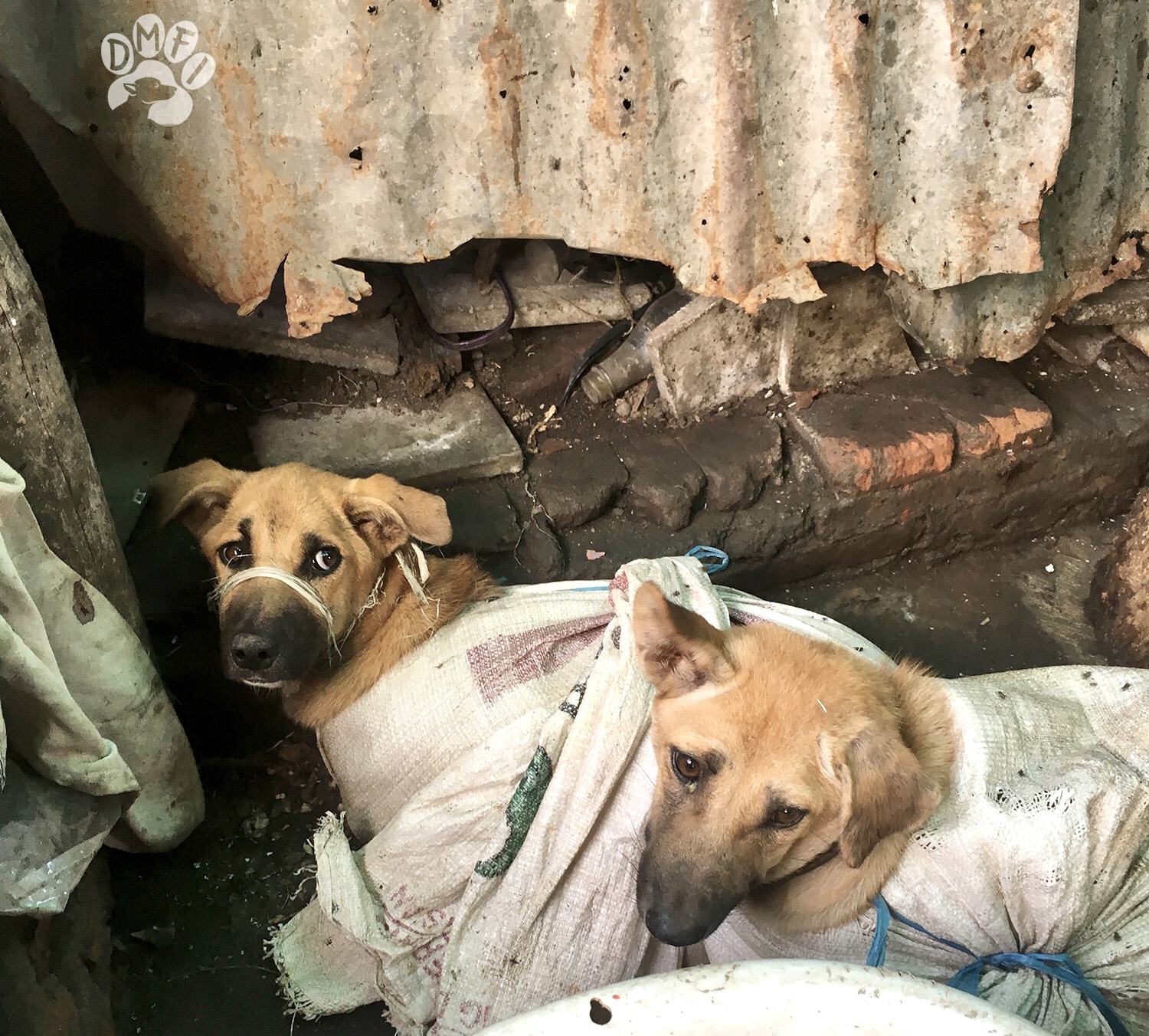
A tragedy is unfolding in Jordan that demands immediate action. Countless innocent dogs are being subjected to the most unimaginable cruelty and torture – they are being beaten, burned, stabbed and even buried alive.

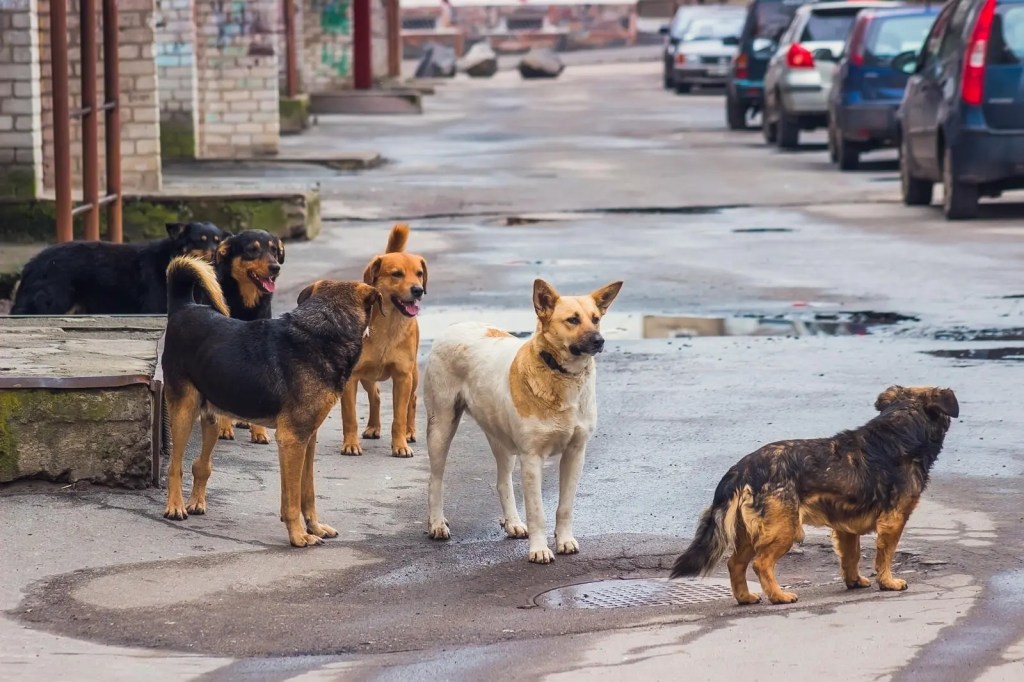
The issue of stray dogs has divided Jordanians into two camps: One highly supportive of animal rights, the other claiming freedom of movement is a basic human right impeded by the presence of wandering canines.

A recent spike in attacks by street dogs across Jordan has renewed the controversy over how to deal with the problem of strays, as some are calling on the authorities to eliminate the dogs, while others are pushing for sterilization and vaccination measures.

Orphaned Puppies

It all started when a video was posted of a dog attacking a child. The video is not even from Jordan, but local media outlets are spreading it to incite fear and hatred towards dogs, portraying them as vicious killers. More videos of callous acts to dogs followed

Activists in the field of animal protection are urging the authorities to deal with the Kingdom’s stray dog problem in a scientific manner, without violating animal rights by killing them.

Horrible as it is, things like this are happening every day in Jordan. Some young men and children see killing dogs as a “fun” and seem to compete to find the most barbaric way to inflict suffering. Now, a media frenzy is making things worse.

Dead Street Dogs Piled Indiscriminately On The Back Of A Pick-Up Credit: Network For Animals

The issue of stray dogs has divided Jordanians into two camps: One highly supportive of animal rights, the other claiming freedom of movement is a basic human right impeded by the presence of wandering canines.

he general manager of the Al-Kanaani Company for Animal Rights, Manar Rahahleh, told Jordan News that the number of street dogs has been increasing in Jordan because of the dogs’ mating season. In addition, a large number of dogs entered the Kingdom through the Syrian border after the devastating earthquakes that recently struck the neighbouring country.

The recent earthquakes have not only led to an influx of strays from Syria, but have also frightened the dogs, making them more tense.

The survivors of this genocide must have a haven, food and the best possible care. They need to know that they are loved, that they are valued and that they are safe. It is our duty as human beings to come together and provide the support they need to heal and recover from this trauma.

Street Dogs In Jordan.

Animal rights activist Hazem Yaqoub echoed Rahahleh’s statements, noting that, during mating period, dogs become more ferocious.

Furthermore, the recent earthquakes have not only led to an influx of strays from Syria, but have also frightened the dogs, making them more tense.

“Killing animals will not solve the problem,” Yaqoub explained, as one female dog and her babies can have over 67,000 puppies in a 10-year timeframe.

MP Abdel Salam Al-Thiyabat offered a different solution to the problem. He told Jordan News that local municipalities should catch dogs, cage them, and export them abroad.

“We are all for animal rights, but not at the expense of citizens,” he said. “People and children in a state of panic. If the Jordanian government allowed the dogs to be killed, I would suggest it, because the dogs have become a source of anxiety and fear.”

Poisoning and killing dogs “is not an appropriate solution, because it contributes to an environmental imbalance”, Rahahleh said. Instead, “the solution is to catch stray dogs, sterilize them, and vaccinate them”.

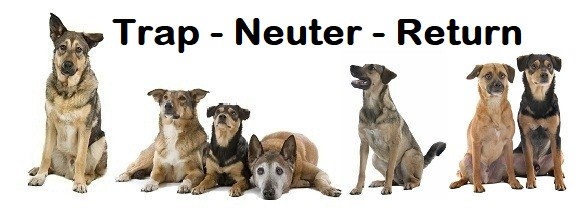
The best way to help community dogs is through Trap-Neuter-Return (TNR). TNR ensures no new puppies are born, stabilizes dog populations, provides vaccines, and improves dogs’ lives. It also stops the behaviors and stresses associated with mating such as yowling, spraying, and fighting.

TNR is practiced all over the world. It’s considered best practice and is good public policy.

——–((((((()))))))——–

WHAT YOU CAN DO TO HELP WILDLIFE:

You can support ‘Protect All Wildlife’ by donating as little as £1 – It only takes a minute but it can last a lifetime for an animal in need. Please donate below.

Everyone who donates will receive a Certificate of Appreciation as a thank you for helping animals in need.

The Mission of Protect All Wildlife is to prevent cruelty and promote the welfare of ALL animals.

We believe EVERY animal should be treated with respect, empathy, and understanding. We raise awareness to protect and conserve wild, captive, companion and farm animals.

It is vital that we protect animals against acts of cruelty, abuse, and neglect by enforcing established animal welfare laws and, when necessary, take action to ensure that those who abuse animals are brought to justice.

Protect All Wildlife are involved in many projects to protect animals’ rights, welfare, and habitats. Money contributed to Protect All Wildlife supports ALL of our worthy programmes and gives us the flexibility to respond to emerging needs. Your donations make our work possible.
Victory! Jakarta Bans The Dog & Cat Meat Trade Making It The 21st Jurisdiction In Indonesia To End The Barbaric Industry

Earlier this month, authorities from the Special Area of the City of (DKI) Jakarta, the most populous metropolitan area in Indonesia, which includes the capital city, announced they have banned the dog and cat meat trades, which will save the lives of an estimated 340 dogs and countless cats per day.

Jakarta Bans The Dog & Cat Meat Trade Credit: Jean Chung / HSI

In a significant victory for animal welfare, Jakarta, Indonesia’s bustling capital city, has officially banned the dog and cat meat trades. This decision will save an estimated 340 dogs and countless cats each day. The ban comes after an intensive campaign by Dog Meat Free Indonesia, a coalition that includes Humane Society International (HSI), Jakarta Animal Aid Network, Four Paws, Animals Asia, and Animal Friends Jogja. The coalition exposed the extreme cruelty and zoonotic disease risks inherent in these trades. Jakarta is now the 21st jurisdiction in Indonesia to prohibit such practices.

A Dog And Cat Meat Market In Indonesia

Hollywood actress Kim Basinger, comedian Ricky Gervais and British actor Peter Egan have joined campaigners from the Dog Meat Free Indonesia coalition in celebrating news that Indonesia’s capital city of Jakarta has banned the dog and cat meat trade. The stars sent a video message after the Food Security, Marine and Agriculture Department confirmed Jakarta now becomes the 21st jurisdiction in Indonesia to ban the trade. The move comes in response to an intensive campaign by DMFI, exposing the severe animal cruelty and risks to human health from zoonotic diseases such as rabies.

A Dog Awaits Its Fate – Credit: Dog Meat-Free Indonesia

Across Indonesia, more than one million dogs and countless cats are killed every year for meat, most of them stolen pets or strays, snatched from the streets and illegally trafficked on grueling journeys to supply demand hotspots. Many die during this ordeal from heatstroke, dehydration or injuries inflicted during capture and transport. Those who survive are taken to makeshift slaughterhouses where they are bludgeoned and killed in full view of other dogs. DMFI investigations suggest that in Jakarta, an estimated 9,520 dogs per month or around 340 dogs every day are killed for meat.

The Ban Is Too Late For These Dogs -Credit: Dog Meat-Free Indonesia

Lola Webber, director of campaigns to End Dog Meat at Humane Society International, a DMFI member group, commented:

“A dog and cat meat trade ban in Indonesia’s capital city Jakarta is hugely significant, not just because of the thousands of animals killed every year for the city’s trade, but also because it recognizes that this cruel trade risks spreading rabies. Jakarta’s rabies-free status is jeopardized every day that the dog meat trade continues to traffic dogs of unknown disease status into the city.” 

The dog meat trade is now banned in 21 cities and regencies across Indonesia. The regencies are Karanganyar, Sukoharjo, Semarang, Blora, Brebes, Purbalingga, Mojokerto, Temanggung, Jepara and Magelang. The cities are Salatiga, Malang, Semarang, Magelang, Blitar, Mojokerto, Medan, Surabaya and now, Jakarta.

Globally, intolerance of animal cruelty and concern for human health is seeing an ever-growing number of countries, territories, provinces, regencies and cities passing explicit laws prohibiting the trade in and slaughtering and consumption of dogs and cats.

——–((((((()))))))——–

WHAT YOU CAN DO TO HELP WILDLIFE:

You can support ‘Protect All Wildlife’ by donating as little as £1 – It only takes a minute but it can last a lifetime for an animal in need. Please donate below.

Everyone who donates will receive a Certificate of Appreciation as a thank you for helping animals in need.

The Mission of Protect All Wildlife is to prevent cruelty and promote the welfare of ALL animals.

We believe EVERY animal should be treated with respect, empathy, and understanding. We raise awareness to protect and conserve wild, captive, companion and farm animals.

It is vital that we protect animals against acts of cruelty, abuse, and neglect by enforcing established animal welfare laws and, when necessary, take action to ensure that those who abuse animals are brought to justice.

Protect All Wildlife are involved in many projects to protect animals’ rights, welfare, and habitats. Money contributed to Protect All Wildlife supports ALL of our worthy programmes and gives us the flexibility to respond to emerging needs. Your donations make our work possible.

Iconic Lion Bob Junior, Known As ‘The King Of The Serengeti’, Killed By Rivals.

A Lion named Bob Junior, who was known as the “King of the Serengeti,” has been killed by rival Lions. The fearsome big cat, also known as Snyggve, had dominated his territory for seven years alongside his brother, Tryggve, who is also presumed dead.

Bob Junior has ruled his territory for seven years. Credit: James Lewin.

“These incidents normally happen when the head of a pride becomes old or sometimes when the other male Lions are not happy with his control over a large territory,” Fredy Shirima, a Serengeti conservation officer, told the BBC.

Tour operators and visitors to the national park have paid tribute to the “legendary” Bob Junior – also known as Snyggve – online.

The “photogenic” and “coolest cat” in the Serengeti, Bob Jr had a fearsome reputation among his rivals and had ruled for seven years with the help of his brother, Tryggve.

The Serengeti is home to approximately 3,000 Lions. National Geographic reports adult males can up to around 12 years.

Bob Junior, who was named after Bob Marley, was thought to be around 10 years old. He had a distinctive black mane and was often spotted by wildlife groups touring the park.

Online tributes called him “Legendary” and “Iconic.”

He reportedly did not put up a fight when he was attacked on Saturday. 

Bob Junior’s Last Stand – He Fought To The End!

Wildlife officials are preparing a special burial on a day yet to be announced.

RIP Bob Junior – Credit: Giles Laurent.

WHAT YOU CAN DO TO HELP WILDLIFE:

You can support ‘Protect All Wildlife’ by donating as little as £1 – It only takes a minute but it can last a lifetime for an animal in need. Please donate below.

Everyone who donates will receive a Certificate of Appreciation as a thank you for helping animals in need.

It Is Hard To Believe That Five Years Have Passed Since Sudan Died But A New Film Highlights A Hope For Rhinos.

He remains very much at the forefront of our minds. Not many Rhinos live to such an age but Sudan led an extraordinary life and his legacy, as the last male of the species, continues to live on, reminding us of the disastrous impact human ignorance and greed has on all wildlife species.

Joseph Wachira, a keeper at the Ol Pejeta Conservancy in Kenya, says goodbye to Sudan, the last male Northern White Rhino. Credit: Ami Vitale

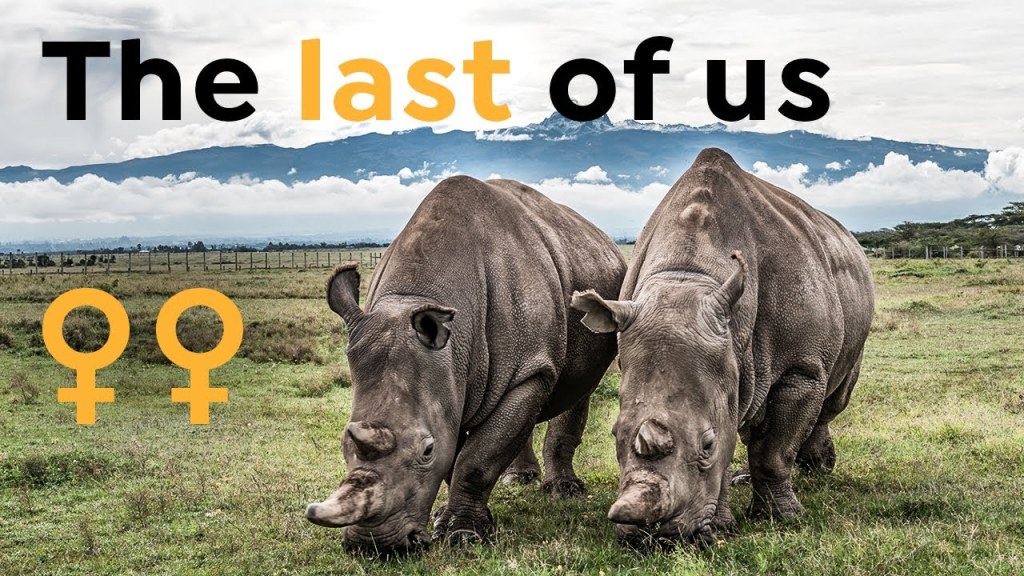
Though the Northern White Rhino is functionally extinct – following the loss of Sudan, the last known living male, five years ago this week – conservationists are finding hope in a technique that is creating new embryos using genetic material taken from him and two remaining females.

To mark the occasion, photographer Ami Vitale has released a new short film called “Remembering Sudan,” which will be screened at upcoming film festivals.

“Our fate is linked to the fate of animals. What happens next is in all of our hands.” said Ami Vitale.

Sudan, a 45-year-old rhino believed to be the world’s last surviving male Northern White Rhino, died five years ago at the Ol Pejeta Conservancy in Kenya on March 19, 2018. He had been battling ill health for months, and after his condition worsened considerably, veterinarians decided to euthanize him.

Since then, an international consortium of scientists and conservationists known as the BioRescue Project – a consortium made up of Leibniz Institute for Zoo and Wildlife Research (Leibniz-IZW) in Germany; Safari Park Dvůr Králové in the Czech Republic; the Kenya Wildlife Service; and Ol Pejeta Conservancy in Kenya – have been working to bring the species back from extinction through in vitro fertilization and stem cell research. They have already created 24 viable embryos using eggs from the last two female White Rhinos that are still alive, and the frozen sperm of deceased male Northern White Rhinos like Sudan.

Fatu (left) and Najin (right) are the last two Northern White Rhinos left on the planet. They are both female and are a mother-daughter duo. Credit: Gurcharan Roopra

To mark the occasion, photographer Ami Vitale has released a new short film, Remembering Sudan, which will be screened at upcoming film festivals and can be viewed online, here’s the trailer:

Remembering Sudan: The Trailer

Though the Northern White Rhino is functionally extinct following the loss of the last male of the species, conservationists like Vitale find great hope in BioRescue, and in the power of humanity to react positively:

“What happens next is in all of our hands. What’s going to save us all is to get beyond our routine ways of thinking. Wonder is what allows us to reimagine our future together. Wonder allows us to believe that we can fundamentally change the course we are currently on.” Vitale said when reflecting on the anniversary.

“Our fate is linked to the fate of animals. Without Rhinos and other wildlife, we suffer more than loss of ecosystem health. We suffer a loss of imagination, a loss of wonder, a loss of beautiful possibilities,” she said.

Readers can view the film, learn more and support the project at its website, www.rememberingsudan.org..

WHAT YOU CAN DO TO HELP WILDLIFE:

You can support ‘Protect All Wildlife’ by donating as little as £1 – It only takes a minute but it can last a lifetime for an animal in need. Please donate below.

Everyone who donates will receive a Certificate of Appreciation as a thank you for helping animals in need.

In Memory Of Kiska, An Orca Imprisoned At Marineland And The Last Captive Orca In Canada, Who Swam Alone In Her Tank For More Than A Decade.

Kiska, the Orca dubbed the “World’s Loneliest Whale,” died recently after 44 years in captivity. Her life was a tragic one, and her death could be seen as a sort of release. She was believed to be 47 years old, although her exact age isn’t positively known. She was the last captive Killer Whale in Canada.

In 1979, when Kiska was three years old, she was caught in Icelandic waters and taken to MarineLand, a theme park in Niagara Falls, Ontario, Canada. Kiska was captured along with Keiko, the whale made famous in the movie Free Willy, and for a few years in the ’80s, the pair shared a pool. Kiska spent 40 years there, swimming in a concrete tank.

For the last 12 years of her life, Kiska was alone in her tank. Orcas are social animals that live in tight-knit pods, hunting together and communicating with each other. Her tank at MarineLand was bare and featureless, and her depression was caught on film recently in a hard-to-watch video that went viral.

Kiska’s death comes four years after Canada passed bill S-203, banning the captivity and breeding of Whales, Dolphins and Porpoises. Although the new law was too late for Kiska – individuals already in captivity were excluded from protection – activists say her story was instrumental in drawing public attention to the plight of captive marine mammals.

In one of the last recorded videos of her, she drifts listlessly in aquamarine water as a boy behind the glass wall tries to get her attention. “Kis-kaaa! Kis-kaa! Kis-kaaa!” he calls as the Whale floats by, seemingly oblivious.

The heartbreaking footage below shows Kiska floating listlessly and hurling herself against the walls of her cramped tank. This unnatural behaviour was the result of stress, frustration, distress, and loneliness caused by cruel confinement.

Kiska’s harrowing story is not unique – around the world, Orcas just like her are languishing in marine parks so that humans can gawk at them and watch them do demeaning tricks.

Help end their suffering. Speak out against the exploitation of Whales and Dolphins in tourism.

WHAT YOU CAN DO TO HELP WILDLIFE:

You can support ‘Protect All Wildlife’ by donating as little as £1 – It only takes a minute but it can last a lifetime for an animal in need. Please donate below.

Everyone who donates will receive a Certificate of Appreciation as a thank you for helping animals in need.

A Ban On The Import Of Animal Hunting Trophies Into The UK Set To Become Law.

Plans to ban imports of animal hunting trophies to Great Britain are set to become law.

The government has backed legislation which would stop hunters bringing back body parts of thousands of species, including Lions, Rhinos, Elephants and Polar Bears, killed abroad.

Tory MP Henry Smith, who proposed the bill, said it would help conserve the world’s most endangered species.

It was approved by MPs and will now face further scrutiny in the Lords.

As it has the support of the government, the Hunting Trophies (Import Prohibition) Bill is likely to become law.

Every year, hunters from the UK travel abroad, often to southern Africa, and pay thousands of pounds to legally shoot animals, such as Lions and Elephants.

Under current rules, with the right paperwork, they can then bring trophies, such as stuffed heads or horns, back to the UK.

Campaigners backing the bill had feared it could be blocked after more than 30 amendments were tabled by two Conservative MPs, Sir Christopher Chope and Sir Bill Wiggin.

However, after the government accepted two of their proposals – to establish an advisory board on hunting trophies and to limit the power of the secretary of state to add new species to the list the ban would apply to – the pair dropped their other demands for further changes to the bill.

Critics of the plans have argued that profits from hunting are used to pay for conservation projects in African countries and can ultimately help to protect endangered species.

Sir Bill, the Tory MP for North Herefordshire, told the Commons there were concerns that removing the revenue supplied by trophy hunters could “open the floodgate to poachers, who will cause far more cruelty and pain to the animals and will pose a far greater threat to endangered species”.

However, animal welfare charities have rejected this, arguing that hardly any of the revenues from trophy hunting ever reach local communities.

Environment Minister Trudy Harrison told MPs: “I do recognise that some of the income from trophy hunting has contributed towards the protection of habitat and the prevention of poaching.

“But to bring back the body parts of endangered species… is not the way forward.”

Sir Bill also suggested the legislation was a “a neo-colonial attempt to control conservation management programmes of African democratic countries”.

This was denied by Mr Smith, who insisted: “This is about the values that we in Britain have, that we do not want to be part of a trade in endangered species’ body parts.

“We are not telling other countries how to run their trade, or their conservation or hunting policies.”

Some MPs, including the Democratic Unionist Party’s Sammy Wilson, also raised concerns Northern Ireland could become a “back door” for hunting imports as the law would not apply there.

Ms Harrison said the government would do “everything we possibly can” to ensure Northern Ireland was not a “stepping stone for imports to Great Britain”.

Explorer Sir Ranulph Fiennes, singer Ed Sheeran and actress Dame Judi Dench are among the celebrities who have backed the proposed legislation.

Animal charities welcomed the progress of the bill, with Born Free saying it sent “a clear signal that, with wildlife in crisis, allowing rich people to kill wild animals for kicks has no place in the modern world”.

Humane Society International said it was “relieved” only two amendments to the bill were accepted, although the charity added that it was disappointed one removed the power of the environment secretary to add other species in need of protection to the legislation.

WHAT YOU CAN DO TO HELP WILDLIFE:

You can support ‘Protect All Wildlife’ by donating as little as £1 – It only takes a minute but it can last a lifetime for an animal in need. Please donate below.

Everyone who donates will receive a Certificate of Appreciation as a thank you for helping animals in need.

Ruben The Lion Gets His Roar Back! The Lonely Lion Fell Silent For Years In An Abandoned Zoo In Azerbaijan But Now Has A Bright Future Ahead Of Him.

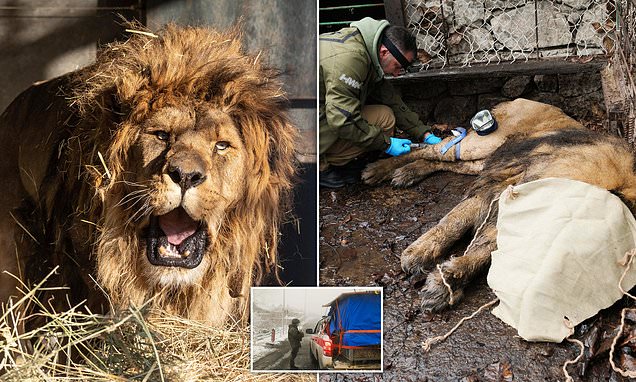
For five years, Ruben the lion’s roars went unanswered as the last animal in an abandoned zoo.

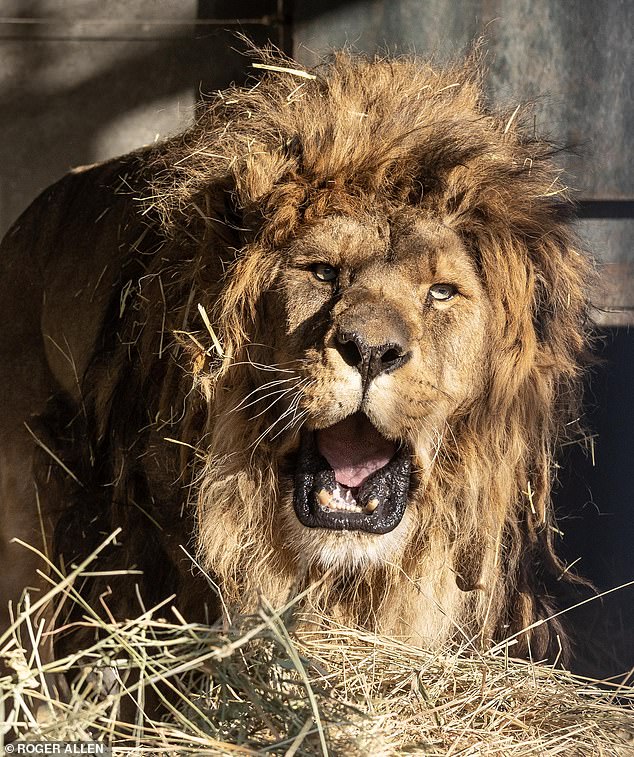
So scarred was the 15-year-old by solitary confinement in a tiny cage, he fell silent. But now Ruben is learning to roar again with the help of the British animal charity which rescued him.

Jan Creamer, of Animal Defenders International, said the zoo in the Artsakh Republic, a self-declared republic within Azerbaijan, had been owned by an Armenian businessman.

RUBEN THE LION WHO LOST HIS ROAR

After the businessman, died all the other animals were rescued. ‘Sadly, there was no room for Ruben,’ she said. ‘Lions live in family groups and roaring is chatting to them.

‘He is still trying to roar. Ruben has never felt the sun on his back or the wind in his face.’

Now he will soon find a home at a sanctuary in South Africa where, his rescuers hope, he will roar again.

The rescue operation had to be meticulously planned and strategically timed to avoid inflaming tensions in the region, which is patrolled by a Russian peace-keeping force.

The former businessman’s family were keen for Ruben to have a better life and agreed to the move, which had to negotiate multiple armed check-points.

Ruben was sedated and under the care of a vet for the nine-hour journey to safety in a bear sanctuary near Armenia’s capital, Yerevan, run by the Foundation for Preservation for Wildlife & Cultural Assets (FPWC).

He will soon be taken to an ADI sanctuary in South Africa for Lions and Tigers.

Ruben, who was born in captivity in the zoo, has been left with health issues from his years spent alone with little food.

But his coat, once matted with mud and moulting, is getting its shine back as he gets used to a healthy diet and the comfort of a hay-bed, two heated rooms and a 30ft by 15ft enclosure.

‘This is more space than he has ever known but the real transformation will be in Africa where he will eventually have access to 2.5 acres of natural habitat,’ Ms Creamer said.

‘His life-long restrictions have weakened his muscles and there appears to be neurological damage to his spine and head and one leg is wobbly and drags. But we are building him up with exercise and food and he is responding well.

‘Ruben is now engaging and interacting with people which is wonderful to see. His calls went unanswered for five years but we are confident that he will roar again.’

What you can do to help wildlife:

You can support ‘Protect All Wildlife’ by donating as little as £1 – It only takes a minute but it can last a lifetime for an animal in need. Please donate below.

Everyone who donates will receive a Certificate of Appreciation as a thank you for helping animals in need.

LIVING HELL: ‘World’s Saddest Lion’ Looking Like A Walking Skeleton In Enclosure At Chinese Zoo

A frail Lion that looks like a walking skeleton has become too weak to chew.

Shocking footage showed the skinny lion walking through its enclosed cage 

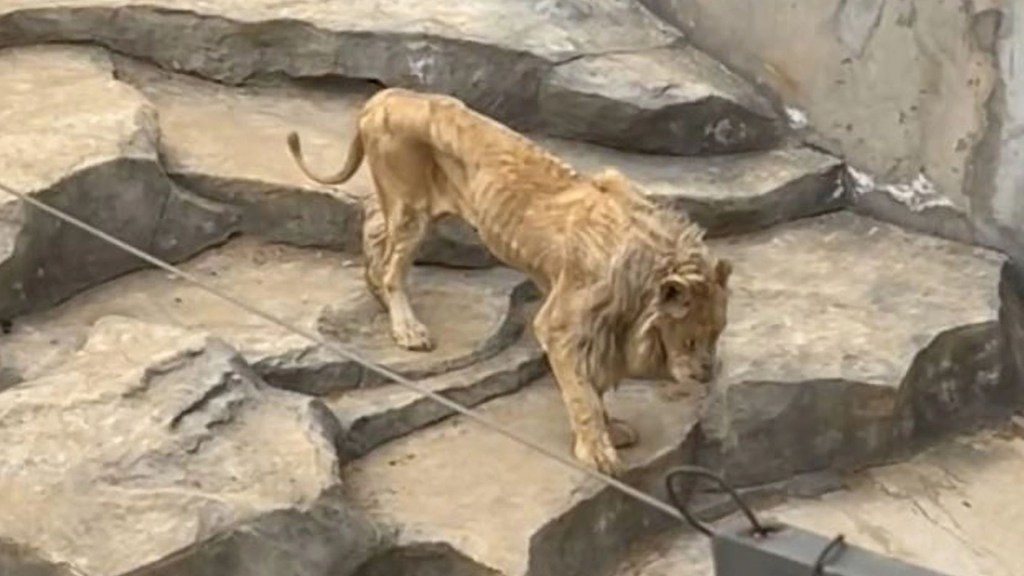
The Lion, called Ala, is so emaciated he can barely walk through his enclosure at the Jinniu Lake Safari Park in Nanjing, China with outraged social media users accusing the zoo of inflicting suffering on the lion and starving their animals.

Shocking footage has emerged of a starving lion which is barely more than skin and bones at a Chinese zoo.

Many have been left furious and disturbed by the sight of the big cat who looks so malnourished it is struggling to carry out basic functions such as walking.

In the horrifying video viewers can see the Lion’s ribs because it is so thin.

The clip – shared later on Douyin, China’s version of TikTok – shows the ultra-skinny Lion wobbling down a walkway.

The lion is so frail he can barely walk

It caused outrage among viewers who accused the zoo of not taking proper care of the feeble feline.

One user said: ‘This is too much suffering. If you can’t afford to feed it, send it to a different zoo that can.

‘Why let him suffer? It should have been left living in nature.’

Meanwhile, another added: ‘This zoo is too much, starving the lions like this.’

Officials at the zoo later attributed the lion’s shocking appearance to its old age because he can no longer chew his food. 

They claimed that the 25-year-old big cat would be 80 if he was a human.

Officials say he is fed a special diet of liquid protein and small cuts of meat and is watched over by specially trained vets and keepers in a private cage.

The zoo added: ‘Usually, we let it out for a walk in the morning or evening.’

Despite the concerning footage, Jinniu Lake Safari Park is ranked in the top five family-friendly things to do in Nanjing on Trip.com.

It has an overall rating of 4.2 out of 5 but there are also hundreds of negative reviews, with some visitors citing the zoo’s ‘poor management’ and others complaining of the huge costs.

What you can do to help wildlife:

You can support ‘Protect All Wildlife’ by donating as little as £1 – It only takes a minute but it can last a lifetime for an animal in need. Please donate below.

Everyone who donates will receive a Certificate of Appreciation as a thank you for helping animals in need.