Animal Welfare Groups Urge The Sint Maarten Government To Stop The Vervet Monkey Cull Immediately.

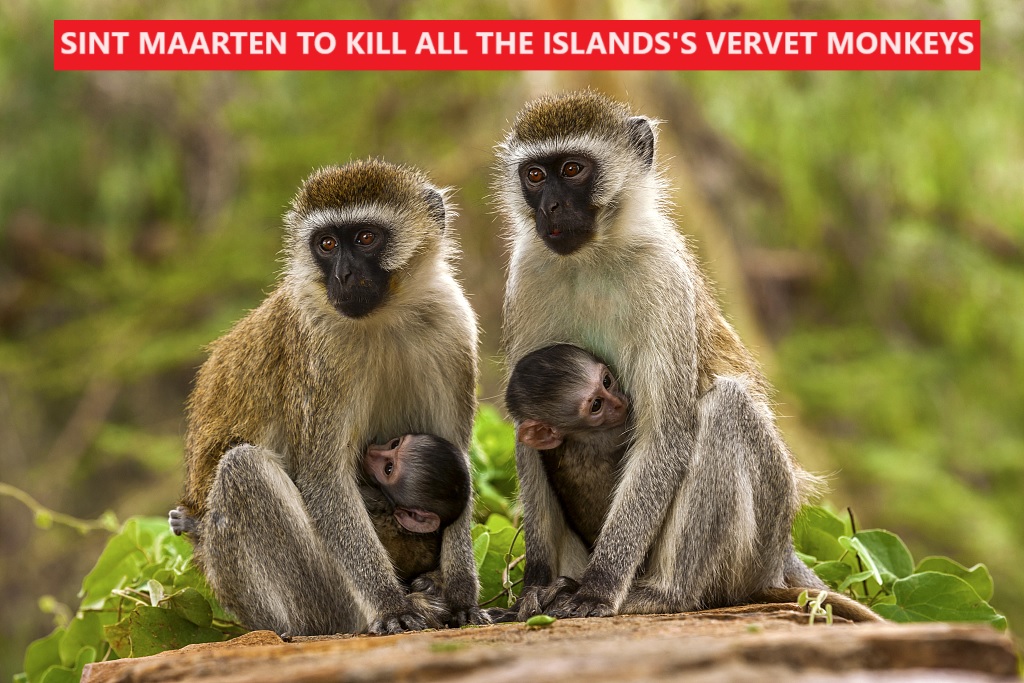
SINT MAARTEN PLAN TO CULL ALL THE ISLAND’S VERVET MONKEYS

Seventy-five animal welfare organisations and experts have called on the government of Sint Maarten in the Caribbean to immediately stop its attempt to cull the territory’s entire population of Vervet monkeys.

The international protest comes after the Guardian revealed in January that the Dutch territory is funding a non-profit organisation to eradicate the “nuisance” species over the next three years.

The animal advocacy non-profit Born Free USA, which coordinated the protest, says experts are ready and willing to support the government with a more humane sterilisation programme. But they say they have not received a reply to their offer.

However, the Nature Foundation Sint Maarten, which is carrying out the cull, has said that while the project is “painful and controversial”, it remains a necessity.

“Given the current significant but manageable size of the vervet monkey population, there is a window of opportunity to ensure that the issue does not worsen in coming decades,” it said in a statement.

Vervet monkeys were introduced to the region from Africa sometime around the 17th century and the first sightings on Sint Maarten date back to the early 1970s.

Research carried out by the Nature Foundation St Maarten found in 2020 that about 450 were living on the Dutch side of the island. By 2022, that number had increased to about 2,000.

“Given the current significant but manageable size of the vervet monkey population, there is a window of opportunity to ensure that the issue does not worsen in coming decades,” it said.

The monkeys have been blamed for eating crops, destroying gardens, entering schools and acting aggressively.

Last December, the territory’s ministry of tourism, economic affairs, transportation and telecommunication approved 100,000 Netherlands Antillean guilders (US$55,000) funding to control the species.

The foundation said this was enough to pay for a single full-time ranger to carry out the cull along with equipment, but not for a sterilisation programme.

Born Free USA says the information on which the cull is based is “fundamentally flawed”.

The group offered its “expertise, including voluntary veterinary services” for alternative humane species management, and said it will also provide training to neighbouring territories.

“In this way, Sint Maarten could lead the way on humane primate population management in the Caribbean region,” the group wrote in a letter to the Sint Maarten government.

“We would be grateful if you would consider postponing plans to cull the animals and working with us to explore truly humane alternatives.”

In its statement, Nature Foundation Sint Maarten said local law prevents anyone from releasing non-native species – so setting monkeys free after sterilisation would be a violation of the law.

It added: “In the face of substantial monkey overpopulation, neighbouring islands have turned to more desperate means of population control.”

The foundation said that among those are consumption, poisoning, hunting and shipping monkeys away for biomedical research.

“These are all invasive species management strategies that St Maarten would like to avoid by preventing the situation here from reaching that point at all,” it concluded.

The cull is projected to end in 2026, at which point the foundation says it plans to thoroughly assess its impact and review alternative, long-term management options within local law.
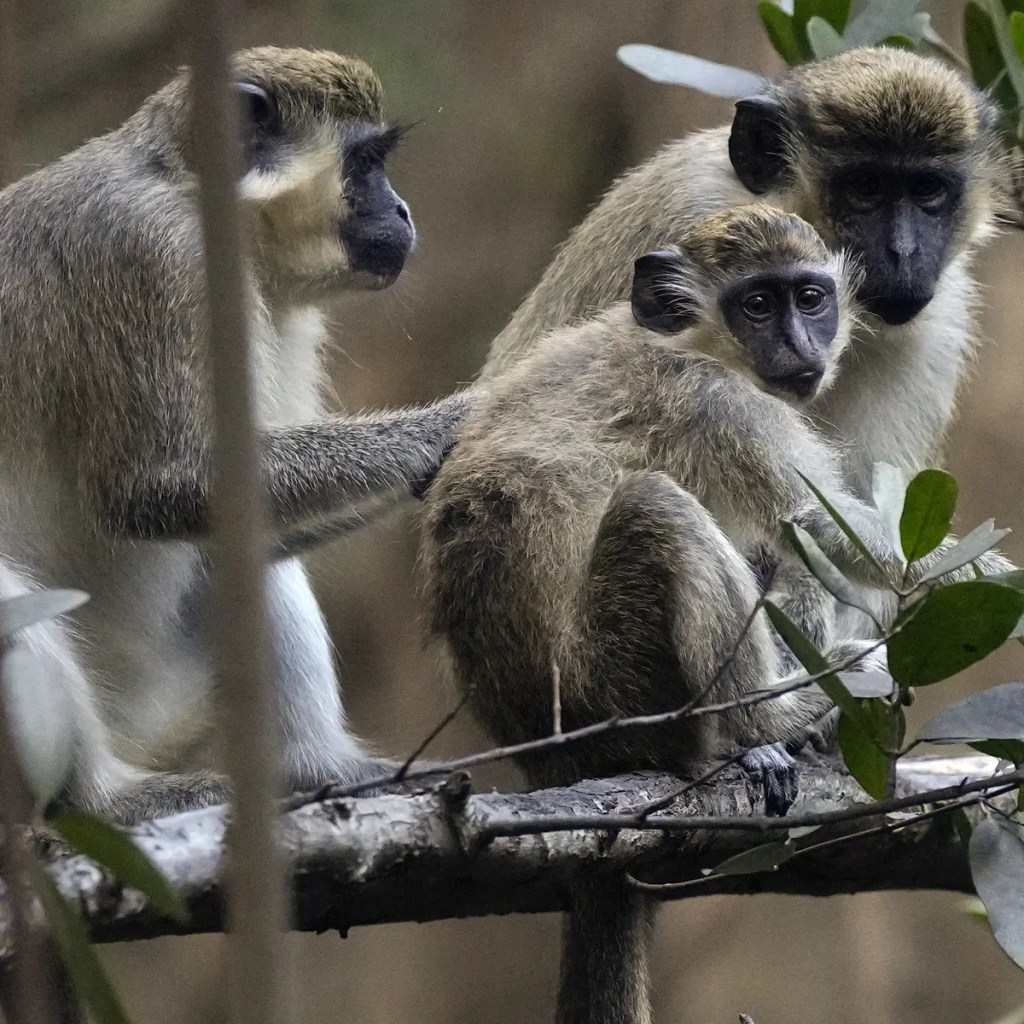
Some of the island’s Vervet Monkeys

Born Free USA has also launched a public petition asking for non-lethal measures to control the invasive primate population which you can sign here: STOP THE MONKEY CULL!

WHAT YOU CAN DO TO HELP ANIMALS IN NEED

You can support our work by donating as little as £5 – It only takes a minute but it can last a lifetime for an animal in need.

PLEASE DONATE HERE

Everyone who donates will receive a Certificate of Appreciation as a thank you for helping animals in need.

The Mission of Protect All Wildlife is to prevent cruelty and promote the welfare of ALL animals.

We believe EVERY animal should be treated with respect, empathy, and understanding. We raise awareness to protect and conserve wild, captive, companion and farm animals.

It is vital that we protect animals against acts of cruelty, abuse, and neglect by enforcing established animal welfare laws and, when necessary, take action to ensure that those who abuse animals are brought to justice.

Protect All Wildlife are involved in many projects to protect animals’ rights, welfare, and habitats. Money contributed to Protect All Wildlife supports ALL of our worthy programmes and gives us the flexibility to respond to emerging needs. Your donations make our work possible.
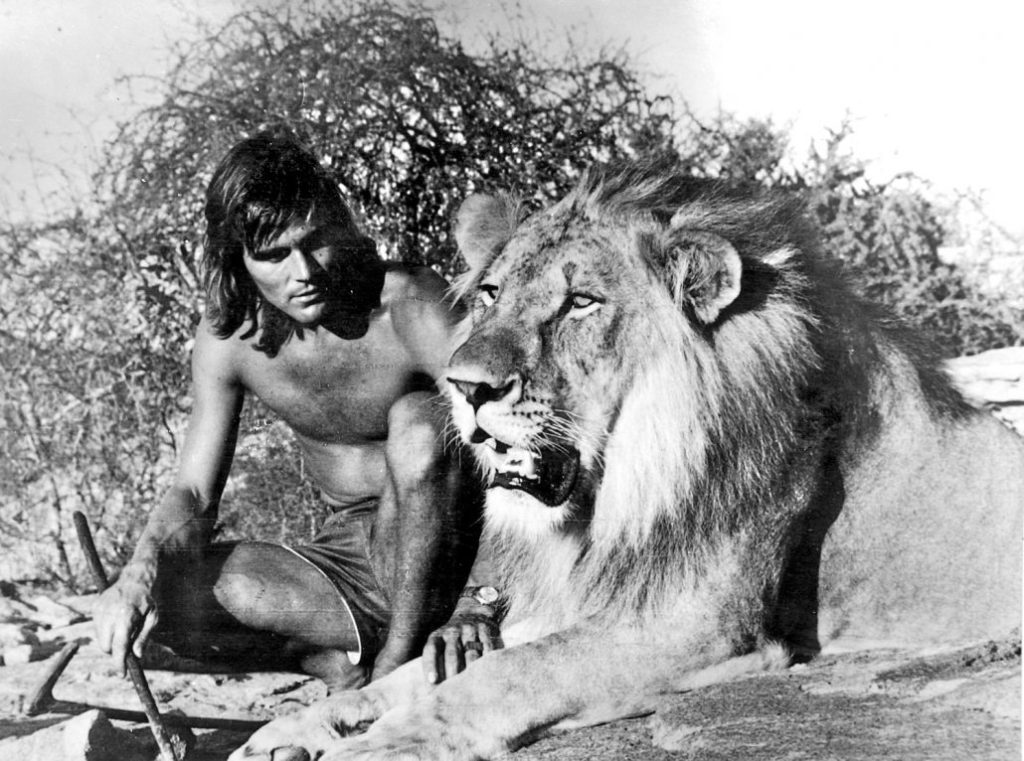
Tony Fitzjohn, Renowned For Wildlife Conservation Work In Kenya & Tanzania, Has Died Aged 76

He began as a Boy Scout, became a hippie, hitchhiked to Africa, & made himself useful.

Tony Fitzjohn, 76, died on May 23, 2022, “following a prolonged fight against a malignant cancer,” the Tony Fitzjohn-Wildlife Now George Adamson Wildlife Preservation Trust announced.

TONY FITZJOHN AND FRIEND. 1968.

Fitzjohn recounted most of his long career working on behalf of African wildlife in his 310-page memoir Born Wild, published in 2010.

“Growing up in England, Fitzjohn loved Scouting.  Tarzan tales enchanted him,” summarized reviewer Debra J. White.  “As a troubled teen, Fitzjohn landed in Outward Bound programs.  A letter Fitzjohn sent to Born Free author Joy Adamson brought Fitzjohn to Kenya,” by hitchhiking.

Assistant to George Adamson

In 1971, at age 24, Fitzjohn became assistant to Adamson’s then-husband, 65-year-old conservationist George Adamson.

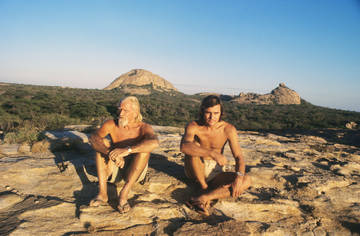
GEORGE ADAMSON AND TONY FITZJOHN  SIT WATCHING THE SUNSET  ON A ROCK NEAR KORA CAMP IN KENYA. AFRICA. 1987.

Fitzjohn, as a full-time volunteer, helped Adamson to rehabilitate injured or formerly captive lions, leopards, and African wild dogs for return to the wild.  Tracking animals post-release was among his duties and was considerably more difficult and dangerous than it is today because radio collars had not yet been developed.

Once, in 1975, “I was incredibly lucky to survive,” Fitzjohn wrote.  “My attacker’s teeth had come within millimetres of both my carotid and jugular arteries.  There are holes in my throat that I could put a fist through, and I did.”

After several months of recovery Fitzjohn returned to help George Adamson at his camp called Kora, located east of Mount Kenya, near the Tana River, almost in the dead centre of the nation.

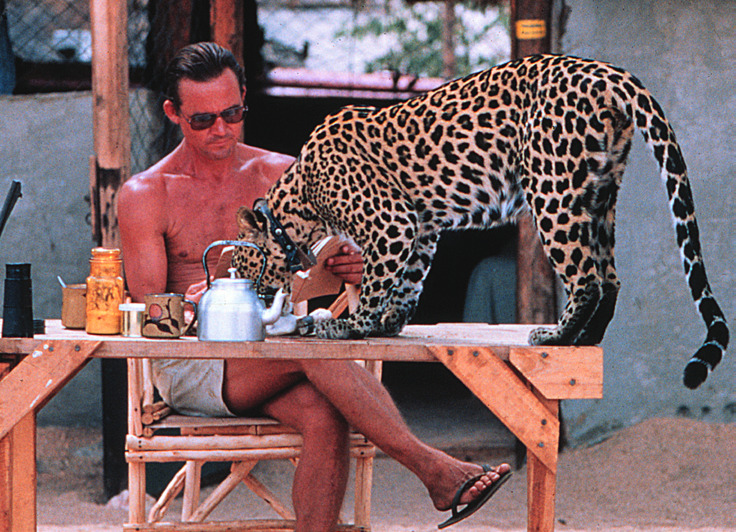
TONY FITZJOHN WITH SQUEAKS, LEOPARD FRIEND

Kenya “became a scary place”

Conflicts with poachers and illegal grazers at Kora intensified after a border conflict between Kenya and Somalia in 1978.  Somalia lost the war but, Fitzjohn remembered, “There were suddenly a lot of well-armed Somali men flooding across the border into northern Kenya.  They were bandits, well-trained, ruthless and armed.”

“Another camp near Kora was attacked and everything of value was looted.  Two workers were killed.  Poaching escalated,” White wrote.

“The Kenyan government was either unwilling or unable to stop the raiding, despite warnings that wildlife tourism could be destroyed.  Political unrest, corruption, drought, and tribal strife plagued Kenya for more than a decade,” White continued.

Understated Fitzjohn, “Kenya had suddenly become a scary place.”

TONY FITZJOHN AND A RHINO FRIEND

Murders brought move to Tanzania

The Kora camp site eventually became the hub of the Kora National Reserve, initially designated in 1973 but not added to the Kenyan national park system until 1989, after George Adamson came to the aid of a tourist who had been robbed and gang-raped by poachers.  Adamson was murdered while racing his jeep straight at the bad guys, who fled.

Joy Adamson had already been killed in a confrontation with an ex-employee in January 1980.

Of George Adamson’s murder, Fitzjohn said, “If I had been there, it wouldn’t have happened.”

Fitzjohn had left, temporarily, to assess the prospects for restoring the huge Mkomazi Game Reserve in Tanzania, south of Tsavo National Park in Kenya.

Fitzjohn said of Kora – Life at Kora was one of overwhelming isolation. The camp was situated two days’ travel from the Kenyan capital of Nairobi, and conditions were basic. Aside from a few camp employees and George’s brother Terence, Adamson and Fitzjohn would go months at a time without being visited by an outsider. The work was everything.

“Our whole life was based around the lions: their health, their survival, their coping with going back to the wild. I became a self-taught mechanic, and I learned to maintain all the vehicles. I would also do the supply trips to Garissa [the Somali Kenyan capital], though god knows why the bandits didn’t take me out,” Fitzjohn laughs.

“The police would get shot up, even the commissioner would get shot up. And there I was, a heathen, storming down with a beer in one hand and a joint in the other, the ghetto blaster booming. But they never touched me. I think there was someone up there looking after me. And I’ve always been prepared to take my chances for what I thought was worthwhile.”

Fitzjohn soon became Kora’s de facto PR man and fixer: dealing with the local authorities, talking to the police, keeping things cordial. “It mainly involved a lot of drinking in the police mess and the army mess in Garissa,” he says. “Drinking was a big part of life out there, I suppose, though not so much in the bush.”

At one point, Fitzjohn thought two policemen were trailing him through the city — so he hid in an alleyway and ambushed them, taking them both out with fists flailing. That afternoon, he discovered that they’d been sent to look over him and protect him, should anything turn nasty.

“So I had to go and apologise to them at the station. Well: that turned into a long night on the beers, didn’t it…” he says, slightly sheepishly. “It was the Wild West, in many ways. But the Wild West with Land Rovers.”

Having worked with Adamson for 18 years, but at odds with himself after the murder, Fitzjohn soon afterward moved to Mkomazi.

Mkomazi, in Fitzjohn’s own words, was “the perfect place for me to bury myself and reinvent myself after the events of the past few years.”

Mkomazi Game Reserve

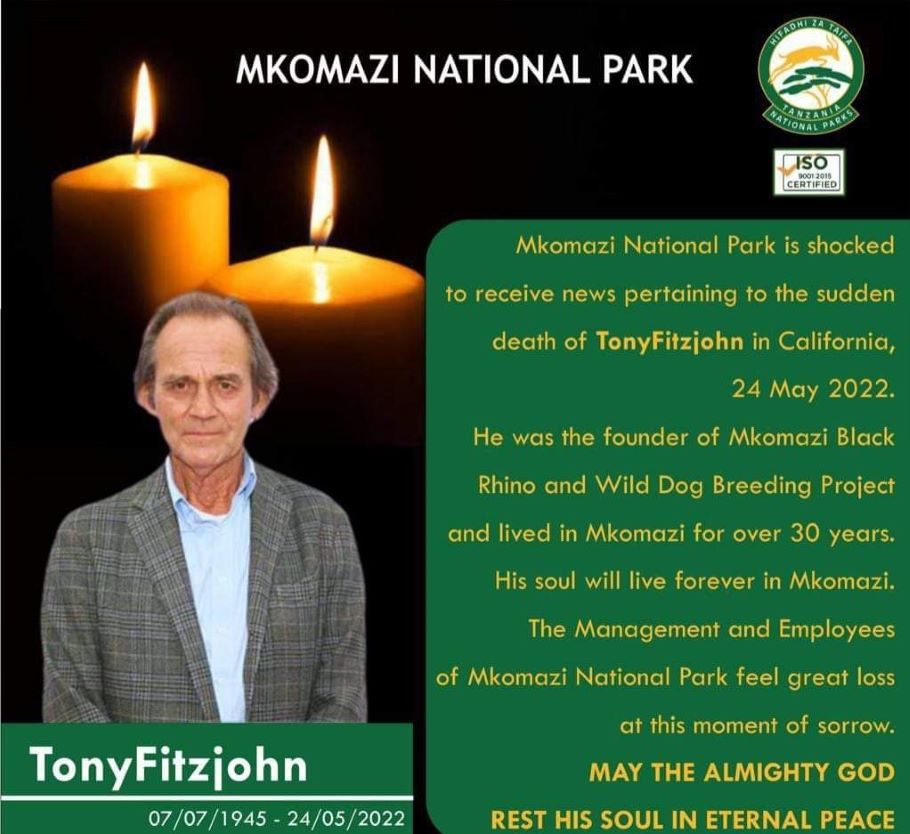
There, said the Tony Fitzjohn-Wildlife Now George Adamson Wildlife Preservation Trust statement announcing Fitzjohn’s death, “His main, towering achievement was the rehabilitation of Mkomazi.

“This was at the invitation of the Tanzanian Government in 1989,” the Tony Fitzjohn-Wildlife Now George Adamson Wildlife Preservation Trust continued.  “In the next thirty years, he enlisted a formidable group of supporters, experts and famous institutions in what became an international beacon for conservation of land and wildlife.”

Fitzjohn “created programs for endangered species, including the African wild dog, and one of the most successful rhino sanctuaries in Africa, and pioneered educational programs in the local communities,” the Tony Fitzjohn-Wildlife Now George Adamson Wildlife Preservation Trust memorial statement finished.

Frustrated by the corruption of the John Magafuli regime in Tanzania, Fitzjohn returned management of Mkomazi to the Tanzanian government in 2020 and returned to Kenya to work on rehabilitating Kora.

Magafuli, ironically, who had been the most vehement COVID-19 denier in Africa, died of COVID-19 in March 2021.

Fitzjohn was admitted to the Order of the British Empire in 2006.   He also received the Prince Bernhard Order of the Golden Ark, the North of England Zoological Society’s Gold Medal and the Hanno Ellenbogen Citizenship Award for public service.

A FITTING TRIBUTE TO TONY FROM MKOMAZI NATIONAL PARK

What you can do to help

The Mission of Protect All Wildlife is to prevent cruelty and promote the welfare of ALL animals EVERYWHERE

Please support our work by donating ANY amount, large or small, at HELP PROTECT ALL WILDLIFE. It only takes a minute. Thank you for your support.

What else you can do to help

Please SHARE to raise awareness to wildlife and environmental issues from around the world. You can also receive NEWS and UPDATES by signing up in the top right of this page.