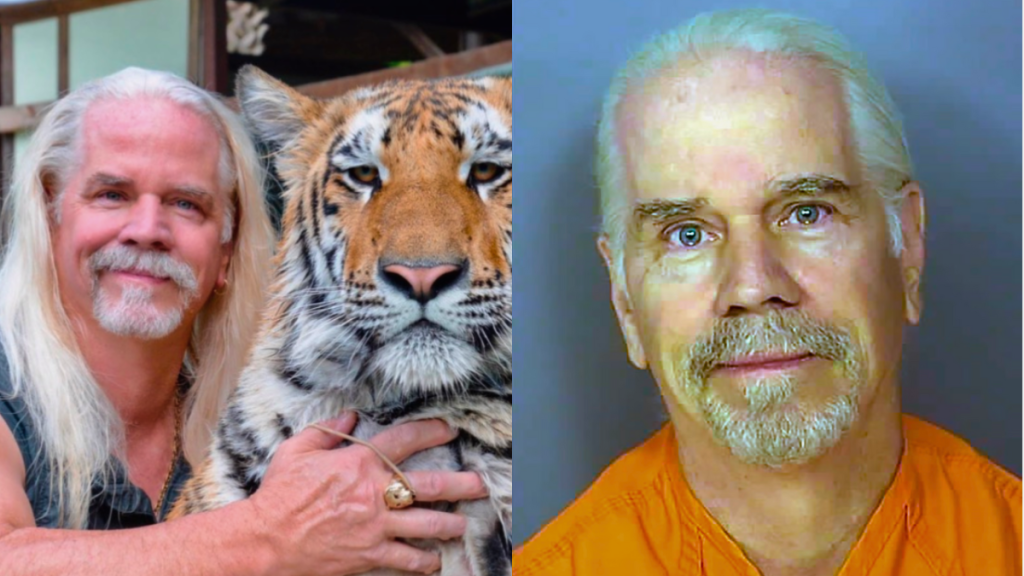
An exotic wildlife preserve owner who gained notoriety on the popular Netflix series “Tiger King” pled guilty on Monday to animal trafficking and money laundering, the U.S. Justice Department announced.
Bhagavan “Doc” Antle oversaw the sale or purchase of Cheetah cubs, Lion cubs, Tigers and a juvenile Chimpanzee that were all protected as endangered species, according to a Justice Department release. Officials said the 63-year-old man featured in a documentary mini-series about the Tiger trade tried to hide animal payments as “donations” to his nonprofit organization.
“The defendant held himself out as a conservationist, yet repeatedly violated laws protecting endangered animals and then tried to cover up those violations,” Assistant Attorney General Todd Kim of the Justice Department’s Environment and Natural Resources Division said in a statement.
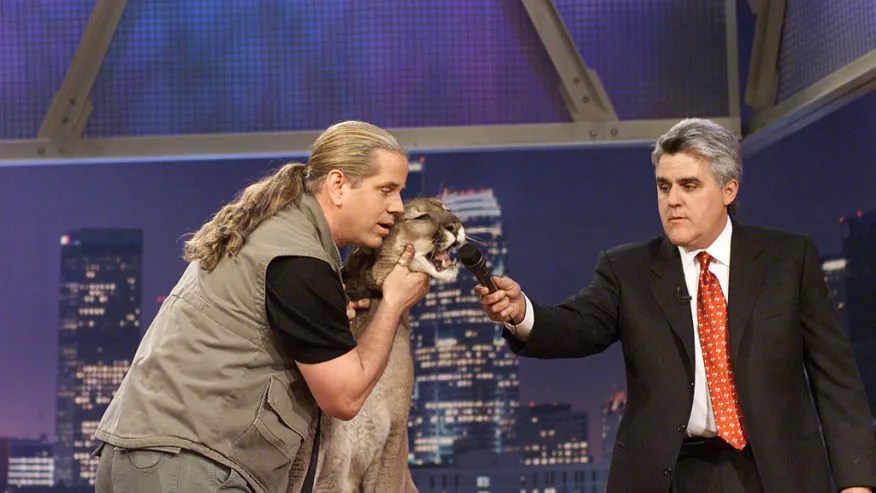
Antle On The Tonight Show Credit: Paul Drinkwater
Antle faces a maximum of five years’ imprisonment, fines up to $250,000 and three years of supervised release for each count. He is also the owner and operator of the Myrtle Beach Safari, which is also known as The Institute for Greatly Endangered and Rare Species, or T.I.G.E.R.S., prosecutors said. The safari is a 50-acre nature preserve that offers tours and the chance for private encounters with wildlife, prosecutors said.
Antle faces a maximum of five years’ imprisonment, fines up to $250,000 and three years of supervised release for each count.
Investigators found evidence that Antle and a coconspirator had also used cash acquired through the transportation and harboring of immigrants who illegally entered the country.
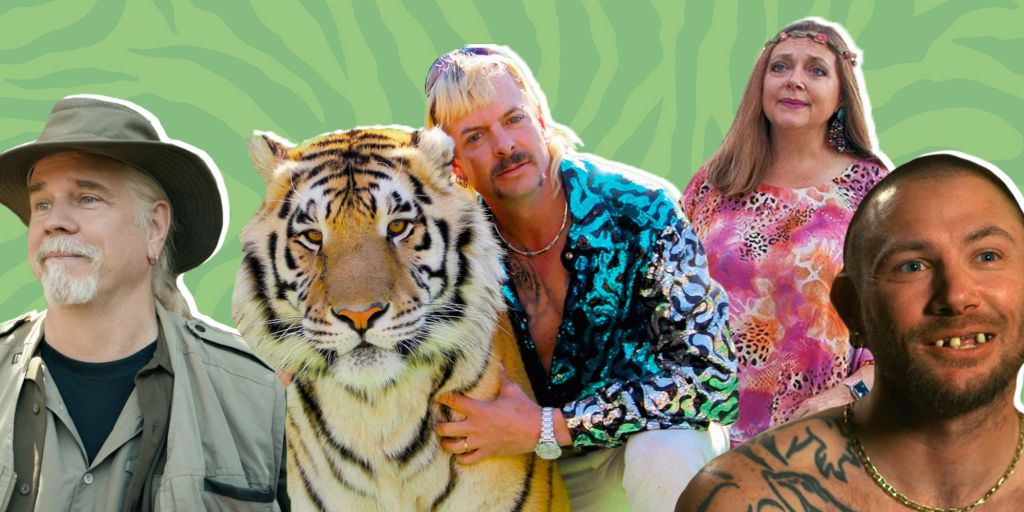
It’s the latest fallout for the subjects of “Tiger King: Murder, Mayhem and Madness.” Joe Exotic, the show’s star, is serving a 21-year prison sentence for trying to hire two different men to kill animal welfare activist Carol Baskin. The ongoing feud between Joe Exotic — whose real name is Joseph Maldonado-Passage — and Baskin featured prominently in the show. Maldonado-Passage had one year shaved off his penalty last year as he began treatment for early-stage cancer.
“Tiger King: Murder, Mayhem and Madness.”
WHAT YOU CAN DO TO HELP ANIMALS IN NEED
You can support our work by donating as little as £5 – It only takes a minute but it can last a lifetime for an animal in need.
Everyone who donates will receive a Certificate of Appreciation as a thank you for helping animals in need.
The Mission of Protect All Wildlife is to prevent cruelty and promote the welfare of ALL animals.
We believe EVERY animal should be treated with respect, empathy, and understanding. We raise awareness to protect and conserve wild, captive, companion and farm animals.
It is vital that we protect animals against acts of cruelty, abuse, and neglect by enforcing established animal welfare laws and, when necessary, take action to ensure that those who abuse animals are brought to justice.
Protect All Wildlife are involved in many projects to protect animals’ rights, welfare, and habitats. Money contributed to Protect All Wildlife supports ALL of our worthy programmes and gives us the flexibility to respond to emerging needs. Your donations make our work possible.
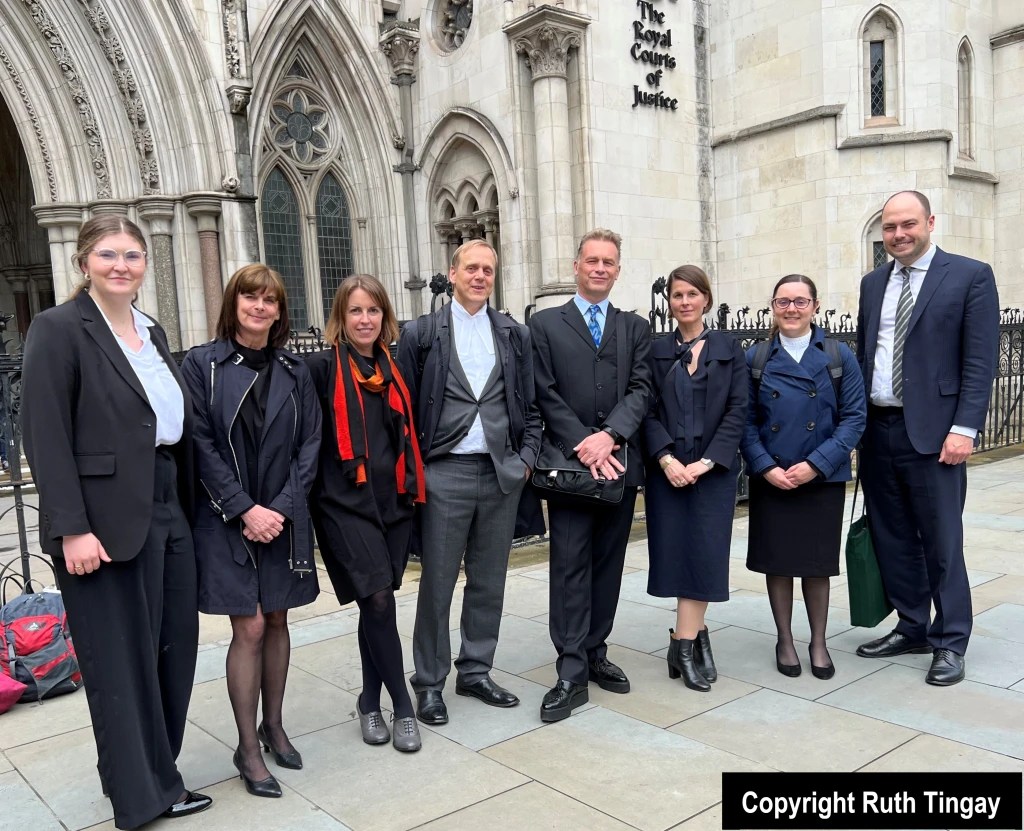
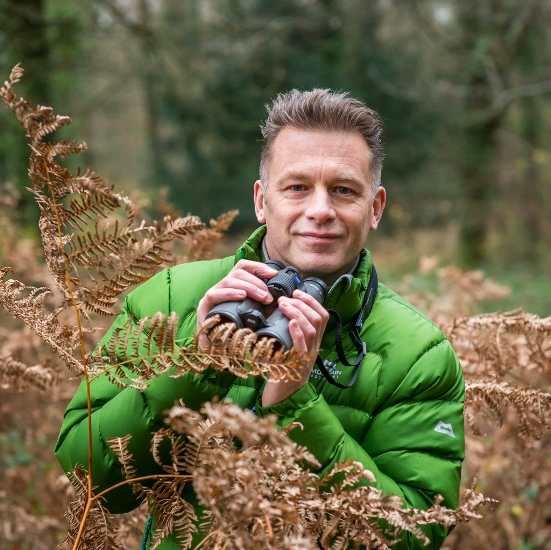
Chris Packham outside the Royal Courts of Justice complex in London
Press release from Leigh Day (6 November 2023)
Chris Packham settles defamation claim with Fieldsports Channel after it admits death threat claims were untrue.
Environmental campaigner and naturalist Chris Packham CBE has settled a defamation claim against the website Fieldsports Channel after it falsely accused him of writing a fake death threat letter to himself.
The online shooting and hunting channel has agreed to pay Mr Packham substantial damages and contribute to his legal costs as well as provide an undertaking never to repeat the allegation.
In June 2022, Fieldsports Channel and one of its journalists, Ben O’Rourke, published an online video and article alleging the TV presenter had written a fake death threat letter to himself and lied about it being sent by an anonymous third party. The serious allegation was not put to Mr Packham directly to offer him right of reply.
Chris Packham with his legal team. Credit: Ruth Tingay.
In bringing the claim against Fieldsports Channel Ltd and Mr O’Rourke, Mr Packham’s lawyers argued the allegations were plainly baseless and had caused him enormous reputational damage and distress. They pointed out that the only possible basis for the allegation was handwriting analysis of the letter which has since been comprehensively discredited.
Of particular concern to Mr Packham was the implication he had lied to his family about the death threat, knowing it would cause them considerable anxiety. Also, that he had lied to, and knowingly wasted the time of, Hampshire Police, who investigated the letter and on whom he relies for his and his family’s safety.
Mr Packham’s distress was later compounded by Fieldsports Channel’s derisive response to his claim, in particular mounting caricatures of his head on a “trophy wall” at the British Shooting Show in February 2023. Mr Packham has been the victim of arson attacks and has received numerous death threats, and he considers its actions to have been utterly reckless and irresponsible in that context.
As well as paying Mr Packham substantial damages and contributing to his legal costs, Fieldsports Channel and Mr O’Rourke have agreed never to repeat the allegation and will publish a legal statement, which is also to be read in the High Court on 6 November 2023, explaining the matter on its platforms.
Mr Packham was represented by Mr Jonathan Price and Ms Claire Overman of Doughty Street Chambers, who are instructed by partner Tessa Gregory and solicitor Carol Day of law firm Leigh Day.
Chris Packham, naturalist, television presenter, writer, photographer, conservationist, campaigner and filmmaker.
Chris Packham said:
“Fieldsports TV displayed a complete contempt of even the basic codes of real journalism. They allowed a vicious vendetta to drive a targeted catalogue of lies in an attempt to destroy my credibility, integrity and reputation. Further, even when involved in this litigation they recklessly posted images of myself contrived to fuel hatred amongst fire-arms owners when they knew I was already the victim of targeted attacks from members of this community. They also failed to show any respect for the legal process. As a consequence, Fieldsports TV have now issued a full apology and agreed to pay substantial costs and damages. My message is clear – if anyone publishes or perpetuates lies about me or my conduct I will challenge them and I will win.”
Carol Day, solicitor at law firm Leigh Day said:
“Our client Mr Packham was the subject of an egregious slur against his reputation based on the flimsiest of evidence that failed to stand up to even the most basic form of scrutiny. To be accused of writing a fake death threat to himself, with all the consequences that brings for his family and the authorities, was a highly damaging attack on Mr Packham’s integrity. The fact he was then mocked publicly for objecting tothese defamatory remarks shows how little regard the defendants had for the reputation of others. Our client can only hope that lessons have been learned from this sorry episode and it brings an end to these gratuitous attacks on Mr Packham’s character by people who simply disagree with his views.”
WHAT YOU CAN DO TO HELP ANIMALS IN NEED
You can support our work by donating as little as £5 – It only takes a minute but it can last a lifetime for an animal in need.
Everyone who donates will receive a Certificate of Appreciation as a thank you for helping animals in need.
The Mission of Protect All Wildlife is to prevent cruelty and promote the welfare of ALL animals.
We believe EVERY animal should be treated with respect, empathy, and understanding. We raise awareness to protect and conserve wild, captive, companion and farm animals.
It is vital that we protect animals against acts of cruelty, abuse, and neglect by enforcing established animal welfare laws and, when necessary, take action to ensure that those who abuse animals are brought to justice.
Protect All Wildlife are involved in many projects to protect animals’ rights, welfare, and habitats. Money contributed to Protect All Wildlife supports ALL of our worthy programmes and gives us the flexibility to respond to emerging needs. Your donations make our work possible.
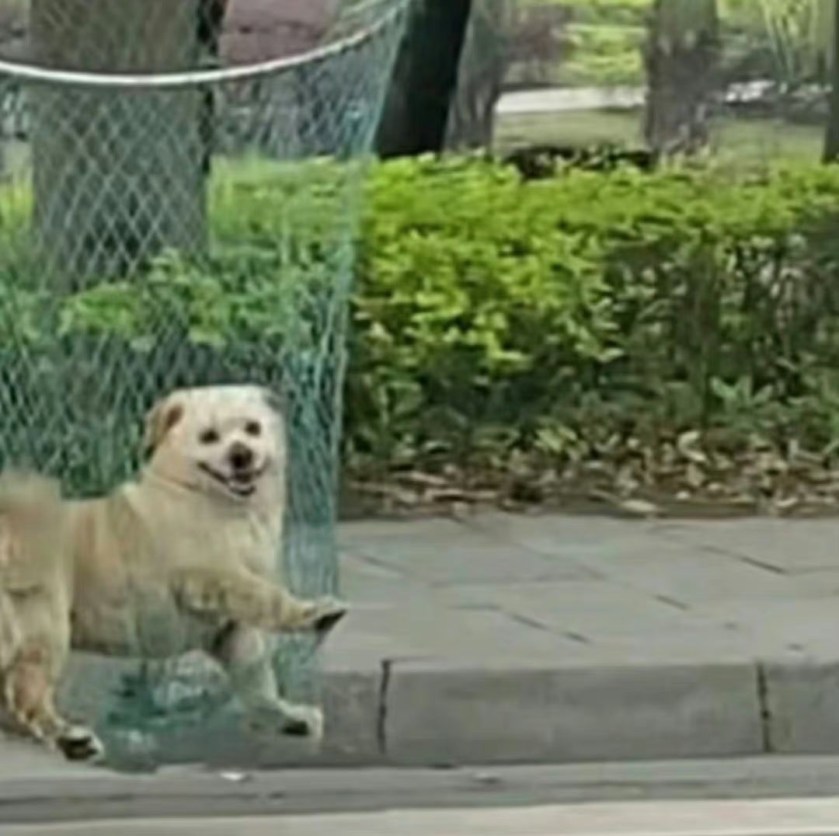
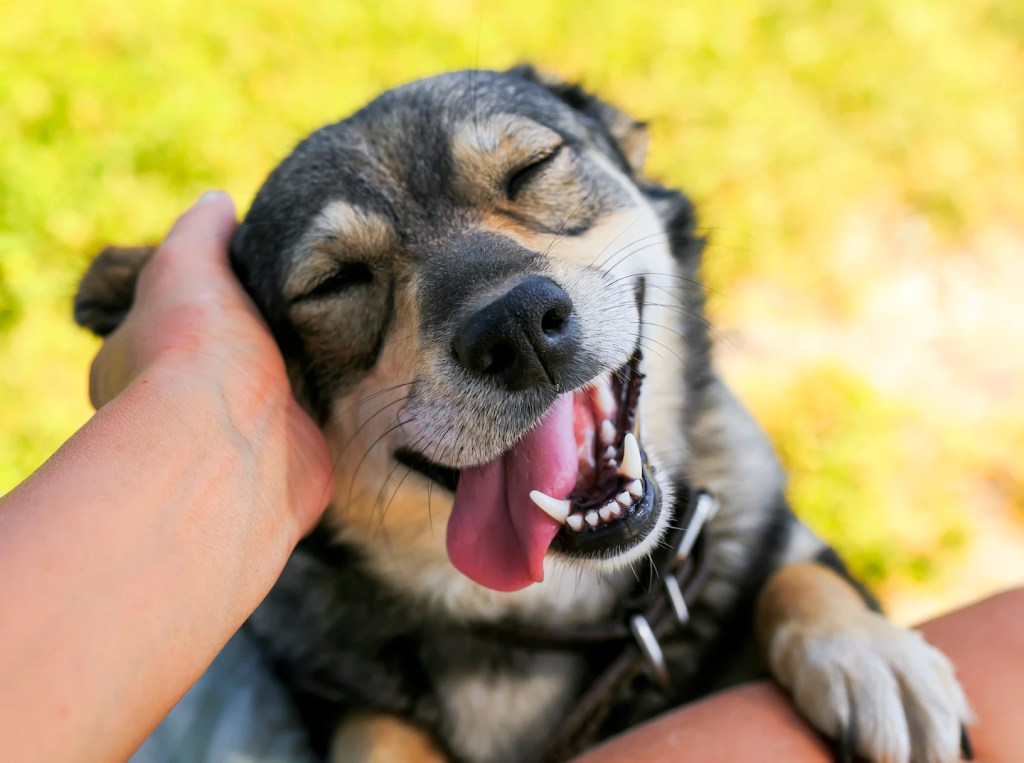
A small, stray dog on a university campus in Chongqing was filmed being grabbed in a net by a dog catcher, prior to being killed. The “smiling” appearance of the dog has prompted a social media hashtag using the name it was given #XiaoHuang.
Officials in China have launched a crackdown on stray, unregistered, and “oversized” dogs.
But the move has been widely criticised after reports that dogs without owners are being rounded up and sometimes euthanised.
It comes after a vicious attack on a two-year-old girl by a Rottweiler last week that shocked the country.
The Rottweiler that attacked the child in Chongzhou, Sichuan Province, WAS NOT A STRAY. It was unleashed and approached the mother who was walking her child to preschool inside their housing compound.
The toddler suffered a ruptured kidney, fractured ribs and lacerations across her body. She is reportedly stable.
The crackdown prompted by the mauling has however, been questioned on social media and by pet owners after several shocking stories came to light.
Community workers in Leshan broke into a house to hunt and kill pet dogs
In one case, security guards and a landlord entered an office without the permission of the tenant and killed both of their dogs.
In another case – which has drawn considerable attention online – a small, stray dog on a university campus in Chongqing was filmed being grabbed in a net by a dog catcher, prior to being killed. The “smiling” appearance of the dog has prompted a social media hashtag using the name it was given #XiaoHuang. University officials said the dog had chased a student.
A small, stray dog on a university campus in Chongqing was filmed being grabbed in a net by a dog catcher, prior to being killed. The “smiling” appearance of the dog prompted a social media hashtag using the name it was given #XiaoHuang.
Some users of Chinese microblogging site Weibo posted pictures claiming security personnel in their residential compounds had started killing strays and dumping their bodies in the trash. Their posts sparked an online outcry, with many calling for more humane measures, including adoption and neutering.
Chinese celebrities have also joined the social media discussion, saying the crackdown across the country was not warranted by the initial attack, terrible though it was.
Chinese actress Cya Liu Ya-se posted on Weibo on Friday, stating that “not all stray dogs are bad dogs” and called for “an end to the killing of animals.”
Celebrity Yang Di also posted a video on short video platform Douyin the same day, saying that people don’t have to all love dogs, but “please do not harm them.” Both accounts were banned shortly after the posts.
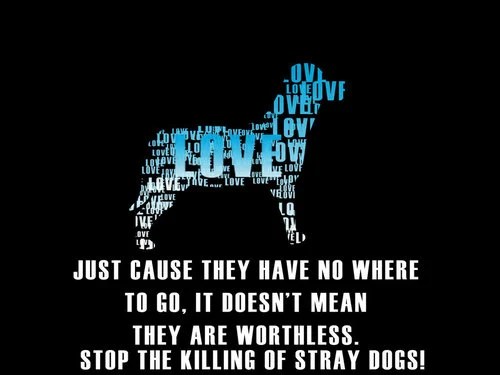
Xiao Feng calls for the killing of stray cats and dogs to stop.
However, the Rottweiler that attacked the child in Chongzhou, Sichuan Province, was not a stray. It was unleashed and approached the mother who was walking her child to preschool inside their housing compound.
Statements issued from officials in Shandong, Jiangxi and Hubei Provinces have said that captured stray dogs would be put down if an owner cannot be found for them.
In another instance, a security guard at a university in Liaoning Province was suspended after beating a beloved on-campus stray to death.
Chen Minjie, a staffer from the Cat and Dog Welfare Program with the Animals Asia Foundation, told the Global Times on Monday that the heated debate surrounding uncivilized incidents reflects the expanded pet ownership in the country and the varying quality of pet owners. Attention should be focused on addressing the behavior of uncivilized dog owners, rather than a widespread antagonism between dog owners and non-dog owners.
Internet users also called on the public to go to the State Council website and leave a message asking the government to stop abusing and killing stray animals, to reasonably disclose the way stray cats and dogs are handled, and to call on the state to legislate for the protection of animals.
Editor’s Note: Whilst it is agreed that attacks by dogs should be dealt with severely, in this case the dog(s) involved were not strays. They were pets that were not on leads. No stray dogs were anywhere in the vicinity of the awful attack. Why persecute strays for something they had nothing to do with?
WHAT YOU CAN DO TO HELP RESCUE ANIMALS
You can support our work by donating as little as £5 – It only takes a minute but it can last a lifetime for an animal in need.
Everyone who donates will receive a Certificate of Appreciation as a thank you for helping rescue animals in need.
OUR MISSION STATEMENT
‘Animals that use wheels and prosthetics can live as good a quality of life as fully able-bodied animals and this is what we want to show people’ ~ Victoria Bryceson, founder of Miracle’s Mission.
We do not receive financial support from the government or other institutions. We rely solely on donations from generous animal lovers.
Animal rescues cost a lot of money to run. While we get donations and funding through events like charity runs etc, the costs are EXTREMELY high. We need to pay for food, heating and other bills, as well as any staff costs and expenses like petrol for home visits.
The average cost to feed a dog for one month typically costs somewhere from £16 to £50, depending on the breed. Microchipping costs about £10 to £15. The average cost of essential vaccinations is £64. A routine vet appointment costs between £40-£60, surgery can cost anywhere over £1000. Physiotherapy, Hydrotherapy – the average cost is £50 for a 30-minute session. Prosthetics and dog wheels etc can cost up to £500.
Please help Miracle’s Mission continue to rescue, rehabilitate and rehome MANY MORE sick, injured and disabled animals by kindly donating ANY amount, large or small, today. Thank you.
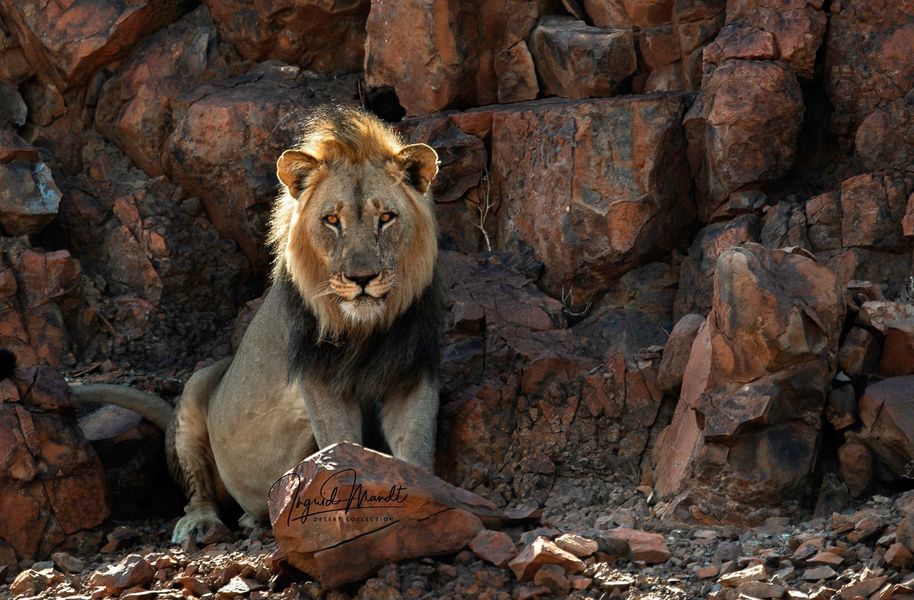
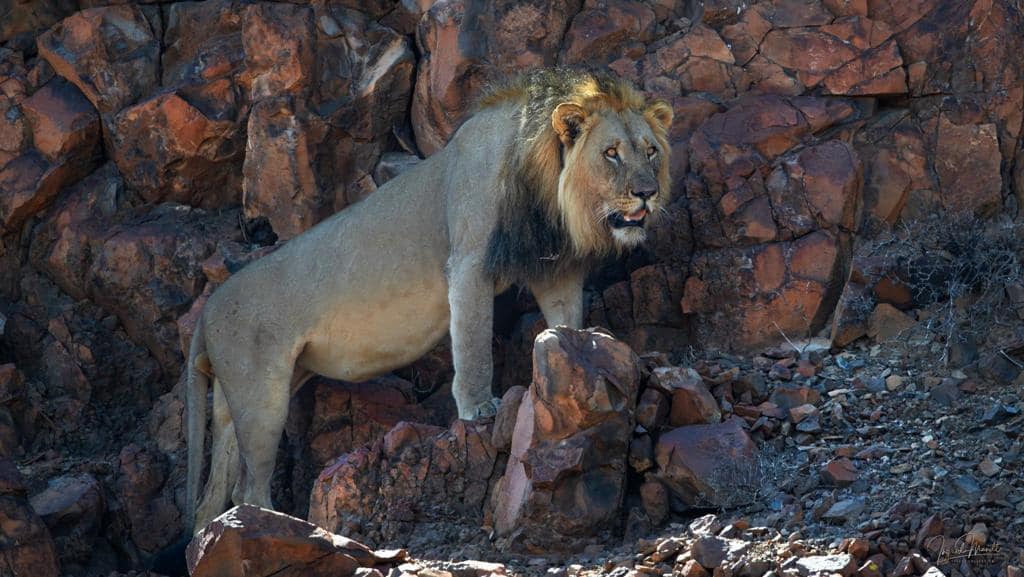
Black Maned Desert Lion Mwezi (XPL 107) Image Credit: Ingrid Mandt
According to the Desert Lion conservation organization DELHRA (Desert Lions Human Relations Aid), it can be assumed that one of the last black-maned male desert lions, “Mwezi” or “XPL 107”, was ‘harvested’ as a trophy on Wednesday, October 11.
In a letter to the Ministry of Environment, Forestry and Tourism (MEFT), DELHRA writes: “Having learned from reliable sources and informants that the male Lion, known as ‘Mwezi’, was allegedly shot, we would like to contact the ministry to know the circumstances and justification for such an alleged killing.”
According to the report, the tracking system of the satellite collar (which is supposed to protect her) was abused to locate the Lion in a protected area. “That is, in the Palmwag concession or, more likely, in the adjacent Skeleton Coast Park, by trophy hunters who were allegedly accompanied by MEFT officials.”
The Desert Lion Conservation Organization further states: “On October 12, we received a report from our informant in Khowarib that the Lion Rangers had received a warning SMS (this happens when a collared lion breaks through a geo-fence) indicating a Lion near the Wild Veld Safaris hunting camp in Khowarib village.” The investigation revealed that it was a dead Lion that had allegedly been kept in the hunting camp since the early evening of October 11.
Black Maned Desert Lion Mwezi (XPL 107) Image Credit: Desert Lion Conservation
According to Desert Lion Conservation, “Mwezi” was still observed and photographed on Sept. 27 when he mated with a lone Lioness, XPL 108, the last survivor of the Obab pride, and followed her into the Skeleton Coast Park, the tracks suggested.
According to DELAHRA, the investigation revealed that two vehicles – one from the MEFT and the other allegedly a hunting vehicle – had entered the Palmwag concession area, with the crew citing “police action” as the reason for the entry. “This coincided with the report coming out of Khowarib later that day, and we learned from a source that the dead lion in the Khowarib hunting camp was the beautiful black-maned desert Lion Mwezi, which had been sought as a trophy for some time.”
DELHRA is of the opinion that a criminal investigation that compels the release of the information will clear up this case and that the parties involved, if warranted, should be prosecuted, as a permit to hunt in the Palmwag concession or in the Skeleton Coast Park cannot have been lawfully granted, and that if it is granted for a hunt in a concession area, but is hunted in the Palmwag or Skeleton Coast Protected Areas, such a permit would be considered null and void.
Black Maned Desert Lion Mwezi (XPL 107) Image Credit: Ingrid Mandt
The letter to MEFT further states: “Based on our information, we would welcome answers to our questions or even a joint and transparent investigation. We ask you to inform us of the following: Has the MEFT issued a trophy permit for hunting XPL 107? If so, could the MEFT please justify this? We ask for a copy of the hunting permit and a copy of the report of the MEFT officer who accompanied the hunting party. We also ask for a copy of the protocol of the website concerning the downloads of the positions of this Lion between September 1 and now by all users. Finally, we are asking for copies of reports of incidents in which XPL 107 may have been involved.”
It goes on to say: “We intend to file a complaint and contact the Information Access Officer and the Ombudsman, as the destruction of natural resources falls within the remit of these bodies in the event that the MEFT does not respond. In such a case, those who have access to the relevant information may be summoned as witnesses.”
The Ministry of the Environment had not responded to questions at the time of going to press.
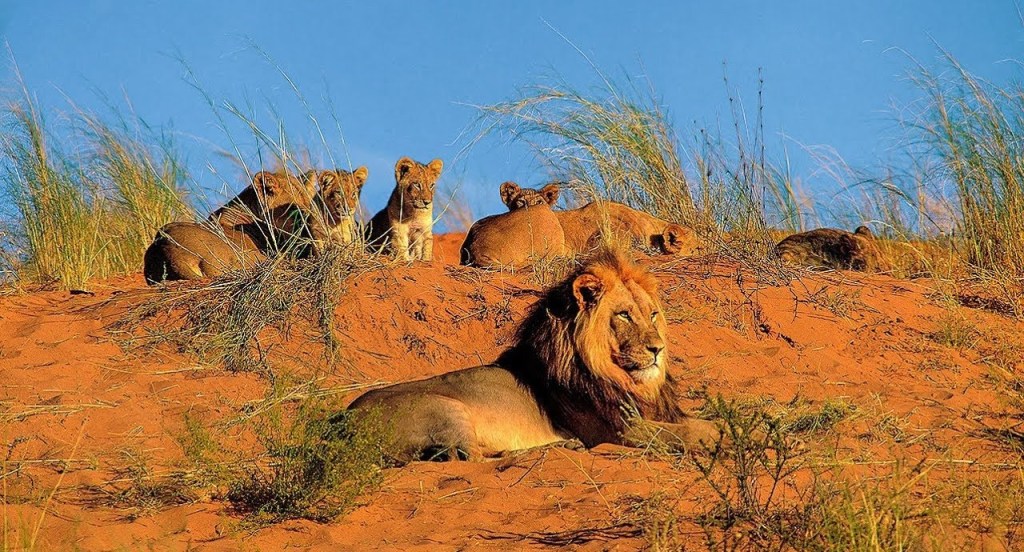
The Desert Lions Of Namibia Image Credit: Wilderness Travel
WHAT YOU CAN DO TO HELP ANIMALS IN NEED
You can support our work by donating as little as £5 – It only takes a minute but it can last a lifetime for an animal in need.
Everyone who donates will receive a Certificate of Appreciation as a thank you for helping animals in need.
The Mission of Protect All Wildlife is to prevent cruelty and promote the welfare of ALL animals.
We believe EVERY animal should be treated with respect, empathy, and understanding. We raise awareness to protect and conserve wild, captive, companion and farm animals.
It is vital that we protect animals against acts of cruelty, abuse, and neglect by enforcing established animal welfare laws and, when necessary, take action to ensure that those who abuse animals are brought to justice.
Protect All Wildlife are involved in many projects to protect animals’ rights, welfare, and habitats. Money contributed to Protect All Wildlife supports ALL of our worthy programmes and gives us the flexibility to respond to emerging needs. Your donations make our work possible.
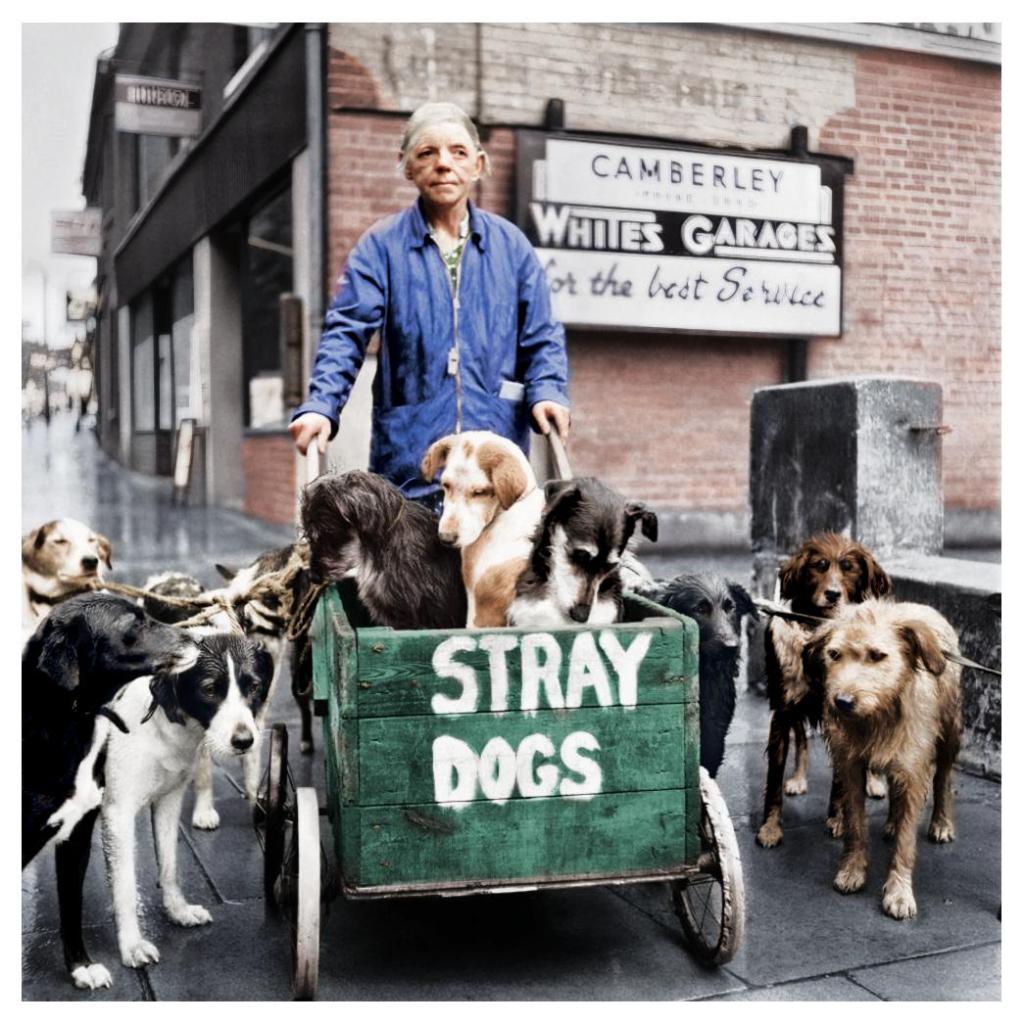
Kate Ward’s nickname “Camberley Kate” is said to have been given to her by historian Sir Arthur Bryant in his book “The Lion and the Unicorn”. It became the title by which she became known to everyone.
Kate’s early history is somewhat hazy – When interviewed she stated that she was born in Middlesbrough on June 13th 1895, and remained proud of her Yorkshire roots. Orphaned before she was ten, she was brought up by an aunt in a strict religious atmosphere. As a young girl she went into service, in Yorkshire and eventually found her way to Camberley. In 1943 Kate bought a cottage in Yorktown, and soon afterwards took in her first stray, a dog which had been about to be put down due to lameness.
As word grew, the number of dogs in her cottage increased – some being tied to her door, some left in carrier bags, others brought in by the police or other agencies. At the end of her life she estimated that she had looked after more than 600 dogs and local vet Geoffrey Craddock, a great admirer of Kate work testified that they were well looked after. An entry in the 1957 directory FOR Camberley reads “Ward K 218 London Road., Cam., Dogs Home”. In 1976 she stated that she had 34 dogs, although by 1977 she had cut this down to 19, as she had been told to go easier at the age of 82! The growth of other dog rescue centres helped in this regard. She also had at least one cat.
CAMBERLEY KATE
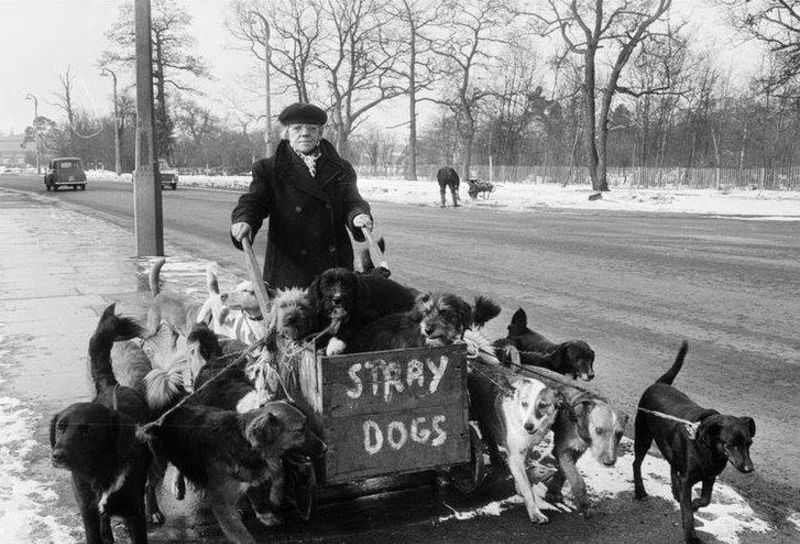
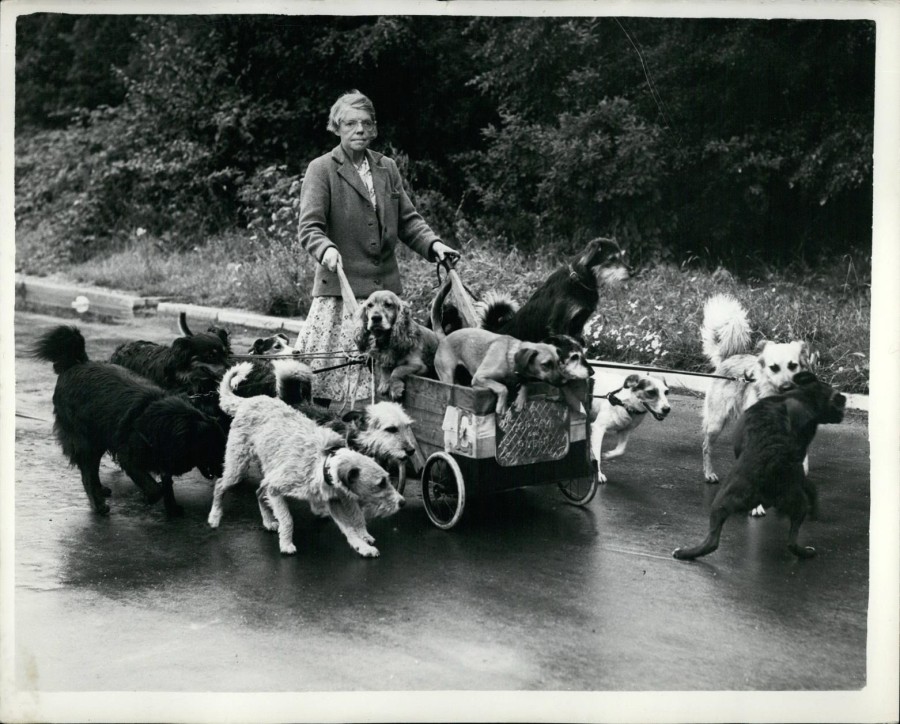
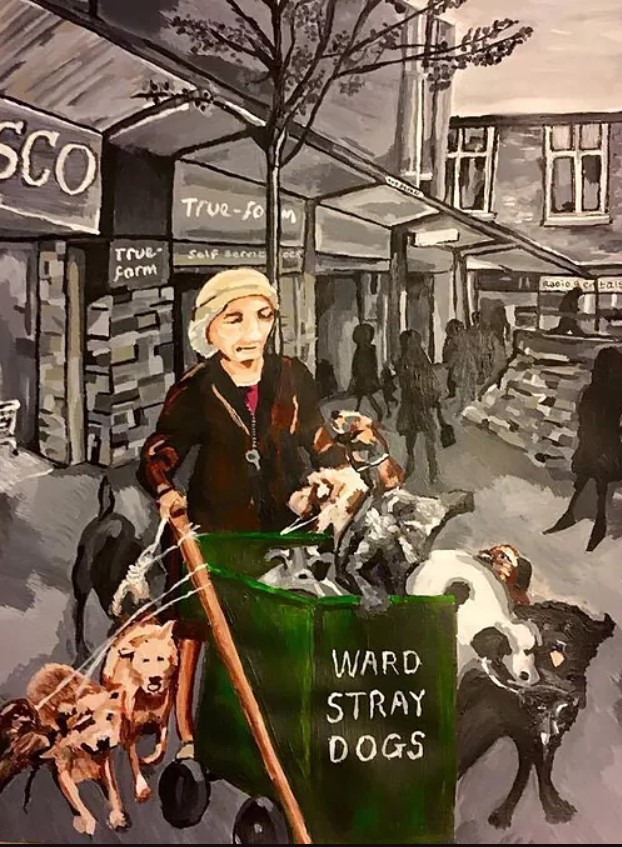
Kate and her olive-green painted hand cart, labelled STRAY DOGS, was a familiar sight locally as she pushed it from Yorktown to Camberley each day, through the town centre and up to Barossa Common, on a route suggested by the police. Some of the dogs were allowed to ride in the cart, others were attached to it with lengths of string, and occasionally a favoured few ran loose alongside. Inside the cart, there was usually some meat for the dogs and a shovel to clean any mess away. The dogs were controlled with the help of a whistle. Locals became used to the sight of Kate pushing her cart along the busy London Road although it never ceased to amaze outsiders.
As a local celebrity Kate and her dogs were much photographed, a situation she tolerated as long as the photographer gave a donation for the upkeep of the animals. She also sold her own photographic postcards, and gave short shrift to those who tried to take their own pictures. Generous supporters gave money to assist her work and some even left bequests. She was scrupulous that this money should be used only for its intended purpose: the dogs had their own bank account, administered by 2 trustees. She left money in trust for the few dogs left at her death.
If you gave her some money, she would INSIST you take a photo. That way she could not be accused of begging.
KATE AND HER CART AND DOGS WERE A WELL-KNOWN SIGHT IN THE TOWN UNTIL HER DEATH IN 1979
A diminutive figure with her shock of white hair and her beret, Kate defended herself and her work passionately against her critics, such as those who wanted her out of the town centre or who regarded the dogs as dangerous or a health or traffic hazard. On one occasion she rammed a new car which was blocking her way. She also had a number of disputes with the authorities. These clashes were often recorded in the columns of the press. However she won the backing of the local police for her work in taking abandoned dogs in off the streets.
In 21 August 1969 Kate was in the Camberley News fighting plans to introduce a bye law making it illegal for dogs to be out without a lead. This followed complains from residents of new housing estates, and concerns about road accidents caused by stray dogs. In her customary forthright fashion she condemned “The Council is nothing more than a collection of dog-haters. I think this will be rotten. It means that dogs will be chained up all day”. A proposal to ban dogs from the new precinct in Camberley also met with a terse response, particularly since she was in the habit of shopping at Sainsbury’s and leaving some of the dogs tied up outside. When protests about the local drag-hounds running out of control when being exercised attracted her support Kate, in typical fashion, addressed her complaint directly to the King. The Royal family continued to be a favourite route for correspondence. When a local schoolteacher complained that she had seen her beat her dogs with a stick, Kate immediately wrote in protest to the Queen. This was not their first encounter – when Princess Elizabeth got married one of the dogs sent a present of a dog lead.
KATE WITH CAT AND SOME OF HER DOGS AT HOME
As these anecdotes show, Kate was an excellent publicist. A local policemen recalled that occasionally a dog would get loose and be brought to the dog pound. If the Police Station was empty she would pay the fine quietly and readily, but if there was an audience she would protest vocally!
Following a series of strokes old age and ill-health forced her to leave her cottage and her remaining seven dogs were put into kennels. Her last weeks were spent at Kingsclear residential home and she died on 4th August 1979. Her funeral was at St Michael’s, Yorktown.
Despite her avowed dislike of people, Baptist Minister the Rev Chris Russell who officiated at her funeral, remembers her private generosity to those in need. This aspect of her life she kept anonymous, passing on her donations through third parties.
After her death, Camberley vet Geoffrey Craddock was quoted in the Camberley News as saying “Camberley has lost its most celebrated and best known character. She will be greatly missed by those of us who had the rare privilege of knowing her”.
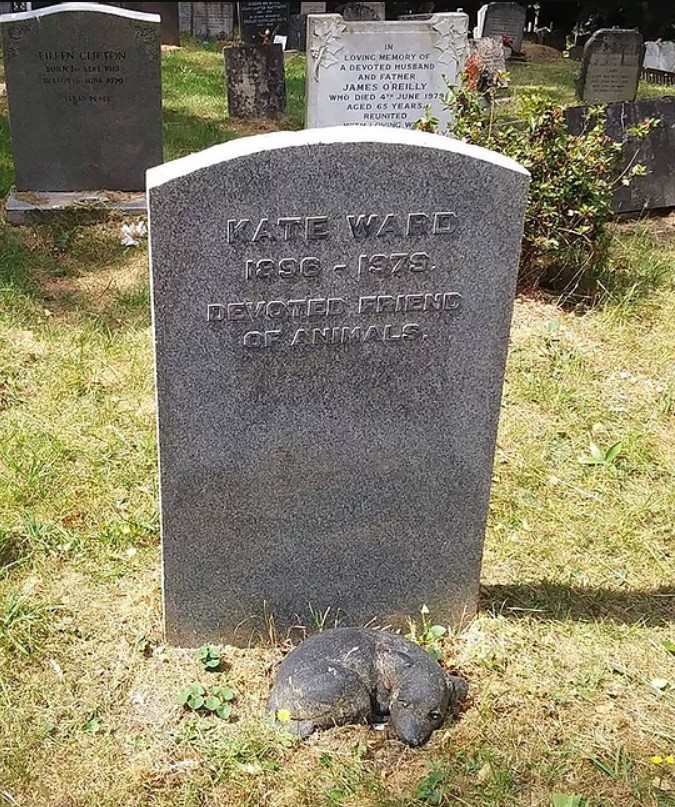
Kate Ward (Camberley Kate) is buried at St Michael’s Church in Camberley and protected by a dog.
During her lifetime, Kate’s fame spread far and wide. She featured In the national press and on television programmes such as “Nationwide” and “Tonight”. was featured on NBC in the United States and her story appeared in publications across Europe from France to Rumania. She also received the ultimate accolade of a feature in “Time” Magazine, and was photographed by Lord Snowdon. To her surprise, in 1967 she received an award from the magazine “Dog’s Life” for her work. In answer to the inevitable question, why she did it? her invariable reply was that she preferred dogs to humans.
KATE PUTS UP WITH A FILM CREW FOR THE BENEFIT OF HER DOGS
Her home at 218 London Road was just a few doors along from the former Lamb pub, near the present Meadows roundabout, but Is no longer standing. The Katherine Court retirement flats were named after her at the suggestion of a local resident in 2000.
A BEAUTIFUL PAINTING OF KATE AND HER BELOVED DOGS
There are so many great lessons we can learn from the life of Kate Ward, both as responsible dog owners, human beings, and as pet rescue charities. Most of all Kate recognized the value of a photograph and how it could be used for the positive influence of others, to bring light to a cause, and to help raise money.
Please share for others to enjoy.
WHAT YOU CAN DO TO HELP ANIMALS IN NEED
You can support our work by donating as little as £5 – It only takes a minute but it can last a lifetime for an animal in need.
Everyone who donates will receive a Certificate of Appreciation as a thank you for helping animals in need.
The Mission of Protect All Wildlife is to prevent cruelty and promote the welfare of ALL animals.
We believe EVERY animal should be treated with respect, empathy, and understanding. We raise awareness to protect and conserve wild, captive, companion and farm animals.
It is vital that we protect animals against acts of cruelty, abuse, and neglect by enforcing established animal welfare laws and, when necessary, take action to ensure that those who abuse animals are brought to justice.
Protect All Wildlife are involved in many projects to protect animals’ rights, welfare, and habitats. Money contributed to Protect All Wildlife supports ALL of our worthy programmes and gives us the flexibility to respond to emerging needs. Your donations make our work possible.
A Texas couple was arrested for selling protected wildlife, marking the first case in the U.S. filed under The Big Cat Act.
On Wednesday, 29-year-old Rafael Gutierrez-Galvan and his wife Deyanira Garza, 28, had their initial court appearances in McAllen, as U.S. Attorney Alamdar S. Hamdani announced.
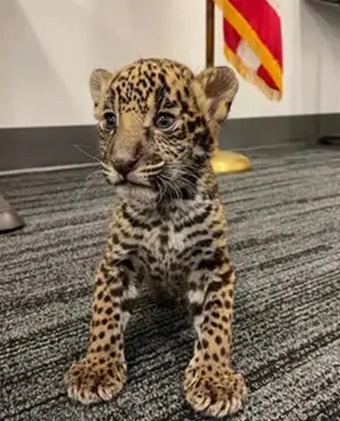
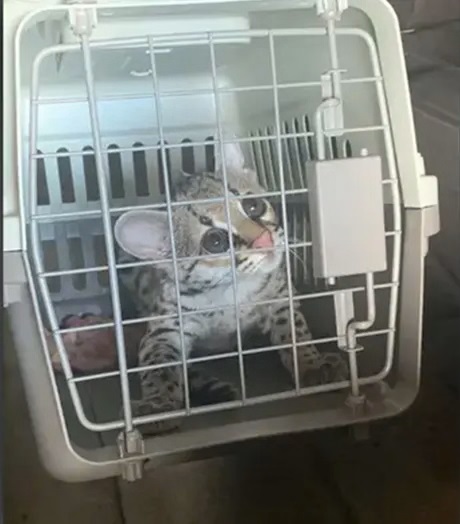
Based on the criminal complaint, Gutierrez-Galvan was accused of selling a Margay cub for $7,500 in a parking lot of a local Academy Sports and Outdoors on Aug. 24. Later on Sept. 26, he tried to sell a Jaguar cub to the same buyer. He instructed his wife to bring a case filled with cash from their home to the meeting point. However, the police stopped her on the way and found the money.
According to the criminal complaint, Rafael Gutierrez-Galvan tried to sell this Jaguar cub. Credit: JUSTICE DEPARTMENT
Neither Gutierrez-Galvan or Garza possess a license to buy, sell, trade or transport exotic animals such as Margays and Jaguars, federal authorities said.
In December 2022, the Big Cat Act was put into effect, which made it illegal to import, transport, sell or possess any wildlife species that are prohibited. This includes Jaguars, which are considered a prohibited species.
The rescued Margay cub. Credit: JUSTICE DEPARTMENT
Gutierrez-Galvan and Garza face up to five years in federal prison and a possible $20,000 maximum fine if convicted.
Authorities said they were able to recover both animals in the case.
WHAT YOU CAN DO TO HELP ANIMALS IN NEED
You can support our work by donating as little as £5 – It only takes a minute but it can last a lifetime for an animal in need.
Everyone who donates will receive a Certificate of Appreciation as a thank you for helping animals in need.
The Mission of Protect All Wildlife is to prevent cruelty and promote the welfare of ALL animals.
We believe EVERY animal should be treated with respect, empathy, and understanding. We raise awareness to protect and conserve wild, captive, companion and farm animals.
It is vital that we protect animals against acts of cruelty, abuse, and neglect by enforcing established animal welfare laws and, when necessary, take action to ensure that those who abuse animals are brought to justice.
Protect All Wildlife are involved in many projects to protect animals’ rights, welfare, and habitats. Money contributed to Protect All Wildlife supports ALL of our worthy programmes and gives us the flexibility to respond to emerging needs. Your donations make our work possible.
We are holding a virtual sponsored walk for Batel throughout October 2023 to help raise some much-needed funds for his massive vet bills.
We hope you will all take part!
**************
❤ The rules ❤
Simply walk a mile a day (or whatever is manageable for you and your dog) every day in October.
You can collect sponsorship from your friends, family, and Facebook groups or simply make an affordable donation yourself.
We want to flood the feeds with videos and pictures of you all taking part so PLEASE send us videos of your dogs out having fun in honour of our best boy Batel.
This is open to all pet parents and all species of animals. If they enjoy going for a walk of any kind, then they can get involved.
Please share this event for Batel with the hashtag #WalkForBatel. He really needs our help.
Batel’s Story …….
Batel’s battle started around 2 years ago in Egypt.
He had been horrifically abused having had his paws cut off.
He was rescued and brought to the UK as a Miracle’s Mission dog.
He has been a really medically complex dog both orthopaedically and due to his ongoing chronic renal issues.
Batel has been on the brink of death many times. Not once has he lost the will or the love of life.
He is such a happy boy who exudes joy and fun.
His quality of life has and does remain really high.
He recently underwent a lifesaving amputation to his previously mutilated stump. He is recovering really well from this and has already developed a new way of walking, sitting, and resting in light of his current level of disability.
Batel never gives up. He just adapts, he does it all with a smile on his face.
You can email info@miraclesmission.org or message us with any questions/ queries and to submit videos of your walks.
To make a general donation for Batel please use PayPal info@miraclesmission.org and reference Batel.
To find out more about the amazing work that we do please visit Miracle’s Mission
Join Danny and all of Batel’s friends and family for Batel’s Walk
Animal rescue charities need our help more than ever now. Rising costs coupled with low donations and no government funding etc. coming in are hitting us really hard.
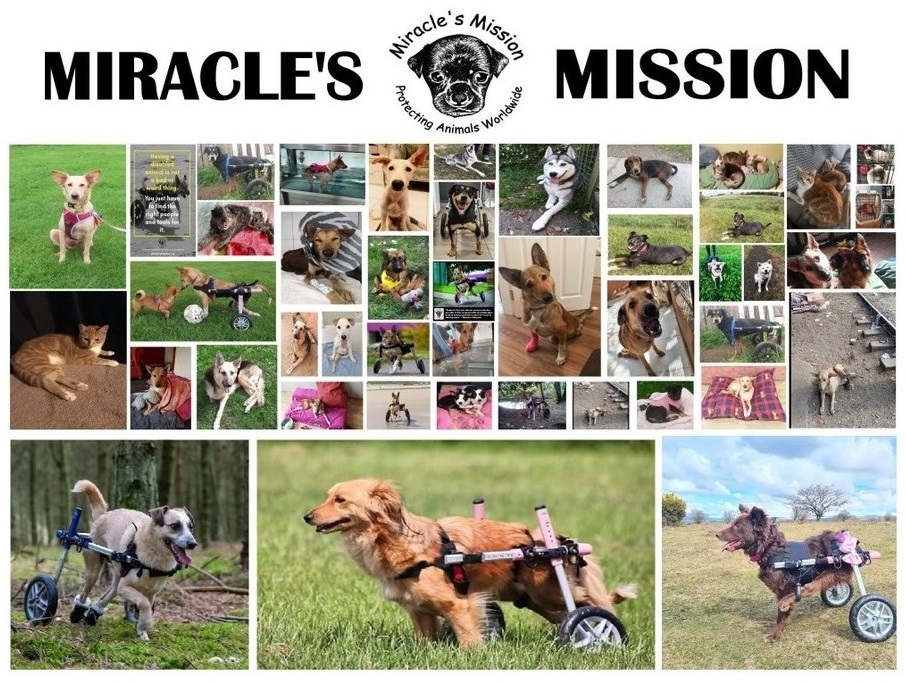
Some of the amazingly brave animals that Miracle’s Mission have helped over the years
Since starting Protect All Wildlife over 10 years ago I have managed to raise over £100,000 for various animal charities including Lions, Elephants, Gorillas, Animal Rescues and victims/survivors of the Australian wildfires etc. With the support of my wonderful followers, friends and family I have been able to do this by doing various charity fundraising events including a 15,000 foot skydive, doing a 10km run dressed as an Elephant, a Tough Mudder assault course and several auctions of items very kindly donated by fellow animal lovers.
Being able to help animal charities in this way has at times given me the motivation to carry on. I have suffered on and off with depression for 30 years or so and at times have had to force myself to get out of bed in the morning. Apart from my mental nursing, animal activism has given me a mission in life – to help those less fortunate in whatever way. As you are probably aware, I became the (very proud) Patron of Miracle’s Mission four years ago. Miracle’s Mission are dedicated to the rescue, rehabilitation and rehoming of sick injured and disabled animals. They also operate a Trap, Neuter and Release (TNR) centres in Borneo and Egypt. They receive no government funding whatsoever and rely totally on donations and volunteers to keep going. The cost of running an animal rescue is high, however the running costs of a specialist rescue service like Miracle’s Mission is even costlier.
When rescues come to Miracle’s Mission they often can’t walk & need surgery. With your help we are able to treat & rehabilitate them. But with vet fees, physio costs, specialist mobility equipment and food/heating etc it is VERY costly to keep going. PLEASE help us treat MANY more animals by donating ANY amount, large or small. EVERY penny counts.
Unfortunately I haven’t been able to do a ‘proper’ fundraising event because in the last year I have not been very well, lacking energy and losing about a stone in weight. I put it down to having long covid after catching covid in October last year. However, it transpired that I actually have cancer of the stomach. My treatment has just started and consists of 4 chemotherapy cycles over 8 weeks then if the tumour has shrunk enough I will have an operation to remove all of my stomach. My oesophagus will then be connected to my small intestine. The recovery period from my stomach operation will be in the region of 4 to 5 months.
So I have come up with a very bizarre charity fundraiser to help the rescues at Miracle’s Mission. I am not sure how ethical it is but here I go – a sponsored CHARITY CANCER TREATMENT FUNDRAISER FOR RESCUE ANIMALS. Knowing that the rescue is still receiving much-needed funds will let me concentrate 100% on MY recovery, something that I have neglected over the years. It would be amazing if you sponsor (donate) ANY amount large or small.
Thank you in advance for your support, it is really appreciated. Please share with friends and family. Thank you for your incredible support, it is REALLY appreciated. Best wishes, Paul. 🐾
My Chemotherapy journey has started at York District Hospital
WHAT YOU CAN DO TO HELP RESCUE ANIMALS
You can support our work by donating as little as £1 – It only takes a minute but it can last a lifetime for an animal in need.
Everyone who donates will receive a Certificate of Appreciation as a thank you for helping rescue animals in need.
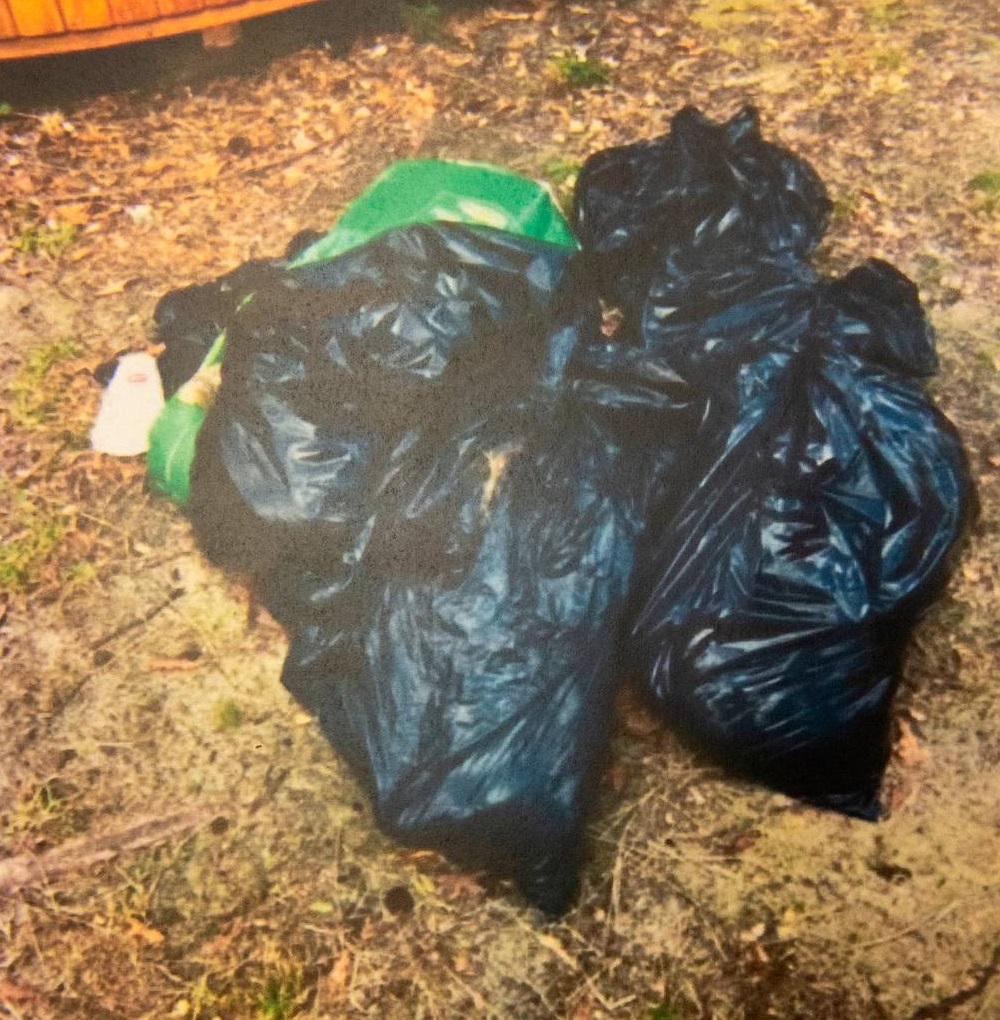
Jessica Collins, of Saucier, ran what she called Deep South Rescue when Harrison County sheriff’s deputies went to the property in March 2022 and found 30 dead dogs, most of them in black trash bags. A cage at her home contained a dead vulture as well as eight dead puppies inside a trash bag.
Dead and neglected dogs found at Deep South Animal Rescue
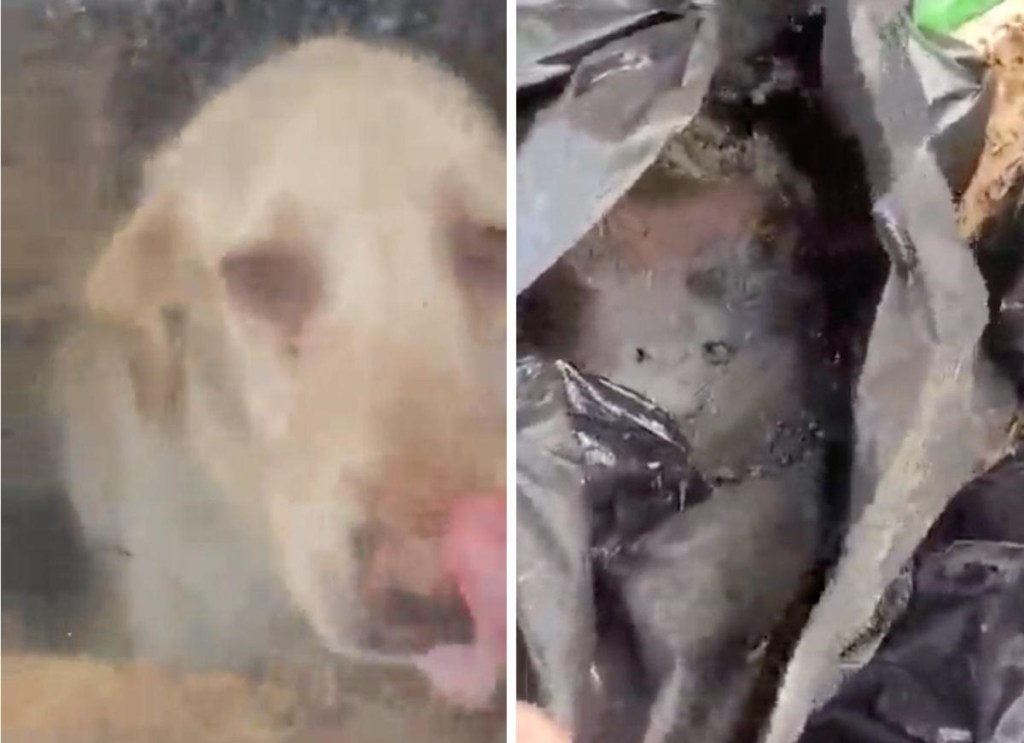
Video shows bodies of dogs all over, with many in trash bags or burned, and in varying states of decomposition. Just one dog was alive, an emaciated Labrador who had been locked in a shed without ventilation, food, or water, along with a dead federally protected Buzzard.
A warrant was issued to rescue the dog and begin disposal of 30 deceased canine remains.
An additional 14 dogs on a property in Pass Christian were also surrendered by Collins.
Collins was arrested in March 2022, and charged with only one felony count of animal cruelty for the federally protected buzzard and 30 misdemeanor counts of simple animal cruelty for the deceased dogs.
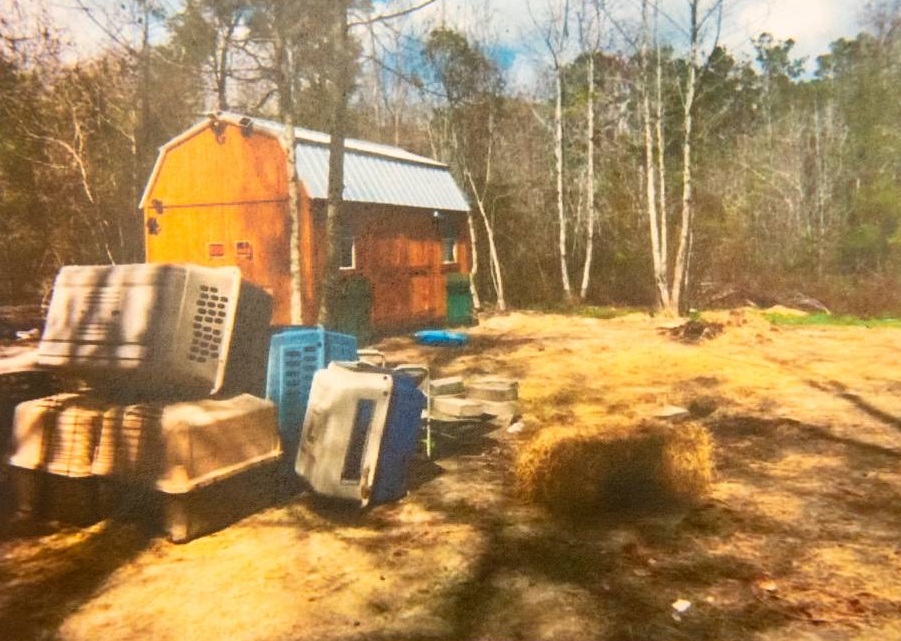
A photo taken by a Harrison County Sheriff’s Department Animal Control officer shows dead dogs wrapped in trash bags found on a property where Jessica Collins kept several dead dogs in Saucier.
Collins operated Deep South Animal Rescue under the name Jessica Ann Gallaspy. She was charged with 30 misdemeanor counts for cruelty to a dog under MS § 97-41-16 (2) a. and bonded out of the Harrison County Adult Detention Center. Maliciously injuring dogs or cats is now chargeable as a first-offense felony for each dog or cat killed with malice, MS § 97-41-16 (2) b.
Linda Perry went to the property in Saucier when she saw a plea from Collins on Facebook for help. Collins, she said, lied about being a 501c nonprofit and claimed she needed help because bobcats had been killing the animals.
“From the moment I arrived, I started finding dead dogs all across the property,” she said “She said the bobcats were killing them. It was all a lie. Once you see that, you can’t forget it. She fooled everyone in the animal community.” Collins did not live on the property where sheriff’s deputies found the animals. A shed sat on the half-acre lot, and the animals had no electricity or running water.
A photo taken by a Harrison County Sheriff’s Department Animal Control officer shows the shed where Jessica Collins kept several dead dogs in Saucier.
Collins was sentenced to 60 months incarceration, with six months to beserved beginning on August 25. She will serve the remaining 54 months if she violates any term of her sentencing.
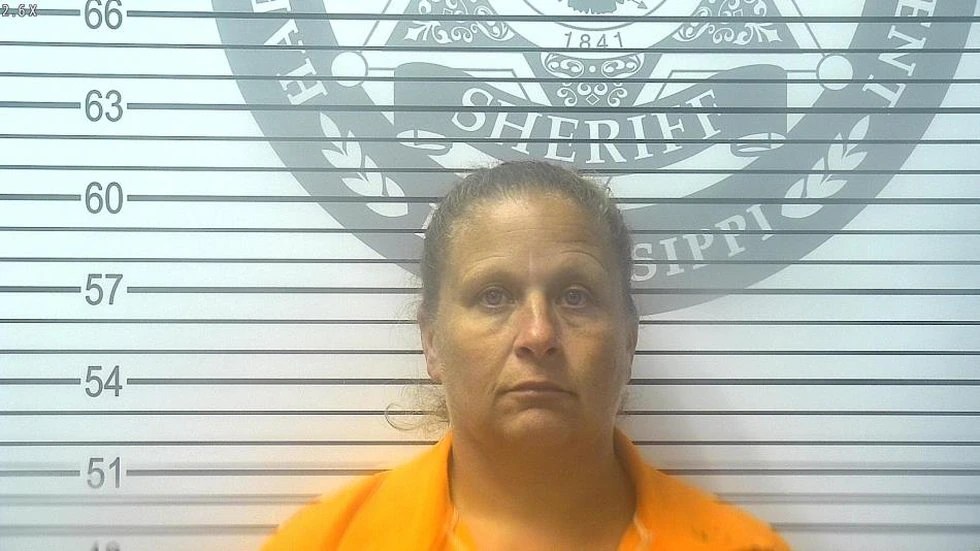
Jessica Collins – Harrison County Adult Detention Center
“It was hard to believe that a person like this defendant, who is supposed to be taking care of animals, had done what she did in that case,” Harrison County prosecuting attorney Herman Cox said. “It was atrocious. There is no excuse for it.”
Collins cannot own a domesticated cat, dog or other animal for 15 years. Once she completes her jail sentence, she will undergo a psychiatric evaluation and return to court every seven months for a review of her case.
The cost of changing a rescue animal’s life forever – PRICELESS!
To feed a dog for one month typically costs somewhere from £16 to £50, depending on the breed. Microchipping costs about £10 to £15. The average cost of essential vaccinations is £64. A vet appointment costs between £40-£60. Physiotherapy/Hydrotherapy – the average cost is £50 for a 30-minute session.
You may wonder, why do you have to pay to adopt a dog?
Well, running an animal shelter is not cheap, with food, heating and other costs, so you money goes towards supporting them in the work. It also pays for vital care that your new pet has had, and covers essential expenses that you’d likely have to pay for anyway if you got your dog another way.
Why do dog shelters charge people to adopt pets?
First of all, animal shelters cost money to run. While they get donations and funding through events like charity runs, the costs are high. They need to pay for food, heating and other bills, as well as any staff costs and expenses like petrol for home visits.
Adoption fees also cover other expenses for the dogs, such as vet bills, which you’d likely have to pay yourself anyway if you acquired a new dog through other means.
Every dog rehomed is vaccinated, microchipped and neutered.
Please help is rescue, rehabilitate and rehome MANY more sick, injured and disabled animals by donating ANY amount, large or small, at HELP RESCUE ANIMALS IN NEED.
10 REASONS WHY YOU SHOULD #ADOPTDON’TSHOP!
Adopting a pet has many benefits, some of which you may have not considered. Here are some reasons why adopting a pet would benefit you and your family.
1. You are saving a life
By adopting from a shelter, you are providing an animal with the second chance they deserve. Many have been rescued from horrific circumstances such as cruelty, neglect and abandonment, or quite simply their owners were no longer able to look after them due to illness or a change in situation.
Before and after: these pictures were taken two months apart
Shelter staff work tirelessly to nurse animals back to health, rehabilitate disturbed animals and do everything they possibly can to ensure they are prepared to go to a new home. Sadly, not all of them are as fortunate. Some shelters have to euthanise due to lack of space, meaning many healthy animals lose their lives. By rehoming a pet you can give an animal that has been abandoned through no fault of their own a loving, stable home, and help to stop overpopulation.
2. You will save money
Shelters often microchip, spay, neuter and vaccinate the animals that come into their care. This saves you a lot of money because you don’t have to pay for the procedures yourself and it ensures the pet you are taking home is healthy. Also, the prices of adopting a pet from a shelter are often a lot lower than the rates charged by breeders.
3. Can help to eradicate puppy farms.
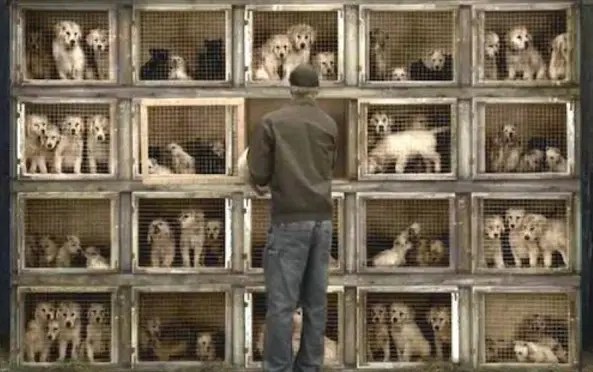
A puppy farm, or mill, is the illegal practice of breeding puppies for the sole purpose of maximising profit, without any regard to the dogs’ health or wellbeing. Dogs at puppy farms are forced to breed several times to their detriment and they are often kept in terrible conditions without basic necessities.
Bred Relentlessly For Profit
People who run such places are not concerned with producing healthy dogs, so they can be born with severe problems that emerge over time. The dogs usually don’t receive any veterinary care, and will often be destroyed once they can no longer reproduce. Additionally, dogs at pet shops are often products of puppy farms. Adopting from a shelter aids in stopping dogs from being subjected to such horrific circumstances, because rather than funding this illegal trade you will be rehoming a pet from somewhere reputable that supports animal welfare.
4. Can improve your health and make you happier
Various studies have shown that a having pet can elongate your life, whilst improving your overall happiness and health. It also helps people with depression, stress, anxiety and many other ailments. The affectionate and loyal nature of dogs as pack animals that form close relationships with their owners can help sufferers of depression, who may feel like they don’t have anybody else.
Stroking your pet can reduce your blood pressure and stress levels, and playing with them can increase the levels of serotonin and dopamine your body produces, making you feel calm and relaxed. Walking the pet is a way to exercise and provides sufferers of anxiety and depression with a reason to leave the house. It also creates opportunities for socialising with other dog walkers. The animal you have helped through rehoming can help you.
5. Can benefit children
Children can be taught valuable life skills through pet ownership, such as the importance of maintaining responsibilities. Rehoming a pet will also encourage empathy by making them think about how they have helped to give an unwanted animal a loving home. Pets can help children with separation anxiety and provide them with security, as they can be safe in the knowledge that someone will always be there. As well as this, they can be a loving companion and playmate.
6. Many of the animals are housetrained
Animals at shelters have often been housetrained in their previous home, particularly if they are older. This saves you a lot of time and extra effort when training your new pet where to go to the toilet.
7. Unconditional love
A pet is a companion that will never judge you, will love you regardless of whatever happens and will always be there. As well as making you feel great, their unconditional love raises your self-esteem because of the affection they show you. It is said that animals know when they have been rescued, so the bond between you and your rehomed pet will be especially strong.
8. You could get a pet you never expected
Although you may have an idea of what you are looking for, there are a wide variety of animals waiting to be adopted from shelters. This may mean an animal you would never have imagined could turn out to be the best match for you. Therefore, it is always important to have an open mind when visiting shelters.
9. Older animals can prove to be the best companions
Many people want to adopt puppies and kittens without considering the advantages of having an older pet. If trained in their previous home they will be less likely to destroy furniture than a younger pet, and as such, will probably require less supervision. Older pets are often calmer and quite happy to sit in your company rather than demanding constant attention. They also have more developed personalities than puppies or kittens, so it may be more apparent when visiting them at the shelter whether or not you are suited.
10. Adopting supports spaying and neutering
Spaying and neutering animals is important in controlling the animal population. Many pets that aren’t spayed or neutered often contribute to the problem of unwanted animals, which can lead to more being left at shelters. Adopting an animal from a shelter means that your new pet has been spayed or neutered where possible.
Please help us continue to support animal rescues by donating any amount, large or small. Your donations make our work possible.
And please remember…
…the cost of changing a rescue animal’s life forever is – PRICELESS!


















 PROTECT ALL WILDLIFE