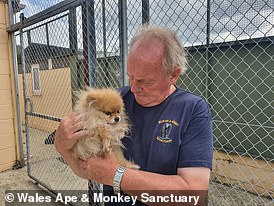
Graham Geran of the Wales Ape & Monkey Sanctuary in Powys collected a number of dogs.
GRAHAM GERAN WITH SOME OF NOWZAD’S DOGS
The founder of an animal rescue centre in Wales was among the volunteers who helped transport Pen Farthing’s cats and dogs.
Farthing arrived at Heathrow Airport with 173 rescues from his Nowzad animal charity in Kabul, Afghanistan, on Sunday, August 29, and was met by a number of vehicles involved in transporting them to their quarantine centres.
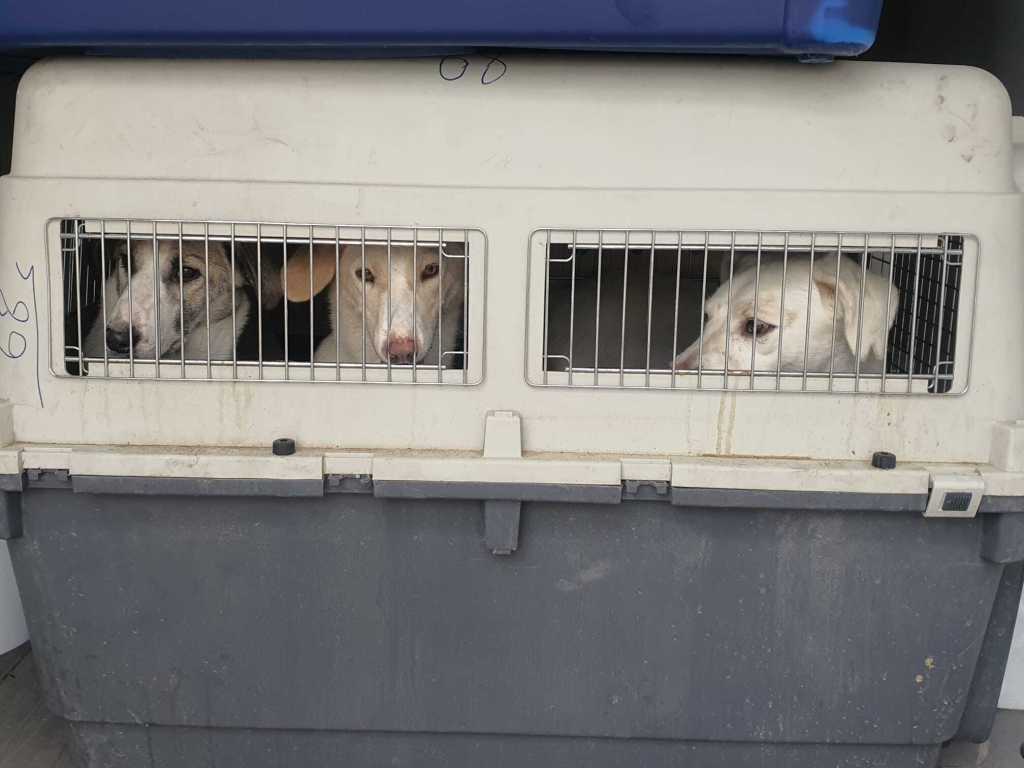
SOME OF THE DOGS WHO ARRIVED AT HEATHROW
Among them was Wales Ape & Monkey Sanctuary founder Graham Geran, who had volunteered to collect some of the dogs in a special transport vehicle free of charge.
The animal rescue, based in Powys, is on the list of premises and carriers authorised by the Government for rabies quarantine in England, Wales or Scotland.
Graham said “I was up at three o’clock in the morning as I had to be in Heathrow for 7:30… and then it was a case of waiting for the checks and then get them from the plane into the quarantine centre.”
There were said to around 18 other vehicles involved in transporting the animals.
Speaking about the dogs, Graham said: “They came out of the crate and they were straight up jumping on us.
GRAHAM WITH ONE OF THE RESCUED DOGS
Graham also revealed that he had received ‘numerous phones calls’ from people wishing to adopt the animals after it was discovered he was involved in transporting them.
He added: “People want to adopt the dogs, so they will go out to quarantine and to good homes.
The animals, with an estimated total of around 100 dogs and 70 cats, are in quarantine kennels across the UK, with hundreds of people looking to adopt them.
Please SHARE to raise awareness to Nowzad and Operation Ark. Sign up to receive NEWS & UDATES straight to your inbox. Thank you.
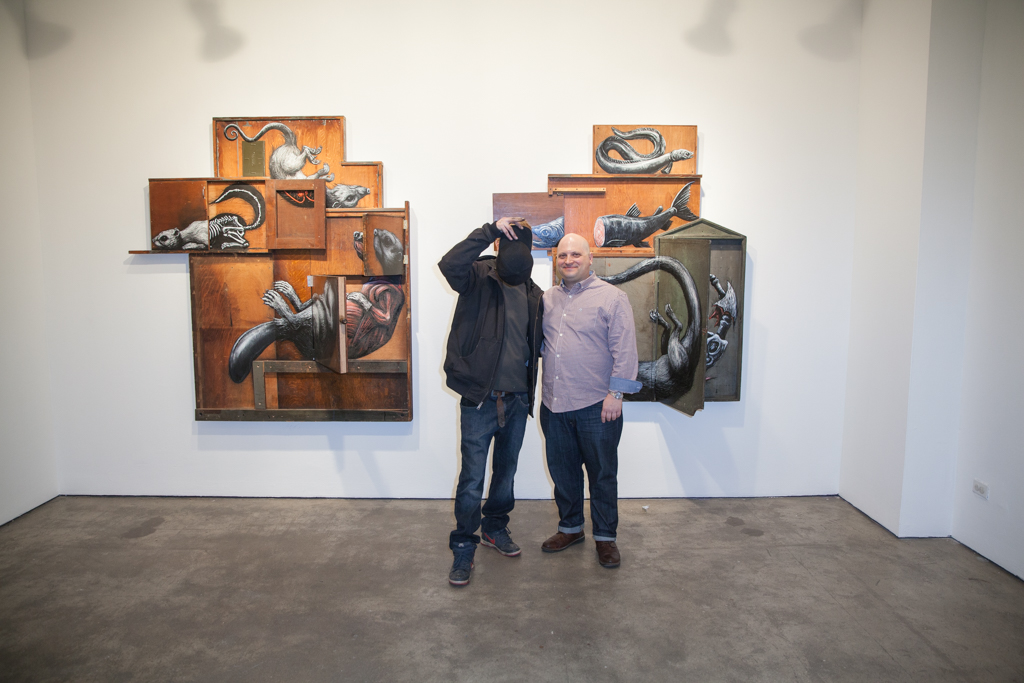
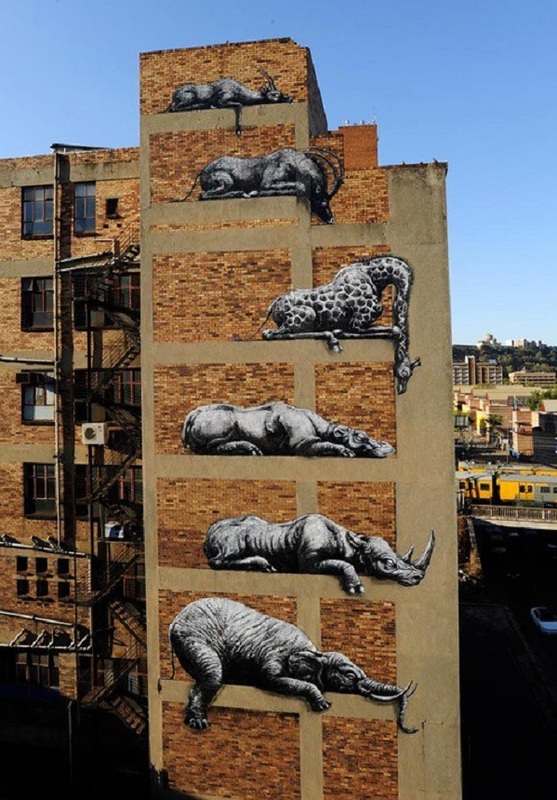
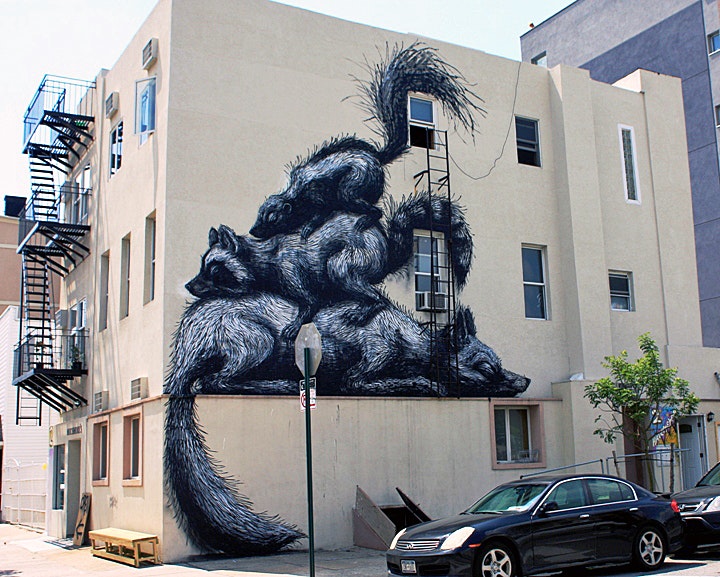
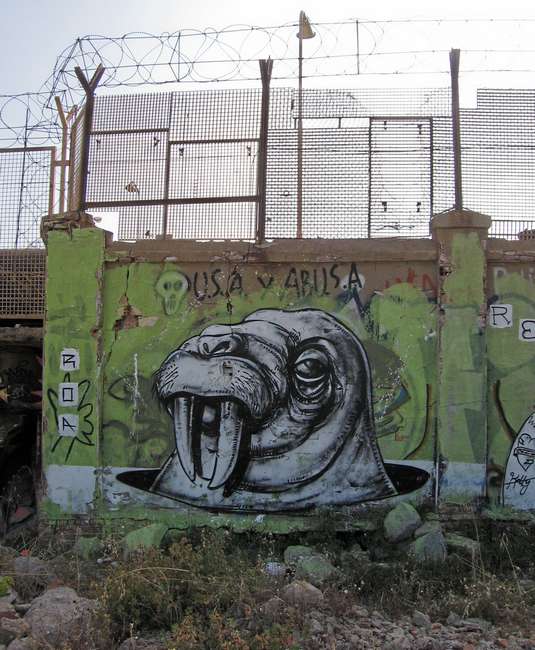
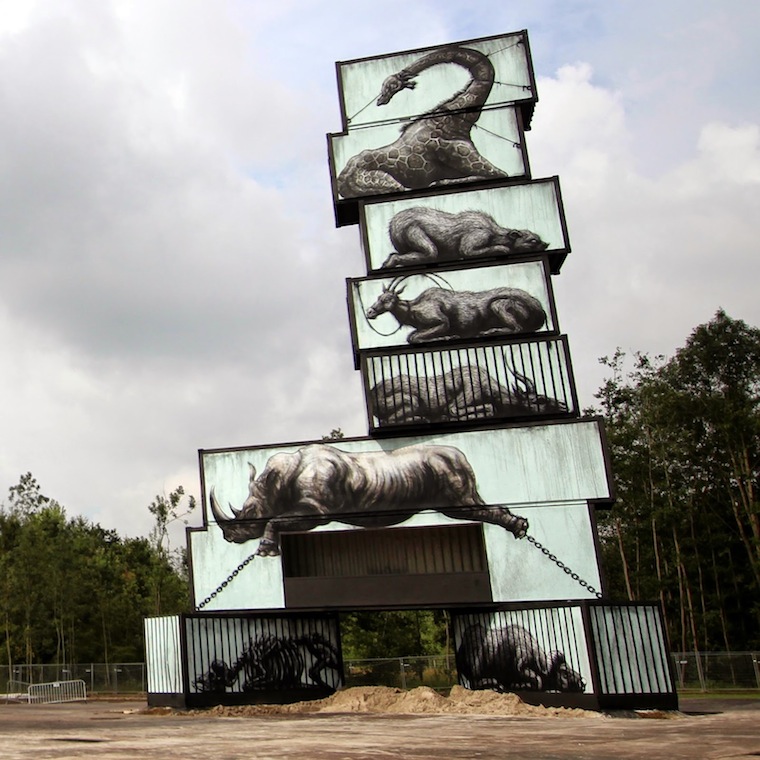
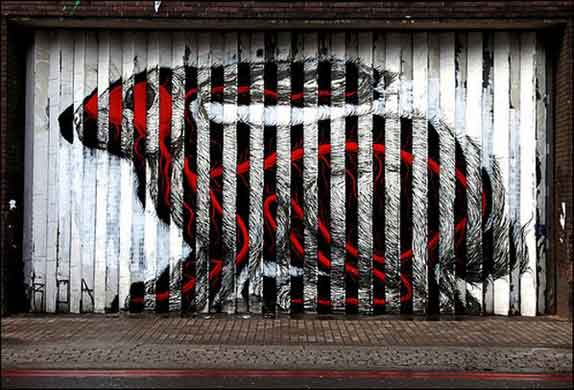
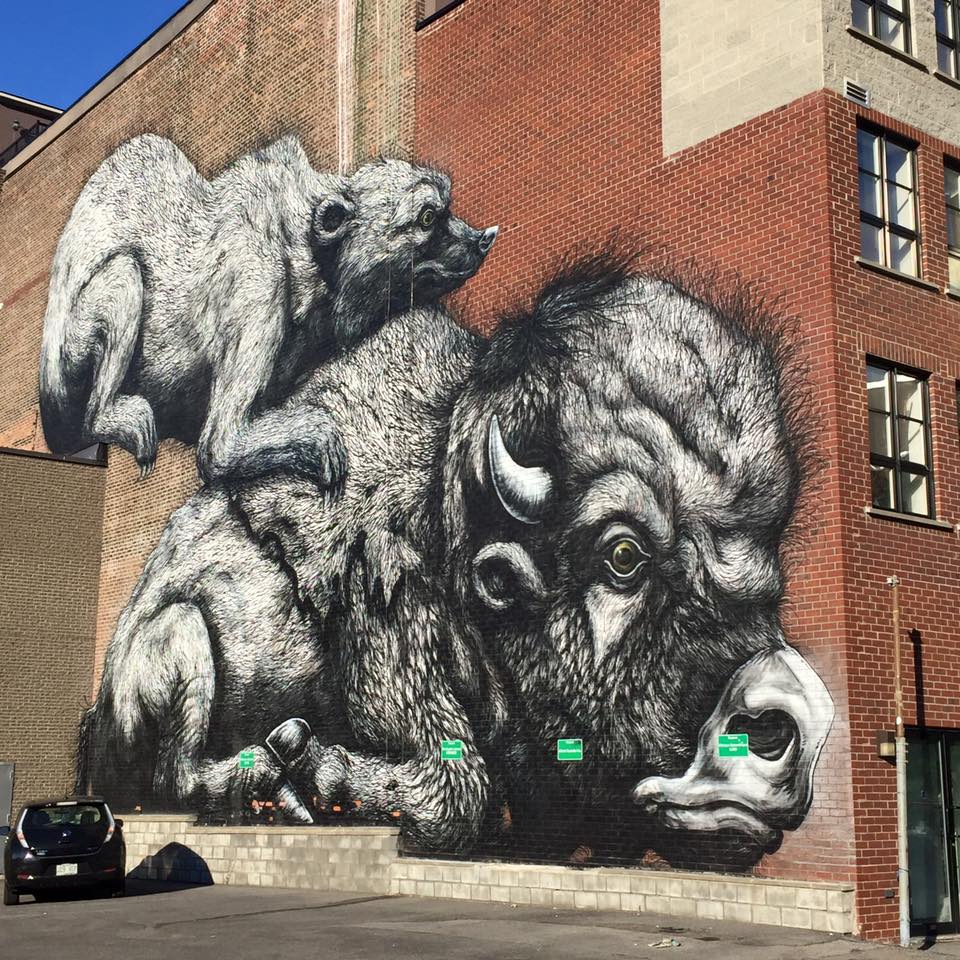
Roa, a hugely talented Belgian street artist from Ghent, is renowned for his giant black and white animal street art. Roa started off in the street art scene painting animals on abandoned buildings and warehouses in the isolated industrial areas of his hometown. Today, Roa’s animals may be found slumbering on the sides of semi derelict buildings and peering out from shop shutters in city streets all across the world from New York to Berlin and Warsaw to Paris.
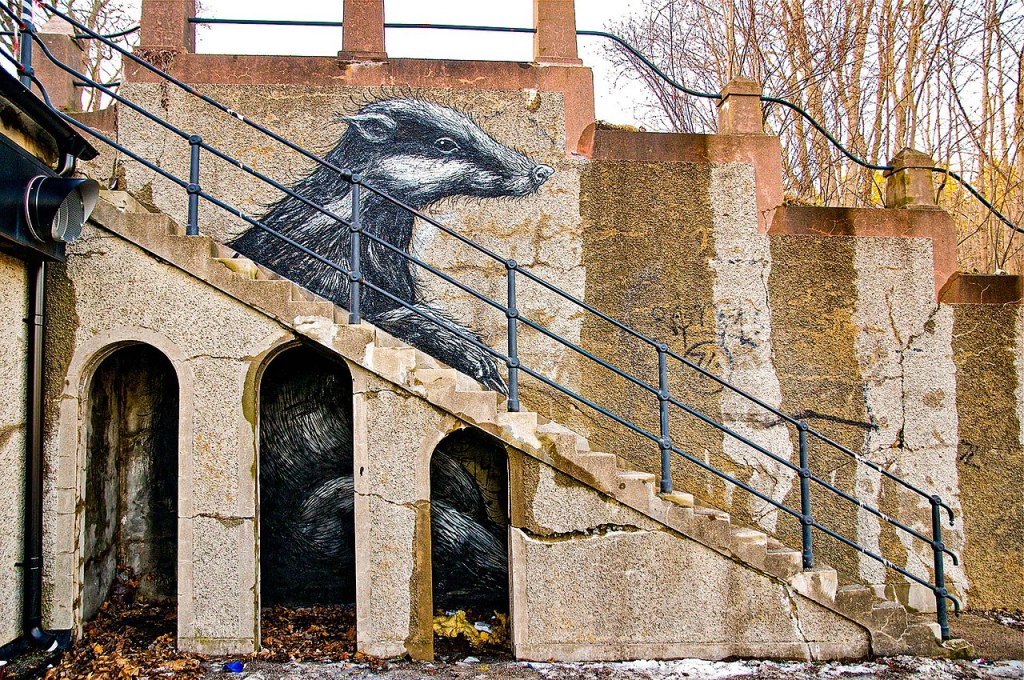
Stockholm, Sweden.ANONYMITYRoa Lets His Work Do The talking
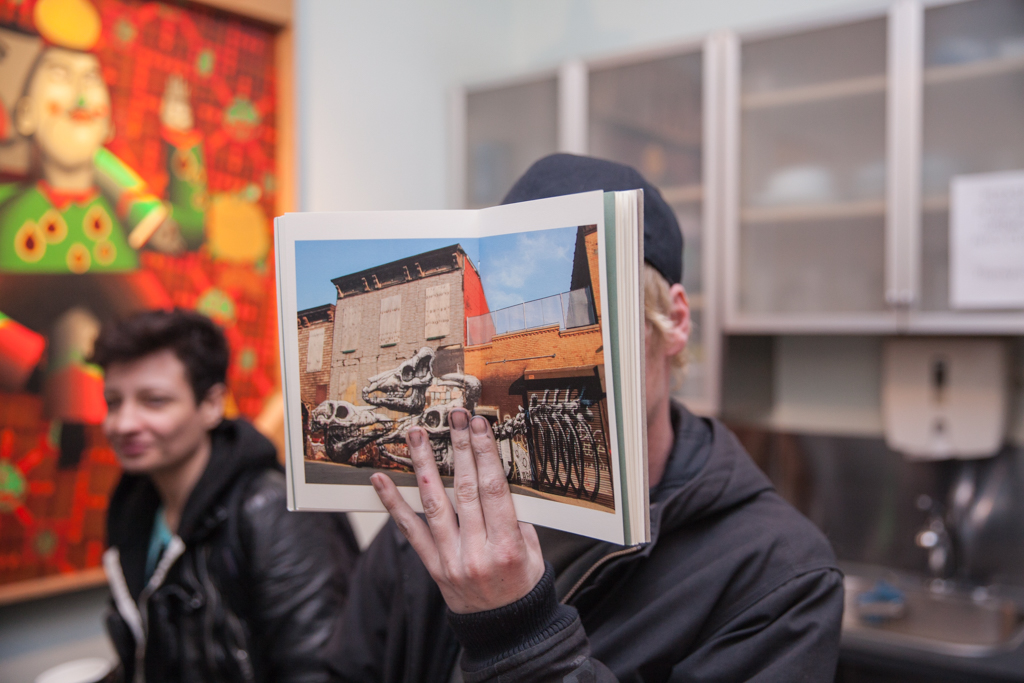
Street artist Roa is a muralist from Ghent, Belgium sprays beautiful illustrations of animals on buildings, walls and anything he can find in cities around the World. His work has often been recorded and photographed, but very little is known about the artist and even less is documented.
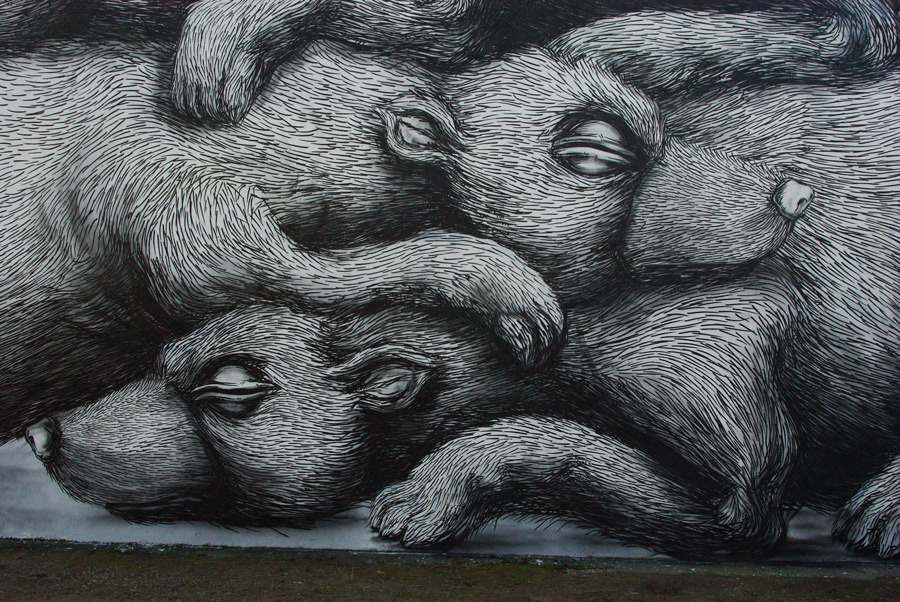
Renowned for his monumental black and white paintings of wildlife, ROA is a pseudonym of a Belgian street artist that has been leaving both accidental and intentional viewers in awe for years now. His hand painted, large scale and unique portrayals of rabbits, birds, rats, fish and other animals disquietly cohabit city streets, whilst his more disturbing images of skeletal or dead creatures directly reflect ROA’s pessimistic opinions of society. Although this street artist’s work is definitely a contender when discussing the most famous and recorded urban pieces in recent history, not much is known about this mysterious painter from Ghent who uses this anonymity to make sure both his artwork and spirit remain uncompromised.
At a very young age Roa remembers wanting to be an archaeologist or something adventurous and collecting little skulls from birds and rodents to draw at home. He grew up in the eighties and naturally was inspired by the American life; music, skating and so forth. The love for music, more in particular hip-hop, quickly joined his curiosity in graffiti. Like most muralists, he began by spraying throw-ups under bridges and walls. During his early years, Roa expressed an active, eclectic mix of styles. At the time, there was not prevailing movement in Belgium. As time went on, the scene’s evolution further evolved as foreign visitors left behind an assorted collection of talents and skills. Slowly but sure Roa became addicted to the nature of urban art.
Roa is primarily known for his strong obsession for animals and rodents. He often combines life, death, and life after death in his murals, which quickly distinguishes him amongst traditional muralists. His animals are painted to include skeleton and internal organs, making the sight even more realistic. The artist states, “Organs are the vital substances of our body and they represent a lot of the symbolism which I like!” One’s love for animals could not be expressed nearly as much as our artist Roa. This mysterious Belgian muralist has created hundreds of murals through Europe. He has also travelled to other locations around the world.
His preferred forms of methods to paint are by using spray paint or acrylic paint. In fact, most of his work is created through a mixture of black, white, and grey scale colours. At times, the muralist prefers to sketch, especially those large murals. He first began his artistic career by paining buildings and warehouses in his hometown. Nowadays, his distinctive black and white style street artwork can be found worldwide.
Some major cities, where his work can be found include London, New York, Berlin, Warsaw, Madrid, Moscow, Los Angeles, Mexico City and Paris.
Muralist Roa’s true obsession for animals is unparalleled and he uses this obsession to paint for inspiration. Roa uses native animals based on the location he is painting in. For example, if he goes to a specific location filled with roosters, like Mexico, then he will paint a rooster. Not only does this make him a standout artist, but his attention to detail is phenomenal. He truly has a pure passion for painting. Roa simply paints to paint- no other reason.
Carefully using the placement and the enlarging of the graffiti subject, ROA implies the cruelty and absurd relationship of humans and animals, as well as displaying the roots and origins of the depicted beings – this is what’s his art all about.
Roa’s work has been turning heads across the street art community by bringing birds, rodents, and other animals back into the consciousness in the areas they once inhabited. Although the street art is generally conveyed in a very natural matter, even his dead animal paintings seem at peace. Not only that, but his extra-large scale black and while local rodents may be viewing the image at work from nearby.
Roa’s anonymity has kept his work and his spirit free.
Enjoy Some Of Roa’s Art From Around The World
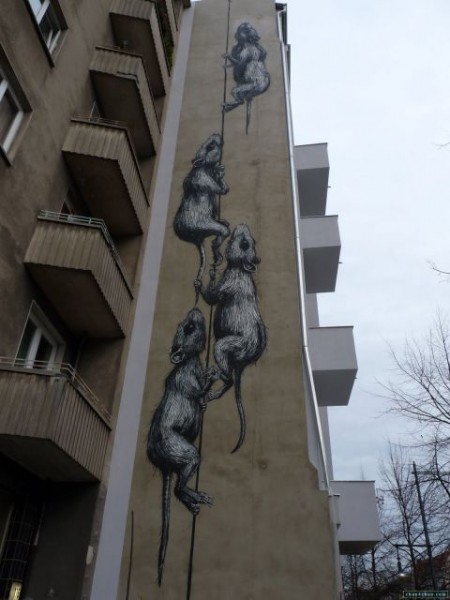
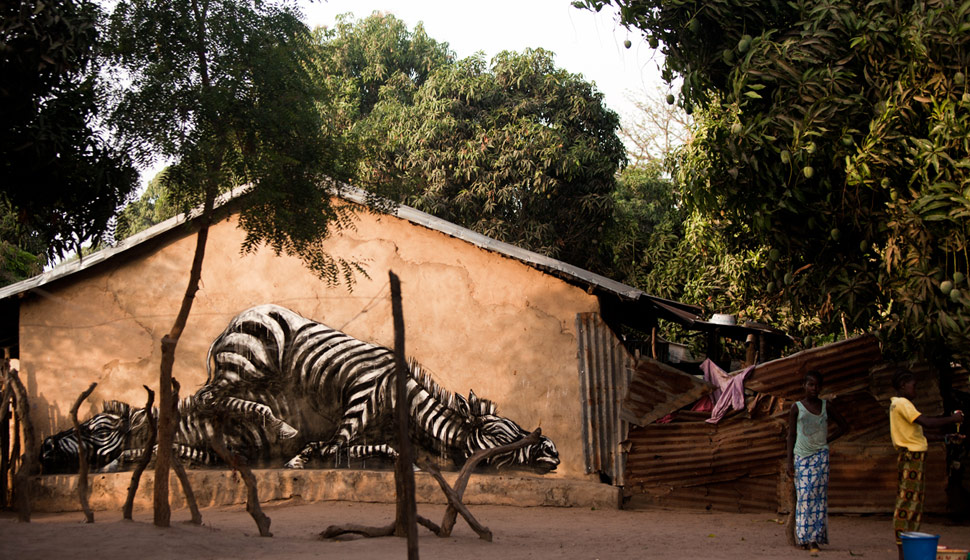
BERLIN, GERMANY
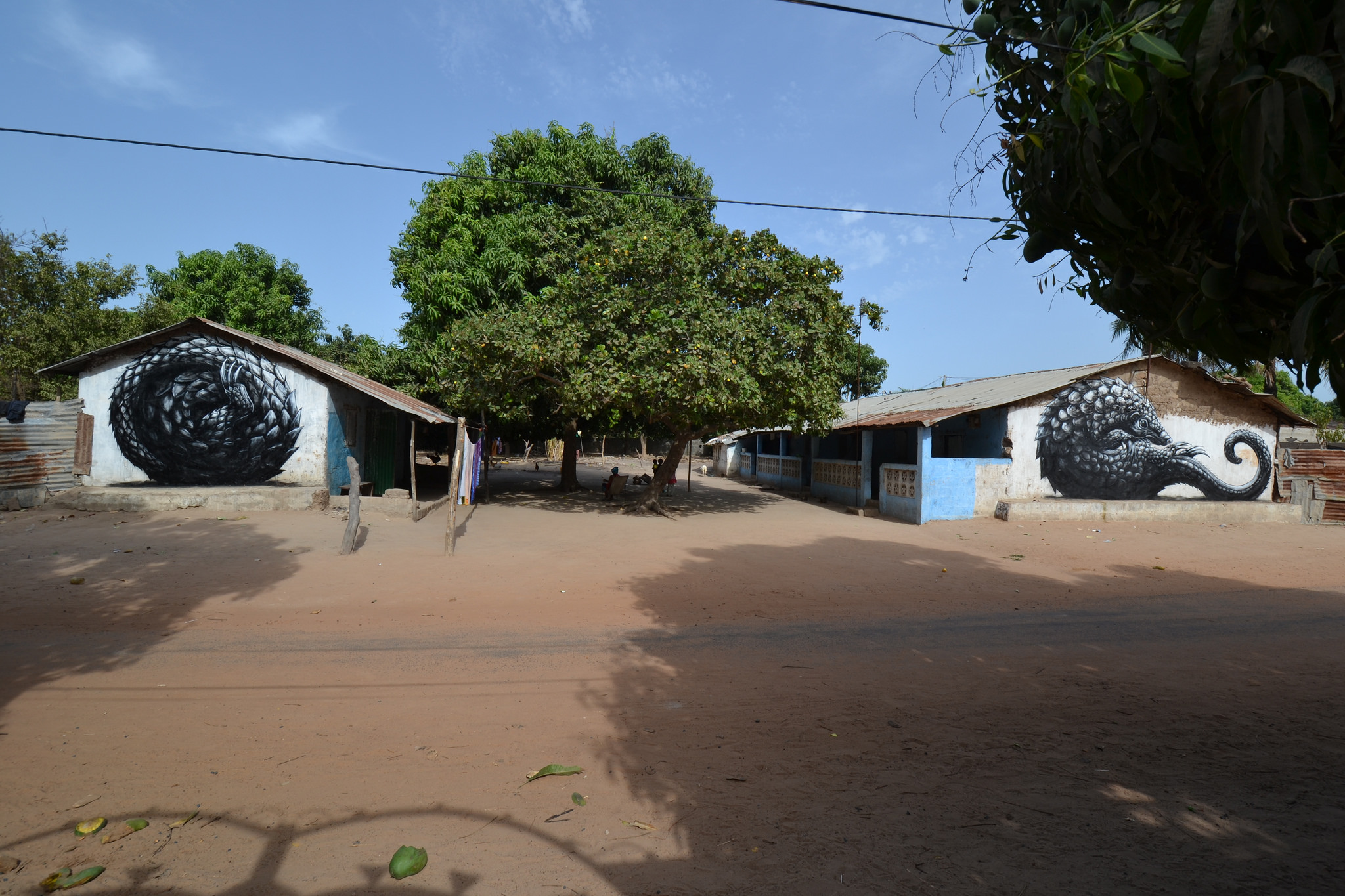
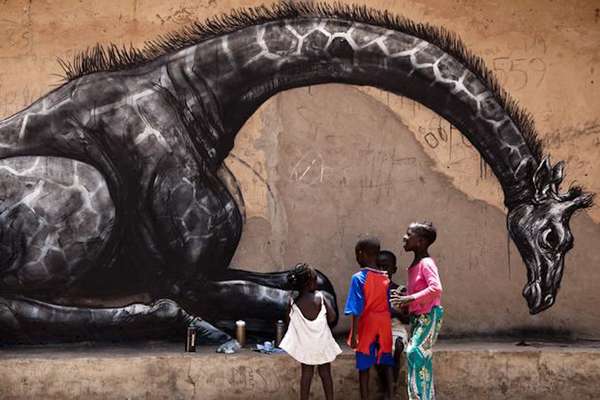
MAKASUTA, THE GAMBIA
JOHANNESBURG, SOUTH AFROCA
BROOKLYN, USA
BARCELONA, SPAIN
WERCHTER, BELGIUMMAKASUTU, THE GAMBIALONDON, UKMAKASUTU, THE GAMBIAWARSAW, RUSSIA
OREBRO, SWEDEN
MONTREAL, CANADA
These are just SOME of the vast amount of murals that Roa has created. You can visit his Facebook page at Roa Street Artist.
Please let others see Roa’s amazing work by SHARING far and wide. Please SUBSCRIBE to receive regular new and updates straight to your inbox.
In Memory of Impi and Gugu who were killed in the raid.
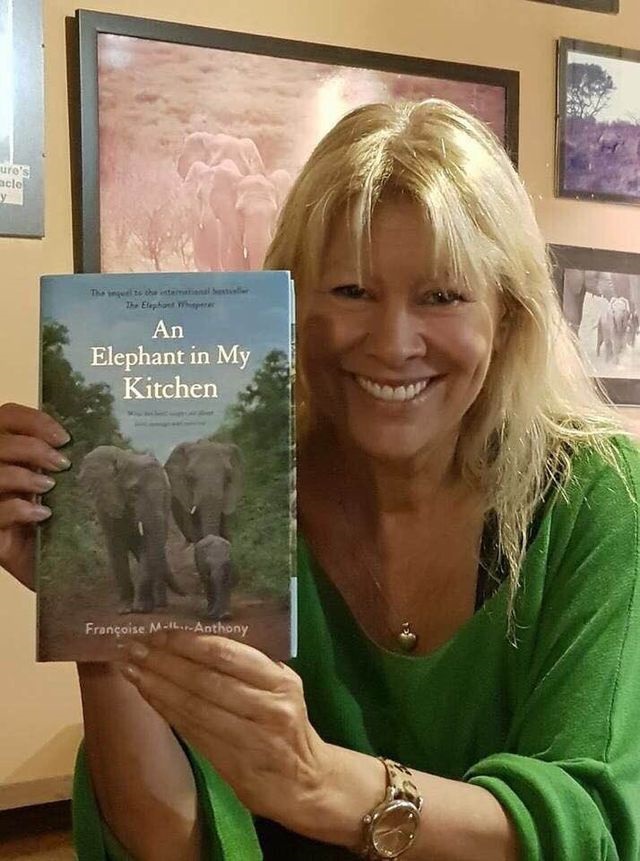
Françoise Malby-Anthony, who founded the Thula Thula game reserve in 1998 with her late husband, the renowned conservationist and internationally bestselling author Lawrence Anthony recalls the awful night that poachers attacked her Rhino orphanage on the 27th of February 2017
THE NIGHT POACHERS ATTACKED A RHINO ORPHANAGE
“Living alone on a vast African game reserve is not for the faint-hearted. And that night, even after 17 years in the wilderness, I felt a strange sense of unease.
It was 2am . White flashes of lightning were lighting up my bedroom. Thunder cracked like gunshots. As I stroked my dog, Gypsy, trying to reassure her, I suddenly realised that the phone was ringing.
‘Hello?’ I mumbled.
‘The orphanage has been hit. They shot two rhinos and attacked the volunteers.’
I sat bolt upright. Hit? Shot? Attacked? I couldn’t process the words.
I’d created the animal orphanage just a year before in order to fill a desperate need. Increasingly, poachers had been targeting adult rhinos for their horns — to sell to the Far East for useless traditional potions.
Any defenceless babies, whose horns had yet to grow, were left to die in the bush. Or if they were found in time, they were brought to my orphanage.
On that very night, I knew that four animal-mad girl volunteers and a permanent carer were providing intensive nursing for six vulnerable baby rhinos and a young hippo.
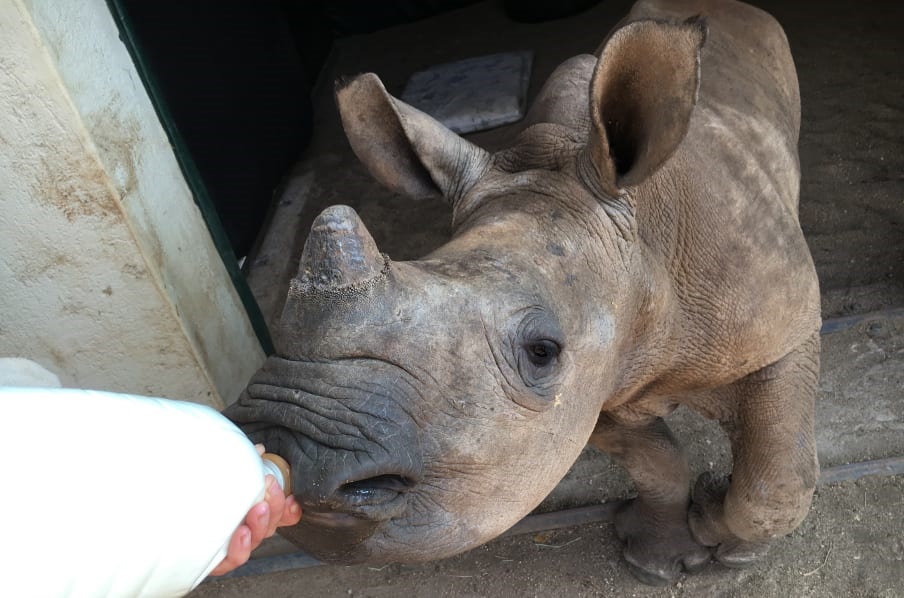
IMPI WITH ONE OF HIS CARERS
Panic-stricken, I ran to my general manager’s cottage and banged on the door.
‘Lynda! It’s me! Open up!’ I yelled, shivering in the rain. ‘Poachers at the orphanage. I’ll never manage the roads in this weather. We need your 4×4.’
She saw the horror on my face and asked no questions. ‘Give me five minutes.’ The rain smacked our faces as we sprinted to her car.
We crept along the dirt track leading to the orphanage, struggling to see, not speaking, hearts hammering. What would we find?
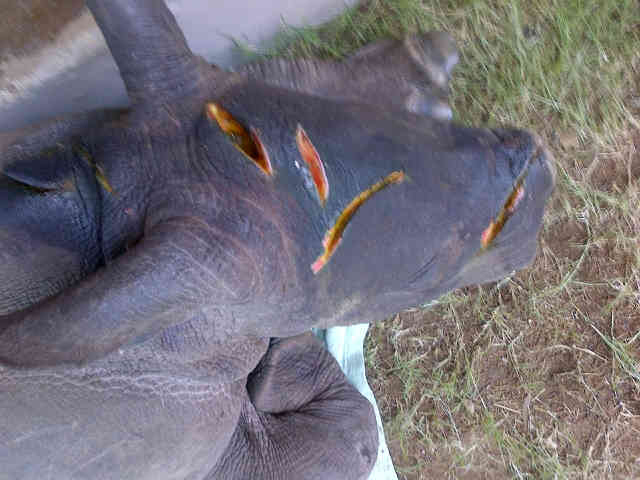
The men who slash rhinos’ faces for their horns are utterly barbaric — far beyond the conception of my trusting young volunteers. One wrong move or word, and an agitated lunatic could well have killed the girls.
Slowly, painfully slowly, we struggled through the downpour. As we arrived at the orphanage, one of my anti-poaching guards ran out.
‘What were you thinking, driving here on your own?’ he burst out. ‘The attackers could still be in the reserve! Quick. Get under cover.’
I stared at him. ‘Is anyone hurt?’ I asked. He nodded, grim-faced, and took us inside . . .
Baby rhinos don’t run. They half-bounce, half-fly as they hurtle towards you with an inquisitive look on their soft faces.
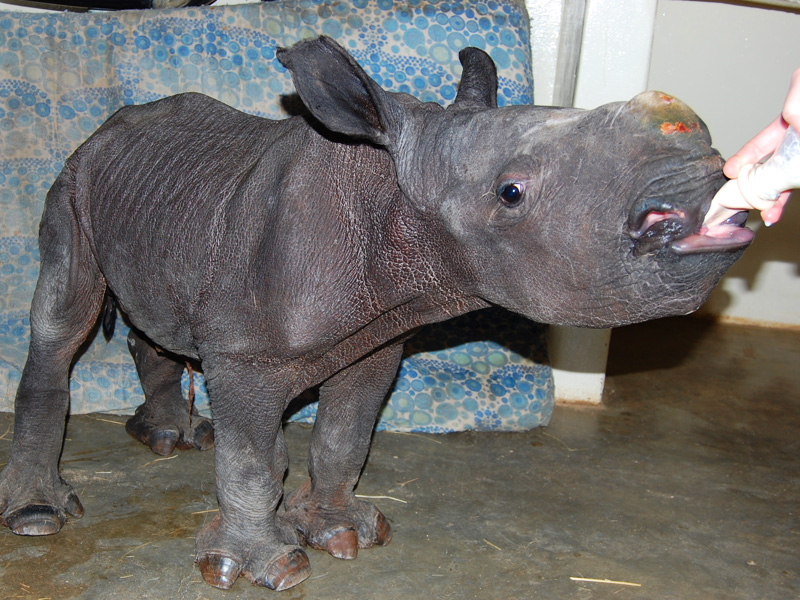
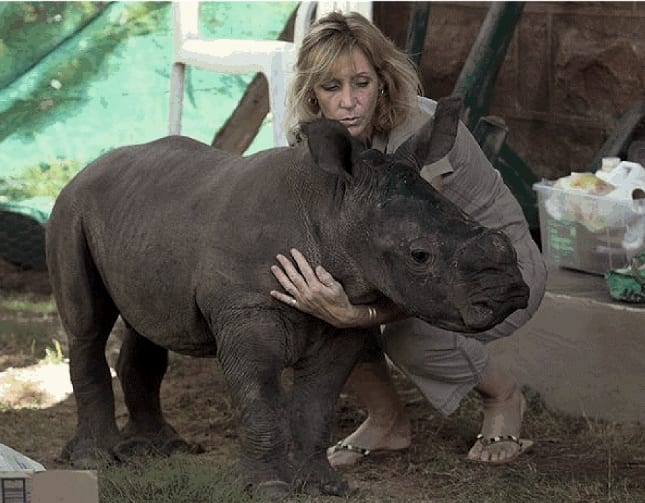
Or so I discovered when I first met Thabo, who’d been a terrified newborn when he was found, his umbilical cord still dragging below him in the dust. His mother had almost certainly been killed by poachers, and it was a miracle he’d survived even a day on his own.
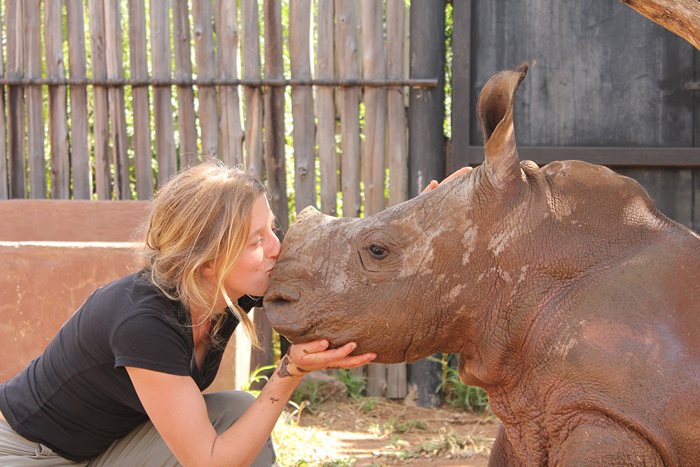
Now Thabo was two months old, and had just arrived from a reserve that could no longer keep him. He nestled his snout gently against my leg — and I melted.
THABO
I’d just agreed to give him a permanent home on the land that my husband and I had bought in South Africa, intending to turn it into a game reserve that would keep animals safe from poachers.
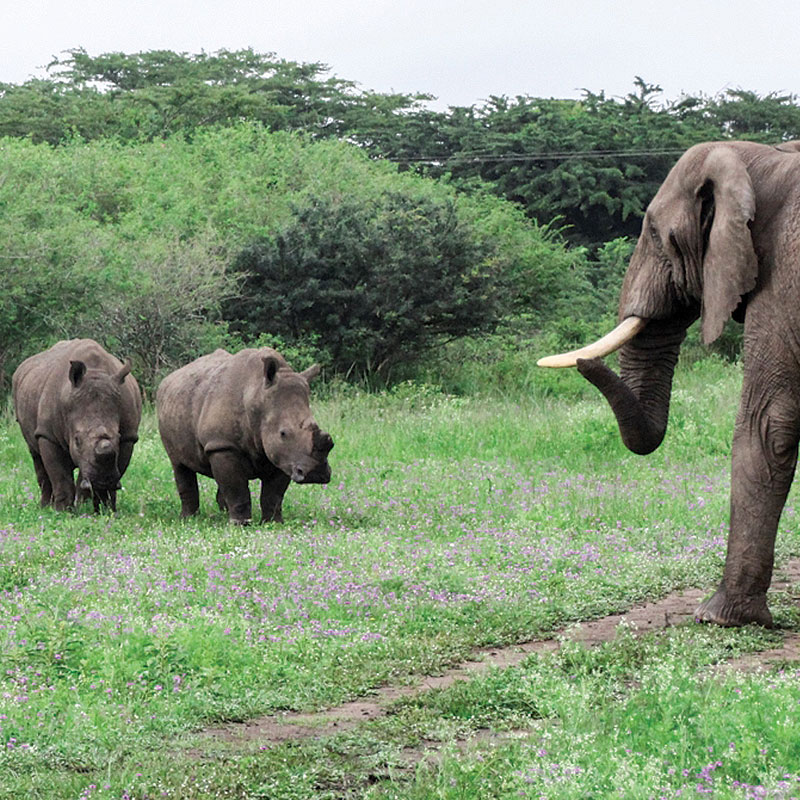
We called it Thula Thula — Zulu for ‘quiet’. Within a few years, we’d built a game lodge, started taking in paying guests and had adopted an entire herd of wild elephants — though no rhinos.
But that was about to change: as I stroked Thabo, I knew with absolute certainty what needed to happen next. I was going to create a haven where orphaned rhinos could heal after their trauma.
That was back in 2011. By the time I’d raised enough funds and rhino-proofed an existing building, my husband Lawrence had died tragically young of a heart attack.
For a long time after I lost him, I lurched from one crisis to the next, never feeling anything was under control. Even small decisions felt overwhelming at first, but creating the orphanage gave me a focus, a reason to get up every day.
LAWRENCE ANTHONY
There was so much at stake. If the heating fails in our game lodge, we might get a bad rating on TripAdvisor, but the guests won’t die. A heating failure in the orphanage’s high-care ward, on the other hand, will soon kill a baby rhino.
Our first call came in April 2015. An anti-poaching unit had just found the carcass of an adult female rhino, with her horn hacked off, but no sign of her calf. Would we take it in if they could track it down? By running away, the six-month old calf had at least avoided being butchered for the tiny horn beginning to grow on his head. With rhino horn fetching £68,000 per kilo on the Far Eastern market, the poachers would have killed him for every gram they could get.
By the time Ithuba was traced, it was a week since his mother had died. Heavily sedated when he arrived, he was covered in infected tick bites and close to death. That first night, he was put on a drip and slept peacefully — but the second night was hell.
It was as if he was going through all the trauma of the past week — his mother’s murder, being transported in a clanging trailer and then finding himself in a strange room with two-legged animals who looked just like the ones who’d killed his mother.
The mere sight of his carers sent him careering around his room in panic — and 200 kilos of agitated rhino can do a lot of damage to a pair of human legs. His high-pitched squeals of terror pierced every corner of the orphanage.
Eventually, we persuaded him to drink milk from a bottle. Then colic struck and nightmares. He’d shiver and jerk about in his sleep; on waking, he’d spin around his room in panic, flinging himself against the walls.
‘What Ithuba’s going through isn’t unusual,’ the vet assured us. ‘People think post-traumatic stress is only experienced by humans, but his emotional recovery is going to be far more complicated than his physical recovery.’
It’s heartbreakingly hard to comfort traumatised animals, but our carers did it with infinite patience and affection. Slowly, Ithuba began to understand they weren’t like the people who’d hurt his mother.
I’ll never forget the day when I saw him trotting happily next to Axel, an easygoing young French carer. Ithuba kept bumping into his leg, as if to reassure himself that he wasn’t alone any more.
Another huge step was the revival of his curiosity. Rejecting other toys, Ithuba homed in on anything made out of tyre, including his food bowl which was a home-made tyre contraption. He’d tip it over, throw out the food, fling the bowl about until it started rolling, then run after it. Finally, he’d balance it on his head, preening and strutting like a dressage horse.
BFFs: The two baby rhinos, Thabo and Ntombi, were soon inseparable
Yet for a long time, he also continued to have panic attacks. He’d be playing happily, then he’d suddenly squeal in fright, latch onto a corner of his carer’s sleeve and suckle it — rather like a baby sucks its thumb.
Slowly, however, his insecurity faded — and his appetite exploded. By the time he was nine months old, he’d doubled his weight and turned into a happy little rhino tank who’d soon be starting a new life in the wild.
The next rhino calf delivered to the orphanage had also lost his mother to poachers. He’d stood by his mother’s body for six days, desperately tugging at her decaying teats while vultures tore her flesh. How do you even start to console a little creature who’s been through that?
Megan, a fresh-faced young British girl, remained with Impi for his entire first night as he ran round and round in circles, crying non-stop, too terrified to sleep, desperate to find his mother.
‘I kept talking to him,’ she said. ‘I told him what had happened to him, that he was safe with us, that there was another baby rhino just like him called Ithuba, and that I was sure they would be friends.
‘He eventually came up to stand silently at my knees. He looked so lost. I longed to take him in my arms to comfort him but I didn’t dare move in case I frightened him. Then he collapsed at my feet and fell asleep.’
Within three days, however, little Impi was on the mend. Ravenously hungry, he’d indignantly head-butt his carers if his bottle wasn’t ready when he wanted it.
One morning, Megan was on her hands and knees giving the floor a good scrub when she felt two little eyes boring into her. Impi edged closer and nestled his chin on her shoulder. And there it stayed, as he shuffled along to keep pace with Megan’s movements.
Some calves are boisterous and belligerent, but not Impi. He was a tender little creature who was afraid of everything and hated being left alone.
Like Ithuba, he suffered from post-traumatic stress disorder, and unfamiliar sounds — even a bird’s squawk — would send him fleeing, squealing in panic.
Nights were a terrible struggle. No matter how exhausted he was, he didn’t feel safe enough to lie down until a volunteer had started reading him a book. Then he’d quietly nestle on the hay next to her, burrow his head into her legs and fall into the deepest sleep.
Ithuba, meanwhile, wasn’t happy about losing his pampered role as the only rhino at the orphanage — and particularly jealous when he realised that Impi was in his old room. Again and again, he charged the barrier to get in; only the sound of Axel rolling a tyre behind him managed to distract the cross little rhino.
The next orphan to arrive was Thando, who’d been discovered neck-deep in mud and unable to move. There was no sign of his mother.
It took five men to pull Thando out of the mud, and there were whoops of delight when they saw he was strong enough to stand.
The DIFFERENCE in Thando’s behaviour from that of the other two rhinos was startling. Rather than being petrified when he woke up in a strange room surrounded by humans, he was merely stroppy.
Happily, he hadn’t had to witness his mother being hacked to death, nor had he been on his own in the wilderness for nights on end. As a result, he very quickly became one of the orphanage’s most laid-back little rhinos.
Eventually we decided that Impi and Thando should meet, as they were similar ages. So, one overcast summer’s afternoon, we left the doors and barriers to their rooms open at feeding time. The carers hovered out of sight nearby.
Impi, usually such a timid little rhino, immediately charged at Thando, who didn’t so much as blink. Baffled by this non-reaction, Impi skidded to a halt and stared at him.
After a lot of posturing and strutting on both sides, they headed inside and flopped down on a mattress, their stumpy little legs entwined. From then on, they were best friends, constantly cuddling up or practising charging techniques on each other.
Another successful pairing was between Charlie, a baby hippo found alone in a river, terrified of water, and a newborn rhino called Makhosi, abandoned because he was too tiny to reach his mother’s teats. As both were under a week old, we put them in the same room.
Amazingly, Makhosi scampered straight up to the hippo. For his part, Charlie swayed his big head from side to side in greeting and reached his snout towards her.
First, they exchanged interested noisy snuffles. Then Makhosi lowered her head and Charlie gently chomped her ears. Finally, the tiny rhino clambered onto the hippo’s mattress, nuzzled up against him and fell fast asleep.
WILD ENCOUNTERS
After that, they trotted everywhere together, demanded to be fed at the same time, and cuddled up whenever they needed warmth or reassurance.
When Charlie’s teeth started to cut through, his gums became sore and inflamed, and he lost his appetite. His rhino friend knew just what to do: she comforted him with gentle nudges, then fell asleep each night with her snout touching his.
Charlie, the baby hippo who was scared of water standing bravely in his paddling pool with pal Makhosi close by
More orphans were now flooding in. Nandi, our first black rhino, was another newborn whose mother had been killed. She was afraid of the dark and wouldn’t go to sleep without a blanket tucked tightly around her.
If it slid off, she squealed until her carer woke up and tucked her back in again. What a little princess!
Then there was Storm, who’d probably been rejected by his mother. He had so many parasites that we almost lost him.
And finally there was Gugu, a healthy rhino calf who wanted nothing to do with her carers. It was her choice to drink from a bucket rather than a bottle — anything to keep humans at bay.
When she first saw Impi and Thando, however, she broke out into high-pitched calls of delight. And as for Ithuba, our original rhino calf, he became the love of her life.
Poor Ithuba was so much older than the others that we had to keep him in a separate enclosure. Undeterred, Gugu would spend hours walking out with her strapping neighbour, each keeping pace with the other on either side of the fence.
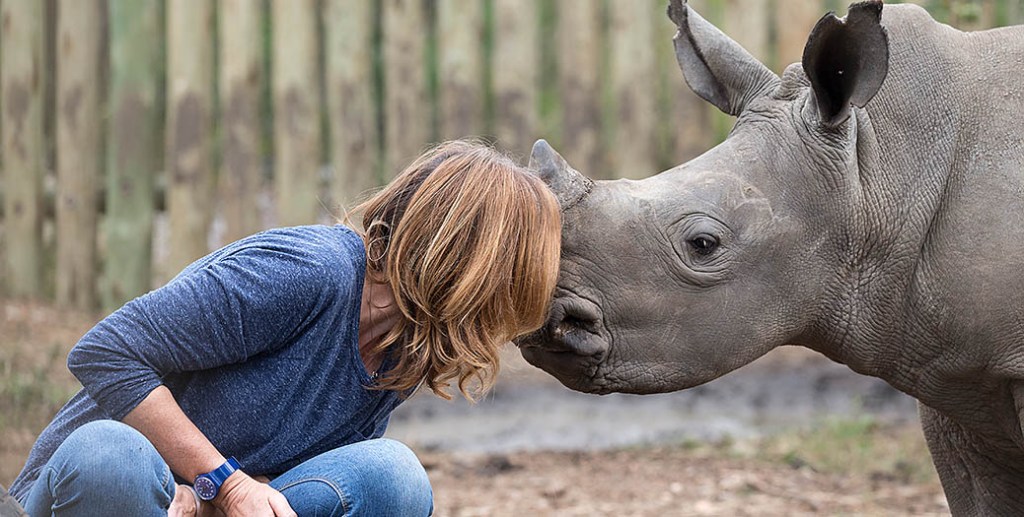
ITHUBA WITH KAREN TRENDLER
By the start of 2016, our baby rhinos were all thriving and protected by round-the-clock security guards. It made no difference.
On the terrible rain-lashed night that poachers attacked the animal orphanage, I arrived to find our terrified girl volunteers huddled together in an office. One of them had only been with us for a few hours, her dream of working with orphaned animals now a savage nightmare.
Slowly, as they sobbed and cried, I started piecing together what had happened.
Just as the team had finished the first evening feed, five heavily armed men had breached the fence, disabling cameras and cutting cables as they crept towards our security guard. Two of them had attacked him from behind and tied him up.
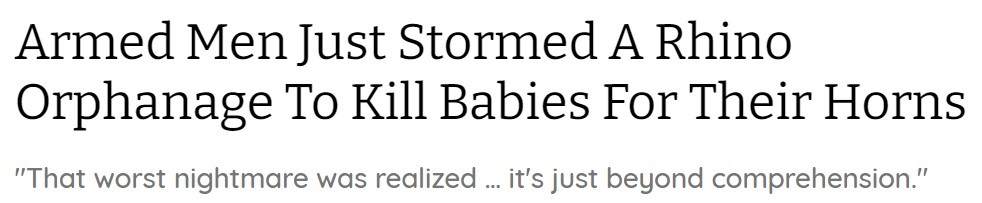
THE DODO’S HEADLINE OF THE ATTACK
Then they waited, patient predators, biding their time until the next feed. Axel, the only staff member there that night, had gone to bed while the two girls on feeding duty chatted and laughed as they prepared bottles for the hippo and the rhino calves.
Suddenly, they were ambushed by the poachers, and shoved into a locked office. At gunpoint, Axel was roused and forced to round up the rest of the volunteers.
‘Where are the rhino horns?’ the attackers kept asking. Needless to say, we didn’t have any, but Axel was beaten and one of the girls was severely assaulted.
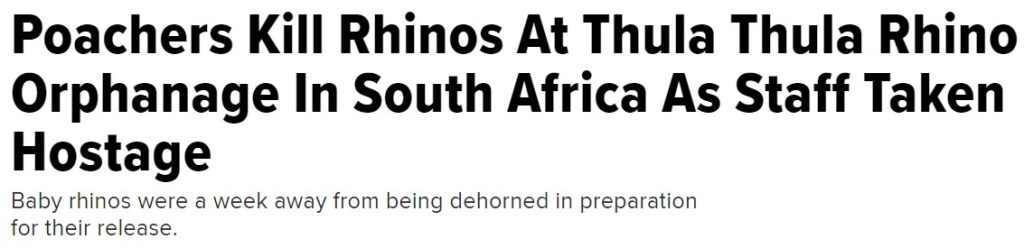
THE HUFFPOST’S HEADLINE OF THE ATTACK
The poachers must have known that Gugu and Impi — now our oldest rhinos at the orphanage — were due to leave soon. And that meant they’d already have stubby little horns.
While three men guarded the youngsters, two others, armed with guns and an axe, headed for the calves. They pumped bullets into Gugu and Impi for horns no bigger than a child’s fist.
RIP GUGU
Gugu died instantly, sweet Impi didn’t. The poachers didn’t give a damn. They held him down and hacked his face with the axe.
Were they disconcerted by his terrified expression? Superstitions run deep in rural Zululand, where it’s thought that eyes have memories. So the poachers did the unthinkable — they poked out Impi’s eyes.
Half an hour later, the men and their bounty were gone.
Meanwhile, the guard in the storeroom had escaped and was running barefoot through the reserve to raise the alarm. Petrified of being caught, he avoided roads and tore through the bush in the pitch dark, shredding his feet in the process.
To this day, I can’t bear to think about Impi and the anguish of his carers. They’d hand-raised him, and there was nothing they could do to ease his terror and pain.
Impi was euthanised as soon as our vet arrived. The tragedy was that both calves had been days away from becoming wild rhinos again.
The next 24 hours are a blur. I have flashes of memory: the ashen faces of the girls, the explosive racket of the storm, the atrocity of Impi’s injuries, the chaos in my heart.
For a while, I lost faith in mankind. I lost hope in saving rhinos.
Demand for their horns will never stop; they’ll always be in danger, as will the men and women who risk their lives guarding them.
What I do remember with profound gratitude is the phone call from Megan, the British girl who’d helped look after Impi and Gugu. Now back home, she offered to start a campaign to pay for improving the orphanage’s security.
Donations flooded in from all over the world. The outpouring of love and concern was incredible: more than £45,000 was raised.
The cash has paid for more round-the-clock armed guards and extra protection for staff during night feeds. We’ve also upgraded our entire security system.
Additional anti poaching team and extra armed security
Update 2/23: Two male suspects have now been arrested for the killing of two baby rhinos and the assault of the staff at Thula Thula Rhino Orphanage, according to SA people. The men are apparently part of a “notorious gang,” and they were heavily armed when police found them.
As the number of rhinos killed by poachers keep rising and more traumatized orphaned calves are in need of care, Kirsten Everett, a volunteer at Nikela, takes us on a touching journey as she looks at the horrors of a poacher attack though the eyes of a young Rhino calf.
NTOMBI WITH VET KAREN TRENDLER
“My mother and I were contently filling our hungry stomachs when we heard a strange noise. I carried on eating but she smelt the air for unknown scents. I saw the terrified look in her eye before she managed to control it; the unnatural smell meant something. A few minutes later we heard the ‘whop, whop’ of a metal monster flying closer towards us. Just when my mother focussed on it the men crept out of the bushes with a crunch of sticks. Something seemed to hit her and she grunted in surprise. The birds abandoned their posts heading away from the danger. I stood helplessly as she tried to run but ended up falling to the ground. The men surrounded her and tried to chase me away. I ran forward scared enough to not care about the men as they had done something to my mother, I needed her and they must go away.
Out of nowhere one of the big men spun on me and hit me hard with something sharp. Blood oozed from my wound as my mother answered my cry for help with a weak beg, ‘Away, away’. I backed away nursing my wound, how could I get to her?? She grunted again so I didn’t give up. I ran forward again but this time the angry man was merciless, determined to get his message across. As quietly as possible I took the cuts to my poor head trying not to worry my mother even more.
Confused I backed away into the bushes calling to her to get up, but the eerie silence dragged on and she didn’t move a muscle. Fear glued me to the floor as I felt my young heart pulsing with anger and fear. A breeze blew, as I waited for the monsters to go so I could go to my poor mommy and find out what was wrong. My heart skipped a beat when I realised this was what my cousin had gone through only a full moon ago. It was terrible, my body couldn’t stop shaking and I couldn’t think clearly, I felt lightheaded from all my blood loss.
Finally when the monsters left I ran to her side, ‘Mom wake up.’ My voice cracked with emotion but still she didn’t respond. I took a step back and saw the pool of blood. Her horn had been brutally cut off and she lay lifeless. Above me a crow flew over.
I turned to run then I asked myself some important questions… where would I go? I wasn’t old enough to know the way to the dam yet. Who would protect me from predators? The truth was that I wasn’t strong enough to survive by myself yet. Would I be with my mother in the sky sooner than I thought? The last question scared me the most; out in the wild without my mother I might just be able to survive a week.
I heard the snap of a twig, I wasn’t alone. This time I didn’t have the strength to care what these humans wanted with me. I collapsed and slept for a few hours. I was almost completely unconscious though I sensed kindness near me. Too traumatised to do anything I lay as they treated my wounds. The people who tried to comfort me planted a seed of hope. Hope that I could survive and hope that the rest of the human race would come to its senses and help my species and all the others out there”.
Written by Kirsten Everett. Based loosely on the story of “Ntombi” who was rescued by Karen Trendler and her team.
NTOMBI WITH ONE OF HER CARERS
Update (July 31, 2013): This is Ntombi feeling good and playful
PleaseSHAREthis article to raise awareness about this issue and feel free to leave a comment below. You can also sign up for UPDATES & NEW ARTICLES by submitting your email details in the right-hand column. But most of all, NEVER give up fighting for the future of wildlife! Thank You
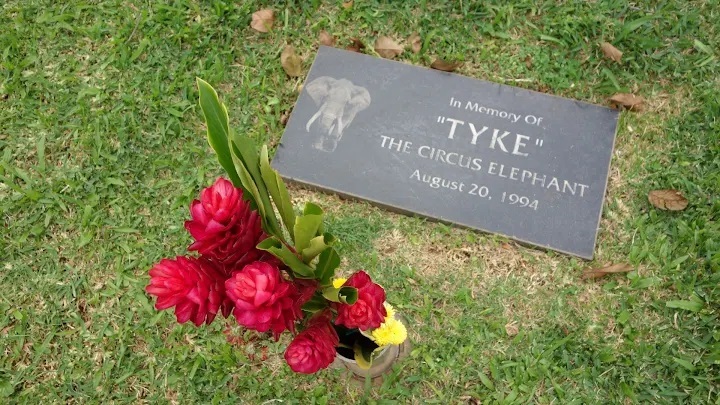
20th August 1994: The day that tyke the elephant was shot 86 times!
Mention “Tyke the Elephant” to anyone who lived in Honolulu 27 years ago and chances are they’ll shake their head and talk about what a dark moment it was in their city’s history.
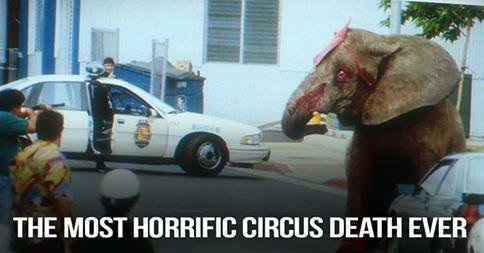
Tyke, a 20-year-old female African Elephant, was in Honolulu with Circus International. On August 20, 1994, during the show, Tyke entered the ring at the Blaisdell Arena, kicking around what looked to audience members like a dummy. “We thought it was part of the show,” one witness told the Honolulu Star-Advertiser. They soon realized the supposed dummy was a severely injured groomer. Panicked, audience members fled for the exits. Tyke went on to fatally crush her trainer, who was trying to intervene, before fleeing the arena herself.
For nearly 30 minutes, Tyke ran through the streets of the Kakaako neighborhood’s business district at rush hour, nearly trampling circus promoter Steve Hirano when he tried to fence her in. It was a foot chase between her and the Honolulu police, who eventually shot her 86 times before she succumbed to nerve damage and brain haemorrhages. People watched aghast from their cars, apartments and the sidewalk.
Twenty seven years later, witnesses still remember it vividly, and the attitude in Honolulu toward animal-driven circuses is distrusting. No circus elephants have performed since Tyke, even though there is no prohibition against it.
In 2014, when the Moscow International Circus announced that it would perform in Honolulu with “wild animals”, activist group People for the Ethical Treatment of Animals circulated a petition against it. A circus spokesman recently told the Honolulu Star-Advertiser that animals would be excluded from the shows, and PETA applauded the decision in a press release:
What can you do? PETA encourages you to avoid supporting any circus that includes animals and provides a list of animal-free circuses, as well as a list of things you can do if the circus comes to your town.
PleaseSHARE this article to raise awareness about this issue and feel free to leave a comment below. You can also sign up for UPDATES & NEW ARTICLES by submitting your email details in the right-hand column. But most of all NEVER give up fighting for the future of wildlife! Thank You
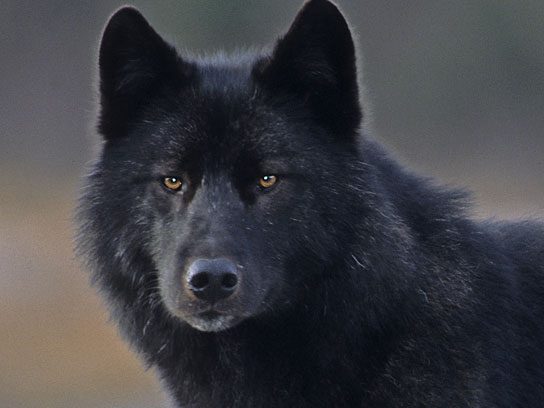
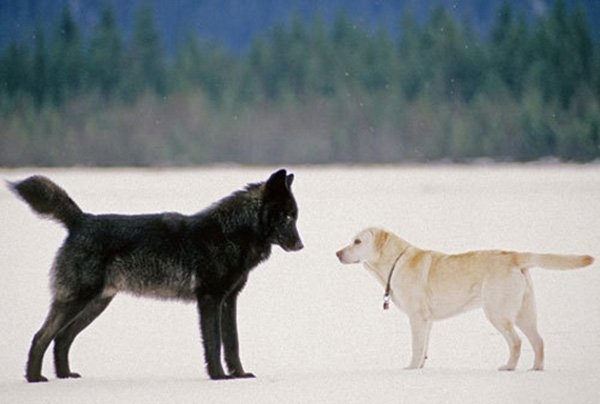
On a twilit night in Juneau, Alaska, in December 2003, and Nick and Sherrie Jans were walking with Dakotah, their yellow Lab, in the Mendenhall Glacier Recreation Area not far from their house. Suddenly, a young black wolf appeared on the ice—and began running in their direction. Awestruck but scared, the couple watched as Dakotah broke loose and charged the predator, which was twice the size of the dog. The animals stopped yards apart and gazed at each other “as if each were glimpsing an almost-forgotten face and trying to remember,” recalled Jans. After a few moments, Dakotah ran back to her owners, and the three hurried home, listening to the wolf howl
The locals named him Romeo, and soon his presence was noted by the entire town. Most found it fascinating that Romeo was so friendly, while others assumed that this naturally predatory animal would give into his natural instincts at any moment, potentially attacking their pets and children.
During this time Nick Jans started documenting Romeo. When he did, he uncovered an emotional story, the heart of which describes the tenuous relationships between wild animals and the humans around them.
“The first thing I saw was tracks out on the lake in front of our house on the outskirts of Juneau,” Jans said in an interview with National Geographic. “A few days later, I looked out from my house and there was this wolf out on the ice. I’d had 20 years of experience around wolves up in the Arctic and immediately knew it was a wolf, not a dog. I threw on my skis and found him.”
ROMEO
According to Jans, Romeo seemed totally relaxed and friendly.
And it wasn’t just one interaction, either: Romeo remained his curious, friendly self for the better part of six years.
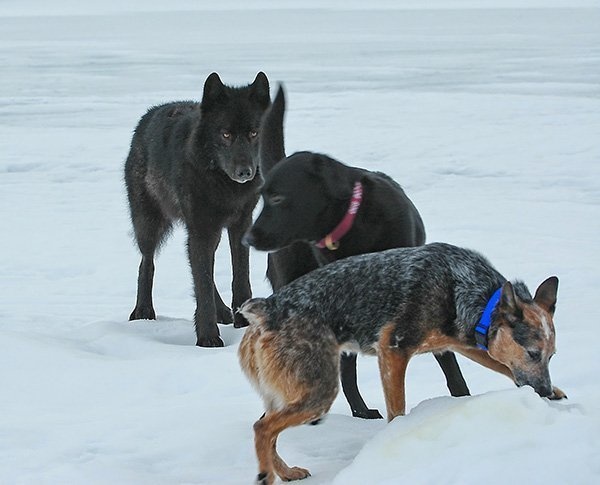
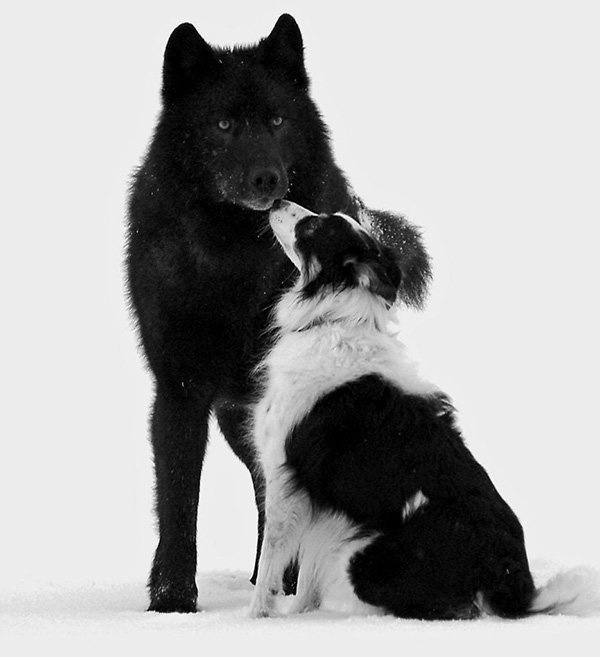
“For want of a better word,” Jans said, “The only thing I can say from a human perspective is that it amounted to friendship. If you wanted to be scientifically correct, it would be “social mutual tolerance.” But it was more than that. The wolf would come trotting over to say hi, and give a little bow and a relaxed yawn, and go trotting after us when we went skiing. There was no survival benefit. He obviously just enjoyed our company.”
Romeo’s behavior was definitely unusual, as many wolves tend to assert dominance by attacking dogs and other animals.
he wolf got his name because Jans and his family noticed how Romeo was kind of a flirt — particularly with their “Juliet,” a dog named Dakotah. Here, they’re standing nose-to-nose in what seems to be an all-too-perfect photo moment.
Romeo survived for years despite many mortal threats: scented traps, busy roads, illegal hunting, and even a poisoning attempt. He also had to contend with the natural dangers of starvation, injury, and attack by another pack of wolves. By almost any standard, his prolonged proximity to humans and dogs constituted incredibly rare behaviour. There was no obvious survival benefit to his socializing, yet the wolf lingered persistently, a late echo of the original process that must have initiated the domestication of dogs.
Romeo stayed in the area for as long as he lived — and he lived three times longer than most wild wolves do.
“Romeo was the single most transformative event of my life,” Jans said. “The amazing thing was Romeo’s understanding. It wasn’t just our understanding and tolerance. It was the combination of his and ours and the dogs’. We were these three species working out how to get along harmoniously. And we did.”
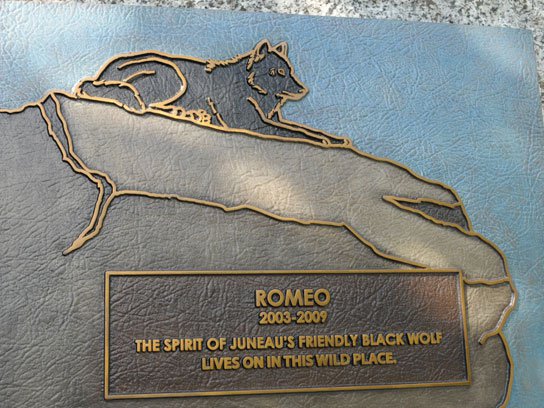
What happened to Romeo? Romeo disappeared in late September 2009. After some sleuthing, a supporter found he had been shot and killed by Juneau resident Park Myers III and his Pennsylvanian friend Jeff Peacock. Both men were arrested and ended up paying fines, serving a few years on probation, and losing hunting and fishing privileges for a limited time. In late November 2010, a memorial service was held for Romeo and this plaque was laid along a path where he once roamed.
“Nothing can take away the miracle that was Romeo and the years we spent in his company,” writes Jans. “Love, not hate, is the burden we carry.”
Nick Jans’ beautiful account of his unusual relationship is now in a book called A Wolf Called Romeo.
PleaseSHAREto let others read this beautiful but tragic story. You can also SUBSCRIBE to receive news and updates straight to your inbox.
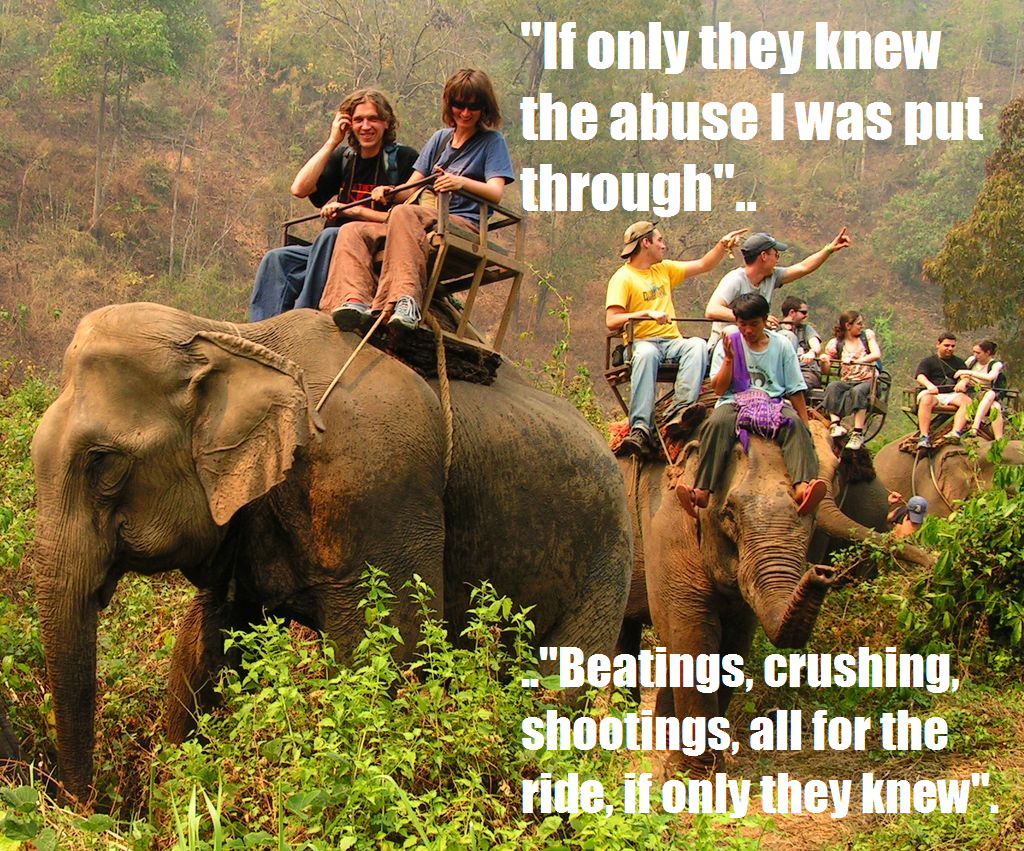
Elephant rides are an attraction regularly offered to tourists in several Asian countries including Thailand. But to get there, the animals undergo a very particular training that is actually akin to real torture.
Between 35 and 40,000, is the number of wild Elephants that remain in Asia, according to estimates. A figure to which should be added the more than 15,000 domesticated Elephants. If you go to Asia one day, you will certainly meet these majestic pachyderms with big ears. You may even be asked to ride on their backs for a ride.
This attraction attracts millions of tourists every year in Asia, especially in Thailand. Nevertheless, it hides a reality that few tourists are aware of: to get there, the animals suffer a real torture. If the words can seem strong, they are not, as all those who have seen with their eyes what is really happening. Indeed, to be trained, Elephants undergo a ritual called “phajaan”.
The principle is simple: “break the spirit” of the Elephant. As two globetrotters, Seth and Lise, explain, “the origin of phajaan comes from the ancestral belief that one can separate the mind of an Elephant from its body so that it loses its reflexes and instinct natural wilderness and be completely under the control of man “. Concretely, it is to submit the Elephant until he agrees to do everything asked of him.
Beaten, hungry and sleep-deprived
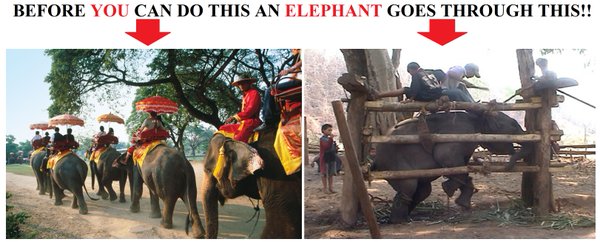
From a practical point of view, it is only by using violence that the trainers achieve it. Phajaan lasts between 4 and 6 days and is carried out on young Elephants. The animals are separated from their mothers and locked in narrow cages where they are chained. Without being able to struggle or even move a limb, they are then repeatedly hit in strategic places, the most sensitive.
In addition to being beaten, Elephants are kept awake, deprived of food and water under the eyes of trainers (“mahout”) who recite prayers that can be translated as “Elephant, if you stop fighting, we do not you’ll hurt more, “says a documentary. The torture does not stop until after several days, when the trainers believe that the spirit of the Elephant is broken, that his behaviour has changed.
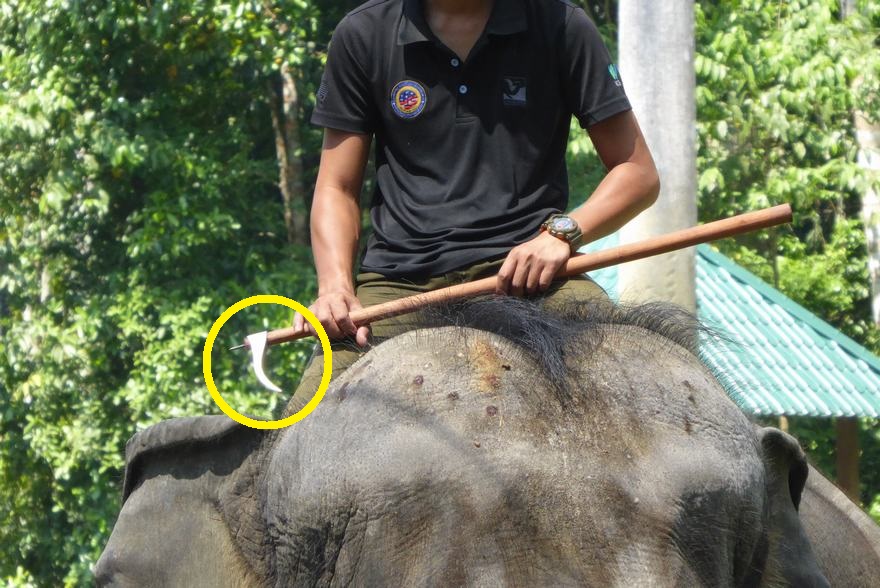
The Bullhook
Out of his cage, the animal appears submissive, impressed by the fear of the man who subjected him to this torture. Then begins a real training that will consist in teaching the Elephant all the necessary commands or gestures intended to amuse the tourists. Once the specimen is formed, it can be used as an attraction for most of its life.
50% of Elephants die during the ritual
It is estimated that half of the Elephants would not survive phajaan. Others would become aggressive: about 100 mahouts are killed each year by their animals. Still others would go insane or have trouble with their experience, rendering them unusable for attractions. Most would then be killed.
The surviving Elephants are used to wander among the tourists, to beg or for work. In order for them to remain submissive, they are given a few booster shots by hitting them or pressing the sensitive spots again. In tourism, an Elephant can spend the day carrying people without a minute to rest, eat or drink. The rest of the time, most animals are tied up so that they are not dangerous.
WHEN NOT BEING EXPLOITED BY TOURISTS THE ELEPHANTS ARE CHAINED
A life that would often lead to the appearance of disorders including neurological. “If you ever have a chance to spot domestic Elephants, watch them,” Seth and Lise explain. “Chance or not, all the Elephants we’ve seen had signs of recent abuse, scars, obvious signs of poor health, some are more damaged than others, and it’s extremely rare to see one of these well-treated animals. “.
“It is largely because of tourists that this business works, so it is up to tourists to make the right decisions. The future and especially the well-being of thousands of Elephants is at stake,” they conclude in their blog.
#BeKindToElephants ~ Please SHARE this page to raise awareness to the so-called Elephant tourist ‘industry’ in Asia. You can also SUBSCRIBE to Protect All Wildlife to receive news and updates direct to your inbox.
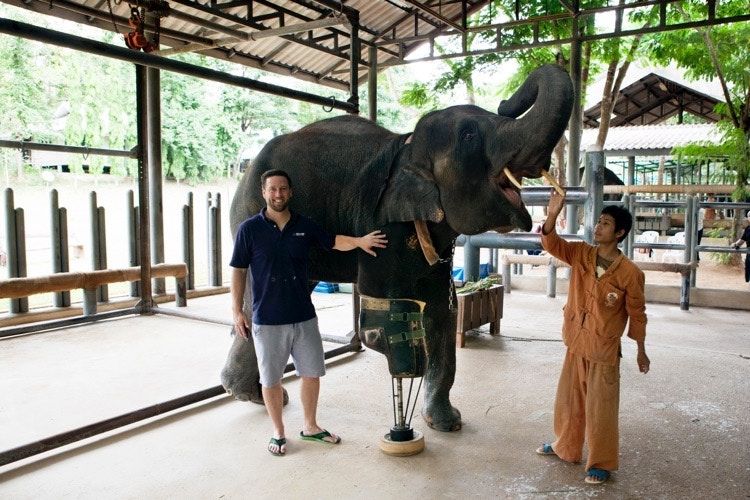
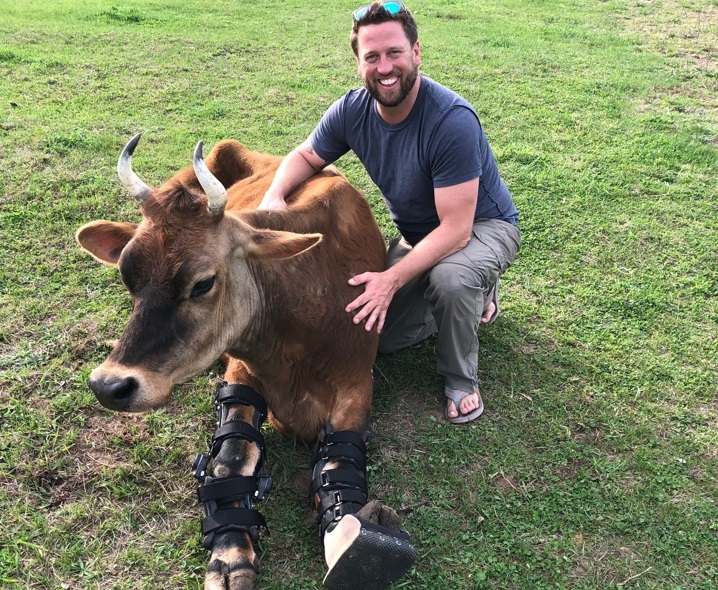
Derrick Campana is an animal orthotist who creates braces and artificial limbs to help increase animals’ mobility and improve their lives. Campana is one out of ten people in the world who make custom animal prosthetics, according to the Washington Business Journal. It’s amazing just how mobile animals with prosthetics can be, these few people are making a profound impact.
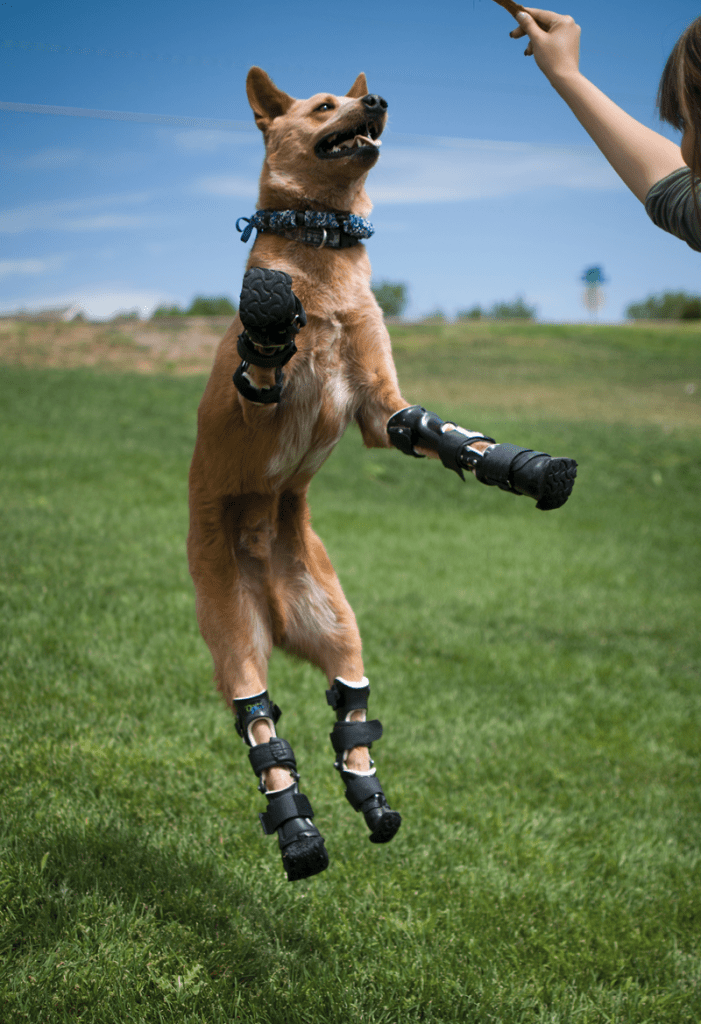
In 2004, Derrick founded the Animal Ortho Care in Sterling, Virginia, and since then, he has helped over 20,000 animals. The company sends out kits to pet owners and veterinarians so they can cast molds of their pets or patients. Then, they send back the casting kits, where Derrick crafts a personalized prosthetic, or brace, out of thermoplastic material.
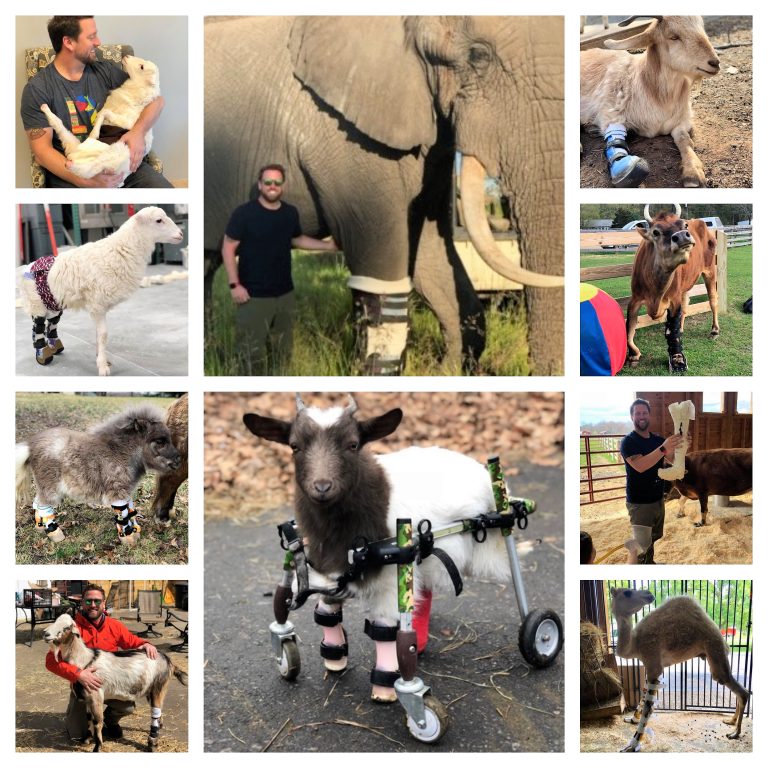
Since he started, his client base has grown dramatically. Now, he doesn’t only treat dogs or cats, he’s also making prosthetics for camels, horses, gazelles, sheep, birds, and elephants. “Now we’re seeing people caring about animals more, and we’re showing the world that things like dog prosthetics exist, and you can give your animals a second chance,” Campana proclaimed.
Receiving his undergraduate degree in Kinesiology/Biomechanics from Penn State University and Masters Degree in Orthotics and Prosthetics from Northwestern University, Derrick has pioneered the field of Veterinary Orthotics and Prosthetics (V-OP) into what it is today. Since that first dog, Derrick has treated nearly 20,000 furry patients with mobility devices. Derrick’s Goal is to help as many animals as he can while in his lifetime and even the playing field between animals and humans as far as treatment options available.
Currently, Derrick turns to medical grade plastic, foam, and sometimes even thermoplastic material for most of his projects. There is a specific reason that he chooses plastic for his efforts:
“These plastics enable him to craft and mold prostheses that contour to the shape of an animal’s body, while being sturdy enough to provide reliable support for many years. The plastics also help make prostheses more affordable, which is important to many pet owners without insurance to cover veterinarian care.”
One thing also noted is that sadly the need for veterinary doctors to help animals who require prosthetics is high, and there are roughly 200 animals a month that need his help.
“I’m always so excited about everything I do—from helping animals and developing new products to flying around the world and seeing different countries,” he says.
Campana considers seeing new parts of the world as a huge job perk, but he says the most rewarding part of his career will always be seeing animals walk again for the first time and watching their owners break down and cry.
“There’s never a dull moment,” he says. “It’s the best career in the world.”
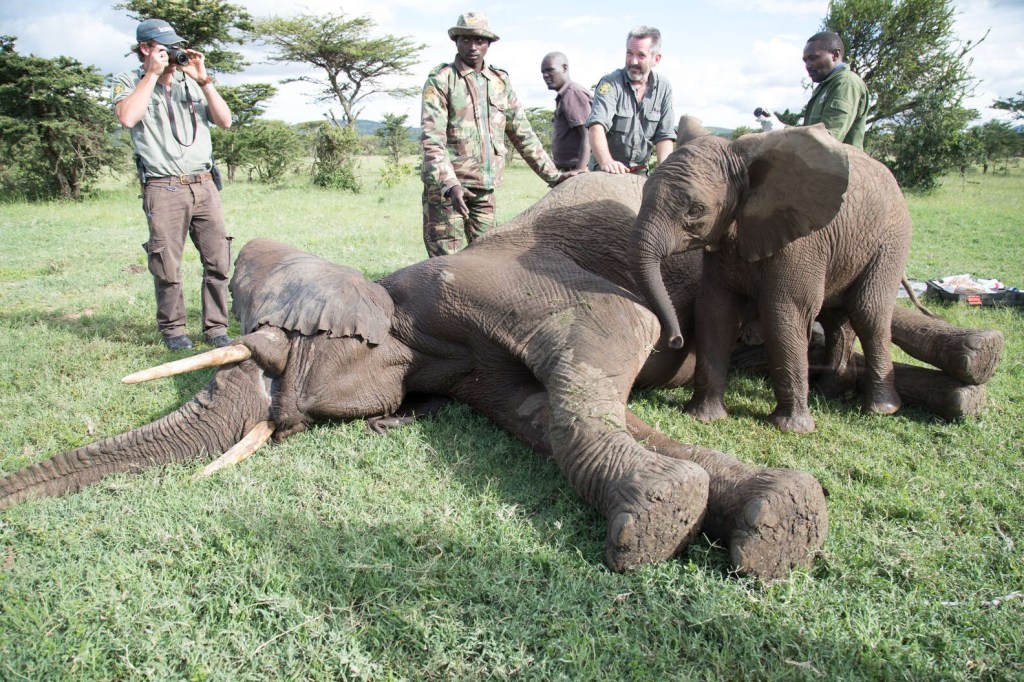
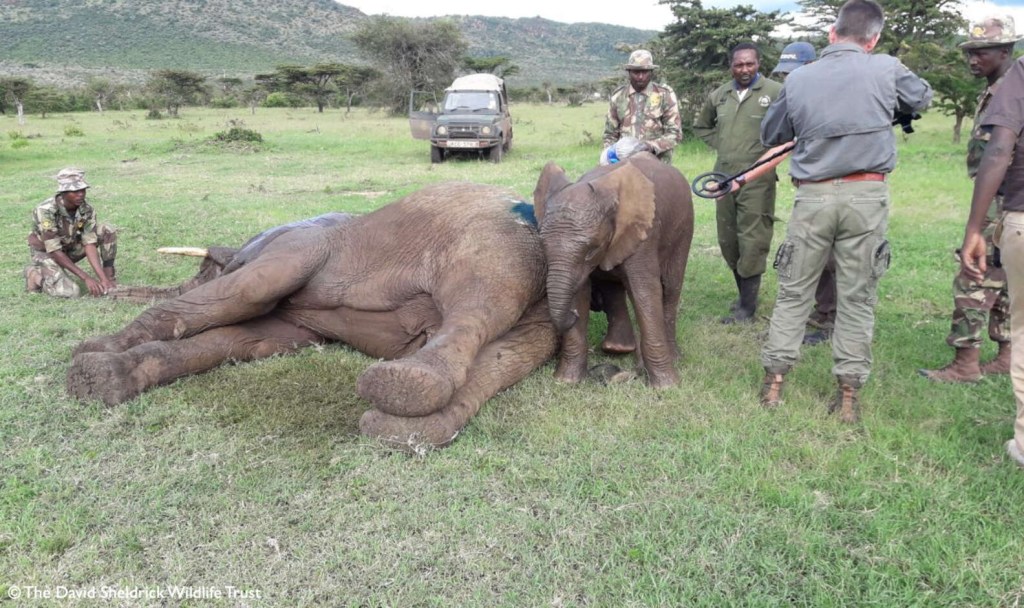
This wild baby elephant refused to leave his injured friend’s side — no matter what.
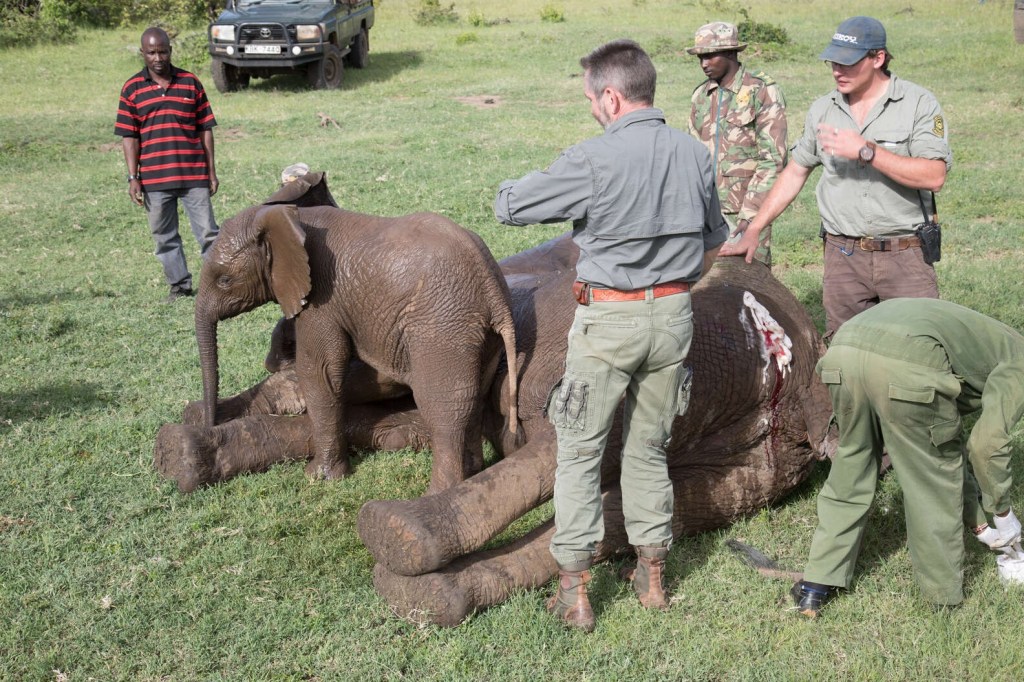
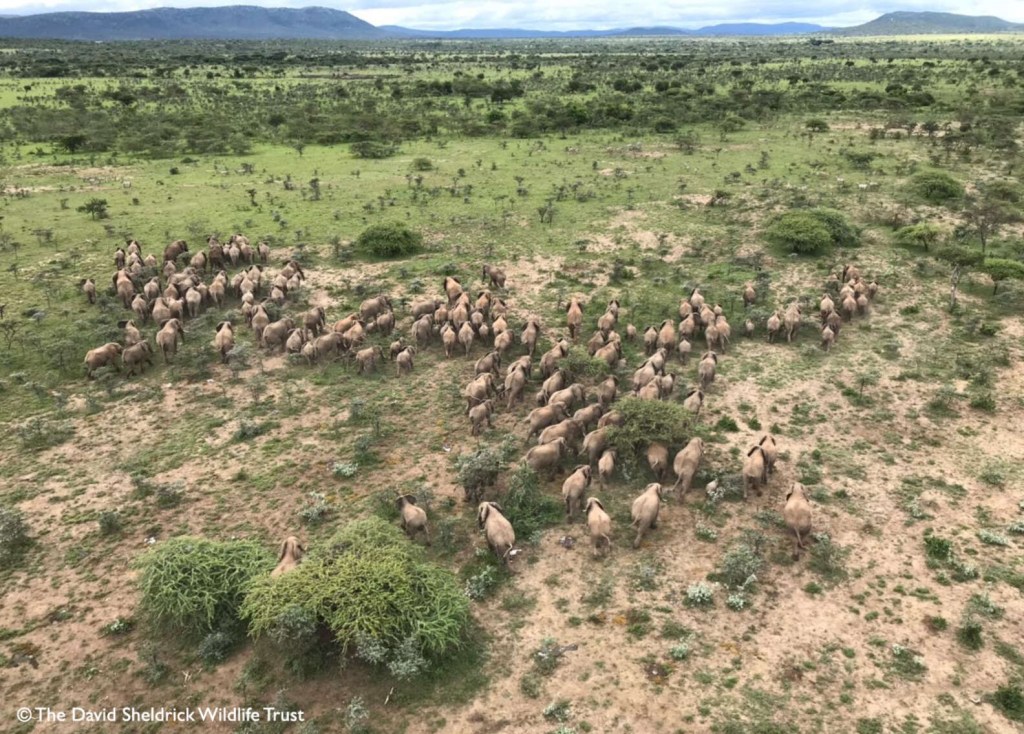
Rangers were patrolling the Maasai Mara National Reserve in Kenya spotted five elephants who’d been wounded by arrows. When the rangers gathered information from nearby communities, they learned what had happened — local farmers had shot the elephants after the herd ate some of their crops.
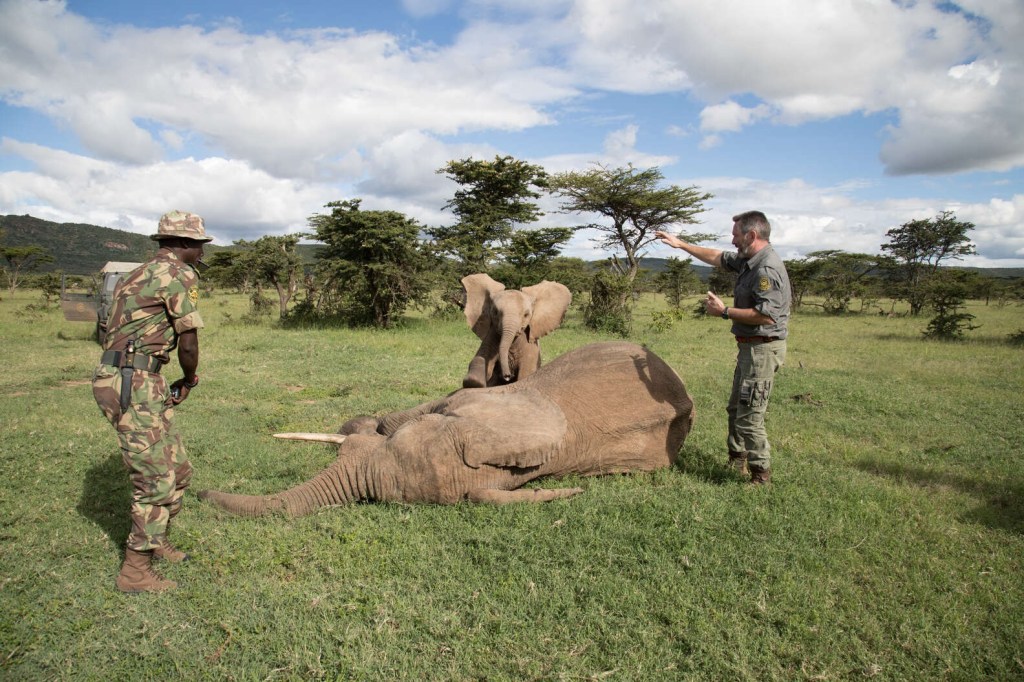
Before the team could help the injured elephants, they had to dart the animals with sedatives — and this had to be done by helicopter. When the team darted the first bull, the bull veered away from the herd, along with an older elephant and a baby.
“It was assumed from the air to be a mother and her calf accompanying the young bull,” Angela Sheldrick, CEO of DSWT, told The Dodo. “It was later confirmed by the ground teams to be two young bulls with the little calf.”
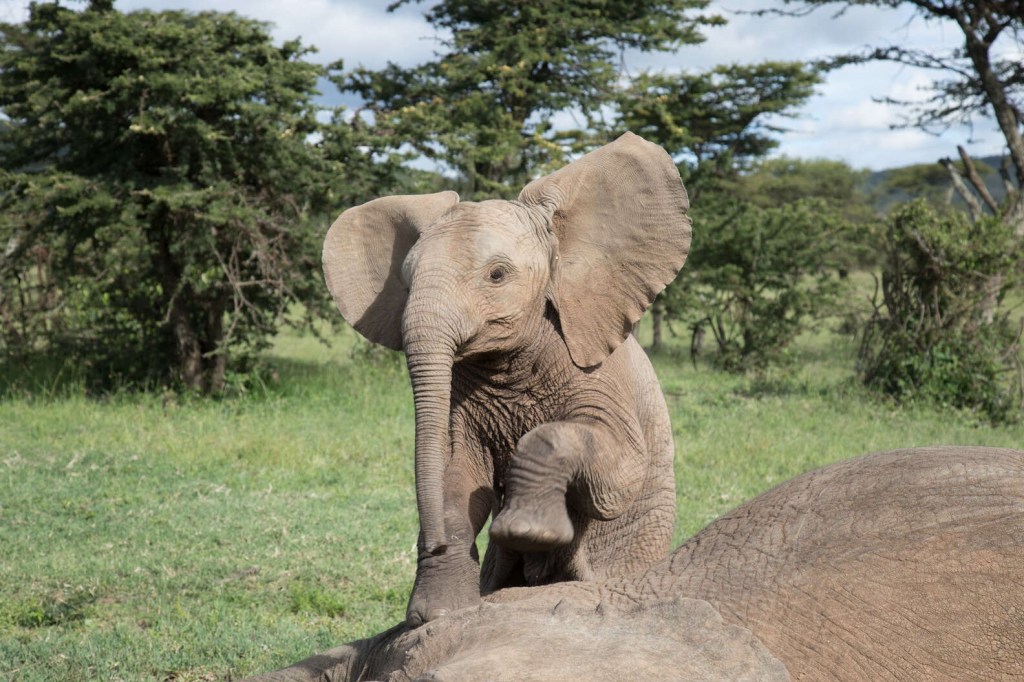
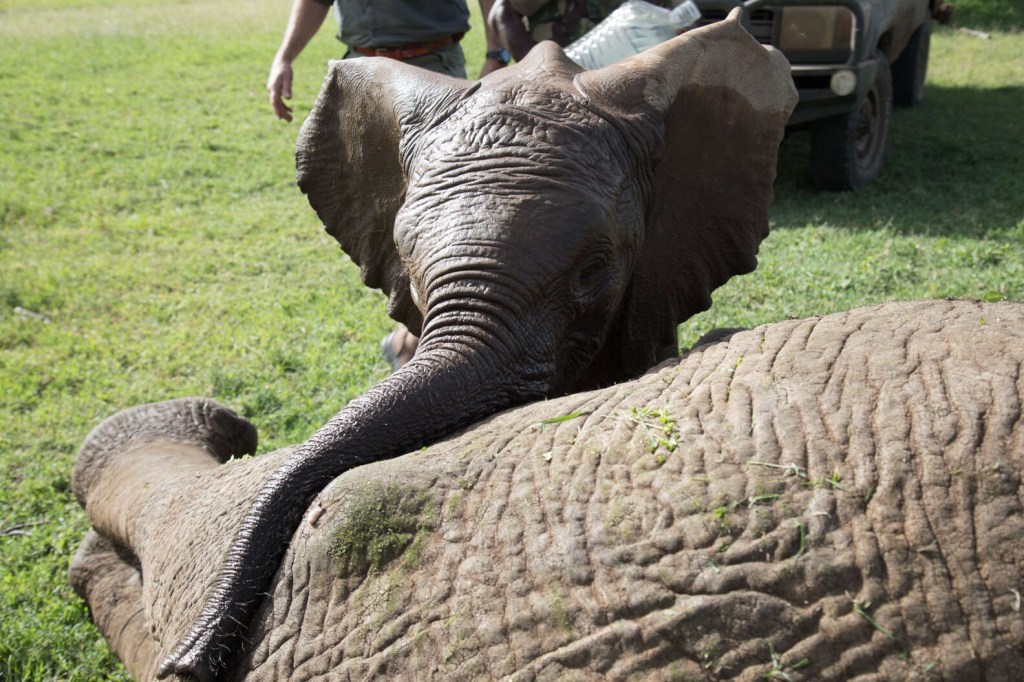
This wild baby elephant, who was about 18 months old, stayed close to the sedated elephant, who may have been the calf’s brother, although this couldn’t be confirmed. The calf’s mother wasn’t anywhere to be seen.
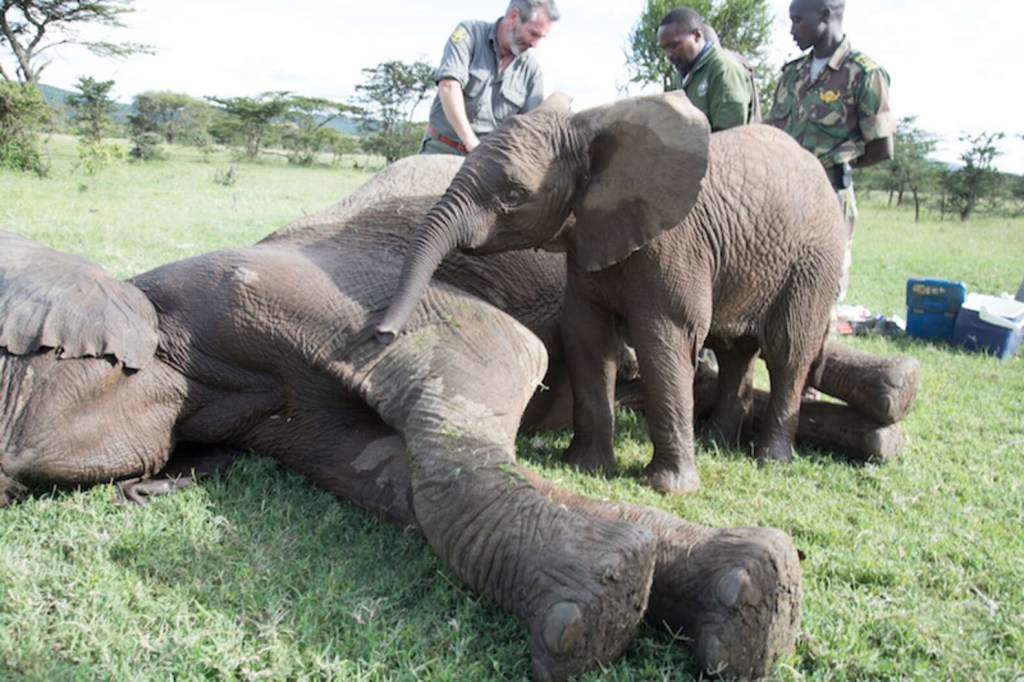
“The baby was very protective of the young bull and refused to leave his side to join the older elephant … once the young bull succumbed to the anesthetic,” Sheldrick said. “The youngster boldly remained by the side of the young bull throughout the operation.”
Being surrounded by humans was probably scary for the baby elephant, especially since it had been humans who injured his friend in the first place. But nothing deterred him from remaining by the bull’s side.
“This is not a tiny calf,” Sheldrick said. “At 18 months of age, he would still be very capable of knocking a grown man off his feet. He displayed no such aggression throughout proceedings, which is extraordinary behaviour for a wild elephant in a situation such as this. Normally one so young would run away, or charge around trumpeting, knocking into people.”
Yet the wild baby elephant remained calm and attentive throughout the ordeal, despite there being multiple people and vehicles driving in and out of the area, according to Sheldrick.
He showed concern and protectiveness, but elephants are such intelligent animals, and, somewhere, we feel sure he knew help was on hand,” Sheldrick added. “[This was] made all the more remarkable given the recent human-wildlife conflict and the injuries inflicted on this herd at the hands of humans. One would expect aggression and fear; this baby elephant knew the difference between the two situations as there was no panic.”
The vet team worked for two days to help the five injured elephants. Thankfully, none of their wounds were life-threatening, and the elephants were able to fully recover and rejoin their herd.
It was a very unusual day for all concerned, and those on the ground made clear how touched they were by the protective behavior of the youngster,” Sheldrick said. “Of course, attending to incidents like this, where elephants have been injured through no fault of their own … is always emotive for the teams. However, knowing you can make a difference is uplifting.”
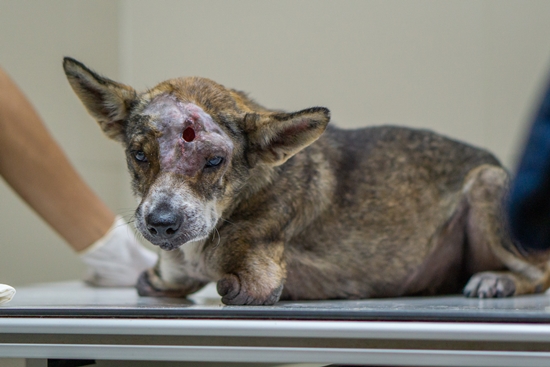
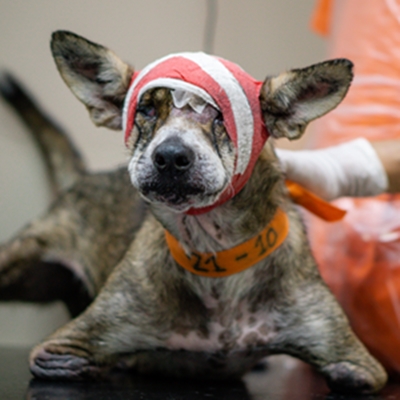
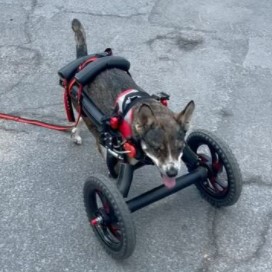
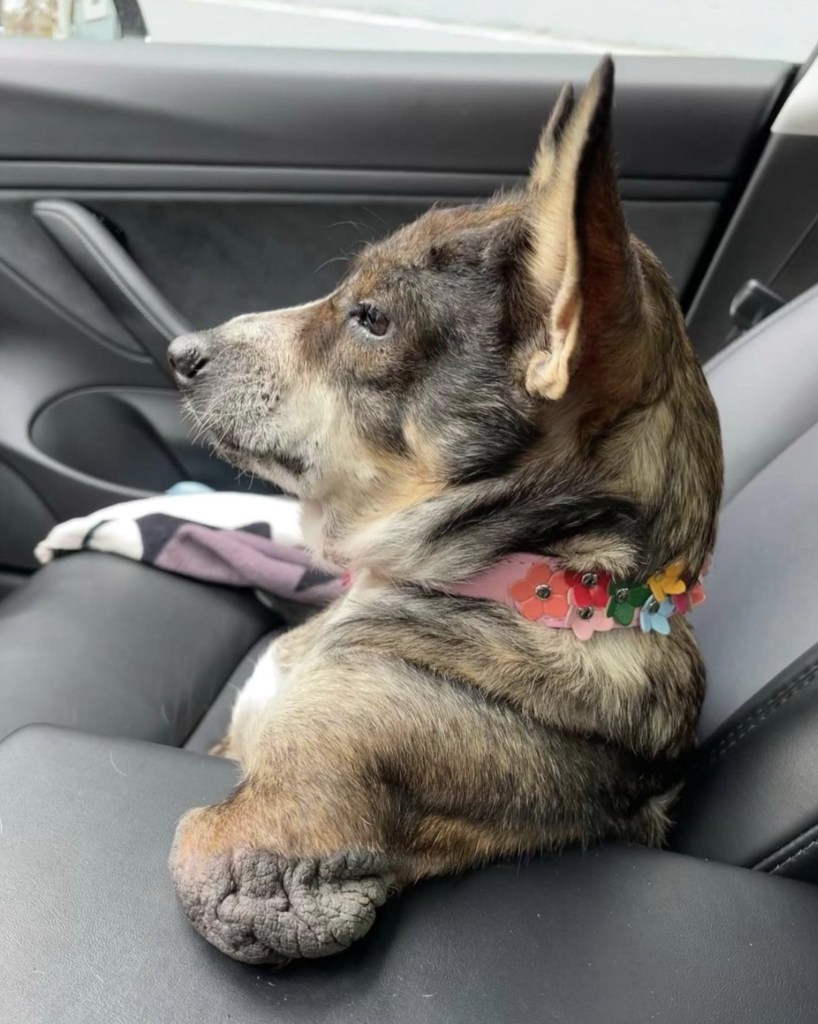
A two-legged street dog from Thailand that was shot in the head and left to die has been rescued by a Canadian family – and now even has her own wheelchair. Lara Pleasence, 51, from Montreal, Canada, first heard about Amira’s tragic story through the Soi Dog Foundation, based in Asia. Administrator and personal trainer Lara first saw Amira in a video posted by the rescue centre in Thailand in October 2020. “This poor dog who was born without legs, lived on the streets having litter after litter, then after nine years of struggling to survive, someone shoots her in the head,” Lara told Jam Press. “I just broke down and cried.”
Amira was treated for her head wound by the Soi Dog rescue centre who shared regular updates of her progress on social media. “Sweet Amira was always wagging her tail; it just broke my heart that she still trusted humans even after everything she’d been through. “I knew I had to contact the rescue to see if I could help in any way, maybe even offer to be her forever family, although they doubted that she would ever be well enough to travel.” After a tense wait, the Soi Dog Foundation contacted Lara to tell her that Amira had recovered enough to be put up for adoption. “I was so stoked and so worried about what my husband was going to say, since we already had three dogs,” Lara admitted. “There was something about Amira, this incredible connection I felt for her from the very first time I saw her. “I wanted to right all the wrongs that were done to her, I just felt compelled to try. “I wanted desperately to show her all the love, security, happiness that she deserved, that every dog deserves, and that this poor sweetie had been denied for so many years.”
AMIRA’S LOVING AND LIVING LIFE TO THE FULL
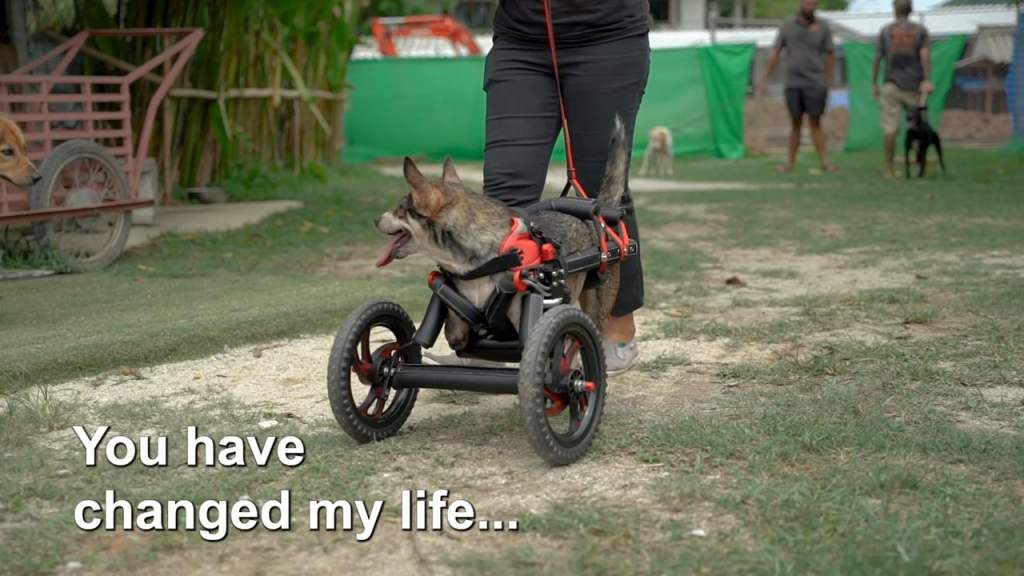
To qualify to adopt Amira, Lara and her family had to go through a strict application procedure – including a virtual home visit, interview process and form-filling. “I was made aware that we would have to pay for her to be flown to Canada since, because of Covid, they didn’t have travellers who could take her on the plane for free.” “I think I would have mortgaged the house to get this sweet girl here.” When Amira touched down in Montreal in April 2021 after a 22-hour journey – which cost $2,000 – it was love at first sight. Lara said: “My husband was none too happy about even the idea of another dog since we already had three, but I told him that I had never felt this way about any rescues that I had seen. “I was so excited that we were getting her, I was practically bursting, and he knew that fighting it was a lost cause – happy wife, happy life.” Amira came with her wheelchair, after a man in Vietnam made a custom one for her and it was gifted to the pup by Soi Dog. “She literally came bouncing out of her crate and jumped all over us like the happiest kangaroo you’ve ever seen.” “She’d been in it for over 22 hours and didn’t even have an accident!” “We couldn’t believe the joy she exudes.
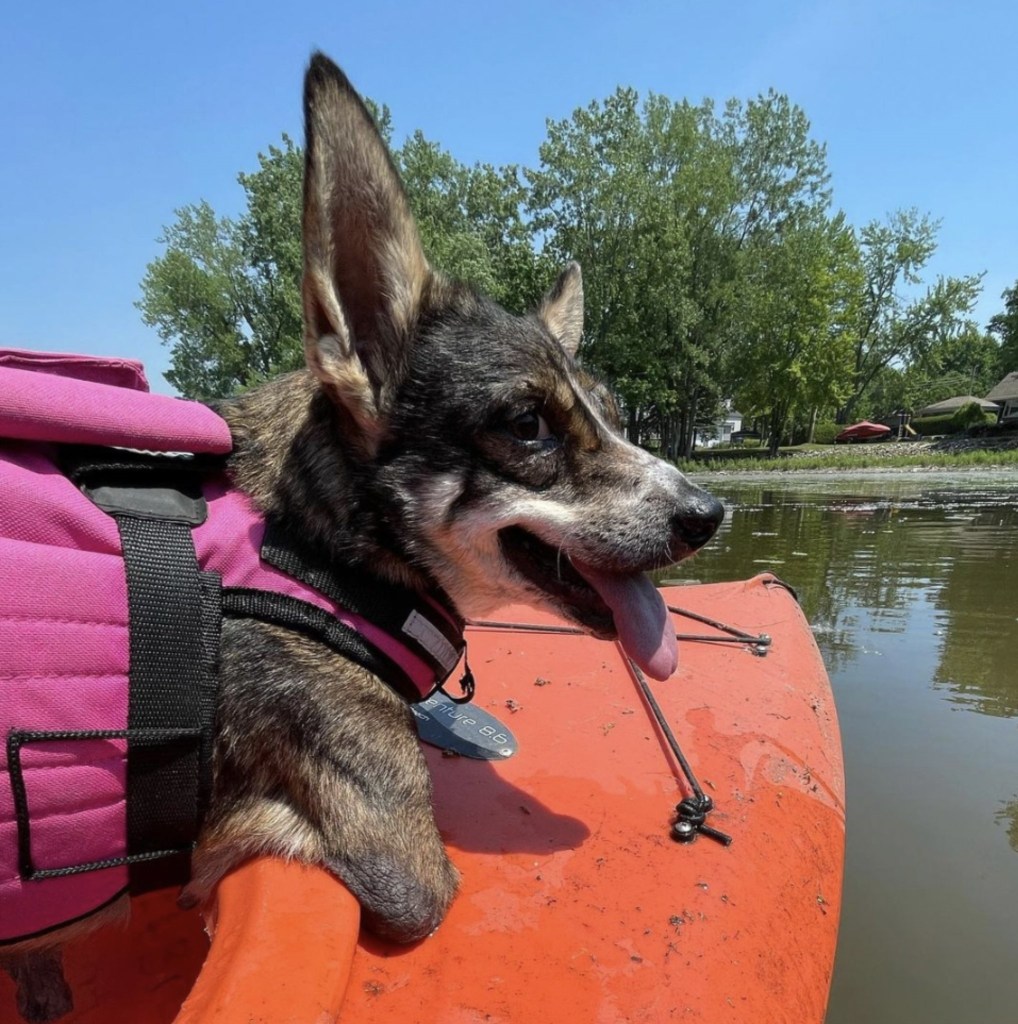
She is a true miracle. After everything she’s been through, Amira is fun-loving and outgoing. “She’s so trusting, she loves everyone she meets. “She absolutely loves to be held in your lap and will sleep there for as long as you will let her. “She is resilient and doesn’t let her past hold her back from trying new things or doing something a bit scary like canoeing or going on our paddleboard. “She is obsessed with our bed… If we’re not home, we have to block the stairs because we can’t risk her falling. “How a street dog, with no front legs, knows how to climb stairs is just one of Amira’s many mysteries. “She’ll let me kiss her nose 50 times in a row, my other three dogs will eventually pull their head away, but not Miss Amira, she loves it. “She gets these crazy puppy moments where she runs around on her nubs and jumps up on the furniture then flies right back off it. “These moments make my heart smile because it’s like she finally doesn’t have a care in the world and can just be a dog. “No more struggling for food or to keep her puppies safe and fed or hiding from bad people.”
AMIRA IN HER WHEELS
Now, Amira enjoys a happy life spending her days with her family and playing at her favourite spot. Lara added: “She loves going to the dog park, even though many of the dogs get freaked out by the “transformer dog” with wheels and just bark at her.”
FROM STREET DOG TO CRUISING THE STREETS
In videos posted to Instagram (@amira.amiracle), Lara shares Amira’s adventures with her new set of wheels. In one comical clip, which has been viewed over 725,000 times, Amira runs after a cat and ends up doing a headstand when she hits a curb. “She just waits for me to pick her back up and she keeps on going like it’s no big deal,” said Lara. Another video shows her gradually getting better at walking in a straight line with her wheels. Followers of Amira’s page are in love with the pup, and she regularly receives gushing comments. One person commented: “So beautiful to see this! You’re amazing, sweet and strong Amira.” “Love u Amira very much,” said another viewer. “She’s amazing and you’re amazing with her,” added another person. Lara is grateful for all the support and says she is touched by the comments she receives. “The people who follow Amira on Instagram are the sweetest,” she said. “They are so happy that she has a family that loves her now. “Some say Amira’s posts are their daily dose of ‘good feels’ or that her videos are ‘good for the soul’. “People feel they need to thank me for taking her, which is so kind, but I always tell them that it is my privilege to give her the best life that I possibly can,” “It’s the least I can do for such an angel. “I can only hope that her page may inspire someone else to help a special needs dog or donate to an organisation like Soi Dog Foundation so they can continue their amazing work.”

















 PROTECT ALL WILDLIFE