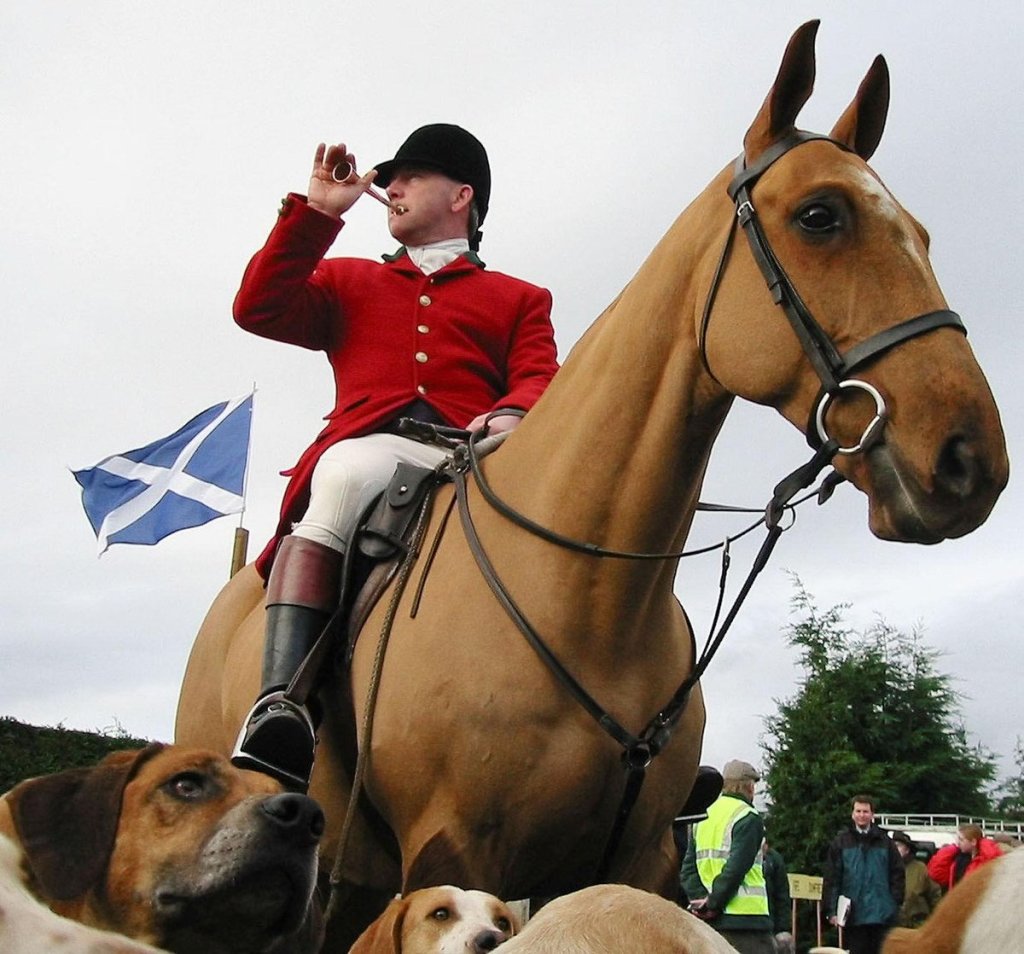
A new law banning the hunting with packs of dogs and “flushing out” wild mammals came into force across Scotland on Tuesday after MSPs passed a Bill back in January.
This will replace the Protection of Wild Mammals Act, which was passed in 2002. The Scottish Government says that legislation had a loophole that allowed illegal hunts to continue.
The original Act allowed hunters to use dogs to flush out foxes from under cover as long as the foxes were then shot, and providing the hunt was to protect livestock or ground-nesting birds, or to prevent the spread of disease.
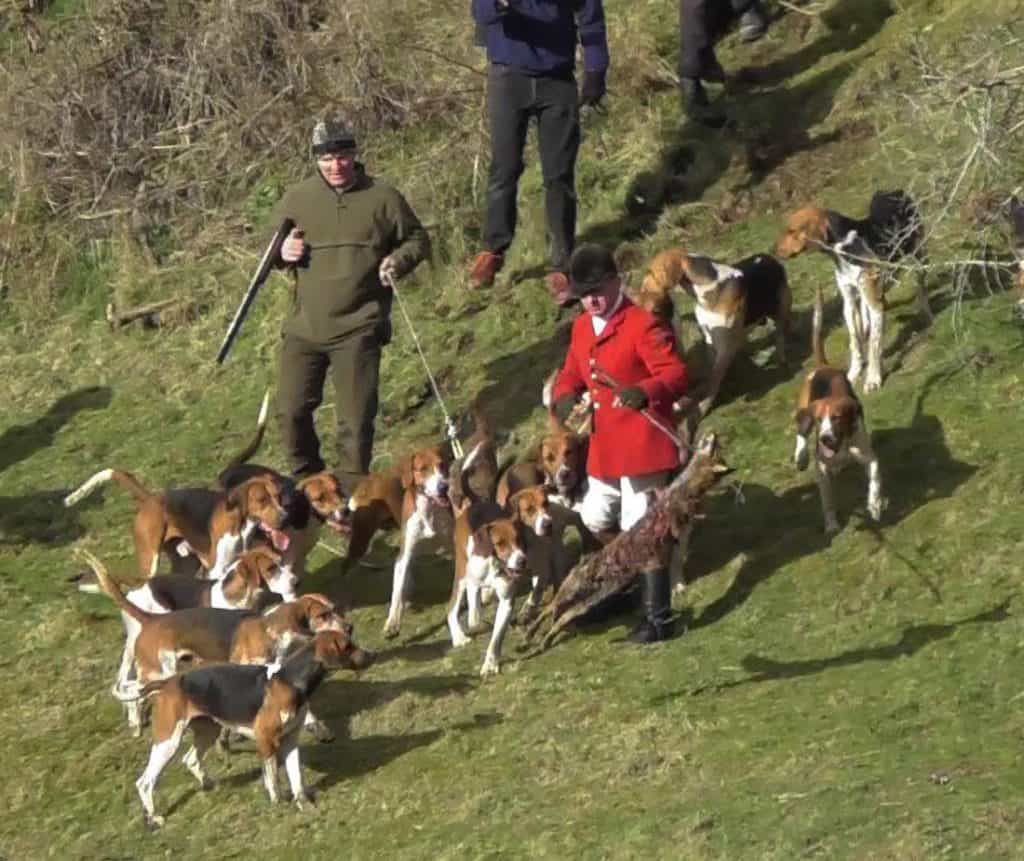
A fox being fed to the hounds at the Fife Hunt, Lindores
The Scottish Greens say this is a historic moment in Scotland’s progress as a nation that respects and values wildlife.
Ariane Burgess MSP, the party’s rural affairs spokeswoman, said: “This is a historic day. We finally have a real hunting ban after decades of campaigning.
“Hunting with dogs is brutal, cruel and outdated. It has no place in a modern or progressive Scotland, and we should all take pride in this new law.
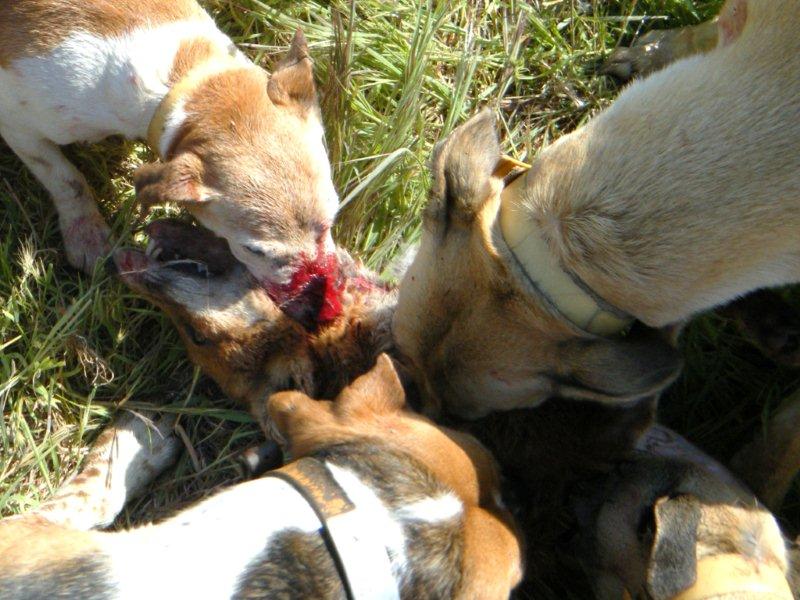
Barbaric: Hounds Ripping A Live Fox Apart
“Loopholes in the original hunting ban were ruthlessly exploited by those who were determined to continue hunting. This law is much more robust, but we will be watching carefully to ensure it is effective and abided by.”
Environment minister Gillian Martin agreed it was a “truly historic milestone” in Scotland.
She said: “This law finally closes the loophole that has allowed the archaic practice of hunting wild animals with packs of dogs to persist in our country for over 20 years. It has taken us almost a decade to get to this point.
“In that time the sheer volume of responses to our consultations have shown us just how concerned people still are about fox hunting in Scotland.
“We have listened and we have delivered. We have succeeded in crafting a law that strikes a balance – one which rightly bans barbaric hunting methods, but which still allows farmers and land managers to undertake legitimate wildlife management.”
WHAT YOU CAN DO TO HELP ANIMALS IN NEED
You can support our work by donating as little as £5 – It only takes a minute but it can last a lifetime for an animal in need.
Everyone who donates will receive a Certificate of Appreciation as a thank you for helping animals in need.
The Mission of Protect All Wildlife is to prevent cruelty and promote the welfare of ALL animals.
We believe EVERY animal should be treated with respect, empathy, and understanding. We raise awareness to protect and conserve wild, captive, companion and farm animals.
It is vital that we protect animals against acts of cruelty, abuse, and neglect by enforcing established animal welfare laws and, when necessary, take action to ensure that those who abuse animals are brought to justice.
Protect All Wildlife are involved in many projects to protect animals’ rights, welfare, and habitats. Money contributed to Protect All Wildlife supports ALL of our worthy programmes and gives us the flexibility to respond to emerging needs. Your donations make our work possible.
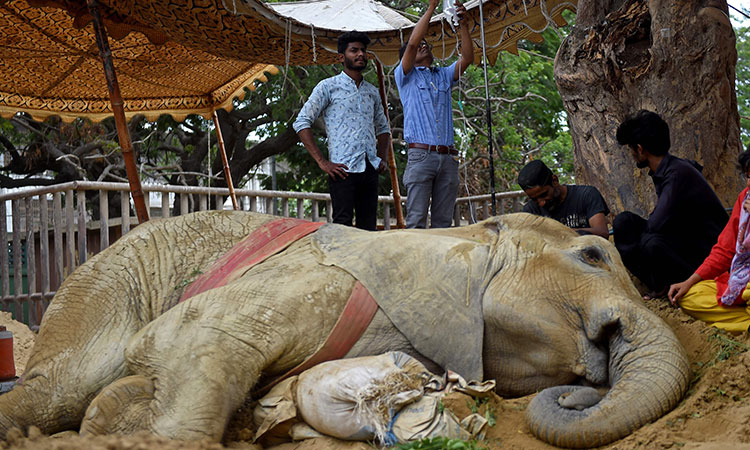
The three remaining African Elephants in Karachi, Pakistan continue to be subjected to poor care and living conditions despite these factors playing a significant role in the premature death of the fourth Karachi Elephant ‘Noor Jehan’ in April 2023.
Madhubalaat Karachi Zoo is now alone despite Elephants being herd animals, her solitary status has been documented to be causing her severe angst. In addition, she resides in a small barren environment that fails to meet her species-specific needs. Questions also remain around her diet & general care.
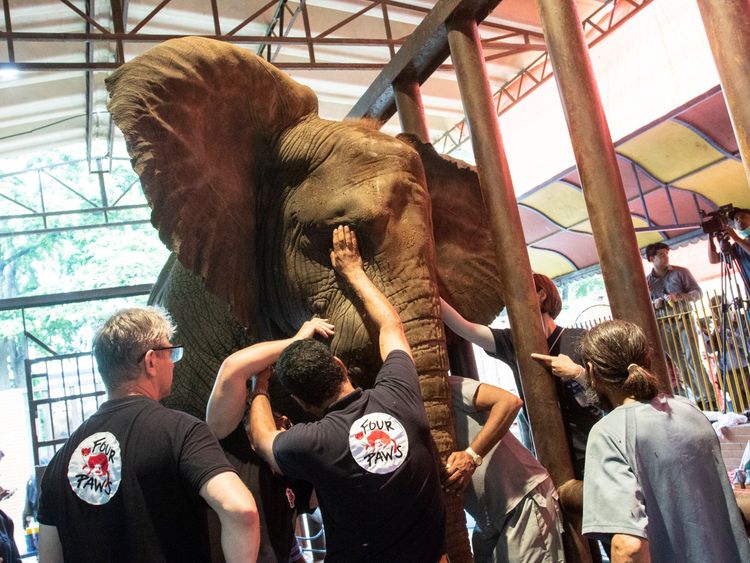
Four Paws Vets perform dental treatment on Madhubala at Karachi Zoo.
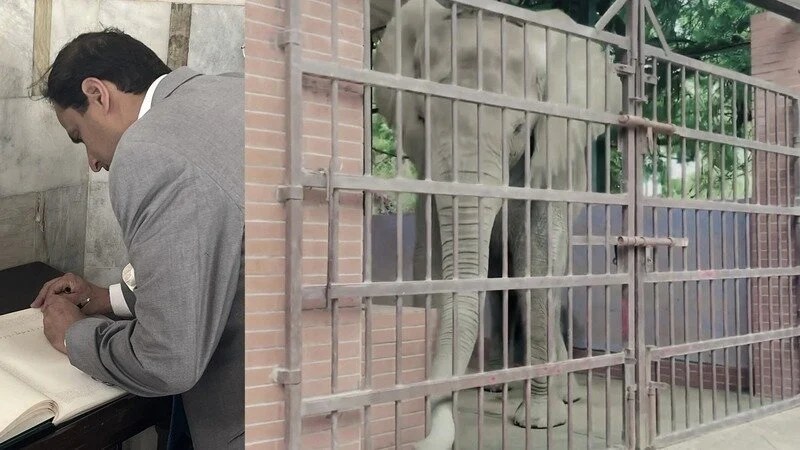
Sonia & Malikaat Karachi Safari Park fare slightly better having a green pasture to reside in during the day (in recent months the Elephants have been afforded greater access to the pasture & this must continue) although the cages in which they are incarcerated at night remain abhorrent and entirely unsuitable for Elephants (a third cage of the same type has been constructed in anticipation of Madhubala’s arrival)
Noor Jehan Shortly Before Her Death In April2023
Following the death of Noor Jehan and recognising that the three remaining Karachi Elephants are suffering, Karachi Metropolitan Corporation struck a verbal agreement with animal welfare organisation Four Paws International to upgrade the Elephant enclosure at the Safari Park to create a more species-specific environment as well as training caretakers to afford the Elephants’ better ongoing care. In line with these improvements Four Paws also agreed to complete the move of Madhubala to the Safari Park to be with other Elephants in what would become a more appropriate setting.
In June 2023 Barrister Murtaza Wahab Siddiqui was elected Mayor of Karachi and since then the agreement has stalled with no further progress and no signed MOU (Memorandum of Understanding)
Mayor Murtaza Wahab in dragging his feet to sign the MOU is prolonging the suffering of all three Elephants and particularly Madhubala.
So as not to cause further suffering to the elephants Mayor Murtaza Wahab must sign the MOU without further delay or relinquish all three Elephants to a recognised Elephant sanctuary outside Pakistan
Everyone who donates will receive a Certificate of Appreciation as a thank you for helping animals in need.
The Mission of Protect All Wildlife is to prevent cruelty and promote the welfare of ALL animals.
We believe EVERY animal should be treated with respect, empathy, and understanding. We raise awareness to protect and conserve wild, captive, companion and farm animals.
It is vital that we protect animals against acts of cruelty, abuse, and neglect by enforcing established animal welfare laws and, when necessary, take action to ensure that those who abuse animals are brought to justice.
Protect All Wildlife are involved in many projects to protect animals’ rights, welfare, and habitats. Money contributed to Protect All Wildlife supports ALL of our worthy programmes and gives us the flexibility to respond to emerging needs. Your donations make our work possible.
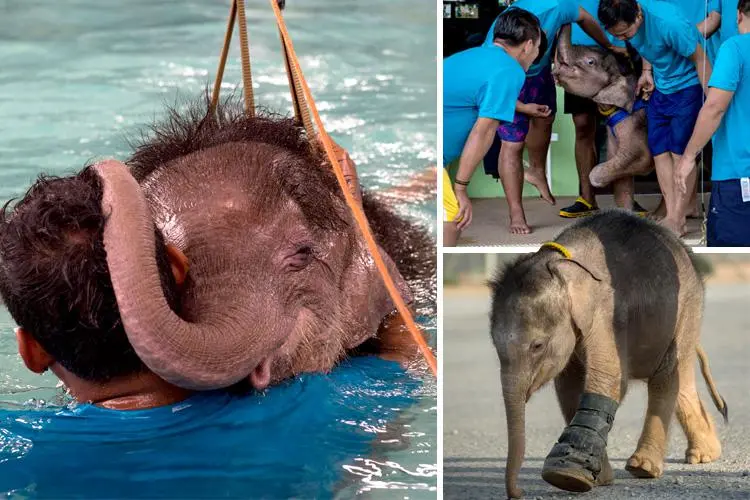
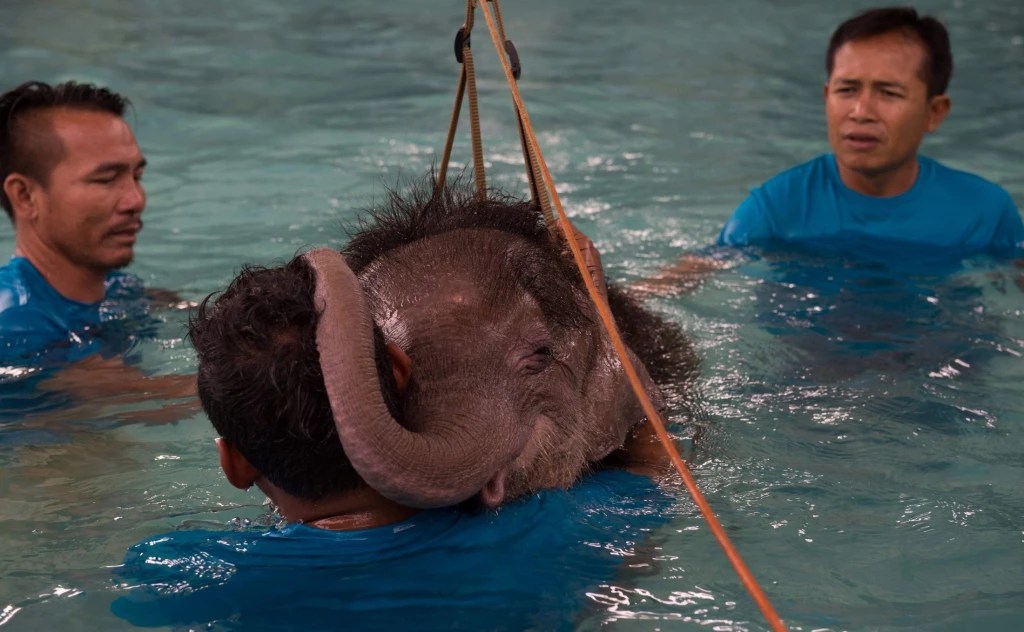
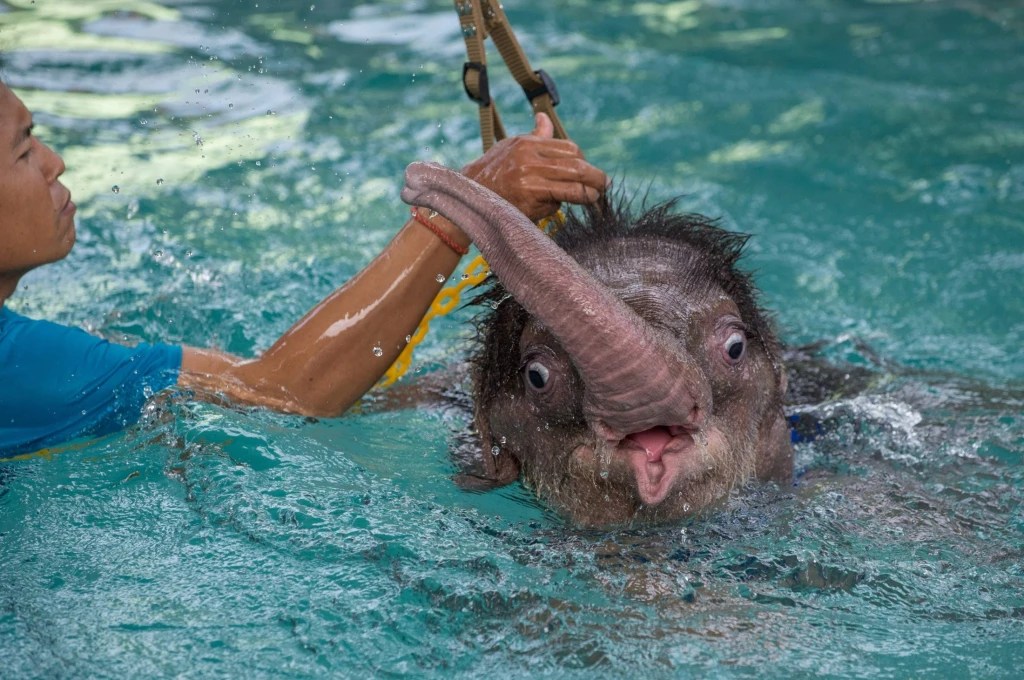
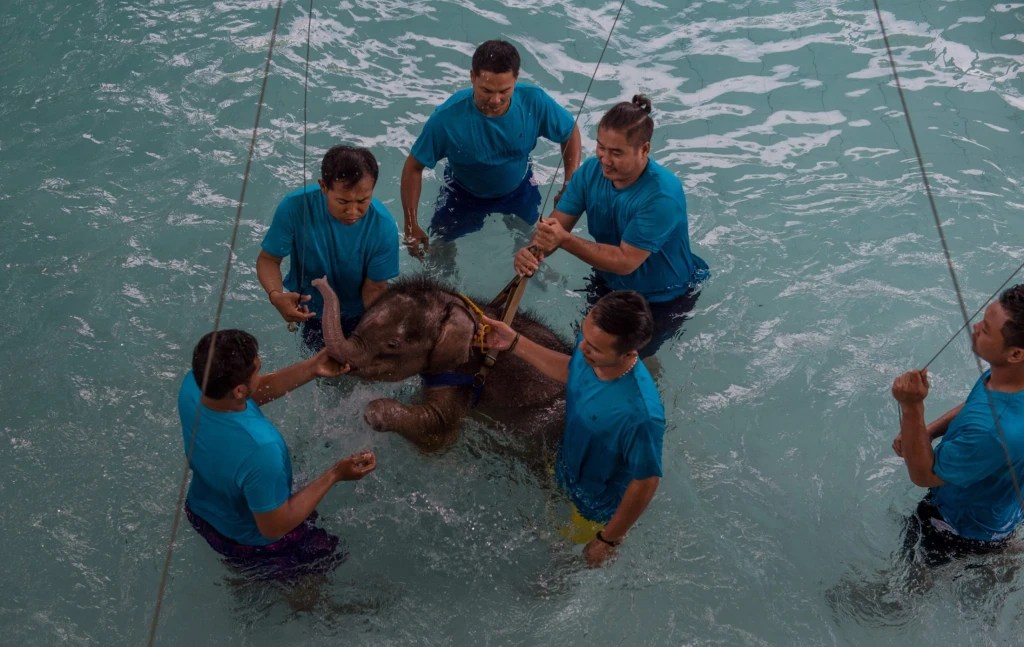
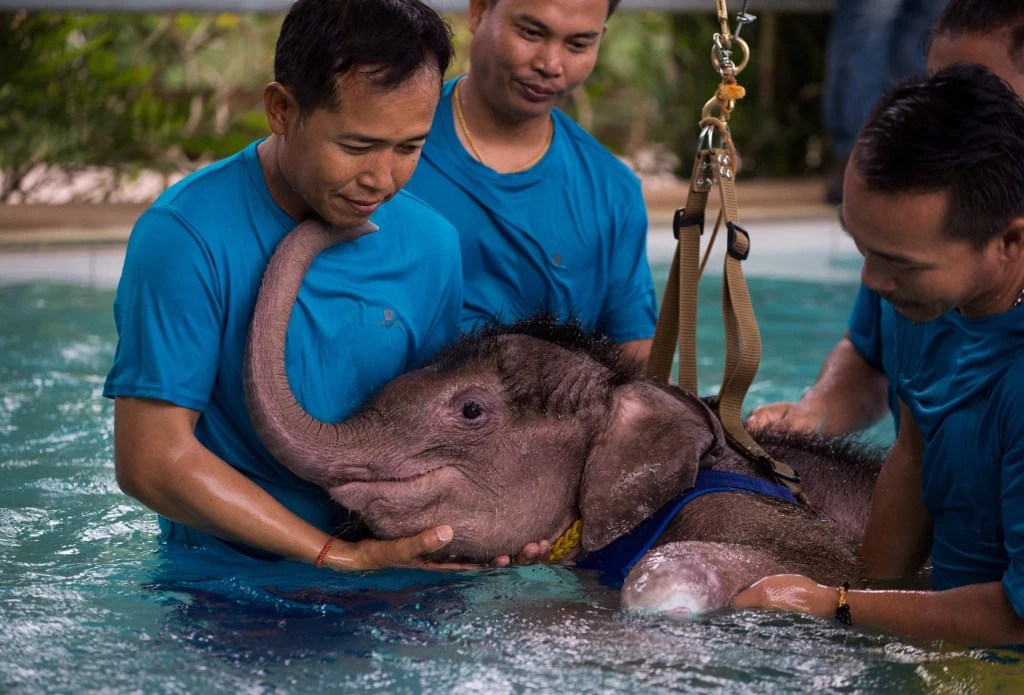
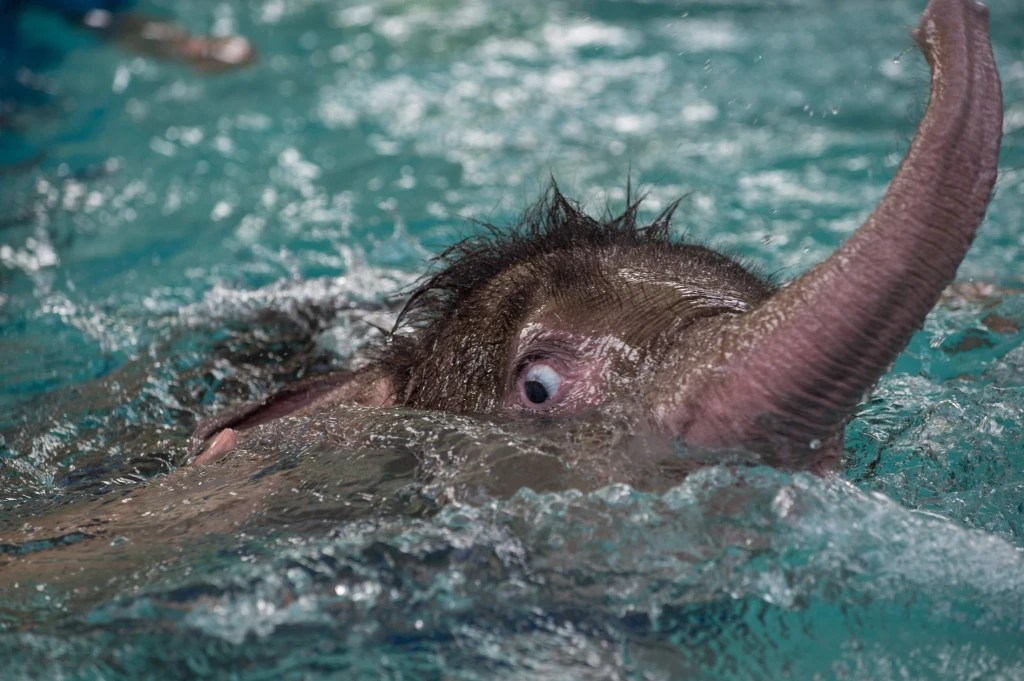
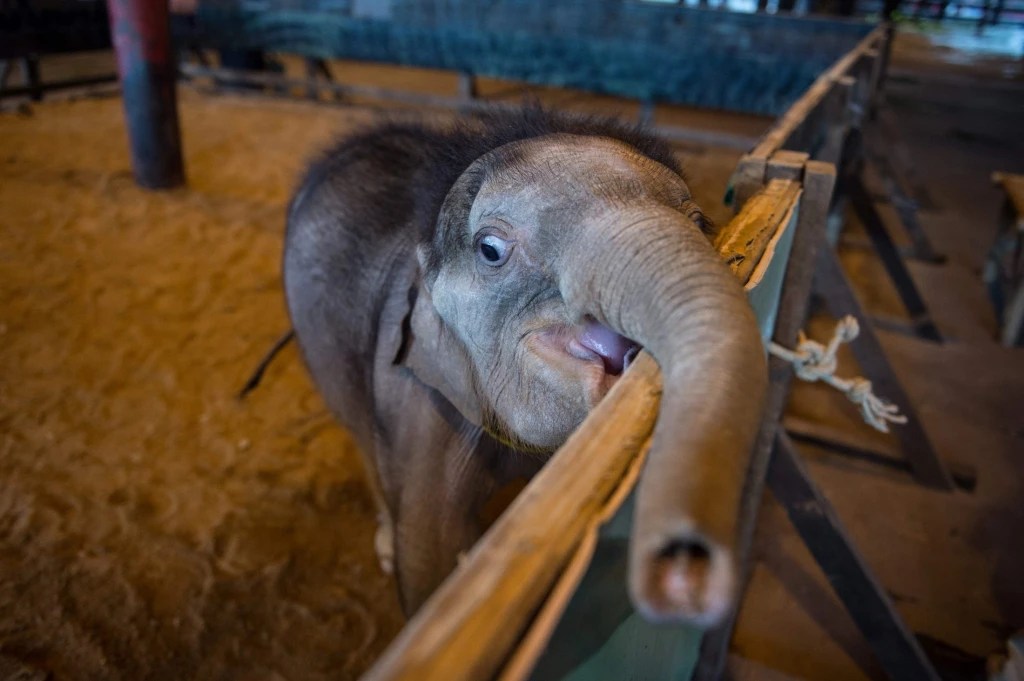
Staff at a Thai animal hospital take six-month-old orphan Clear Sky swimming to strengthen her leg muscles.
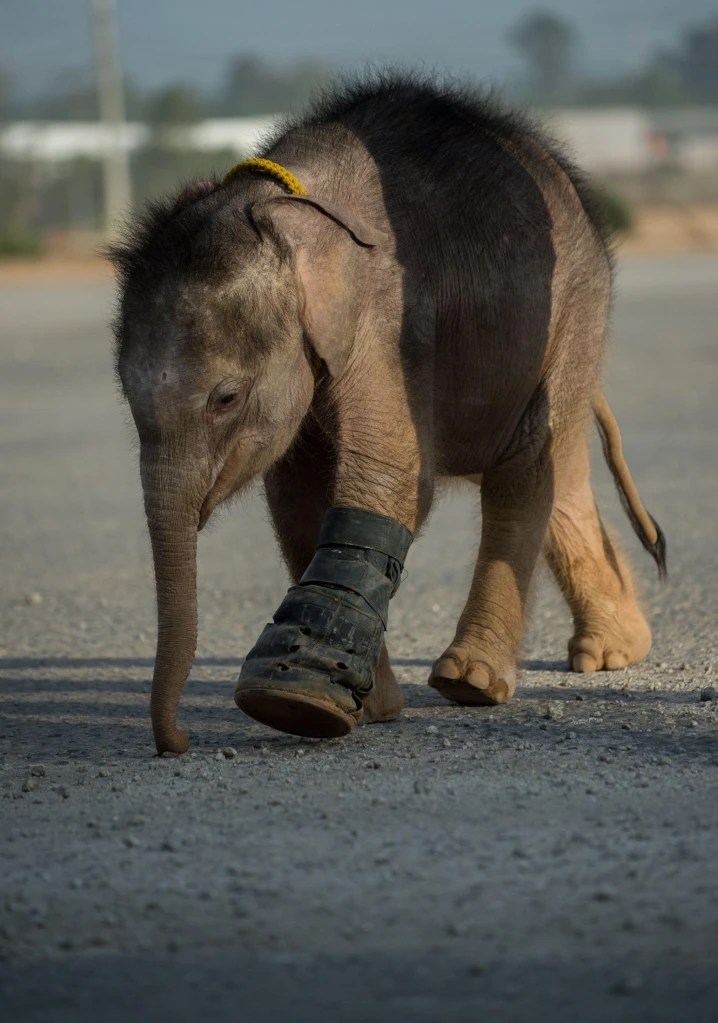
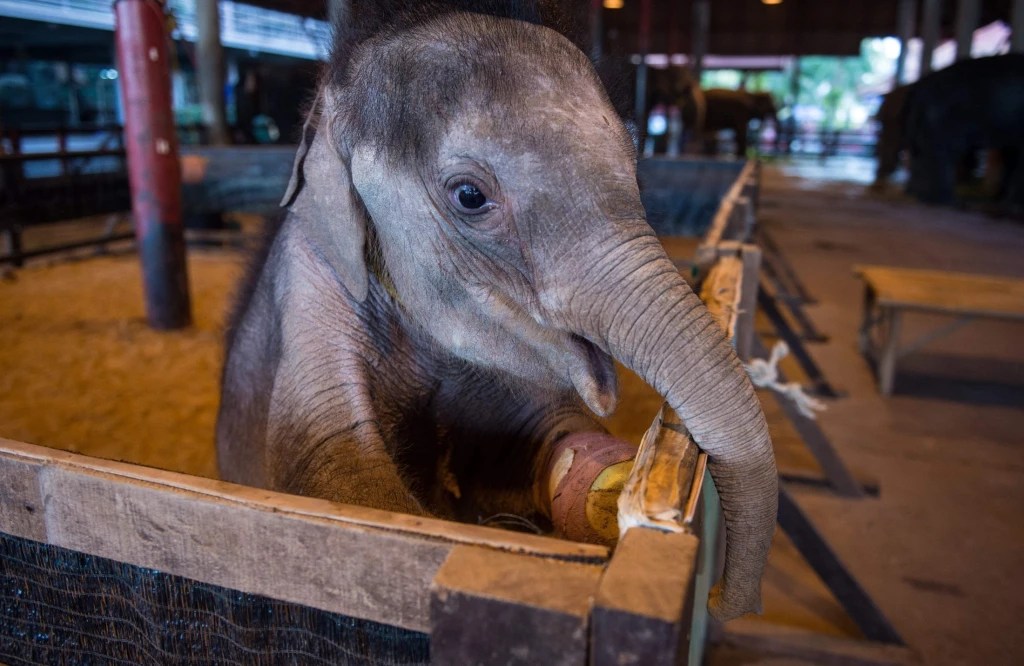
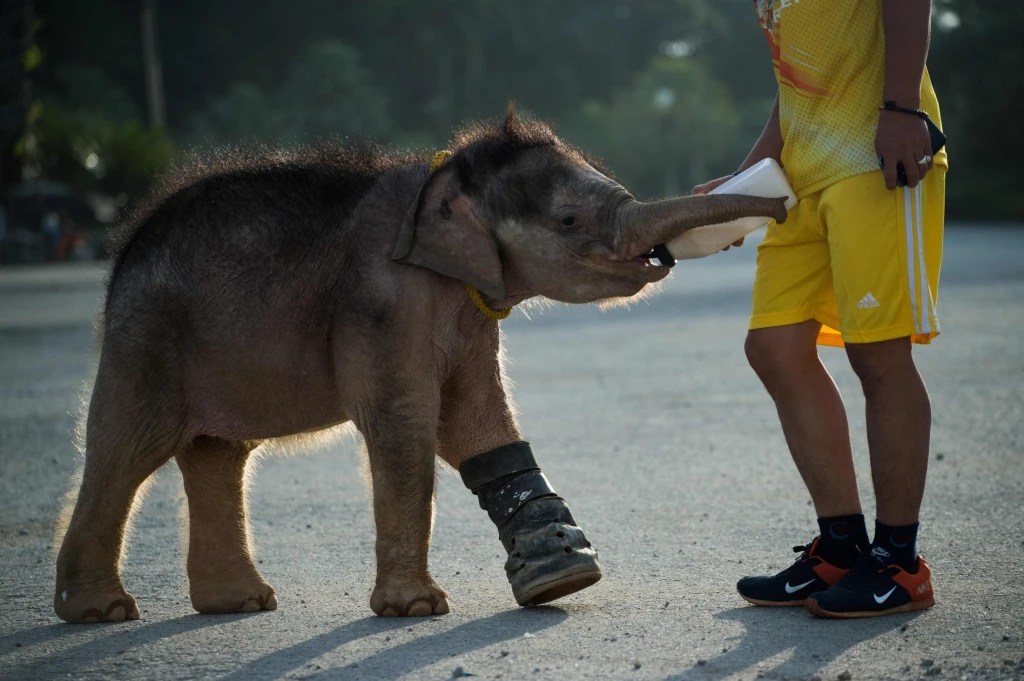
This baby Elephant is trying to forget her fear of water as she learns to walk again after losing part of her foot.
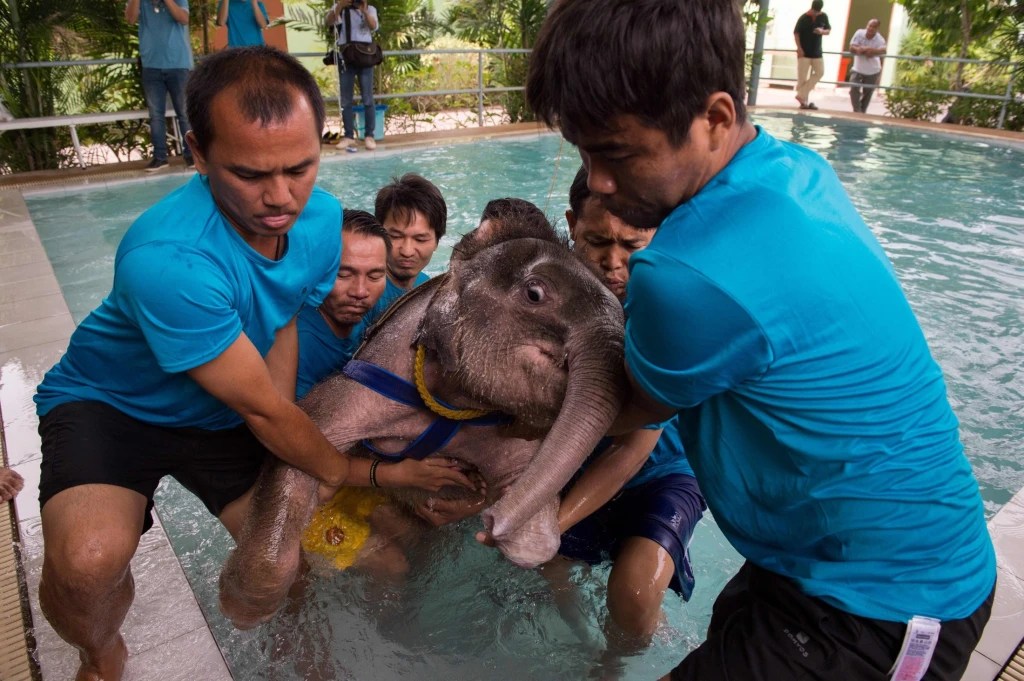
The nervous six-month-old grabbed a keeper for support as she was lowered into the pool at an animal hospital in Chonburi, Thailand.
CLEAR SKY IS LEARNING TO WALK AGAIN IN A SWIMMING POOL AFTER SHE INJURED HER FOOT.
The six-month-old is the first elephant to receive hydrotherapy at the Nong Nooch Tropical Garden animal hospital in Thailand
Clear Sky caught her leg in an animal trap laid by villagers to protect their crops.
Staff at the animal hospital are trying to help her strengthen her withered leg muscles.
After surgery she is now having treatment to strengthen her leg muscles.
STAFFERS USE A HARNESS TO HELP CLEAR SKY INTO THE WATER AND KEEP HER AFLOAT
THIS WAS HER SECOND TIME GETTING WATER THERAPY
Baby Elephants usually love water, but Clear Sky was ‘a bit nervous and scared’, said a vet.
However she appeared to relax by the end of the hour-long session.
Vet Padet Siridumrong said: “She is still a bit nervous and scared of the water.
“Usually baby Elephants love the water.
“If she can do this regularly she will have fun.”
Villagers had found Clear Sky hungry and hobbling, after being separated from her mother in the wild.
Vets hope with more swimming, she won’t need an artificial leg.
The orphaned Elephant was in bad shape when she arrived at the hospital.
She was hobbling, in pain and in dire need of milk.
‘Kampon Tansacha, the director of the zoo that’s now her home, said: “We named her Clear Sky Up Ahead, because that is what she will need while she is with us.”
Elephants are a revered national symbol in Thailand, but their population in the wild has plummeted to an estimated 2,500 in the last century, a result of rabid development, habitat destruction and the ivory trade.
WHAT YOU CAN DO TO HELP ANIMALS IN NEED
You can support our work by donating as little as £5 – It only takes a minute but it can last a lifetime for an animal in need.
Everyone who donates will receive a Certificate of Appreciation as a thank you for helping animals in need.
The Mission of Protect All Wildlife is to prevent cruelty and promote the welfare of ALL animals.
We believe EVERY animal should be treated with respect, empathy, and understanding. We raise awareness to protect and conserve wild, captive, companion and farm animals.
It is vital that we protect animals against acts of cruelty, abuse, and neglect by enforcing established animal welfare laws and, when necessary, take action to ensure that those who abuse animals are brought to justice.
Protect All Wildlife are involved in many projects to protect animals’ rights, welfare, and habitats. Money contributed to Protect All Wildlife supports ALL of our worthy programmes and gives us the flexibility to respond to emerging needs. Your donations make our work possible.
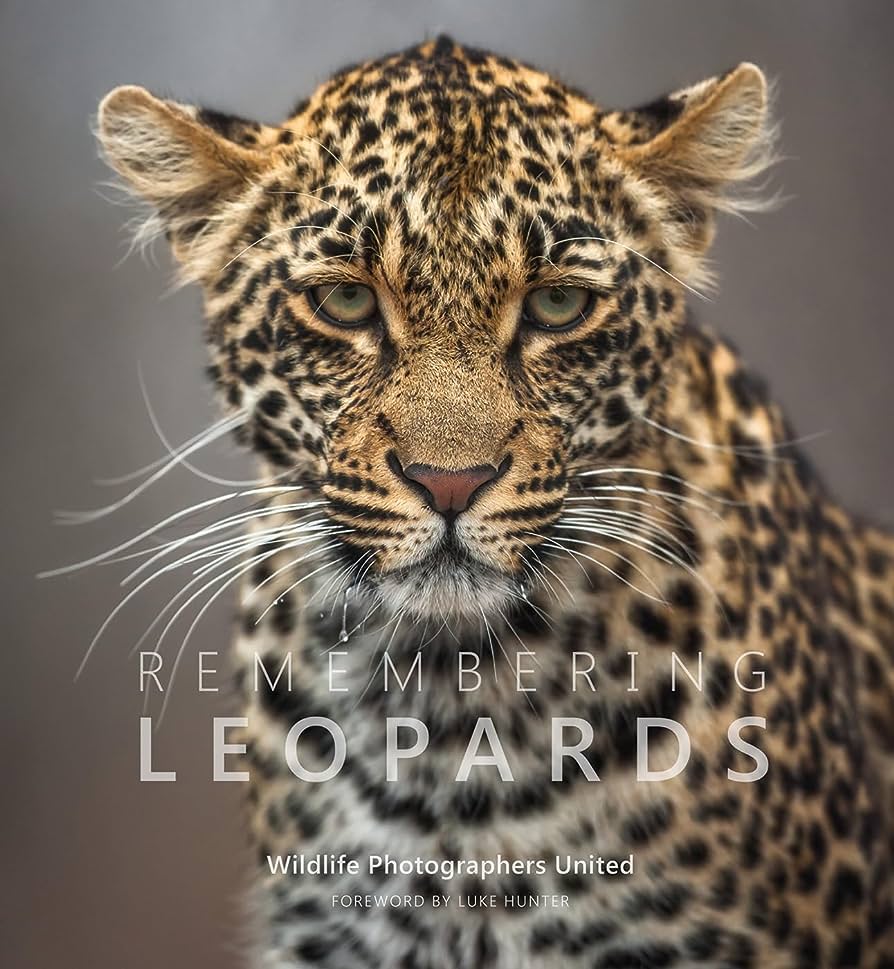
Front Cover: African Leopard by Mark Dumbleton in Sabi Sands Game Reserve, South Africa.
Remembering Wildlife has launched several charity photo books over the years that highlight endangered species and act to raise funds for the protection of the animals featured with the help of famous supporters and talented photographers around the world. Remembering Elephants, Remembering Rhinos, Remembering Great Apes, Remembering Lions, Remembering Cheetahs, and Remembering African Wild Dogs have already been produced, and Remembering Bears was funded and delivered last year. Remembering Leopards is the latest release in the series and will bring attention to Leopard species that are threatened around the world with the help of beautiful images of Leopards generously donated by many of the world’s top wildlife photographers
A mesmerising Leopard study by Roy Toft
This year the attention is turned to the eight species of Leopard: African, Amur, Arabian, Indian, Indochinese, Javan, Sri Lankan and Persian. Despite their adaptability, the global population and distribution is sadly in decline. They are now believed extinct in 23 of their 85 original range countries. As well as each of the sub-species, Remembering Leopards have also included images of Snow and Clouded Leopards too.
The International Union for Conservation of Nature (IUCN) classifies the Leopard as a Vulnerable species, and three of its subspecies are ranked as Critically Endangered. In addition, the Peer paper recommends that the status of another two subspecies be uplisted to the status of Critically Endangered and Endangered.
Margot Raggett, founder and producer of Remembering Wildlife, said: “Despite their adaptability, the global population and distribution of leopards is sadly in decline. “They are now believed to be extinct in 23 of their 85 original range countries.
Habitat loss and fragmentation, the legal and illegal wildlife trades, traps, trophy hunting and human-wildlife conflict are among the leading threats to Leopards. Although found across Africa and Asia, they are now extinct across large swathes of their previous habitat.
The Making Of The Book
A crowdfunding appeal to produce the latest edition of a wildlife book series has broken previous records for this very popular project. The campaign launched on April 1 2023 and smashed its minimum target of £20,000 in just four minutes when it launched on 1 April. Remembering Wildlife says that within the first day, supporters had pledged more than £100,000, making Remembering Leopards the fastest funded of all the books in the series so far.
More than £1 million has been donated by the photobook series to protect endangered species since its launch in 2016, attracting famous supporters including Russell Crowe, Ricky Gervais and Michelle Pfeiffer.
“I’m blown away by the support our Kickstarter has had already and I promise everyone who has pledged their support that this will be the most beautiful book on Leopards the world has ever seen.”
Margot Raggett, founder and producer of Remembering Wildlife
“There is no greater friend to the animals than Ricky and we are deeply grateful for his on-going support and championing of the series!” ~ Margot Raggett/Remembering Wildlife
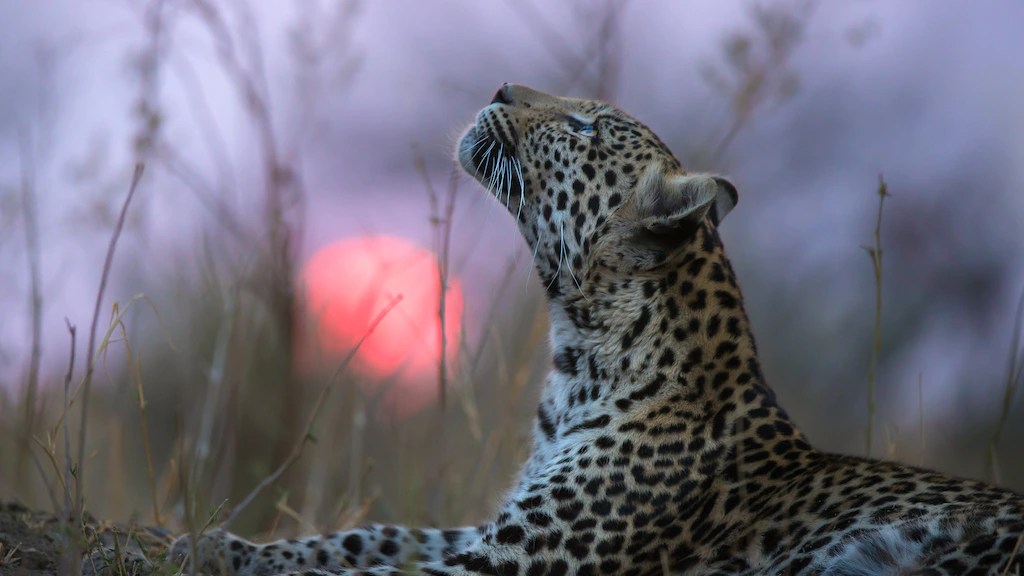
In Chobe National Park, Botswana, Hannes Lochner captured this Leopard looking skyward, as a flock of marabou storks flew overhead. Behind him, on the horizon, the sun sets over a swelteringly hot (50°C) day.
The photographers who have donated their images for this edition are:
Jane Addey, Oriol Alamany, Neil Aldridge, Theo Allofs, Matt Armstrong-Ford, Daryl & Sharna Balfour, Adam Bannister, Volodymyr Burdiak, Will Burrard-Lucas, Vladimir Cech Jr., Paras Chandaria, Chad Cocking, Marius J Coetzee, Shem Compion, Keith Connelly, Ben Cranke, Brendon Cremer, M & C Denis-Huot, Anja Denker, Tristan Dicks, Kevin Dooley, Greg du Toit, Marlon du Toit, Mark Dumbleton, Kairav Engineer, Morkel Erasmus, Amit Eshel, Suzi Eszterhas, Sascha Fonseca, James Gifford, Paul Goldstein, Sergey Gorshkov, Owen Gröbler, Richard Guijt, Todd Gustafson, Thorsten Hanewald, Hilary Hann, Trish Hennessy, Roger Hooper, Arnfinn Johansen, Lakshitha Karunarathna, Sebastian Kennerknecht, Agung Ganthar Kusumanto, Tim Laman, Frans Lanting, Behzad J Larry, Chien Lee, Hannes Lochner, Michael Lorentz, Piper Mackay, Russell MacLaughlin, Shivang Mehta, Garry Mills, Marc Mol, Yashas Narayan, Latika Nath, Heinrich Neumeyer, Pete Oxford, Parinya Padungtin, Richard Peters, Mevan Piyasena, Michael Poliza, Isak Pretorius, Margot Raggett, Abdul Rashid, Matthew Roper, Andy Rouse, Jonathan & Angela Scott, Pasan Senevirathne, Ismail Shariff, Anjali Singh, Harman Singh Heer, Andy Skinner, Sarah Skinner, James Suter, Tom Svensson, Roy Toft, Ann & Steve Toon, Paolo Torchio, Lance van de Vyver, Jan van der Greef, Marsel van Oosten, Christophe Vasselin, Federico Veronesi, Francesco Veronesi, Thomas Vijayan, Marion Vollborn, James Warwick, Marcus Westberg, Shannon Wild, Steve Winter, Art Wolfe and Nelis Wolmarans
Two Leopard brothers play fighting at Samburu National Reserve, Kenya. The shot was taken by photographer Trish Hennessy. The pair were initially playing in a bush before they climbed on top of the rocks on a hill to put on the show.
All profits from the sales of Remembering Leopards will be donated to projects protecting Leopards.
I fell in love with wildlife and safaris many years before picking up a camera! In the 2000s, I worked in PR in London and used all my spare cash to book safaris to Africa, as I had become totally addicted to being in nature. It was when I inadvertently signed up to a photography-based safari in 2010 that everything changed for me. It was a trip to see Kenya’s ‘Great Migration’ led by Jonathan & Angela Scott and it was only a few days before I went, that I realised I was supposed to bring a camera. I bought a cheap kit camera & lens and headed to Kenya. It turned out that camera was no good at all for wildlife (it was a very short lens) but nonetheless, I was totally inspired by Jonathan & Angela’s photography. When I got home, I immediately upgraded my gear and signed up for a course at the London School of Photography to learn the basics and I’ve never looked back. For a few years I went on as many photographer-led trips as I could, to learn from the best and then in 2012, agreed a deal to work as a Photographer in Residence at a camp in the Maasai Mara called Entim Camp. At that point I started selling my photos and attracting followers on social media.
It was in 2014 that everything changed for me once again. I had been working as a resident photographer in Kenya at that point for about three months a year, for three years, and it was at the end of one of those stays that I travelled to Laikipia to visit a friend. We were woken very early in camp by the sound of hyenas going crazy and at first light, went to investigate. What I saw changed my life, It was an elephant who has died from a poisoned arrow, likely poachers had shot him but he’d got away, only to die a slow, painful death over the next few days. The hyenas had started to eat his body and the sight – and the smell – was so shocking. I came to realise that poaching and the many other threats that wildlife faces are often hidden away from tourists and as a result, many like me at that point, had any idea how bad things really are. I was incredibly angry and upset and resolved to channel those emotions into something positive. That was the trigger for me to start work on what I thought would be a one-off book on elephants, to raise awareness about poaching and funds for projects working to protect elephants. I started to approach wildlife photographers I’d met in the field and invited them to donate an image each and it took off from there. 18 months later, Remembering Elephants was published. It sold out in 2 months and raised more than £100,000 and without me knowing it, a series was born. We’ve published five more books since (Remembering Rhinos, Remembering Great Apes, Remembering Lions, Remembering Cheetahs and Remembering African Wild Dogs) and the 7th in the series, Remembering Bears, will be published in October 2022. More than $1.2m USD has been raised by the series for conservation so far. Over 200 photographers have now contributed to the series and producing and steering it, has become my life’s work. Nowadays I spend far less time in the field taking traditional wildlife pictures like before but rather, I spend more time visiting the projects we are able to support with our funds, so I can see how our money is making a difference.
Source: Heroes of the extreme An interview with Margot Raggett. Gizmo, 2022.
Margot was awarded an MBE in the The King’s Birthday Honours 2023 for services to International Wildlife Conservation.
Police are yet to issue an official statement however, it is believed that it is to do with the wildlife smuggling trade which is widespread in the Balkan region.
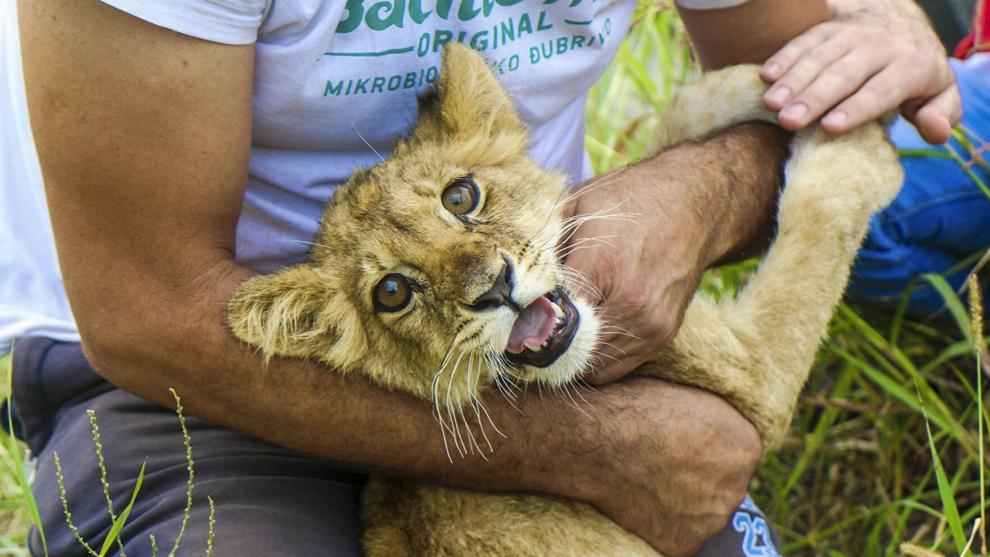
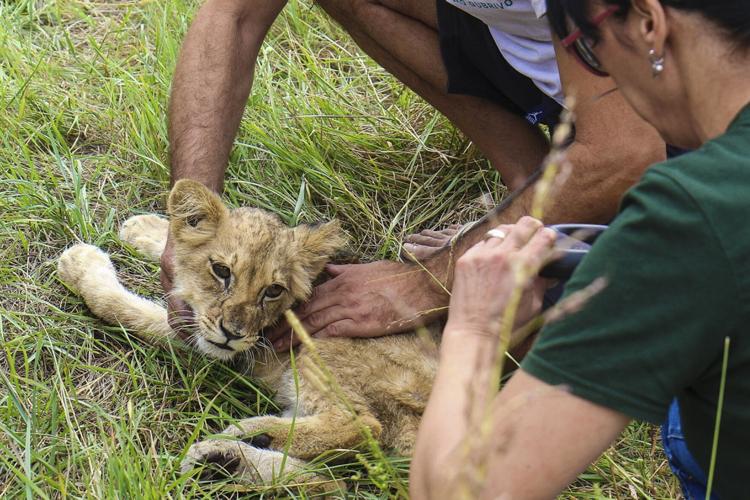
The illicit trade of wild and rare animals remains a pressing issue in the Balkan region, as evidenced by a recent incident in northern Serbia. On September 21, 2023, a Lion cub was discovered wandering on a local road near Subotica, a town situated near the Hungarian border. This incident sheds light on the pervasive problem of wildlife smuggling in the region, as well as the dire circumstances faced by these majestic creatures.
The female Lion cub, who was only a few months old, was in a horrible state when she was found. Malnourished and weak, it was apparent that the cub had faced significant challenges in the wild. Fortunately, a Subotica resident spotted her on the road and promptly alerted the police. Authorities intervened swiftly, ensuring the cub’s safety and its transfer to the Palic Zoo in the region.
Upon arrival at the Palic Zoo, the cub was examined by Sonja Mandic, a representative of the zoo. She noted that the cub was in “pretty poor shape” and immediately initiated necessary medical treatment. This included rehydration through infusion and nutritional support to improve the cub’s condition. Mandic stated that it was challenging to determine the cub’s exact age due to its malnourished and possibly underdeveloped state, but it was clear that the animal needed urgent care and attention.
Reports indicated that the Lion cub displayed an unusual degree of friendliness and did not appear to be afraid of humans. Video footage circulating on social media showed the cub emerging from the grass and confidently stepping onto the road. In other videos and photos, police officers and residents could be seen interacting with the cub, offering it affection and comfort.
The cub appeared to be very confident around humans
While the circumstances surrounding this lion cub’s appearance on a Serbian road remain unclear, it underscores a broader issue: the illicit trade of wild and rare animals in the Balkan region. A report by the World Wildlife Fund on wildlife crime in the area revealed alarming trends. Songbirds from the Finch family, locally protected Brown Bears, and Forest Turtles were among the most targeted species in Serbia.
Furthermore, cases involving the smuggling and illegal possession of exotic species, such as Pythons, are disturbingly common. In 2020, investigative efforts exposed the rampant illegal wildlife trade in Eastern Europe. This report raised concerns among conservationists that smugglers may be exploiting countries in Eastern Europe with less stringent law enforcement to avoid scrutiny.
WHAT YOU CAN DO TO HELP ANIMALS IN NEED
You can support our work by donating as little as £5 – It only takes a minute but it can last a lifetime for an animal in need.
Everyone who donates will receive a Certificate of Appreciation as a thank you for helping animals in need.
The Mission of Protect All Wildlife is to prevent cruelty and promote the welfare of ALL animals.
We believe EVERY animal should be treated with respect, empathy, and understanding. We raise awareness to protect and conserve wild, captive, companion and farm animals.
It is vital that we protect animals against acts of cruelty, abuse, and neglect by enforcing established animal welfare laws and, when necessary, take action to ensure that those who abuse animals are brought to justice.
Protect All Wildlife are involved in many projects to protect animals’ rights, welfare, and habitats. Money contributed to Protect All Wildlife supports ALL of our worthy programmes and gives us the flexibility to respond to emerging needs. Your donations make our work possible.
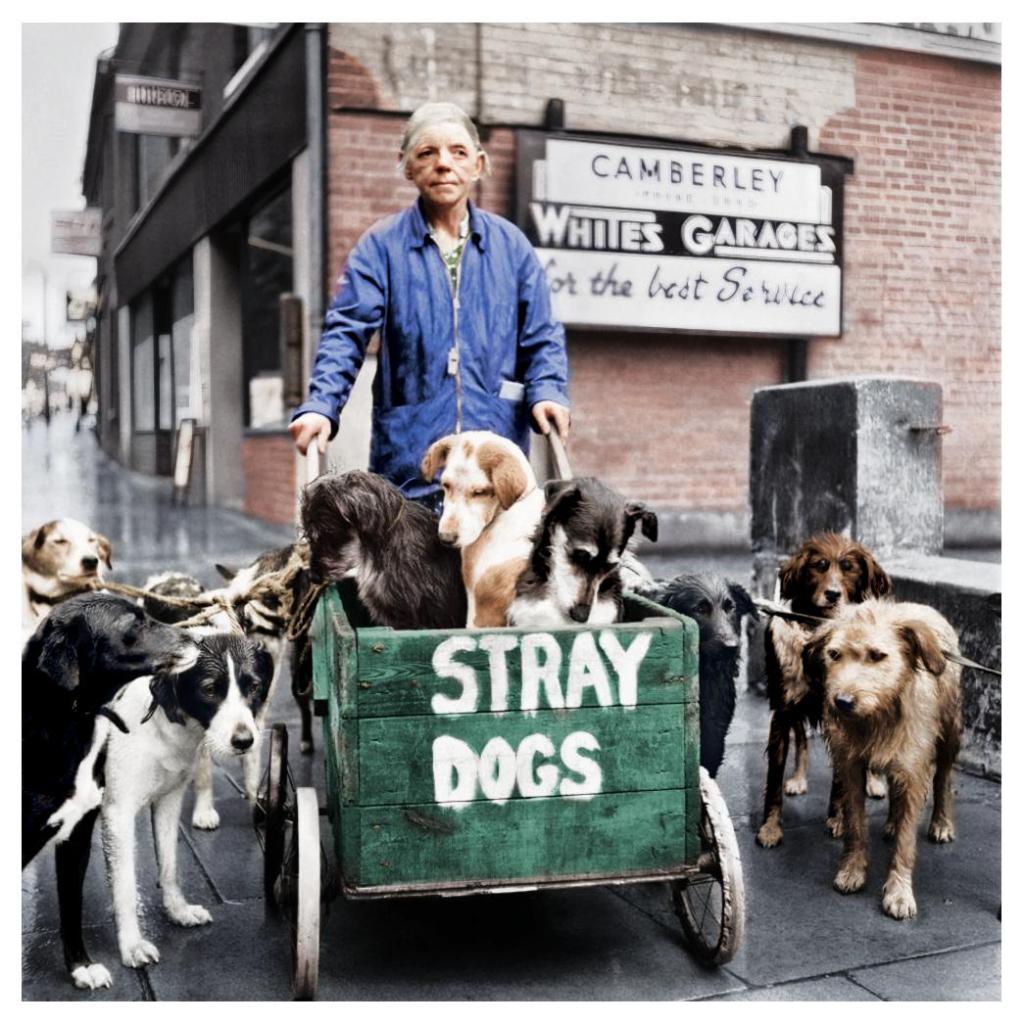
Kate Ward’s nickname “Camberley Kate” is said to have been given to her by historian Sir Arthur Bryant in his book “The Lion and the Unicorn”. It became the title by which she became known to everyone.
Kate’s early history is somewhat hazy – When interviewed she stated that she was born in Middlesbrough on June 13th 1895, and remained proud of her Yorkshire roots. Orphaned before she was ten, she was brought up by an aunt in a strict religious atmosphere. As a young girl she went into service, in Yorkshire and eventually found her way to Camberley. In 1943 Kate bought a cottage in Yorktown, and soon afterwards took in her first stray, a dog which had been about to be put down due to lameness.
As word grew, the number of dogs in her cottage increased – some being tied to her door, some left in carrier bags, others brought in by the police or other agencies. At the end of her life she estimated that she had looked after more than 600 dogs and local vet Geoffrey Craddock, a great admirer of Kate work testified that they were well looked after. An entry in the 1957 directory FOR Camberley reads “Ward K 218 London Road., Cam., Dogs Home”. In 1976 she stated that she had 34 dogs, although by 1977 she had cut this down to 19, as she had been told to go easier at the age of 82! The growth of other dog rescue centres helped in this regard. She also had at least one cat.
CAMBERLEY KATE
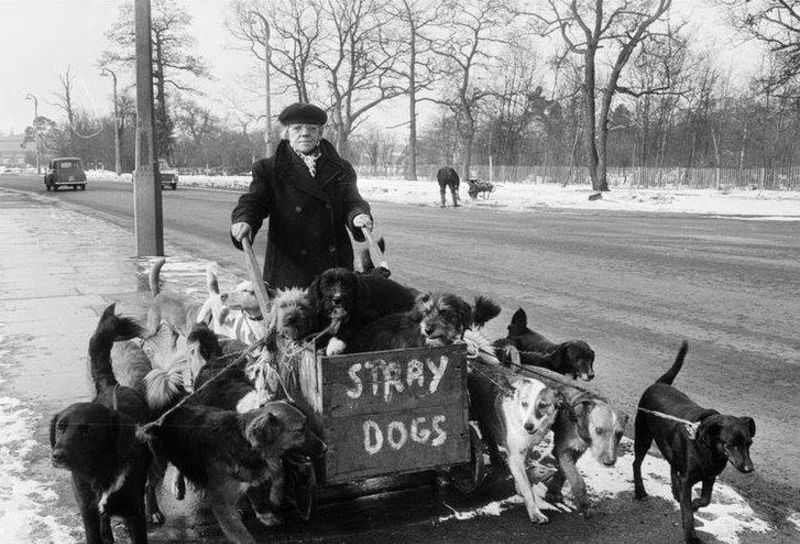
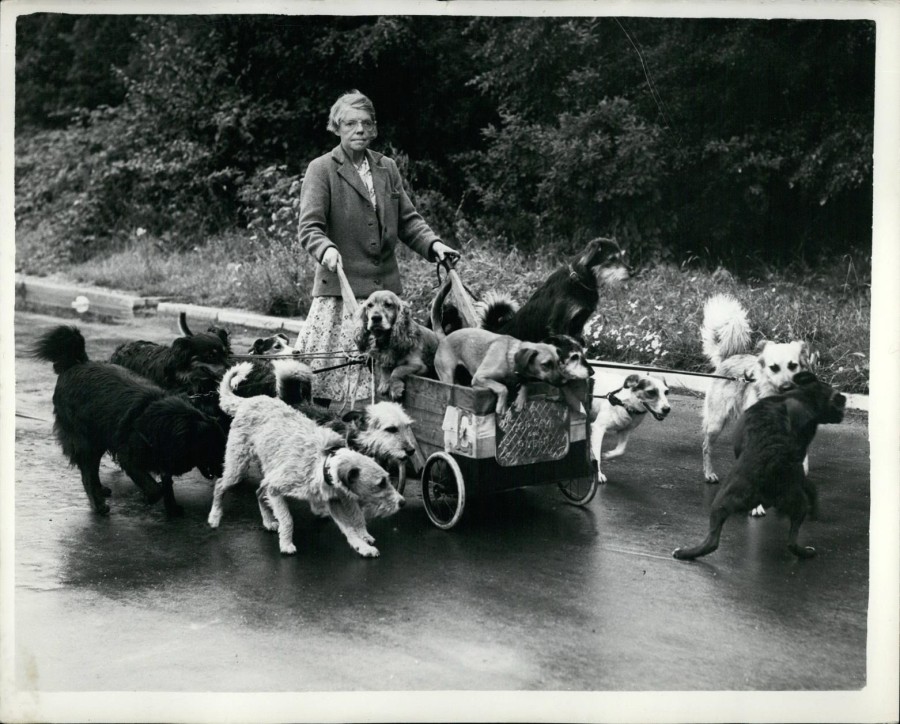
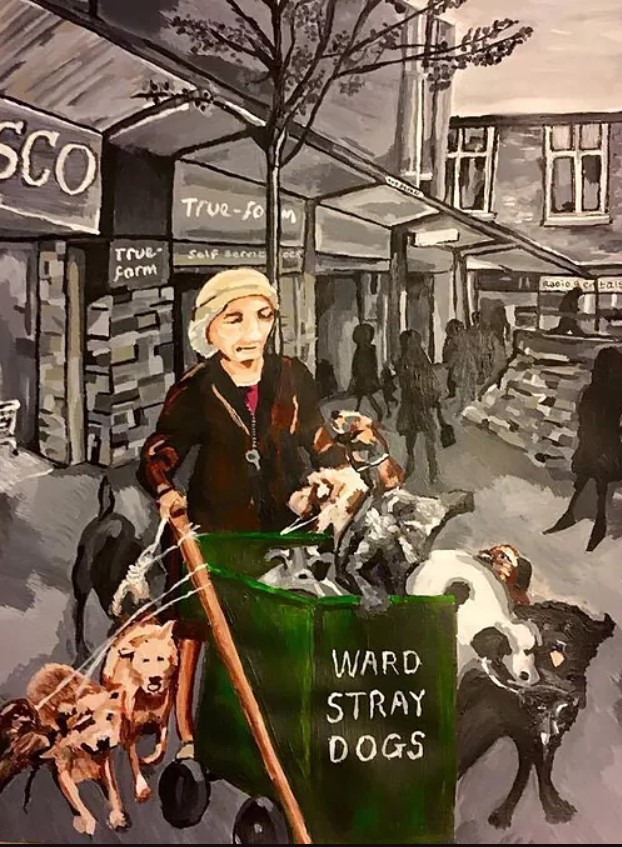
Kate and her olive-green painted hand cart, labelled STRAY DOGS, was a familiar sight locally as she pushed it from Yorktown to Camberley each day, through the town centre and up to Barossa Common, on a route suggested by the police. Some of the dogs were allowed to ride in the cart, others were attached to it with lengths of string, and occasionally a favoured few ran loose alongside. Inside the cart, there was usually some meat for the dogs and a shovel to clean any mess away. The dogs were controlled with the help of a whistle. Locals became used to the sight of Kate pushing her cart along the busy London Road although it never ceased to amaze outsiders.
As a local celebrity Kate and her dogs were much photographed, a situation she tolerated as long as the photographer gave a donation for the upkeep of the animals. She also sold her own photographic postcards, and gave short shrift to those who tried to take their own pictures. Generous supporters gave money to assist her work and some even left bequests. She was scrupulous that this money should be used only for its intended purpose: the dogs had their own bank account, administered by 2 trustees. She left money in trust for the few dogs left at her death.
If you gave her some money, she would INSIST you take a photo. That way she could not be accused of begging.
KATE AND HER CART AND DOGS WERE A WELL-KNOWN SIGHT IN THE TOWN UNTIL HER DEATH IN 1979
A diminutive figure with her shock of white hair and her beret, Kate defended herself and her work passionately against her critics, such as those who wanted her out of the town centre or who regarded the dogs as dangerous or a health or traffic hazard. On one occasion she rammed a new car which was blocking her way. She also had a number of disputes with the authorities. These clashes were often recorded in the columns of the press. However she won the backing of the local police for her work in taking abandoned dogs in off the streets.
In 21 August 1969 Kate was in the Camberley News fighting plans to introduce a bye law making it illegal for dogs to be out without a lead. This followed complains from residents of new housing estates, and concerns about road accidents caused by stray dogs. In her customary forthright fashion she condemned “The Council is nothing more than a collection of dog-haters. I think this will be rotten. It means that dogs will be chained up all day”. A proposal to ban dogs from the new precinct in Camberley also met with a terse response, particularly since she was in the habit of shopping at Sainsbury’s and leaving some of the dogs tied up outside. When protests about the local drag-hounds running out of control when being exercised attracted her support Kate, in typical fashion, addressed her complaint directly to the King. The Royal family continued to be a favourite route for correspondence. When a local schoolteacher complained that she had seen her beat her dogs with a stick, Kate immediately wrote in protest to the Queen. This was not their first encounter – when Princess Elizabeth got married one of the dogs sent a present of a dog lead.
KATE WITH CAT AND SOME OF HER DOGS AT HOME
As these anecdotes show, Kate was an excellent publicist. A local policemen recalled that occasionally a dog would get loose and be brought to the dog pound. If the Police Station was empty she would pay the fine quietly and readily, but if there was an audience she would protest vocally!
Following a series of strokes old age and ill-health forced her to leave her cottage and her remaining seven dogs were put into kennels. Her last weeks were spent at Kingsclear residential home and she died on 4th August 1979. Her funeral was at St Michael’s, Yorktown.
Despite her avowed dislike of people, Baptist Minister the Rev Chris Russell who officiated at her funeral, remembers her private generosity to those in need. This aspect of her life she kept anonymous, passing on her donations through third parties.
After her death, Camberley vet Geoffrey Craddock was quoted in the Camberley News as saying “Camberley has lost its most celebrated and best known character. She will be greatly missed by those of us who had the rare privilege of knowing her”.
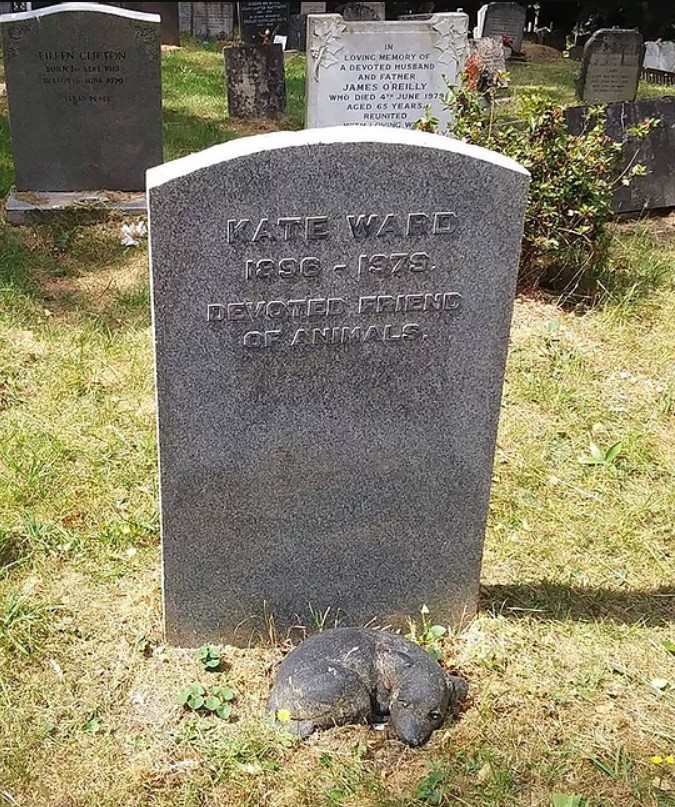
Kate Ward (Camberley Kate) is buried at St Michael’s Church in Camberley and protected by a dog.
During her lifetime, Kate’s fame spread far and wide. She featured In the national press and on television programmes such as “Nationwide” and “Tonight”. was featured on NBC in the United States and her story appeared in publications across Europe from France to Rumania. She also received the ultimate accolade of a feature in “Time” Magazine, and was photographed by Lord Snowdon. To her surprise, in 1967 she received an award from the magazine “Dog’s Life” for her work. In answer to the inevitable question, why she did it? her invariable reply was that she preferred dogs to humans.
KATE PUTS UP WITH A FILM CREW FOR THE BENEFIT OF HER DOGS
Her home at 218 London Road was just a few doors along from the former Lamb pub, near the present Meadows roundabout, but Is no longer standing. The Katherine Court retirement flats were named after her at the suggestion of a local resident in 2000.
A BEAUTIFUL PAINTING OF KATE AND HER BELOVED DOGS
There are so many great lessons we can learn from the life of Kate Ward, both as responsible dog owners, human beings, and as pet rescue charities. Most of all Kate recognized the value of a photograph and how it could be used for the positive influence of others, to bring light to a cause, and to help raise money.
Please share for others to enjoy.
WHAT YOU CAN DO TO HELP ANIMALS IN NEED
You can support our work by donating as little as £5 – It only takes a minute but it can last a lifetime for an animal in need.
Everyone who donates will receive a Certificate of Appreciation as a thank you for helping animals in need.
The Mission of Protect All Wildlife is to prevent cruelty and promote the welfare of ALL animals.
We believe EVERY animal should be treated with respect, empathy, and understanding. We raise awareness to protect and conserve wild, captive, companion and farm animals.
It is vital that we protect animals against acts of cruelty, abuse, and neglect by enforcing established animal welfare laws and, when necessary, take action to ensure that those who abuse animals are brought to justice.
Protect All Wildlife are involved in many projects to protect animals’ rights, welfare, and habitats. Money contributed to Protect All Wildlife supports ALL of our worthy programmes and gives us the flexibility to respond to emerging needs. Your donations make our work possible.
A Mozambican national serving a prison sentence for Rhino poaching has been slapped with another lengthy jail term after being convicted of killing a second Rhino in the Skukuza National Park.
Convicted poacher Lucky Mabunda
The National Prosecuting Authority said 47-year-old Lucky Mabunda, was sentenced in the town’s Regional Court on Thursday to ten years direct imprisonment.
NPA spokesperson, Monica Nyuswa, said he was already serving a 19-year jail term for Rhino poaching and was convicted and sentenced for the second incident in 2019.
She said the court heard that Mabunda had entered the Skukuza National Park between February and September 2019. Field Rangers were patrolling and found the accused in possession of a firearm, axe, ammunition, and other items geared for hunting. They also found the carcasses of two Rhinos.
Nyuswa said he pleaded guilty to killing one rhino, before ballistic evidence taken from the Rhino killed in February, later provided the link back to him.
“It confirmed that the bullets found on the carcass were fired from the rifle found in the accused’s possession,” she said.
State prosecutor Lot Mgiba underscored the gravity of the offense, advocating for an appropriate sentence in court.
Consequently, the accused was found guilty and received a ten-year jail term. The importance of such legal actions in combating poaching, which poses a severe threat to endangered species and the potential for species extinction, was highlighted by Director of Public Prosecutions Advocate Nkebe Kanyane.
SANParks spokesperson, Ike Phaahla, says they welcome the sentence.
“We are elated at the sentencing, which is in addition to the 18 years he has already served since he was found inside the park. In this instance, a projectile was discovered next to the carcass and taken for ballistics. They came back pointing towards the accused, and he was requisitioned from the Department of Correctional Services to get an additional 10-year sentence. It’s a well-known fact that we still have people who, around this time, want to come in, but we want to warn them that Kruger National Park is a dangerous place to come.”
Kruger has lost 70% of ITS Rhinos in 10 years
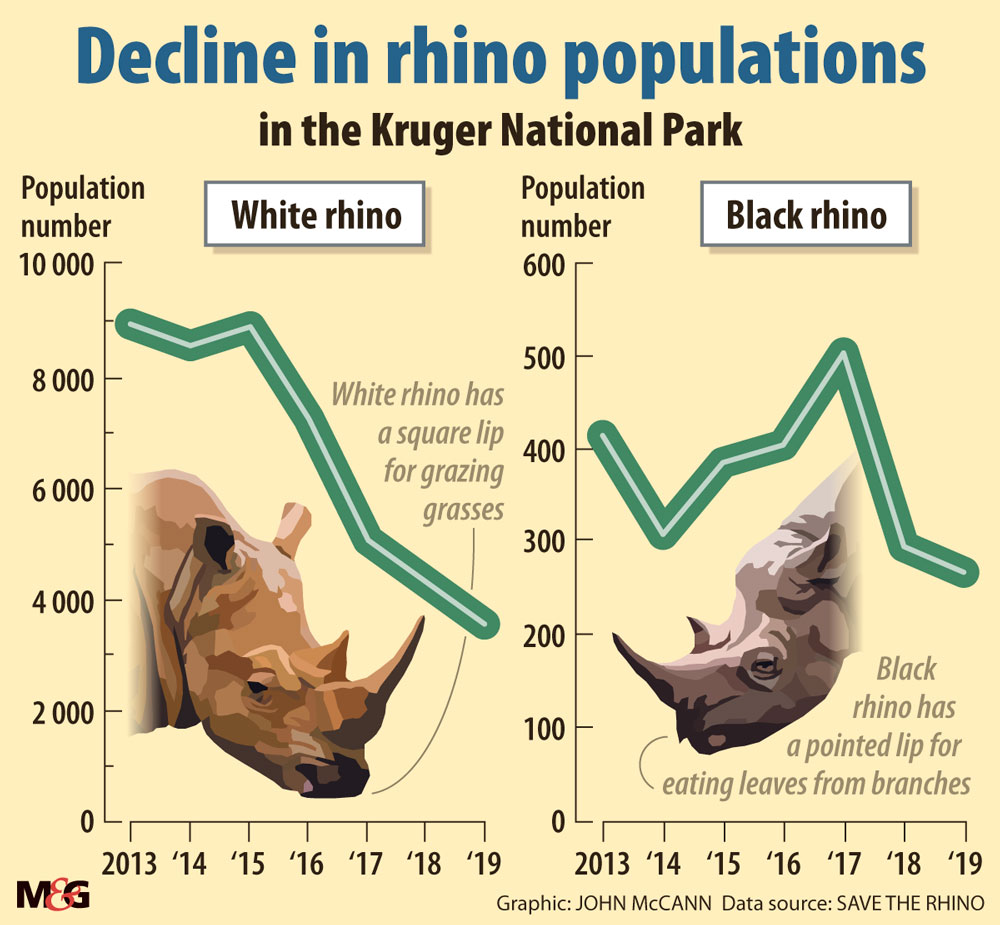
The Decline In Rhino Populations In KNP Graph: Save The Rhino
Rhino populations in the Kruger National Park have dropped by about 70% in the past decade because of the onslaught of poaching and prolonged drought. In its 2019-20 annual report, SANParks said that only about 3 549 White Rhinos and 268 Black Rhinos remain in the Kruger.
The environment department said poachers killing cows also ultimately kill dependent calves and cause future loss of calves — this effect equates to an additional five rhinos lost to the population per loss of one cow, now and in future. “Poaching also causes factors such as social disruption of Black Rhino societies. Cows then conceive less often.”
WHAT YOU CAN DO TO HELP ANIMALS IN NEED
You can support our work by donating as little as £5 – It only takes a minute but it can last a lifetime for an animal in need.
Everyone who donates will receive a Certificate of Appreciation as a thank you for helping animals in need.
The Mission of Protect All Wildlife is to prevent cruelty and promote the welfare of ALL animals.
We believe EVERY animal should be treated with respect, empathy, and understanding. We raise awareness to protect and conserve wild, captive, companion and farm animals.
It is vital that we protect animals against acts of cruelty, abuse, and neglect by enforcing established animal welfare laws and, when necessary, take action to ensure that those who abuse animals are brought to justice.
Protect All Wildlife are involved in many projects to protect animals’ rights, welfare, and habitats. Money contributed to Protect All Wildlife supports ALL of our worthy programmes and gives us the flexibility to respond to emerging needs. Your donations make our work possible.
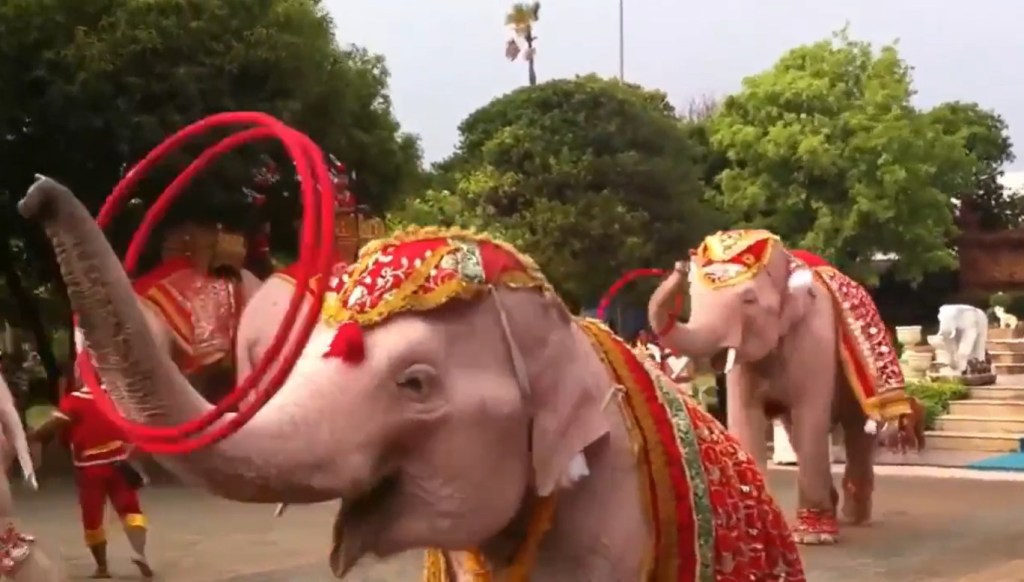
They are the country’s icon – but behind the dazzle of religious festivals and tourist ‘attractions’, these giants of the wild are painfully abused in Thailand.
Some Elephants in Thailand are captured from the wild or bred in captivity and then forced to perform like monkeys to humans for the rest of their lives. When small they are beaten with sticks until they are broken, like a horse, or else they would not do what the humans tell them.
When small they are beaten with sticks until they are broken.
When they are not performing they are shackled in chains and when they come into heat or ‘musk’ they are re-beaten again to make them tame – THIS IS THE REALITY of your trip to see the Elephants in Thailand! Please do not support captive Elephants and only visit the ones that are free and not shackled – humans paying these people only make this continue – if we cut our money off, they will not continue doing this.
ALL temple Elephants are shackled and beaten – do not be tricked into thinking they are not.
When You Buy A Ticket They Suffer
I WILL STAND UP AND NOT BE AFRAID
I will stand up and not be afraid Of those who ask why I share the Elephants suffering And show them on video coloured pink
I do it, Not because I support what I see I do it, Not to encourage you to go I do it, Not so you find the link To the website advertising such horror shows
I do it, To remind those that have a life That many who walk amongst us Are suffering at the hands of man Because humans say they can As there is no law to fight And animals have no rights
I do it, So the voiceless will be heard. I do it, To show you that it it is wrong of man To sink so low as to abuse these magnificent beasts So you may feast Upon the evil show Now you know.
Sadly, the person clapping knows The Elephants do not love these shows These Elephants are forced to perform for your enjoyment They have been abused since very young With bull hooks and chains To force them to obey A command by the human, Which destroys their natural ways And makes them servants of man
I call the Elephants slaves to its mahout Because they cannot call a halt to the video shoot Because they cannot escape the strife That is their life.
Rachel Bose.
WHAT YOU CAN DO TO HELP ANIMALS IN NEED
You can support our work by donating as little as £5 – It only takes a minute but it can last a lifetime for an animal in need.
Everyone who donates will receive a Certificate of Appreciation as a thank you for helping animals in need.
The Mission of Protect All Wildlife is to prevent cruelty and promote the welfare of ALL animals.
We believe EVERY animal should be treated with respect, empathy, and understanding. We raise awareness to protect and conserve wild, captive, companion and farm animals.
It is vital that we protect animals against acts of cruelty, abuse, and neglect by enforcing established animal welfare laws and, when necessary, take action to ensure that those who abuse animals are brought to justice.
Protect All Wildlife are involved in many projects to protect animals’ rights, welfare, and habitats. Money contributed to Protect All Wildlife supports ALL of our worthy programmes and gives us the flexibility to respond to emerging needs. Your donations make our work possible.
A Texas couple was arrested for selling protected wildlife, marking the first case in the U.S. filed under The Big Cat Act.
On Wednesday, 29-year-old Rafael Gutierrez-Galvan and his wife Deyanira Garza, 28, had their initial court appearances in McAllen, as U.S. Attorney Alamdar S. Hamdani announced.
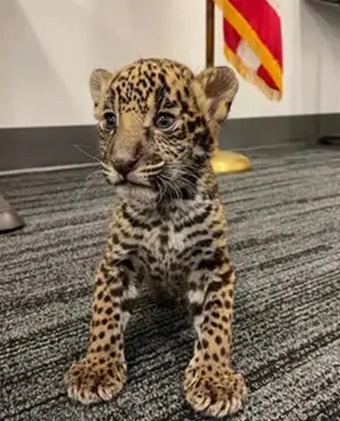
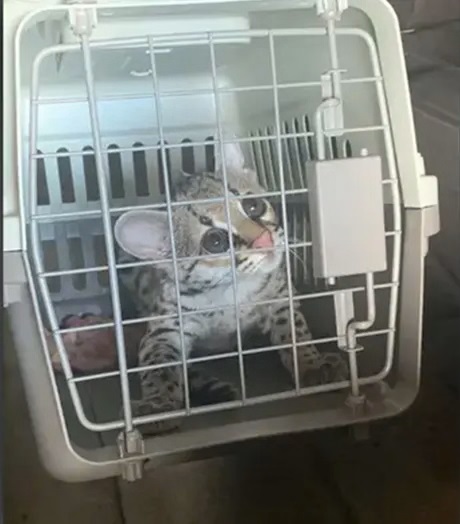
Based on the criminal complaint, Gutierrez-Galvan was accused of selling a Margay cub for $7,500 in a parking lot of a local Academy Sports and Outdoors on Aug. 24. Later on Sept. 26, he tried to sell a Jaguar cub to the same buyer. He instructed his wife to bring a case filled with cash from their home to the meeting point. However, the police stopped her on the way and found the money.
According to the criminal complaint, Rafael Gutierrez-Galvan tried to sell this Jaguar cub. Credit: JUSTICE DEPARTMENT
Neither Gutierrez-Galvan or Garza possess a license to buy, sell, trade or transport exotic animals such as Margays and Jaguars, federal authorities said.
In December 2022, the Big Cat Act was put into effect, which made it illegal to import, transport, sell or possess any wildlife species that are prohibited. This includes Jaguars, which are considered a prohibited species.
The rescued Margay cub. Credit: JUSTICE DEPARTMENT
Gutierrez-Galvan and Garza face up to five years in federal prison and a possible $20,000 maximum fine if convicted.
Authorities said they were able to recover both animals in the case.
WHAT YOU CAN DO TO HELP ANIMALS IN NEED
You can support our work by donating as little as £5 – It only takes a minute but it can last a lifetime for an animal in need.
Everyone who donates will receive a Certificate of Appreciation as a thank you for helping animals in need.
The Mission of Protect All Wildlife is to prevent cruelty and promote the welfare of ALL animals.
We believe EVERY animal should be treated with respect, empathy, and understanding. We raise awareness to protect and conserve wild, captive, companion and farm animals.
It is vital that we protect animals against acts of cruelty, abuse, and neglect by enforcing established animal welfare laws and, when necessary, take action to ensure that those who abuse animals are brought to justice.
Protect All Wildlife are involved in many projects to protect animals’ rights, welfare, and habitats. Money contributed to Protect All Wildlife supports ALL of our worthy programmes and gives us the flexibility to respond to emerging needs. Your donations make our work possible.
Animal rescue charities need our help more than ever now. Rising costs coupled with low donations and no government funding etc. coming in are hitting us really hard.
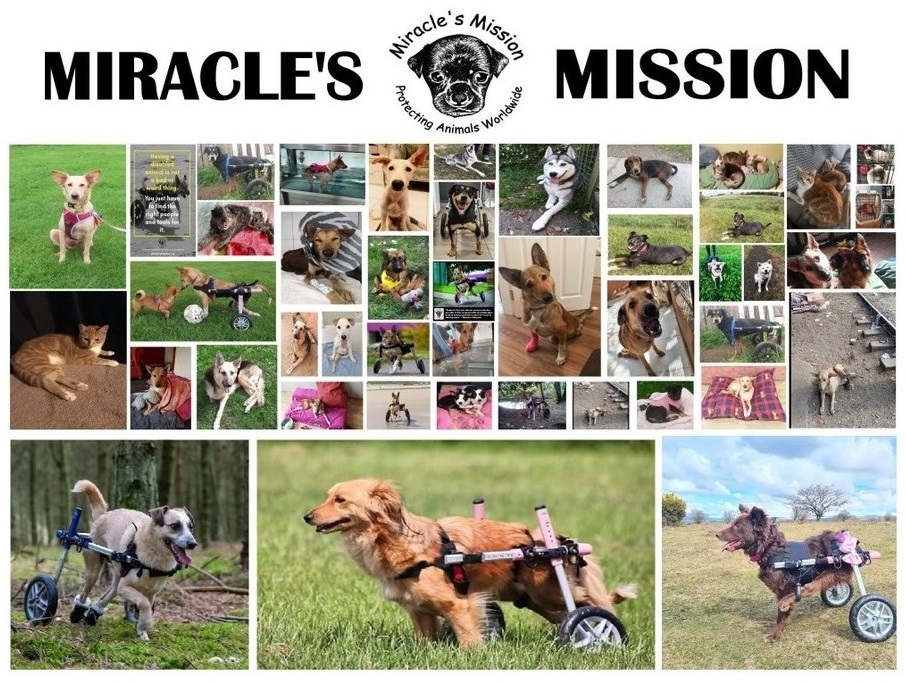
Some of the amazingly brave animals that Miracle’s Mission have helped over the years
Since starting Protect All Wildlife over 10 years ago I have managed to raise over £100,000 for various animal charities including Lions, Elephants, Gorillas, Animal Rescues and victims/survivors of the Australian wildfires etc. With the support of my wonderful followers, friends and family I have been able to do this by doing various charity fundraising events including a 15,000 foot skydive, doing a 10km run dressed as an Elephant, a Tough Mudder assault course and several auctions of items very kindly donated by fellow animal lovers.
Being able to help animal charities in this way has at times given me the motivation to carry on. I have suffered on and off with depression for 30 years or so and at times have had to force myself to get out of bed in the morning. Apart from my mental nursing, animal activism has given me a mission in life – to help those less fortunate in whatever way. As you are probably aware, I became the (very proud) Patron of Miracle’s Mission four years ago. Miracle’s Mission are dedicated to the rescue, rehabilitation and rehoming of sick injured and disabled animals. They also operate a Trap, Neuter and Release (TNR) centres in Borneo and Egypt. They receive no government funding whatsoever and rely totally on donations and volunteers to keep going. The cost of running an animal rescue is high, however the running costs of a specialist rescue service like Miracle’s Mission is even costlier.
When rescues come to Miracle’s Mission they often can’t walk & need surgery. With your help we are able to treat & rehabilitate them. But with vet fees, physio costs, specialist mobility equipment and food/heating etc it is VERY costly to keep going. PLEASE help us treat MANY more animals by donating ANY amount, large or small. EVERY penny counts.
Unfortunately I haven’t been able to do a ‘proper’ fundraising event because in the last year I have not been very well, lacking energy and losing about a stone in weight. I put it down to having long covid after catching covid in October last year. However, it transpired that I actually have cancer of the stomach. My treatment has just started and consists of 4 chemotherapy cycles over 8 weeks then if the tumour has shrunk enough I will have an operation to remove all of my stomach. My oesophagus will then be connected to my small intestine. The recovery period from my stomach operation will be in the region of 4 to 5 months.
So I have come up with a very bizarre charity fundraiser to help the rescues at Miracle’s Mission. I am not sure how ethical it is but here I go – a sponsored CHARITY CANCER TREATMENT FUNDRAISER FOR RESCUE ANIMALS. Knowing that the rescue is still receiving much-needed funds will let me concentrate 100% on MY recovery, something that I have neglected over the years. It would be amazing if you sponsor (donate) ANY amount large or small.
Thank you in advance for your support, it is really appreciated. Please share with friends and family. Thank you for your incredible support, it is REALLY appreciated. Best wishes, Paul. 🐾
My Chemotherapy journey has started at York District Hospital
WHAT YOU CAN DO TO HELP RESCUE ANIMALS
You can support our work by donating as little as £1 – It only takes a minute but it can last a lifetime for an animal in need.
Everyone who donates will receive a Certificate of Appreciation as a thank you for helping rescue animals in need.

















 PROTECT ALL WILDLIFE