Next Time You Take A Joy Ride In Jaipur, Look Into The Eyes Of The Elephant, It Has An Untold Story Of Animal Cruelty!

Taking an Elephant ride up the hill has become an indispensable part of a visit to the Amer Fort in Jaipur, Rajasthan.

It has become so popular that tourists are made to feel like they have missed out on something if they don’t take the ride.

While there is no doubt that the Elephant rides uphill through the majestic fort gives the tourists an experience of a lifetime, there is a dark side to it. 

The ‘Elephant In The Room’ here is the Elephants themselves, or the way they are treated, to be exact.

The nearly half-an-hour long joyride up and down the hill costs Rs 1,100 for two passengers however has a hidden cost – the health and wellbeing of the Elephants. 
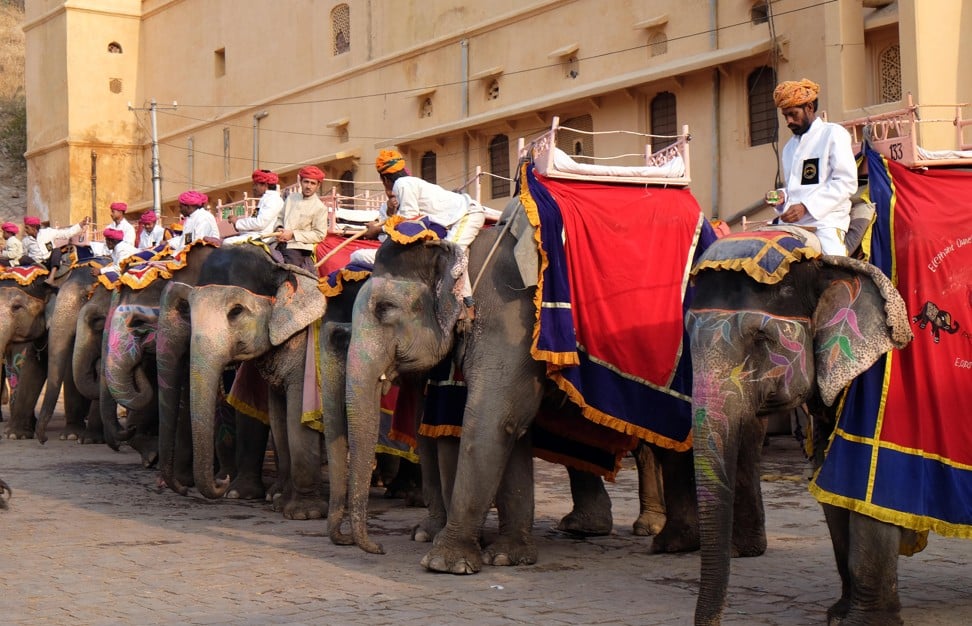
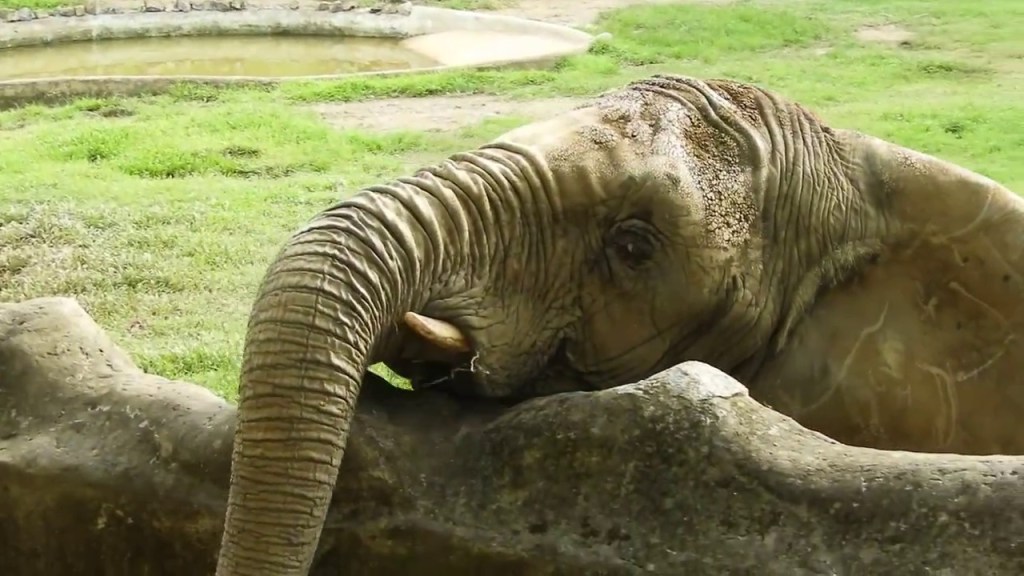
Waiting for the tourists!

 Amer Fort is a tourist attraction in India where sick, blind, and suffering Elephants are forced to give tourists rides hour after hour. Day after day. For years and years.

The Elephants at the fort which are used to ferry the tourists have to make multiple trips up and down throughout the day, even in the scorching heat.

As the tourist numbers grow and the popularity of the joyrides increases the Elephants have to overwork, often without proper time for food and rest. There have been at least a couple of incidents in the past few years exhausted Elephants collapsed and died. 

Trainers beat Elephants with weapons and traumatise these gentle giants with a life of exhausting work, violence, neglected injuries, malnourishment, dehydration, and routine chaining. In fact, one foreign tourist recently filed an official cruelty complaint after witnessing trainers assault an Elephant for 10 minutes after the suffering animal tried to escape at the Amber Fort near Jaipur, Rajasthan. Even though the majority of Indians are Hindus – who deem Elephants sacred and worship the Elephant-headed god Ganesha – in the tourist industry, life for these animals consists of fear and agony. Those whose open wounds cause them pain or whose vision is impaired aren’t even allowed to rest. They’re forced to carry humans on their backs in the oppressive heat by men who threaten them with rods and bullhooks (sticks with a sharp metal hook at the end). 

World Animal Protection, an international NGO has been running a campaign for years to end the use of Elephants for rides in the Amer Fort, alleging that the animals have been subjected to cruelty and ill-treatment for the sake of the tourists.

World Animal Protection held a screening of a documentary that showed how the animals are treated.

“Elephants are wild animals and they deserve to be in the wild. Amer Fort in Jaipur city is not a place for an Elephant. This is not their natural habitat. We must put an end of Elephant rides at Amer Fort,” said Gajender K Sharma, Country Director, World Animal Protection India.

An Amber Fort Elephant, with damaged feet from carrying tourists, kneels on a concrete floor.

According to Shubhubroto Ghosh, Wildlife Research Manager, World Animal Protection India, the campaign is aimed at ending the practice of using wildlife as a source of entertainment and have them retired and give them a life of dignity. 

But where did the Elephants come from?

Given the fact that Rajasthan is a desert state, it is only natural to assume that Elephants are not native species, which is genetically adapted to live in the hot and dry conditions there.

According to wildlife campaigners, these Elephants were captured from the forests of Assam at a young age and sold at the traditional ‘Hathi bazar’ (elephant market) in Bihar’s Sonpur until 2004 when it was declared illegal. They also allege that despite the ban, elephants are still sold at the fair and are brought to states like Rajasthan.

Once the Elephants are brought to Jaipur, they are sheltered at the Hathi Gaon (Elephant village) where they are tamed and trained as ride animals.

“The village was meant to be a safe and comfortable place for the elephants to stay. But it is nothing than a car shed for Elephants. It is ill-equipped to house an animal like an Elephant. During the training, Elephants are starved, kept on chains. They go through a process called ‘the crush’, they are beaten badly to make them obedient,” Ghosh explained.

Another striking thing that one can notice at the Amer Fort is the sheer number of female Elephants. This, Ghosh said is no accident, but is a part of the design as it is easier to train and control female Elephants.
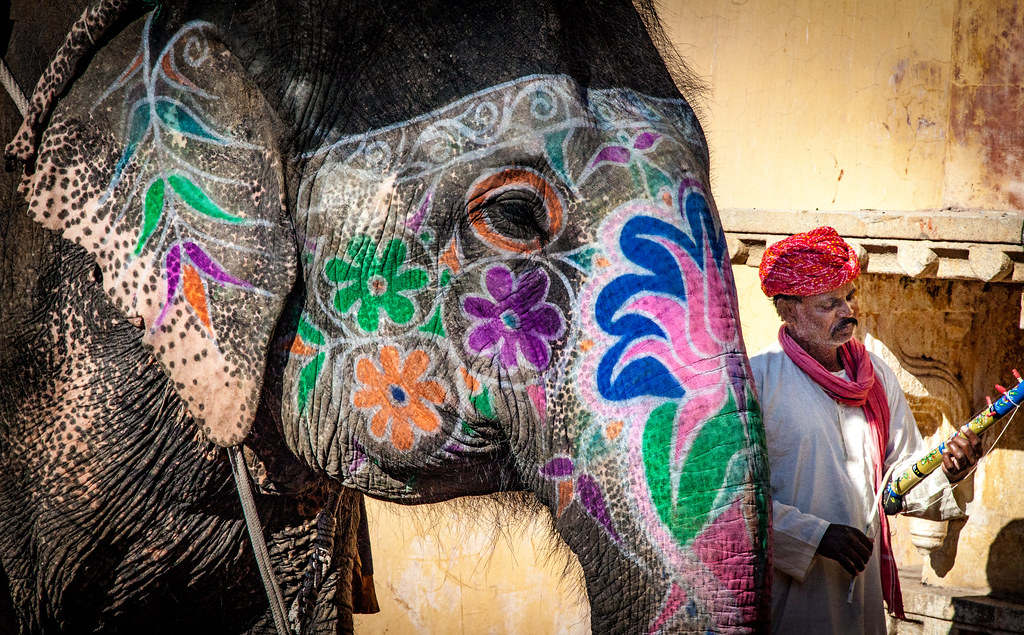
According to Ghosh, they are demanding a total ban on using the Elephants for rides as the authorities have failed to implement the existing rules.

Rangoli’s story 

Rangoli was born at UNESCO World Heritage Site, Amer Fort, into a life of pain, captivity, and cruelty. For her entire 51-year life, Rangoli has suffered for the entertainment of tourists.  

Currently, Rangoli is forced to carry tourists on her back, which is painful and creates sores. Rangoli endures this pain while walking over hot concrete and difficult cobblestones that damage their feet every day. Only to then spend her nights standing in her own feces, while chained when she ‘rests’.

With your support you can help end Elephant rides at Amer Fort and can begin the process of safely retiring Rangoli and all the other Elephants that are suffering. 

A “once-in-a-lifetime” experience for you is a lifetime of suffering for them. Now is our moment to end this cruelty.

Please sign the World Animal Petition at STOP THEIR SUFFERING.

——–((((((()))))))——–

WHAT YOU CAN DO TO HELP WILDLIFE:

You can support ‘Protect All Wildlife’ by donating as little as £1 – It only takes a minute but it can last a lifetime for an animal in need. Please donate below.

Everyone who donates will receive a Certificate of Appreciation as a thank you for helping animals in need.
The Mission of Protect All Wildlife is to prevent cruelty and promote the welfare of ALL animals.

We believe EVERY animal should be treated with respect, empathy, and understanding. We raise awareness to protect and conserve wild, captive, companion and farm animals.

It is vital that we protect animals against acts of cruelty, abuse, and neglect by enforcing established animal welfare laws and, when necessary, take action to ensure that those who abuse animals are brought to justice.

Protect All Wildlife are involved in many projects to protect animals’ rights, welfare, and habitats. Money contributed to Protect All Wildlife supports ALL of our worthy programmes and gives us the flexibility to respond to emerging needs. Your donations make our work possible.
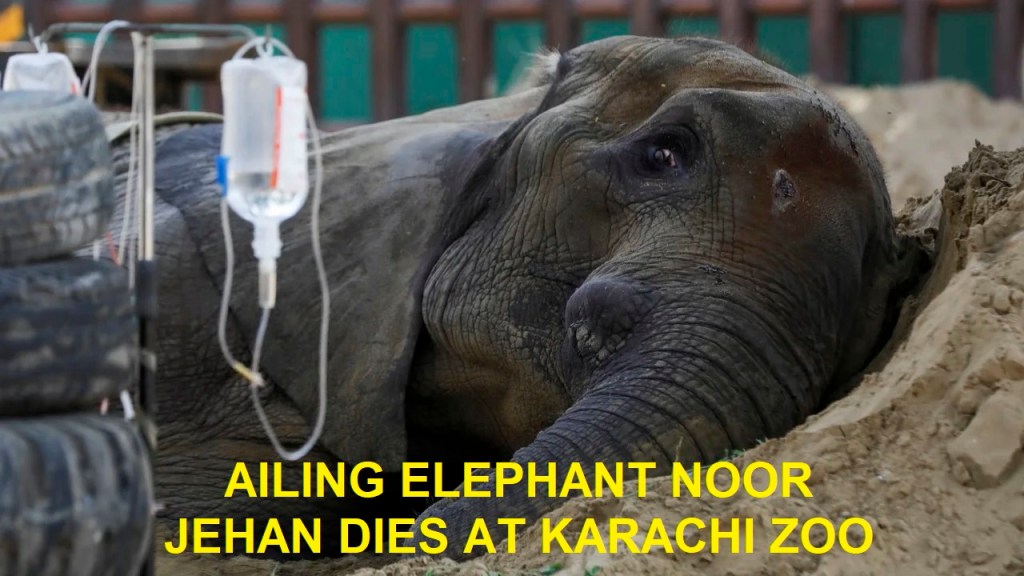
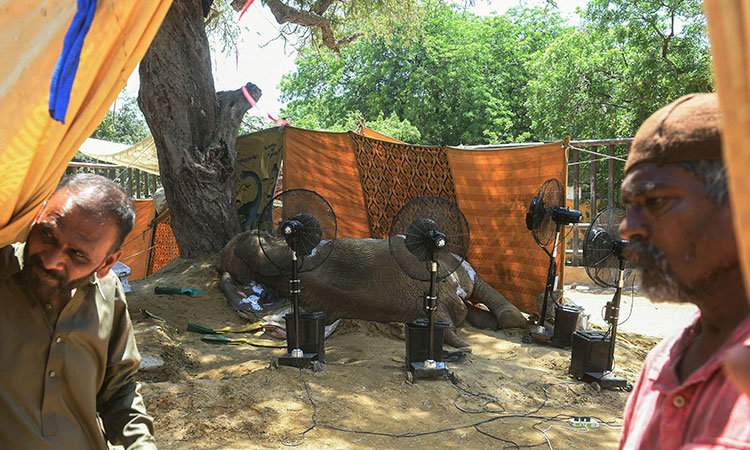
Pakistan: 17-Year Old Ailing African Elephant Noor Jehan Dies After Lying On Ground For 9 Days In Karachi Zoo

The ailing Elephant died on Saturday, vets said, calling on the ill-equipped menagerie to evacuate her “mourning” partner to avert a second tragedy.

NoorJehan-dies
Zoo staff stand near the dead body of Noor Jehan at an enclosure in Karachi Zoological Gardens on Saturday. AFP

Pakistan’s zoos are frequently accused of being blasé about animal welfare, and the plight of Noor Jehan was cited by animal rights activists campaigning to shut the wildlife exhibition in southern Karachi city.

This month the 17-year-old African Elephant underwent emergency treatment for a tumour, which had crippled her back legs, but while in recovery she became trapped in her enclosure’s pool.

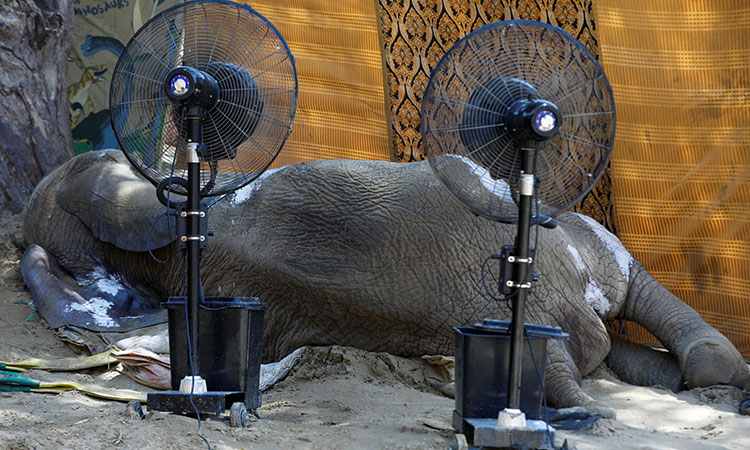
Zoo workers hauled out the 3.5-tonne pachyderm but she was unable to stand and lay stricken for nine days, “a life-threatening situation for Elephants”, said animal charity Four Paws International.

NoorJEhan-deadbody
Misting fans are placed beside the body of Noor Jehan at Karachi Zoo. AP

Experts were considering euthanasia but before a decision was taken “she succumbed to her critical condition,” said a statement from the charity, which organised last-ditch medical efforts to save her.

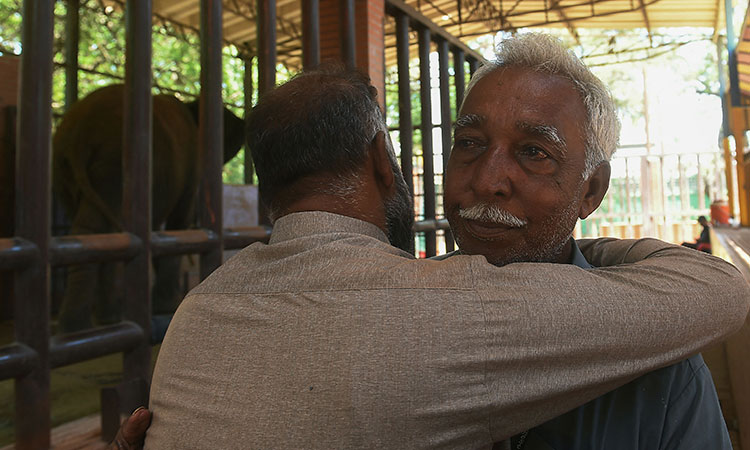
Karachi Zoo director Kanwar Ayub confirmed Noor Jehan’s death on Saturday and an AFP reporter saw her caretaker openly weeping outside her enclosure.
“It’s very sad,” said Four Paws International’s Austria-based chief vet Amir Khalil. “Noor Jehan deserved a chance.”

But the deceased Elephant’s pen pal Madhubala “should not have the same future”, he told AFP, saying he plans to arrive in Pakistan on Sunday to assess her health and organise her evacuation.

“Karachi Zoo does not fulfil international standards and is not equipped to take appropriate care of Elephants,” the Four Paws International statement said, expressing support for a forced closure.

NoorJehan-caretaker

Caretaker Yusuf Masseih (R) mourns following the death of Noor Jehan at Karachi Zoological Gardens. AFP

“It is now more urgent than ever that the remaining Elephant, who is mourning her long-time companion, is transferred to a more species-appropriate location as soon as possible, to prevent another potential tragedy.”

In April 2020, a court ordered the only zoo in Pakistan’s capital Islamabad to shut after poor facilities and mistreatment of the animals there were revealed.

The facility had drawn international condemnation for its treatment of an Asian Elephant named Kaavan, who was later airlifted to retirement in Cambodia in a project spearheaded by US popstar and actor Cher, and carried out by Four Paws.

Agence France-Presse

~~~~~(((())))~~~~~

WHAT YOU CAN DO TO HELP WILDLIFE

You can support Protect All Wildlife by donating as little as £1 – It only takes a minute but it can last a lifetime for an animal in need. Please donate below.

The Mission of Protect All Wildlife is to prevent cruelty and promote the welfare of ALL animals.

We believe EVERY animal should be treated with respect, empathy, and understanding. We raise awareness to protect and conserve wild, captive, companion and farm animals.

It is vital that we protect animals against acts of cruelty, abuse, and neglect by enforcing established animal welfare laws and, when necessary, take action to ensure that those who abuse animals are brought to justice.

Protect All Wildlife are involved in many projects to protect animals’ rights, welfare, and habitats. Money contributed to Protect All Wildlife supports ALL of our worthy programmes and gives us the flexibility to respond to emerging needs. Your donations make our work possible.
Mundi, An Elephant Living In A Closed Puerto Rico Zoo Is To Get A New Life At Georgia Sanctuary

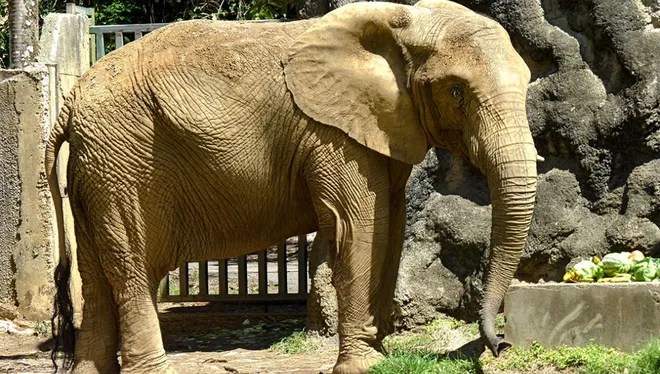
A 41-year-old African Elephant who had lived alone at a Puerto Rican zoo could get a new lease on life in Georgia.

Mundi, the only Elephant at Puerto Rico Zoo

For years, Mundi and the other animals at the Puerto Rico Zoo have been suffering in silence. In 2018, the USDA cancelled the zoo’s exhibitor’s license after citing dozens of violations including lack of veterinary care, expired food and medications, and a failure to protect animals from extreme heat and physical hazards, among other issues. 

Nonprofit Elephant Aid International says they were recently asked to rescue Mundi the Elephant, who has been living in the defunct Dr. Juan A. Rivero Zoo in Mayaguez, Puerto Rico. According to NBC News, the zoo had been closed to the public since hurricanes Irma and Maria in 2017 and was forced to shut down in February after accusations of negligence and the death of animals.

MUNDI

“For nearly 35 years, she has lived alone in a small yard with access to an enclosed shelter where she is chained at night,” the nonprofit said in a statement.

Now the organization, which is located in Attapulgus, Georgia, wants to help Mundi live her best and most fulfilling life for the rest of her days.

Elephant Aid International is raising money to help transport Mundi to their sanctuary, where she can remain outdoors and live as naturally as possible.

“Mundi will fly on a dedicated 747 flight. If everything goes as planned, she will arrive at the Refuge the first week of May,” the organization said. “Mundi’s future will be spent living free at ERNA, experiencing independence for the first time ever. She will immerse herself in nature and develop deep friendships that will help her discover her authentic elephant self.”

The nonprofit’s Georgia refuge spans 850 acres of hills, forests, lakes, and creeks. It is not open to the public, though Elephant lovers can watch on the organization’s “EleCam” on Youtube

Currently, two Elephants live in the refuge. Bo and Tarra are both Asian Elephants who were rescued after years of performing in circuses.

——–((((((()))))))——–

WHAT YOU CAN DO TO HELP WILDLIFE:

You can support ‘Protect All Wildlife’ by donating as little as £1 – It only takes a minute but it can last a lifetime for an animal in need. Please donate below.

Everyone who donates will receive a Certificate of Appreciation as a thank you for helping animals in need.

The Mission of Protect All Wildlife is to prevent cruelty and promote the welfare of ALL animals.

We believe EVERY animal should be treated with respect, empathy, and understanding. We raise awareness to protect and conserve wild, captive, companion and farm animals.

It is vital that we protect animals against acts of cruelty, abuse, and neglect by enforcing established animal welfare laws and, when necessary, take action to ensure that those who abuse animals are brought to justice.

Protect All Wildlife are involved in many projects to protect animals’ rights, welfare, and habitats. Money contributed to Protect All Wildlife supports ALL of our worthy programmes and gives us the flexibility to respond to emerging needs. Your donations make our work possible.
In What Way Can This Be Considered Educational: Polar Bears In The Zoo

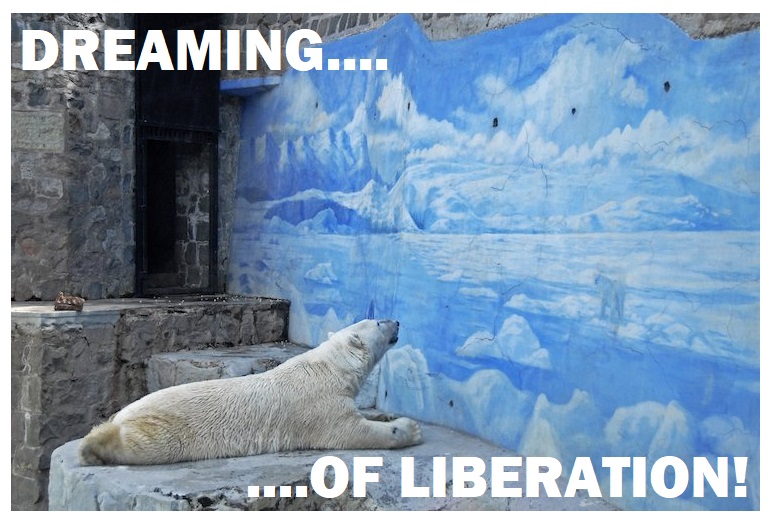
Sadly, unhealthy and dreary polar bear enclosures such as this still exist. Chile’s only polar bear “Taco” died in 2015 at the age of 18 at the National Zoo in Santiago. For years, activists protested its captivity, sometimes with blockades and burning barricades. [Photo by Aldo Fontana]

In urban areas of the western hemisphere, polar bears have lived in our midst since the Middle Ages—a result of our fascination with these charismatic carnivores. As early as 1252, Henry III of England kept a muzzled and chained polar bear, which was allowed to catch fish and frolic about in the Thames. The first undisputed documentation of polar bears in Europe shows that the bears arrived by way of Greenlandic Norse traders and from Iceland, where sea currents still sometimes maroon them. Viking entrepreneurs distributed them to royalty throughout Europe, who kept them in ostentatious menageries or passed them on as gifts to grease diplomatic gears and careers.

Beginning in 1693, the first King of Prussia, Frederick I, kept a polar bear and other large mammals for public amusement in a baroque-style hunting enclosure inspired by Roman arenas. These rare animals were too valuable to be killed but, defanged and de-clawed, were pitted against each other in faux fights. During medieval times in England, entertainers displayed all sorts of animals at carnivals and fairs. The traveling menagerie, which derived from the processions of Europe’s ambulatory monarchs and their entourages, first took to the roads at the turn of the eighteenth century. In a bid for respectability, the owner of one bragged he was doing “more to familiarize the minds of the masses of our people with the denizens of the forest than all the books of natural history ever printed.”

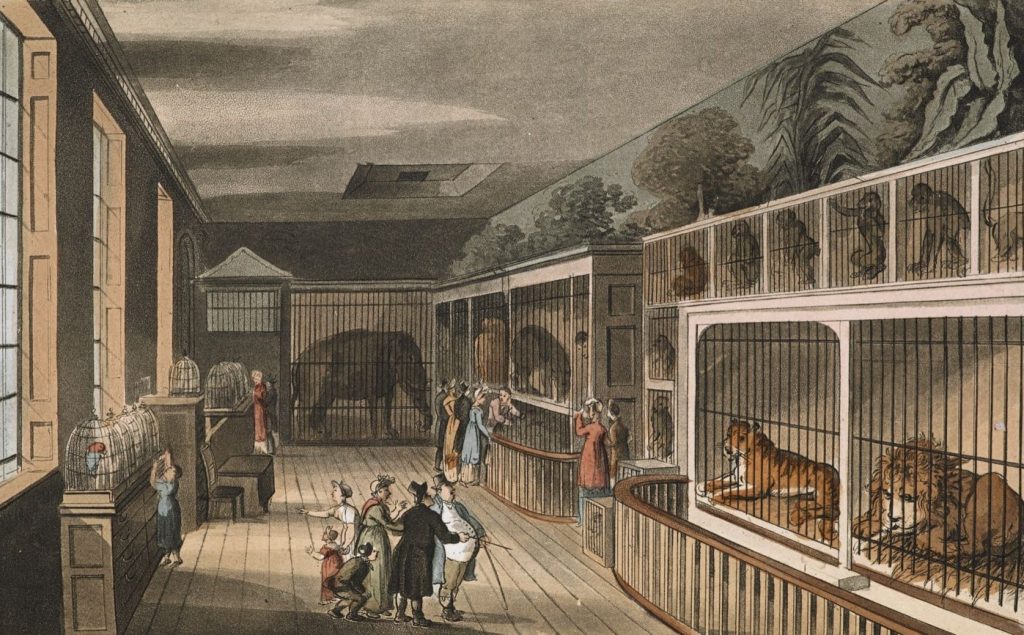
Around this same period of time, a burgeoning middle class and expeditions to the Americas, Asia, and Africa, as well as new developments in science and philosophy, brought about changes in how polar bears were displayed. Animal collections in Europe—until then largely a privilege of nobility—increasingly welcomed the public. Featured in these publicly accessible collections, polar bears drew a good deal of attention, just as they did in medieval wildlife collections or “menageries” (such as the one in the Tower of London).

The Royal Menagerie: An illustration of how the zoo within the Tower looked in 1816

Nobody contributed more to the popularity of captive polar bears or the looks of modern zoos than Carl Hagenbeck. In 1848, Carl Hagenbeck Sr., a Hamburg fishmonger, exhibited six seals he’d received as bycatch from fishermen before selling the seals at a handsome profit. At age fifteen, Carl Hagenbeck Jr. took over what would become Europe’s most famous animal-trade business. He soon supplied zoos, menageries, and wealthy individuals, including the Kaiser. In his early twenties, Hagenbeck already ranked among Europe’s top dealers in exotics. With a nose for opportunity, he branched out into the budding entertainment industry, mounting “ethnological” and large carnivore shows as well as a circus.

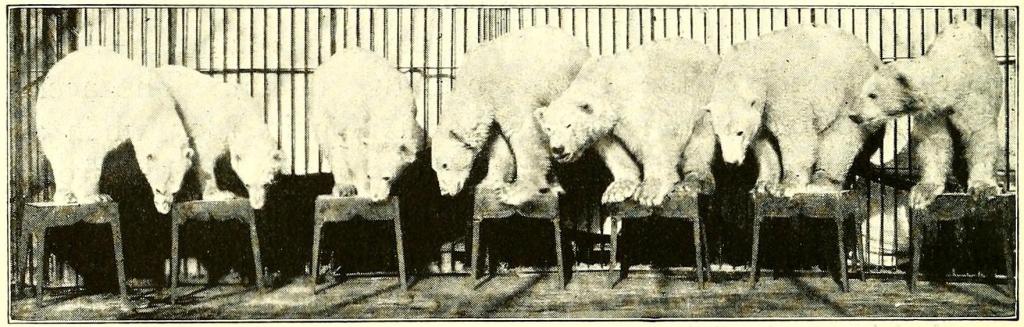
Some of the Polar Bears abducted by the Hagenbecks faced a fate worse than zoo captivity. These seven polar bears were forced to become performers by Carl’s relative Wilhelm Hagenbeck. 

From their very beginnings as cultural institutions, zoos have tried to balance entertainment and education. Today, with climate change and habitat loss from development threatening the polar bear’s natural habitat, many zoos have added conservation to their mission, contributing to captive breeding programs and scientific research.

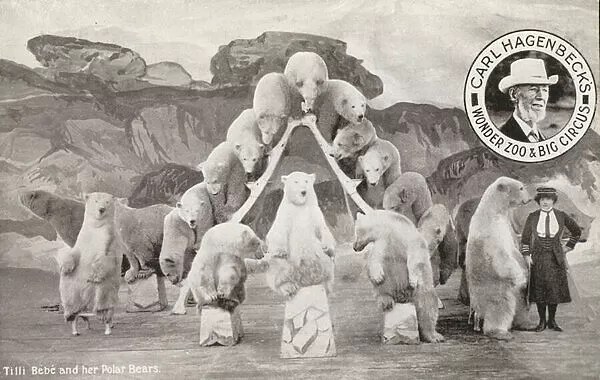
Austrian circus performer Mathilde Rupp (stage name Tilly Bébé) and her Polar Bears at Carl Hagenbeck’s Wonder Zoo in 1918.

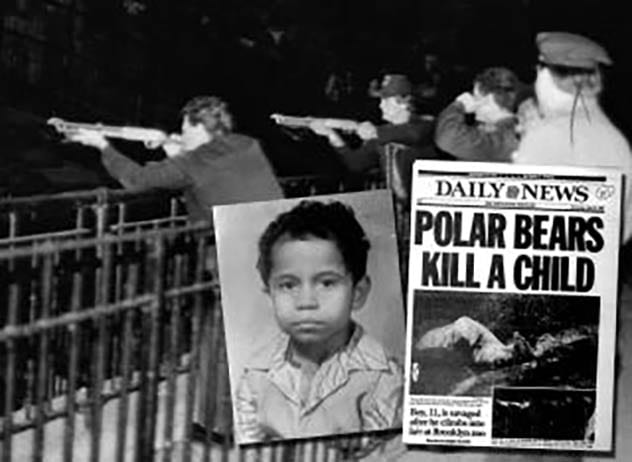
The urge to be close to the wildness (fettered as it may be) that cannot be bred out of zoo polar bears, or perhaps a desire to better get to know these ursine celebrities, has caused numerous incidents at zoos. Such trespassing is not a recent phenomenon. In 1891, a female servant from Bavaria, Karoline Wolf, climbed down a rope into the Frankfurt Zoo’s bear pit—after undressing and neatly folding her clothes—in order to be “eaten alive by a white bear.” People will forever seek operatic ways to end their lives, but accidental zoo maulings are telling because of what these incidents reveal about attitudes toward the animal. In 1987, two polar bears at the Brooklyn Zoo dragged into their den and then killed eleven-year-old Juan Perez, who had entered the enclosure after hours on a dare. The boy thought the bears were slow and afraid of people and water. After invading their space, he provoked the female, throwing bottles and sticks. Police, who suspected that more kids were in danger, riddled both bears with shotgun slugs and pistol bullets.

On May 19, 1987, 11-year-old Juan Perez and two of his friends were visiting the Prospect Park Zoo in Brooklyn, New York, after the zoo had closed for the day.

The old animal magic, that attraction of people to bears, remains strong. Drawn like foxes to a bear kill, we take risks to breach barriers that once, long ago, did not exist. Juan Perez’s death and similar cases recall an Inuit boy’s test of courage and coming-of-age rite: his first polar bear kill. The crucial difference, of course, is the cultural context. Whereas Inuit children grew up listening to their elders, respecting the animal, observing bear habits and how bears are hunted, young Juan had never been inducted into the White Bear’s ways.

A Polar Bear riding a motorcycle circa 1960. (Photo by John Cuneo)

——–((((((()))))))——–

WHAT YOU CAN DO TO HELP WILDLIFE:

You can support ‘Protect All Wildlife’ by donating as little as £1 – It only takes a minute but it can last a lifetime for an animal in need. Please donate below.

Everyone who donates will receive a Certificate of Appreciation as a thank you for helping animals in need.

The Mission of Protect All Wildlife is to prevent cruelty and promote the welfare of ALL animals.

We believe EVERY animal should be treated with respect, empathy, and understanding. We raise awareness to protect and conserve wild, captive, companion and farm animals.

It is vital that we protect animals against acts of cruelty, abuse, and neglect by enforcing established animal welfare laws and, when necessary, take action to ensure that those who abuse animals are brought to justice.

Protect All Wildlife are involved in many projects to protect animals’ rights, welfare, and habitats. Money contributed to Protect All Wildlife supports ALL of our worthy programmes and gives us the flexibility to respond to emerging needs. Your donations make our work possible.

South African Government Withdraws Regulations Aimed To Protect Endangered Wildlife Species

JOHANNESBURG – The South African government moved to withdraw regulations on threatened species that would have protected vulnerable wildlife from being hunted.

Forestry, Fisheries and Environment Minister Barabara Creecy announced the decision to drop the amended protected species regulations in a government gazette notice – one day before it was supposed to be implemented

The legislation that was intended to be enforced in April was set to widen the number of species that should be protected by stricter wildlife laws.

However, the Wildlife Ranching South Africa and Professional Hunters Association of South Africa challenged the Forestry, Fisheries and Environment Department on the amended list.

After considering various issues raised by the associations, the department decided to withdraw the implementation of the newly-revised legislature.

Forestry, Fisheries and Environment Minister Barabara Creecy announced the decision to drop the amended protected species regulations in a government gazette notice – one day before it was supposed to be implemented.

After the two organisations legally challenged the motion to protect a bigger range of wildlife, Creecy reached an out-of-court settlement with the parties.

Her reasons for withdrawing the regulations protecting terrestrial and freshwater species were not clearly explained, nor did she mention the associations’ issues with the regulations.

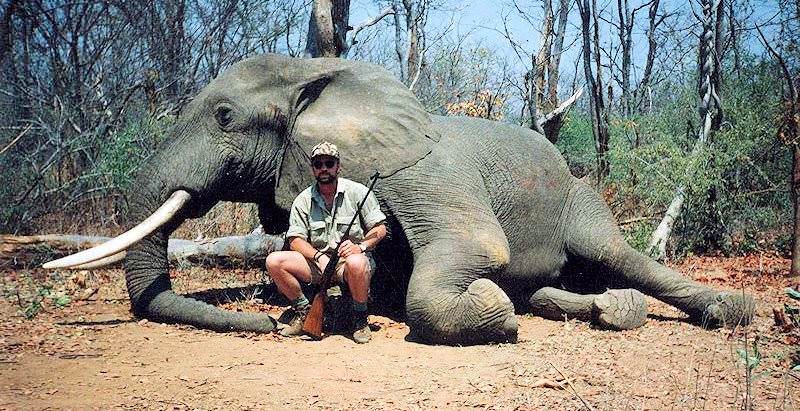
In addition, Creecy also retracted revised legislation that would have clamped clamped down on the Trophy Hunting of Leopards and Elephant management

The revised legislation would have clamped down on the trophy hunting of Elephants

——–((((((()))))))——-

WHAT YOU CAN DO TO HELP WILDLIFE:

You can support ‘Protect All Wildlife’ by donating as little as £1 – It only takes a minute but it can last a lifetime for an animal in need. Please donate below.

Everyone who donates will receive a Certificate of Appreciation as a thank you for helping animals in need.

The Mission of Protect All Wildlife is to prevent cruelty and promote the welfare of ALL animals.

We believe EVERY animal should be treated with respect, empathy, and understanding. We raise awareness to protect and conserve wild, captive, companion and farm animals.

It is vital that we protect animals against acts of cruelty, abuse, and neglect by enforcing established animal welfare laws and, when necessary, take action to ensure that those who abuse animals are brought to justice.

Protect All Wildlife are involved in many projects to protect animals’ rights, welfare, and habitats. Money contributed to Protect All Wildlife supports ALL of our worthy programmes and gives us the flexibility to respond to emerging needs. Your donations make our work possible.
Tiger King Star Carole Baskin To Close Big Cat Rescue And Move Wildlife To Arkansas Refuge

Baskin, who shot to fame in 2020 when her feud with Joe Exotic became a Netflix hit, has decided to close her Big Cat Rescue centre and transfer most of its wildlife from Florida to a sanctuary in Arkansas.

“The win-win solution both for our captive cats and the cats in the wild is for us to merge our cat population with the population at another existing accredited sanctuary.”  

In a memo published on the sanctuary’s website, her husband, Howard Baskin, announced that the 30-year-old center in Tampa has agreed to move most of its cats to the Turpentine Creek Wildlife Refuge.

“We will continue to fund their care for the rest of their lives,” the statement said.

The Big Cat Rescue has provided a safe haven for exotic cats that people have abandoned, mistreated, or retired from performing since 1992. Locals and tourists alike have frequented the rescue, located at 12802 Easy Street.

However, due to the COVID-19 pandemic, the rescue center closed its doors to the public and has not reopened to visitors.

 BCPSA Has Led To A Decrease In Tiger Rescues

The decision to close the center comes after the federal Big Cat Public Safety Act, or BCPSA, was passed, which prohibits cub petting and the private ownership of big cats, including Lions, Tigers, Leopards, Cheetahs, Jaguars, Cougars, or any hybrid of these species.

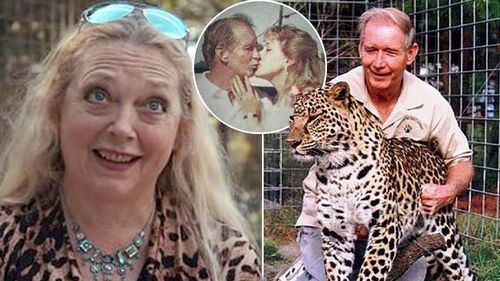
Howard and Carole Baskin at their Big Cat Rescue sanctuary

“With the passage of the BCPSA, we expect the need for rescues to decline over the coming decade. If the need were going to continue at the pace we saw up until a few years ago, we would be making a different decision,” read the statement.

“Having ended most of the abuse of big cats via the BCPSA, focusing on the third prong of our mission, i.e., maximizing the amount we can donate to in situ projects to save the cats from extinction, is the best way to fulfill our mission and impact the most cats going forward.”

A financial liability

Moreover, mounting expenses have also placed considerable financial pressure on the estate.

According to the Baskins, currently the property’s overhead costs are $1.5 million per year, or over $36,000 per cat.

Carol Baskin, pictured in Tiger King, has announced her Florida property is closing, with 2023 expected to be ‘the most challenging financial year in the sanctuary’s history’.

“As the population declines, it becomes an increasingly inefficient use of donor funds per cat to operate a facility like ours,” Mr. Baskin explained.

“The win-win solution both for our captive cats and the cats in the wild is for us to merge our cat population with the population at another existing accredited sanctuary.”  

He added: “Supporting our cats in larger enclosures at Turpentine Creek, at a much lower cost per cat than we incur by continuing to operate Big Cat Rescue, will free up resources to let us do much more to save big cats in the wild.”

New home for the big cats

Turpentine’s founder and president, Tanya Smith, said that her organization and Big Cat Rescue “share similar ideologies and core values, so it seemed quite logical that Carole and Howard would approach us.”

According to Smith, the sanctuary has already taken measures to accommodate the incoming cats.

“In 2021, [Turpentine] launched a capital campaign initiative to build a visitor education center and museum,” Smith said.

“Part of that project includes a five-year plan to develop another 13 acres on our 459-acre property to provide additional habitats.

“We anticipate the construction will be completed within the next six months. This increased space will not only accommodate the remaining cats at Big Cat Rescue but some additional space for other rescue needs.”

The memo also mentioned that once all the cats at the sanctuary have been moved, the Hillsborough County sanctuary property will be sold, and the proceeds will be used to “fund these species-saving projects in the wild.”

Moreover, Big Cat Rescue will also help fund the building of the enclosures at Turpentine Creek, which “is expected to cost $1.8 million.”

Tiger King

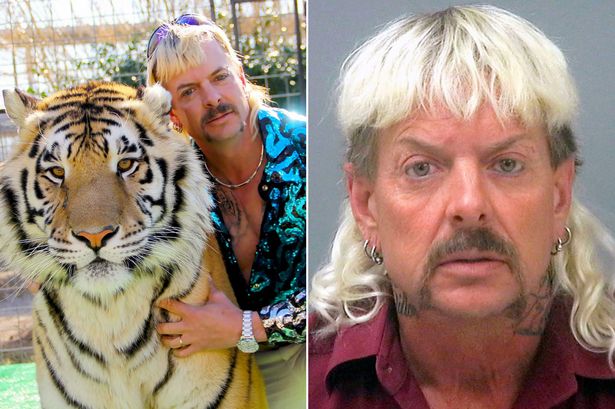
Tiger King ‘star’ Joe Exotic was sentenced to 22 years in prison for hiring a hitman to kill Bastin.

Big Cat Rescue and Carole Baskin caught global attention three years ago when Netflix released its popular Tiger King docuseries.

As well as focusing on the illegal wildlife trade, the documentary followed Baskin’s feud with Joe Exotic, an eccentric zookeeper serving a 21-year sentence for hiring hitmen to kill her.

Exotic accused Baskin of murdering her ex-husband, Don Lewis, and feeding him to their Tigers

In the documentary, Exotic accused Baskin of murdering her ex-husband, Don Lewis, and feeding him to their Tigers. However, Baskin denies these accusations. Don Lewis disappeared without a trace in 1997, and authorities are still investigating his disappearance.

——–((((((()))))))——–

WHAT YOU CAN DO TO HELP WILDLIFE:

You can support ‘Protect All Wildlife’ by donating as little as £1 – It only takes a minute but it can last a lifetime for an animal in need. Please donate below.

Everyone who donates will receive a Certificate of Appreciation as a thank you for helping animals in need.

The Mission of Protect All Wildlife is to prevent cruelty and promote the welfare of ALL animals.

We believe EVERY animal should be treated with respect, empathy, and understanding. We raise awareness to protect and conserve wild, captive, companion and farm animals.

It is vital that we protect animals against acts of cruelty, abuse, and neglect by enforcing established animal welfare laws and, when necessary, take action to ensure that those who abuse animals are brought to justice.

Protect All Wildlife are involved in many projects to protect animals’ rights, welfare, and habitats. Money contributed to Protect All Wildlife supports ALL of our worthy programmes and gives us the flexibility to respond to emerging needs. Your donations make our work possible.
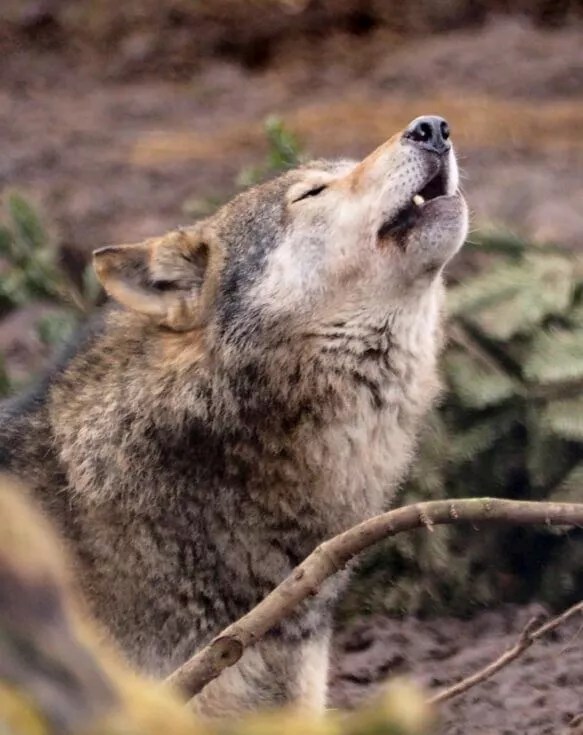
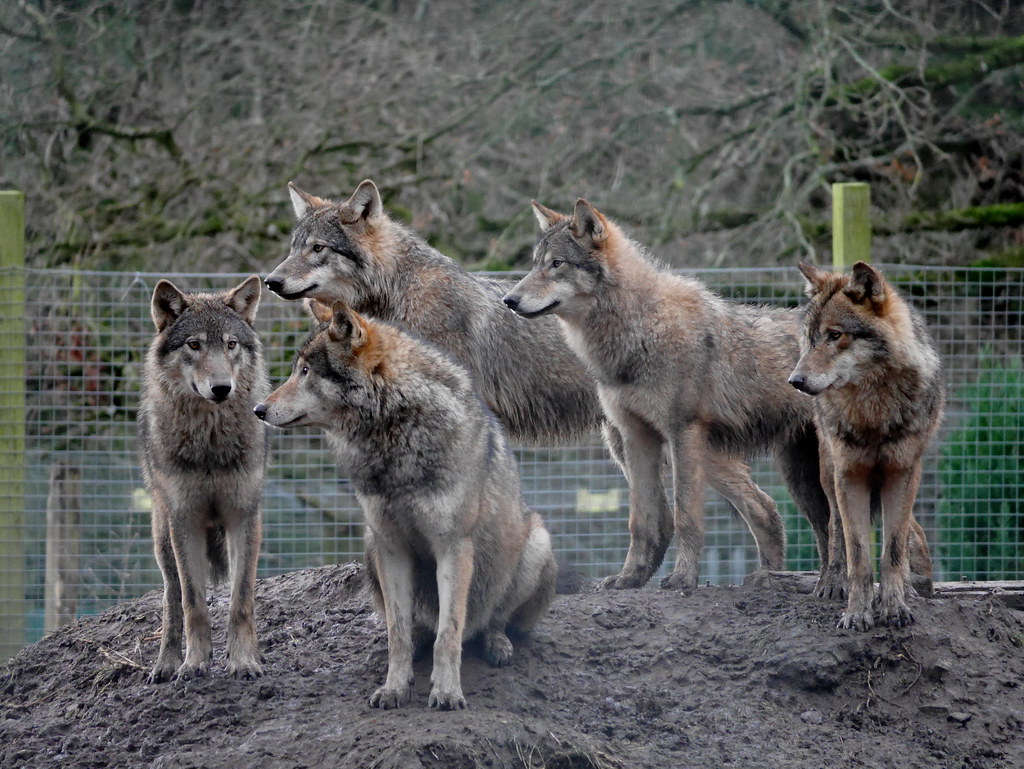
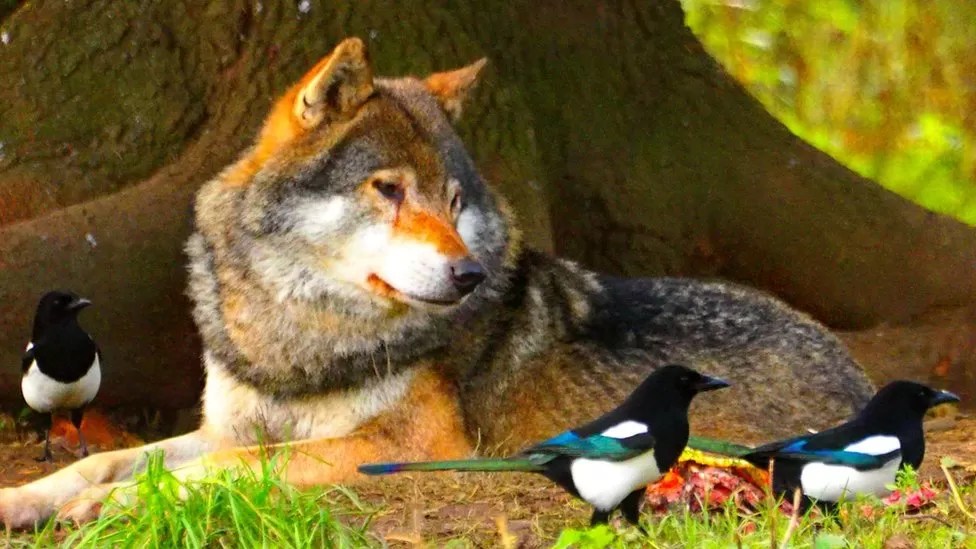
UK Wildlife Park Sparks Fury After Putting Down An Entire Pack Of Wolves After Alpha Male Died

The entire pack was euthanised due to ‘abnormal behaviour’ after Alpha male Loki died.

The pack at Camperdown Wildlife Centre in Dundee started displaying ‘abnormal behaviour’ when alpha Loki was put down after he underwent an operation and suffered complications leaving the team “absolutely heartbroken”.

The full statement read: “We are devastated to announce that our alpha male Wolf, Loki, has been humanely euthanised today.

Loki had to be euthanised after complications following an operation. Pic: Camperdown Wildlife Centre

“Despite an initially successful operation, there have been subsequent complications, and the difficult decision was reached to save the animal from further pain.

“The other four Wolves in the pack have been exhibiting unusually anxious and abnormal behaviour since the operation, and it is with great sadness that these wolves have also been euthanised as a result.

The entire pack was euthanised due to ‘abnormal behaviour’ after Alpha male Loki died.

“This course of action was a last resort, and our team is absolutely heartbroken. We ask you for your kind consideration at this time.

The wildlife centre went on to thank the public and confirmed it’s closure on Wednesday as the team “processed recent events”.

The statement added: “We thank members of the public who have sent messages of support and for their kind consideration during this painful time for our team.

“We can assure everyone that this difficult decision was taken following expert advice and consultation with the relevant professional bodies.

“Camperdown Wildlife Centre will be closed to the public on Wednesday to allow our colleagues to process recent events. We thank-you for your patience and understanding.”

In a similar incident in 2006, a pack of Wolves was culled at Highland Wildlife Park by operator Royal Zoological Society of Scotland – after the animals stopped displaying “normal behaviour”.

While many expressed sympathy for the park and its employees, others were outraged. The move has sparked an outcry from members of the public with some left angry and branded the mass euthanising as “extreme”.

One local resident has now started a petition demanding an inquiry into why the entire pack was put down.

Online, one visitor wrote: “I’m so sorry to read this news and my thoughts are with all involved but if you wouldn’t mind could more of an explanation be given into why the 4 others were destroyed?

LOKI

“This is heartbreaking to read and I can’t help but think the public should be given more information to help with understanding this dreadful news.”

“Very disappointed you euthanized all 5,” a comment said. “It seems like the animals weren’t even given time to grieve or acclimatise to the death of their family member. What a tragic loss of life.”

Another added: “I think the Wolves should have been given some time before euthanasia for the whole pack. That seems a bit extreme. Can you please explain just anxiety and abnormal behaviour in a more direct way.”

“We can assure everyone that this difficult decision was taken following expert advice and consultation with the relevant professional bodies,” the park commented.

The way Wolves behave in captivity is very different from what researchers see in the wild, according to the Scientific American.

The “Alpha Wolf” concept is at best misunderstood by the public and is a phenomenon far more common among captive packs than those roaming free, wolf expert L. David Mech told the publication.

——–((((((()))))))——–

WHAT YOU CAN DO TO HELP WILDLIFE:

You can support ‘Protect All Wildlife’ by donating as little as £1 – It only takes a minute but it can last a lifetime for an animal in need. Please donate below.

Everyone who donates will receive a Certificate of Appreciation as a thank you for helping animals in need.

The Mission of Protect All Wildlife is to prevent cruelty and promote the welfare of ALL animals.

We believe EVERY animal should be treated with respect, empathy, and understanding. We raise awareness to protect and conserve wild, captive, companion and farm animals.

It is vital that we protect animals against acts of cruelty, abuse, and neglect by enforcing established animal welfare laws and, when necessary, take action to ensure that those who abuse animals are brought to justice.

Protect All Wildlife are involved in many projects to protect animals’ rights, welfare, and habitats. Money contributed to Protect All Wildlife supports ALL of our worthy programmes and gives us the flexibility to respond to emerging needs. Your donations make our work possible.

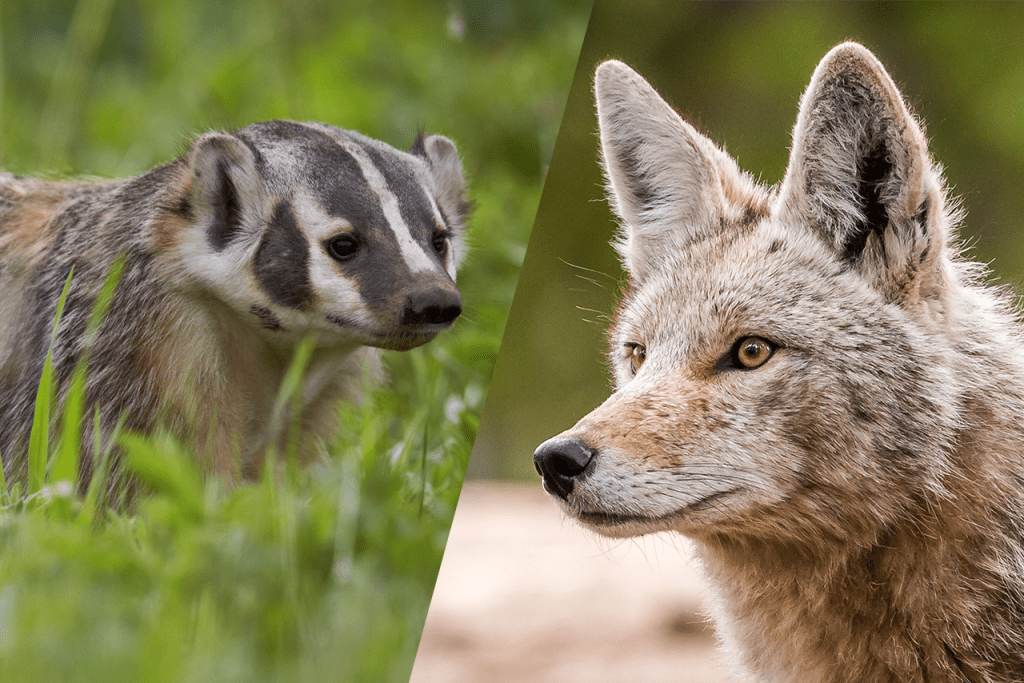
The Formidable ‘Friendship’ Of A Badger And Coyote

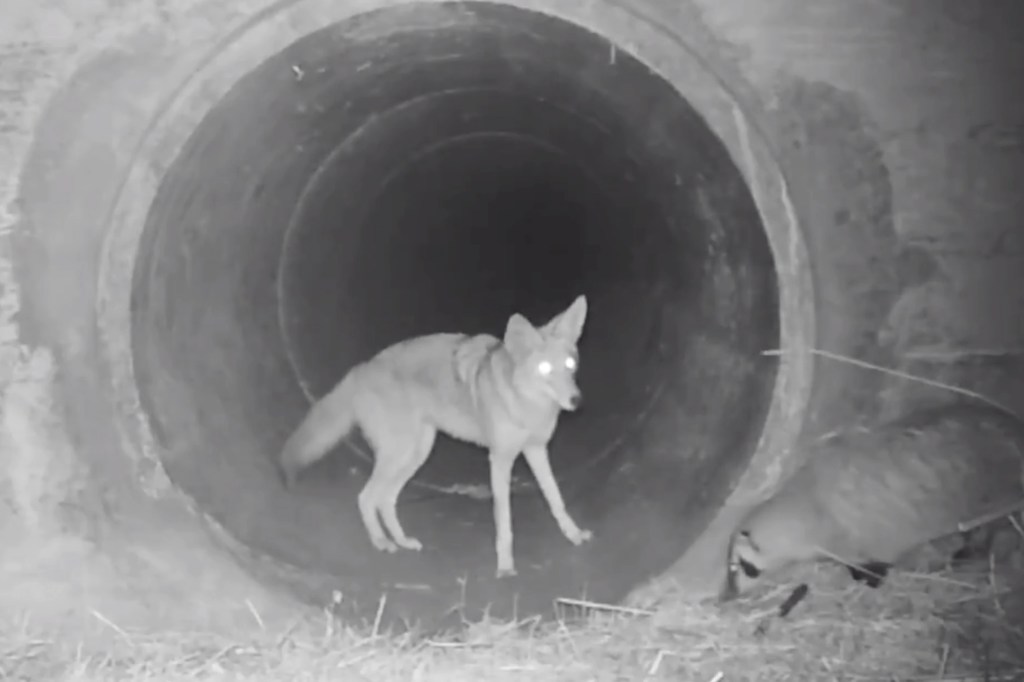
A viral video taken under a California highway captured a playful intimacy between two predators that’s rarely seen by humans.

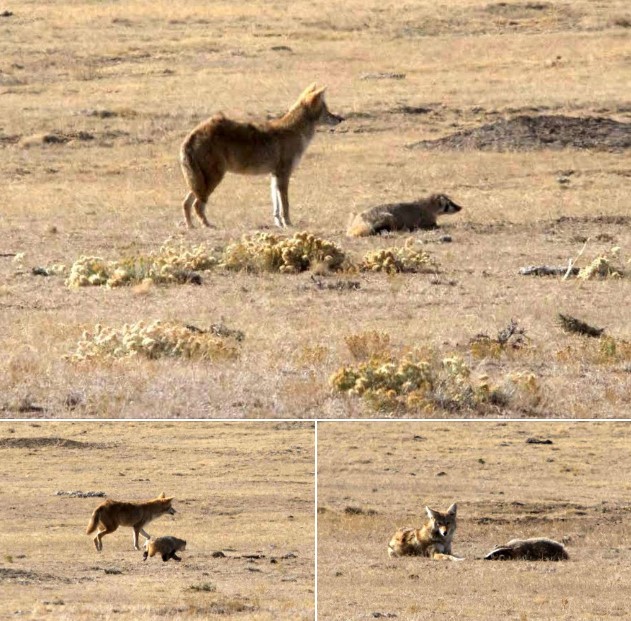
An unlikely friendship between a Badger and a Coyote has been recorded on camera for the first time ever. The two animals were spotted trotting side by side under a busy highway in California’s Santa Cruz Mountains. The video, taken by the nonprofit group Peninsula Open Space Trust (POST), has gone viral online with more than 18.5 million views on Twitter.

COYOTE AND BADGER

National Geographic explains that the video shows a playful intimacy between the badger and coyote that has never been observed before. While Coyotes and Badgers have been known to hunt cooperatively, those interactions were thought to be “purely transactional”.

Here, the Coyote is seen wagging its tail and bowing down playfully as the Badger approaches. Meanwhile, the Badger’s body language is relaxed as it follows the Coyote into the tunnel and even lifts its tail to keep pace with its friend.

Scientists have known for a long time that Coyotes and Badgers in the American West hunt cooperatively for small mammals; the partnership is even featured in Native American mythology. But until now, the association between these two predators, each at the top of their respective food chains, has always been thought to be purely transactional. What’s so striking about the video, says independent behavioral ecologist Jennifer Campbell-Smith, is that it’s not “these cold, robotic animals taking advantage of each other—they’re instead at ease and friendly.”

While the unlikely friendship has left social media users delighted, the video, according to National Geographic, also presents an important discovery for scientists. It is the first time that Coyote-Badger cooperation has been filmed in the San Francisco Bay Area. It is also the first video that shows the two species sharing a culvert – a tunnel carrying a stream or open drain under a road or railway.

A Coyote and Badger Hunting Together

“To our knowledge, that’s the first time that’s ever been observed,” Neal Sharma, POST’s wildlife linkages program manager told CNN. “Having that interaction on film and seeing how these two different animals that lead different lives, how they interact, it’s just so exciting.”

——–((((((()))))))——–

Iconic Lion Bob Junior, Known As ‘The King Of The Serengeti’, Killed By Rivals.

A Lion named Bob Junior, who was known as the “King of the Serengeti,” has been killed by rival Lions. The fearsome big cat, also known as Snyggve, had dominated his territory for seven years alongside his brother, Tryggve, who is also presumed dead.

Bob Junior has ruled his territory for seven years. Credit: James Lewin.

“These incidents normally happen when the head of a pride becomes old or sometimes when the other male Lions are not happy with his control over a large territory,” Fredy Shirima, a Serengeti conservation officer, told the BBC.

Tour operators and visitors to the national park have paid tribute to the “legendary” Bob Junior – also known as Snyggve – online.

The “photogenic” and “coolest cat” in the Serengeti, Bob Jr had a fearsome reputation among his rivals and had ruled for seven years with the help of his brother, Tryggve.

The Serengeti is home to approximately 3,000 Lions. National Geographic reports adult males can up to around 12 years.

Bob Junior, who was named after Bob Marley, was thought to be around 10 years old. He had a distinctive black mane and was often spotted by wildlife groups touring the park.

Online tributes called him “Legendary” and “Iconic.”

He reportedly did not put up a fight when he was attacked on Saturday. 

Bob Junior’s Last Stand – He Fought To The End!

Wildlife officials are preparing a special burial on a day yet to be announced.

RIP Bob Junior – Credit: Giles Laurent.

WHAT YOU CAN DO TO HELP WILDLIFE:

You can support ‘Protect All Wildlife’ by donating as little as £1 – It only takes a minute but it can last a lifetime for an animal in need. Please donate below.

Everyone who donates will receive a Certificate of Appreciation as a thank you for helping animals in need.

It Is Hard To Believe That Five Years Have Passed Since Sudan Died But A New Film Highlights A Hope For Rhinos.

He remains very much at the forefront of our minds. Not many Rhinos live to such an age but Sudan led an extraordinary life and his legacy, as the last male of the species, continues to live on, reminding us of the disastrous impact human ignorance and greed has on all wildlife species.

Joseph Wachira, a keeper at the Ol Pejeta Conservancy in Kenya, says goodbye to Sudan, the last male Northern White Rhino. Credit: Ami Vitale

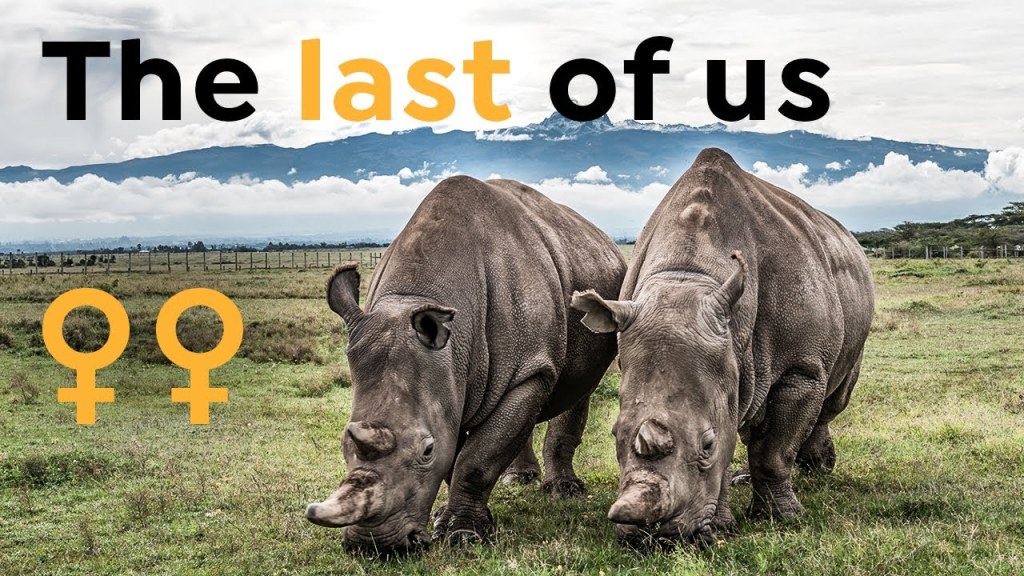
Though the Northern White Rhino is functionally extinct – following the loss of Sudan, the last known living male, five years ago this week – conservationists are finding hope in a technique that is creating new embryos using genetic material taken from him and two remaining females.

To mark the occasion, photographer Ami Vitale has released a new short film called “Remembering Sudan,” which will be screened at upcoming film festivals.

“Our fate is linked to the fate of animals. What happens next is in all of our hands.” said Ami Vitale.

Sudan, a 45-year-old rhino believed to be the world’s last surviving male Northern White Rhino, died five years ago at the Ol Pejeta Conservancy in Kenya on March 19, 2018. He had been battling ill health for months, and after his condition worsened considerably, veterinarians decided to euthanize him.

Since then, an international consortium of scientists and conservationists known as the BioRescue Project – a consortium made up of Leibniz Institute for Zoo and Wildlife Research (Leibniz-IZW) in Germany; Safari Park Dvůr Králové in the Czech Republic; the Kenya Wildlife Service; and Ol Pejeta Conservancy in Kenya – have been working to bring the species back from extinction through in vitro fertilization and stem cell research. They have already created 24 viable embryos using eggs from the last two female White Rhinos that are still alive, and the frozen sperm of deceased male Northern White Rhinos like Sudan.

Fatu (left) and Najin (right) are the last two Northern White Rhinos left on the planet. They are both female and are a mother-daughter duo. Credit: Gurcharan Roopra

To mark the occasion, photographer Ami Vitale has released a new short film, Remembering Sudan, which will be screened at upcoming film festivals and can be viewed online, here’s the trailer:

Remembering Sudan: The Trailer

Though the Northern White Rhino is functionally extinct following the loss of the last male of the species, conservationists like Vitale find great hope in BioRescue, and in the power of humanity to react positively:

“What happens next is in all of our hands. What’s going to save us all is to get beyond our routine ways of thinking. Wonder is what allows us to reimagine our future together. Wonder allows us to believe that we can fundamentally change the course we are currently on.” Vitale said when reflecting on the anniversary.

“Our fate is linked to the fate of animals. Without Rhinos and other wildlife, we suffer more than loss of ecosystem health. We suffer a loss of imagination, a loss of wonder, a loss of beautiful possibilities,” she said.

Readers can view the film, learn more and support the project at its website, www.rememberingsudan.org..

WHAT YOU CAN DO TO HELP WILDLIFE:

You can support ‘Protect All Wildlife’ by donating as little as £1 – It only takes a minute but it can last a lifetime for an animal in need. Please donate below.

Everyone who donates will receive a Certificate of Appreciation as a thank you for helping animals in need.