Norway Euthanizes Freya — The Walrus That Was Killed Because We Made Her Popular

FREYA THE WALRUS

Norwegian authorities have killed a Walrus that was drawing large numbers of human onlookers. They said it was necessary because PEOPLE had failed to heed warnings that their safety could be in danger.

Norwegian authorities killed a popular walrus due to safety concerns, they announced on Sunday.

Norway’s Directorate of Fisheries said Freya was euthanized early on Sunday “based on an overall assessment of the continued threat to human safety.”

The 600-kilogram (1,320-pound) marine mammal, affectionately known as Freya, had become a popular attraction over recent weeks.

The sightings were unusual because walruses normally live much further north, in Arctic waters.

What reason was given?

Officials had repeatedly warned that people should refrain from getting too close and posing for pictures with the animal.

“Through on-site observations the past week it was made clear that the public has disregarded the current recommendation to keep a clear distance to the walrus,” a statement from the Directorate of Fisheries said. “Therefore, the Directorate has concluded, the possibility for potential harm to people was high and animal welfare was not being maintained.”

Norway’s Fisheries Directorate Frank Bakke-Jensen said in a statement that all other possible solutions had been examined, including moving Freya elsewhere. “We concluded that we could not guarantee the well-being of the animal by any of the means available,” he said.

Bakke-Jensen said that ultimately, human safety had to take precedence.

“We have sympathies for the fact that the decision can cause reactions with the public, but I am firm that this was the right call. We have great regard for animal welfare, but human life and safety must take precedence.”

However, opponents of the decision said more should have been done to take the animal’s well-being into account.

A spokeswoman for animal rights group NOAH, Siri Martinsen, told Norway’s TV2 television channel that the measure had been rushed. She said fines should have been issued to disperse the onlookers.

Biologist Rune Aae told the NTB news agency it was “infinitely sad that they chose to euthanise such a beautiful animal simply because we did not behave well with it.”

The Blue Planet Society pressure group —  which campaigns to protect the world’s oceans — branded the decision “utterly disgraceful.”

THE BLUE PLANET SOCIETY’S RESPONSE FOLLOWING THE NEWS THAT FREYA HAS BEEN KILLED
An International Traveller

Freya — whose name refers to the Norse goddess of beauty and love — was first spotted in the waters of the Norwegian capital in mid-July.

She had already found fame climbing onto pleasure boats in Kragero, an idyllic southern coastal village.

Her exploits, which included chasing a duck and attacking a swan intrigued locals and made headlines in the press. Mostly though, she would simply bask on boats — walruses can sleep for up to 20 hours per day.

Despite repeated appeals from the authorities, interested onlookers continued to approach her, sometimes with children and sometimes in the water.

Before settling in the Oslo Fjord, Freya was spotted in the United Kingdom, the Netherlands — where she relaxed on a Dutch naval submarine — and Denmark.

Author’s Comment: Freya, please accept our apologies. we put you on a pedestal then let you down ~ OUR SHAME!!!

What you can do to help animals in need:
Support ‘Protect All Wildlife’ by donating as little as £1 – It only takes a minute but it can last a lifetime for an animal in need.

We believe EVERY animal should be treated with respect, empathy, and understanding. We raise awareness to protect and conserve wild, captive, companion and farm animals. It is vital that we protect animals against acts of cruelty, abuse, and neglect by enforcing established animal welfare laws and, when necessary, take action to ensure that those who abuse animals are brought to justice.

Protect All Wildlife are involved in many projects to protect animals’ rights, welfare, and habitats. Money contributed to Protect All Wildlife supports ALL of our worthy programmes and gives us the flexibility to respond to emerging needs. Your donations make our work possible. Thank you for your support.

Everyone who donates will receive a Certificate of Appreciation as a thank you for supporting wildlife.
CERTIFICATE OF APPRECIATION

GoD and DoG

When God had made the earth and sky,
The flowers and the trees,
He then made all the animals,
The fish, the birds and bees.

And when at last He’d finished,
Not one was quite the same,
God said, “I’ll walk this earth of mine,
And give each one a name.”

And so He travelled far and wide,
And everywhere He went,
A little creature followed Him,
Until its strength was spent.

When all were named upon the earth,
And in the sky and sea,
The little creature said, “Dear Lord,
There’s not one left for me.”

Kindly the Father said to him,
“I’ve left you to the end,
I’ve turned my own name back to front,
And call you DOG, my friend.

What you can do to help animals in need:

Support ‘Protect All Wildlife’ by donating as little as £1 – It only takes a minute but it can last a lifetime for an animal in need. Thank you.

We believe EVERY animal should be treated with respect, empathy, and understanding. We raise awareness to protect and conserve wild, captive, companion and farm animals. It is vital that we protect animals against acts of cruelty, abuse, and neglect by enforcing established animal welfare laws and, when necessary, take action to ensure that those who abuse animals are brought to justice.

Protect All Wildlife are involved in many projects to protect animals’ rights, welfare, and habitats. Money contributed to Protect All Wildlife supports ALL of our worthy programmes and gives us the flexibility to respond to emerging needs. Your donations make our work possible. Thank you for your support.

Everyone who donates will receive a Certificate of Appreciation as a thank you for supporting wildlife.

Certificate of Appreciation

“Empty Shell” (Brain Damage)

HAPPY THE ELEPHANT

I want my money back I came to see an Elephant I paid to see a conservation ambassador Inspire me to help conserve the species Especially her kind

I saw an empty shell

She looks like an Elephant But what is there to see, not Happy She is a poor teacher of Elephant lessons She is no solitary animal, but kept confined Like all captives, neurones scrambled, brain denied Stereotypy is not a dance – no, a pathetic trance A sign she can’t be happy in mind She’s not right in the head.

She is an empty shell

They have broken personalities All the Elephants with names, captive They are poor Elephant facsimiles They have the stature, the thick skin and bones They are devoid of Elephant spirit, truncated They are subjected to Floydian ‘Brain Damage’ They are all caught on the dark side (“‘As a matter of fact, it’s all dark’*) Cut off from the herd

They are empty shells

We pay the price to see: see the price they pay We fall for the old ‘conservation /education’ story We fail to see the oppression and the damage done We should be able to see for ourselves We could accept they are Sentients like us We could see them better in a sanctuary We could do the right thing Will we?

Collect all the empty shells

Put them back where they can refill Regain their freedom and society Be Elephants again, herd mentality That would be something to see Is it just a Zoological fantasy?

I find myself unhappy for Happy, again

If I find myself outside her enclosure (But I wouldn’t pay to go in anyway) Watching her sway song, groundhog days One day closer to her end of days Inspired to write yet another Happy poem Adding to ‘Not Happy’ ‘Personable’ ‘Elephant Stomp’ After the first setback of her legal person court case What would I do if I were you?

Might just as well go to a museum Pay to see a stuffed Elephant This one already is

I want my money back I came to see an Elephant Largest land animal, majestic Social fellow-sentient being Exemplary, salutary

I got an empty shell

*From ‘Brain Damage’ on the Pink Floyd album ‘Dark Side of the Moon’

**From ‘The Needle and the Damage Done’ by Neil Young

For all captive Elephants – Happy, Lucy, Shankar, The Fresno Elephants and so many more.

Written By Anthony Lovell.

What you can do to help wildlife:

Please Sign The Petition  To Free Happy From Her Imprisonment At The Bronx Zoo HERE!

Happy the Elephant had her day in court. We humans are better for it.

Support ‘Protect All Wildlife’ by donating as little as £1 – It only takes a minute but it can last a lifetime for an animal in need. Thank you.

We believe EVERY animal should be treated with respect, empathy, and understanding. We raise awareness to protect and conserve wild, captive, companion and farm animals. It is vital that we protect animals against acts of cruelty, abuse, and neglect by enforcing established animal welfare laws and, when necessary, take action to ensure that those who abuse animals are brought to justice.

Protect All Wildlife are involved in many projects to protect animals’ rights, welfare, and habitats. Money contributed to Protect All Wildlife supports ALL of our worthy programmes and gives us the flexibility to respond to emerging needs. Your donations make our work possible. Thank you for your support.

Everyone who donates will receive a Certificate of Appreciation as a thank you for supporting wildlife.

CERTIFICATE OF APPRECIATION

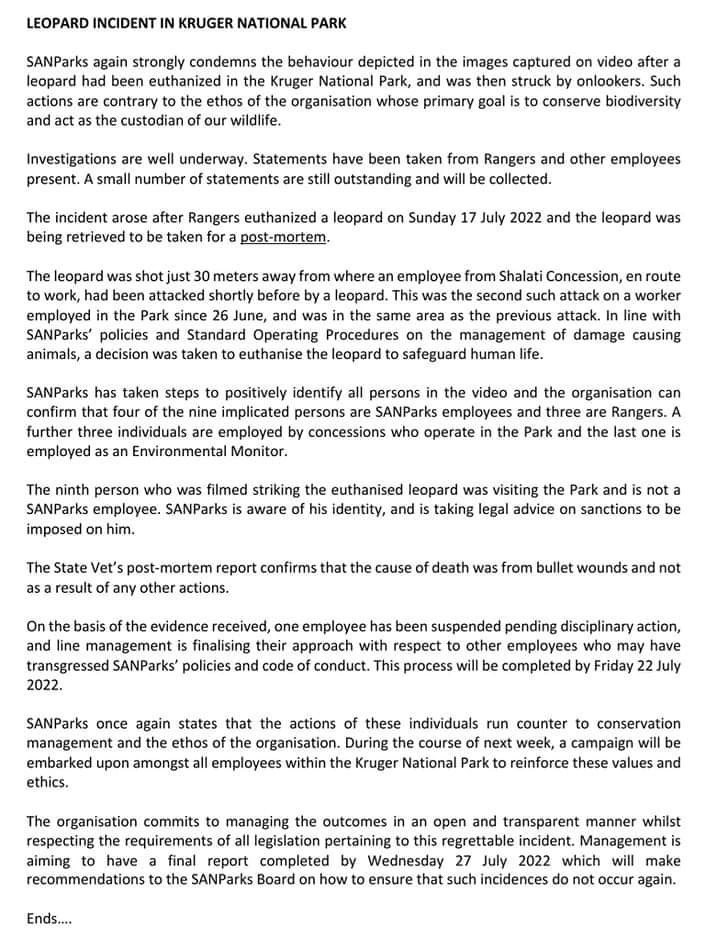
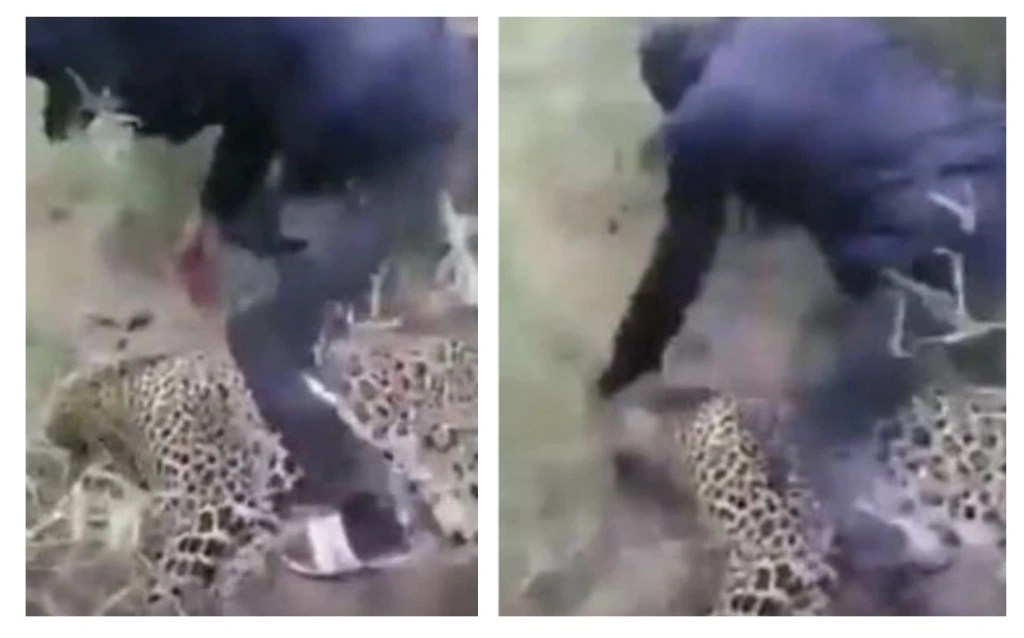
The South African National Parks (SANParks) Has Concluded Its Investigations Into Kruger Park Rangers And Others Filmed Abusing A Euthanised Leopard

RANGER SLAPPING DEAD LEOPARD

Kruger National Park rangers and other employees were filmed abusing a euthanised Leopard. SANParks says their conduct was contrary to the ethos of the organisation whose primary goal is to act as the custodian of wildlife.

Rangers and employees at the Kruger National Park have had their statements taken after a video surfaced of them allegedly abusing a euthanised Leopard.

According to SANParks, custodian of the Kruger Park, four of the nine people seen slapping the dead animal are SANParks employees — three are rangers and one is employed as an environmental monitor. One person seen striking the Leopard was a visitor to the park.

So far, one employee has been suspended pending disciplinary action. “Line management is finalising their approach with respect to other employees who may have transgressed SANParks’ policies and code of conduct,” SANParks said. Regarding the visitor, SANParks said it “is taking legal advice on sanctions to be imposed on him”.

The incident happened on Sunday after an employee from Shalati Concession was attacked by a Leopard. According to SANParks, this was the second attack on an employee in the park in the same area since June 26.

The Leopard was shot 30 metres from where the attack happened. “In line with SANParks’ policies and standard operating procedures on the management of damage-causing animals, a decision was taken to euthanise the Leopard to safeguard human life.”

RANGER SLAPPING DEAD LEOPARD

On the abuse of the animal’s body, SANParks said it “strongly condemns the behaviour depicted in the images captured on video … Such actions are contrary to the ethos of the organisation whose primary goal is to conserve biodiversity and act as the custodian of our wildlife”.

“The actions of these individuals run counter to conservation management and the ethos of the organisation. During the next week a campaign will be embarked upon among all employees within the Kruger National Park to reinforce these values and ethics.

“The organisation commits to managing the outcomes in an open and transparent manner while respecting the requirements of legislation pertaining to this regrettable incident.

THE SOUTH AFRICAN NATIONAL PARKS STATEMENT FOLLOWING THE INCIDENT

“Management is aiming to have a final report completed by Wednesday, July 27, which will make recommendations to the SANParks board on how to ensure such incidences do not occur again.”

South African National Parks (SANParks) Investigation Findings

The South African National Parks (SANParks) says it has concluded its investigations into the abuse of a dead leopard – which was caught on film in a video which went viral; and has started implementing corrective measures… including banning the man who was seen striking the leopard’s face from entering the Kruger National Park again.

In a statement, SANParks explained that the Leopard had been found and euthanised close to employees’ living quarters (within 100m), and a crowd had subsequently gathered around the dead Leopard. A Management Incident Report found that there was insufficient crowd control.

The Report made recommendations to SANParks on ways to minimise such incidents occurring in the future, and to limit human wildlife conflict.

According to the report, the official procedures had been followed correctly in deciding to euthanise the Leopard.

The problems arose during the recovery of the carcass after the Ranger Corporal asked for assistance from bystanders to get the carcass from the bushes. It was at this point that the incident – which took place in the administrative area of Skukuza – was filmed.

SANParks said: “All identified SANParks employees were questioned and submitted statements. The individual who struck the Leopard is not a SANParks employee and has been barred from entering the Kruger National Park. Disciplinary action is ongoing for all SANParks officials as well as the individual who filmed the incident.”

The Management Report also recommended that the KNP Code of Conduct should be revisited and communicated to visitors and residents; and that procedures should be amended to improve the response to crowd control situations following an animal being euthanised near to humans.

What you can do to help animals in need:

Support ‘Protect All Wildlife’ by donating as little as £1 – It only takes a minute but it can last a lifetime for an animal in need. Thank you.

We believe EVERY animal should be treated with respect, empathy, and understanding. We raise awareness to protect and conserve wild, captive, companion and farm animals. It is vital that we protect animals against acts of cruelty, abuse, and neglect by enforcing established animal welfare laws and, when necessary, take action to ensure that those who abuse animals are brought to justice.

Protect All Wildlife are involved in many projects to protect animals’ rights, welfare, and habitats. Money contributed to Protect All Wildlife supports ALL of our worthy programmes and gives us the flexibility to respond to emerging needs. Your donations make our work possible. Thank you for your support.

Everyone who donates will receive a Certificate of Appreciation as a thank you for supporting wildlife.

CERTIFICATE OF APPRECIATION

🌈 A Man And A Dog And Heaven

A man and his dog were walking along a road. The man was enjoying the scenery, when it suddenly occurred to him that he was dead.

A Man And A Dog And Heaven

He remembered dying, and that the dog walking beside him had been dead for years. He wondered where the road was leading them.

After a while, they came to a high, white stone wall along one side of the road. It looked like fine marble. At the top of a long hill, it was broken by a tall arch that glowed in the sunlight.

When he was standing before it he saw a magnificent gate in the arch that looked like mother-of-pearl, and the street that led to the gate looked like pure gold. He and the dog walked toward the gate, and as he got closer, he saw a man at a desk to one side.

When he was close enough, he called out, ‘Excuse me, where are we?’

‘This is Heaven, sir,’ the man answered.

Would you happen to have some water?’ the man asked.

Of course, sir. Come right in, and I’ll have some ice water brought right up’.

The man gestured, and the gate began to open.

‘Can my friend,’ gesturing toward his dog, ‘come in, too?’ the traveler asked.

‘I’m sorry, sir, but we don’t accept pets.’

The man thought a moment and then turned back toward the road and continued the way he had been going with his dog.

After another long walk, and at the top of another long hill, he came to a dirt road leading through a farm gate that looked as if it had never been closed. There was no fence. As he approached the gate, he saw a man inside, leaning against a tree and reading a book.

‘Excuse me!’ he called to the man. ‘Do you have any water?’

‘Yeah, sure, there’s a pump over there, come on in..’

‘How about my friend here?’ the traveller gestured to the dog.

There should be a bowl by the pump.’

They went through the gate, and sure enough, there was an old-fashioned hand pump with a bowl beside it.

The traveller filled the water bowl and took a long drink himself, then he gave some to the dog.

When they were full, he and the dog walked back toward the man who was standing by the tree.

‘What do you call this place?’ the traveler asked.

This is Heaven,’ he answered.

‘Well, that’s confusing,’ the traveler said. ‘The man down the road said that was Heaven, too.’

‘Oh, you mean the place with the gold street and pearly gates? Nope. That’s hell.’

‘Doesn’t it make you mad for them to use your name like that?’

‘No, we’re just happy that they screen out the folks who would leave their best friends behind!!

Author Unknown

What you can do to help animals in need:

Support ‘Protect All Wildlife’ by donating as little as £1 – It only takes a minute but it can last a lifetime for an animal in need. Thank you.

We believe EVERY animal should be treated with respect, empathy, and understanding. We raise awareness to protect and conserve wild, captive, companion and farm animals. It is vital that we protect animals against acts of cruelty, abuse, and neglect by enforcing established animal welfare laws and, when necessary, take action to ensure that those who abuse animals are brought to justice.

Protect All Wildlife are involved in many projects to protect animals’ rights, welfare, and habitats. Money contributed to Protect All Wildlife supports ALL of our worthy programmes and gives us the flexibility to respond to emerging needs. Your donations make our work possible. Thank you for your support.

Everyone who donates will receive a Certificate of Appreciation as a thank you for supporting wildlife.

CERTIFICATE OF APPRECIATION

Go back

Your message has been sent

Warning
Warning
Warning
Warning
Warning
Warning.

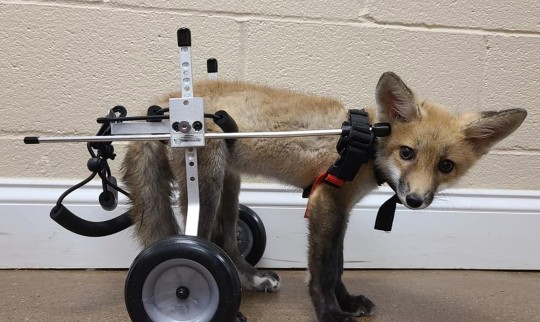
An Abandoned Baby Fox Who Can’t Use Her Back Legs Gets A Special Wheelchair

ASIA IN HER WHEELCHAIR

One little fox has been gaining a lot of attention on social media, for one very unique reason. While she may have a disability, the folks at the Kentucky Wildlife Center are determined not to let that stop her.

When you walk through the doors at the centre, you may be greeted by the friendly house cat waiting for an ear scratch, or the curious bunny ready for her close up.

“That’s what we do here. We take care of every animal to the max,” said PK Blankenship.

For some, it’s a place to rest and rehabilitate before being released back into the wild. For others, it becomes their home.

“She’s come a long way, she really has. It used to be that there wasn’t any movement in those back legs at all,” Blankenship said.

Asia the three-month-old Red Fox became a “permanent resident” back in May. She was found by a Boone County couple who immediately called the center’s director, Sam Opp, when they saw Asia try to walk.

“They noticed she wasn’t using her back legs,” Opp said.

It’s a disability Opp believes Asia has had since birth, and something that would have left her defenceless, and eventually dead, in the wild.

“You would never know she can’t use those back legs. She thinks she’s a regular fox. She pounces like a regular fox. She jumps like a regular fox. She crawls over you like a regular fox,” Blankenship said.

But what you may not see on a regular fox is the shiny wheelchair.

“Sometimes it’s funny. We put her in it and she’s like a NASCAR race driver. She takes off,” Blankenship said.

While Asia may have the need for speed, learning to use the chair isn’t always a smooth ride.

“I’m not saying she won’t bump into something, it does frighten her. It’s just like as a child. She would tumble off her mom and shake it off,” Blankenship said.

Still a wild animal, there are days Asia isn’t in the mood for physical therapy.

“If she’s just having a bad day, she’ll get more free time, which is after every session anyways,” Opp said.

With the help of Opp, her handler Blankenship, and the wheelchair, she will most likely be able to walk using her back legs one day.

“She has shown improvement in using those back legs to actually stand on her own. She is a very determined fox kit. She’s not giving up and we’re not giving up on her either. We’re in it for the long haul,” Blankenship said.

What you can do to help animals in need:

Support the work of ‘Protect All Wildlife’ by donating as little as £1 – It only takes a minute but it can last a lifetime for an animal in need. Thank you.

We believe EVERY animal should be treated with respect, empathy, and understanding. We raise awareness to protect and conserve wild, captive, companion and farm animals. It is vital that we protect animals against acts of cruelty, abuse, and neglect by enforcing established animal welfare laws and, when necessary, take action to ensure that those who abuse animals are brought to justice.

Protect All Wildlife are involved in many projects to protect animals’ rights, welfare, and habitats. Money contributed to Protect All Wildlife supports ALL of our worthy programmes and gives us the flexibility to respond to emerging needs. Your donations make our work possible. Thank you for your support

Everyone who donates will receive a Certificate of Appreciation as a thank you for supporting wildlife.
Certificate of Appreciation

Go back

Your message has been sent

Warning
Warning
Warning
Warning
Warning
Warning.

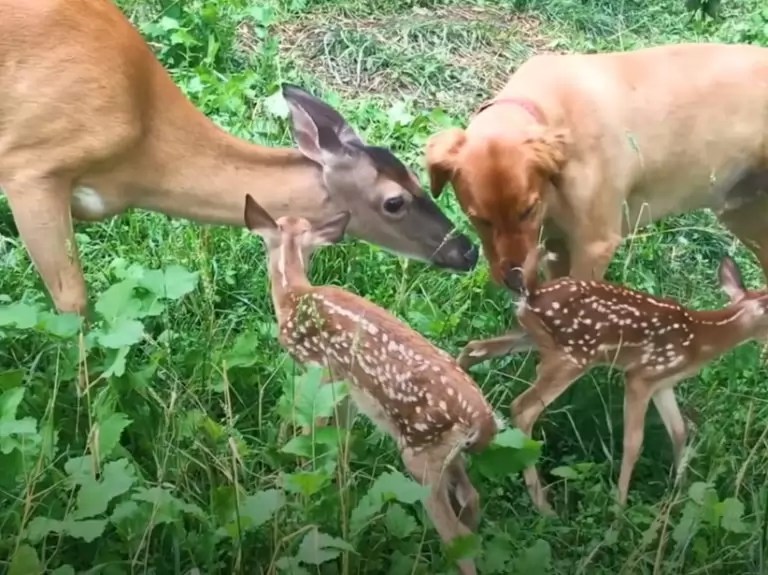
Buttons The Deer Brings Her Babies To Meet G-Pro, Her Dog Best Friend 💚.

A deer and a golden retriever have struck up an 11-year friendship. They’re so close that the deer even brings her babies to meet the dog every spring!

It all started back when the deer, Buttons, was just a few days old. Unfortunately, her mother was hit by a car and killed. Without a mother to protect and care for her, Buttons wouldn’t have survived, so the Brown family stepped in to care for her.

The Brown family already had a few pets of their own, including a friendly golden retriever named G-Bro.

While Buttons is now free to wander off as she pleases, she prefers to stay close to the Brown family and her BFF G-Bro.

Occasionally, Buttons will wander into the woods and one time she came back with babies!

Buttons has babies nearly every spring, and sometimes she brings them to the house for everyone to meet. However, she’s most interested in G-Bro seeing them.

The gentle dog acts like a second mother to the fawns, and gently licks them clean and plays with them. It’s so sweet!

Buttons’ babies eventually grow up and leave, but she sticks around for G-Bro. One of their favorite activities to do together is explore the woods and go on hiking trails. G-Bro also loves to just sit and let Buttons clean him.

While it’s definitely an unusual situation they have, the Brown family is just enjoying and treasuring every moment.

Watch the video below to see Buttons bringing her babies to meet G-Bro:

BUTTONS AND G-PRO

You can follow the Brown family on Instagram to keep up with Buttons and G-Bro @brownhikingtrails.

What you can do to help animals in need:

Support ‘Protect All Wildlife’ by donating as little as £1 – It only takes a minute but it can last a lifetime for an animal in need. Thank you.

Go back

Your message has been sent

Warning
Warning
Warning
Warning
Warning
Warning.

A Man Released All The Turtles After He Bought Them From The Food Market.

Arron Culling saw two turtles being sold for food in a wet market and decided to take action.

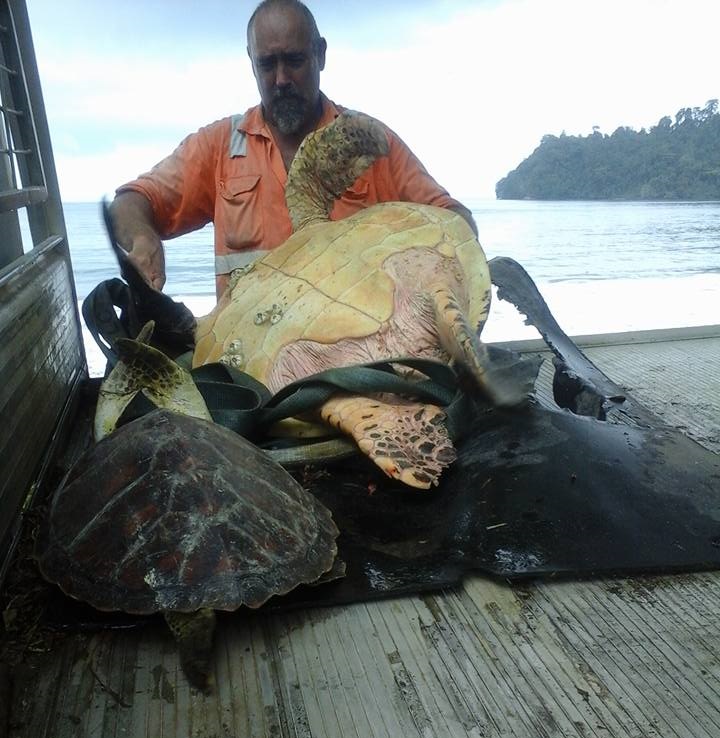
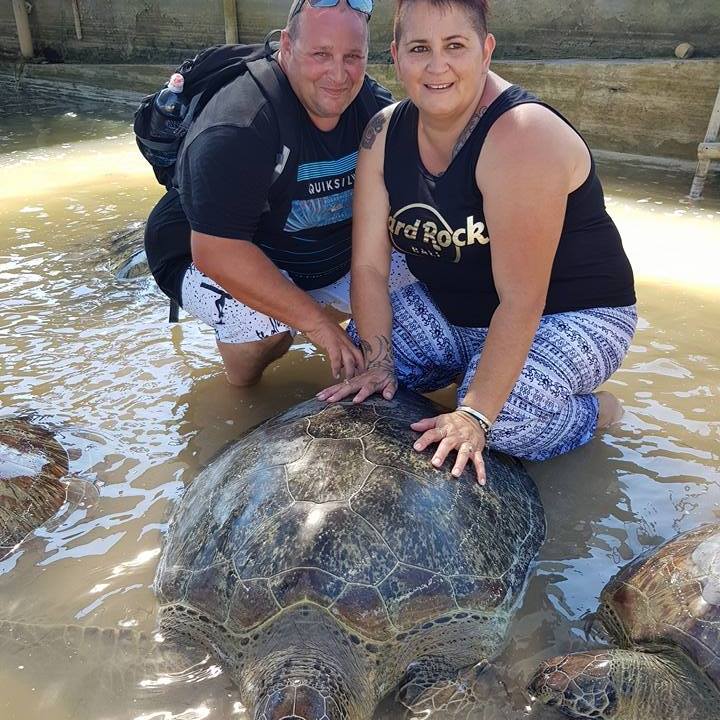
ARRON CULLING WITH SOME OF THE TURTLE HE RESCUED FORM A WET MARKET

Arron Culling of New Zealand did something truly remarkable for two lucky sea turtles. He spotted the pair at a local food market in Papua New Guinea, threw down $50 (about US $33), put them in his truck and released them back into the wild.

“Found these at the local market, got them for 50 bucks, drove 5 km up the road and let them go,” he wrote on Facebook.

He bought these turtles, put them in the back of his truck, drove 5km to a safer place, and released the turtles to their natural habitat.

This prompted Culling to continue supporting the turtles. He bought and released all the turtles he could afford.

ARRON TAKING ONE OF THE TURTLES TO FREEDOM

According to his Facebook page, this is the 9/10th time he and his friends have done so.

ON THE EDGE OF FREEDOM

The turtle-loving New Zealander took this one further and began building a foundation to help the turtles of Papua New Guinea.

How to protect sea turtles?
The good news is that changes in human behavior could make a significant difference for turtles.

Light is significant to the life cycle of newly hatched turtles. The babies use moonlight and starlight to get to the relative safety of the ocean.

If you’re on the beach during nesting or hatching season, do everything in your power to eliminate human light at night. This includes campfires, phones, and hotel room lights.

If you come across a mother turtle, do your best not disturb her. If she feels scared, she can return to the sea without laying eggs.

The U.S Fishers and Wildlife also advises you not to disturb the marine ecosystem when you visit. It recommends not leaving any beach furniture around, removing all the litter you create, and protecting the vegetation that grows on the beach.

Reducing your plastic footprint is another important step one could take to help turtles. Especially helium balloons when we are outdoors, straws, and other plastic garbage when having a picnic on the beach.

Watch: A newborn sea turtle’s magical journey as it becomes an adult, and how humans have made it more difficult:

See: How to protect sea turtles:

ARRON AND HIS WIFE AYLEEN

What you can do

Support ‘Protect All Wildlife’ by donating as little as £1 – It only takes a minute but it can last a lifetime for an animal in need. Thank you.

We believe EVERY animal should be treated with respect, empathy, and understanding. We raise awareness to protect and conserve wild, captive, companion and farm animals. It is vital that we protect animals against acts of cruelty, abuse, and neglect by enforcing established animal welfare laws and, when necessary, take action to ensure that those who abuse animals are brought to justice.

Protect All Wildlife are involved in many projects to protect animals’ rights, welfare, and habitats. Money contributed to Protect All Wildlife supports ALL of our worthy programmes and gives us the flexibility to respond to emerging needs. Your donations make our work possible. Thank you for your support

Go back

Your message has been sent

Warning
Warning
Warning
Warning
Warning
Warning.

Federal Judge Restores A Wide Swath Of Endangered Species Act Protections That Were Gutted By The Trump Administration.

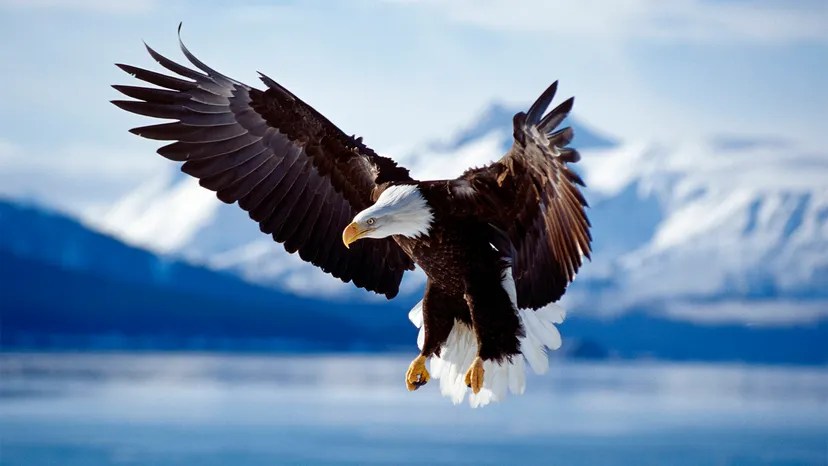
BALD EAGLES ARE A FAMOUS ENDANGERED SPECIES ACT SUCCESS STORY. CREDIT ANDY MORFFEW

A federal judge in California has overturned a 2019 Trump administration move to gut the landmark Endangered Species Act, vacating that administration’s changes and restoring protections for hundreds of species.

The ruling by U.S. District Judge Jon Tigar in Northern California comes as the Biden administration is working on replacement rules for the Trump rollbacks and means the protections will be restored while the review process continues.

“The court spoke for species desperately in need of comprehensive federal protections without compromise,” Earthjustice attorney Kristen Boyles said in a statement from the plaintiffs emailed to EcoWatch. “Threatened and endangered species do not have the luxury of waiting under rules that do not protect them.”

Earthjustice represented the Center for Biological Diversity, Defenders of Wildlife, Sierra Club, Natural Resources Defense Council, National Parks Conservation Association, Wild Earth Guardians and the Humane Society of the United States in a lawsuit to block the Trump regulations passed in 2019. The lawsuit targeted five regulations in particular. 

These regulations did the following, according to EcoWatch and the Sierra Club:

  1. Removed the “blanket rule” giving threatened species the same protections as endangered species.
  2. Made it harder to protect species from the climate crisis by giving the government more wiggle room in how it interpreted the phrase “foreseeable future.”
  3. Made it easier to delist species.
  4. Allowed regulators to consider the economic impact of offering protections to a species.
  5. Made it harder to list new species and protect their critical habitat. 

When President Joe Biden took office, the U.S. Fish and Wildlife Service and National Marine Fisheries Service said they would work on new regulations. However, this process can take months to years. In the meantime, the services asked the court to remand the case in December of 2021, according to the plaintiffs. However, the judge decided to vacate the Trump regulations instead. 

“Regardless of whether this Court vacates the 2019 [Endangered Species Act] Rules, they will not remain in effect in their current form,” Tigar wrote in his ruling.

The plaintiffs applauded Tigar’s decision, which restores protections to hundreds of species. 

“Trump’s gutting of endangered species protections should have been rescinded on day one of the Biden presidency,” Center for Biological Diversity endangered species director Noah Greenwald said in the statement. “With this court ruling, the Services can finally get on with the business of protecting and recovering imperiled species.”

An Interior Department spokesperson said the agency was now reviewing the ruling. 

What you can do gto help animals in need:

Support ‘Protect All Wildlife’ by donating as little as £1 – It only takes a minute but it can last a lifetime for an animal in need. Thank you.

We believe EVERY animal should be treated with respect, empathy, and understanding. We raise awareness to protect and conserve wild, captive, companion and farm animals. It is vital that we protect animals against acts of cruelty, abuse, and neglect by enforcing established animal welfare laws and, when necessary, take action to ensure that those who abuse animals are brought to justice.

Protect All Wildlife are involved in many projects to protect animals’ rights, welfare, and habitats. Money contributed to Protect All Wildlife supports ALL of our worthy programmes and gives us the flexibility to respond to emerging needs. Your donations make our work possible. Thank you for your support

Go back

Your message has been sent

Warning
Warning
Warning
Warning
Warning
Warning.

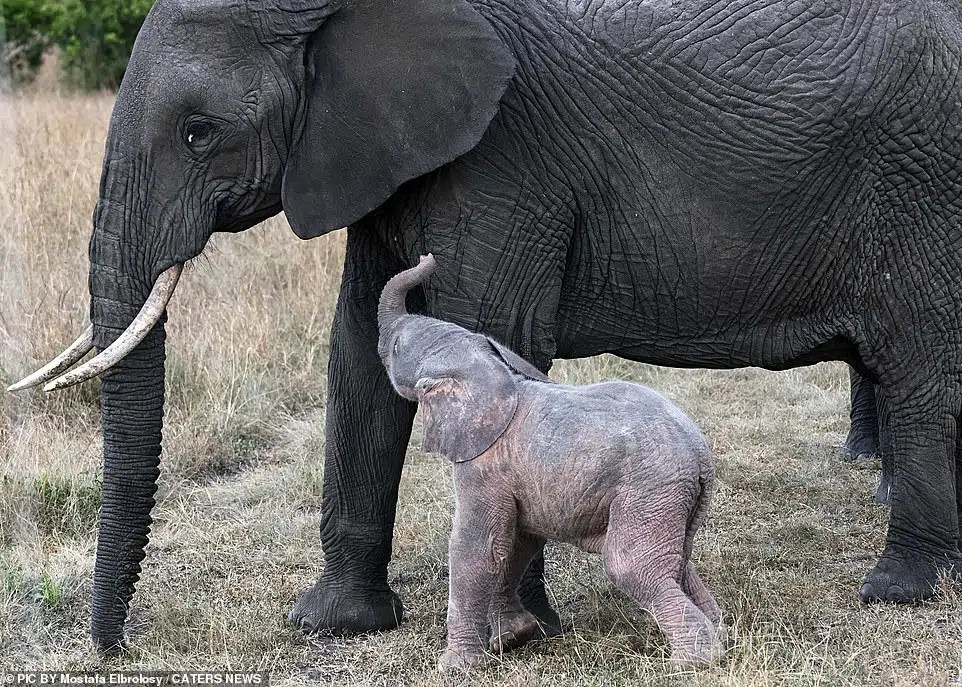
Baby Pink Elephant Thrives Against All The Odds

A baby Elephant born with albinism has thrived in the wild despite facing problems caused by its pigmentation.

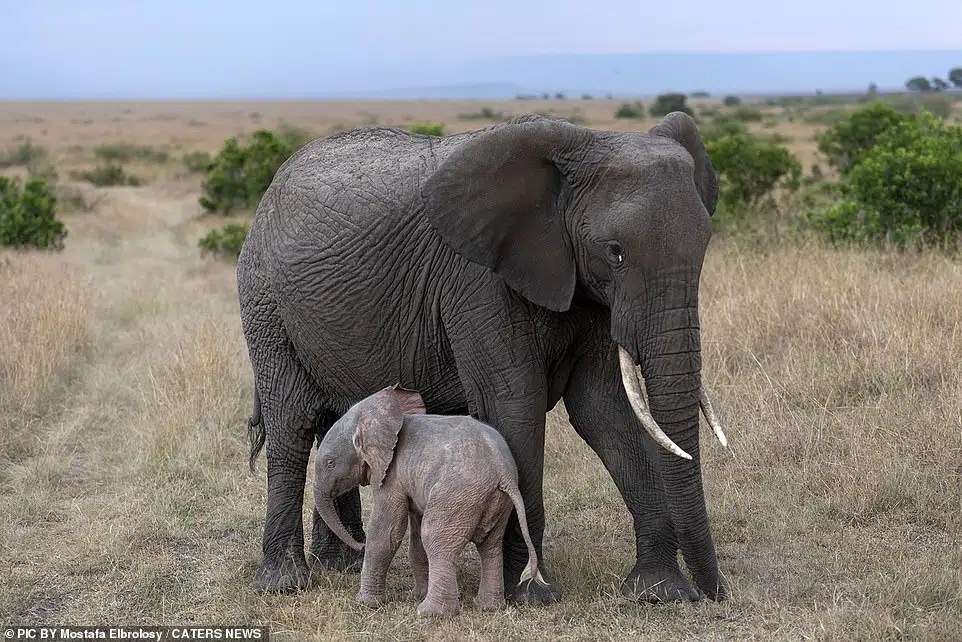
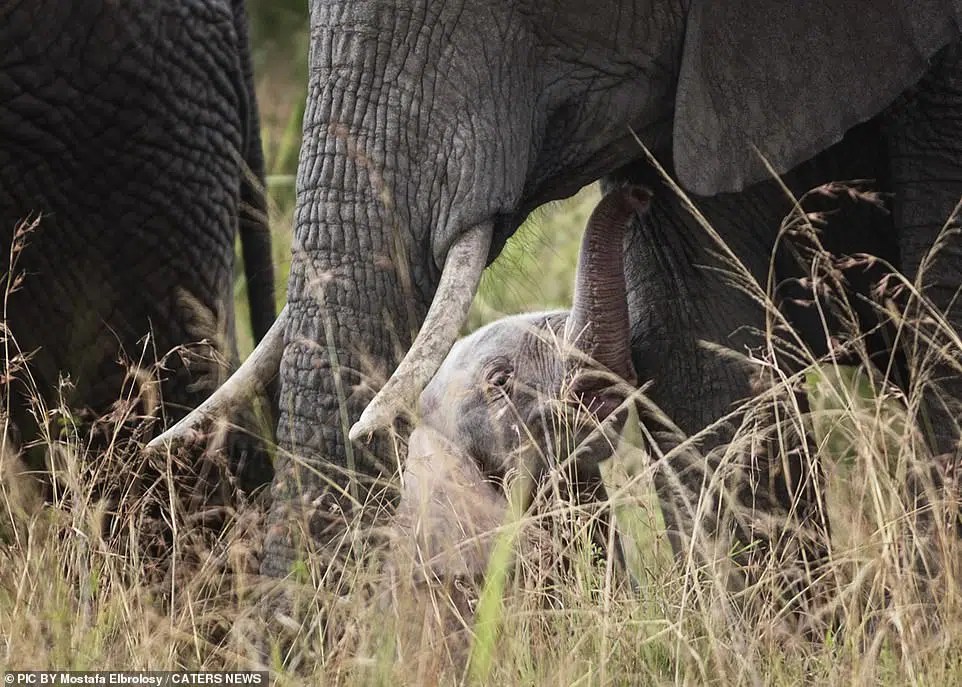
THE RARE CALF WAS SPOTTED BY RANGER AND WILDLIFE PHOTOGRAPHER MOSTAFA ELBROLOSY IN THE MAASAI MARA, KENYA

The rare calf was born in the Maasai Mara, Kenya.

A wildlife photographer caught it on camera, who spotted its unusual pink skin pigmentation, but it is believed to be thriving nonetheless.

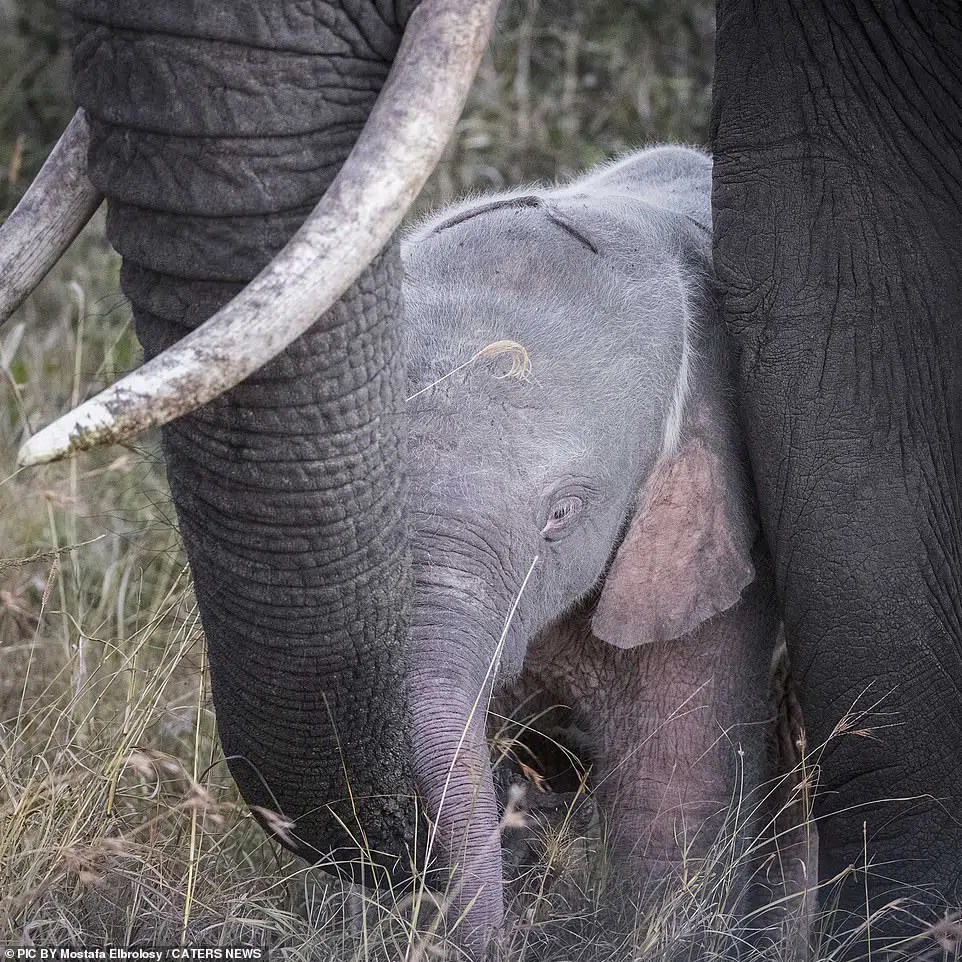
THE NEWBORN WITH ALBINISM HAS BEEN THRIVING IN THE WILD DESPITE BATTLING WITH INTENSE SUNLIGHT BEAMING DOWN ON ITS NON-PIGMENTED SKIN

Mostafa Elbrolosy, a ranger who runs a safari camp, said he had heard about the Elephant’s birth but was surprised when he saw the adorable baby Elephant in person.

He said: ‘It was a rare sighting.

‘Rare creatures are always the most fascinating to any wildlife photographer and having the opportunity to view and photograph it was like a dream.

‘When I lived in Maasai Mara running my cozy camp here, I got news on the radio about a Eemale elephant giving birth to an albino.

‘I finished my work, packed my camera, and went looking for it with one of our guides.

‘We received a surprise in the afternoon after a long silent search with only a few people coming to see because no one expected it to be an albino.

‘I am very fortunate to have had the opportunity to see and photograph this extremely rare baby.’

Mr. Elbrolosy said the newborn calf was extremely rare and was thriving despite the harsh sun being unsuitable for it.

‘It is very well surrounded and protected by the herd, trying to feed on its mother and go for walks with her.

‘He’s only eight hours old.

‘We were delighted to see such a wonderful sight.’

Albinism is caused by a lack of pigment in the skin and often results in pale layers of skin as well as unpigmented, pink eyes.

This condition can also cause poor vision and can eventually lead to blindness as the calf gets older.

Many Elephants have patches of unpigmented skin behind their ears but true albinos can often be rejected by their own species due to their unusual appearance.

What you can do to help animals in need:

Support ‘Protect All Wildlife’ by donating as little as £1 – It only takes a minute but it can last a lifetime for an animal in need. Thank you.

We believe EVERY animal should be treated with respect, empathy, and understanding. We raise awareness to protect and conserve wild, captive, companion and farm animals. It is vital that we protect animals against acts of cruelty, abuse, and neglect by enforcing established animal welfare laws and, when necessary, take action to ensure that those who abuse animals are brought to justice.

Protect All Wildlife are involved in many projects to protect animals’ rights, welfare, and habitats. Money contributed to Protect All Wildlife supports ALL of our worthy programmes and gives us the flexibility to respond to emerging needs. Your donations make our work possible. Thank you for your support.

Go back

Your message has been sent

Warning
Warning
Warning
Warning
Warning
Warning.