A young, six-year-old boy named Caleb was traveling with his parents and siblings when a negligent driver swerved into their lane, colliding with their car. The young driver, who was just a kid himself, unintentionally took the lives of Caleb’s mother and both of her children, but six-year-old Caleb miraculously survived. His injuries were nevertheless severe enough to be life threatening.
Although he was the only surviving member, Caleb had sustained serious injuries. While his fractured bones would mend, his traumatic brain injury might result in death, paralysis, and brain damage, which went on for a long time. To assist him, Caleb’s father and grandmother did whatever it took; however, each day was a struggle.
Nobody knew what the result of these two approaches would be. The doctors suggested a non-traditional therapy by using a canine. To see if having a dog by Caleb’s side might stimulate activity and, in turn, healing, the medical team wanted to try basic interaction. While he was hesitant, Caleb’s father agreed.
They decided to give it a try and crossed their fingers that this miracle would save their child.
CALEB’S STORY CREDIT: INTERNATIONAL THERAPY ANIMALS
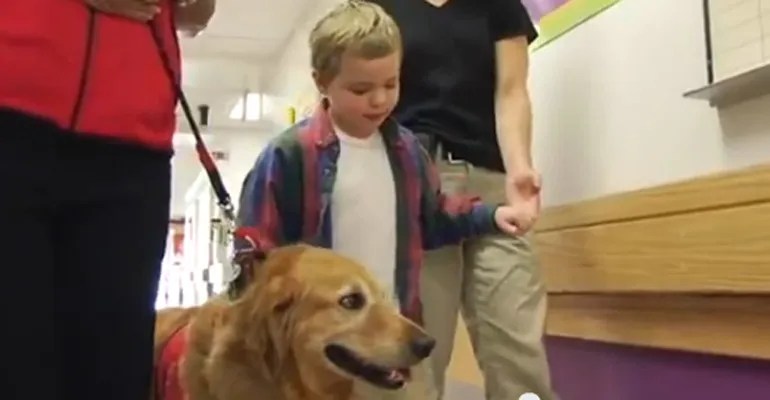
The therapy session began and a dog Colonel walked in. How could an animal sort the whole situation out?! The dog was brought in and the doctors made him lie and sit down next to the injured boy.
Colonel, a golden retriever, served as an inventive and non-invasive way for Caleb to obtain “medicine.” The dog sat beside him quietly with his trainer Susan. They waited for Caleb to react in some manner, but it did not take long at all.
CALEB RELAXING WITH COLONEL CREDIT: BEN HOWARD
Even when Colonel lay on Caleb’s hospital bed, wiggling his way almost onto Caleb’s tiny body to keep him company, and even attempting to mount him while asleep, Caleb reacted. His heart rate increased, and his respiratory function improved. Something wonderful was happening, and it was all thanks to the only modification in Caleb’s routine: Colonel.
The boy glowed whenever Colonel came to see him. The medical team was shocked. Caleb quickly became more awake, wanting to sit up and interact with the adorable dog. Colonel influenced Caleb in an inexplicable manner both physically and emotionally.
BEST FRIENDS CREDIT: BEN HOWARD
Caleb was playing catch with Colonel. And giggling! Sure, it took time and patience– as well as a team of doctors to family– but it was Caleb who truly connected to him on another level that itself encouraged healing.
FOLLOW UP TO CALEB’S STORY CREDIT: INTERNATIONAL THERAPY ANIMALS
WHAT YOU CAN DO TO HELP ANIMALS IN NEED
You can support our work by donating as little as £5 – It only takes a minute but it can last a lifetime for an animal in need.
Everyone who donates will receive a Certificate of Appreciation as a thank you for helping animals in need.
The Mission of Protect All Wildlife is to prevent cruelty and promote the welfare of ALL animals.
We believe EVERY animal should be treated with respect, empathy, and understanding. We raise awareness to protect and conserve wild, captive, companion and farm animals.
It is vital that we protect animals against acts of cruelty, abuse, and neglect by enforcing established animal welfare laws and, when necessary, take action to ensure that those who abuse animals are brought to justice.
Protect All Wildlife are involved in many projects to protect animals’ rights, welfare, and habitats. Money contributed to Protect All Wildlife supports ALL of our worthy programmes and gives us the flexibility to respond to emerging needs. Your donations make our work possible.
Henry, a dog that twice cheated death in Ukraine after being rescued from floods and surviving a Russian bombing has found a new furever home.
Henry The Dog Of War Credit: Save The Dogs
Heartbreaking footage captured the crossbreed, named Henry, clinging for life in the rubble of a building after the Kakhovka dam in Kherson was destroyed.
The sound of missiles dropping can be heard in the background as rescuers made their way through flood water to rescue the stricken pooch in June.
To avoid drowning, brave Henry managed to doggy-paddle to the remains of a bombed-out building poking out of the flood waters.
To avoid drowning, brave Henry managed to doggy-paddle to the remains of a bombed-out building poking out of the flood waters. Credit: Save The Dogs
He was taken to a clinic in Odesa for round the clock treatment after being found alone, scared and covered in toxic sludge which burned his skin.
But his ordeal didn’t end as shortly after his rescue, the animal clinic caring for him was bombed by the Russians.
Despite the bombardment, Henry and the other animals escaped unharmed and he was moved to another clinic where he continued to receive treatment.
Just four months on and he is in a loving new home thanks to Save the Dogs (STD).
Gregg Tully, Country Director for Save The Dogs, revealed how Henry was originally found “collapsed, exhausted and barely conscious”.
He said: “After the dam in Kherson exploded, [Henry] was one of the dogs that was pulled out of the flood waters.
“He was covered in oil and sludge. There was a lot of toxic material at the bottom of the reservoir that washed out with the flood.”
Henry was covered in oil and sludge Credit: Save The Dogs
The thick coat of toxic oil coating his fur also caused painful chemical burns to his skin.
Gregg added: “We thought he was a black dog – we thought this dog was all black.
“And then he was cleaned up and taken to a vet clinic, and actually, he’s more white than black.
“He’s still very underweight and he still has some skin problems, but he obviously loves people and is a really happy dog.
“It’s been really inspiring after seeing the videos of him getting pulled out of the flood waters, and now he’s a happy, loving dog in a loving new home.
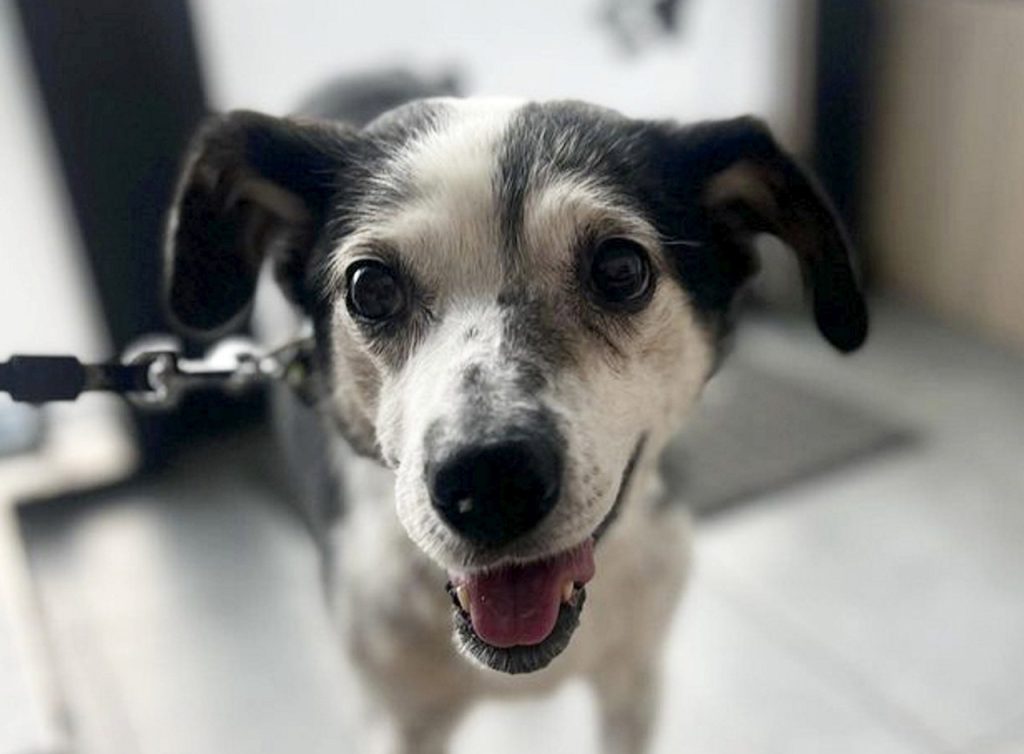
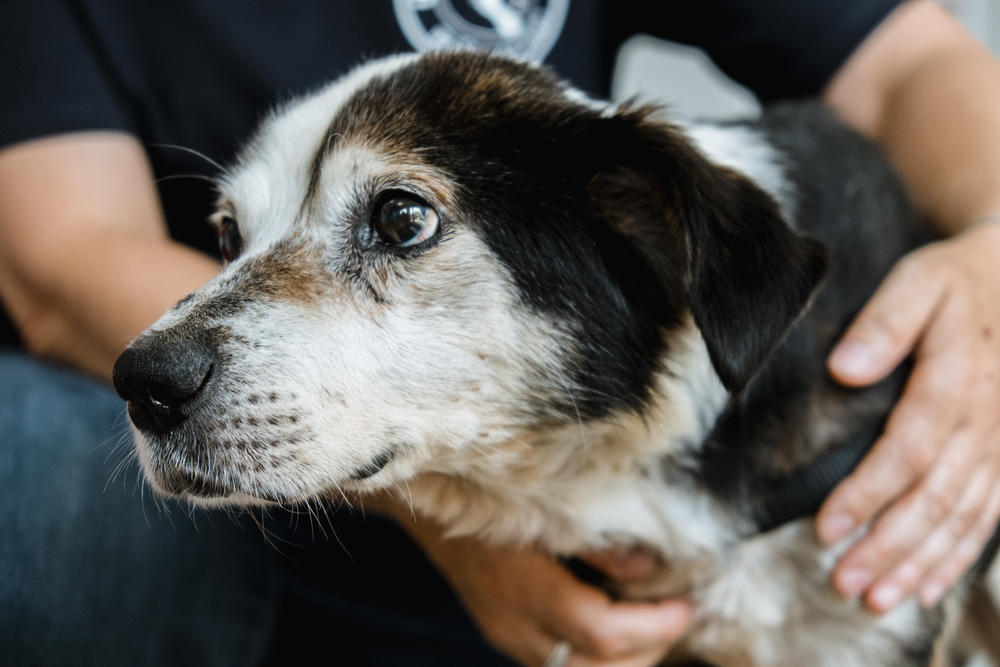
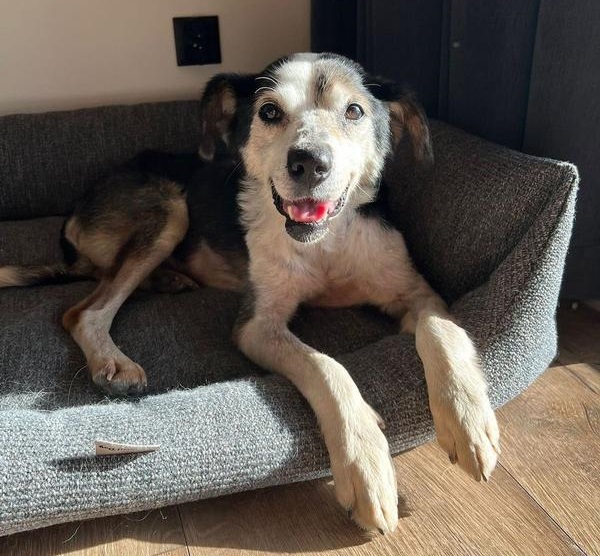
Henry looking VERY happy in his furever home.
WHAT YOU CAN DO TO HELP RESCUE ANIMALS
You can support our work by donating as little as £5 – It only takes a minute but it can last a lifetime for an animal in need.
Everyone who donates will receive a Certificate of Appreciation as a thank you for helping rescue animals in need.
OUR MISSION STATEMENT
‘Animals that use wheels and prosthetics can live as good a quality of life as fully able-bodied animals and this is what we want to show people’ ~ Victoria Bryceson, founder of Miracle’s Mission.
We do not receive financial support from the government or other institutions. We rely solely on donations from generous animal lovers.
Animal rescues cost a lot of money to run. While we get donations and funding through events like charity runs etc, the costs are EXTREMELY high. We need to pay for food, heating and other bills, as well as any staff costs and expenses like petrol for home visits.
The average cost to feed a dog for one month typically costs somewhere from £16 to £50, depending on the breed. Microchipping costs about £10 to £15. The average cost of essential vaccinations is £64. A routine vet appointment costs between £40-£60, surgery can cost anywhere over £1000. Physiotherapy, Hydrotherapy – the average cost is £50 for a 30-minute session. Prosthetics and dog wheels etc can cost up to £500.
Please help Miracle’s Mission continue to rescue, rehabilitate and rehome
MANY MORE sick, injured and disabled animals by kindly donating ANY amount, large or small, today. Thank you.
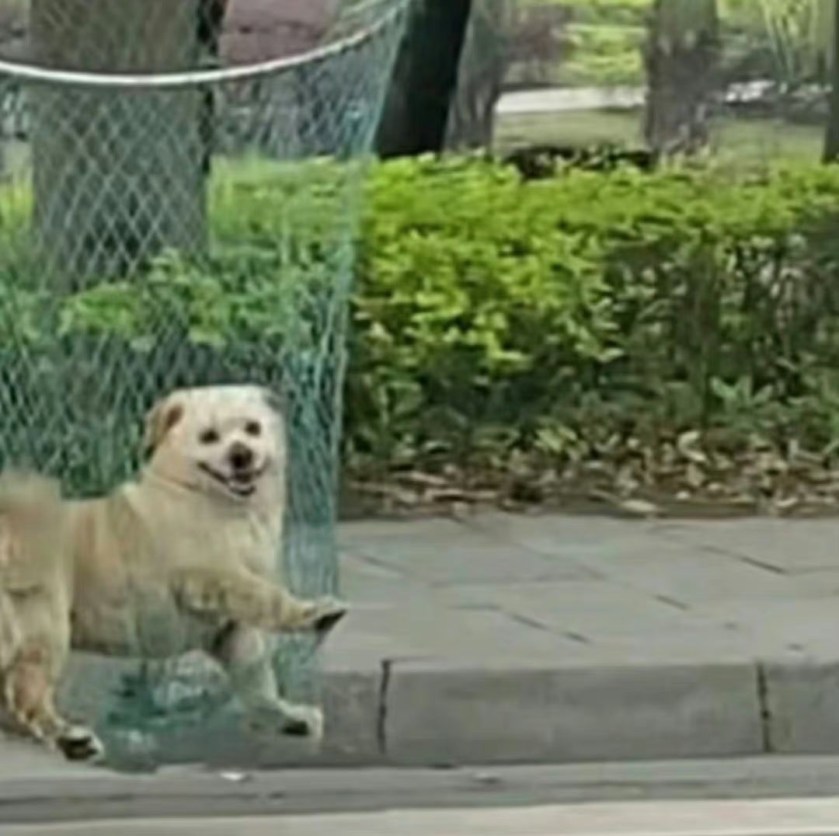
A small, stray dog on a university campus in Chongqing was filmed being grabbed in a net by a dog catcher, prior to being killed. The “smiling” appearance of the dog has prompted a social media hashtag using the name it was given #XiaoHuang.
Officials in China have launched a crackdown on stray, unregistered, and “oversized” dogs.
But the move has been widely criticised after reports that dogs without owners are being rounded up and sometimes euthanised.
It comes after a vicious attack on a two-year-old girl by a Rottweiler last week that shocked the country.
The Rottweiler that attacked the child in Chongzhou, Sichuan Province, WAS NOT A STRAY. It was unleashed and approached the mother who was walking her child to preschool inside their housing compound.
The toddler suffered a ruptured kidney, fractured ribs and lacerations across her body. She is reportedly stable.
The crackdown prompted by the mauling has however, been questioned on social media and by pet owners after several shocking stories came to light.
Community workers in Leshan broke into a house to hunt and kill pet dogs
In one case, security guards and a landlord entered an office without the permission of the tenant and killed both of their dogs.
In another case – which has drawn considerable attention online – a small, stray dog on a university campus in Chongqing was filmed being grabbed in a net by a dog catcher, prior to being killed. The “smiling” appearance of the dog has prompted a social media hashtag using the name it was given #XiaoHuang. University officials said the dog had chased a student.
A small, stray dog on a university campus in Chongqing was filmed being grabbed in a net by a dog catcher, prior to being killed. The “smiling” appearance of the dog prompted a social media hashtag using the name it was given #XiaoHuang.
Some users of Chinese microblogging site Weibo posted pictures claiming security personnel in their residential compounds had started killing strays and dumping their bodies in the trash. Their posts sparked an online outcry, with many calling for more humane measures, including adoption and neutering.
Chinese celebrities have also joined the social media discussion, saying the crackdown across the country was not warranted by the initial attack, terrible though it was.
Chinese actress Cya Liu Ya-se posted on Weibo on Friday, stating that “not all stray dogs are bad dogs” and called for “an end to the killing of animals.”
Celebrity Yang Di also posted a video on short video platform Douyin the same day, saying that people don’t have to all love dogs, but “please do not harm them.” Both accounts were banned shortly after the posts.
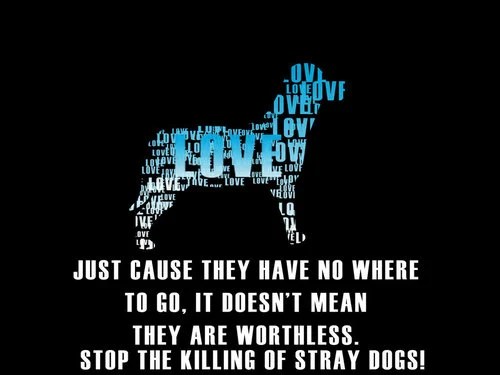
Xiao Feng calls for the killing of stray cats and dogs to stop.
However, the Rottweiler that attacked the child in Chongzhou, Sichuan Province, was not a stray. It was unleashed and approached the mother who was walking her child to preschool inside their housing compound.
Statements issued from officials in Shandong, Jiangxi and Hubei Provinces have said that captured stray dogs would be put down if an owner cannot be found for them.
In another instance, a security guard at a university in Liaoning Province was suspended after beating a beloved on-campus stray to death.
Chen Minjie, a staffer from the Cat and Dog Welfare Program with the Animals Asia Foundation, told the Global Times on Monday that the heated debate surrounding uncivilized incidents reflects the expanded pet ownership in the country and the varying quality of pet owners. Attention should be focused on addressing the behavior of uncivilized dog owners, rather than a widespread antagonism between dog owners and non-dog owners.
Internet users also called on the public to go to the State Council website and leave a message asking the government to stop abusing and killing stray animals, to reasonably disclose the way stray cats and dogs are handled, and to call on the state to legislate for the protection of animals.
Editor’s Note: Whilst it is agreed that attacks by dogs should be dealt with severely, in this case the dog(s) involved were not strays. They were pets that were not on leads. No stray dogs were anywhere in the vicinity of the awful attack. Why persecute strays for something they had nothing to do with?
WHAT YOU CAN DO TO HELP RESCUE ANIMALS
You can support our work by donating as little as £5 – It only takes a minute but it can last a lifetime for an animal in need.
Everyone who donates will receive a Certificate of Appreciation as a thank you for helping rescue animals in need.
OUR MISSION STATEMENT
‘Animals that use wheels and prosthetics can live as good a quality of life as fully able-bodied animals and this is what we want to show people’ ~ Victoria Bryceson, founder of Miracle’s Mission.
We do not receive financial support from the government or other institutions. We rely solely on donations from generous animal lovers.
Animal rescues cost a lot of money to run. While we get donations and funding through events like charity runs etc, the costs are EXTREMELY high. We need to pay for food, heating and other bills, as well as any staff costs and expenses like petrol for home visits.
The average cost to feed a dog for one month typically costs somewhere from £16 to £50, depending on the breed. Microchipping costs about £10 to £15. The average cost of essential vaccinations is £64. A routine vet appointment costs between £40-£60, surgery can cost anywhere over £1000. Physiotherapy, Hydrotherapy – the average cost is £50 for a 30-minute session. Prosthetics and dog wheels etc can cost up to £500.
Please help Miracle’s Mission continue to rescue, rehabilitate and rehome MANY MORE sick, injured and disabled animals by kindly donating ANY amount, large or small, today. Thank you.
This rescue dog story will completely change your perspective on animal adoption. Please take the time to read ALL of this poignant story.
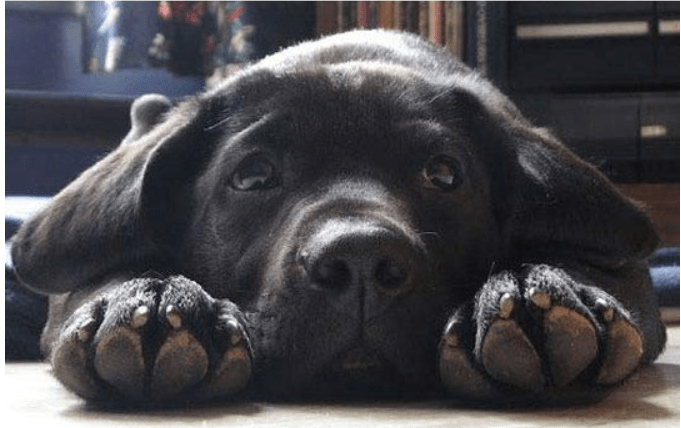
They told me the big black Lab’s name was Reggie as I looked at him lying in his pen. The shelter was clean, no-kill, and the people really friendly. I’d only been in the area for six months, but everywhere I went in the small college town, people were welcoming and open. Everyone waves when you pass them on the street.
But something was still missing as I attempted to settle into my new life here, and I thought a dog couldn’t hurt. Give me someone to talk to. And I had just seen Reggie’s advertisement on the local news. The shelter said they had received numerous calls right after, but they said the people who had come down to see him just didn’t look like “Lab people,” whatever that meant. They must’ve thought I did.
But at first, I thought the shelter had misjudged me in giving me Reggie and his things, which consisted of a dog pad, bag of toys almost all of which were brand new tennis balls, his dishes, and a sealed letter from his previous owner. See, Reggie and I didn’t really hit it off when we got home. We struggled for two weeks (which is how long the shelter told me to give him to adjust to his new home). Maybe it was the fact that I was trying to adjust, too. Maybe we were too much alike.
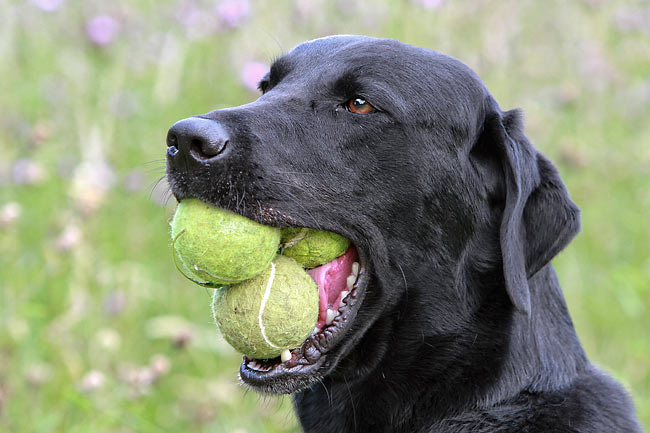
For some reason, his stuff (except for the tennis balls — he wouldn’t go anywhere without two stuffed in his mouth) got tossed in with all of my other unpacked boxes. I guess I didn’t really think he’d need all his old stuff, that I’d get him new things once he settled in. but it became pretty clear pretty soon that he wasn’t going to.
I tried the normal commands the shelter told me he knew, ones like “sit” and “stay” and “come” and “heel,” and he’d follow them — when he felt like it. He never really seemed to listen when I called his name — sure, he’d look in my direction after the fourth or fifth time I said it, but then he’d just go back to doing whatever. When I’d ask again, you could almost see him sigh and then grudgingly obey.
This just wasn’t going to work. He chewed a couple shoes and some unpacked boxes. I was a little too stern with him and he resented it, I could tell. The friction got so bad that I couldn’t wait for the two weeks to be up, and when it was, I was in full-on search mode for my cell phone amid all of my unpacked stuff. I remembered leaving it on the stack of boxes for the guest room, but I also mumbled, rather cynically, that the “darn dog probably hid it on me.”
Finally I found it, but before I could punch up the shelter’s number, I also found his pad and other toys from the shelter. I tossed the pad in Reggie’s direction and he snuffed it and wagged, some of the most enthusiasm I’d seen since bringing him home. But then I called, “Hey, Reggie, you like that? Come here and I’ll give you a treat.” Instead, he sort of glanced in my direction — maybe “glared” is more accurate — and then gave a discontented sigh and flopped down. With his back to me.
Well, that’s not going to do it either, I thought. And I punched the shelter phone number.
But I hung up when I saw the sealed envelope. I had completely forgotten about that, too. “Okay, Reggie,” I said out loud, “let’s see if your previous owner has any advice.”
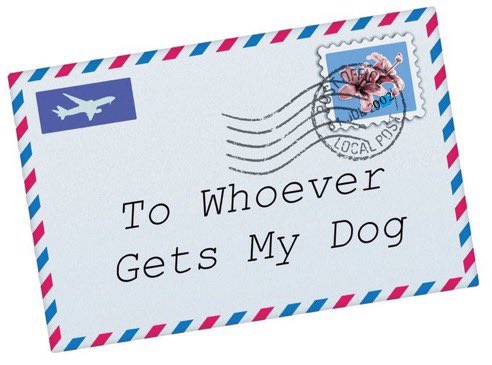
To Whoever Gets My Dog
Well, I can’t say that I’m happy you’re reading this, a letter I told the shelter could only be opened by Reggie’s new owner. I’m not even happy writing it. If you’re reading this, it means I just got back from my last car ride with my Lab after dropping him off at the shelter. He knew something was different. I have packed up his pad and toys before and set them by the back door before a trip, but this time … it’s like he knew something was wrong. And something is wrong … which is why I have to go to try to make it right.
So let me tell you about my Lab in the hopes that it will help you bond with him and he with you.
First, he loves tennis balls. the more the merrier. Sometimes I think he’s part squirrel, the way he hoards them. He usually always has two in his mouth, and he tries to get a third in there. Hasn’t done it yet. Doesn’t matter where you throw them, he’ll bound after it, so be careful — really don’t do it by any roads. I made that mistake once, and it almost cost him dearly.
Next, commands. Maybe the shelter staff already told you, but I’ll go over them again: Reggie knows the obvious ones — “sit,” “stay,” “come,” “heel.” He knows hand signals: “back” to turn around and go back when you put your hand straight up; and “over” if you put your hand out right or left. “Shake” for shaking water off, and “paw” for a high-five. He does “down” when he feels like lying down — I bet you could work on that with him some more. He knows “ball” and “food” and “bone” and “treat” like nobody’s business. I trained Reggie with small food treats. Nothing opens his ears like little pieces of hot dog.
Feeding schedule: twice a day, once about seven in the morning, and again at six in the evening. Regular store-bought stuff; the shelter has the brand.
He’s up on his shots. Call the clinic on 9th Street and update his info with yours; they’ll make sure to send you reminders for when he’s due. Be forewarned: Reggie hates the vet. Good luck getting him in the car — I don’t know how he knows when it’s time to go to the vet, but he knows.
Finally, give him some time. I’ve never been married, so it’s only been Reggie and me for his whole life. He’s gone everywhere with me, so please include him on your daily car rides if you can. He sits well in the backseat, and he doesn’t bark or complain. He just loves to be around people, and me most especially. Which means that this transition is going to be hard, with him going to live with someone new.
And that’s why I need to share one more bit of info with you …
His name’s not Reggie.
I don’t know what made me do it, but when I dropped him off at the shelter, I told them his name was Reggie. He’s a smart dog, he’ll get used to it and will respond to it, of that I have no doubt. but I just couldn’t bear to give them his real name. For me to do that, it seemed so final, that handing him over to the shelter was as good as me admitting that I’d never see him again. And if I end up coming back, getting him, and tearing up this letter, it means everything’s fine. But if someone else is reading it, well… well it means that his new owner should know his real name. It’ll help you bond with him. Who knows, maybe you’ll even notice a change in his demeanour if he’s been giving you problems.
His real name is Tank. Because that is what I drive.
Again, if you’re reading this and you’re from the area, maybe my name has been on the news. I told the shelter that they couldn’t make “Reggie” available for adoption until they received word from my company commander. See, my parents are gone, I have no siblings, no one I could’ve left Tank with … and it was my only real request of the Army upon my deployment to Iraq, that they make one phone call to the shelter … in the “event”… to tell them that Tank could be put up for adoption. Luckily, my colonel is a dog guy, too, and he knew where my platoon was headed. He said he’d do it personally. And if you’re reading this, then he made good on his word.
Well, this letter is getting to downright depressing, even though, frankly, I’m just writing it for my dog. I couldn’t imagine if I was writing it for a wife and kids and family. but still, Tank has been my family for the last six years, almost as long as the Army has been my family.
And now I hope and pray that you make him part of your family and that he will adjust and come to love you the same way he loved me.
That unconditional love from a dog is what I took with me to Iraq as an inspiration to do something selfless, to protect innocent people from those who would do terrible things … and to keep those terrible people from coming over here. If I had to give up Tank in order to do it, I am glad to have done so. He was my example of service and of love. I hope I honoured him by my service to my country and comrades.
All right, that’s enough. I deploy this evening and have to drop this letter off at the shelter. I don’t think I’ll say another good-bye to Tank, though. I cried too much the first time. Maybe I’ll peek in on him and see if he finally got that third tennis ball in his mouth.
Good luck with Tank. Give him a good home and give him an extra kiss goodnight — every night — from me.
Thank you, Paul Mallory.
I folded the letter and slipped it back in the envelope. Sure, I had heard of Paul Mallory, everyone in town knew him, even new people like me. Local kid, killed in Iraq a few months ago and posthumously earning the Silver Star when he gave his life to save three buddies. Flags had been at half-mast all summer.
I leaned forward in my chair and rested my elbows on my knees, staring at the dog.
“Hey, Tank,” I said quietly. The dog’s head whipped up, his ears cocked and his eyes bright.
C’mere boy.” He was instantly on his feet, his nails clicking on the hardwood floor. He sat in front of me, his head tilted, searching for the name he hadn’t heard in months.
“Tank,” I whispered. His tail swished.
I kept whispering his name, over and over, and each time, his ears lowered, his eyes softened, and his posture relaxed as a wave of contentment just seemed to flood him. I stroked his ears, rubbed his shoulders, buried my face into his scruff and hugged him.
“It’s me now, Tank, just you and me. Your old pal gave you to me.” Tank reached up and licked my cheek. “So whatdaya say we play some ball? His ears perked again. “Yeah? Ball? You like that? Ball?” Tank tore from my hands and disappeared in the next room.
And when he came back, he had three tennis balls in his mouth.
WHAT YOU CAN DO TO HELP ANIMALS IN NEED
You can support our work by donating as little as £5 – It only takes a minute but it can last a lifetime for an animal in need.
Everyone who donates will receive a Certificate of Appreciation as a thank you for helping animals in need.
The Mission of Protect All Wildlife is to prevent cruelty and promote the welfare of ALL animals.
We believe EVERY animal should be treated with respect, empathy, and understanding. We raise awareness to protect and conserve wild, captive, companion and farm animals.
It is vital that we protect animals against acts of cruelty, abuse, and neglect by enforcing established animal welfare laws and, when necessary, take action to ensure that those who abuse animals are brought to justice.
Protect All Wildlife are involved in many projects to protect animals’ rights, welfare, and habitats. Money contributed to Protect All Wildlife supports ALL of our worthy programmes and gives us the flexibility to respond to emerging needs. Your donations make our work possible.
Hachikō, The Japanese Dog Who Waited For His Owner At The Railway Station For Ten Years
Hachikō is a national hero to the Japanese! A dog so famous there have been several movies made about him.
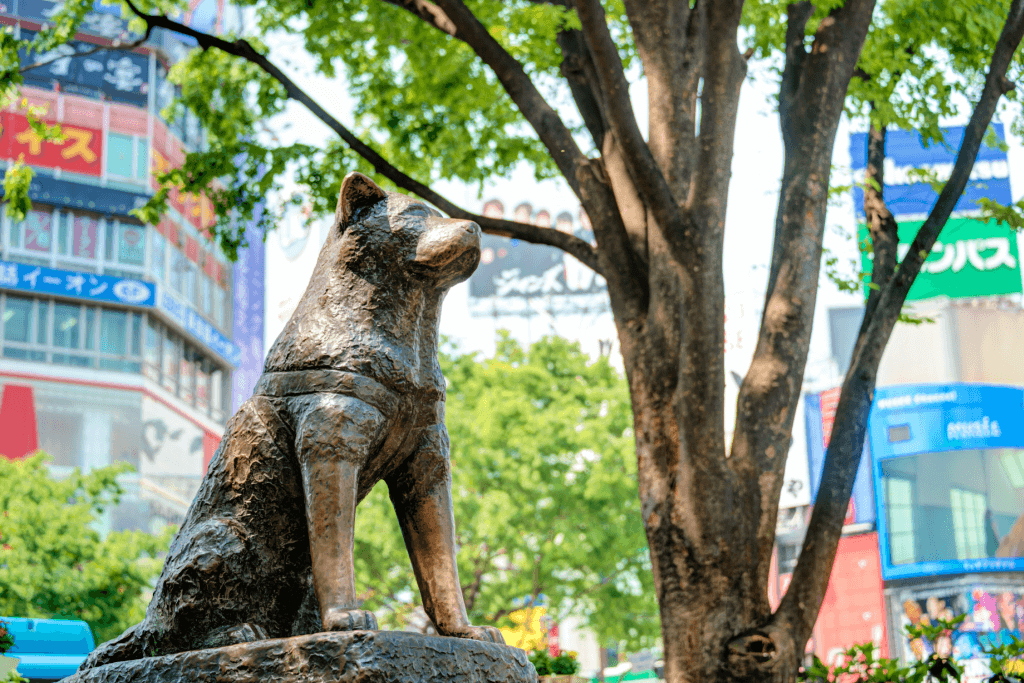
He has his own bronze statue next to Shibuya Train Station in Tokyo, where every day hundreds of people have their photograph taken with him.
The bronze statue of Hachikō next to Shibuya Train Station in Tokyo
Even Hollywood has made a movie about Hachiko! There is a statue of him at Rhode Island in the USA where the American version of the film was made.
The story of Hachikō made the news worldwide
So why is the Hachiko story so famous? Here is the amazing, real and very sad story about Hachiko the dog. ♥
Once Upon A Time, There Was A Dog Named Hachiko
Eizaburo Ueno, a professor in agriculture science at Tokyo University in Japan, had long wanted a purebred Japanese Akita dog. He had looked for the perfect Akita puppy for a long time, until one of his students encouraged him to adopt Hachiko, from the Odate city in the Akita prefecture of Japan.
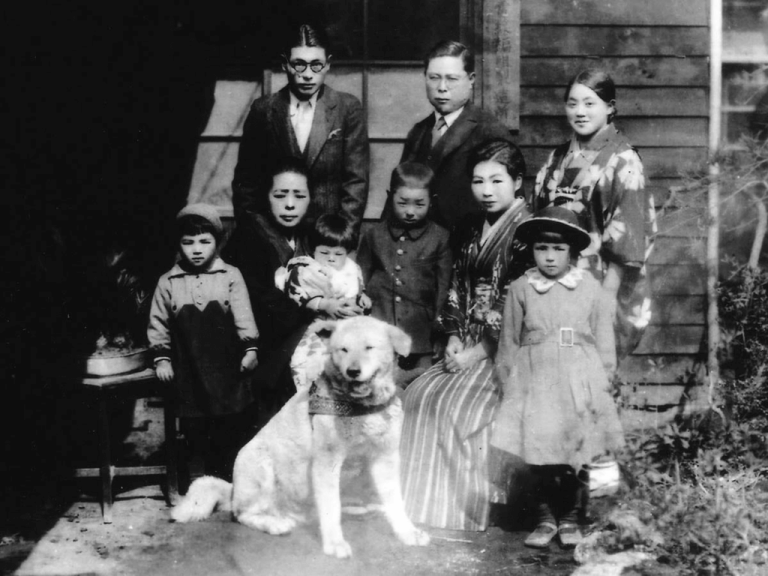
Hachiko, or Hachi which became his nickname, and his new owner soon became best friends. Eizaburo loved his dear dog above all and treated him as his son. The two of them were inseparable.
Hachikō with the Ueno family
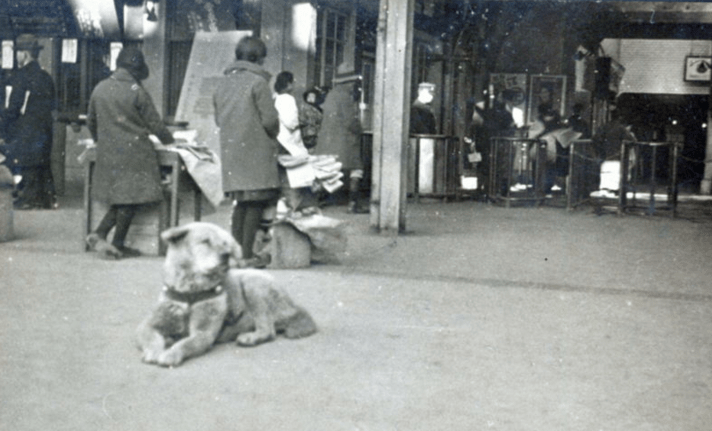
As Hachiko grew older, he started to see his owner off to work in the morning at the Shibuya Train Station, in central Tokyo and went to pick him up at the station in the afternoon when he returned from work.
On May 21, 1925, only two years after Hachiko was born, Hachiko was as usual sitting by the exit at Shibuya train station waiting for his dear Eizaburo. But his owner never showed up…..It turned out that Eizaburo had suffered from a cerebral haemorrhage and died suddenly and unexpectedly while at work.
Hachiko crawled under the coffin of his master and refused to move. The dog was handed over to another family outside Shibuya.
According to Hachiko’s biographer Prof Mayumi Itoh, in the summer of 1925, the loyal dog ended up at Ueno’s gardener Kikusaburo Kobayashi’s place. Hachiko then started going to the Shibuya station daily to wait for his master Ueno. He would look at each passenger to search for his master.He sat there for hours, patiently waiting in vain for the return of his beloved owner who sadly never came back.
Every day, Hachikō would sit at the entrance to Shibuya station to look at each passenger to search for his master.
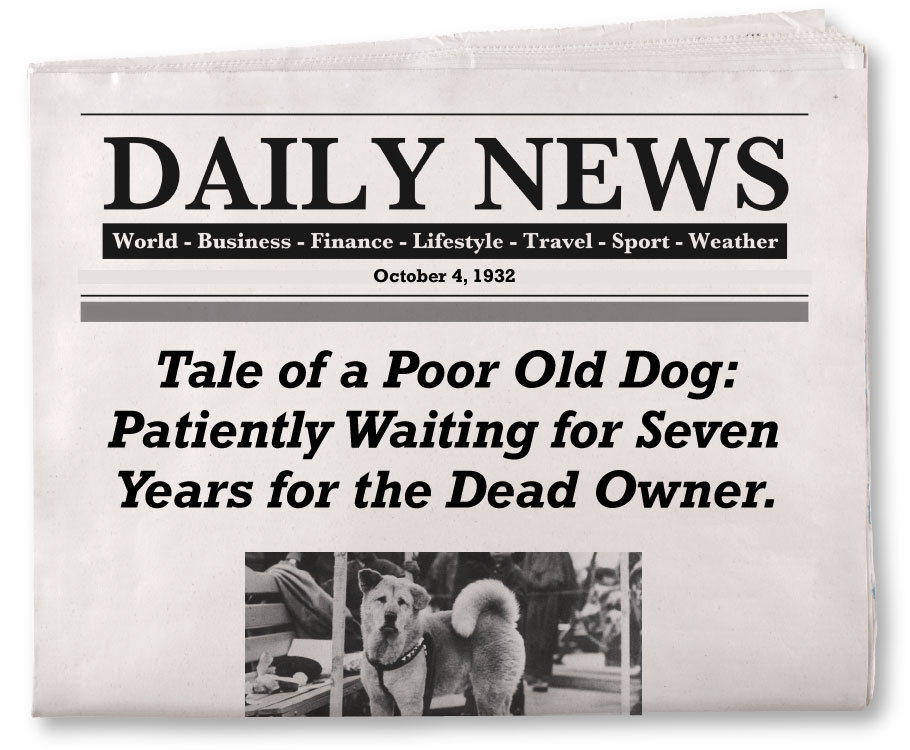
A major Japanese newspaper reporter picked up the story of Hachiko in 1932 and published it, which led to Hachiko becoming a celebrity all over Japan.
People started calling him “Chuken-Hachiko“, which means “Hachiko – the faithful dog“.
The story of the dog that never gave up gained a lot of attention also in national media, inspiring many people from all over the world to visit Hachiko at Shibuya Train Station to offer him treats. He touched the hearts of the Japanese people and soon became their hero.
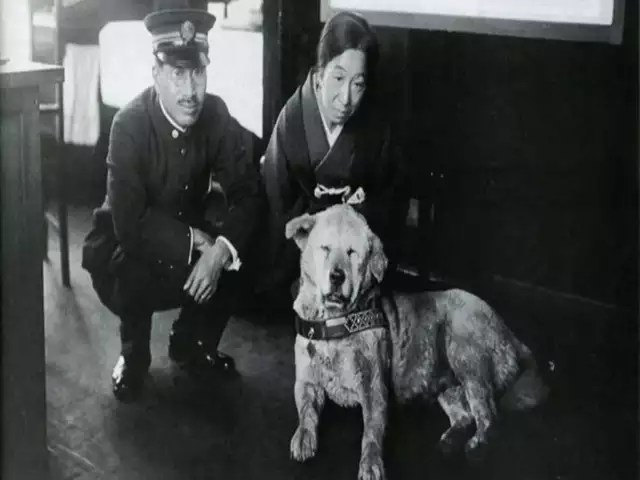
Hachikō with the station master and his wife
The station started receiving donations of food for Hachiko, and visitors came to have a glimpse of the cute canine. It led to poems, haikus, and fundraisers to make a statue of him.
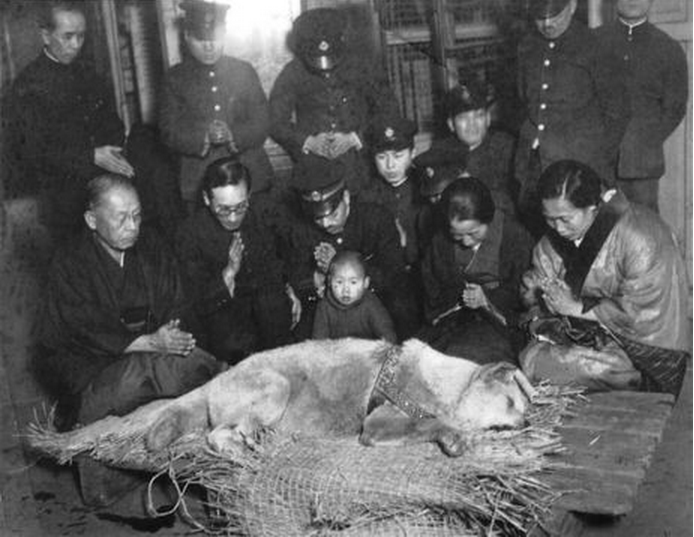
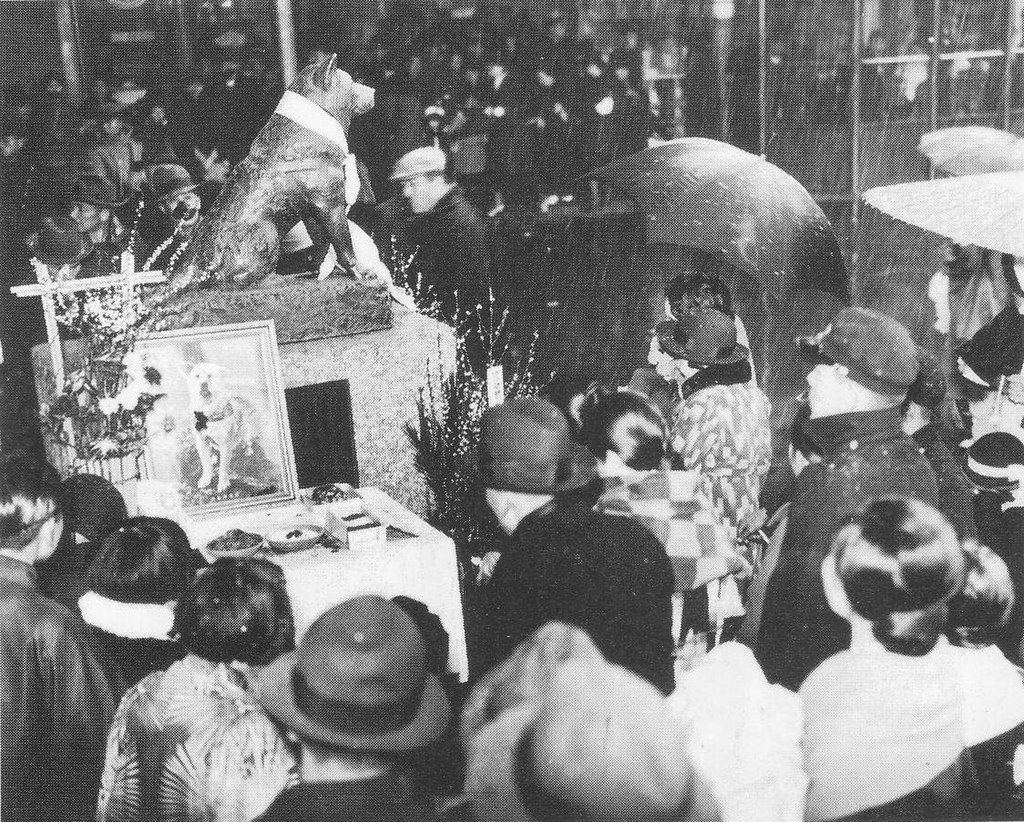
Hachiko died on March 8, 1935, making front page headlines of newspapers. Buddhist monks offered prayers for him and dignitaries read eulogies at his funeral.
Mourning the death of Hachikō
Hachiko Reunites With His Master
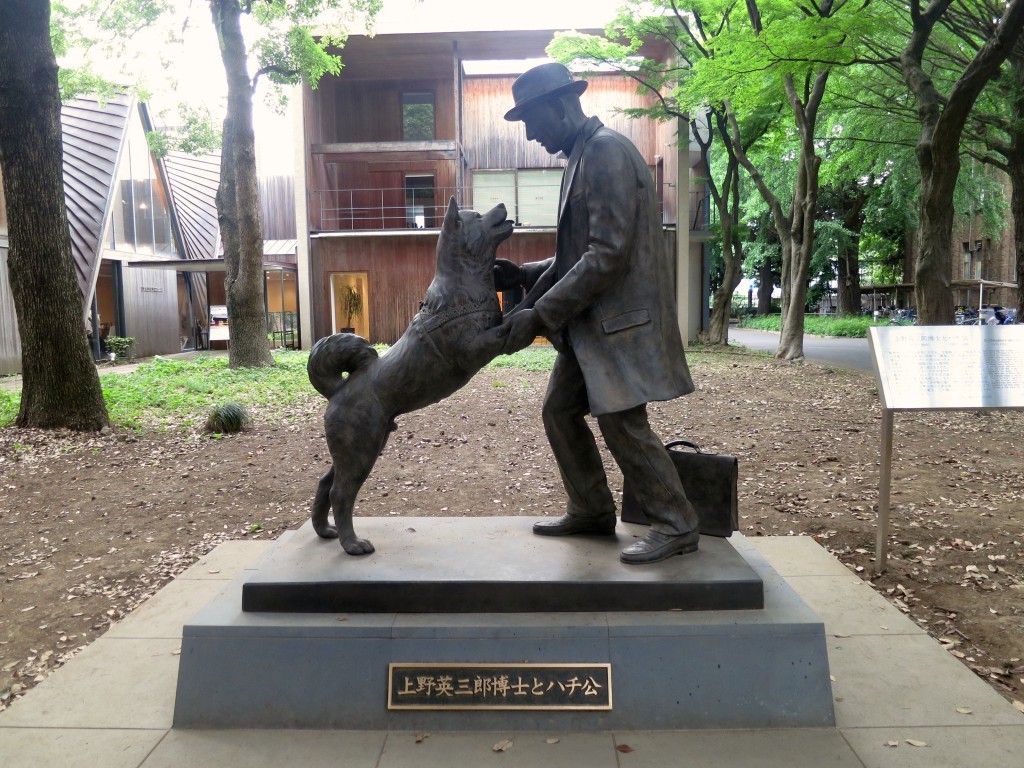
On March 8, 2015, Tokyo University’s Faculty of Agriculture unveiled a statue that portrays Professor Ueno reuniting with Hachiko to commemorate the 80th anniversary of Hachiko’s passing.
The statue’s creation was made possible by collaborating with the Faculty of Agriculture and an online charity. It was sculpted by Tsutomu Ueda, an artist from Nagoya.
The beautiful statue of Hachikō greeting Eizaburo as he arrives at the station
It portrays Hachiko enthusiastically greeting his master, Eizaburo, who is depicted wearing a long trench coat and hat with a briefcase placed on the ground. The sculpture beautifully captures the heart-warming moment of their reunion, with Ueno embracing his loyal dog with open arms.
Every year on April 8, a memorial service for Hachiko is held outside Shibuya station, where his statue still stands.
A memorial service for Hachikō is held outside Shibuya station every year.
WHAT YOU CAN DO TO HELP ANIMALS IN NEED
You can support our work by donating as little as £5 – It only takes a minute but it can last a lifetime for an animal in need.
Everyone who donates will receive a Certificate of Appreciation as a thank you for helping animals in need.
The Mission of Protect All Wildlife is to prevent cruelty and promote the welfare of ALL animals.
We believe EVERY animal should be treated with respect, empathy, and understanding. We raise awareness to protect and conserve wild, captive, companion and farm animals.
It is vital that we protect animals against acts of cruelty, abuse, and neglect by enforcing established animal welfare laws and, when necessary, take action to ensure that those who abuse animals are brought to justice.
Protect All Wildlife are involved in many projects to protect animals’ rights, welfare, and habitats. Money contributed to Protect All Wildlife supports ALL of our worthy programmes and gives us the flexibility to respond to emerging needs. Your donations make our work possible.
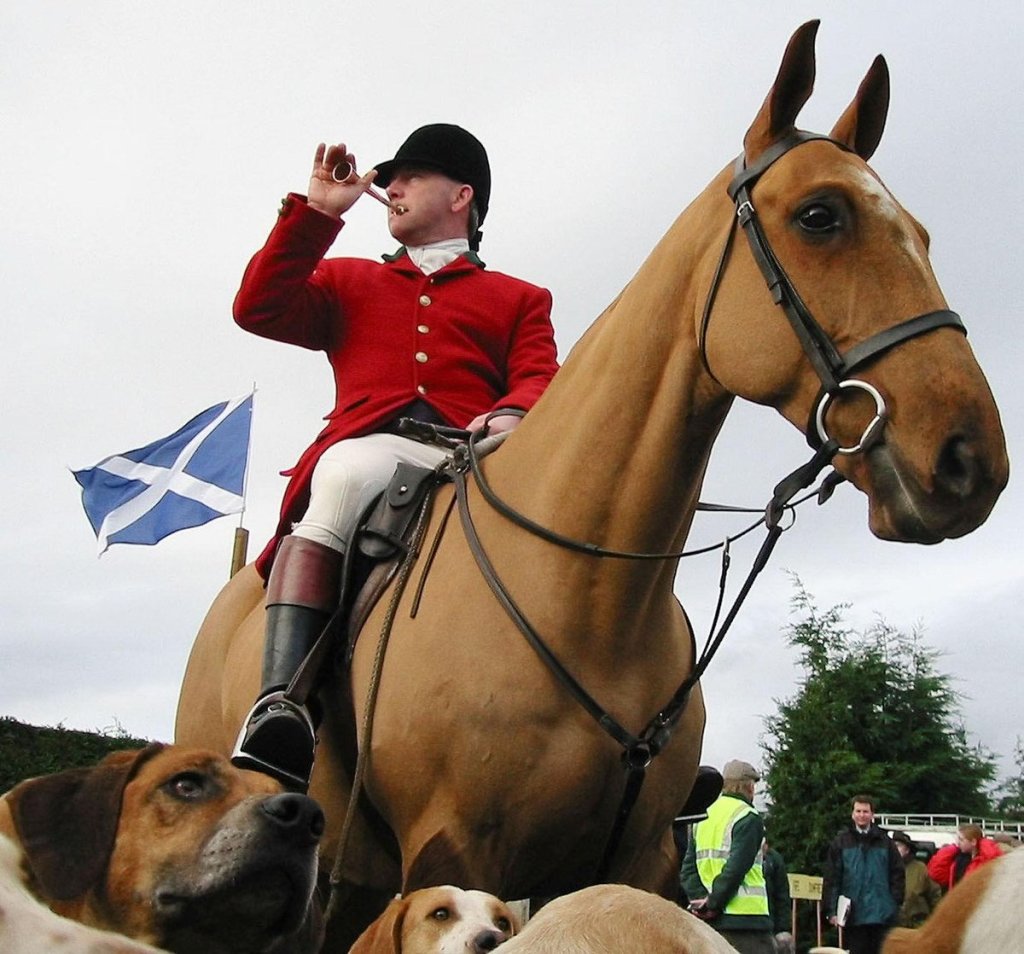
A new law banning the hunting with packs of dogs and “flushing out” wild mammals came into force across Scotland on Tuesday after MSPs passed a Bill back in January.
This will replace the Protection of Wild Mammals Act, which was passed in 2002. The Scottish Government says that legislation had a loophole that allowed illegal hunts to continue.
The original Act allowed hunters to use dogs to flush out foxes from under cover as long as the foxes were then shot, and providing the hunt was to protect livestock or ground-nesting birds, or to prevent the spread of disease.
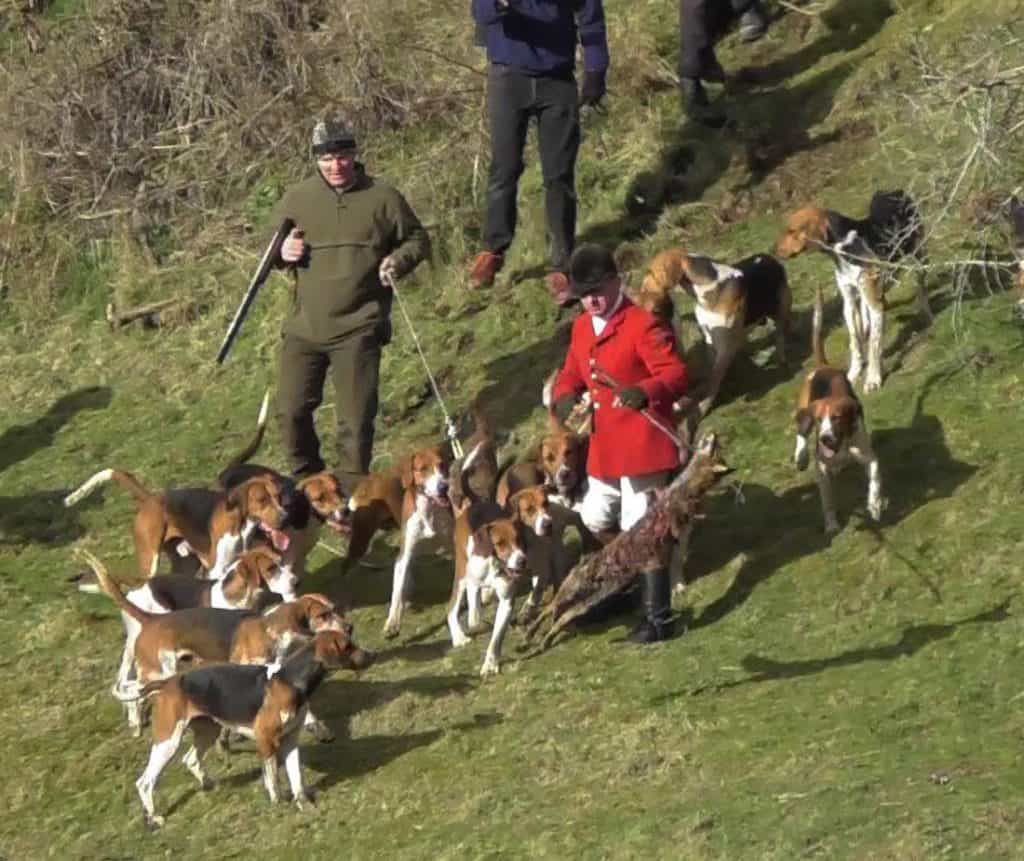
A fox being fed to the hounds at the Fife Hunt, Lindores
The Scottish Greens say this is a historic moment in Scotland’s progress as a nation that respects and values wildlife.
Ariane Burgess MSP, the party’s rural affairs spokeswoman, said: “This is a historic day. We finally have a real hunting ban after decades of campaigning.
“Hunting with dogs is brutal, cruel and outdated. It has no place in a modern or progressive Scotland, and we should all take pride in this new law.
Barbaric: Hounds Ripping A Live Fox Apart
“Loopholes in the original hunting ban were ruthlessly exploited by those who were determined to continue hunting. This law is much more robust, but we will be watching carefully to ensure it is effective and abided by.”
Environment minister Gillian Martin agreed it was a “truly historic milestone” in Scotland.
She said: “This law finally closes the loophole that has allowed the archaic practice of hunting wild animals with packs of dogs to persist in our country for over 20 years. It has taken us almost a decade to get to this point.
“In that time the sheer volume of responses to our consultations have shown us just how concerned people still are about fox hunting in Scotland.
“We have listened and we have delivered. We have succeeded in crafting a law that strikes a balance – one which rightly bans barbaric hunting methods, but which still allows farmers and land managers to undertake legitimate wildlife management.”
WHAT YOU CAN DO TO HELP ANIMALS IN NEED
You can support our work by donating as little as £5 – It only takes a minute but it can last a lifetime for an animal in need.
Everyone who donates will receive a Certificate of Appreciation as a thank you for helping animals in need.
The Mission of Protect All Wildlife is to prevent cruelty and promote the welfare of ALL animals.
We believe EVERY animal should be treated with respect, empathy, and understanding. We raise awareness to protect and conserve wild, captive, companion and farm animals.
It is vital that we protect animals against acts of cruelty, abuse, and neglect by enforcing established animal welfare laws and, when necessary, take action to ensure that those who abuse animals are brought to justice.
Protect All Wildlife are involved in many projects to protect animals’ rights, welfare, and habitats. Money contributed to Protect All Wildlife supports ALL of our worthy programmes and gives us the flexibility to respond to emerging needs. Your donations make our work possible.
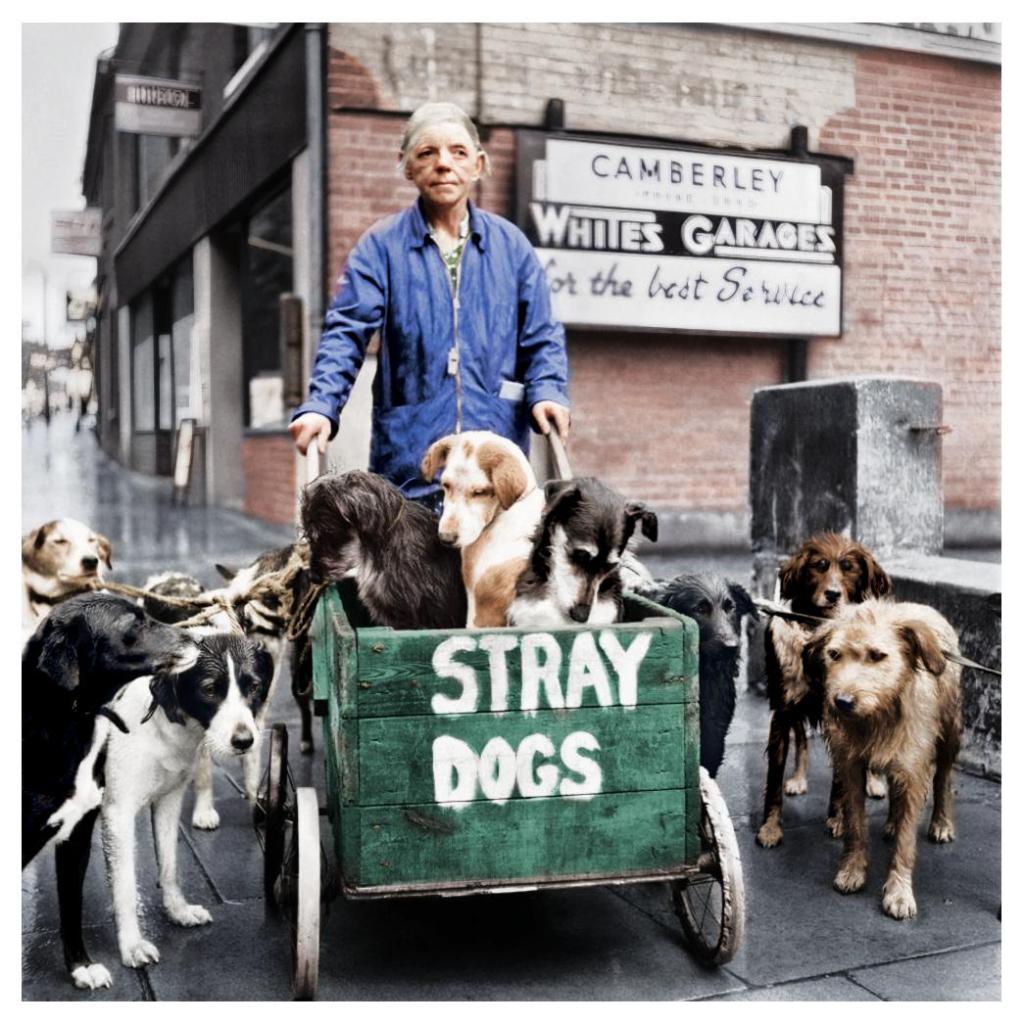
Kate Ward’s nickname “Camberley Kate” is said to have been given to her by historian Sir Arthur Bryant in his book “The Lion and the Unicorn”. It became the title by which she became known to everyone.
Kate’s early history is somewhat hazy – When interviewed she stated that she was born in Middlesbrough on June 13th 1895, and remained proud of her Yorkshire roots. Orphaned before she was ten, she was brought up by an aunt in a strict religious atmosphere. As a young girl she went into service, in Yorkshire and eventually found her way to Camberley. In 1943 Kate bought a cottage in Yorktown, and soon afterwards took in her first stray, a dog which had been about to be put down due to lameness.
As word grew, the number of dogs in her cottage increased – some being tied to her door, some left in carrier bags, others brought in by the police or other agencies. At the end of her life she estimated that she had looked after more than 600 dogs and local vet Geoffrey Craddock, a great admirer of Kate work testified that they were well looked after. An entry in the 1957 directory FOR Camberley reads “Ward K 218 London Road., Cam., Dogs Home”. In 1976 she stated that she had 34 dogs, although by 1977 she had cut this down to 19, as she had been told to go easier at the age of 82! The growth of other dog rescue centres helped in this regard. She also had at least one cat.
CAMBERLEY KATE
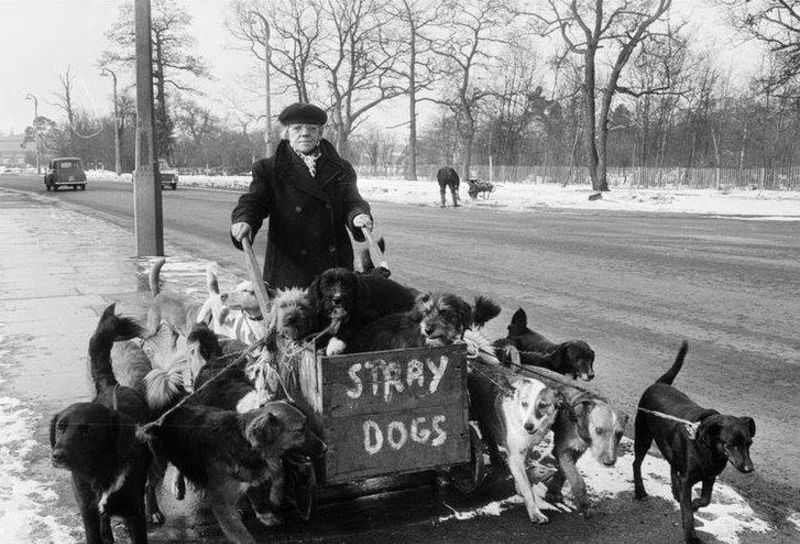
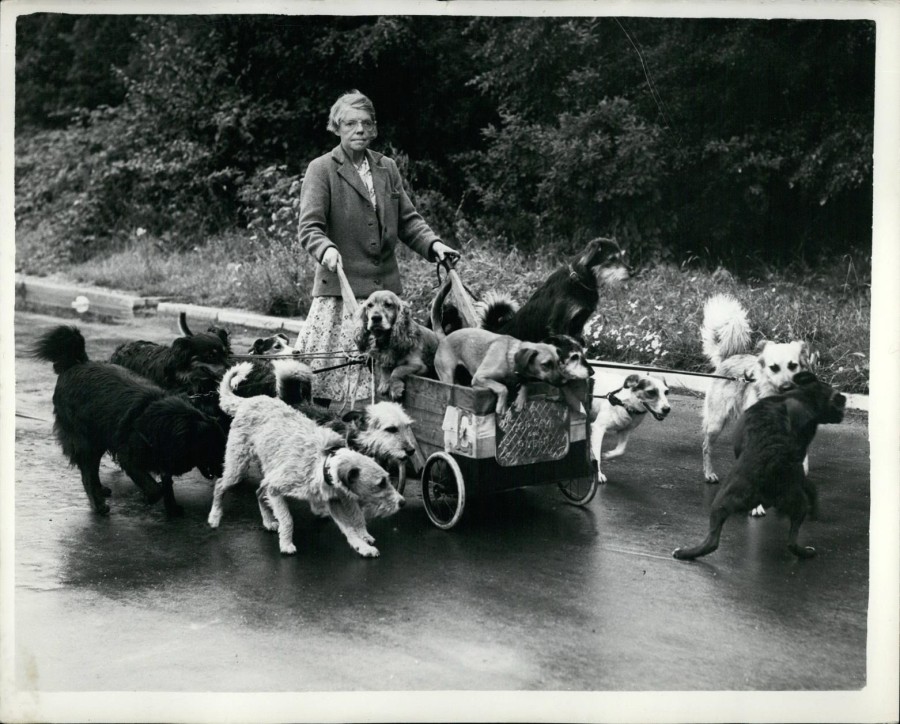
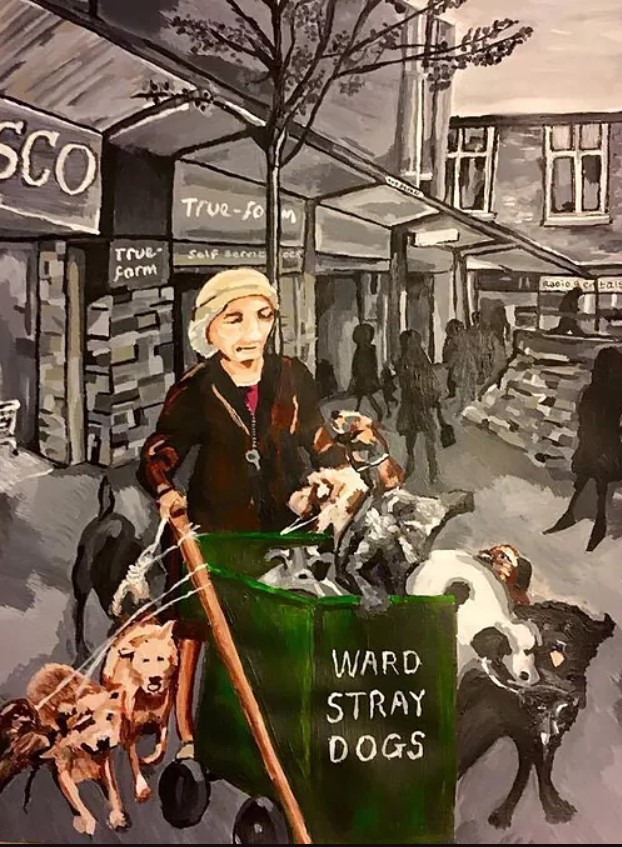
Kate and her olive-green painted hand cart, labelled STRAY DOGS, was a familiar sight locally as she pushed it from Yorktown to Camberley each day, through the town centre and up to Barossa Common, on a route suggested by the police. Some of the dogs were allowed to ride in the cart, others were attached to it with lengths of string, and occasionally a favoured few ran loose alongside. Inside the cart, there was usually some meat for the dogs and a shovel to clean any mess away. The dogs were controlled with the help of a whistle. Locals became used to the sight of Kate pushing her cart along the busy London Road although it never ceased to amaze outsiders.
As a local celebrity Kate and her dogs were much photographed, a situation she tolerated as long as the photographer gave a donation for the upkeep of the animals. She also sold her own photographic postcards, and gave short shrift to those who tried to take their own pictures. Generous supporters gave money to assist her work and some even left bequests. She was scrupulous that this money should be used only for its intended purpose: the dogs had their own bank account, administered by 2 trustees. She left money in trust for the few dogs left at her death.
If you gave her some money, she would INSIST you take a photo. That way she could not be accused of begging.
KATE AND HER CART AND DOGS WERE A WELL-KNOWN SIGHT IN THE TOWN UNTIL HER DEATH IN 1979
A diminutive figure with her shock of white hair and her beret, Kate defended herself and her work passionately against her critics, such as those who wanted her out of the town centre or who regarded the dogs as dangerous or a health or traffic hazard. On one occasion she rammed a new car which was blocking her way. She also had a number of disputes with the authorities. These clashes were often recorded in the columns of the press. However she won the backing of the local police for her work in taking abandoned dogs in off the streets.
In 21 August 1969 Kate was in the Camberley News fighting plans to introduce a bye law making it illegal for dogs to be out without a lead. This followed complains from residents of new housing estates, and concerns about road accidents caused by stray dogs. In her customary forthright fashion she condemned “The Council is nothing more than a collection of dog-haters. I think this will be rotten. It means that dogs will be chained up all day”. A proposal to ban dogs from the new precinct in Camberley also met with a terse response, particularly since she was in the habit of shopping at Sainsbury’s and leaving some of the dogs tied up outside. When protests about the local drag-hounds running out of control when being exercised attracted her support Kate, in typical fashion, addressed her complaint directly to the King. The Royal family continued to be a favourite route for correspondence. When a local schoolteacher complained that she had seen her beat her dogs with a stick, Kate immediately wrote in protest to the Queen. This was not their first encounter – when Princess Elizabeth got married one of the dogs sent a present of a dog lead.
KATE WITH CAT AND SOME OF HER DOGS AT HOME
As these anecdotes show, Kate was an excellent publicist. A local policemen recalled that occasionally a dog would get loose and be brought to the dog pound. If the Police Station was empty she would pay the fine quietly and readily, but if there was an audience she would protest vocally!
Following a series of strokes old age and ill-health forced her to leave her cottage and her remaining seven dogs were put into kennels. Her last weeks were spent at Kingsclear residential home and she died on 4th August 1979. Her funeral was at St Michael’s, Yorktown.
Despite her avowed dislike of people, Baptist Minister the Rev Chris Russell who officiated at her funeral, remembers her private generosity to those in need. This aspect of her life she kept anonymous, passing on her donations through third parties.
After her death, Camberley vet Geoffrey Craddock was quoted in the Camberley News as saying “Camberley has lost its most celebrated and best known character. She will be greatly missed by those of us who had the rare privilege of knowing her”.
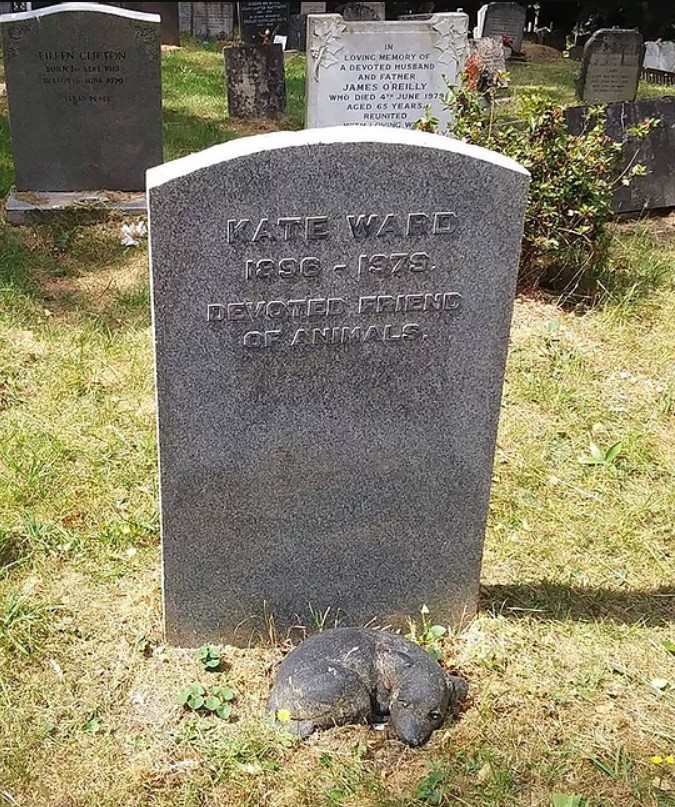
Kate Ward (Camberley Kate) is buried at St Michael’s Church in Camberley and protected by a dog.
During her lifetime, Kate’s fame spread far and wide. She featured In the national press and on television programmes such as “Nationwide” and “Tonight”. was featured on NBC in the United States and her story appeared in publications across Europe from France to Rumania. She also received the ultimate accolade of a feature in “Time” Magazine, and was photographed by Lord Snowdon. To her surprise, in 1967 she received an award from the magazine “Dog’s Life” for her work. In answer to the inevitable question, why she did it? her invariable reply was that she preferred dogs to humans.
KATE PUTS UP WITH A FILM CREW FOR THE BENEFIT OF HER DOGS
Her home at 218 London Road was just a few doors along from the former Lamb pub, near the present Meadows roundabout, but Is no longer standing. The Katherine Court retirement flats were named after her at the suggestion of a local resident in 2000.
A BEAUTIFUL PAINTING OF KATE AND HER BELOVED DOGS
There are so many great lessons we can learn from the life of Kate Ward, both as responsible dog owners, human beings, and as pet rescue charities. Most of all Kate recognized the value of a photograph and how it could be used for the positive influence of others, to bring light to a cause, and to help raise money.
Please share for others to enjoy.
WHAT YOU CAN DO TO HELP ANIMALS IN NEED
You can support our work by donating as little as £5 – It only takes a minute but it can last a lifetime for an animal in need.
Everyone who donates will receive a Certificate of Appreciation as a thank you for helping animals in need.
The Mission of Protect All Wildlife is to prevent cruelty and promote the welfare of ALL animals.
We believe EVERY animal should be treated with respect, empathy, and understanding. We raise awareness to protect and conserve wild, captive, companion and farm animals.
It is vital that we protect animals against acts of cruelty, abuse, and neglect by enforcing established animal welfare laws and, when necessary, take action to ensure that those who abuse animals are brought to justice.
Protect All Wildlife are involved in many projects to protect animals’ rights, welfare, and habitats. Money contributed to Protect All Wildlife supports ALL of our worthy programmes and gives us the flexibility to respond to emerging needs. Your donations make our work possible.
We are holding a virtual sponsored walk for Batel throughout October 2023 to help raise some much-needed funds for his massive vet bills.
We hope you will all take part!
**************
❤ The rules ❤
Simply walk a mile a day (or whatever is manageable for you and your dog) every day in October.
You can collect sponsorship from your friends, family, and Facebook groups or simply make an affordable donation yourself.
We want to flood the feeds with videos and pictures of you all taking part so PLEASE send us videos of your dogs out having fun in honour of our best boy Batel.
This is open to all pet parents and all species of animals. If they enjoy going for a walk of any kind, then they can get involved.
Please share this event for Batel with the hashtag #WalkForBatel. He really needs our help.
Batel’s Story …….
Batel’s battle started around 2 years ago in Egypt.
He had been horrifically abused having had his paws cut off.
He was rescued and brought to the UK as a Miracle’s Mission dog.
He has been a really medically complex dog both orthopaedically and due to his ongoing chronic renal issues.
Batel has been on the brink of death many times. Not once has he lost the will or the love of life.
He is such a happy boy who exudes joy and fun.
His quality of life has and does remain really high.
He recently underwent a lifesaving amputation to his previously mutilated stump. He is recovering really well from this and has already developed a new way of walking, sitting, and resting in light of his current level of disability.
Batel never gives up. He just adapts, he does it all with a smile on his face.
You can email info@miraclesmission.org or message us with any questions/ queries and to submit videos of your walks.
To make a general donation for Batel please use PayPal info@miraclesmission.org and reference Batel.
To find out more about the amazing work that we do please visit Miracle’s Mission
Join Danny and all of Batel’s friends and family for Batel’s Walk
Animal rescue charities need our help more than ever now. Rising costs coupled with low donations and no government funding etc. coming in are hitting us really hard.
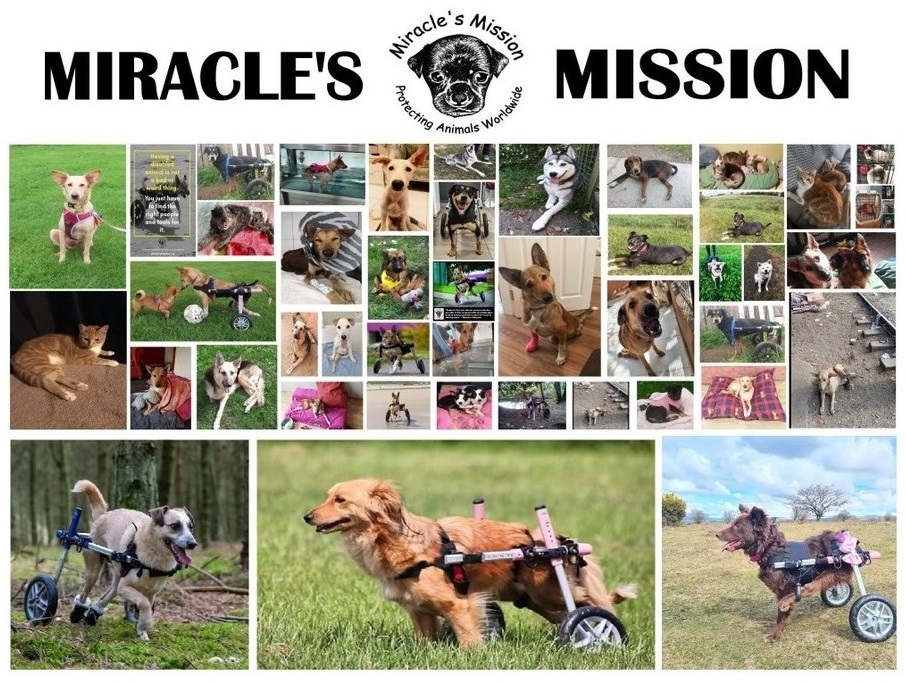
Some of the amazingly brave animals that Miracle’s Mission have helped over the years
Since starting Protect All Wildlife over 10 years ago I have managed to raise over £100,000 for various animal charities including Lions, Elephants, Gorillas, Animal Rescues and victims/survivors of the Australian wildfires etc. With the support of my wonderful followers, friends and family I have been able to do this by doing various charity fundraising events including a 15,000 foot skydive, doing a 10km run dressed as an Elephant, a Tough Mudder assault course and several auctions of items very kindly donated by fellow animal lovers.
Being able to help animal charities in this way has at times given me the motivation to carry on. I have suffered on and off with depression for 30 years or so and at times have had to force myself to get out of bed in the morning. Apart from my mental nursing, animal activism has given me a mission in life – to help those less fortunate in whatever way. As you are probably aware, I became the (very proud) Patron of Miracle’s Mission four years ago. Miracle’s Mission are dedicated to the rescue, rehabilitation and rehoming of sick injured and disabled animals. They also operate a Trap, Neuter and Release (TNR) centres in Borneo and Egypt. They receive no government funding whatsoever and rely totally on donations and volunteers to keep going. The cost of running an animal rescue is high, however the running costs of a specialist rescue service like Miracle’s Mission is even costlier.
When rescues come to Miracle’s Mission they often can’t walk & need surgery. With your help we are able to treat & rehabilitate them. But with vet fees, physio costs, specialist mobility equipment and food/heating etc it is VERY costly to keep going. PLEASE help us treat MANY more animals by donating ANY amount, large or small. EVERY penny counts.
Unfortunately I haven’t been able to do a ‘proper’ fundraising event because in the last year I have not been very well, lacking energy and losing about a stone in weight. I put it down to having long covid after catching covid in October last year. However, it transpired that I actually have cancer of the stomach. My treatment has just started and consists of 4 chemotherapy cycles over 8 weeks then if the tumour has shrunk enough I will have an operation to remove all of my stomach. My oesophagus will then be connected to my small intestine. The recovery period from my stomach operation will be in the region of 4 to 5 months.
So I have come up with a very bizarre charity fundraiser to help the rescues at Miracle’s Mission. I am not sure how ethical it is but here I go – a sponsored CHARITY CANCER TREATMENT FUNDRAISER FOR RESCUE ANIMALS. Knowing that the rescue is still receiving much-needed funds will let me concentrate 100% on MY recovery, something that I have neglected over the years. It would be amazing if you sponsor (donate) ANY amount large or small.
Thank you in advance for your support, it is really appreciated. Please share with friends and family. Thank you for your incredible support, it is REALLY appreciated. Best wishes, Paul. 🐾
My Chemotherapy journey has started at York District Hospital
WHAT YOU CAN DO TO HELP RESCUE ANIMALS
You can support our work by donating as little as £1 – It only takes a minute but it can last a lifetime for an animal in need.
Everyone who donates will receive a Certificate of Appreciation as a thank you for helping rescue animals in need.
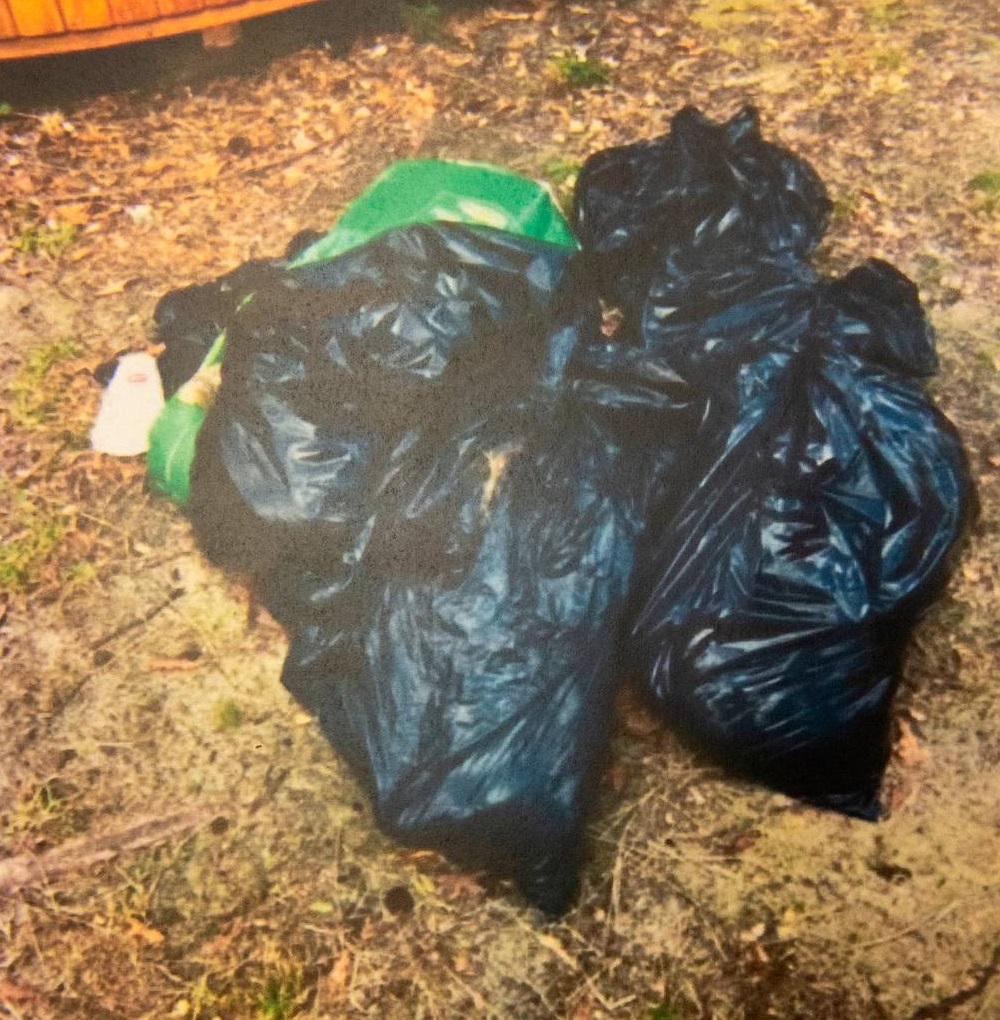
Jessica Collins, of Saucier, ran what she called Deep South Rescue when Harrison County sheriff’s deputies went to the property in March 2022 and found 30 dead dogs, most of them in black trash bags. A cage at her home contained a dead vulture as well as eight dead puppies inside a trash bag.
Dead and neglected dogs found at Deep South Animal Rescue
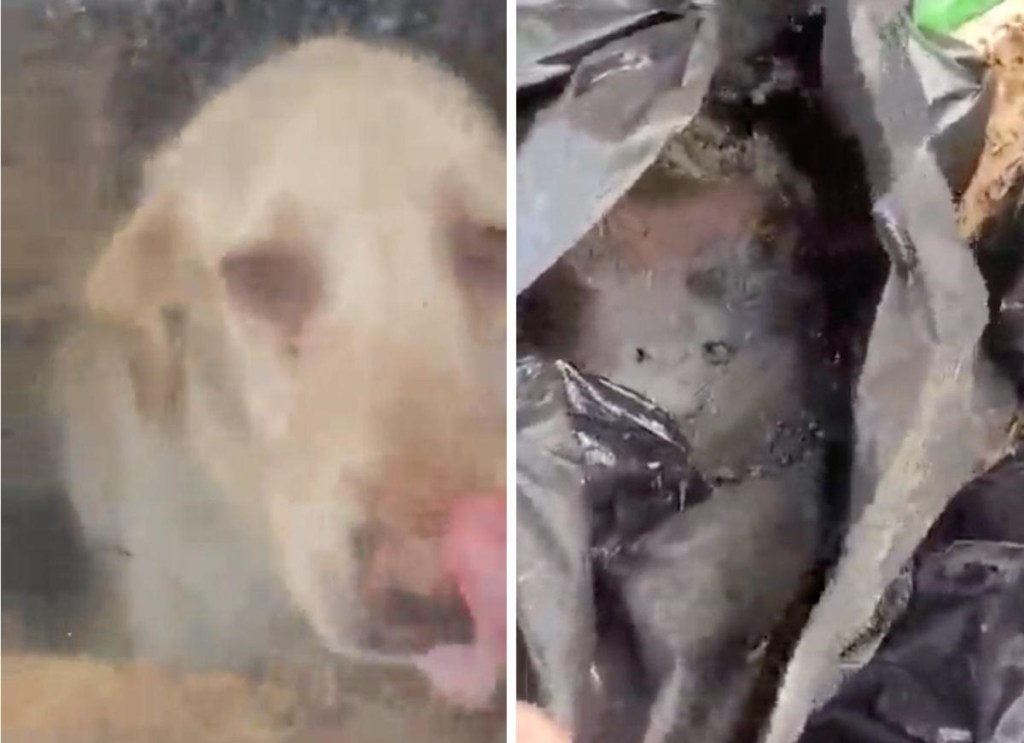
Video shows bodies of dogs all over, with many in trash bags or burned, and in varying states of decomposition. Just one dog was alive, an emaciated Labrador who had been locked in a shed without ventilation, food, or water, along with a dead federally protected Buzzard.
A warrant was issued to rescue the dog and begin disposal of 30 deceased canine remains.
An additional 14 dogs on a property in Pass Christian were also surrendered by Collins.
Collins was arrested in March 2022, and charged with only one felony count of animal cruelty for the federally protected buzzard and 30 misdemeanor counts of simple animal cruelty for the deceased dogs.
A photo taken by a Harrison County Sheriff’s Department Animal Control officer shows dead dogs wrapped in trash bags found on a property where Jessica Collins kept several dead dogs in Saucier.
Collins operated Deep South Animal Rescue under the name Jessica Ann Gallaspy. She was charged with 30 misdemeanor counts for cruelty to a dog under MS § 97-41-16 (2) a. and bonded out of the Harrison County Adult Detention Center. Maliciously injuring dogs or cats is now chargeable as a first-offense felony for each dog or cat killed with malice, MS § 97-41-16 (2) b.
Linda Perry went to the property in Saucier when she saw a plea from Collins on Facebook for help. Collins, she said, lied about being a 501c nonprofit and claimed she needed help because bobcats had been killing the animals.
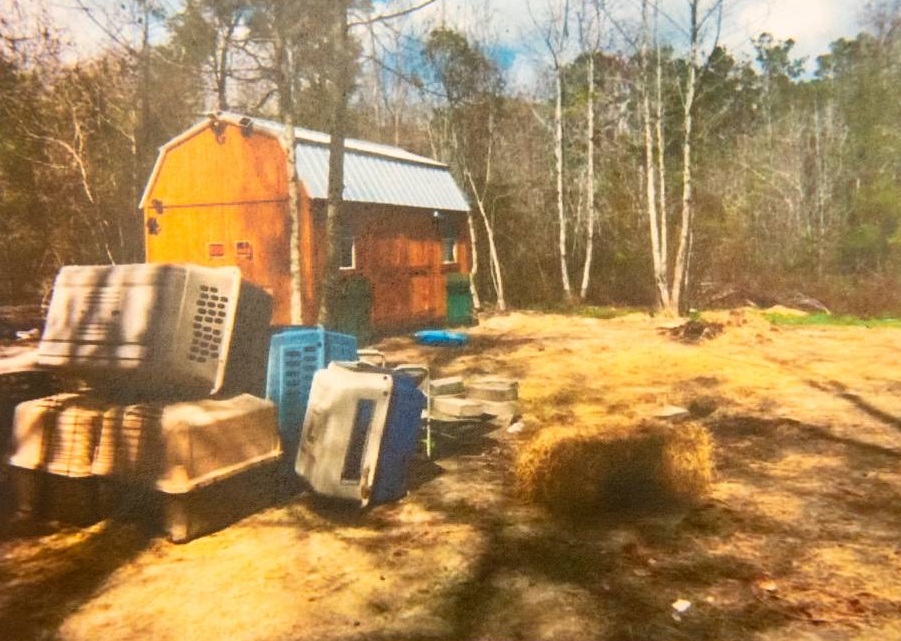
“From the moment I arrived, I started finding dead dogs all across the property,” she said “She said the bobcats were killing them. It was all a lie. Once you see that, you can’t forget it. She fooled everyone in the animal community.” Collins did not live on the property where sheriff’s deputies found the animals. A shed sat on the half-acre lot, and the animals had no electricity or running water.
A photo taken by a Harrison County Sheriff’s Department Animal Control officer shows the shed where Jessica Collins kept several dead dogs in Saucier.
Collins was sentenced to 60 months incarceration, with six months to beserved beginning on August 25. She will serve the remaining 54 months if she violates any term of her sentencing.
Jessica Collins – Harrison County Adult Detention Center
“It was hard to believe that a person like this defendant, who is supposed to be taking care of animals, had done what she did in that case,” Harrison County prosecuting attorney Herman Cox said. “It was atrocious. There is no excuse for it.”
Collins cannot own a domesticated cat, dog or other animal for 15 years. Once she completes her jail sentence, she will undergo a psychiatric evaluation and return to court every seven months for a review of her case.





















 PROTECT ALL WILDLIFE