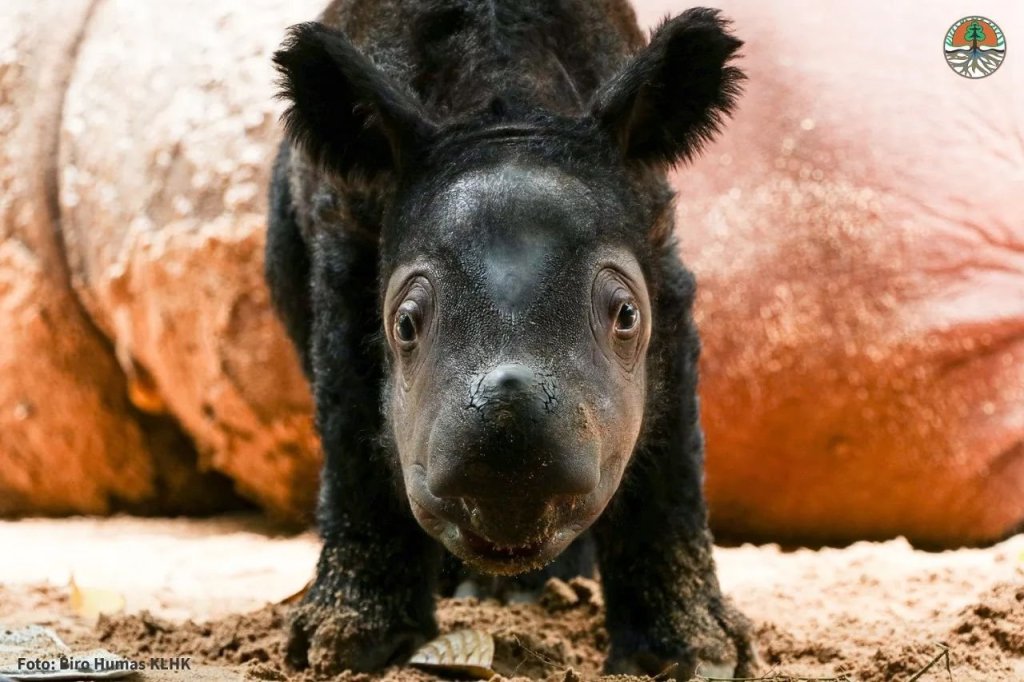
A Sumatran Rhino has successfully given birth in an Lampung sanctuary, environment officials said, in a boost for conservation efforts targeting the critically endangered animal.
THE CLAF BORN IN WAY KAMBAS NATIONAL PARK
The World Wide Fund for Nature estimates fewer than 80 Sumatran Rhinos remain in the world, mainly in Sumatra and Kalimantan.
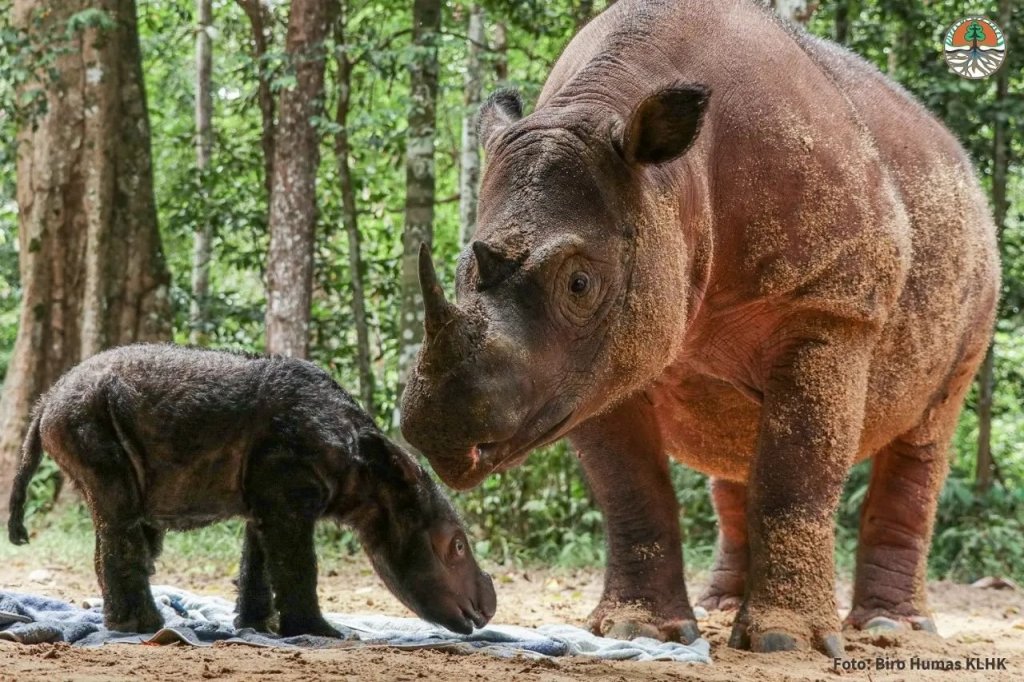
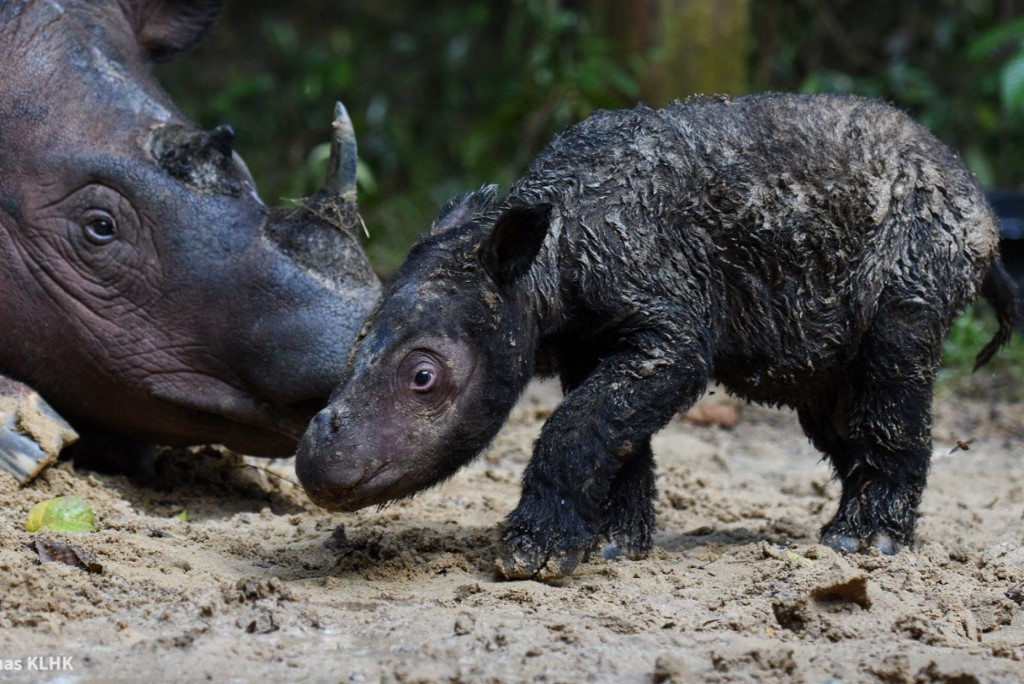
A Rhino named Rosa gave birth to a female calf on Thursday in Way Kambas National Park in Lampung, after suffering eight miscarriages since 2005, when she was brought in from the wild for a breeding program.
“The birth of this Sumatran Rhino is such happy news amid the government’s and partners’ efforts to increase the population,” Wiratno, a senior official at Indonesia’s environment ministry, said in a statement Monday.
The calf, who has yet to be named, brings the number of Sumatran Rhinos in the Way Kambas sanctuary to eight.
Successful births are rare. The calf’s father, named Andatu, was the first Sumatran Rhino born in a sanctuary in more than 120 years.
Standing between 3.3 – 5 feet, Sumatran Rhinos are the smallest of all Rhinoceroses and they have a lifespan of around 35 – 40 years. They were once found across South and Southeast east, from the foothills of the Eastern Himalayas in Bhutan to eastern India, through Myanmar, Thailand, and possibly to Vietnam and China. Now, the species is critically endangered, with less than 80 individuals remaining in the wild in small fragmented habitats on the island of Sumatra and nearby Borneo.
MOTHER ROSA WITH HER CALF
In 2017, Rhino conservation experts and the Indonesian government concluded that the only way to save the species was through a captive breeding program. The move was similar to an initiative launched in the 1980s that saw 40 Sumatran rhinos captured for breeding. But in this case, nearly half of the captive animals had died by 1995 and not a single calf had been born.
The International Union for Conservation of Nature classifies the Sumatran rhino, the smallest of all Rhino species, as critically endangered.
Multiple threats have brought them to the brink of extinction, including poaching and climate change.
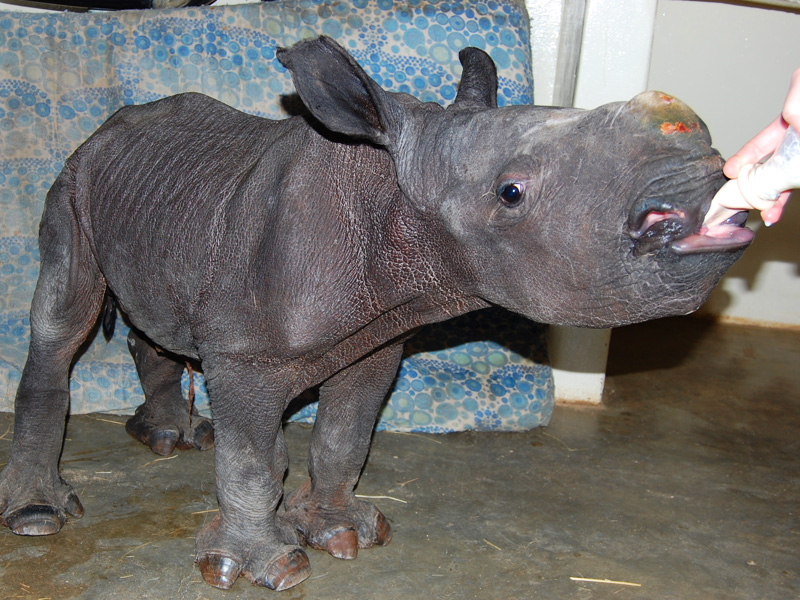
This handout photo released on March 28 and made available on March 29, 2022 shows female rhino named Rosa (l) with her new baby born at the Way Kambas National Park, in Way Kambas, in Lampung province. Rosa delivered a baby rhino on March 24, for the first time after translocating from roaming in villages. A critically endangered Sumatran rhino was born in an Indonesian sanctuary bringing hope to the conservation of the rapidly declining species, an official said. (AFP/Handout)
Rhino horn is often illegally traded for traditional Chinese medicine.
Indonesia is also racing to save another critically endangered species – the Javan Rhino.
Once numbering in the thousands across Southeast Asia, fewer than 80 are alive today, mainly in a national park on Indonesia’s main island of Java.
Efforts to conserve the species have shown promising results with the birth of five calves in Ujung Kulon National Park last year.
Please SHARE for others to enjoy. You can also REGISTER for NEWS & UPDATES straight to your inbox by signing up in the top right of this page. Thank you.
Save The Asian Elephants (STAE) and all the animal welfare sector are aghast at the weekend’s media reports that the Government has abandoned the Animals Abroad Bill despite all its commitments otherwise, received regularly by STAE’s team as pledges, promises, “it’s been cleared in Cabinet” and “you’re pushing at an open door” in over 20 meetings with No 10 and Defra since lockdown.
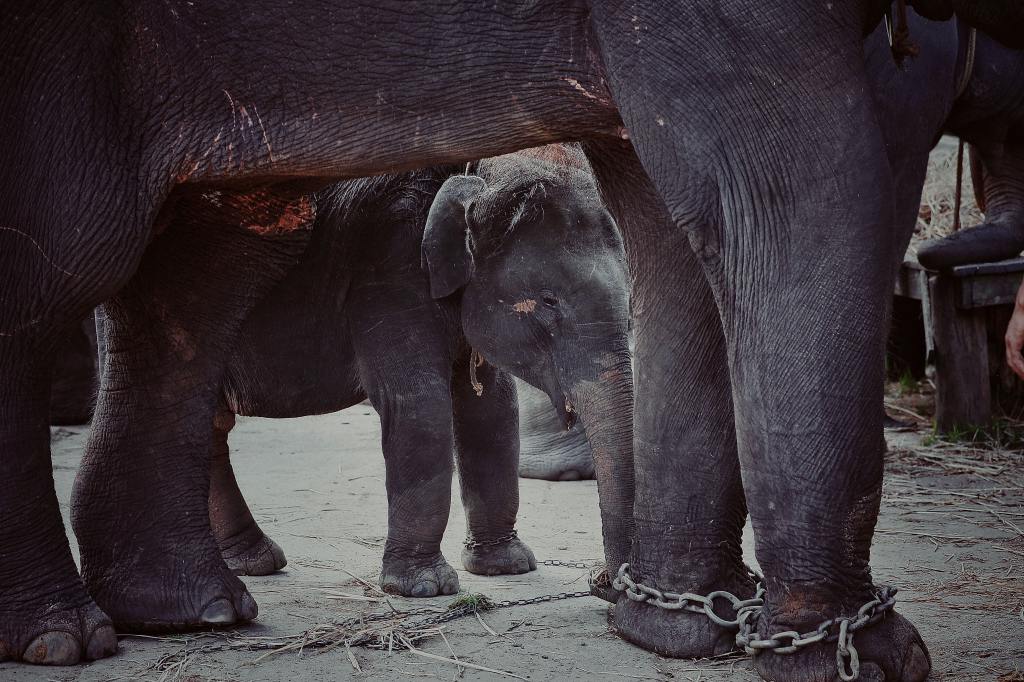
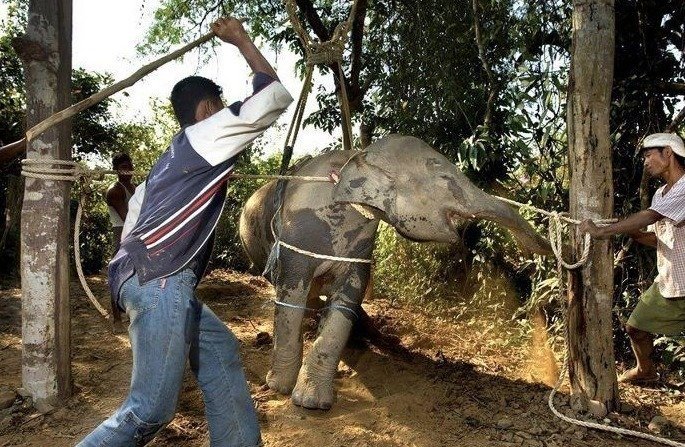
THE ANIMALS ABROAD BILL WOULD HELP STOP CRUELTY LIKE THIS
STAE is working to bring the entire sector together to ensure all is done to see this decision, if confirmed, reversed. Indeed with public support for a ban to protect elephants from the most extreme violence largely driven by the UK market running at over 90%, STAE’s petition now touching 1.1 million, and extreme emotions evoked in the electorate by torture of baby elephants, any such decision seems extraordinary as a General Election looms before late 2024.
PHAJAAN OR ‘CRUSHING’ IS THE TRADITIONAL ASIAN TORTURE OF YOUNG ELEPHANTS TO BREAK THEIR SPIRIT. IT IS DONE SO THAT THEY ARE SUBMISSIVE TO HUMANS.
Why on earth would Government be committed to these cruel acts? It must surely be in its own interests to take a principled lead over other parties (who will support it) and other nations, by pursuing the Bill. They are important measures now expanded in the Action Plan for Animal Welfare to all species abused in overseas tourism (including big cats, apes, bears, equines, dolphins) and not particularly controversial or difficult. On the contrary they are welcomed across the political divide. None of the measures to ban ads for “low welfare venues” impinge on Tory peers’ shooting weekends or even pigging out on foie gras, if that’s their tragic choice.
STAE CEO Duncan McNair speaking to Protect All Wildlife said “If confirmed, its sickening and foreshadowed in STAE’s communications with Govt and officials over the past year and my US TV interview on Unchained TV, despite every reassurance from Govt (including a letter signed by the Minister a week ago) all was on track.”
Muted claims that the Russian war on Ukraine has stolen all available Parliamentary time are unconvincing. STAE traces the evidence of wavering elements in Govt much further back. As they say, the first casualty of war is the truth. We hope the Defra Ministers at the helm will turn this round, publish the Bill, consult and bring it into Parliament soon.
One lucky little Elephant has captured the hearts of people across the internet after it was rescued from a mud pit in the Southern India state of Karnataka.
A video of the rescue operation staged by state forest officials has charmed netizens, as it also shows what some people say was an appreciative gesture from the Elephant, who turned to address the crane that helped to dig it out.
THE BABY ELEPHANT BEING RESCUED FROM A DEEP PIT BY A JCB
The incident took place in Siddapura Village in Coorg district of Karnataka, reported Indian Express.
A good Samaritan recorded and shared the clip, which has been viewed over one million times on Twitter alone. The beginning of the video shows the Elephant struggling to climb up and out of a slippery mud put. Each time it tries, it slips back down the hole’s steep walls. Eventually, an excavator machine pulls in and begins to dig mud out from around the Elephant.
THE ELEPHANT KEPT SLIDING BACK INTO THE PIT
Bystanders can be heard cheering as the arm of the JBC crane reaches behind the Elephant and gives it a gentle push, giving it the boost it needs to finally get its feet back on solid ground.
The lumbering animal then turns back around to face its rescuers, bumping its head and tusk to the machine’s bucket in what some are viewing as a sign of appreciation. Onlookers can be heard cheering loudly as it does, then officials set off a small firecracker to encourage the Elephant to leave the area and return to the forest.
Sudha Ramen, Deputy Conservator of Forests, Tamilnadu Forest Department shared the video from her Twitter account. She told Newsweek, “Elephants are mostly human-friendly until they get aggressive stimulated by human behaviour or have some hormonal imbalances. They are known to recognize the aid received when they are in need.”
Even though this behaviour can be observed in subadult and adult Elephants, young ones are not as human-friendly or expressive.
She added that when such rescues happen in a crowded environment, the animal is usually in panic mode and may get aggressive because of human presence or too much noise.
“But in this situation not many outsiders were present. Still, I do not say that the animal returned a gesture in this case. It may be an exhibit of stress too,” Ramen told Newsweek, addressing the belief shared by many that the head bump was ‘thank you’ in the Elephant language.
Her tweet with the video has been viewed more than a million times. She credited the video to Indian actor Satish Shah who initially shared it on his Twitter page.
Sudha Ramen, Deputy Conservator of Forests, Tamilnadu Forest Department shared the video from her Twitter account.
The usage of machinery such as a JBC depends upon the terrain, the animal involved in the rescue, and other safety factors, according to Ramen. The vehicle often comes in handy as many of its features make it able to handle slushy, slippery ground, and many rescue operations are carried out in the forest or nearby in areas that are usually non-motorable larger vehicles.
“Such operations are done only in the presence of the forest officials and vet doctors, so the driver gets guided by them,” Ramen told Newsweek.
“This made my day 1,000 times. Kudos to the construction crew and operator. And Mr. Elephant is the classiest mammal I’ve ever seen,” commented one user.
While many appreciated the machine operator’s work, some also questioned the use of smoke crackers in the end.
“It seems the Elephant was actually very grateful to the JCB for helping her/him by doing a head bump with it. Instead of busting smoke to scare it away, we could be gentler next time by keeping some food nearby so that they can replenish and get busy without charging at anyone,” wrote another.
THE RESCUED ELEPHANT APPEARS TO THANK THE JCB
However, the rescue team is always advised to carry the smokers along for safety reasons, Ramen told Newsweek, saying it is not necessarily standard practice to use them but they are commonly deployed when herds venture into villages or human habitations.
“It is used on occasions to direct the animal back into the forest and also to protect the nearby people if the animal tries to attack them,” she said.
Please SHARE for others to enjoy. You can also SIGN UP to receive news and updates direct to your inbox.
What you can do to help animals in need:
Support ‘Protect All Wildlife’ by donating as little as £1 – It only takes a minute but it can last a lifetime for an animal in need. Thank you.
We believe EVERY animal should be treated with respect, empathy, and understanding. We raise awareness to protect and conserve wild, captive, companion and farm animals. It is vital that we protect animals against acts of cruelty, abuse, and neglect by enforcing established animal welfare laws and, when necessary, take action to ensure that those who abuse animals are brought to justice.
Protect All Wildlife are involved in many projects to protect animals’ rights, welfare, and habitats. Money contributed to Protect All Wildlife supports ALL of our worthy programmes and gives us the flexibility to respond to emerging needs. Your donations make our work possible. Thank you for your support.
Everyone who donates will receive a Certificate of Appreciation as a thank you for supporting wildlife.
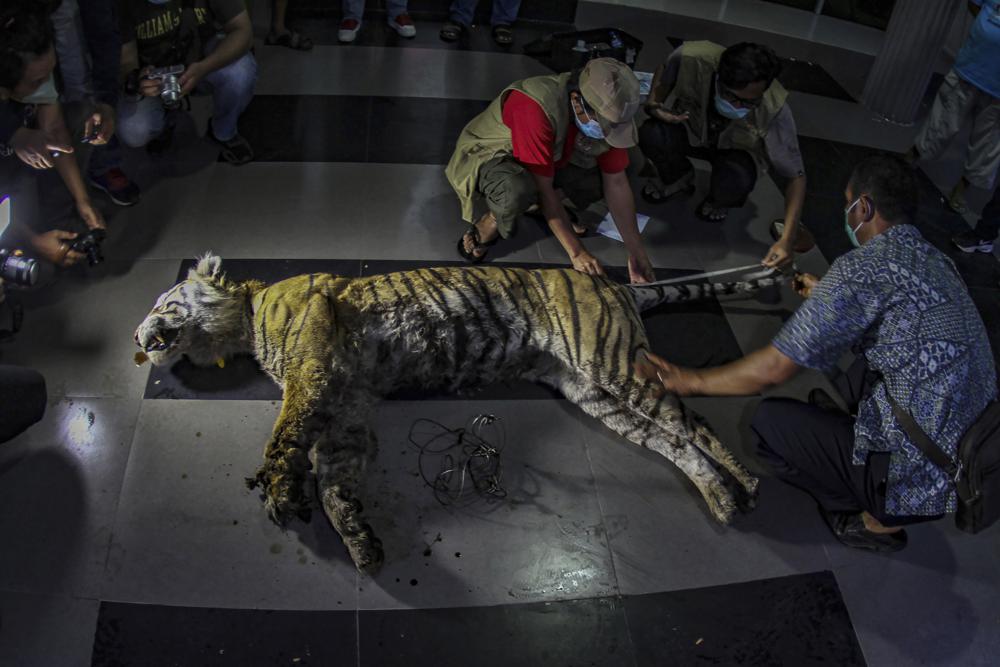
MEMBERS OF NATURAL RESOURCES CONSERVATION AGENCY INSPECT A SUMATRAN TIGER FOUND DEAD AFTER BEING CAUGHT IN A SNARE TRAP IN PEKANBARU, RIAU
A critically endangered Sumatran Tiger was found dead after being caught in a trap on Indonesia’s Sumatra island, authorities said on Monday, in the latest setback for a species whose numbers are estimated to have dwindled to about 400.
A STUNNING SUMATRAN TIGER
The female Tiger, aged between 4 and 5 years, was found dead Sunday near Bukit Batu Wildlife Reserve in the Bengkalis district of Riau province, said Fifin Arfiana Jogasara, the head of Riau’s conservation agency.
Jogasara said an examination determined the Tiger died from dehydration five days after being caught in the snare trap, apparently set by a poacher, which broke one of its legs.
She said her agency will cooperate with law enforcement agencies in an investigation.
Sumatran Tigers, the most critically endangered Tiger subspecies, are under increasing pressure due to poaching as their jungle habitat shrinks, according to the IUCN Red List of Threatened Species. It estimated fewer than 400 Sumatran Tigers remain in the wild.
It was the latest killing of endangered animals on Sumatra island. Conservationists say the coronavirus pandemic has led to increased poaching as villagers turn to hunting for economic reasons.
Three Sumatran Tigers, including two cubs, were found dead in late August after being caught in traps in the Leuser Ecosystem Area, a region for tiger conservation in Aceh province.
In early July, a female Tiger was found dead with injuries caused by a snare trap in South Aceh district.
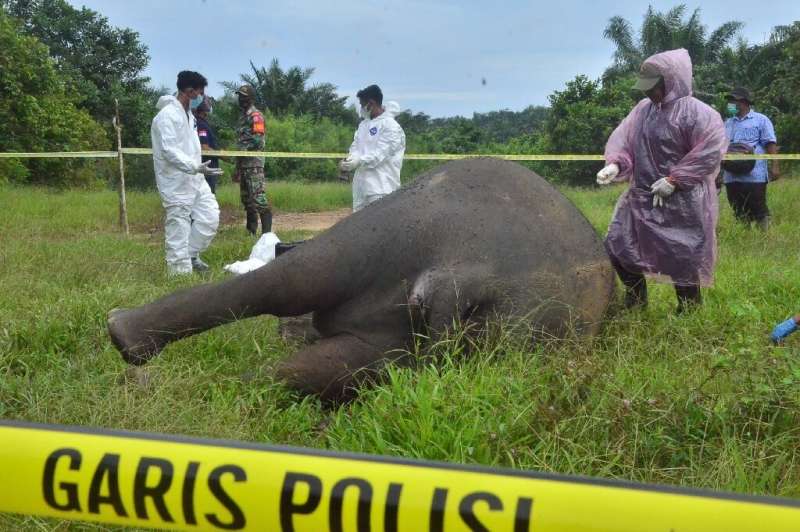
An Elephant was found without its head on July 11 in a palm plantation in East Aceh. Police arrested a suspected poacher along with four people accused of buying ivory from the dead animal.
AN ELEPHANT FOUND WITHOUT ITS HEAD AFTER BEING KILLED BY POACHERS
Aceh police also arrested four men in June for allegedly catching a Tiger with a snare trap and selling its remains for 100 million rupiah ($6,900). Days later, another Sumatran Tiger died after it ate a goat laced with rat poison in neighbouring North Sumatra province.
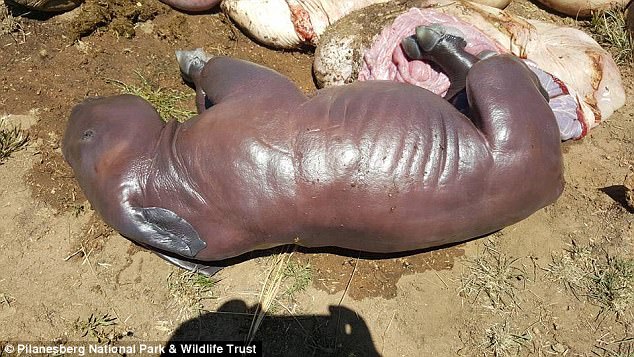
No chance: An unborn Rhino calf who died in its mother’s womb after she and its sibling were shot dead by poachers in South Africa
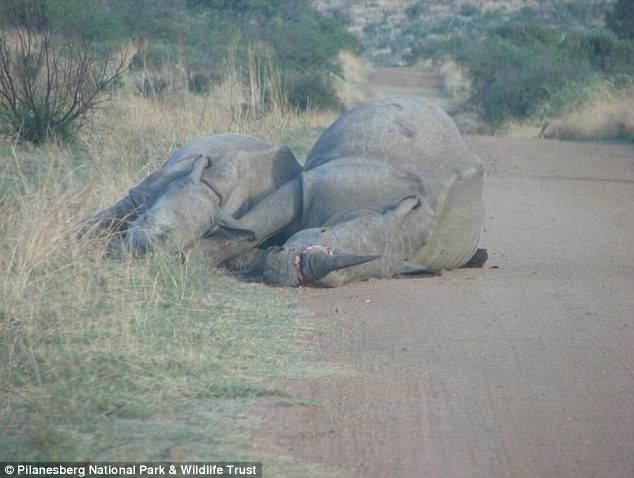
Heartbreaking: The markings around the mother’s horn show that the poachers had made an attempt to cut it off, but fled the scene when park staff arrived
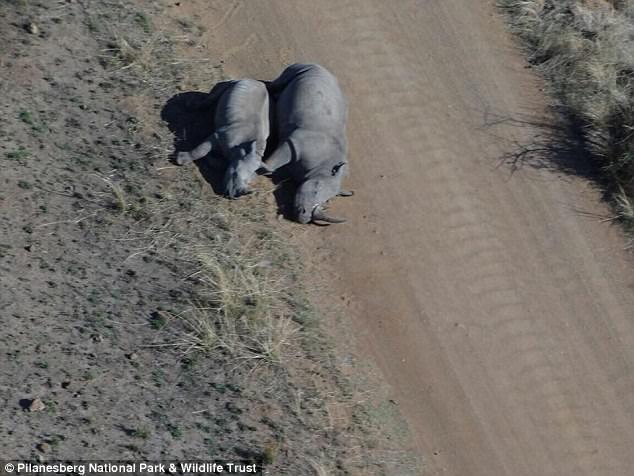
The Rhino was heavily pregnant and roaming Pilanesberg National Park in Mogwase, north-west South Africa, with its calf when they were hunted down for their horns.
These heartbreaking images show an unborn Rhino calf who died after its mother and sibling were shot and killed by poachers.
Photos show the poachers began hacking off the mother’s prized horn, but they were interrupted by park rangers and fled before they had time to remove it.
When park staff tried to save the unborn calf, it was found to have died inside its mother’s womb.
Pilanesberg National Park wrote on its official Facebook page: ‘There are no words.
‘Mom and calf shot and killed by poachers. Horns are still on as the murderers fled the scene when they heard a game drive approach. Mom looks very pregnant as well. We are devastated.’
Pilanesberg National Park added in the post that a reward will be issued for any information leading to an arrest and prosecution of the poachers.
A spokesperson for the park told MailOnline that the mother Rhino was aged eight and the calf just two years old. The unborn foetus would have been due in February next year.
Killed: The heavily pregnant Rhino and its calf lie by the roadside where they were shot
‘We have lost 16 Rhino and 3 unborn calves so far 2017 – that we are aware of,’ the spokesperson said.
‘This loss is not due to lack of interest or effort from Park management, as this is a large park with many valleys and hills, which is a difficult territory to operate in.’
Since 2007, more than 6,000 Rhinos have been shot and butchered for their horns in South Africa alone.
The majority of those have come in the last four years with around a thousand being killed every year since 2013.
Sometimes the Rhinos are shot dead, in other cases they are brought down with a tranquiliser gun before having their horn hacked off – leaving the Rhino to wake up and bleed to death painfully and slowly.
The province of KwaZulu-Natal, which has the greatest density of Rhino in South Africa, has seen 139 slaughtered already this year.
Despite countries such as China, Vietnam, South Korea, Malaysia and even India believing Rhino has medicinal values, repeated studies have not found any evidence to support the claims.
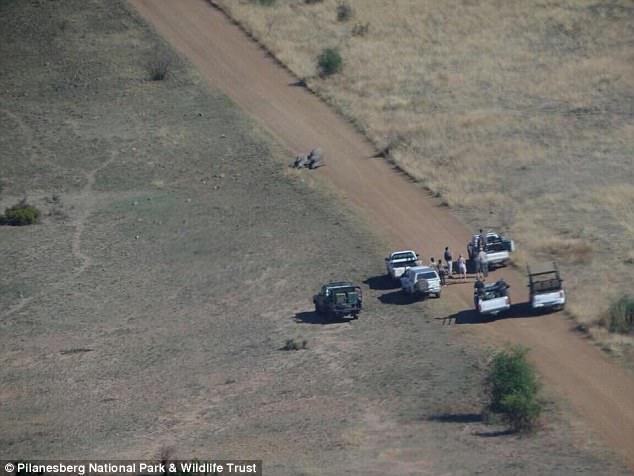
Sad: Park rangers and guests gather at the heartbreaking scene in Pilanesberg
Rhino horns are made from a protein called keratin, the same substance that human fingernails and hair are made of. The horn is essentially just a compacted mass of hairs that continues to grow throughout the animal’s lifetime, just like human hair and nails.
It is similar in structure to horses’ hooves, turtle beaks, and cockatoo bills – however these animals are not hunted and slaughtered in the same way.
Tragically tradition and cultural beliefs in some Asian countries mean the demand for Rhino horn has not waned despite just some 20,000 white Rhino being left in the wild.
Poachers are now being supplied by international criminal gangs with sophisticated equipment to track and kill Rhinos. Based on the value of the Asian black market, Rhino horn price is estimated at $ 65,000 USD per kg*. In the near past, the Rhino horn price soared up around $65,000 per kilogram. This price hike turned the Rhino horn more valuable than gold and many other precious metals, also many times more worthy than Elephant ivory. (*2020 figures)
Please SHAREto raise awareness of the horrific result of poaching. Please SUBSCRIBE for news and updates.
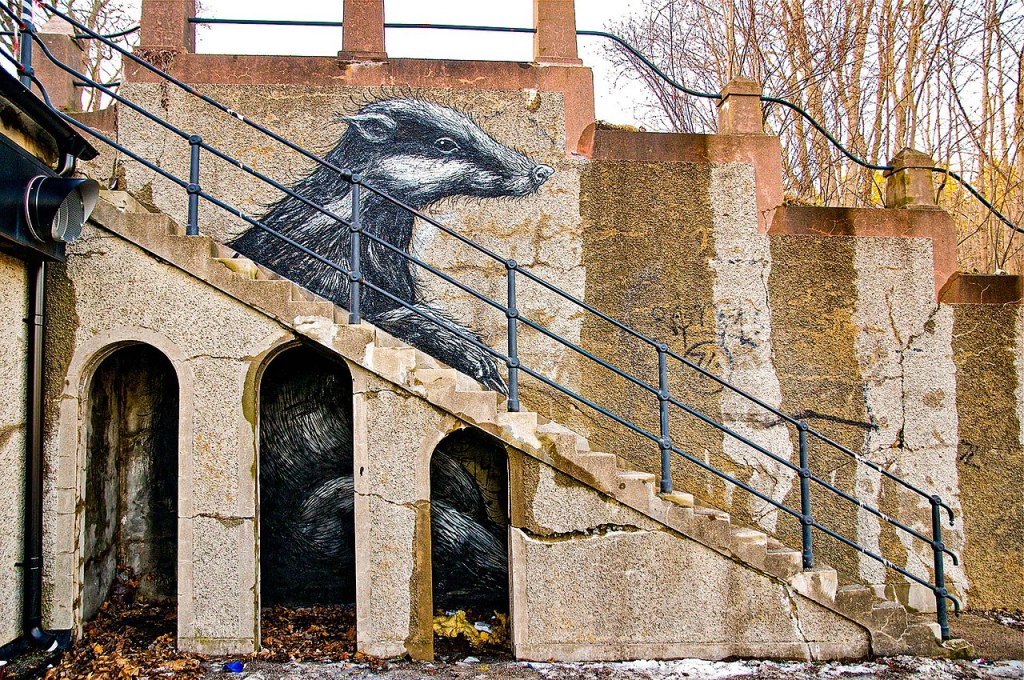
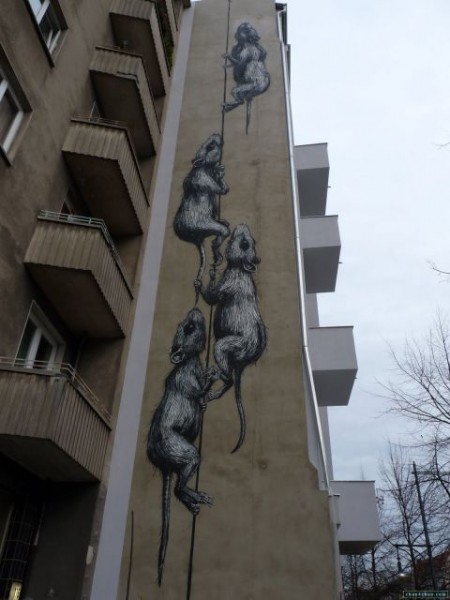
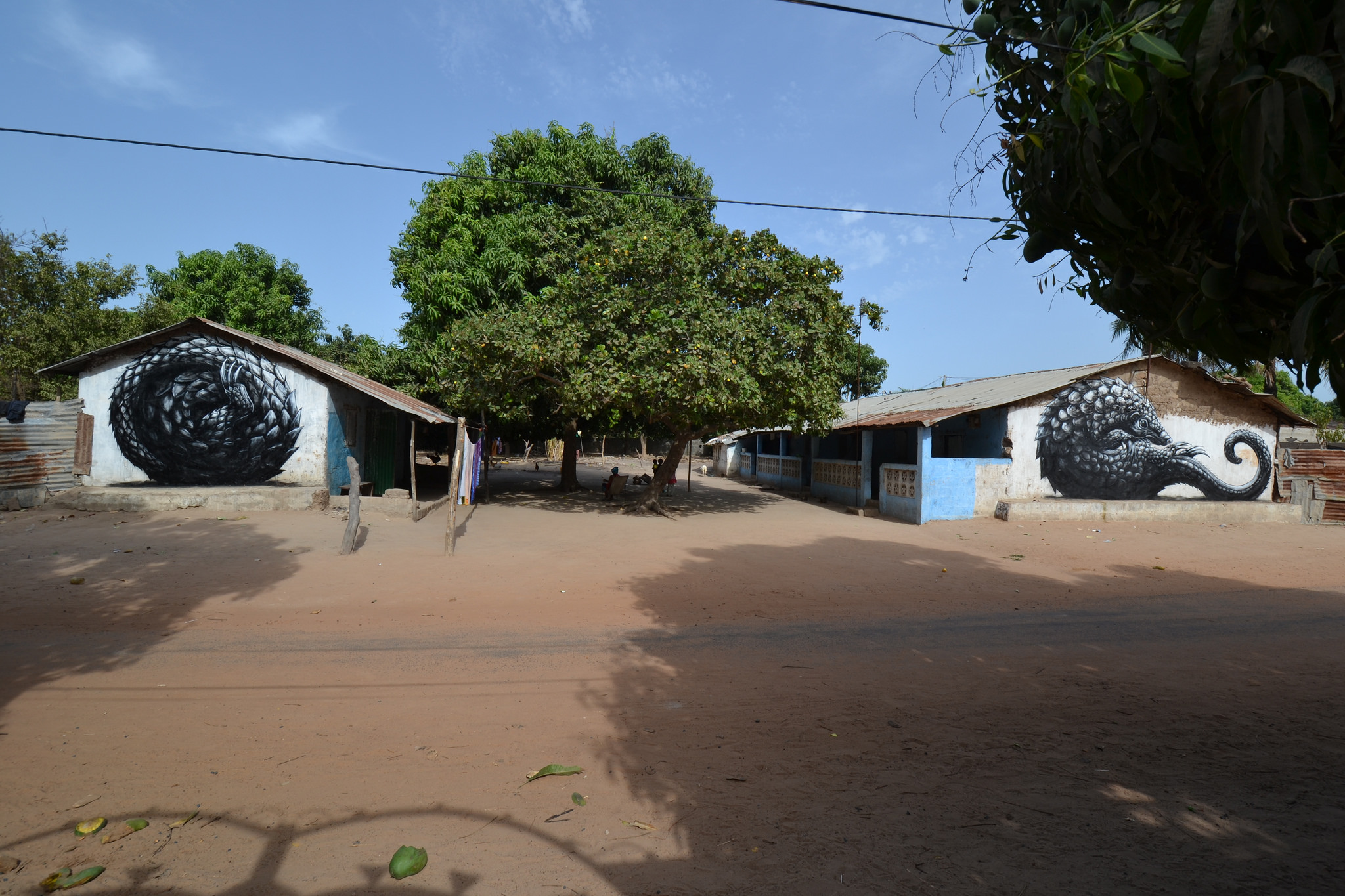
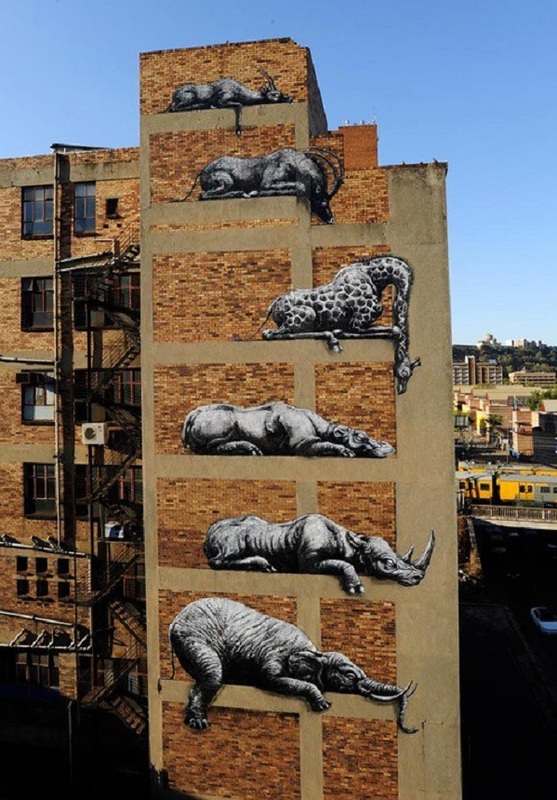
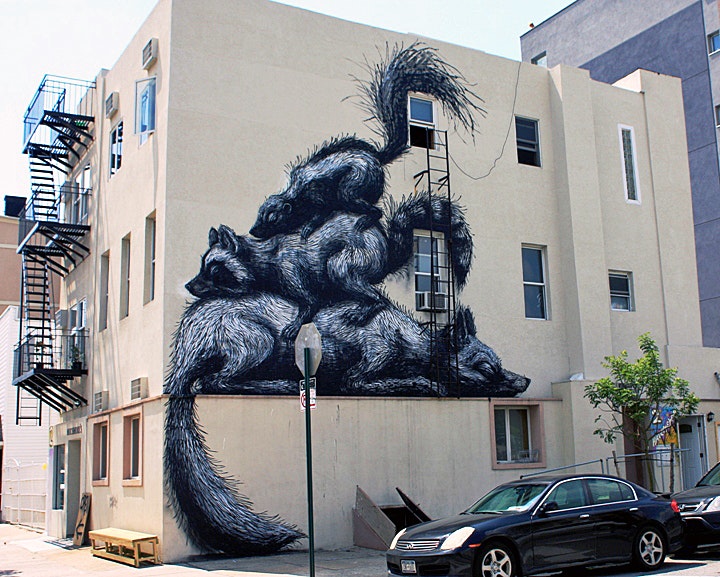
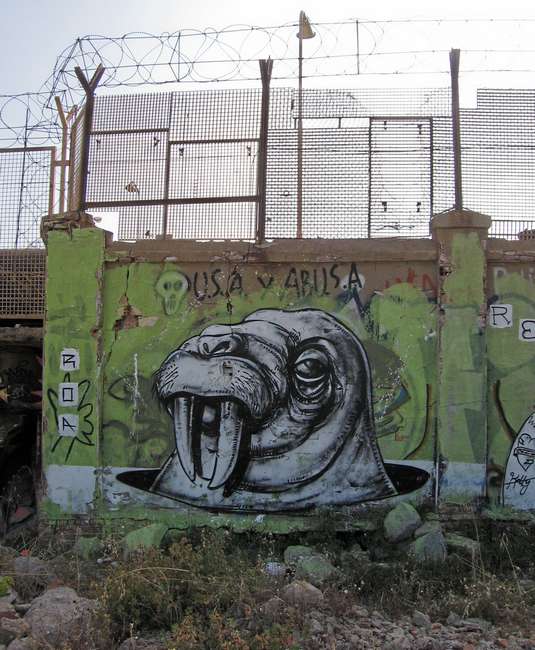
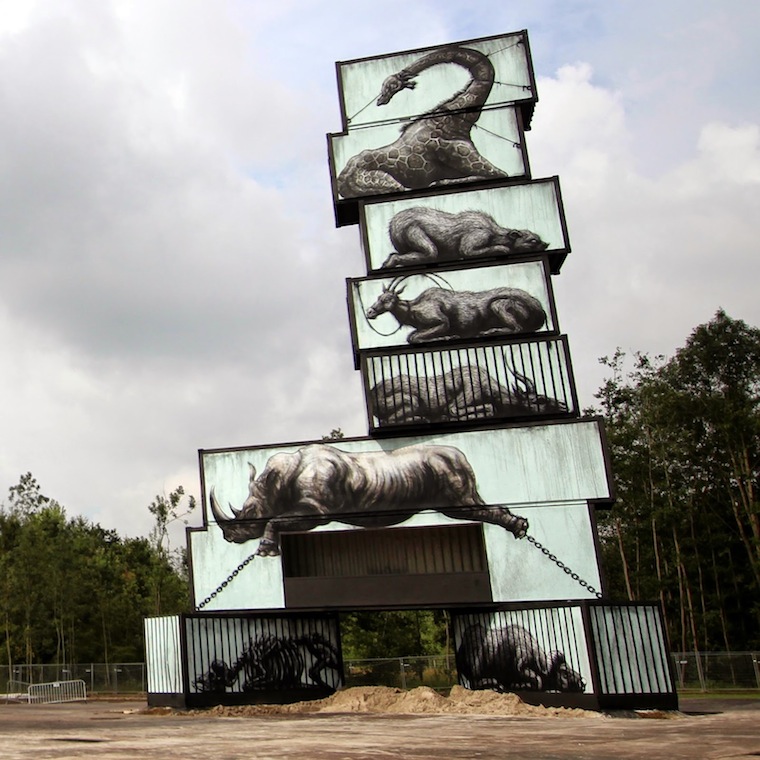
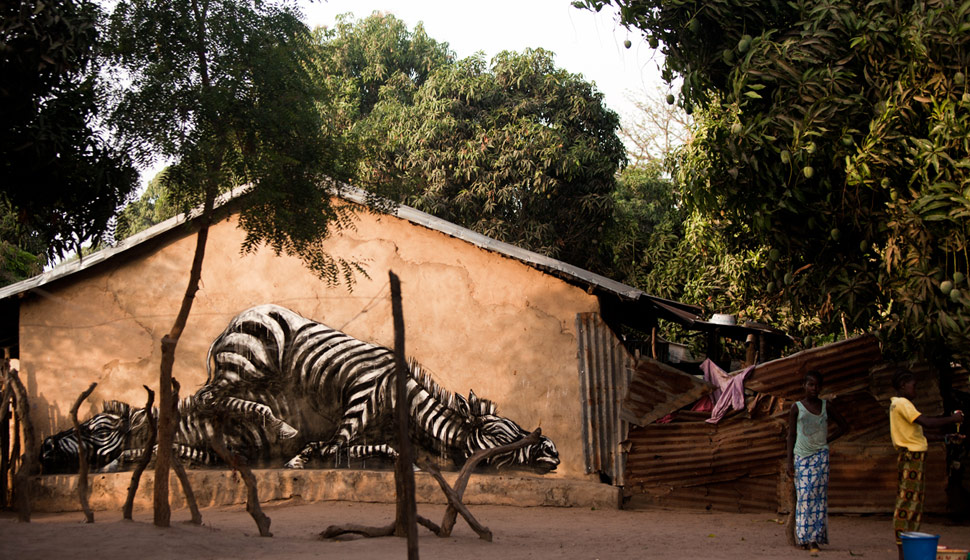
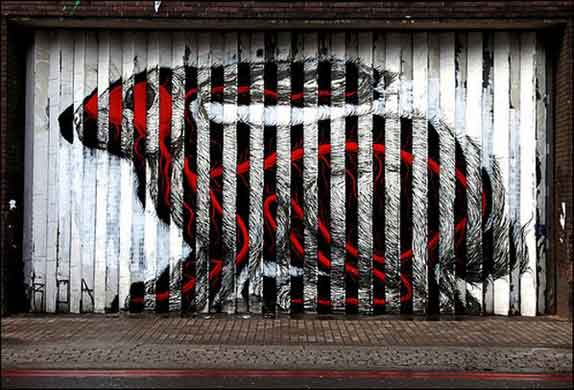
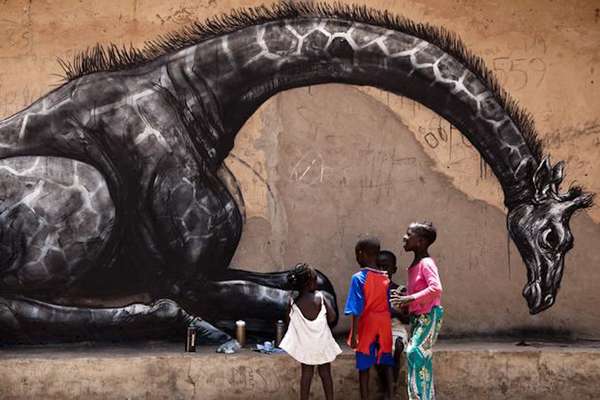
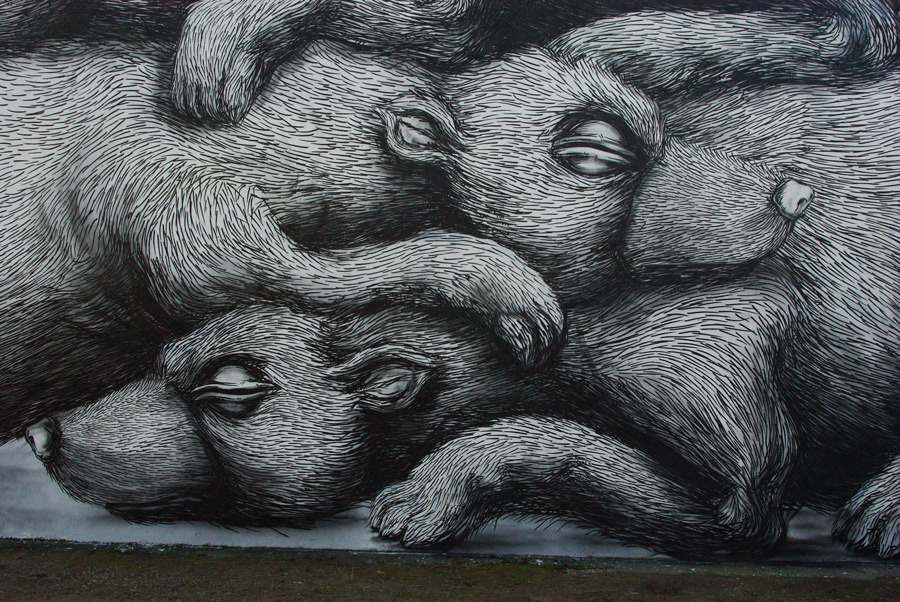
Roa, a hugely talented Belgian street artist from Ghent, is renowned for his giant black and white animal street art. Roa started off in the street art scene painting animals on abandoned buildings and warehouses in the isolated industrial areas of his hometown. Today, Roa’s animals may be found slumbering on the sides of semi derelict buildings and peering out from shop shutters in city streets all across the world from New York to Berlin and Warsaw to Paris.
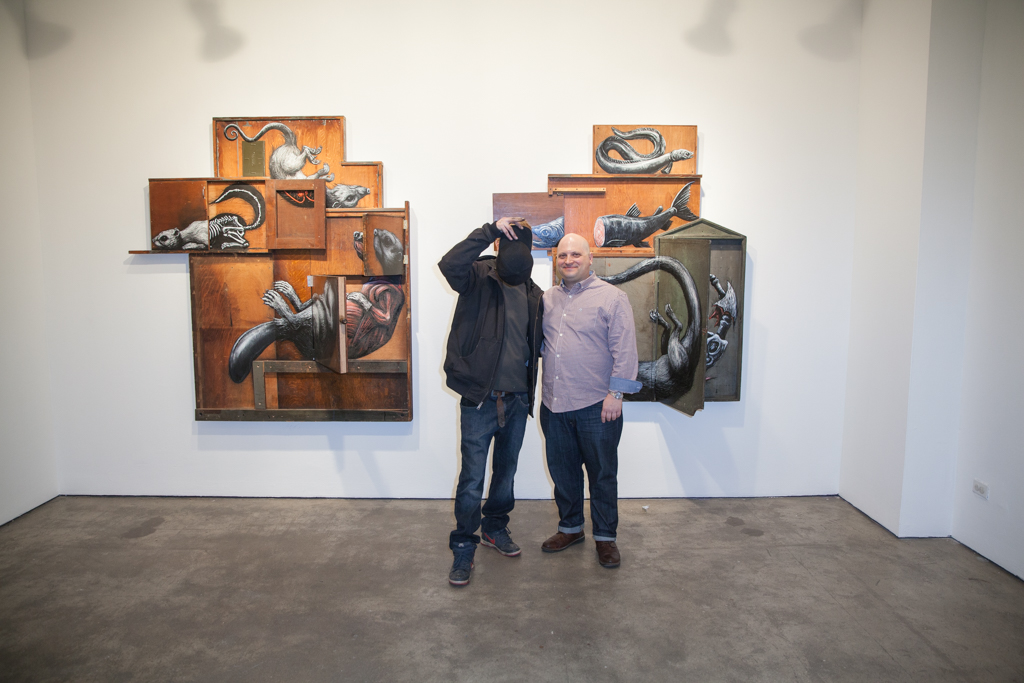
Stockholm, Sweden.ANONYMITYRoa Lets His Work Do The talking
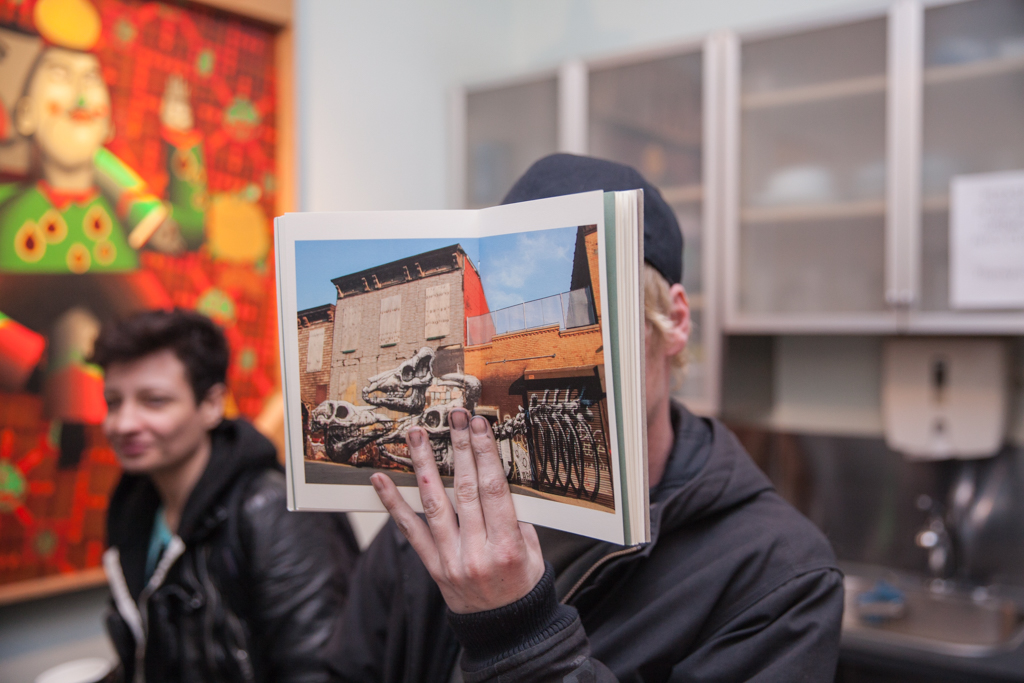
Street artist Roa is a muralist from Ghent, Belgium sprays beautiful illustrations of animals on buildings, walls and anything he can find in cities around the World. His work has often been recorded and photographed, but very little is known about the artist and even less is documented.
Renowned for his monumental black and white paintings of wildlife, ROA is a pseudonym of a Belgian street artist that has been leaving both accidental and intentional viewers in awe for years now. His hand painted, large scale and unique portrayals of rabbits, birds, rats, fish and other animals disquietly cohabit city streets, whilst his more disturbing images of skeletal or dead creatures directly reflect ROA’s pessimistic opinions of society. Although this street artist’s work is definitely a contender when discussing the most famous and recorded urban pieces in recent history, not much is known about this mysterious painter from Ghent who uses this anonymity to make sure both his artwork and spirit remain uncompromised.
At a very young age Roa remembers wanting to be an archaeologist or something adventurous and collecting little skulls from birds and rodents to draw at home. He grew up in the eighties and naturally was inspired by the American life; music, skating and so forth. The love for music, more in particular hip-hop, quickly joined his curiosity in graffiti. Like most muralists, he began by spraying throw-ups under bridges and walls. During his early years, Roa expressed an active, eclectic mix of styles. At the time, there was not prevailing movement in Belgium. As time went on, the scene’s evolution further evolved as foreign visitors left behind an assorted collection of talents and skills. Slowly but sure Roa became addicted to the nature of urban art.
Roa is primarily known for his strong obsession for animals and rodents. He often combines life, death, and life after death in his murals, which quickly distinguishes him amongst traditional muralists. His animals are painted to include skeleton and internal organs, making the sight even more realistic. The artist states, “Organs are the vital substances of our body and they represent a lot of the symbolism which I like!” One’s love for animals could not be expressed nearly as much as our artist Roa. This mysterious Belgian muralist has created hundreds of murals through Europe. He has also travelled to other locations around the world.
His preferred forms of methods to paint are by using spray paint or acrylic paint. In fact, most of his work is created through a mixture of black, white, and grey scale colours. At times, the muralist prefers to sketch, especially those large murals. He first began his artistic career by paining buildings and warehouses in his hometown. Nowadays, his distinctive black and white style street artwork can be found worldwide.
Some major cities, where his work can be found include London, New York, Berlin, Warsaw, Madrid, Moscow, Los Angeles, Mexico City and Paris.
Muralist Roa’s true obsession for animals is unparalleled and he uses this obsession to paint for inspiration. Roa uses native animals based on the location he is painting in. For example, if he goes to a specific location filled with roosters, like Mexico, then he will paint a rooster. Not only does this make him a standout artist, but his attention to detail is phenomenal. He truly has a pure passion for painting. Roa simply paints to paint- no other reason.
Carefully using the placement and the enlarging of the graffiti subject, ROA implies the cruelty and absurd relationship of humans and animals, as well as displaying the roots and origins of the depicted beings – this is what’s his art all about.
Roa’s work has been turning heads across the street art community by bringing birds, rodents, and other animals back into the consciousness in the areas they once inhabited. Although the street art is generally conveyed in a very natural matter, even his dead animal paintings seem at peace. Not only that, but his extra-large scale black and while local rodents may be viewing the image at work from nearby.
Roa’s anonymity has kept his work and his spirit free.
Enjoy Some Of Roa’s Art From Around The World
BERLIN, GERMANY
MAKASUTA, THE GAMBIA
JOHANNESBURG, SOUTH AFROCA
BROOKLYN, USA
BARCELONA, SPAIN
WERCHTER, BELGIUMMAKASUTU, THE GAMBIALONDON, UKMAKASUTU, THE GAMBIAWARSAW, RUSSIA
OREBRO, SWEDEN
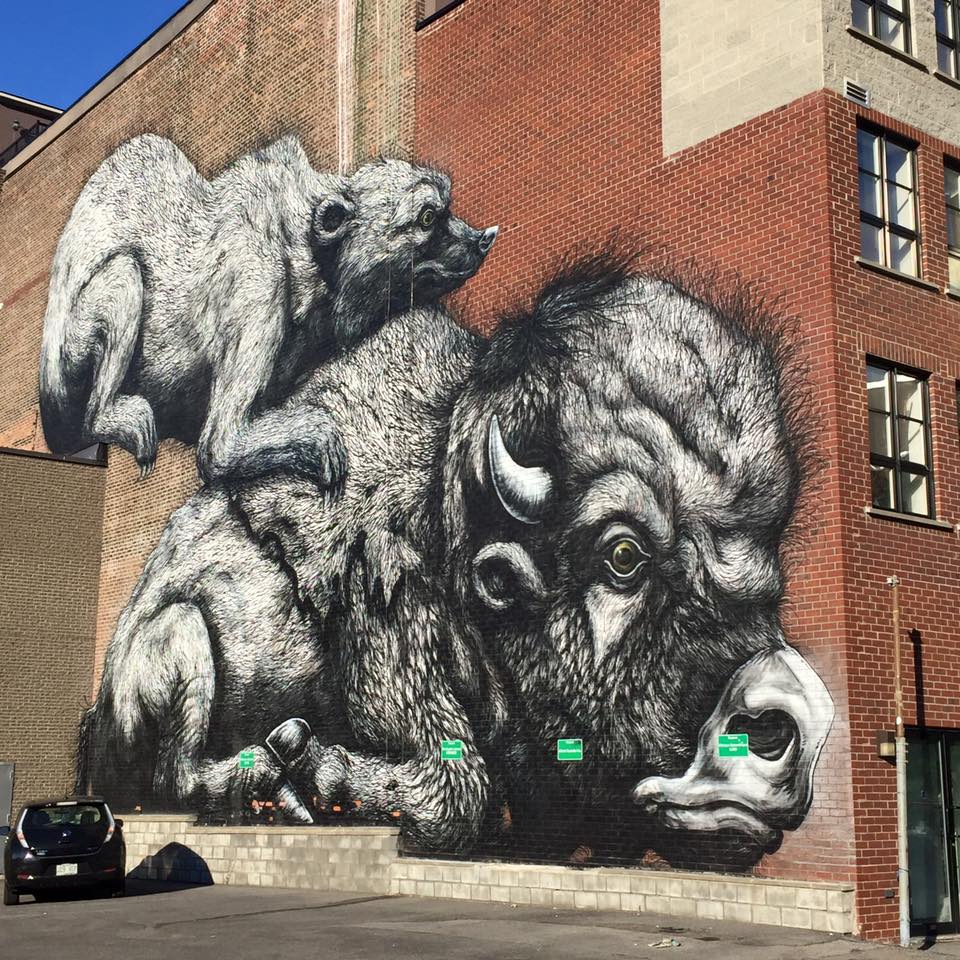
MONTREAL, CANADA
These are just SOME of the vast amount of murals that Roa has created. You can visit his Facebook page at Roa Street Artist.
Please let others see Roa’s amazing work by SHARING far and wide. Please SUBSCRIBE to receive regular new and updates straight to your inbox.
In Memory of Impi and Gugu who were killed in the raid.
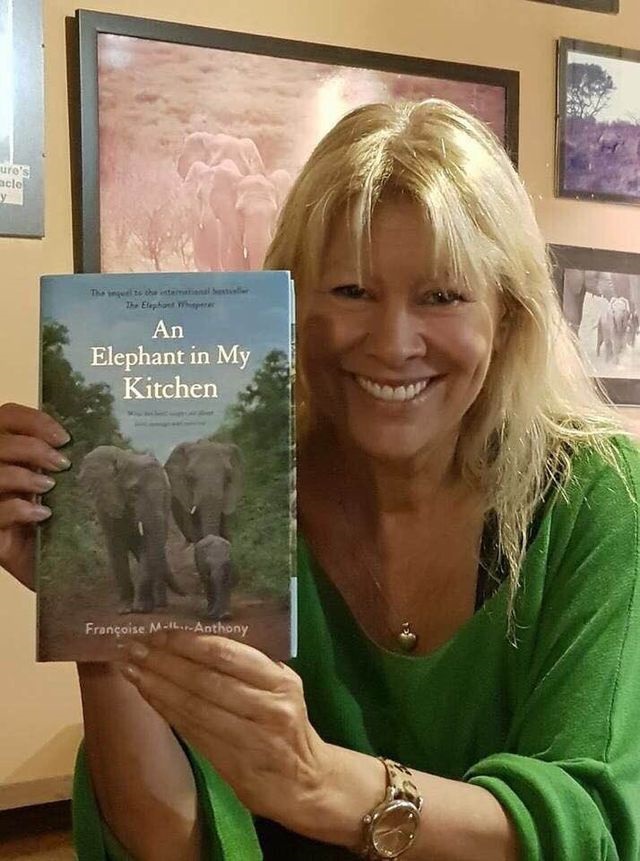
Françoise Malby-Anthony, who founded the Thula Thula game reserve in 1998 with her late husband, the renowned conservationist and internationally bestselling author Lawrence Anthony recalls the awful night that poachers attacked her Rhino orphanage on the 27th of February 2017
THE NIGHT POACHERS ATTACKED A RHINO ORPHANAGE
“Living alone on a vast African game reserve is not for the faint-hearted. And that night, even after 17 years in the wilderness, I felt a strange sense of unease.
It was 2am . White flashes of lightning were lighting up my bedroom. Thunder cracked like gunshots. As I stroked my dog, Gypsy, trying to reassure her, I suddenly realised that the phone was ringing.
‘Hello?’ I mumbled.
‘The orphanage has been hit. They shot two rhinos and attacked the volunteers.’
I sat bolt upright. Hit? Shot? Attacked? I couldn’t process the words.
I’d created the animal orphanage just a year before in order to fill a desperate need. Increasingly, poachers had been targeting adult rhinos for their horns — to sell to the Far East for useless traditional potions.
Any defenceless babies, whose horns had yet to grow, were left to die in the bush. Or if they were found in time, they were brought to my orphanage.
On that very night, I knew that four animal-mad girl volunteers and a permanent carer were providing intensive nursing for six vulnerable baby rhinos and a young hippo.
IMPI WITH ONE OF HIS CARERS
Panic-stricken, I ran to my general manager’s cottage and banged on the door.
‘Lynda! It’s me! Open up!’ I yelled, shivering in the rain. ‘Poachers at the orphanage. I’ll never manage the roads in this weather. We need your 4×4.’
She saw the horror on my face and asked no questions. ‘Give me five minutes.’ The rain smacked our faces as we sprinted to her car.
We crept along the dirt track leading to the orphanage, struggling to see, not speaking, hearts hammering. What would we find?
The men who slash rhinos’ faces for their horns are utterly barbaric — far beyond the conception of my trusting young volunteers. One wrong move or word, and an agitated lunatic could well have killed the girls.
Slowly, painfully slowly, we struggled through the downpour. As we arrived at the orphanage, one of my anti-poaching guards ran out.
‘What were you thinking, driving here on your own?’ he burst out. ‘The attackers could still be in the reserve! Quick. Get under cover.’
I stared at him. ‘Is anyone hurt?’ I asked. He nodded, grim-faced, and took us inside . . .
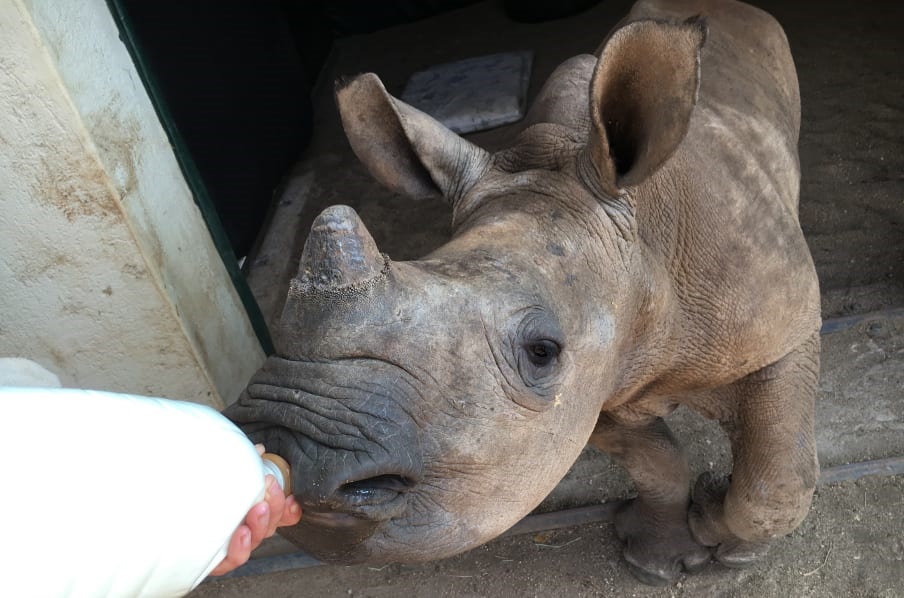
Baby rhinos don’t run. They half-bounce, half-fly as they hurtle towards you with an inquisitive look on their soft faces.
Or so I discovered when I first met Thabo, who’d been a terrified newborn when he was found, his umbilical cord still dragging below him in the dust. His mother had almost certainly been killed by poachers, and it was a miracle he’d survived even a day on his own.
Now Thabo was two months old, and had just arrived from a reserve that could no longer keep him. He nestled his snout gently against my leg — and I melted.
THABO
I’d just agreed to give him a permanent home on the land that my husband and I had bought in South Africa, intending to turn it into a game reserve that would keep animals safe from poachers.
We called it Thula Thula — Zulu for ‘quiet’. Within a few years, we’d built a game lodge, started taking in paying guests and had adopted an entire herd of wild elephants — though no rhinos.
But that was about to change: as I stroked Thabo, I knew with absolute certainty what needed to happen next. I was going to create a haven where orphaned rhinos could heal after their trauma.
That was back in 2011. By the time I’d raised enough funds and rhino-proofed an existing building, my husband Lawrence had died tragically young of a heart attack.
For a long time after I lost him, I lurched from one crisis to the next, never feeling anything was under control. Even small decisions felt overwhelming at first, but creating the orphanage gave me a focus, a reason to get up every day.
LAWRENCE ANTHONY
There was so much at stake. If the heating fails in our game lodge, we might get a bad rating on TripAdvisor, but the guests won’t die. A heating failure in the orphanage’s high-care ward, on the other hand, will soon kill a baby rhino.
Our first call came in April 2015. An anti-poaching unit had just found the carcass of an adult female rhino, with her horn hacked off, but no sign of her calf. Would we take it in if they could track it down? By running away, the six-month old calf had at least avoided being butchered for the tiny horn beginning to grow on his head. With rhino horn fetching £68,000 per kilo on the Far Eastern market, the poachers would have killed him for every gram they could get.
By the time Ithuba was traced, it was a week since his mother had died. Heavily sedated when he arrived, he was covered in infected tick bites and close to death. That first night, he was put on a drip and slept peacefully — but the second night was hell.
It was as if he was going through all the trauma of the past week — his mother’s murder, being transported in a clanging trailer and then finding himself in a strange room with two-legged animals who looked just like the ones who’d killed his mother.
The mere sight of his carers sent him careering around his room in panic — and 200 kilos of agitated rhino can do a lot of damage to a pair of human legs. His high-pitched squeals of terror pierced every corner of the orphanage.
Eventually, we persuaded him to drink milk from a bottle. Then colic struck and nightmares. He’d shiver and jerk about in his sleep; on waking, he’d spin around his room in panic, flinging himself against the walls.
‘What Ithuba’s going through isn’t unusual,’ the vet assured us. ‘People think post-traumatic stress is only experienced by humans, but his emotional recovery is going to be far more complicated than his physical recovery.’
It’s heartbreakingly hard to comfort traumatised animals, but our carers did it with infinite patience and affection. Slowly, Ithuba began to understand they weren’t like the people who’d hurt his mother.
I’ll never forget the day when I saw him trotting happily next to Axel, an easygoing young French carer. Ithuba kept bumping into his leg, as if to reassure himself that he wasn’t alone any more.
Another huge step was the revival of his curiosity. Rejecting other toys, Ithuba homed in on anything made out of tyre, including his food bowl which was a home-made tyre contraption. He’d tip it over, throw out the food, fling the bowl about until it started rolling, then run after it. Finally, he’d balance it on his head, preening and strutting like a dressage horse.
BFFs: The two baby rhinos, Thabo and Ntombi, were soon inseparable
Yet for a long time, he also continued to have panic attacks. He’d be playing happily, then he’d suddenly squeal in fright, latch onto a corner of his carer’s sleeve and suckle it — rather like a baby sucks its thumb.
Slowly, however, his insecurity faded — and his appetite exploded. By the time he was nine months old, he’d doubled his weight and turned into a happy little rhino tank who’d soon be starting a new life in the wild.
The next rhino calf delivered to the orphanage had also lost his mother to poachers. He’d stood by his mother’s body for six days, desperately tugging at her decaying teats while vultures tore her flesh. How do you even start to console a little creature who’s been through that?
Megan, a fresh-faced young British girl, remained with Impi for his entire first night as he ran round and round in circles, crying non-stop, too terrified to sleep, desperate to find his mother.
‘I kept talking to him,’ she said. ‘I told him what had happened to him, that he was safe with us, that there was another baby rhino just like him called Ithuba, and that I was sure they would be friends.
‘He eventually came up to stand silently at my knees. He looked so lost. I longed to take him in my arms to comfort him but I didn’t dare move in case I frightened him. Then he collapsed at my feet and fell asleep.’
Within three days, however, little Impi was on the mend. Ravenously hungry, he’d indignantly head-butt his carers if his bottle wasn’t ready when he wanted it.
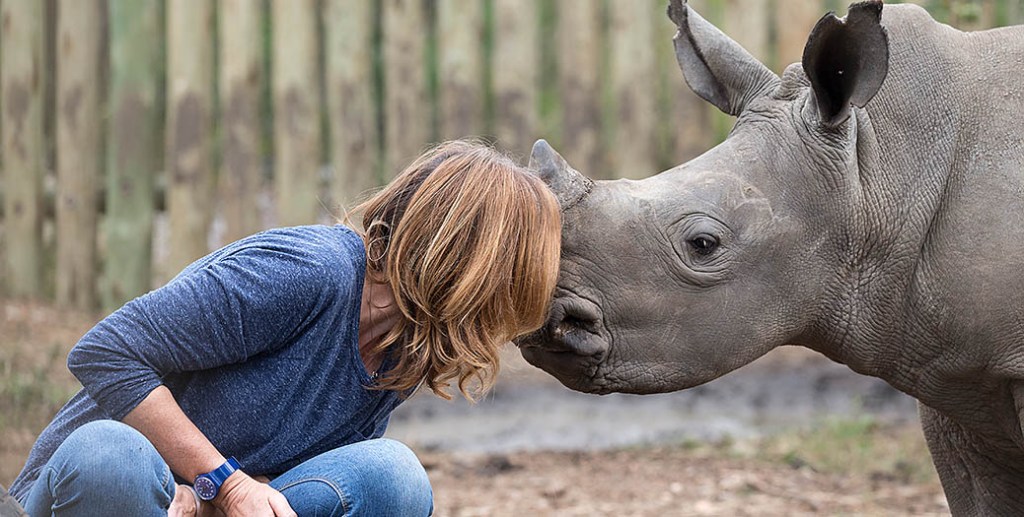
One morning, Megan was on her hands and knees giving the floor a good scrub when she felt two little eyes boring into her. Impi edged closer and nestled his chin on her shoulder. And there it stayed, as he shuffled along to keep pace with Megan’s movements.
Some calves are boisterous and belligerent, but not Impi. He was a tender little creature who was afraid of everything and hated being left alone.
Like Ithuba, he suffered from post-traumatic stress disorder, and unfamiliar sounds — even a bird’s squawk — would send him fleeing, squealing in panic.
Nights were a terrible struggle. No matter how exhausted he was, he didn’t feel safe enough to lie down until a volunteer had started reading him a book. Then he’d quietly nestle on the hay next to her, burrow his head into her legs and fall into the deepest sleep.
Ithuba, meanwhile, wasn’t happy about losing his pampered role as the only rhino at the orphanage — and particularly jealous when he realised that Impi was in his old room. Again and again, he charged the barrier to get in; only the sound of Axel rolling a tyre behind him managed to distract the cross little rhino.
The next orphan to arrive was Thando, who’d been discovered neck-deep in mud and unable to move. There was no sign of his mother.
It took five men to pull Thando out of the mud, and there were whoops of delight when they saw he was strong enough to stand.
The DIFFERENCE in Thando’s behaviour from that of the other two rhinos was startling. Rather than being petrified when he woke up in a strange room surrounded by humans, he was merely stroppy.
Happily, he hadn’t had to witness his mother being hacked to death, nor had he been on his own in the wilderness for nights on end. As a result, he very quickly became one of the orphanage’s most laid-back little rhinos.
Eventually we decided that Impi and Thando should meet, as they were similar ages. So, one overcast summer’s afternoon, we left the doors and barriers to their rooms open at feeding time. The carers hovered out of sight nearby.
Impi, usually such a timid little rhino, immediately charged at Thando, who didn’t so much as blink. Baffled by this non-reaction, Impi skidded to a halt and stared at him.
After a lot of posturing and strutting on both sides, they headed inside and flopped down on a mattress, their stumpy little legs entwined. From then on, they were best friends, constantly cuddling up or practising charging techniques on each other.
Another successful pairing was between Charlie, a baby hippo found alone in a river, terrified of water, and a newborn rhino called Makhosi, abandoned because he was too tiny to reach his mother’s teats. As both were under a week old, we put them in the same room.
Amazingly, Makhosi scampered straight up to the hippo. For his part, Charlie swayed his big head from side to side in greeting and reached his snout towards her.
First, they exchanged interested noisy snuffles. Then Makhosi lowered her head and Charlie gently chomped her ears. Finally, the tiny rhino clambered onto the hippo’s mattress, nuzzled up against him and fell fast asleep.
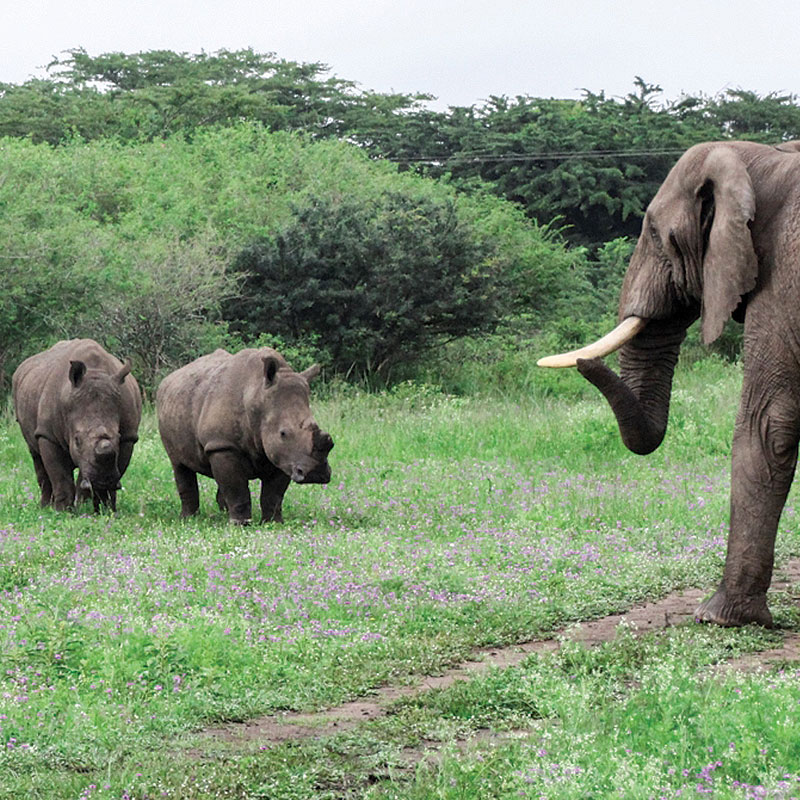
WILD ENCOUNTERS
After that, they trotted everywhere together, demanded to be fed at the same time, and cuddled up whenever they needed warmth or reassurance.
When Charlie’s teeth started to cut through, his gums became sore and inflamed, and he lost his appetite. His rhino friend knew just what to do: she comforted him with gentle nudges, then fell asleep each night with her snout touching his.
Charlie, the baby hippo who was scared of water standing bravely in his paddling pool with pal Makhosi close by
More orphans were now flooding in. Nandi, our first black rhino, was another newborn whose mother had been killed. She was afraid of the dark and wouldn’t go to sleep without a blanket tucked tightly around her.
If it slid off, she squealed until her carer woke up and tucked her back in again. What a little princess!
Then there was Storm, who’d probably been rejected by his mother. He had so many parasites that we almost lost him.
And finally there was Gugu, a healthy rhino calf who wanted nothing to do with her carers. It was her choice to drink from a bucket rather than a bottle — anything to keep humans at bay.
When she first saw Impi and Thando, however, she broke out into high-pitched calls of delight. And as for Ithuba, our original rhino calf, he became the love of her life.
Poor Ithuba was so much older than the others that we had to keep him in a separate enclosure. Undeterred, Gugu would spend hours walking out with her strapping neighbour, each keeping pace with the other on either side of the fence.
ITHUBA WITH KAREN TRENDLER
By the start of 2016, our baby rhinos were all thriving and protected by round-the-clock security guards. It made no difference.
On the terrible rain-lashed night that poachers attacked the animal orphanage, I arrived to find our terrified girl volunteers huddled together in an office. One of them had only been with us for a few hours, her dream of working with orphaned animals now a savage nightmare.
Slowly, as they sobbed and cried, I started piecing together what had happened.
Just as the team had finished the first evening feed, five heavily armed men had breached the fence, disabling cameras and cutting cables as they crept towards our security guard. Two of them had attacked him from behind and tied him up.
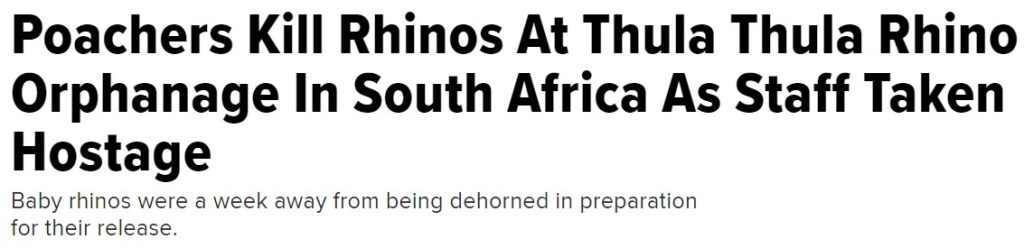
THE DODO’S HEADLINE OF THE ATTACK
Then they waited, patient predators, biding their time until the next feed. Axel, the only staff member there that night, had gone to bed while the two girls on feeding duty chatted and laughed as they prepared bottles for the hippo and the rhino calves.
Suddenly, they were ambushed by the poachers, and shoved into a locked office. At gunpoint, Axel was roused and forced to round up the rest of the volunteers.
‘Where are the rhino horns?’ the attackers kept asking. Needless to say, we didn’t have any, but Axel was beaten and one of the girls was severely assaulted.
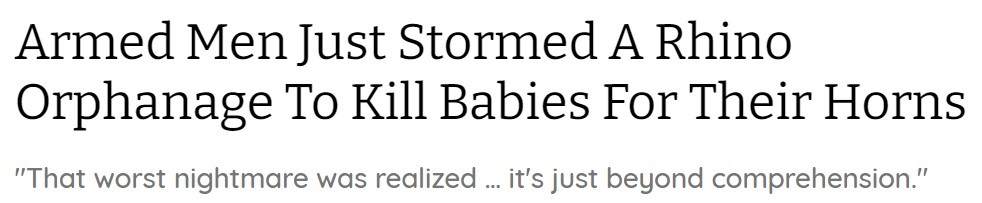
THE HUFFPOST’S HEADLINE OF THE ATTACK
The poachers must have known that Gugu and Impi — now our oldest rhinos at the orphanage — were due to leave soon. And that meant they’d already have stubby little horns.
While three men guarded the youngsters, two others, armed with guns and an axe, headed for the calves. They pumped bullets into Gugu and Impi for horns no bigger than a child’s fist.
RIP GUGU
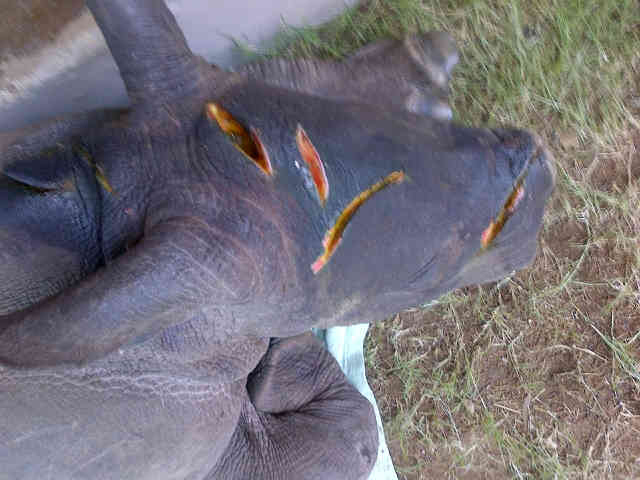
Gugu died instantly, sweet Impi didn’t. The poachers didn’t give a damn. They held him down and hacked his face with the axe.
Were they disconcerted by his terrified expression? Superstitions run deep in rural Zululand, where it’s thought that eyes have memories. So the poachers did the unthinkable — they poked out Impi’s eyes.
Half an hour later, the men and their bounty were gone.
Meanwhile, the guard in the storeroom had escaped and was running barefoot through the reserve to raise the alarm. Petrified of being caught, he avoided roads and tore through the bush in the pitch dark, shredding his feet in the process.
To this day, I can’t bear to think about Impi and the anguish of his carers. They’d hand-raised him, and there was nothing they could do to ease his terror and pain.
Impi was euthanised as soon as our vet arrived. The tragedy was that both calves had been days away from becoming wild rhinos again.
The next 24 hours are a blur. I have flashes of memory: the ashen faces of the girls, the explosive racket of the storm, the atrocity of Impi’s injuries, the chaos in my heart.
For a while, I lost faith in mankind. I lost hope in saving rhinos.
Demand for their horns will never stop; they’ll always be in danger, as will the men and women who risk their lives guarding them.
What I do remember with profound gratitude is the phone call from Megan, the British girl who’d helped look after Impi and Gugu. Now back home, she offered to start a campaign to pay for improving the orphanage’s security.
Donations flooded in from all over the world. The outpouring of love and concern was incredible: more than £45,000 was raised.
The cash has paid for more round-the-clock armed guards and extra protection for staff during night feeds. We’ve also upgraded our entire security system.
Additional anti poaching team and extra armed security
Update 2/23: Two male suspects have now been arrested for the killing of two baby rhinos and the assault of the staff at Thula Thula Rhino Orphanage, according to SA people. The men are apparently part of a “notorious gang,” and they were heavily armed when police found them.
As the number of rhinos killed by poachers keep rising and more traumatized orphaned calves are in need of care, Kirsten Everett, a volunteer at Nikela, takes us on a touching journey as she looks at the horrors of a poacher attack though the eyes of a young Rhino calf.
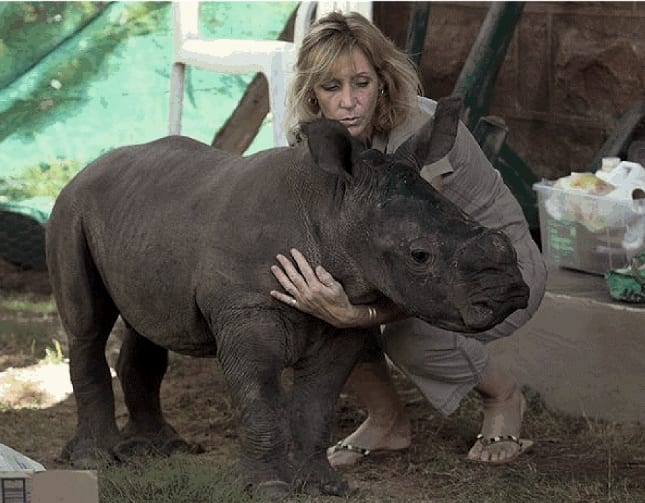
NTOMBI WITH VET KAREN TRENDLER
“My mother and I were contently filling our hungry stomachs when we heard a strange noise. I carried on eating but she smelt the air for unknown scents. I saw the terrified look in her eye before she managed to control it; the unnatural smell meant something. A few minutes later we heard the ‘whop, whop’ of a metal monster flying closer towards us. Just when my mother focussed on it the men crept out of the bushes with a crunch of sticks. Something seemed to hit her and she grunted in surprise. The birds abandoned their posts heading away from the danger. I stood helplessly as she tried to run but ended up falling to the ground. The men surrounded her and tried to chase me away. I ran forward scared enough to not care about the men as they had done something to my mother, I needed her and they must go away.
Out of nowhere one of the big men spun on me and hit me hard with something sharp. Blood oozed from my wound as my mother answered my cry for help with a weak beg, ‘Away, away’. I backed away nursing my wound, how could I get to her?? She grunted again so I didn’t give up. I ran forward again but this time the angry man was merciless, determined to get his message across. As quietly as possible I took the cuts to my poor head trying not to worry my mother even more.
Confused I backed away into the bushes calling to her to get up, but the eerie silence dragged on and she didn’t move a muscle. Fear glued me to the floor as I felt my young heart pulsing with anger and fear. A breeze blew, as I waited for the monsters to go so I could go to my poor mommy and find out what was wrong. My heart skipped a beat when I realised this was what my cousin had gone through only a full moon ago. It was terrible, my body couldn’t stop shaking and I couldn’t think clearly, I felt lightheaded from all my blood loss.
Finally when the monsters left I ran to her side, ‘Mom wake up.’ My voice cracked with emotion but still she didn’t respond. I took a step back and saw the pool of blood. Her horn had been brutally cut off and she lay lifeless. Above me a crow flew over.
I turned to run then I asked myself some important questions… where would I go? I wasn’t old enough to know the way to the dam yet. Who would protect me from predators? The truth was that I wasn’t strong enough to survive by myself yet. Would I be with my mother in the sky sooner than I thought? The last question scared me the most; out in the wild without my mother I might just be able to survive a week.
I heard the snap of a twig, I wasn’t alone. This time I didn’t have the strength to care what these humans wanted with me. I collapsed and slept for a few hours. I was almost completely unconscious though I sensed kindness near me. Too traumatised to do anything I lay as they treated my wounds. The people who tried to comfort me planted a seed of hope. Hope that I could survive and hope that the rest of the human race would come to its senses and help my species and all the others out there”.
Written by Kirsten Everett. Based loosely on the story of “Ntombi” who was rescued by Karen Trendler and her team.
NTOMBI WITH ONE OF HER CARERS
Update (July 31, 2013): This is Ntombi feeling good and playful
PleaseSHAREthis article to raise awareness about this issue and feel free to leave a comment below. You can also sign up for UPDATES & NEW ARTICLES by submitting your email details in the right-hand column. But most of all, NEVER give up fighting for the future of wildlife! Thank You
The Limbe Wildlife Centre (LWC) is a conservation education centre in Limbe, Cameroon. Above all, they provide a solution to law enforcement agencies for where to place wildlife seized from the illegal wildlife trade. For all elements of their work, they collaborate with state and national government, communities, and other international and local NGOs to protect habitats and endangered species. In brief, they in-situ and ex-situ activities that include rescue, rehabilitation and reintroduction, conservation education and advocacy, law reinforcement, creating alternative livelihoods to hunting, and research. Through a holistic approach, the LWC aims to ensure the survival of Cameroon’s unique flora and fauna.
Ultimately, there are three main pillars to our work: rescue and rehabilitation, education and community.
The Limbe Wildlife Centre (LWC) is being hit hard by the current Covid-19 pandemic. With no volunteers or visitors coming to the centre, they have lost an important source of income, and much of their grant funding has been cut due to the global economic downturn. With travel and business restrictions happening across Cameroon, like in many other countries, they are struggling to obtain the food and medication needed every day for their rescued wildlife.
At this difficult time, they urgently need your help. They are dependent on your kindness to continue providing daily essential care to the more than 450 animals currently in their care.
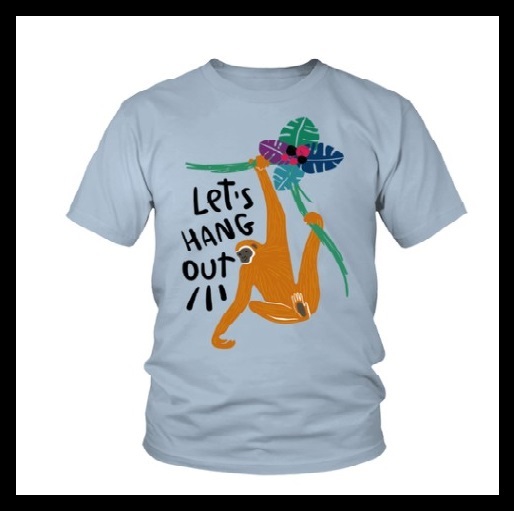
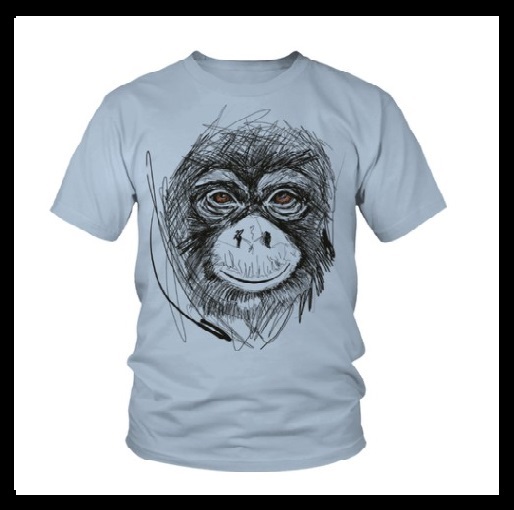
Protect All Wildlife are supporting LWC continue their amazing work by selling these unique Ltd Edition tops to raise funds.
Please help @LimbeWildlife rescue, rehabilitate & release primates & other animals orphaned by the illegal bush meat and pet trades. These beautiful Ltd Edition tops are available in a variety styles & colours at https://teezily.com/stores/limbe-wildlife-centre…. All profits help this wonderful charity.
The Kangaroo Island Wildlife Park has been overwhelmed by the kindness, good wishes and support from the Australian and international community for the wildlife icon, the Koala.
At least 25,000 Koalas are believed to have died in a horrific wildfire in South Australia that may have devastating consequences for the survival of the species.
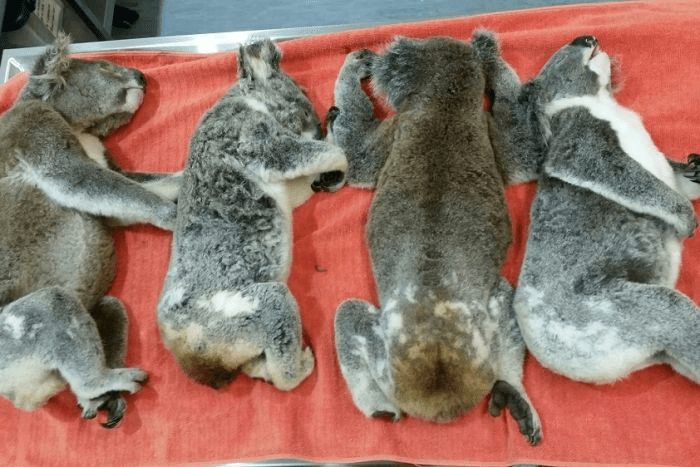
Four dead Koalas lie on a vet’s table in Lismore
The fire on Kangaroo Island, which was considered a Koala safe-haven because its population had escaped a devastating chlamydia epidemic, was described as “virtually unstoppable” on Saturday by firefighters.
Koala rescuer Margaret Hearle stated that another important Koala population, nicknamed “the gene pool” because of its good health, had been “wiped out” in Crestwood, New South Wales.
Due to the recent tragic bushfires, the Kangaroo Island Wildlife Park has received a lot of concerned phone calls and messages regarding the impacted wildlife from these fires.
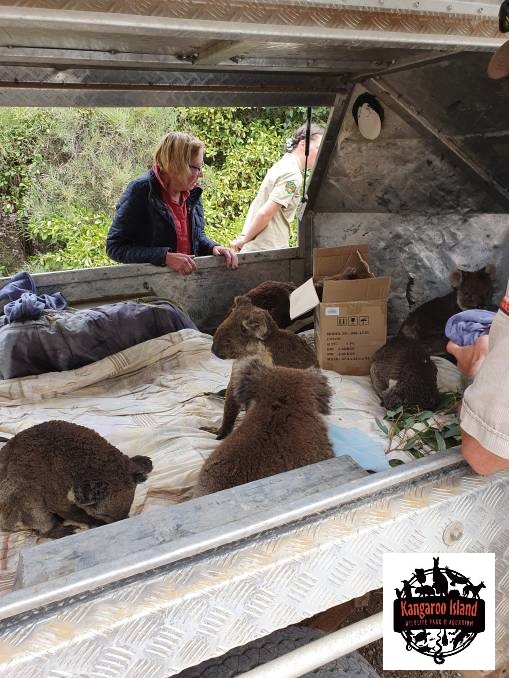
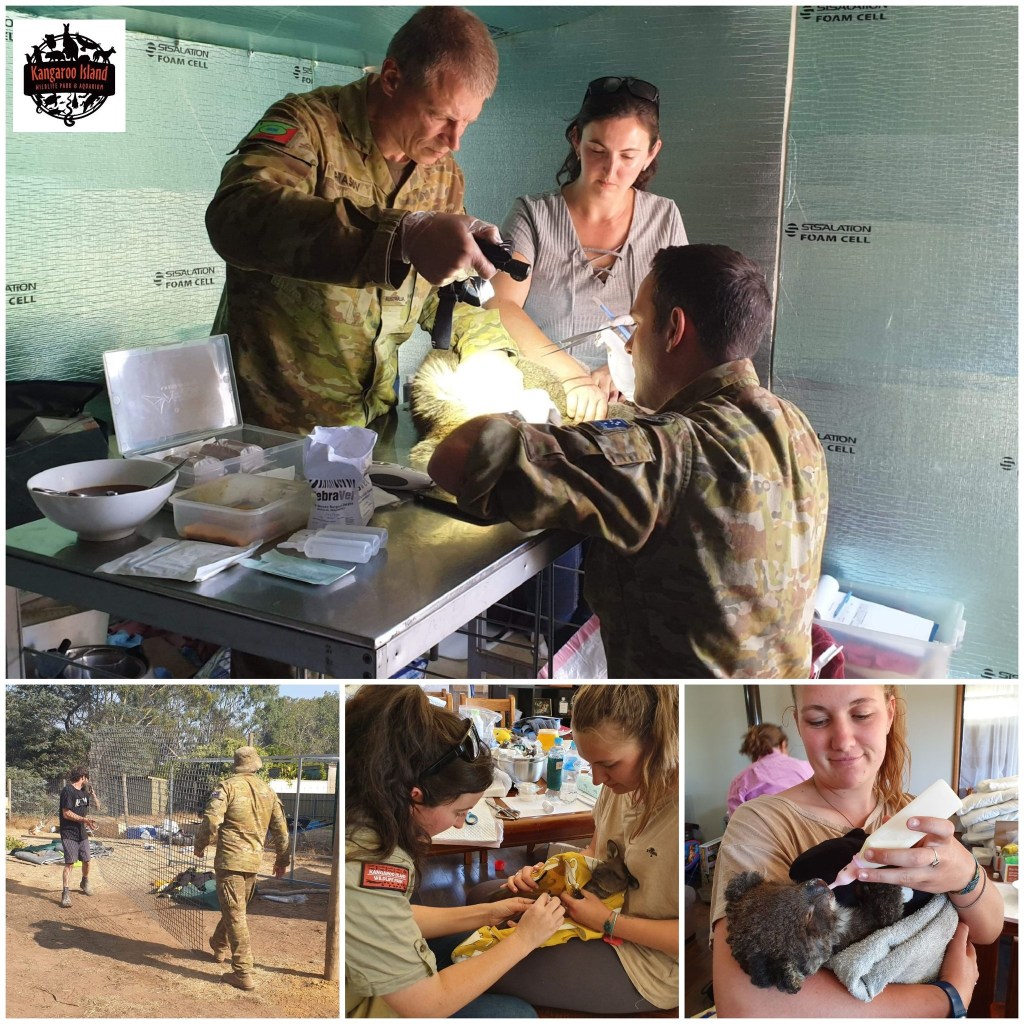
Over the past few days they have started to see a large number of injured Koalas, along with other native species heavily impacted by this event. They have been treating these victims as best they can to supply pain relief, antibiotics, treatment to wounds and basic husbandry requirements. They spent most of January 3rd building extra holding enclosures as well as defending the park from the immediate threat of the fire and will continue to prepare more infrastructure to house the extra wildlife they expect to see over the coming weeks.
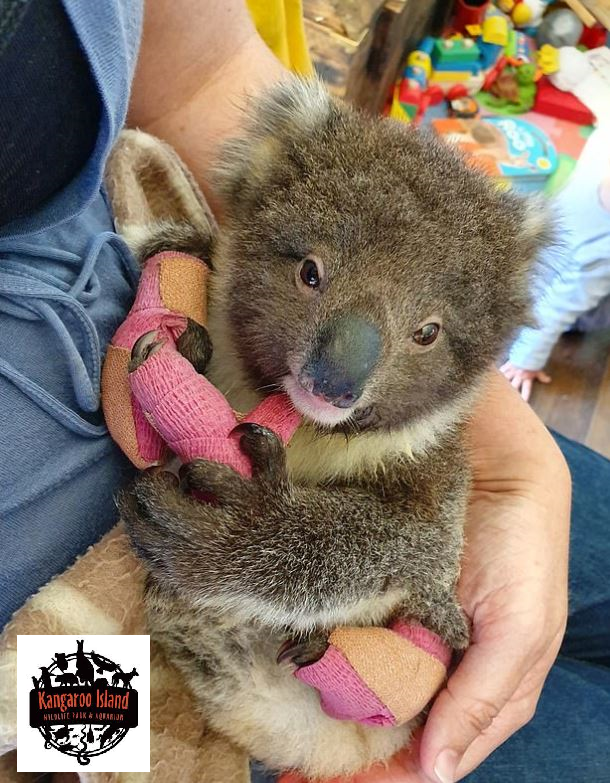
A KOALA RECOVERS AT THE KANGAROO ISLAND WILDLIFE PARK
They need much-needed funds to help with veterinary costs, Koala milk and supplements, extra holding/rehabilitation enclosures, as well as setting up a building to hold supplies to treat these animals.
Donations go directly towards the Koalas and other wildlife that they have coming in from the fires for their care, triage and ongoing treatments, housing, essential equipment, feed and more.
They are working around the clock with a highly experienced, qualified and dedicated team of volunteers including qualified vets, vet nurses and wildlife carers to rescue, rehabilitate and care for all of the animals coming in from the bushfires.
Sam Mitchell, owner of Kangaroo Island Wildlife Park
On admittance to the unit, all efforts are made to rehydrate, treat and assess the wildlife by their vet care team. Many are being treated for severe burns with most burns being to their hands, feet and rumps.
They are providing the best care possible for our injured wildlife and due to the significant habitat loss they will be building exhibits to hold the treated Koalas until arrangements can be made to release them back into the wild where possible.
SOME OF THE KOALAS WHO SURVIVED THE FIRES IN THE RECOVERY UNIT
Kangaroo Island is well known for its thriving Koala population however over 150,000 hectares has been lost due to recent events, this will effect our Koala population dramatically. We ALL need to pull together to save this Australian icon. Once conditions improve and they are granted access to fire ground, a qualified team will be going out to rescue wildlife caught in the fires and relocate those left without a food source or home.
PLEASE HELP RAISE MUCH-NEEDED FUNDS FOR THE KANGAROO ISLAND WILDLIFE PARK
To help raise funds for this vital project we are donating ALL proceeds from the sale of Badges, Brooches, Car Stickers, Tote Bags, Jewellery and Conservation Packs to help the Kangaroo Island Wildlife Park treat animals affected by the #AustralianFires.













 PROTECT ALL WILDLIFE